17 Trending Room Decor Aesthetic Ideas to Try This Season
Picking a clear direction before buying anything makes decorating faster and less expensive, since every choice afterward can be measured against it. This guide walks through seventeen room decor aesthetic ideas, from soft and airy looks to bold, maximalist ones, with the color palettes, materials, and details that define each. Whether you’re starting a room from scratch or want to shift the feel of one you already have, there’s likely a direction here that matches what you’re picturing.
Trend & Background
Aesthetic-driven decorating has grown alongside social platforms where entire looks, rather than individual furniture pieces, get shared and named cottagecore, dark academia, coastal grandmother, and similar terms have become shorthand for a full set of colors, materials, and mood rather than a single style of chair or rug. This has made it easier for people to communicate what they want, even without design vocabulary, by pointing to a named aesthetic instead. It’s also pushed retailers to sell more curated collections built around a specific look rather than standalone pieces meant to fit any style.
Key Takeaways
- Choosing one clear aesthetic direction, rather than mixing several, gives a room a more cohesive feel.
- Color palette and material choice do more to define a look than any single furniture piece.
- Lighting, texture, and small styling details often separate a convincing aesthetic from one that feels unfinished.
- Committing to two or three signature elements per aesthetic keeps a themed room from feeling like a costume rather than a home.
1. Coastal Grandmother
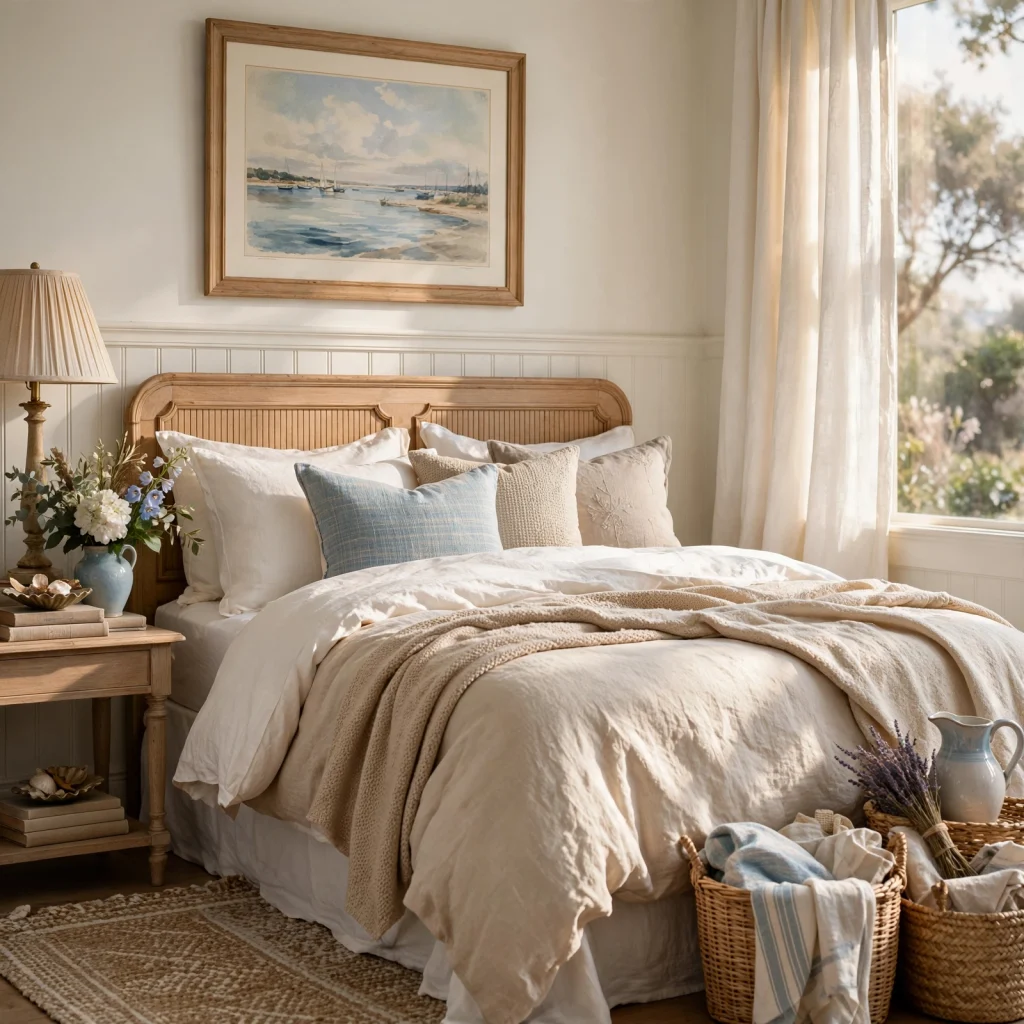
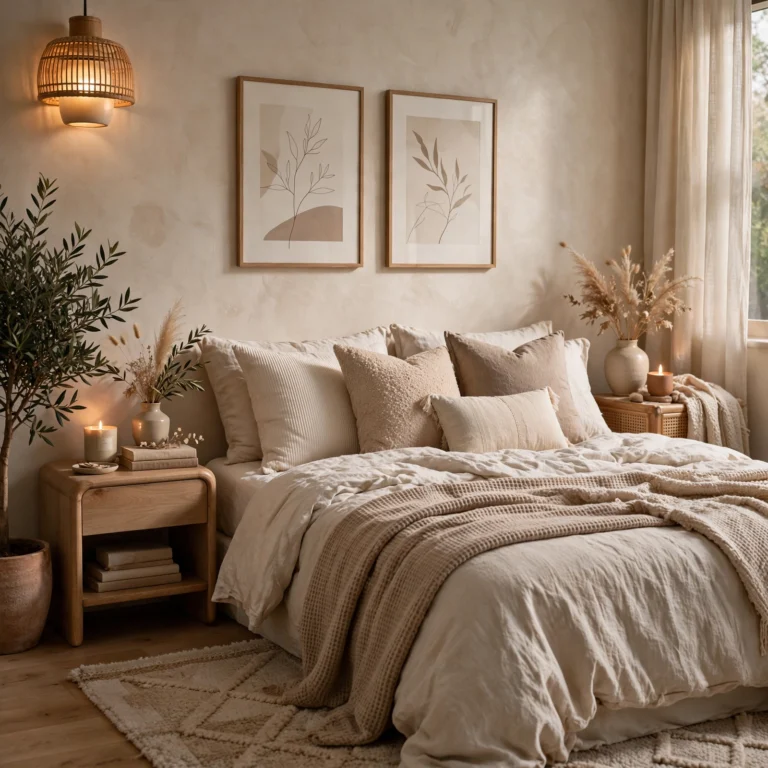
Coastal grandmother leans on soft neutrals, natural linen, and worn wood tones to create a relaxed, sunlit feel reminiscent of a beach house that’s been lived in for decades. Slipcovered furniture, woven baskets, and glass hurricane candle holders are common anchors, paired with muted blues or sage greens used sparingly rather than as a dominant color. The look avoids anything glossy or overly polished, favoring matte, textured surfaces that look comfortable rather than staged.
2. Dark Academia
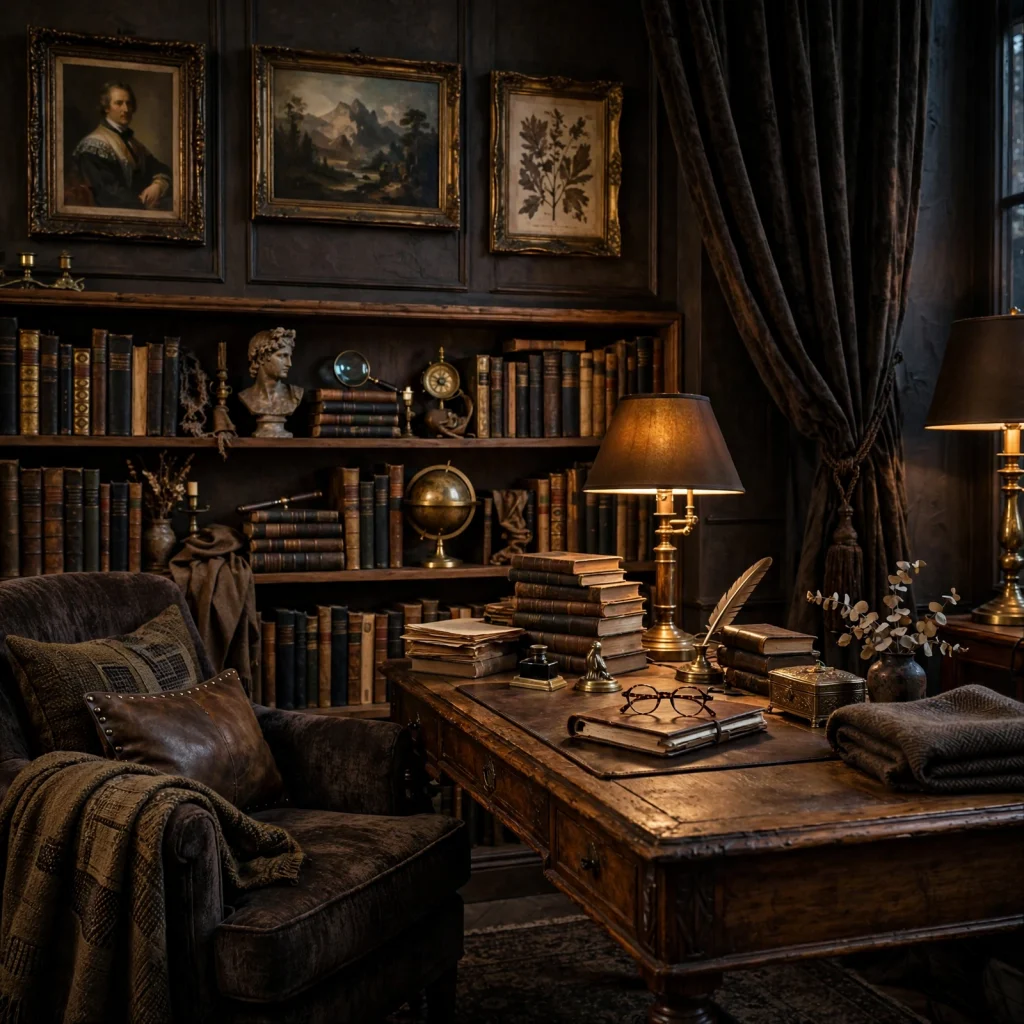
Dark academia draws from old libraries and university halls, built around deep wood tones, leather-bound books, and a palette of burgundy, forest green, and warm brown. Brass reading lamps, vintage globes, and stacked hardcover books are frequently used as styling details rather than purely decorative props, since the aesthetic values objects that look used and collected over time. Heavy drapery and warm, low lighting reinforce the moody, studious feel central to the look.
3. Cottagecore
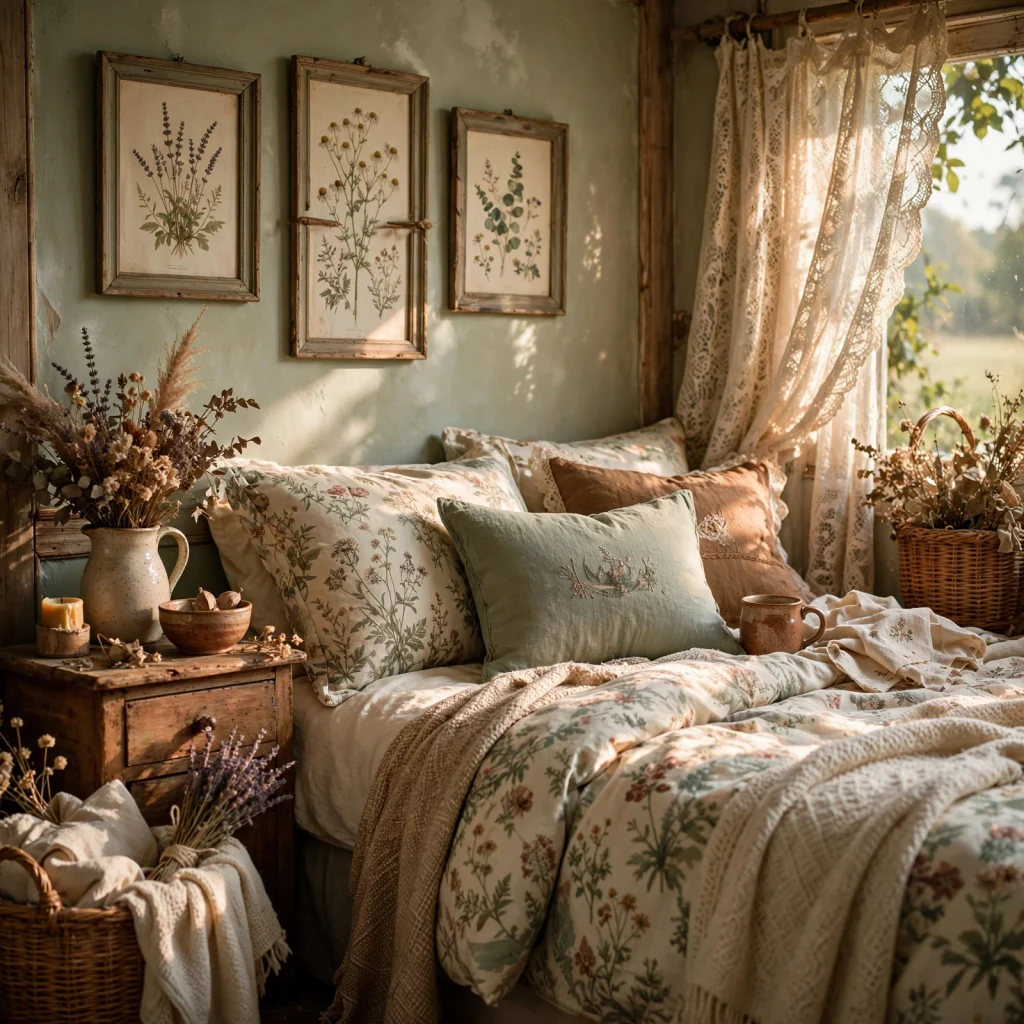
Cottagecore centers on a romanticized, rural feel using floral fabrics, dried or fresh botanicals, and vintage or vintage-inspired furniture with visible wear. Gingham, eyelet lace, and hand-thrown ceramics show up often, along with mismatched furniture that looks collected from different sources rather than purchased as a set. Soft, warm lighting and an abundance of plants reinforce the cozy, lived-in quality the aesthetic is built around.
4. Japandi
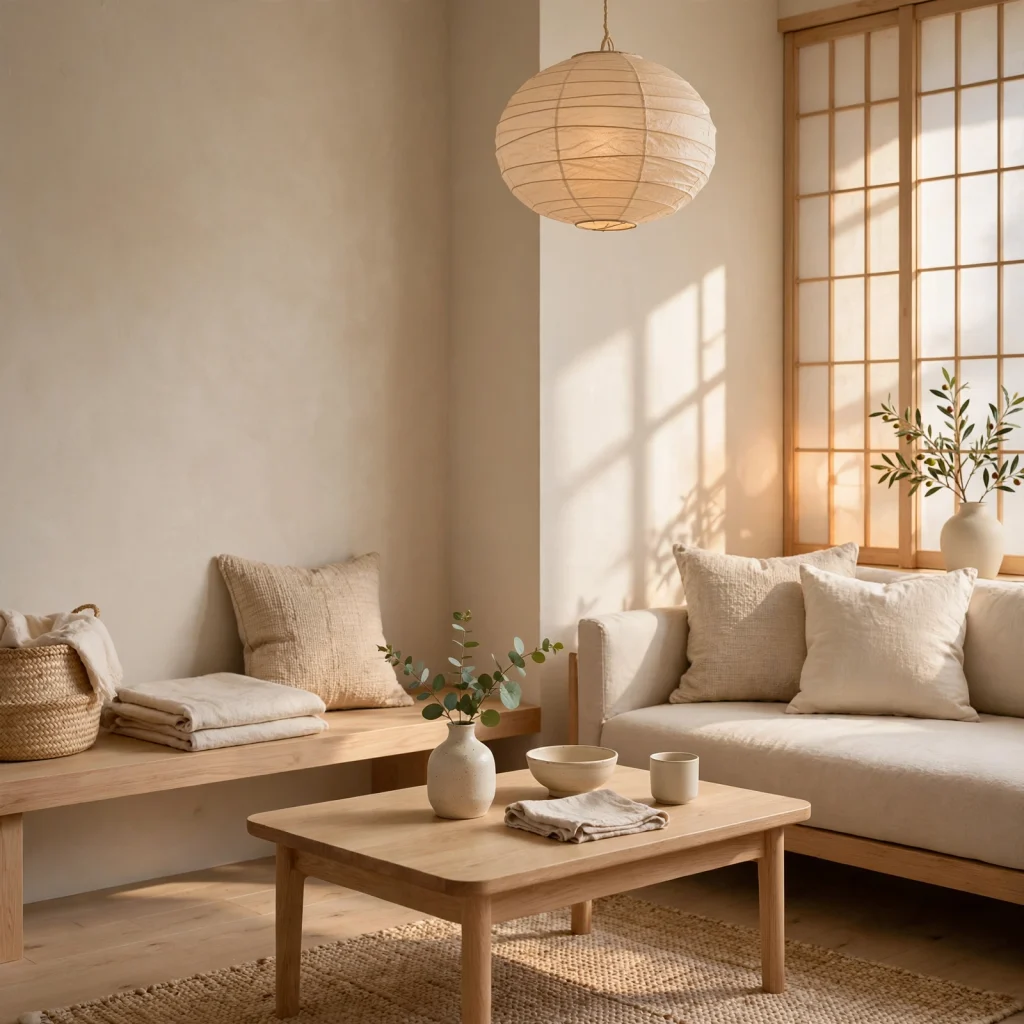
Japandi blends Japanese minimalism with Scandinavian warmth, favoring low-profile furniture, natural wood tones, and a muted, neutral palette with almost no bold color. Clean lines, uncluttered surfaces, and a handful of well-chosen ceramic or wood objects define the look rather than a large collection of decor. Rice paper lighting, low platform beds, and woven floor mats are common signature pieces within this aesthetic.
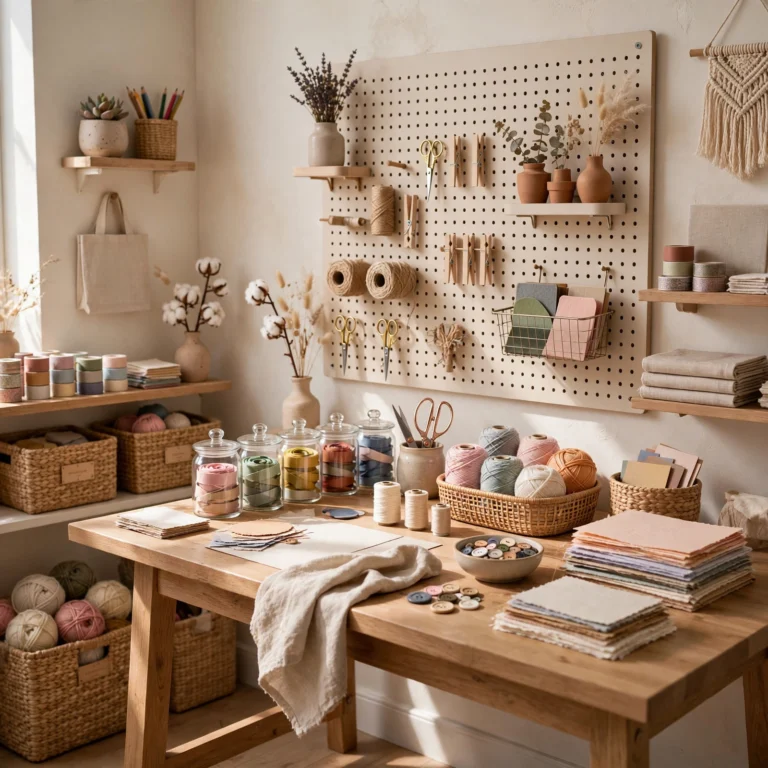
5. Room Decor Aesthetic Moodboard Wall
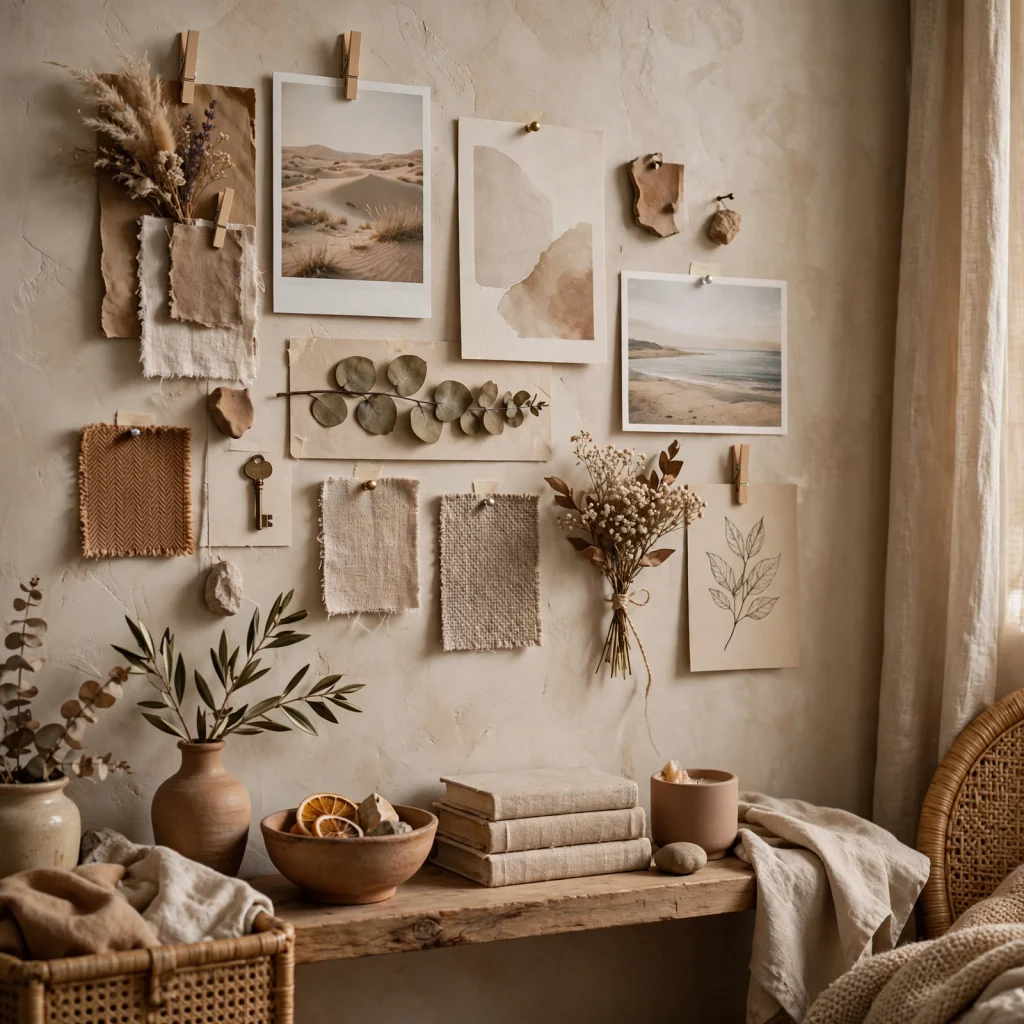
A moodboard wall dedicates one section of wall space to a rotating collage of fabric swatches, paint chips, and printed references, functioning as a visible planning tool rather than finished decor. It’s particularly useful when settling on a specific room decor aesthetic, since it lets you test colors and materials together before committing to purchases. Pinning items with removable tape or small nails keeps the board easy to update as the direction narrows.
6. Maximalist Gallery Wall
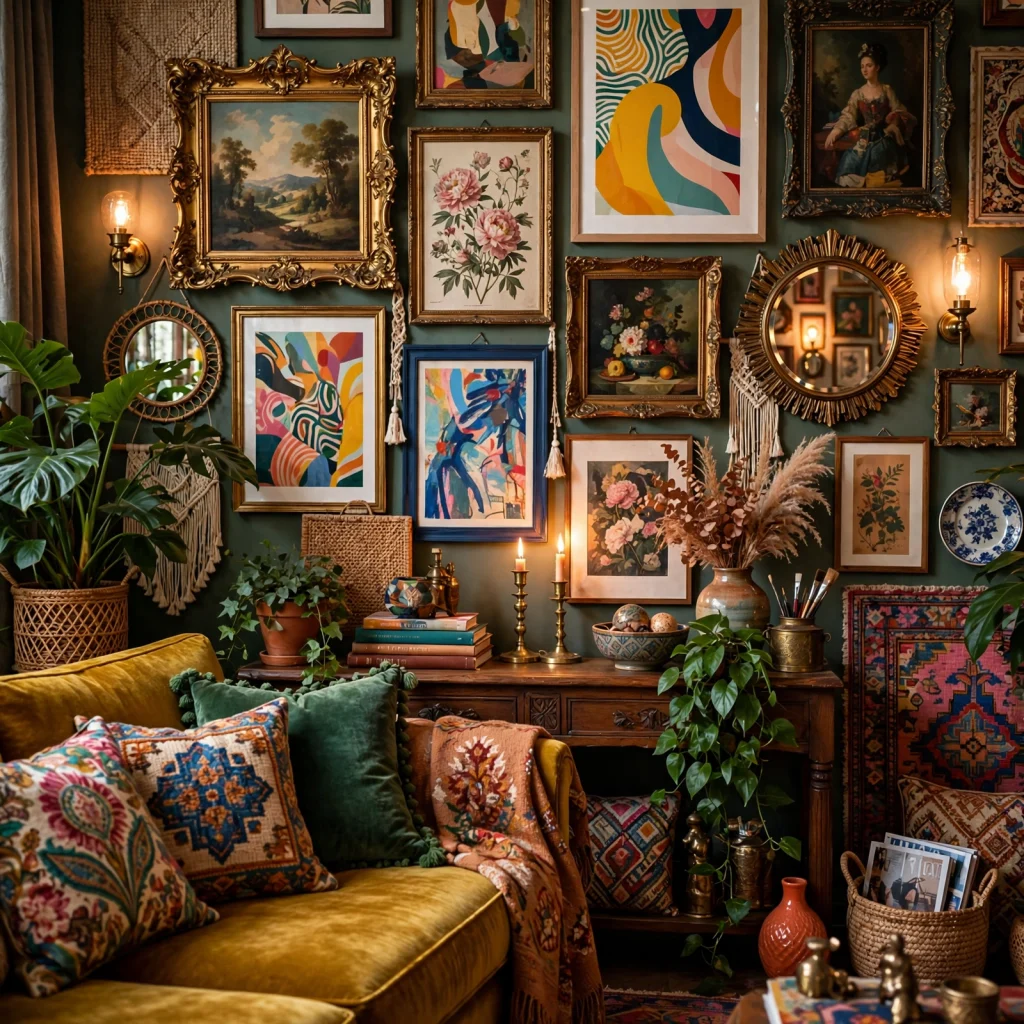
A maximalist gallery wall fills an entire wall with a dense, layered mix of art, mirrors, and small shelves in varied frame styles and sizes rather than a curated, evenly spaced arrangement. This aesthetic rejects the idea of restraint, favoring visual abundance and pattern-mixing across the whole room rather than a single wall. Bold wallpaper behind the gallery arrangement often reinforces the layered, collected look rather than competing with it.
For more options teen room decor
7. Scandinavian Minimalism
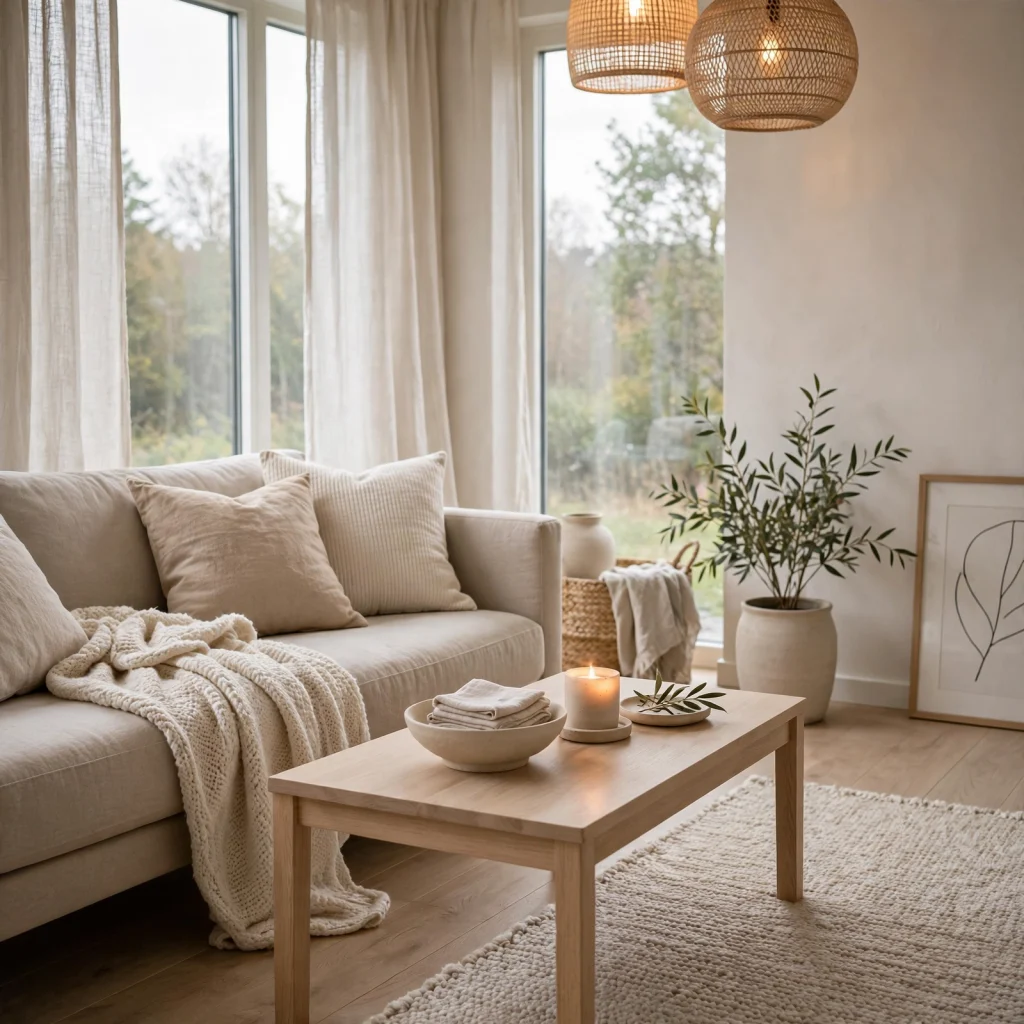
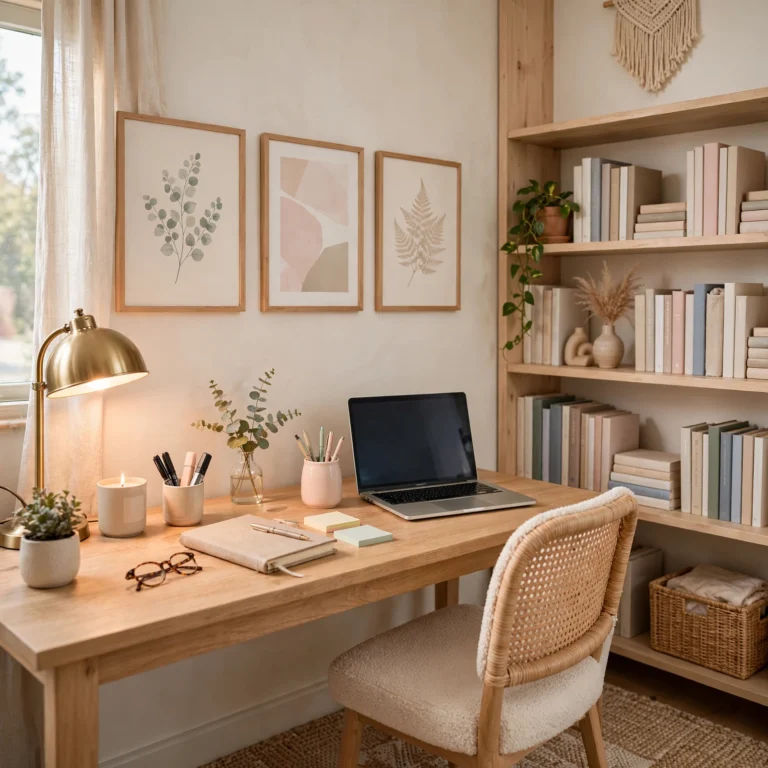
Scandinavian minimalism uses light wood, white or off-white walls, and a small number of functional pieces to keep a room feeling open and calm. Texture, usually through wool throws, sheepskin, or woven baskets, adds warmth in place of color or pattern, since the palette itself stays deliberately restrained. Clutter is treated as the enemy of this aesthetic, so closed storage is prioritized over open shelving whenever possible.
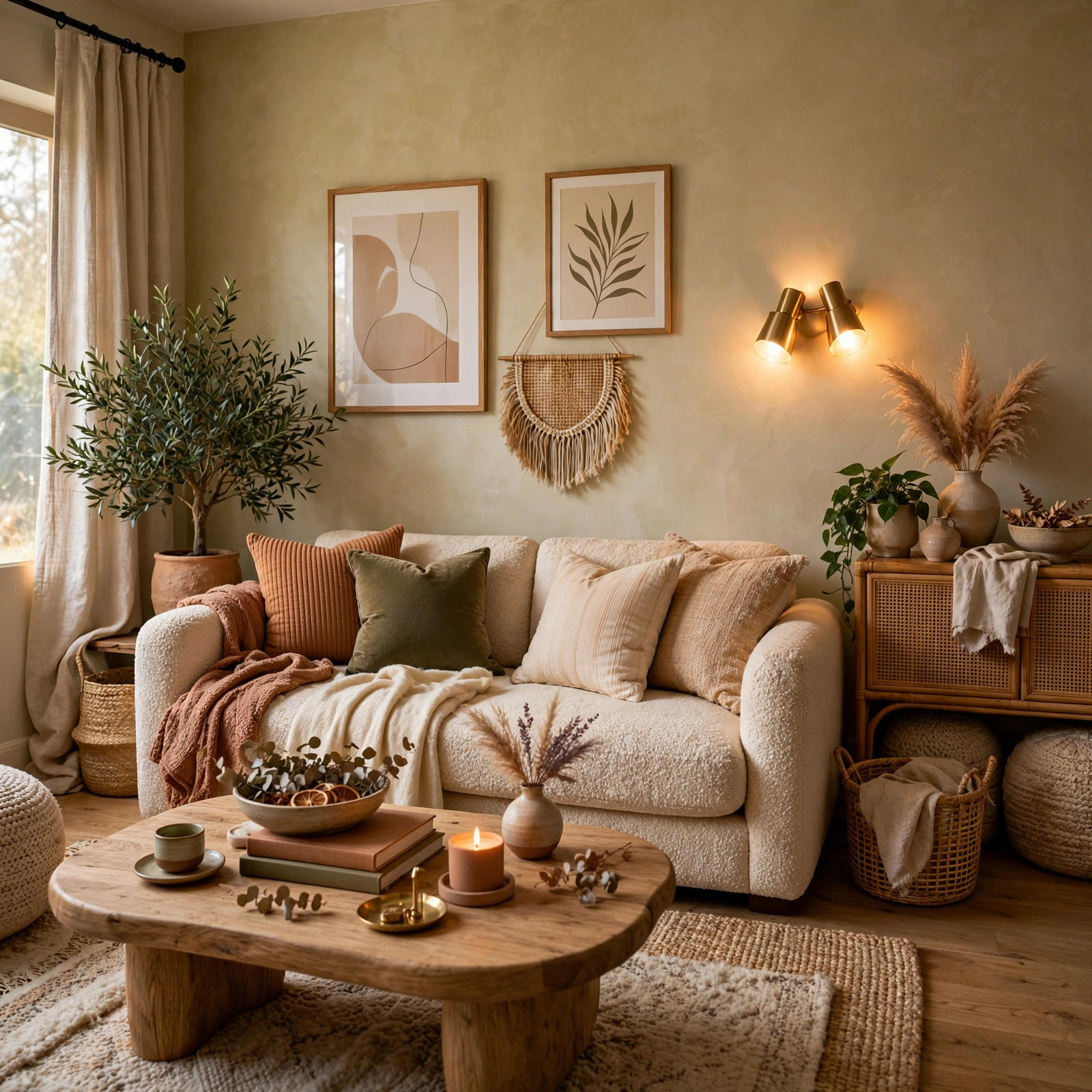
8. Boho Eclectic
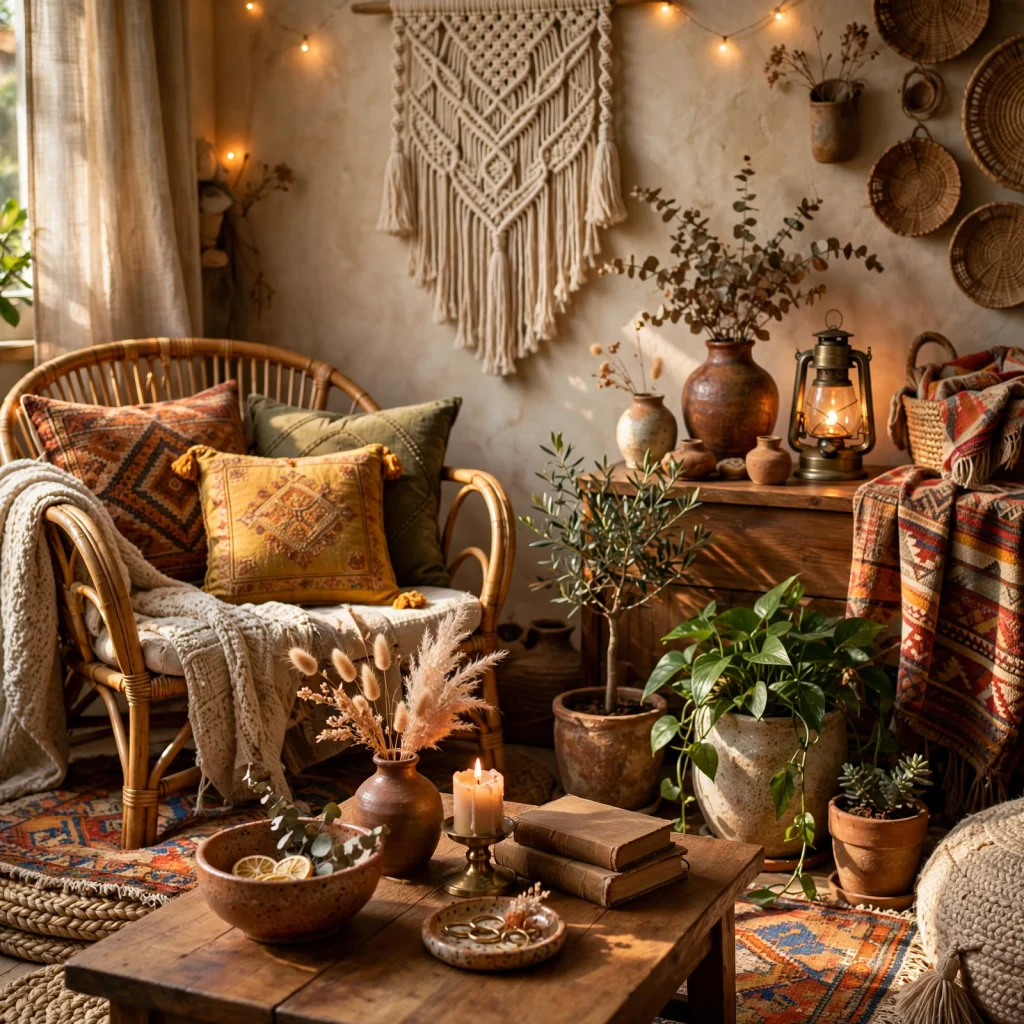
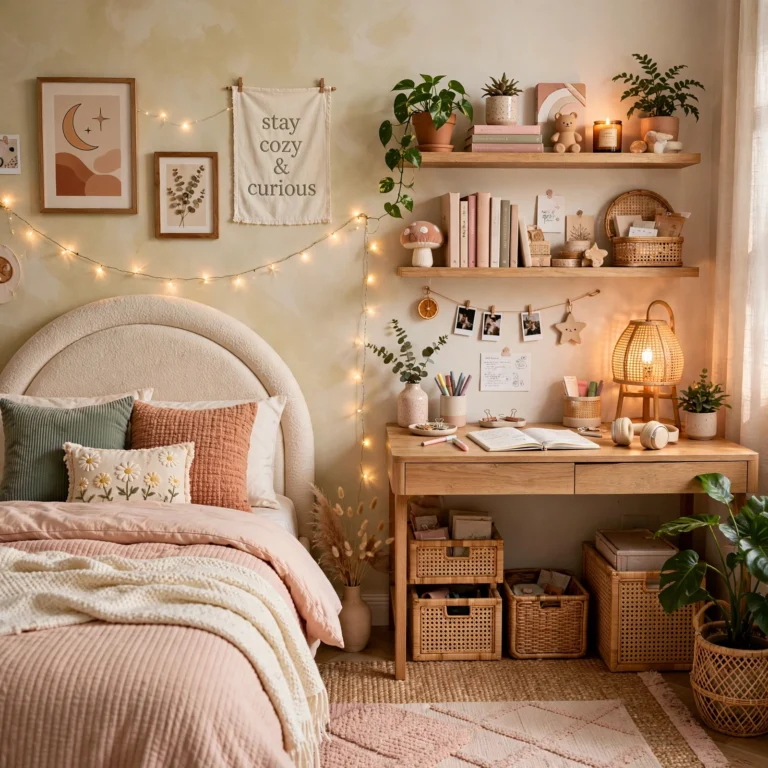
Boho eclectic mixes global textiles, layered rugs, and plants of varying sizes to create a relaxed, collected-over-time feel rather than a matched design scheme. Macrame, rattan furniture, and warm earth tones like rust and mustard show up frequently, often layered with patterned textiles from multiple sources rather than a single coordinated set. This aesthetic tends to embrace visible imperfection, favoring handmade or vintage pieces over anything that looks mass-produced.
9. Industrial Loft
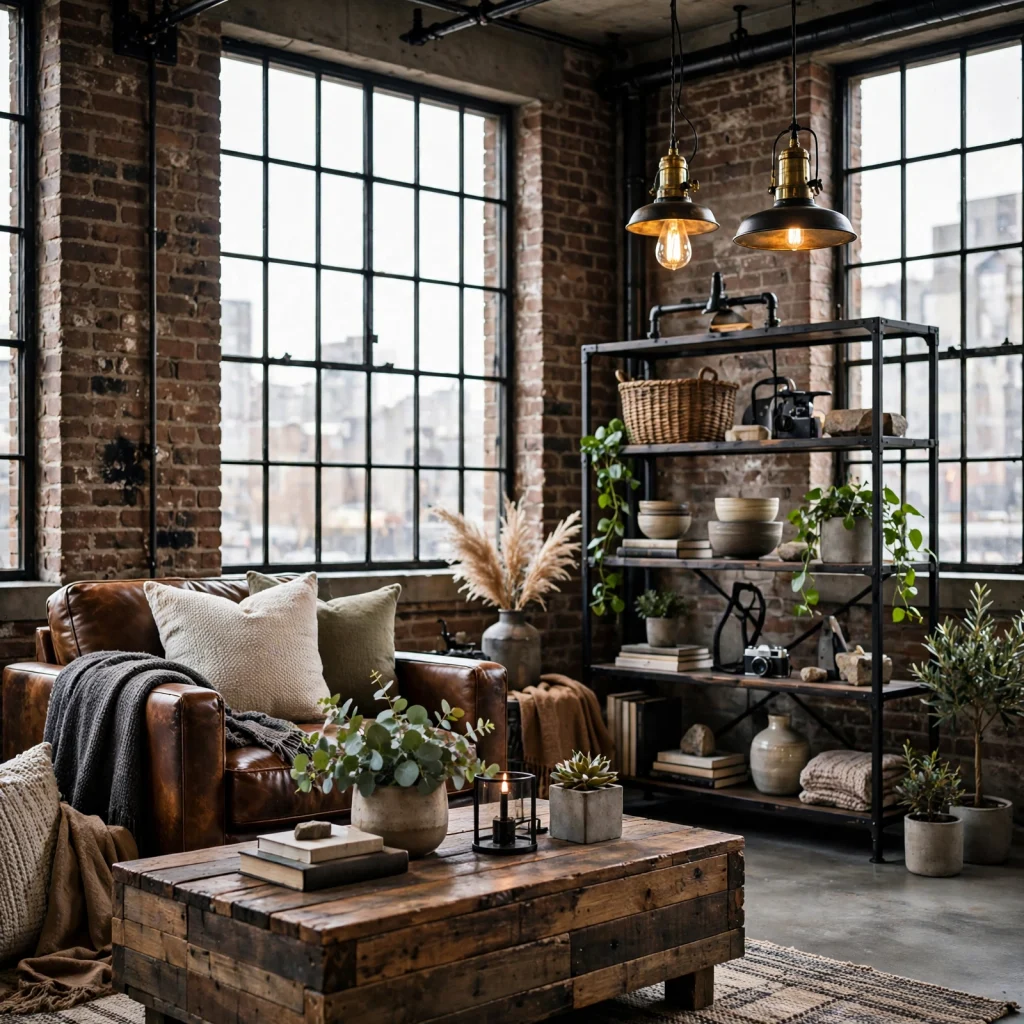
Industrial loft draws from converted warehouse spaces, using exposed brick, black metal fixtures, and raw wood to create a slightly rugged, unfinished look. Pipe shelving, Edison bulb lighting, and leather furniture in deep brown or black tones are common anchors, paired with minimal soft textiles to keep the look from feeling too polished. Concrete or dark wood flooring reinforces the aesthetic more effectively than carpet, which tends to soften the look too much.
10. Grandmillennial
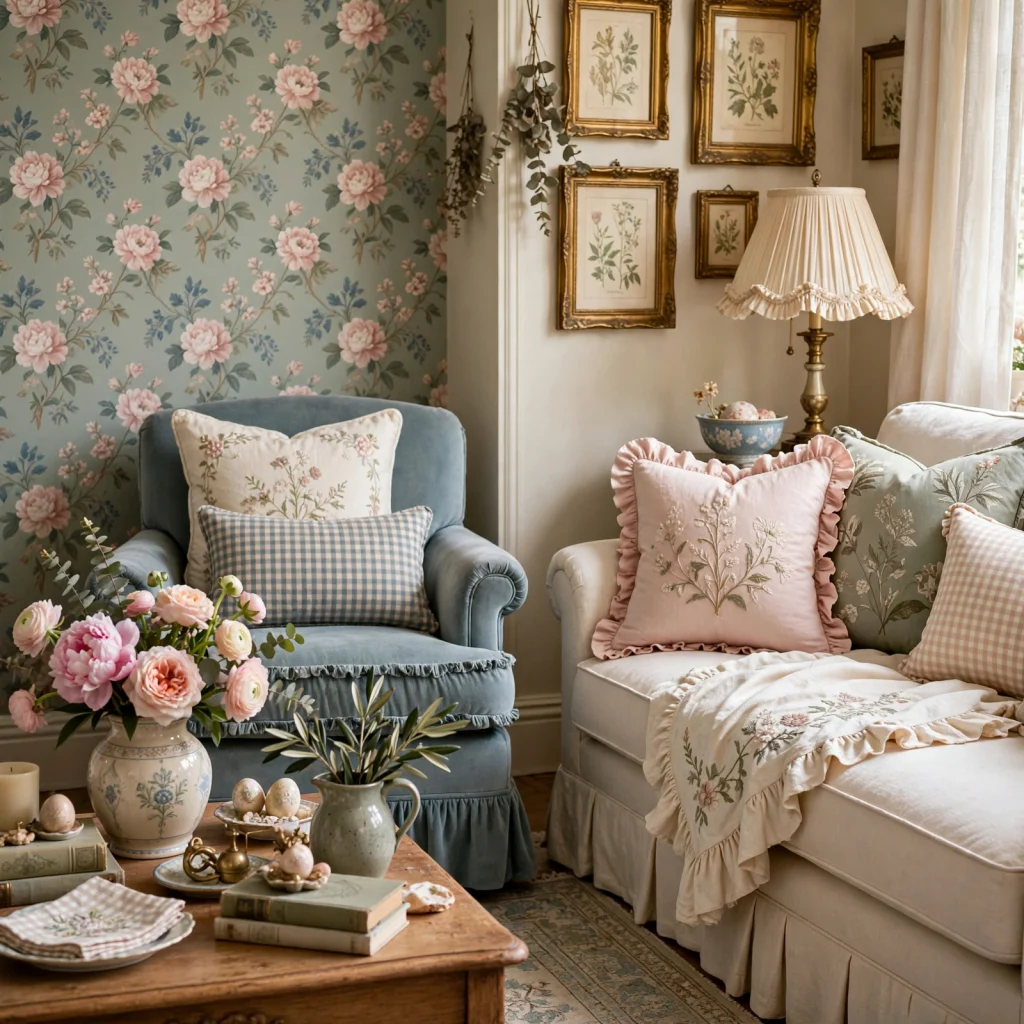
Grandmillennial updates traditional, chintz-heavy decorating with a lighter, more playful touch, mixing floral or striped fabrics with modern furniture shapes rather than an entirely vintage room. Scalloped trim, needlepoint pillows, and skirted furniture are frequent details, often paired with a brighter, less muted color palette than classic traditional decorating. This aesthetic works well for anyone who likes vintage patterns but doesn’t want a room that reads as strictly antique.
11. Soft Girl Aesthetic
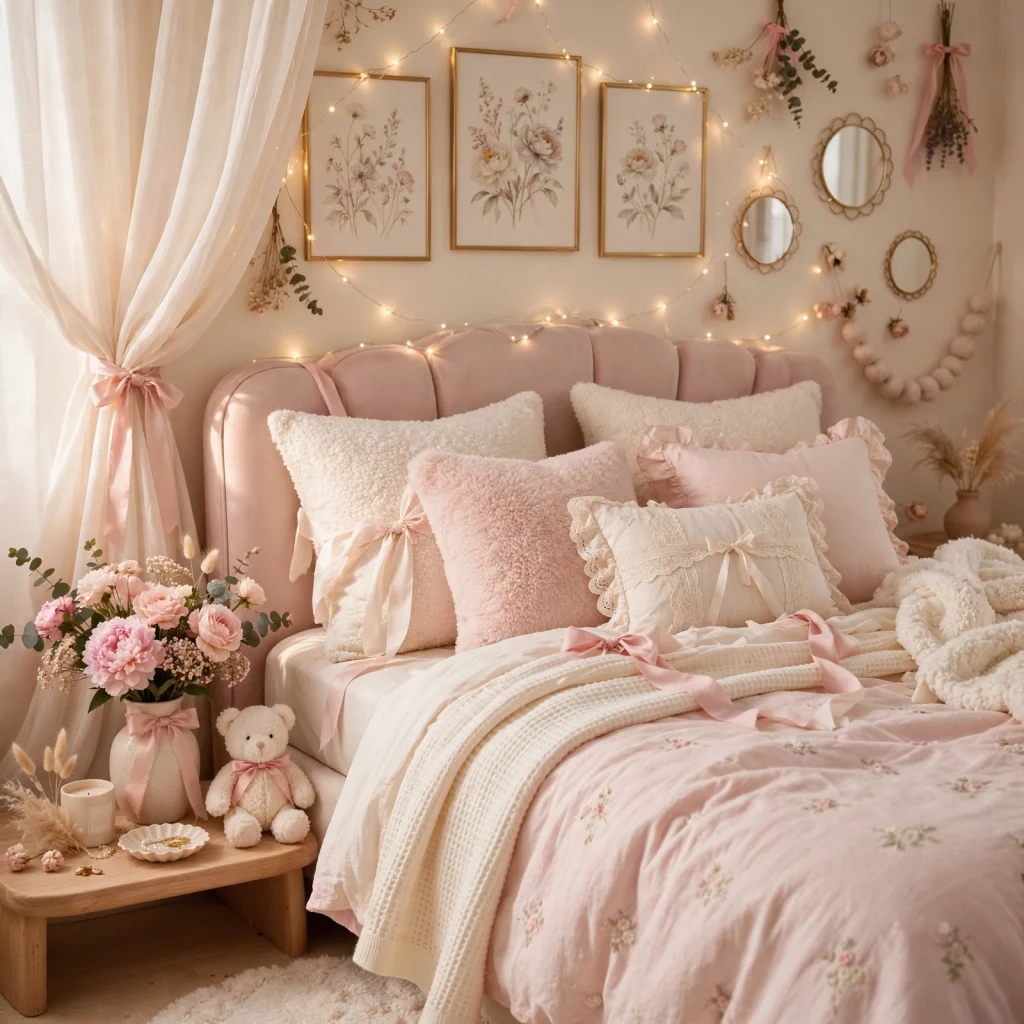
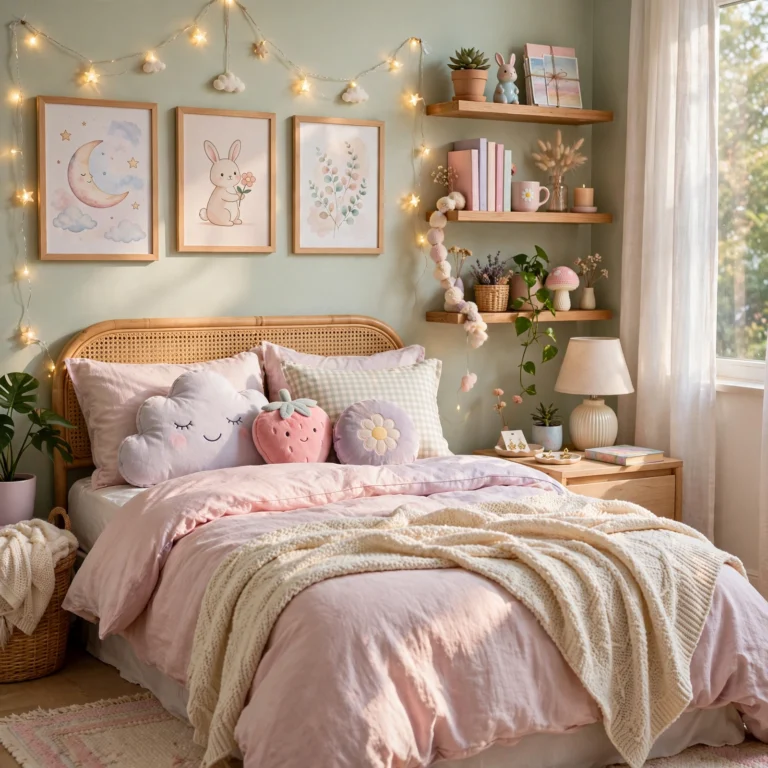
Soft girl aesthetic uses pastel colors, plush textures, and rounded furniture shapes to create a gentle, romantic feel, often centered around blush pink, lavender, and cream tones. Faux fur rugs, tulle or sheer curtain panels, and fairy lights are common styling choices, paired with curved mirrors or scalloped-edge furniture rather than sharp, angular pieces. String lights and soft, diffused lighting are used more heavily here than in most other aesthetics on this list.
12. Mid-Century Modern
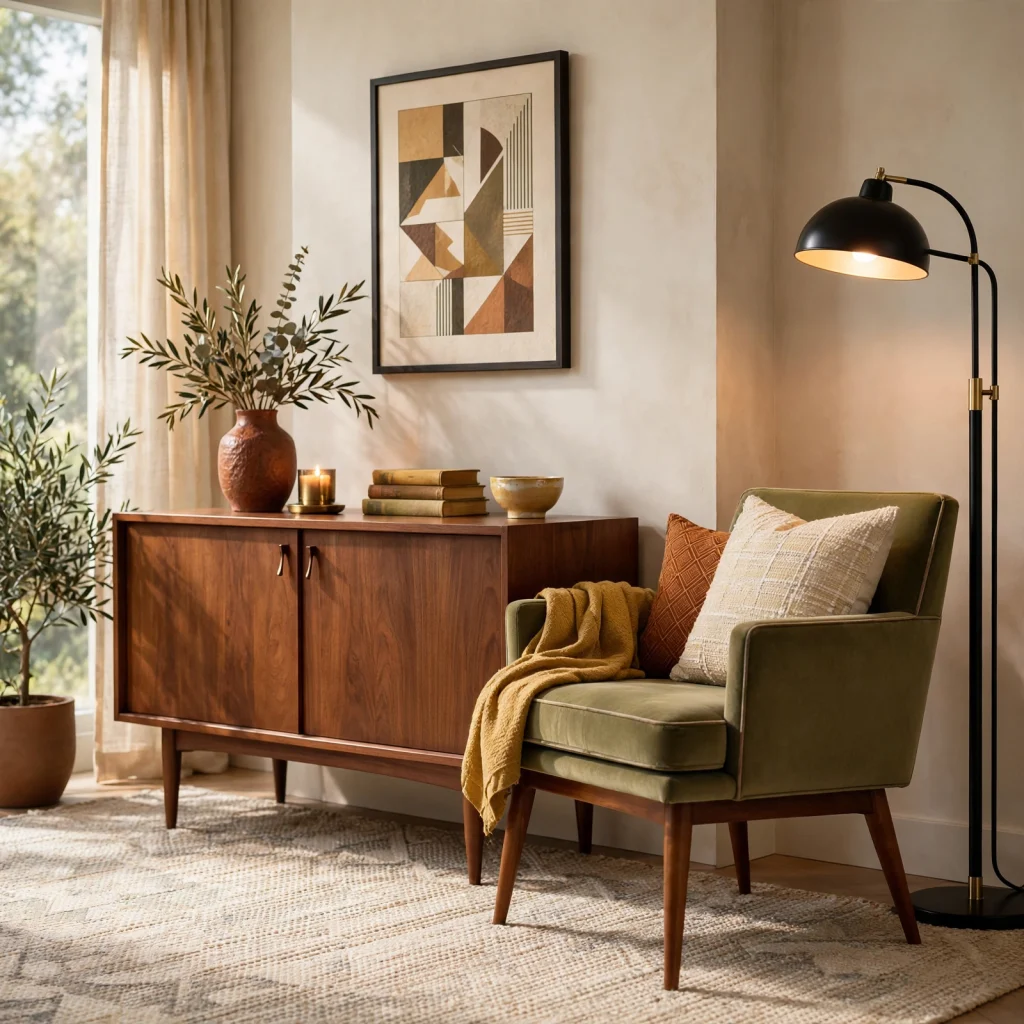
Mid-century modern uses tapered wood legs, organic curved shapes, and a mix of warm wood tones with occasional pops of mustard, teal, or burnt orange. Furniture silhouettes tend to be low-profile and clean-lined, avoiding heavy ornamentation in favor of function-driven shapes with visible joinery. Starburst mirrors, sputnik-style lighting, and geometric area rugs are recurring signature pieces that reinforce the era-specific look.
13. Coastal Nautical
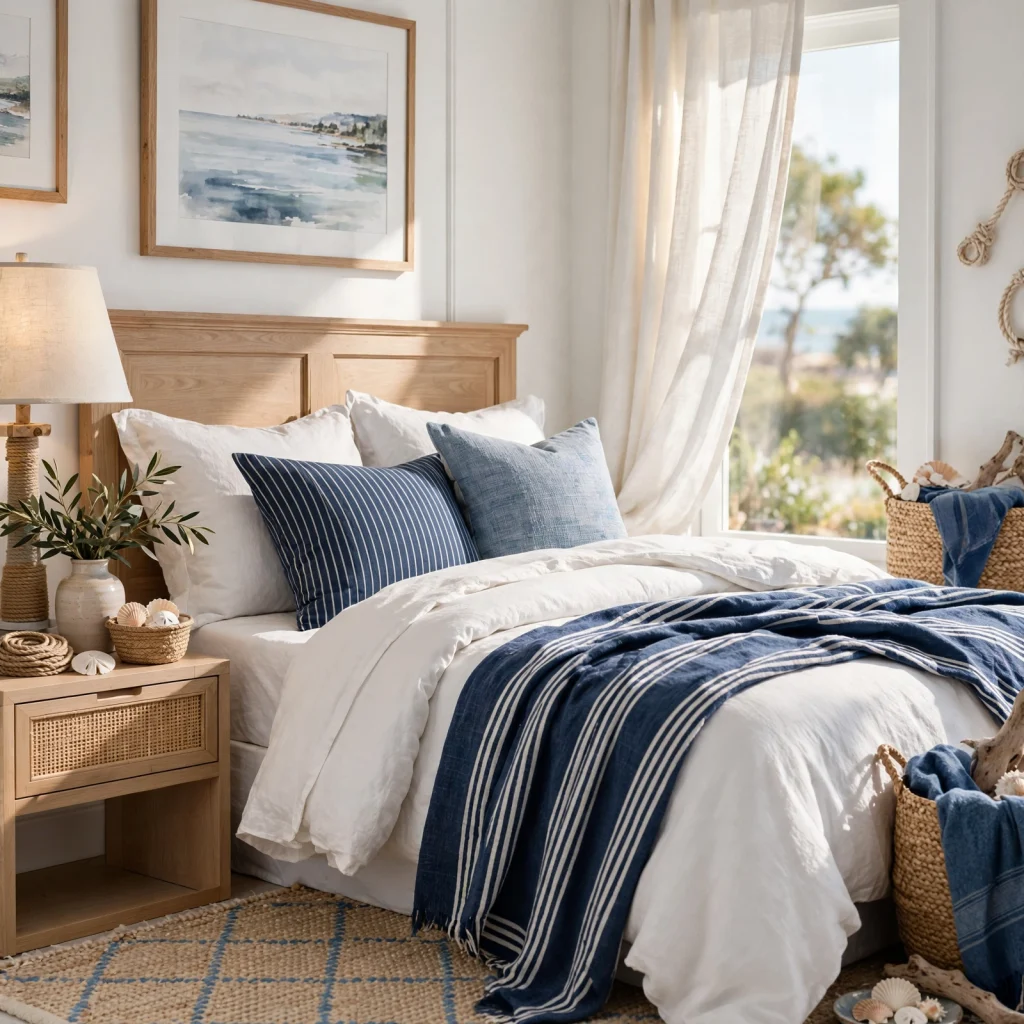
Coastal nautical uses navy and white stripes, rope detailing, and weathered wood tones to evoke a beach or sailing-inspired look, distinct from the softer, neutral coastal grandmother aesthetic. Brass ship-style fixtures, striped textiles, and woven seagrass rugs are common anchors, often paired with a single bold navy accent wall or striped bedding as the room’s focal point. This aesthetic tends to lean slightly more saturated in color than other coastal-adjacent looks.
14. Dopamine Decor
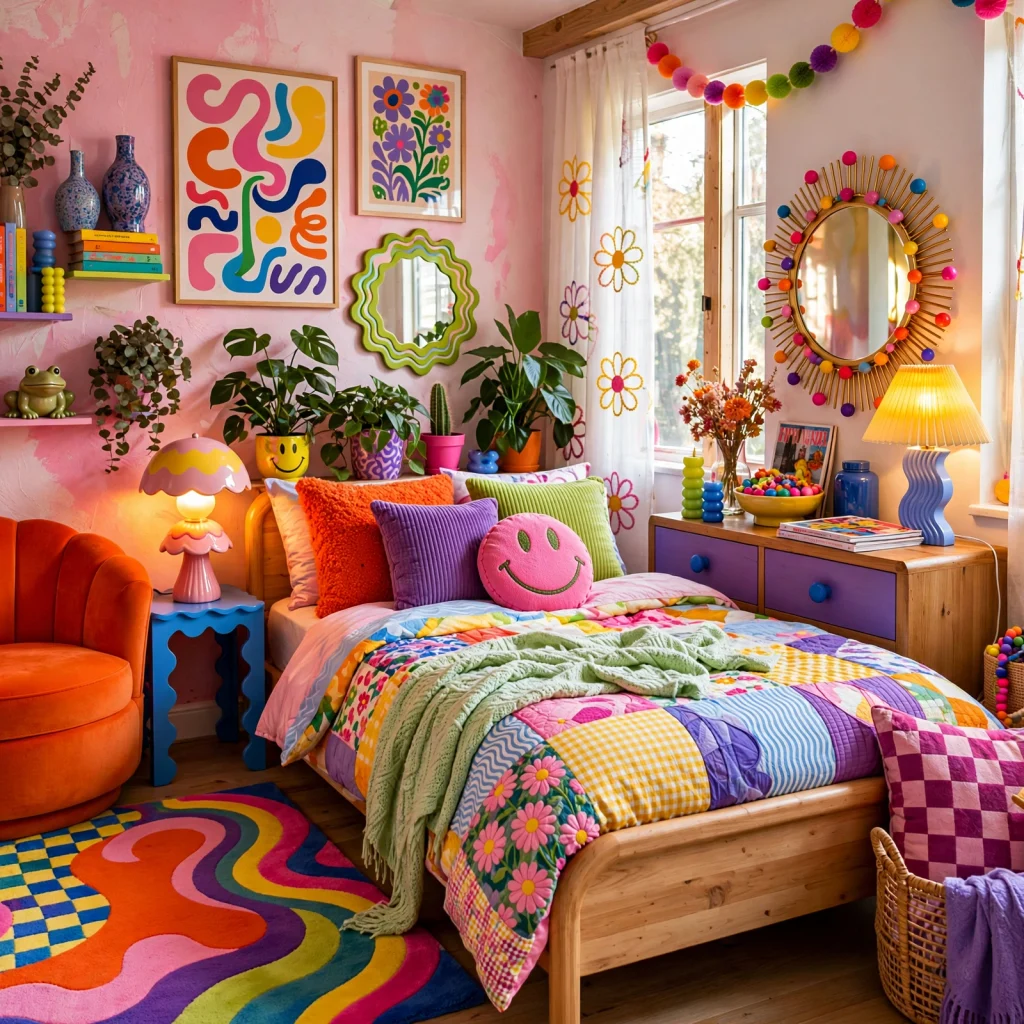
Dopamine decor uses saturated, high-contrast colors and playful patterns deliberately chosen to boost mood, rejecting neutral palettes in favor of bold combinations like hot pink with orange or cobalt with lime. Curved furniture, colorful glassware, and mismatched patterned textiles are common, with the overall goal being visual energy rather than a calm, restrained space. This aesthetic works best when at least one wall or large surface commits fully to color, since a scattered approach can undercut the intended effect.
15. Wabi-Sabi Natural
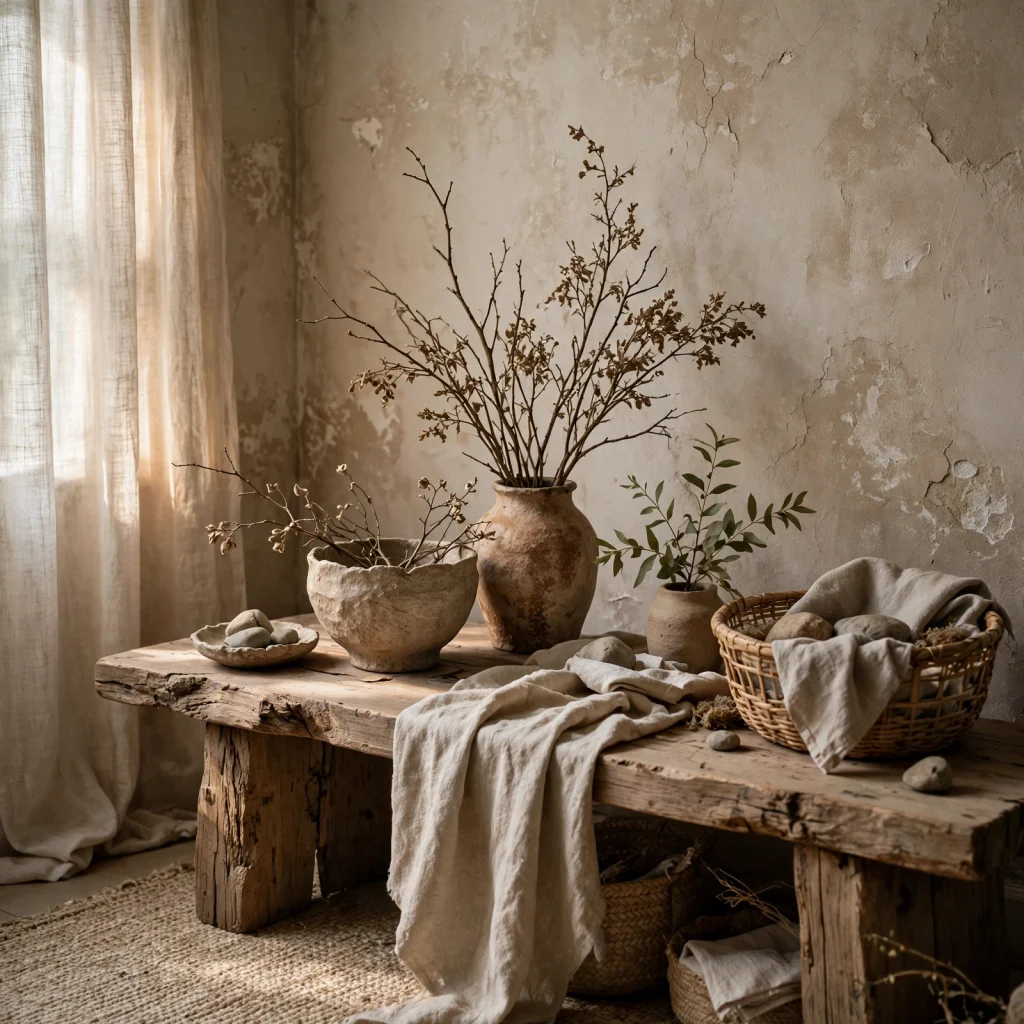
Wabi-sabi natural embraces imperfection and organic irregularity, using unglazed ceramics, raw linen, and rough-hewn wood rather than anything polished or symmetrical. Neutral, earthy tones dominate the palette, and furniture or objects with visible texture, asymmetry, or natural variation are favored over uniform, factory-finished pieces. This aesthetic tends to use fewer objects overall, relying on the character of individual pieces rather than a dense, layered collection.
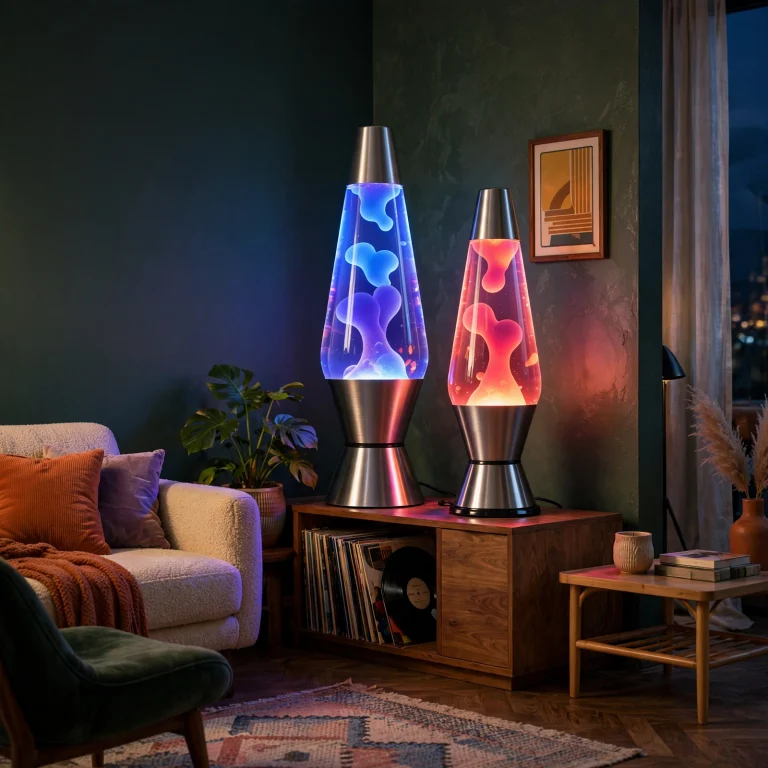
16. Retro Kitsch
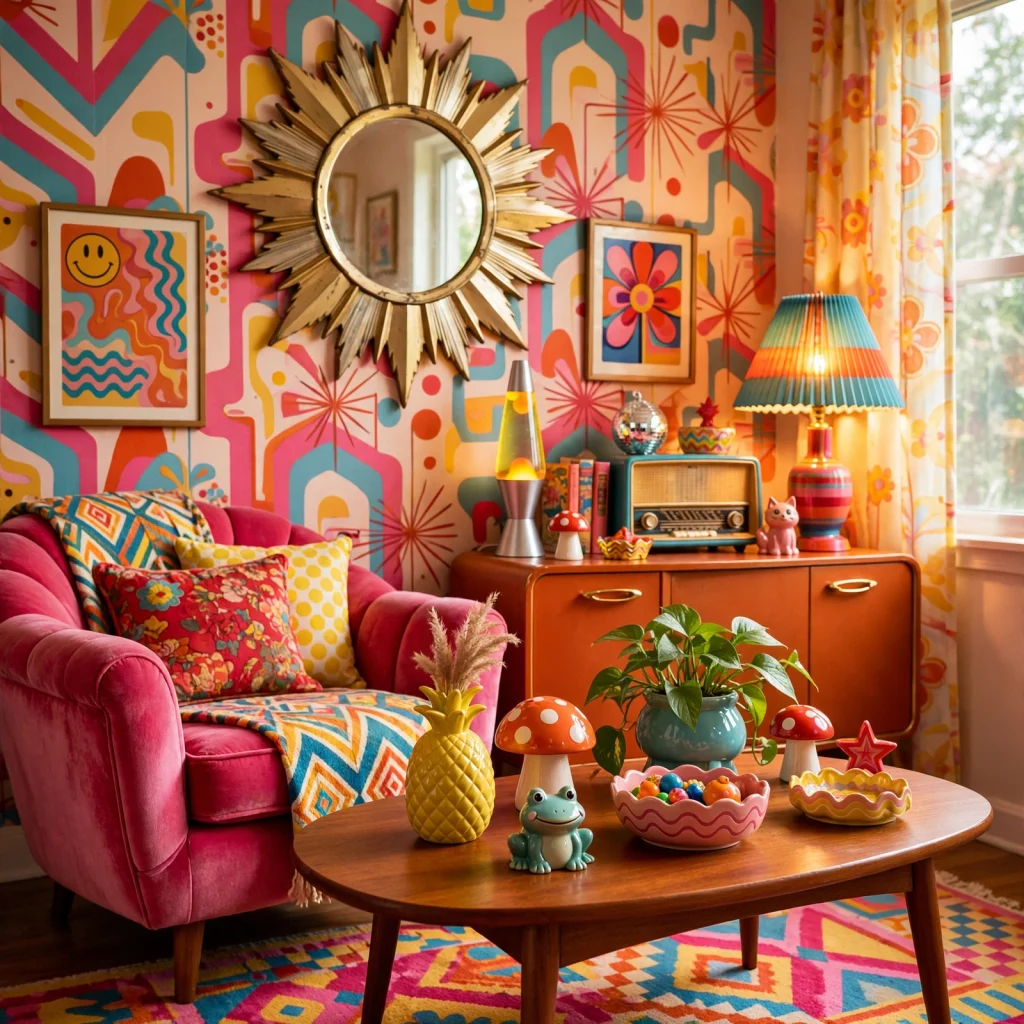
Retro kitsch pulls from mid-to-late twentieth century pop culture, using bold color-blocking, novelty lighting like lava lamps, and playful vintage-style graphics or patterns. Curved plastic furniture, shag rugs, and saturated primary colors are common anchors, often mixed with a slightly tongue-in-cheek approach to styling rather than strict historical accuracy. This aesthetic tends to work best in smaller doses, applied to one room or even one wall rather than an entire home.
17. Modern Farmhouse
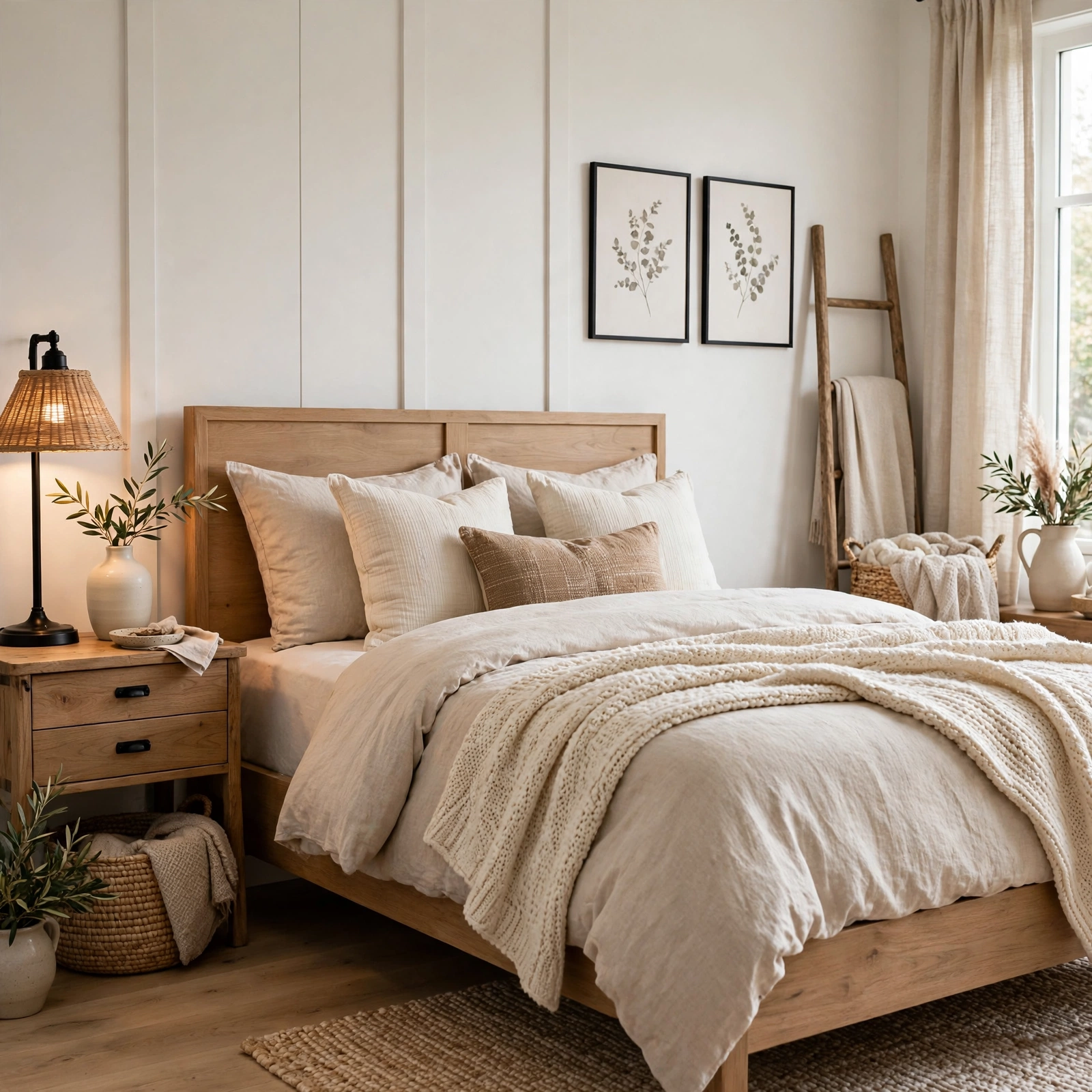
Modern farmhouse combines rustic wood tones and shiplap-style paneling with cleaner, more contemporary furniture shapes than a fully traditional farmhouse look. Black metal fixtures, white or cream walls, and a mix of reclaimed wood with newer upholstered furniture define the balance this aesthetic strikes between rustic and current. Open shelving with simple ceramic and wood accessories is favored over heavily decorated or cluttered surfaces.
| Aesthetic | Primary Palette | Signature Material |
| Coastal Grandmother | Soft neutrals, sage | Linen, worn wood |
| Dark Academia | Burgundy, forest green | Leather, dark wood |
| Japandi | Muted neutrals | Natural wood, rice paper |
| Dopamine Decor | Saturated brights | Glossy plastic, glass |
| Wabi-Sabi Natural | Earthy neutrals | Unglazed ceramic, raw linen |
Shop the Look
A few starting pieces depending on direction: a linen slipcovered sofa for coastal grandmother, a brass reading lamp and leather armchair for dark academia, a sputnik-style pendant light for mid-century modern, a set of unglazed stoneware vases for wabi-sabi natural, and a striped cotton rug for coastal nautical. Picking pieces tied to a single aesthetic first, rather than shopping broadly, keeps the room from feeling like several styles competing at once.
Common Mistake to Avoid
A common mistake is mixing signature elements from several aesthetics at once, such as a dark academia bookshelf beside a soft girl vanity and an industrial pipe shelf, which tends to leave a room feeling disjointed rather than personal. Choosing one primary aesthetic and allowing only small, intentional touches from another usually reads as more considered than an even split between two or three completely different directions.
FAQs
How do I figure out my room decor aesthetic?
Looking back at saved images, past purchases, and rooms you’ve responded to positively usually reveals a pattern in color, material, or mood even before you have a name for it. Comparing that pattern against established aesthetics, like the ones covered here, can help confirm a direction or narrow down which combination of a few fits best. Starting with a small moodboard before buying anything makes it easier to test whether a direction actually holds up once colors and textures are placed together.
Can I mix two room decor aesthetics in one room?
Yes, many rooms successfully blend two aesthetics, such as Japandi and Scandinavian minimalism, since they already share a similar palette and restrained approach to decor. The mix tends to work best when the two aesthetics share a similar color temperature or material palette, rather than combining something saturated and maximalist with something muted and minimal. Picking one aesthetic as the primary direction and the second as an accent generally produces a more cohesive result than blending them equally.
What’s the difference between a design style and a room decor aesthetic?
A design style, like mid-century modern or traditional, typically refers to furniture shapes, construction methods, and historical influence, while an aesthetic often layers mood, color, and cultural reference on top of or across multiple design styles. Dark academia, for example, isn’t tied to one furniture era, but instead pulls from a mood and color palette that can be applied to several different styles of furniture. This is part of why aesthetics have become useful shorthand even for people without design background.
Which room decor aesthetics work best for small spaces?
Japandi, Scandinavian minimalism, and wabi-sabi natural tend to work particularly well in small rooms, since all three favor fewer, more considered objects over dense layering or heavy pattern. Maximalist gallery wall and dopamine decor aesthetics can still work in small spaces, but they require more careful editing to avoid feeling cramped rather than intentionally bold. In general, aesthetics built around restraint translate more easily to limited square footage than ones built around abundance.
Do room decor aesthetics go out of style quickly?
Named aesthetics tend to cycle in visibility faster than they change in underlying substance, since many of them, like mid-century modern or coastal styles, are rooted in design approaches that have stayed popular for decades under different names. Trend-driven versions of an aesthetic, particularly ones built around very specific viral color combinations, are more likely to feel dated quickly than versions built on classic materials and proportions. Choosing quality materials within an aesthetic, rather than the most trend-specific version of it, tends to hold up longer.
Conclusion
Settling on a room decor aesthetic before shopping saves time and money, since every piece afterward can be checked against a clear direction instead of chosen at random. Pick the one or two aesthetics from this list that felt closest to what you already picture, and start with a small moodboard before committing to furniture. Save this post to Pinterest for later, or check out our related guide on building a cohesive color palette for more direction.