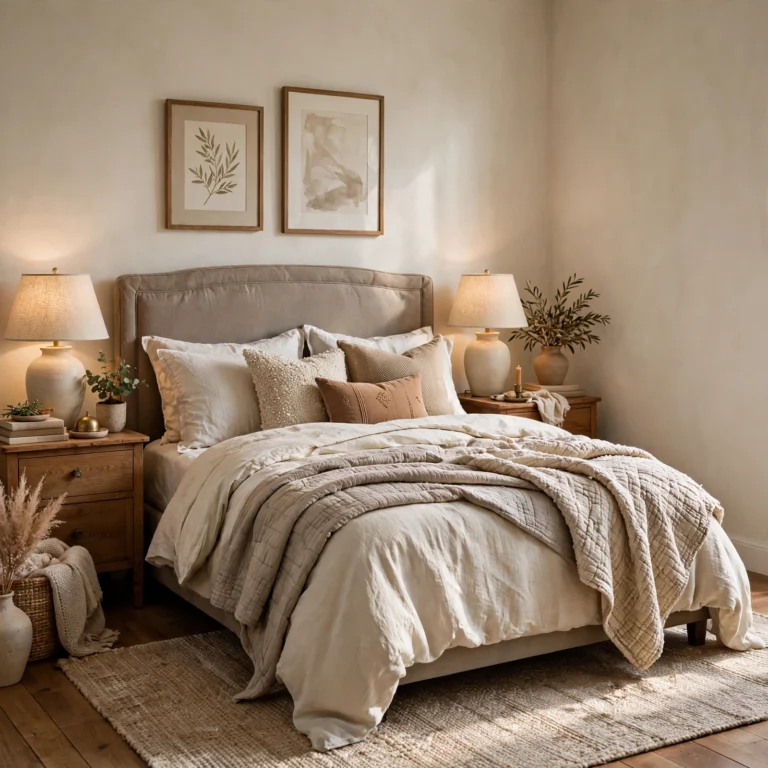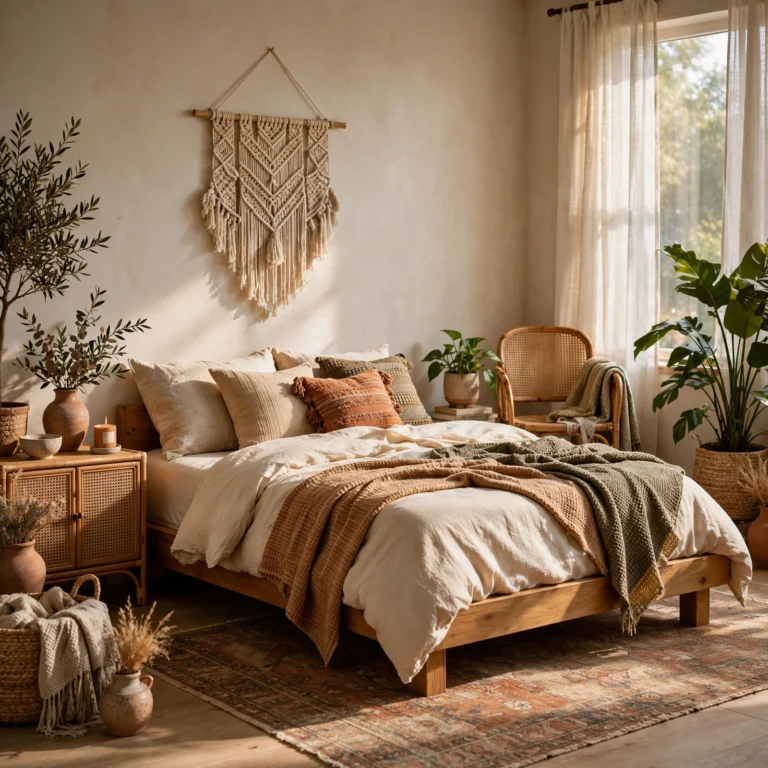
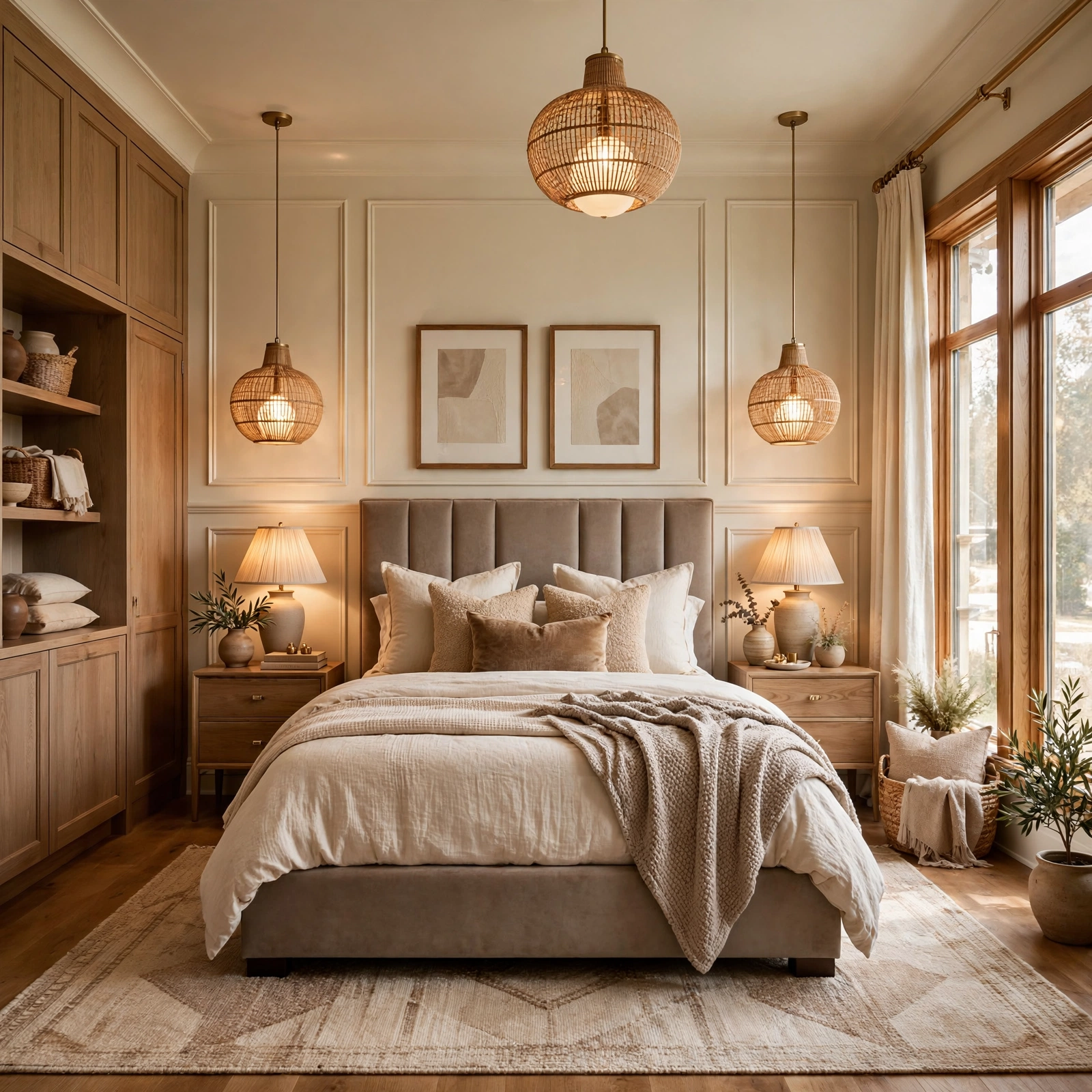
13 Bedroom Ideas for a Calm, Personal Retreat
Choosing the right bedroom ideas can feel overwhelming when every design account online seems to show a different style. This guide narrows things down to thirteen practical, tested concepts that work in real homes, not just staged photos. Readers will learn how to layer texture, solve storage problems, and pick furniture proportions that actually fit their square footage. Each idea includes what it is, why it works, and how to bring it into a bedroom this month without starting from scratch.
Trend & Background
Bedroom design has shifted away from matching furniture sets toward layered, collected looks that feel personal rather than showroom-ready. Homeowners are prioritizing sleep quality and sensory comfort, which means softer lighting, natural materials, and better sound and light control are showing up more often in renovation requests. This shift matters now because more people work from home and spend extended hours in their bedrooms, so the space has to do more than just host a bed. Designers report that clients increasingly ask for multipurpose corners, better closet systems, and lighting that adjusts through the day rather than a single overhead fixture.
Key Takeaways
- These 13 bedroom ideas cover layout, storage, lighting, and texture so any room size can feel intentional.
- Small changes like layered rugs or floating nightstands often matter more than a full renovation.
- A comparison table breaks down bed sizes and recommended room dimensions to help with planning.
- Budget-friendly swaps are mixed in alongside bigger investment pieces like custom paneling or built-ins.
1. Platform bed Frame for Bedroom
A platform bed frame lowers the overall silhouette of the room and removes the need for a box spring, which opens up visual space in smaller bedrooms. Solid wood or upholstered platform frames pair well with low nightstands and create a grounded, modern look without feeling heavy. Because the frame sits closer to the floor, it also makes ceilings feel taller by contrast. Below is a quick reference for matching frame size to room dimensions.
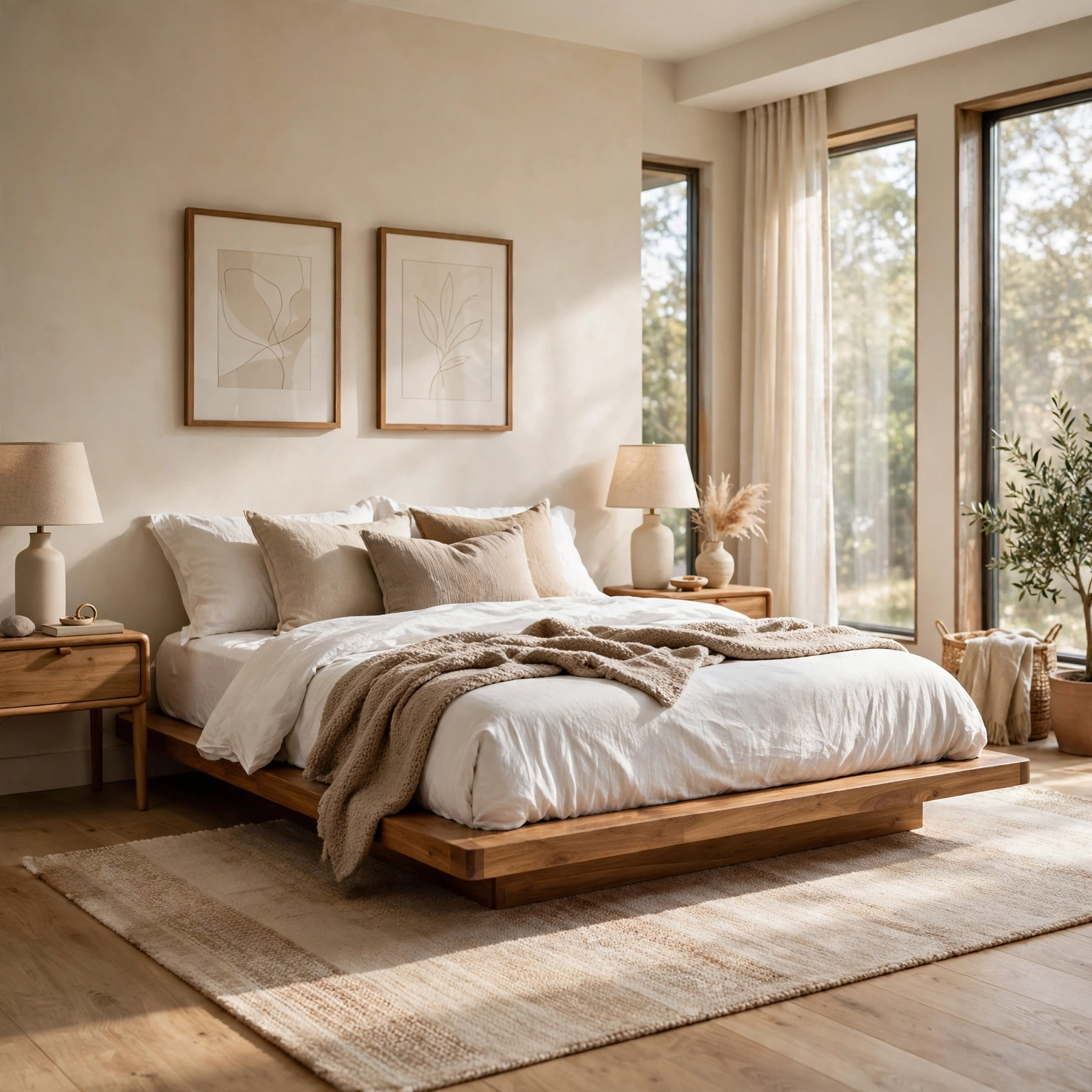
| Bed Size | Frame Dimensions (approx.) | Recommended Room Size |
| Twin | 39″ x 75″ | 7′ x 8′ minimum |
| Full | 54″ x 75″ | 9′ x 10′ minimum |
| Queen | 60″ x 80″ | 10′ x 11′ minimum |
| King | 76″ x 80″ | 12′ x 12′ minimum |
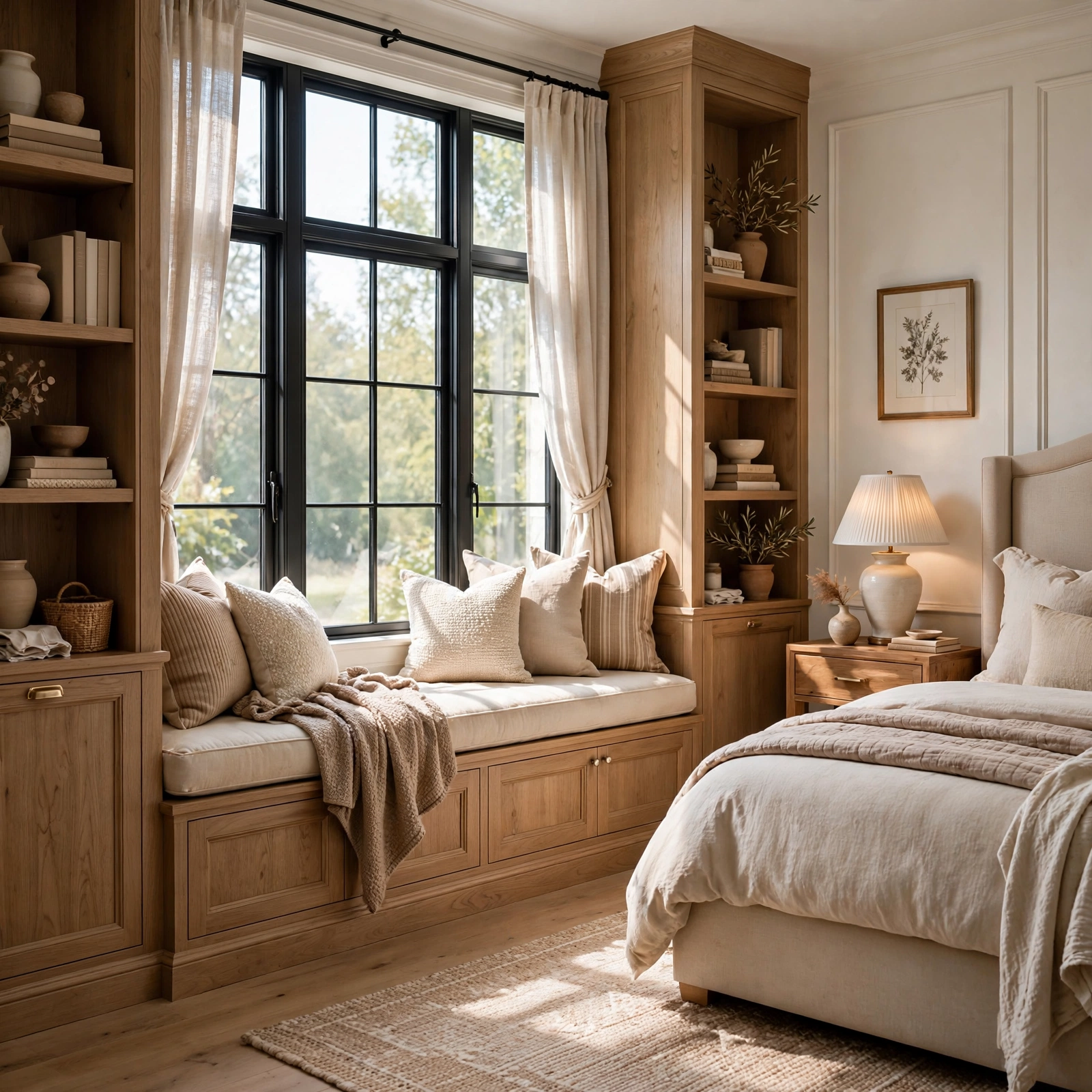
2. Built-In Window Seat in Bedroom
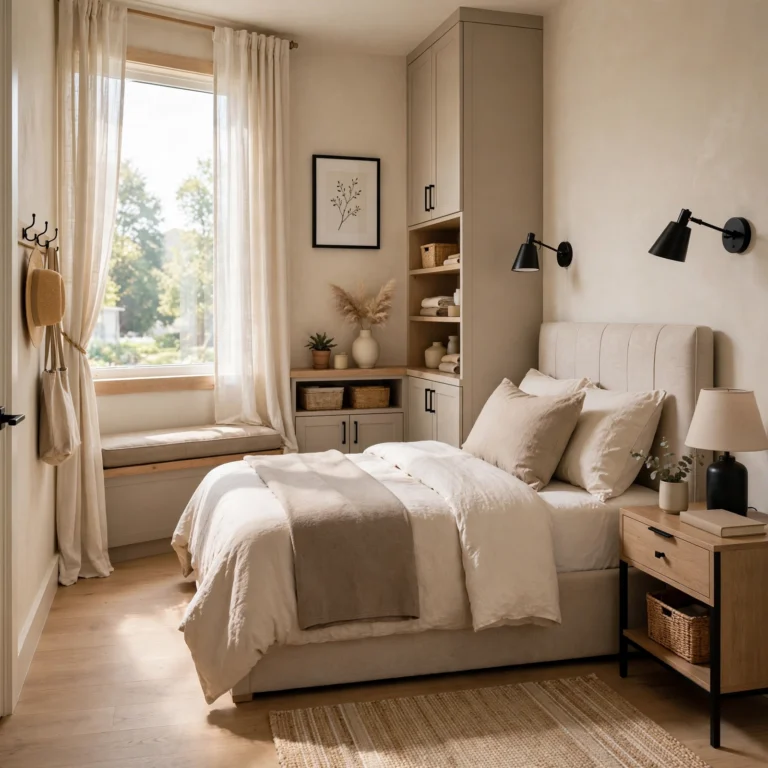
A built-in window seat turns an underused corner or bay window into functional square footage without shrinking the walkable floor area. Carpenters typically frame the seat with a hinged or drawer base underneath for extra linen storage, then finish it with a cushion and a few throw pillows. This works especially well in older homes with deep window sills or awkward nooks that don’t fit standard furniture. It also gives the room a second seating option beyond the bed itself.
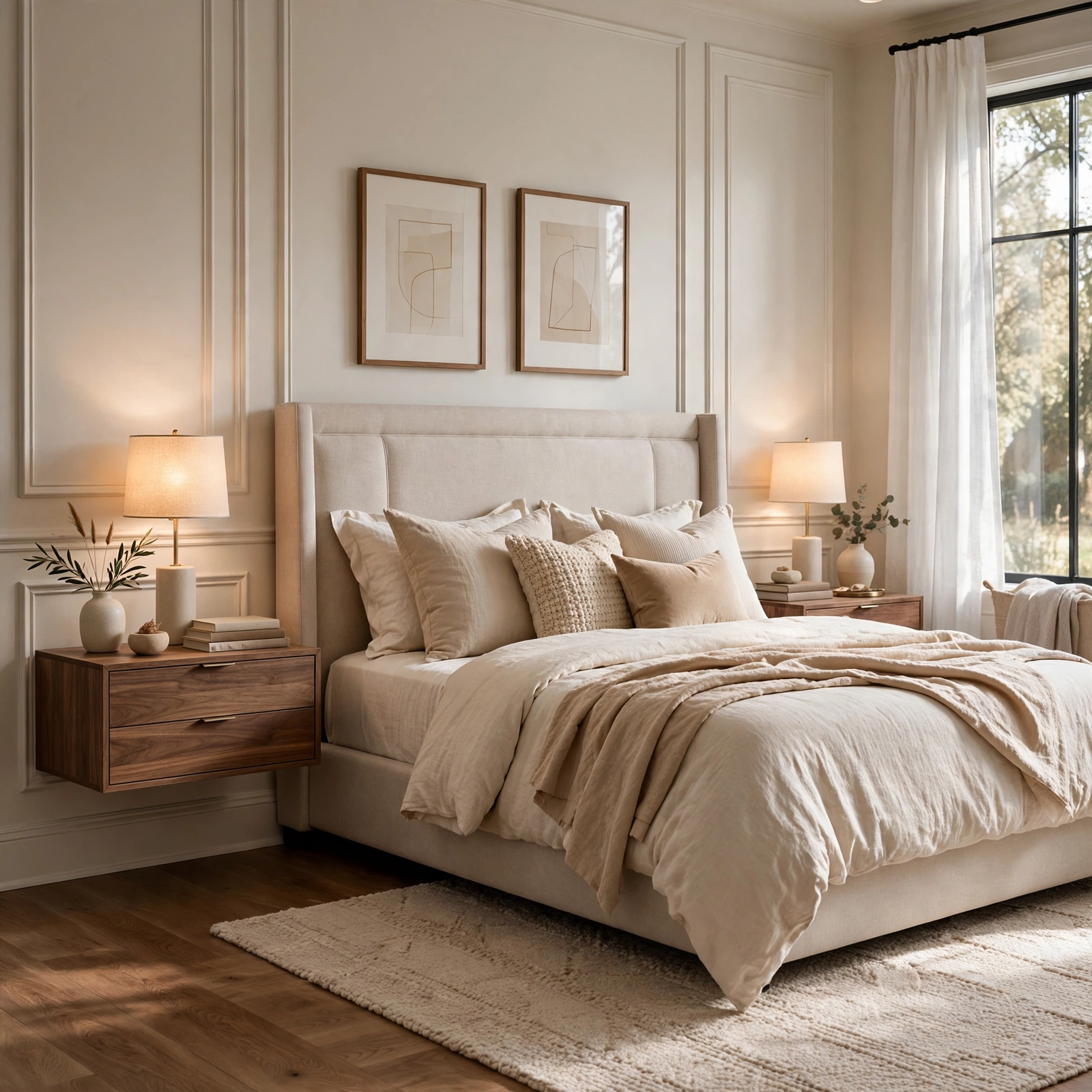
3. Floating Nightstands in Bedroom
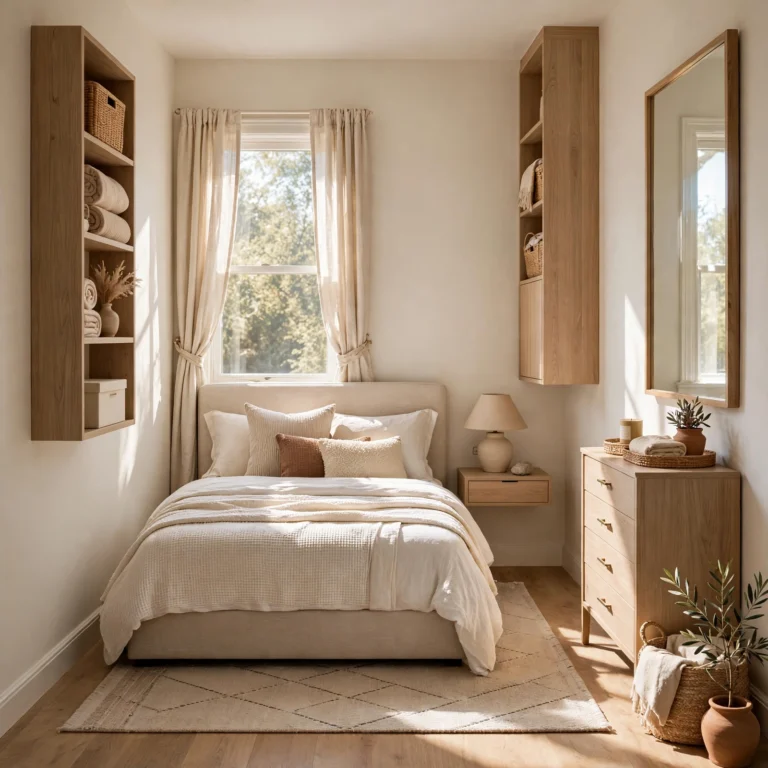
Floating nightstands mount directly to the wall, which frees up floor space for easier cleaning and makes small bedrooms feel less cluttered. They typically come in a single drawer or open-shelf style and hold a lamp, a book, and a phone charger without taking up visual weight. Installation requires anchoring into studs, so it’s worth checking wall framing before committing to placement. This idea pairs particularly well with platform beds since both styles share a low, minimal profile.
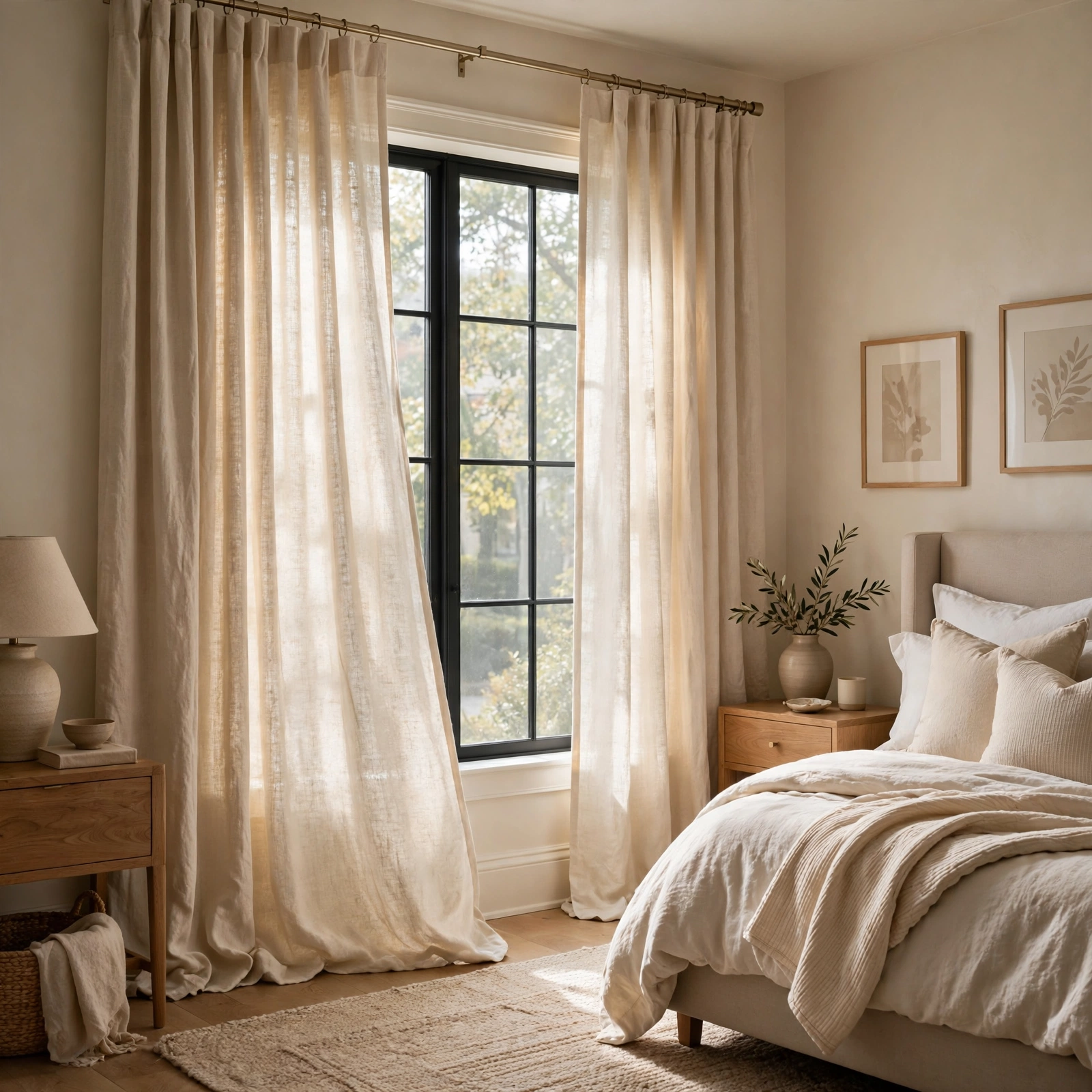
4. Linen Drapery Panels in Bedroom
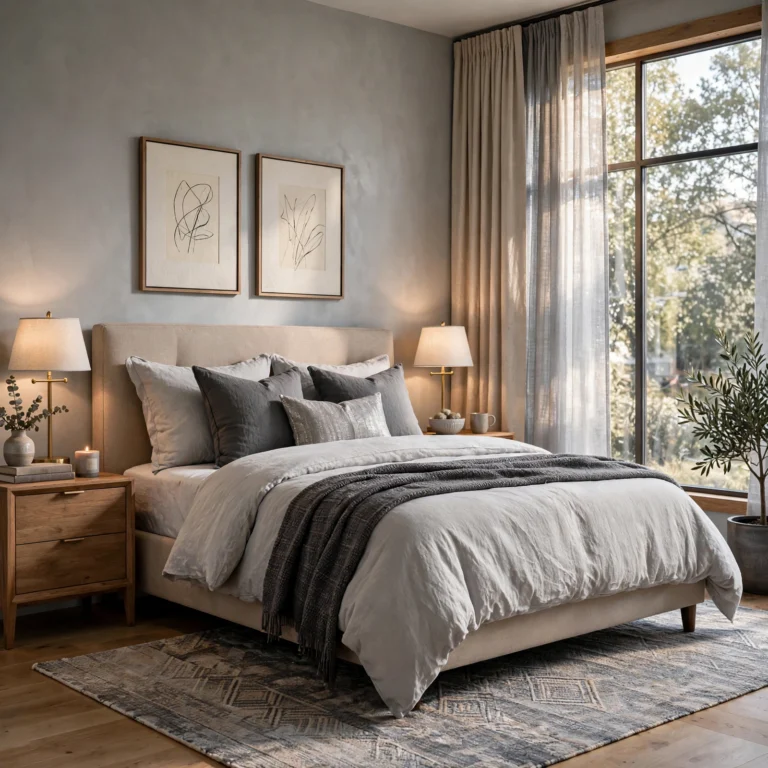
Linen drapery panels soften hard architectural lines and add a gentle texture that heavier cotton or blackout curtains can’t replicate. Because linen has a natural, slightly wrinkled finish, it reads as relaxed rather than formal, which suits a bedroom meant for rest. Hanging panels close to the ceiling rather than directly above the window frame makes the room feel taller and the windows appear larger than they are. Pair with a simple blackout liner if light control is still a priority.
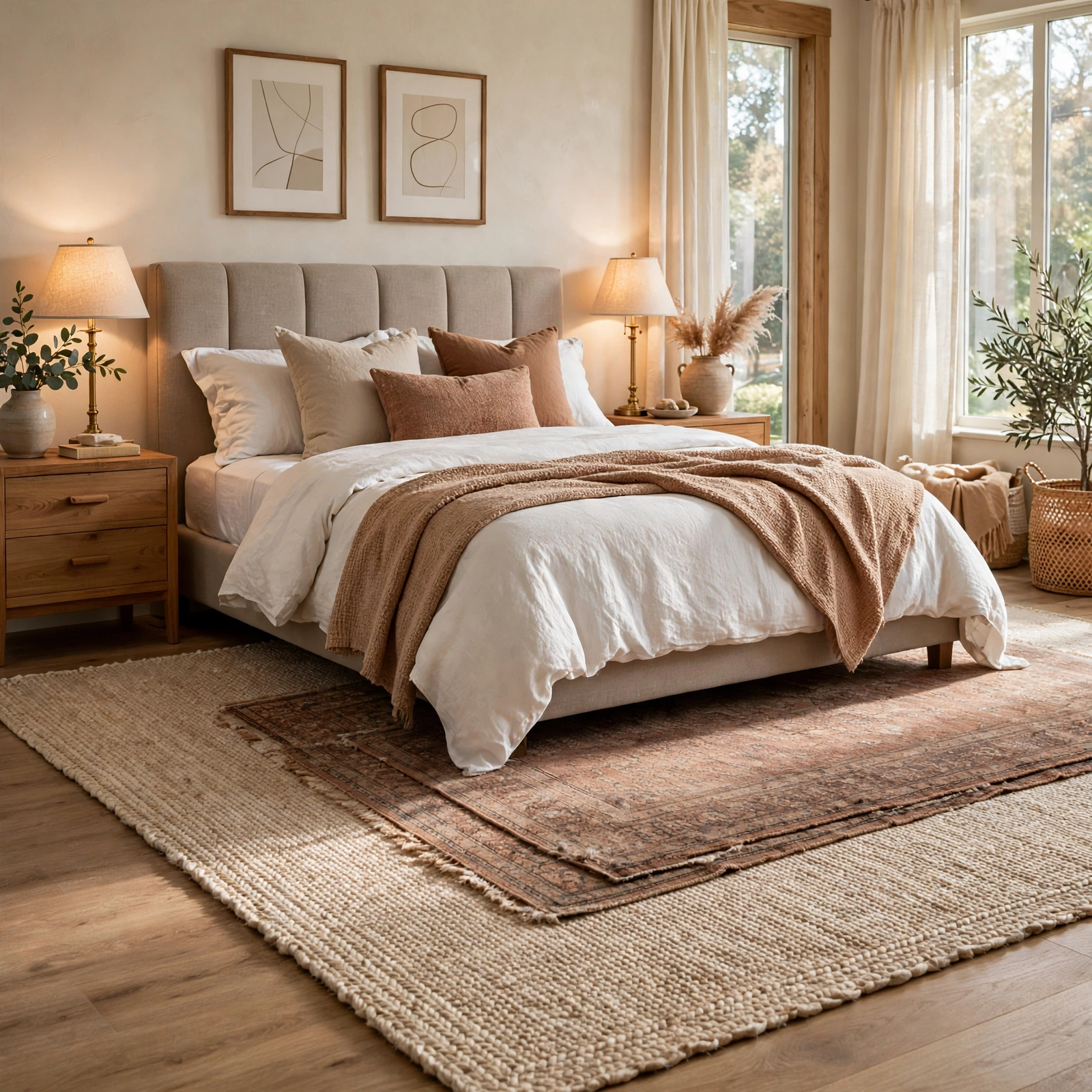
5. Layered Area Rugs in Bedroom
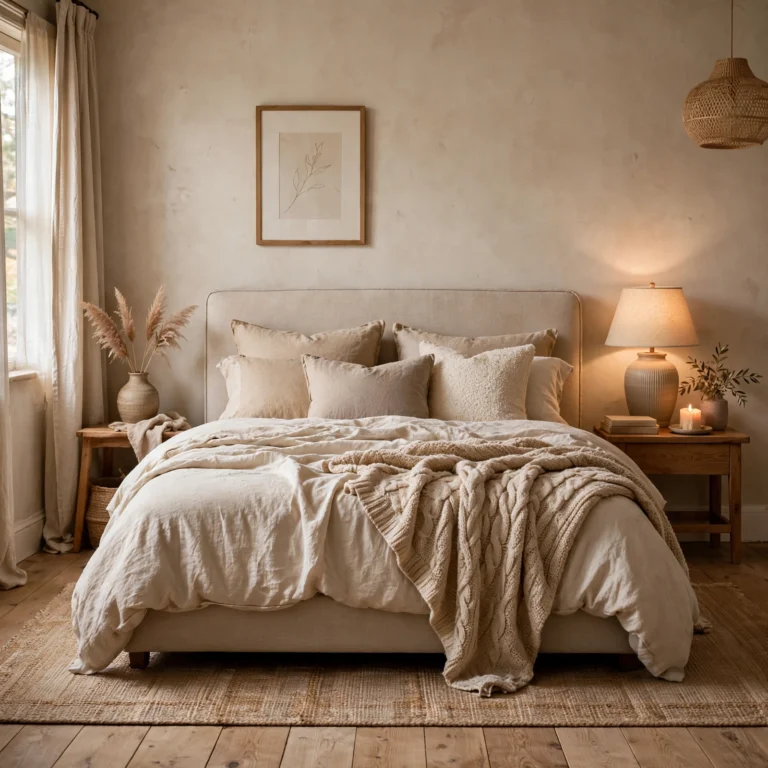
Layering a smaller patterned rug over a larger neutral jute or sisal base rug adds depth underfoot and softens the transition from hard flooring to the bed area. This technique works especially well in rooms with hardwood or laminate floors that can otherwise feel cold in the mornings. Choose a base rug large enough to extend at least eighteen inches past the sides of the bed, then let the top rug act as a smaller accent near a reading chair or bench.
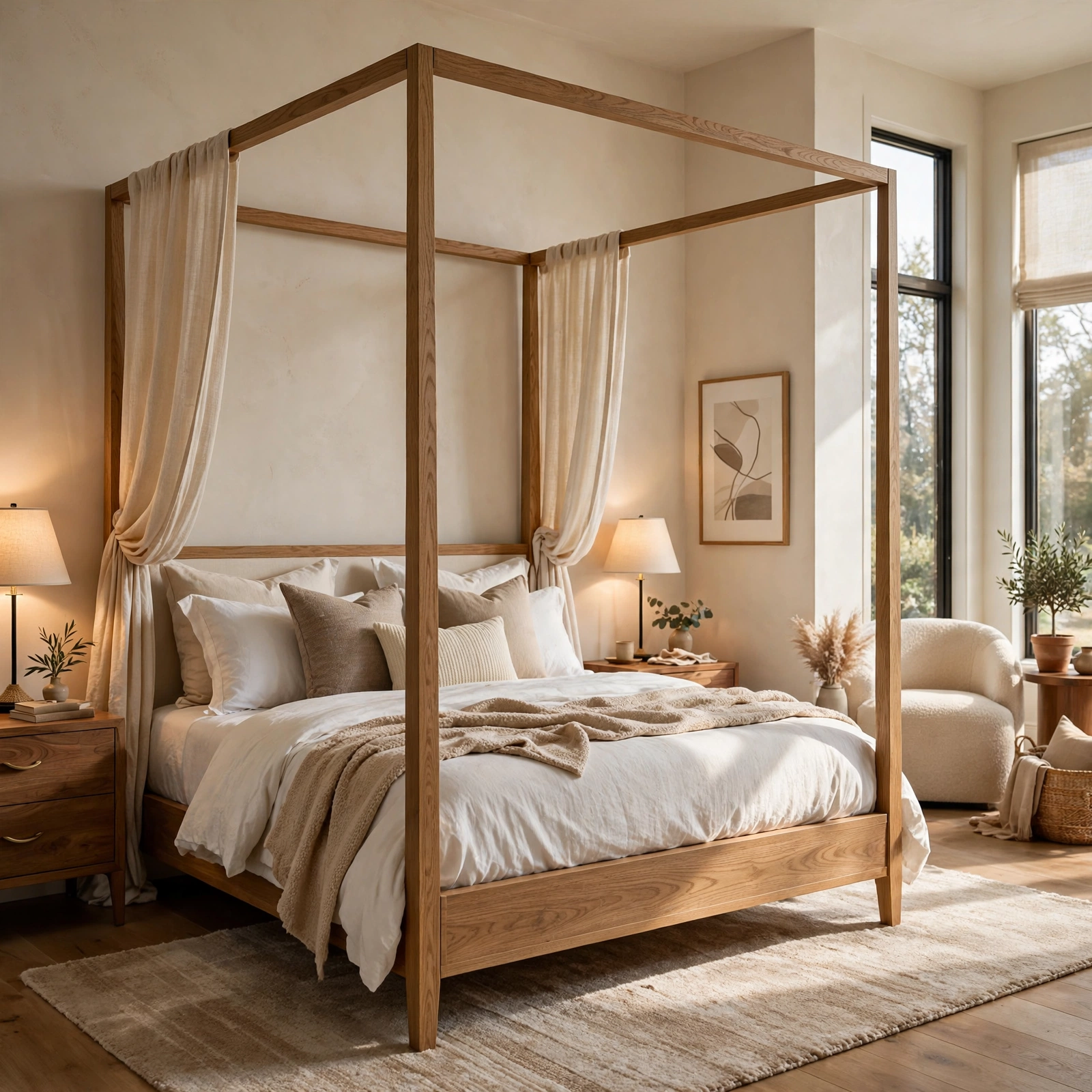
6. Canopy Bed Frame in Bedroom
A canopy bed frame adds architectural height to a room without requiring any construction, making it a strong option for renters or anyone hesitant about permanent changes. Metal frames tend to read as modern and minimal, while wood versions lean more traditional or coastal depending on the finish. Draping a lightweight fabric over the top rails introduces softness and can double as a light diffuser for anyone sensitive to morning sun through sheer curtains.
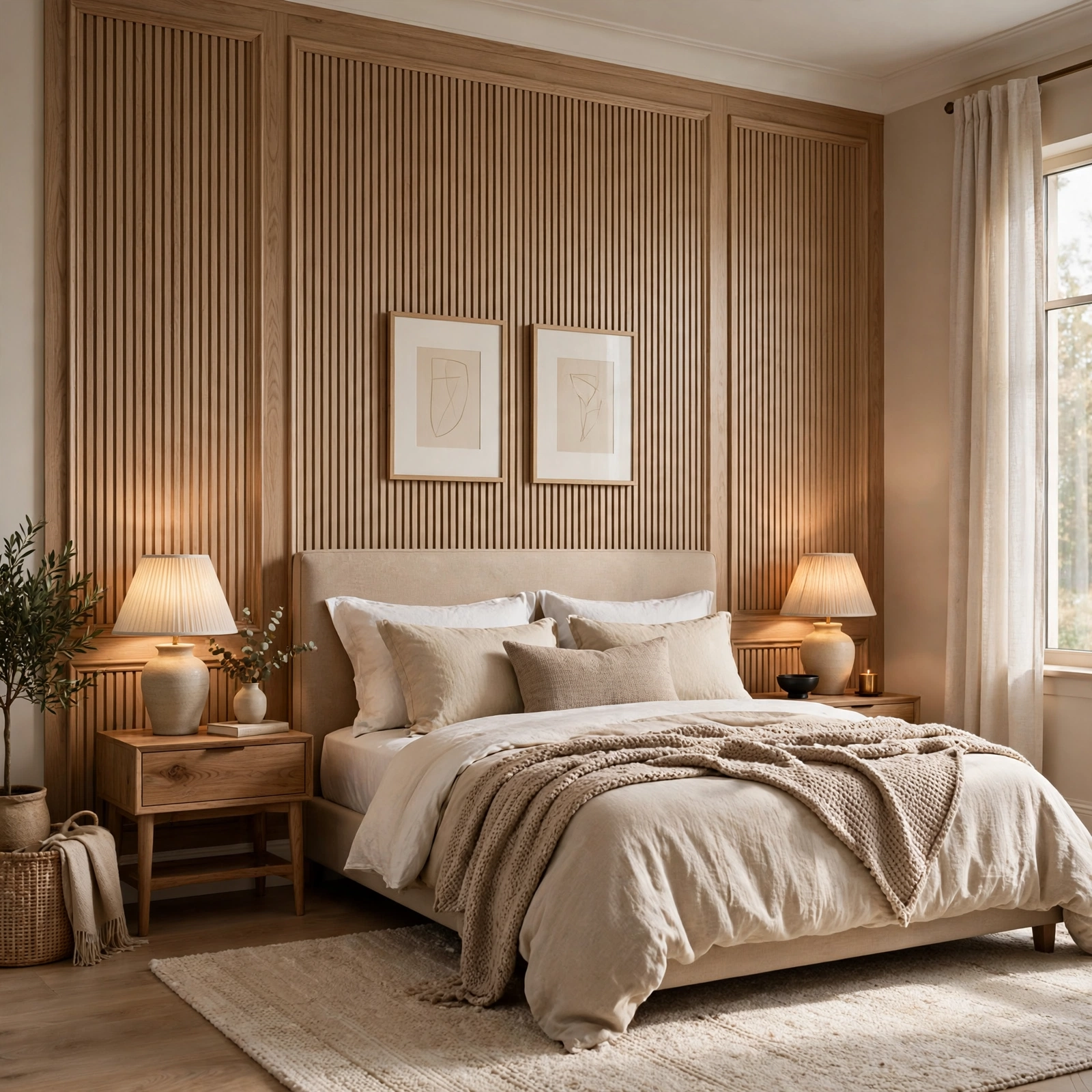
7. Accent Wall Paneling in Bedroom
Wood or MDF paneling installed behind the headboard wall gives the room a custom, finished look that paint alone rarely achieves. Board and batten, shiplap, and slat paneling are the three most requested styles right now, each offering a different texture and shadow line. Paneling also has a practical benefit since it hides minor wall imperfections and can be painted any color to match the rest of the room’s palette without needing a full drywall repair first.
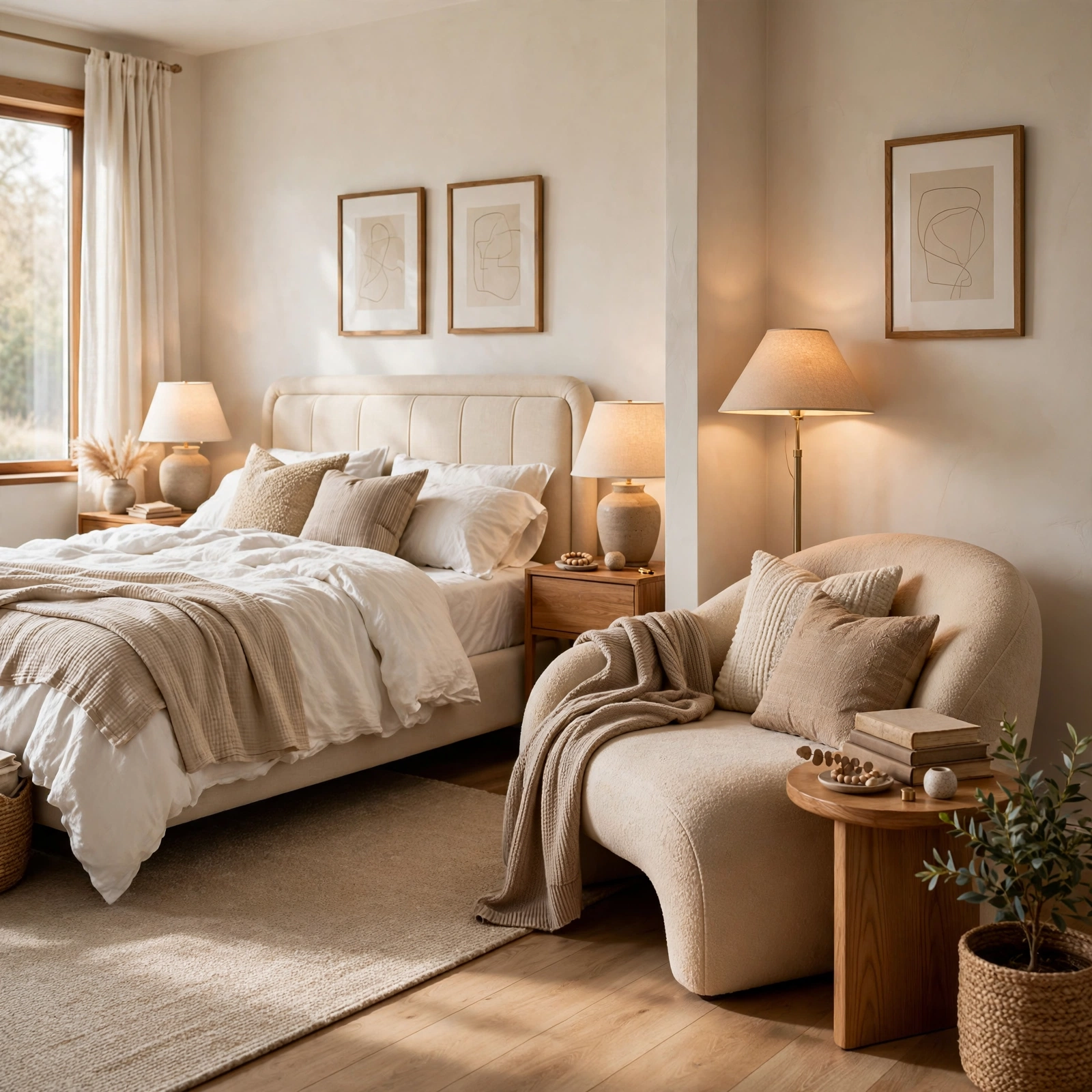
8. Reading Nook Corner in Bedroom
Carving out a reading nook in an unused corner gives the bedroom a secondary purpose beyond sleeping, which matters in homes without a separate den or office. A single accent chair, a small side table, and a floor lamp with adjustable brightness are usually enough to define the space. Positioning the nook near natural light during the day and adding a warm-toned bulb for evening use makes the corner functional at any hour without competing with the main lighting in the room.
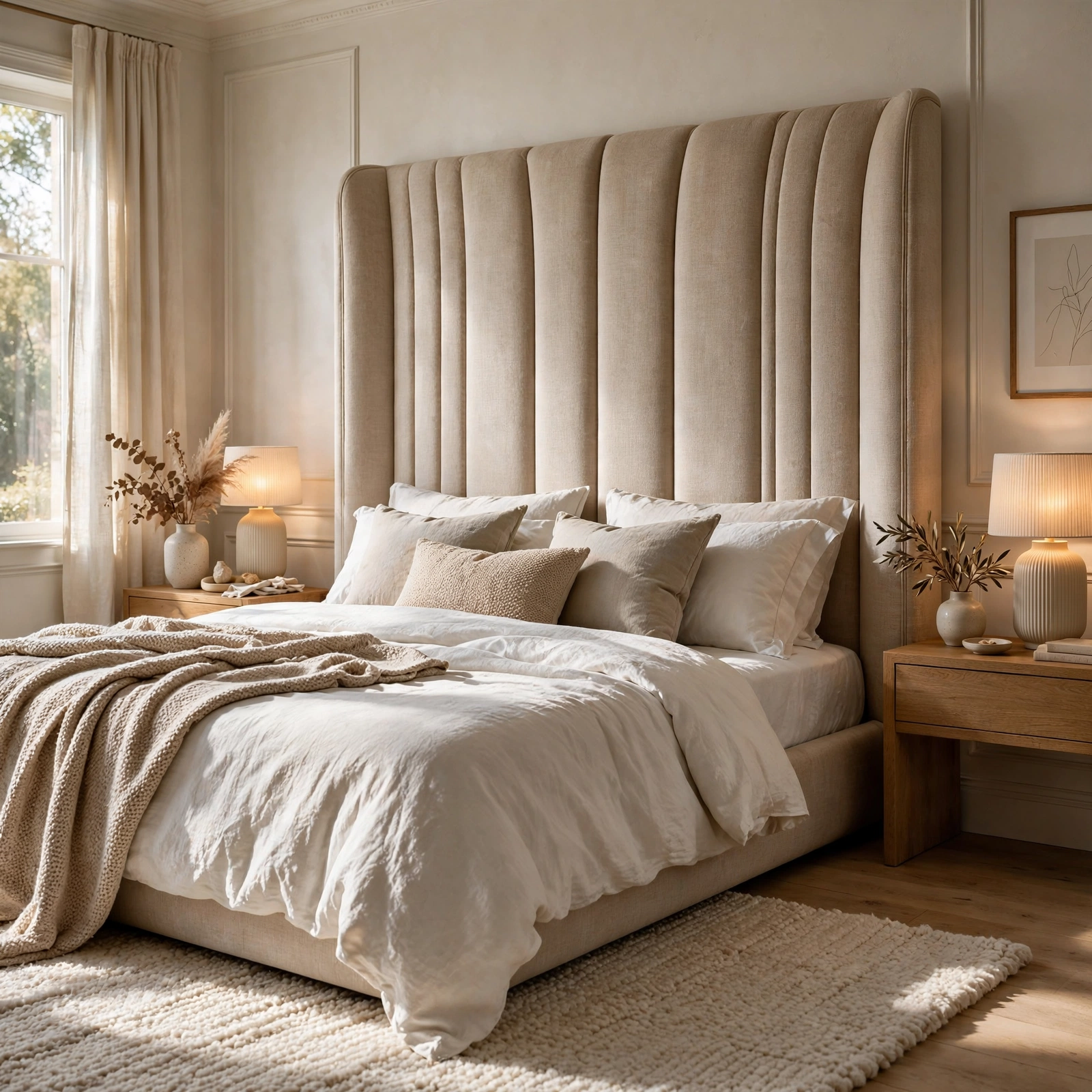
9. Upholstered Headboard in Bedroom
An upholstered headboard softens the hard edges of a bed frame and gives the wall behind it a focal point that photographs well and feels comfortable to lean against while reading. Linen, velvet, and boucle are the most common fabric choices this year, each offering a different texture and light reflection. Channel tufting or a simple wingback silhouette are two reliable styles that tend to age well and won’t feel dated after a few seasons of trend shifts.
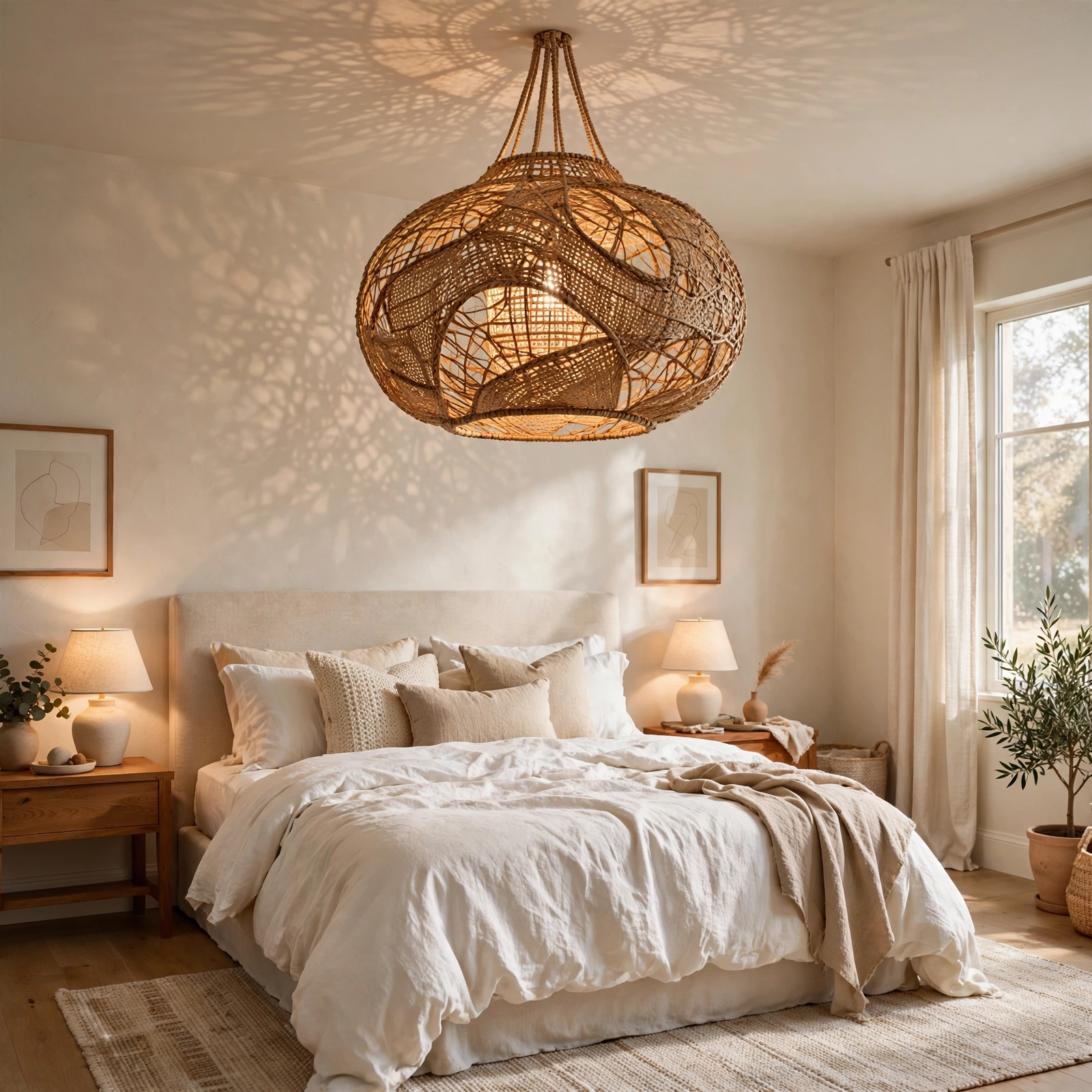
10. Woven Pendant Lighting in Bedroom
Swapping a flush-mount ceiling fixture for a woven rattan or jute pendant adds warmth and texture to the room’s central lighting without requiring major electrical work in most cases. These fixtures diffuse light more softly than exposed bulbs, which suits a bedroom’s need for gentler evening lighting. Hanging the pendant slightly off-center, above a reading chair or the foot of the bed, also breaks up the predictability of a fixture placed dead center in the ceiling.
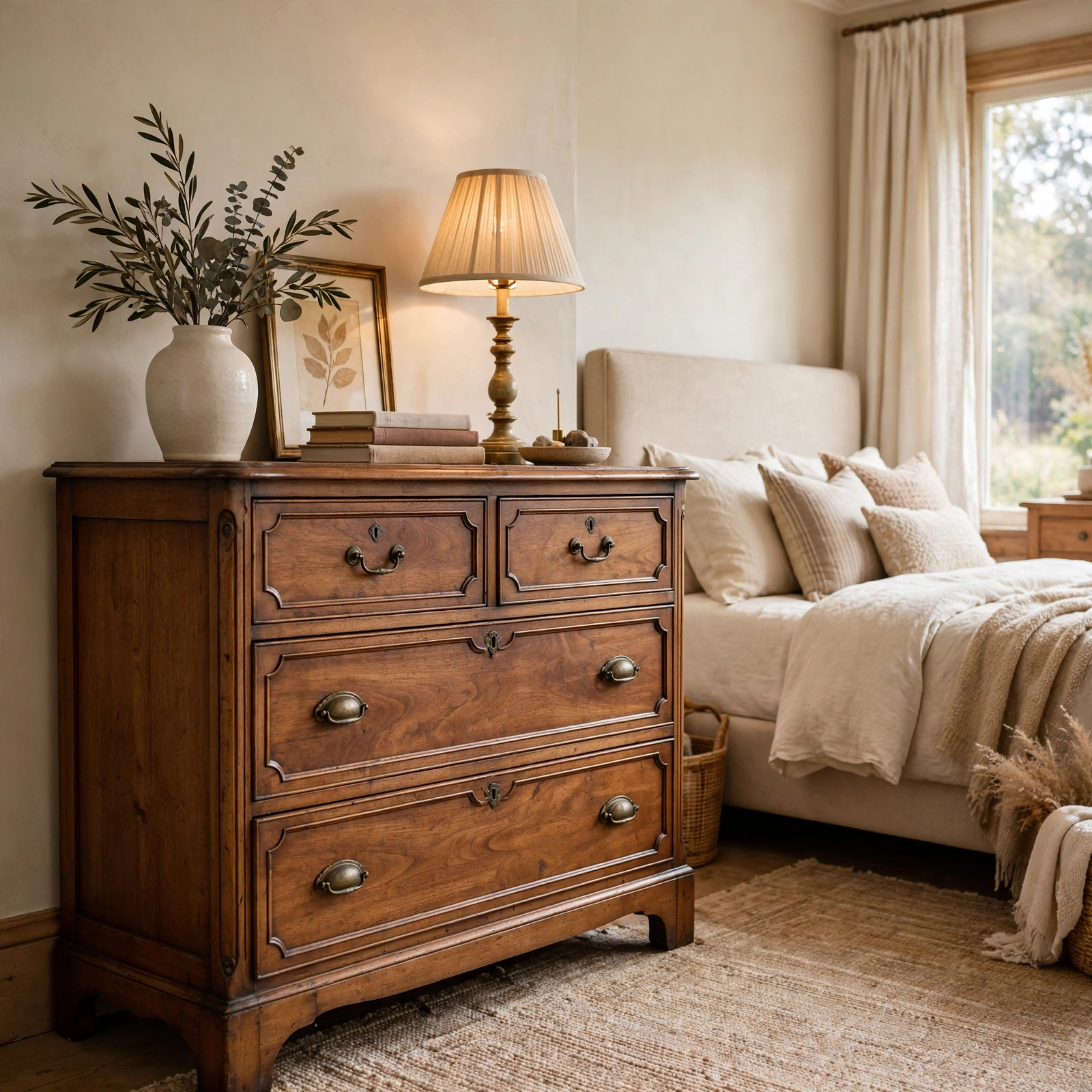
11. Vintage Dresser Restoration in Bedroom
Refinishing a secondhand or inherited dresser instead of buying new furniture gives the room a piece with actual history and often better construction quality than mass-produced alternatives. Sanding down the existing finish, replacing worn hardware, and applying a fresh stain or paint color can transform a dated piece into something that fits current style preferences. This approach also tends to cost significantly less than a comparable new dresser while keeping usable furniture out of landfills.
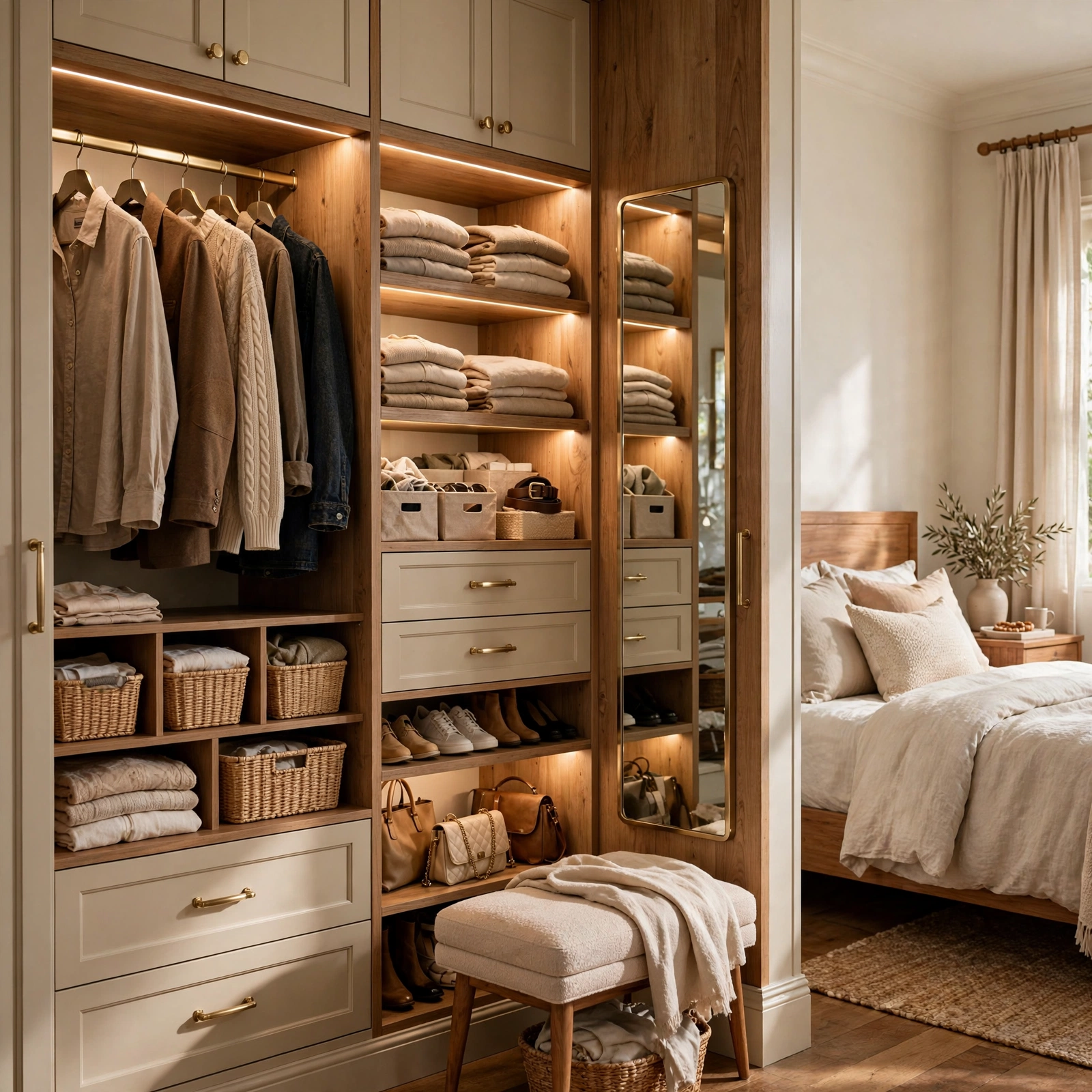
12. Closet Organization System in Bedroom
Installing a modular closet system with adjustable shelving, double hanging rods, and labeled bins turns a chaotic closet into functional storage that actually gets used. Many systems can be installed without professional help using wall-mounted track hardware, which keeps costs manageable for a weekend project. Sorting items by category rather than just hanging everything together also makes mornings faster and keeps the closet from becoming a dumping ground within a few weeks of setup.
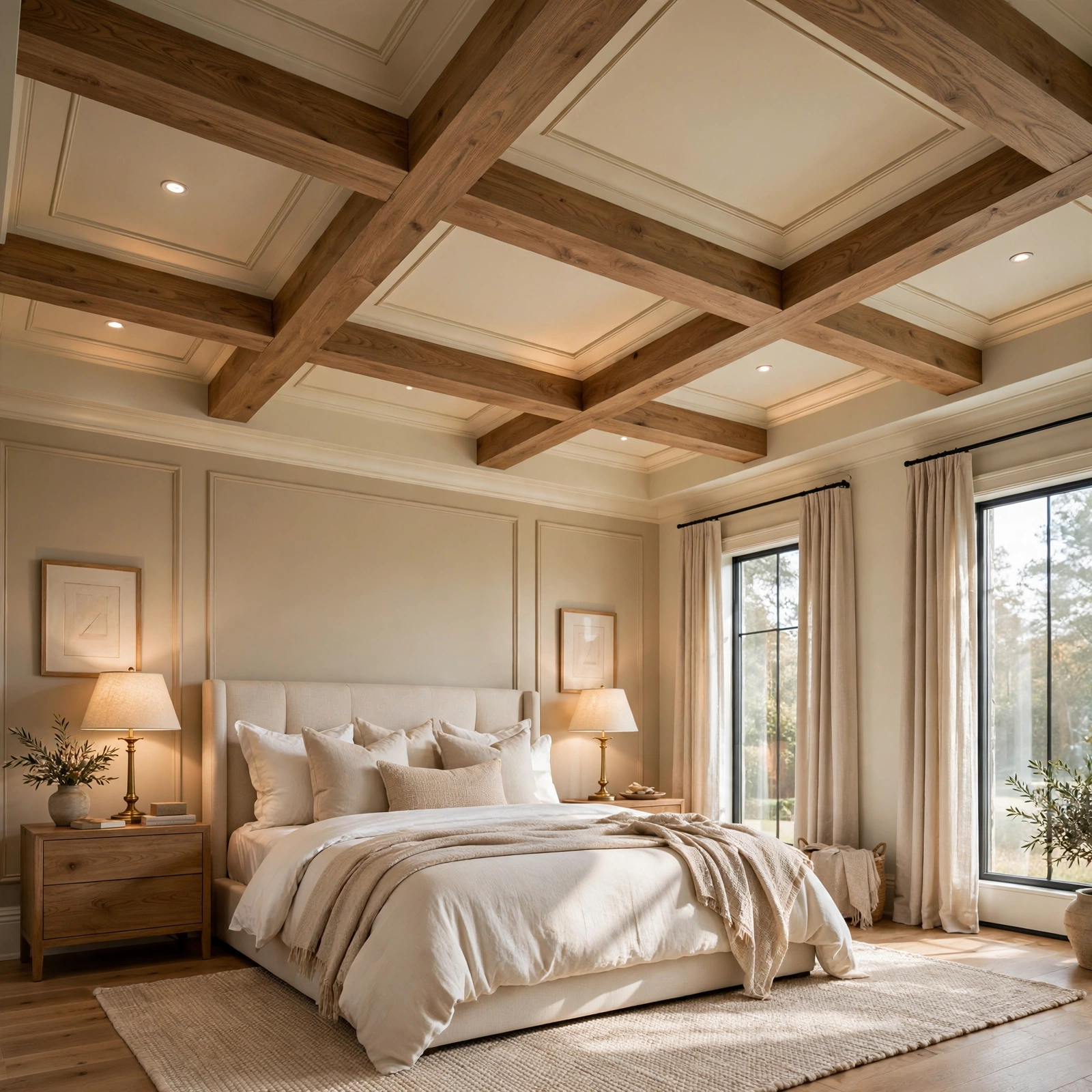
13. Statement Ceiling Treatment in Bedroom
Painting the ceiling a deep color or adding a wallpaper pattern overhead draws the eye upward and gives an otherwise plain bedroom a distinct identity. This works particularly well in rooms with lower ceilings, where a darker tone can create a cozy, enclosed feeling rather than emphasizing the lack of height. Wallpaper with a subtle texture or botanical print is a popular alternative to paint for anyone wanting more visual interest without committing to a solid color overhead.
To learn about Living Room Design ideas CLICK HERE.
Shop the Look
For anyone recreating these bedroom ideas, a few specific pieces tend to show up across most of the looks above. A solid oak platform bed frame with tapered legs anchors the room in a mid-century or Scandinavian direction. A pair of wall-mounted walnut nightstands with a single drawer keeps the floor clear. A jute area rug in a natural fiber weave works as the base layer under a smaller patterned wool rug. A rattan dome pendant light and a set of linen drapery panels in an oatmeal tone round out the core shopping list.
Common Mistake to Avoid
The most common mistake in bedroom planning is choosing furniture sized for the room on paper rather than the room after walkways, doors, and closet swing space are accounted for. A queen bed frame might technically fit against one wall, but if it blocks the closet door or leaves less than two feet of walking space on either side, the room will feel cramped no matter how well it’s decorated. Always measure clearance for doors, drawers, and foot traffic before finalizing any furniture purchase.
Frequently Asked Questions
What is the best bedroom idea for a small room?
Floating nightstands and a platform bed frame are typically the two most effective bedroom ideas for small rooms because both reduce visual clutter and free up floor space. Choosing furniture with exposed legs or wall-mounted storage also helps a small room feel larger since more of the floor stays visible. Sticking to a limited color palette and avoiding oversized area rugs further prevents a compact bedroom from feeling boxed in or overcrowded.
How much does a built-in window seat typically cost?
A built-in window seat generally costs between eight hundred and two thousand five hundred dollars depending on the materials used, whether storage drawers are included, and local labor rates. Simple plywood builds with a painted finish sit at the lower end, while custom hardwood versions with cushions and integrated storage push toward the higher end. DIY builders using pre-made cabinet boxes can often complete a basic version for significantly less than a fully custom install.
Are canopy beds still in style?
Yes, canopy beds have returned to popularity, particularly in metal frame versions that read as more modern and less formal than the heavy wood four-poster styles from previous decades. Pairing a canopy frame with lightweight linen drapery keeps the look airy rather than dated. The style works well in both traditional and contemporary bedrooms since the frame itself can be dressed up or down depending on the surrounding decor choices.
What rug size works best under a queen bed?
An eight by ten foot rug is generally the best fit under a queen bed, allowing the rug to extend at least two feet beyond each side of the frame and past the foot of the bed. This creates a soft landing area when stepping out of bed and keeps nightstands anchored on the rug rather than half on, half off. Smaller rooms can size down slightly, but going below a six by nine foot rug often looks disconnected from the furniture.
How do I add storage without built-ins?
Freestanding options like a vintage dresser, under-bed storage bins, and a modular closet organization system can add significant storage without any construction work. Wall-mounted floating shelves and hooks near the closet also help distribute smaller items like bags or accessories away from dresser drawers. Choosing furniture with multiple functions, such as a bench with a lift-top seat, is another effective way to add storage in a rented or temporary space.
Conclusion
These thirteen bedroom ideas range from simple furniture swaps to weekend-friendly builds, giving most budgets and skill levels a realistic starting point. Picking two or three that fit the room’s actual layout, rather than trying to do everything at once, tends to produce the most cohesive result. Save this post to Pinterest for reference while planning, and check out the related storage and lighting guides for more room-by-room breakdowns.