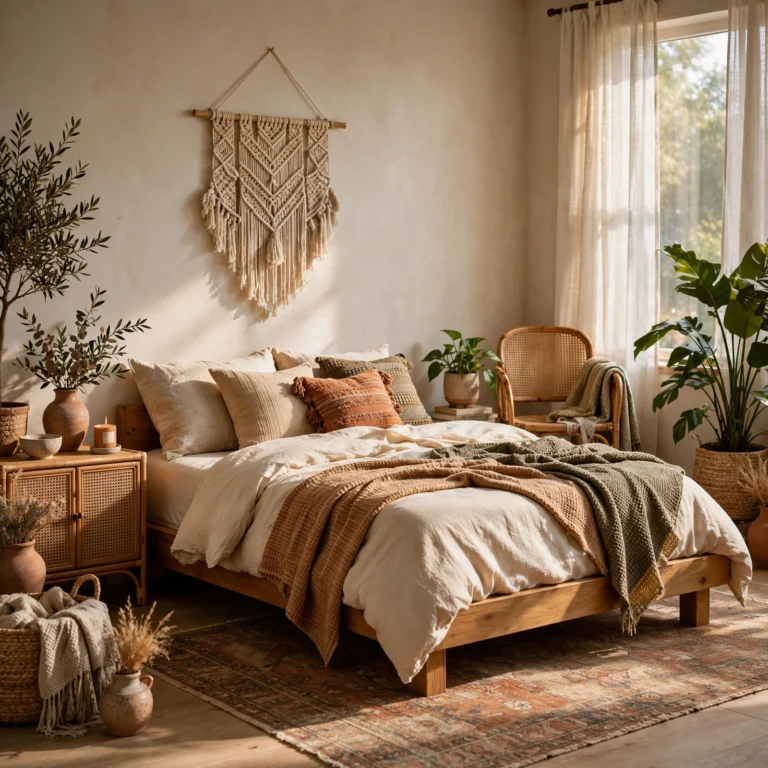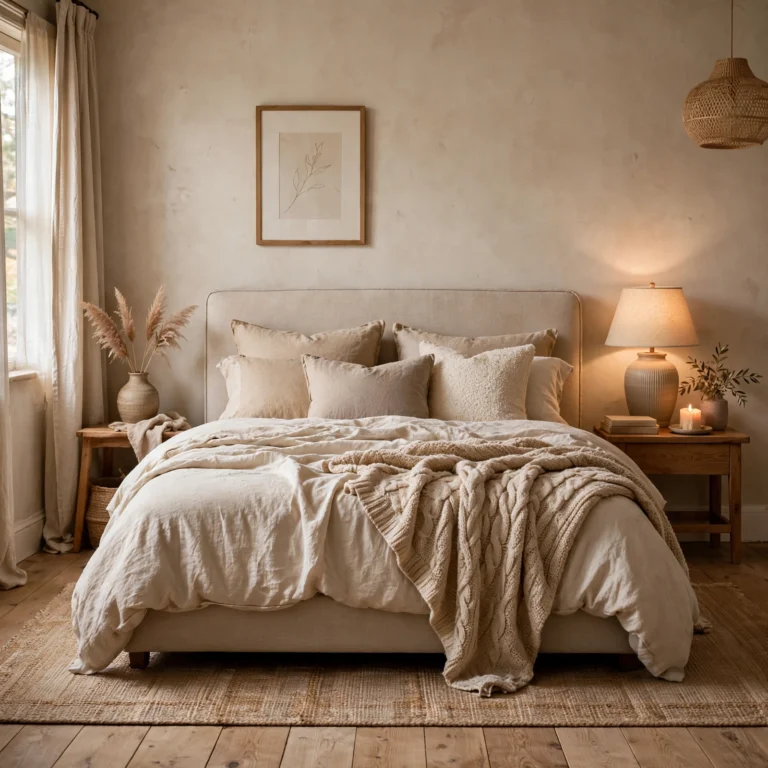
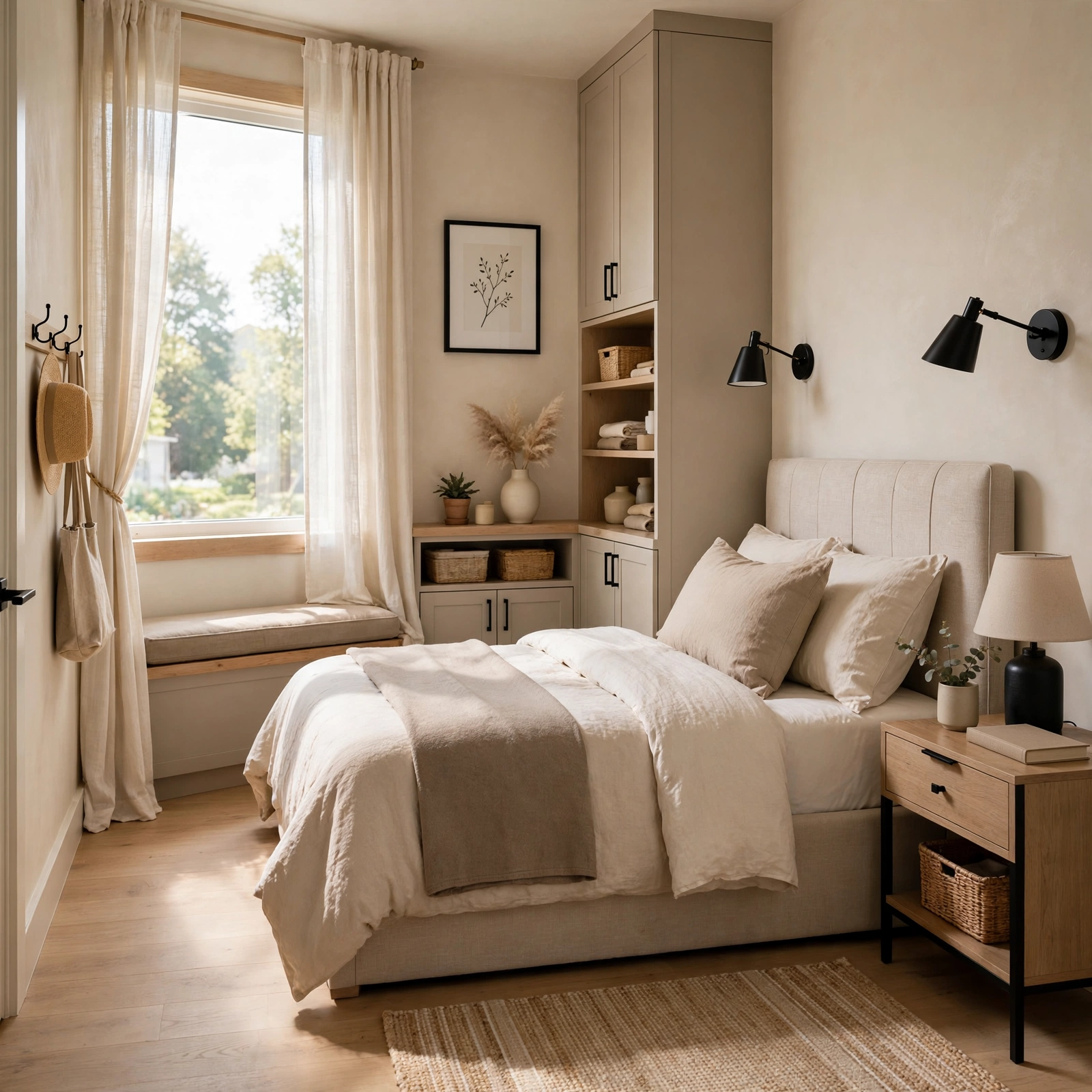
15 Gorgeous Small Bedroom Ideas That Maximize Every Inch for a Beautiful Space
Finding workable small bedroom ideas usually means balancing storage needs against limited floor space without making the room feel cramped. This guide covers fifteen practical solutions, from fold-away furniture to vertical storage systems, that have been tested in real apartments and starter homes. You will learn which bed configurations fit tight square footage, how to add storage without shrinking walkways, and which layout choices make the biggest visual difference. Each of the small bedroom ideas includes specific guidance for putting it into practice regardless of the room’s exact dimensions.
Trend & Background
Small bedroom design has become more relevant as urban housing shrinks and more people rent studio or one-bedroom units with limited square footage. Furniture makers have responded with a wider range of space-saving products, including Murphy beds, modular storage systems, and slim-profile furniture that wasn’t widely available a decade ago. This shift matters now because renters and first-time homeowners are increasingly working with compact floor plans and need design solutions that don’t require knocking down walls. Design forums and renovation queries show a steady rise in searches specifically for small-space bedroom layouts over the past few years.
Key Takeaways
- These 15 small bedroom ideas focus on space-saving furniture, vertical storage, and layout tricks that work in rooms under 120 square feet.
- A configuration table compares Murphy bed sizes against minimum room dimensions for planning purposes.
- Multi-functional furniture pieces are prioritized throughout since small rooms benefit most from items that serve two purposes.
- Light and mirror placement ideas are included alongside furniture solutions for a fuller approach to making a small room feel larger.
1. Murphy Bed Frame for Small Bedroom
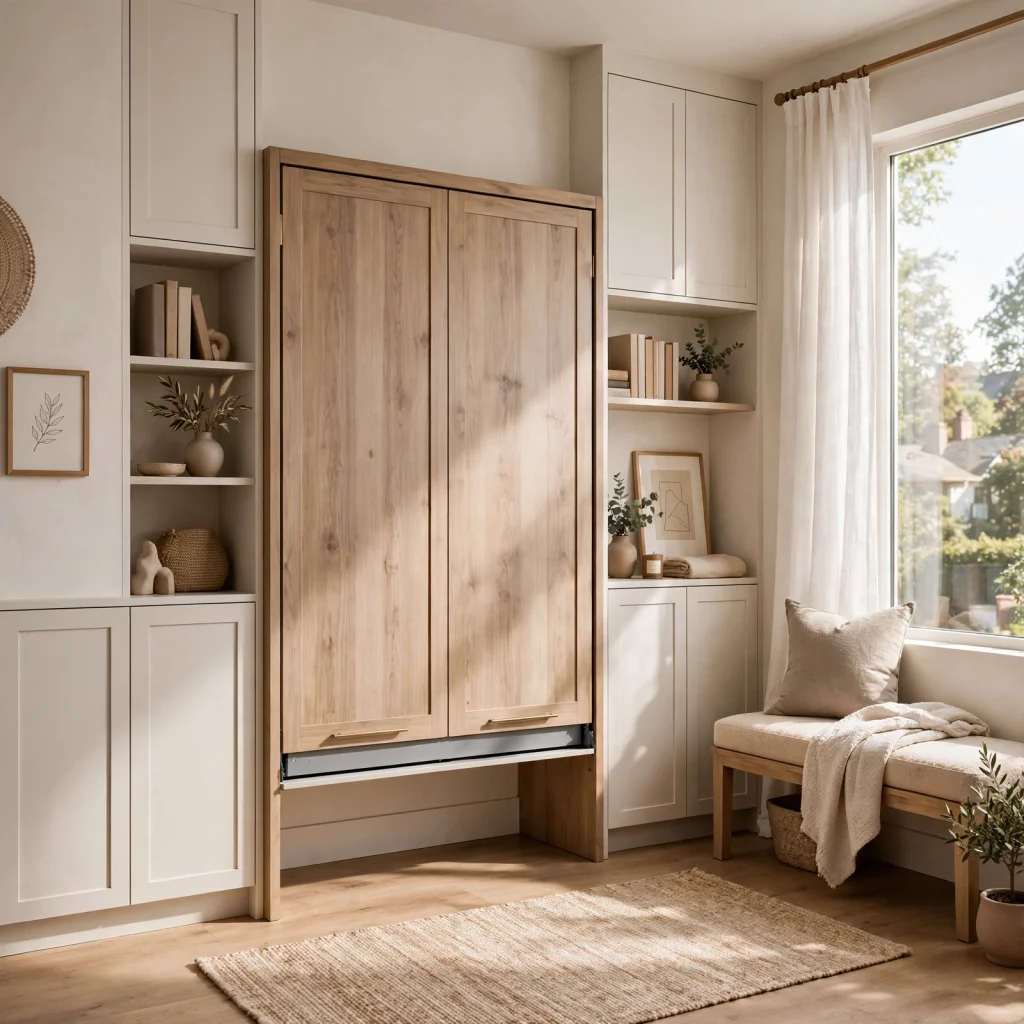
A Murphy bed frame folds up into a wall unit during the day, freeing the entire floor area for other uses like a desk or exercise space. Modern versions often include built-in shelving or a desk that flips down when the bed folds up, adding function beyond just the sleeping surface. Installation requires securing the unit to wall studs, so it’s worth having a professional handle the mounting in older buildings. The table below compares common configurations against minimum room size.
| Bed Size | Folded Depth (approx.) | Minimum Room Width |
| Twin | 14″ to 16″ | 6′ |
| Full | 16″ to 18″ | 8′ |
| Queen | 18″ to 20″ | 10′ |
2. Under-Bed Storage Drawers for Small Bedroom
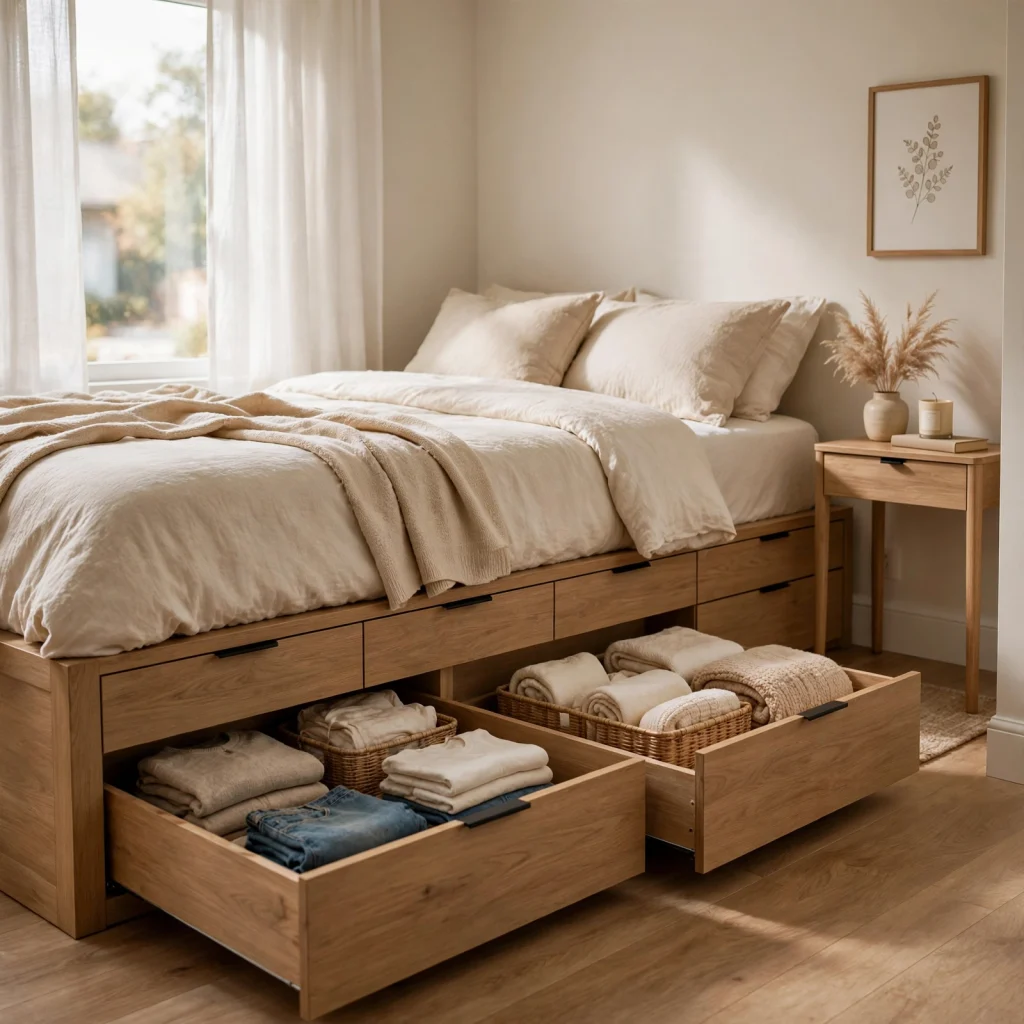
Rolling storage drawers or bins slid underneath a bed frame take advantage of otherwise wasted space and work well for out-of-season clothing, extra linens, or shoes. Choosing a bed frame with built-in risers or legs tall enough to clear a standard storage bin makes this option more practical than trying to squeeze containers under a low platform frame. Labeling each drawer by contents also speeds up finding items later without pulling every bin out to check.
3. Wall-Mounted Desk for Small Bedroom
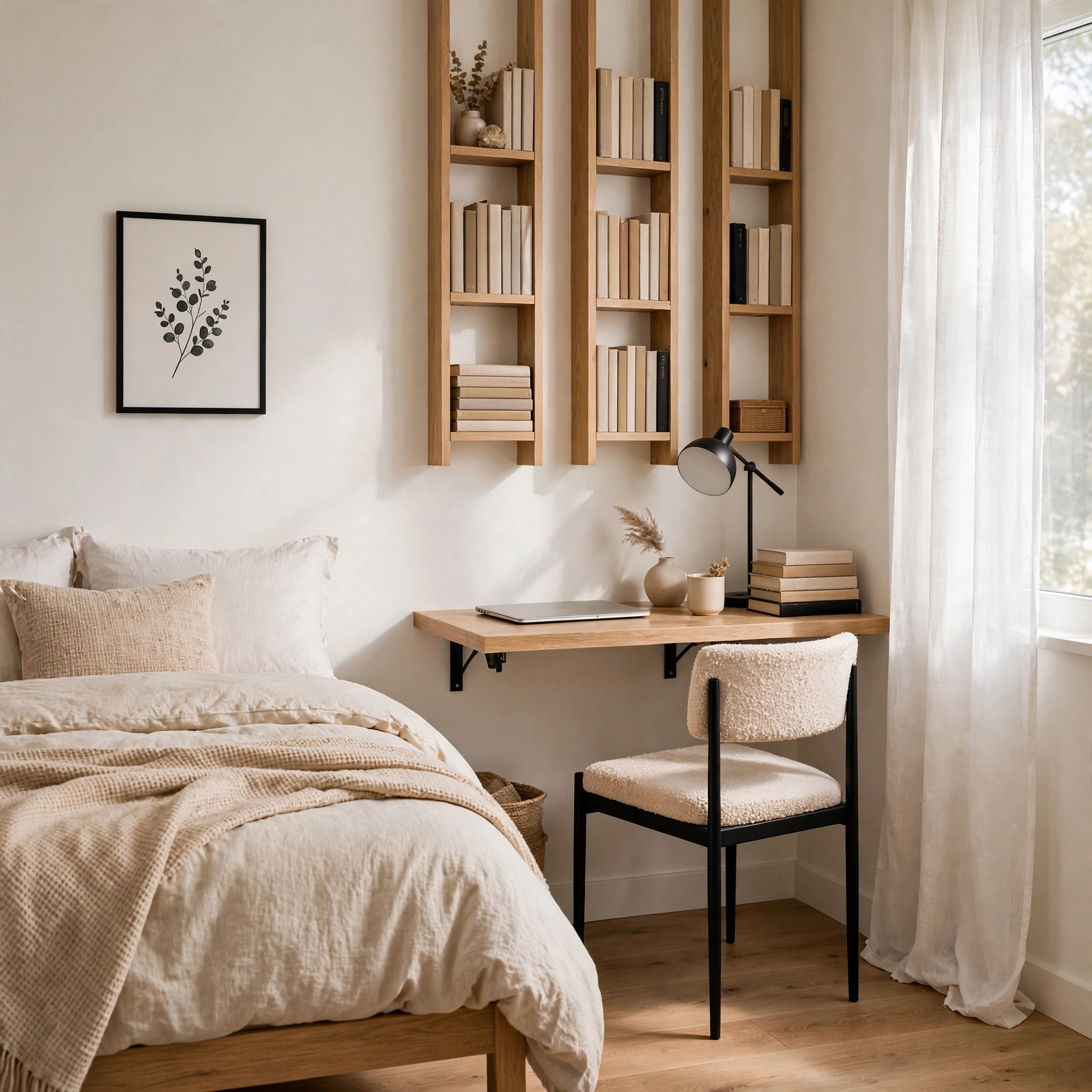
A fold-down or wall-mounted desk gives a small bedroom a functional workspace without permanently occupying floor space when it’s not in use. Many versions fold flat against the wall and double as a shelf or art display when closed, which keeps the room looking intentional rather than like a makeshift office. Mounting the desk near a window takes advantage of natural light during work hours without needing an additional desk lamp during the day.
4. Loft Bed Configuration for Small Bedroom
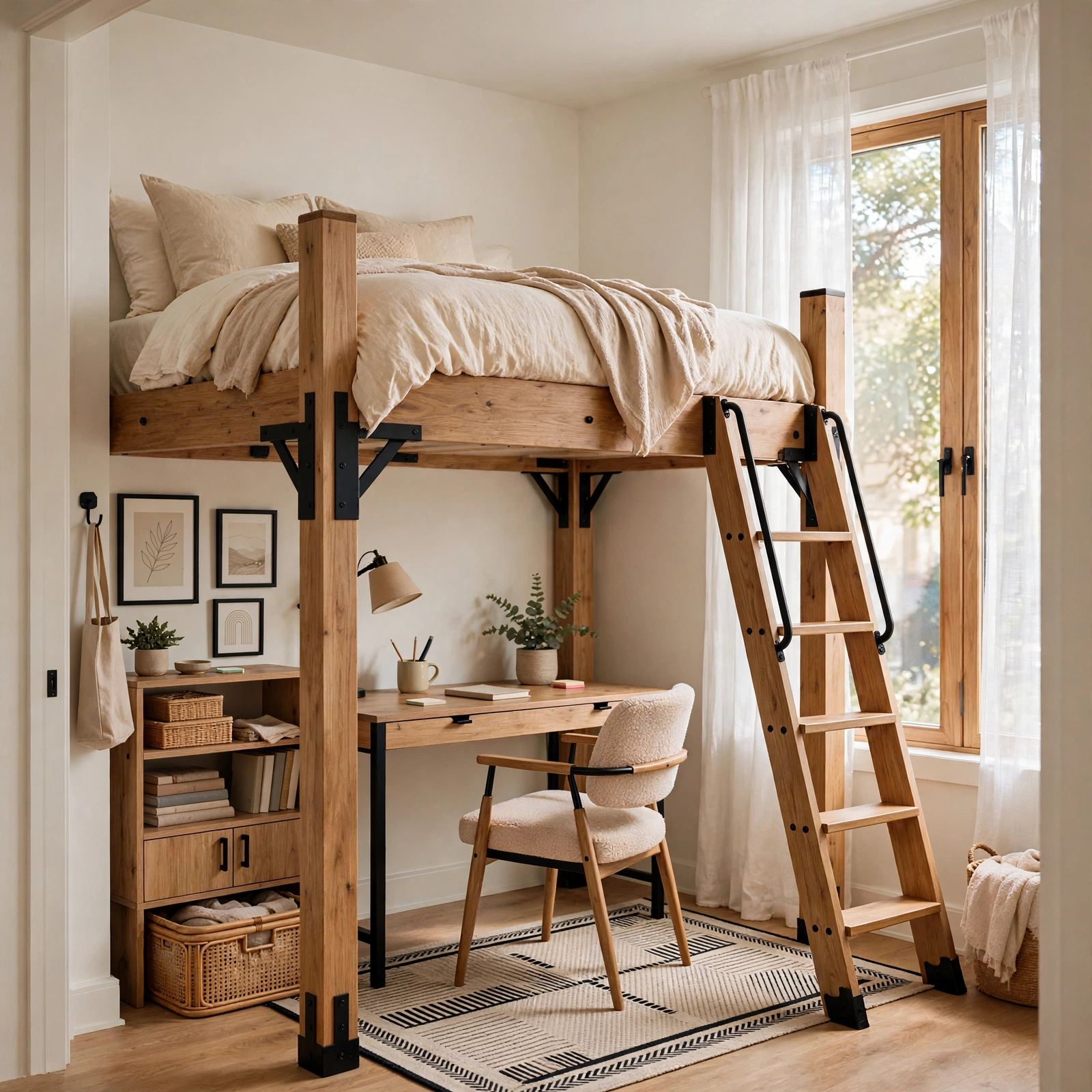
Raising the bed onto a loft frame opens up the entire floor beneath it for a desk, seating area, or additional storage, effectively doubling the usable square footage of the room. This configuration works particularly well in rooms with higher ceilings, typically nine feet or taller, to keep headroom comfortable both on the loft and underneath it. Adding a sturdy guardrail and a stable ladder or built-in stairs is essential for safety, especially in homes with children or frequent guests.
5. Corner Wardrobe Unit for Small Bedroom
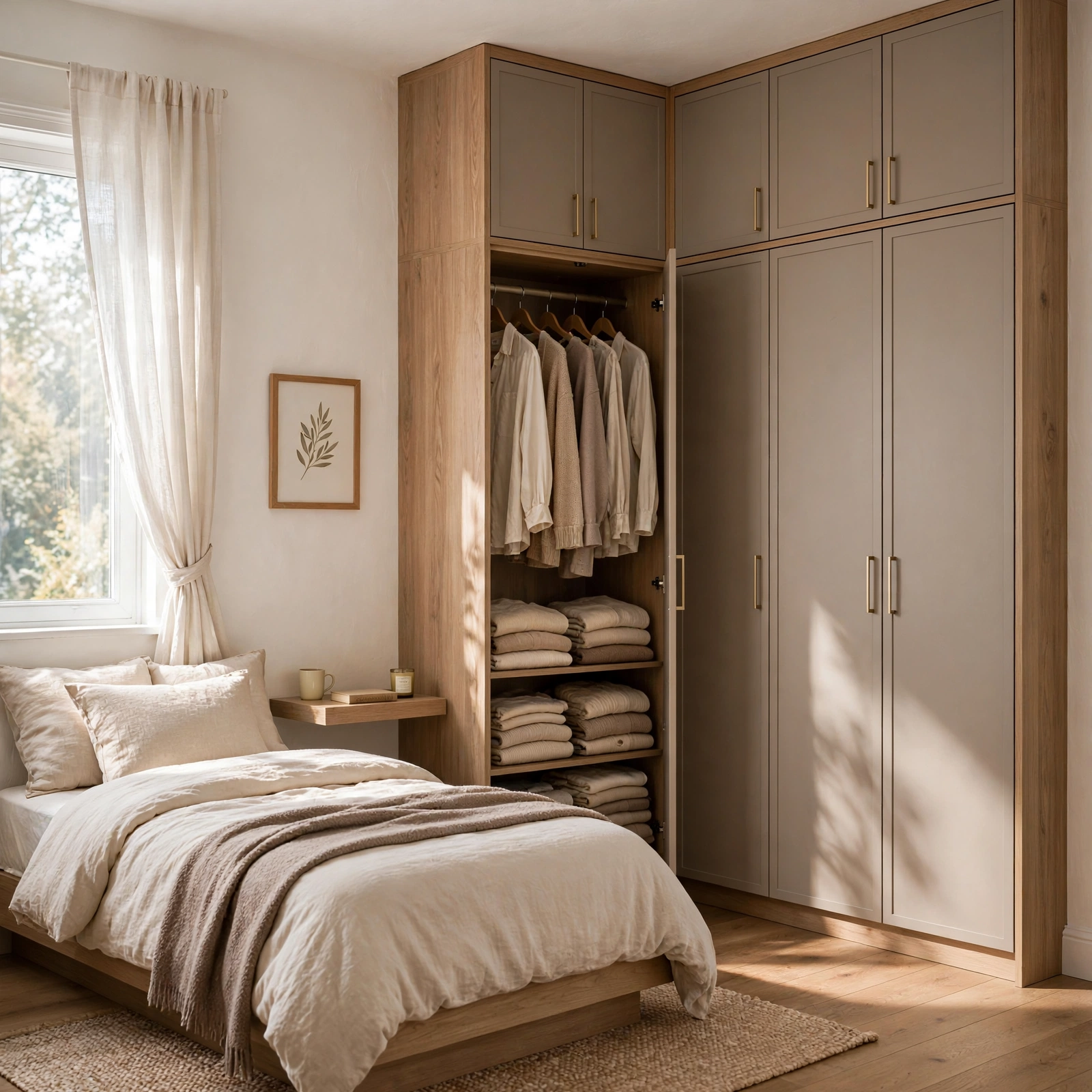
A corner wardrobe takes advantage of an often-wasted triangular space that standard rectangular furniture can’t fill efficiently. These units typically offer the same hanging and shelf capacity as a standard wardrobe while occupying a footprint that would otherwise sit empty. Custom-built corner units maximize the available angle precisely, while ready-made versions from furniture retailers offer a faster, lower-cost alternative for renters who can’t install built-ins.
6. Vertical Shelving System for Small Bedroom
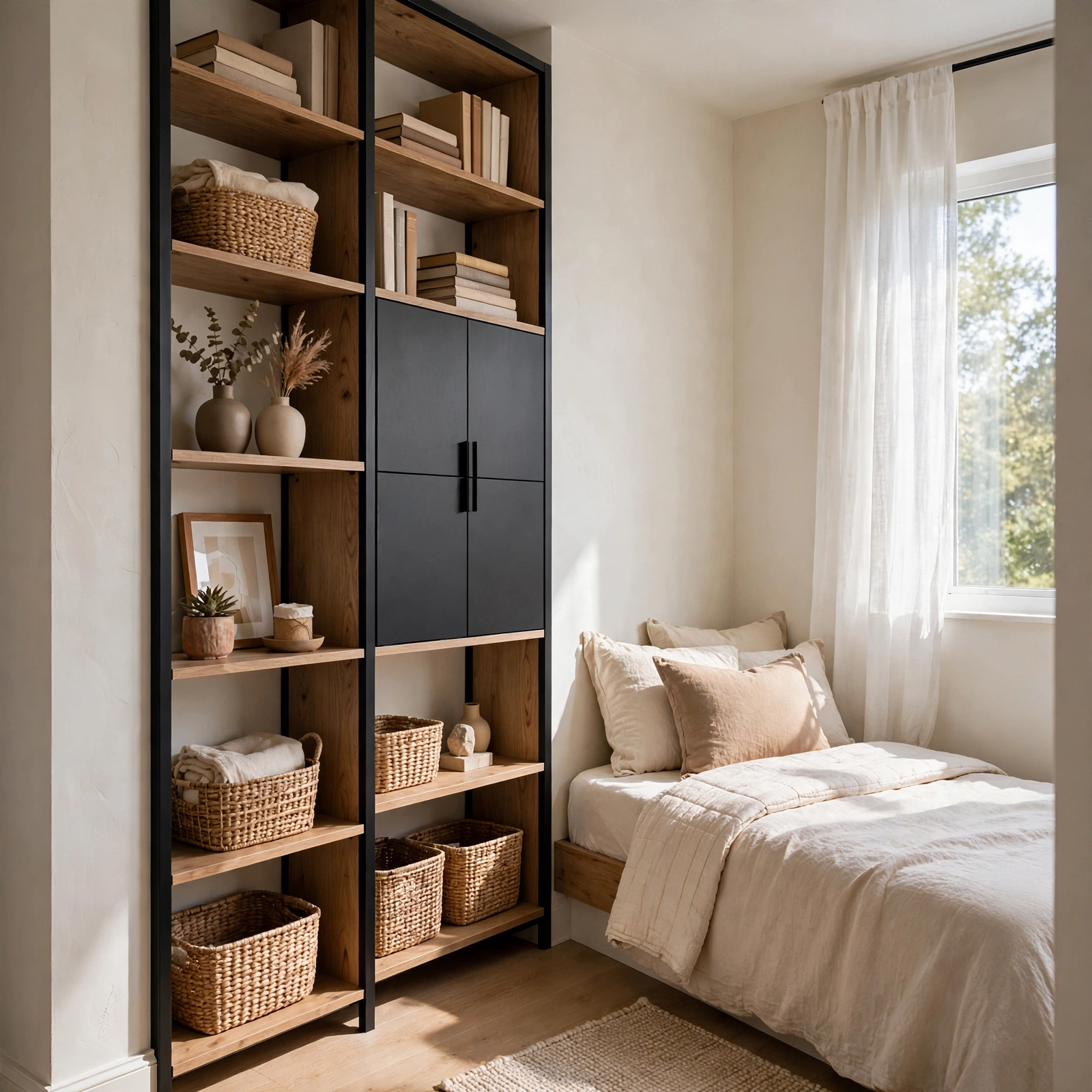
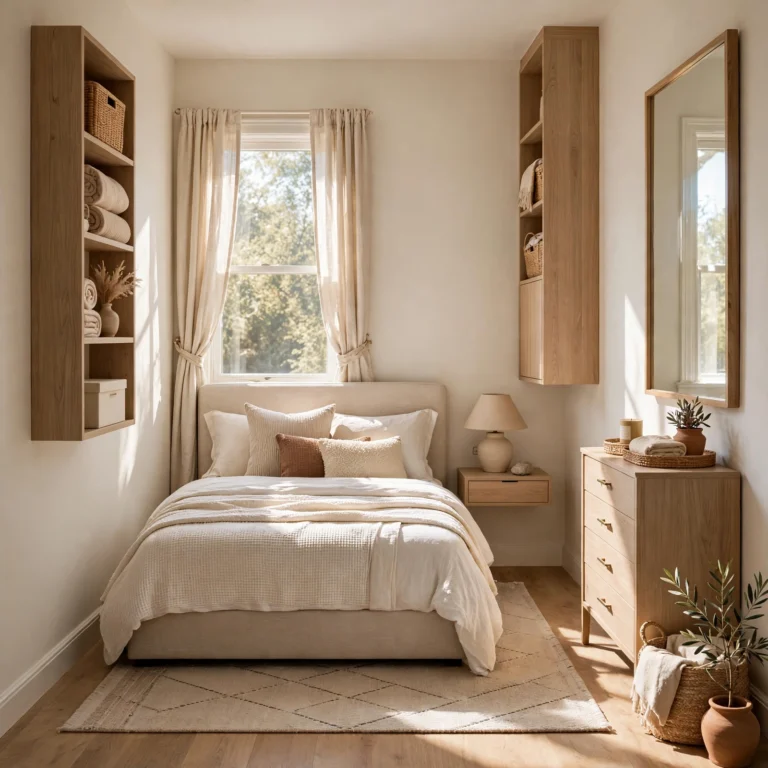
Floor-to-ceiling shelving draws the eye upward and stores significantly more than a standard bookshelf while occupying the same footprint on the floor. Using the top shelves for less frequently accessed items and the lower, easier-to-reach shelves for daily essentials keeps the system practical rather than just decorative. A narrow ladder-style shelving unit works especially well against a slim wall segment between a window and a closet door.
7. Mirrored Closet Doors for Small Bedroom
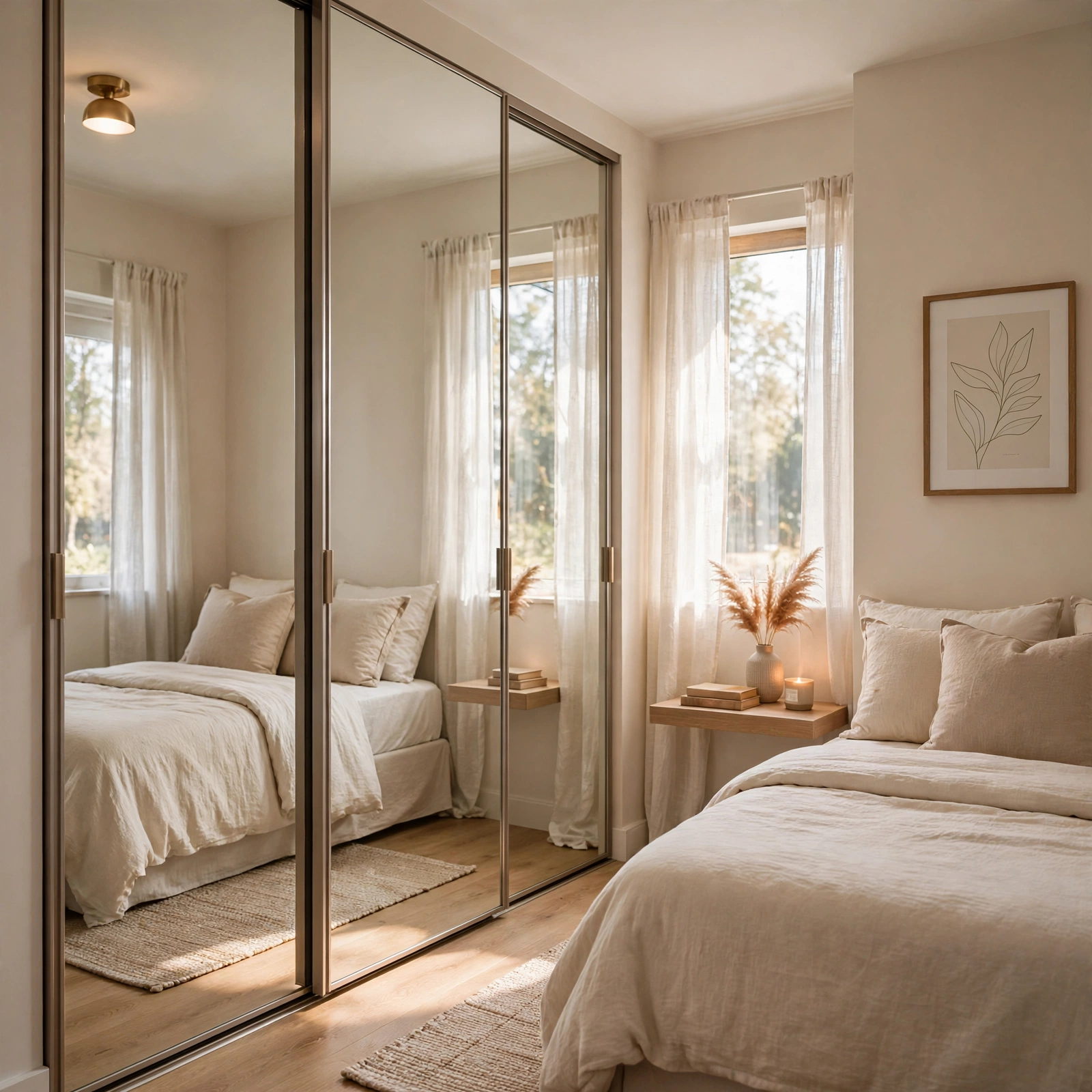
Replacing standard closet doors with mirrored panels reflects light across the room and creates the illusion of additional depth without any structural changes. This works particularly well in rooms with a single window, since the mirrored surface bounces available daylight further into the space. Sliding mirrored doors also save the floor clearance that a swinging door would otherwise require, which matters in a tight layout where every foot counts.
If you want more interesting ideas on bedroom decor CLICK HERE.
8. Fold-Down Nightstand for Small Bedroom
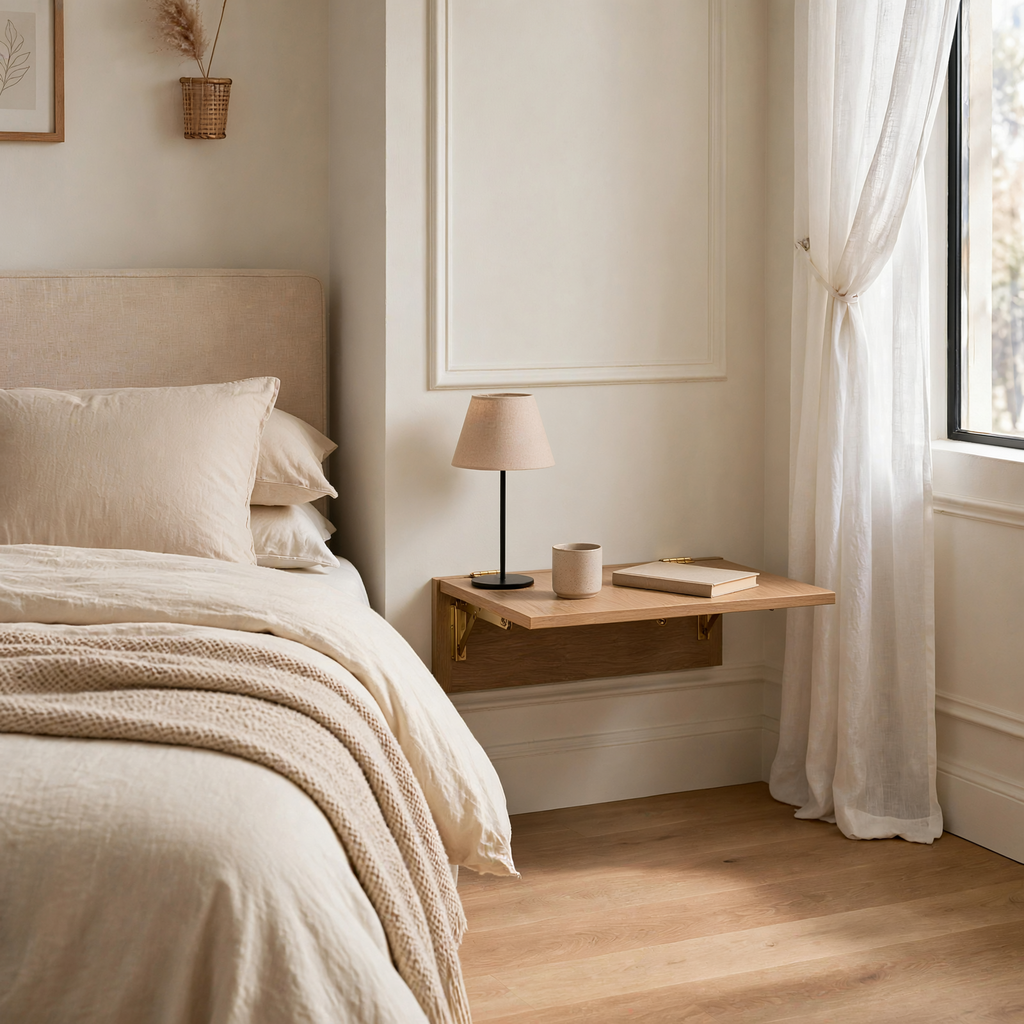
A wall-mounted, fold-down nightstand provides a landing spot for a lamp and a phone without permanently occupying floor space next to the bed. These units typically fold flat against the wall when not needed, which is especially useful in rooms where the bed sits close to a doorway or walking path. Choosing a nightstand with a small drawer, rather than an open shelf only, keeps small items contained even in the compact folded design.
9. Multi-Functional Ottoman for Small Bedroom
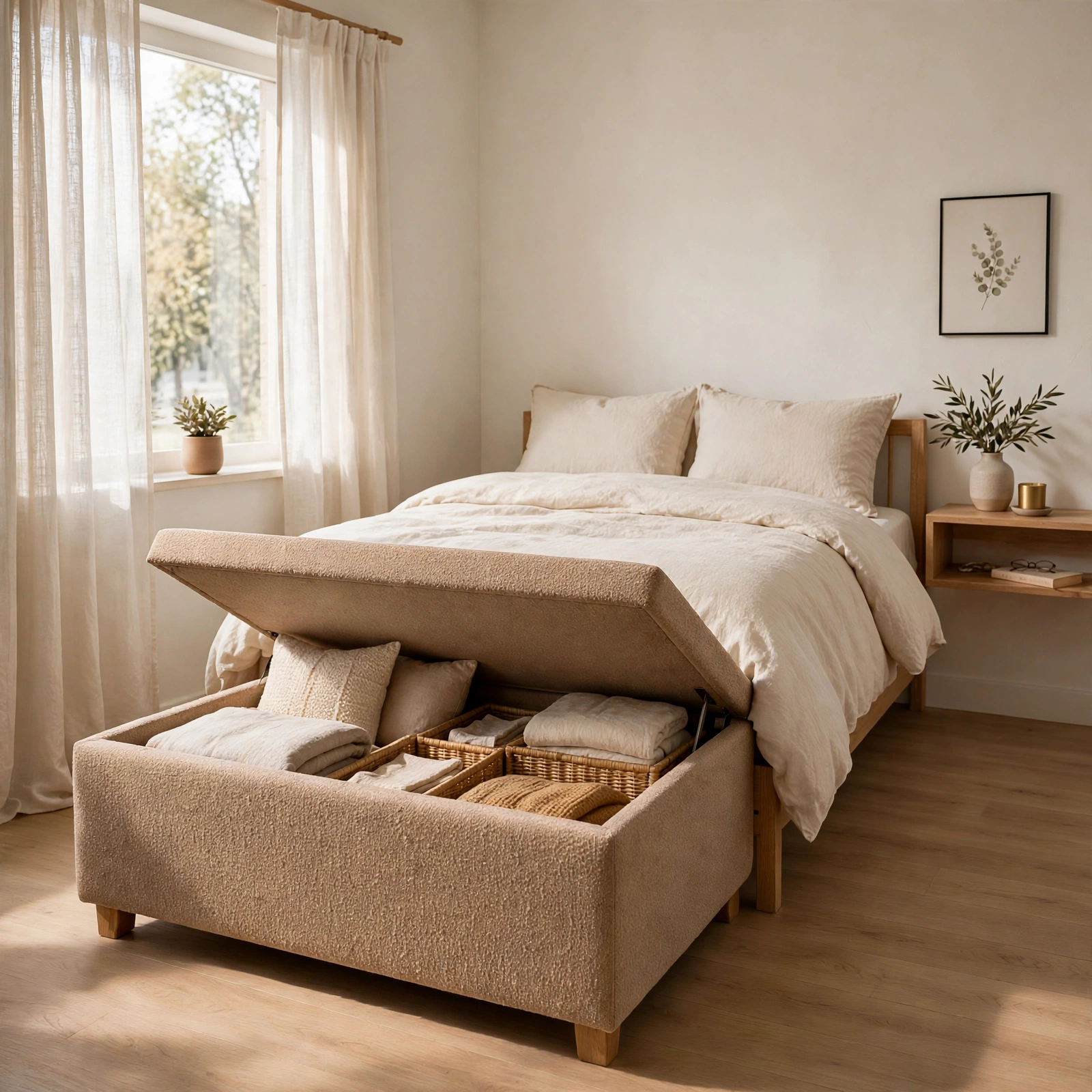
An ottoman with a lift-top lid or a storage compartment underneath serves as both extra seating and a place to stash blankets, out-of-season clothing, or books. Placing one at the foot of the bed adds a landing spot for shoes or clothing without needing a full bench, which typically requires more floor space. Choosing an ottoman on casters also makes it easy to reposition depending on the day’s needs, whether that’s extra seating or a footrest.
10. Slim Profile Headboard for Small Bedroom
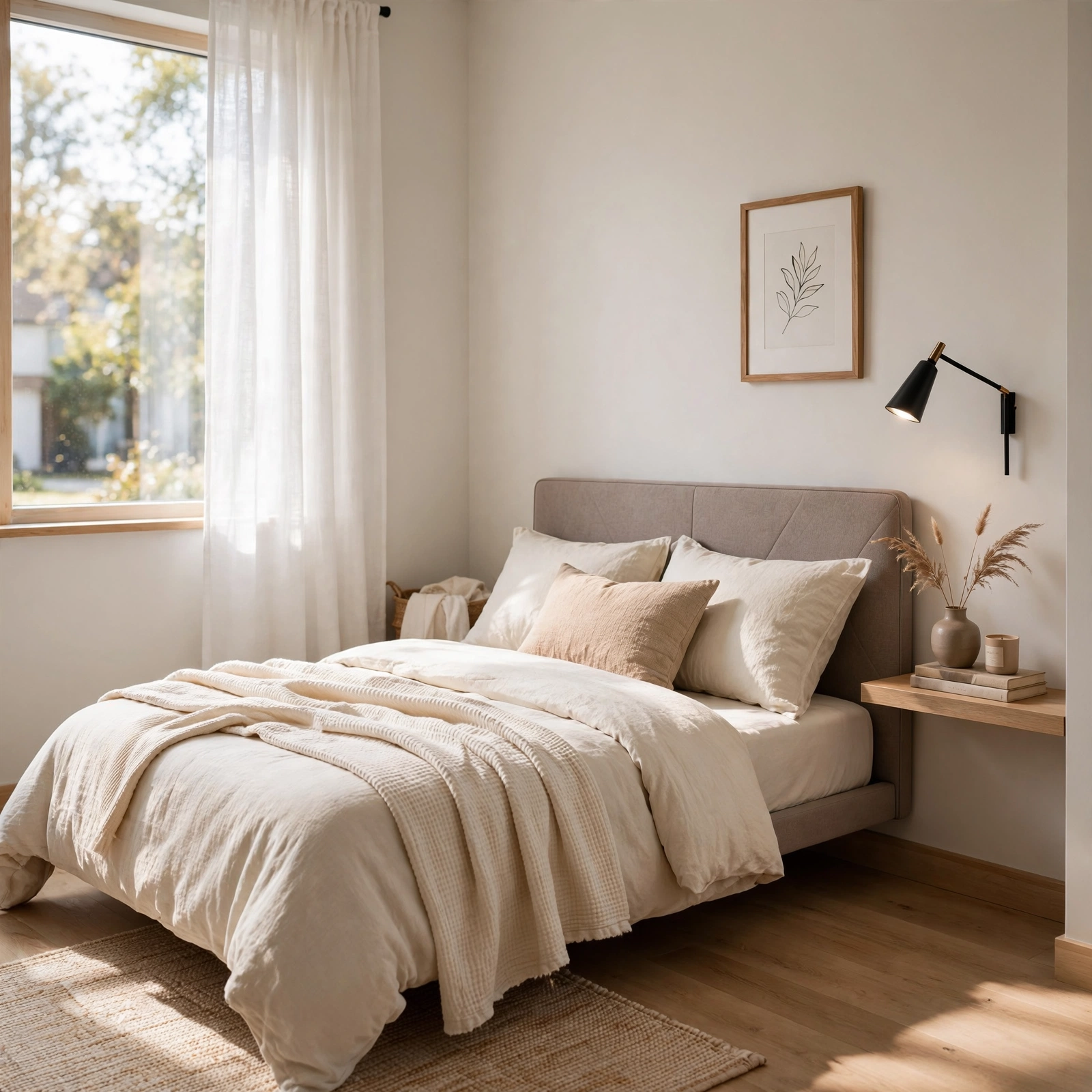
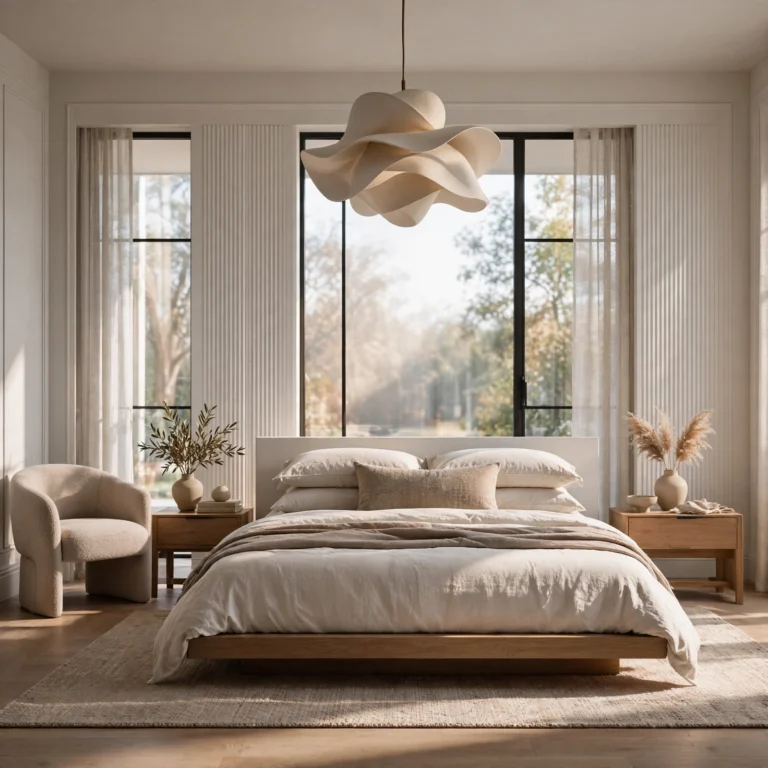
A slim, low-profile headboard, whether upholstered or a simple wood panel, avoids eating into the room’s visual space the way a tall, bulky headboard can in a small room. Wall-mounted headboard panels that don’t require a full bed frame attachment are especially useful since they can be sized to the exact width needed rather than a standard frame dimension. This idea pairs well with a platform bed frame for a cohesive, low-to-the-ground look throughout.
11. Ceiling-Mounted Curtain Track for Small Bedroom
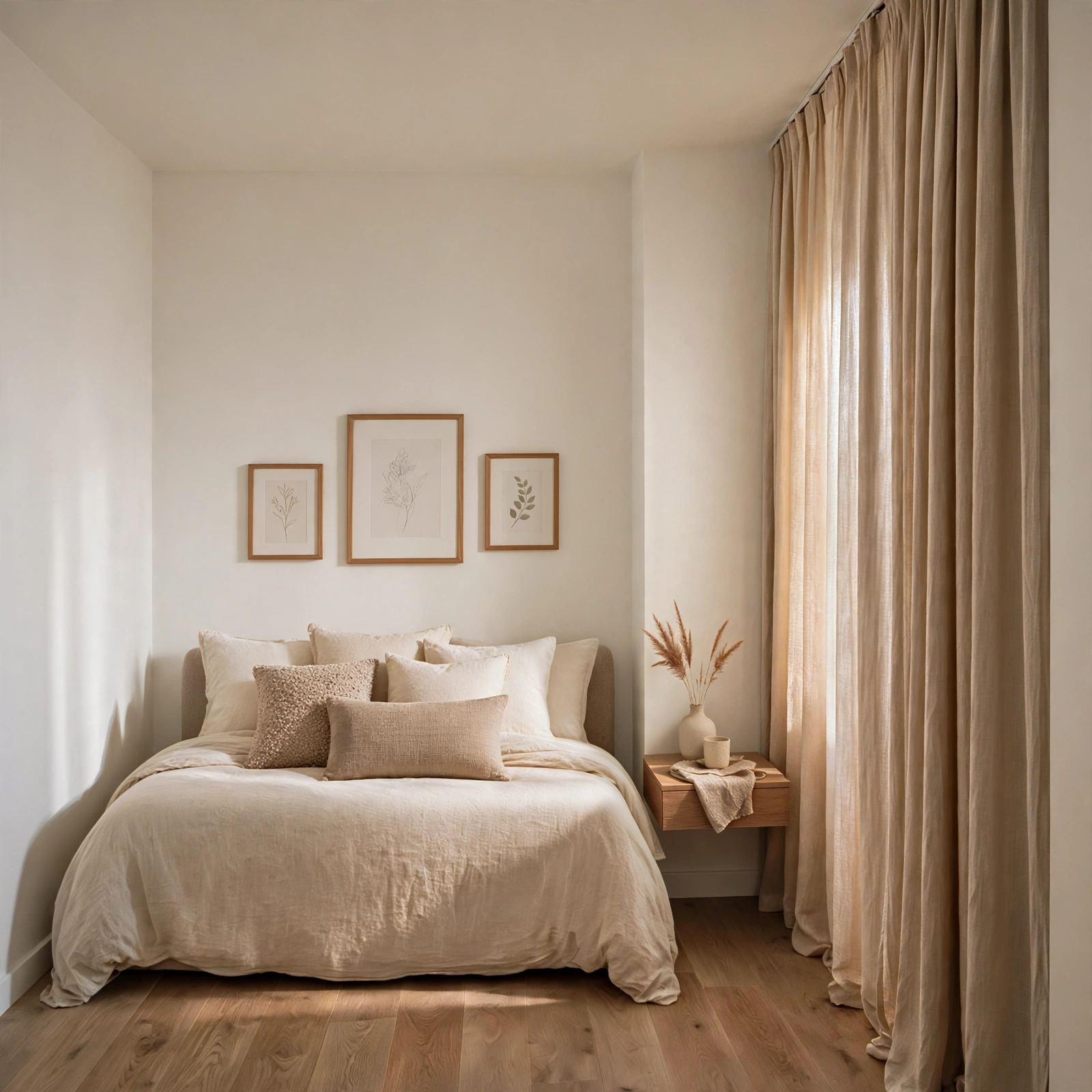
Mounting curtain hardware at ceiling height rather than directly above the window frame draws the eye upward and makes the entire wall feel taller, which is especially effective in rooms with standard eight-foot ceilings. This trick works with any curtain style but looks most dramatic with a floor-length panel that skims just above the ground. It also visually extends the window itself, even when the actual glass only takes up a portion of the wall.
12. Rolling Storage Cart for Small Bedroom
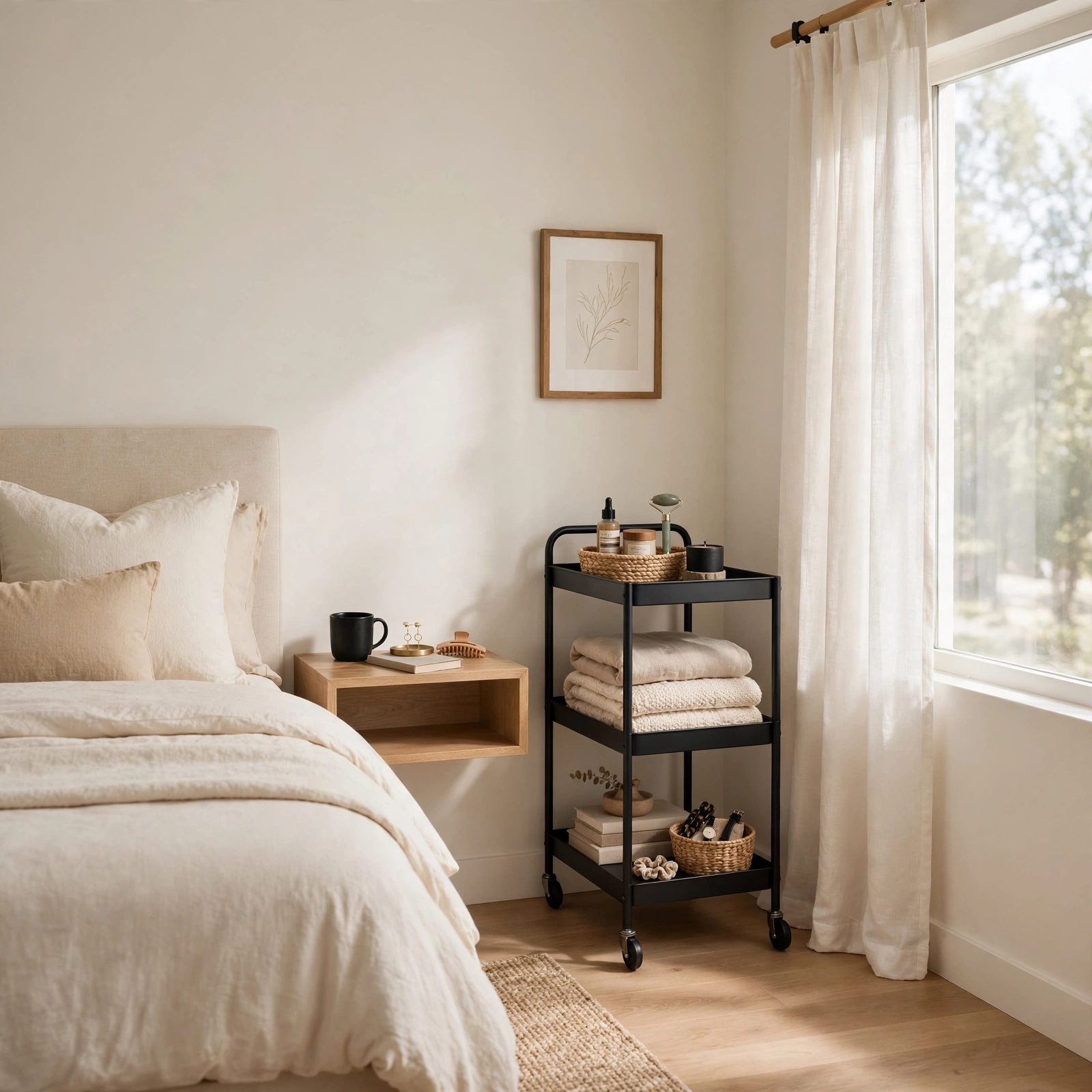
A rolling storage cart with multiple tiers or drawers offers flexible storage that can be tucked into a closet, positioned beside a desk, or moved wherever it’s needed that day. These carts work well for craft supplies, extra linens, or bathroom overflow items in a home without a dedicated storage closet nearby. Choosing a slim cart under twelve inches wide allows it to fit into narrow gaps between furniture pieces without disrupting the room’s walkway.
13. Recessed Wall Niche for Small Bedroom
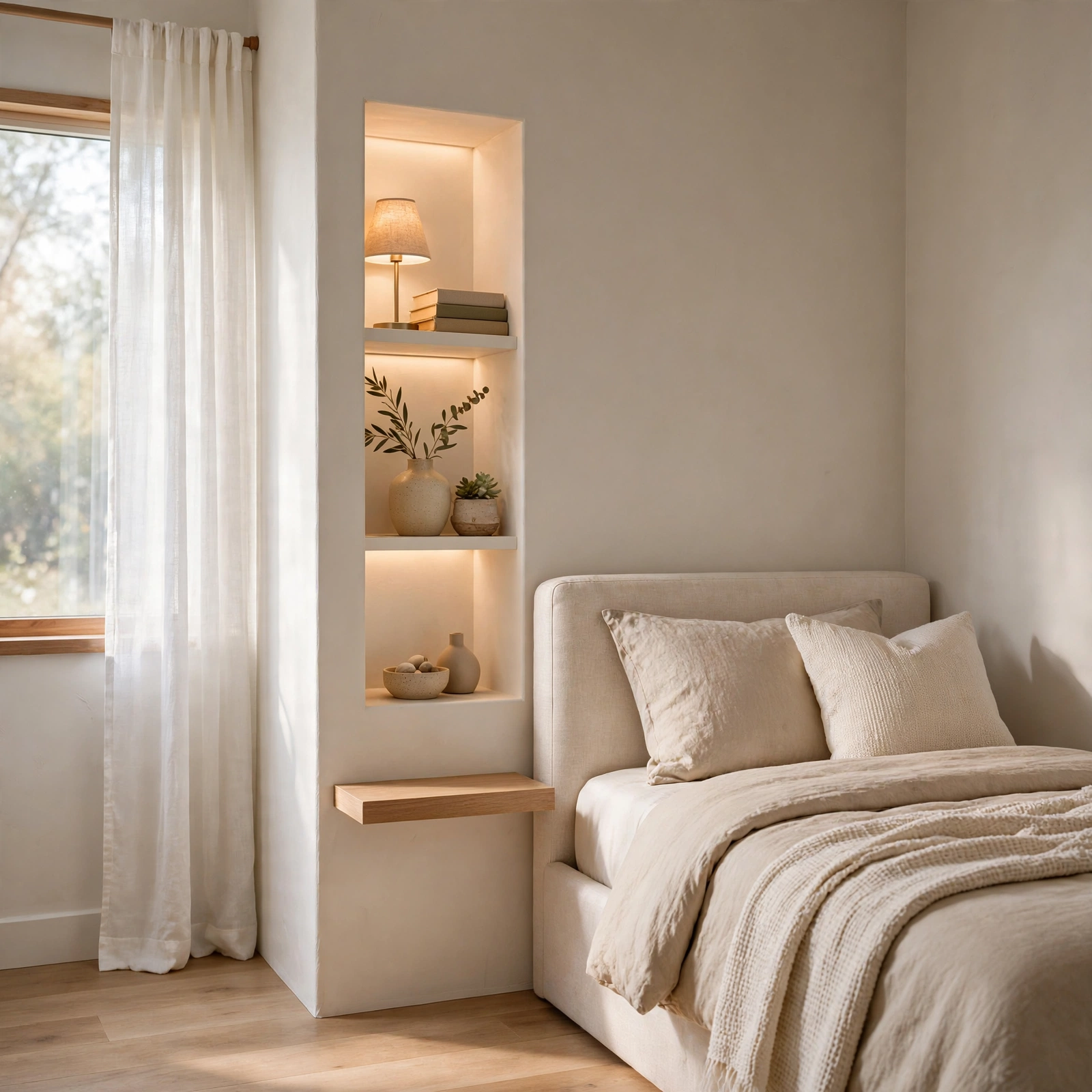
Building a shallow recessed niche into a wall, even just a few inches deep, adds display or storage space without eating into the room’s usable floor area. These niches work well for books, small plants, or framed art and can be lit with a small integrated LED strip for added ambiance in the evening. This option requires more construction than most ideas on this list but offers a permanent, built-in solution for homeowners planning to stay long term.
14. Trundle Bed Frame for Small Bedroom
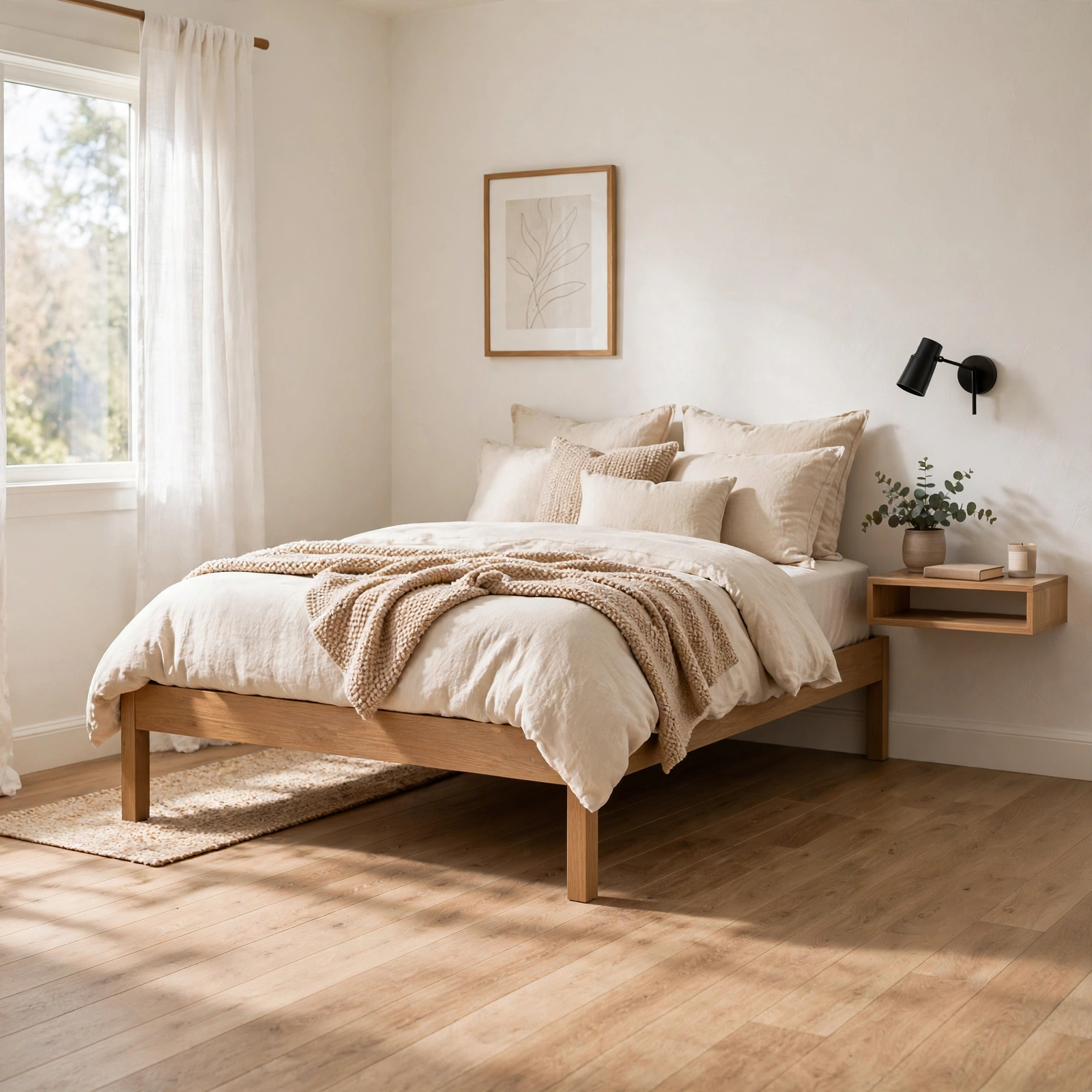
A trundle bed frame houses a second mattress on a rolling frame that slides underneath the main bed, making it ideal for guest sleeping arrangements without a dedicated guest room. When not in use, the trundle stays fully hidden beneath the primary bed frame, so it doesn’t add any visual bulk to the room during regular daily use. This option works particularly well in shared kids’ rooms or small apartments that occasionally need to host overnight guests.
15. Light Color Palette Scheme for Small Bedroom
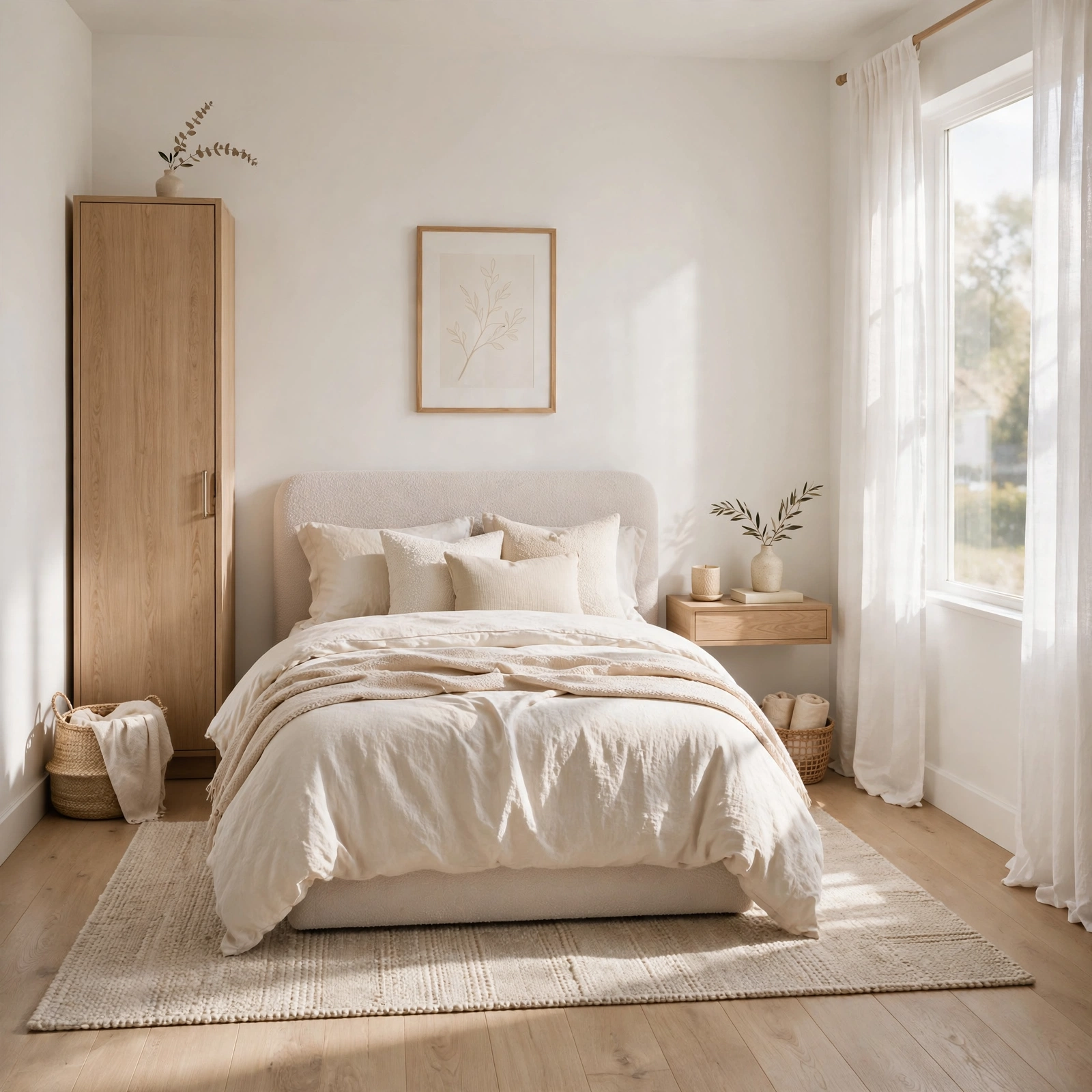
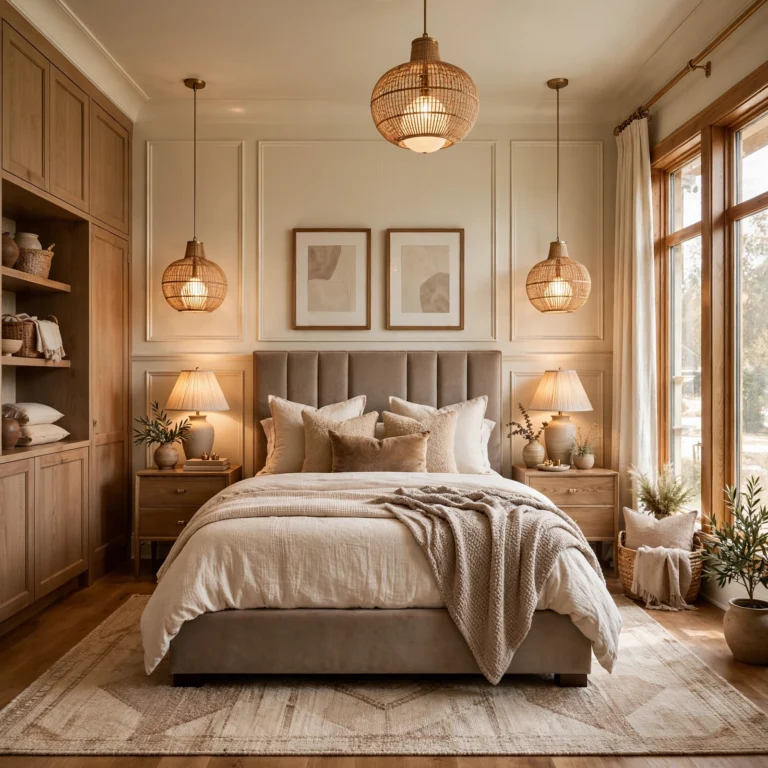
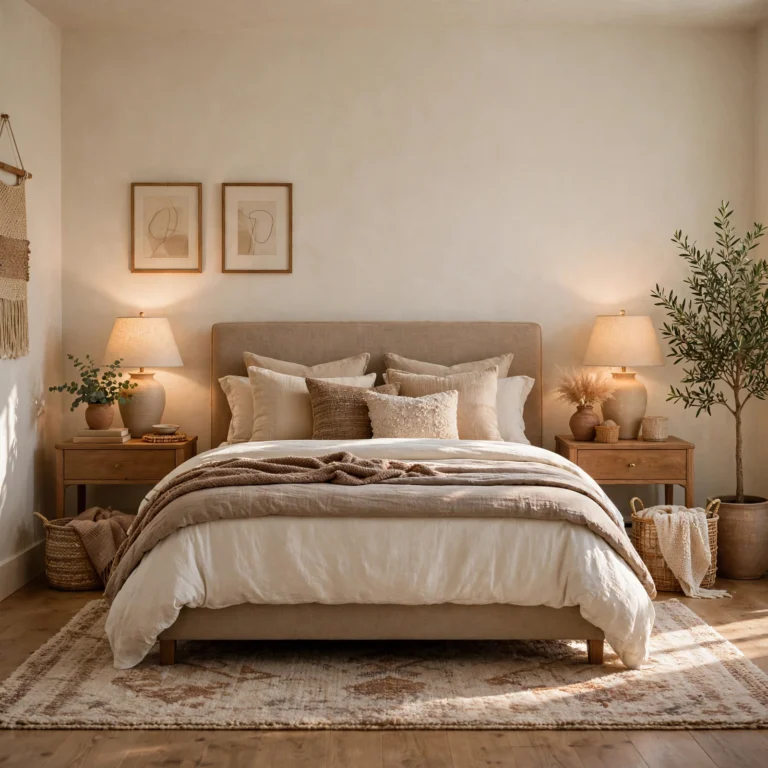
Painting walls, ceiling, and trim in the same light, neutral tone removes visual breaks that can make a small room feel choppier than it actually is. Soft whites, warm creams, and light greiges all work well for this approach, reflecting more available light around the room than a darker palette would. Adding texture through bedding, rugs, and curtains keeps an all-light palette from feeling sterile while still preserving the airy, expanded feel it creates.
Shop the Look
A few specific pieces come up repeatedly when furnishing small bedroom ideas like these. A wall-mounted fold-down desk in a light oak finish handles both workspace and shelving needs. A set of rolling under-bed storage drawers in a low-profile design fits most standard bed frame heights. A slim ladder-style vertical shelving unit works well against narrow wall segments, and a storage ottoman on casters adds flexible seating. Mirrored sliding closet doors round out the list for maximizing reflected light.
Common Mistake to Avoid
A common mistake in small bedroom planning is buying furniture sized for a showroom display rather than measuring the actual walkway and clearance space needed around each piece. A bed that technically fits against the wall can still block a closet door or leave less than the recommended two feet of clearance for walking, making the room feel far smaller than its actual square footage. Measuring door swings, drawer extensions, and walking paths before any purchase prevents this issue entirely.
Frequently Asked Questions
What is the best bed option for a small bedroom?
A platform bed frame or a Murphy bed frame are generally the two most effective options for a small bedroom, since both minimize visual bulk and either eliminate the need for a box spring or fold away entirely during the day. A trundle frame is also useful in shared or multipurpose rooms. Choosing a low-profile frame over a tall, ornate one keeps the room feeling more open regardless of which specific style is selected.
How can I add storage to a small bedroom without built-ins?
Under-bed storage drawers, a corner wardrobe unit, and a rolling storage cart all add meaningful storage capacity without requiring any construction or built-in installation. Vertical shelving that reaches toward the ceiling also captures storage space that’s often left empty in smaller rooms. Combining two or three of these freestanding options usually covers most storage needs without a single permanent modification to the room.
Does paint color really make a small bedroom feel bigger?
Yes, a light, consistent paint color across the walls, ceiling, and trim reduces the visual breaks that can make a room feel more segmented and smaller than it is. Reflective, lighter tones bounce more available daylight around the space compared to darker colors, which tend to absorb light instead. This effect is most noticeable in rooms with limited natural light, where every reflected surface makes a meaningful difference.
Is a loft bed a good option for adults, not just kids?
Yes, loft beds work well for adults in small bedrooms, particularly in rooms with ceilings of nine feet or taller where headroom underneath remains comfortable. Adult-sized loft frames are built with a higher weight capacity and sturdier construction than children’s versions, and many include a built-in desk or seating area underneath. Checking the ceiling height and weight rating before purchasing is essential for a comfortable, safe setup.
How much clearance space should I leave around the bed?
Most designers recommend leaving at least eighteen to twenty-four inches of clearance space around at least two sides of the bed for comfortable walking and making the bed each day. Rooms tighter than this can still work with a bed pushed against one wall, but a minimum eighteen-inch aisle on the remaining open side is generally considered the lowest comfortable threshold. Anything narrower tends to make daily tasks like changing sheets noticeably harder.
Conclusion
These fifteen small bedroom ideas prioritize multi-functional furniture, smart storage, and layout choices that make the most of limited square footage without a major renovation. Starting with one or two changes, such as switching to under-bed storage or a lighter paint palette, often makes the biggest visible difference before moving on to bigger projects like a Murphy bed or loft frame. Save this guide to Pinterest for later, and check out the related bedroom storage and layout posts for more small-space solutions.