12 Spooky Halloween Decor Ideas for an Eerie Atmosphere
Spooky Halloween decor occupies a specific middle ground: moodier than a pastel pumpkin display, quieter than a haunted-house build. It leans on atmosphere shadow, texture, and sound rather than shock value or minimal restraint. This guide covers twelve ideas built around that in-between tone, with the materials, lighting choices, and placement details that make a room or porch feel genuinely eerie without tipping into either a party-store aesthetic or a gore-focused haunt. Sizing and budget notes are included where relevant.
Trend & Background
Spooky Halloween decor has trended toward cinematic, low-light styling over the past several seasons, drawing visibly from horror films that favor dread over jump scares — think the muted palettes of The Witch or Midsommar‘s daylight horror inverted into shadow. Retailers have responded with flicker-bulb lighting lines and matte-finish props replacing the glossy plastic standard of a decade ago. Search interest in “moody Halloween lighting” and “vintage Halloween decor” has climbed steadily each September, reflecting a broader move away from bright, cartoonish seasonal styling toward something closer to set design.
Key Takeaways
- Spooky Halloween decor sits between full gore and minimalist restraint, relying on mood-driven elements like fog, shadow, and aged texture rather than either extreme.
- Warm-to-cool lighting shifts amber near entry points, blue-white farther back build depth that a single flat light source can’t.
- Sound and scent, not just visuals, are what separate a genuinely spooky room from one that simply looks Halloween-themed.
- Reusable materials like dried branches, aged metal, and matte black finishes let a spooky palette carry into general fall decor once November arrives.
1. Amber Flicker Lantern Row
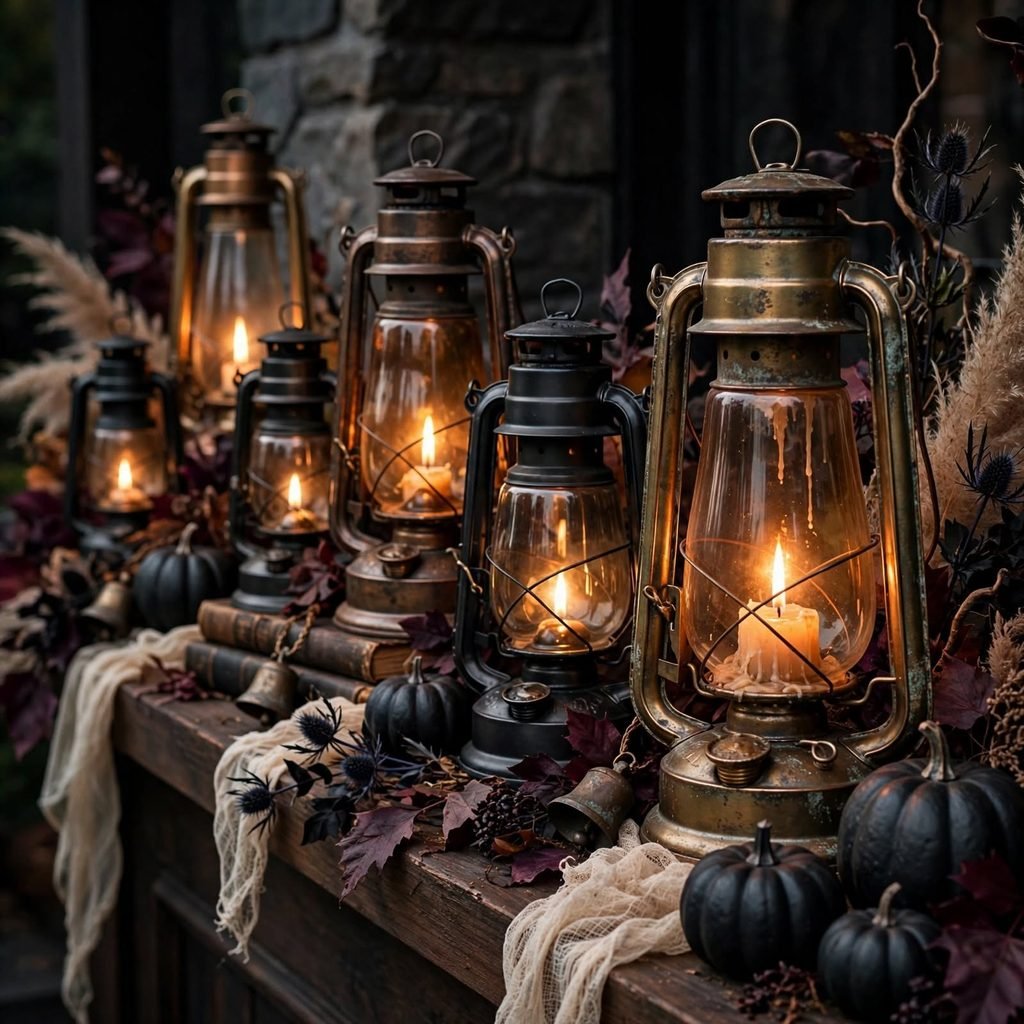
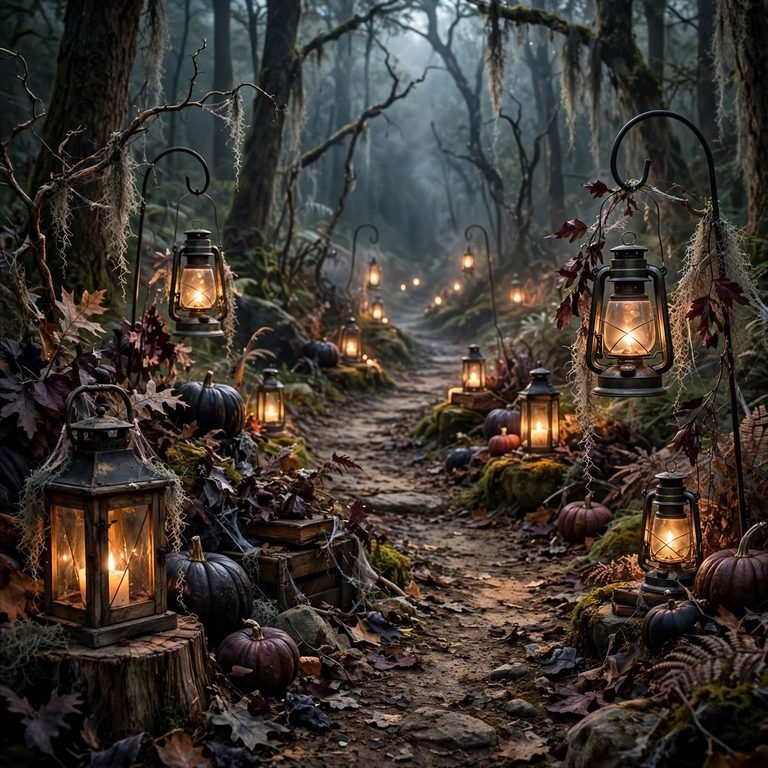
A row of weathered metal lanterns fitted with amber flicker-flame LED candles, spaced along a porch railing or walkway, builds warm, unsteady light that reads as genuinely old rather than seasonal. Choose rusted or matte black finishes over polished metal, since reflective surfaces break the illusion under camera flash and porch light alike. Space lanterns three to four feet apart for a natural rhythm, and avoid uniform brightness settings — slight variation between units makes the row feel less programmed.
| Lantern Spacing | Path Length | Light Color | Approx. Cost |
| 3 ft apart | Under 15 ft | Warm amber | $40–$60 |
| 4 ft apart | 15–25 ft | Warm amber | $70–$100 |
| 5 ft apart | 25+ ft | Warm amber, dimmer far end | $110–$160 |
2. Smoked Glass Cloche Display
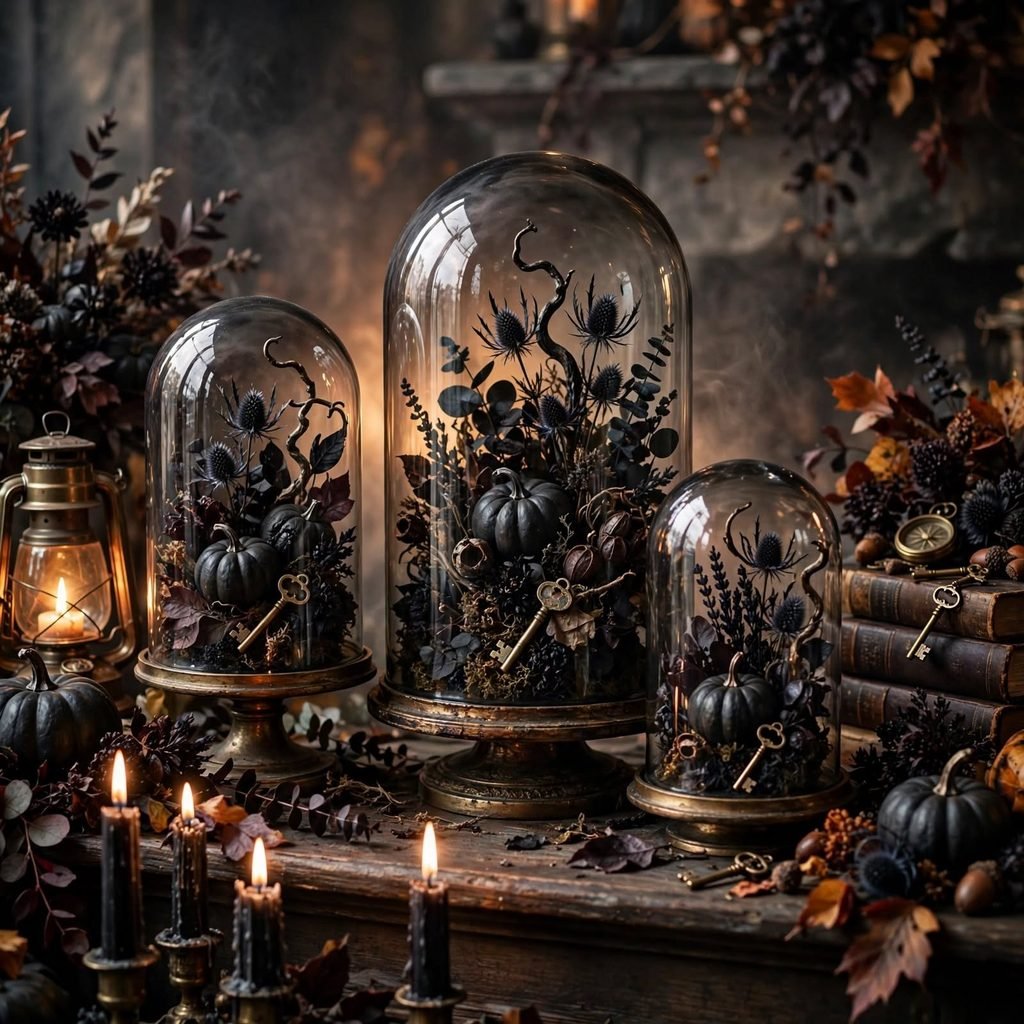
Dark smoked-glass cloches placed over small dried botanicals, bone-replica pieces, or a single taper candle create the look of specimens under preservation glass, which reads as unsettling without any explicit imagery. Source cloches from home goods retailers or antique shops, and keep the contents underneath simple — one object per cloche, never a crowded scene. Group two or three cloches of varying heights on a console or mantel rather than displaying a single one in isolation.
3. Weathered Iron Gate Panel
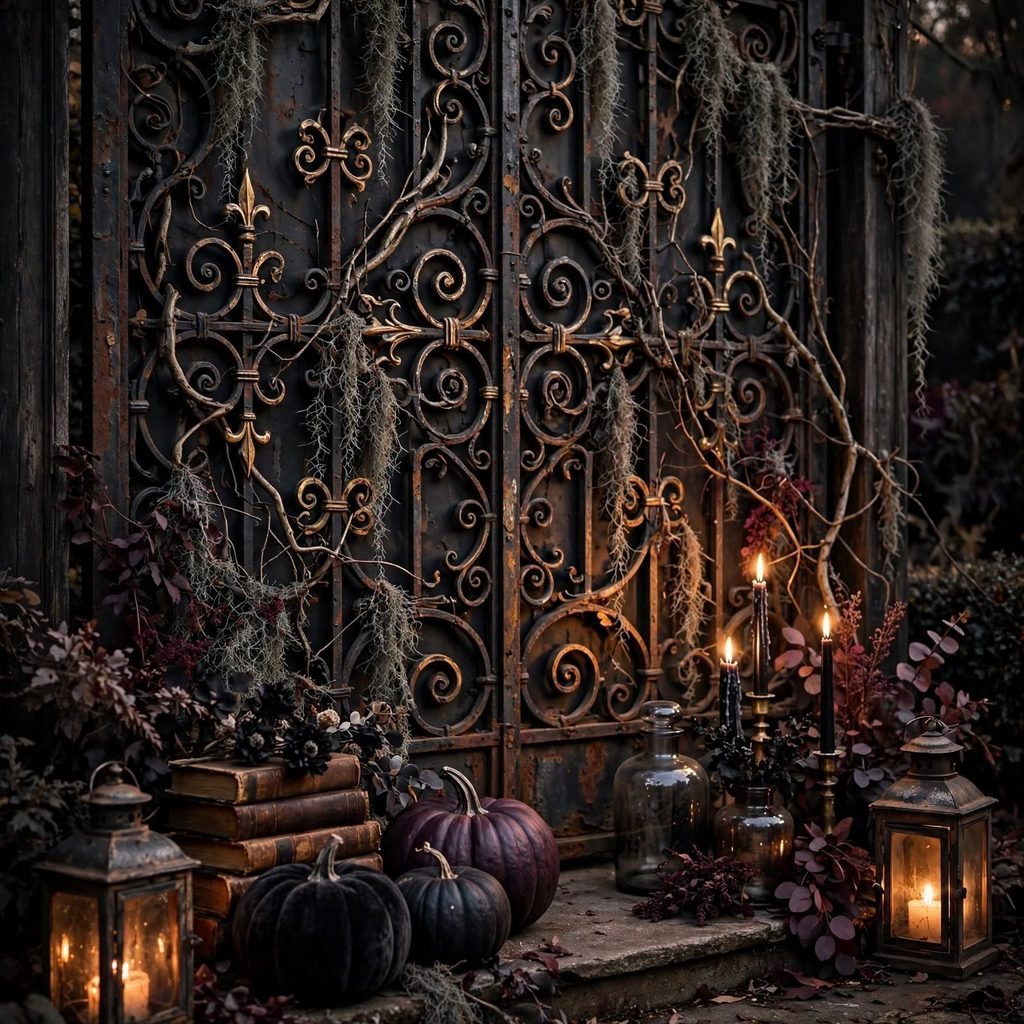
A salvaged or reproduction iron gate panel, leaned against a porch wall or propped in an entryway, suggests an entrance to somewhere else without requiring any additional staging. Architectural salvage yards and antique markets are the best sources, and a rusted or oxidized finish works better here than anything freshly painted. Position it slightly ajar-looking, angled rather than flush against the wall, and let a single lantern or candle sit just behind it to cast bars of shadow forward.
4. Spider Silk Canopy
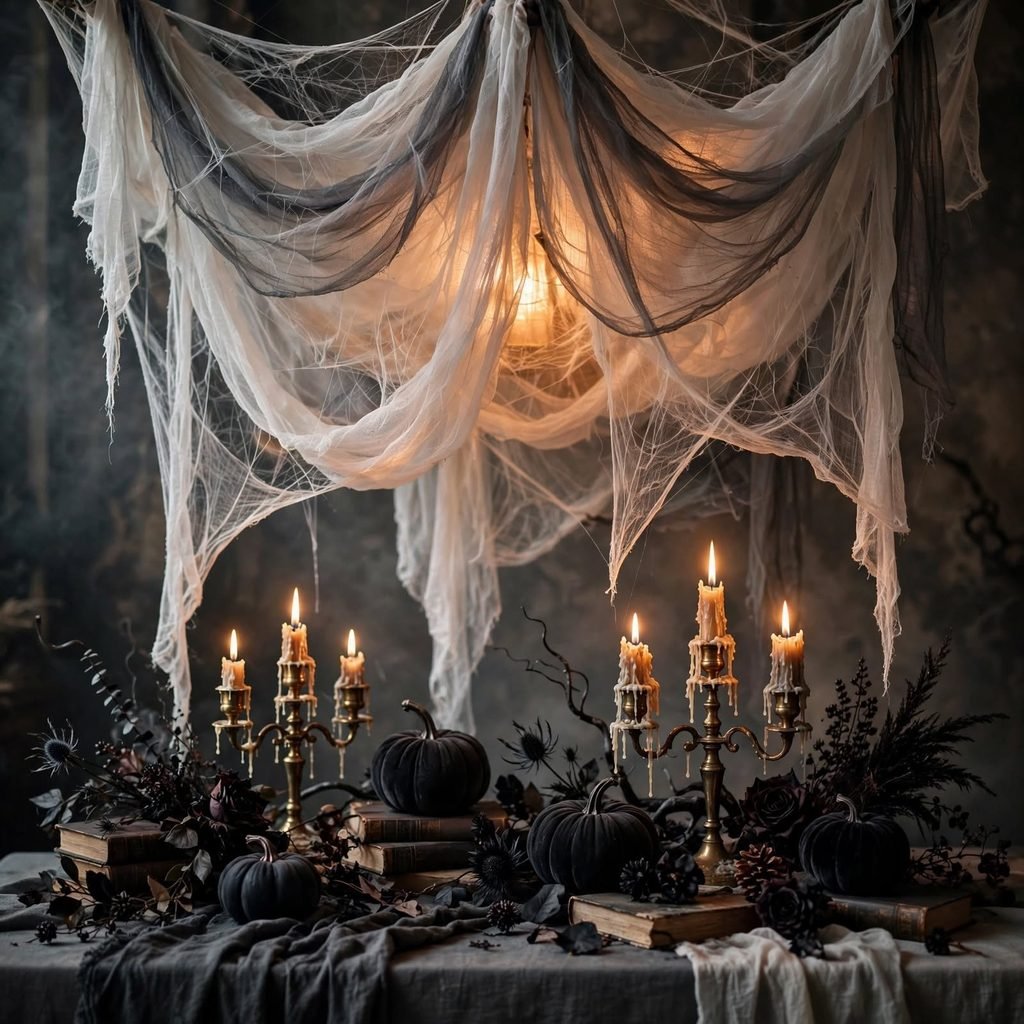
Fine, stretched spider webbing draped across a porch ceiling or doorway entrance, rather than balled onto bushes, creates an overhead layer that guests walk beneath instead of simply looking at. Use the stretchable synthetic webbing sold in bulk rather than cotton batting, which sags and looks matted within a week. Add two or three oversized matte-black spider figures at asymmetric points in the canopy rather than centered, and light it from below so the webbing catches shadow instead of glare.
5. Bone-White Branch Cluster
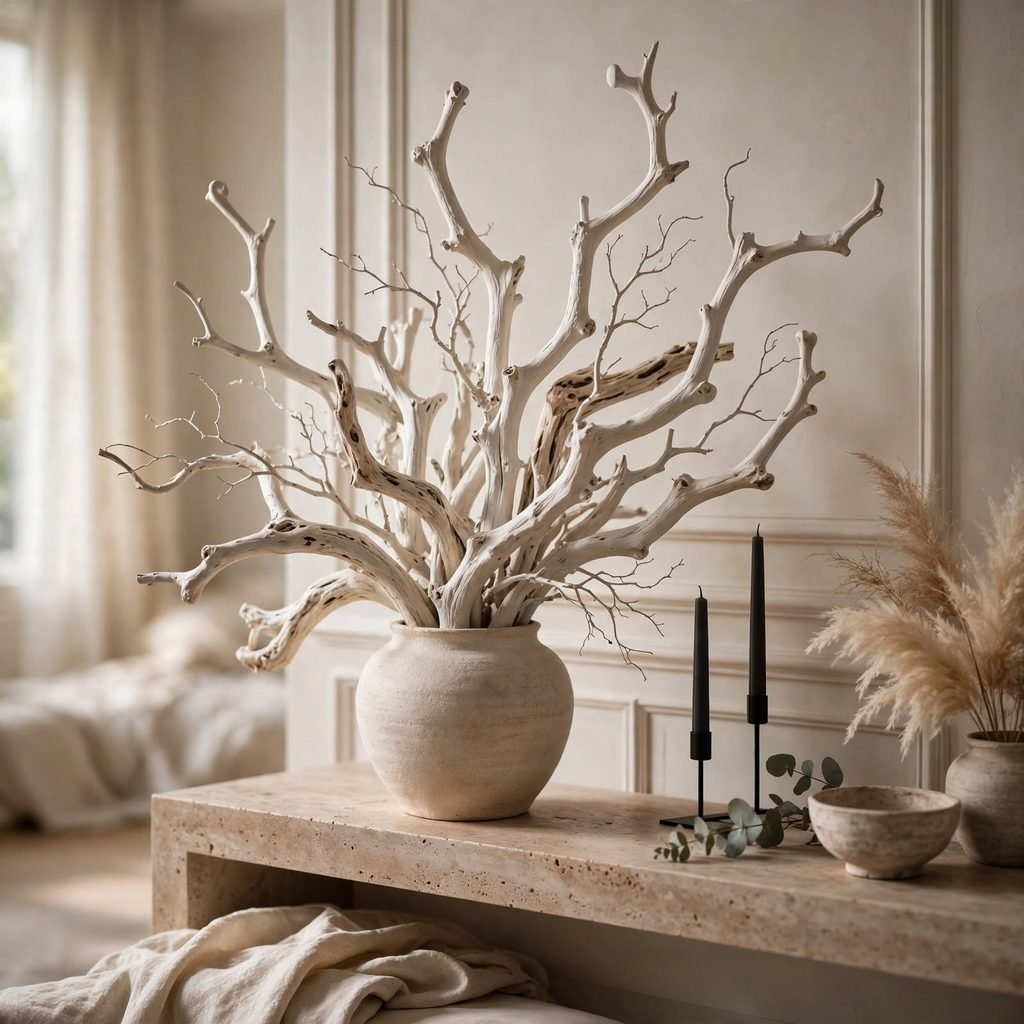
A cluster of bleached, bare branches arranged in a tall urn or floor vessel near an entryway brings a stark, skeletal silhouette that reads as spooky through shape alone. Manzanita branches bleach well and hold their form for the full season. Place the arrangement where it will cast shadow against a nearby wall under porch or lamp light, since the shadow itself often reads as more unsettling than the branches in direct view.
| Branch Type | Vessel Height | Best Light Angle | Shadow Effect |
| Manzanita | 24–36 in | Low, side-angled | Sharp, elongated |
| Birch | 30–40 in | Overhead | Soft, layered |
| Curly willow | 20–30 in | Low, front-facing | Tangled, dense |
6. Tarnished Brass Skull Accent

A single tarnished brass or aged bronze skull, placed on a stack of old books or a small pedestal, works as a quiet focal point on a bookshelf or side table without needing a full skeleton scene around it. Choose a matte, oxidized finish over anything polished or glossy, since shine reads as decorative rather than found. Position it at eye level or slightly above, and resist pairing it with more than one or two supporting objects nearby.
7. Fog-Lit Entry Stairs
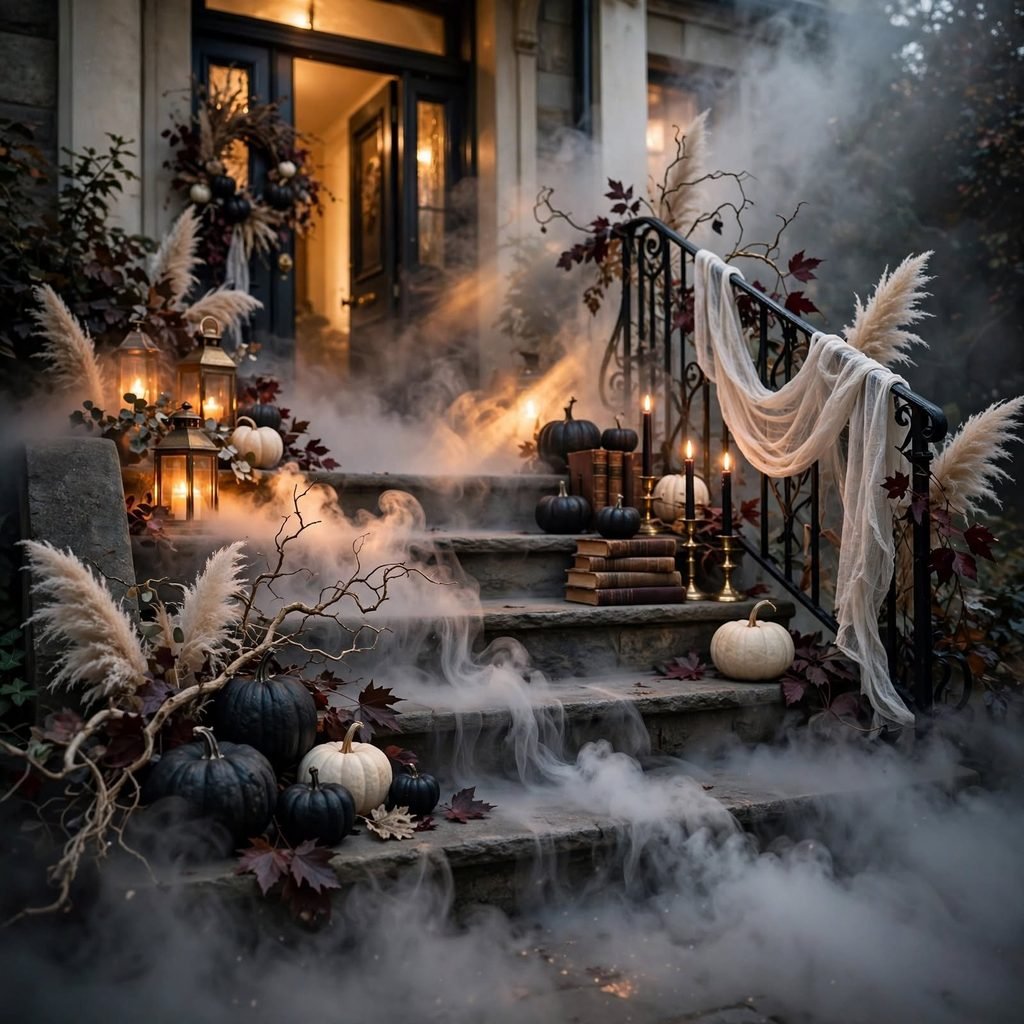
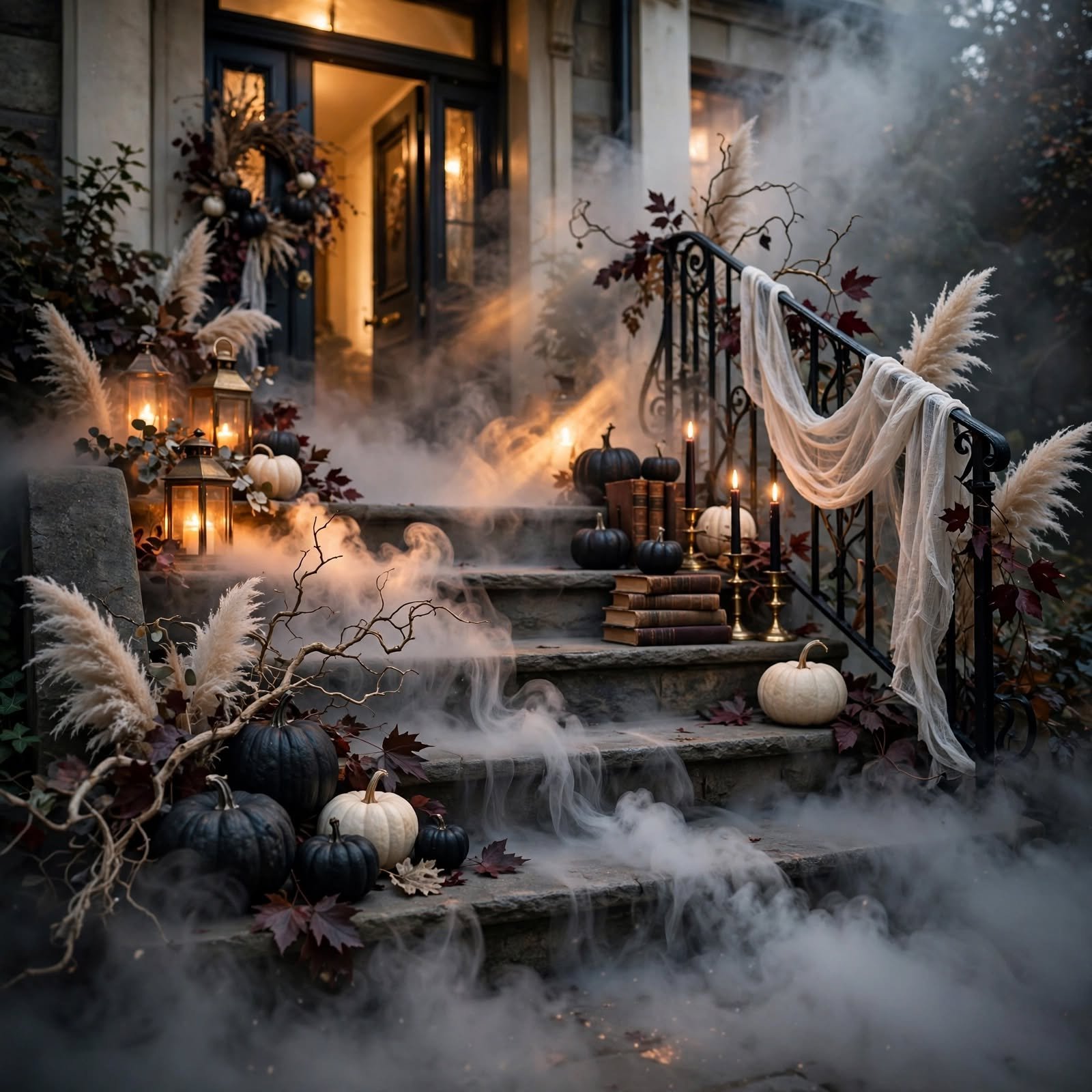
Low fog pooling at the base of entry stairs, combined with a single uplight positioned at floor level, makes the bottom steps disappear into haze while the top stays visible, which unsettles depth perception for anyone approaching. A small fog machine with a short dryer-hose extension keeps the vapor low rather than filling the whole porch. Run it in short bursts through the evening rather than continuously, since a constant haze eventually reads as static rather than atmospheric.
Create a fun and festive Halloween look with these halloween decorating ideas for every space.
8. Raven Silhouette Perch
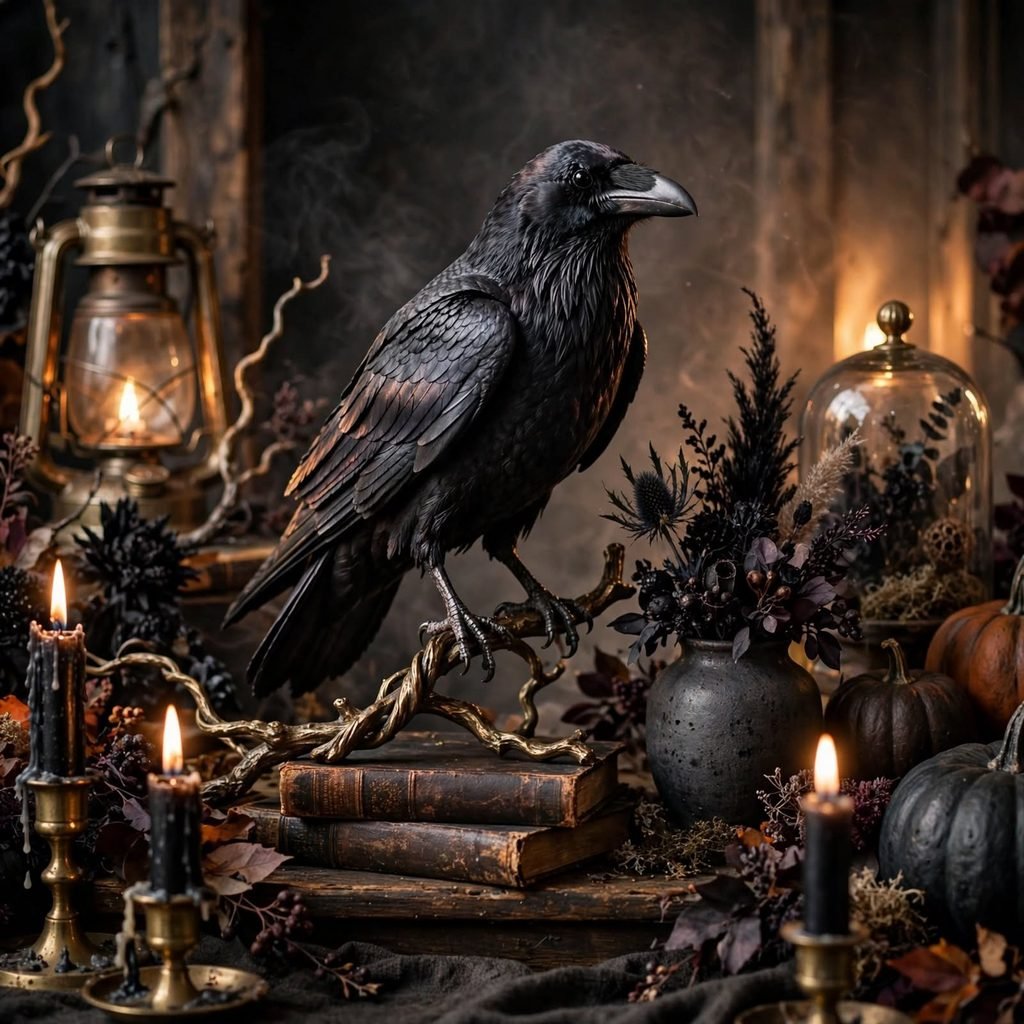
A small collection of matte black raven silhouettes, some flat-cut and some dimensional, perched along a roofline, railing, or bare branch arrangement, adds a sense of being watched that works from a distance as well as up close. Mix flat silhouettes for the roofline with a few dimensional figures at eye level for variety in texture. Avoid placing them in a straight, evenly spaced row irregular spacing and varied angles read as far more natural.
9. Aged Apothecary Cabinet
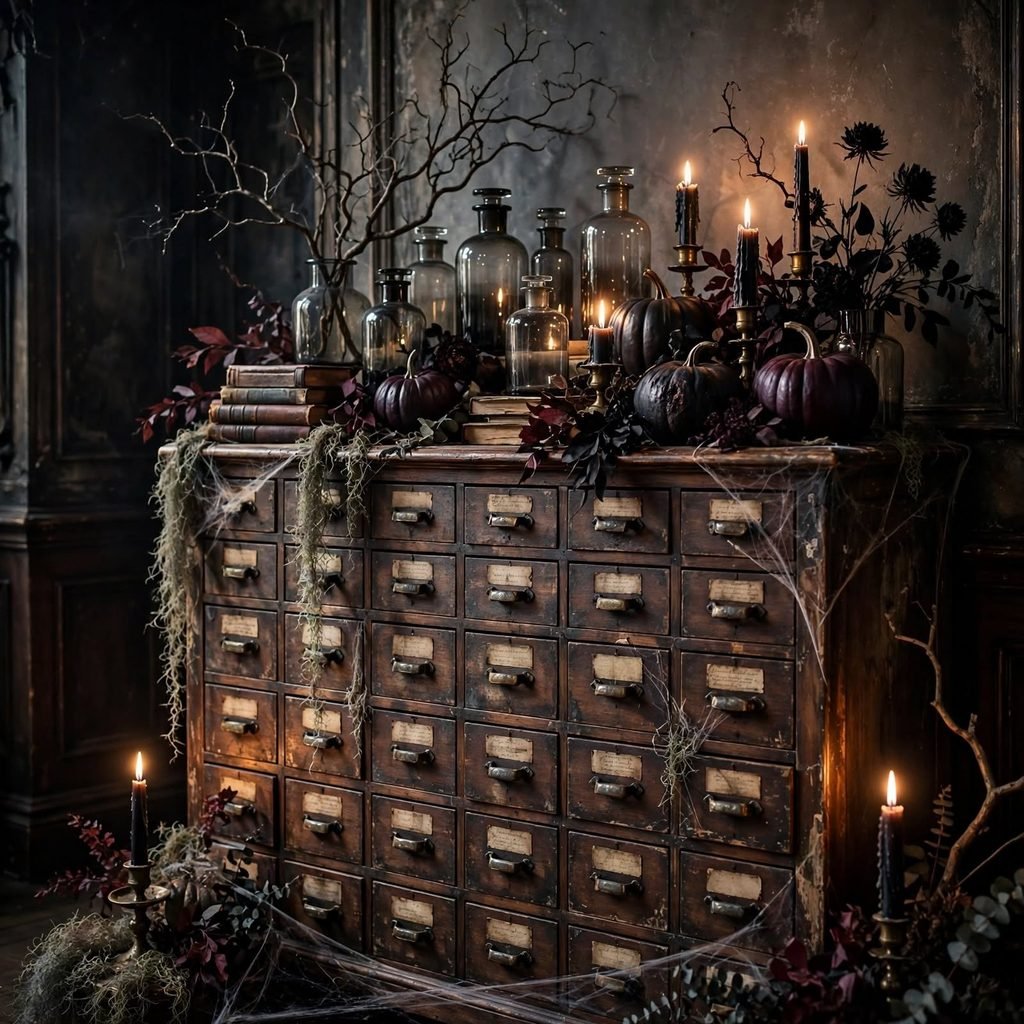
A small wooden cabinet or shelf styled with mismatched amber and cobalt glass bottles, some labeled with handwritten tags, brings a collected, old-world quality to an entryway or study. Antique shops and estate sales are the best sources for both the cabinet and bottles. Keep the arrangement slightly uneven rather than symmetrical, and light it from one side only with a small warm bulb so half the cabinet stays in shadow at any given time.
10. Charcoal Velvet Drapery
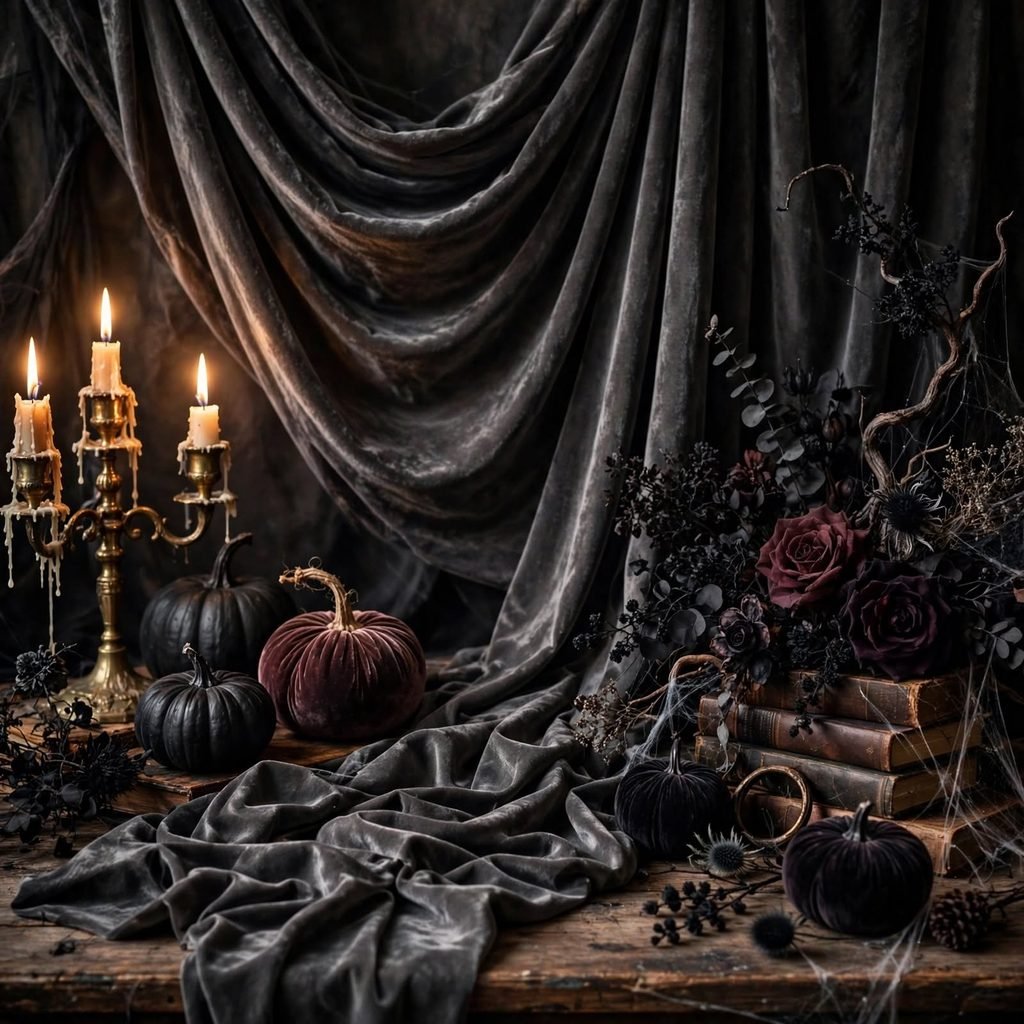
Heavy charcoal or deep plum velvet panels hung at a doorway or window, pulled slightly open rather than fully closed, add both texture and implied concealment that lighter fabrics can’t replicate. Velvet holds shadow differently than cotton or linen, absorbing light rather than reflecting it, which keeps the folds looking genuinely dark rather than simply dim. Let the fabric puddle slightly at the floor instead of hemming it precisely to length.
11. Spooky Halloween Decor Window Display
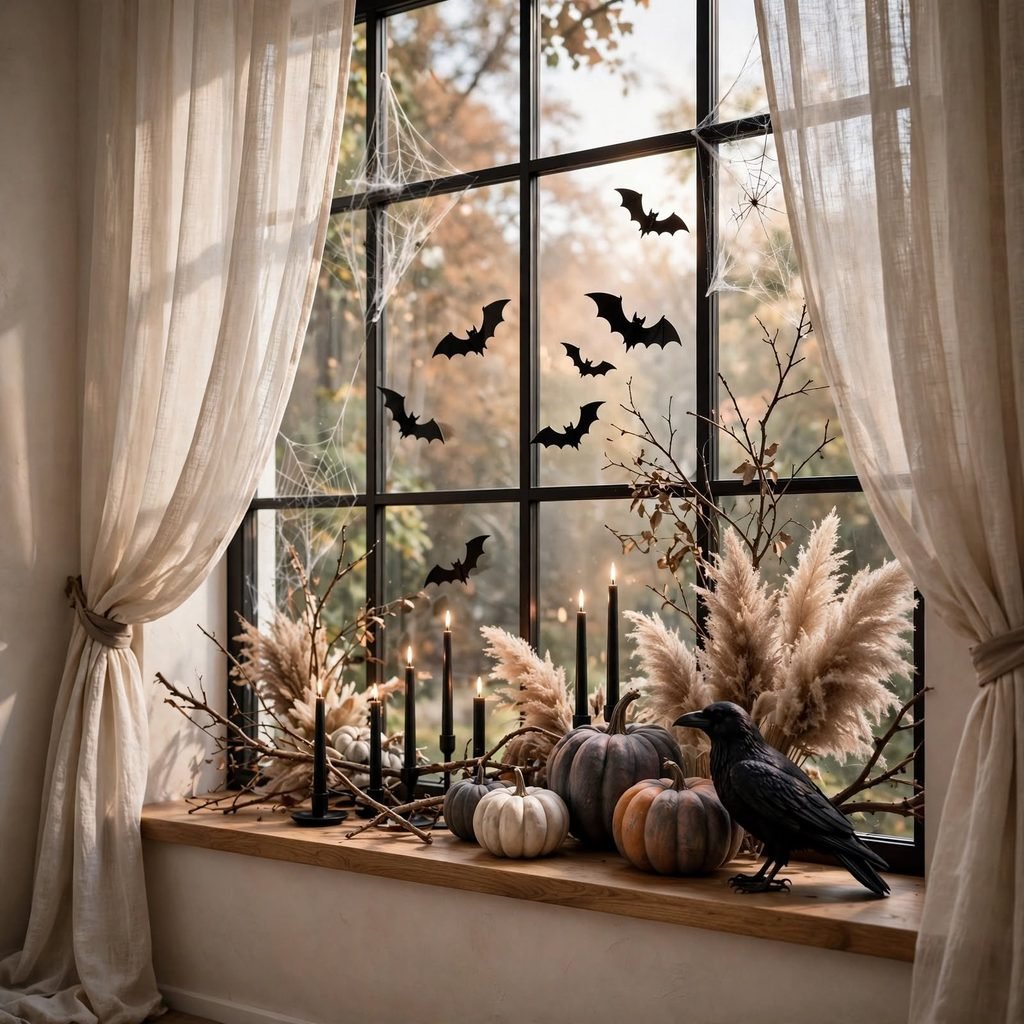
Layering a bare branch silhouette, a single raven figure, and a warm bulb positioned behind sheer black fabric in a front window builds a scene visible from the street that reads as spooky halloween decor without a single carved pumpkin in sight. Keep the layering to three elements at most so the silhouette stays legible from a distance. This works especially well on street-facing windows where most passersby will only see the display for a few seconds at a time.
12. Wrought Iron Candelabra Cluster
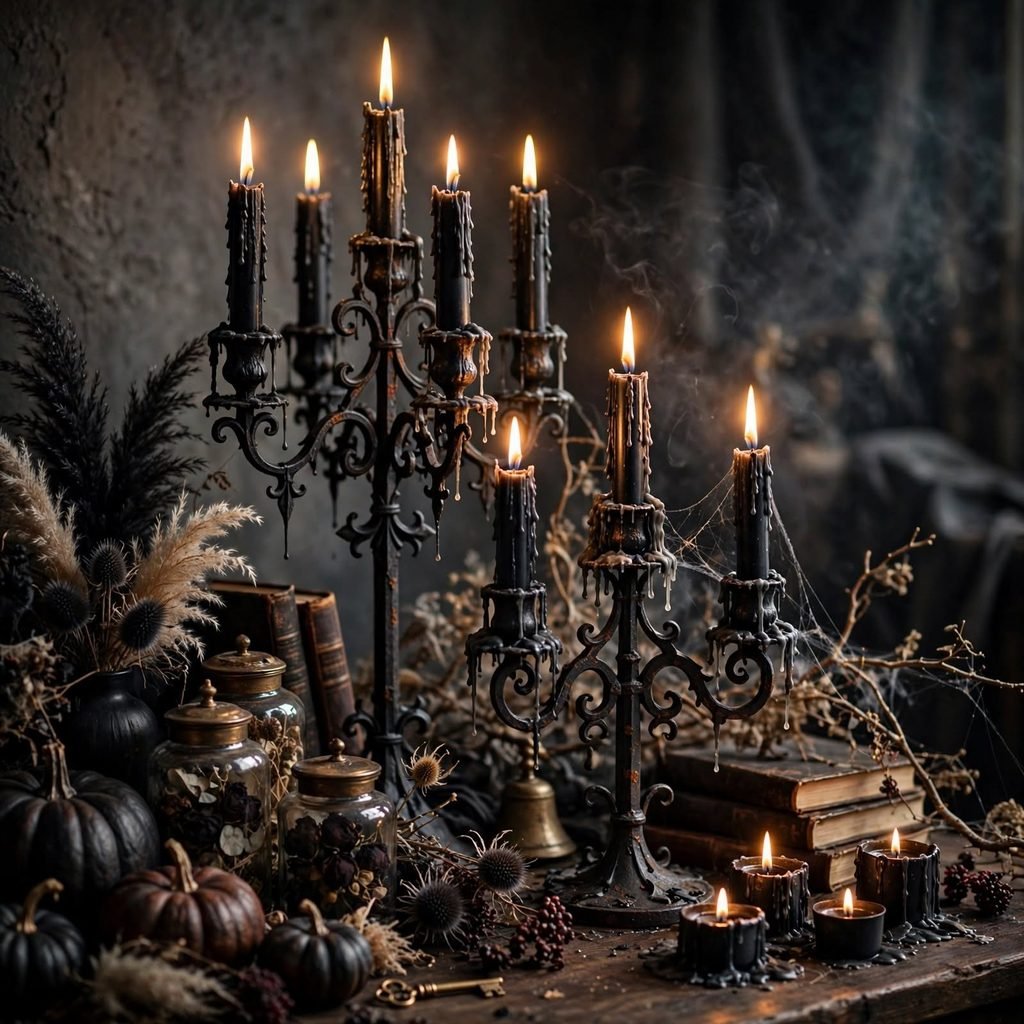
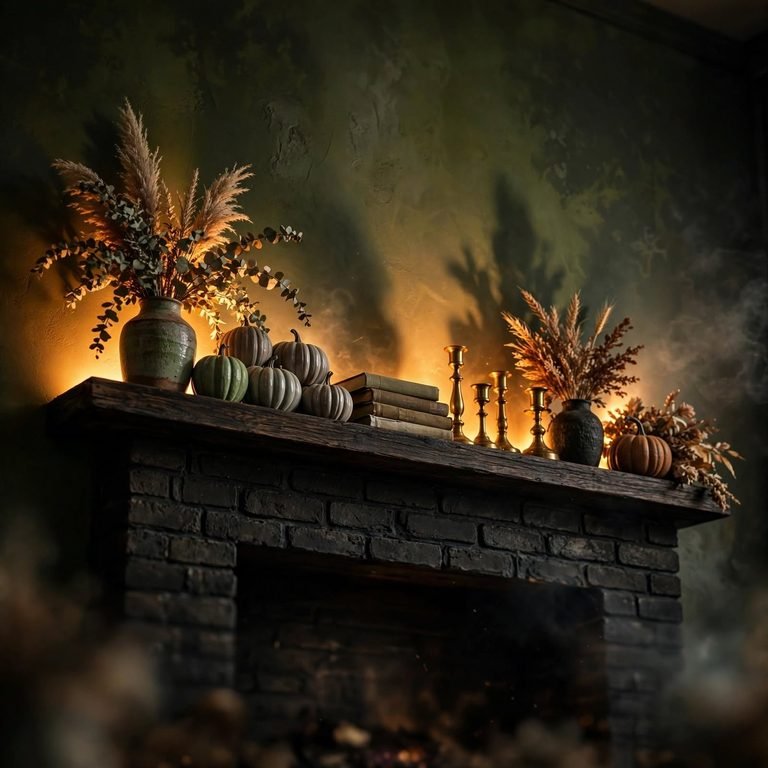
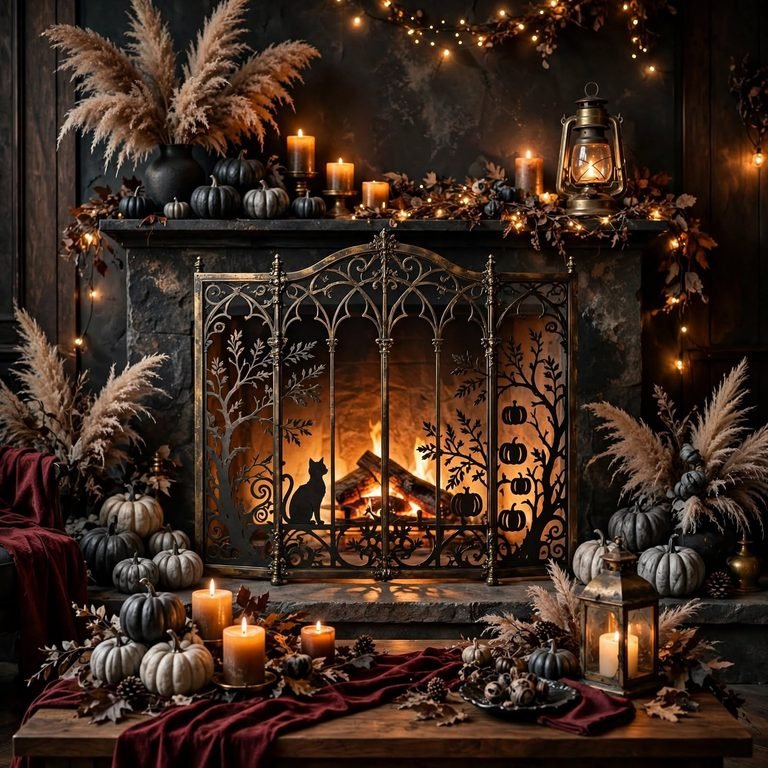
Three or four wrought iron candelabras of varying heights, fitted with black or deep burgundy taper candles, grouped on a mantel or entry table produce shifting, layered shadow that changes throughout the evening as candles burn down. Choose an aged or hand-forged finish over anything mass-produced and shiny. Let wax drip naturally down the base rather than wiping it clean, since the buildup reads as genuine use rather than staged decoration.
Shop the Look
A set of weathered metal lanterns with amber flicker-flame LED candles anchors several of these ideas at once and works for general fall lighting beyond Halloween. Smoked glass cloches in two or three sizes are widely available through home goods retailers each September. A tarnished brass skull accent piece from an antique shop or specialty seller adds a focal point for under thirty dollars. Round out the collection with stretchable spider webbing by the bulk bag and a bundle of bleached manzanita branches from a floral supplier.
Alt text suggestions: “spooky halloween decor with amber lanterns lining a porch walkway,” “smoked glass cloche display styled on a dark wood console,” “fog-lit entry stairs with low haze for spooky halloween decor.”
Common Mistake to Avoid
The most common mistake is relying entirely on flat overhead lighting, which erases the shadow and depth that make spooky decor effective in the first place. A room lit evenly from above looks staged no matter how well-chosen the props are underneath it. Using low, angled, or single-source lighting instead lets objects cast shadow, and shadow is often doing more of the atmospheric work than the decor itself. Skipping this step is the fastest way to flatten an otherwise strong display.
FAQs
What makes decor spooky instead of just Halloween-themed?
Spooky decor relies on mood-building elements low or angled lighting, shadow, texture, and implied movement rather than literal imagery like cartoon pumpkins or plastic skeletons. A room can be fully decorated for Halloween and still read as cheerful rather than spooky if the lighting is bright and even. Shifting to warm, low-angle light sources and aged, matte-finish materials is usually what separates a genuinely eerie space from a simply themed one.
How do you make a porch look spooky without spending a lot?
Lighting delivers the most atmosphere per dollar. A few amber flicker-flame LED candles in inexpensive lanterns, combined with real or dried branches for shadow-casting shapes, transforms a porch more effectively than a full set of plastic props. Secondhand items an old lantern, a tarnished picture frame, a weathered basket read as more authentic than new decorations and typically cost less. Fog, even from a budget machine, adds significant atmosphere for under fifty dollars.
What colors work best for spooky Halloween decor?
Charcoal, aged brass, bone white, and deep burgundy form a stronger palette than bright orange and black for atmospheric styling, since muted tones photograph and read as moodier under low light. True black works well in small doses, for candles or accent objects, but an entire display in flat black can look more like a costume shop than a considered scene. Warm amber lighting ties these tones together more effectively than white or blue-toned bulbs.
Is fog safe to use on a wood porch or near guests?
Standard glycol-based fog is generally low risk in open, ventilated outdoor spaces, though it can leave a light residue on unsealed wood over repeated use. Run the machine in short bursts rather than continuously, and keep it angled away from direct contact with railings or furniture when possible. Guests with asthma or respiratory sensitivity should be able to move away from the haze easily, so avoid concentrating fog in a single enclosed entry point.
How early can you start putting up spooky Halloween decor?
Early October works well for most elements, since lanterns, branches, and metal accents hold their look regardless of weather. Fabric-based pieces like velvet drapery can go up even earlier, in late September, without any seasonal urgency. Save fog machines and any battery-powered lighting for testing about a week before Halloween to catch equipment issues early, and treat real branches or fresh greenery as the last elements added closer to the date.
Conclusion
Spooky Halloween decor comes down to controlling light and shadow more than it comes down to any single prop, and the ideas here work best layered two or three at a time rather than attempted all at once. Start with lighting, add texture through aged materials, and let the shadows do the rest. Save this guide to your Halloween Pinterest board, and read our related posts on Creepy Halloween Decorations and Halloween Mantel Decorating Ideas for more room-by-room inspiration.