12 stunning Creepy Halloween Decorations That Actually Scare Guests
Most Halloween displays fail for the same reason: they announce themselves. A grinning inflatable ghost on the lawn tells visitors exactly what to expect, and expectation kills fear. The creepy Halloween decorations that actually land are the ones guests notice a half-second too late a face in a window, a hand that wasn’t there before, breathing behind a door. This guide walks through twelve build-it-yourself concepts, the materials that sell each illusion, and the placement rules that decide whether a prop reads as unsettling or as clutter. Budget notes and sizing tables are included throughout.
Trend & Background
Home haunting has shifted hard toward atmospheric horror over the past few seasons, mirroring what audiences responded to in films like Hereditary and Talk to Me dread built from stillness rather than jump scares. Retailers noticed: Home Depot’s twelve-foot skeleton drove the shift toward scale, while Etsy sellers report rising demand for antique-style mourning décor, taxidermy replicas, and Victorian séance props. Meanwhile, rising prop prices have pushed more people toward DIY builds using thrifted frames, hardware-store PVC, and fabric-dyeing techniques that cost under twenty dollars per scene.
Key Takeaways
- Creepy Halloween decorations work best when they rely on suggestion, shadow, and scale rather than gore or bright orange plastic.
- Layering three elements light, texture, and sound turns a flat display into something guests feel before they understand it.
- Vintage materials like cheesecloth, tarnished brass, and weathered wood age a scene instantly and cost far less than store-bought animatronics.
- Placement at eye level and in peripheral sightlines produces more reaction than any single expensive prop.
1. Cheesecloth Ghosts
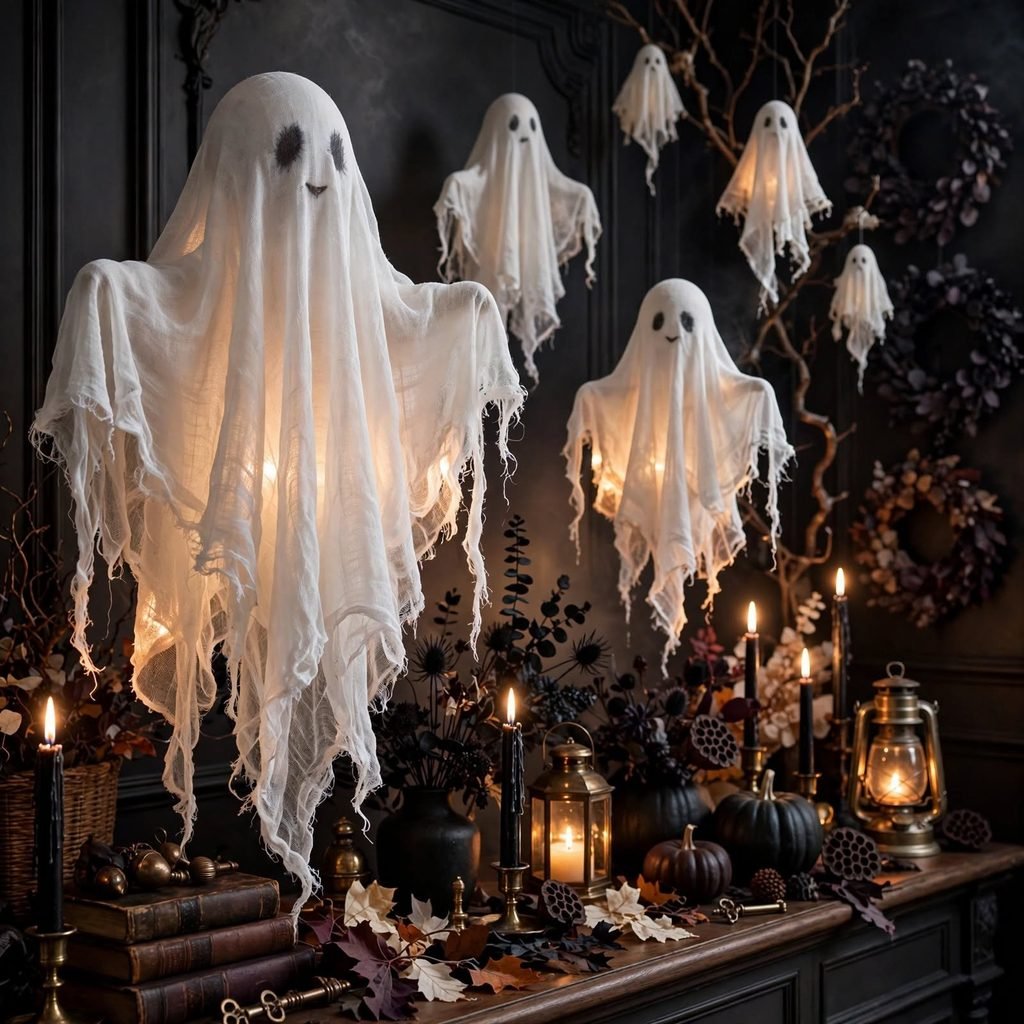
Cheesecloth ghosts are the cheapest high-impact build in haunting, and they photograph beautifully at dusk. Soak loose-weave cheesecloth in a fabric stiffener solution, drape it over a wire armature or a balloon-and-dowel frame, and let it cure overnight so the folds hold. The material’s translucency is what sells it porch light passes through and creates a genuine glow rather than a flat white shape. Hang them from branches with clear fishing line so they drift in wind instead of dangling motionless.
| Ghost Height | Cheesecloth Needed | Armature Base | Approx. Cost |
| 24 in (tabletop) | 2 yd | Balloon + dowel | $6 |
| 48 in (porch) | 5 yd | Tomato cage | $12 |
| 72 in (yard) | 9 yd | PVC frame | $22 |
2. Window Silhouette Figures
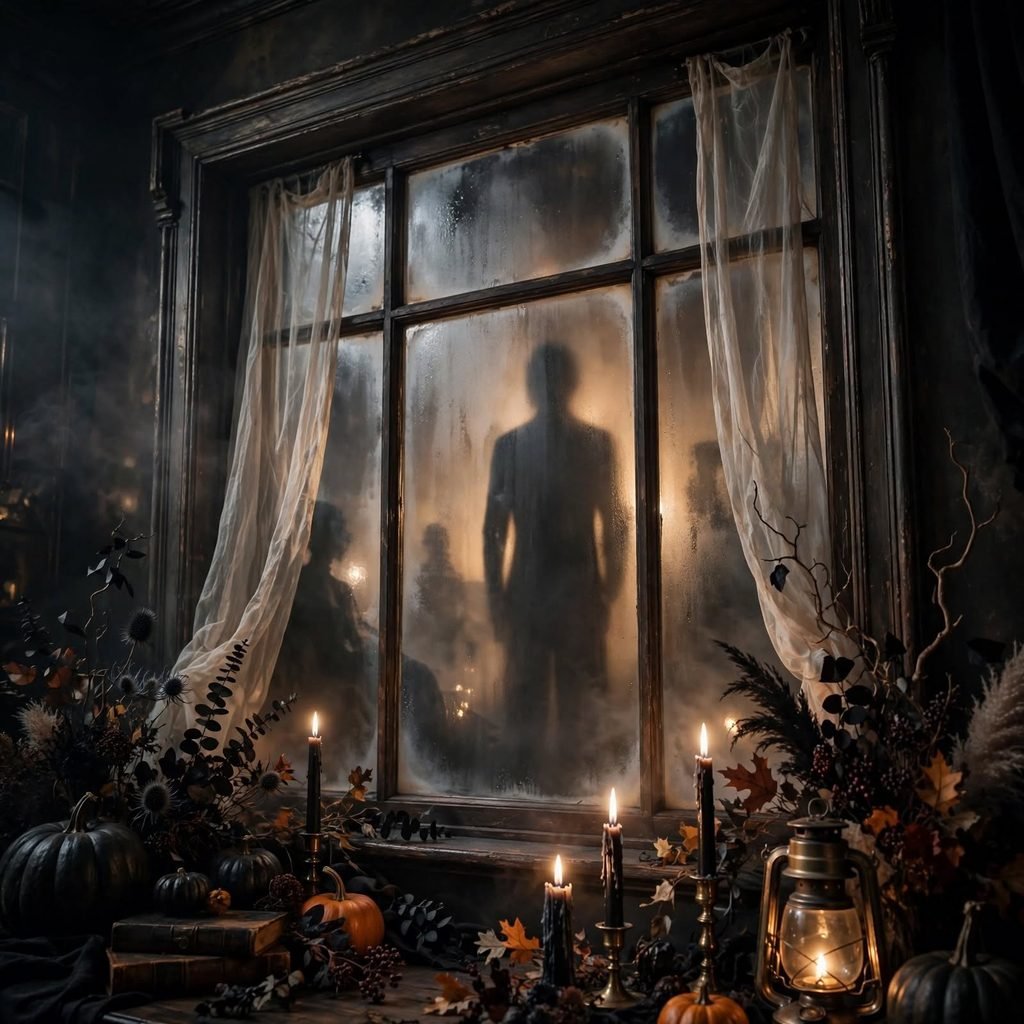
Black foam board cut into human silhouettes and taped behind a curtain turns every window into a watcher. Backlight each one with a warm 40-watt bulb placed three to four feet behind the figure so the edges stay soft rather than razor-sharp hard edges read as cardboard, soft edges read as a person. Vary the poses: one standing still, one turned slightly away, one child-height. The unevenness is what makes passersby look twice and then keep looking.
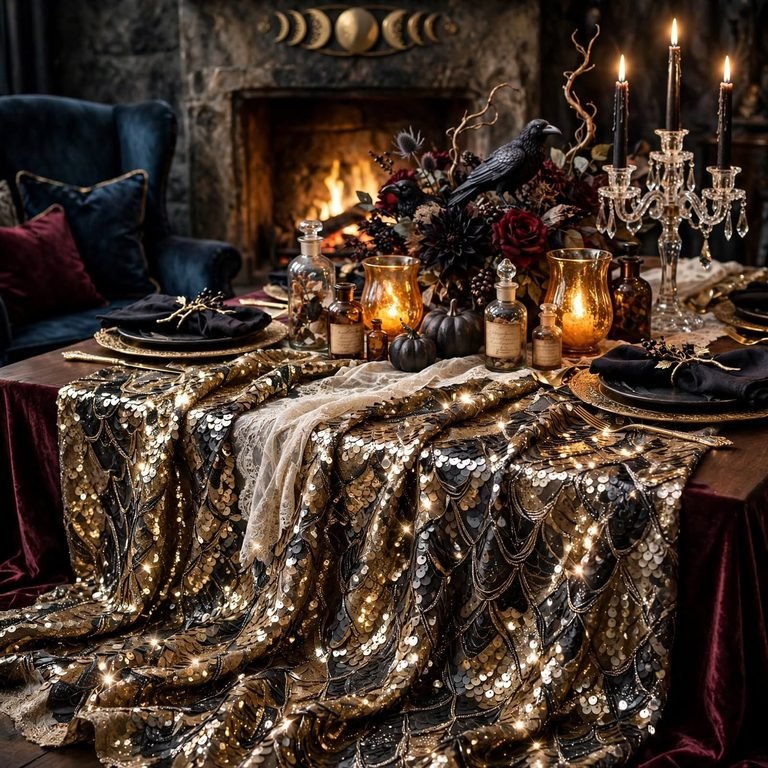
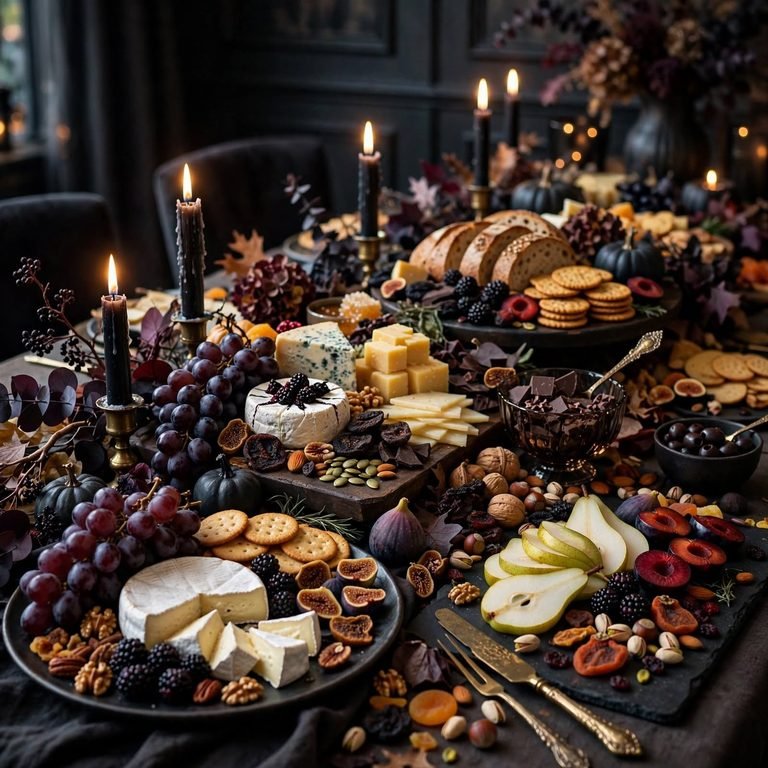
Give your space a festive halloween dining table decor with these fun and eye-catching decorations.
3. Mourning Portrait Gallery
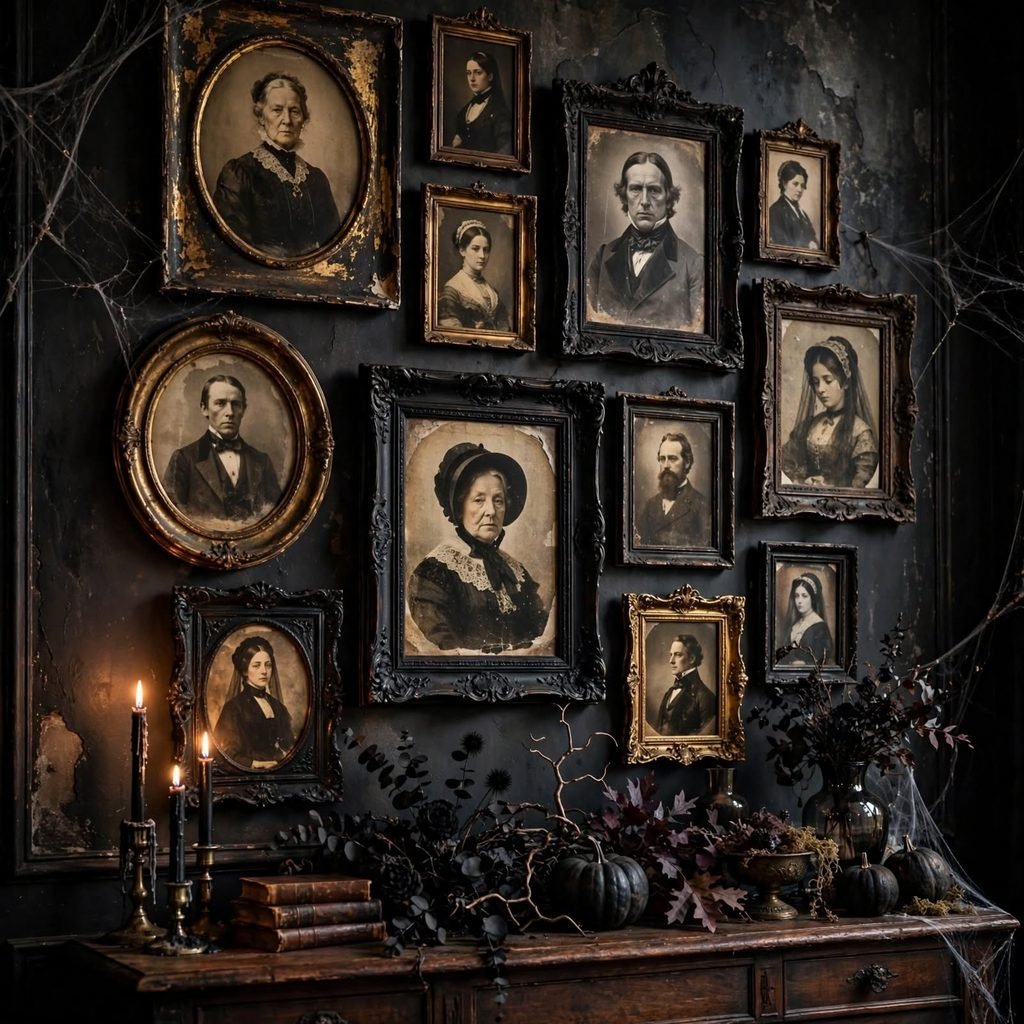
Victorian post-mortem photography is genuinely unsettling, and the aesthetic reproduces easily. Print sepia-toned portraits of your own family members, age them with a tea wash, and frame them in thrifted oval or gilt frames hung in a tight salon-style cluster. The horror comes from recognition guests register familiar faces in an unfamiliar, funereal context. Add a single black crepe ribbon draped diagonally across one corner of each frame, a real Victorian mourning convention that most visitors sense without being able to name.
4. The Breathing Door
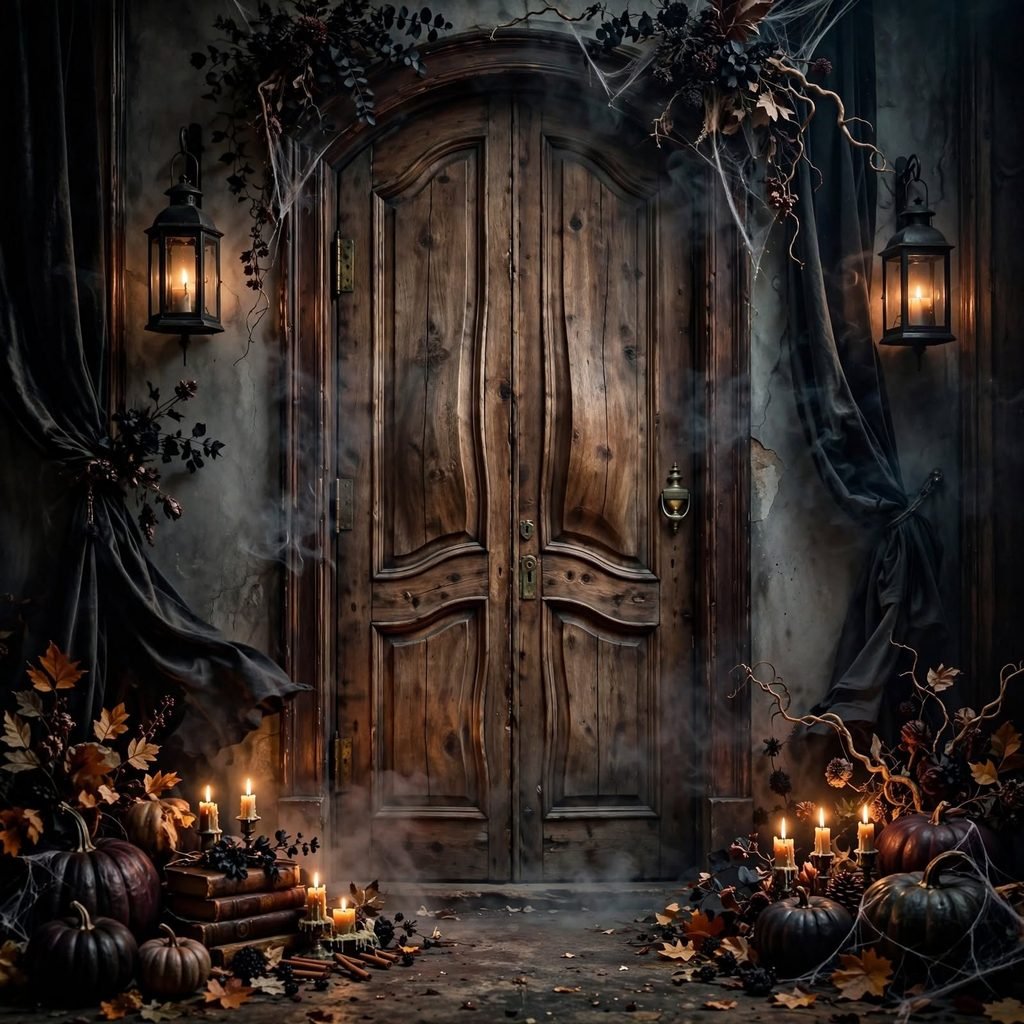
A door that inhales is one of the most effective illusions in home haunting because it triggers a threat response before conscious thought catches up. Mount a small oscillating fan or a slow linear actuator behind a lightweight plywood panel fitted into a doorframe, then cover the panel in matching paint. The panel flexes outward and relaxes on a four-second cycle. Pair it with a low sub-bass loop under 60 Hz so guests feel the rhythm in their chest rather than hearing it.
5. Stairwell Hand Rails
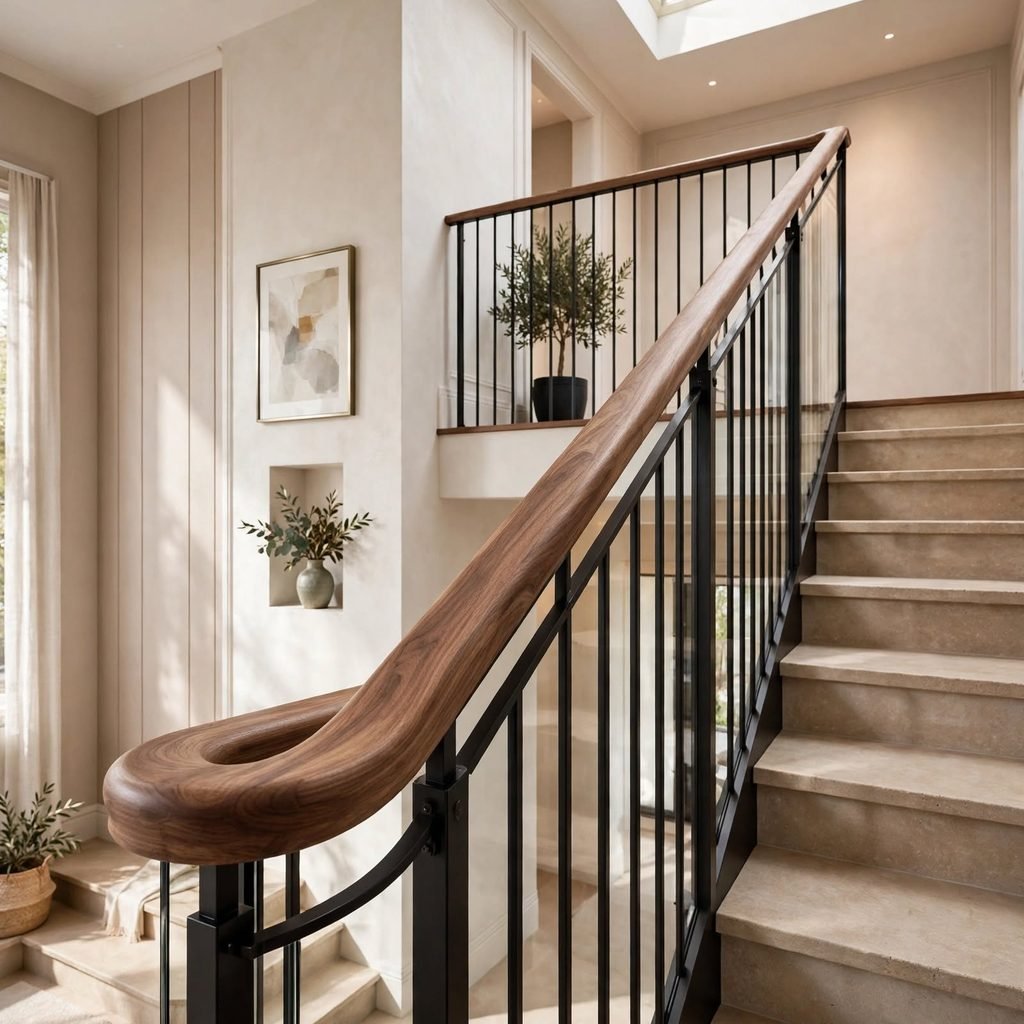
Pale silicone or latex hands gripping a banister from below implies a body that guests never see, and implication is stronger than display. Use cosmetic-grade prosthetic hands or cast your own with alginate molds and liquid latex tinted with a grey-green base. Mount them at irregular intervals never evenly spaced so the arrangement looks like grabbing rather than decorating. Position the highest hand at roughly shoulder height on the stairs, where guests’ hands naturally land as they climb.
6. Anatomical Specimen Jars

Glass apothecary jars filled with tinted glycerin and latex organ replicas read as a Victorian curiosity cabinet rather than a costume shop. Use amber, sage, and smoke-grey tinting for the liquid; clear water looks fake under any lighting. Label each jar with handwritten specimen tags on aged cardstock, using Latin binomials and fabricated collection dates. Arrange them on a dark-stained shelf with a single low-angle light source underneath so the contents cast wavering shadows on the wall behind.
| Jar Size | Fill Volume | Specimen Type | Tint Drops |
| 8 oz | 6 oz glycerin | Eyeballs, teeth | 2 amber |
| 16 oz | 12 oz glycerin | Small organ | 4 sage |
| 32 oz | 26 oz glycerin | Brain, heart | 6 smoke grey |
7. Sheer Curtain Corridors
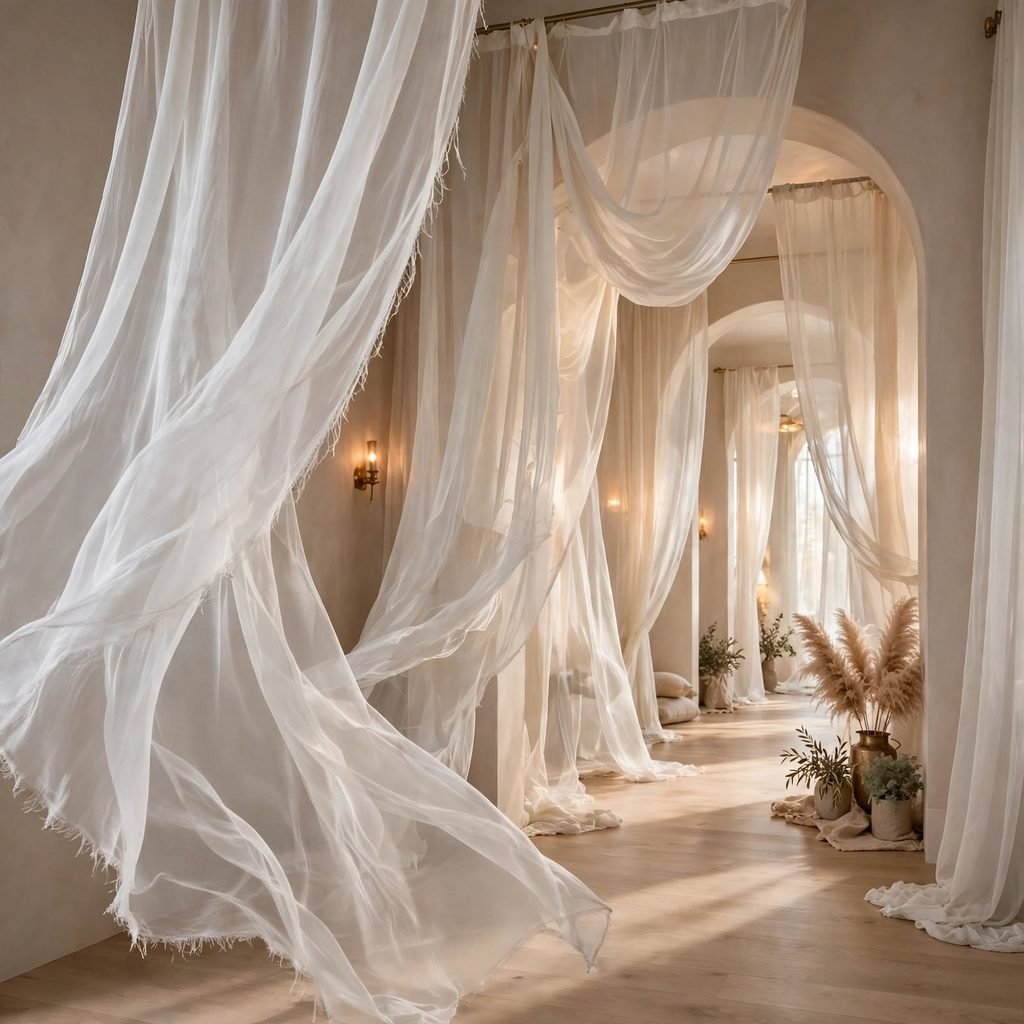
Hanging sheer white or bone-colored fabric panels down a hallway at three-foot intervals forces guests to push through layers they can’t see past. Each panel obscures the next, so depth perception collapses and the corridor feels longer than it is. Weight the hems lightly with fishing sinkers so the fabric moves after someone passes and settles slowly. Light it from the side with a single dim amber source rather than from above, which flattens the layers into a wall.
8. Dead Garden Topiary
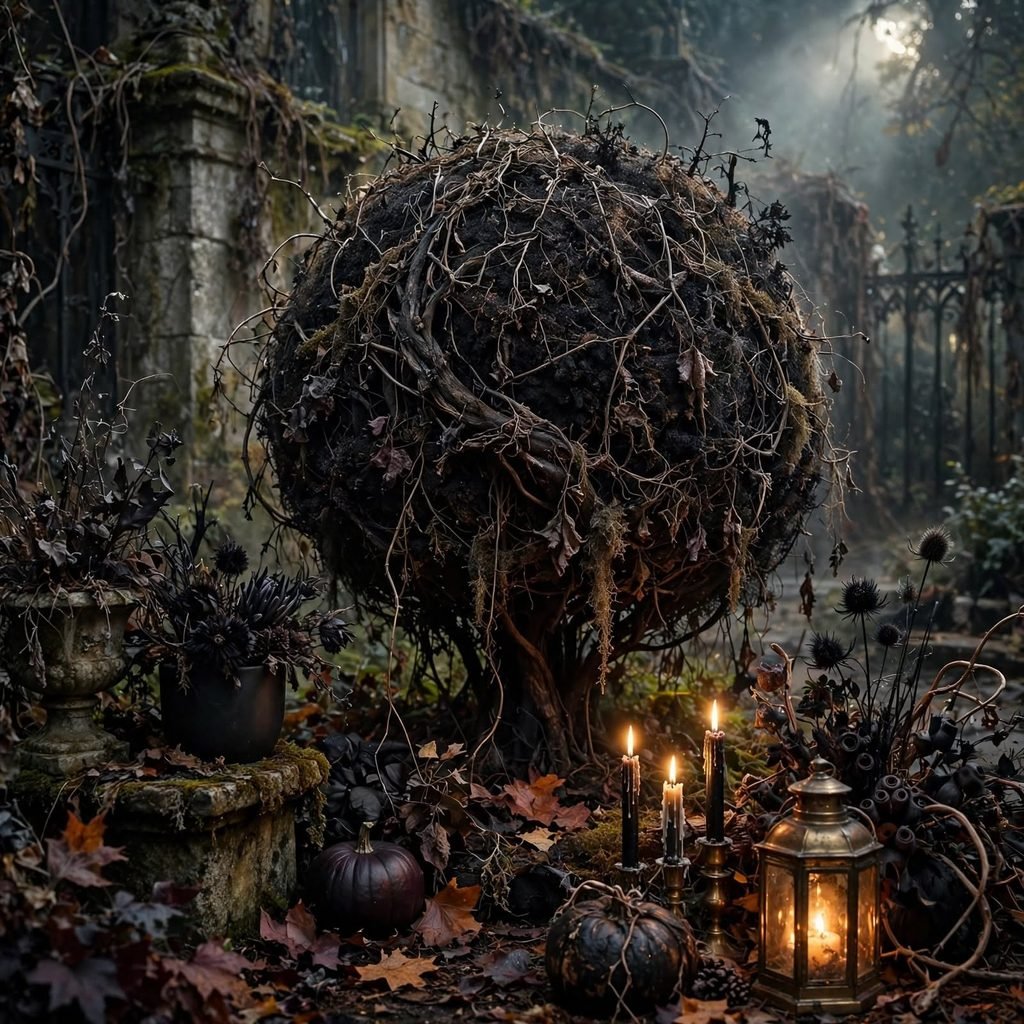
Strip branches from fallen limbs, spray them matte black, and plant them in urns filled with dark gravel to create the look of a garden that died and stayed standing. Real wood beats plastic here because the irregular branching reads as organic under headlights and porch light. Weave in dried grapevine and a few bleached bones near the base. Keep everything monochrome the absence of color is what separates this from an ordinary autumn arrangement.
9. Crawling Attic Figures
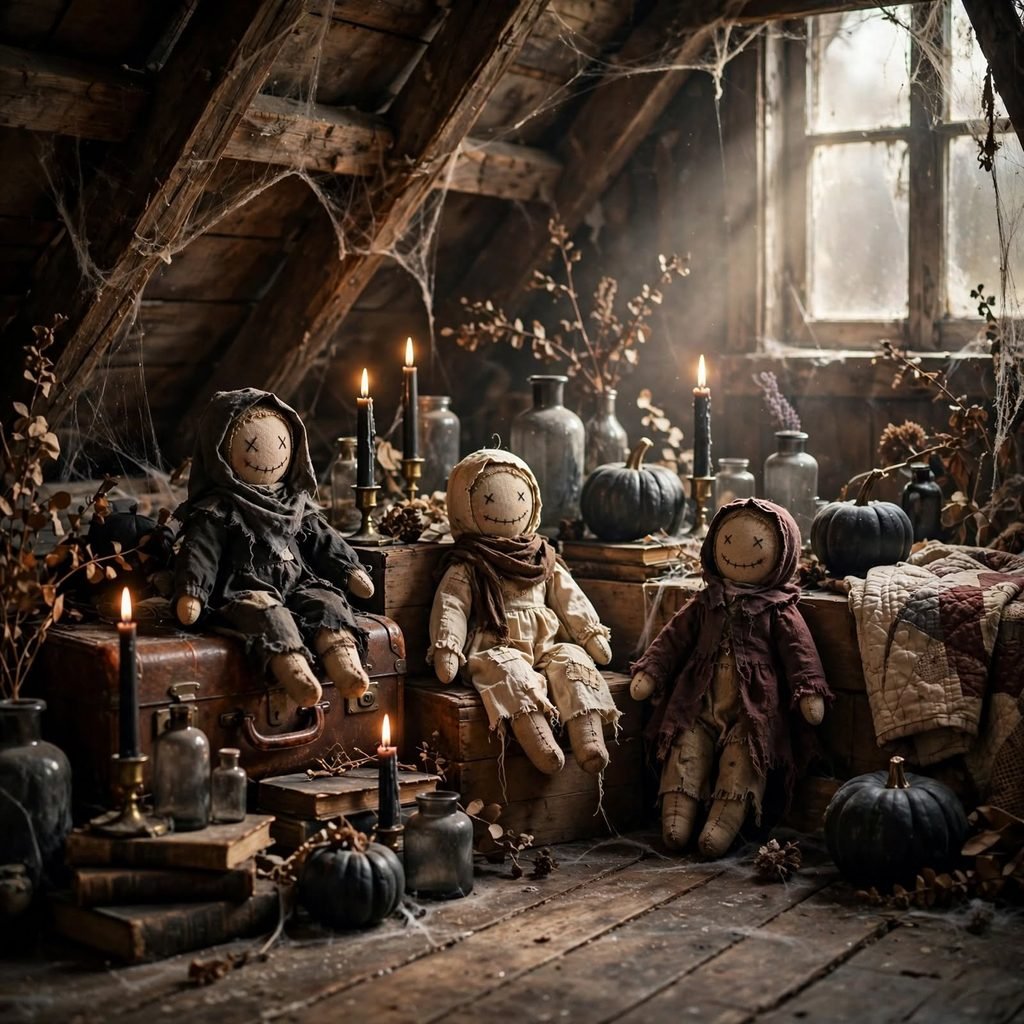
A partial body emerging from a ceiling hatch, crawlspace vent, or the top of a bookshelf implies the rest of the figure is still inside. Build from a foam mannequin torso and arms, dress it in aged linen or a stained nightgown, and position only the head and one shoulder visible. The incomplete reveal does the work. Mount it high above natural sightlines so guests spot it on a second scan of the room rather than immediately on entry.
10. Flickering Candelabra Clusters
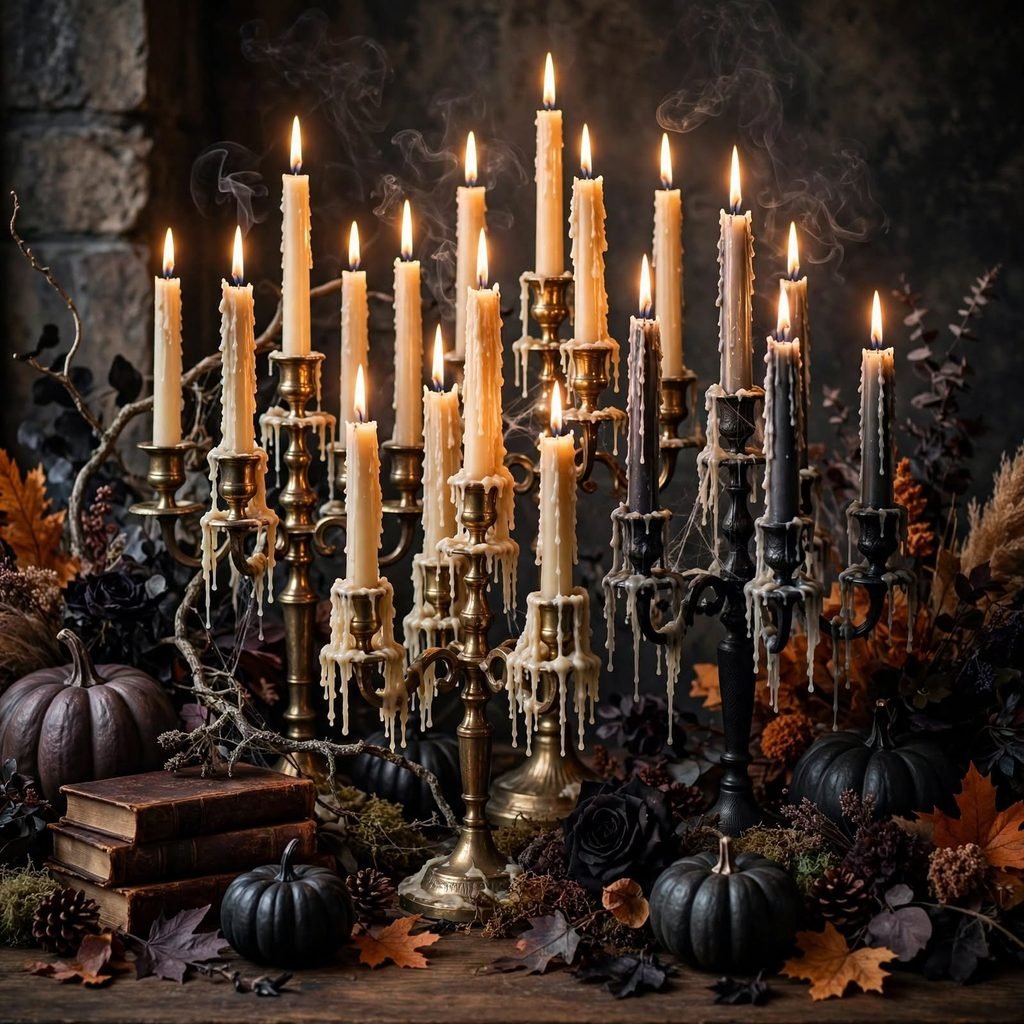
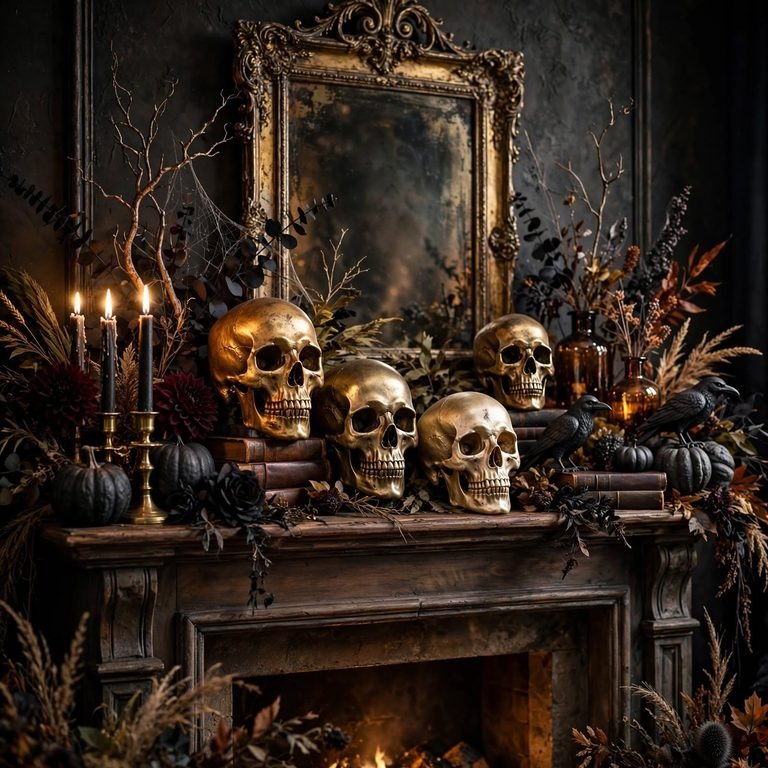
Grouped brass and wrought-iron candelabras with flicker-bulb LED tapers produce constantly shifting shadows, which keeps peripheral vision unsettled all night. Real flame is a fire risk around fabric props, but quality flicker bulbs at 2200K match candlelight closely. Drip low-temperature wax over the holders to build authentic buildup, and tarnish shiny brass with a vinegar-and-salt rub. Cluster in odd numbers of three, five, or seven on a mantel or sideboard at roughly chest height.
11. Rusted Chain and Hook Displays

Lengths of heavy chain and meat hooks hung from a porch ceiling or garage rafter suggest a workspace rather than a holiday. Buy galvanized chain and age it with a saltwater-and-hydrogen-peroxide rust bath over two days for a convincing patina spray-painted rust never fools anyone up close. Hang at staggered lengths so guests have to duck under some and step around others. Physical interference with movement is what converts a prop into an experience.
12. Fog-Filled Floor Wells
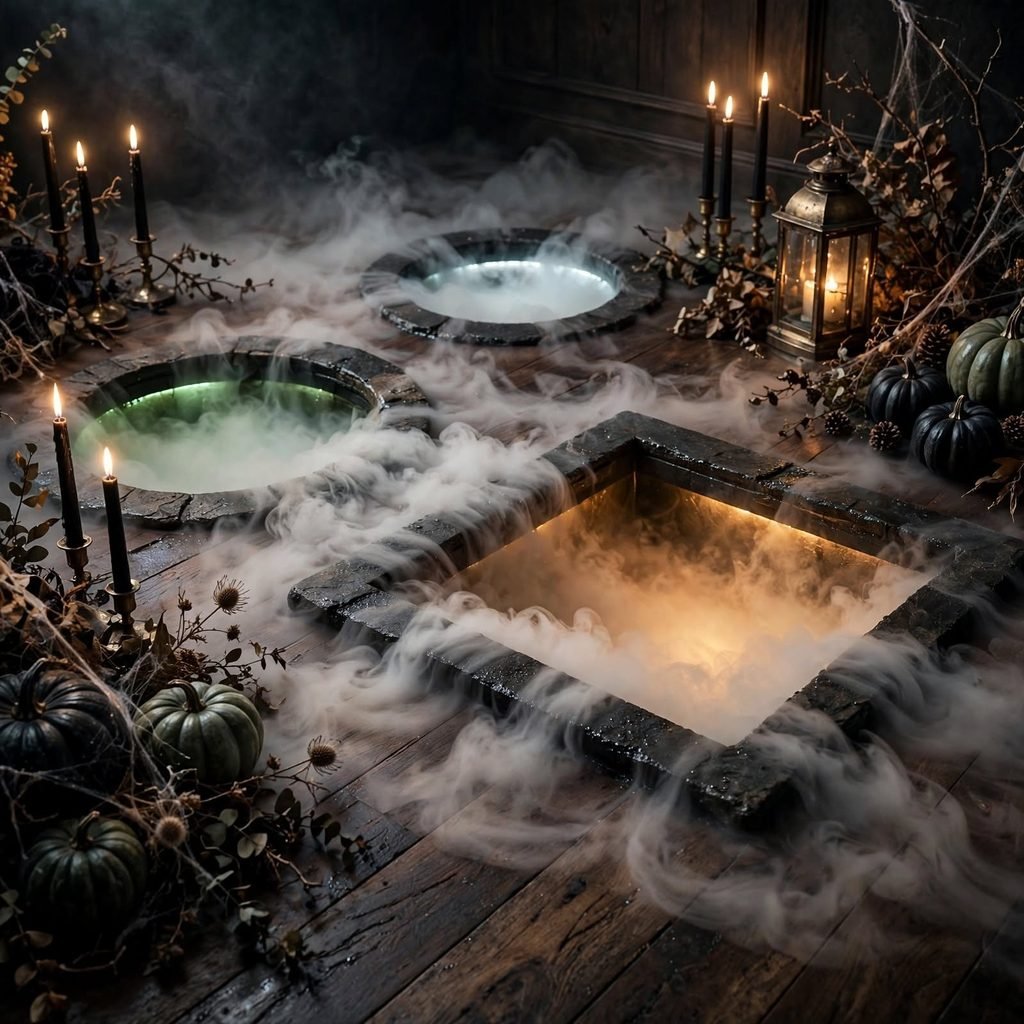
Low-lying fog pooling around ankles hides the ground and makes every step uncertain, which is why professional haunts rely on it. A standard fog machine paired with a chiller or a cooler packed with ice and dryer ducting drops the vapor low enough to stay at floor level. Run it in short thirty-second bursts rather than continuously so the fog never fully fills the space and flattens everything into an undifferentiated haze.
| Space Size | Machine Output | Chiller Needed | Run Interval |
| Small porch | 400 W | Ice cooler | 20 sec / 3 min |
| Garage or patio | 1000 W | Ice cooler | 30 sec / 2 min |
| Full yard | 1500 W+ | Dedicated chiller | 45 sec / 2 min |
Shop the Look
A 1000-watt fog machine with a wired remote is the single purchase that changes a display most, and mid-range models run under sixty dollars. Bulk cheesecloth by the ten-yard bolt costs far less than pre-cut packages and covers three to four ghost builds. Warm-white flicker LED tapers in 2200K read as candlelight rather than the blue-tinted cheap versions. Add a bag of unbleached drop cloth for curtain corridors, and a set of latex prosthetic hands for banister and window work.
Alt text suggestions: “creepy Halloween decorations with cheesecloth ghosts hanging from an oak tree at dusk,” “Victorian mourning portrait gallery with black crepe ribbon in a dark hallway,” “low-lying fog covering a porch floor with rusted chains overhead.”
Common Mistake to Avoid
The most common error is over-lighting. People spend weeks building props and then flood the display with bright white floodlights or string lights so everything is visible at once, which destroys the ambiguity that makes a scene frightening. Fear lives in partial information. Use single low-wattage sources at floor level or behind props, leave sixty percent of the space in genuine darkness, and let guests’ eyes adjust. If visitors can identify every object from the sidewalk, the display has already spent its effect.
FAQs
What makes Halloween decorations actually scary instead of just festive?
Ambiguity and human form. Decorations become frightening when the brain can’t immediately categorize what it’s seeing — a partial figure, a shape in low light, movement at the edge of vision. Cartoon pumpkins and grinning skeletons are instantly readable, so they trigger recognition rather than alarm. Human silhouettes, incomplete bodies, and slow movement engage threat-detection systems that operate faster than conscious thought. Dim, uneven lighting amplifies this by forcing the brain to guess.
How do you make Halloween decorations look expensive on a budget?
Age your materials. The difference between a cheap prop and an expensive one is almost always surface texture, not construction. Tea-stain fabric, rust-bathe metal with saltwater and peroxide, drip wax over candleholders, and matte-spray anything glossy. Shiny plastic reads as cheap instantly; dull, uneven, weathered surfaces read as old and therefore real. Thrift stores supply frames, jars, and brass for a few dollars each, and aging them takes an afternoon.
What is the best lighting for a spooky Halloween display?
Low-angle amber or deep red light at roughly 2000 to 2700 Kelvin, positioned below or behind props rather than overhead. Uplighting reverses natural shadow direction, which unsettles viewers without their knowing why. Avoid bright white and avoid blue-tinted LEDs, which read as cheap novelty lighting. Keep total brightness low enough that guests’ eyes need thirty seconds to adjust, and leave large sections of the space genuinely dark so props reveal themselves gradually.
How early should you put up Halloween decorations?
Mid-October is the practical window for exterior displays, though interior pieces can go up in late September without fatigue setting in. Weather is the deciding factor for outdoor builds — cheesecloth, foam board, and paper props degrade fast in rain, so anything fabric-based should go out no more than two weeks ahead. Fog machines, electrical props, and anything with a motor should be tested a full week early so failures surface before the thirty-first.
Are fog machines safe to use around kids and pets?
Standard water-and-glycol fog is generally considered low risk in ventilated spaces, but it can irritate airways, and it is a known trigger for people with asthma. Keep machines out of enclosed rooms, run them in bursts rather than continuously, and make sure guests can step out of the fog easily. The fluid itself is slippery on hard surfaces, so avoid running fog across tile, polished concrete, or stairs where people walk.
Conclusion
The creepy Halloween decorations that stay in people’s heads are rarely the most expensive ones they’re the builds that withhold information, sit at the edge of vision, and use real materials aged to look like they’ve been there for decades. Pick three or four ideas from this list rather than attempting all twelve, and give each one proper lighting and placement. Save this to your Halloween Pinterest board, and take a look at our guides to Gothic Entryway Styling, DIY Fog Machine Chiller Builds, and Victorian Mourning Décor for Fall.