12 Trendy Vintage Halloween Decor Ideas for a Nostalgic Look
Vintage Halloween decor pulls from the die-cut paper figures, honeycomb tissue centerpieces, and muted orange-and-black palettes that defined Halloween decorating from roughly the 1920s through the 1960s, offering a softer, more nostalgic alternative to modern glossy decor. This post covers twelve specific ideas for bringing that look into a home today, each with enough detail to source and display. Whether working with original antiques found at estate sales or newer reproduction pieces, these ideas capture the same period-appropriate charm.
Trend & Background
Interest in vintage-style holiday decor has grown steadily over the past several seasons, with Halloween following the same nostalgic wave that’s driven demand for mid-century Christmas ornaments and retro Thanksgiving tableware. Small studios and paper goods makers have responded by reproducing classic die-cut designs and honeycomb tissue pieces originally popular decades ago, making the look far more accessible than sourcing only from antique shops. This matters now because original vintage Halloween pieces, particularly paper items from the Beistle Company era, have become increasingly rare and expensive, pushing more collectors and decorators toward well-made reproductions.
Key Takeaways
- Vintage Halloween decor draws on mid-century paper goods, die-cut figures, and muted color palettes rather than modern glossy plastic decor.
- Thrifted and reproduction pieces both work, so the look is achievable whether sourcing original antiques or newer vintage-inspired items.
- Warm, low lighting like string bulbs and candles suits the era-appropriate feel better than bright or colored modern lighting.
- Paper and cardboard materials, once common in mid-century Halloween decor, are now reproduced by several small studios for easier sourcing.
1. Die-Cut Cat Silhouette
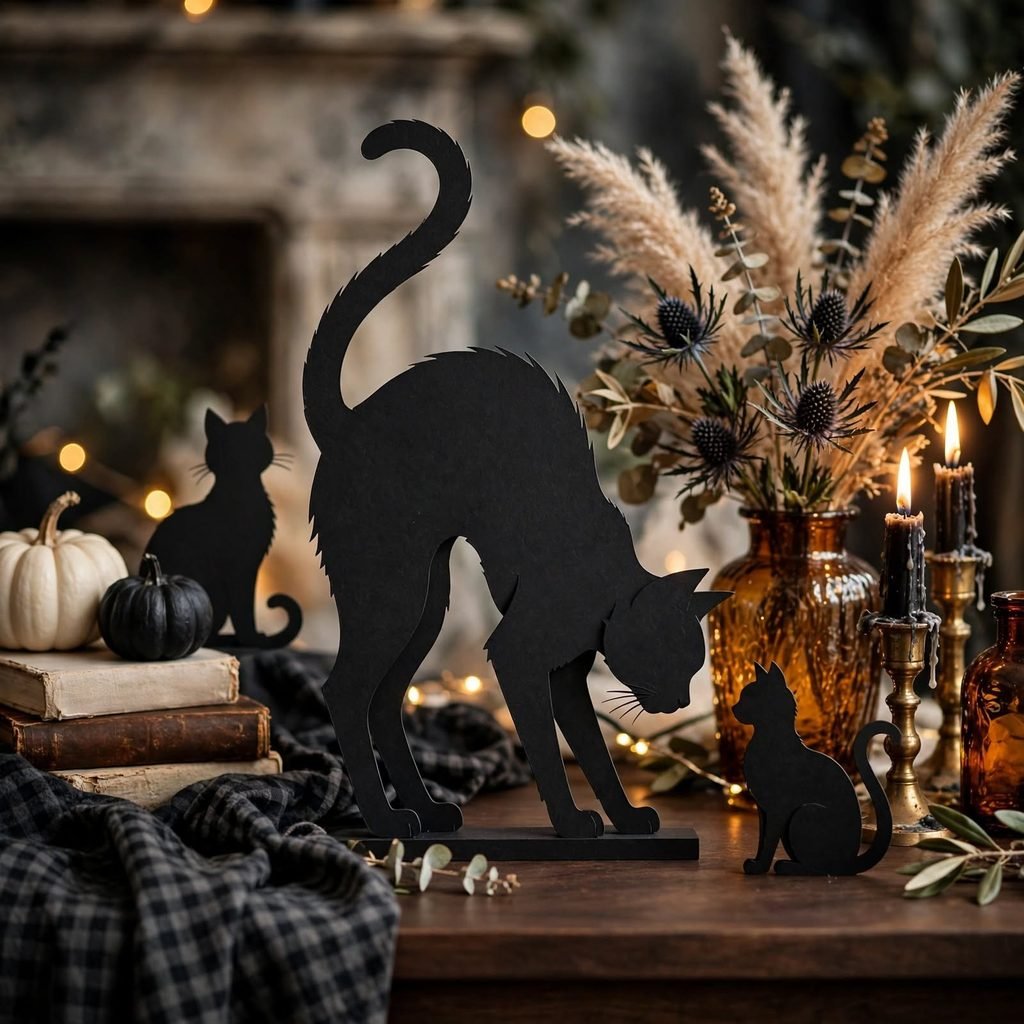
A black cat silhouette cutout with an arched back, modeled after classic Beistle Company designs from the early to mid-1900s, works as a wall decoration or window cling that immediately signals a vintage Halloween decor approach. Reproduction versions in cardboard or thin wood hold up better for repeated seasonal use than the original tissue-paper versions. Position it in a window where it’s visible from the street as a nod to a classic front-porch tradition.
2. Die-Cut Paper Figures
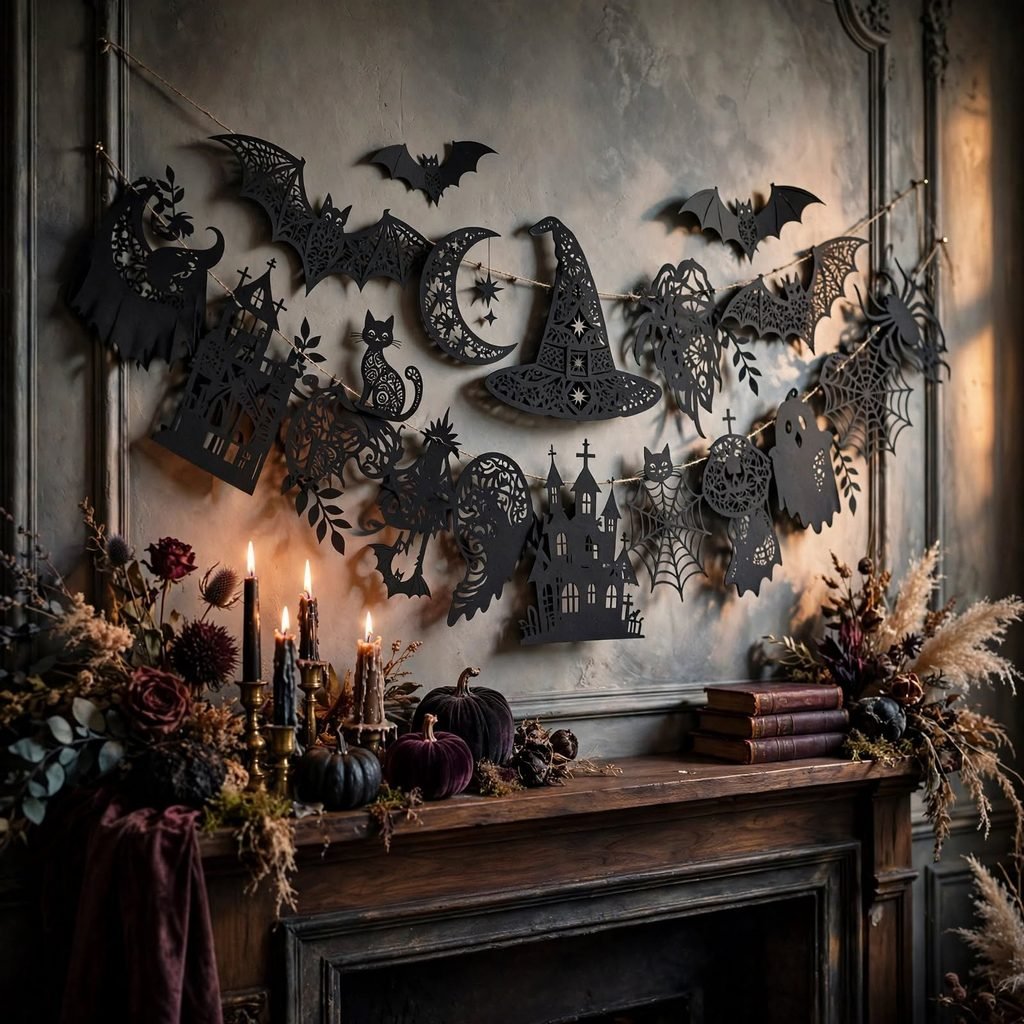
Cardboard die-cut figures shaped like black cats, witches, and jack-o’-lanterns, either sourced as originals or modern reproductions, are one of the most recognizable elements of vintage Halloween decor and work well propped on a mantel, shelf, or window ledge. These pieces were mass-produced by companies like Beistle from the 1920s through the mid-century period, and reproduction versions now closely match the original printing style. Look for slightly muted, aged color tones rather than bright, saturated printing to keep the look period-appropriate.
3. Honeycomb Tissue Centerpiece
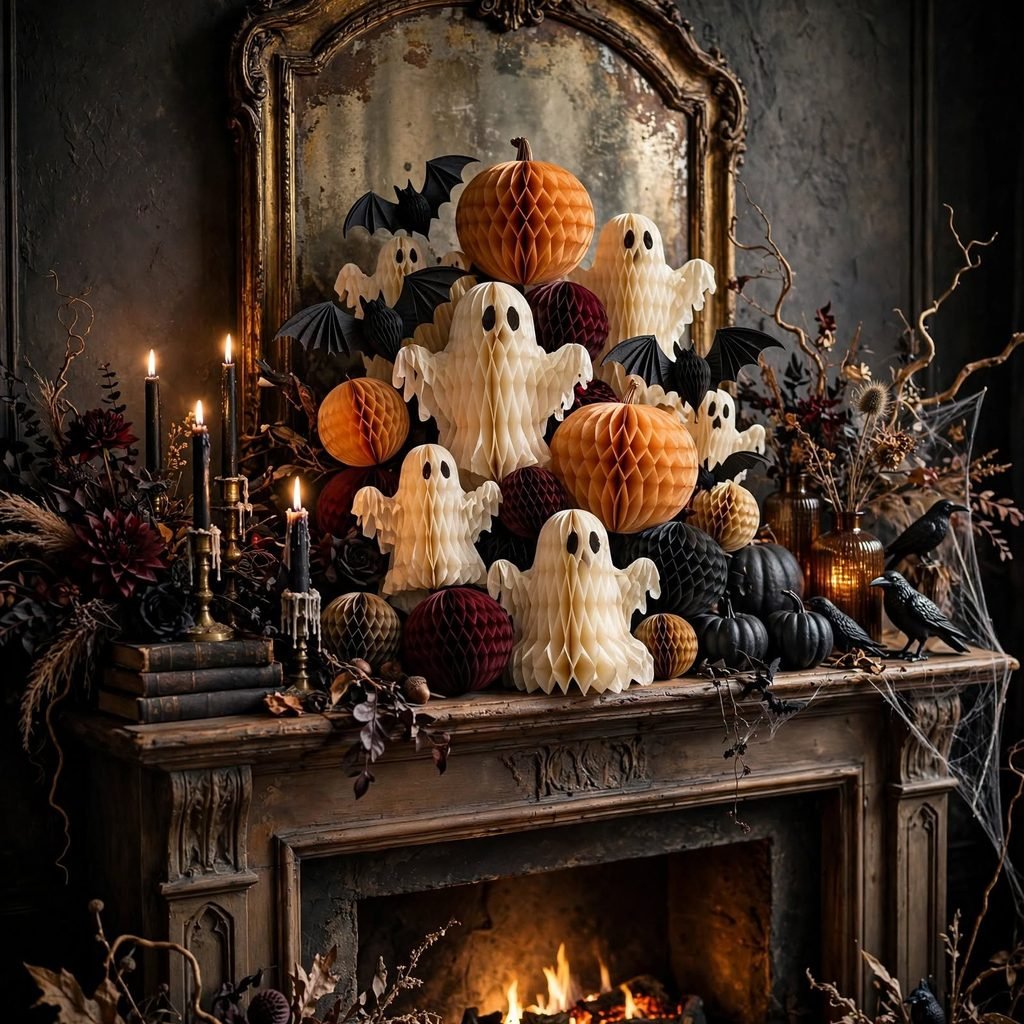
Honeycomb tissue paper pumpkins and black cats, which expand into a rounded three-dimensional shape, were a defining party decoration of mid-century Halloween gatherings and remain widely reproduced today. These work well as a table centerpiece or hung from a doorway, and they fold flat for easy storage between seasons. Choose pieces in the classic orange, black, and white color combination rather than modern pastel variations to keep the display consistent with the era.
| Room Size | Recommended Piece Count | Placement |
| Small table | 1-2 | Centerpiece only |
| Console/shelf | 3-4 | Clustered display |
| Full party room | 5-8 | Scattered across surfaces |
4. Crepe Paper Streamers
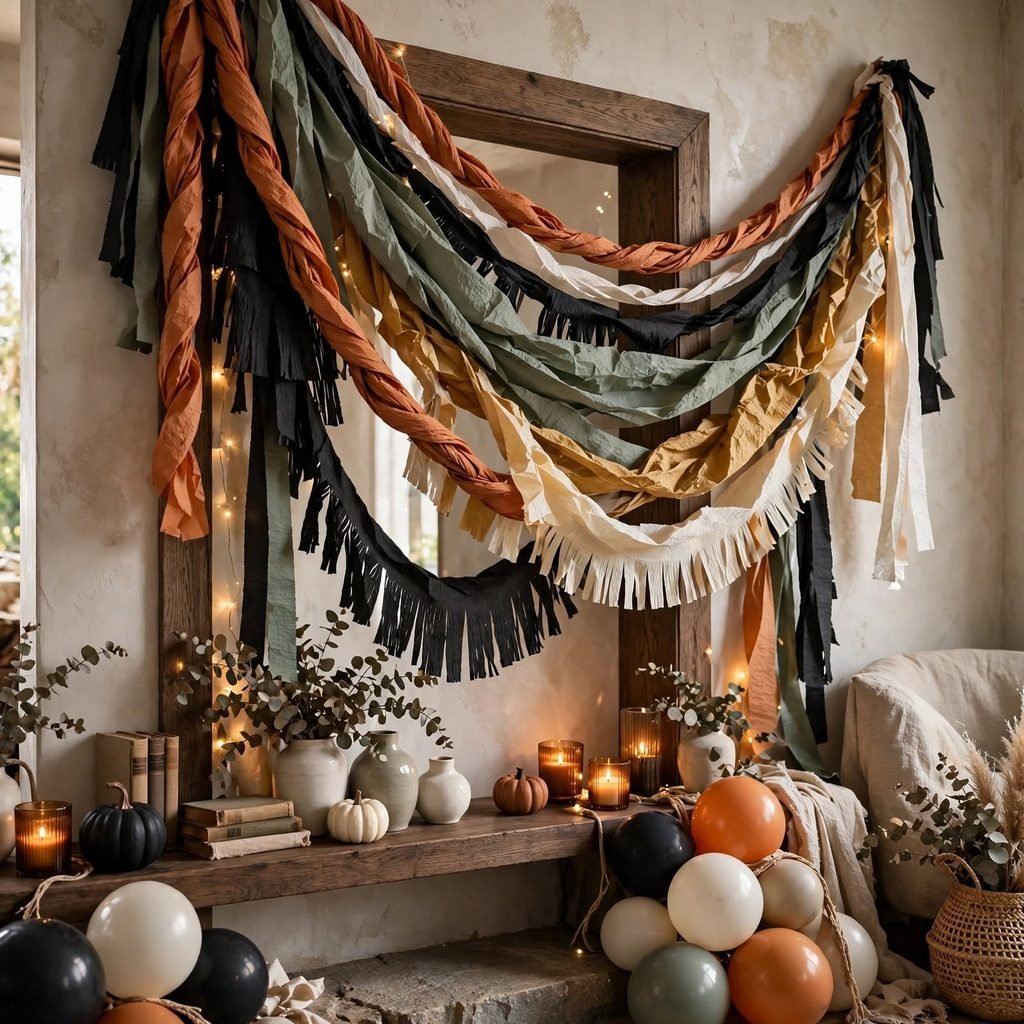
Twisted crepe paper streamers in classic orange and black, draped across a doorway or ceiling corner, bring a party-appropriate touch that echoes mid-century Halloween gatherings more than modern plastic banner alternatives. Crepe paper has a slightly matte, textured quality that reads as more authentic than glossy synthetic streamers. This is one of the more affordable ideas on this list, since crepe paper rolls are inexpensive and widely available at craft stores through the fall season.
Explore these Halloween outdoor decorations to give your home a fun and spooky seasonal makeover.
5. Milk Glass Pumpkin Vessels
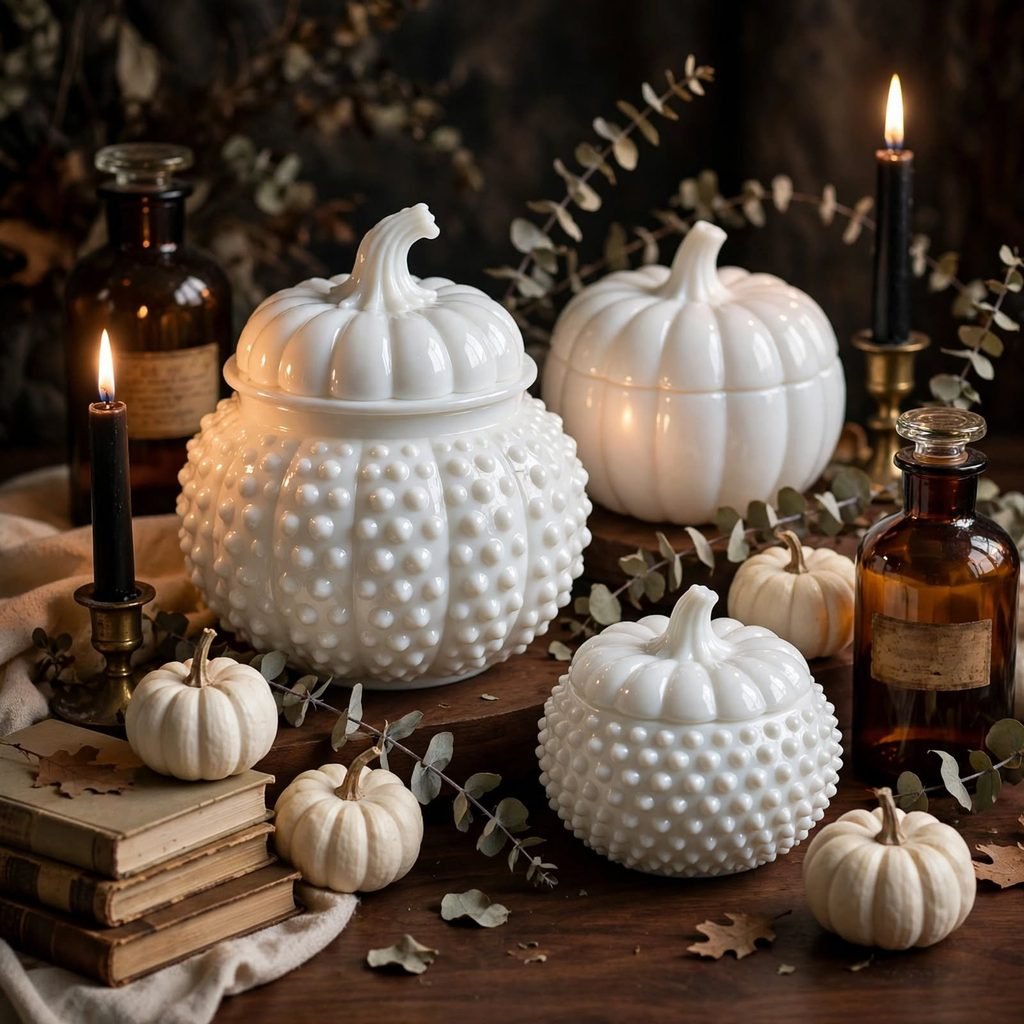
Small milk glass pumpkins and jack-o’-lantern-shaped candy dishes, either thrifted originals or newer reproductions, add a soft, opaque texture to a shelf or table display that differs noticeably from the transparent glass and ceramic pieces common in modern Halloween decor. These pieces often show up at estate sales and antique malls, particularly in the Northeast and Midwest where mid-century glassware collecting is more common. Group a few different sizes together for a more layered display than a single piece alone.
6. Retro Halloween Postcard Display
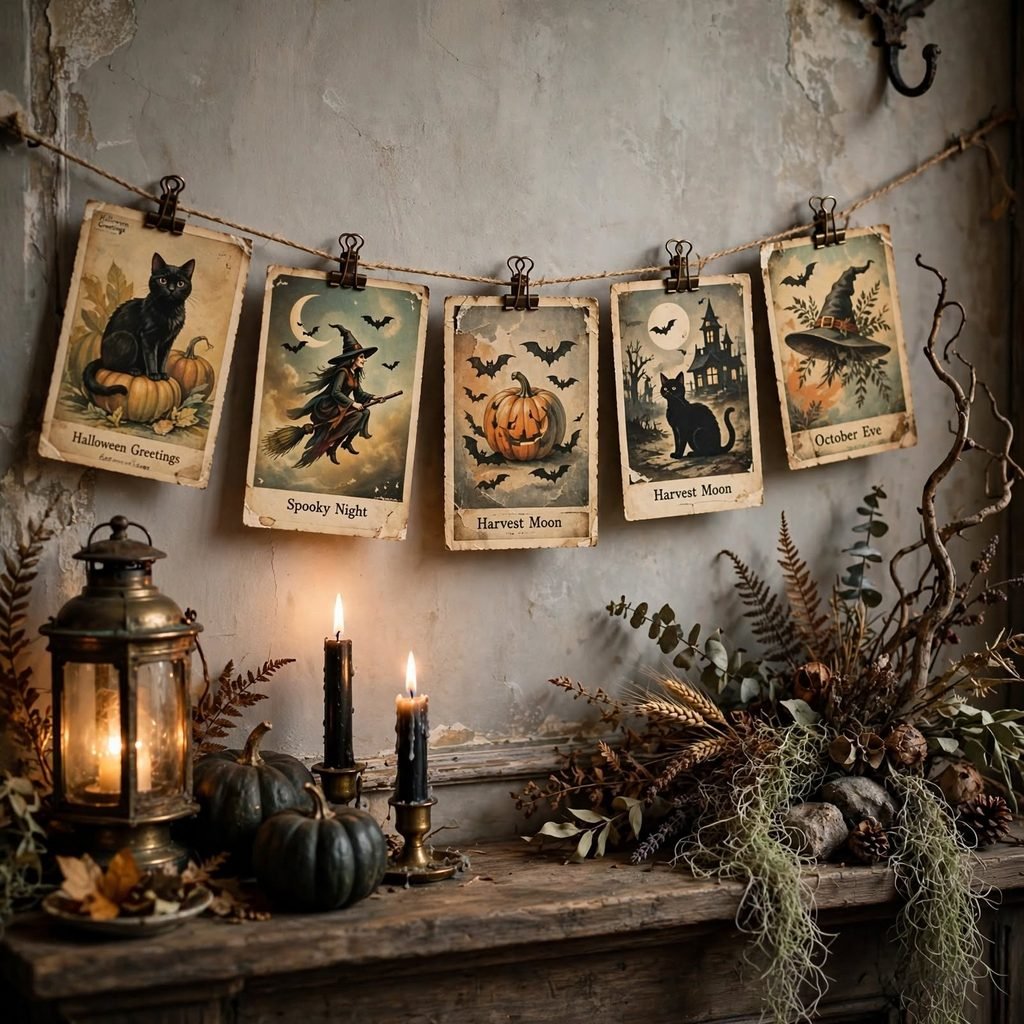
Framing or propping reproduction Halloween postcards from the early 1900s, many featuring illustrated witches, moons, and children in costume, adds a graphic wall element distinct from typical framed art. These postcards are widely reproduced by paper goods companies and also available as scanned originals through some online antique dealers. Group three or four in matching thin black frames along a wall or mantel edge for a cohesive gallery-style display.
7. Beistle-Style Cat Silhouette
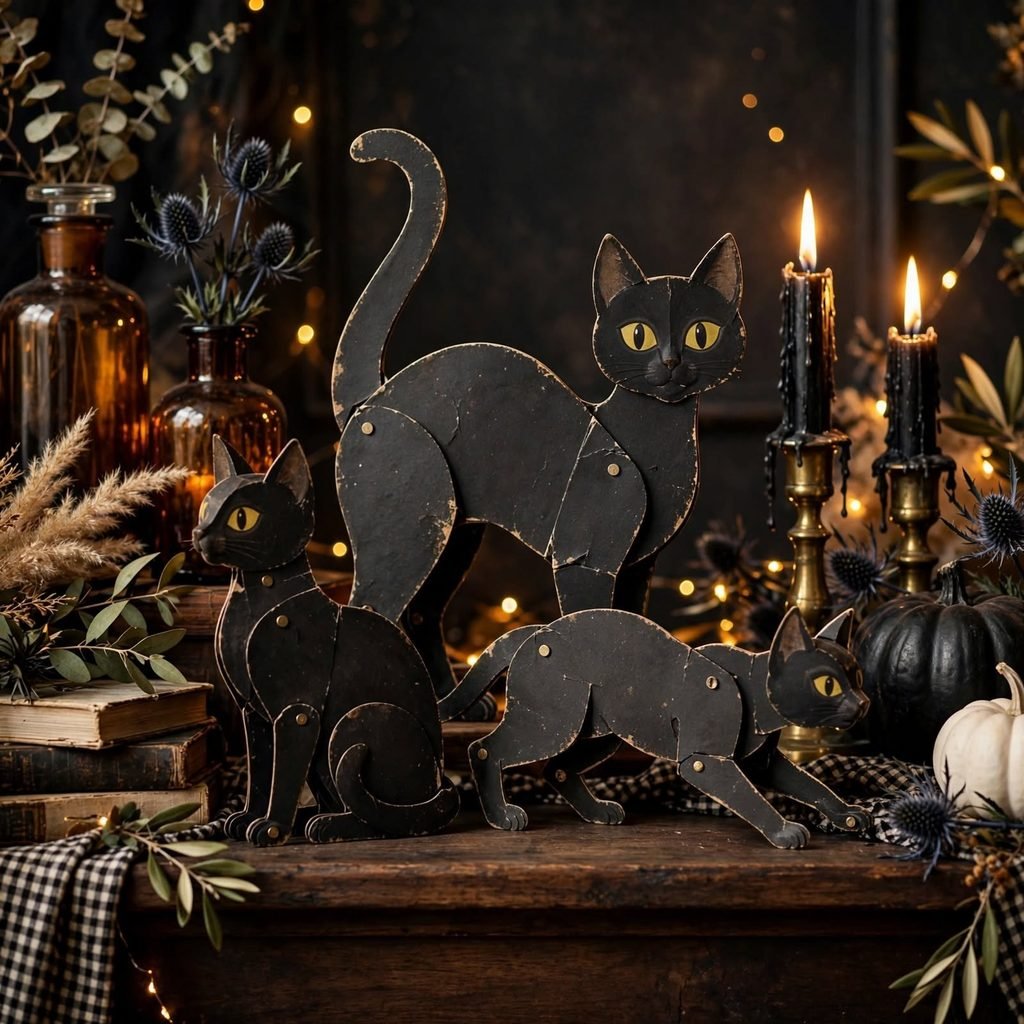
A black cat silhouette cutout with an arched back, modeled after the classic Beistle Company designs from the early to mid-1900s, works as a wall decoration or window cling that immediately signals a vintage Halloween decor approach. Reproduction versions in cardboard or thin wood are widely available and hold up better than the original tissue-paper versions for repeated seasonal use. Position it in a window where it’s visible from the street for a nod to a classic front-porch tradition.
8. Amber Bottle Cluster
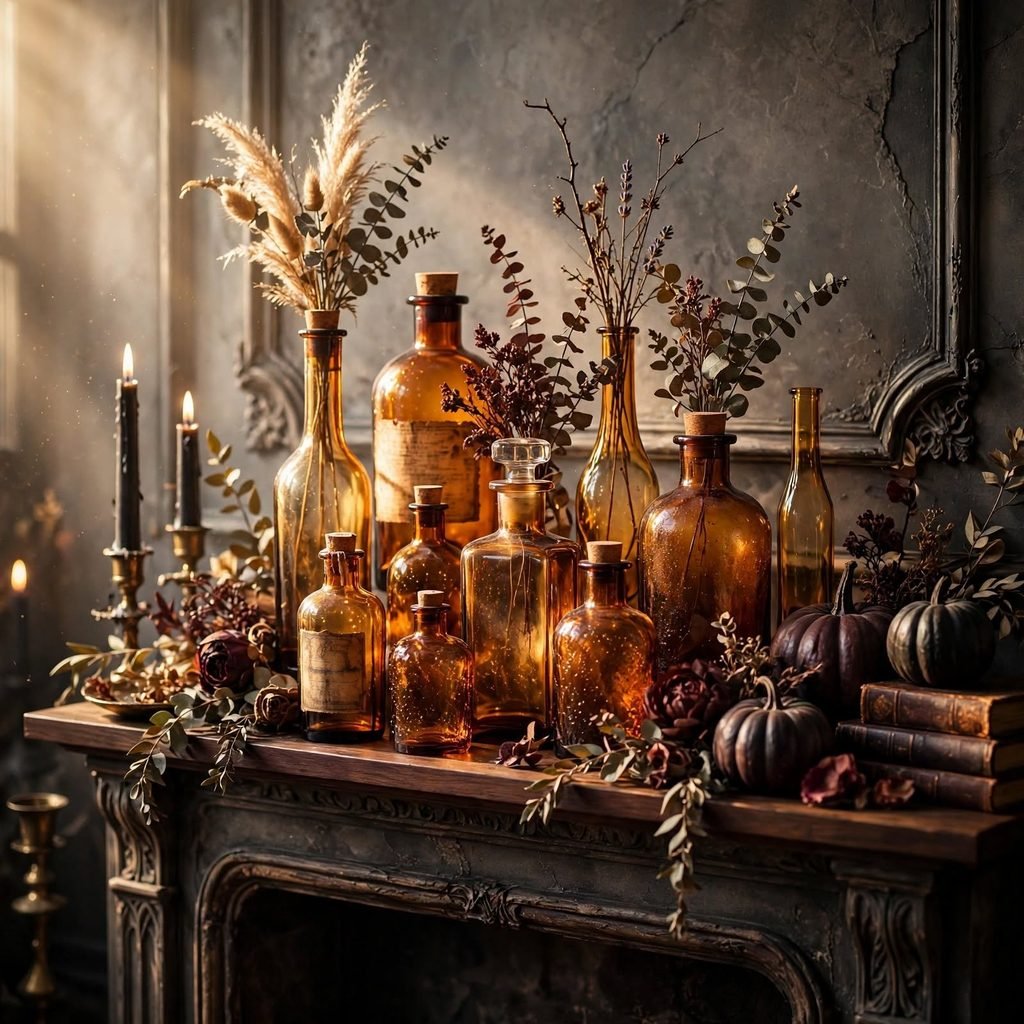
A cluster of small amber glass apothecary or medicine bottles, arranged on a shelf or mantel, brings a muted, antique quality that pairs naturally with the mid-century paper goods common in vintage-style displays. These bottles are widely available at flea markets and antique shops, often at low individual cost since they were mass-produced originally for household use rather than collecting. Group them at varying heights rather than in a straight row for a more organic, collected-over-time appearance.
9. Tin Noisemaker Display
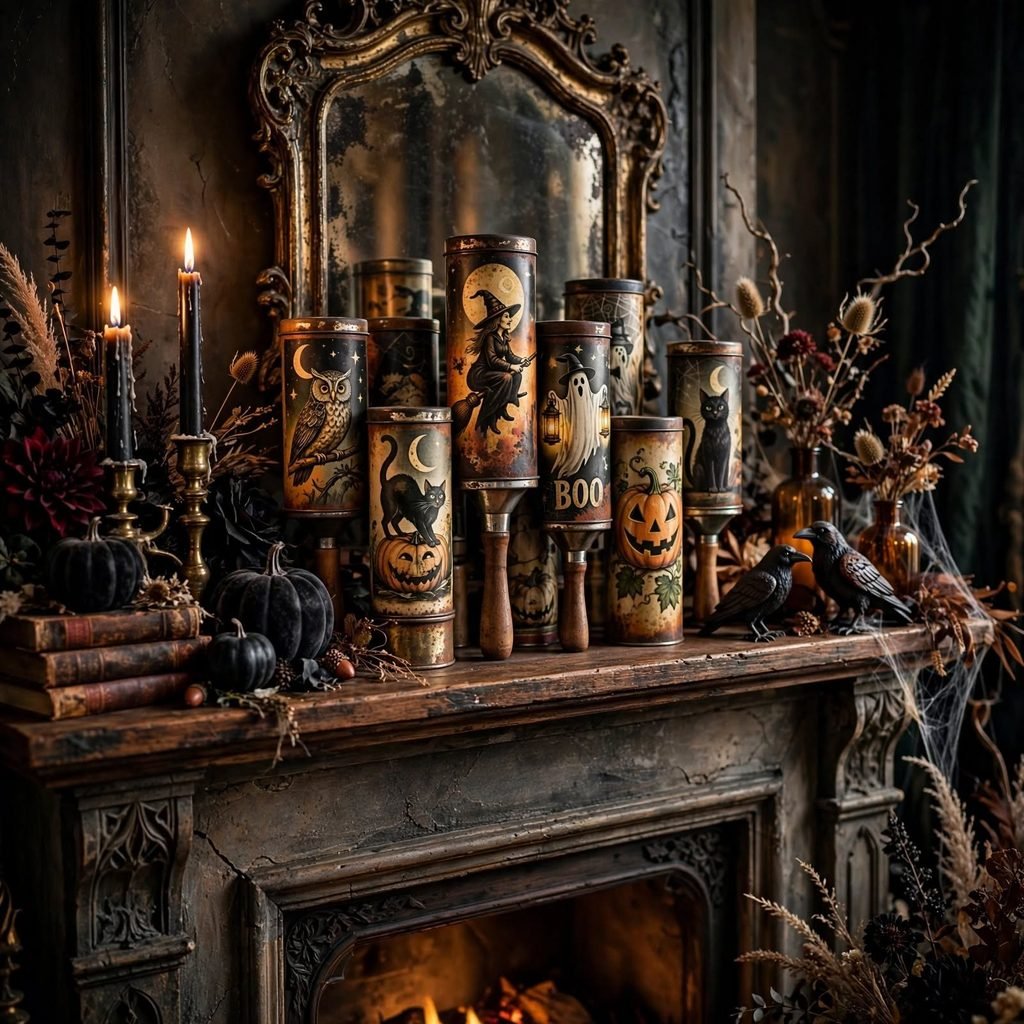
Vintage or reproduction tin noisemakers, originally used at Halloween parties before modern plastic versions took over, make a distinctive small-object display when grouped in a bowl or arranged along a shelf. These often turn up at flea markets in varying states of wear, and a mix of conditions actually reads as more authentic than a uniform matched set. This is a good option for collectors who enjoy sourcing pieces gradually rather than buying an entire set at once.
10. Muted Orange and Black Table Linens
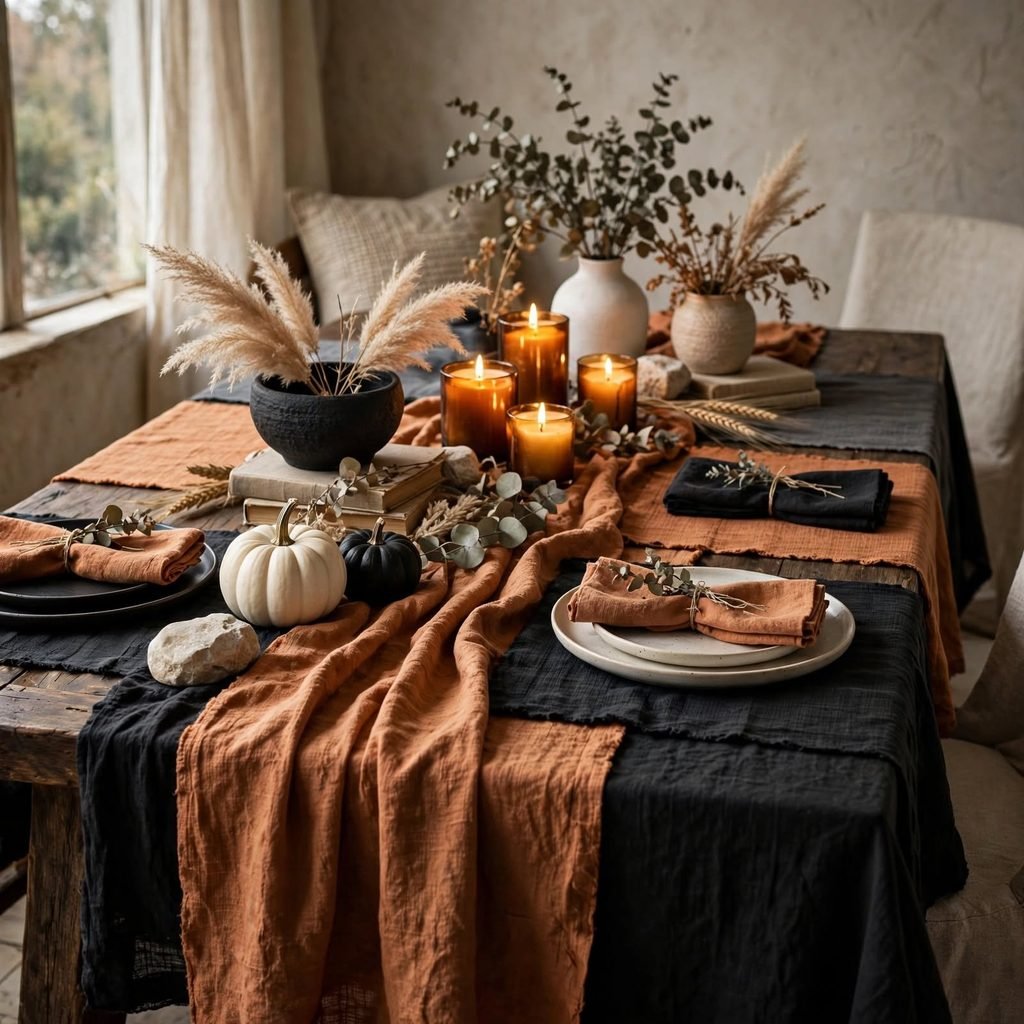
Tablecloths or runners in a slightly faded or muted orange, rather than the bright, saturated orange common in modern party goods, help ground a table display in the same period-appropriate palette as vintage paper decorations. Reproduction fabric lines occasionally offer prints modeled after original 1950s and 1960s Halloween tablecloth designs, which are worth seeking out for an authentic pattern rather than a generic seasonal print. Pair with the honeycomb tissue centerpieces for a cohesive tablescape.
11. Costume Party Photo Display
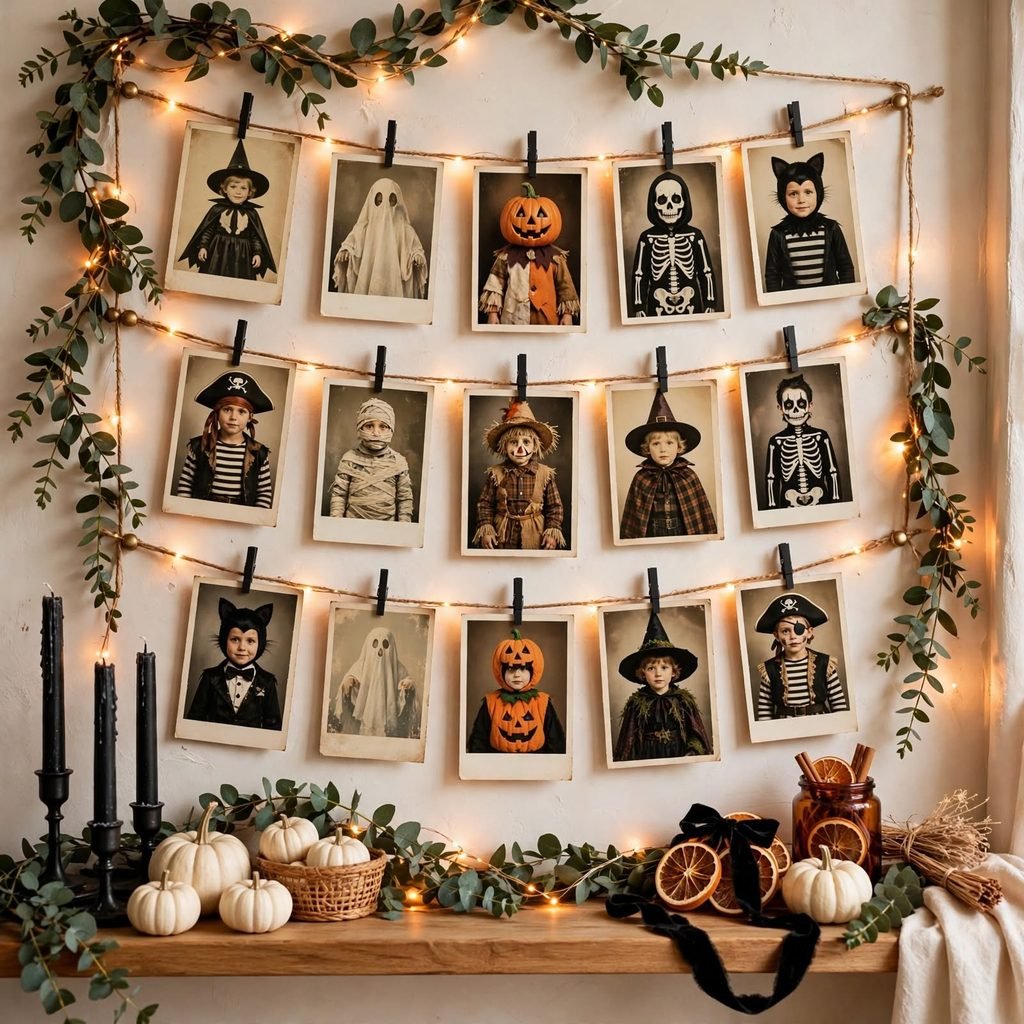
Framing black-and-white or sepia-toned photographs, either family photos from past Halloweens or reproduction stock images of vintage costume parties, adds a personal or evocative visual element to a mantel or entryway table. This works especially well mixed among the die-cut figures and postcards for a layered, collected display rather than a single-type object grouping. Choose simple black or aged brass frames to keep the photos consistent with the rest of the vintage material palette.
12. Vintage Halloween Decor Collectible Shelf
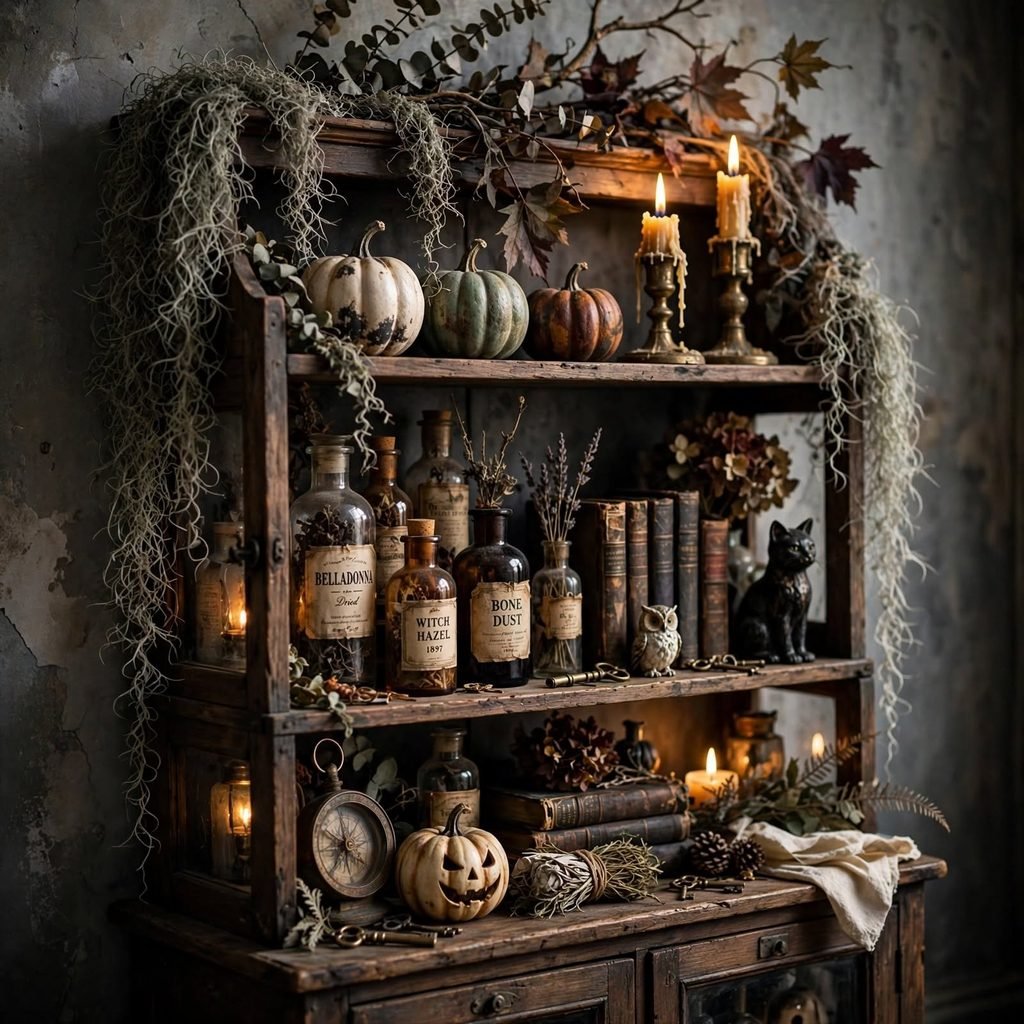
Dedicating a single shelf or curio cabinet to a rotating collection of smaller vintage Halloween decor pieces, like the amber bottles, tin noisemakers, and milk glass pumpkins, gives collectors a defined display space that can grow gradually over multiple seasons rather than requiring everything sourced at once. This approach also protects more delicate original pieces from handling or breakage that might occur with a larger, more spread-out display. Rotate pieces in and out each season to keep the display feeling fresh even with a stable core collection.
Shop the Look
For sourcing, look for reproduction die-cut figures and honeycomb tissue through the Beistle Company’s current catalog, vintage postcards and tin noisemakers through Etsy antique sellers, milk glass pumpkins through local estate sales or Ruby Lane, and amber apothecary bottles through flea markets or antique malls.
Common Mistake to Avoid
A common mistake when building a vintage halloween decor collection is mixing modern glossy plastic decorations in among the paper goods and glassware, which immediately undercuts the muted, period-appropriate palette the rest of the display is working to achieve. The stronger approach is committing fully to paper, glass, and tin materials with a consistent muted color story, storing any modern seasonal decor separately rather than blending it into the same display.
FAQs
What makes Halloween decor look vintage?
Vintage Halloween decor typically features die-cut paper figures, honeycomb tissue decorations, and a muted orange-and-black palette rather than the bright, glossy colors common in modern plastic decorations. Materials like crepe paper, milk glass, and tin also play a large role, since these were the common materials used in party goods from the early to mid-1900s. The overall effect comes from consistent material choices rather than any single decorative object.
Where can I find authentic vintage Halloween decorations?
Estate sales, antique malls, and flea markets are the most reliable sources for original vintage pieces, particularly in regions with strong mid-century collecting communities like the Northeast and Midwest. Online marketplaces like Ruby Lane and Etsy’s vintage category also carry curated original pieces, often with more detailed condition descriptions than an in-person sale. Original pieces from well-known makers like the Beistle Company tend to command higher prices due to increased collector demand in recent years.
Are reproduction vintage Halloween decorations worth buying?
Yes, reproduction pieces are a practical option for anyone who wants the vintage look without the cost or fragility concerns of original decades-old paper goods. Many reproduction lines closely match original printing styles and color palettes, making them difficult to distinguish from originals in a finished display. Reproductions also tend to hold up better for repeated seasonal use, since original paper items can be quite delicate after many decades.
How do I display fragile vintage paper Halloween decorations safely?
Keeping original paper pieces, like die-cut figures and honeycomb tissue, away from direct sunlight and high humidity helps prevent fading and warping over time. Displaying more delicate originals inside a glass-front cabinet or shadow box, rather than handling them repeatedly each season, also extends their lifespan. Many collectors reserve their most fragile original pieces for display only, using sturdier reproductions for any decor that needs to be handled or moved more frequently.
What era is considered vintage for Halloween decor?
Most collectors consider pieces from the 1920s through the 1960s as classic vintage Halloween decor, with the Beistle Company’s paper goods from this period being particularly well known and collected. Items from the 1970s and 1980s are increasingly referred to as vintage as well, though they reflect a different, often brighter aesthetic than the earlier muted palette. The specific era someone chooses to focus on often shapes which materials and color palettes they prioritize when building a collection.
Conclusion
Vintage Halloween decor offers a softer, more nostalgic alternative to modern seasonal styling, built on paper goods, muted color, and pieces collected gradually over time. Save this guide to Pinterest for later, and check out our related post on mid-century holiday decorating ideas for more seasonal inspiration.