17 Trending Black and White Bathroom Decor Ideas That Never Date
A black and white bathroom is one of the few color schemes that manages to look both classic and current at the same time, but getting the balance right takes more than picking two colors. This guide covers seventeen black and white bathroom decor ideas, from tile patterns to lighting and hardware choices, with notes on where each one works best. Whether you’re planning a full renovation or just refreshing an existing space, there’s a direction here to build from.
Trend & Background
Black and white bathrooms have remained a consistently popular choice across decades, largely because the palette pairs easily with both traditional and modern fixtures without needing to be updated every few years. Recently, the look has shifted toward warmer interpretations, pairing classic black and white tile with brass or unlacquered hardware instead of the cooler chrome finishes that dominated earlier versions of the trend. This warmer approach has made black and white bathroom decor feel less clinical and more livable, which is part of why it’s seeing renewed interest in both renovations and smaller refreshes.
Key Takeaways
- Black and white bathrooms rely on pattern, texture, and fixture finish to avoid feeling flat or clinical.
- Classic tile shapes like hexagon, subway, and penny tile pair especially well with a monochrome palette.
- Warm metal accents like brass or matte black hardware keep the contrast from feeling too stark.
- One bold pattern moment, rather than several competing ones, keeps a black and white bathroom looking intentional.
1. Hexagon Tile Flooring
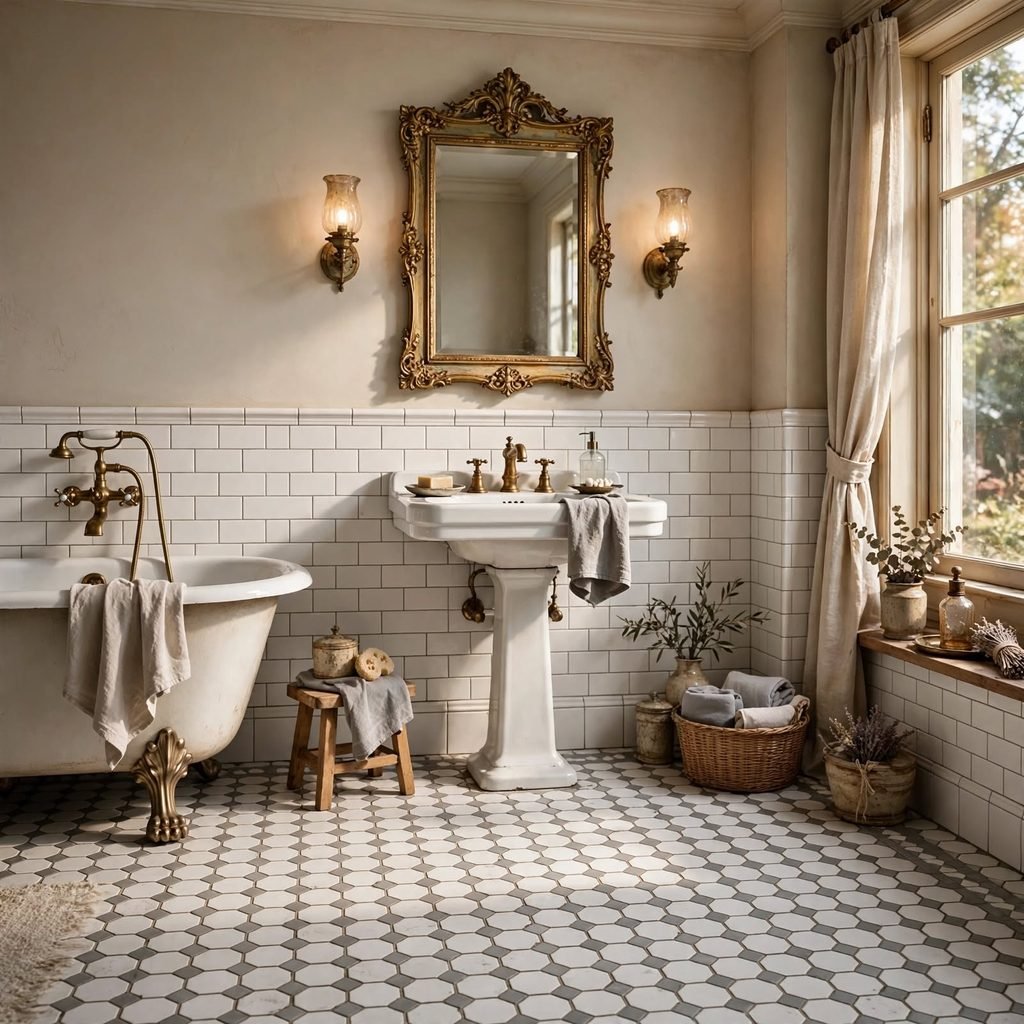
Hexagon tile flooring uses small black and white hexagonal tiles, often arranged in a classic flower or honeycomb pattern, to add visual interest at floor level without introducing additional colors. It’s one of the most recognizable black and white bathroom looks and works in both vintage-inspired and modern spaces depending on the grout color chosen. Dark grout tends to make the pattern read bolder and more graphic, while white grout softens the contrast for a subtler finish.
2. Subway Tile Wall
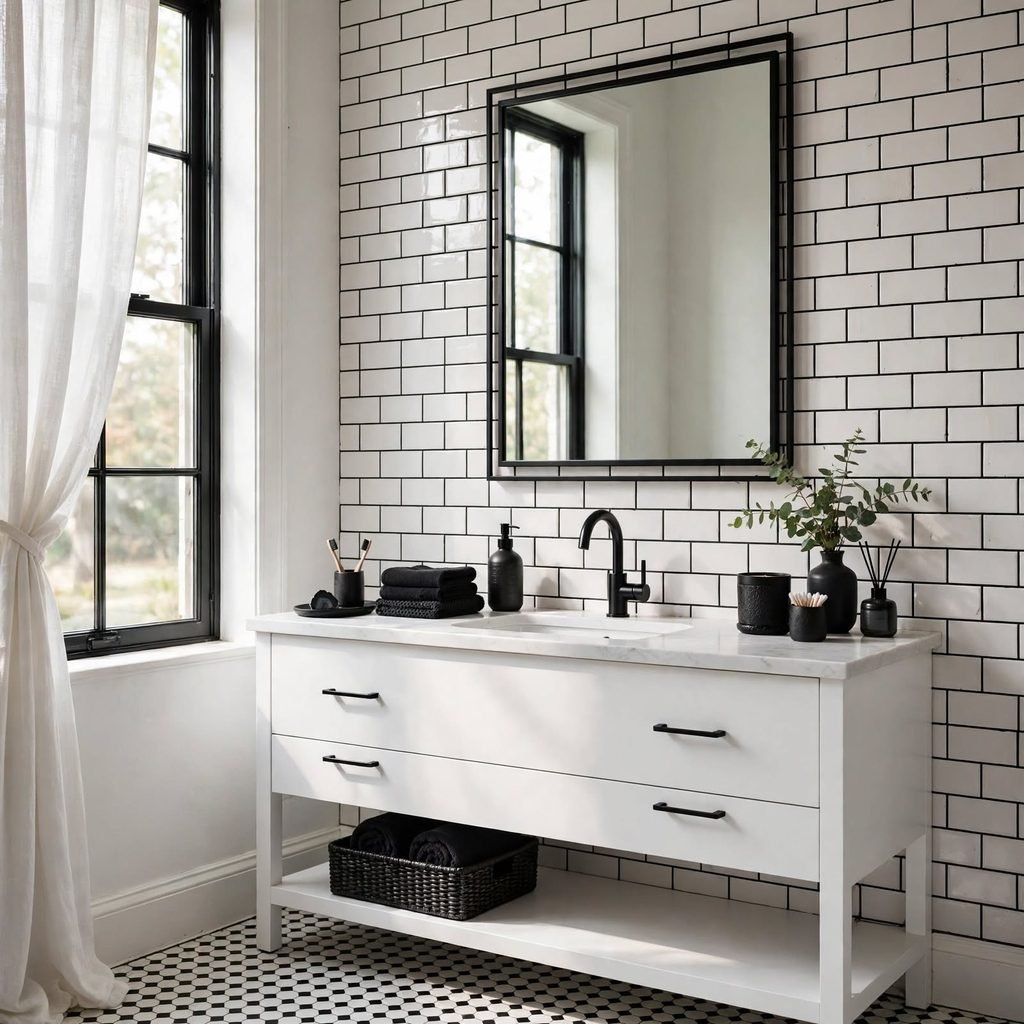
A subway tile wall uses classic white rectangular tiles, typically laid in a brick pattern, paired with black grout or black trim tile to create definition without a busy pattern. This approach keeps the wall feeling clean and timeless while still tying into the black and white palette through the grout lines or a contrasting border row. It suits smaller bathrooms particularly well, since the light tile keeps the space feeling open even with dark accent details.
3. Black and White Bathroom Decor Penny Tile Floor
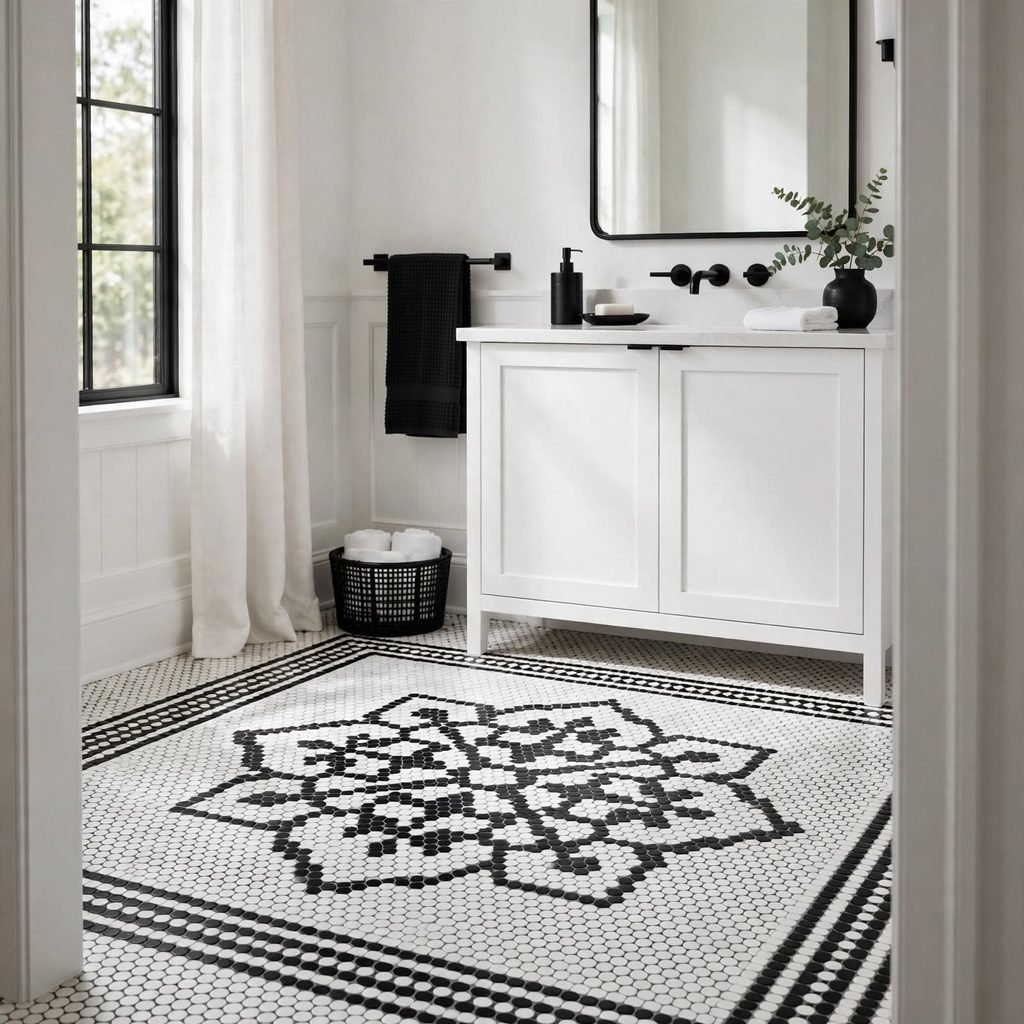
Penny tile floor uses small, round black and white tiles arranged in patterns like a checkerboard, pinwheel, or scattered mix, giving black and white bathroom decor a slightly more playful, retro feel than larger hexagon tile. It works especially well in smaller powder rooms, since the fine detail of the pattern reads well even at a smaller scale. Choosing a pattern with more white than black tends to keep the floor from feeling visually heavy in a compact space.
4. Checkerboard Floor Pattern
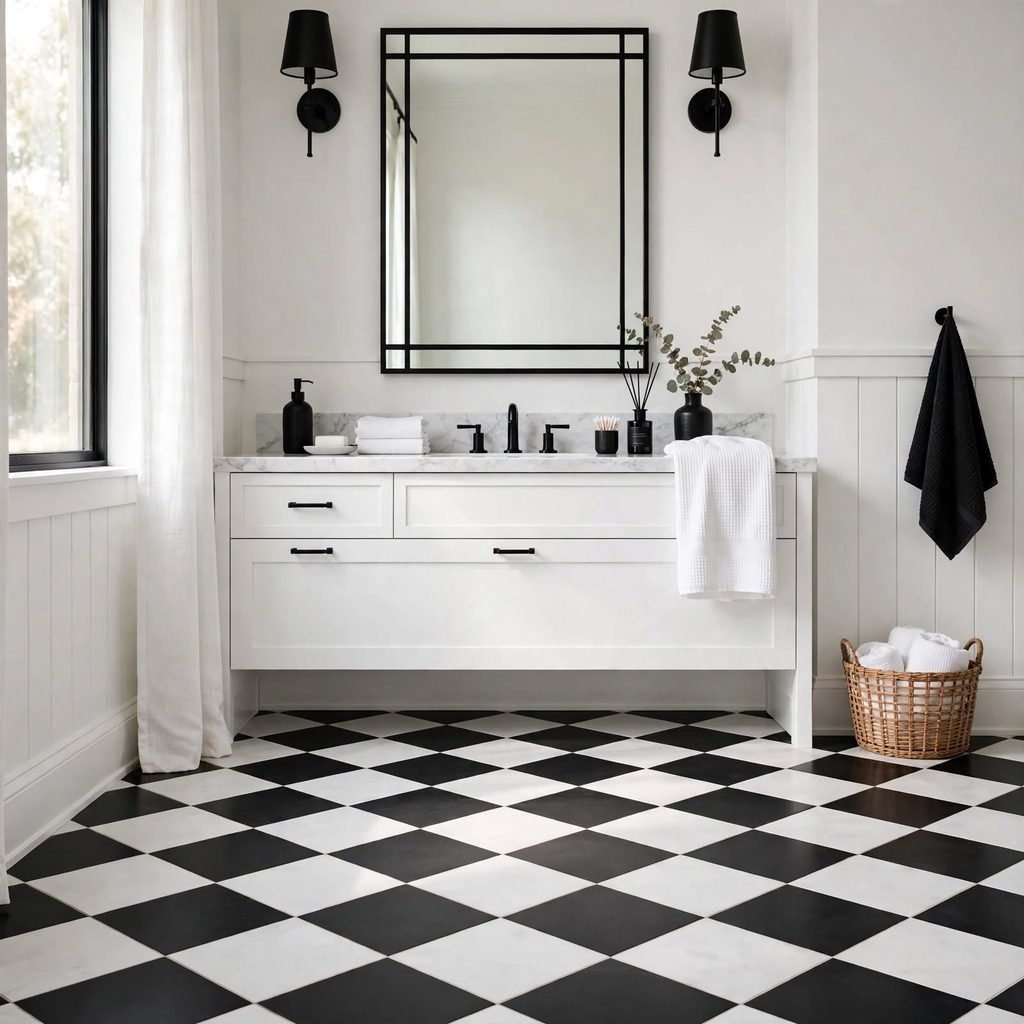
A checkerboard floor pattern alternates large black and white tiles in an even grid, creating one of the most graphic and instantly recognizable black and white bathroom looks. It works well in both vintage and modern spaces, and the scale of the checkerboard can be adjusted, larger squares for a bolder, more modern feel, or smaller squares for a more classic look. This pattern tends to work best as the room’s main statement, paired with simpler walls and fixtures rather than competing with additional patterns.
To see more boho bathroom decor CLICK HERE
5. Matte Black Fixtures
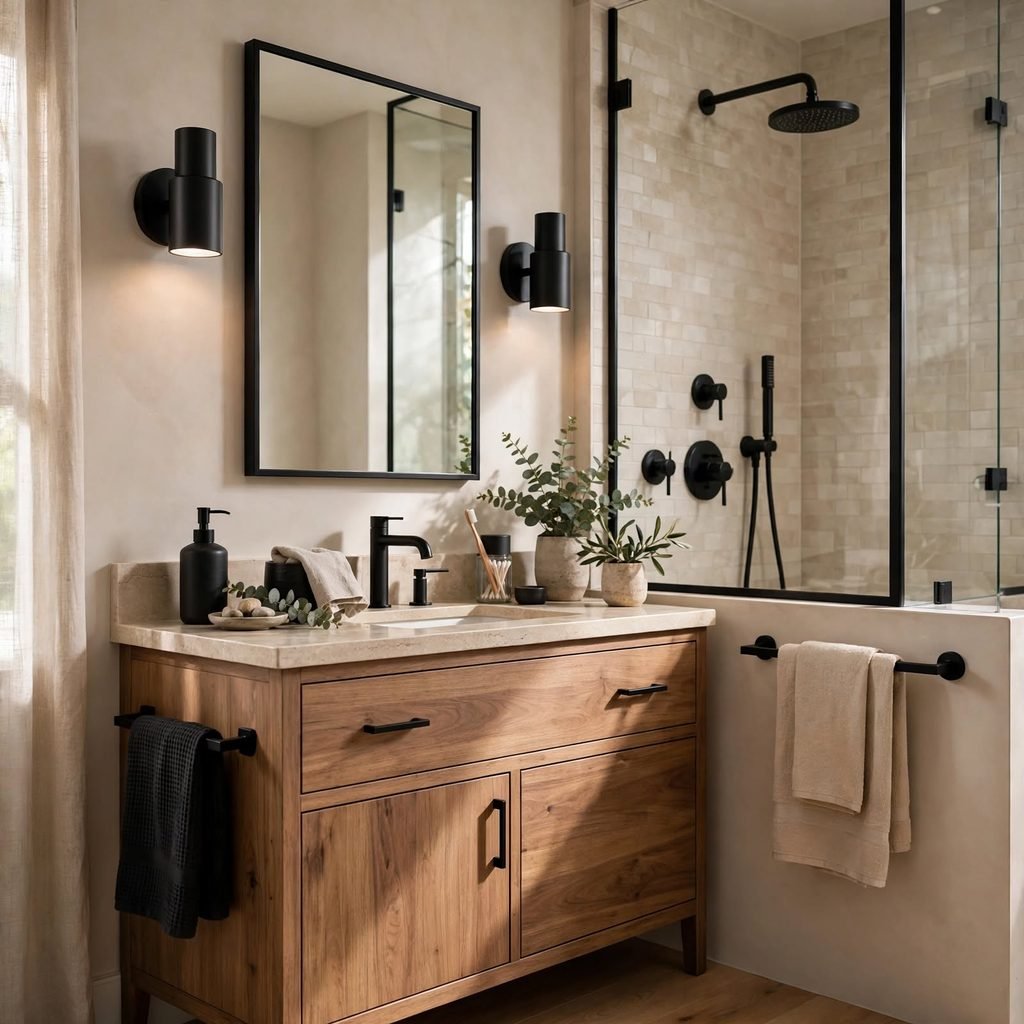
Matte black fixtures replace chrome or nickel faucets, showerheads, and drawer pulls with a deep, non-reflective black finish, adding contrast against white tile, walls, or vanities. This finish has become one of the more popular ways to modernize a black and white bathroom without a full renovation, since fixtures can often be swapped without touching tile or plumbing layout. Pairing matte black fixtures with a warm white wall tone, rather than a stark white, keeps the contrast from feeling too harsh.
6. Marble Look Vanity Top
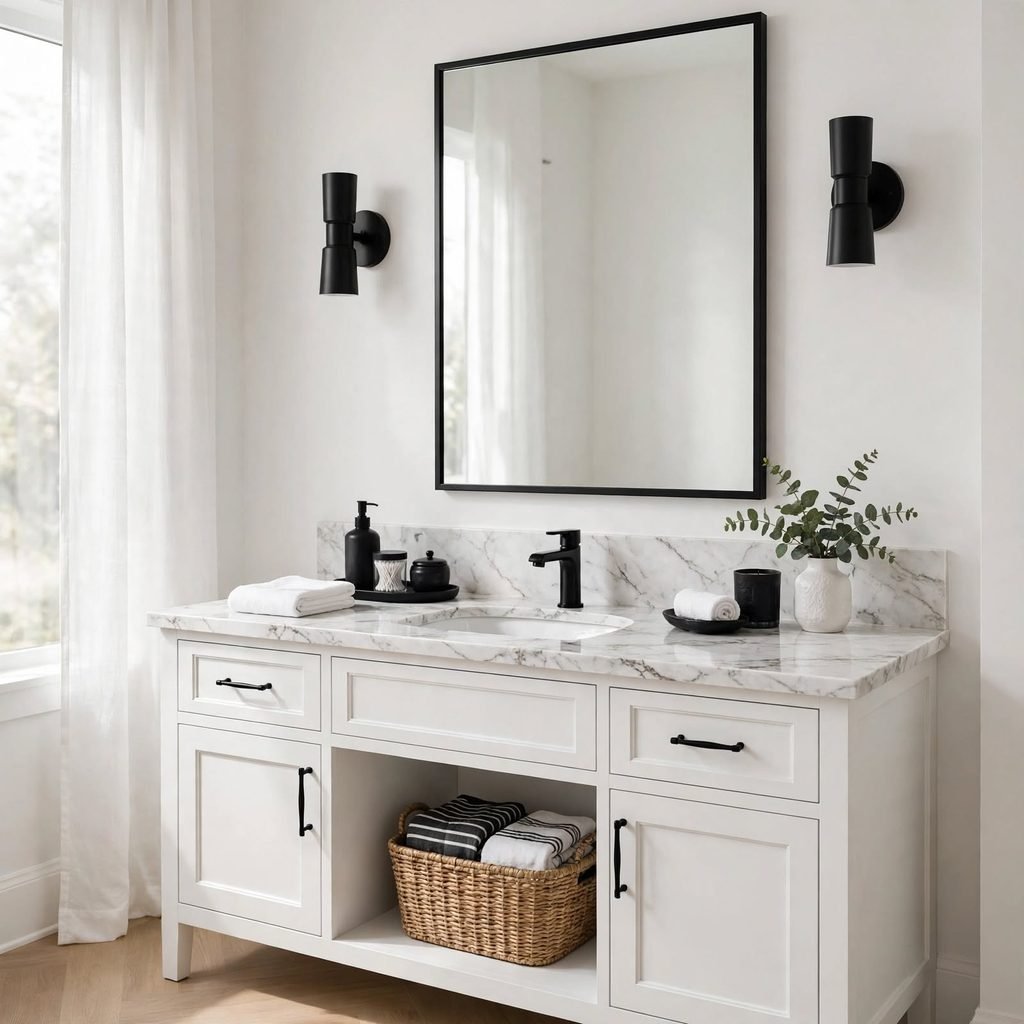
A marble look vanity top uses natural or engineered stone with black veining running through a white base, adding subtle pattern and texture to an otherwise flat surface. It works as a quieter alternative to bold tile patterns, since the veining reads as organic rather than graphic. This choice pairs particularly well with brass or matte black hardware, both of which pick up on the darker veining in the stone.
7. Black Framed Mirror
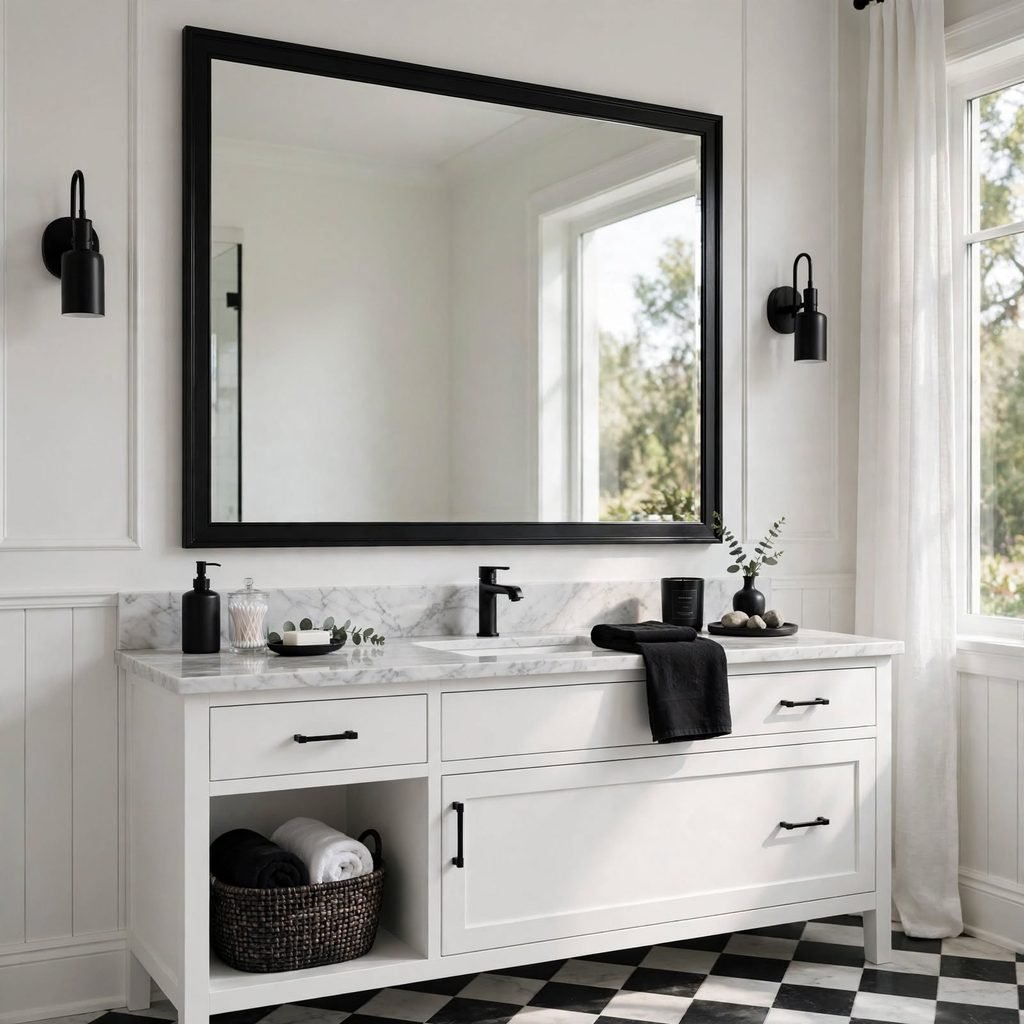
A black framed mirror swaps a frameless or chrome-edged mirror for one with a slim black metal frame, adding a defined black element above the vanity without committing to a full accent wall. Round or arched black frames tend to soften the sharpness of an otherwise angular black and white bathroom, while rectangular frames reinforce a cleaner, more modern feel. This is one of the easiest updates on this list, since it typically requires no plumbing or tile work at all.
8. Wallpapered Accent Wall
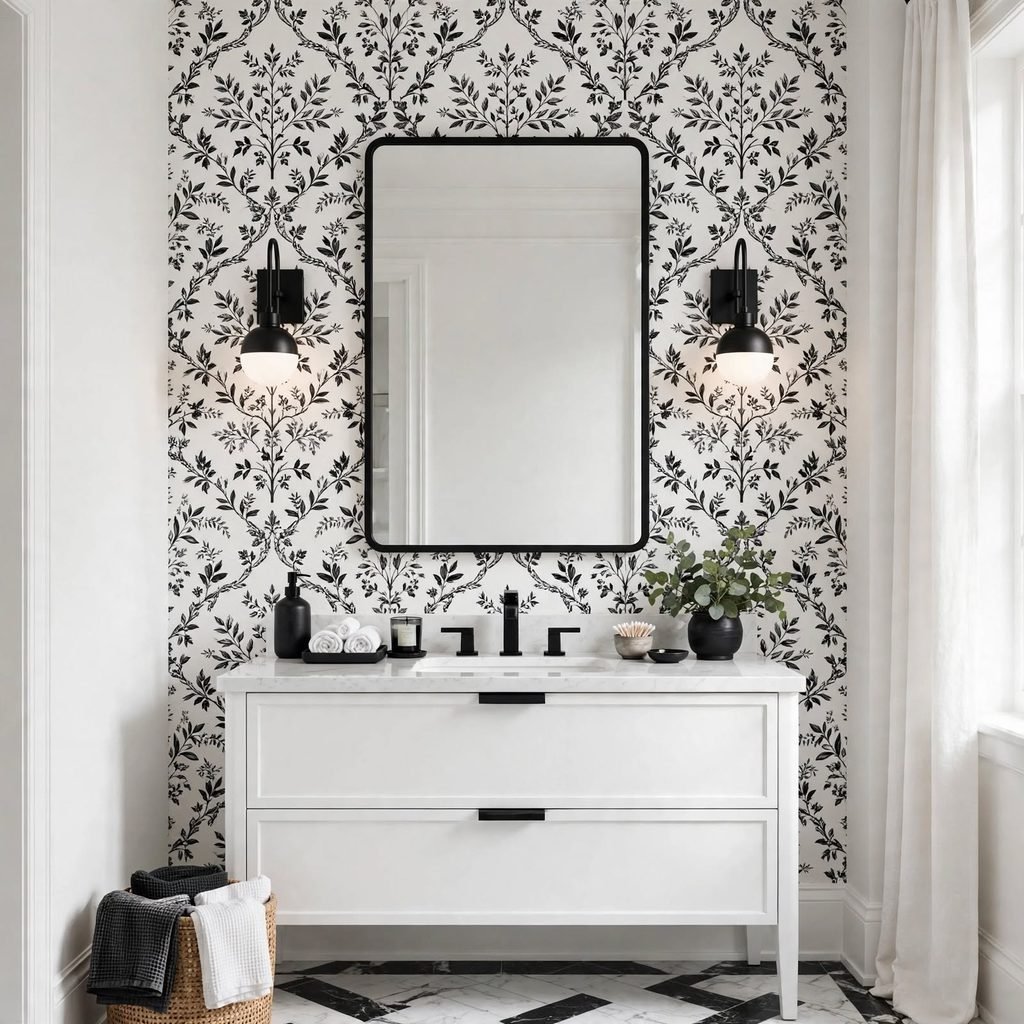
A wallpapered accent wall uses a black and white patterned paper, such as a floral, geometric, or botanical print, on a single wall to add texture and pattern without overwhelming the room. Since most bathrooms have limited wall space to begin with, this approach works well even in a small powder room, where the pattern becomes the room’s clear focal point. Choosing a moisture-resistant or vinyl wallpaper is worth the extra cost in a bathroom with regular humidity exposure.
9. Graphic Tile Backsplash

A graphic tile backsplash uses a bold black and white pattern, such as an Moroccan-inspired print or a geometric repeat, behind the vanity sink instead of a plain tile or painted wall. It gives the room a strong focal point at eye level without requiring a full wall or floor commitment, making it a good option for smaller budgets or rental-friendly updates using peel-and-stick tile. Keeping the surrounding walls plain white lets the backsplash pattern stand out clearly.
10. Black Grout Detail
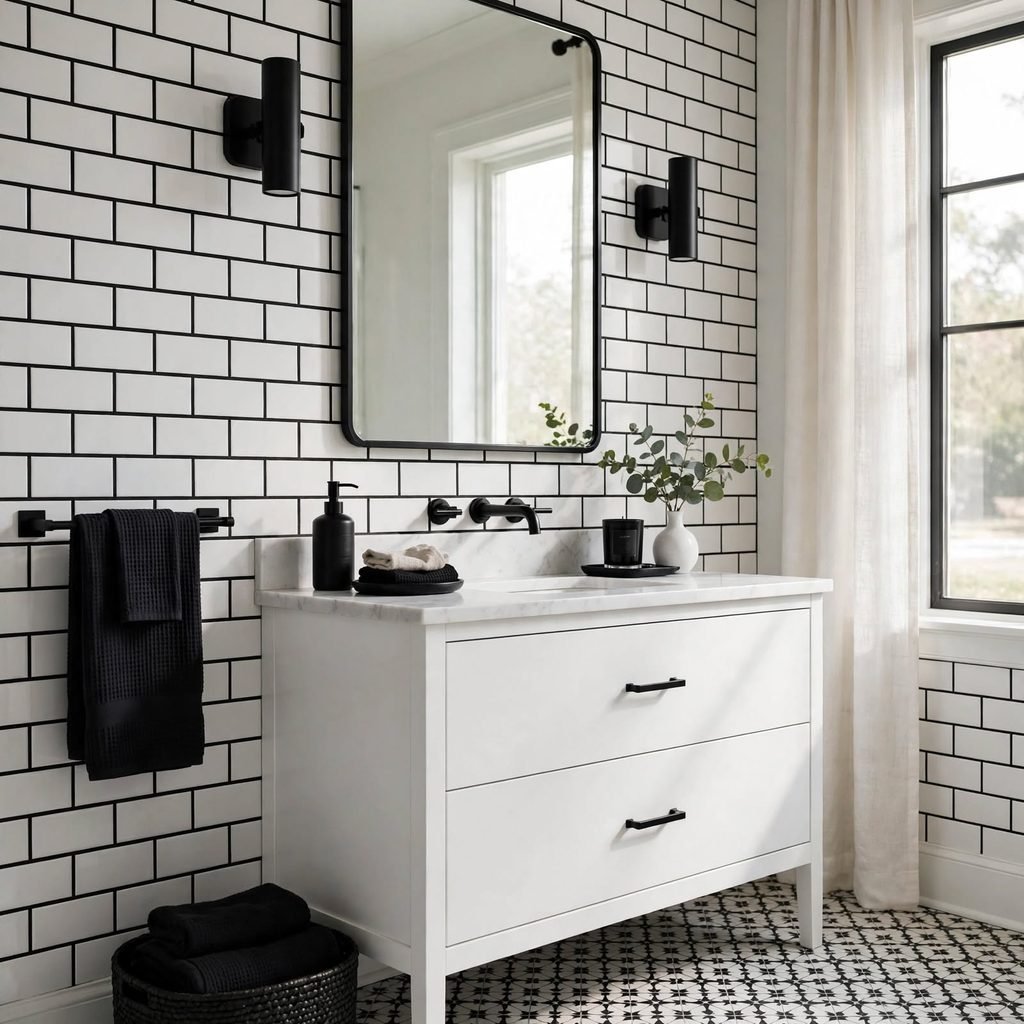
Black grout detail uses dark grout between white tiles, rather than the standard white or gray, to add subtle definition and make the tile pattern more visually distinct. This works particularly well with subway tile or larger format white tile, where white grout can sometimes blend the individual tiles together too seamlessly. Black grout also tends to hide dirt and discoloration better than white grout over time, which is a practical bonus in a high-moisture room.
11. Vintage Brass Hardware
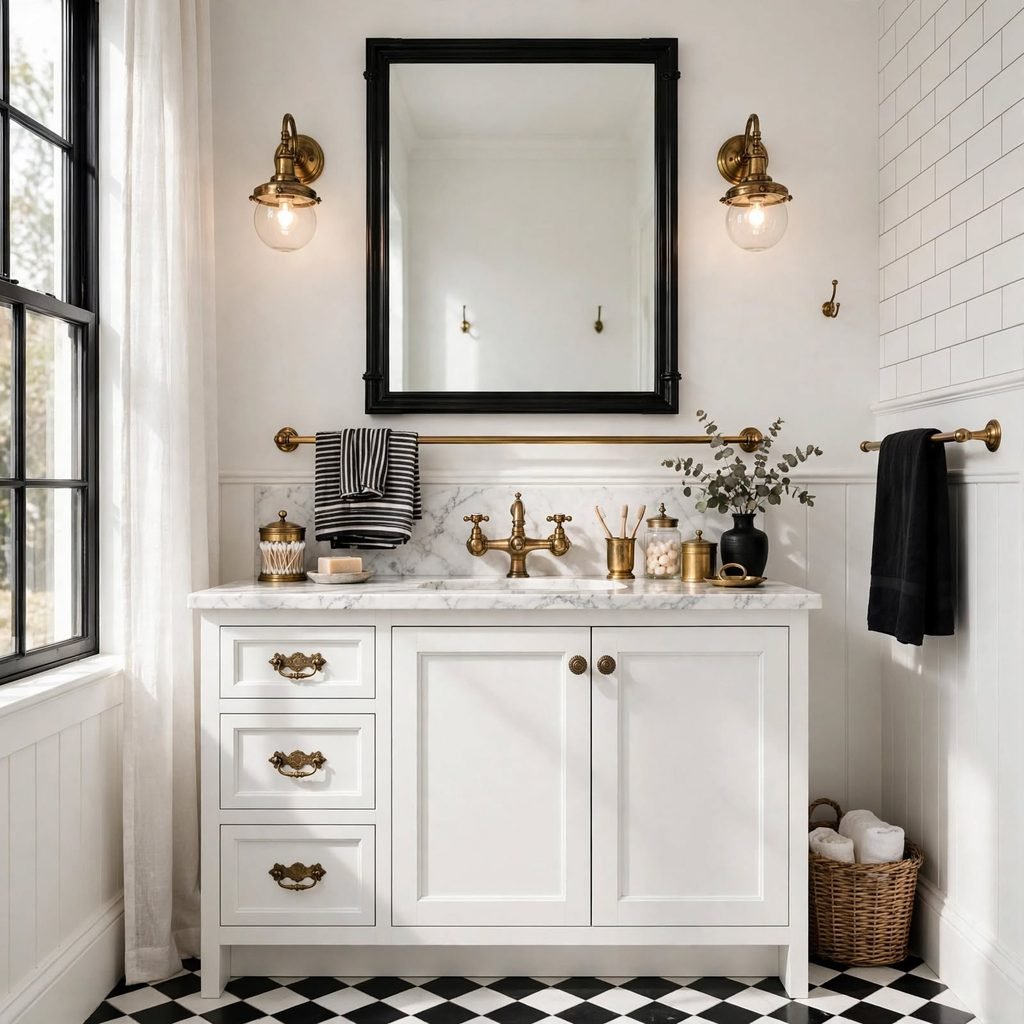
Vintage brass hardware pairs warm, slightly aged brass fixtures and cabinet pulls with a black and white base palette, softening what could otherwise feel like a cold, high-contrast space. Unlike polished brass, an aged or unlacquered finish develops a natural patina over time, which suits the timeless character many black and white bathrooms are going for. This works especially well alongside marble or penny tile, both of which have historically been paired with brass fixtures.
12. Black and White Striped Curtain
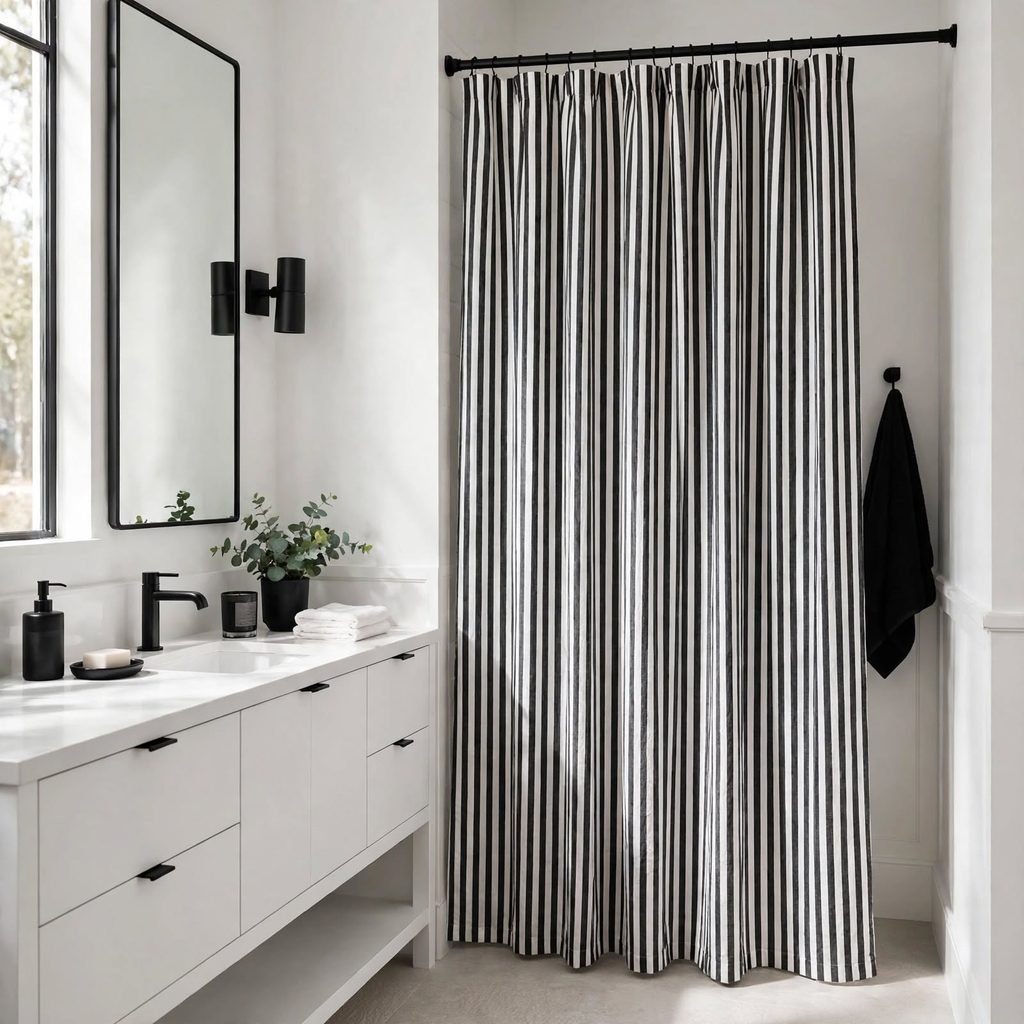
A black and white striped curtain uses a shower curtain in a bold stripe pattern to add graphic interest to a large surface area without any permanent installation. It’s one of the lowest-cost, lowest-commitment updates on this list, and it can be swapped easily if the look needs to change later. Vertical stripes tend to make a small bathroom feel taller, while horizontal stripes can make a narrow room feel wider.
13. Statement Pendant Lighting
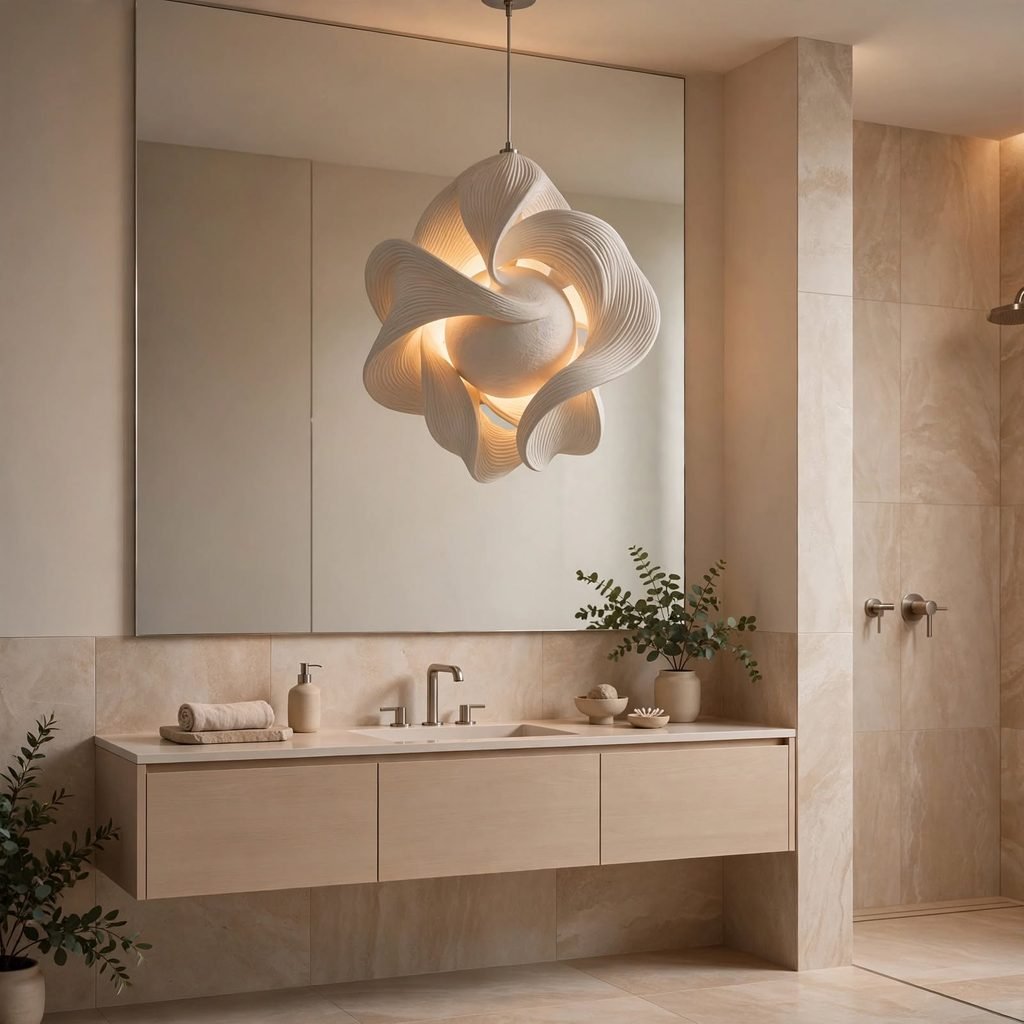
Statement pendant lighting replaces a standard vanity light bar with one or two hanging fixtures in black metal or a black-and-glass combination, adding a more architectural element above the mirror. This works particularly well in bathrooms with higher ceilings, where a flush-mounted light can feel underwhelming against the extra vertical space. Pairing black pendant fixtures with brass detailing keeps the look from feeling too heavy or industrial.
14. Black and White Floor Runner
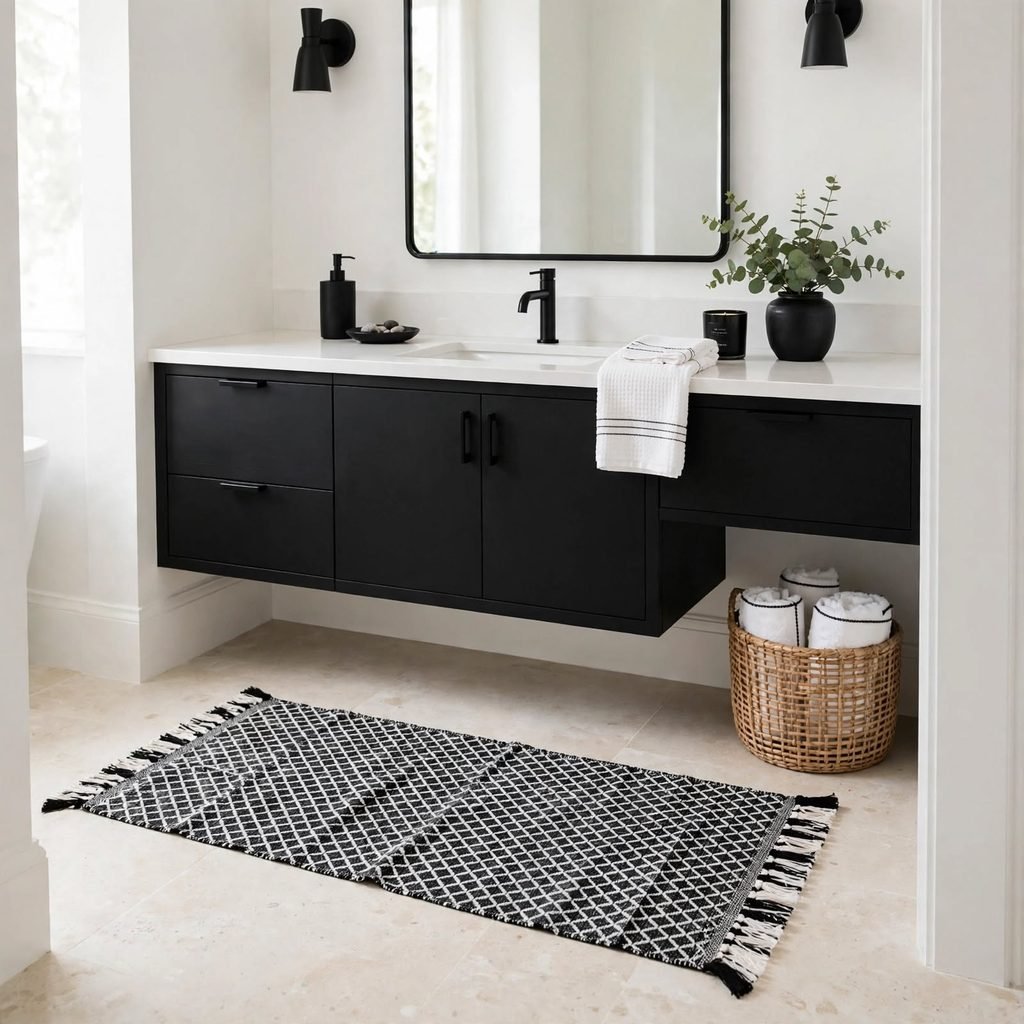
A black and white floor runner uses a patterned rug in a hallway-style bathroom or in front of a double vanity to add softness and pattern at floor level without changing the tile underneath. This works well as a lower-cost alternative to patterned tile, since the runner can be swapped seasonally or replaced entirely if the room’s direction changes later. Choosing a washable, low-pile runner is worth prioritizing in a bathroom with regular water exposure.
15. Two-Tone Vanity Cabinet
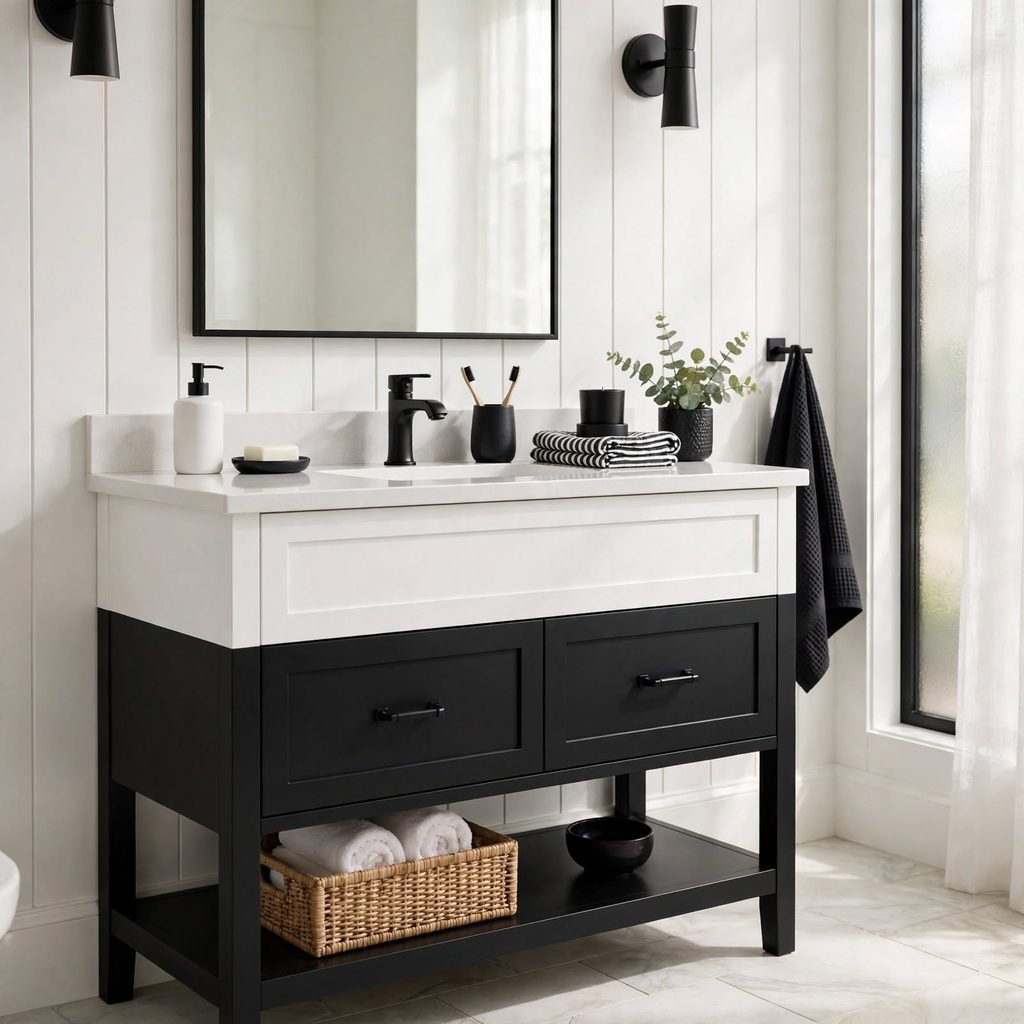
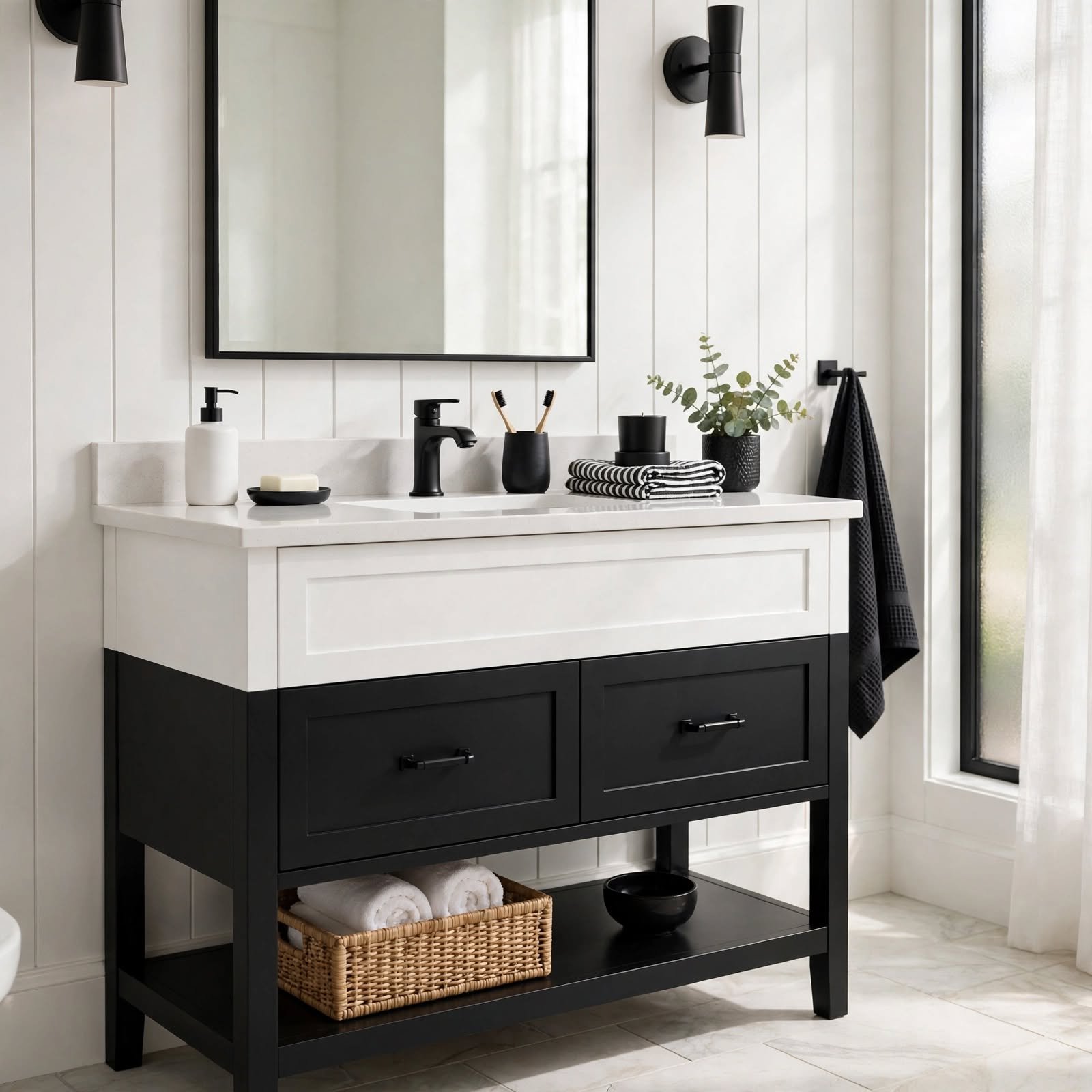
A two-tone vanity cabinet paints or finishes the lower cabinet in black while keeping the countertop and upper portion white, or vice versa, creating built-in contrast within the room’s largest furniture piece. This approach works well when the rest of the room stays relatively simple, since the vanity itself becomes the main black and white focal point. Black cabinetry paired with brass pulls tends to read as more polished than black paired with chrome.
16. Black Trim and White Walls
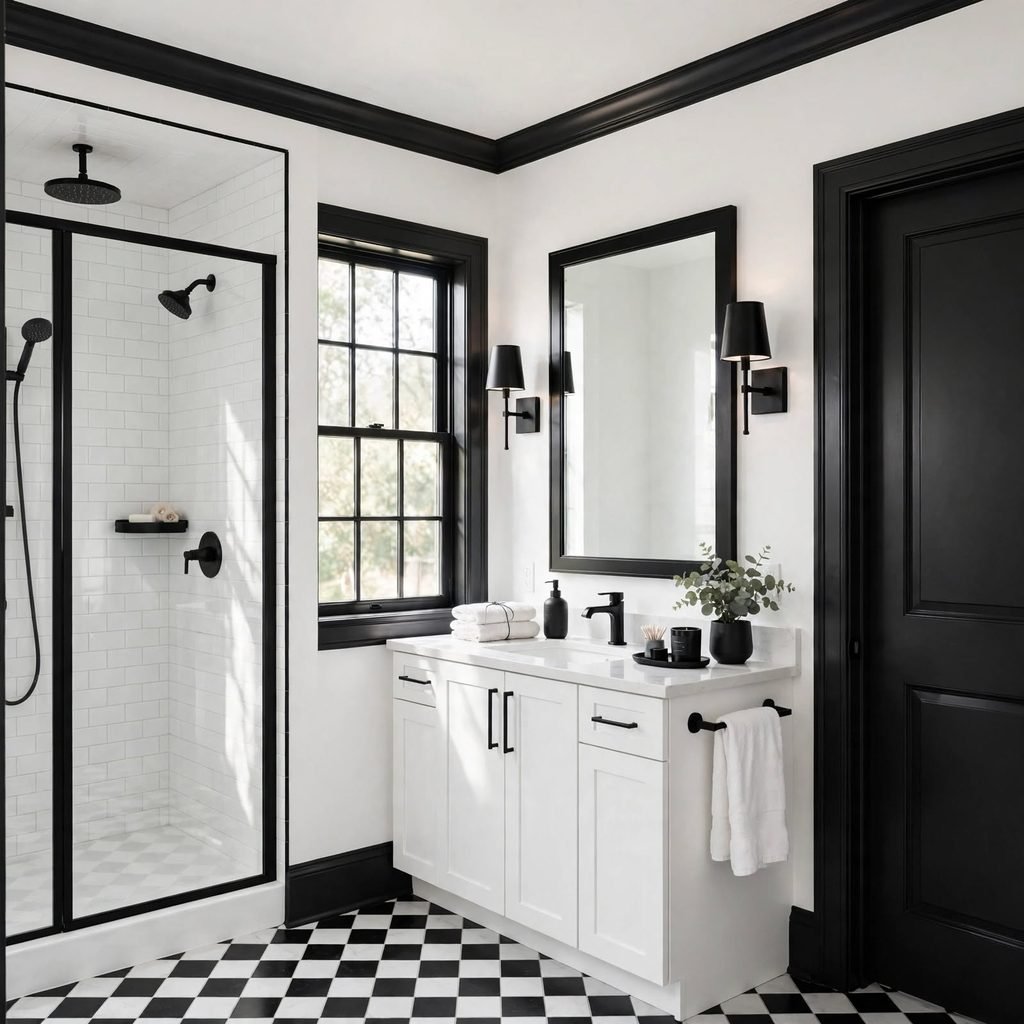
Black trim and white walls uses black paint on window frames, door trim, and baseboards against otherwise plain white walls, creating definition and structure without needing patterned tile or wallpaper. This approach works in almost any bathroom size, since it adds contrast through architectural detail rather than a large surface commitment. It also pairs easily with nearly every other idea on this list, making it a flexible starting point for a black and white bathroom built up over time.
| Element | Classic Choice | Warmer Alternative |
| Hardware | Chrome | Unlacquered brass |
| Grout | White | Black |
| Tile Floor | Checkerboard | Hexagon with black trim |
| Lighting | Flush mount | Black pendant fixtures |
| Mirror Frame | Frameless | Black metal frame |
Shop the Look
A few pieces to start with: a set of matte black cabinet pulls, a black metal framed round mirror, a black and white striped cotton shower curtain, an unlacquered brass single-handle faucet, and a washable black and white patterned bath runner. These smaller updates can shift the feel of an existing bathroom significantly before committing to any tile or renovation work.
Common Mistake to Avoid
A common mistake in black and white bathroom decor is combining too many bold patterns at once, such as checkerboard flooring, striped curtains, and patterned wallpaper all in the same small room, which tends to compete visually rather than reading as cohesive. Choosing one dominant pattern, whether it’s the floor tile or an accent wall, and keeping the remaining surfaces simpler usually produces a more polished result than layering several graphic elements together.
FAQs
How do I keep a black and white bathroom from feeling too cold?
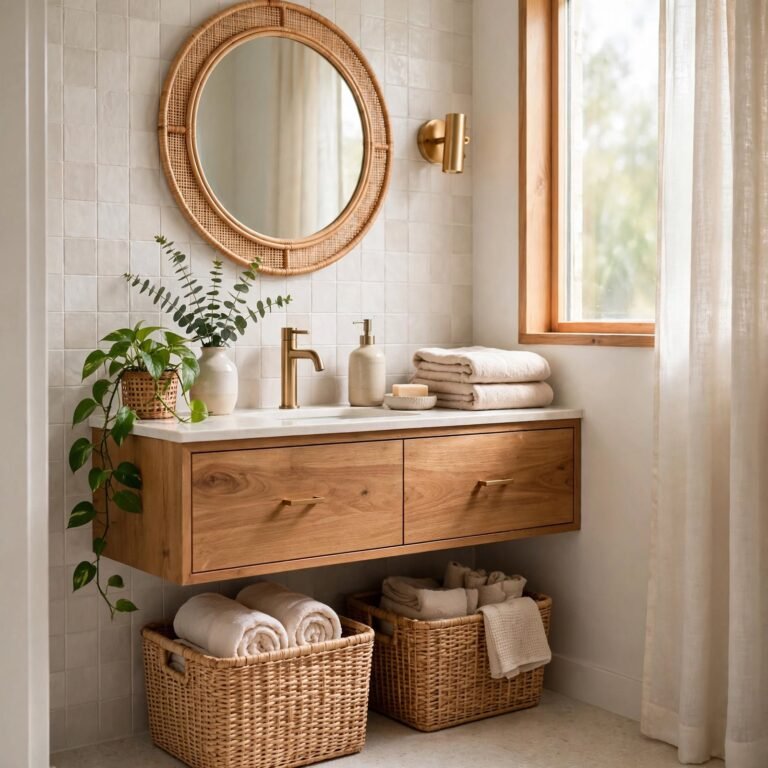
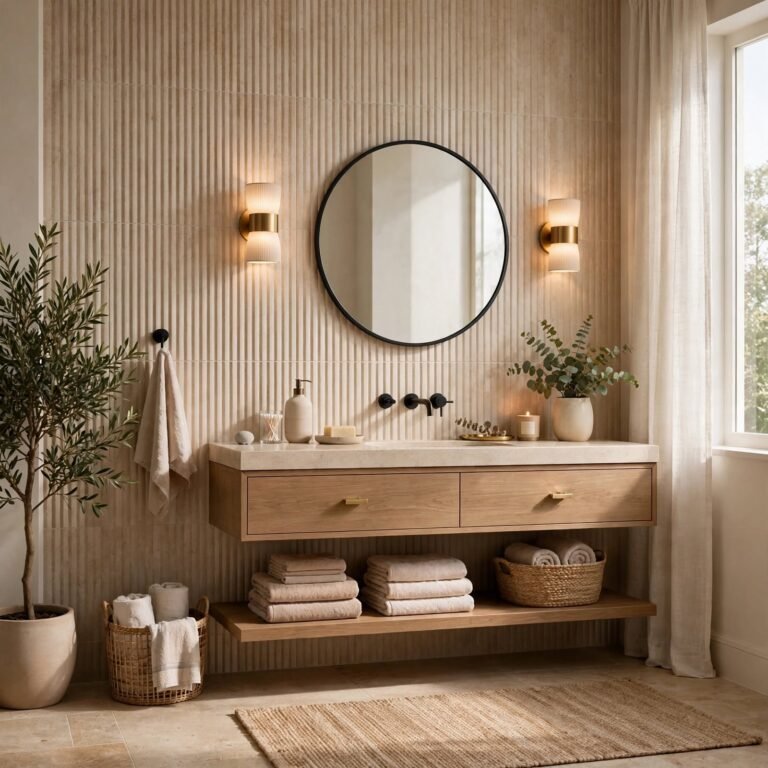
Warm metal finishes like brass or unlacquered hardware, along with warm white paint rather than a stark, blue-toned white, are the most effective ways to soften a black and white bathroom. Adding natural materials like wood shelving, a woven basket, or a wood-framed mirror also introduces warmth without breaking the color scheme. Layering in soft textiles, like a bath mat or towels in a warm neutral tone, helps balance the starker black and white surfaces.
What tile pattern works best for a small black and white bathroom?
Penny tile and smaller hexagon tile tend to work particularly well in small bathrooms, since the finer pattern detail doesn’t overwhelm a limited floor area the way a large-scale checkerboard might. Keeping the pattern mostly white with black accents, rather than an even split, also helps a small space feel brighter and less closed in. Larger, bolder patterns are still possible in a small room, but they generally need simpler walls and fixtures to avoid feeling cramped.
Is black grout a good idea for a white tile bathroom?
Black grout works well with white tile, particularly subway tile or larger format tile, since it adds definition to the tile pattern and tends to hide dirt and discoloration better than white grout over time. The main trade-off is that black grout can make a small bathroom feel slightly busier or more defined than a seamless white-on-white look, so it’s worth considering the room’s overall size and lighting before committing. Testing a small sample area first can help confirm the look before doing the full room.
What metal finish pairs best with black and white bathroom decor?
Unlacquered or aged brass has become one of the most popular pairings with black and white bathroom decor, since its warmth balances the coolness of the black and white palette better than chrome or polished nickel. Matte black hardware is another strong option, particularly when it’s paired with white tile and warm wood accents, since it reinforces the contrast rather than competing with it. Mixing two metal finishes, such as brass fixtures with black cabinet hardware, can also work well if done consistently throughout the room.
Do black and white bathrooms work in small powder rooms?
Black and white bathroom decor works especially well in small powder rooms, since a bold pattern or dark accent wall can read as more dramatic and intentional in a compact space than it might in a larger bathroom. A graphic tile backsplash, a patterned wallpaper accent wall, or a checkerboard floor are all strong choices for a powder room, since the smaller square footage means less material is needed to make a strong visual statement. Keeping fixtures simple helps the bold pattern remain the clear focal point.
Conclusion
Black and white bathroom decor stays timeless because it’s flexible enough to lean vintage, modern, or somewhere in between depending on the tile pattern and hardware chosen. Pick one or two ideas from this list to start with, whether that’s a tile pattern or a hardware swap, and build the rest of the room around that anchor. Save this post to Pinterest for later, or check out our related guide on choosing bathroom tile patterns for more direction.