17 Effortless Vintage Bathroom Decor Ideas With Timeless Charm
A vintage bathroom draws on details from earlier design eras, mixing classic fixtures, patterned tile, and warm metal accents rather than the sleek, minimal finishes common in newer builds. This guide covers seventeen vintage bathroom decor ideas, from a clawfoot tub to a checkerboard tile floor, that bring period character into a bathroom without requiring a full historic renovation. Each idea explains what it is, where it works best, and how to bring it into a space at any budget or scale.
Trend & Background
Vintage bathroom style has grown in popularity as more people renovate older homes and want to preserve or recreate original period details rather than replacing everything with a fully modern look. This matters now because reclaimed and reproduction fixtures, from clawfoot tubs to cross-handle faucets, have become more widely available, making it easier to source vintage-style pieces without relying on architectural salvage alone. The result is a growing middle ground between a fully modern bathroom and an untouched historic one, where new plumbing and materials are paired with intentionally period-inspired details.
Key Takeaways
- Vintage bathroom decor relies on period-appropriate fixtures, tile patterns, and materials rather than modern minimalist finishes.
- Small details like cross handles, fluted glass, and brass hardware carry as much of the vintage feel as larger fixtures do.
- A checkerboard or hexagon tile floor is one of the most recognizable ways to signal a vintage bathroom style.
- Small bathrooms can achieve a vintage look with a lighter, more restrained material palette rather than a full period renovation.
1. Clawfoot Bathtub
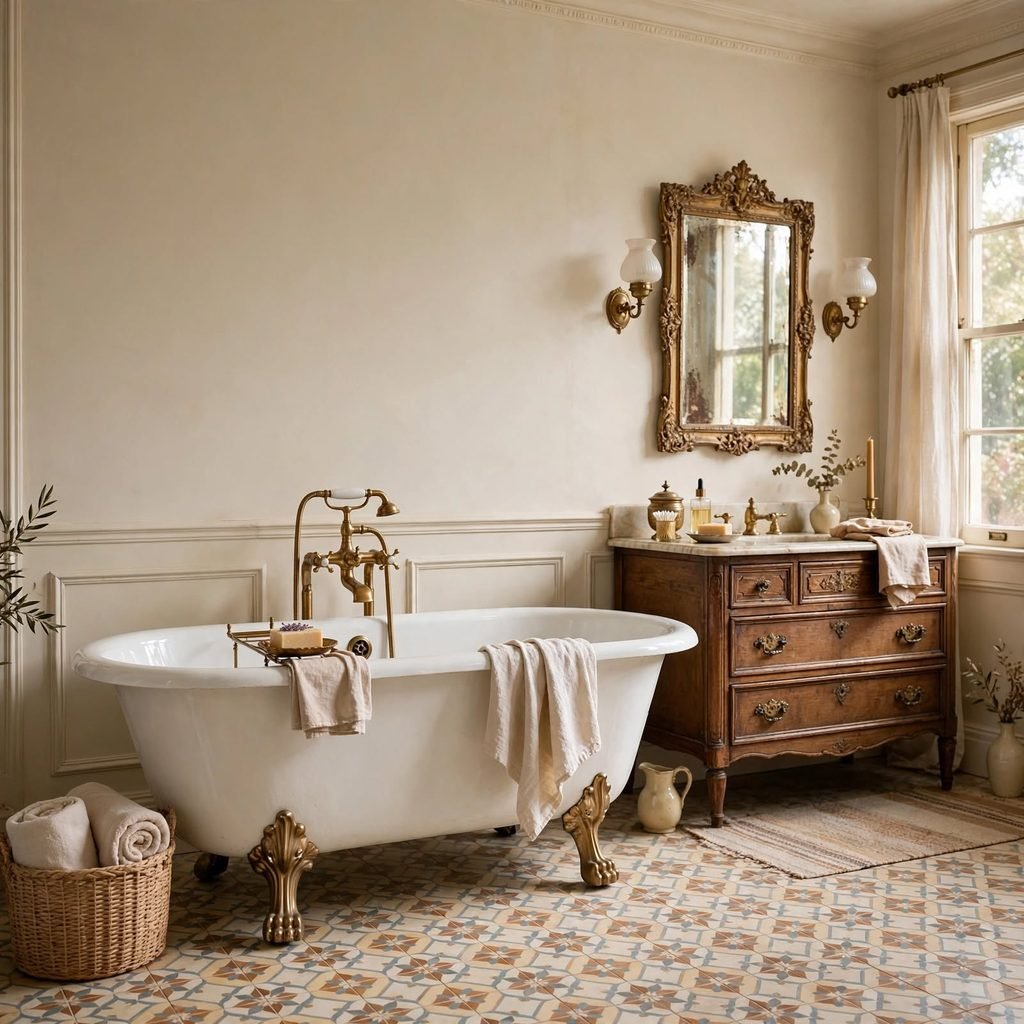
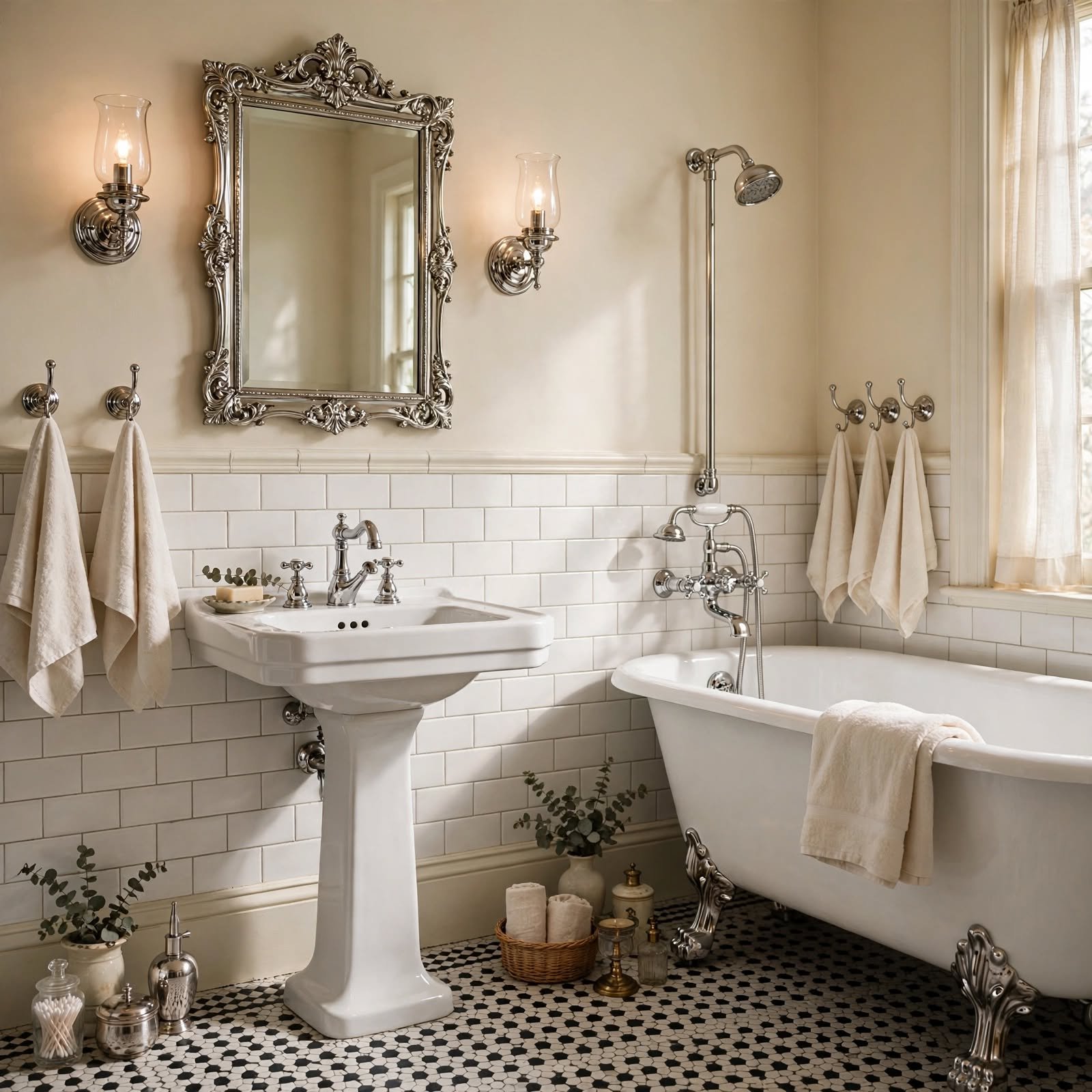
A clawfoot bathtub is one of the most recognizable pieces of vintage bathroom decor, using a freestanding cast iron or acrylic tub raised on decorative feet rather than built into a surrounding tile deck. This works best in a bathroom with enough floor space to let the tub sit as a centerpiece, since its shape and footprint don’t tuck neatly into a corner. Pairing it with a floor-mounted faucet reinforces the freestanding, period-appropriate look rather than a wall-mounted modern fixture.
2. Pedestal Sink with Cross Handles
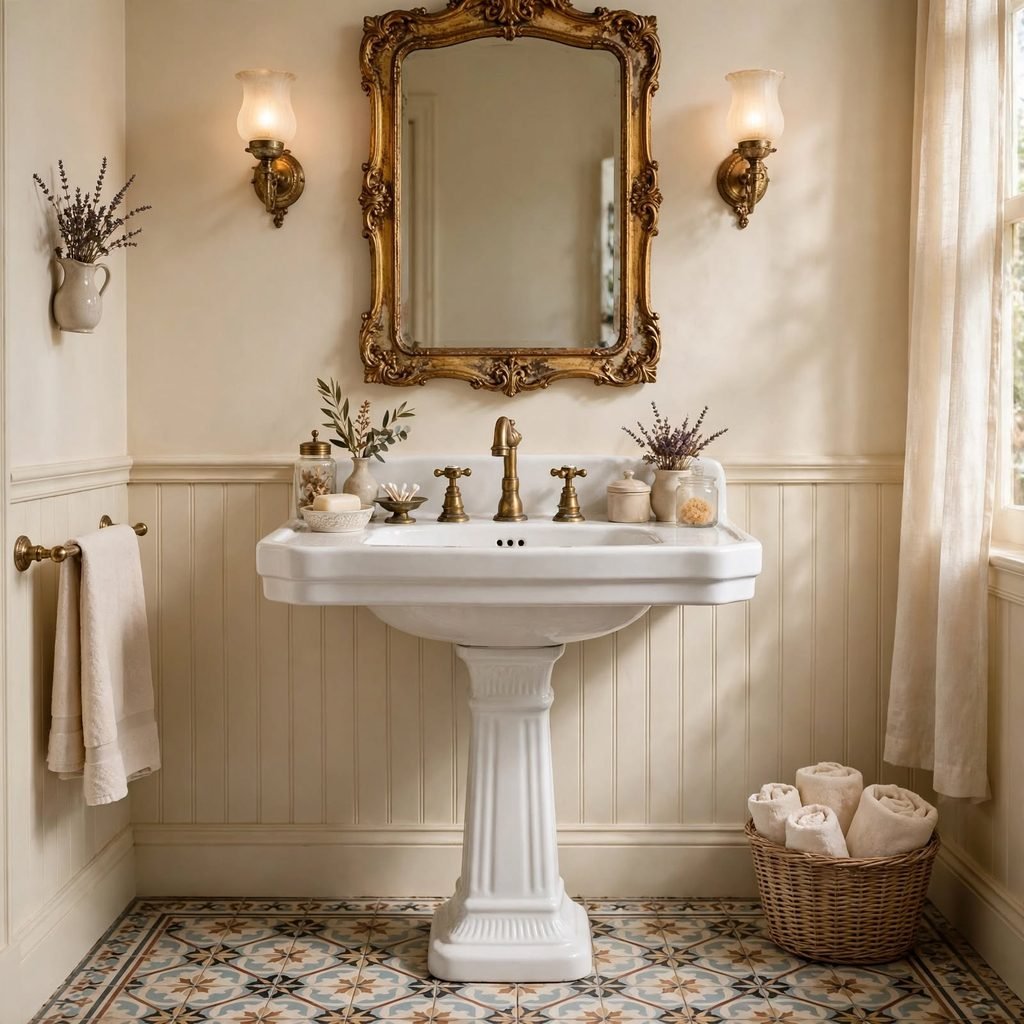
A pedestal sink with cross handles combines a slim, classic sink base with faucet handles shaped like an X rather than modern single-lever controls, which is one of the clearest visual signals of a vintage bathroom. This works well in smaller bathrooms where a pedestal sink’s narrow footprint is already practical, and the cross handles add period detail without requiring any additional fixtures or tile work elsewhere in the room.
In order to see more options for modern bathroom decor CLICK HERE
3. Subway Tile Wainscoting
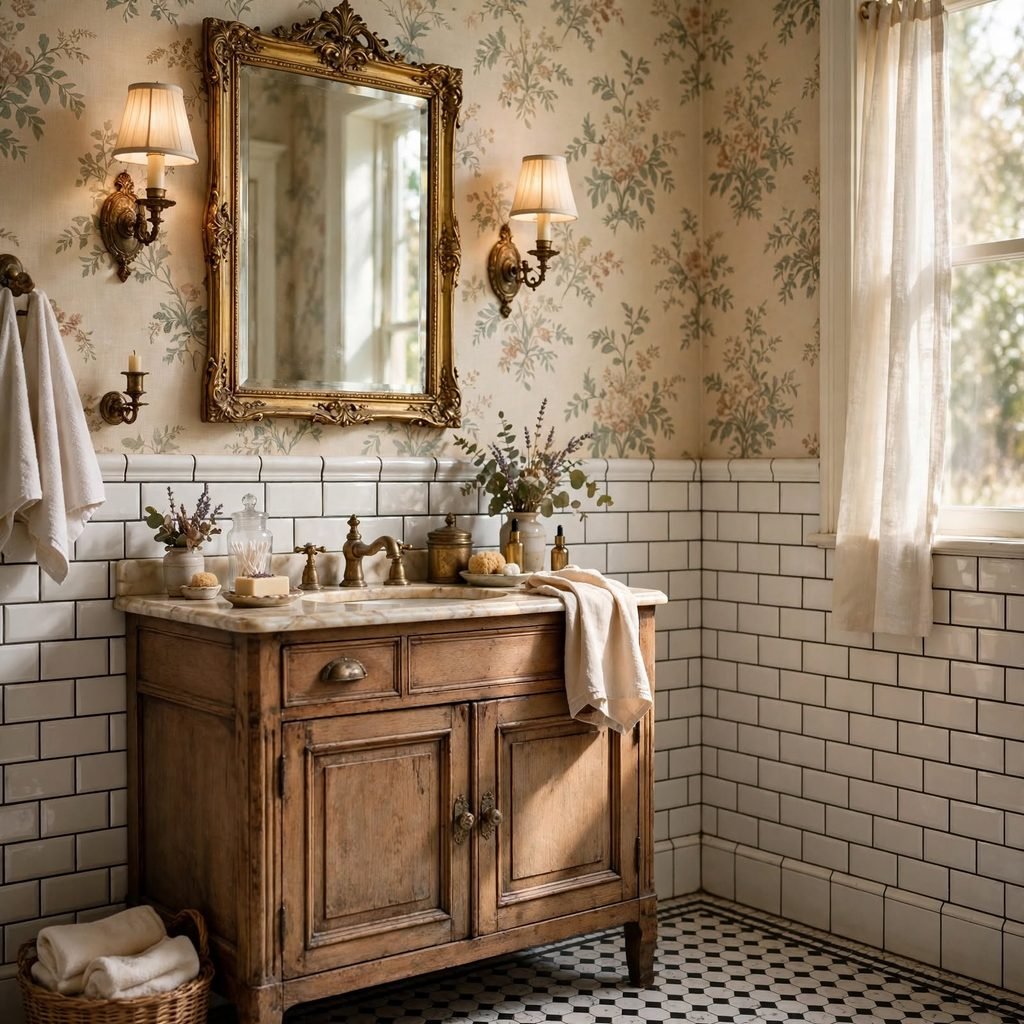
Subway tile wainscoting covers the lower portion of a bathroom wall in the classic rectangular white tile associated with early twentieth-century bathrooms, typically finished with a contrasting trim tile at the top edge. This treatment adds texture and a period-correct look without requiring the full wall to be tiled, which keeps material costs lower than a floor-to-ceiling tile job. Pairing it with a painted upper wall in a soft, muted color completes the classic look.
4. Vintage Bathroom Decor for Small Spaces
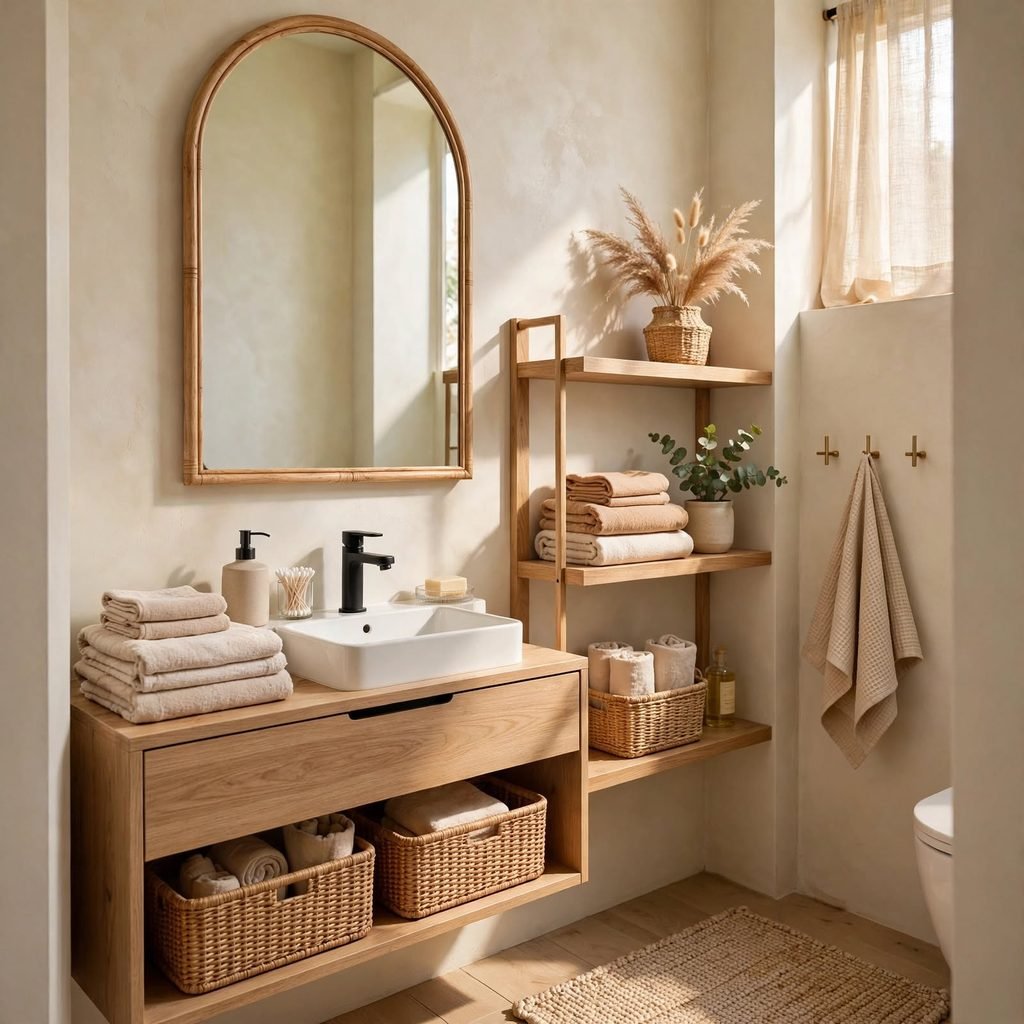
Vintage bathroom decor for small spaces works best with a lighter, more restrained material palette, since period details like dark wood, heavy tile patterns, and ornate fixtures can overwhelm a compact room if used everywhere at once. Choosing one or two signature vintage elements, like a pedestal sink or a fluted glass shower door, rather than covering every surface in period detail keeps a small bathroom feeling open while still reading as vintage in style.
5. Brass Cage Light Fixture
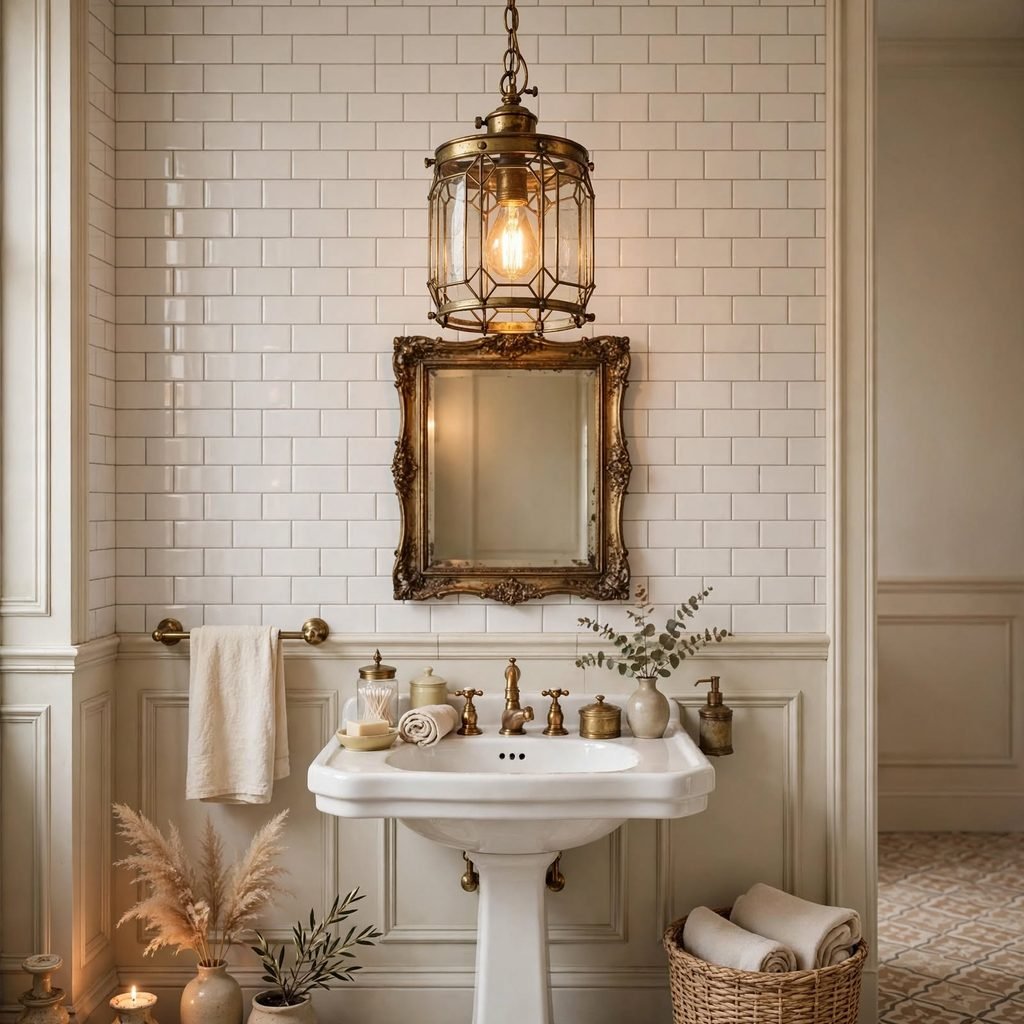
A brass cage light fixture wraps a bulb in an open metal frame, reading as an industrial-vintage hybrid that suits bathrooms with exposed brick, subway tile, or reclaimed wood elements. Unlacquered brass develops a patina over time that adds to the fixture’s aged, collected look rather than staying uniformly shiny. This fixture works well flanking a mirror in pairs, echoing the vanity lighting common in older hotel and salon-style bathrooms.
6. Hexagon Tile Flooring
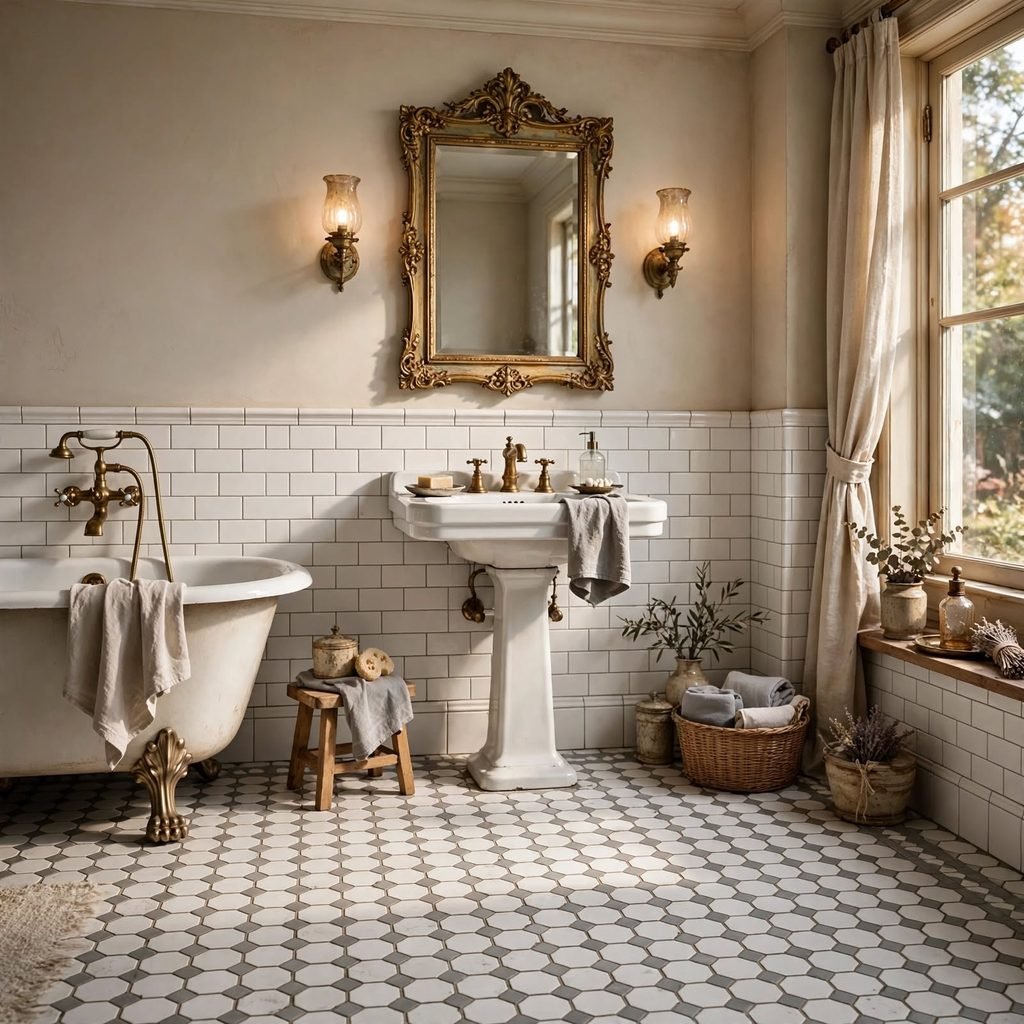
Hexagon tile flooring, typically in small white or black-and-white tiles, is one of the most common flooring patterns associated with early twentieth-century bathrooms and remains widely available in both original and reproduction sizes. Choosing a smaller hexagon size, closer to an inch across, reads more authentically vintage than a larger modern hexagon tile. Pairing the floor with simple white fixtures keeps the pattern as the room’s main visual statement.
7. Antique Medicine Cabinet
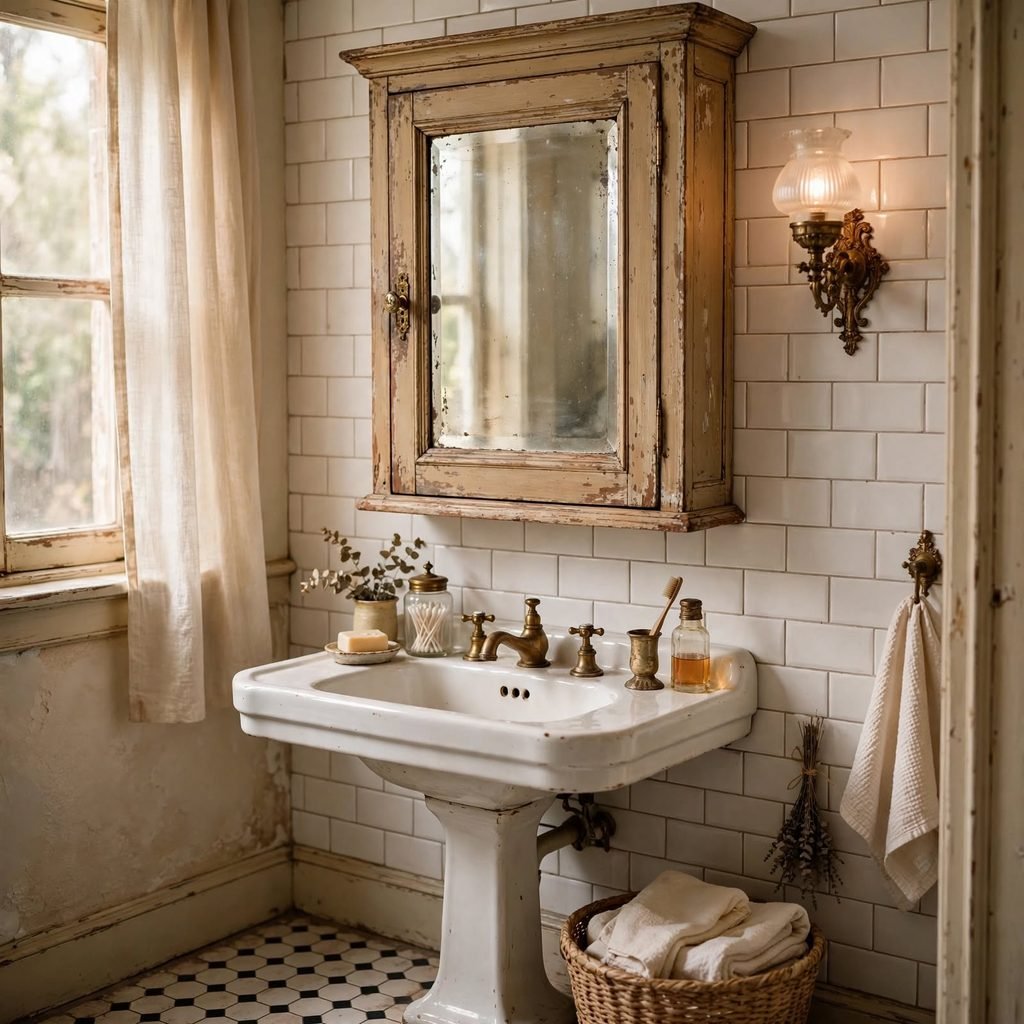
An antique medicine cabinet, whether a genuine salvaged piece or a reproduction, adds storage with a beveled mirror front and a wood or metal frame instead of the plain, flush mirror doors common in newer bathrooms. Mounting it above the sink keeps the piece functional as both storage and a focal point. Sourcing a reproduction cabinet is often more practical than an original, since it can be sized to fit modern wall openings.
8. Floral Wallpaper Accent
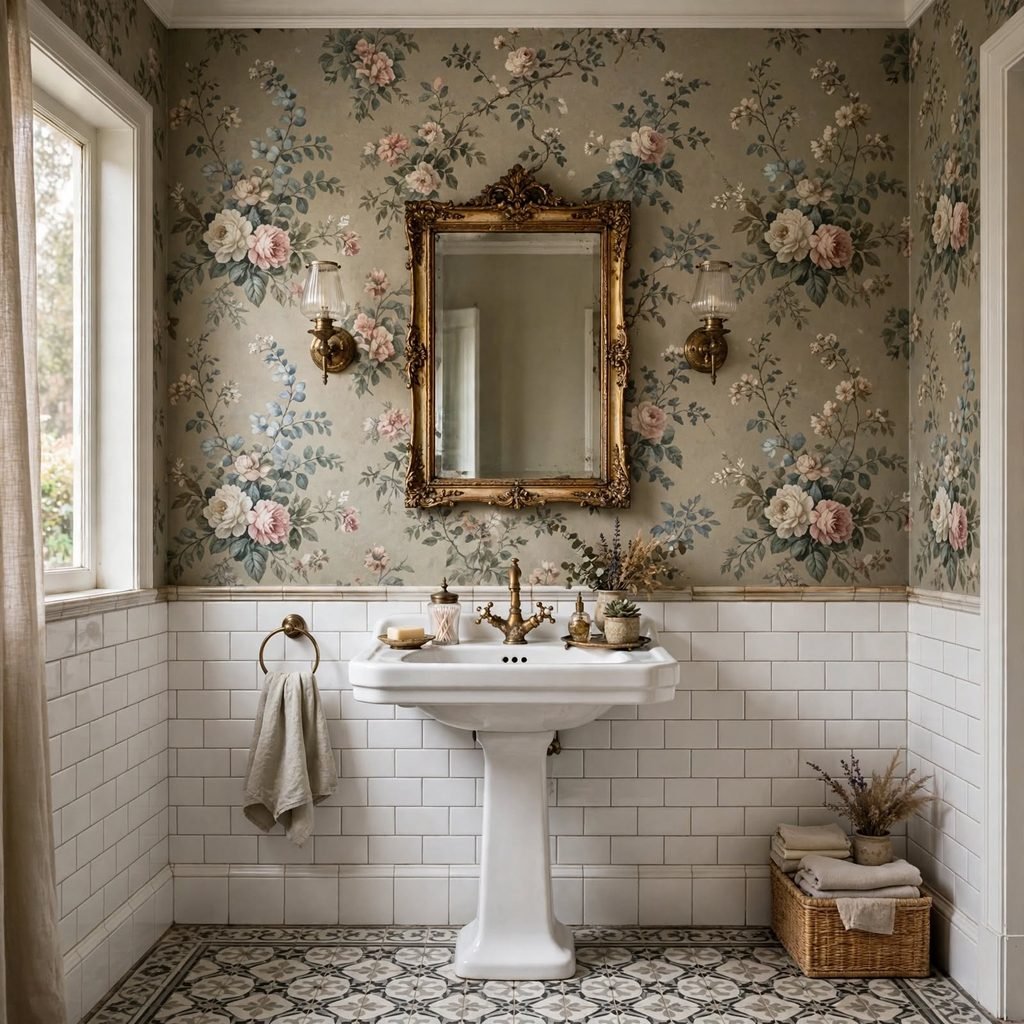
A floral wallpaper accent brings pattern into a vintage bathroom the way it would have appeared in many mid-century homes, typically applied above a wainscoting line or on a single accent wall rather than the entire room. Choosing a smaller, more delicate print keeps the pattern from feeling overwhelming in a room with limited wall space. Moisture-resistant or vinyl-coated wallpaper is worth prioritizing given the humidity a bathroom regularly experiences.
9. Floral Wallpaper Accent
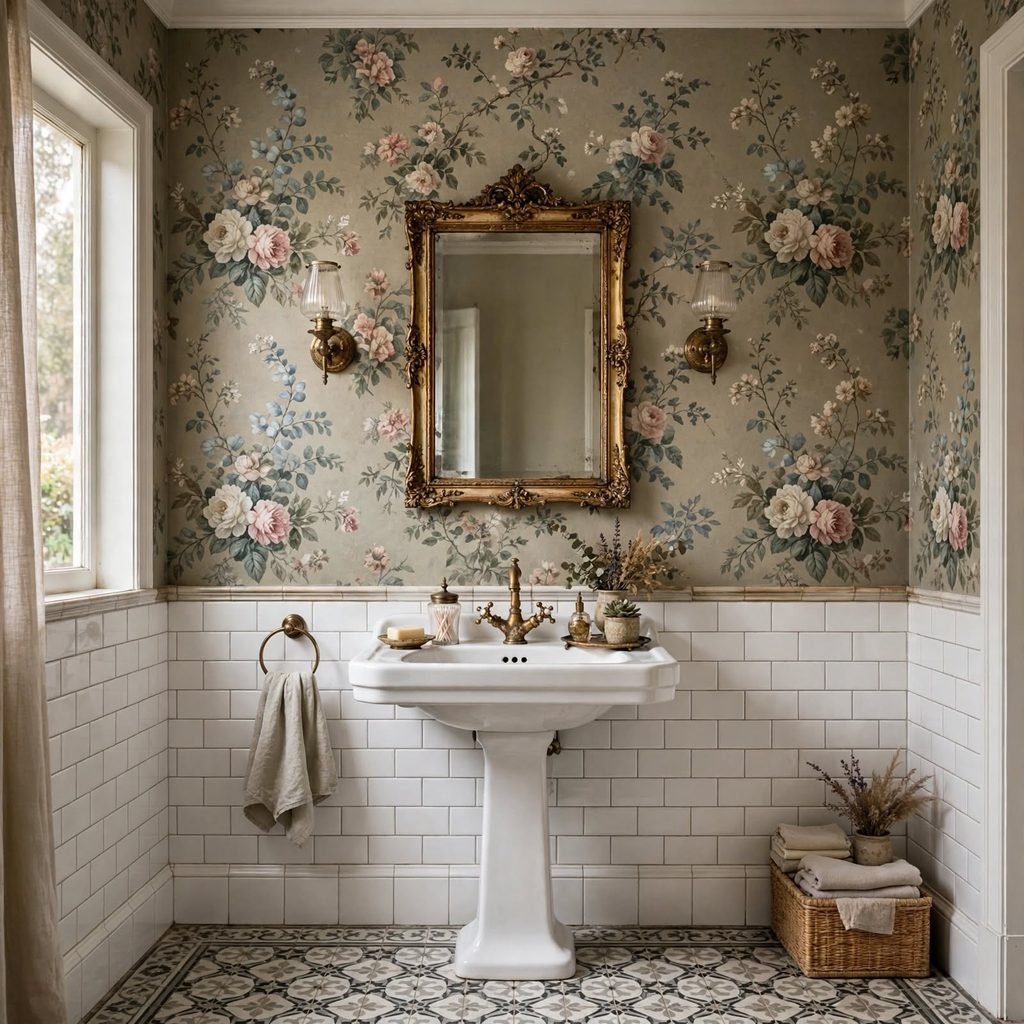
A porcelain soap dish, whether wall-mounted or freestanding on the vanity, replaces a plastic or silicone version with a material that matches the era a vintage bathroom is drawing from. Wall-mounted versions built directly into tile were common in older bathrooms, and reproduction tile-in soap dishes are still available for renovations aiming for that exact detail. A simple white or cream porcelain dish fits most vintage palettes without competing with other decor.
10. Fluted Glass Shower Door
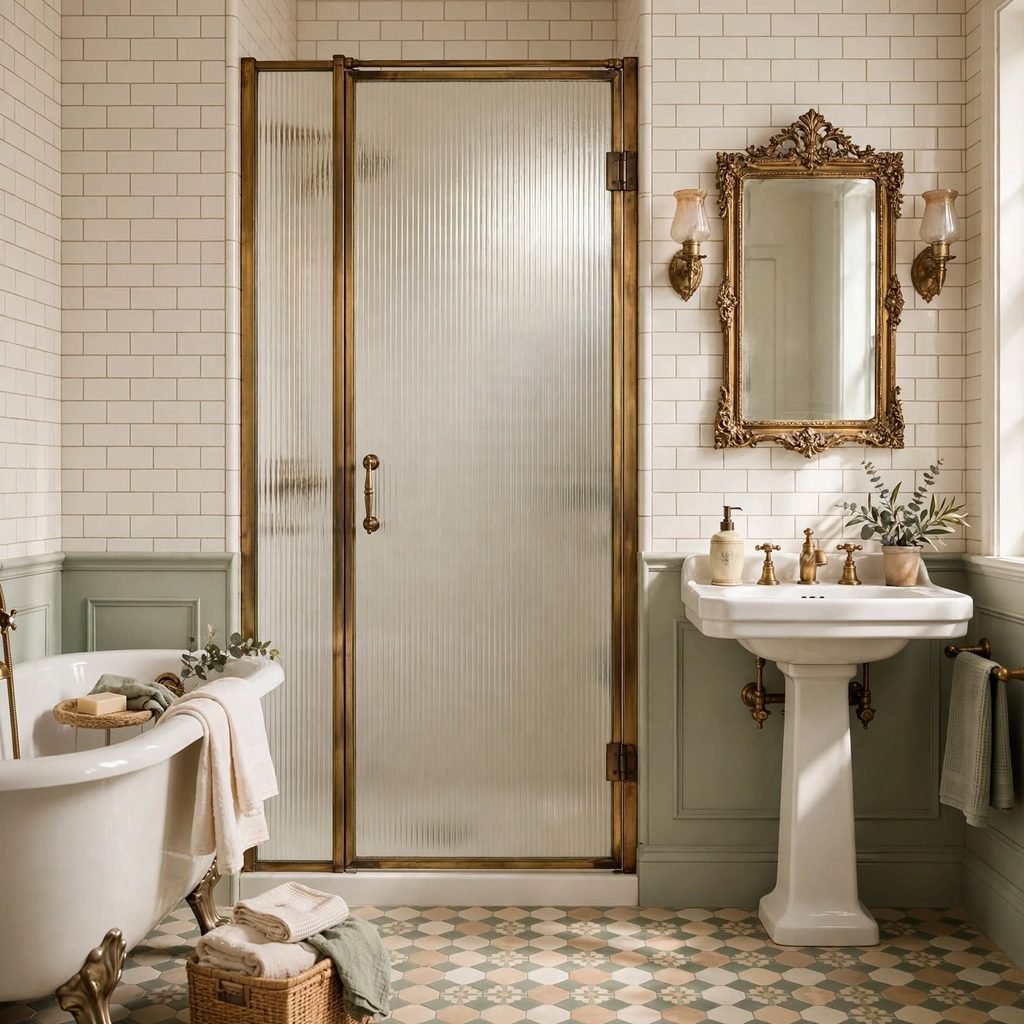
A fluted glass shower door uses vertically ribbed glass instead of clear or frosted panels, adding texture and a period-appropriate softness to the sightline into a shower. This style was common in earlier decades and has seen a strong resurgence in both vintage and modern bathroom design. Pairing fluted glass with a brass or matte black frame ties the fixture into the room’s broader hardware finish.
11. Reclaimed Wood Shelving
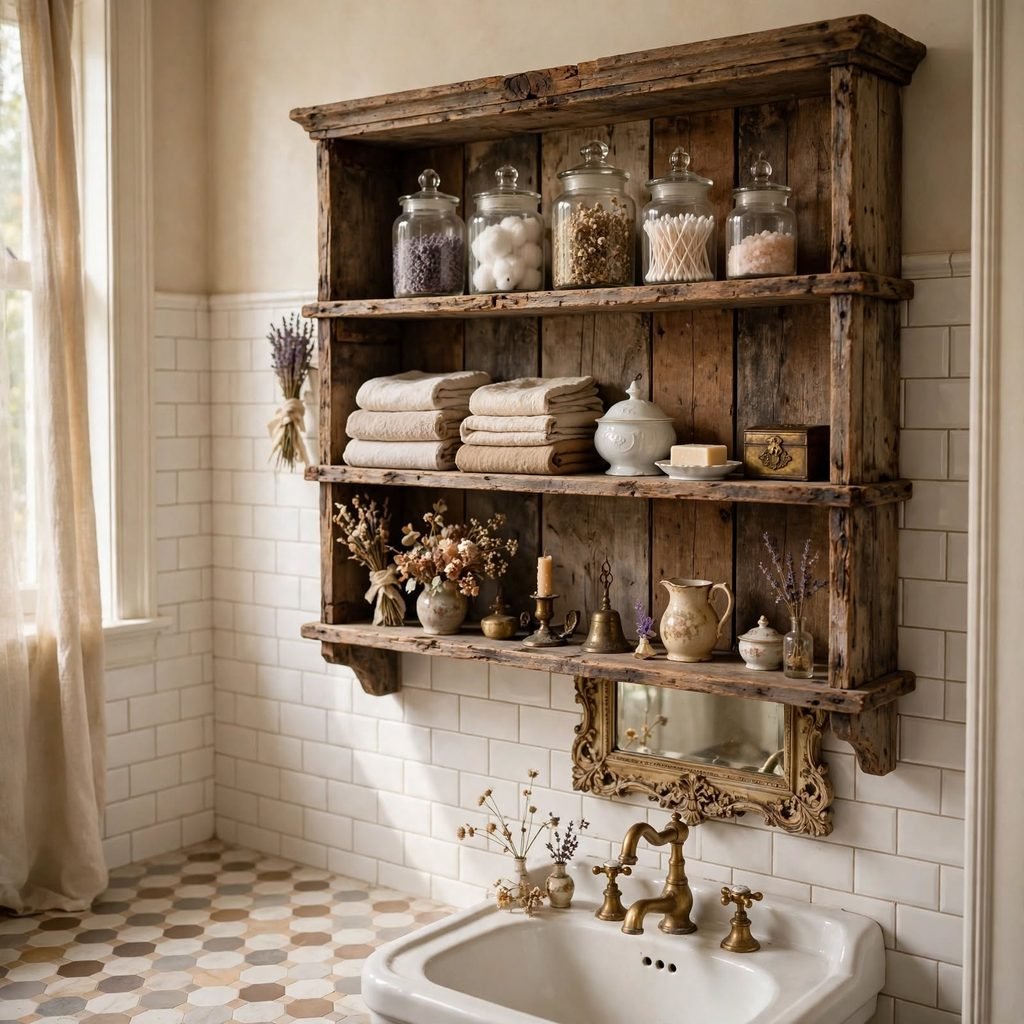
Reclaimed wood shelving brings warmth and visible age into a bathroom that might otherwise rely entirely on tile, porcelain, and metal. Using salvaged barn wood or a similarly weathered finish adds texture that reads as genuinely aged rather than artificially distressed. This works well as open shelving beside a vanity or above a toilet, holding folded towels or small vintage-style accessories like glass jars or a porcelain dish.
12. Vintage Wall Sconces
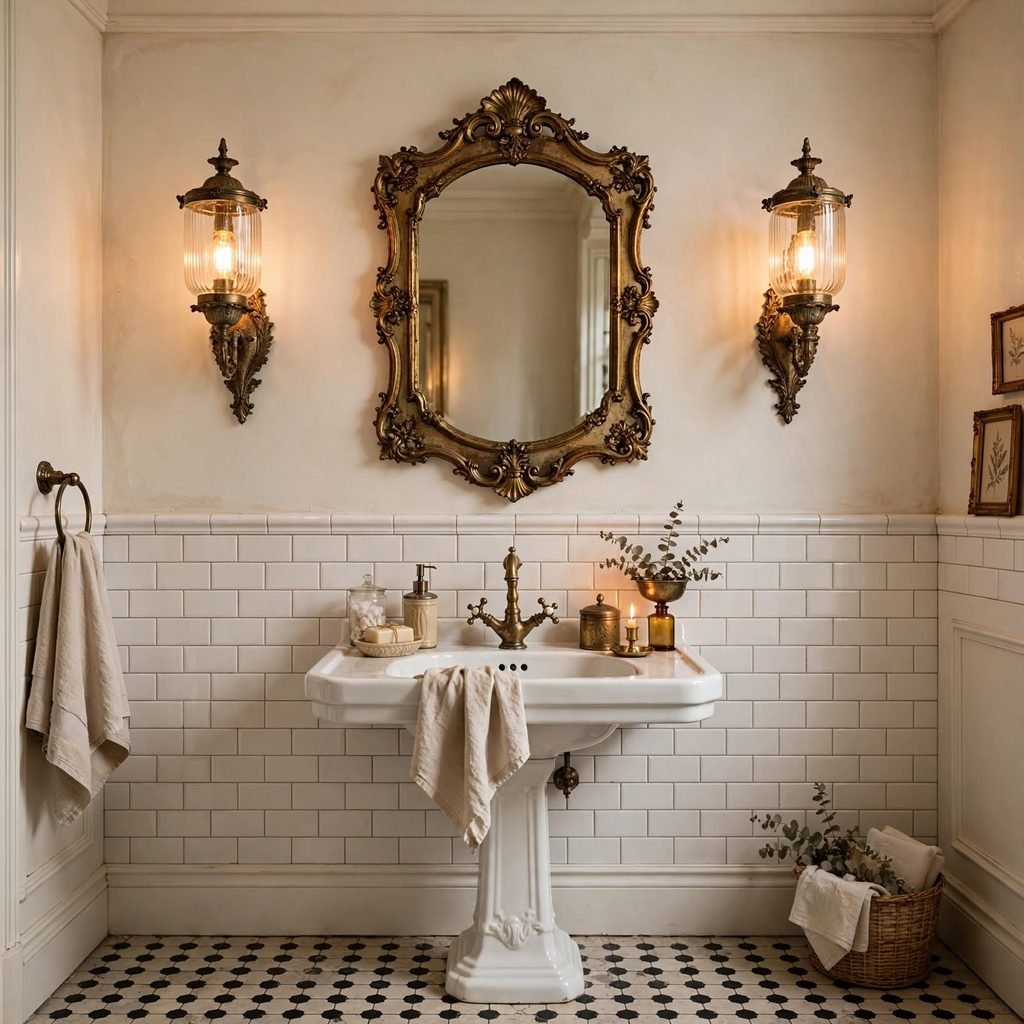
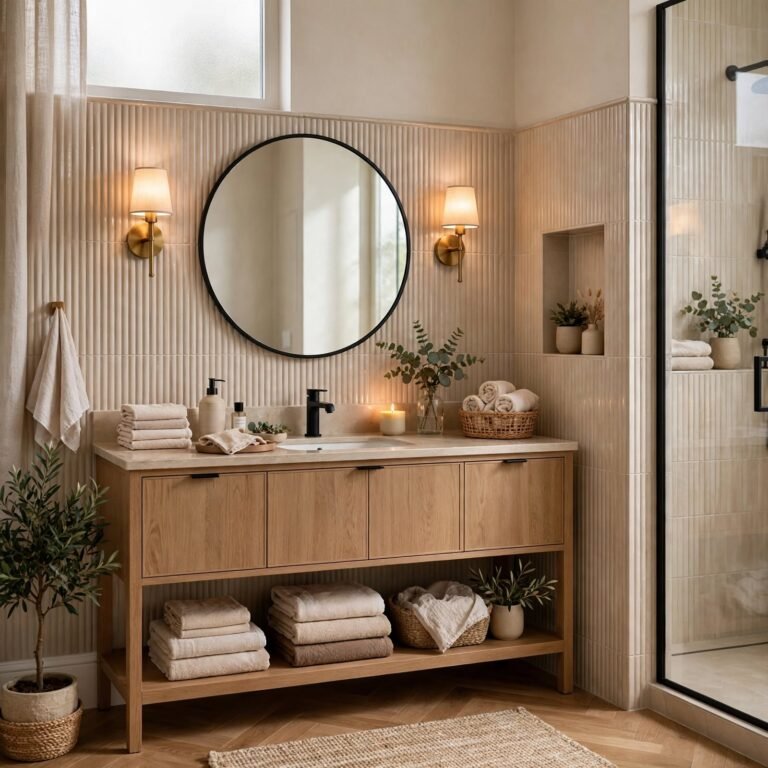
Vintage wall sconces, often featuring frosted glass shades or an exposed brass arm, replace a modern vanity light bar with fixtures that read as collected rather than uniformly modern. Mounting sconces on either side of a mirror, rather than a single fixture above it, echoes a lighting layout common in older bathrooms and hotel vanities. Choosing a warm-toned bulb keeps the light quality consistent with the room’s overall vintage feel.
13. Checkerboard Tile Pattern
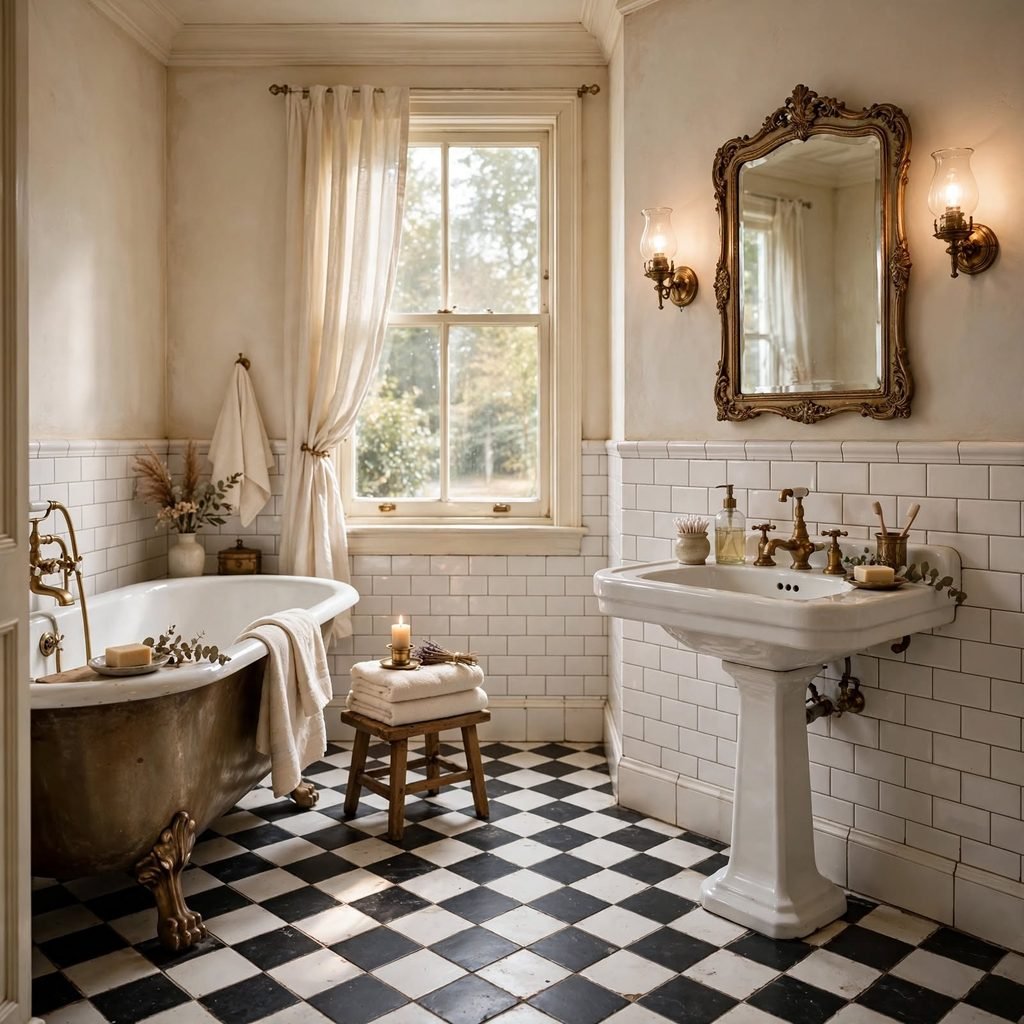
A checkerboard tile pattern, typically in black and white, is one of the most immediately recognizable signals of a vintage bathroom, whether applied to the floor or as a smaller accent on a shower wall. Using a smaller tile size for the checkerboard, rather than large-format squares, keeps the pattern reading as period-appropriate instead of contemporary. This pattern pairs naturally with white fixtures and simple, unadorned wall colors.
14. Freestanding Towel Rack
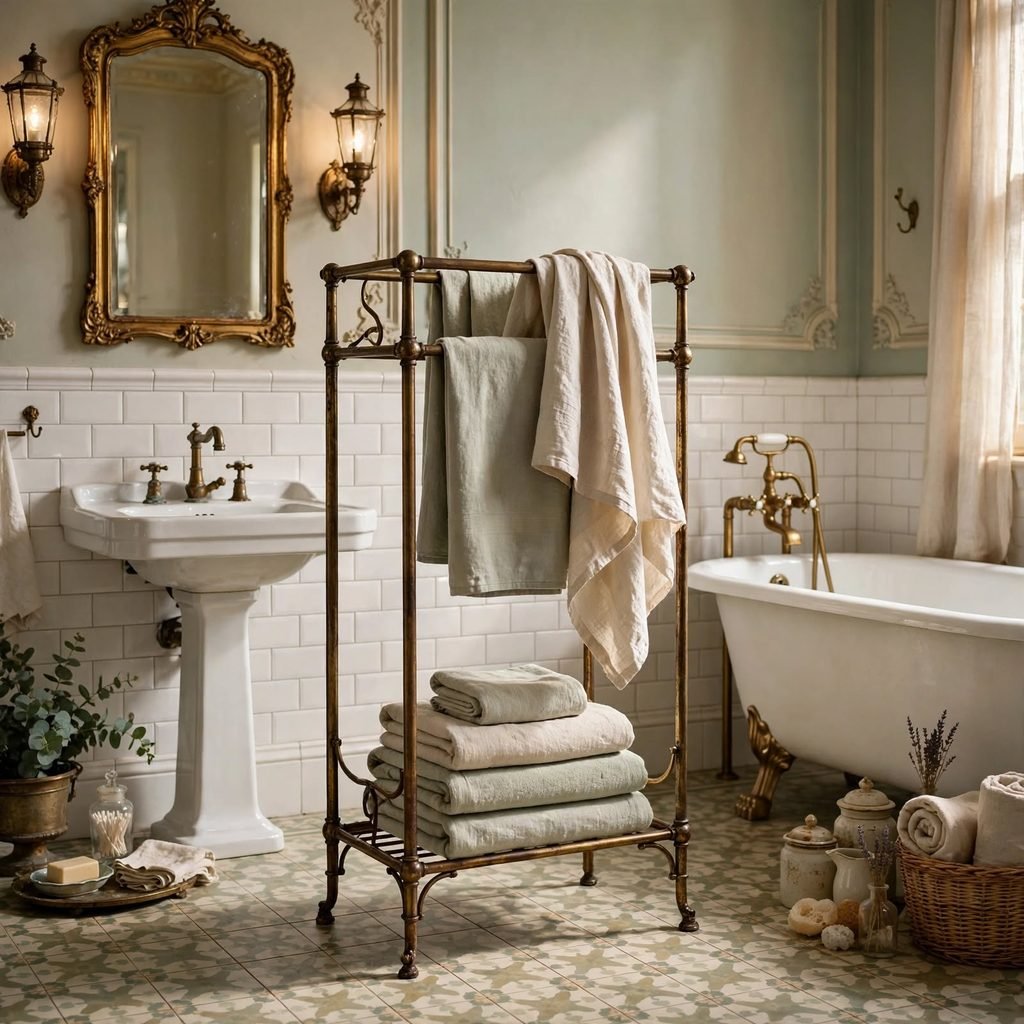
A freestanding towel rack, often with a ladder or folding frame in wood or brass, adds storage without requiring any wall mounting, which suits both rented spaces and rooms without much available wall area. This style was common before built-in towel bars became standard, and it adds a slightly more casual, collected look than a fixed bar. Placing it near the tub or shower keeps towels within reach while reinforcing the room’s vintage character.
15. Ornate Framed Mirror
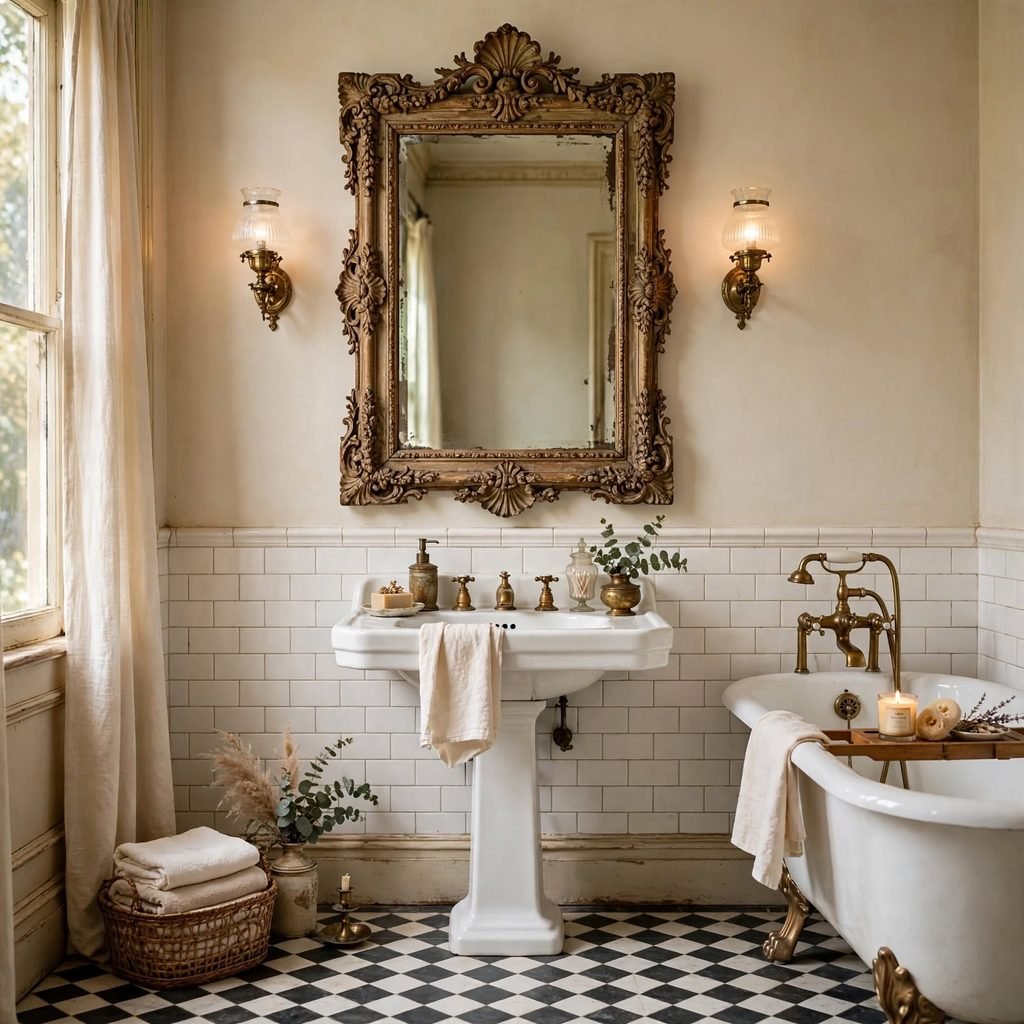
An ornate framed mirror, with a carved wood, gilded, or scrolled metal frame, replaces a plain modern mirror with a piece that reads as a genuine antique or a well-made reproduction. Sizing the mirror slightly smaller than the vanity width, rather than edge to edge, keeps the ornate frame from feeling oversized in a smaller bathroom. This piece works as one of the strongest single focal points in a vintage bathroom design.
16. Chrome Fixture Accents
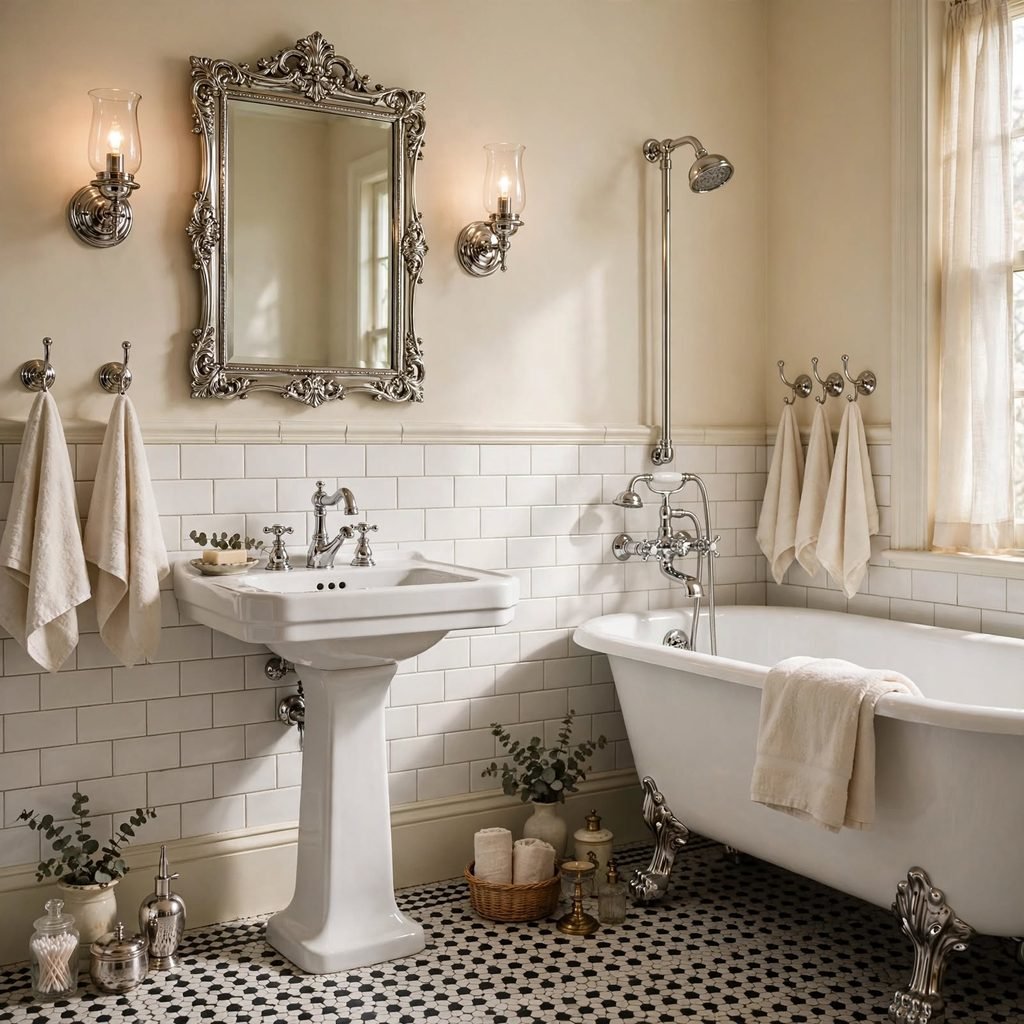
Chrome fixture accents, including faucets, towel bars, and cabinet hardware, suit a mid-century leaning vintage bathroom better than the warmer brass finishes associated with earlier periods. Polished chrome pairs naturally with black-and-white tile patterns and simpler, cleaner fixture shapes than the more ornate brass and porcelain details common in earlier decades. Keeping all metal finishes in the room consistent, whether chrome or brass, avoids a mismatched, unintentional look.
17. Claw-Foot Style Vanity Legs
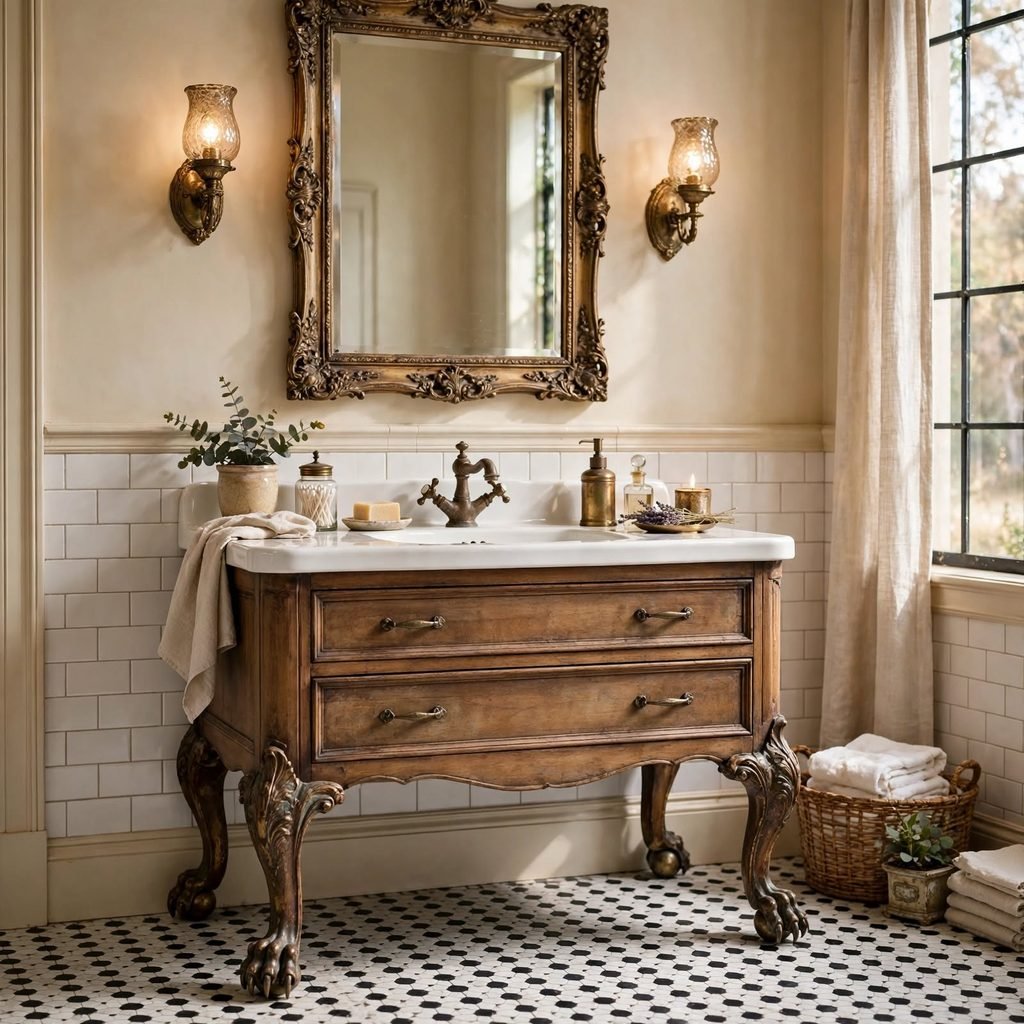
Claw-foot style vanity legs bring the same decorative foot detail found on a clawfoot tub to a furniture-style vanity, replacing a built-in cabinet base with something that reads more like a freestanding piece of furniture. This works well paired with a marble or wood countertop and a vessel-style sink sitting on top, rather than an undermount sink built into the surface. This detail suits bathrooms aiming for a furniture-forward, less built-in look overall.
Shop the Look
A few pieces make it easy to combine several of these ideas into one cohesive room. A pedestal sink with cross handles paired with vintage wall sconces and an ornate framed mirror covers the vanity area’s vintage detailing in one wall. For flooring and walls, a hexagon or checkerboard tile floor alongside subway tile wainscoting and a soft floral wallpaper accent completes the look with period-appropriate pattern and texture.
Common Mistake to Avoid
The most common mistake with vintage bathroom decor is mixing details from too many different eras at once, such as pairing an early twentieth-century clawfoot tub with distinctly mid-century chrome fixtures and a more contemporary floral pattern, which can end up looking disjointed rather than intentionally vintage. Picking a general era or style to anchor the room, whether that’s an early century look with brass and porcelain or a mid-century look with chrome and cleaner lines, keeps the details working together rather than against each other.
FAQs
How do I create a vintage bathroom look on a budget?
Smaller, lower-cost details like a porcelain soap dish, cross-handle faucet aerators, or a reproduction wallpaper accent can bring vintage character into a bathroom without replacing major fixtures. Secondhand and salvage shops are also worth checking for items like mirrors, light fixtures, and towel racks, which often cost less than new reproduction pieces. Focusing budget on one or two signature elements, rather than spreading it thin across the whole room, tends to have more visual impact.
What tile patterns are most associated with vintage bathrooms?
Small hexagon tile and black-and-white checkerboard patterns are the two most closely associated with vintage bathroom style, particularly styles drawing from the early twentieth century. Subway tile, especially when paired with a contrasting trim border, is another dependable choice that reads as period-appropriate without being overly bold. Choosing a smaller tile size in general tends to read more authentically vintage than larger, more contemporary tile formats.
Can I get a vintage bathroom look with modern plumbing?
Yes, most vintage bathroom decor ideas can be paired with fully modern, code-compliant plumbing, since reproduction fixtures like clawfoot tubs, cross-handle faucets, and pedestal sinks are manufactured with current plumbing standards in mind. This allows a bathroom to look period-appropriate on the surface while functioning like any newly built space underneath. A licensed plumber can confirm which specific reproduction fixtures work with existing plumbing lines during a renovation.
What colors work best in a vintage bathroom?
Soft, muted tones like sage green, dusty pink, pale blue, and cream are closely associated with earlier decades and work well as wall colors or tile accents in a vintage bathroom. Classic black and white remains one of the most dependable combinations across nearly every vintage era, particularly when paired with checkerboard or hexagon tile. Avoiding overly bright or highly saturated modern colors helps keep the overall palette feeling appropriately aged rather than contemporary.
Is vintage bathroom decor suitable for a small bathroom?
Yes, though it works best with a more restrained approach, choosing one or two strong vintage elements, like a pedestal sink or fluted glass shower door, rather than layering in heavy tile patterns, dark wood, and ornate fixtures all at once. A lighter overall palette keeps a small vintage bathroom from feeling cluttered or closed in, while still preserving enough period detail to read clearly as vintage in style.
Conclusion
Vintage bathroom decor works best when a consistent era and material palette tie every detail together, from tile pattern down to a single soap dish. Start with one or two signature elements, like a clawfoot tub or a checkerboard floor, and build the rest of the room’s details around that anchor. Save this list to Pinterest for later, or check the related small bathroom design post for more ideas suited to a compact layout.