17 Game-Changing Modern Bathroom Decor Ideas for a Sleek Everyday Space
A modern bathroom is defined less by trends and more by restraint, clean surfaces, minimal hardware, and materials chosen for how they age rather than how they photograph today. This guide covers seventeen modern bathroom decor ideas, from fixture upgrades to lighting and tile choices, with notes on sizing and placement where it matters. Whether you’re renovating from scratch or updating a dated space piece by piece, there’s a direction here to start planning around.
Trend & Background
Bathroom design has moved steadily toward simplicity over the past several years, with builders and homeowners favoring fewer, better-chosen materials over the heavily layered, ornate bathrooms popular in earlier decades. Large format tile, floating vanities, and integrated lighting have become more accessible and affordable as manufacturers have expanded their offerings, making a modern look achievable outside of high-end renovations. At the same time, smart features like heated flooring and backlit mirrors have moved from luxury add-ons into more mainstream upgrades, reflecting a broader interest in bathrooms that function as well as they look.
Key Takeaways
- Clean lines and minimal hardware do more to create a modern feel than any single statement piece.
- Large format tile and floating fixtures both help a small bathroom read as more spacious and current.
- Warm lighting and natural materials keep a modern bathroom from feeling cold or overly clinical.
- Investing in a few functional upgrades, like better ventilation or heated flooring, pays off more than purely decorative changes.
1. Floating Vanity
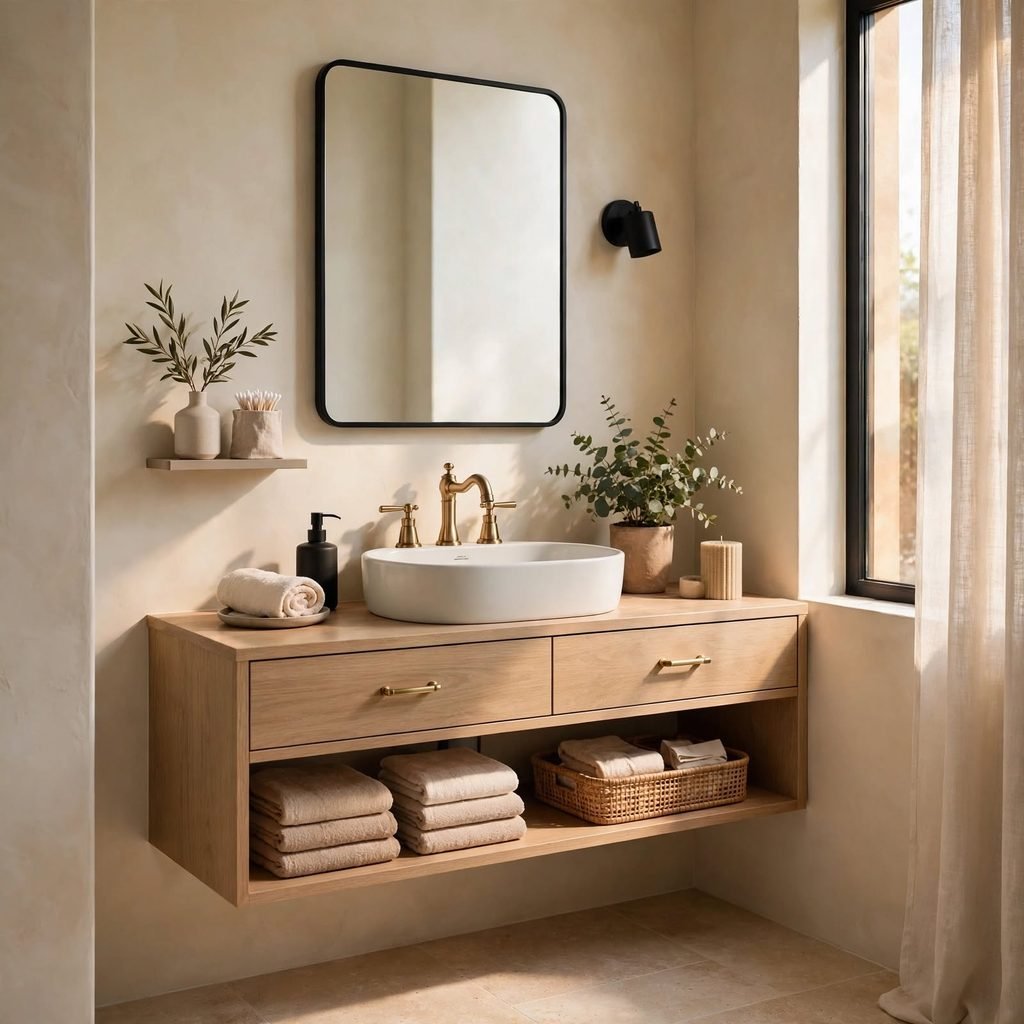
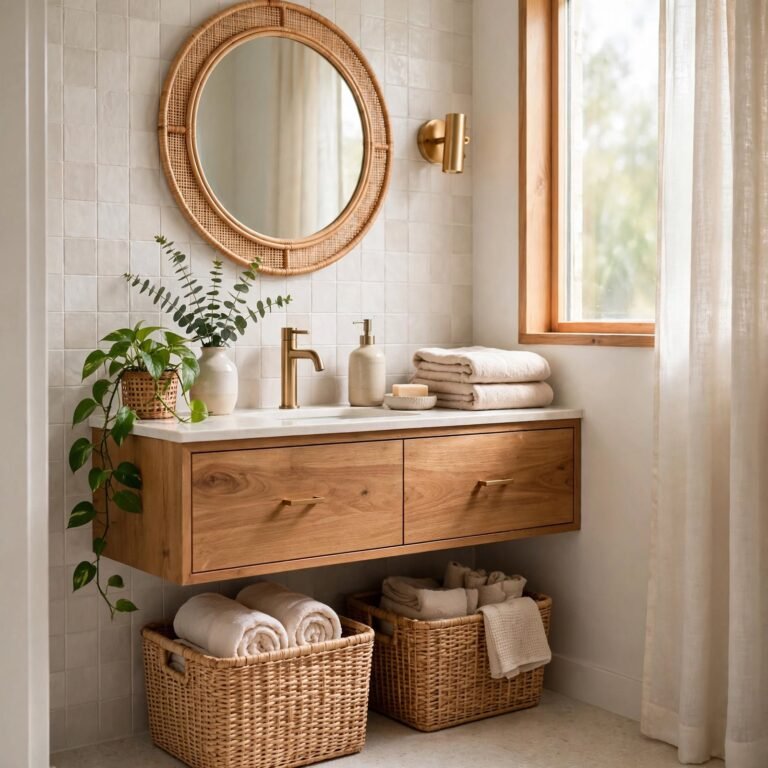
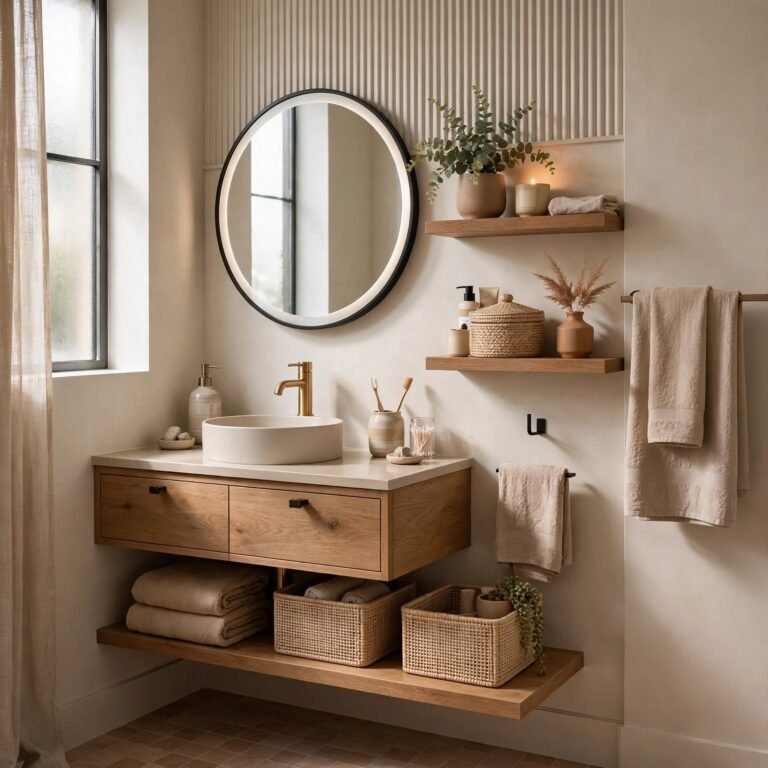
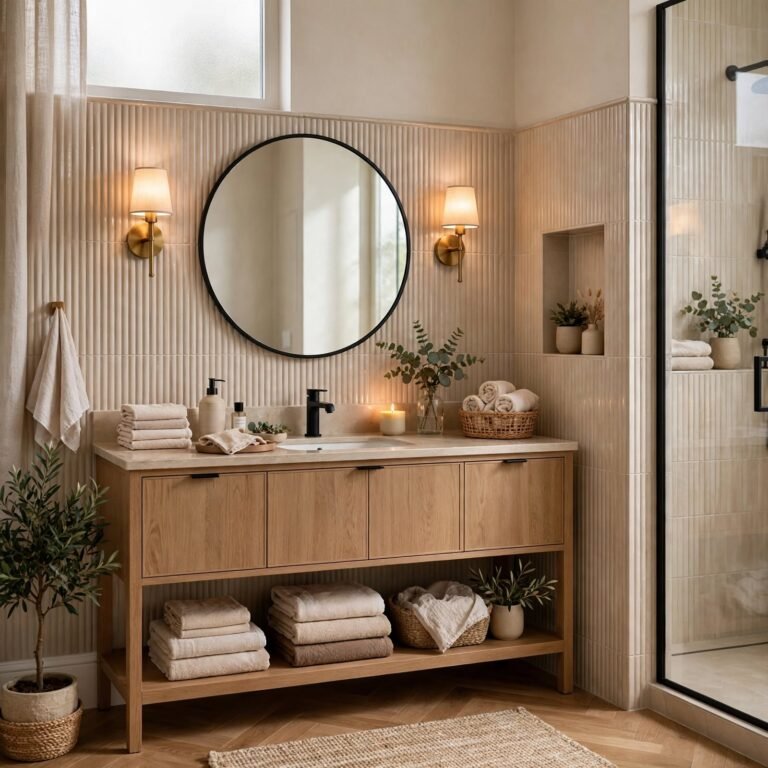
A floating vanity mounts to the wall rather than resting on the floor, leaving a visible gap beneath the cabinet that makes a bathroom feel more open and the floor easier to clean. It works particularly well in smaller bathrooms, where the exposed floor space beneath the vanity creates the illusion of a larger room than the actual square footage suggests. Choosing a vanity with a slim profile and integrated or minimal hardware reinforces the clean, uncluttered look central to a modern design.
2. Frameless Glass Shower
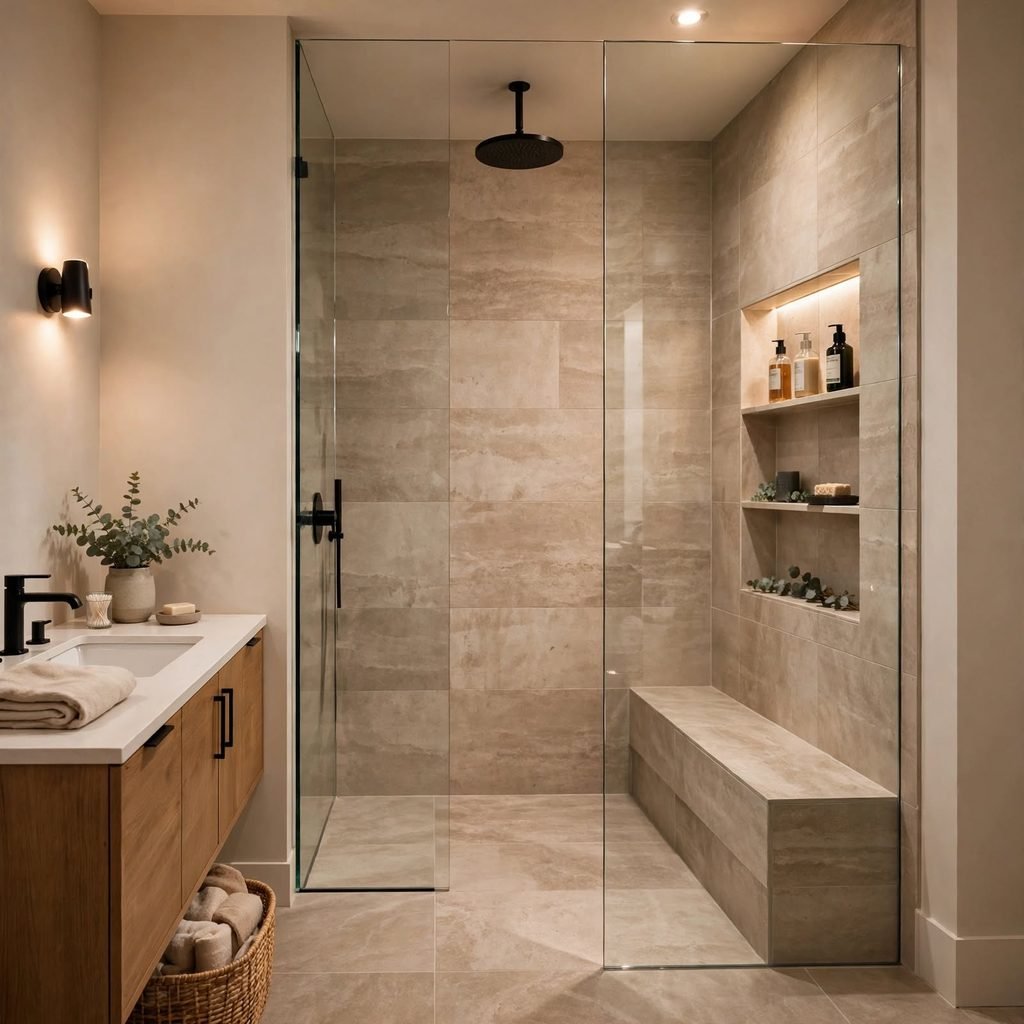
A frameless glass shower uses a single clear glass panel or enclosure without visible metal framing, letting light pass through uninterrupted and making the whole bathroom feel more open. It works best paired with large format tile inside the shower, since busy patterned tile can undercut the clean look the frameless glass is meant to create. This upgrade tends to require a professional installation, since the glass needs to be cut and fitted precisely to the shower opening.
3. Wall-Mounted Toilet
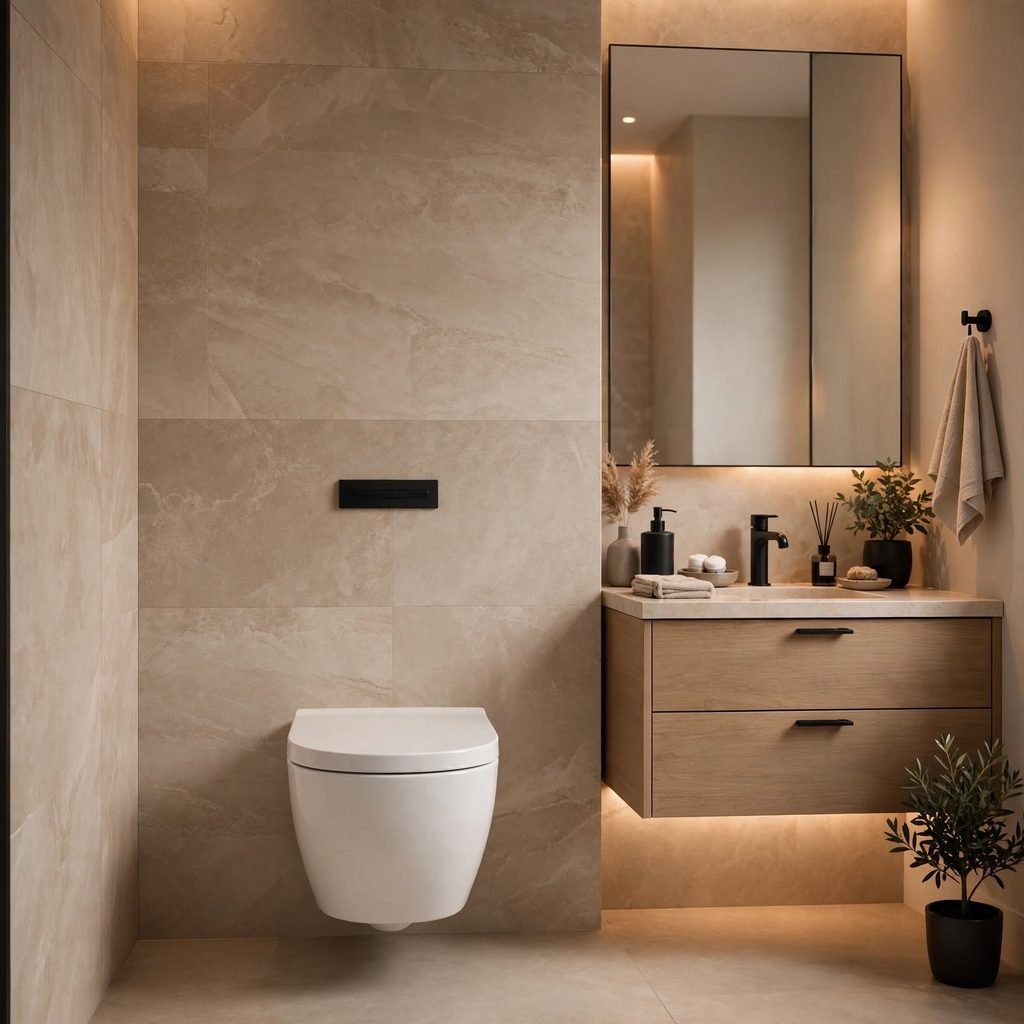
A wall-mounted toilet hangs the bowl on the wall with the tank concealed inside the wall cavity, leaving the floor beneath completely clear. This creates a cleaner visual line than a standard floor-mounted toilet and makes the floor easier to clean, since there’s no base to work around. Installation requires access to the wall cavity for the concealed tank, which makes this a better fit for new construction or a full renovation than a quick update.
4. Modern Bathroom Decor Backlit Mirror
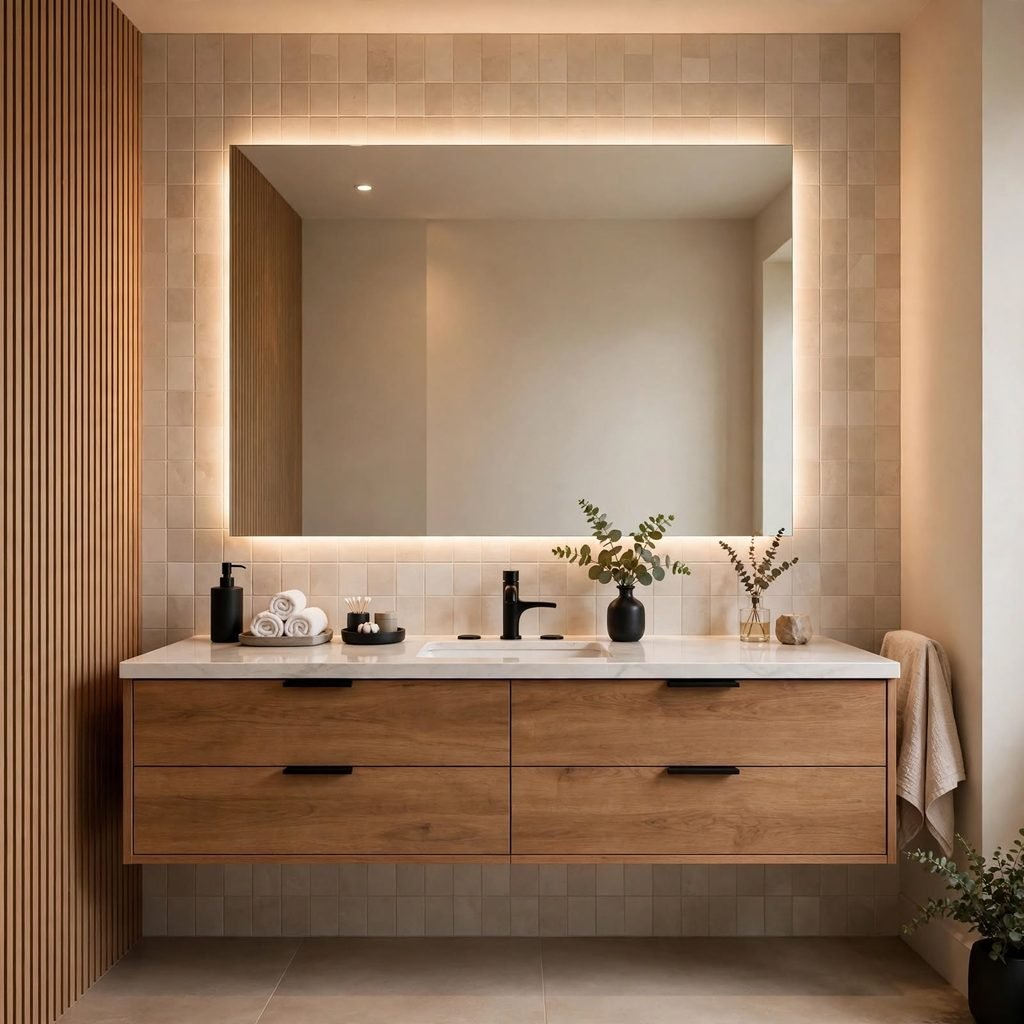
A backlit mirror integrates LED lighting directly behind or around the edge of the glass, providing soft, even illumination without a separate fixture mounted above it. This has become one of the more popular modern bathroom decor upgrades, since it eliminates harsh shadows from overhead lighting and gives the room a cleaner, more finished look. Many models include a built-in dimmer or color temperature adjustment, letting the light shift from cool and bright for grooming to warm and soft for evening use.
To see more bathroom decorating ideas
5. Large Format Porcelain Tile
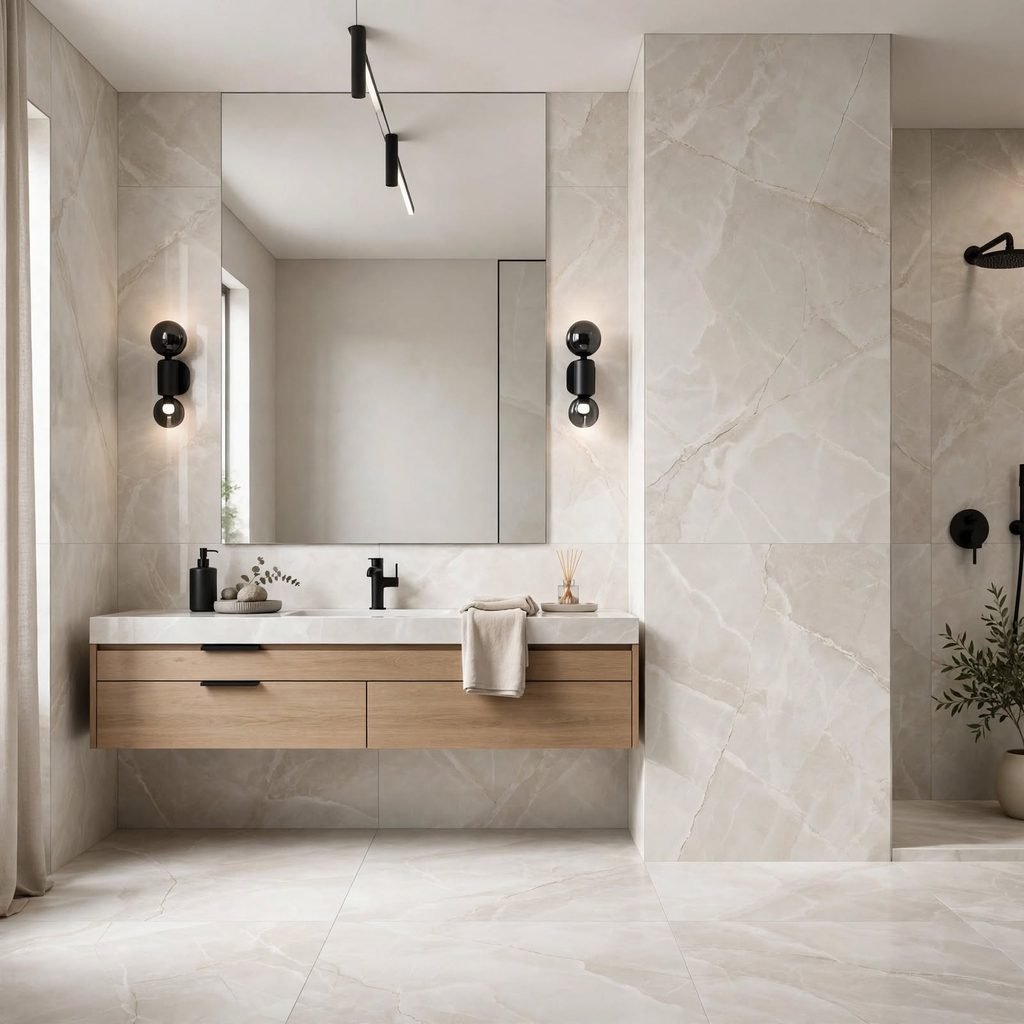
Large format porcelain tile uses oversized tile panels, often twenty-four inches or larger per side, to minimize the number of grout lines across a wall or floor. Fewer grout lines create a cleaner, more seamless surface, which is part of why this tile size has become closely associated with a modern bathroom look. It also tends to make a small bathroom feel larger, since the reduced visual breakup of grout lines lets the eye read the space as one continuous surface.
| Tile Size | Grout Line Frequency | Best Use |
| 12×12 in | Standard | Budget-friendly floors |
| 24×24 in | Reduced | Shower walls, larger floors |
| 24×48 in | Minimal | Feature walls, open showers |
6. Freestanding Soaking Tub
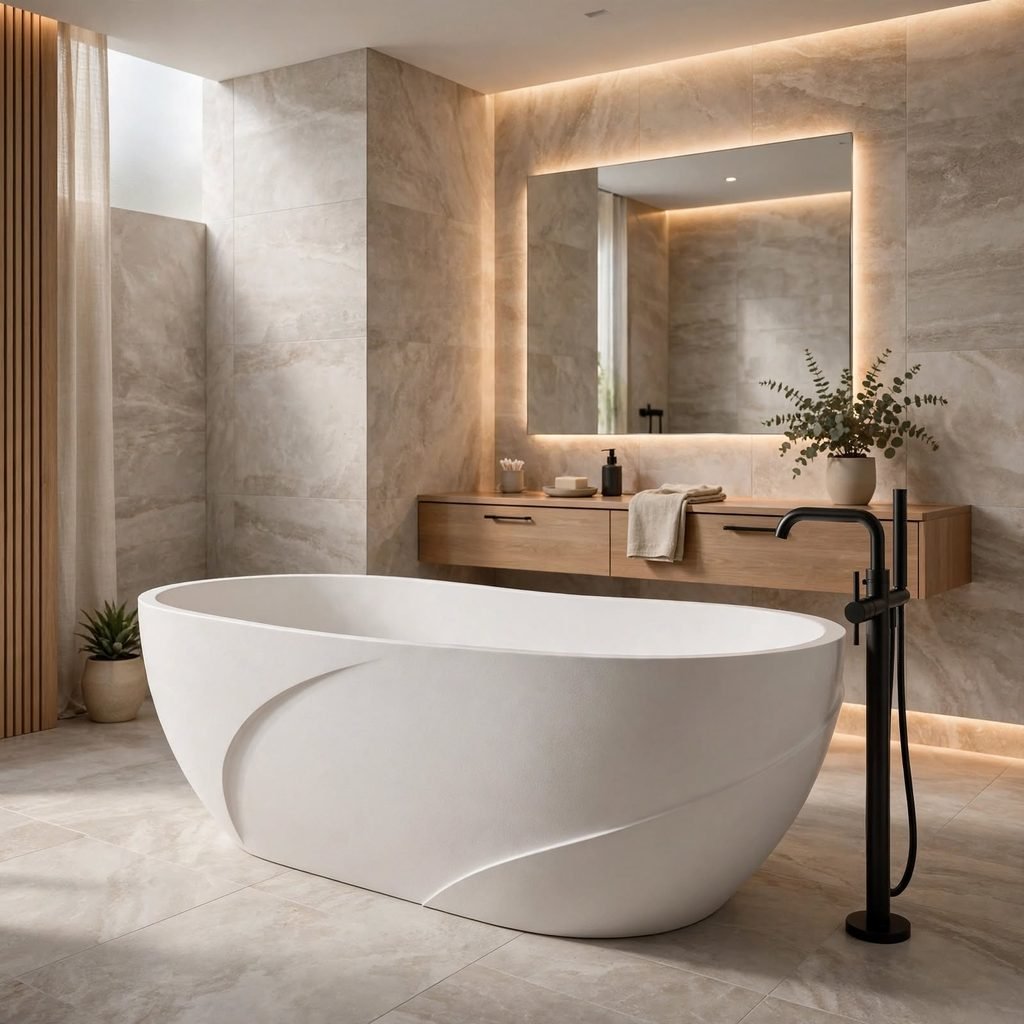
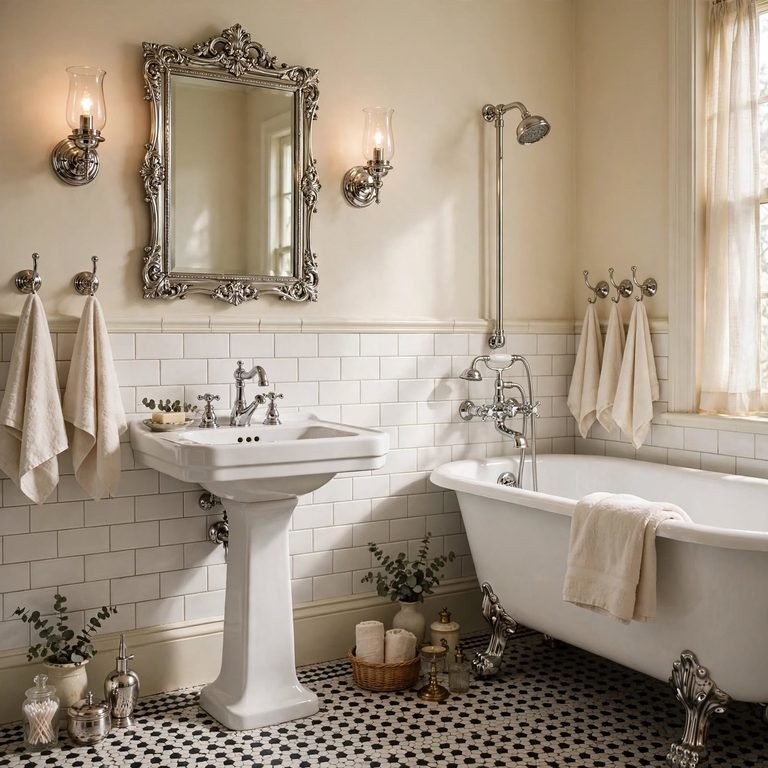
A freestanding soaking tub stands apart from the walls rather than being built into an alcove, giving the bathroom a clear focal point and a sense of intentional design around it. Simple, straight-sided tubs in matte finishes tend to suit a modern bathroom better than ornate clawfoot styles, which lean more traditional. This works best in larger bathrooms with enough floor space to let the tub sit independently, since crowding it against multiple walls undercuts the freestanding effect.
7. Minimalist Open Shelving
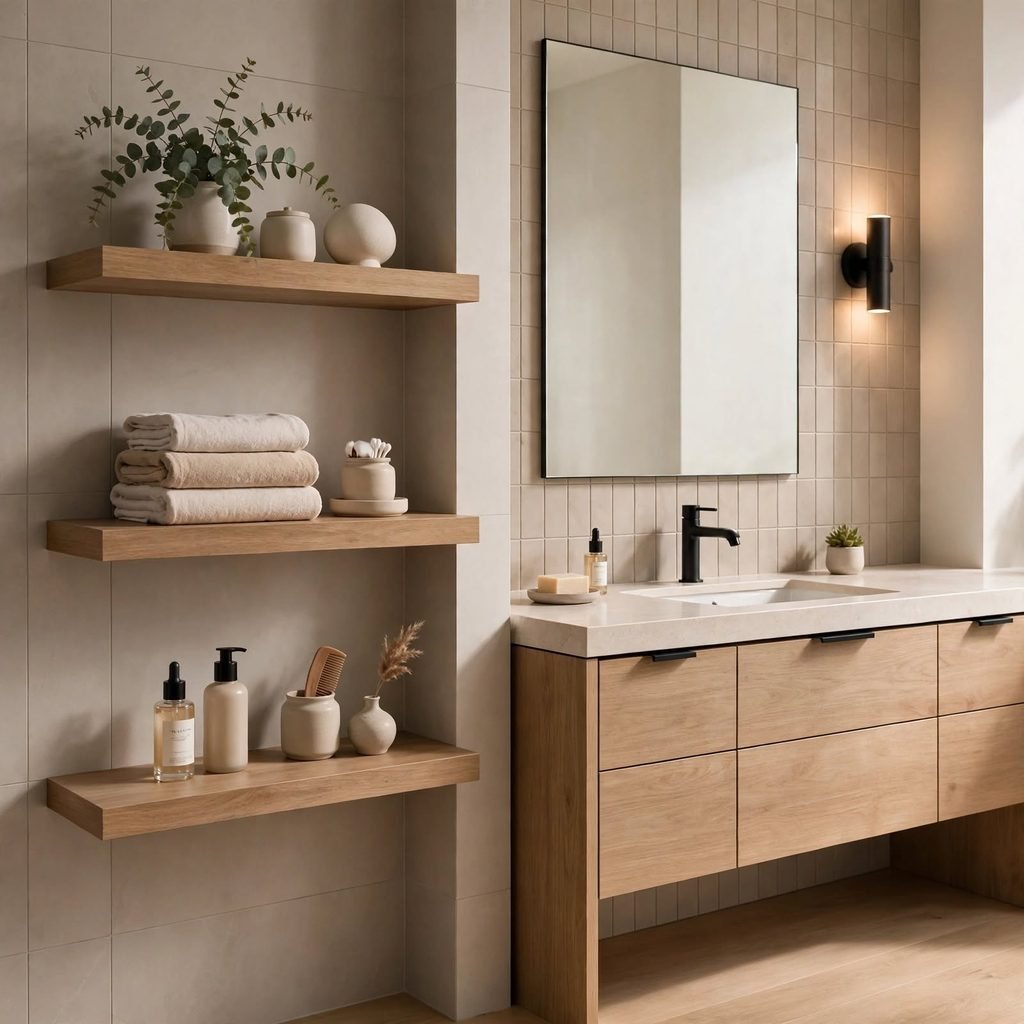
Minimalist open shelving replaces closed cabinetry with simple floating shelves, typically in wood, stone, or matte metal, used to display a small number of curated items rather than store everything out of sight. This works best when styled sparingly, with a few folded towels, a single plant, and one or two ceramic pieces, since an overloaded open shelf undercuts the clean look the style is meant to achieve. Pairing open shelving with closed storage elsewhere in the room keeps daily clutter out of view while still allowing a few decorative touches.
8. Rainfall Showerhead
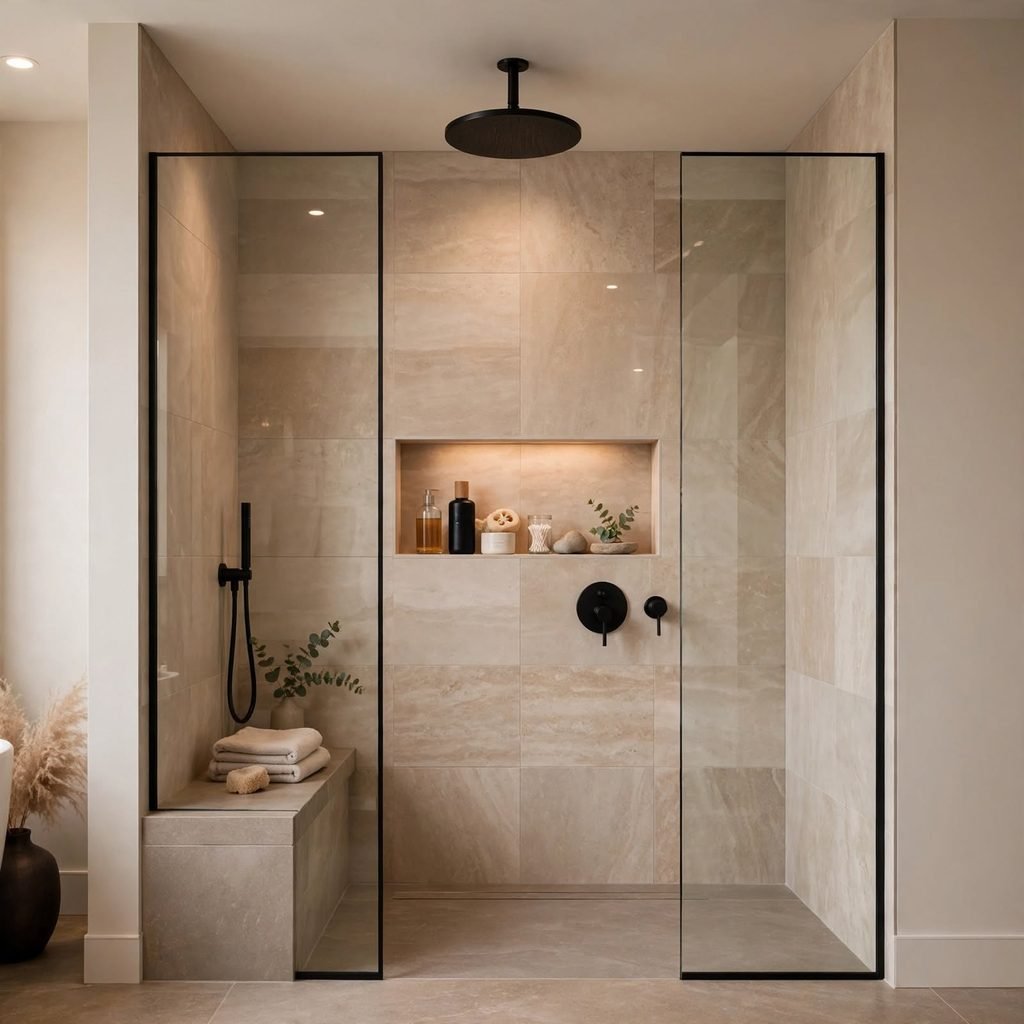
A rainfall showerhead mounts directly overhead rather than at an angle from the wall, delivering a wider, more even spray that mimics falling rain instead of a directed stream. Its flat, disc-shaped design reads as more architectural and minimal than a traditional showerhead, fitting naturally into a modern bathroom’s overall clean lines. Ceiling-mounted versions require more plumbing work than wall-mounted arm versions, so it’s worth confirming which option fits the existing plumbing layout before purchasing.
9. Concrete Vessel Sink
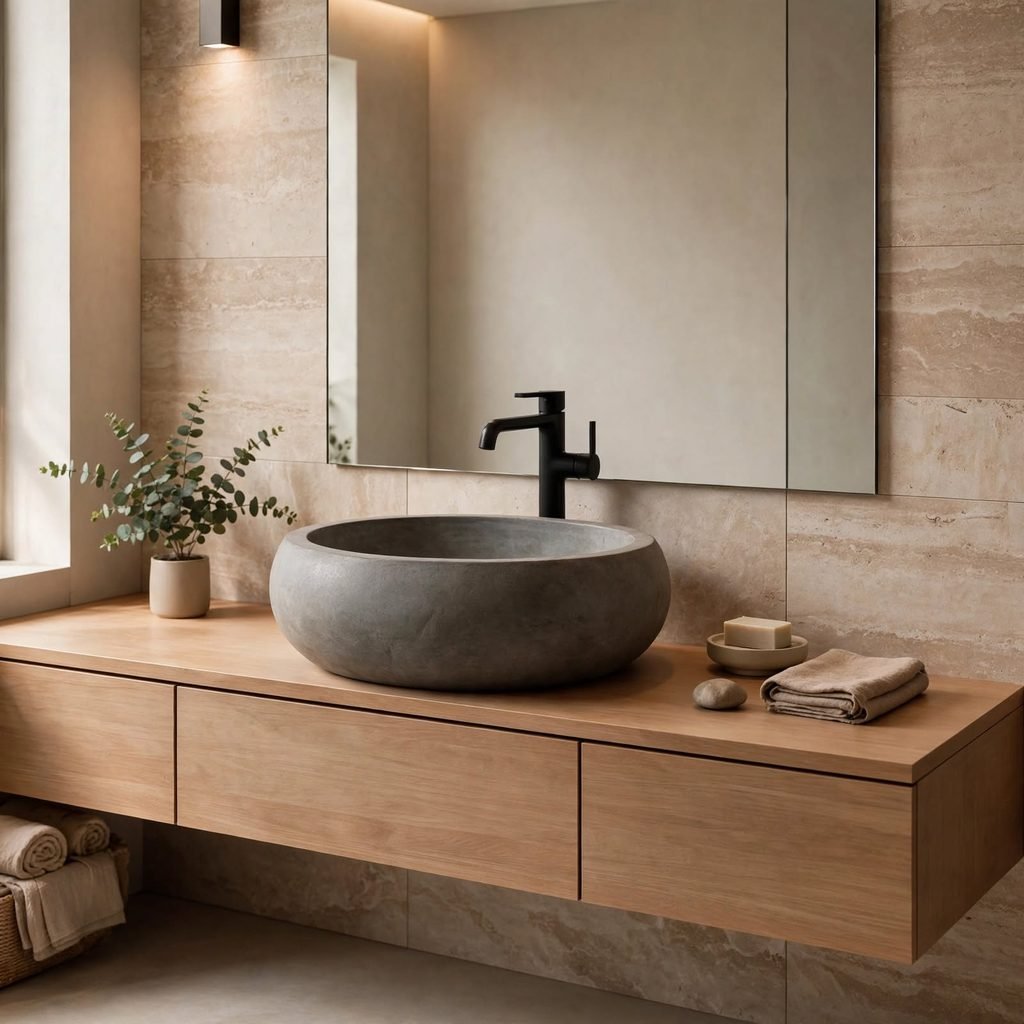
A concrete vessel sink sits on top of the vanity counter rather than being recessed into it, adding a raw, textural material that contrasts nicely against smoother surfaces like glass or polished tile. Concrete’s naturally matte, slightly imperfect finish suits a modern bathroom’s preference for honest, unembellished materials over anything glossy or ornate. Because concrete is porous, sealing the sink periodically helps prevent staining and water damage over time.
10. Linear Drain Shower
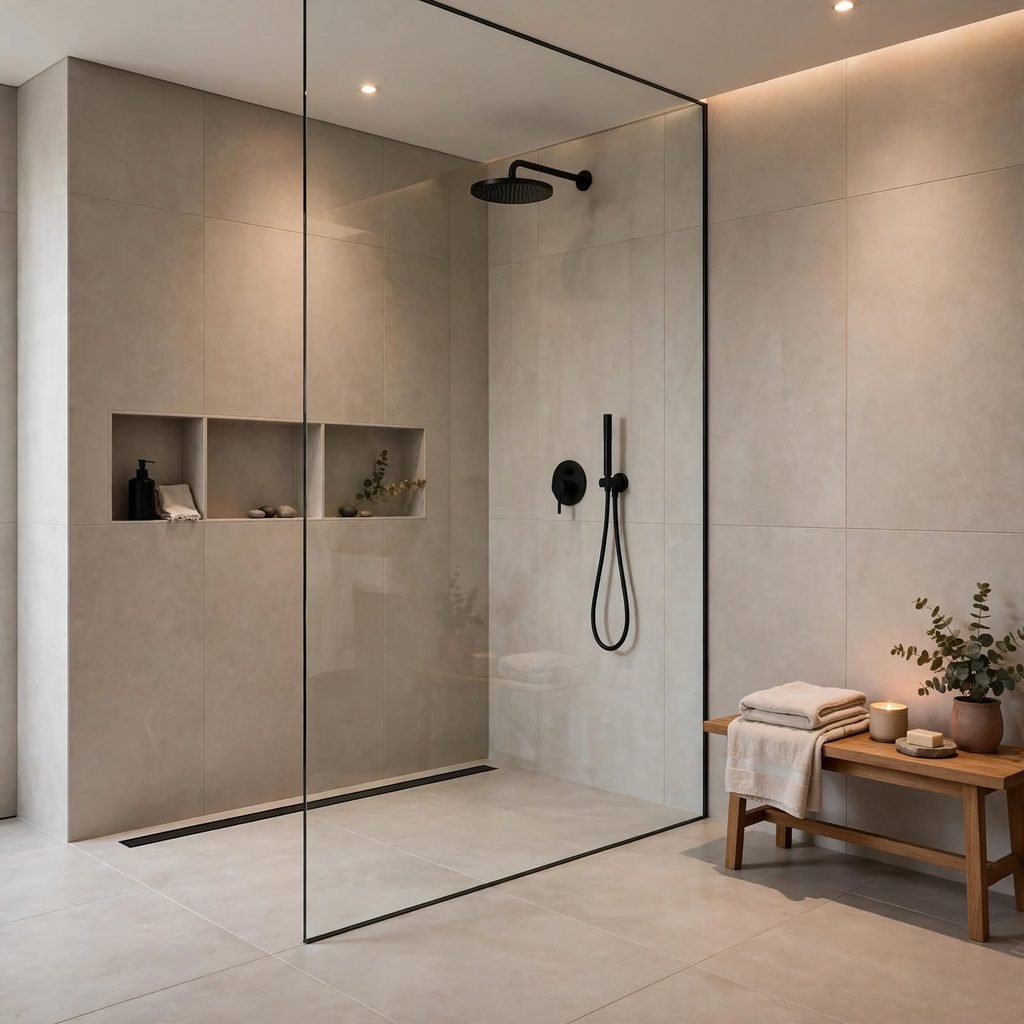
A linear drain shower uses a narrow, trench-style drain along one edge of the shower floor instead of a central round drain, allowing the floor to be sloped in a single direction rather than toward a center point. This creates a flatter, more seamless shower floor that pairs well with a curbless or barrier-free shower entry, both of which are common in modern bathroom layouts. It also allows for larger format tile on the shower floor, since a single-direction slope requires less cutting than a floor sloping toward a central drain.
11. Smart Mirror with LED
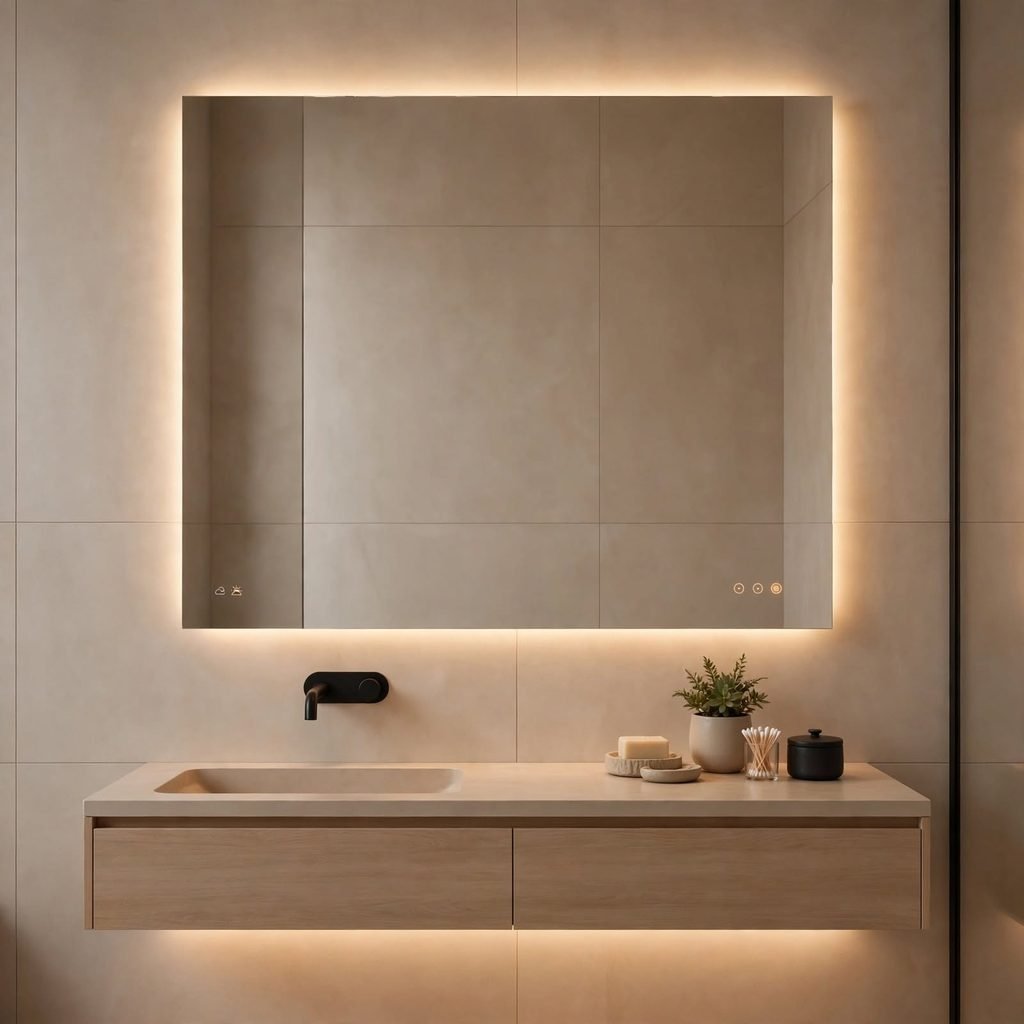
A smart mirror with LED integrates lighting, and sometimes additional features like anti-fog technology or a built-in clock, directly into the mirror itself rather than relying on separate fixtures. This reduces visual clutter on the wall, since a single mirror handles both reflection and illumination instead of requiring a mirror plus a separate light bar. Anti-fog technology in particular is a practical upgrade in a bathroom with a shower, since it keeps the mirror usable immediately after a hot shower without wiping it down.
12. Geometric Tile Accent Wall
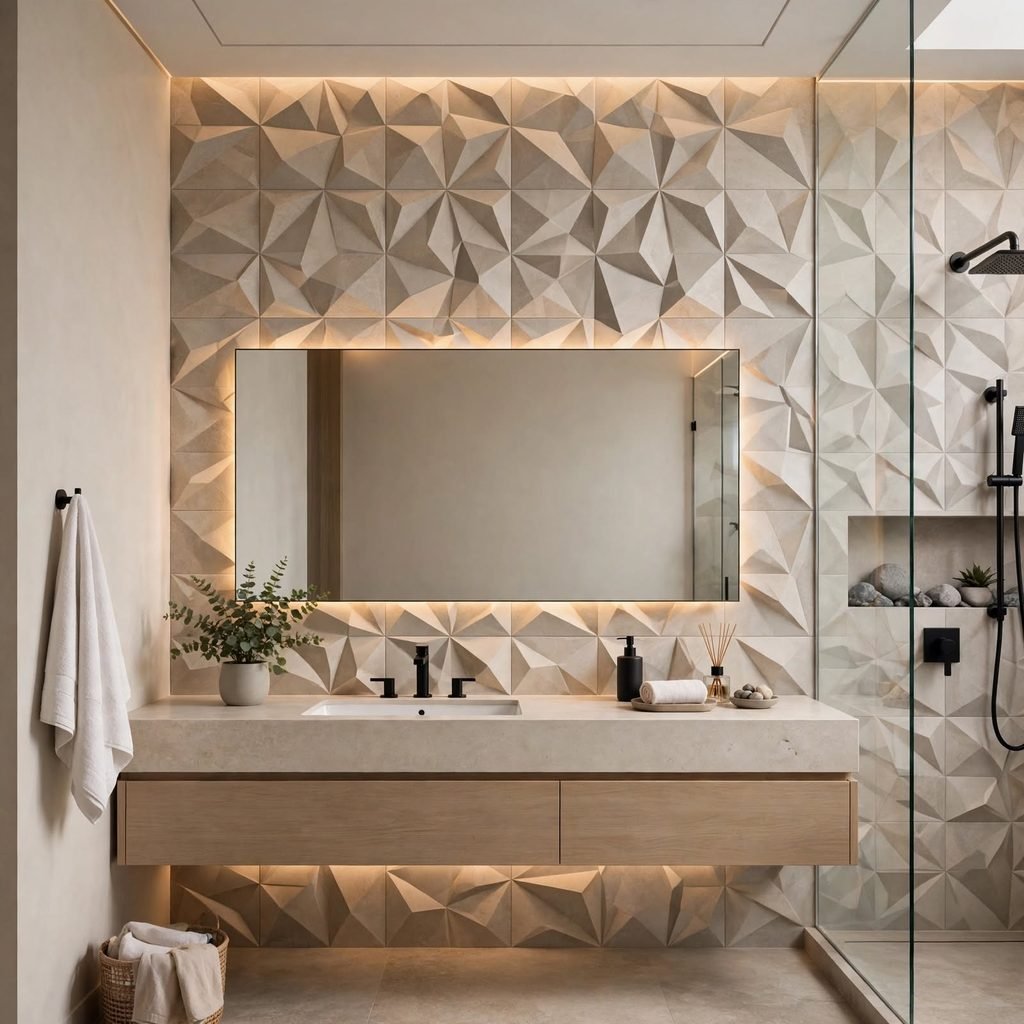
A geometric tile accent wall uses a single wall of patterned tile, often in a hexagon, chevron, or arch motif, as a controlled dose of pattern within an otherwise simple, neutral bathroom. This approach lets the room stay mostly minimal while still including one intentional design moment, which suits the modern preference for restraint over heavy patterning throughout. Choosing a monochrome or two-tone version of the pattern, rather than a multicolor one, keeps the wall feeling cohesive with the rest of the room.
13. Recessed Niche Shelving
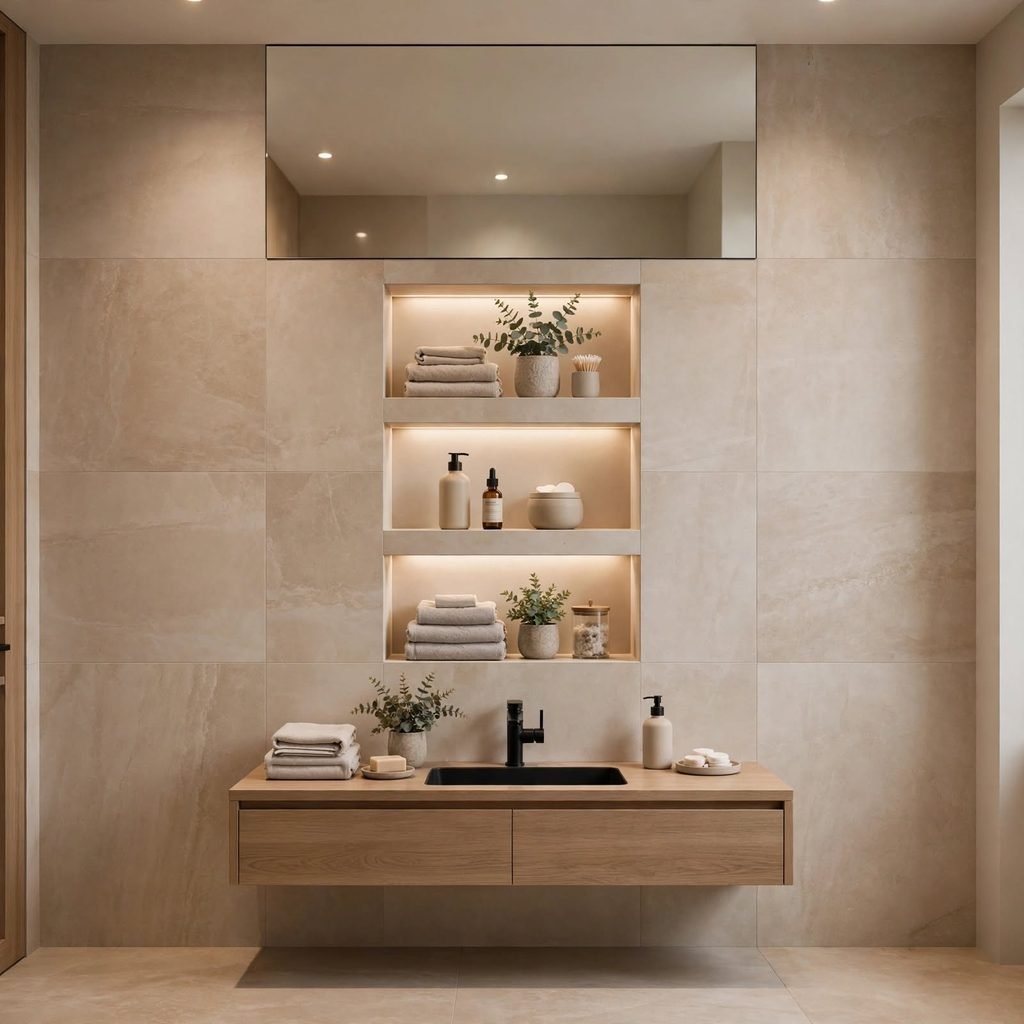
Recessed niche shelving builds a shallow shelf directly into the shower wall during construction, rather than adding a corner caddy or shelf after the fact. This keeps the shower wall flush and uncluttered, since there’s no hardware or shelf edge protruding into the space. Niches are typically tiled to match the surrounding shower wall, reinforcing the seamless look that defines much of modern bathroom design.
14. Brushed Nickel Hardware
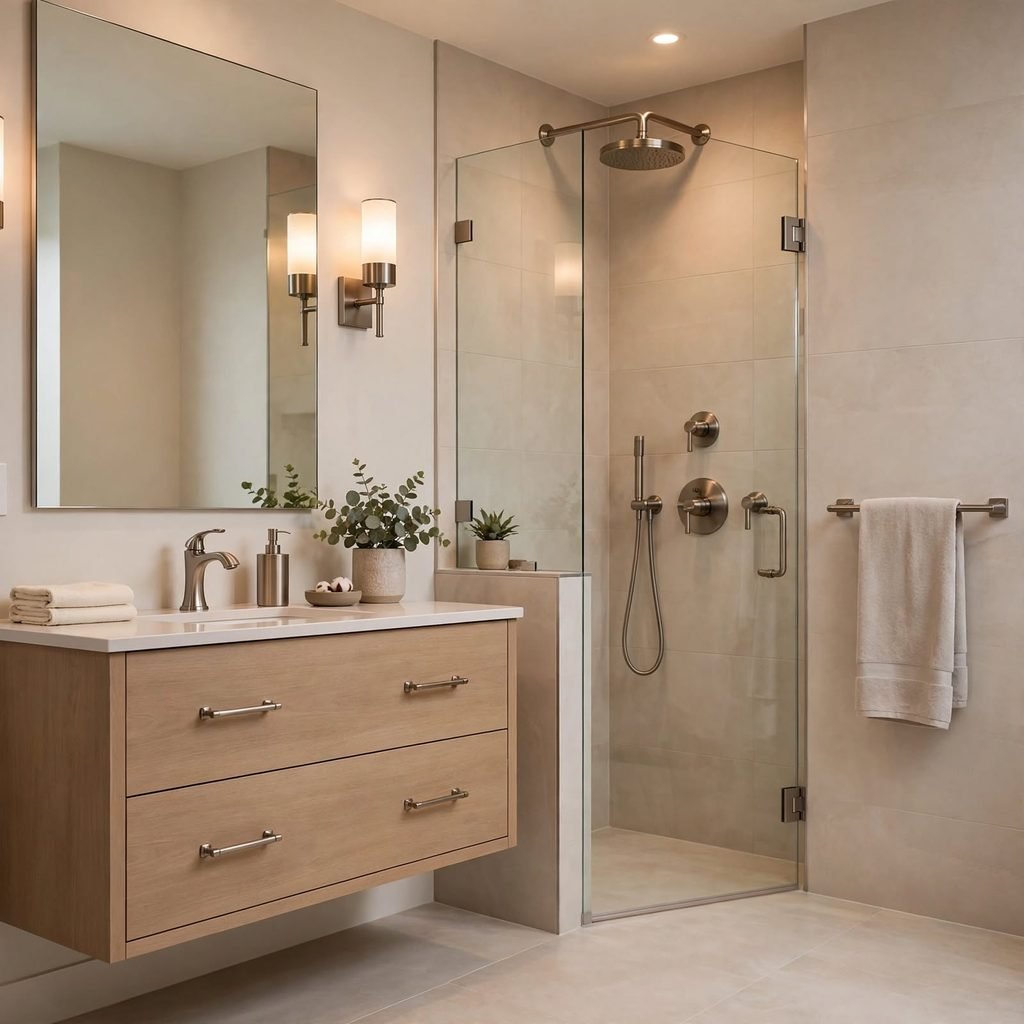
Brushed nickel hardware uses a matte, slightly warm metal finish for faucets, showerheads, and towel bars, offering a middle ground between the coldness of chrome and the heaviness of matte black. It resists fingerprints and water spots more visibly than polished chrome, which makes it a practical choice for a bathroom that gets daily use. This finish pairs easily with most modern tile and vanity choices, making it a flexible option when other elements in the room are already decided.
15. Underfloor Heating
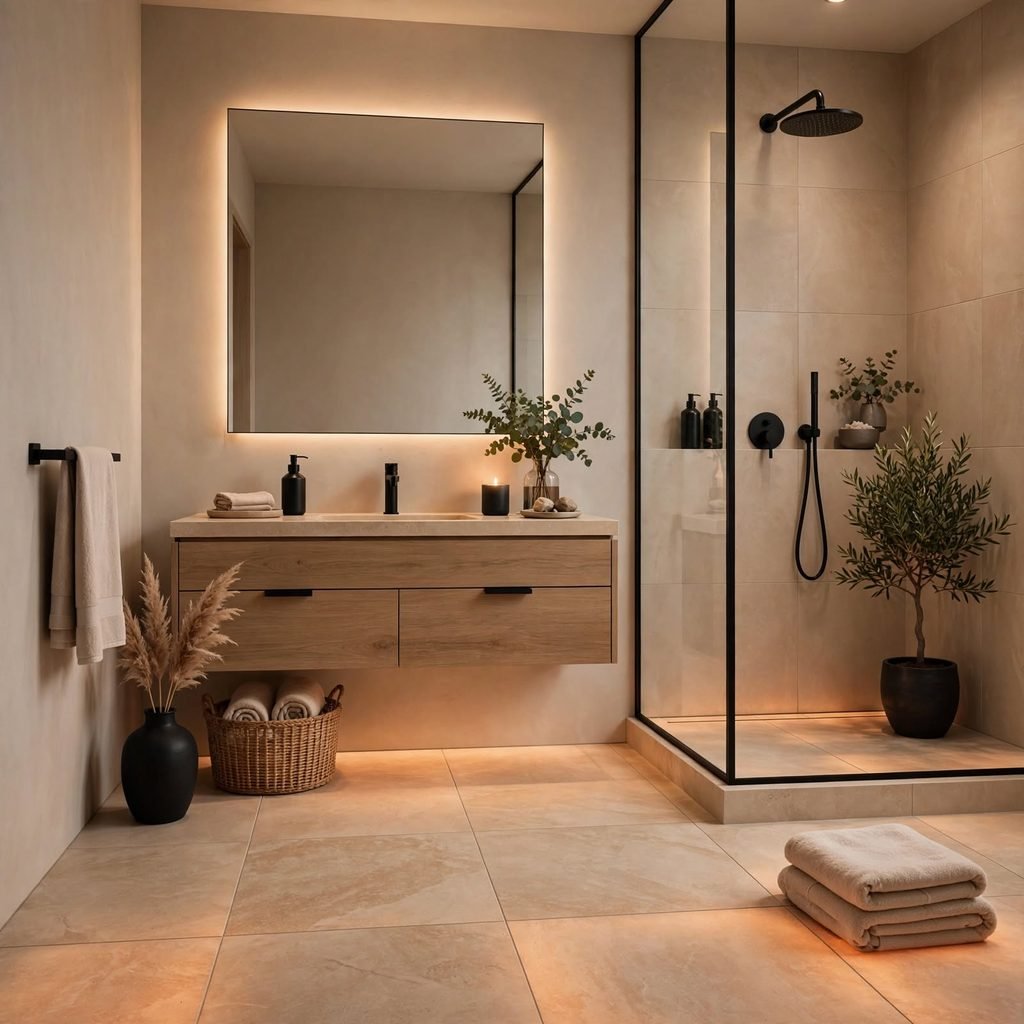
Underfloor heating installs electric heating elements or hydronic tubing beneath tile flooring, warming the floor directly rather than relying solely on ambient room heat. This is a functional upgrade rather than a purely visual one, but it pairs particularly well with large format tile and stone flooring, both of which can feel cold underfoot without it. Installation is most practical during a full renovation, since it requires access to the subfloor before new tile goes down.
16. Monochrome Color Scheme
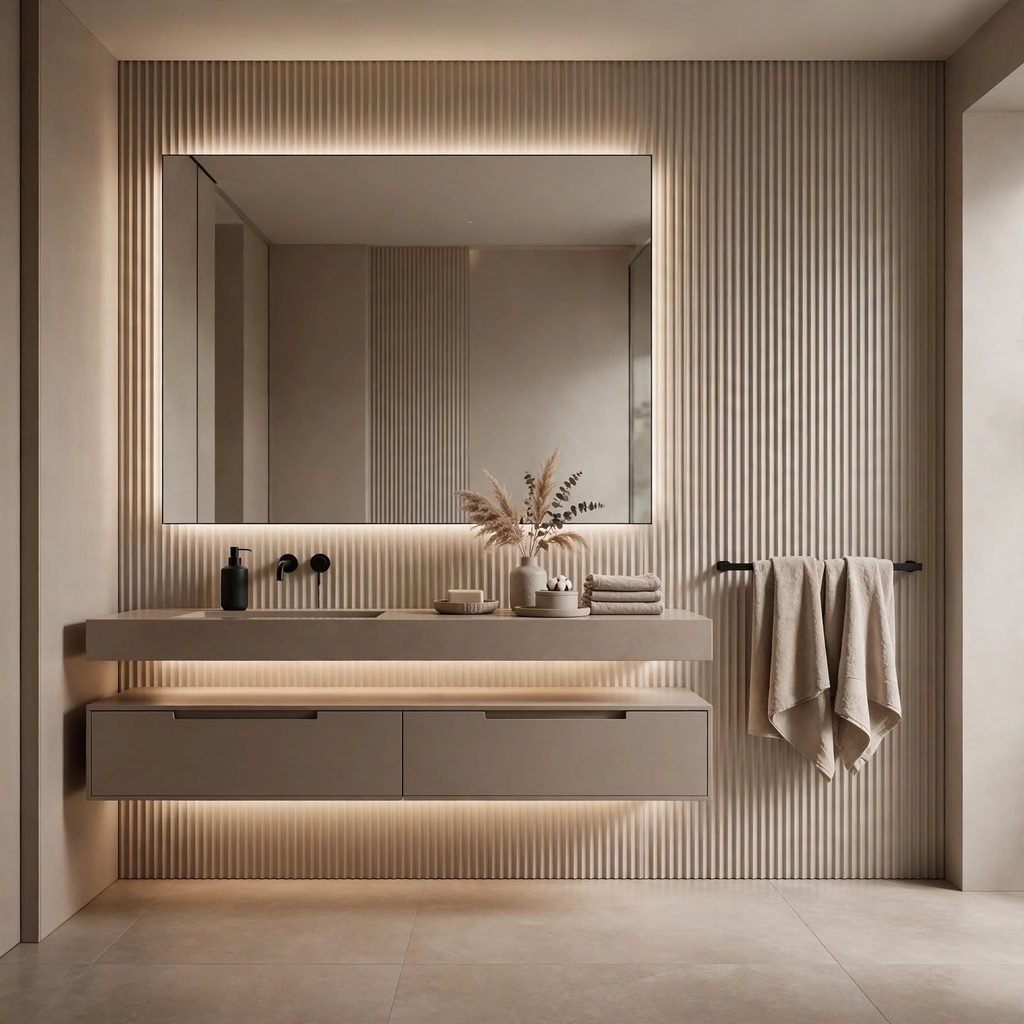
A monochrome color scheme uses varying shades and textures of a single color family, often white, gray, or greige, rather than introducing multiple competing colors throughout the room. This approach relies on texture and material contrast, like matte tile against polished fixtures, to create visual interest without color variation. It’s one of the most common approaches in modern bathroom decor, since a limited palette makes the space feel calm and cohesive rather than busy.
| Palette Element | Common Choice | Alternative |
| Wall Tile | Matte white | Warm greige |
| Fixtures | Brushed nickel | Matte black |
| Vanity | White or light wood | Charcoal or espresso |
17. Statement Pendant Lighting
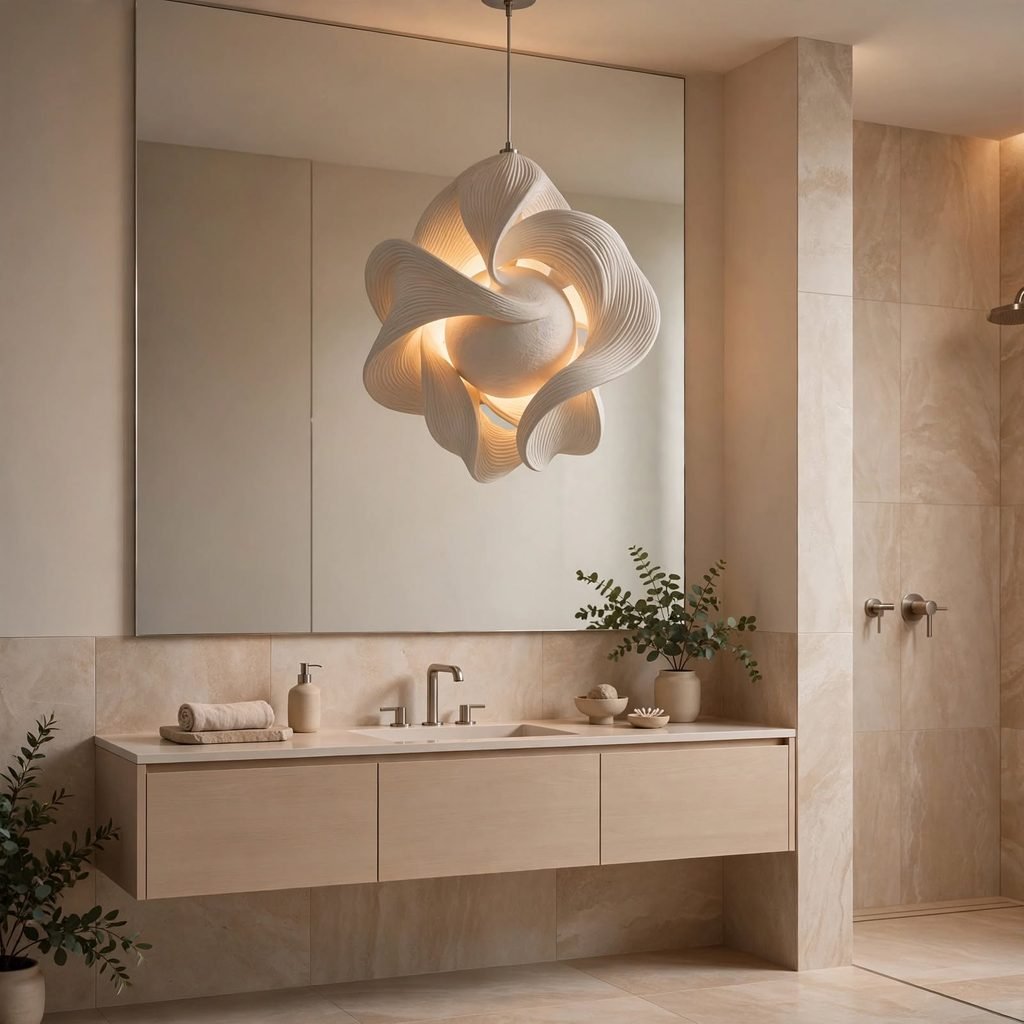
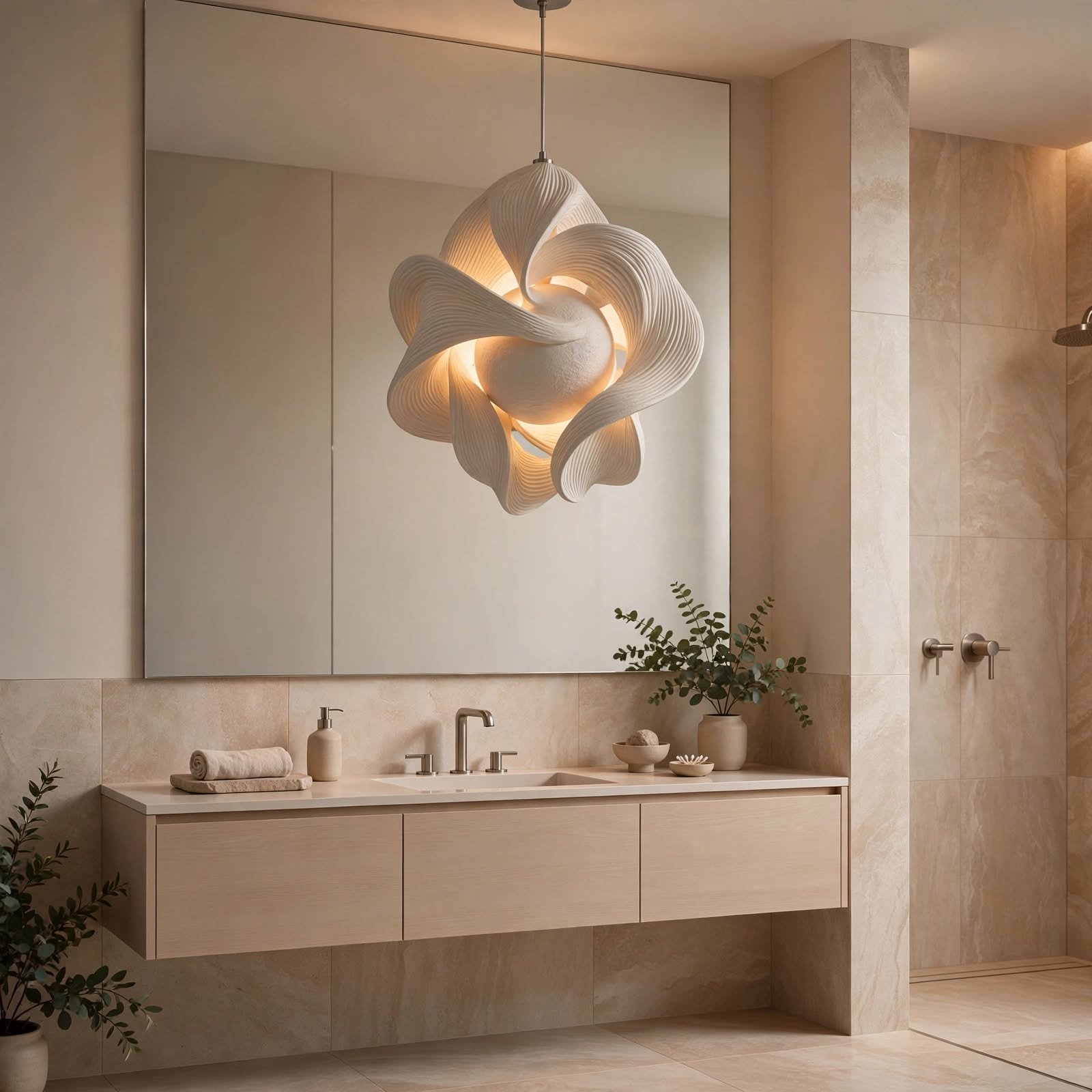
Statement pendant lighting replaces a standard vanity light bar with one or two hanging fixtures, typically in matte black, brass, or frosted glass, adding an architectural element above the mirror or vanity. This works particularly well in bathrooms with higher ceilings, where a flush-mounted fixture can feel underwhelming against the extra vertical space. Pairing pendant lighting with a backlit mirror provides both ambient and task lighting without relying on a single overhead source.
Shop the Look
A few pieces to start with: a wall-mounted floating vanity with integrated storage, a backlit LED mirror with adjustable color temperature, a rainfall showerhead with a matching handheld attachment, a set of brushed nickel faucets and towel bars, and a concrete or matte stone vessel sink. These upgrades can be phased in individually without requiring a full renovation all at once.
Common Mistake to Avoid
A common mistake in modern bathroom decor is over-mixing metal finishes and materials without a clear anchor point, such as combining brushed nickel faucets, matte black hardware, and brass lighting all in the same small room, which tends to feel disjointed rather than intentional. Choosing one primary metal finish and using a second only sparingly, such as through a single light fixture or mirror frame, keeps the room feeling cohesive rather than like several different design decisions layered on top of each other.
FAQs
What makes a bathroom look modern versus traditional?
Clean lines, minimal ornamentation, and a restrained color palette are the main features that distinguish a modern bathroom from a traditional one, which typically includes more decorative trim, patterned tile, and ornate fixtures. Large format tile, floating vanities, and frameless glass showers are common modern choices, while traditional bathrooms tend to favor smaller tile, furniture-style vanities, and more visible hardware detailing. The overall goal in a modern bathroom is usually simplicity and function over decorative detail.
Is a floating vanity a good choice for a small bathroom?
A floating vanity is generally a strong choice for a small bathroom, since the visible floor space beneath the cabinet creates a sense of openness that a floor-mounted vanity doesn’t provide. It also makes the floor easier to clean, since there’s no cabinet base blocking access underneath. The main consideration is wall structure, since a floating vanity needs to be securely anchored into studs or a reinforced wall to support its weight properly.
How much does it cost to add heated flooring to a bathroom?
Underfloor heating costs vary significantly based on whether it’s installed during a full renovation or retrofitted into an existing floor, with new construction generally being more cost-effective since the subfloor is already exposed. Electric radiant systems tend to cost less upfront than hydronic systems but can be more expensive to run over time, depending on local electricity rates. Getting a quote based on your specific bathroom’s square footage is the most reliable way to estimate cost, since pricing varies by region and installer.
What lighting works best in a modern bathroom?
A layered approach combining a backlit or LED mirror for task lighting, a statement pendant or flush-mounted fixture for ambient light, and dimmable controls throughout tends to work best in a modern bathroom. Daylight-balanced bulbs are particularly useful near the mirror, since they make it easier to judge true skin tone and color when applying makeup or grooming. Relying on a single overhead fixture alone often leaves the vanity area under-lit, even if the rest of the room feels adequately bright.
How do I modernize an outdated bathroom without a full renovation?
Swapping hardware to a single cohesive metal finish, adding a backlit mirror, and updating the showerhead to a rainfall style are some of the highest-impact changes that don’t require touching tile or plumbing layout. Repainting walls in a simplified, monochrome palette and removing excess decorative clutter can also shift the feel of a room significantly on a limited budget. Larger changes, like a floating vanity or large format tile, generally require more renovation work but aren’t strictly necessary to achieve a noticeably more modern look.
Conclusion
Modern bathroom decor comes down to restraint more than any single product, choosing fewer materials, cleaner lines, and one cohesive metal finish rather than layering in too many competing details. Start with whichever upgrade addresses your biggest daily frustration, whether that’s outdated lighting or a cramped vanity, and build outward from there. Save this post to Pinterest for later, or check out our related guide on choosing the right bathroom tile size for more direction.