15 Amazing Christmas Tree Decor Materials Worth Knowing Before You Shop
Choosing Christmas tree decor involves more than picking a color scheme, since the actual material an ornament is made from affects its durability, cost, storage needs, and how it interacts with light and the tree’s branches. This guide covers fifteen distinct ornament and decor materials, from classic glass to modern acrylic, with practical guidance on where each performs best and what tradeoffs come with it. Every idea addresses the genuine material properties that matter once decorating season actually begins.
Trend & Background
Christmas tree decor material choices have diversified considerably as manufacturing techniques have improved, giving households more realistic-looking, durable alternatives to traditional glass without sacrificing much visual appeal. This has proven particularly relevant for households with young children or pets, where shatterproof and fabric-based materials now closely approximate the look of glass while removing the breakage risk that once limited decorating options in these households. Sustainability has also influenced material trends, with natural materials like wood and dried botanicals, along with genuinely reusable fabric ornaments, gaining ground over cheaper plastic alternatives designed for shorter use before replacement.
Key Takeaways
- Ornament material affects durability, cost, and care as much as it affects appearance, worth weighing before building a collection.
- Glass ornaments offer the most classic look but require the most careful handling and storage of any common material.
- Households with pets or young children generally do better prioritizing shatterproof materials over glass, at least on lower branches.
- Mixing two or three materials within one tree, rather than relying on a single type, produces more textural depth than material choice alone.
1. Classic Glass Ornaments
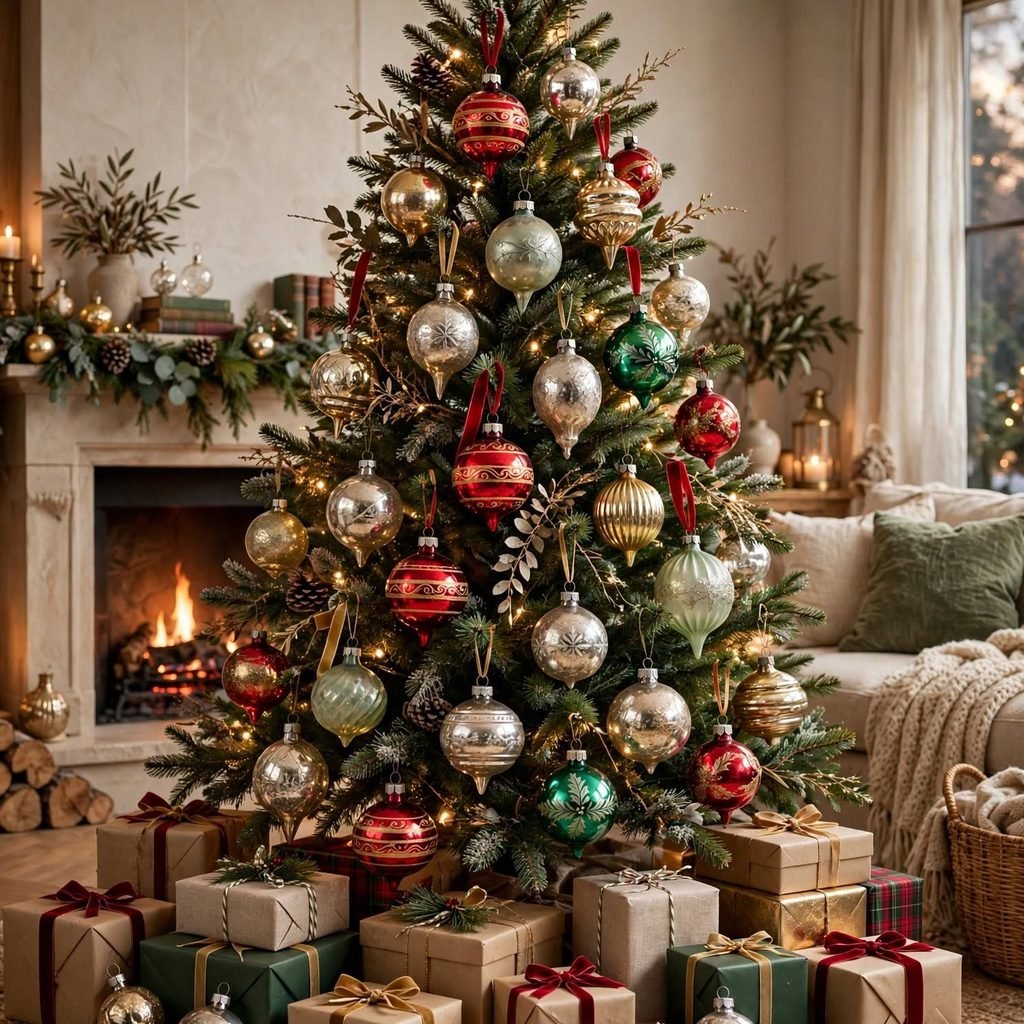
Classic glass ornaments remain the traditional standard for Christmas tree decor, offering a depth of color, reflectivity, and delicate detail that other materials struggle to fully replicate. This material requires the most careful handling of any common ornament type, both during decorating and storage, given glass’s genuine breakage risk from drops or impacts. Choosing a sturdy, compartmentalized storage box specifically designed for glass ornaments protects this investment across many years of reuse, since well-cared-for glass ornaments can last for decades.
2. Shatterproof Plastic Ornaments
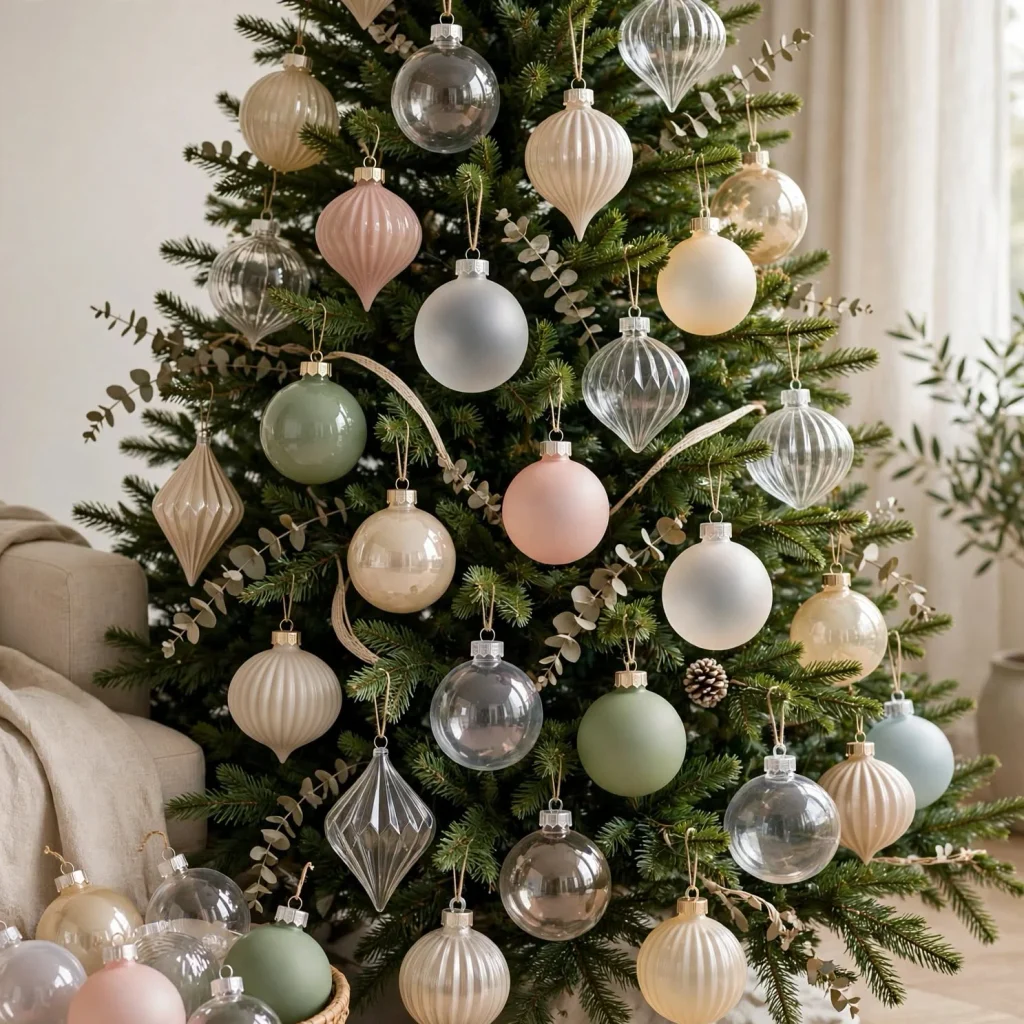
Shatterproof plastic ornaments, manufactured to closely mimic glass’s shine and color depth while eliminating breakage risk, offer a practical alternative particularly well suited to households with young children, pets, or anyone wanting a lower-maintenance decorating experience. Modern manufacturing has improved this material’s visual quality considerably, making many shatterproof options difficult to distinguish from genuine glass at a typical viewing distance. This material also tends to weigh less than glass, an advantage for hanging a larger quantity on branches that might otherwise struggle to support heavier glass ornaments.
3. Natural Wood Ornaments
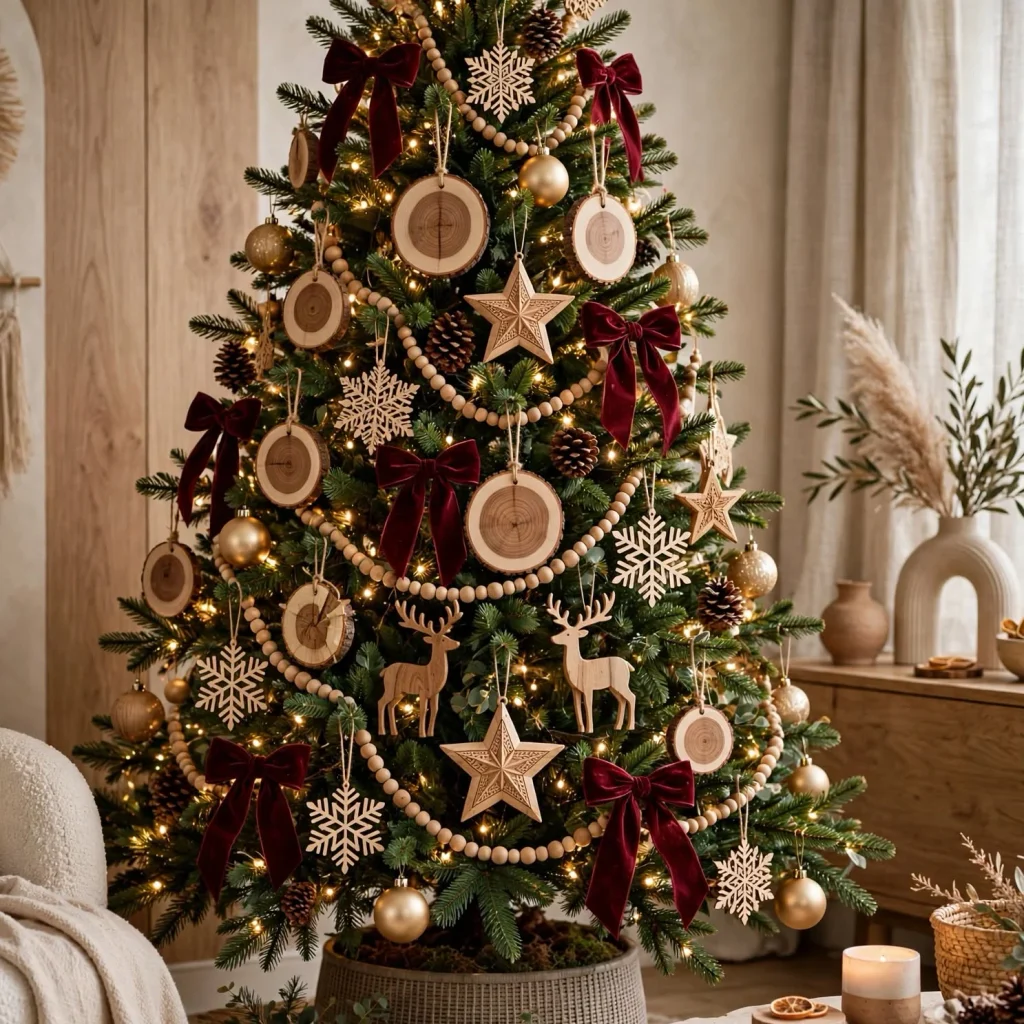
Natural wood ornaments, whether laser-cut, hand-carved, or simple painted wood slices, bring organic texture and warmth to a Christmas tree that reads as distinctly different from any glass or plastic alternative. This material tends to be quite durable and lightweight, tolerating handling and storage considerably better than more delicate options. Choosing wood ornaments in a natural or lightly stained finish, rather than heavily painted versions, showcases the material’s genuine grain and texture as part of the ornament’s overall appeal.
| Material | Durability | Best For |
| Glass | Low, fragile | Traditional look, careful households |
| Shatterproof plastic | High | Pets, young children |
| Wood | High | Natural, rustic themes |
| Fabric | High, washable-adjacent | Textural variety, child-friendly |
4. Fabric and Felt Ornaments
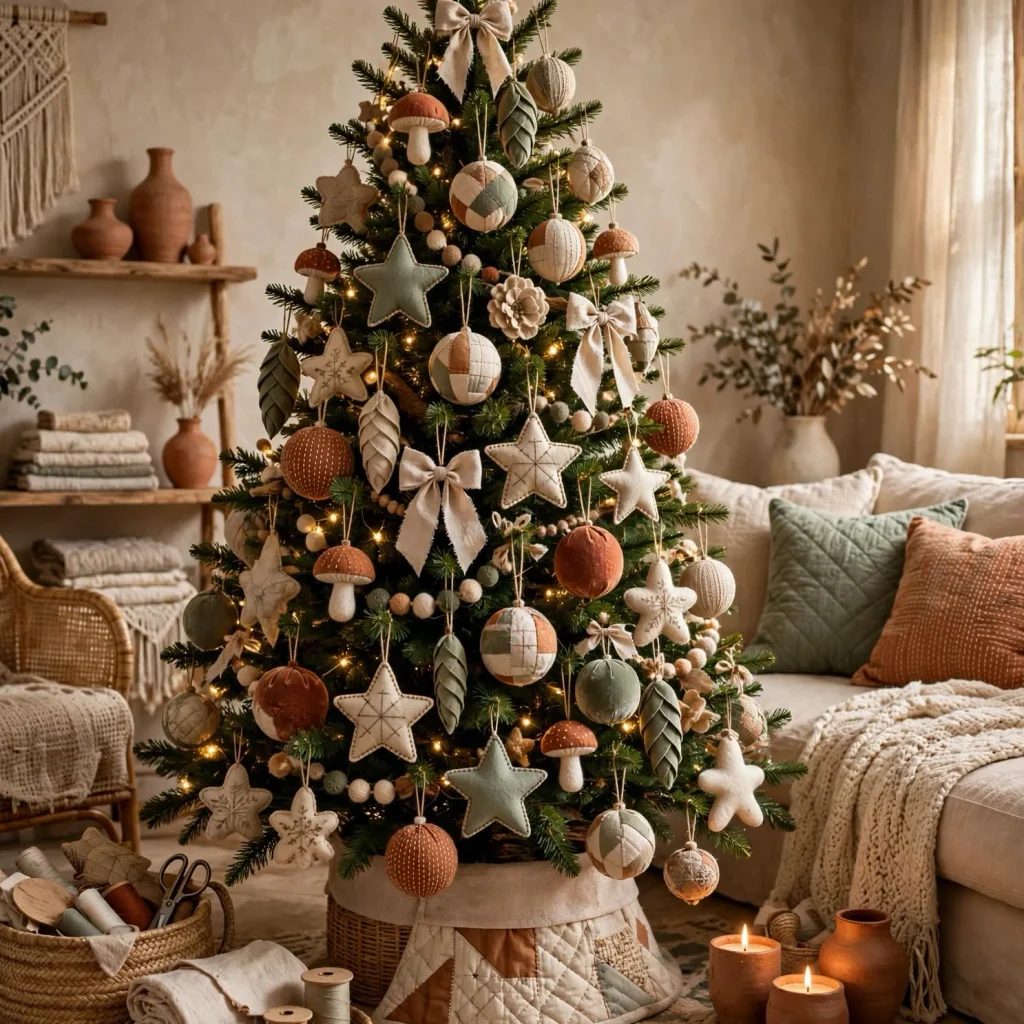
Fabric and felt ornaments, whether commercially produced or handmade, bring genuine softness and textural variety to a tree, offering a material quality distinct from any hard-surfaced alternative. This material handles well for households with young children, since fabric ornaments pose minimal breakage or injury risk even with enthusiastic handling. Choosing felt or fabric ornaments in a consistent color palette, even while varying their specific shapes and patterns, helps this softer material integrate cohesively alongside harder-surfaced ornaments elsewhere on the tree.
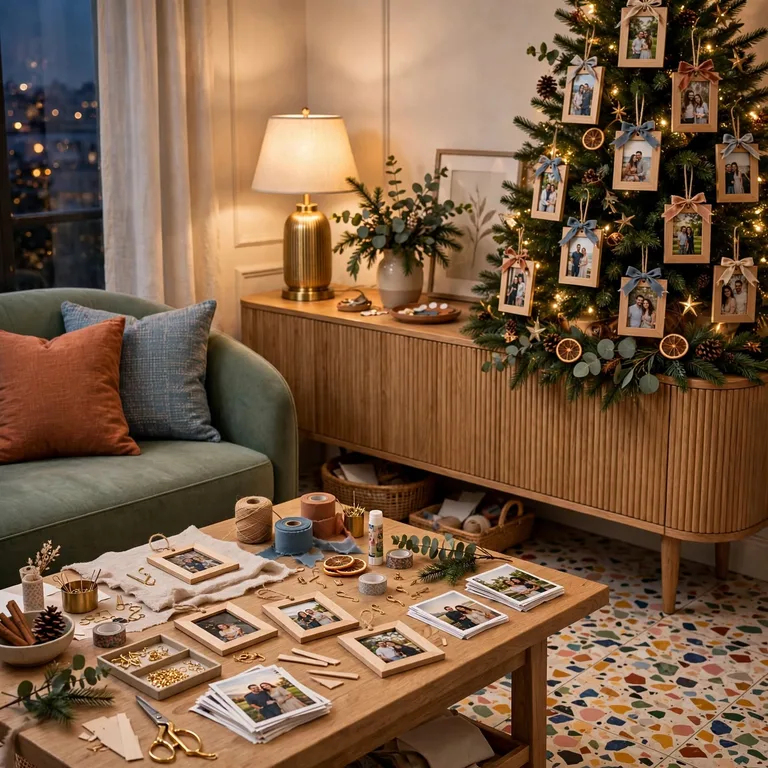
Discover creative DIY Christmas decor ideas for adding personal and budget-friendly touches to your holiday decorating.
5. Ceramic Ornaments
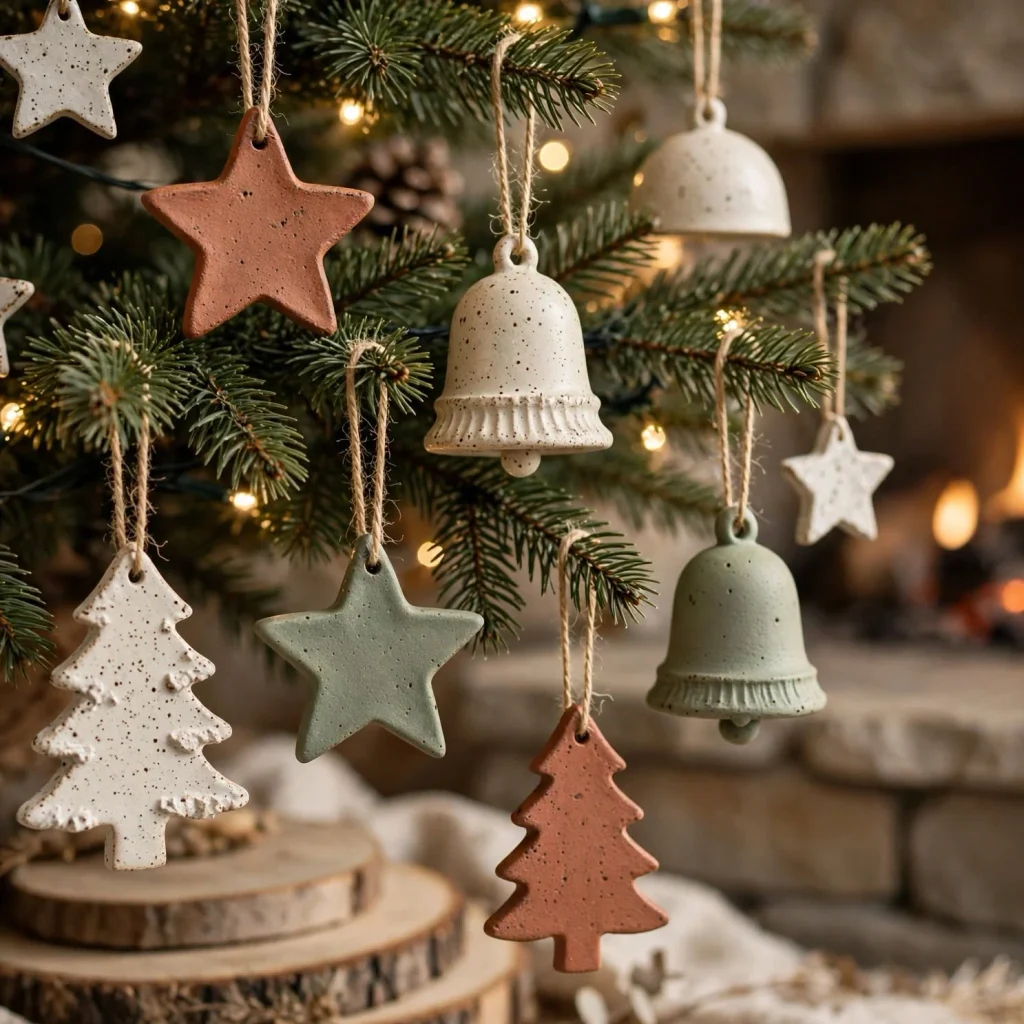
Ceramic ornaments, whether glazed and glossy or left in a matte, unglazed finish, offer a durability level between glass’s fragility and plastic’s near-indestructibility, along with a genuinely handmade quality when sourced from independent potters rather than mass manufacturing. This material tends to have more weight than glass or plastic, worth considering when selecting sturdy branches capable of supporting the ornament without excessive drooping. Choosing ceramic pieces with some surface texture or a slightly uneven, handmade glaze adds character that a perfectly uniform manufactured ornament doesn’t provide.
6. Metal and Tin Ornaments
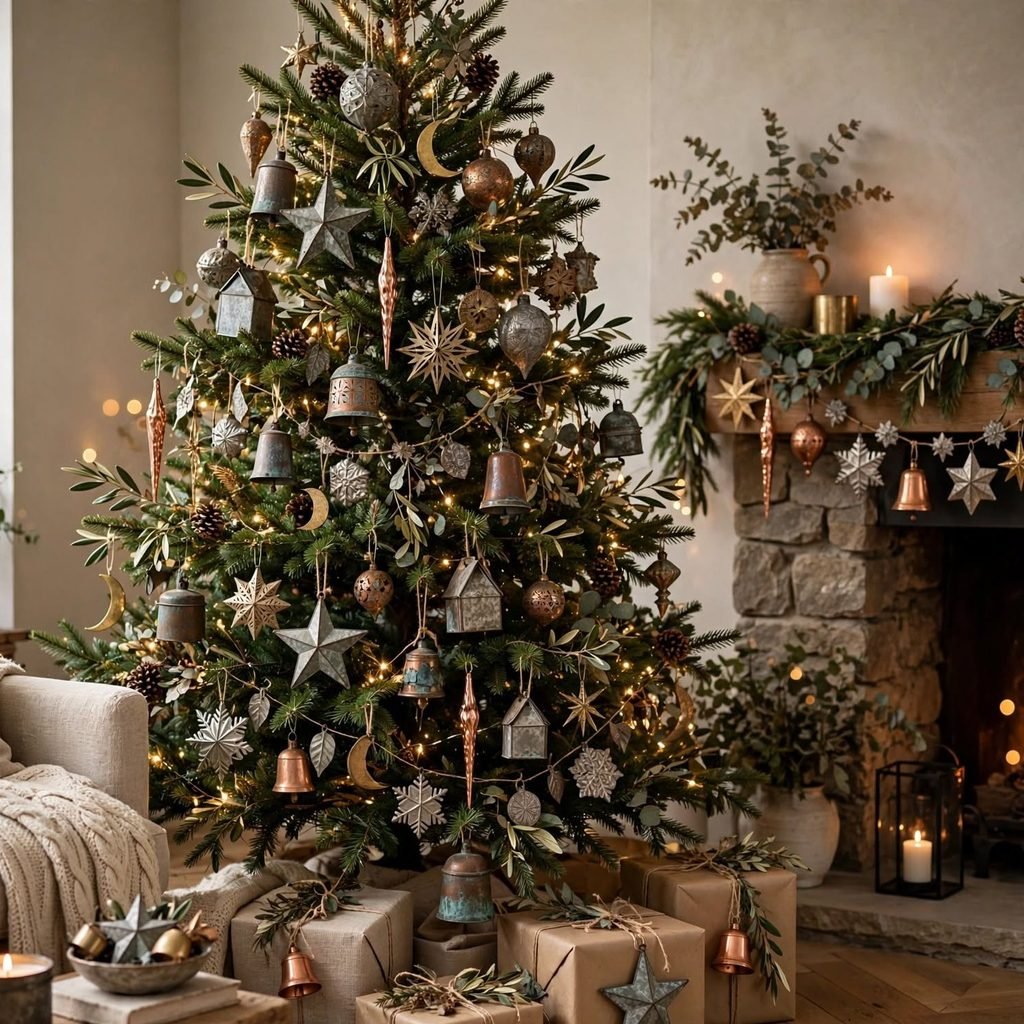
Metal and tin ornaments, whether in a shiny polished finish or a more matte, antiqued treatment, bring reflective quality and genuine weight to a Christmas tree, particularly suited to a vintage, industrial, or farmhouse decorating direction. This material holds up extremely well to handling and storage, making it one of the more durable options for a tree that sees years of continued reuse. Choosing metal ornaments in a consistent finish, whether all matte black or all warm brass, throughout the tree maintains cohesion despite this material’s tendency toward a more varied range of available finishes.
7. Acrylic and Resin Ornaments
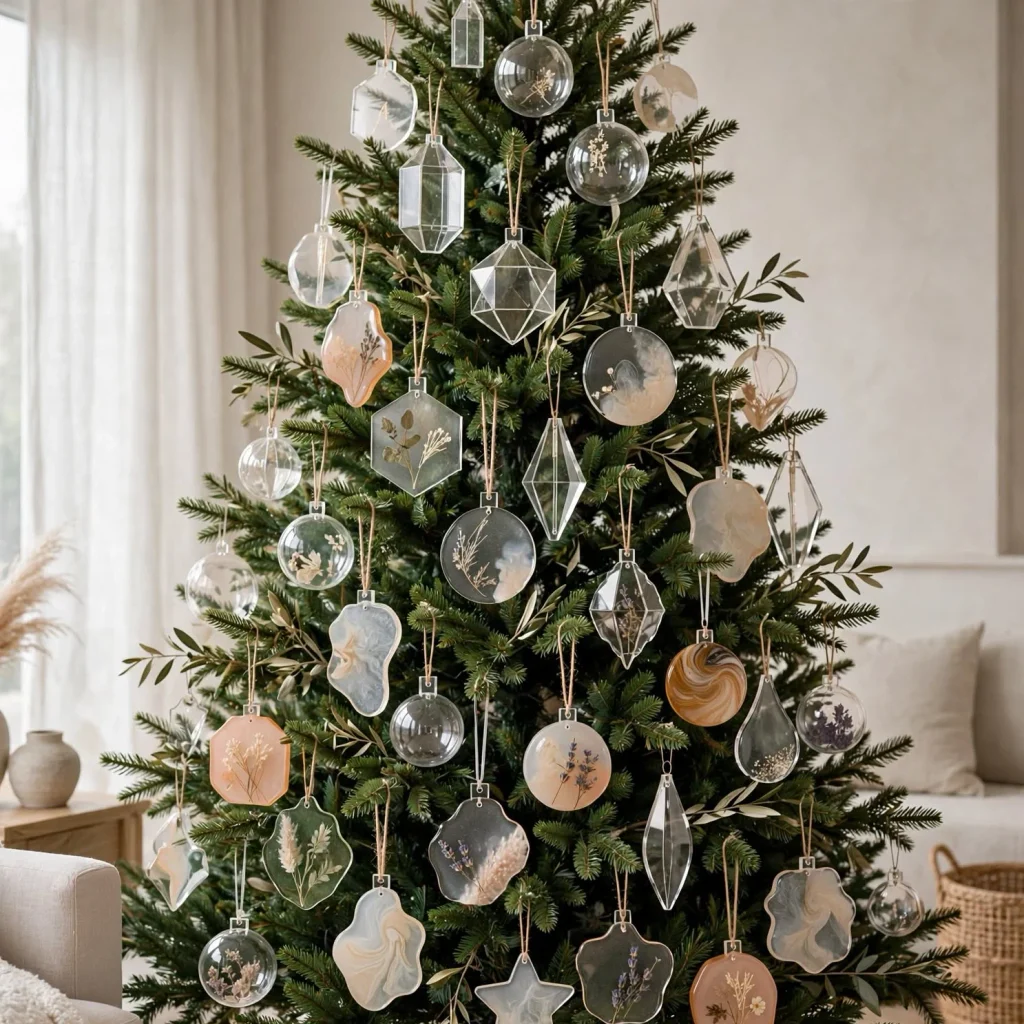
Acrylic and resin ornaments, often manufactured with intricate internal detail or a faceted, crystal-like appearance, offer genuine sparkle and light-catching quality while remaining considerably more impact-resistant than glass. This material has become increasingly sophisticated in its visual quality, closely approximating genuine crystal or cut glass at a lower cost and with better durability. Choosing acrylic ornaments specifically for a tree’s lower, more accessible branches provides a safer sparkle option in households where reaching hands might otherwise put glass at risk.
8. Dried Botanical and Natural Material Accents
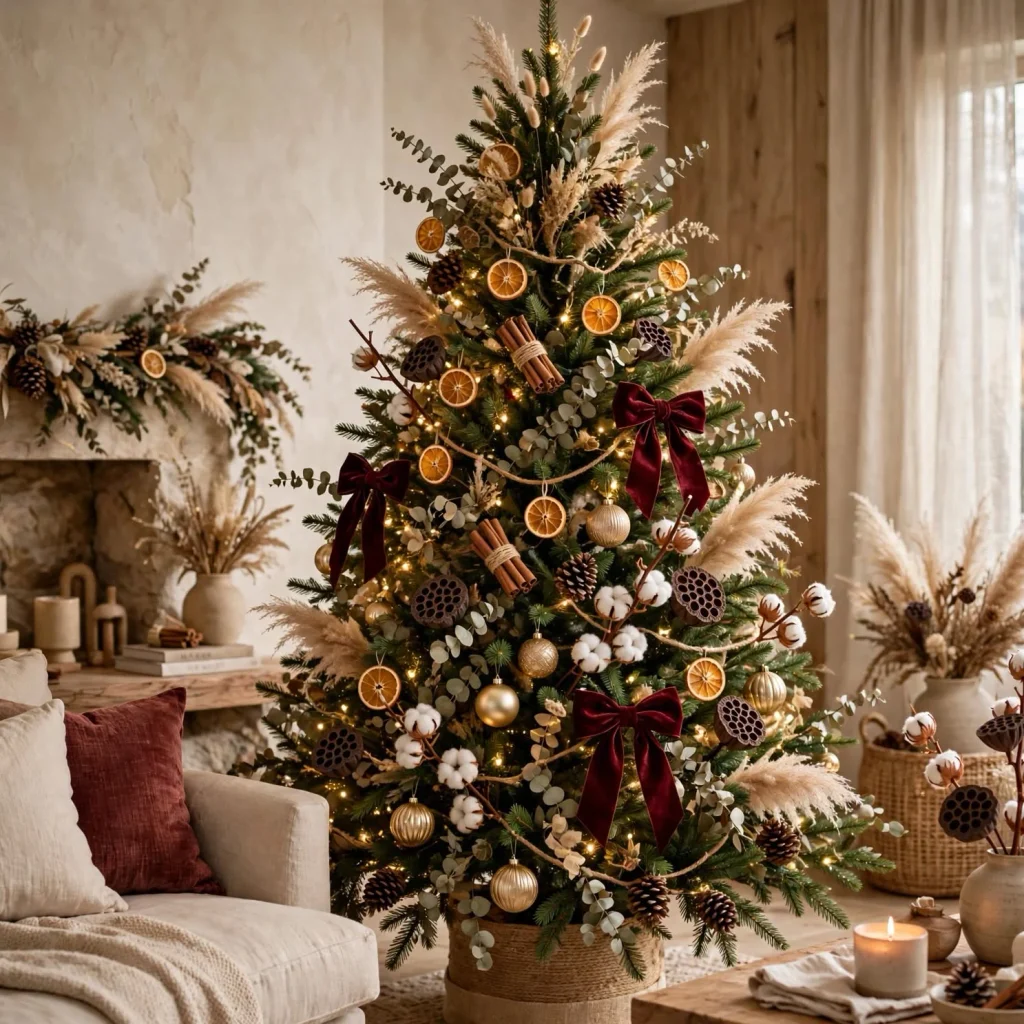
Dried botanical accents, pinecones, dried orange slices, preserved eucalyptus, and small natural seed pods, bring genuine organic material to a tree that manufactured ornaments, regardless of material, can’t fully replicate. This material category generally has a shorter expected lifespan than manufactured ornaments, particularly for less durably dried elements like orange slices, which may need periodic replacement across multiple seasons. Storing these natural accents carefully in a dry environment between seasons extends their usable life as much as the specific drying method allows.
9. Beaded and Sequined Ornaments
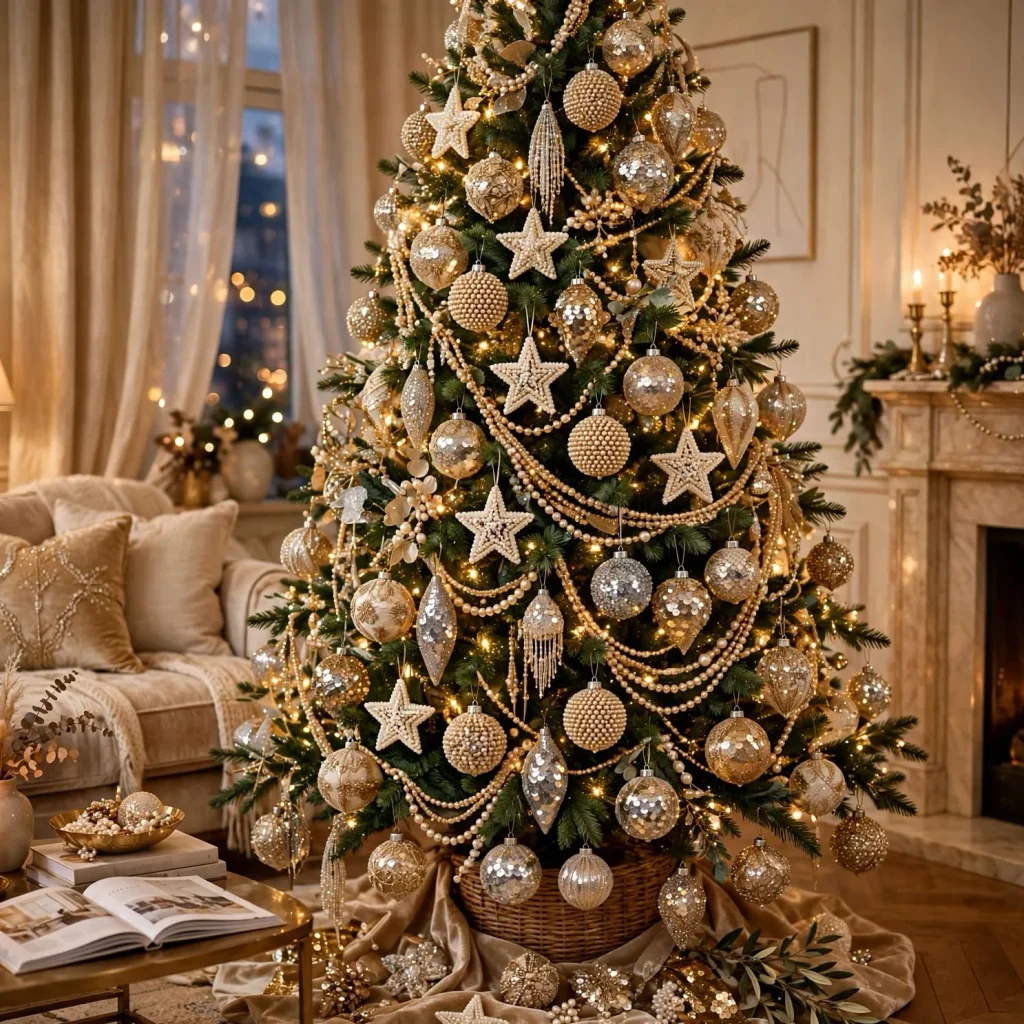
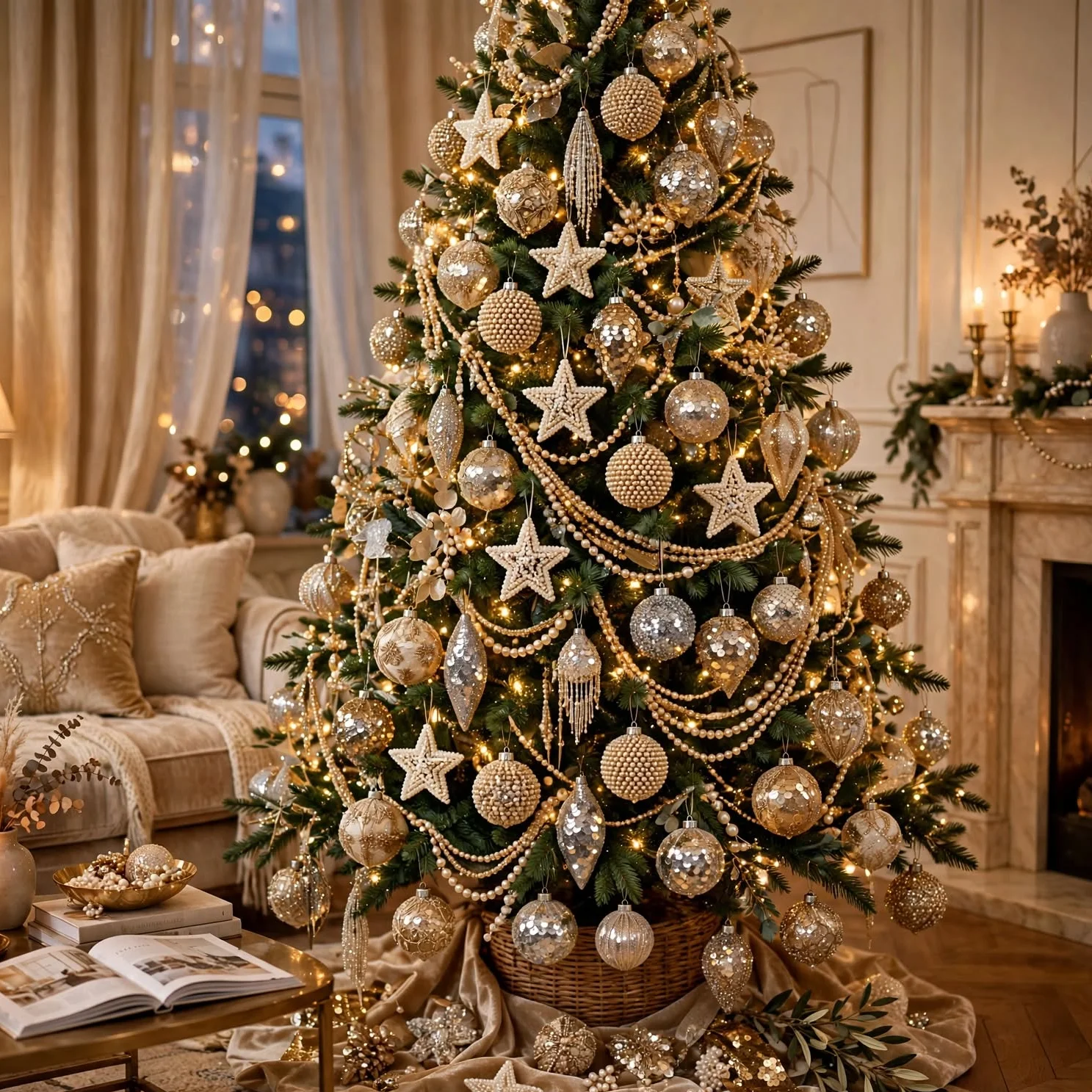
Beaded and sequined ornaments, whether small individual pieces or a full beaded garland, add fine, glittering texture that larger-format ornaments in other materials don’t provide at the same detailed scale. This material requires reasonably careful handling, since individual beads or sequins can loosen or fall off with rough treatment over multiple seasons of use. Choosing beaded pieces with a sturdy internal wire or thread structure, rather than loosely strung components, improves this material’s durability across repeated years of decorating.
10. Mercury Glass and Vintage-Style Finishes
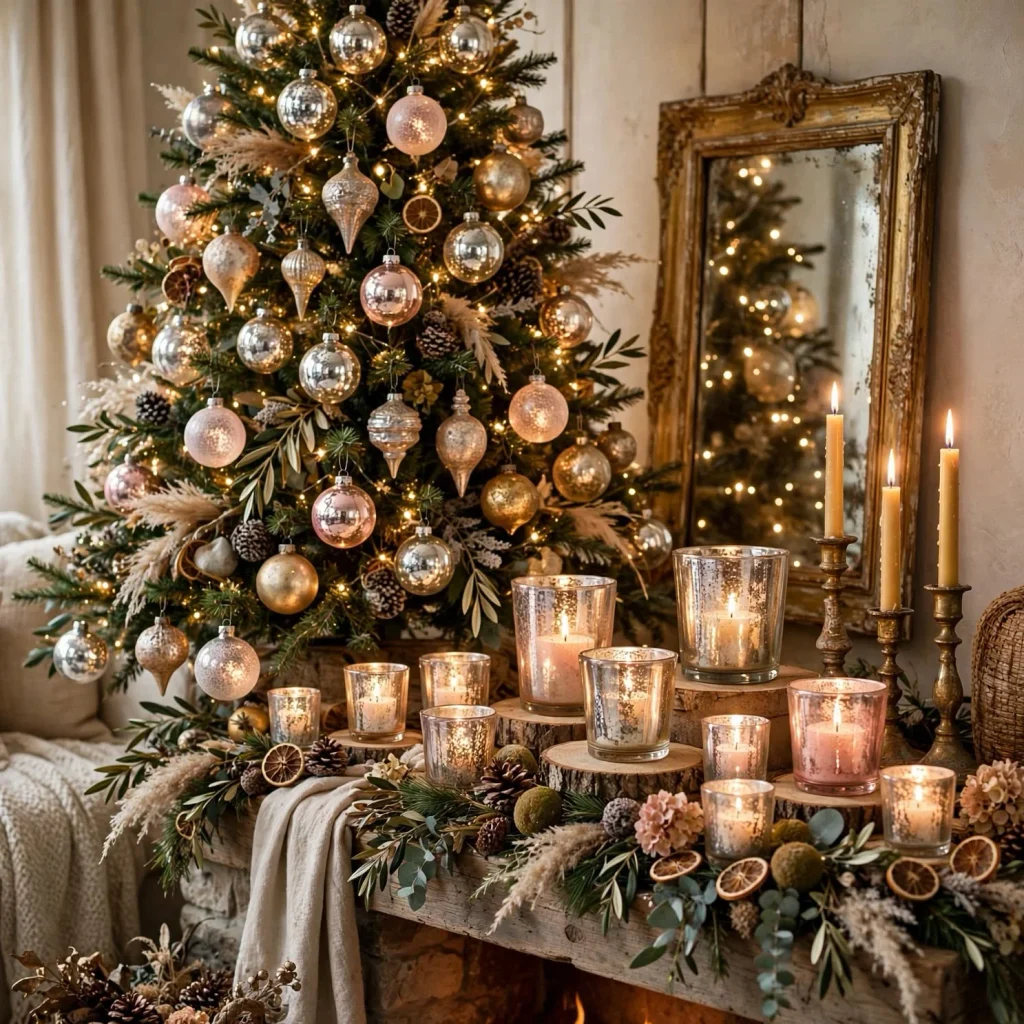
Mercury glass ornaments, whether genuinely vintage or new reproductions, feature a distinctive silvered, slightly imperfect interior coating that produces a muted, antique-style reflective quality distinct from standard clear or solid-colored glass. This material shares glass’s general fragility concerns, requiring the same careful handling and storage as classic glass ornaments. Mixing genuine vintage pieces with newer mercury-glass-style reproductions allows a collection to include authentic aged character alongside more readily available, less costly additions.
11. Paper and Cardstock Ornaments
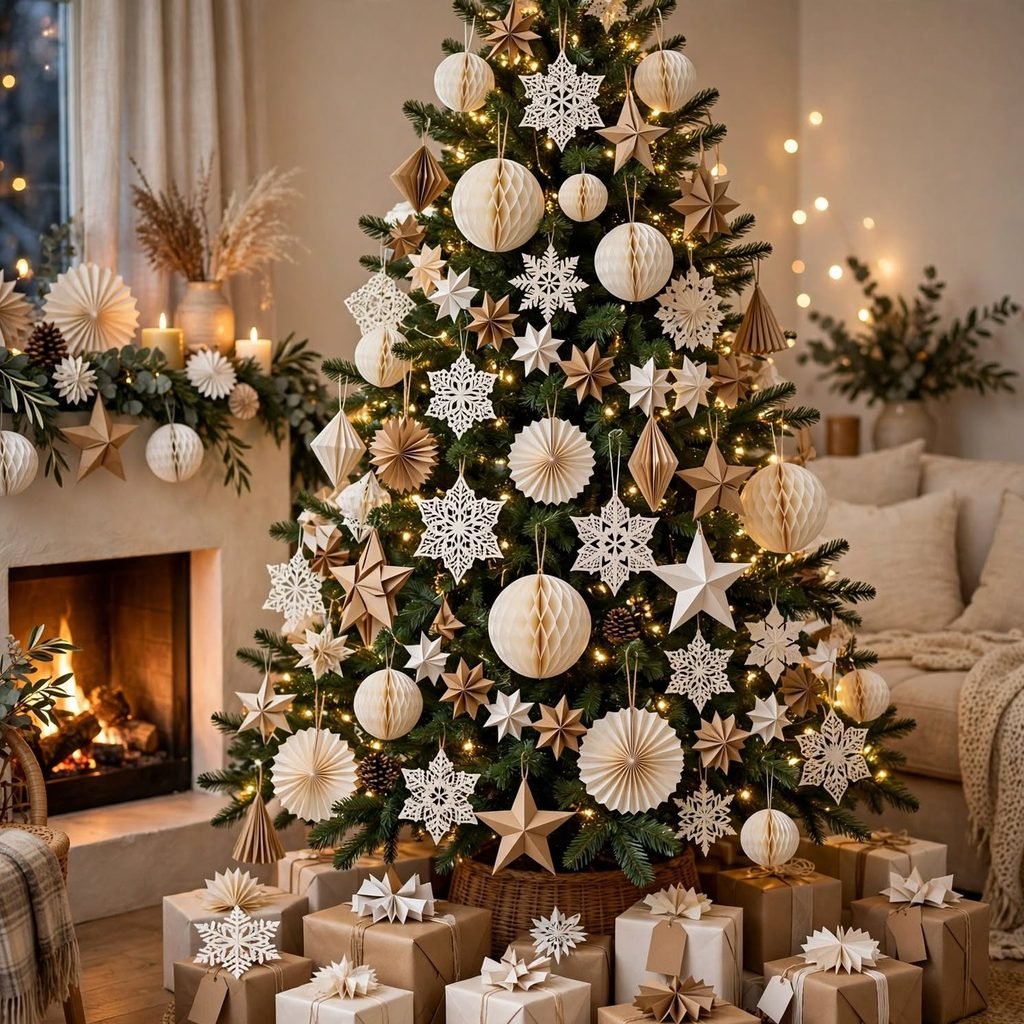
Paper and cardstock ornaments, whether die-cut shapes, simple folded designs, or more elaborate paper-quilled pieces, offer one of the most affordable and lightweight ornament material options available, particularly well suited to a child’s collection of homemade decorations. This material has the least durability of any option on this list, generally requiring careful storage flat or in a protective sleeve to avoid bending or tearing between seasons. Sealing paper ornaments with a light coat of clear sealant improves their resistance to humidity and general handling wear.
12. Glass Bead Garland as a Base Layer
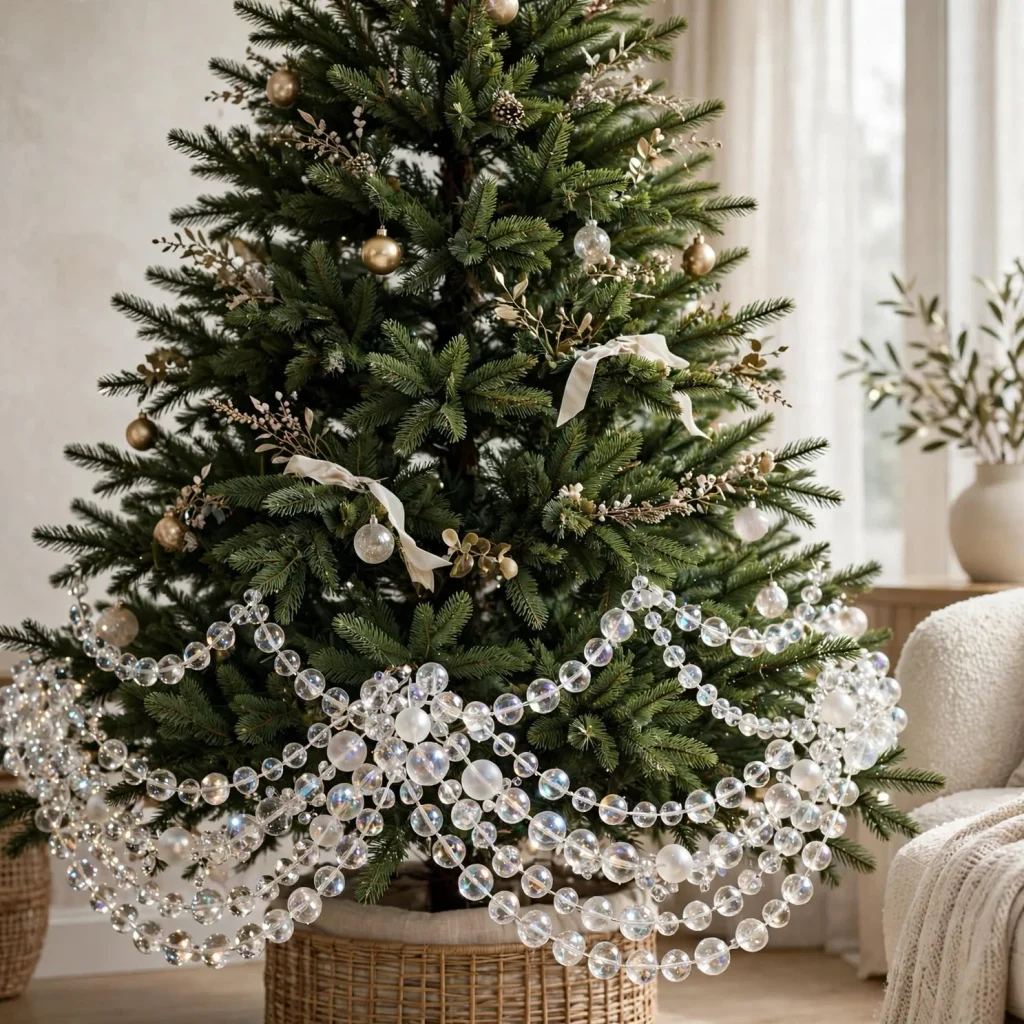
Glass bead garland, strung in a continuous strand and draped throughout a tree’s branches, provides a foundational sparkle layer distinct from individual hanging ornaments, filling in gaps between larger pieces with fine, continuous light-catching detail. This material requires careful, gentle draping to avoid stress on the strand’s connecting wire or thread, particularly for a longer, heavier garland length. Choosing a garland in a finish that complements the tree’s other ornament materials, matching or intentionally contrasting metallics, ties this base layer into the tree’s overall material story.
13. Yarn and Pom-Pom Garland
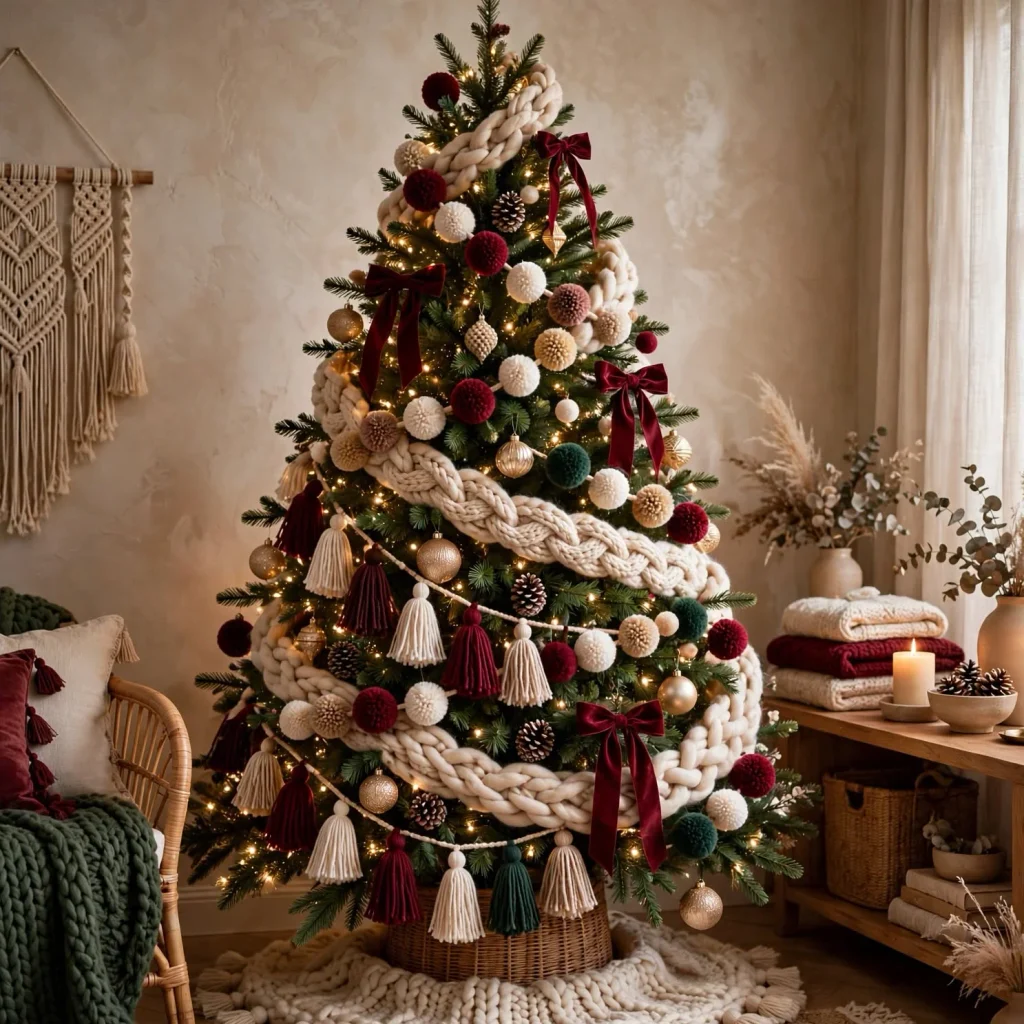
Yarn or pom-pom garland, whether purchased or handmade by wrapping and tying, brings soft, textural warmth to a tree in a material distinct from any glass, metal, or plastic alternative. This material handles extremely well for households with young children, offering no breakage or sharp-edge concern even with enthusiastic handling. Choosing pom-pom or yarn garland in a color palette consistent with the tree’s other elements integrates this cozier, more casual material into an otherwise more formally decorated tree.
14. Salt Dough and Clay Ornaments
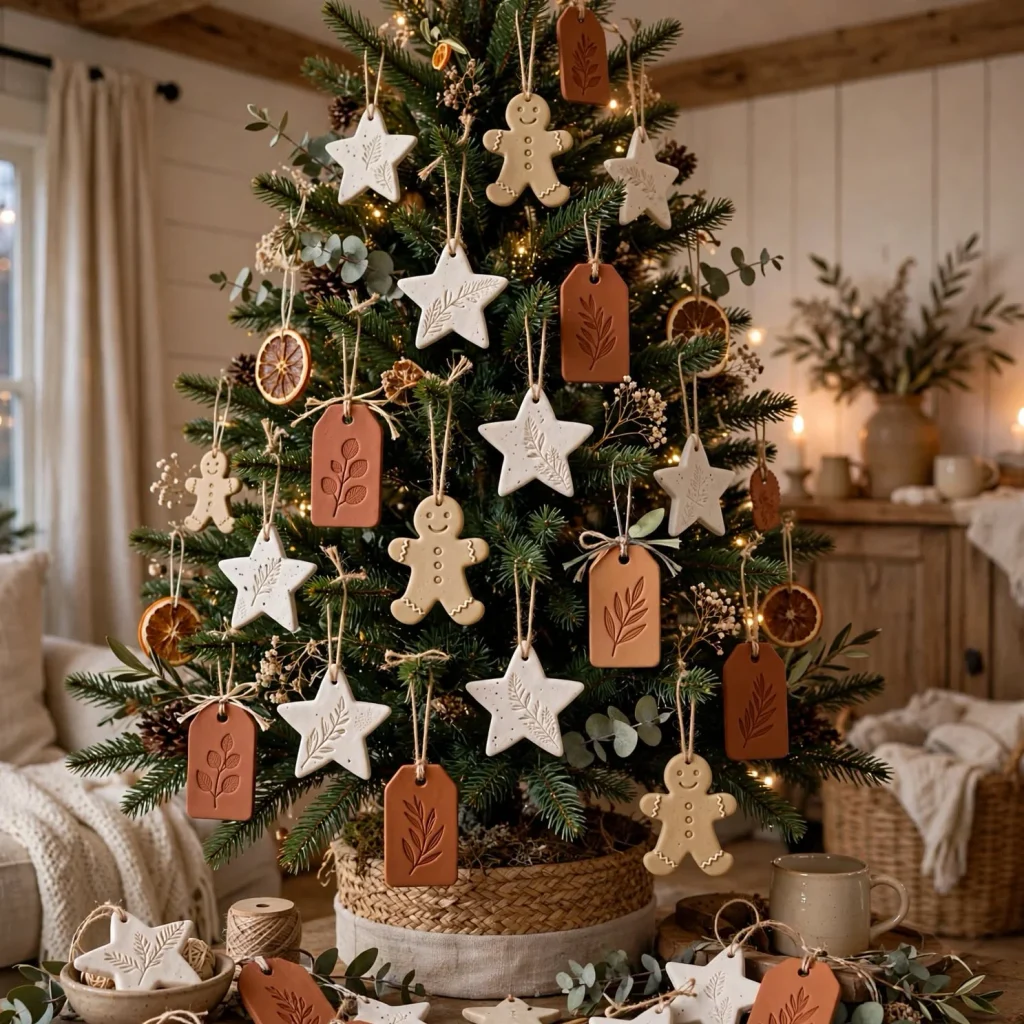
Salt dough and air-dry clay ornaments, typically homemade rather than purchased, offer an affordable, accessible material particularly well suited to family crafting projects and children’s handprint or simple shape keepsakes. This material requires proper sealing to protect against humidity and general handling, and remains more fragile than wood or metal despite feeling relatively sturdy once fully dried and cured. Storing these handmade pieces individually wrapped, rather than loose among other ornaments, protects their more delicate surface detail across repeated years of reuse.
15. Mixed-Material Ornament Clusters
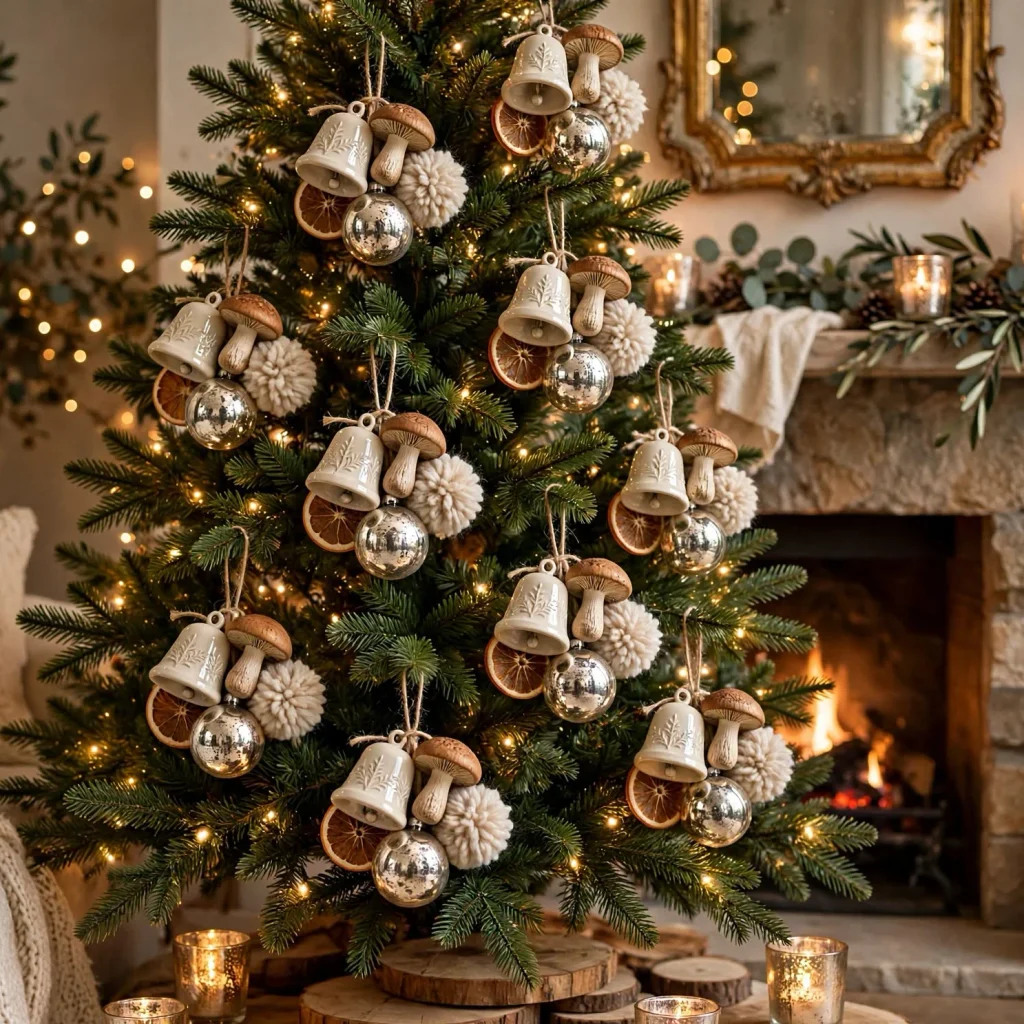
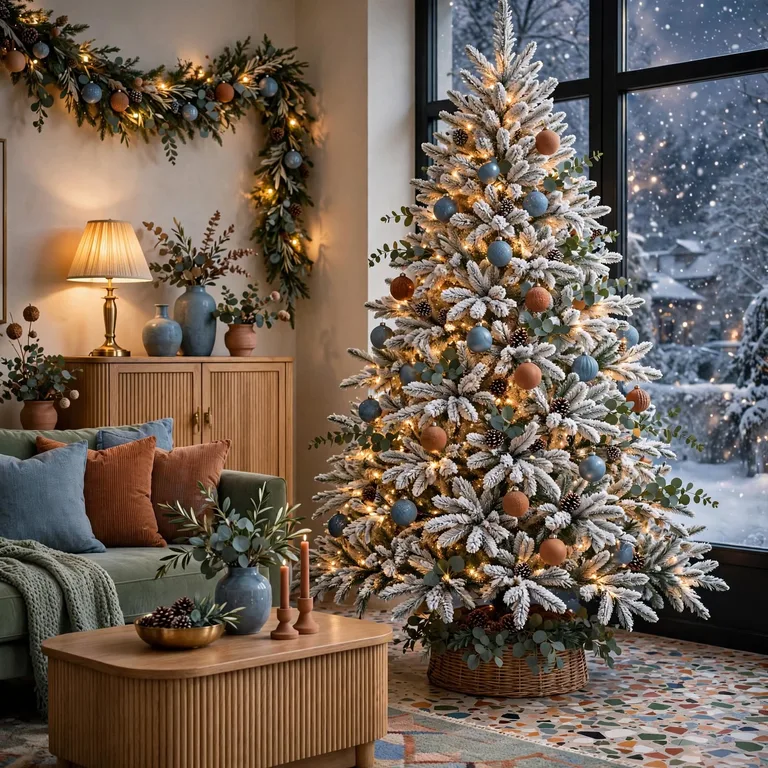
Rather than committing to a single material throughout an entire tree, combining two or three distinct materials, glass alongside wood and fabric, for instance, within the same overall color palette produces genuine textural depth that a single-material approach doesn’t achieve. This mixed approach also offers practical benefit, allowing more delicate materials like glass to be positioned toward a tree’s sturdier, more protected inner branches while hardier materials like wood or shatterproof plastic occupy the more exposed, accessible outer branches. Planning this material distribution deliberately, rather than mixing randomly, produces both a more visually rich and more practically durable finished tree.
Shop the Look
For a household without young children or pets, build a collection anchored in classic glass, layered with metal and mercury glass accents for genuine sparkle and depth. For a family-friendly tree, prioritize shatterproof plastic, wood, and fabric ornaments, reserving any glass or acrylic pieces for higher, less accessible branches. In either case, mixing at least two distinct materials within the tree’s chosen color palette produces more textural richness than relying on a single material type alone.
Common Mistake to Avoid
A common mistake in choosing Christmas tree decor materials is selecting every ornament based purely on appearance without considering how that material will actually perform given the household’s specific circumstances, pets, young children, a tree positioned in a high-traffic area, resulting in either breakage frustration or an overly cautious, less decorated tree than genuinely desired. Matching material choice to genuine household needs, shatterproof and fabric options for a busier household, classic glass for a more controlled environment, prevents this common mismatch between aesthetic ambition and practical daily reality. This consideration matters as much as color coordination in producing a tree that’s both beautiful and genuinely sustainable to maintain throughout the season.
FAQs
What Christmas tree decor material is safest for households with pets or young children?
Shatterproof plastic, fabric, felt, and wood ornaments all offer significantly lower breakage and injury risk than glass, ceramic, or mercury glass, making them better suited to a tree in a household with active pets or young children still learning careful handling. Reserving any genuinely fragile materials, like glass or delicate ceramic, for higher branches genuinely out of reach further reduces risk even when a household wants to include some traditional glass ornaments. Choosing lightweight, securely attached ornaments regardless of material also reduces the risk of pieces falling and creating a hazard on the floor beneath the tree.
How do I store different ornament materials to make them last?
Glass and ceramic ornaments benefit most from individual compartmentalized storage boxes that prevent pieces from contacting and potentially chipping or breaking each other during the off-season. Wood, metal, and shatterproof plastic ornaments tolerate less careful storage considerably better, though keeping them organized still helps prevent tangling or loss between seasons. Paper and salt dough ornaments require the most protective storage of the more delicate materials, ideally stored flat or individually wrapped to prevent bending, crushing, or moisture damage.
Is it worth investing in higher-quality ornament materials, or do cheaper options work just as well?
Higher-quality materials, well-made glass, solid wood, quality ceramic, generally last considerably longer across many seasons of reuse compared to the cheapest available plastic or paper alternatives, often justifying a higher upfront cost through genuine long-term value. That said, some lower-cost materials, particularly shatterproof plastic and simple wood pieces, perform quite well even at a more modest price point, making the price-to-quality relationship less absolute than with some other home decor categories. Prioritizing quality specifically for pieces intended for many years of reuse, while allowing more budget flexibility for materials expected to be replaced or supplemented more frequently, generally produces the best overall value.
Can I mix ornament materials on the same tree without it looking mismatched?
Mixing two or three distinct materials, glass, wood, and fabric, for instance, generally produces a richer, more textured tree than relying on a single material throughout, provided the materials share a consistent color palette or some other connecting visual thread. Without this connecting element, a genuinely random mix of materials and colors can start to look disorganized rather than intentionally layered. Choosing a clear color scheme first, then selecting ornaments across a few different materials within that scheme, helps maintain cohesion despite the material variety.
What ornament material works best for a tree that will be displayed for many years?
Metal, wood, and quality ceramic generally offer the best combination of durability and lasting visual appeal for a tree collection intended to last many years, tolerating repeated handling and storage better than more delicate options like glass, paper, or dried botanicals. Glass can also last for decades with careful handling and proper storage, though it requires more consistent care than these sturdier alternatives to avoid breakage over time. Choosing at least a foundational collection in one of these more durable materials, then supplementing with more delicate or seasonal pieces as desired, builds a collection with genuine long-term staying power.
Conclusion
Choosing Christmas tree decor materials thoughtfully, considering durability, household needs, and how different textures work together, produces both a more beautiful and a more genuinely practical tree than selecting ornaments purely on appearance alone. Save this guide to Pinterest for reference while planning this year’s ornament shopping, and check out our related post on Christmas tree decor ideas for complete themed combinations built around these material choices.