25 Creative Christmas Decor Ideas Bedroom You’ll Love This Holiday Season
The right Christmas Decor Ideas Bedroom approach for a bedroom depends significantly on who actually sleeps there, since a young child’s room, a teenager’s space, a couple’s primary suite, and a guest room each call for genuinely different decisions. This guide covers fifteen Christmas decor ideas organized specifically by bedroom type and occupant, so the decorating choices match both the room’s function and the people who use it daily. Every idea addresses the specific considerations relevant to that particular bedroom’s occupant and purpose.
Trend & Background
Bedroom Christmas decorating has increasingly been tailored to the specific occupant rather than applying one generic bedroom decorating formula throughout a home, reflecting growing recognition that a toddler’s room, a teenager’s space, and a primary suite each serve genuinely different daily functions and aesthetic preferences. This has led to more deliberate decorating strategies suited to each room type, softer, more sophisticated choices for an adult primary bedroom, and more playful, interactive elements for a young child’s space, rather than a single decorating approach applied uniformly to every bedroom in the house. Involving older children and teenagers in their own room’s decorating decisions has also become a more common practice, respecting their growing independence and personal taste as they age.
Key Takeaways
- A bedroom’s ideal Christmas decorating approach depends heavily on who sleeps there, a child, a teen, a couple, or overnight guests.
- A primary bedroom generally benefits from a more sophisticated, adult-oriented palette than a child’s more playful space.
- A teen’s room calls for decor that respects their independence and evolving taste rather than a younger, more generic theme.
- Shared kids’ rooms need decorating that works for multiple occupants without favoring one child’s preferences over another’s.
1. Primary Bedroom Sophisticated Textile Layer
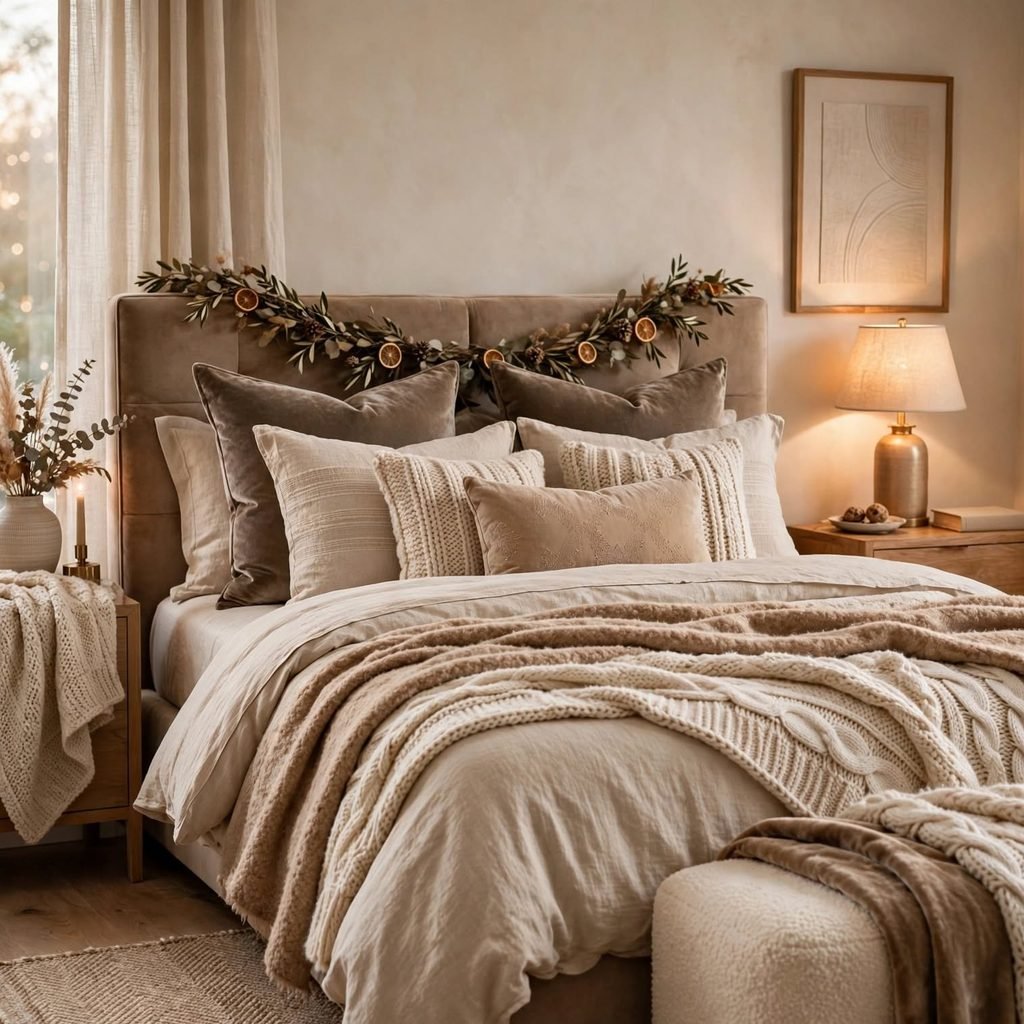
A primary bedroom benefits from a more sophisticated, adult-appropriate Christmas textile update, a deep jewel-toned or warm neutral duvet cover, layered with a plaid or subtly patterned throw blanket, rather than more playful or juvenile seasonal patterns better suited to a child’s room. Choosing a palette that coordinates with the room’s existing everyday color scheme, rather than a fully separate holiday-specific scheme, keeps this seasonal update feeling like a natural extension of the room’s established style. This approach respects the primary bedroom’s function as a genuinely restful adult retreat while still marking the season meaningfully.
2. Toddler or Young Child’s Room Soft, Safe Decor
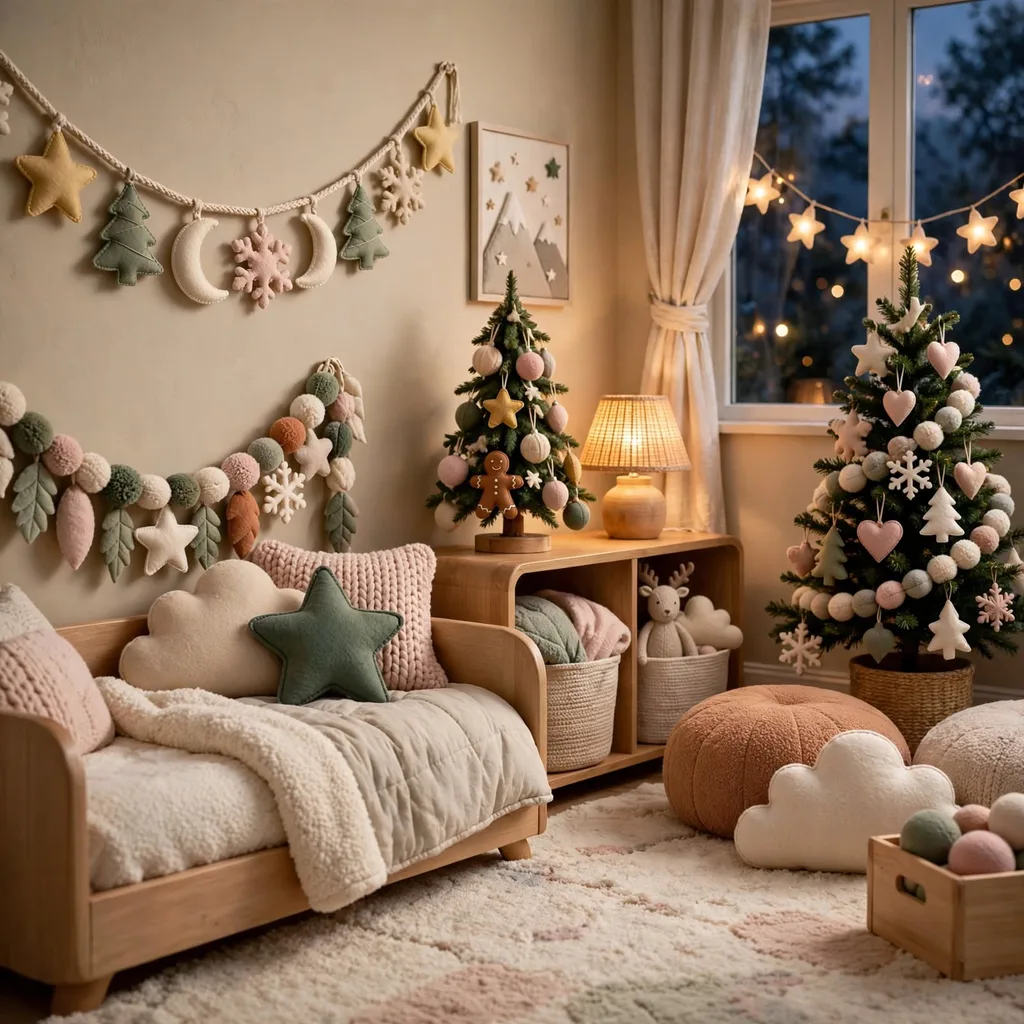
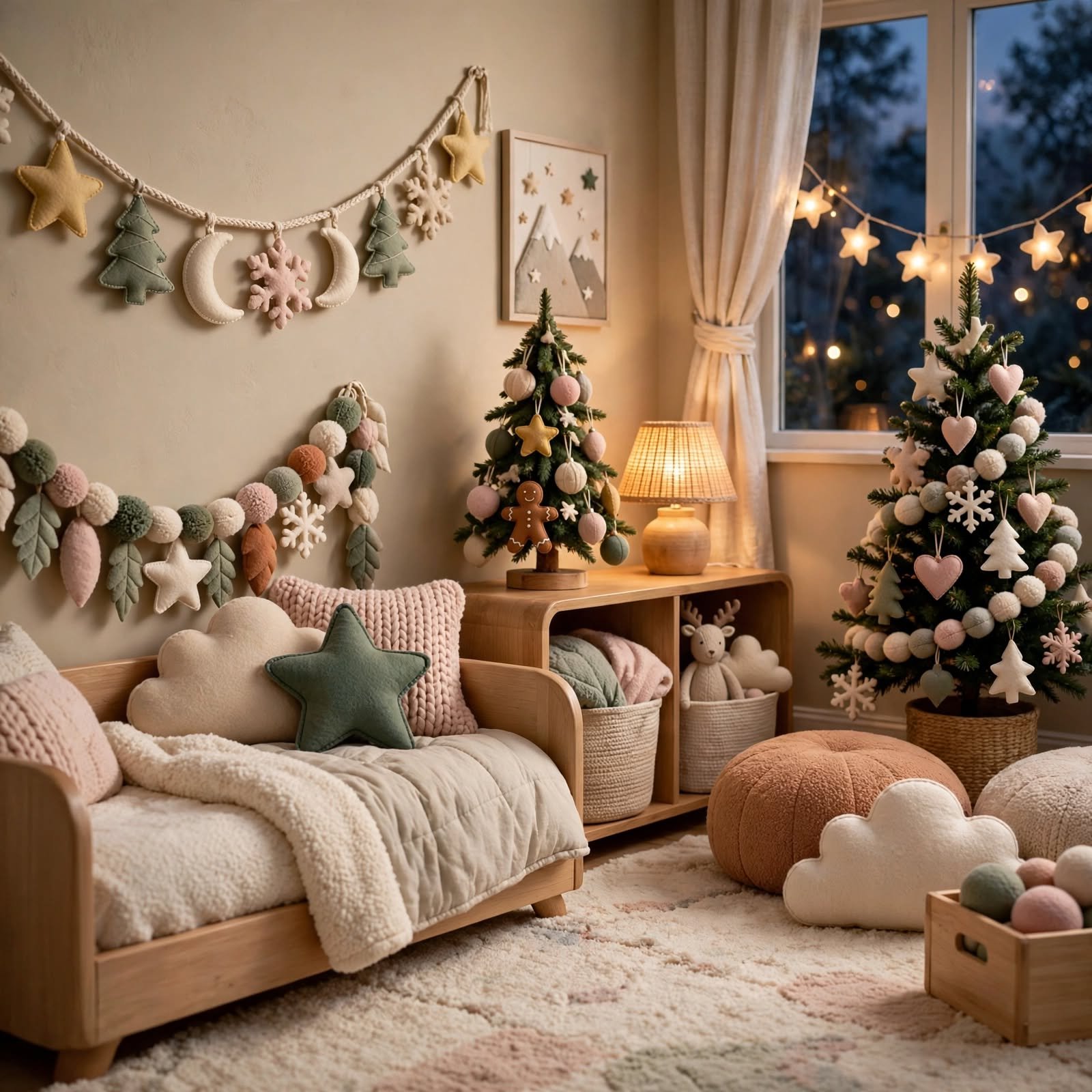
A toddler or young child’s bedroom calls for genuinely soft, safe Christmas decorating, plush ornaments rather than glass, battery-operated rather than open-flame candles, and decor positioned out of easy reach for a curious, exploring child. A simple felt or fabric wall hanging depicting a Christmas scene offers festive visual interest without any small parts or breakage risk. This approach prioritizes safety alongside genuine seasonal warmth, appropriate for a room where an adult isn’t necessarily present to supervise every interaction with the decor.
3. School-Age Child’s Interactive Advent Calendar
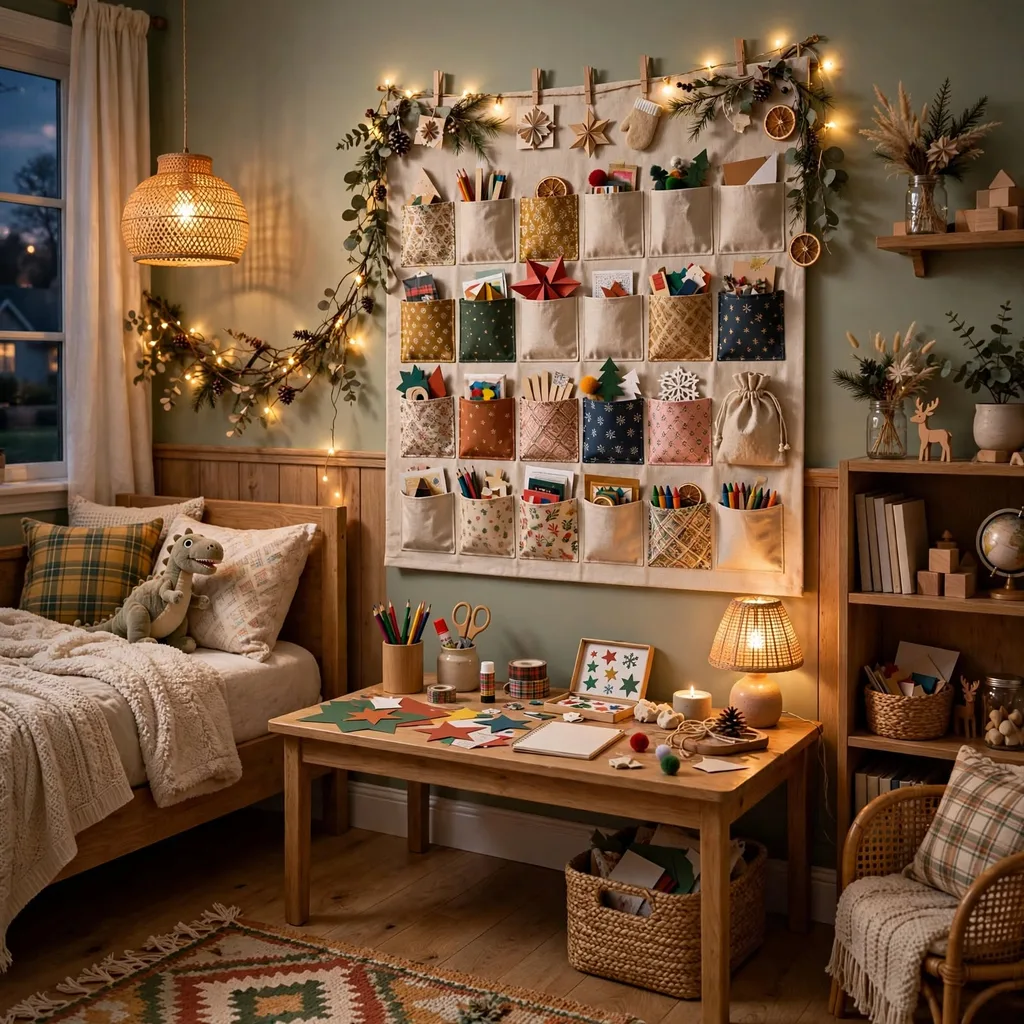
A school-age child’s bedroom benefits from an interactive element, a reusable advent calendar with small pockets or drawers positioned at their own height, giving them a daily countdown ritual and a genuine piece of decor they can engage with independently each morning. Choosing a calendar design reflecting the child’s current interests, rather than a generic seasonal design, adds personal relevance to this daily ritual. This detail works particularly well combined with a simple string of warm lights or a small tabletop tree, giving the child’s room a modest but genuine seasonal presence of its own.
| Bedroom Type | Decorating Priority | Key Consideration |
| Primary bedroom | Sophisticated, adult palette | Restful, coordinated with existing decor |
| Toddler room | Safety first | Soft materials, out of reach |
| School-age child | Interactive elements | Their own height, their interests |
| Teen room | Their own taste, input | Respect independence |
4. Teen Bedroom Decor With Genuine Input
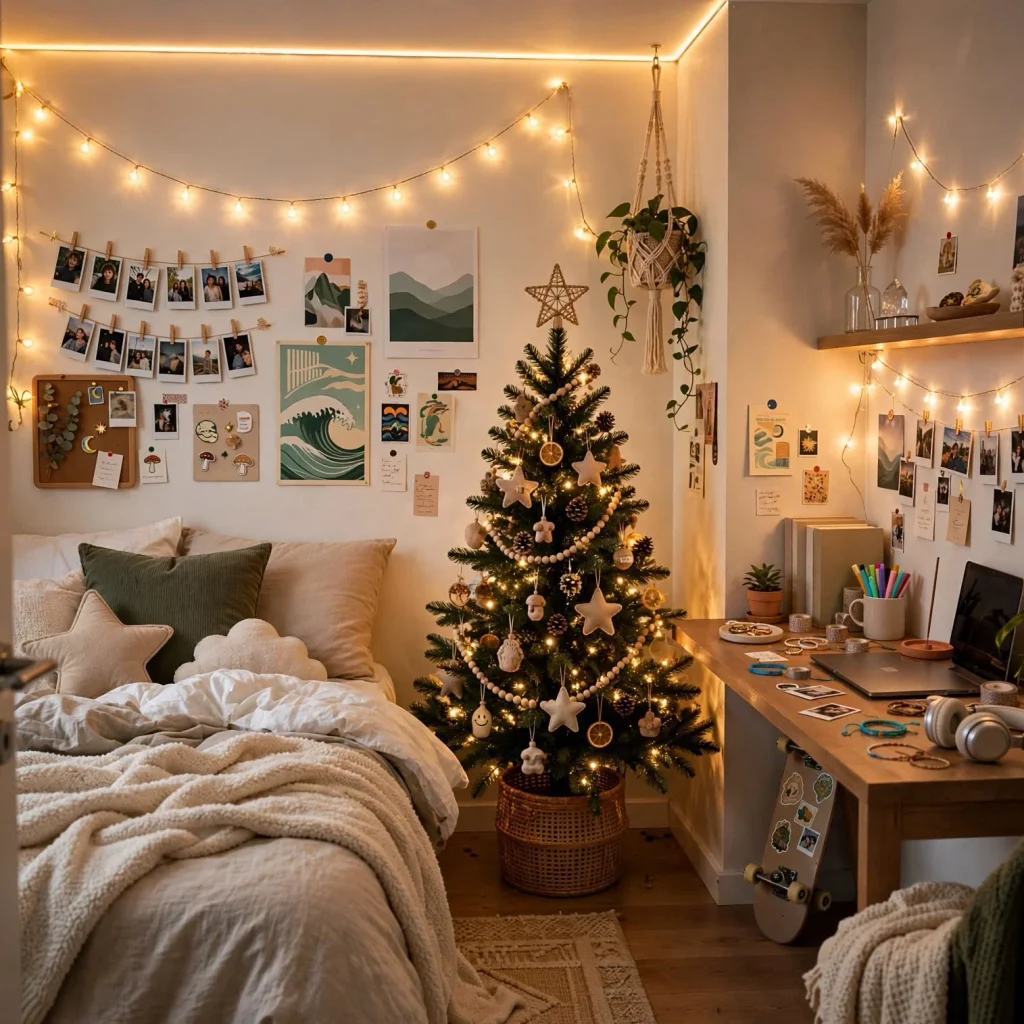
A teenager’s bedroom decorating works best when the teen has genuine input into what, if anything, they want for the season, respecting their developing independence and personal taste rather than imposing a parent’s chosen theme onto their private space. Offering a few options, a small tree, string lights in their preferred color temperature, or simply skipping bedroom decorating in favor of contributing to shared spaces, lets the teen decide their own level of participation. This approach avoids the common friction of decorating a teen’s room in a style that feels disconnected from their actual current taste and identity.
Welcome guests with these christmas decor ideas outdoor featuring wreaths, greenery, lanterns, and festive outdoor decorations.
5. Shared Siblings’ Room Balanced Decorating
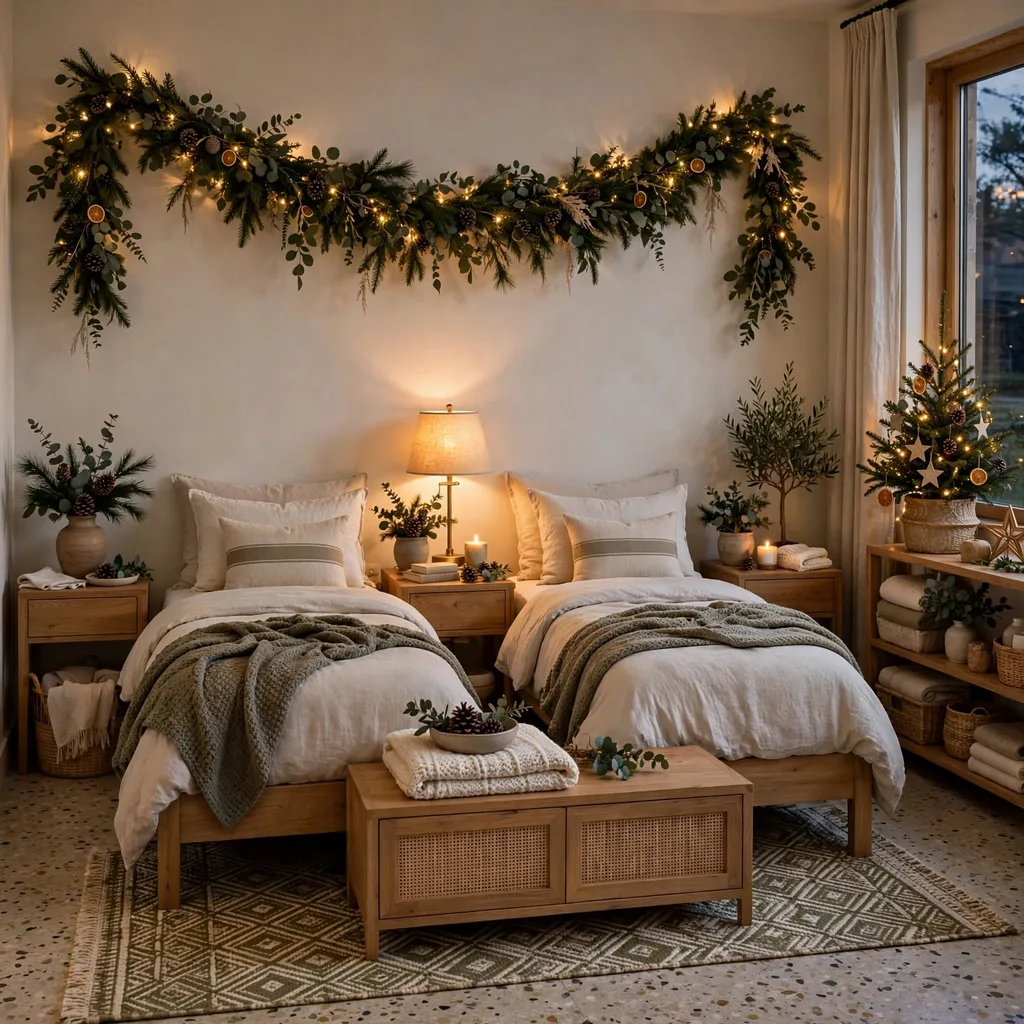
A bedroom shared by multiple children calls for decorating that works fairly for both or all occupants, avoiding a scheme that favors one child’s specific interests or color preferences over another’s. Choosing a neutral, broadly appealing color palette for any shared elements, then allowing each child a small personal decorating choice, a single ornament or a small stocking for their side of the room, balances shared cohesion with individual recognition. This approach helps prevent the sibling friction that can arise when one child’s preferences visibly dominate a genuinely shared space.
6. Guest Bedroom Hospitality-Focused Decor
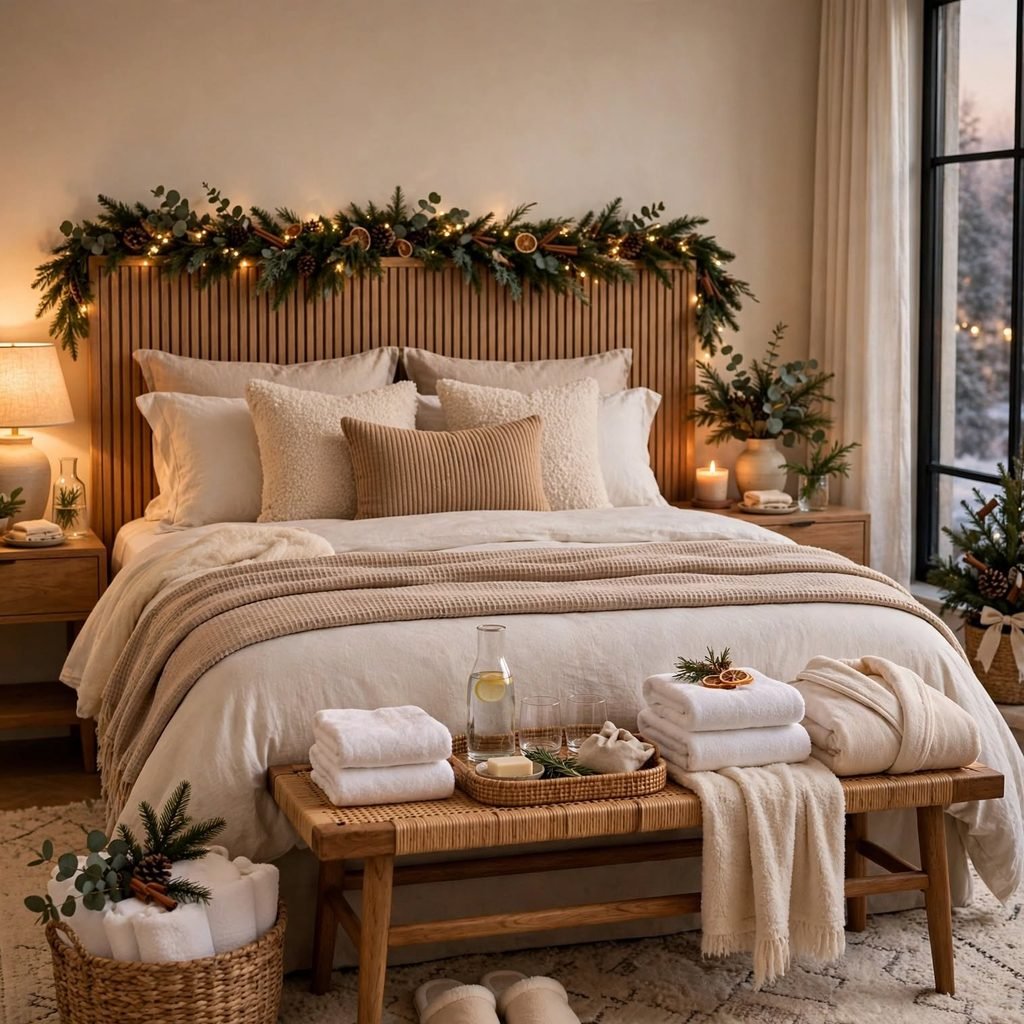
A guest bedroom expecting overnight visitors benefits from decorating that prioritizes genuine hospitality, a seasonal throw blanket, a small welcome note, and a stocked bedside table with tissues, water, and a phone charger, alongside whatever purely decorative touches are added. A small wreath on the door and a modest tabletop tree or greenery accent round out this room’s seasonal presence without overwhelming what should remain a comfortable, functional space for visitors. This approach treats the room’s decorating as an extension of genuine hosting rather than purely aesthetic styling.
7. Nursery Christmas Decor With Extra Safety Care
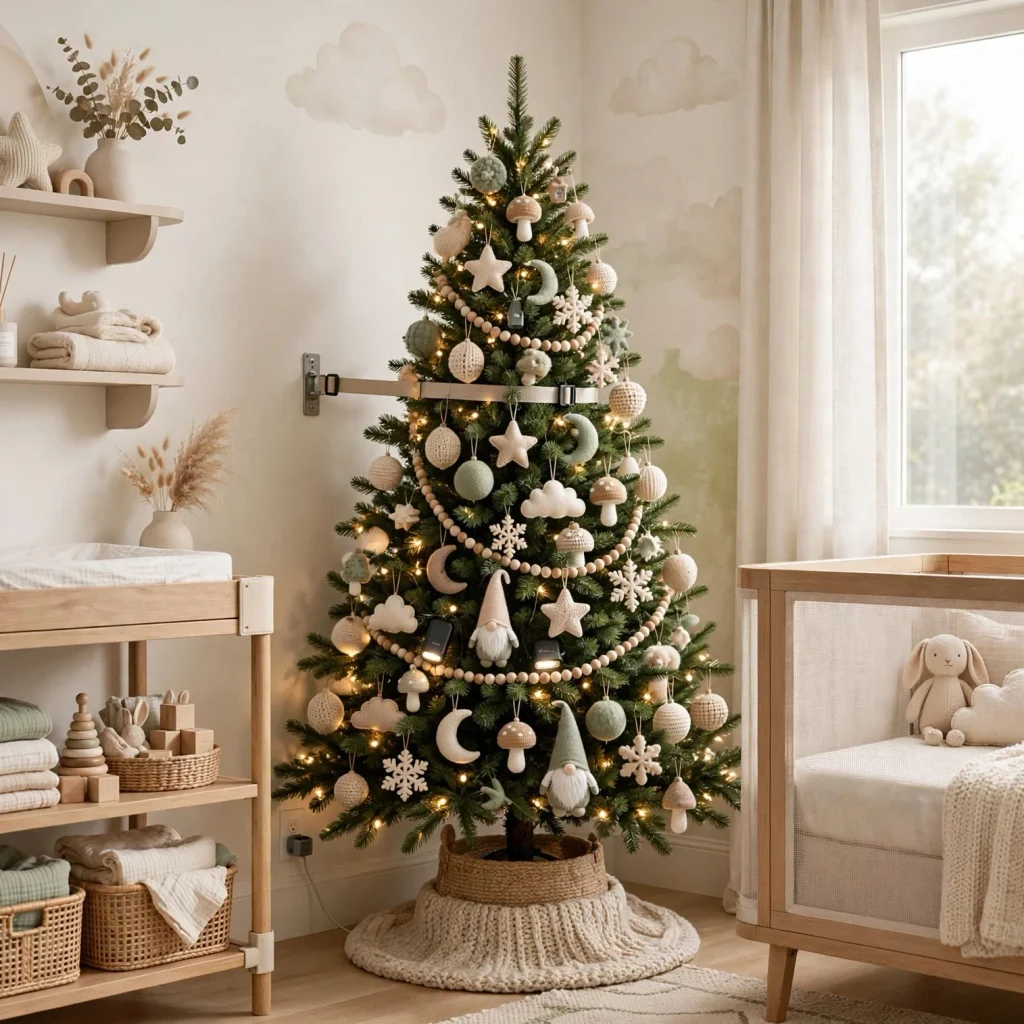
A nursery, housing an infant too young to meaningfully interact with decor but still present in the room regularly, calls for Christmas decorating with particular attention to safety, avoiding small parts, breakable materials, or anything positioned near the crib that could pose any risk. A simple string of warm lights positioned well away from the crib, or a soft fabric banner on an opposite wall, provides gentle seasonal atmosphere without introducing genuine hazards into a space where an infant spends significant unsupervised time. Consulting general nursery safety guidelines before adding any decorative element helps ensure this room’s decorating doesn’t compromise its primary safety function.
8. College Student or Dorm Room Compact Decor
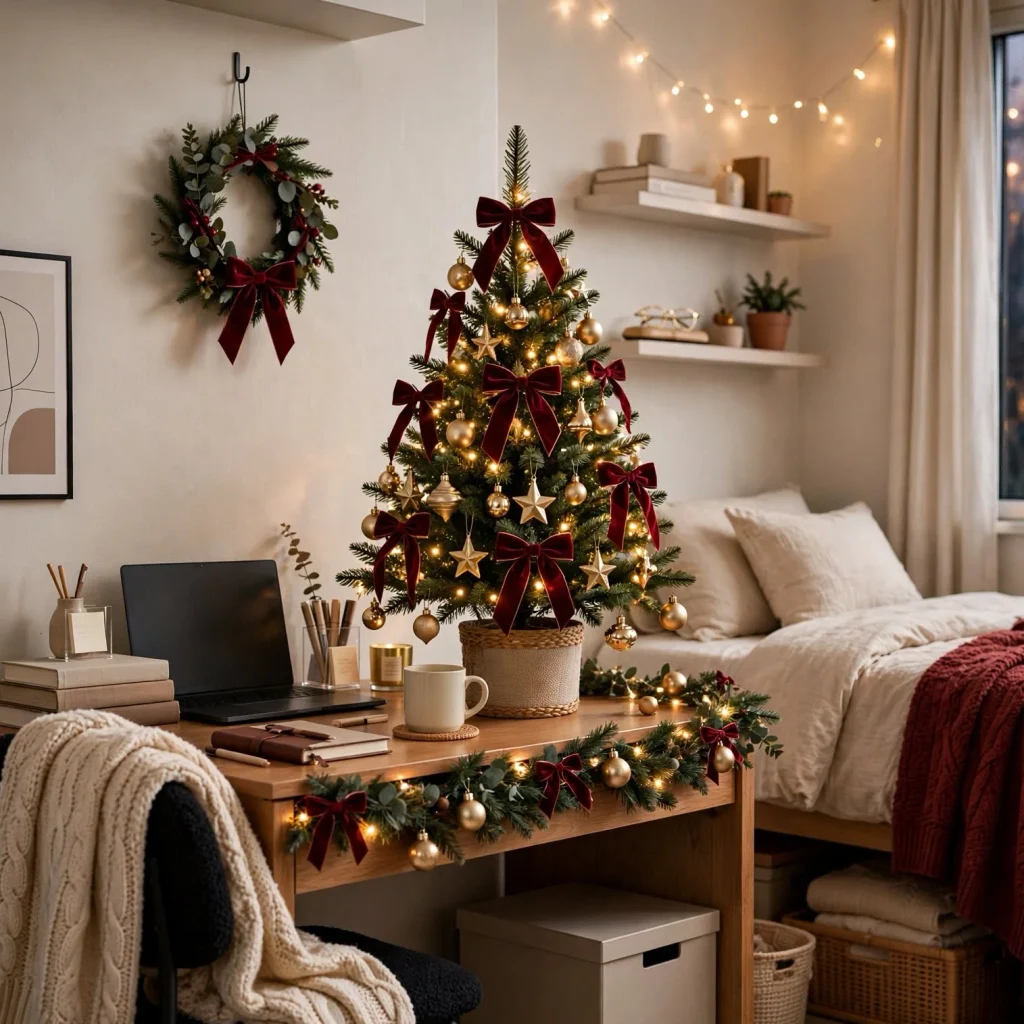
A college student’s dorm room or a young adult’s small first apartment bedroom benefits from compact, easily packed Christmas decor, a small tabletop tree, a string of battery-operated lights, and a few lightweight ornaments, suited to limited space and, potentially, the need to pack everything away for a winter break departure. Choosing decor that fits easily into a small storage bin or suitcase makes this seasonal decorating genuinely practical for a transient living situation. This approach respects both the space constraints and the temporary nature of a dorm or small rental bedroom.
9. Primary Bedroom Reading Nook Seasonal Touch

For a primary bedroom with a dedicated reading chair or nook, adding a small seasonal touch, a plaid throw pillow, a scented candle in a sophisticated fragrance, or a small stack of holiday reading, extends the room’s broader Christmas decorating into this specific functional corner. This detail works particularly well combined with the reading nook’s existing warm lighting, reinforcing a cozy, adult-appropriate seasonal atmosphere. Choosing scents and patterns consistent with the primary bedroom’s overall more sophisticated palette keeps this smaller detail cohesive with the room’s broader decorating choices.
10. Multi-Age Sibling Room Height-Zoned Decorating
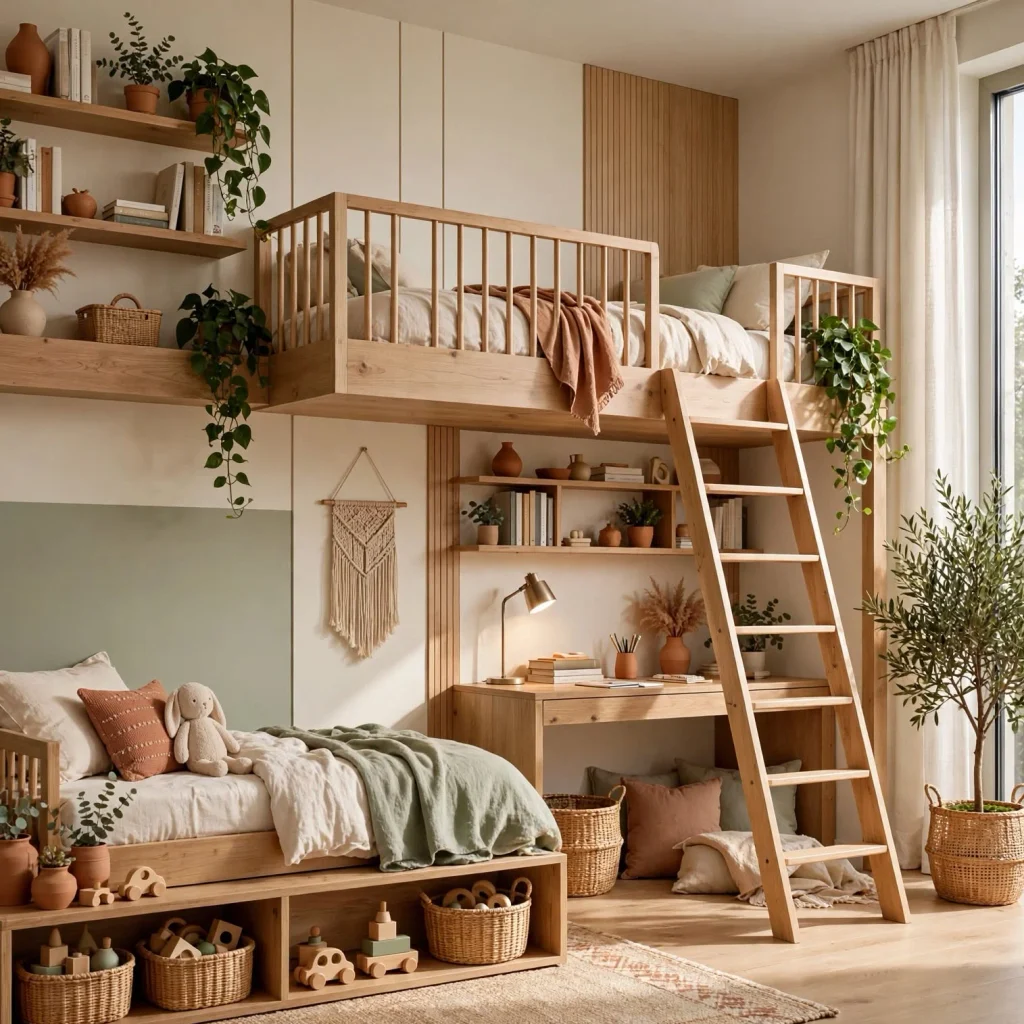
In a shared bedroom housing siblings of significantly different ages, zoning decorating by height, simpler, safer decor on lower surfaces accessible to a younger child and slightly more detailed or delicate pieces on higher shelves reserved for an older sibling, accommodates both children’s developmental stages within one shared space. This approach prevents a younger child’s safety needs from limiting an older sibling’s ability to enjoy more detailed or delicate seasonal decor entirely. Clearly establishing which zones belong to which child, even informally, helps maintain this balance without ongoing conflict.
11. Teen Bedroom String Lights and Personal Photo Display
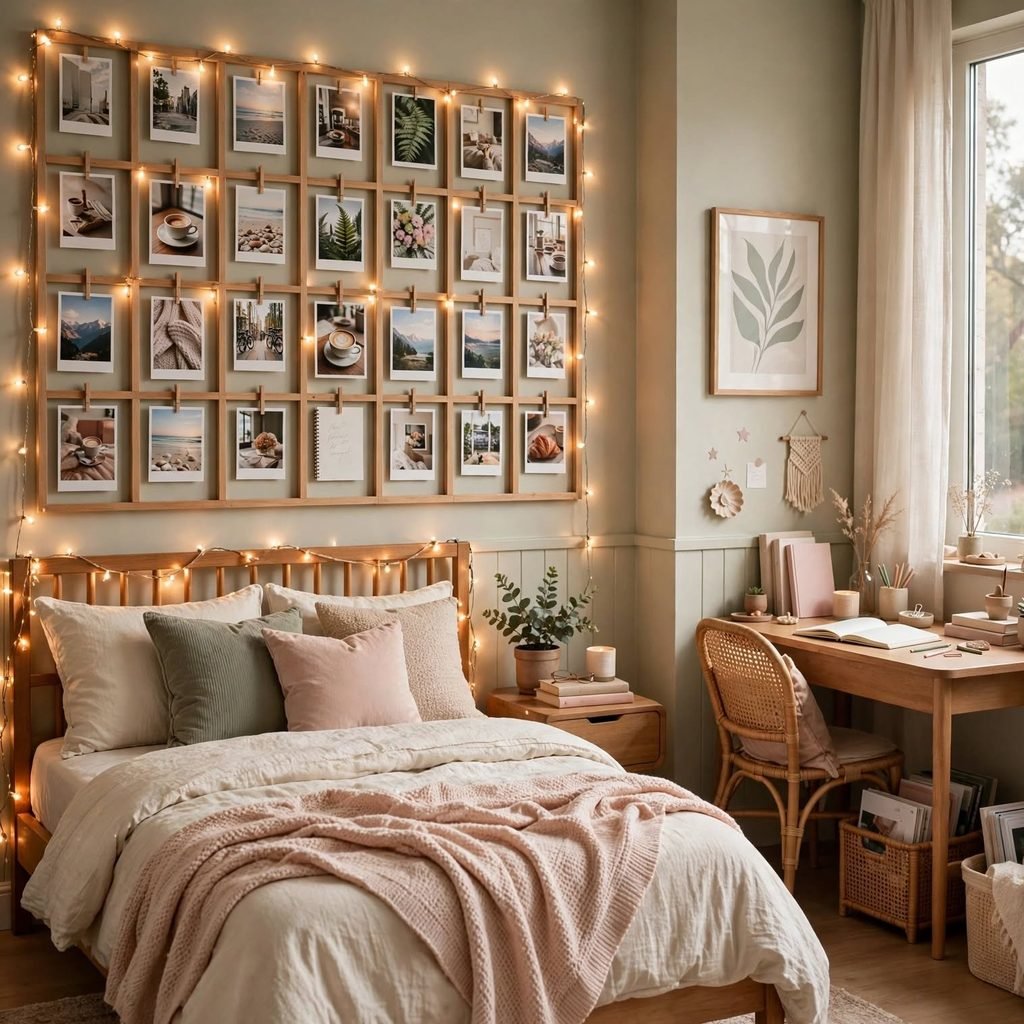
A popular, low-commitment option for a teen’s bedroom combines warm string lights with a display of personal photos or memorabilia clipped along the strand, a decorating approach many teens already gravitate toward independent of the Christmas season specifically, that adapts easily into a seasonal statement with minimal additional effort. This approach respects a teen’s likely existing aesthetic preferences rather than introducing an unfamiliar, more traditional holiday decorating style into their space. Allowing the teen to select and arrange their own photos maintains their sense of ownership over the display.
12. Primary Bedroom Window Treatment Seasonal Layer

Adding a seasonal layer to a primary bedroom’s existing window treatments, a plaid or subtly patterned scarf draped over an existing curtain rod, or simply a small string of lights along the window frame, brings Christmas decorating into this often-overlooked bedroom element without requiring a full curtain replacement. This detail works particularly well combined with a battery-operated candle positioned in the window itself, extending the room’s seasonal presence to how the bedroom appears from outside the home as well. Choosing an addition easily removed after the season keeps this update fully reversible.
13. Kids’ Room Christmas Countdown Wall Art
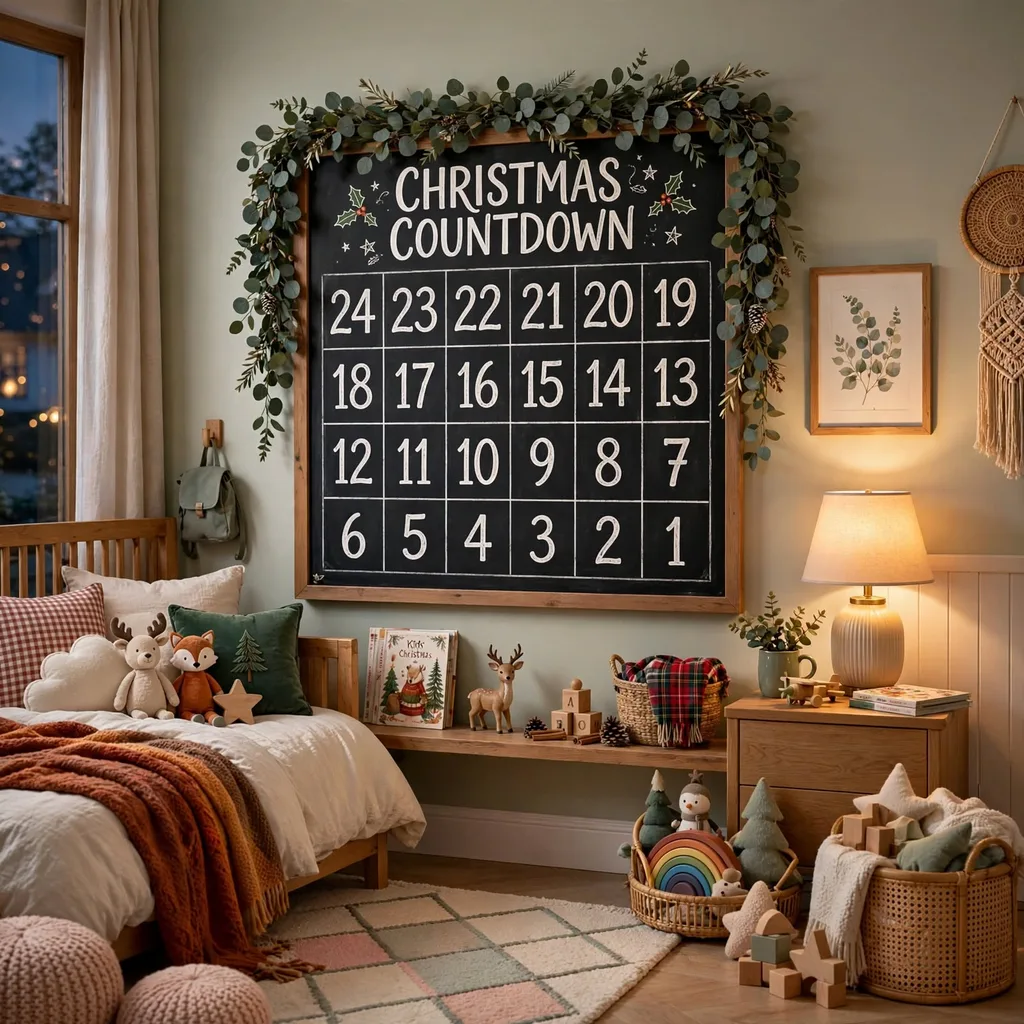
A reusable countdown wall art piece, using a chalkboard or dry-erase surface where a child can update the number of days remaining until Christmas each morning, combines decorating with a genuinely engaging daily activity suited to a school-age child’s bedroom. This detail works well positioned near the child’s bed or a spot they pass regularly each morning, integrating naturally into their existing routine. Choosing a design that can be reused each year, rather than a disposable version, offers better long-term value across multiple holiday seasons.
14. Primary Bedroom Subtle Scent Layer
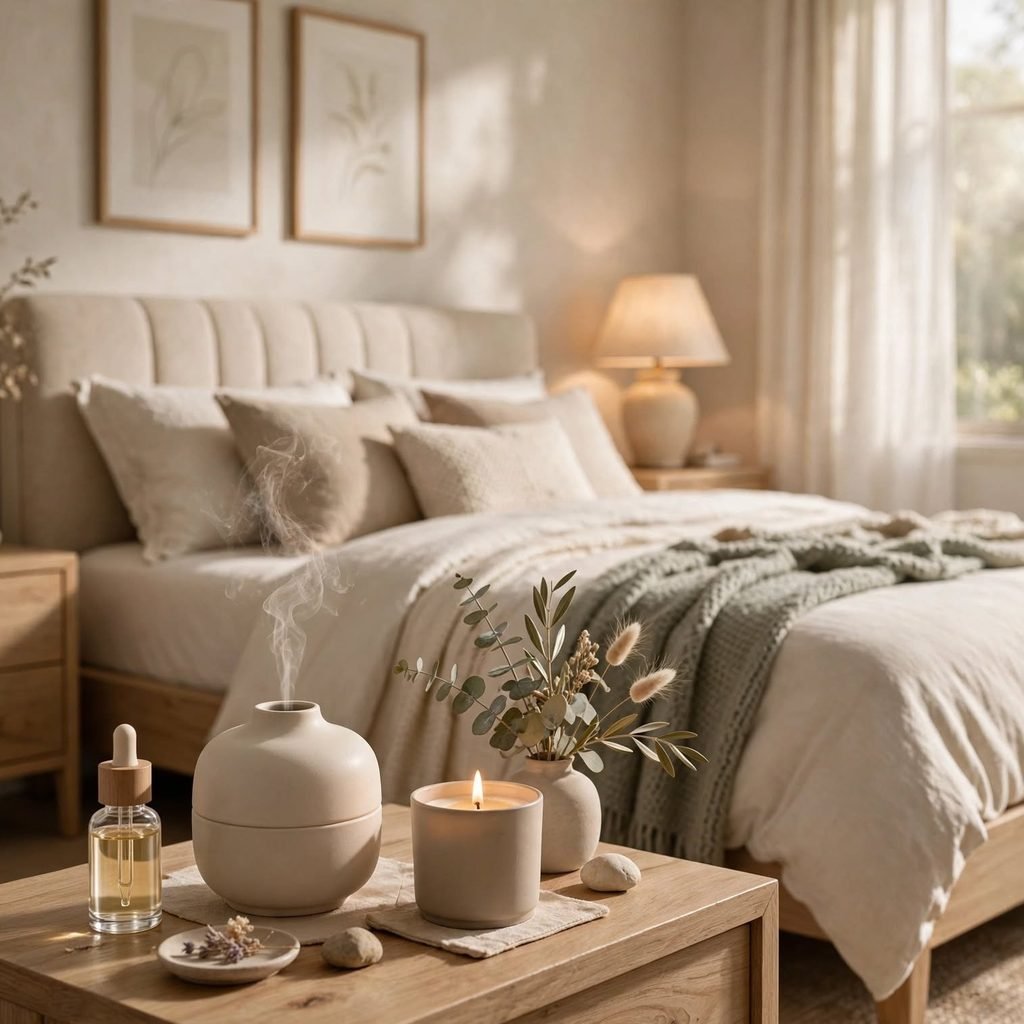
Introducing a subtle, sophisticated scent into a primary bedroom, a diffuser or a lightly scented candle in balsam, cedar, or a warm spice fragrance, adds a sensory dimension to the room’s Christmas decorating that purely visual choices don’t provide. Choosing a lighter, more restrained fragrance than might be used in a shared living space respects the primary bedroom’s function as a space for actual sleep, where an overly strong scent could prove disruptive rather than pleasant. This detail often becomes one of the most noticed aspects of a primary bedroom’s seasonal atmosphere, engaging scent alongside its visual decorating.
15. Guest Bedroom Reusable, Easy-Assembly Decor
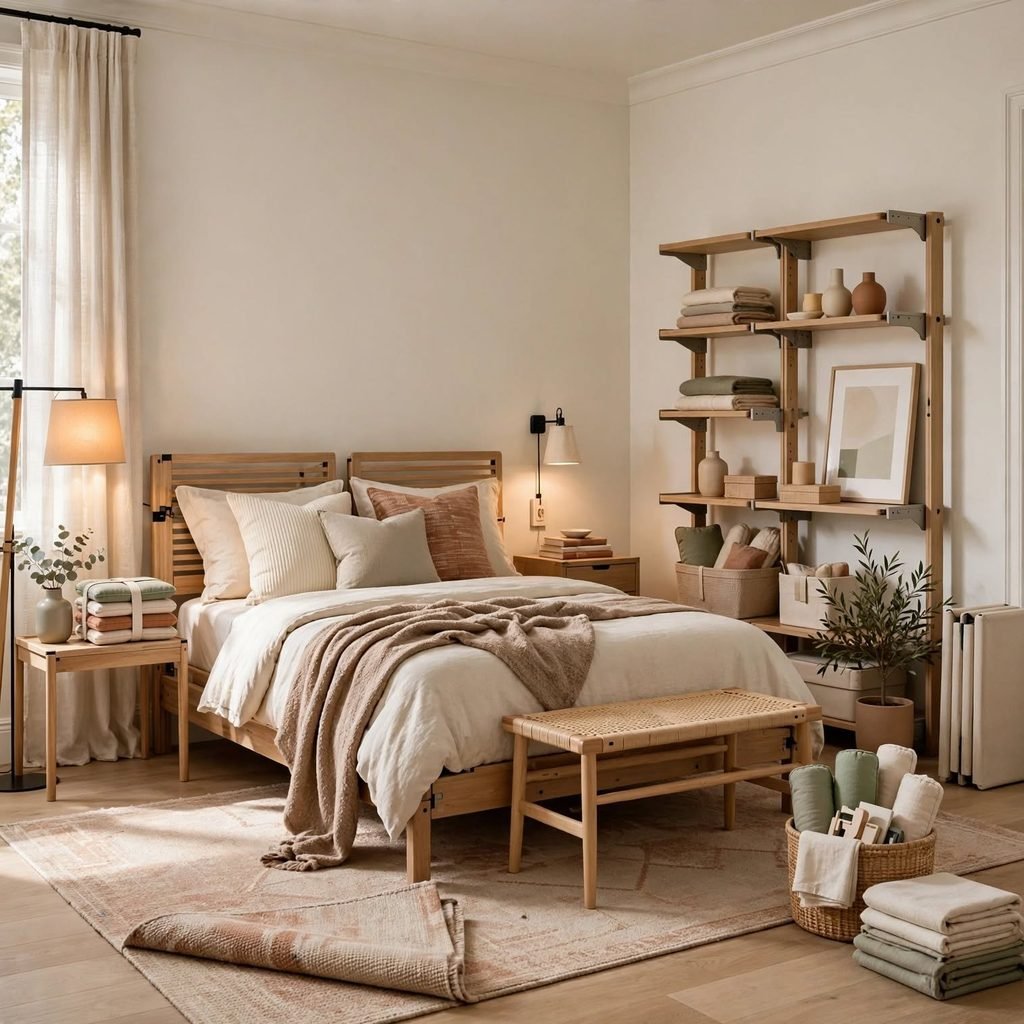
Choosing genuinely quick-to-assemble Christmas decor for a guest bedroom, decor that doesn’t require significant setup time given how infrequently this room might see full holiday decorating attention compared to daily-use spaces, ensures the room still receives a seasonal touch without demanding disproportionate effort relative to its occasional use. A simple pre-made wreath, a small pre-lit tabletop tree, and a seasonal throw blanket can all be added and removed in minutes, making this room’s decorating genuinely sustainable even during an otherwise busy holiday season. Storing these guest room-specific pieces together in one labeled bin simplifies this quick setup and teardown process each year.
Shop the Look
For a primary bedroom, start with a sophisticated jewel-toned or neutral textile update and a subtle scent layer through a restrained candle or diffuser. For a young child’s room, prioritize soft, safe materials like felt ornaments and battery-operated lighting, positioned thoughtfully out of easy reach. For a teen’s room, offer options and genuine input rather than imposing a chosen theme, letting string lights and personal photo displays lead the way if they’re interested in decorating at all.
Common Mistake to Avoid
A common mistake in bedroom Christmas decorating is applying one generic bedroom decorating approach across every room in the home regardless of who actually occupies each specific space, resulting in decor that feels mismatched to a teenager’s independence, a toddler’s safety needs, or a primary bedroom’s more sophisticated adult function. Considering each bedroom’s specific occupant and their actual needs and preferences before decorating, rather than defaulting to a single bedroom template, produces decorating that genuinely suits each room’s real daily use. This tailored approach also tends to reduce family friction, particularly around a teen’s need for autonomy or fair treatment between siblings sharing a room.
FAQs
How should Christmas decorating differ between a child’s room and an adult’s bedroom?
A child’s bedroom generally calls for softer, safer materials, felt or fabric ornaments, battery-operated lighting, and interactive elements like an advent calendar, while an adult’s primary bedroom suits a more sophisticated, coordinated textile and color approach that extends the room’s existing everyday style rather than introducing a separate juvenile theme. These differences reflect both genuine safety considerations for younger children and the different aesthetic sensibilities appropriate to each room’s actual occupant. Considering the specific occupant’s age and taste, rather than applying one uniform bedroom decorating approach, produces more successful results for each individual space.
Should I let my teenager decide how to decorate their own bedroom for Christmas?
Giving a teenager genuine input into their own bedroom’s Christmas decorating, including the option to decorate minimally or not at all, generally respects their developing independence and reduces the friction that can arise from imposing an unwanted decorating theme onto their private space. Offering a few reasonable options, rather than either fully dictating the decorating or leaving it entirely open-ended without any guidance, often works well for a teen who wants some seasonal presence but isn’t sure exactly what they want. This approach also tends to result in a teen actually engaging positively with their room’s seasonal decorating rather than viewing it as something done to their space rather than with their involvement.
How do I decorate a shared kids’ bedroom fairly for multiple children?
Choosing a neutral, broadly appealing base color palette for any shared decorating elements, then allowing each child a small individual choice, their own ornament, a personalized stocking, or a small decoration for their specific side of the room, balances overall cohesion with fair individual recognition. Avoiding a scheme that clearly favors one child’s specific character interests or color preferences over their sibling’s helps prevent resentment or perceived unfairness in a shared space. Involving both or all children in choosing the shared neutral elements, when age-appropriate, can also help distribute decision-making more evenly between them.
What Christmas decor is safe for a nursery or a very young child’s room?
Battery-operated or plug-in lighting positioned well away from a crib, soft fabric or felt decorations without small, detachable parts, and avoiding any open flame or breakable materials entirely all address the heightened safety considerations relevant to a nursery or young toddler’s bedroom. Positioning any decor, even soft, safe materials, out of a crib’s immediate reach further reduces risk in a room where an infant or young toddler may spend unsupervised time. Consulting general nursery and young child safety guidelines before adding any new decorative element to this specific room provides an additional layer of confidence beyond material choice alone.
How much effort should I put into decorating a guest bedroom that’s rarely used?
A guest bedroom generally warrants a lighter, quicker decorating approach than daily-use bedrooms, prioritizing a few simple, fast-to-assemble touches, a wreath, a small pre-lit tree, a seasonal throw blanket, alongside genuine hospitality preparations like fresh linens and bedside essentials, rather than an elaborate, time-intensive decorating project. This proportional effort matches the room’s actual, occasional use pattern while still ensuring visiting guests feel genuinely welcomed during their specific stay. Storing guest room decor together in one dedicated, labeled bin makes this lighter decorating approach quick to execute each year without requiring significant advance planning or search time.
Conclusion
The most successful bedroom Christmas decorating considers who actually occupies each specific room, a toddler, a teenager, a couple, or overnight guests, rather than applying one generic bedroom decorating formula throughout the entire home. Save this guide to Pinterest for reference while planning this year’s bedroom updates, and check out our related post on Christmas room decor for more general guidance on keeping any bedroom’s seasonal decorating appropriately restrained and restful.