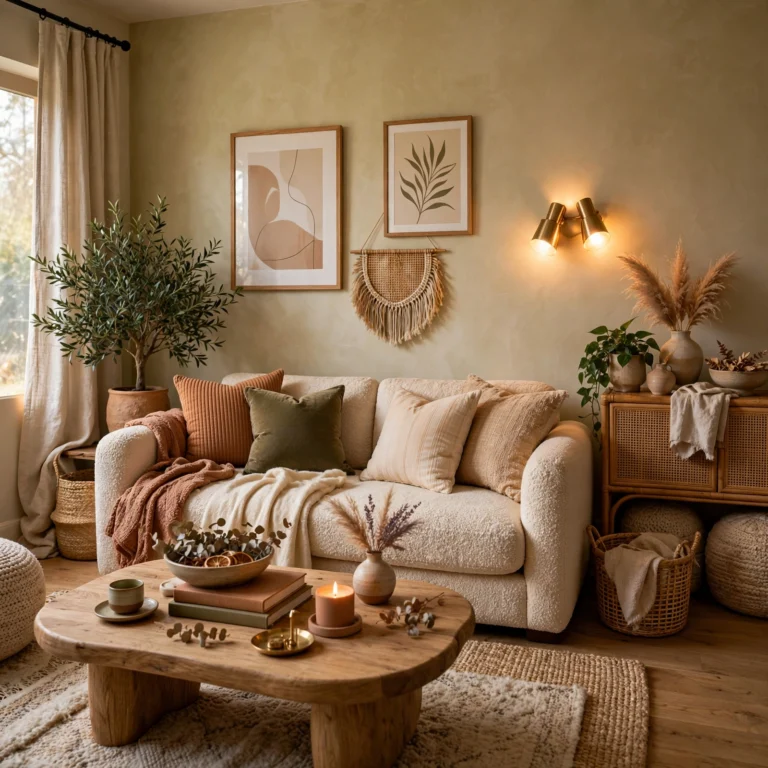
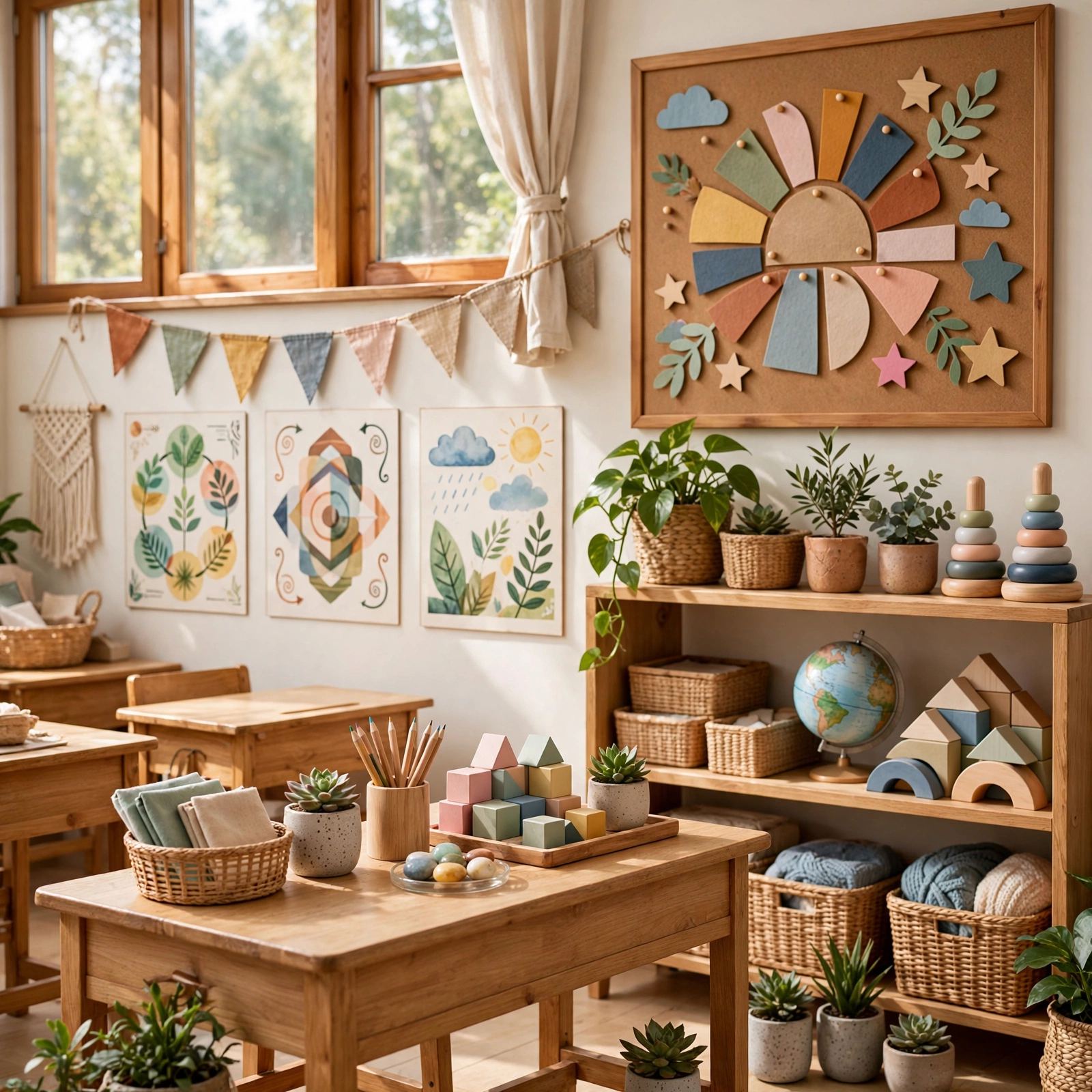
13 Modern Classroom Decor Ideas That Turn Bare Walls Into Learning Spaces
Walking into a classroom for the first time sets the tone for an entire school year, and classroom decor plays a bigger role in that first impression than most teachers realize. A thoughtfully arranged room signals to students that this is a place where their work matters and their comfort was considered. In this post, you’ll find thirteen practical decor ideas ranging from reading nooks to bulletin board systems, each one chosen for being achievable on a real teacher’s budget and timeline.
Trend & Background
Classroom design has shifted noticeably away from cluttered, primary-color-heavy walls toward calmer, more intentional environments influenced by Scandinavian and Montessori-inspired interiors. Research on cognitive load has pushed educators to reconsider whether visually “busy” classrooms actually help or hinder focus, especially for students with attention differences. At the same time, budget constraints and the rise of teacher-run classroom fundraising have made low-cost, high-impact decor ideas more valuable than ever. This matters now because schools are actively rethinking what a functional, welcoming room looks like post-pandemic, with more emphasis on flexible layouts and student ownership of the space.
Key Takeaways
- Classroom decor works best when it balances visual interest with genuine learning function, not just aesthetics.
- Flexible seating zones, labeled storage, and interactive walls are among the highest-impact, lowest-cost upgrades teachers can make.
- Neutral color palettes with rotating student work displays keep a room feeling fresh without constant redecorating.
- Budget-friendly materials like kraft paper, clothespins, and washi tape can replicate expensive design looks for a fraction of the cost.
1. Flexible Seating Zones
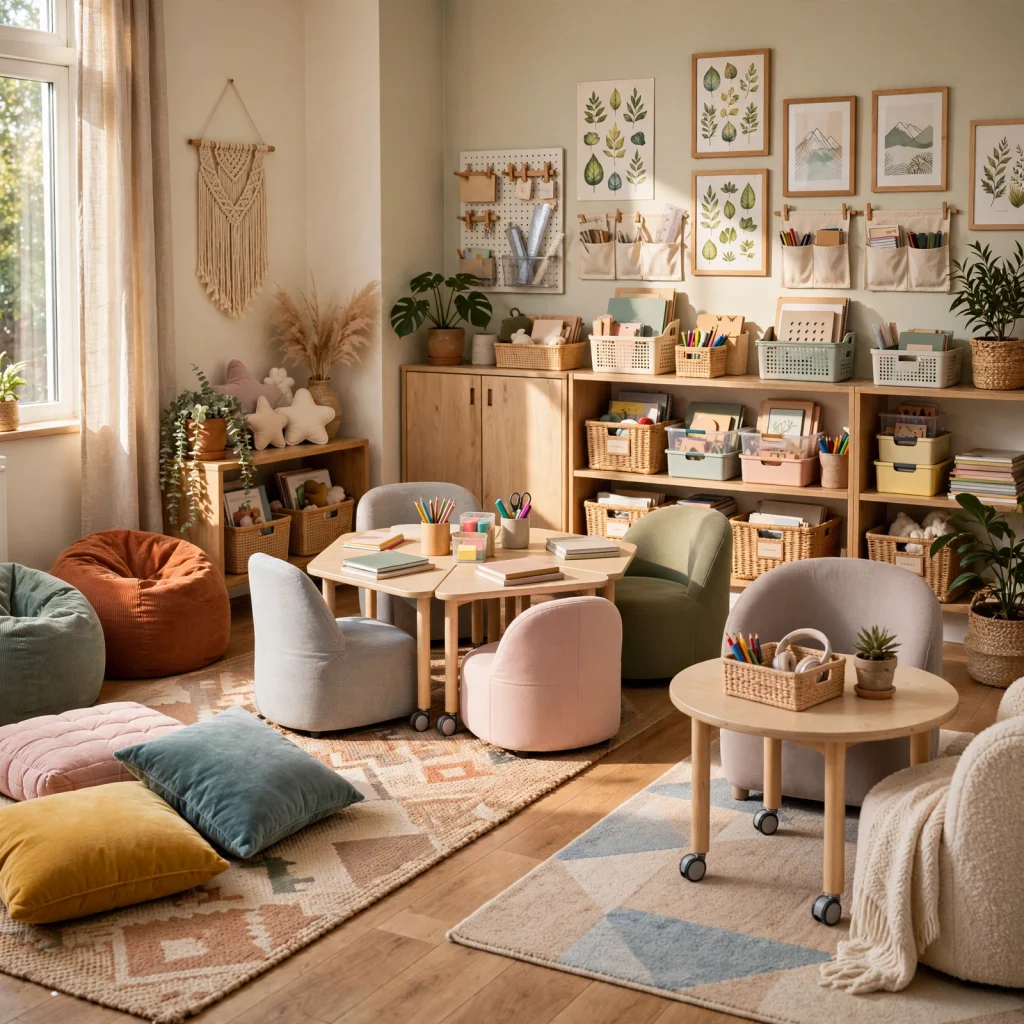
Flexible seating zones replace the traditional grid of desks with a mix of floor cushions, low tables, wobble stools, and a few standard chairs arranged into distinct areas around the room. This setup lets teachers designate spaces for quiet reading, group projects, and independent work without physically rearranging furniture every period. Execution is simple: use rugs or tape lines to visually separate zones, keep pathways clear for movement, and rotate seating options seasonally so the novelty doesn’t wear off for returning students.
2. Kraft Paper Bulletin Boards
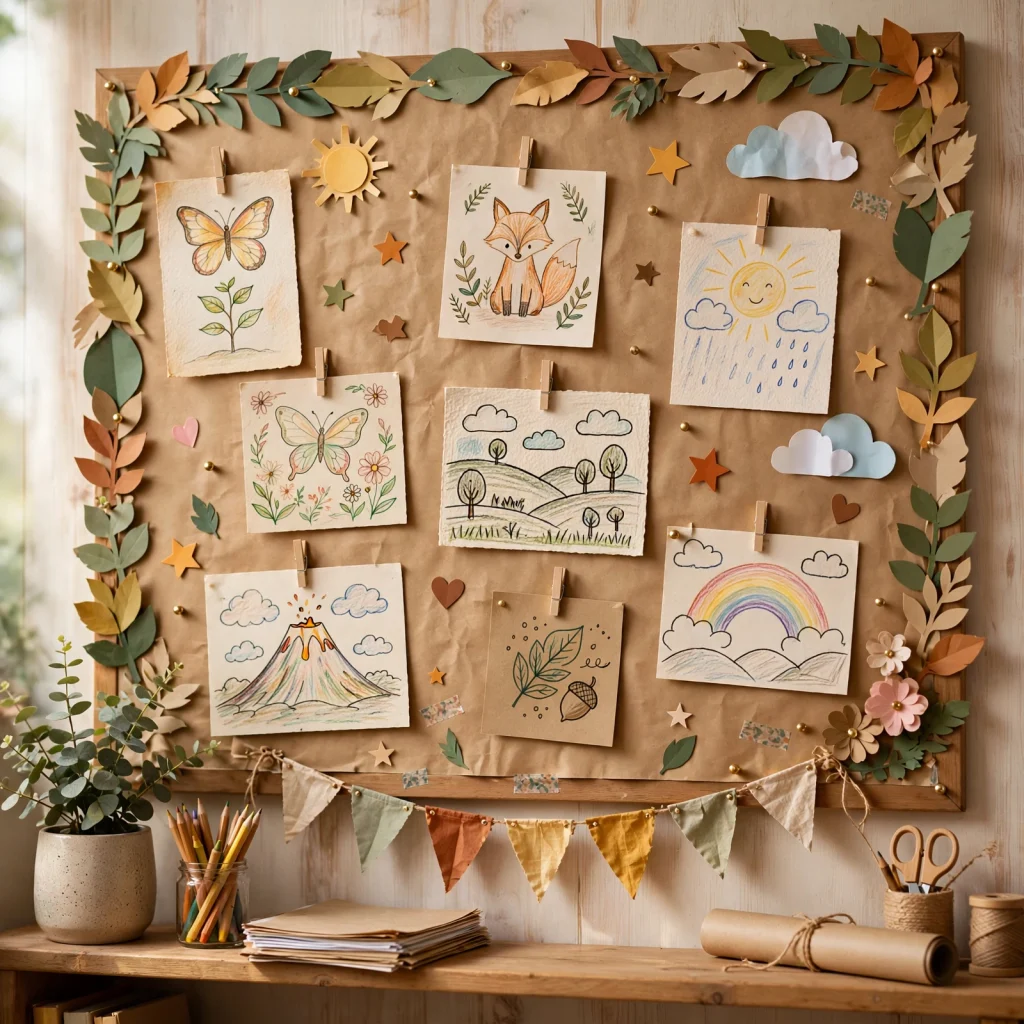
Kraft paper bulletin boards use plain brown craft paper as a neutral backdrop instead of the glossy colored paper most schools default to, giving displayed work and borders more visual room to stand out. The paper is inexpensive, comes in large rolls, and can be written on directly with markers for headers or labels. To execute this well, pair the kraft background with one or two accent colors in the border and lettering so the board reads as intentional rather than unfinished.
To see more diy room decor for teens
3. Labeled Storage Bins
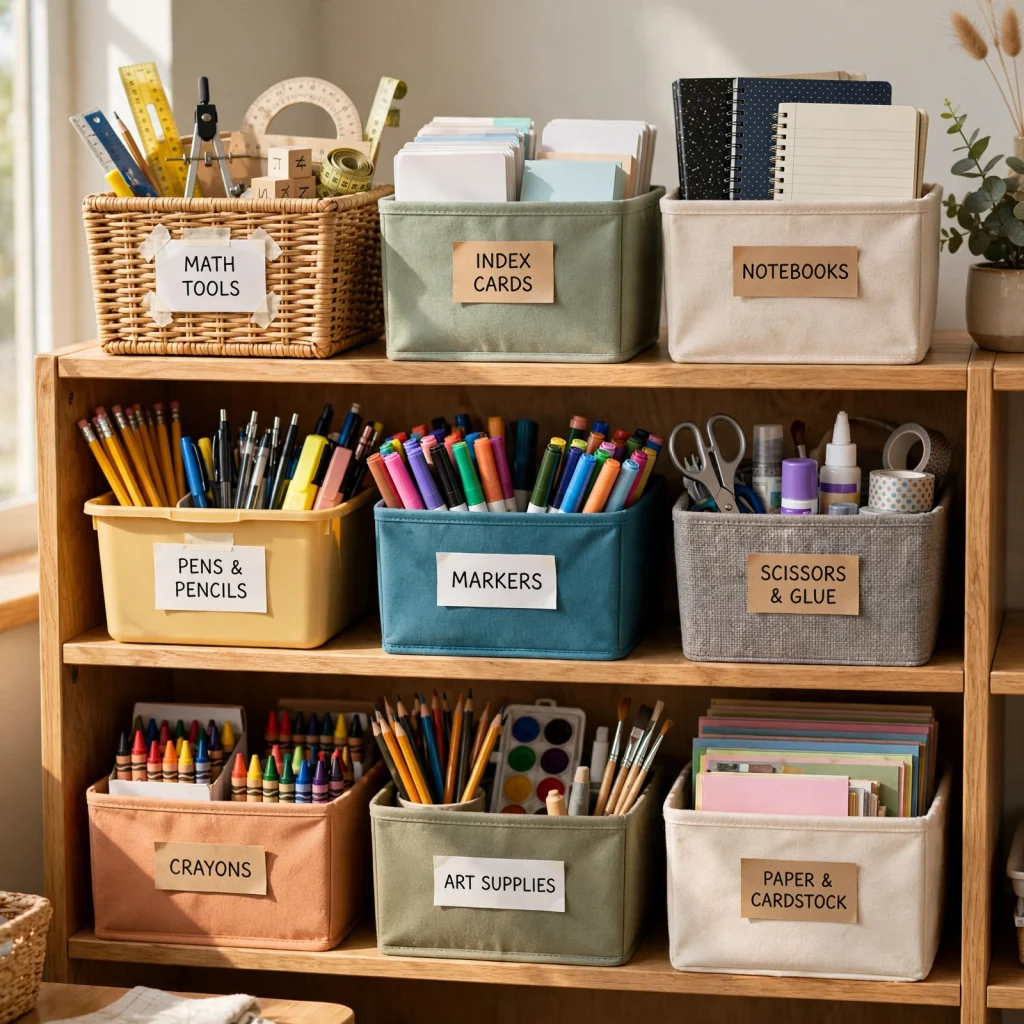
Labeled storage bins organize classroom supplies into clear, stackable containers with picture-and-word labels that even early readers can follow independently. This idea works because it reduces the time teachers spend redirecting students to the right supply station and builds a habit of self-sufficiency. Execute it by grouping bins by subject or activity type, using consistent label fonts and icons across the room, and placing frequently used bins at student eye level for easy access.
| Bin Size | Best For | Approx. Cost |
| Small (shoebox) | Art supplies, flashcards | 3–6 |
| Medium (dish tub) | Books, folders | 6–10 |
| Large (storage tote) | Games, seasonal materials | 10–18 |
4. Growth Mindset Word Wall
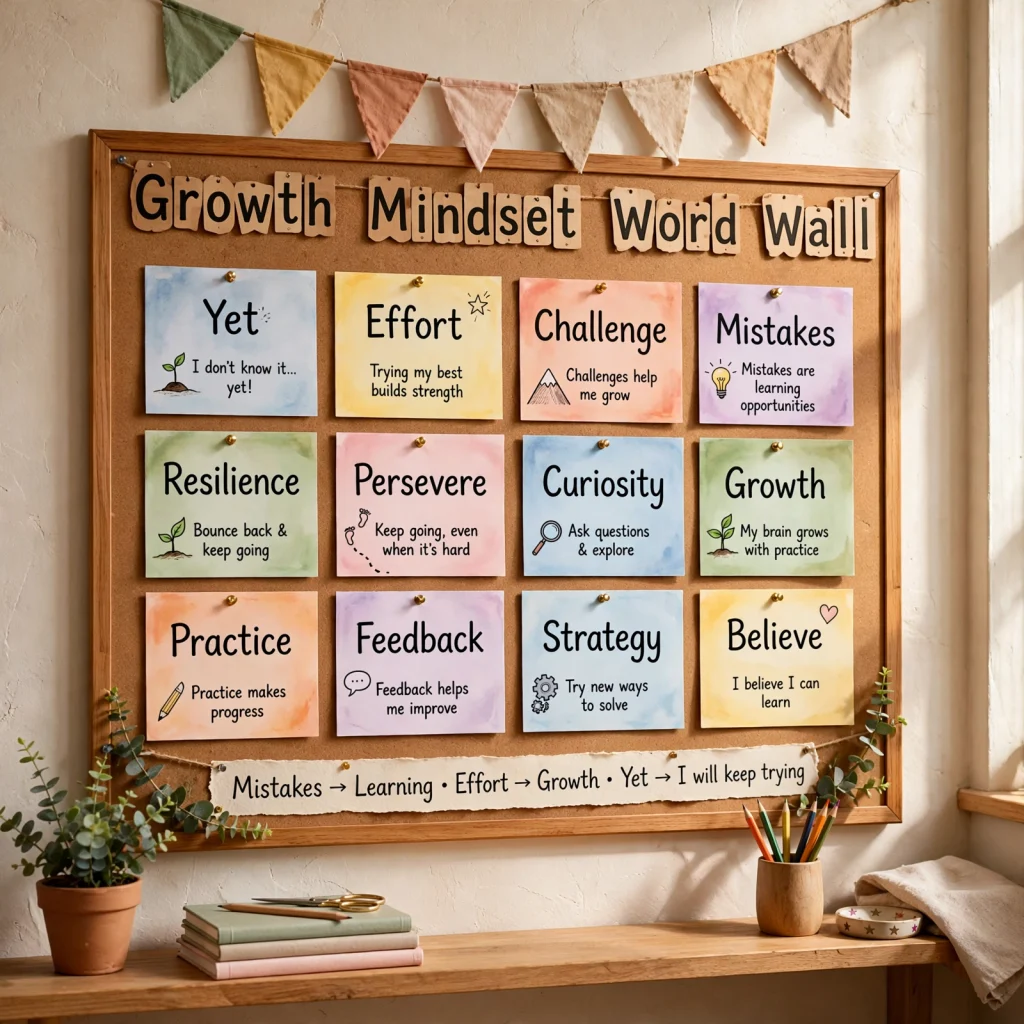
A growth mindset word wall displays vocabulary tied to effort, resilience, and problem-solving, such as “persevere” or “strategy,” in a dedicated wall section students reference during discussions and writing. Unlike a standard word wall, this one is curated specifically around mindset language rather than general vocabulary. To build it, introduce a few new words each month, have students help define them in their own words, and keep the display at a height where it’s genuinely readable, not purely decorative.
5. Reading Nook Canopy
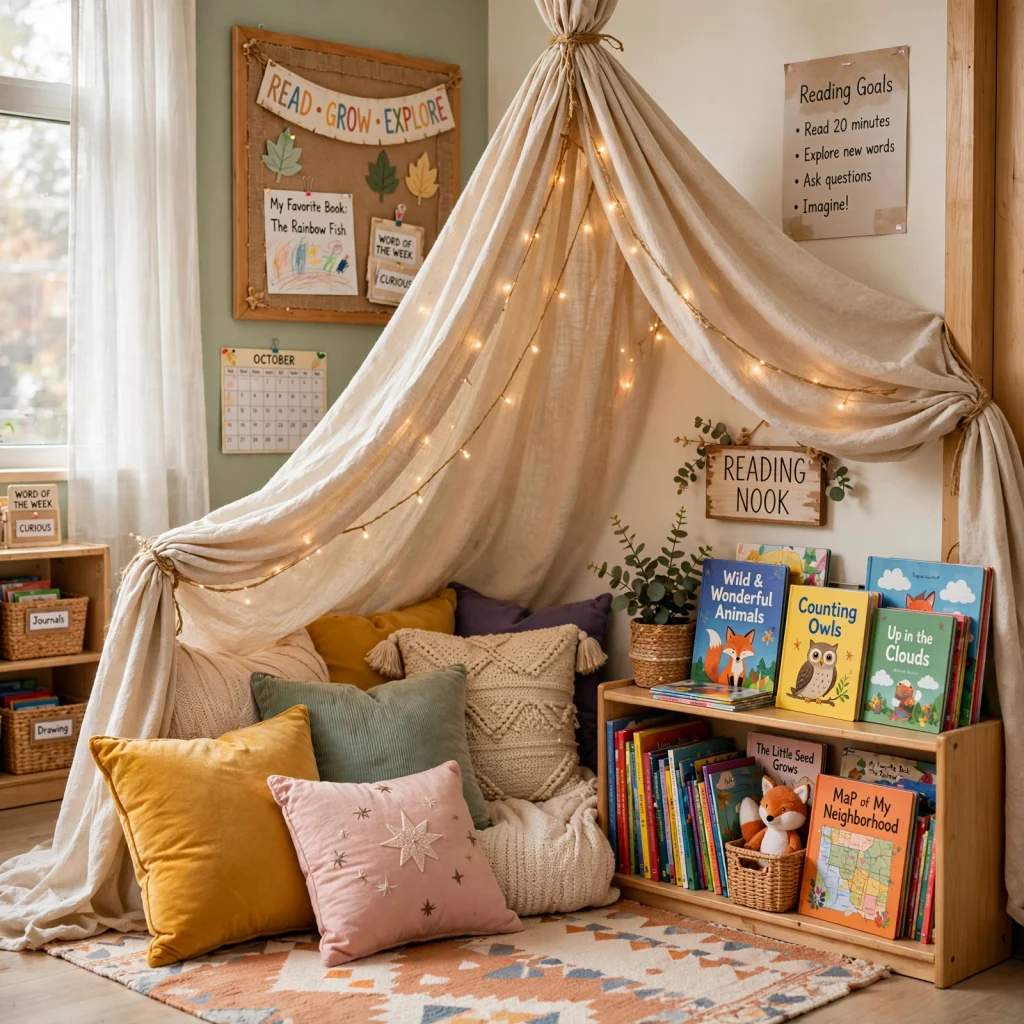
A reading nook canopy uses a simple fabric drape or pop-up tent frame to carve out a cozy, enclosed reading corner within the larger classroom. The enclosed feel helps students who get overstimulated by open classroom noise find a spot to decompress and focus on a book. Setup involves anchoring the canopy frame securely, adding floor cushions or a small rug underneath, and stocking a nearby low shelf with a rotating selection of books at varying reading levels.
6. Clothespin Display Line
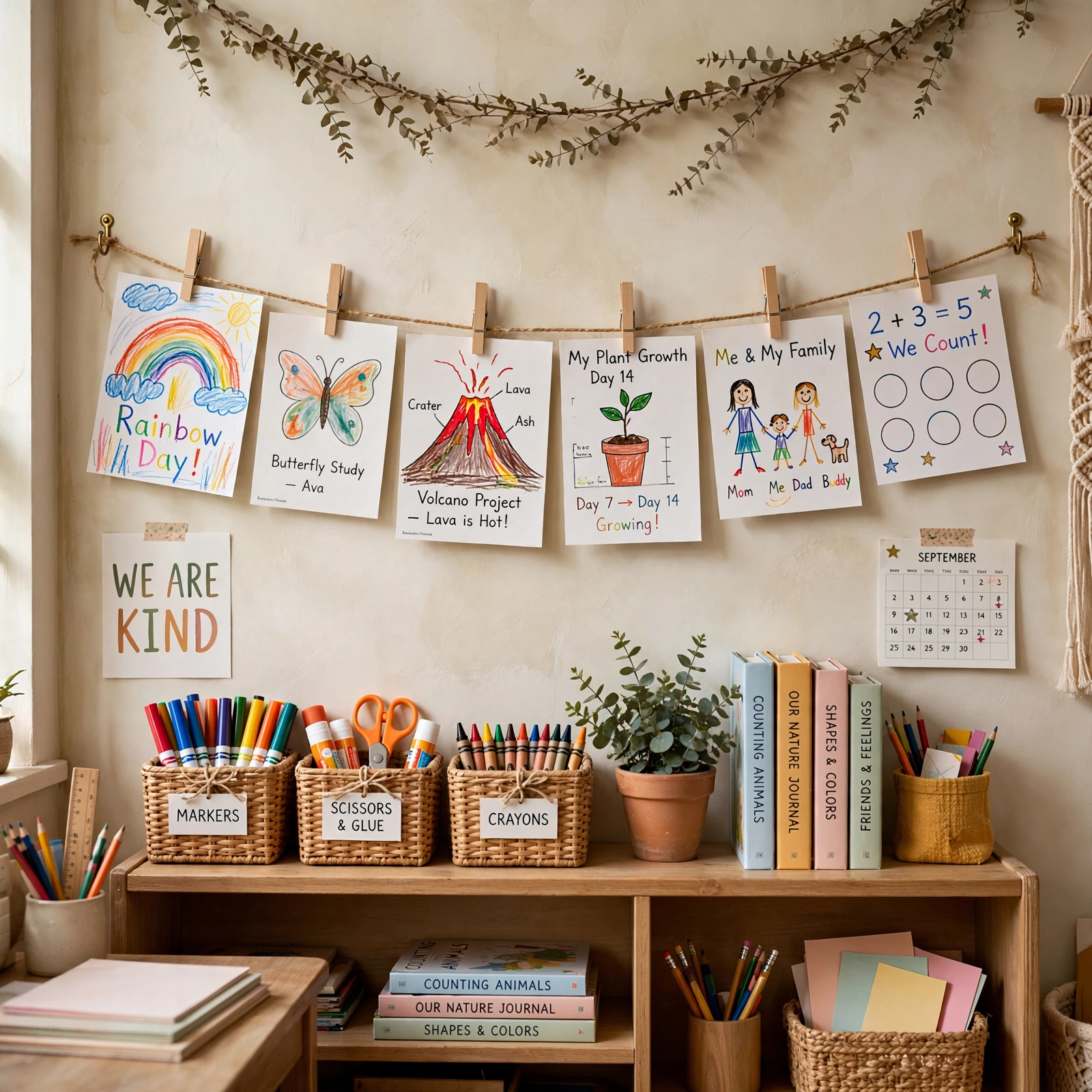
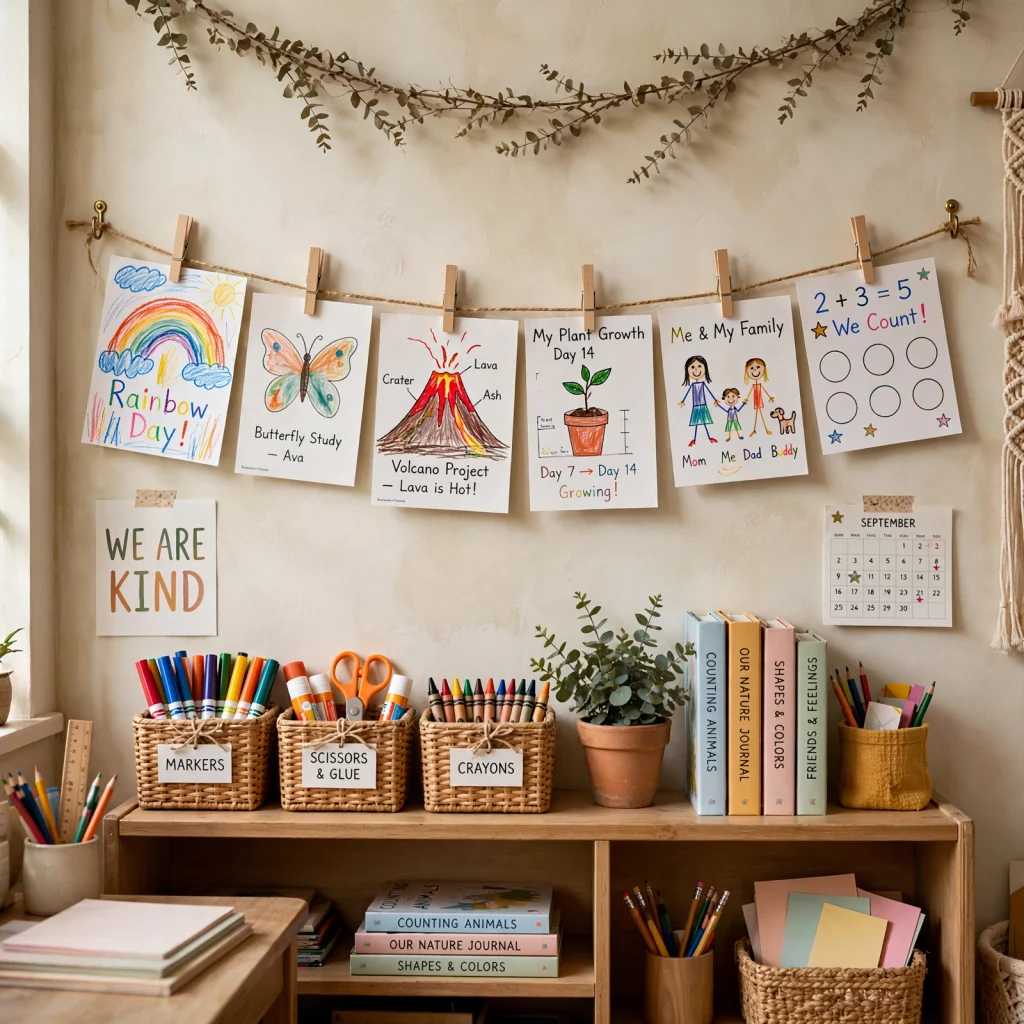
A clothespin display line strings twine or a thin dowel across a wall section and uses wooden clothespins to hang and swap out student work quickly. This method is faster to update than traditional pinned bulletin boards and gives the display a more casual, gallery-like feel. To execute it, mount the line at a height students can reach for hanging their own work, space clothespins evenly, and consider painting them in a single accent color for visual consistency.
7. Number Line Floor Decal
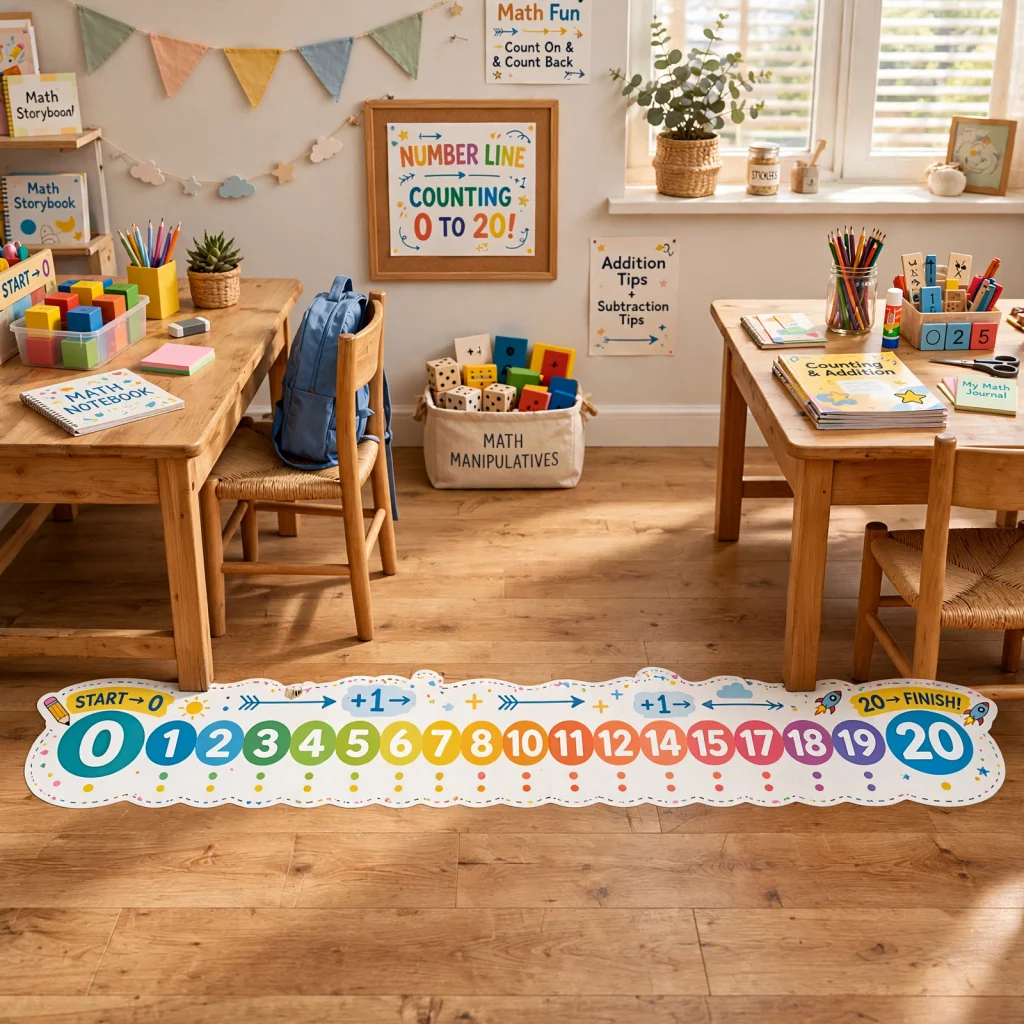
A number line floor decal is a long vinyl strip applied directly to the classroom floor, marked with numbers or a hundred chart students can physically walk along during math activities. This turns an abstract math concept into a kinesthetic learning tool without taking up any wall space. Execution requires measuring the intended walkway length before ordering, choosing a decal rated for classroom foot traffic, and reinforcing the edges with clear tape to prevent peeling.
8. Behavior Tracking Clip Chart
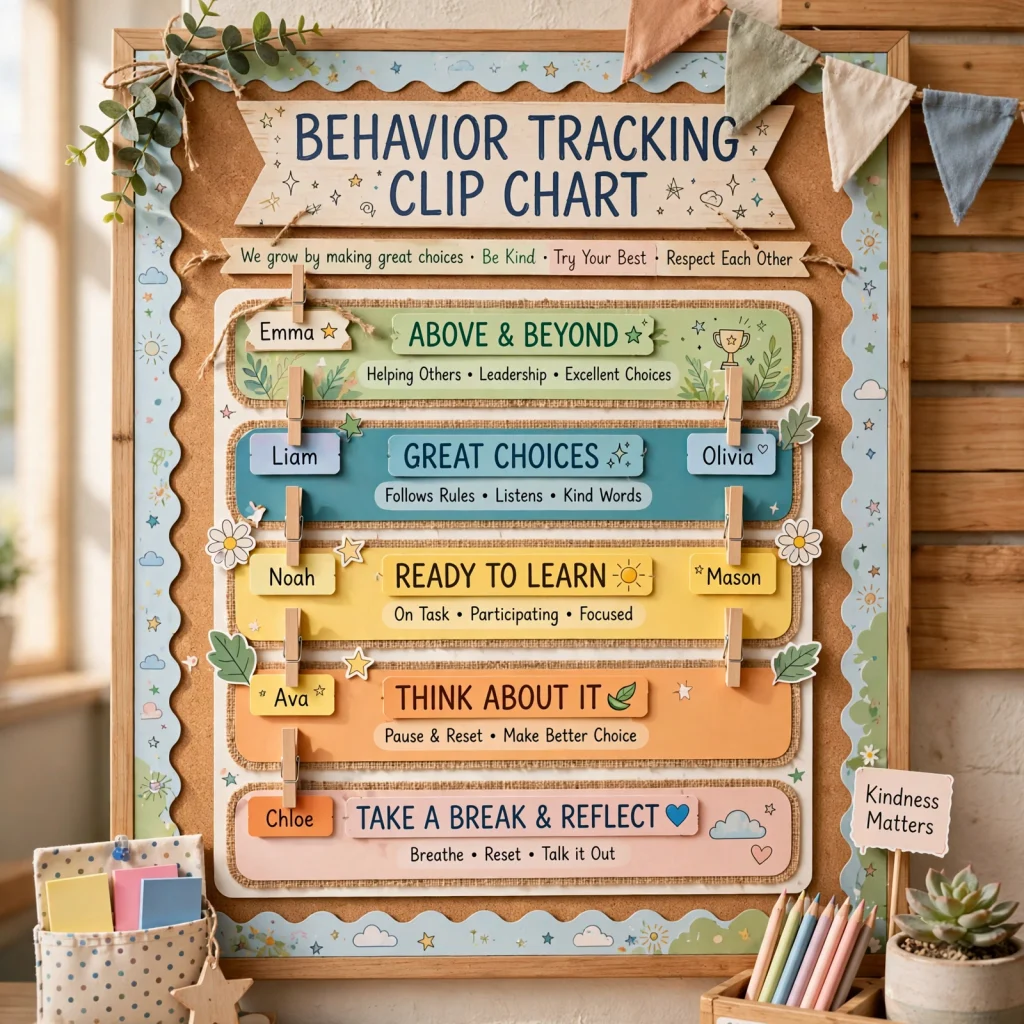
A behavior tracking clip chart uses a vertical, color-graded chart with movable clothespins bearing each student’s name, allowing quick visual check-ins on daily behavior expectations. It works because it gives students immediate, low-pressure feedback without singling anyone out verbally. To set it up, keep the color tiers simple, position the chart somewhere visible but not directly facing visitors at the door, and reset all clips at the start of each day.
9. Washi Tape Wall Borders
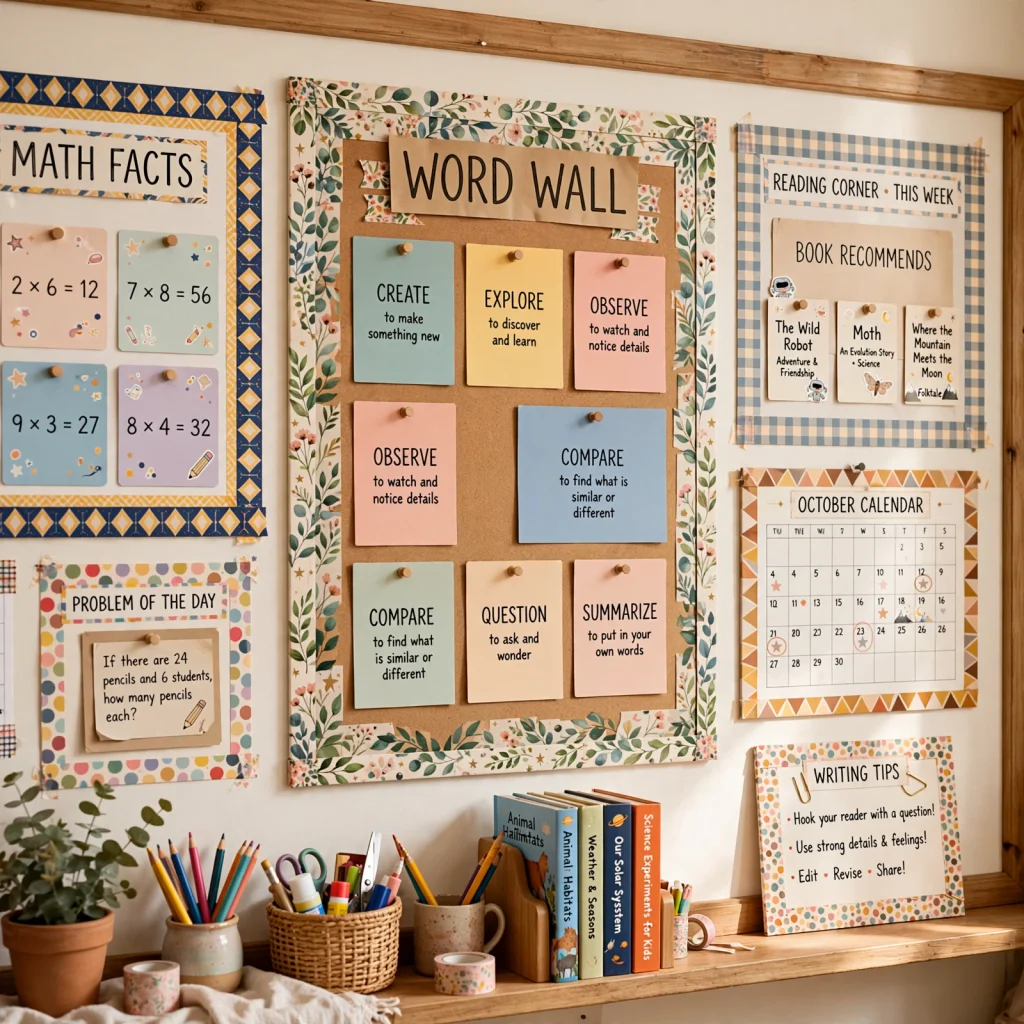
Washi tape wall borders use patterned decorative tape applied directly to painted cinderblock or drywall to frame bulletin boards, doorways, or reading corners without any drilling or heavy adhesive. Because washi tape removes cleanly, it’s ideal for classrooms in shared or rented buildings where wall damage isn’t allowed. Execute this by measuring and marking straight lines with a pencil first, applying tape in short sections to avoid bubbling, and choosing a pattern that complements rather than competes with existing bulletin board colors.
10. Student Job Chart
A student job chart assigns rotating classroom responsibilities, like line leader or plant waterer, to individual students using a pocket chart or magnetic board updated weekly. This idea builds classroom community and gives students a visible sense of ownership over shared spaces. To execute it, list jobs with simple icons, rotate assignments on a consistent weekly schedule, and place the chart near the classroom door so students can check their role each morning.
11. Vertical Plant Wall
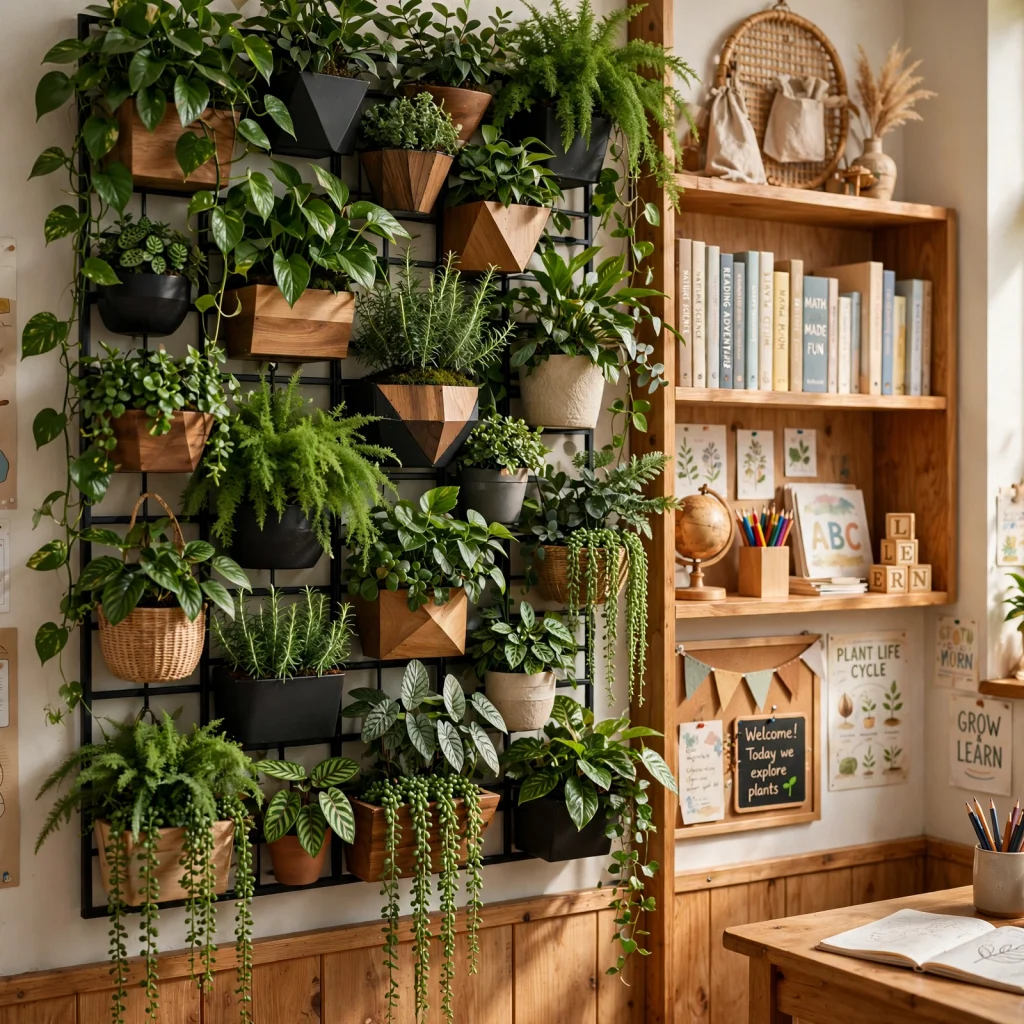
A vertical plant wall uses a wall-mounted grid or shelving unit to hold a cluster of low-maintenance plants like pothos or spider plants at varying heights. Greenery has been shown to support calmer classroom environments, and a vertical arrangement keeps floor and desk space completely clear. To build one, choose plants suited to your classroom’s actual light levels, assign plant care to the student job chart rotation, and use lightweight plastic pots to keep the wall mount from becoming overloaded.
12. Fabric Table Runners
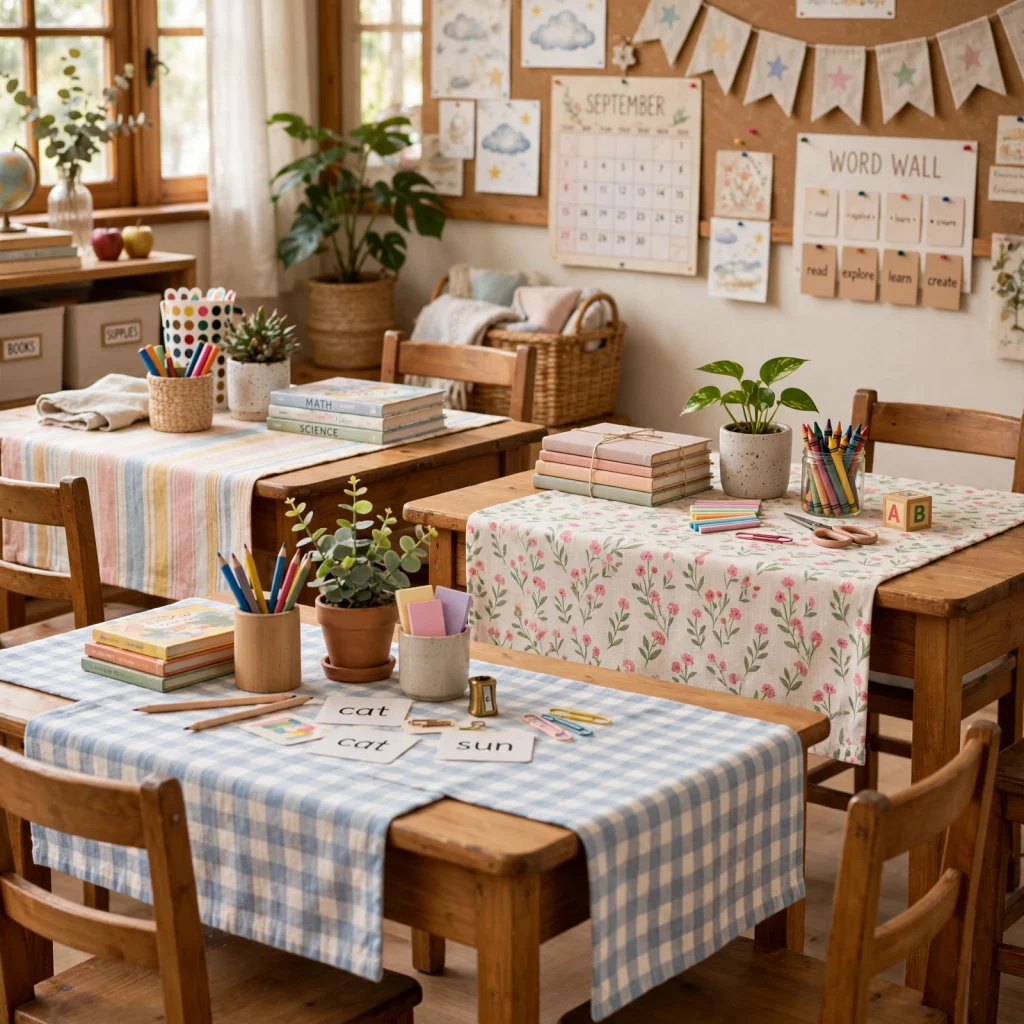
Fabric table runners lay across shared work tables or reading tables to add a layer of color and texture that’s easy to swap out seasonally. Unlike paint or wallpaper, runners require zero permanent alteration to furniture and can be laundered when they get worn. Execution is straightforward: choose a durable cotton-blend fabric, measure table length before cutting or purchasing, and rotate runners between a few patterns tied to the season or current unit theme.
13. Magnetic Whiteboard Calendar
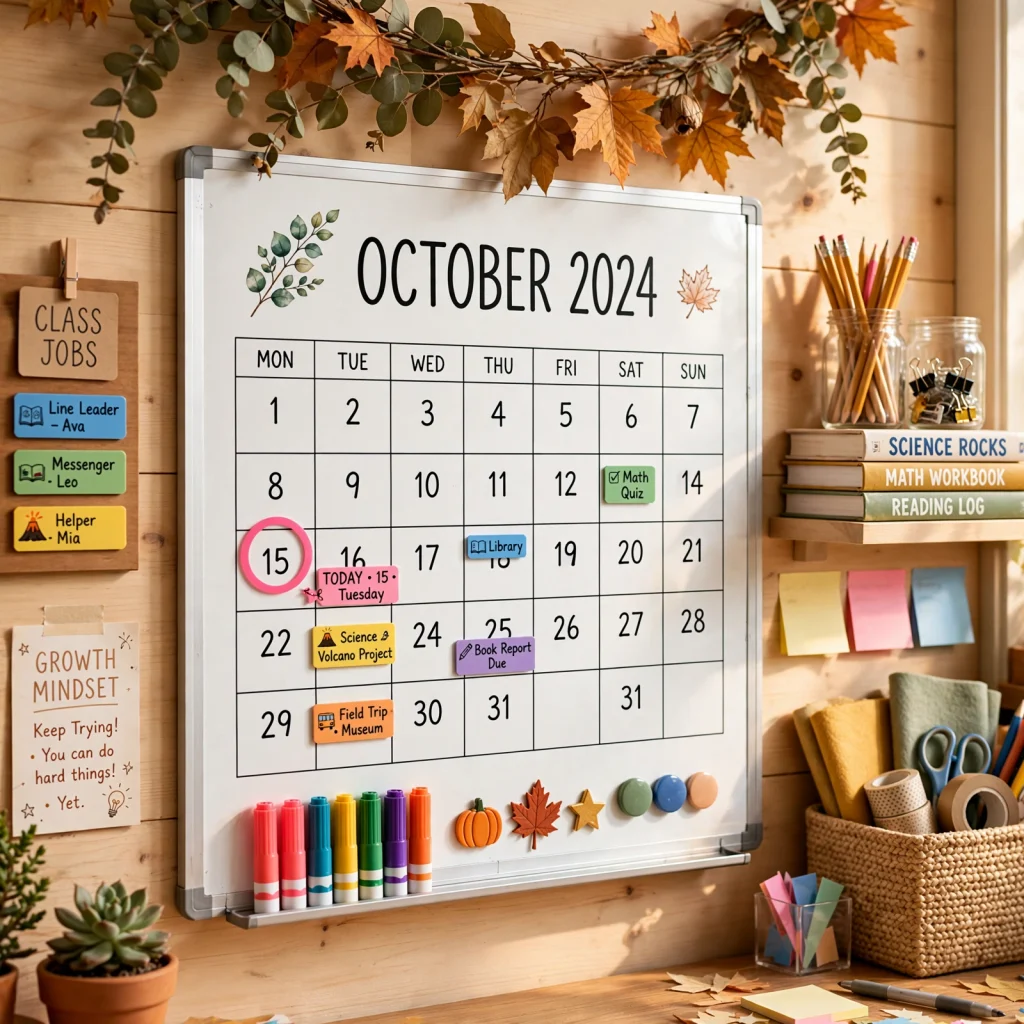
A magnetic whiteboard calendar replaces a static printed calendar with a reusable dry-erase grid and magnetic date, weather, and event pieces that students update daily. This turns a routine task into an interactive morning activity that reinforces date and sequencing skills. To set it up, mount the whiteboard at student height, laminate or magnet-back the movable pieces for durability, and assign the daily update as part of the student job chart rotation.
| Feature | Basic Version | Upgraded Version |
| Board Size | 16″ x 20″ | 24″ x 36″ |
| Magnetic Pieces | Printed paper + magnet tape | Pre-made laminated magnet set |
| Approx. Cost | 15–25 | 35–60 |
Shop the Look
A roll of natural kraft paper and a pack of colored wooden clothespins cover both the bulletin board and display line ideas in one purchase. A set of stackable labeled bins with interchangeable label inserts works well for the storage system and can be found in most classroom supply catalogs. A pop-up canopy tent designed for kids’ rooms doubles easily as a reading nook frame. A vinyl floor decal number line and a magnetic dry-erase calendar set round out the math and morning-routine corners of the room.
Common Mistake to Avoid
The most common classroom decor mistake is covering every available inch of wall space at the start of the year, leaving no room to display new student work as it’s created throughout the semester. This forces teachers to tear down existing displays just to make space, which wastes prep time and can make the room feel chaotic rather than organized. A better approach is to intentionally leave a few wall sections empty in August, treating them as reserved space for work that hasn’t been made yet.
FAQs
What is the best cheap classroom decor idea?
Kraft paper bulletin boards are consistently the most affordable classroom decor upgrade, since a single large roll costs only a few dollars and can cover multiple boards throughout the year. Because the paper is a neutral base, it also extends the life of accent materials like borders and letters, which can be reused across different themes. Pairing it with clothespin display lines keeps ongoing costs low since both materials are reusable for years with basic care.
How do I decorate a classroom without spending much money?
Focus on reusable structural elements like storage bins, clip charts, and display lines rather than seasonal paper decorations that need replacing every few months. Many decor ideas, including the number line floor decal and job chart, are one-time purchases that function all year long. Checking district supply closets, teacher resale groups, and end-of-summer clearance sales for classroom basics before buying new can also significantly cut first-year classroom decor costs.
Should classroom walls be busy or minimal?
Current research generally favors a calmer, more minimal wall approach, particularly for younger grades and students who are easily overstimulated by visual clutter. This doesn’t mean bare walls; it means being selective about what stays up permanently versus what rotates. A neutral kraft paper base with a few consistently updated sections, like the growth mindset word wall, tends to strike the right balance between engaging and overwhelming.
What should be on a classroom job chart?
A classroom job chart should include practical daily tasks such as line leader, calendar helper, plant waterer, and materials distributor, sized appropriately to the number of students in the room. Jobs should rotate weekly so every student gets a turn across the semester, and each job should be simple enough for a student to complete independently. Pairing the job chart with the magnetic whiteboard calendar streamlines the morning routine considerably.
How often should classroom decor be updated?
Structural elements like storage bins, seating zones, and display lines are designed to last the full school year without changes, while displayed student work should rotate every two to four weeks to keep the room current. Seasonal accents, such as table runners or word wall vocabulary, work well on a monthly rotation. Updating too frequently creates unnecessary prep work, while updating too rarely can make a classroom feel stagnant to returning students.
Conclusion
A well-planned classroom decor setup doesn’t require a big budget, just a clear sense of which ideas actually support how students learn and move through the room each day. Save this list to Pinterest for easy reference when you’re setting up your room, and check out our related post on budget-friendly classroom organization systems for more ideas that pair well with these.