12 Dreamy Fall Kitchen Decor Ideas for a Warmer Space
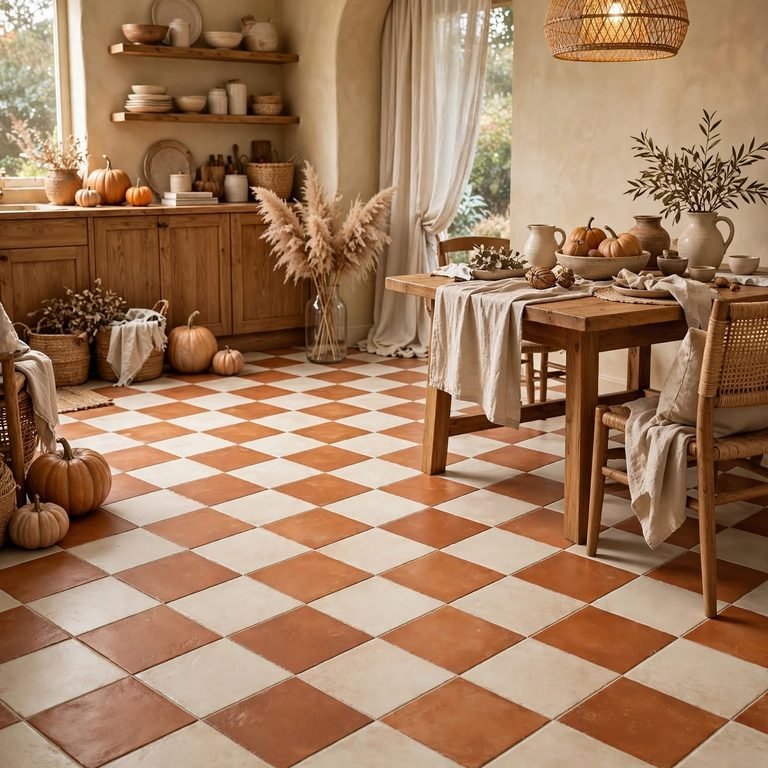
Fall kitchen decor tends to get treated as an afterthought compared to the living room or entryway, often limited to a single autumn-scented candle by the sink. The kitchens that actually feel like the season changed usually rely on tableware, textile, and lighting swaps rather than decorative objects that compete with daily cooking and cleanup. This guide covers twelve ideas for counters, open shelving, and dining nooks, along with material and sizing details for making each one practical as well as seasonal.
Trend & Background
Kitchen styling for autumn has shifted away from printed dish towels and plastic pumpkin accents toward stoneware, linen, and unlacquered brass finishes that hold up to daily use and don’t look out of place once November arrives. This mirrors the broader move in home design toward decor that earns its place through function, not just appearance, on the most heavily used surfaces in a home. It matters now because kitchens see more daily wear than any other room, making durability and washability as important as color when choosing seasonal pieces.
Key Takeaways
- Small material swaps in tableware, textiles, and lighting do more for fall kitchen decor than seasonal knick-knacks on open shelves.
- Natural materials like stoneware, wood, and rattan hold up better to daily kitchen use than dyed or plastic seasonal decor.
- Functional pieces dish towels, runners, lighting cost slightly more upfront but stay useful well past a single season.
- Open shelving and counters benefit from restraint, since a cluttered kitchen counter undercuts the seasonal effect rather than reinforcing it.
1. Stoneware Dinnerware Set
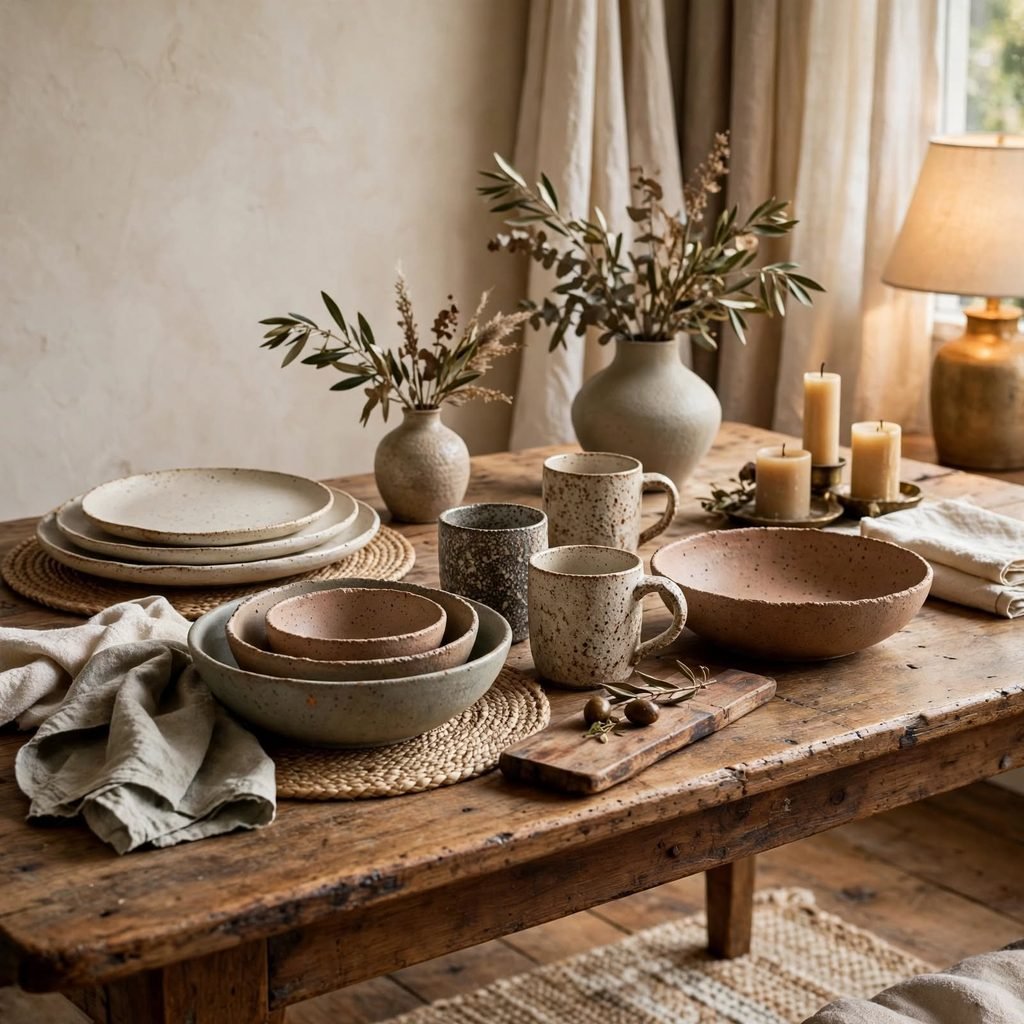
Swapping bright white everyday plates for a matte stoneware set in cream, terracotta, or sage brings warmth to the table without requiring any structural changes to the kitchen. Choosing a set that’s both dishwasher and microwave safe keeps the swap practical rather than purely decorative. Mixing the new stoneware with a few existing white pieces, rather than replacing the entire set, keeps the cost and commitment lower.
2. Linen Tea Towels
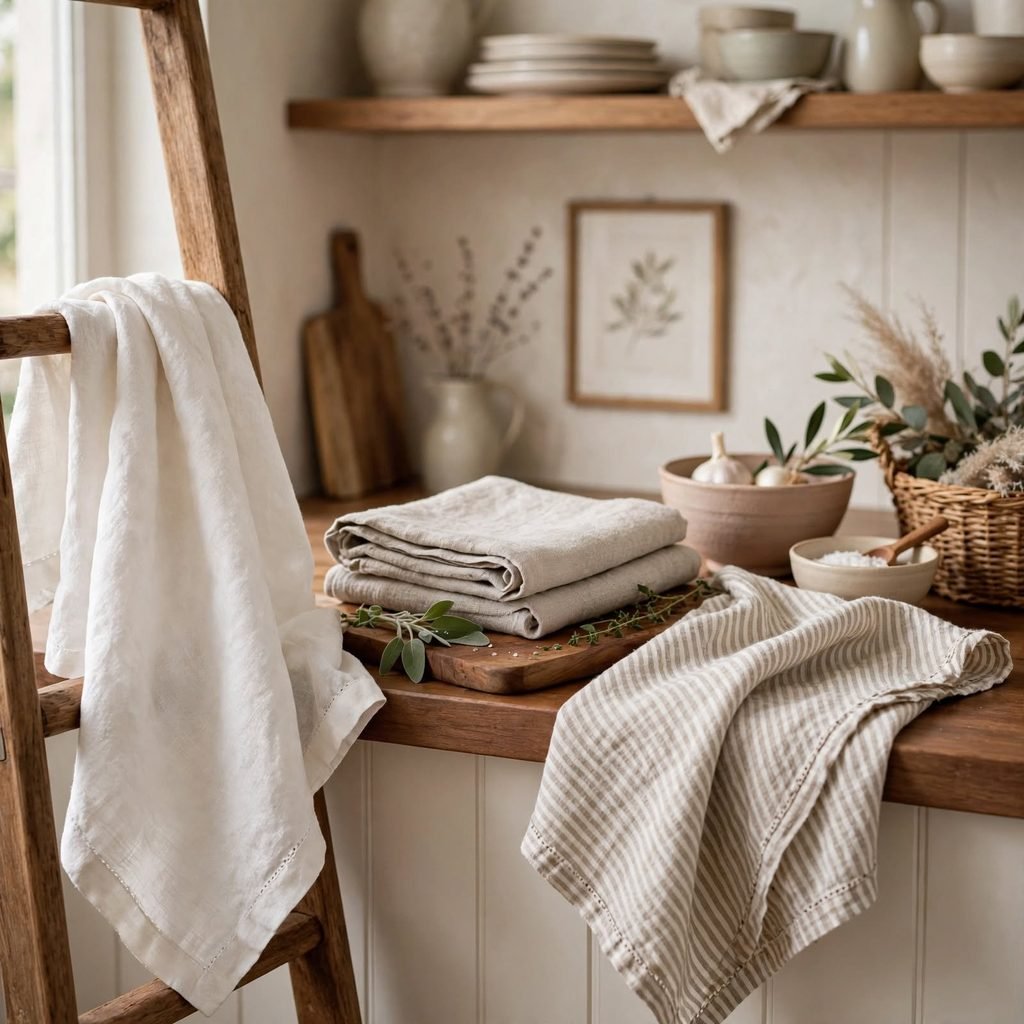
A set of linen tea towels in a muted plaid or solid rust tone replaces printed cotton towels that often look dated or overtly seasonal within a year. Linen also absorbs moisture better than cotton and dries faster between uses, which matters in a kitchen that sees daily wear. Draping two or three folded towels over the oven handle or a hook keeps them visible without cluttering counter space.
3. Copper Cookware Display
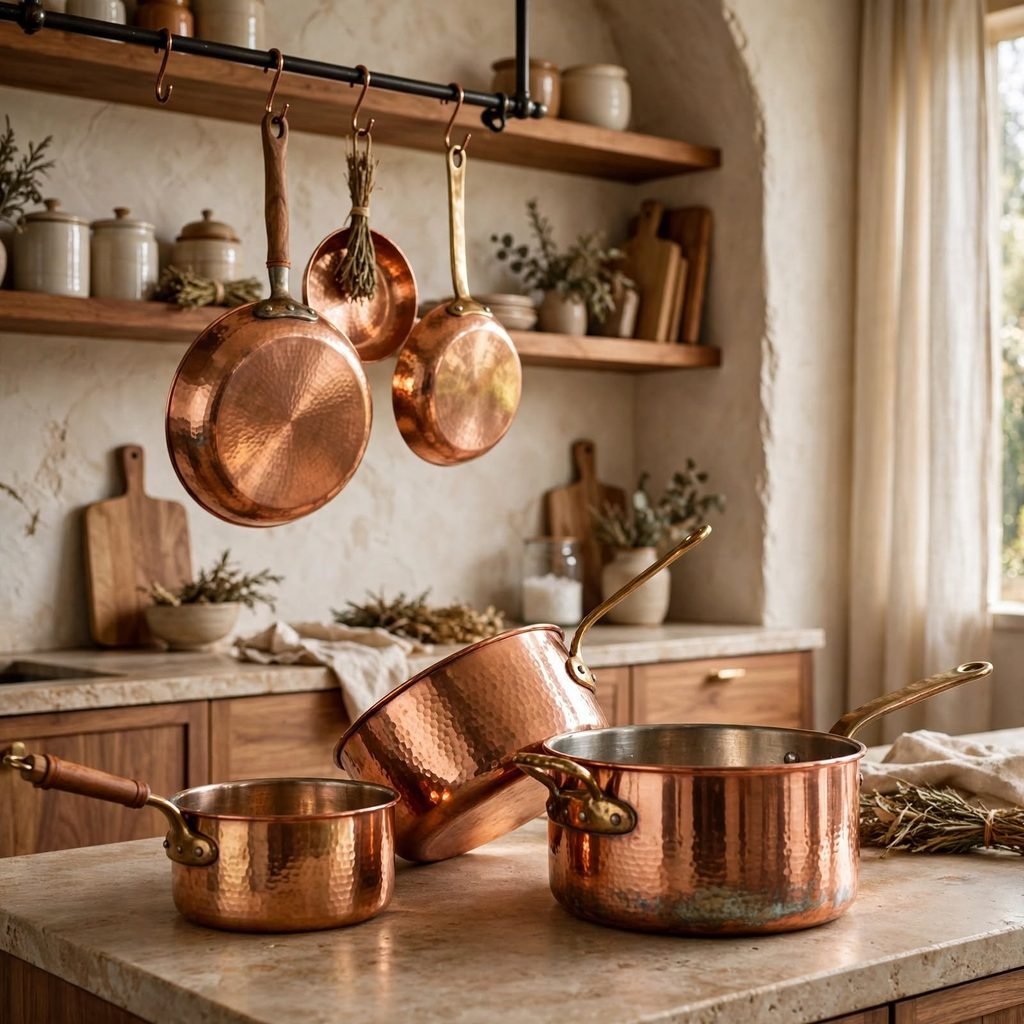
Hanging a small collection of copper pots or pans on a wall rack turns functional cookware into a warm-toned focal point without adding any purely decorative items to the kitchen. Copper develops a natural patina over time, which suits the season’s palette better than polished stainless steel. A rack mounted 18 to 24 inches above the stove keeps pieces within reach while still visible from most angles in the room.
| Rack Width | Pieces Held | Best Placement |
| 24 in | 3–4 pots | Above stove |
| 36 in | 5–6 pots | Open wall space |
| 48 in | 7+ pots | Kitchen island |
4. Woven Table Runner
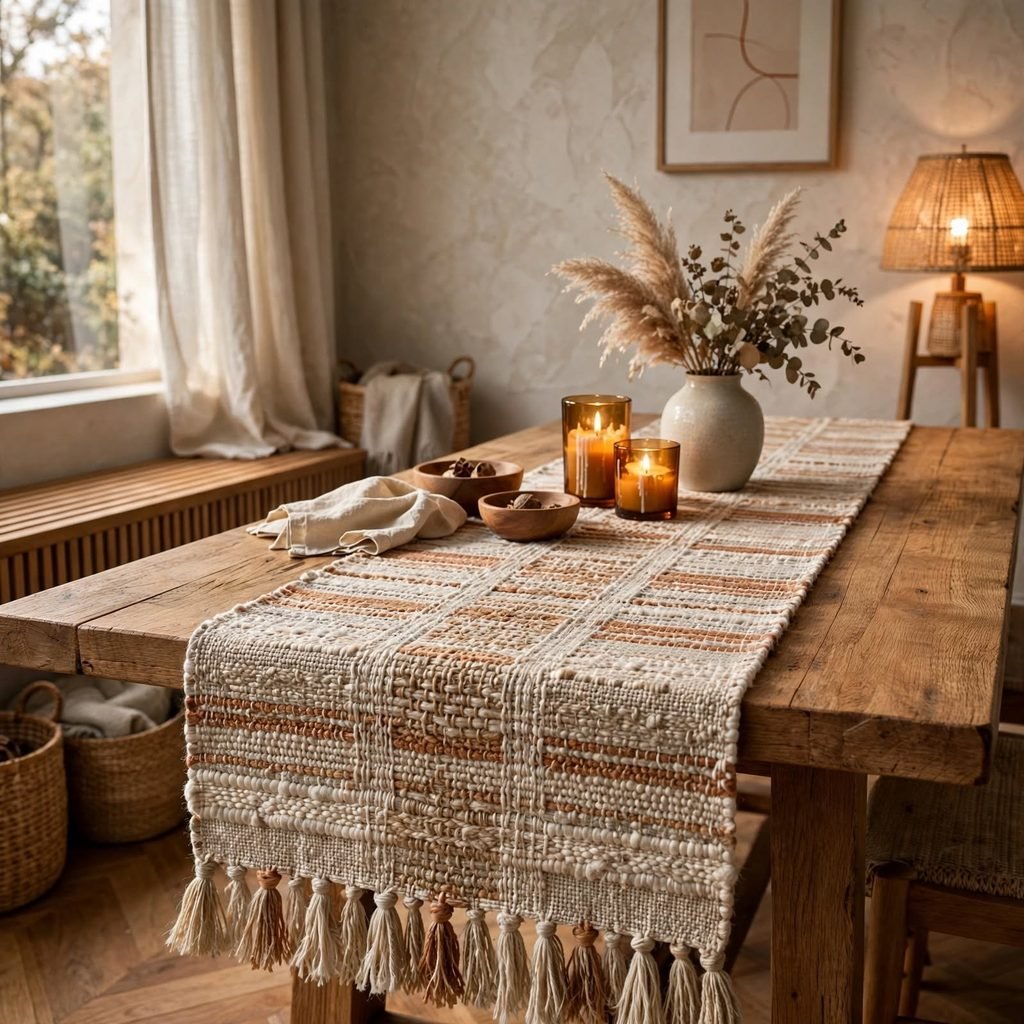
A woven jute or waffle-weave table runner in a warm neutral grounds a kitchen table the way a plain tablecloth often can’t, especially once a seasonal centerpiece gets layered on top. Choosing a runner roughly six inches narrower than the table on each side leaves room for place settings without the fabric hanging into laps. This piece also transitions easily into Thanksgiving table settings without needing to be replaced.
Transform your home for the season with these beautiful fall living room decor ideas, from cozy textures and warm colors to charming autumn accents.
5. Cinnamon Stick Jar
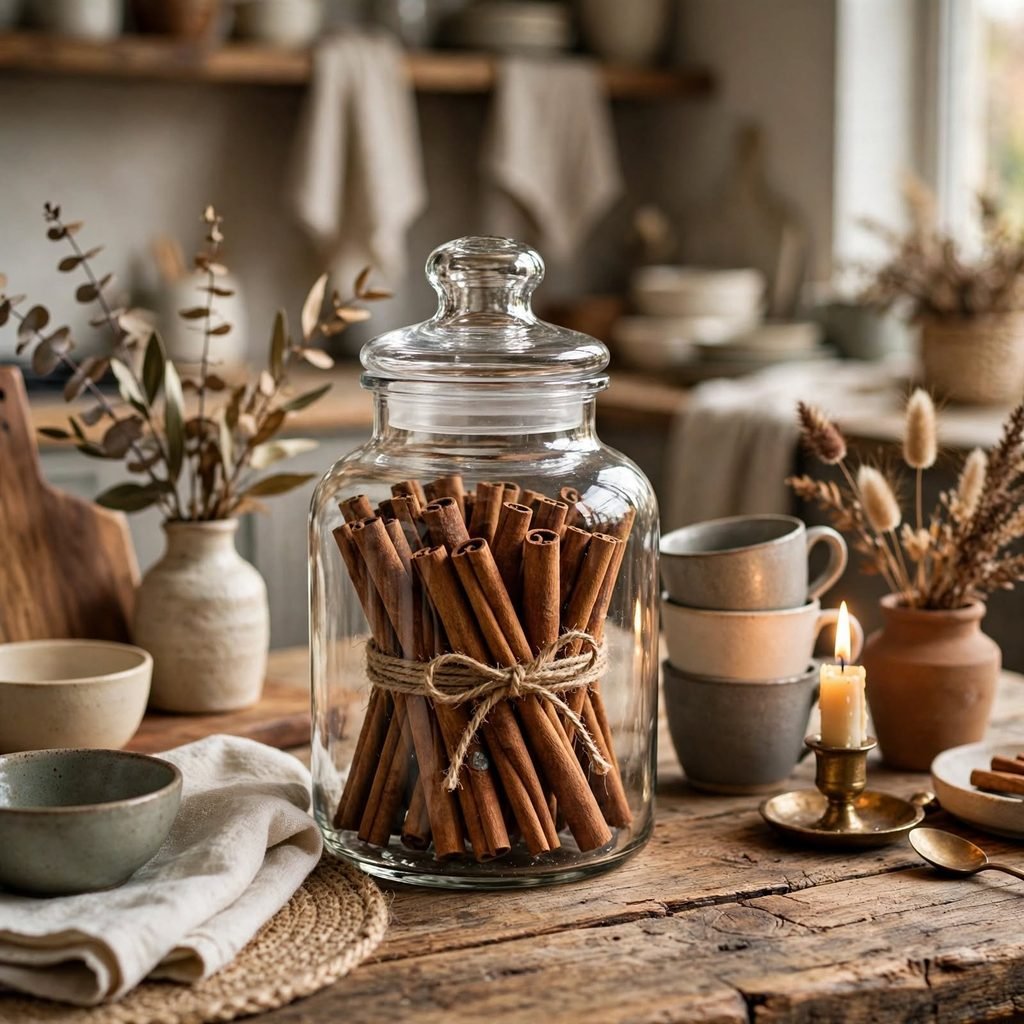
A glass jar filled with bundled cinnamon sticks, displayed near the stove or on open shelving, adds scent and rustic texture without the mess or fire risk of scented candles near cooking surfaces. Lightly crushing one or two sticks every few weeks releases more fragrance than the sticks provide on their own. This works especially well in kitchens where open flame from candles isn’t practical near appliances.
6. Rattan Pendant Light
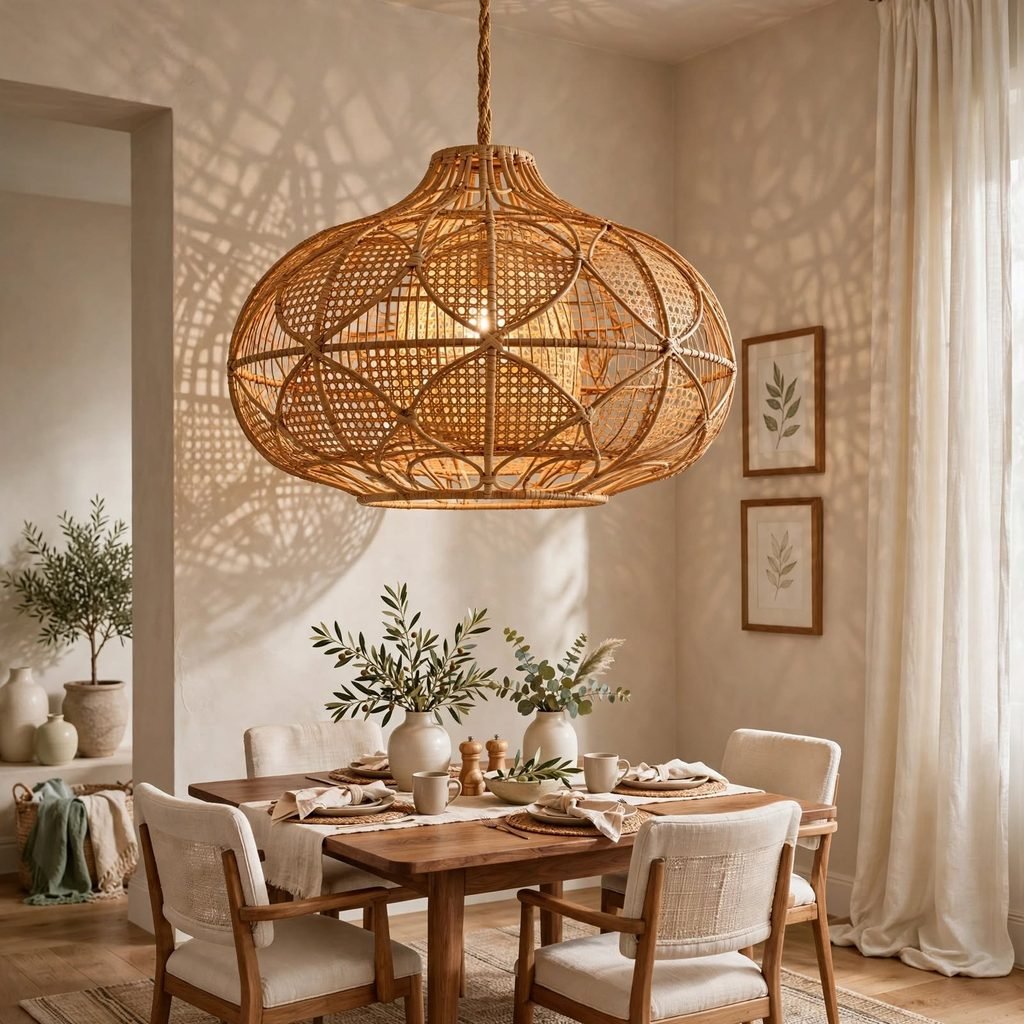
Swapping a standard flush-mount fixture for a woven rattan or cane pendant light adds warmth through shadow and texture rather than color alone, which matters in kitchens that otherwise rely on hard surfaces and bright task lighting. Choosing a diameter roughly one-third the width of the table below it keeps the fixture proportional. This works particularly well over breakfast nooks where natural light is already more limited in fall and winter.
7. Terracotta Utensil Crock
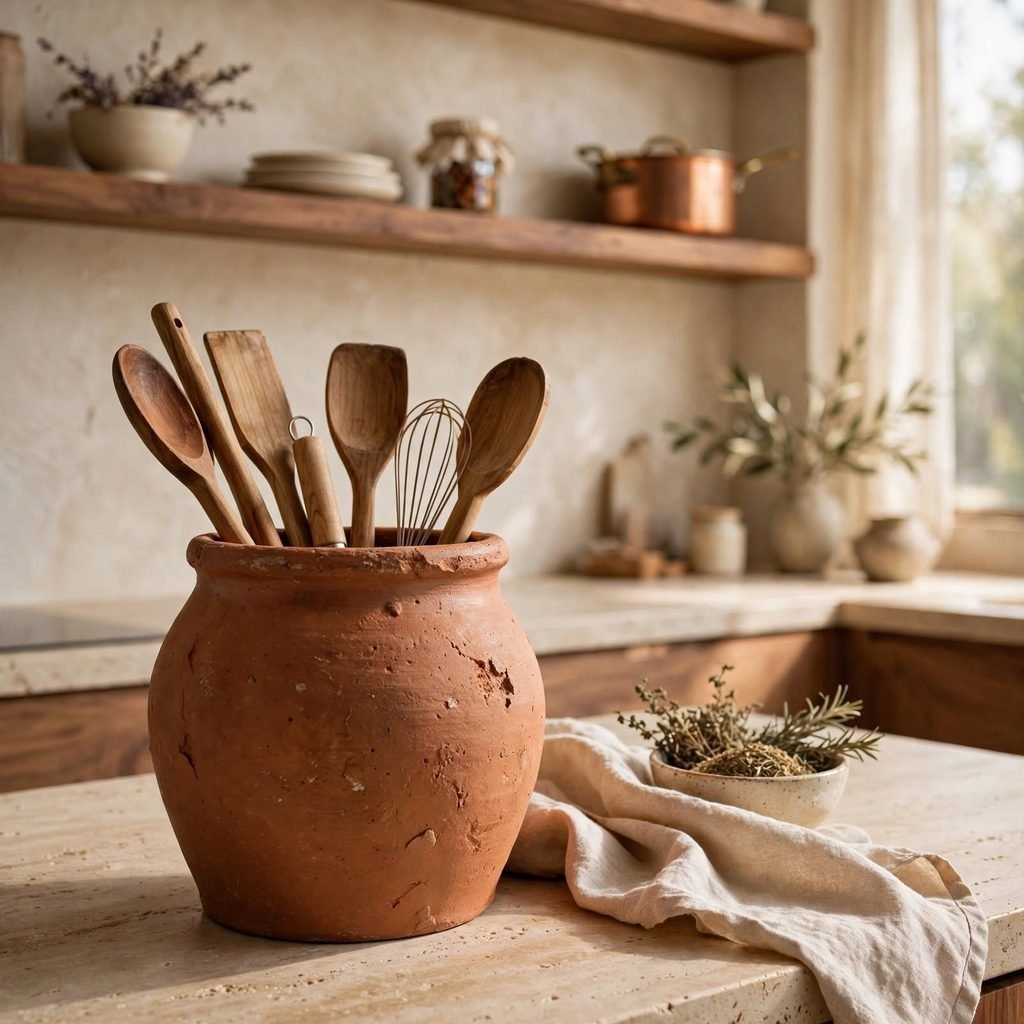
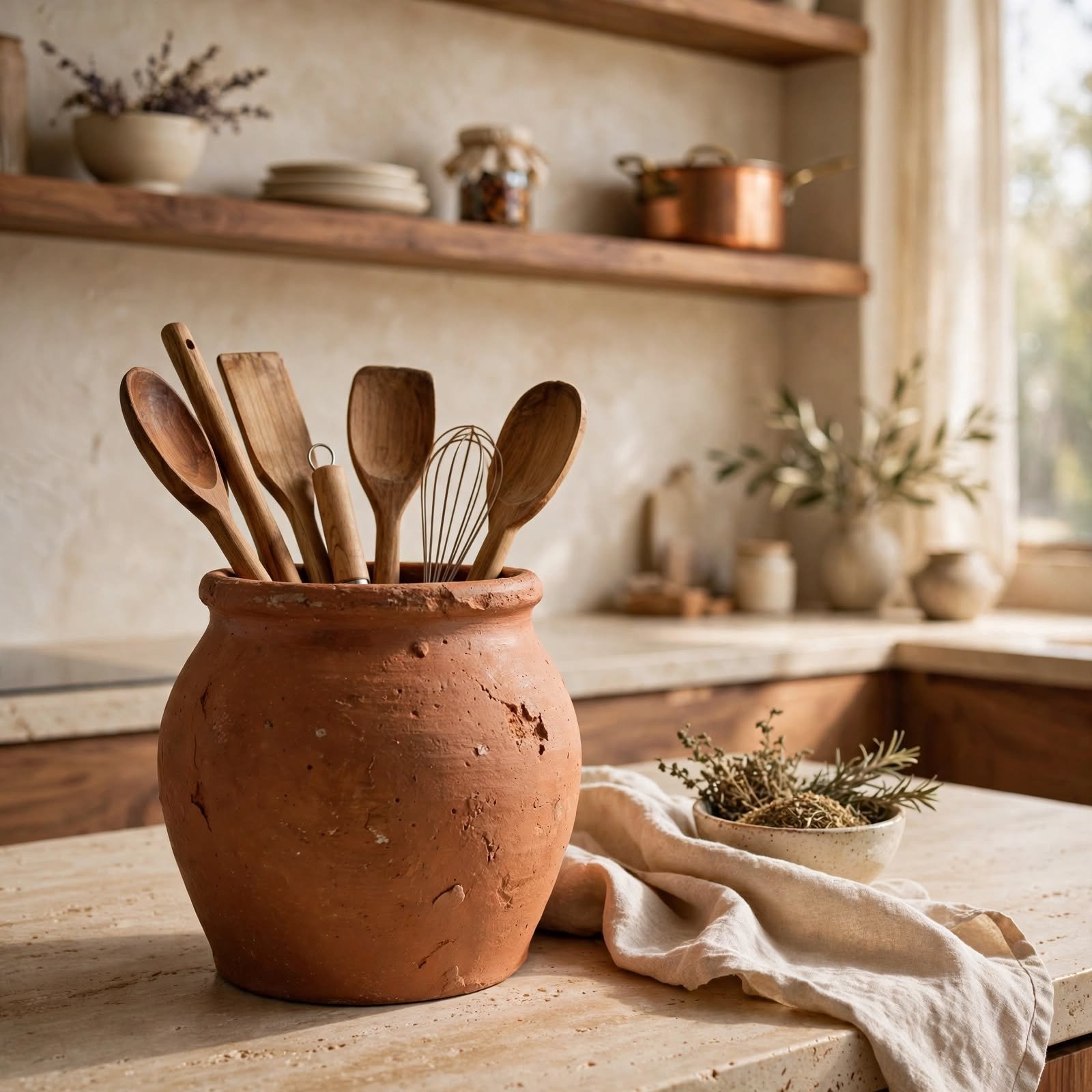
An unglazed terracotta crock, used to hold wooden spoons and cooking utensils near the stove, replaces a plastic or stainless crock with a material that suits the season without adding a separate decorative object. The porous clay also helps utensils dry faster than a fully glazed alternative. Choosing a crock between 6 and 8 inches in diameter fits most standard utensil collections without crowding counter space.
8. Wood Cutting Board Display
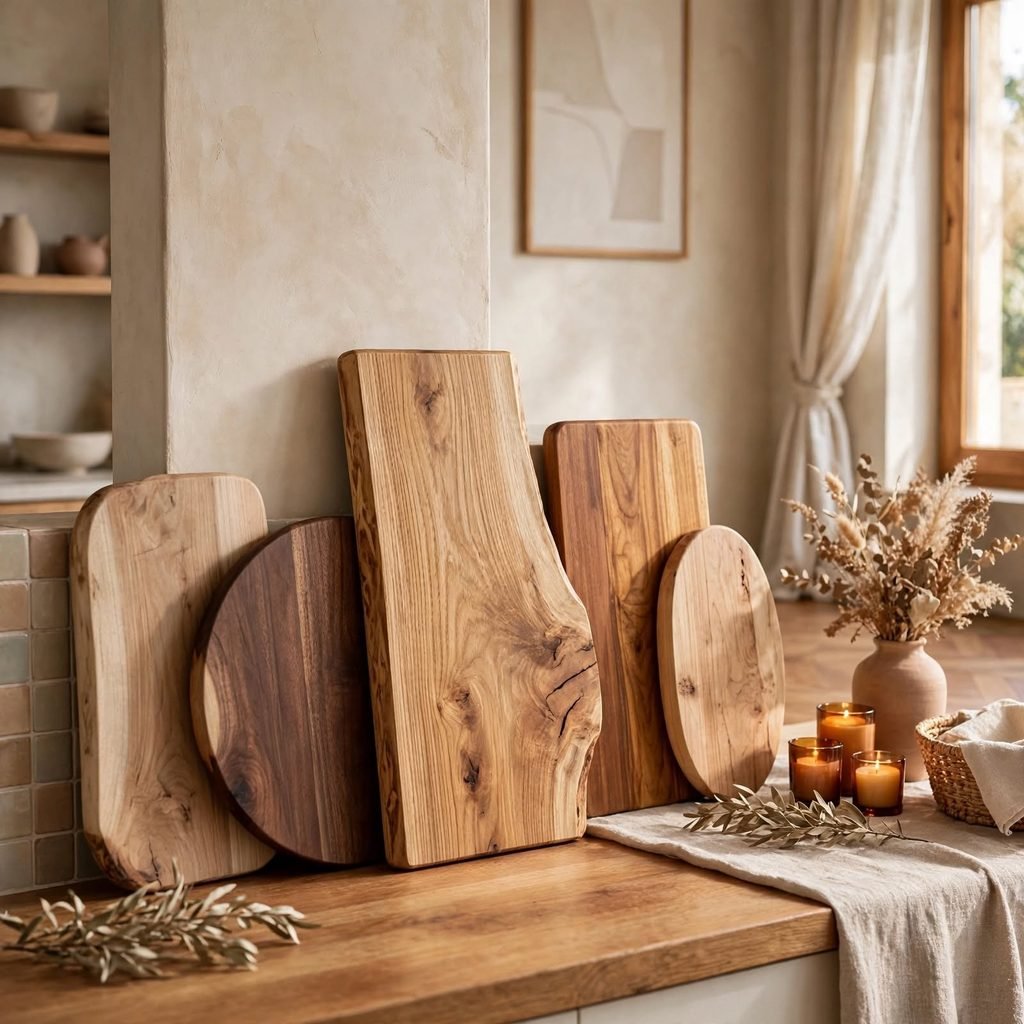
Leaning two or three wood cutting boards of varying sizes against a backsplash, rather than storing them in a drawer, turns a functional kitchen item into a warm-toned display element. Walnut or acacia boards develop richer color over time than lighter woods like maple. Choosing boards in graduated sizes, from roughly 10 to 16 inches, creates a layered look rather than a flat, uniform stack.
9. Amber Glass Canisters
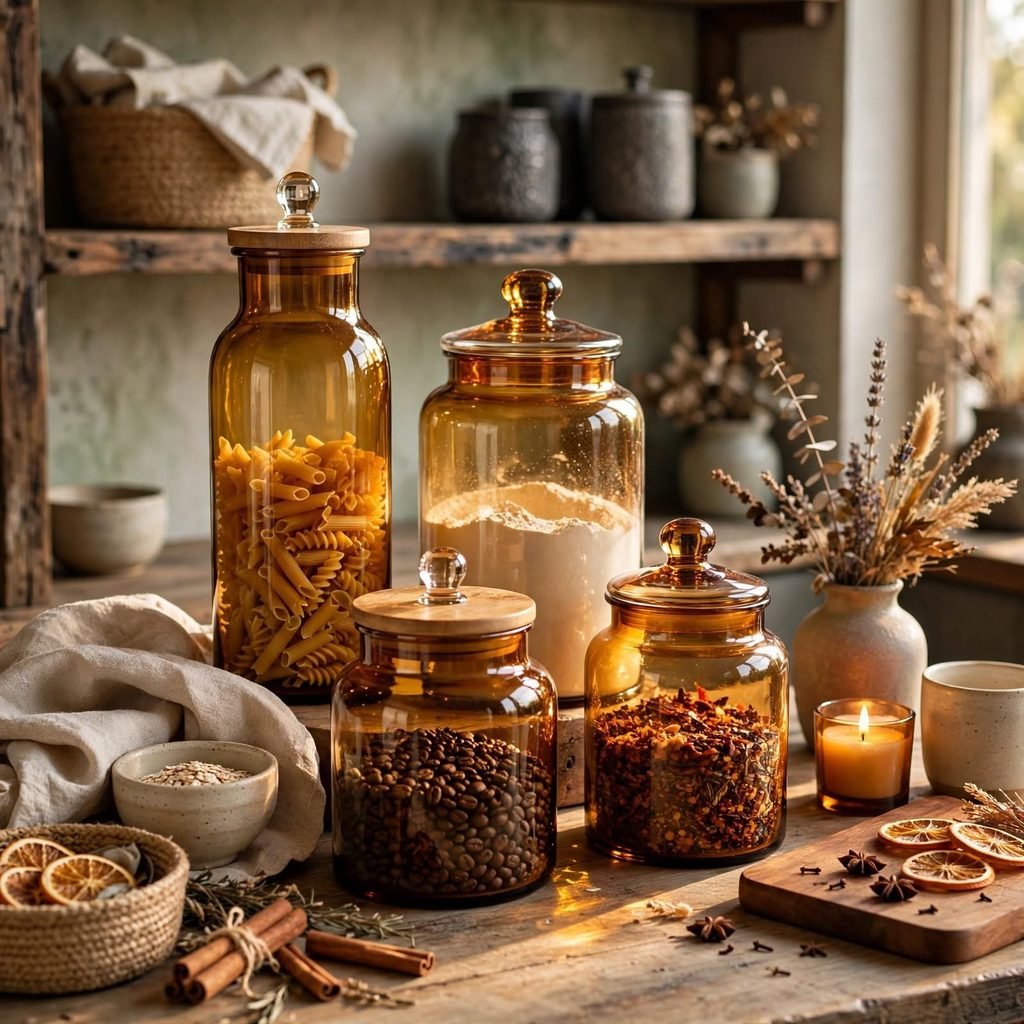
Replacing clear glass storage canisters with amber or smoked glass versions adds warmth to open shelving while keeping dry goods like flour, sugar, and coffee visible and airtight. This swap works especially well in kitchens with open shelving rather than closed cabinetry, where storage containers double as visible decor. Grouping three or four canisters of the same style keeps the shelf looking cohesive rather than mismatched.
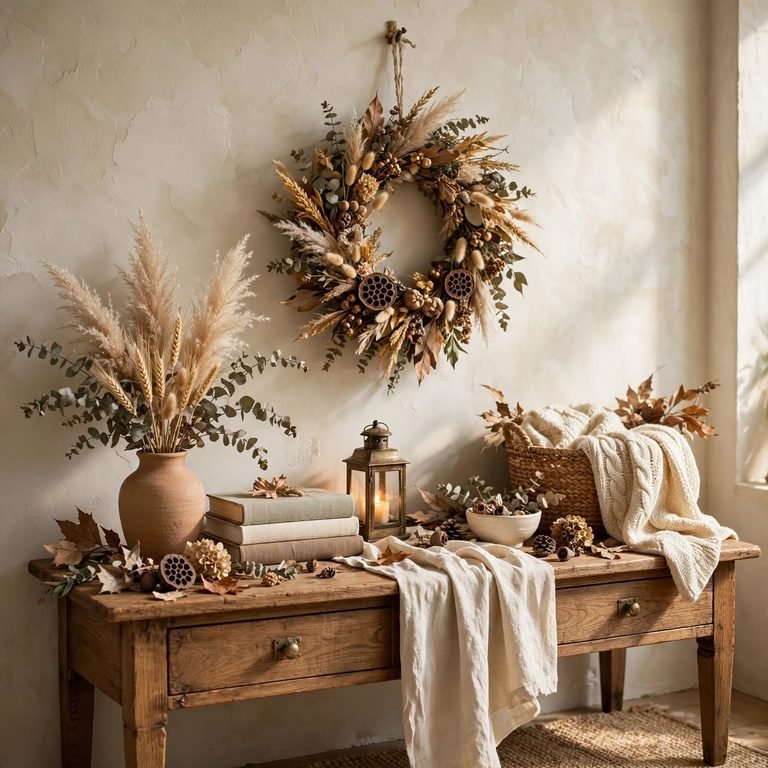
10. Dried Wheat Bundle
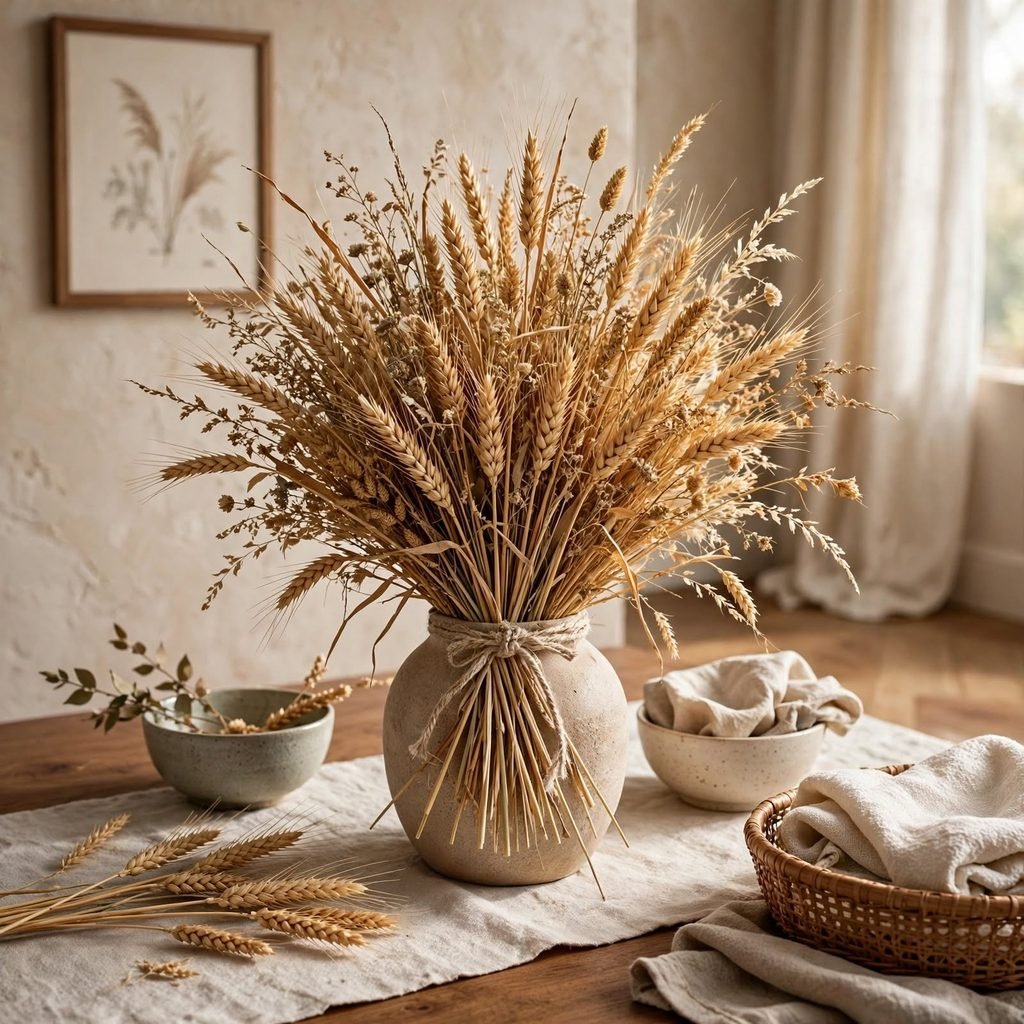
A small bundle of dried wheat stems, tied with twine and placed in a pitcher or crock on the counter, adds a rustic touch without requiring water or maintenance through the season. Trimming the stems to roughly 12 to 16 inches keeps the bundle proportional to most kitchen counters without overwhelming nearby appliances. This works well as a low-cost alternative to fresh floral arrangements that wilt within days in a warm kitchen.
11. Open Shelf Styling
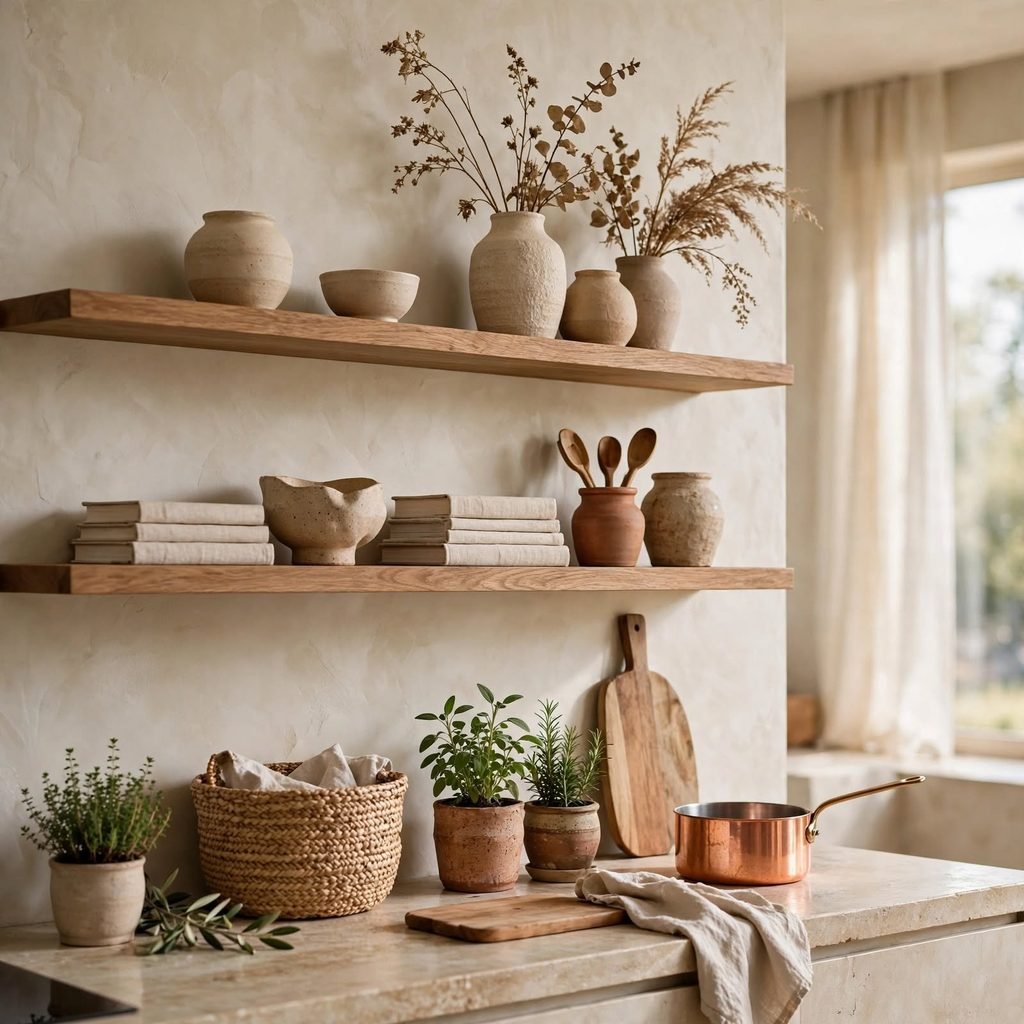
Rearranging existing open shelving to group stoneware, wood boards, and a single small plant creates a styled vignette using items the kitchen likely already owns, rather than requiring new purchases. Leaving roughly one-third of each shelf empty prevents the display from looking overcrowded, which is a common issue on kitchen shelving in particular. Rotating a few pieces seasonally, rather than restyling the entire shelf, keeps the process quick.
12. Fall Kitchen Decor Bundle
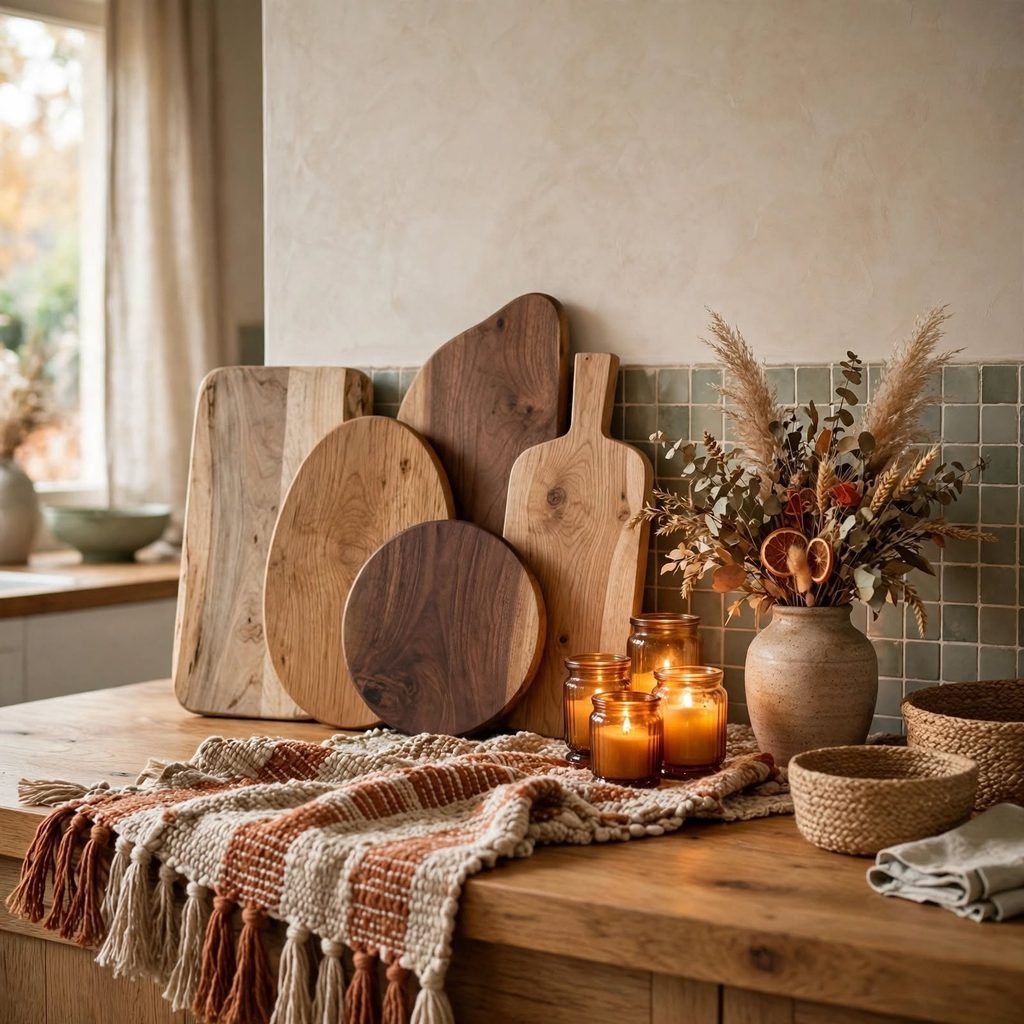
For a faster refresh, pre-curated fall kitchen decor bundles typically a set of tea towels, a runner, and a small stoneware piece offer a quicker path to a finished look than sourcing each item separately across multiple retailers. Checking material specifics, like linen content in towels or lead-free glazing in stoneware, matters more than comparing bundles on price alone, since quality varies significantly between sets.
| Bundle Tier | Typical Contents | Price Range |
| Budget | Tea towels + small crock | $25–$45 |
| Mid-range | Runner + towels + stoneware piece | $70–$100 |
| Premium | Full tableware set + canisters | $150–$220 |
Shop the Look
A focused kitchen refresh usually works better than buying broadly across categories. Start with a set of linen tea towels in a muted plaid, a matte stoneware dinnerware set for everyday use, a woven jute table runner for the kitchen table, a terracotta utensil crock for the counter, and a set of amber glass canisters if the kitchen has open shelving. For coordinating tableware and textiles across the rest of the house, the fall home decor guide covers similar material pairing for other rooms.
Common Mistake to Avoid
A common mistake is adding purely decorative seasonal objects ceramic pumpkins, printed signs to counters that are already tight on space, which crowds a kitchen rather than warming it up. Choosing functional swaps instead, like tea towels, dinnerware, or storage canisters, achieves the same seasonal effect while keeping the counter usable for actual cooking. Kitchens generally benefit from decor that replaces an existing item rather than decor that adds an entirely new object to the space.
FAQs
How do I decorate a small kitchen for fall?
Focus on textiles and tableware rather than standalone decorative objects, since a small kitchen has limited counter space to spare for purely seasonal accents. Linen tea towels, a stoneware fruit bowl, and a single small plant or dried wheat bundle typically achieve a seasonal look without crowding a compact counter or island.
What kitchen items should I avoid buying for just one season?
Printed or single-use items like paper napkins, plastic pumpkin decor, and heavily scented single-purpose candles tend to get thrown out after one season and rarely earn back their cost. Choosing neutral-toned, functional pieces like stoneware, linen towels, or wood boards instead means the purchase continues to serve a purpose well past October.
Is it safe to use scented candles in the kitchen?
Scented candles are generally fine in a kitchen as long as they’re kept away from the stove, other open flames, and areas with heavy grease buildup, since both can pose a fire risk. Many people opt for a cinnamon stick jar or a diffuser near the sink instead, which provides similar warmth and scent without an open flame near cooking surfaces.
What colors work best for fall kitchen decor?
Rust, terracotta, cream, and deep amber tend to suit kitchens better than brighter orange tones, since these shades read as warm rather than overtly seasonal and continue working through winter. Kitchens with white or neutral cabinetry tend to have the easiest time incorporating this palette through smaller swaps like towels and tableware rather than a full renovation.
How much does a fall kitchen refresh typically cost?
A modest refresh focused on textiles and small tableware pieces typically runs $50 to $100, while a fuller update including a full stoneware set or pendant lighting can reach $200 to $400. Spacing purchases across function-first categories, like lighting and dinnerware, tends to produce a more lasting result than spreading a similar budget across purely decorative counter items.
Conclusion
A handful of functional swaps in tableware, textiles, and lighting does more for fall kitchen decor than a counter full of seasonal knick-knacks that only last through October. Whether starting with a single set of linen tea towels or a full open-shelf restyle, these twelve ideas offer a practical starting point for a kitchen that feels warmer without losing usability. Save this list to Pinterest for later, or check the related fall living room decor post for ideas that extend the same palette to the rest of the house.