12 Trending Fall Trends Shaping Home Design This Season
Home design shifts every season, and this fall’s direction moves away from some of the flatter, more minimal looks that have dominated recent years toward richer color, more texture, and materials with visible history. These fall trends cover furniture, color, and material choices worth knowing whether planning a full room refresh or just a few seasonal updates. Twelve specific trends follow, each grounded in what’s actually showing up in current furniture lines and design coverage rather than a passing social media moment.
Trend & Background
Home design has moved in cycles between minimal and maximal for years, and this fall’s shift toward deeper color, curved furniture, and natural materials with visible texture reflects a broader move away from the flat, uniform look that dominated the past several seasons. Interest in warm metal finishes and richly saturated paint colors has grown alongside renewed attention to craftsmanship and material authenticity, as more people prioritize pieces that show some texture or history over uniform, mass-produced finishes. That shift has touched nearly every category of home design this season, from furniture silhouettes to the specific hardware finishes showing up in new product lines.
Key Takeaways
- Fall trends this season lean into deep, saturated color rather than the muted neutrals popular in recent years.
- Natural and reclaimed materials are replacing more polished, mass-produced finishes across furniture and decor.
- Curved and organic shapes continue gaining ground over strict geometric lines in furniture design.
- Warm metal finishes, particularly aged brass and copper, are replacing the matte black hardware trend from previous seasons.
1. Deep Saturated Wall Colors
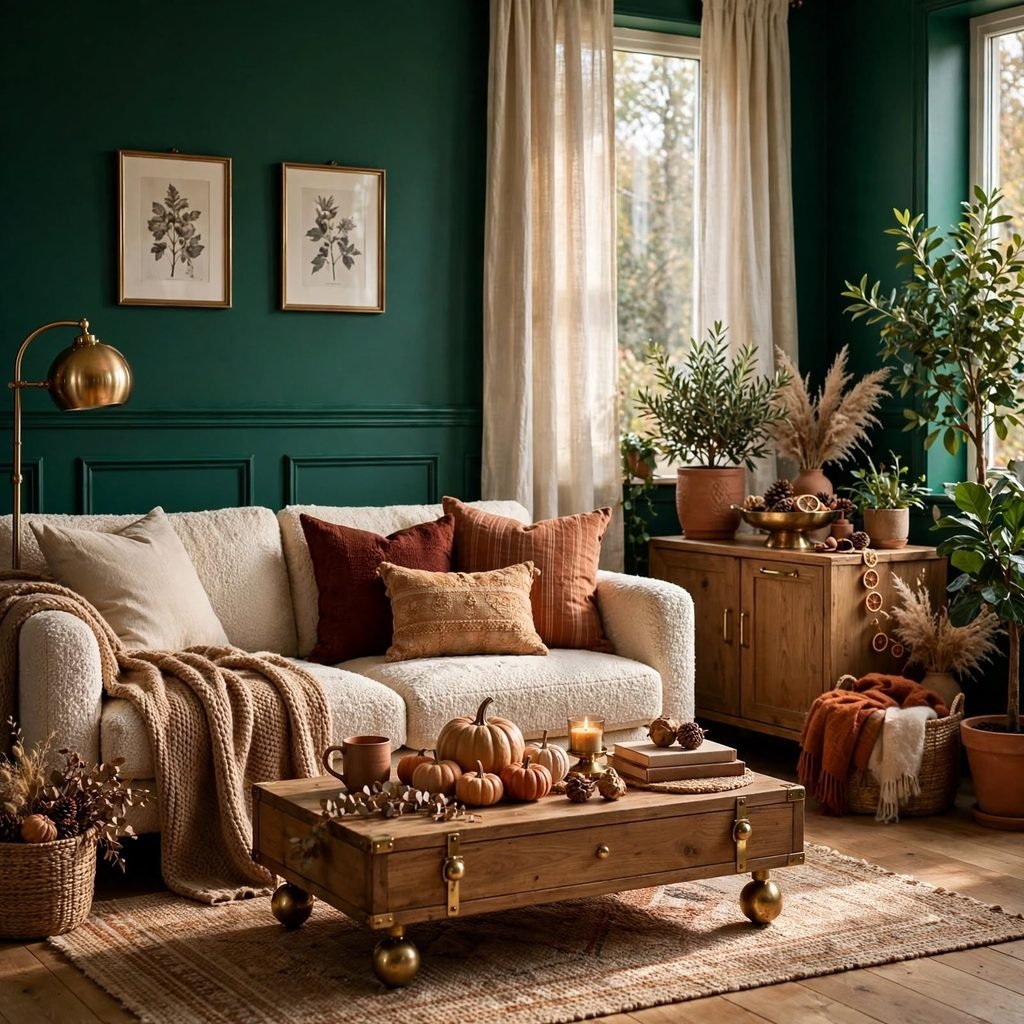
Paint colors this season have shifted toward deeper, more saturated tones forest green, burgundy, deep navy replacing the soft greige and off-white palette that dominated recent years. These colors work particularly well on a single accent wall or in a smaller room like a powder bath or home office, where the intensity reads as dramatic rather than overwhelming. Pairing a deep wall color with warm wood tones and brass accents keeps the room from feeling cold despite the darker palette.
2. Curved Furniture Silhouettes
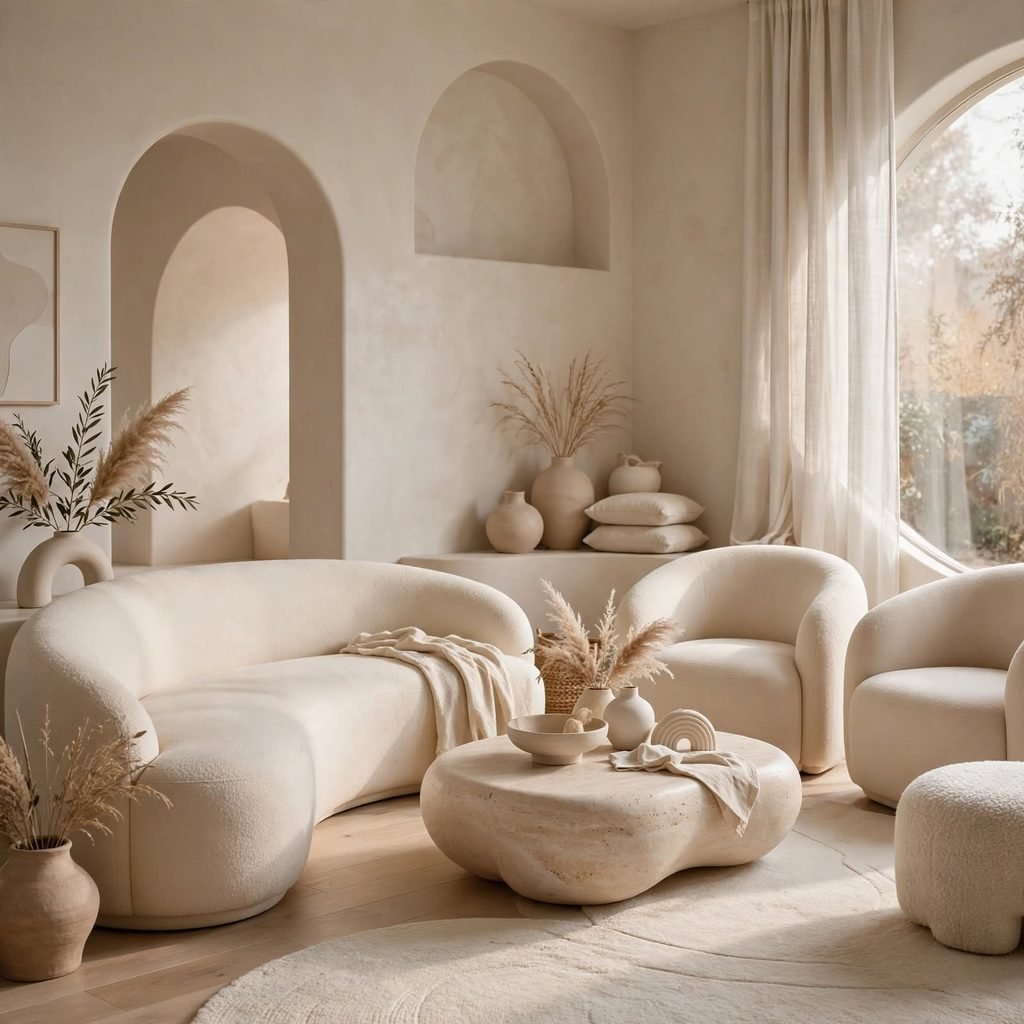
Furniture with rounded, organic edges curved sofas, oval coffee tables, arched cabinet doors continues to replace the strict rectangular lines common in previous design cycles. This shift suits smaller spaces particularly well, since curved furniture tends to improve traffic flow compared to sharp-cornered pieces in a tight room. Mixing one or two curved pieces into an otherwise angular room reads as more intentional than a full room of exclusively rounded furniture.
3. Reclaimed and Live-Edge Wood
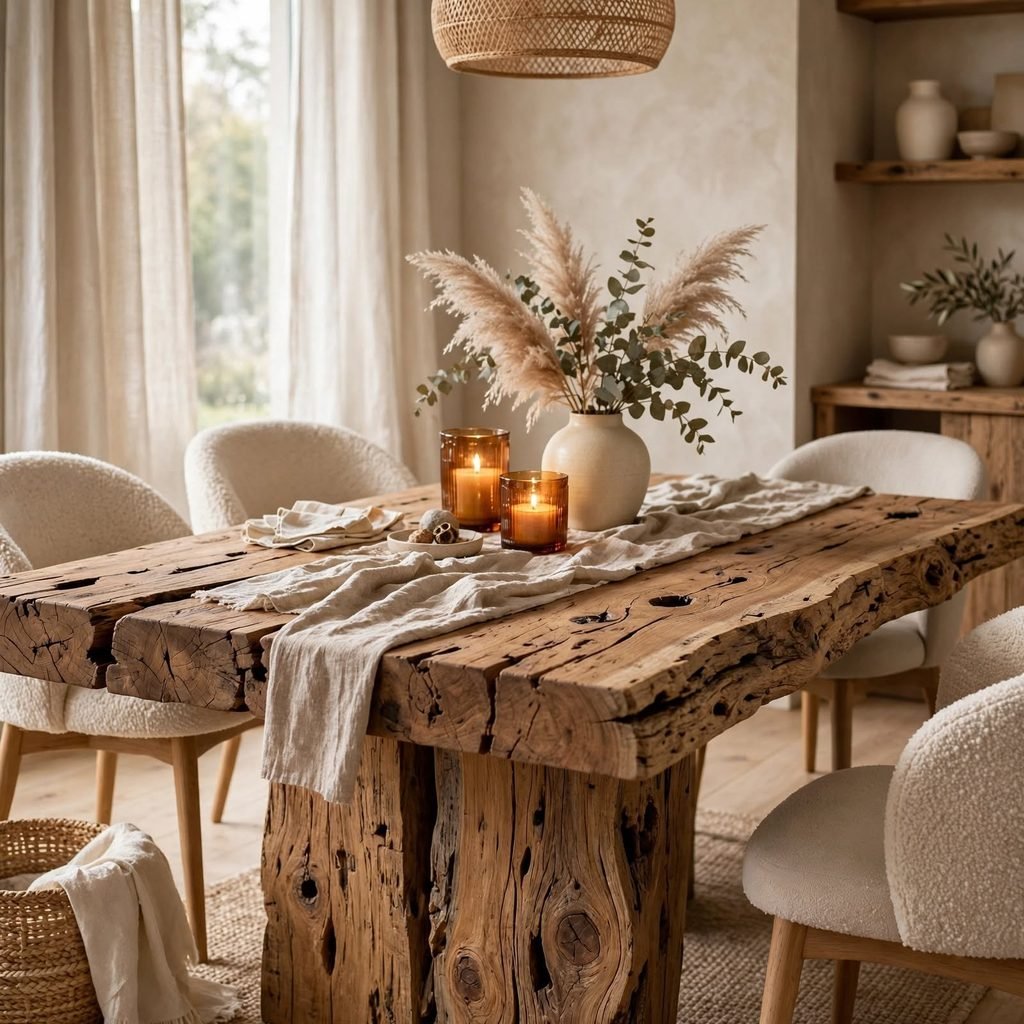
Furniture built from reclaimed or live-edge wood, with visible grain variation and natural imperfections, is replacing more uniform, mass-produced wood finishes in current furniture lines. Each piece varies since the material comes from salvaged or naturally shaped sources rather than a standardized manufacturing process. This trend pairs well with a warmer, more textured overall room direction rather than a strictly minimal or polished aesthetic.
| Material | Visual Character | Best Paired With |
| Live-edge wood | Organic, irregular edge | Metal or glass accents |
| Reclaimed wood | Weathered, visible history | Leather, wool textiles |
| Standard hardwood | Uniform grain | Either aesthetic |
4. Aged Brass and Copper Hardware
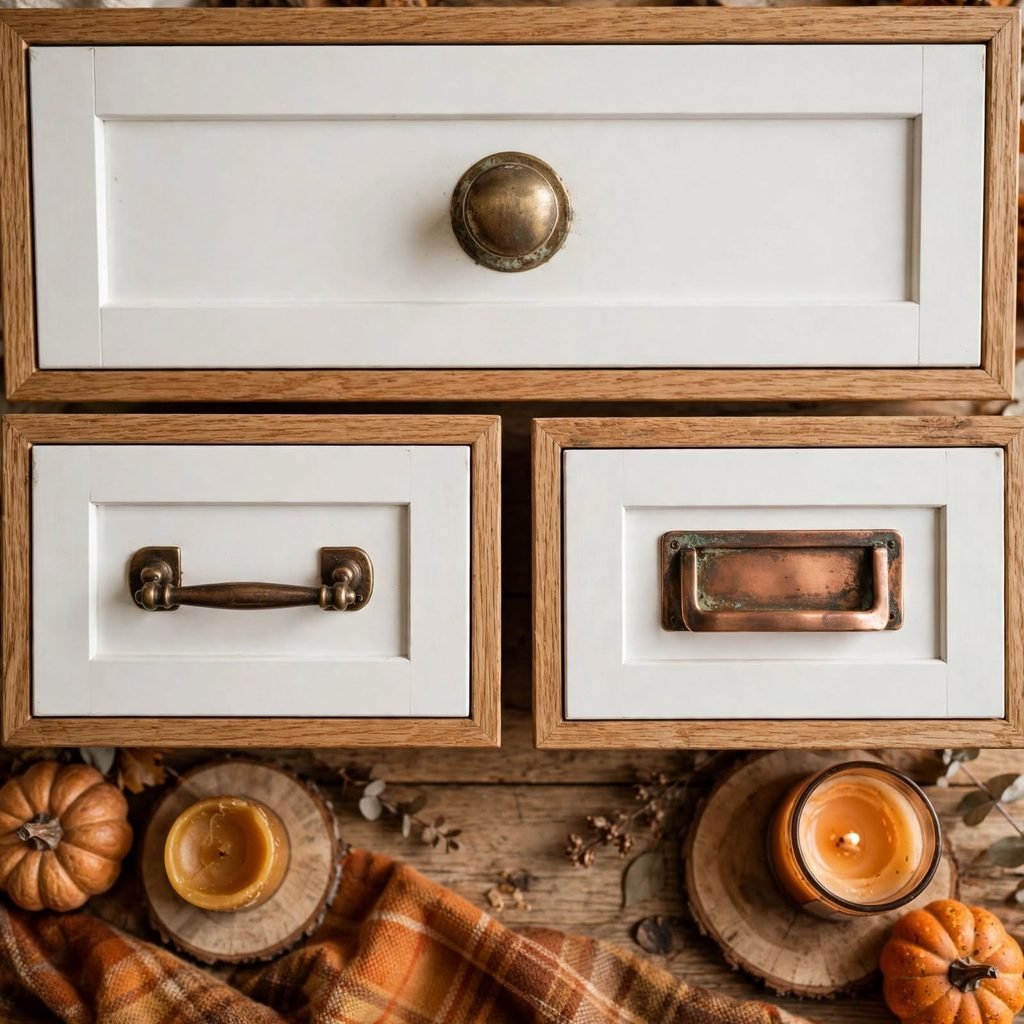
Warm metal finishes, particularly aged or unlacquered brass and copper, are gaining ground over the matte black hardware that dominated the past several seasons. These finishes develop a patina over time rather than staying uniformly finished, which fits the broader trend toward materials that show some age and character. Swapping hardware is one of the lower-cost ways to bring this trend into an existing room without replacing furniture.
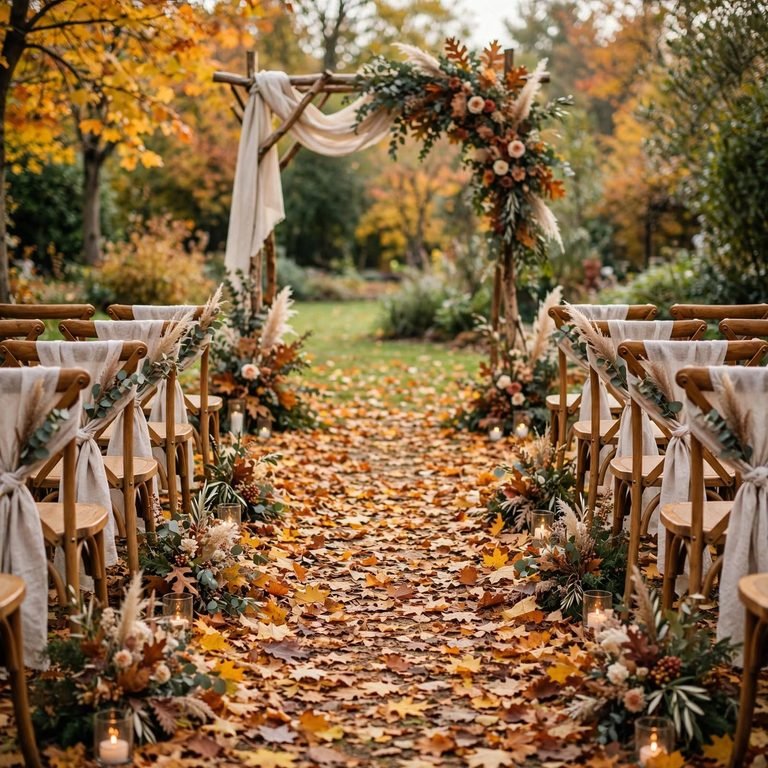
Make your home feel extra cozy this autumn with this inspiring fall wedding decor.
5. Textured Wall Treatments
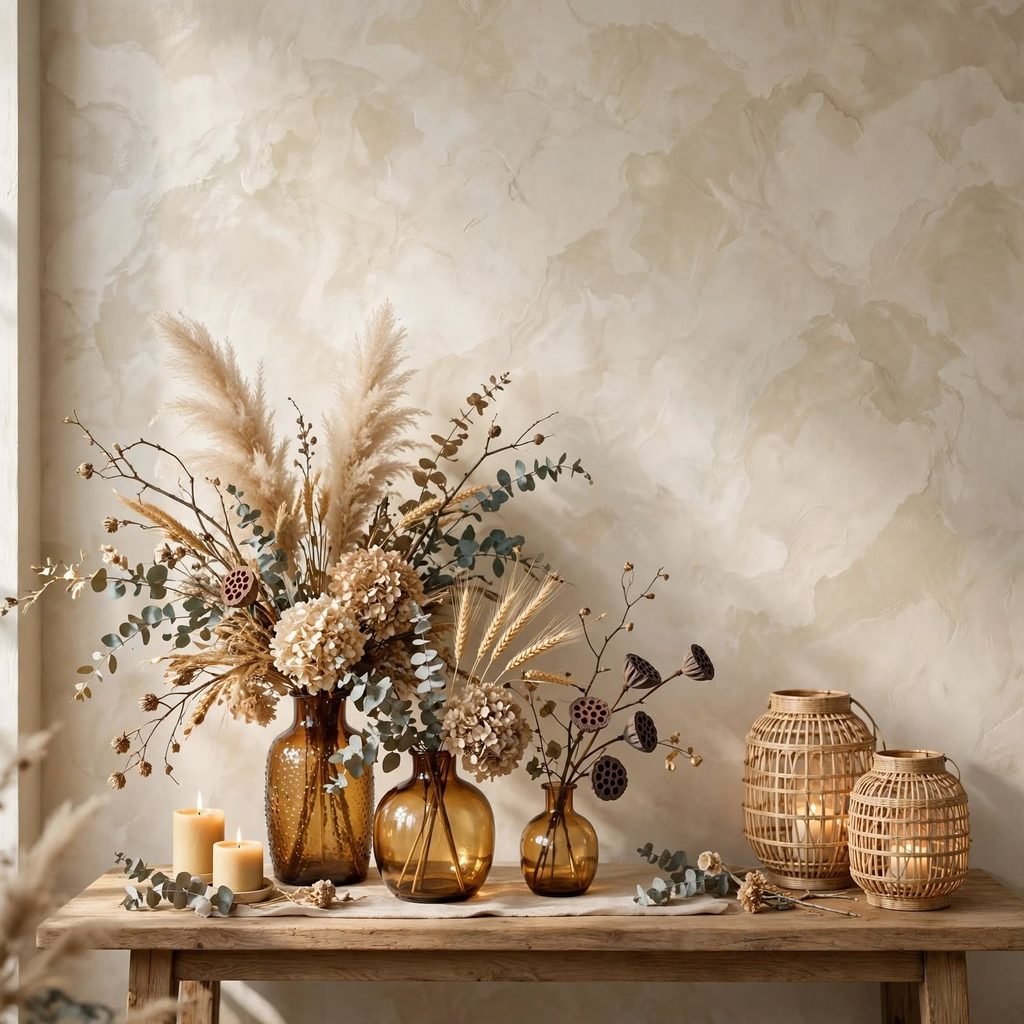
Limewash paint, plaster finishes, and grasscloth wallpaper are replacing flat paint as a preferred wall treatment this season, adding visual depth that a single uniform color can’t achieve. These treatments read as more considered and slightly imperfect in a way that’s become a deliberate design choice rather than something to avoid. A single accent wall in a textured finish generally works better than treating an entire room, keeping the effect from feeling overwhelming.
6. Checkerboard Flooring Patterns
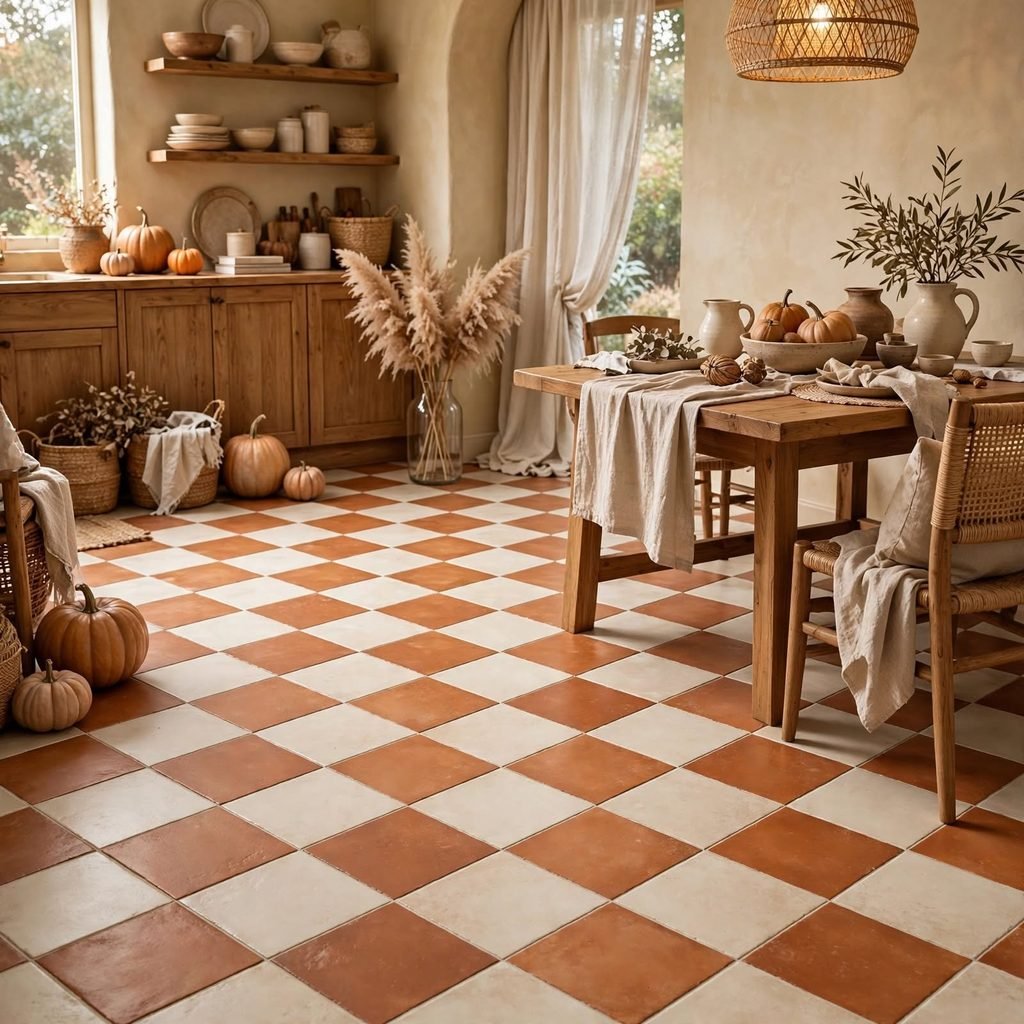
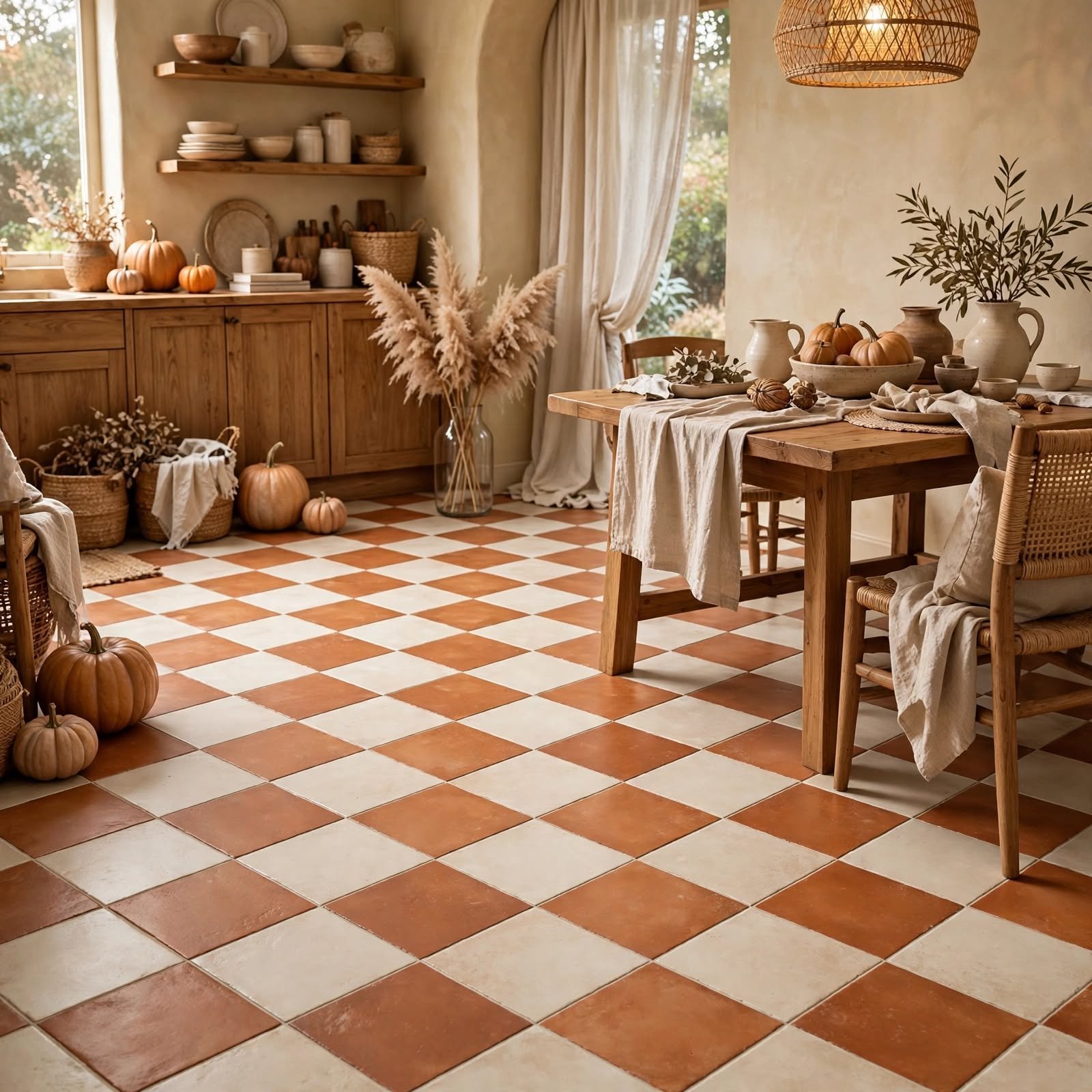
Checkerboard patterns, in both large-scale tile and painted floor applications, are appearing more frequently in kitchens, entryways, and bathrooms this season, offering a graphic pattern that reads as classic rather than trend-driven. Choosing a two-tone combination in muted rather than high-contrast colors keeps the pattern from feeling too bold for a smaller space. This trend works particularly well in a room that otherwise has a simple, uncluttered design.
7. Sculptural Lighting Fixtures
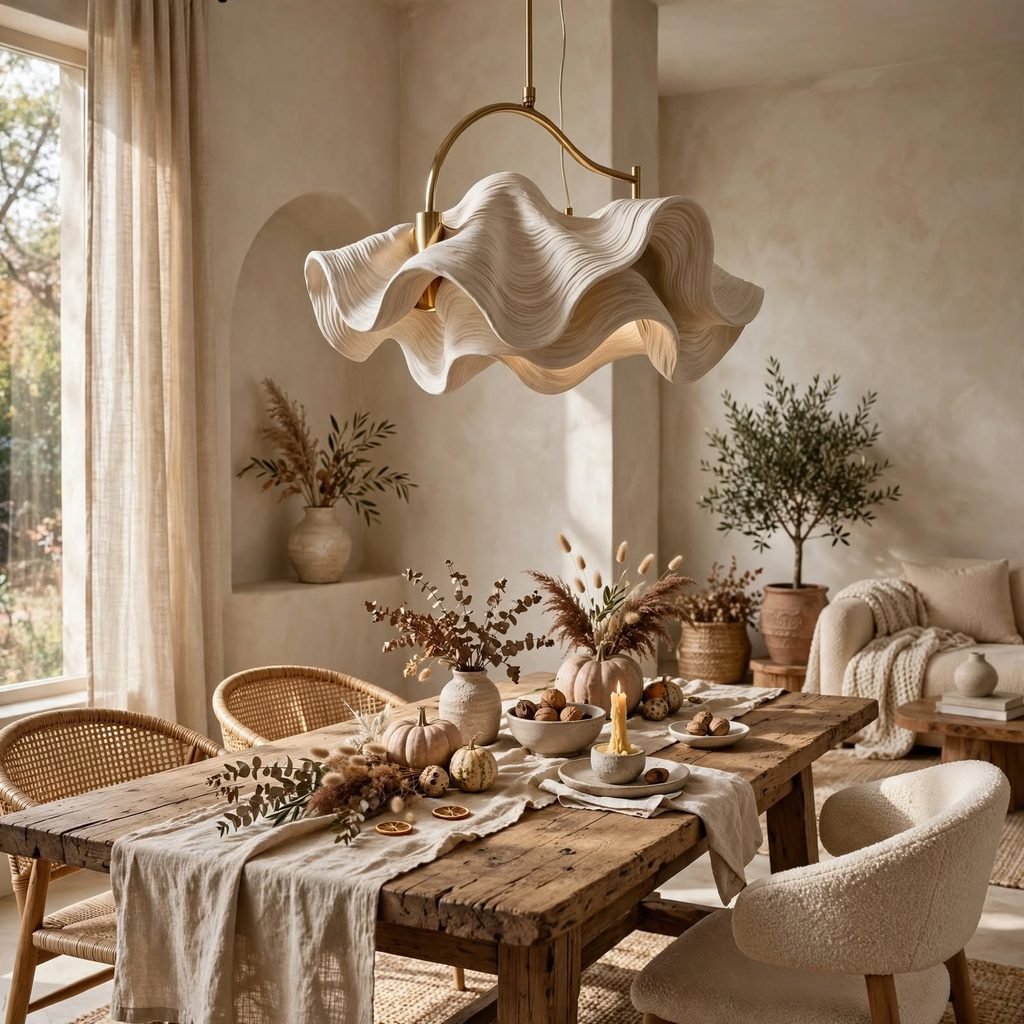
Lighting with an intentionally sculptural, art-object quality asymmetrical pendants, organic-shaped table lamps is replacing more purely functional fixture designs this season. These pieces work as a visual focal point in a room even when unlit, functioning as much as decor as they do as a light source. A single statement fixture generally has more impact than multiple smaller sculptural pieces competing for attention in the same room.
8. Warm Minimalism
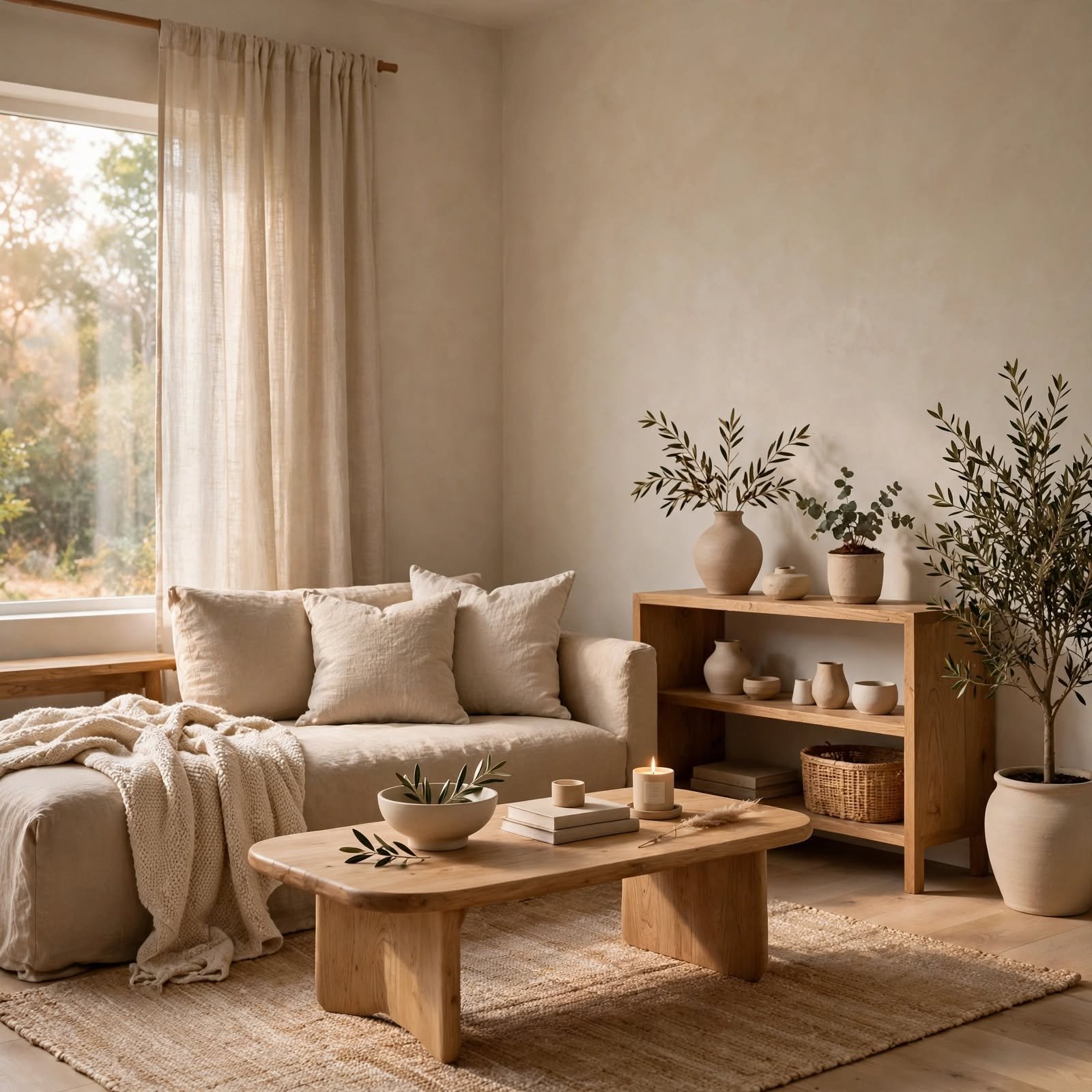
Warm minimalism a pared-back approach that still incorporates wood tones, texture, and warm color rather than stark white and metal continues to replace the colder, more clinical minimalist look popular several years ago. This approach keeps a room feeling uncluttered without reading as sterile, using material warmth rather than decorative objects to add character. This trend suits anyone who prefers a simpler room but has found past minimalist styles feeling too cold or impersonal.
9. Vintage and Antique Mixing
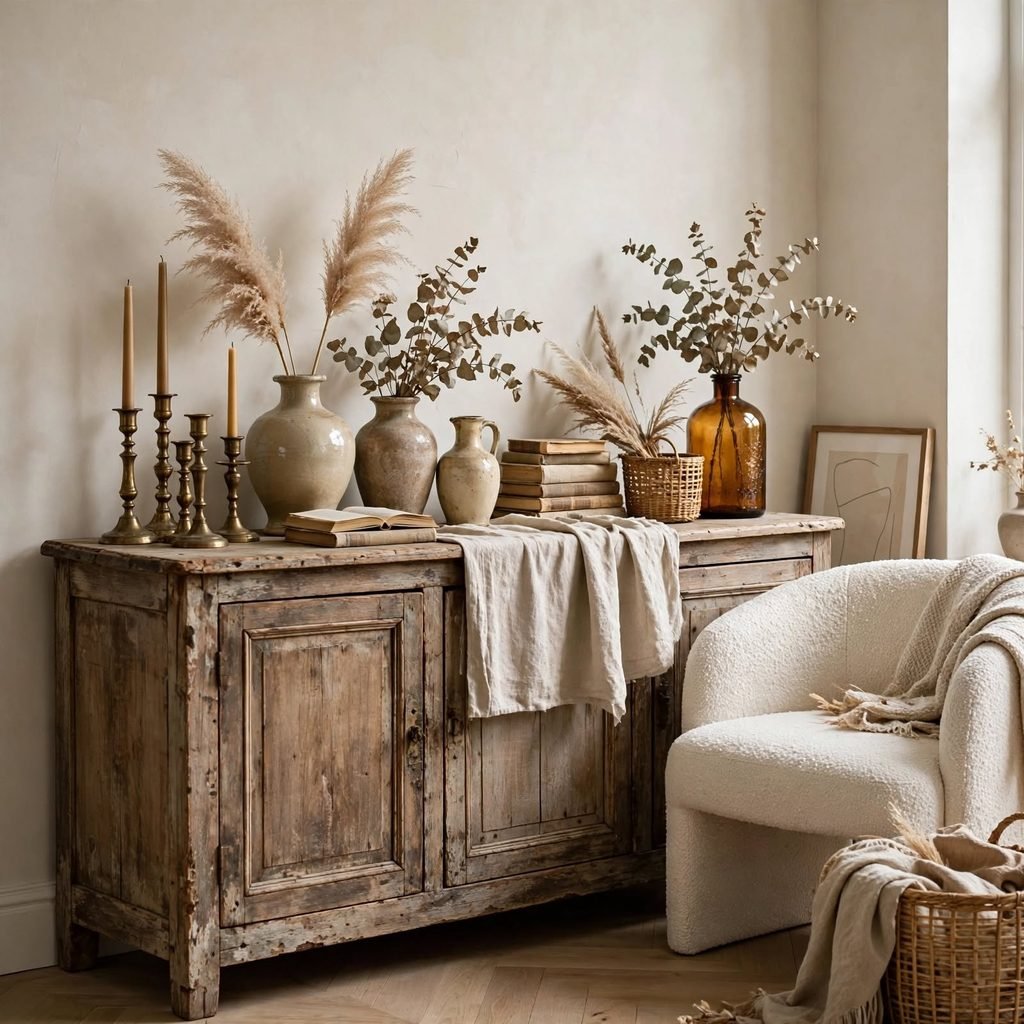
Incorporating one or two genuine vintage or antique pieces into an otherwise contemporary room is replacing the fully matched, single-era furniture sets common in past seasons. This mixing approach adds a sense of history and personal collection that an entirely new furniture set can’t replicate on its own. Sourcing pieces from estate sales, antique shops, or family heirlooms rather than mass-produced vintage-look reproductions tends to read as more authentic.
10. Bold Kitchen Cabinetry Colors
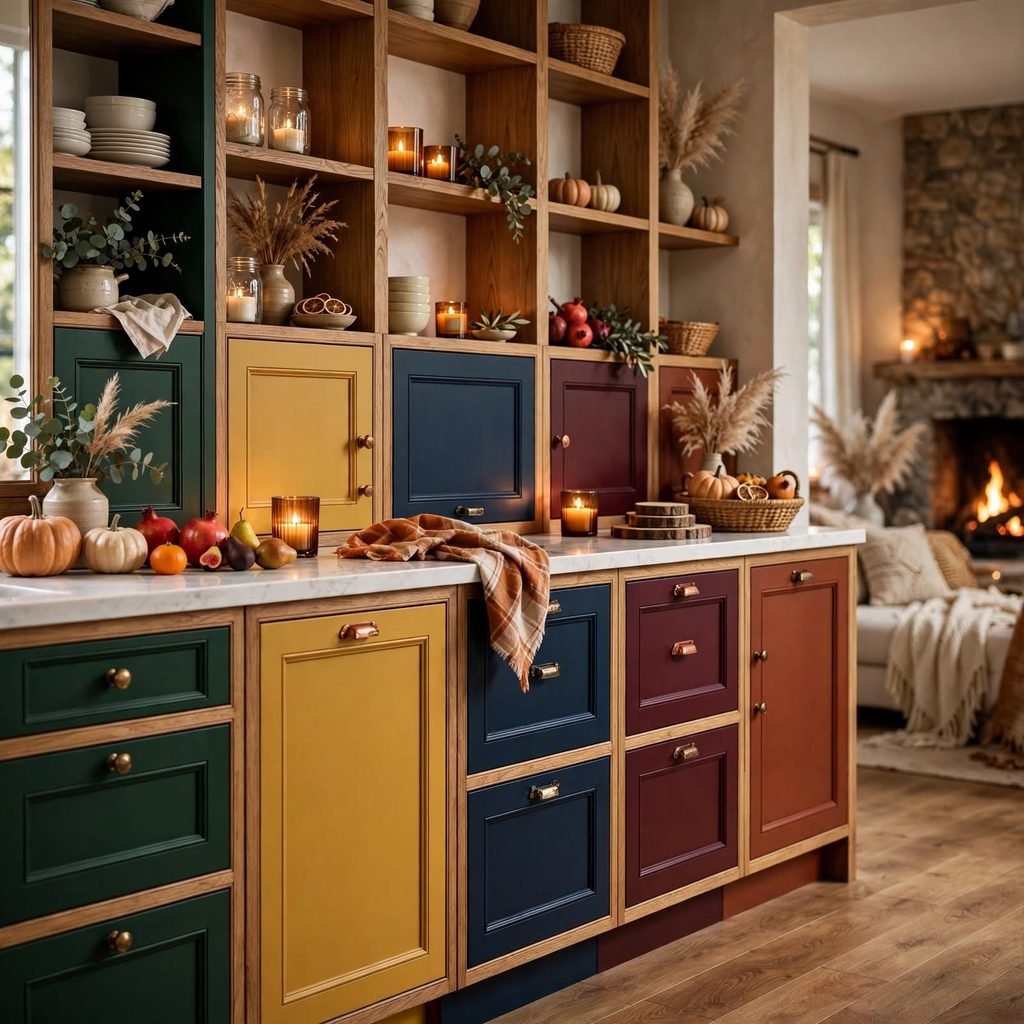
Kitchen cabinets in deep, saturated colors forest green, navy, terracotta are replacing the all-white or light gray cabinetry that dominated kitchen design for the past decade. This shift often pairs the bold cabinet color with lighter countertops or backsplash tile to keep the kitchen from feeling too dark overall. Lower cabinets in a bold tone with upper cabinets kept lighter or open is a common way to introduce this trend without full commitment.
11. Woven and Natural Fiber Textures
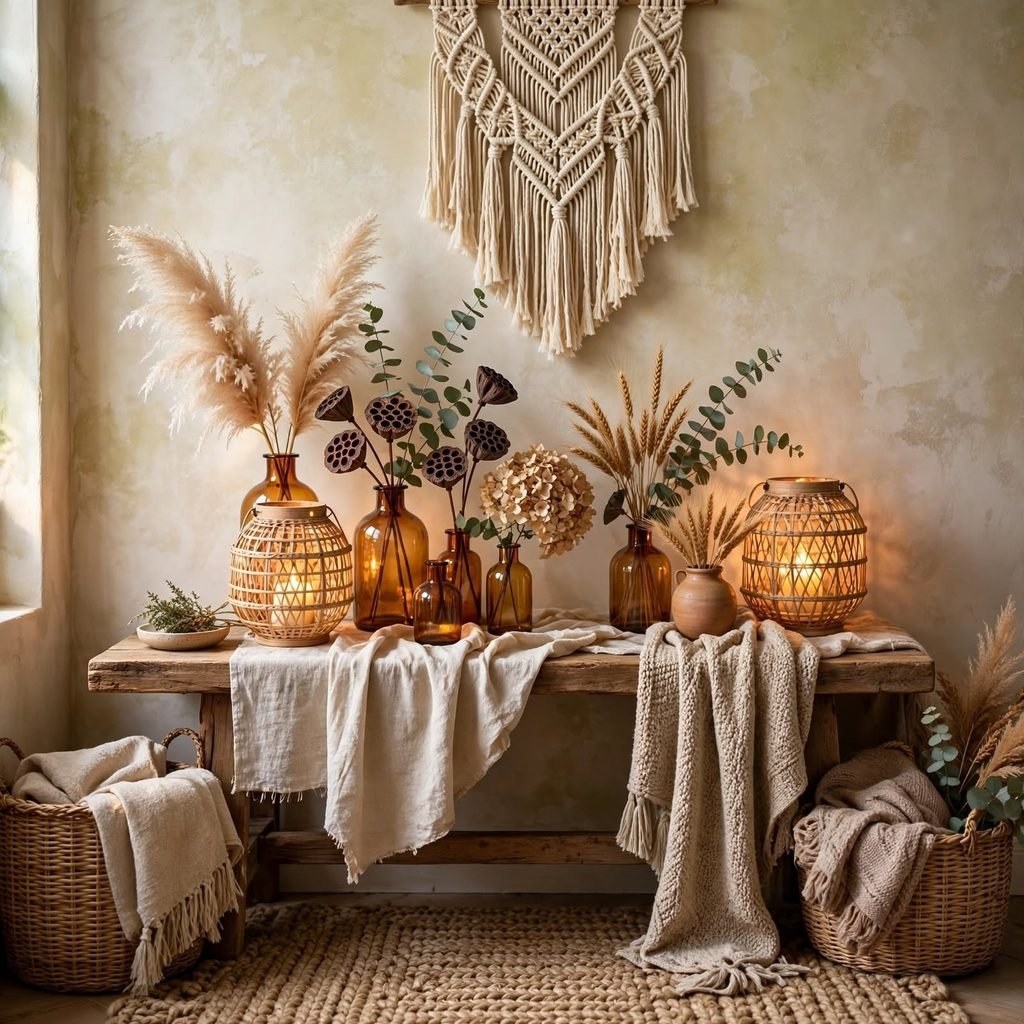
Rattan, jute, seagrass, and other woven natural fibers are showing up more prominently in furniture, lighting, and accessories this season, adding texture that smooth, uniform materials don’t provide. This trend pairs well with the broader shift toward warmer, more textured interiors generally, rather than standing alone as an isolated choice. A woven pendant light or a rattan chair works as an accessible entry point for anyone wanting to try the trend without a full room commitment.
12. Statement Ceiling Treatments
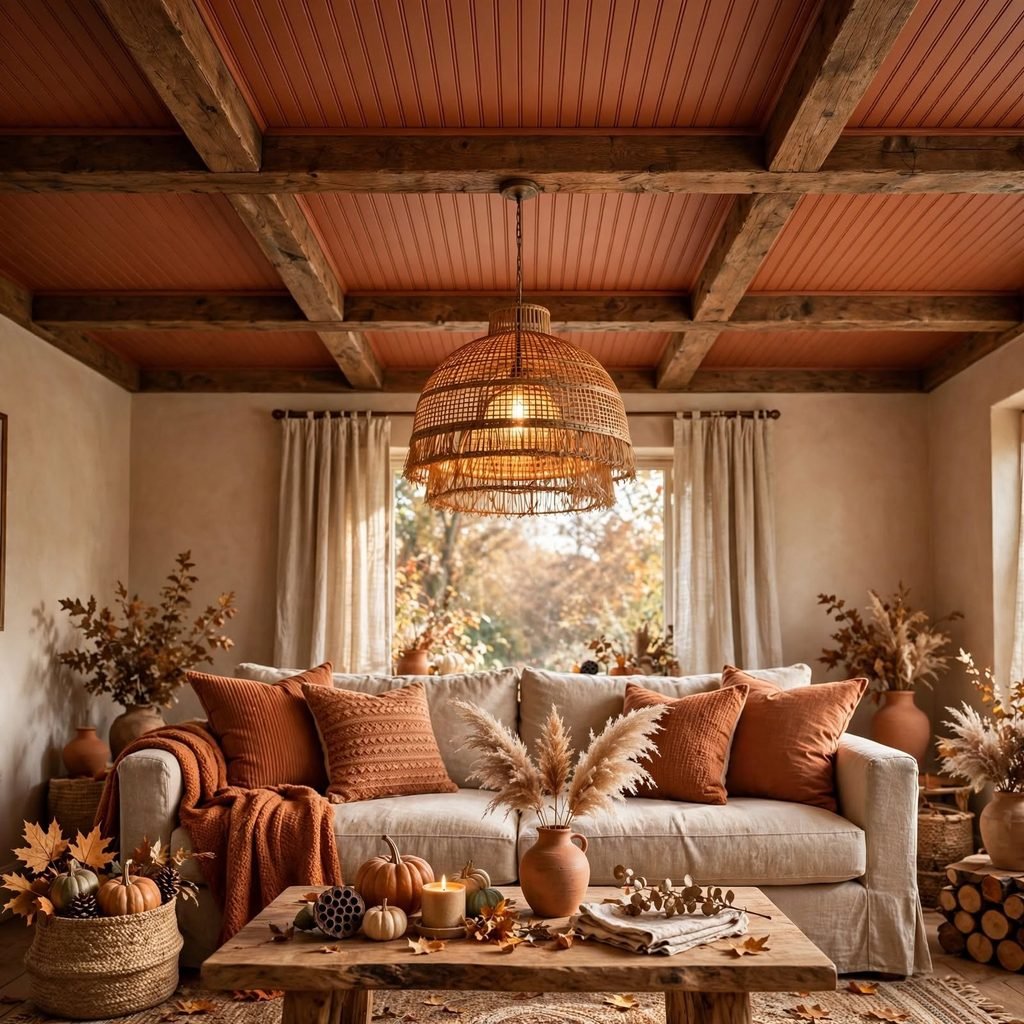
Painted, papered, or paneled ceilings are getting more design attention this season, treating what’s traditionally a neglected surface as an opportunity for color or pattern. A painted ceiling in a deep tone or a wallpapered pattern adds unexpected visual interest to a room without requiring any change to the walls or furniture. This trend works particularly well in a smaller room, like a powder bath or a dining room, where the ceiling is more immediately visible.
Shop the Look
A curved sofa in a deep forest green pairs well with a live-edge wood coffee table for this kind of room. Add a sculptural table lamp, a set of aged brass drawer pulls, and a woven rattan pendant light to round out the season’s material and lighting trends.
Common Mistake to Avoid
The most common mistake is chasing every trend on this list at once, which results in a room that feels like a showroom of disconnected ideas rather than a cohesive space. Pick one or two trends that genuinely fit the room’s existing furniture and layout — a hardware swap and a textured wall treatment, for example — rather than attempting a full trend-driven overhaul in a single project.
FAQs
What colors are trending in home design this fall?
Deep, saturated tones like forest green, burgundy, and navy are replacing the softer greige and off-white palette that dominated recent years, particularly on accent walls and kitchen cabinetry. These colors tend to work best paired with warm wood tones and brass accents to keep a room from feeling too dark or cold.
Is matte black hardware still in style?
Matte black hardware is giving way to warmer metal finishes like aged brass and copper this season, though it hasn’t disappeared entirely and still suits certain design directions, particularly more industrial or modern spaces. The shift reflects a broader move toward materials that develop patina and character over time rather than staying uniformly finished.
What furniture shapes are trending right now?
Curved and organic silhouettes rounded sofas, oval tables, and arched cabinet fronts continue to gain ground over strict rectangular lines, particularly in smaller rooms where curved furniture can improve traffic flow. Mixing one or two curved pieces into an existing room tends to work better than replacing all furniture with rounded alternatives at once.
How do I update my home for current trends without a full renovation?
Swapping hardware to a warmer metal finish, adding a single textured accent wall, or introducing one sculptural lighting piece brings several current trends into a room without requiring furniture replacement or structural changes. Focusing updates on one or two rooms rather than the whole house also keeps the project manageable.
Will minimalism go out of style?
Minimalism isn’t disappearing, but it’s shifting toward a warmer version that incorporates wood tones and texture rather than the starker, more clinical look popular several years ago. This warm minimalism trend suits anyone who prefers a simpler room but wants it to feel more inviting than past minimalist styles achieved.
Conclusion
Fall trends this season point toward richer color, natural materials, and warmer metal finishes, offering plenty of ways to update a home without committing to every direction at once. Save this list to Pinterest for your next design refresh, and check out our related guide on small bedroom storage solutions for more season-specific styling inspiration.