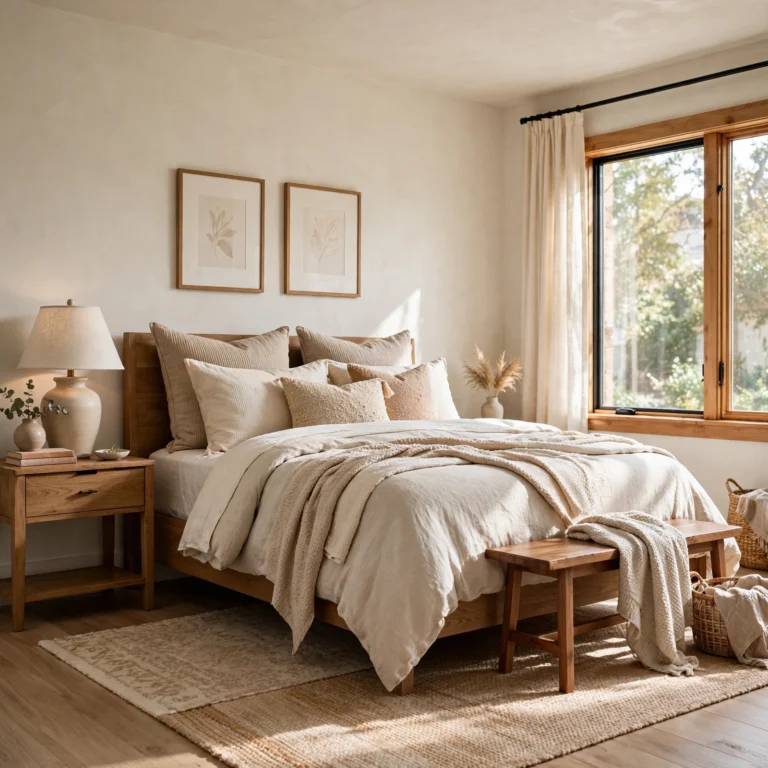
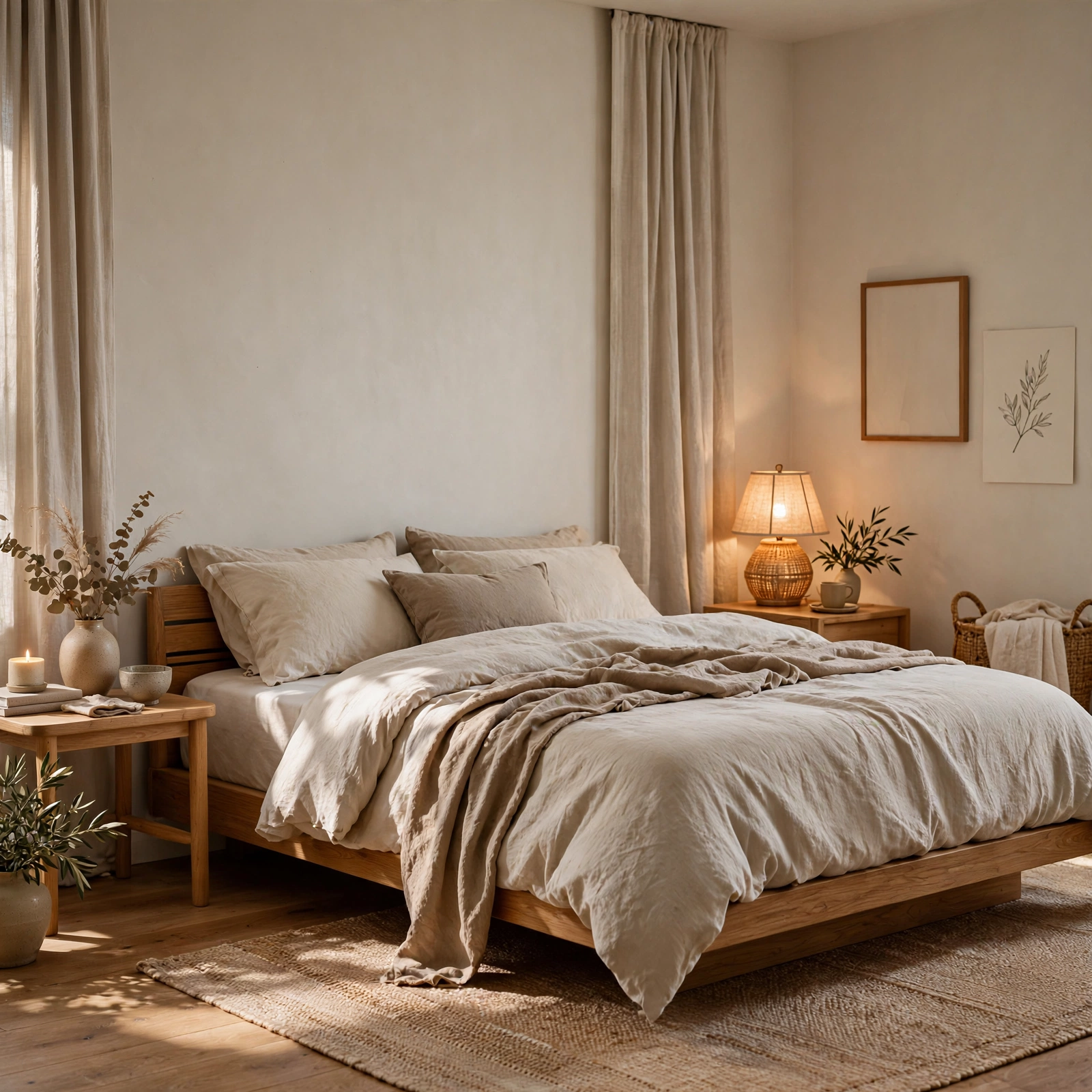
14 Unique Japandi Bedroom Ideas for a Calm and Beautiful Space
Curious how to pull off a japandi bedroom that feels calm rather than cold? This guide covers 14 specific ideas blending Japanese restraint with Scandinavian warmth, from low wood platform beds to handcrafted ceramics, so the style reads as intentional rather than sparse. A japandi bedroom draws on the quiet materials and low furniture common in Japanese interiors alongside the light wood tones and cozy textiles typical of Scandinavian design. This guide walks through fourteen specific ideas covering furniture, lighting, and small styled details, with notes on how to keep the balance between the two influences. Readers will come away with a clear sense of which pieces to prioritize first.
Trend & Background
Japandi bedroom design has grown steadily as a search topic over the past several years, combining two design traditions that already share a strong emphasis on natural materials, muted color, and functional simplicity. This matters now because more people are looking for a warmer alternative to strict minimalism, one that still feels calm and uncluttered but incorporates enough texture and craft detail to avoid feeling stark. Furniture makers have responded with a wider range of low-profile wood pieces and handcrafted ceramic accessories built specifically to suit this crossover aesthetic. Design publications have also noted a steady rise in searches combining Japanese and Scandinavian terms together, reflecting growing interest in the blended style itself.
Key Takeaways
- These 14 japandi bedroom ideas combine Japanese restraint with Scandinavian warmth through low furniture, natural materials, and muted tones.
- A palette comparison table offers guidance on choosing consistent neutral tones across the room.
- Handcrafted ceramics and natural textiles appear throughout as a way to add texture without clutter.
- Most ideas rely on material choices and furniture silhouette rather than heavy decor additions.
1. Low Wood Platform Bed for Japandi Bedroom
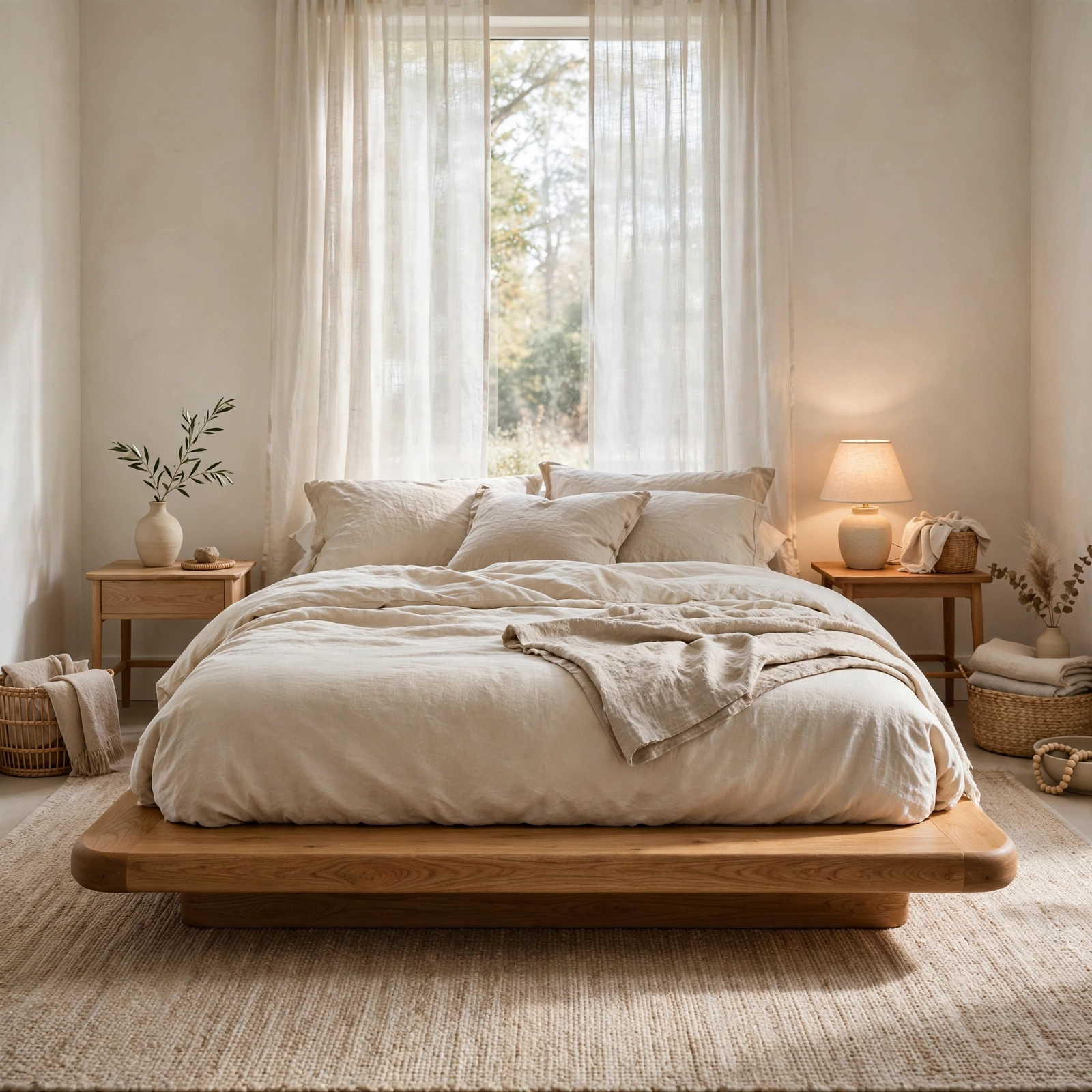
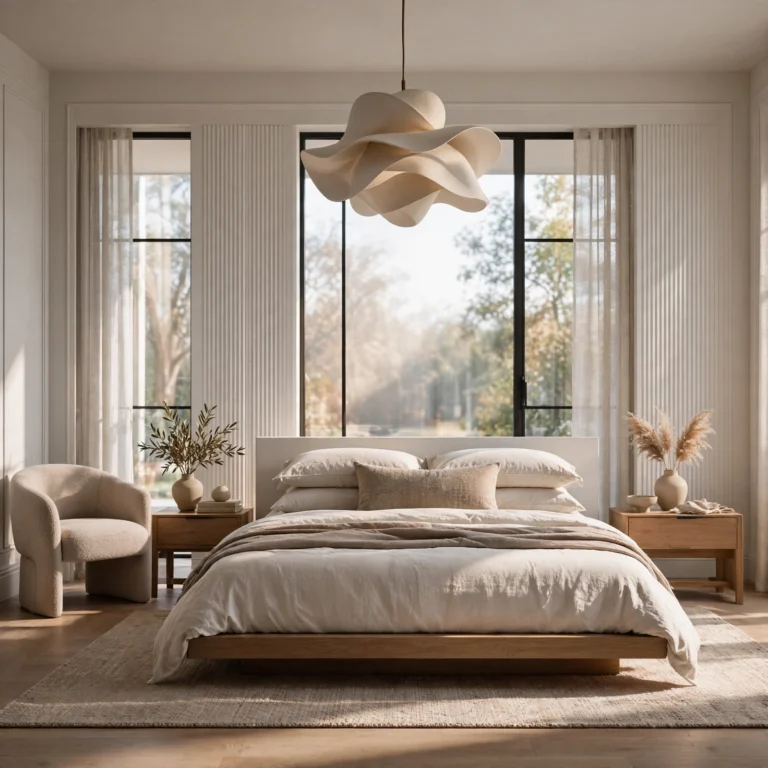
A low wood platform bed, sitting close to the floor with simple, unadorned lines, forms the foundation of most japandi bedroom setups. Choosing a light wood tone, such as ash or white oak, keeps the frame in line with the Scandinavian half of the style, while the low profile nods to traditional Japanese furniture. Skipping a tall headboard in favor of a simple slatted or wall-mounted panel keeps the overall silhouette calm and grounded.
2. Shoji-Inspired Room Screen for Japandi Bedroom
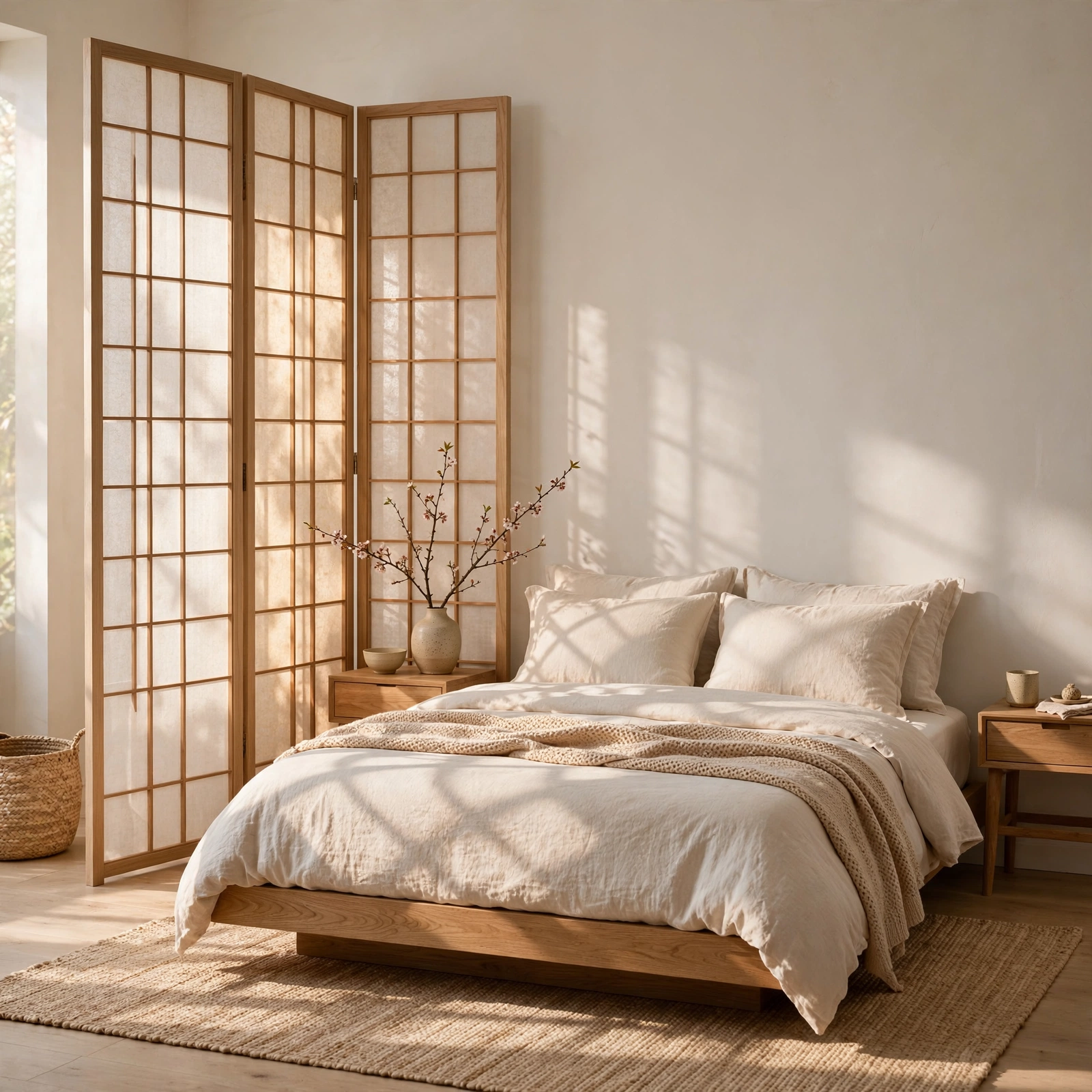
A folding screen with a wood lattice frame and translucent paper or fabric panels, inspired by traditional shoji screens, adds a soft division of space without a solid wall. This works particularly well for separating a small reading corner or a closet area from the main sleeping space in an open-plan bedroom. Choosing a screen with a light wood frame keeps it consistent with the platform bed and other wood furniture in the room.
3. Natural Linen Bedding for Japandi Bedroom
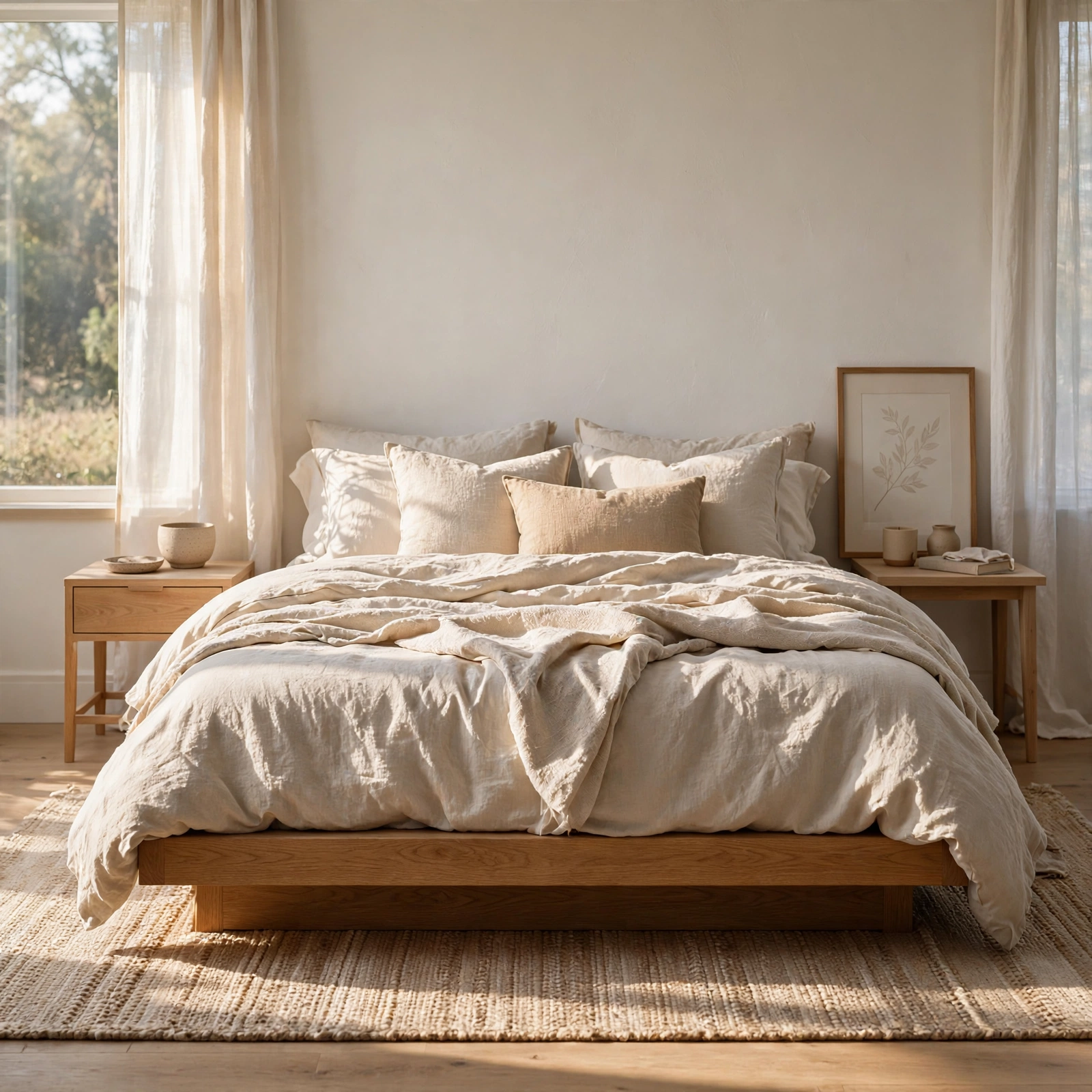
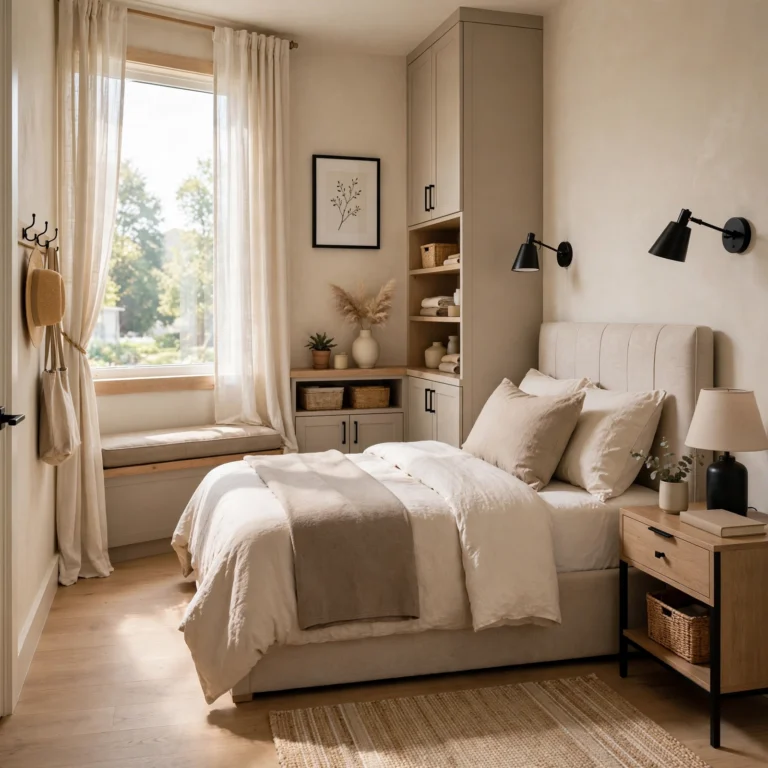
Stonewashed linen bedding in a muted, earthy tone supports both halves of the japandi aesthetic, offering the relaxed texture valued in Scandinavian design alongside the quiet, natural material palette common in Japanese interiors. Choosing a single tone rather than a printed pattern keeps the bed looking calm and unified with the rest of the room. This is typically one of the most impactful and lowest-effort updates for establishing the style’s overall mood.
4. Neutral Clay Wall Finish for Japandi Bedroom
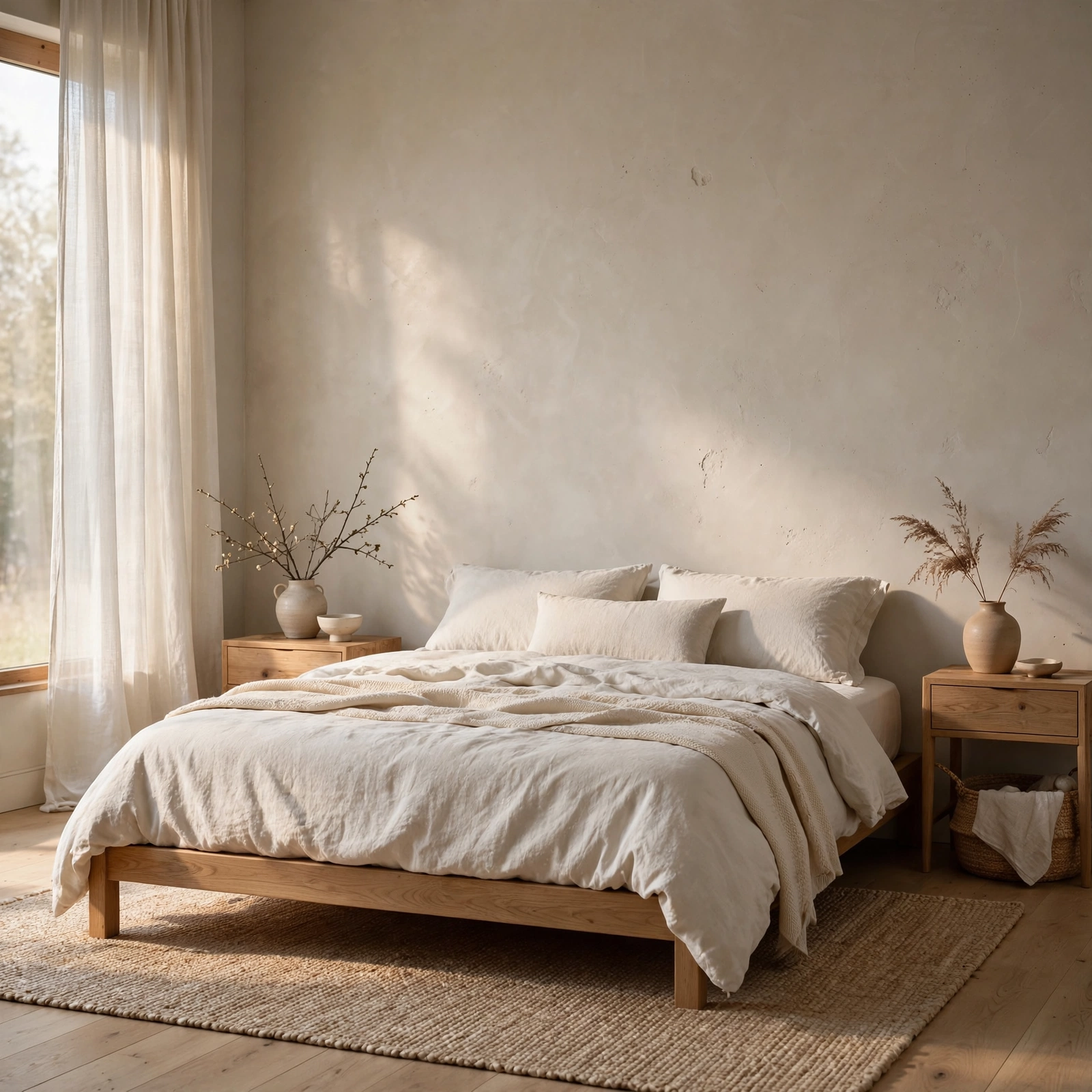
A limewash or clay-based paint finish on the walls introduces subtle texture and tonal variation that a flat, uniform paint color doesn’t offer. These finishes tend to shift slightly with the light throughout the day, adding a quiet sense of depth to the room without any pattern or strong color. This option requires a bit more preparation than standard paint but produces a noticeably more tactile result once finished.
5. Handcrafted Ceramic Vase for Japandi Bedroom
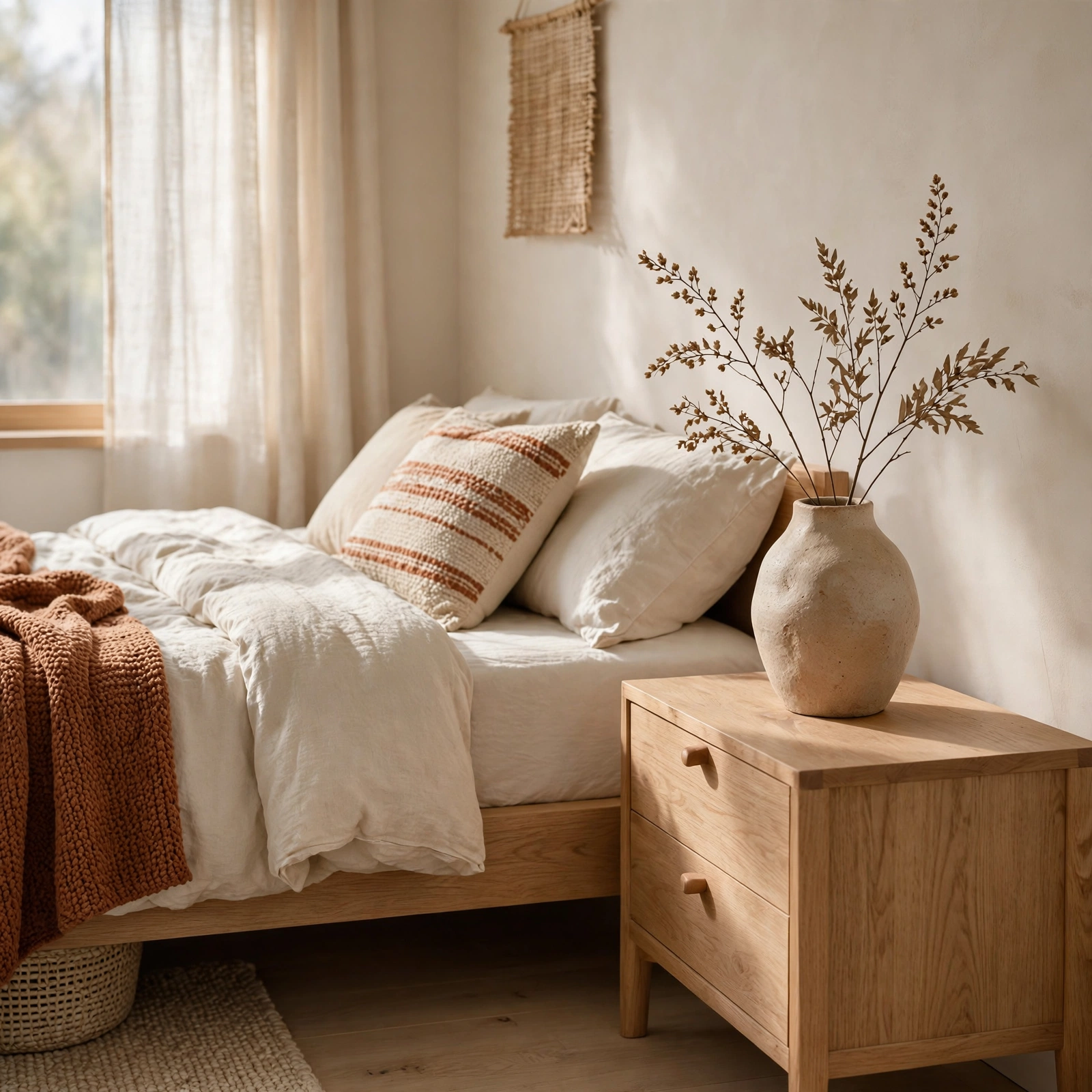
A single handmade ceramic vase, ideally with a visibly imperfect glaze or shape, reflects the wabi-sabi principle of appreciating natural imperfection that underlies much of the Japanese half of this style. Placing it alone on a dresser or windowsill, rather than grouping it with several other objects, keeps the piece as a clear, deliberate focal point. Choosing a muted, earthy glaze keeps the vase consistent with the room’s overall neutral palette.
6. Tatami-Inspired Floor Mat for Japandi Bedroom
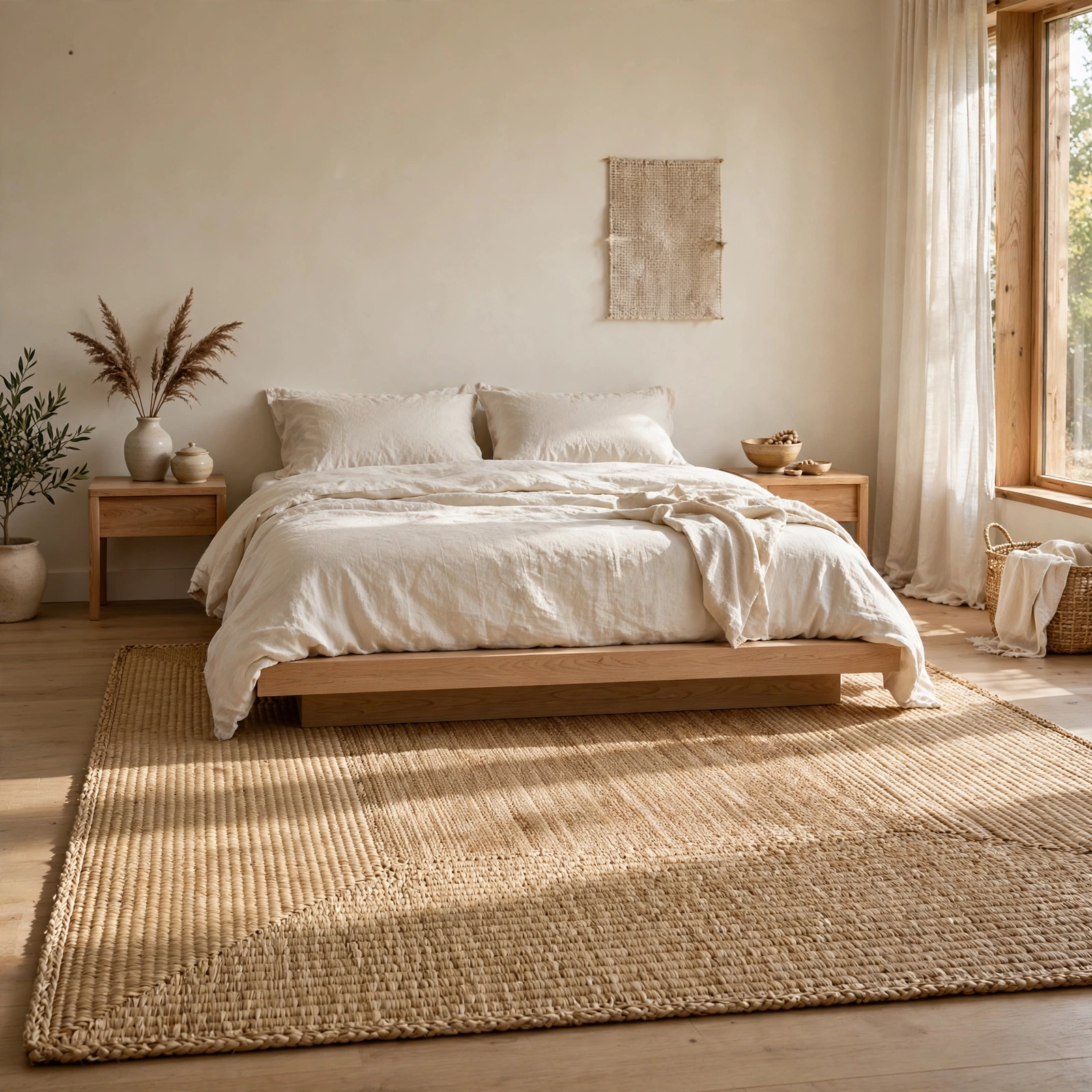
A woven rush or seagrass mat, styled after traditional tatami flooring, can be used as a small area rug beside the bed to add texture underfoot without introducing pattern or bold color. This material choice reinforces the natural fiber palette common across both Japanese and Scandinavian interiors. Layering a smaller wool throw rug on top during colder months adds warmth while keeping the woven texture visible around the edges.
7. Minimalist Wood Nightstand for Japandi Bedroom
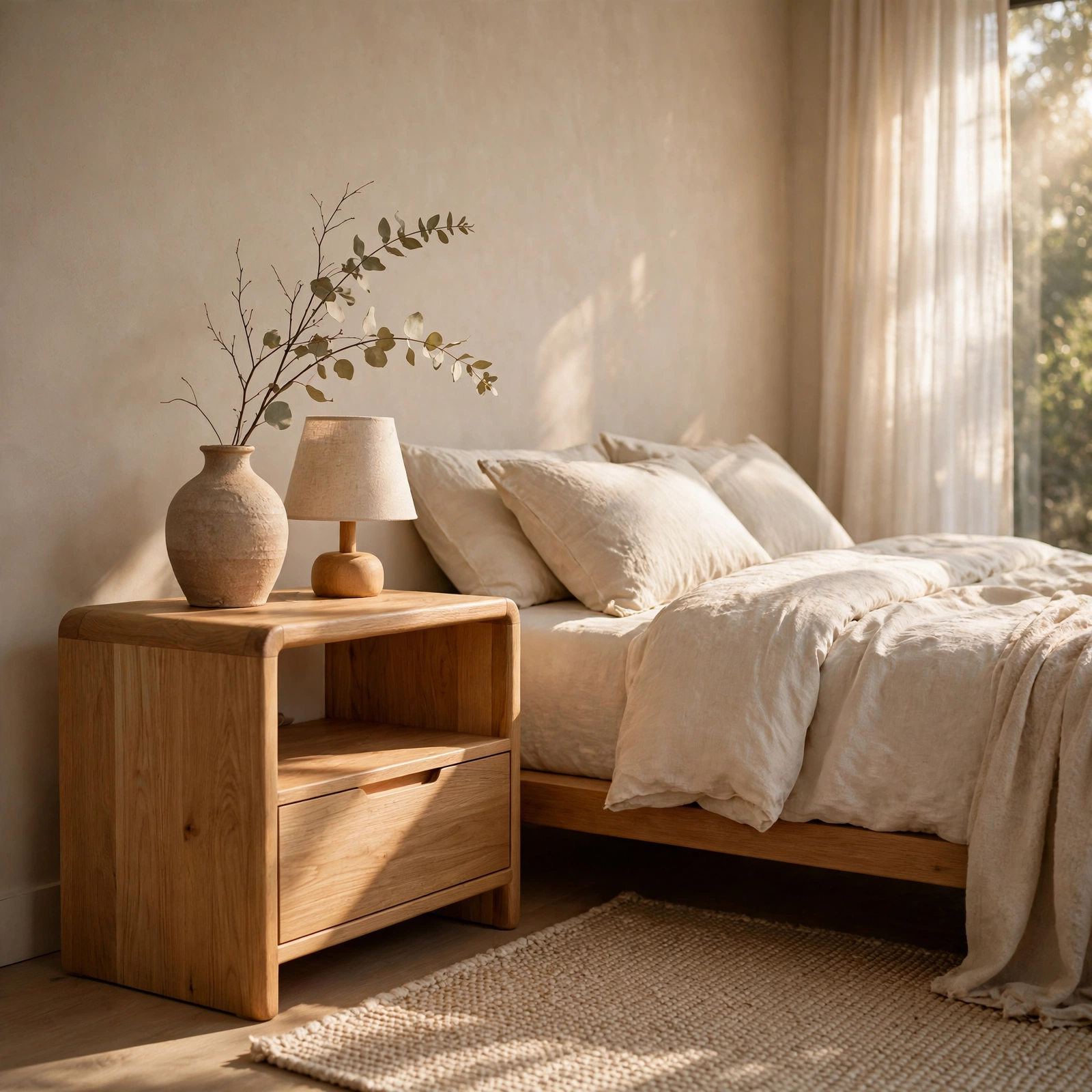
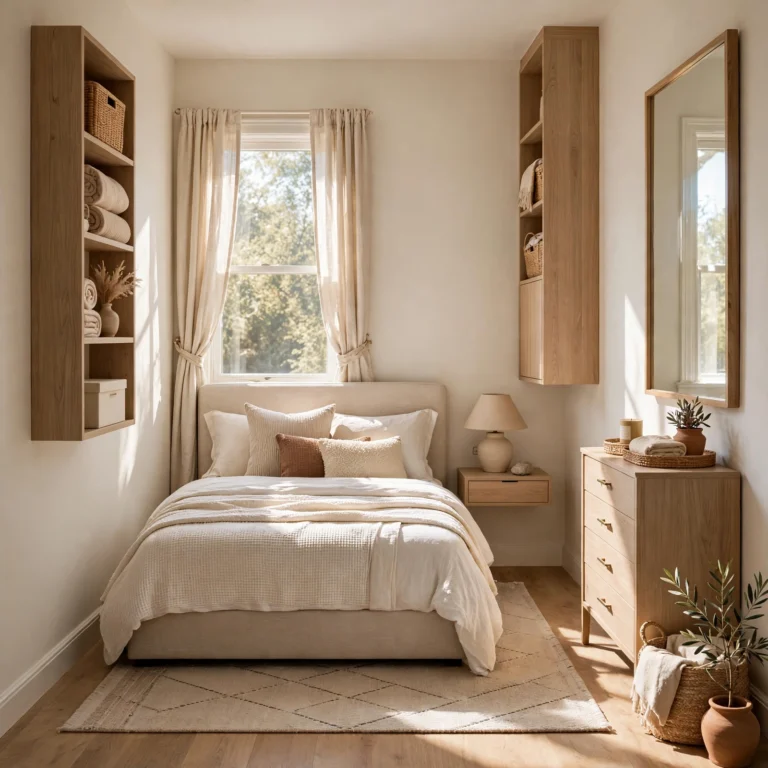
A simple wood nightstand with a single drawer or open shelf, free of ornate hardware or detailing, keeps the bedside area functional without disrupting the room’s calm visual rhythm. Choosing a nightstand in the same wood tone as the bed frame creates a more cohesive, intentional look than mixing several different finishes. This piece typically prioritizes clean joinery and visible grain over any additional decorative elements.
8. Paper Lantern Pendant for Japandi Bedroom
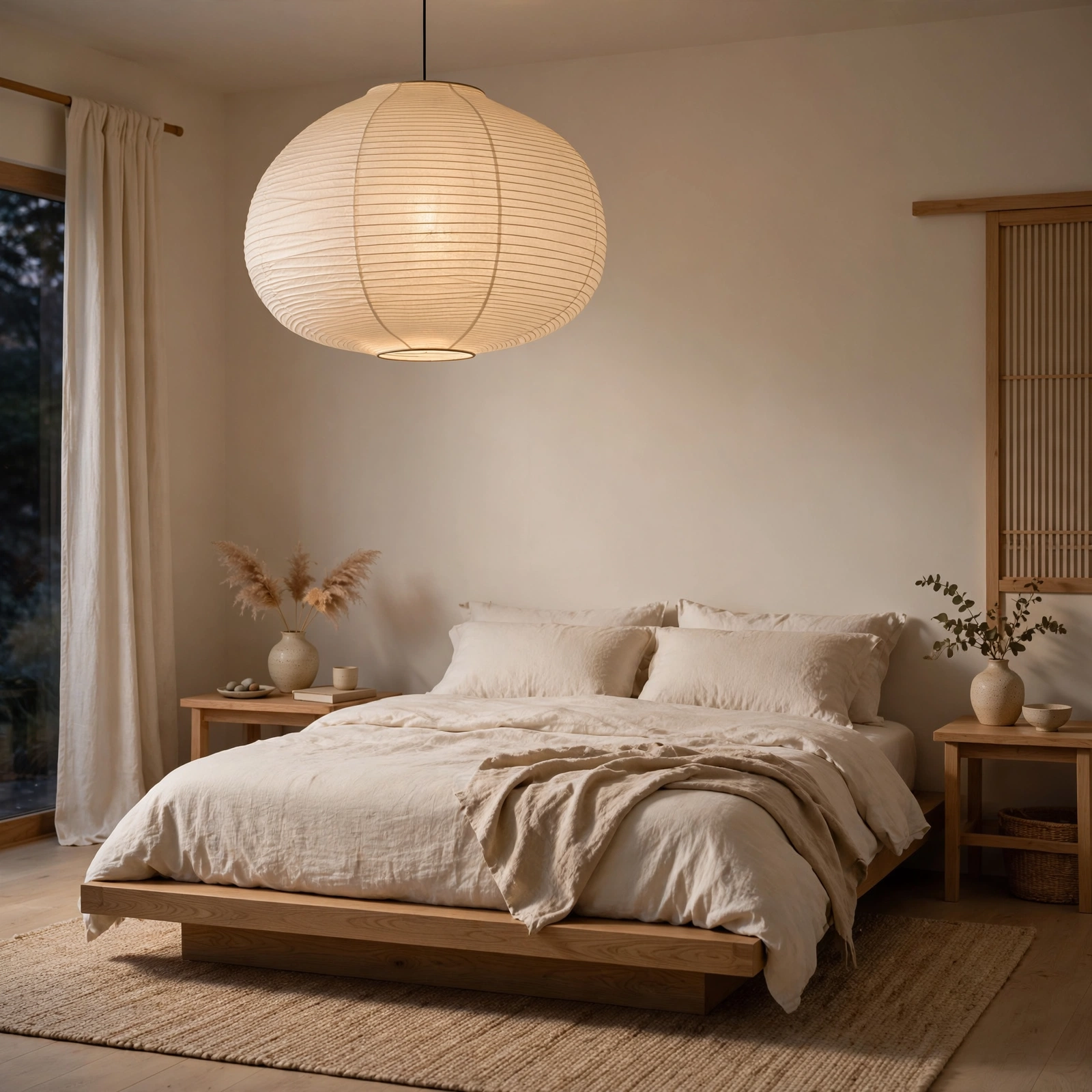
A paper or rice-paper pendant light softens the room’s central lighting and directly references traditional Japanese lantern design while still fitting comfortably within a broader neutral, Scandinavian-influenced room. These fixtures diffuse light gently, avoiding harsh shadows or a bright, direct glow. Choosing a simple, rounded or cylindrical shape keeps the fixture from feeling overly decorative against the room’s otherwise restrained material palette.
9. Bonsai Accent Plant for Japandi Bedroom
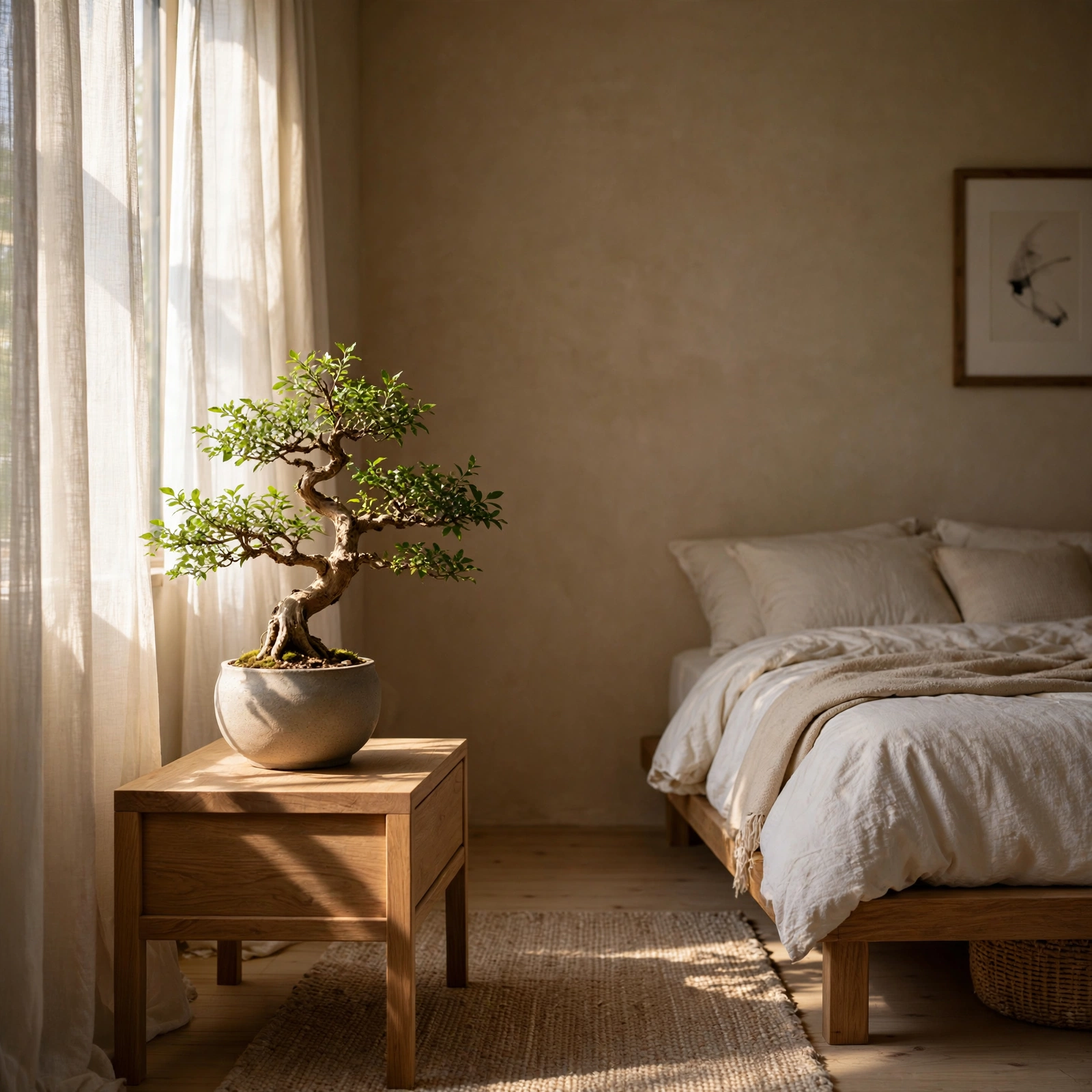
A small bonsai or similarly sculptural potted plant introduces a living element that suits the deliberate, cultivated feeling central to Japanese design principles. Placing it on a low wood stand near a window gives the plant both light and a sense of quiet prominence in the room. This idea works particularly well as a single, focused green accent rather than a larger plant collection, which would push the room toward a more maximalist look.
10. Woven Grass Wall Panel for Japandi Bedroom
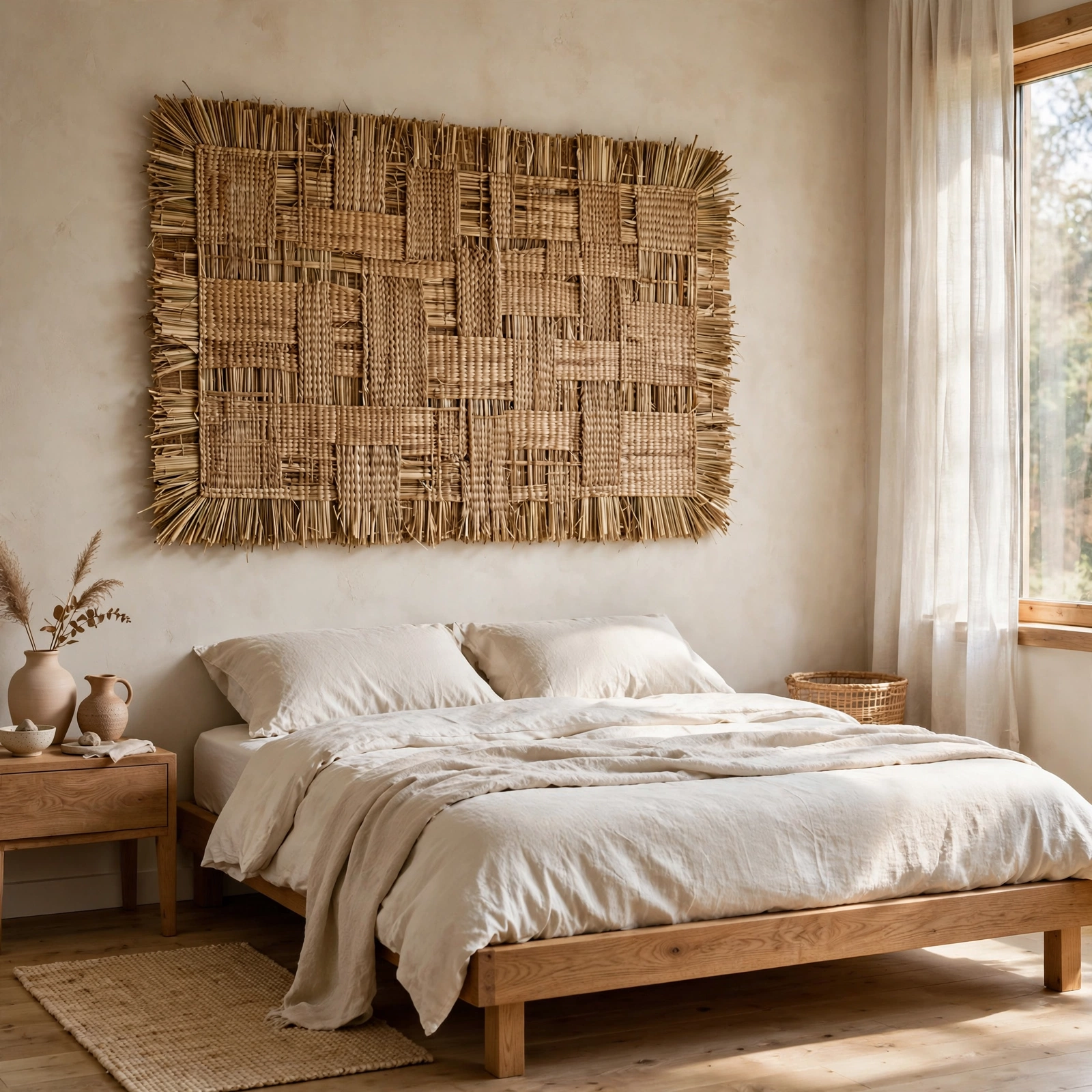
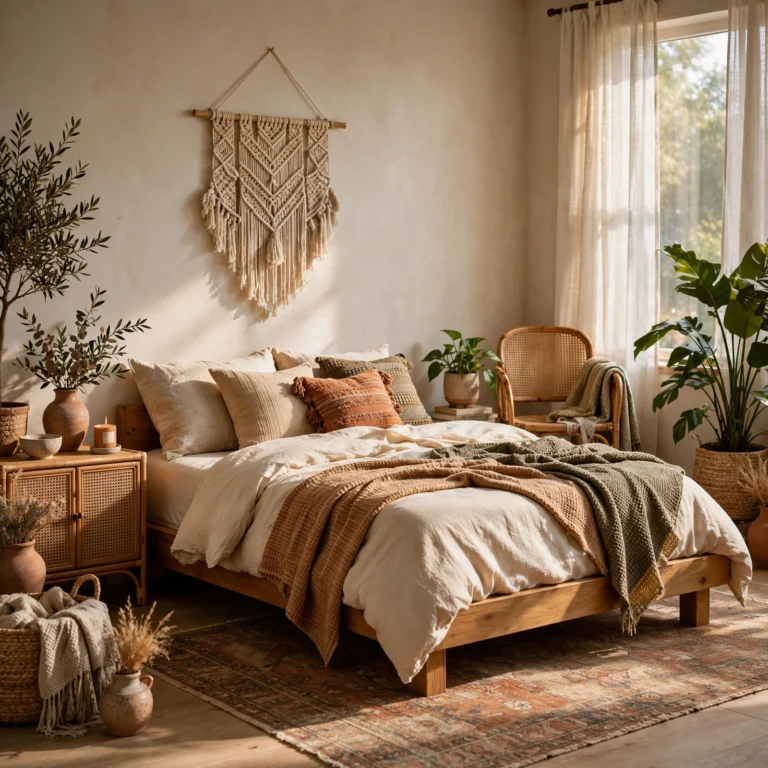
A woven grass or rattan wall panel installed behind the bed adds texture and warmth while staying within the natural material palette central to a japandi bedroom. Unlike a bold patterned tapestry, these panels typically have a subtle, repetitive weave that reads as quiet texture rather than a strong visual statement. This option works well as an alternative to a traditional headboard for a low platform bed frame.
11. Matte Stoneware Tray for Japandi Bedroom
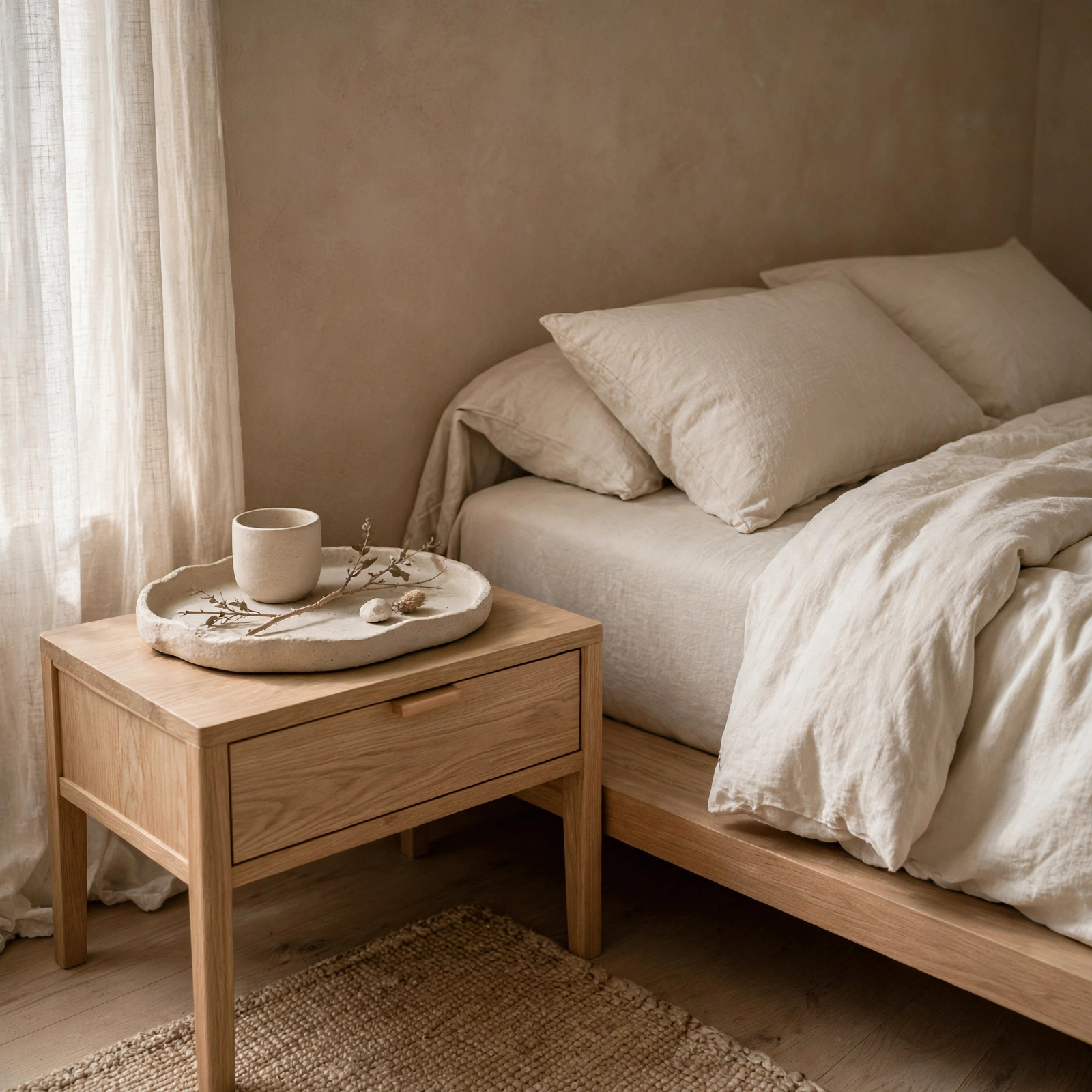
A matte stoneware tray on a dresser or nightstand corrals small daily items while adding a handcrafted, tactile surface consistent with the room’s overall material choices. Choosing a tray with a slightly uneven glaze or visible throwing marks reinforces the wabi-sabi appreciation for natural imperfection found throughout the style. This small addition also makes the surface easier to keep visually tidy day to day.
To learn about boys bedroom decor ideas, CLICK HERE.
12. Wabi-Sabi Ceramic Bowl for Japandi Bedroom
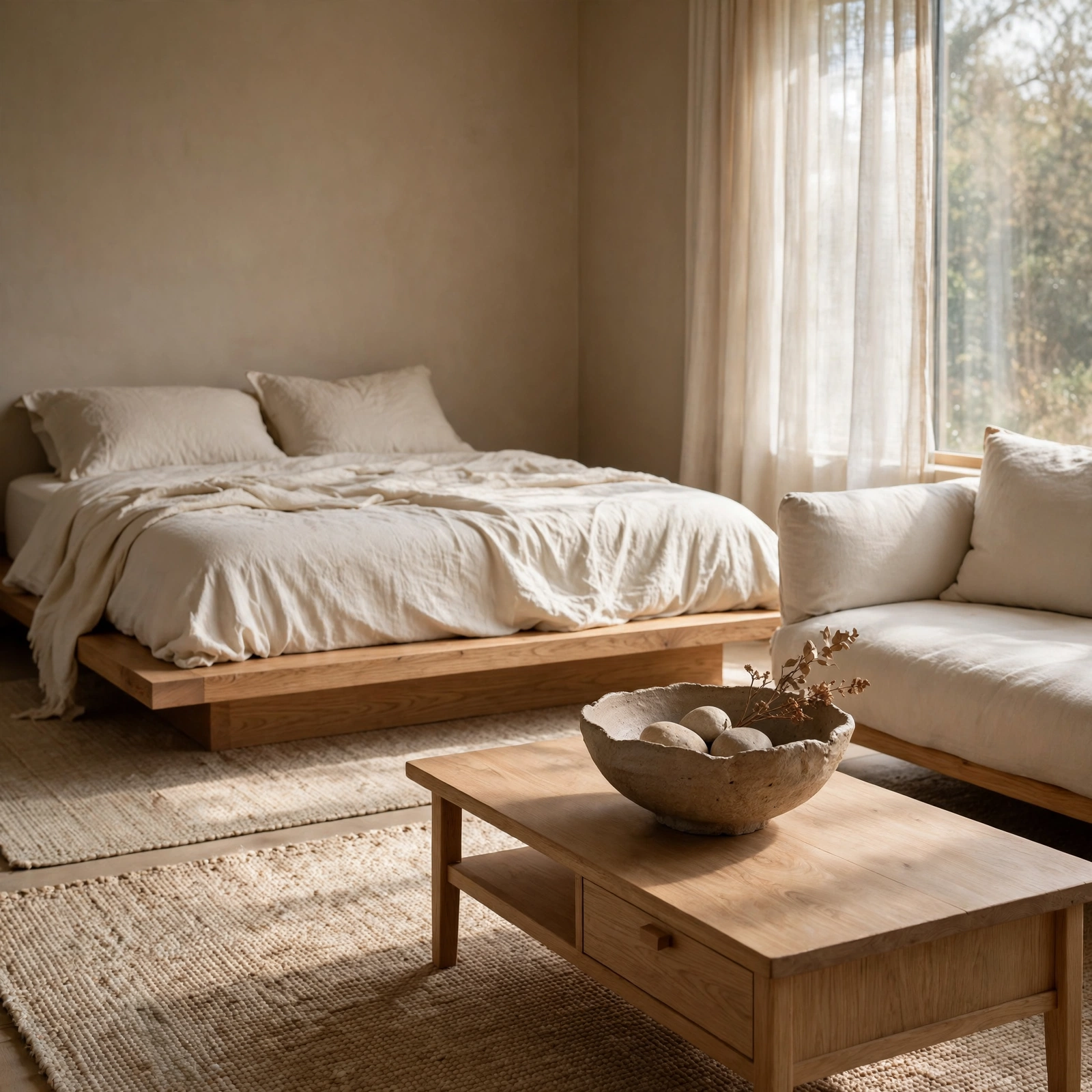
A ceramic bowl with a deliberately irregular shape or a crackled glaze finish serves as a small styled object on a dresser or shelf, reflecting the wabi-sabi philosophy that values imperfection and age over uniform perfection. This piece typically doesn’t need to hold anything functional, since its role is primarily as a quiet visual anchor within the room. Choosing one with visible texture keeps it from blending in too completely with the rest of the neutral palette.
13. Sliding Wood Closet Door for Japandi Bedroom
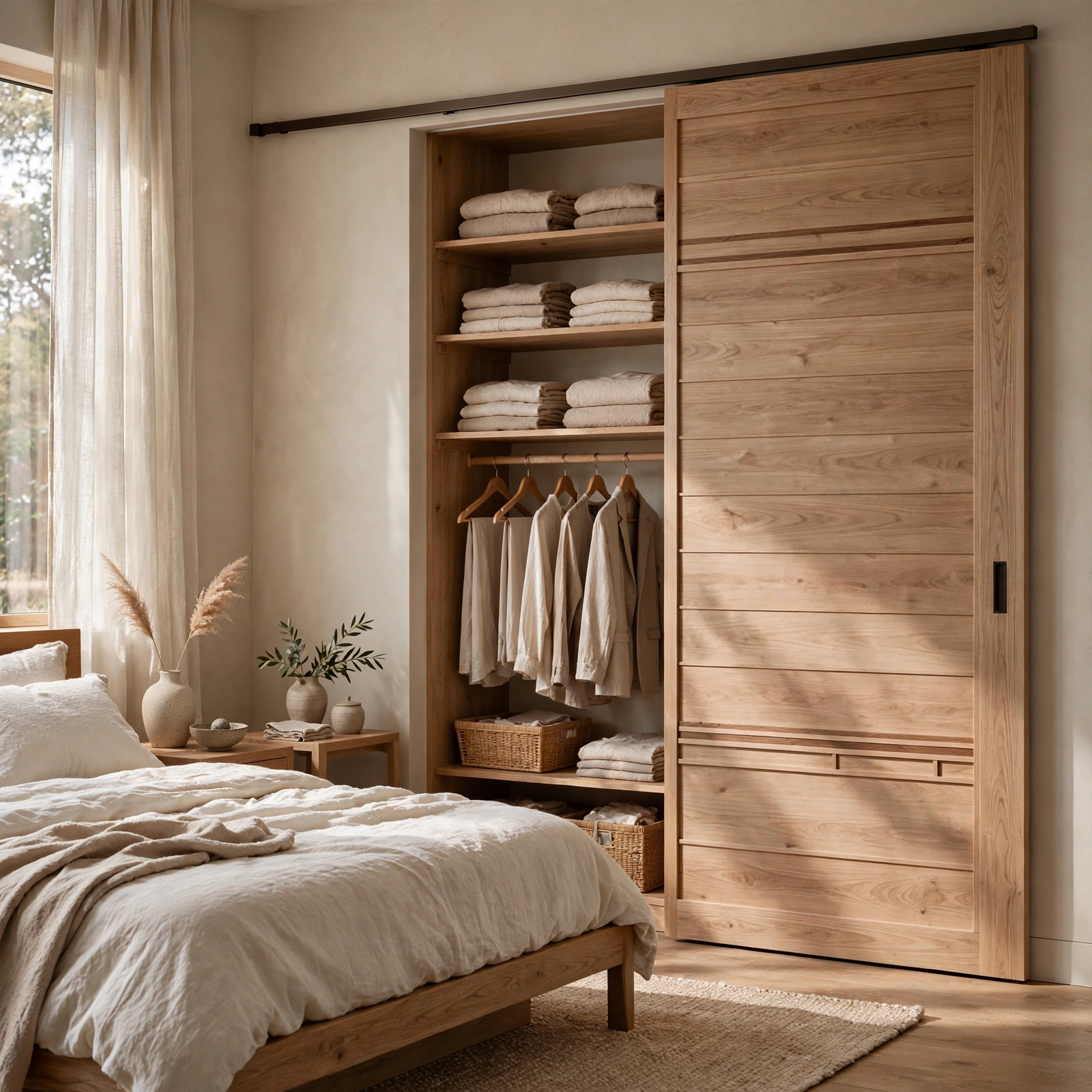
A sliding wood-slat closet door references traditional Japanese shoji screens while also solving a practical space issue, since sliding doors don’t require the floor clearance a swinging door needs. Choosing a door with a simple grid or slat pattern, rather than solid panels, adds subtle texture to the closet wall. This option pairs particularly well with a japandi bedroom’s low platform bed and minimal wood furniture.
14. Muted Earth Tone Palette for Japandi Bedroom
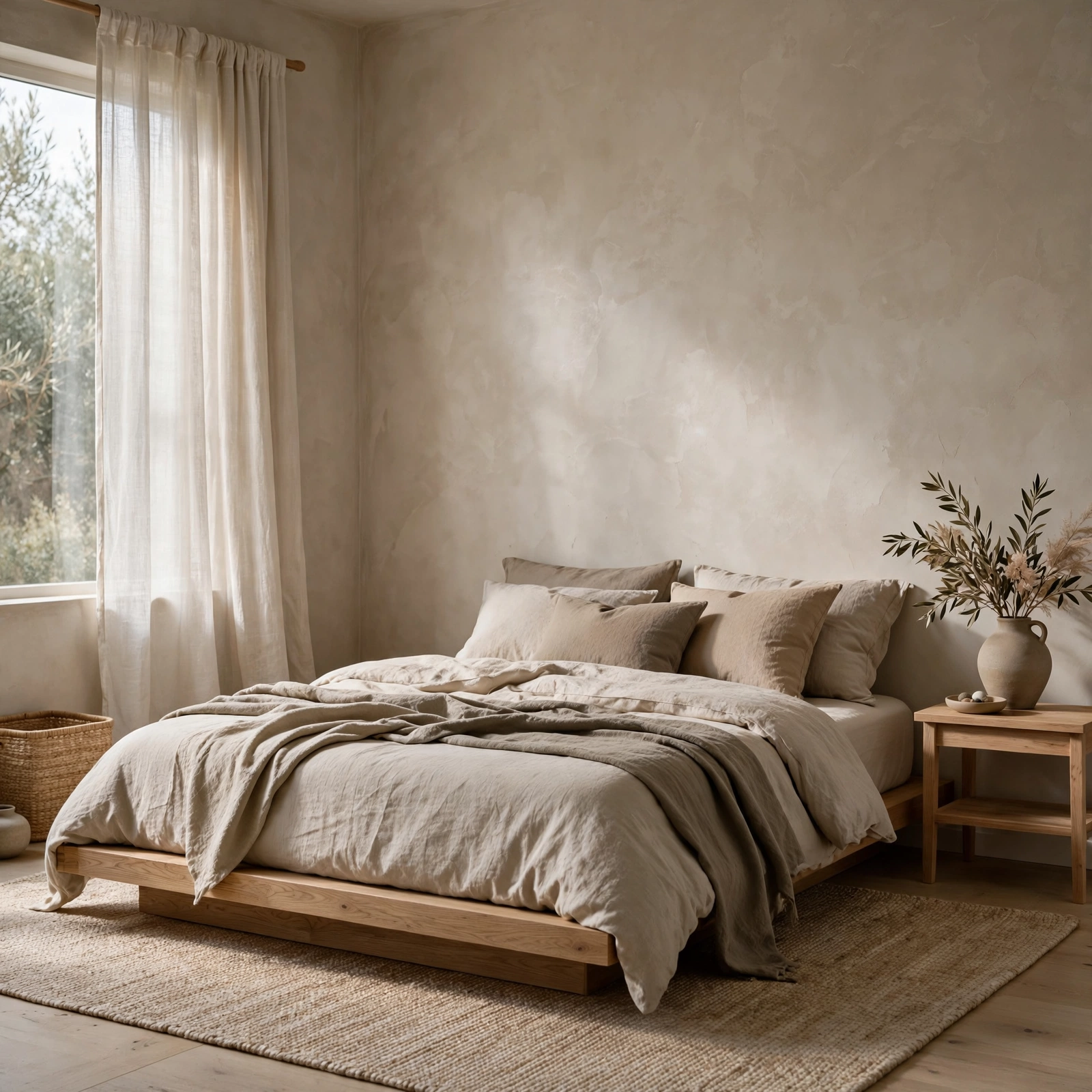
Sticking to a narrow palette of warm neutrals, such as clay, oatmeal, and soft charcoal, ties together the room’s furniture, textiles, and wall finishes without introducing competing colors. The table below compares a few common tone directions used in this style.
| Palette Direction | Wall Tone | Accent Tone |
| Warm sand | Soft oatmeal | Terracotta or rust |
| Cool stone | Light gray-beige | Charcoal or ink black |
| Muted moss | Warm greige | Sage or olive green |
Shop the Look
A handful of pieces recur across these japandi bedroom ideas and are worth prioritizing when shopping. A low ash wood platform bed frame anchors the room’s overall silhouette, and a set of stonewashed linen bedding in a muted clay tone adds texture without pattern. A paper lantern pendant updates the central lighting, and a handmade ceramic vase with a visible imperfect glaze adds a quiet focal point. A woven tatami-style floor mat rounds out the core shopping list.
Common Mistake to Avoid
A common mistake when designing a japandi bedroom is leaning too far into one half of the style, either ending up too stark and minimal or too heavily Scandinavian with excessive cozy textiles that crowd out the room’s sense of calm. Balancing low, simple furniture with just enough handcrafted texture, such as a single ceramic piece or a woven panel, keeps both influences represented without either one dominating. Reviewing the room periodically to check whether it still feels calm rather than empty or cluttered helps maintain that balance over time.
Frequently Asked Questions
What’s the difference between japandi and minimalist bedroom styles?
A japandi bedroom shares a preference for uncluttered surfaces with a minimalist bedroom, but it incorporates more visible texture and handcrafted detail through materials like ceramics, woven grass, and natural wood grain. A minimalist bedroom often relies on very few objects and a stricter color palette, while a japandi bedroom allows more warmth and imperfection into the mix. Both styles avoid excess decoration, but japandi leans more heavily on tactile, natural materials to create interest.
What wood tones work best for a japandi bedroom?
Light to medium wood tones, such as ash, white oak, or pale birch, tend to work best for a japandi bedroom, supporting the airy, natural quality central to the style. Darker woods can still work in smaller doses, such as a single accent piece, but using them throughout the room risks pushing the space toward a heavier, more traditional Japanese look rather than the lighter japandi blend. Consistency in wood tone across furniture pieces also matters more than the specific shade chosen.
Is japandi style expensive to achieve?
Japandi style doesn’t have to be expensive, since much of its impact comes from a restrained color palette and a few well-chosen natural materials rather than a large number of purchases. Secondhand wood furniture, handmade ceramics from local makers, and simple linen textiles can all be sourced at a range of price points. Prioritizing a few key pieces, like the bed frame and bedding, over many smaller decorative objects tends to be the more cost-effective approach.
Can I mix in existing furniture with a japandi bedroom look?
Yes, existing furniture can often work within a japandi bedroom, particularly if it already has simple lines and a natural wood or neutral finish. Painting or refinishing an existing piece in a lighter tone, or simply removing ornate hardware, can help it blend into the overall palette. Focusing new purchases on the pieces that have the most visual impact, such as bedding and lighting, is a practical way to ease into the style gradually.
What lighting works best in a japandi bedroom?
Soft, diffused lighting from paper or fabric-shaded fixtures tends to work best in a japandi bedroom, avoiding the harsher, more direct light of exposed bulbs or bright overhead fixtures. Warm color temperatures, generally in the 2700 to 3000 kelvin range, support the calm, quiet mood central to the style. Layering a bedside lamp with a softer ambient fixture, such as a paper pendant, allows the lighting to adjust between functional and relaxed throughout the day.
Conclusion
These fourteen japandi bedroom ideas blend the quiet restraint of Japanese design with the warmth of Scandinavian materials, relying on low furniture, natural textures, and a muted palette to create a calm, grounded space. Choosing a few foundational pieces, such as the bed frame and bedding, and layering in handcrafted details over time tends to produce the most authentic result. Save this guide to Pinterest for later reference, and check out the related bedroom lighting and textile posts for more ideas.