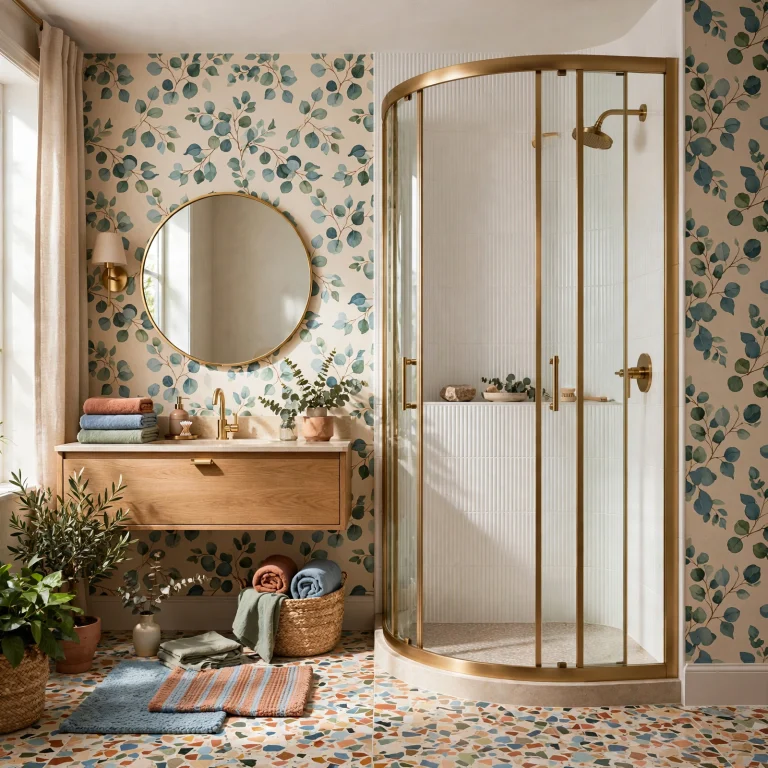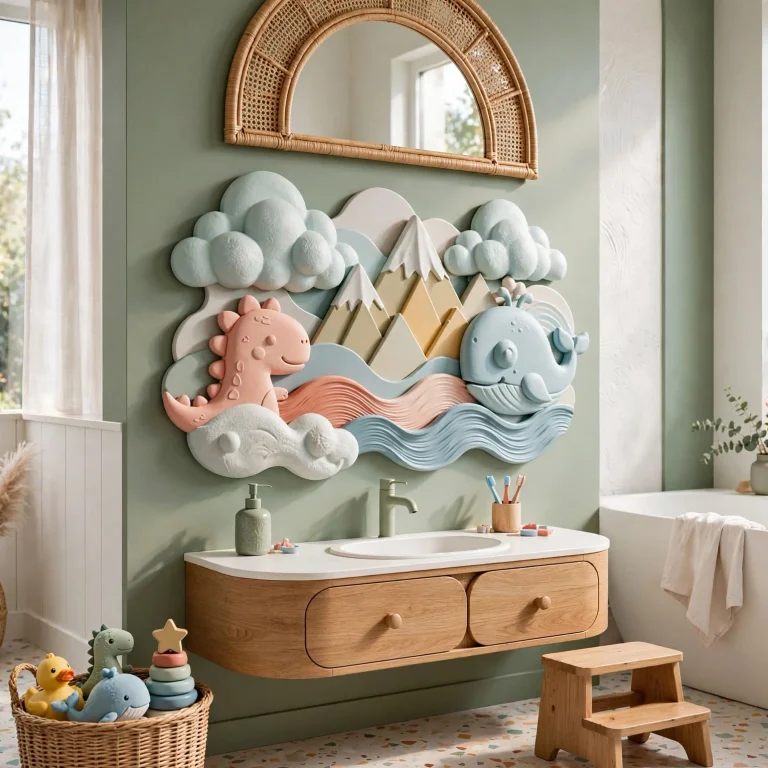
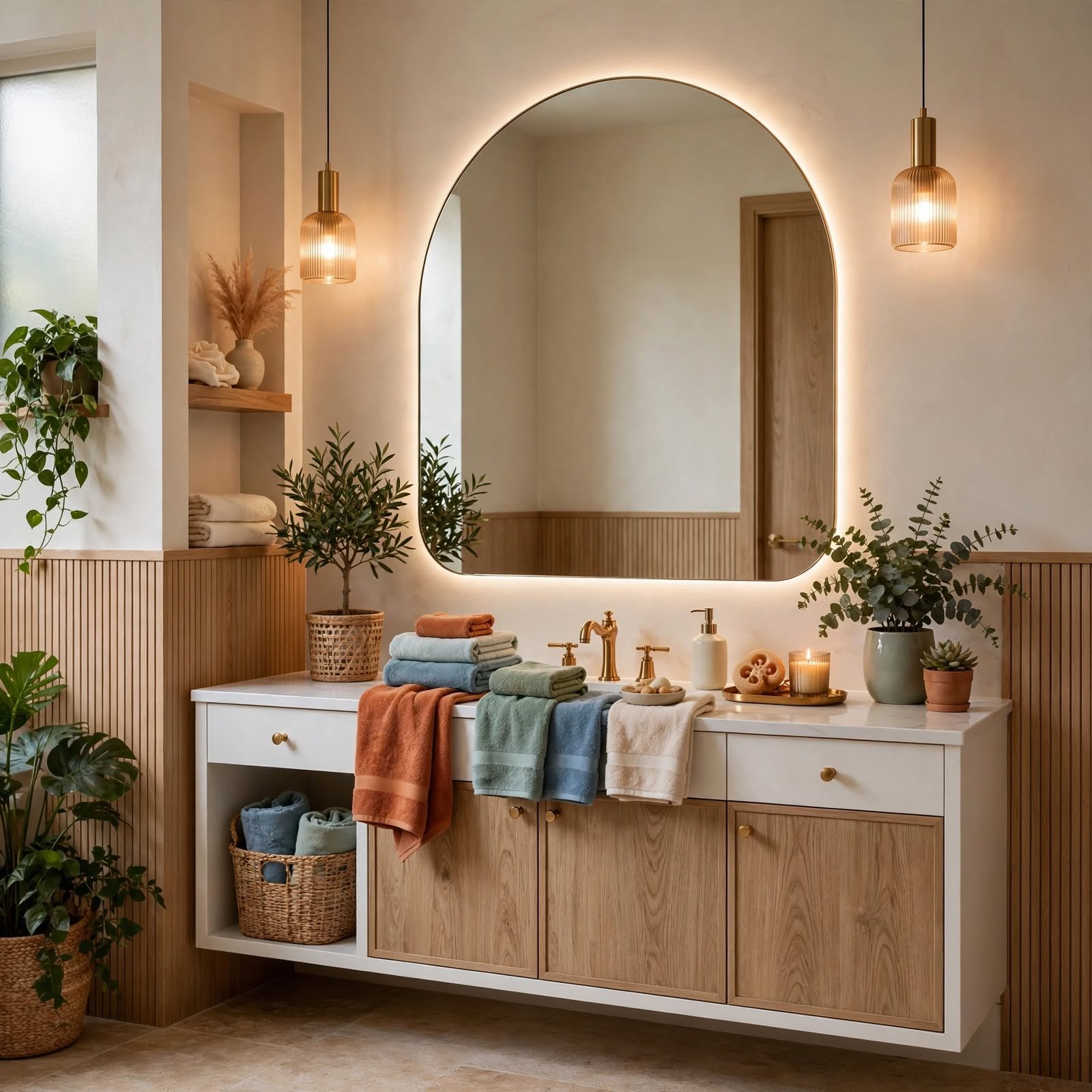
15 Stunning Bathroom Vanity Ideas for Style and Storage
A bathroom vanity Ideas does more work than almost any other fixture in the room, providing storage, counter space, and often the room’s primary visual anchor all at once. This guide covers fifteen vanity ideas, from floating minimalist designs to furniture-style antique conversions, with guidance on material, size, and storage trade-offs for each. Every idea addresses both the vanity’s function and its contribution to the bathroom’s overall design.
Trend & Background
Bathroom vanity design has diversified considerably beyond the standard boxy cabinet with a drop-in sink, with floating installations, furniture-style conversions, and mixed-material designs all gaining popularity as homeowners seek more distinctive options than a builder-grade default. This shift reflects broader interior design trends toward considered, characterful furniture choices extending into the bathroom, a room that received comparatively less design attention in previous decades. Countertop material choices have also evolved alongside this trend, with natural stone and engineered quartz increasingly common even in more modest bathroom renovations, replacing the laminate and basic cultured marble more typical of older builder-grade installations.
Key Takeaways
- A bathroom vanity choice affects both daily storage function and the room’s overall visual weight more than most other fixtures.
- Floating vanities open up floor space, while furniture-style vanities offer more traditional storage capacity and visual grounding.
- Countertop material matters as much as the cabinet style, since it affects durability, maintenance, and overall cost significantly.
- Double vanities solve genuine daily congestion in shared bathrooms but require enough width to avoid feeling cramped.
Bathroom Vanity Ideas
Explore the best bathroom ideas, including modern designs, tile inspiration, color schemes, storage, lighting, showers, vanities, and stylish decorating ideas for every home.
1. Floating Vanity for Visual Openness
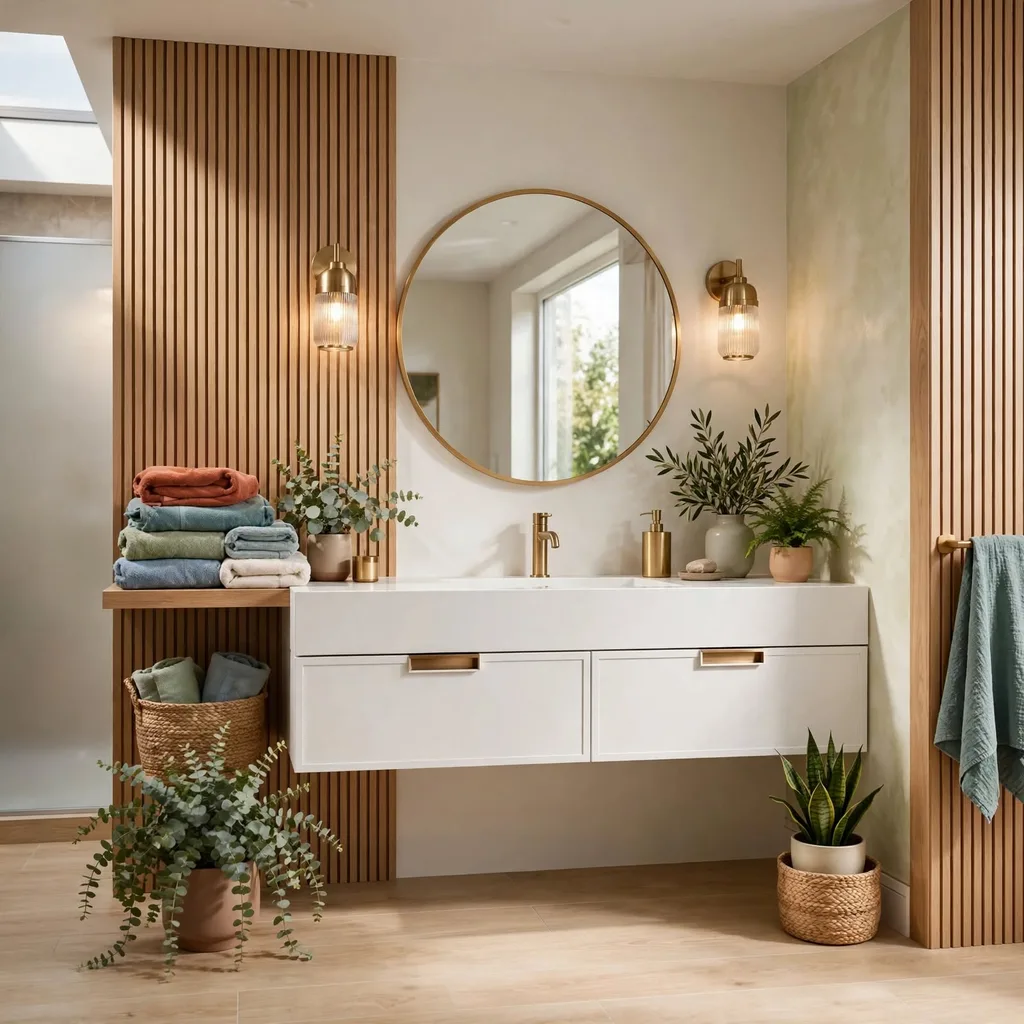
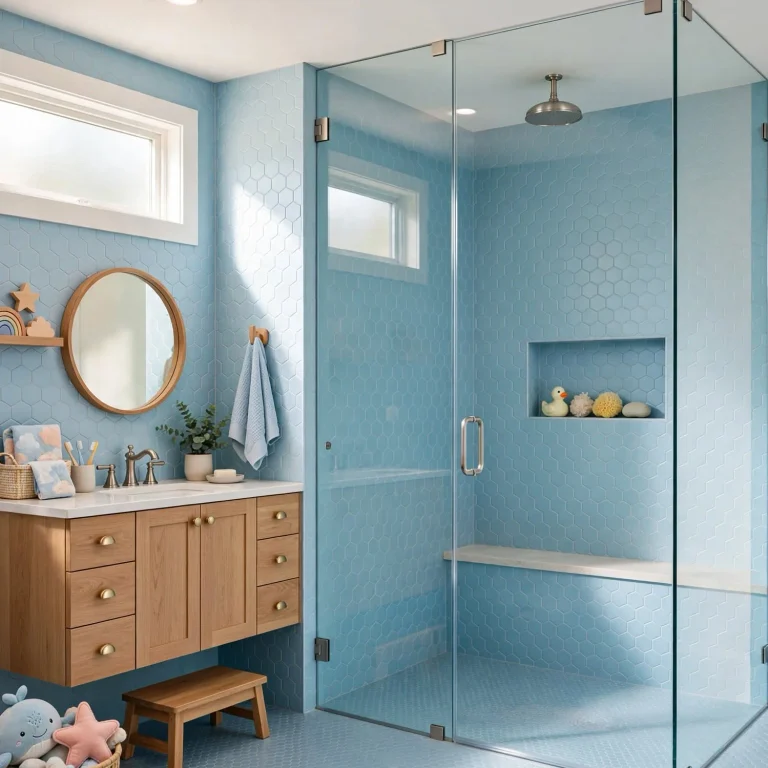
A floating vanity, mounted directly to the wall with no visible base touching the floor, opens up a bathroom’s visual floor space while simplifying cleaning considerably, since there’s no cabinet base obstructing the floor beneath it. This style suits a smaller bathroom particularly well, where the visual openness meaningfully affects how spacious the room feels. Proper wall reinforcement, typically blocking installed within the wall cavity during construction or renovation, is required to safely support this vanity style’s full weight along with its contents.
2. Furniture-Style Vanity With Turned Legs
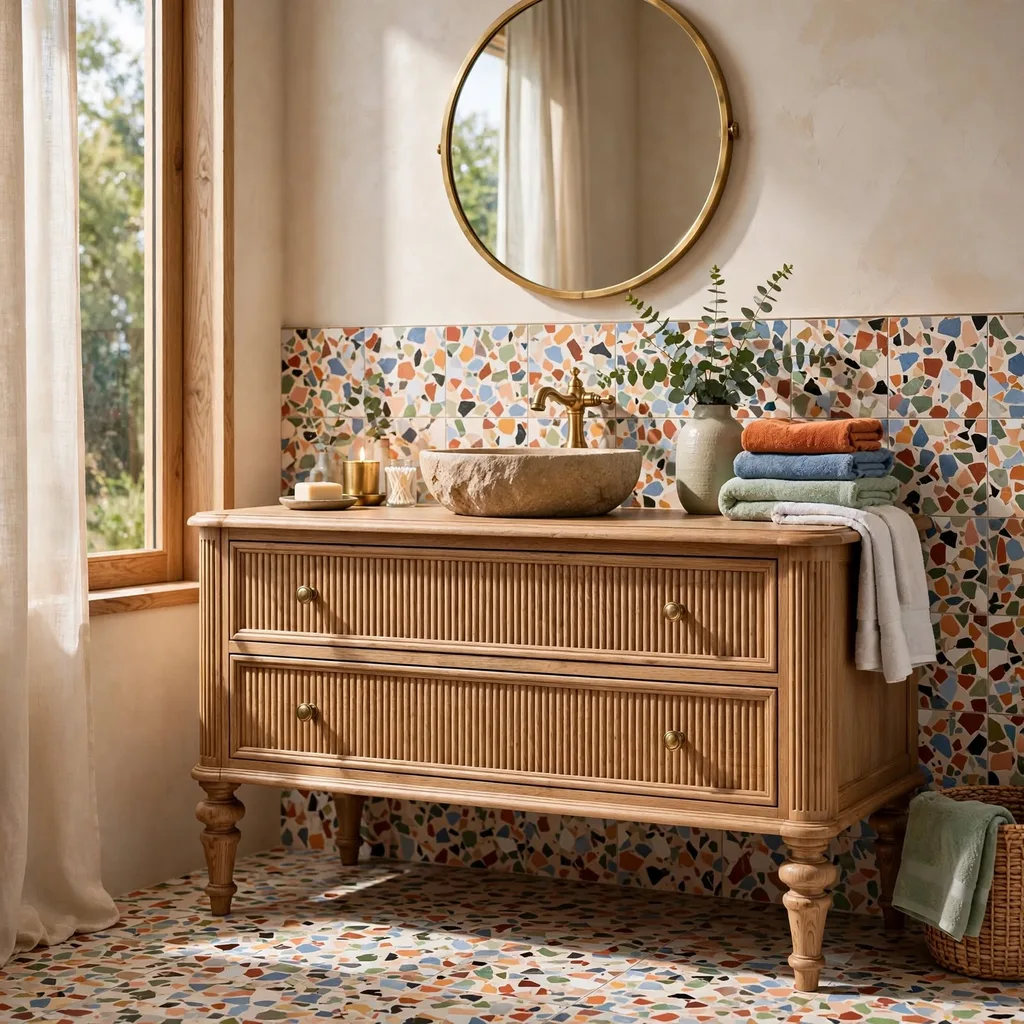
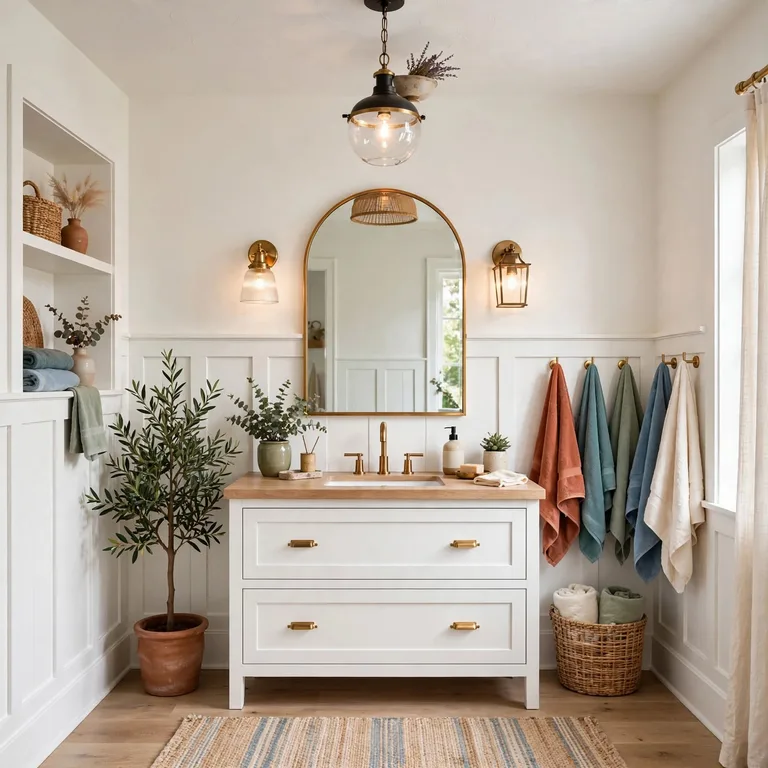
A furniture-style vanity, resembling a genuine piece of freestanding furniture with turned or tapered legs rather than a built-in cabinet appearance, brings warmth and traditional character to a bathroom that a standard boxy vanity doesn’t provide. This style works particularly well in a traditional or transitional bathroom, echoing furniture found elsewhere in a home rather than reading as a purely utilitarian fixture. Choosing a vanity in a genuine wood finish, rather than a printed laminate imitation, ensures the piece holds up to the bathroom’s moisture exposure over time.
3. Double Vanity for Shared Bathrooms
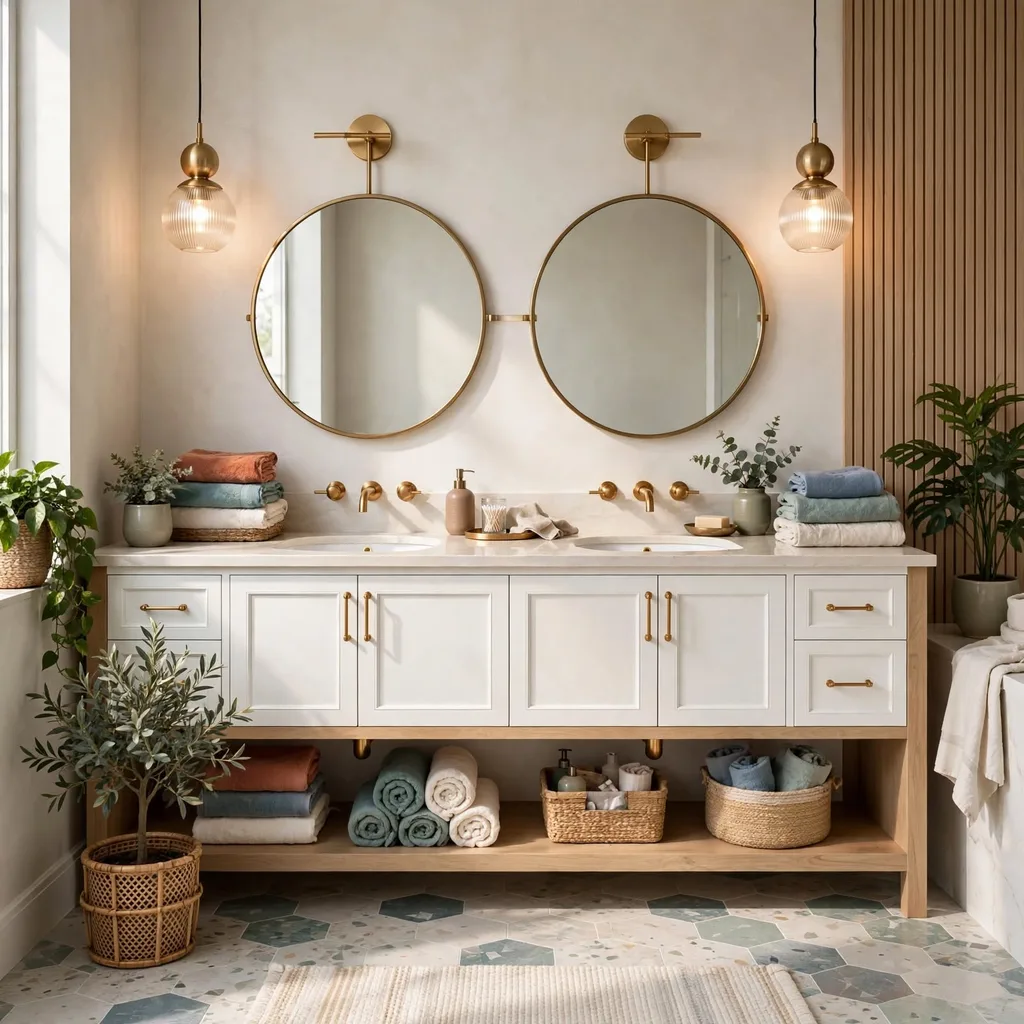
A double vanity, providing separate sink and counter space for two people, addresses genuine morning routine congestion in a shared primary or family bathroom, a practical benefit that matters more to daily function than most purely aesthetic vanity decisions. This configuration requires adequate width, generally at least 60 inches, to comfortably accommodate two sinks with sufficient counter space between them without feeling cramped. Choosing individual mirrors or lighting above each sink, rather than one shared fixture spanning the full vanity, further personalizes each side of the shared space.
| Vanity Type | Key Benefit | Best Room Size |
| Floating | Visual openness, easy cleaning | Small to medium |
| Furniture-style | Traditional warmth, character | Any, especially traditional |
| Double | Reduces morning congestion | Medium to large, 60 in+ |
| Vessel sink on console | Sculptural, minimal storage | Powder room, half bath |
4. Vessel Sink on an Open Console
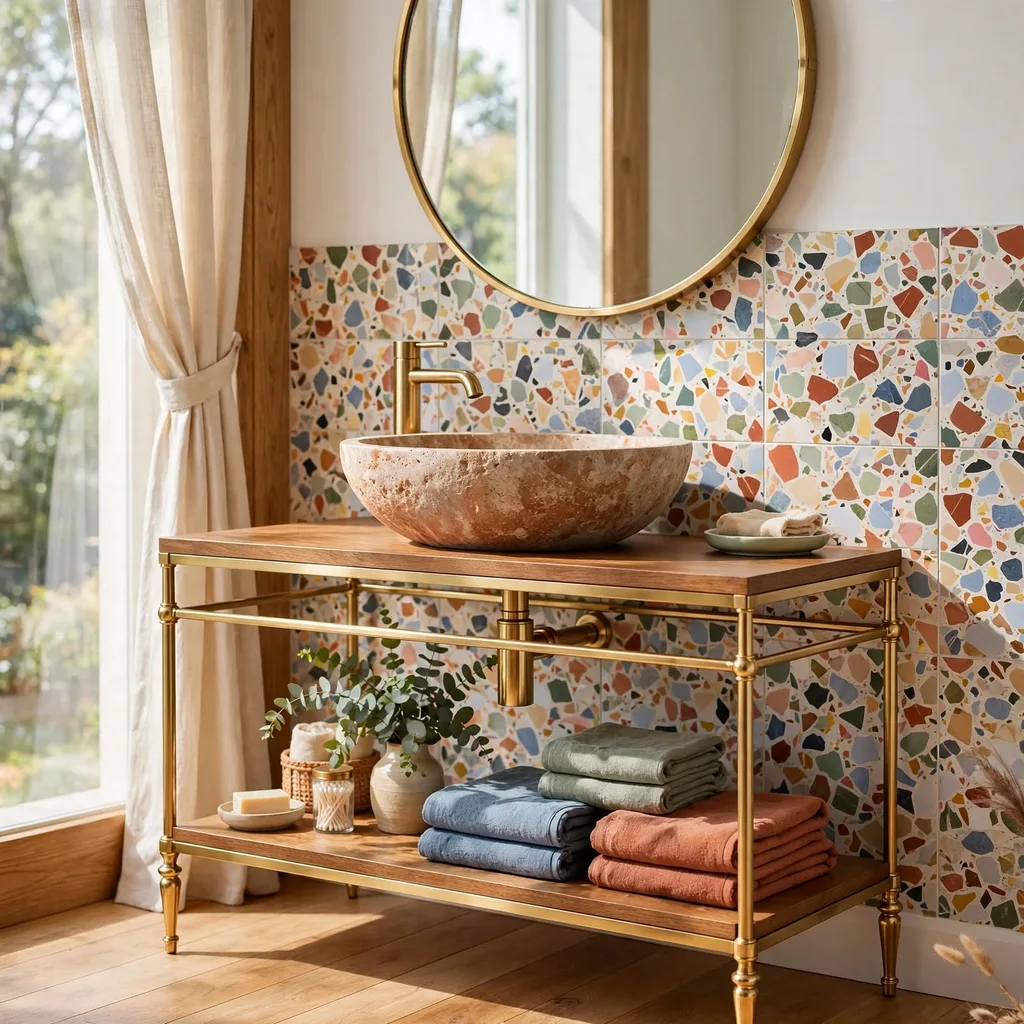
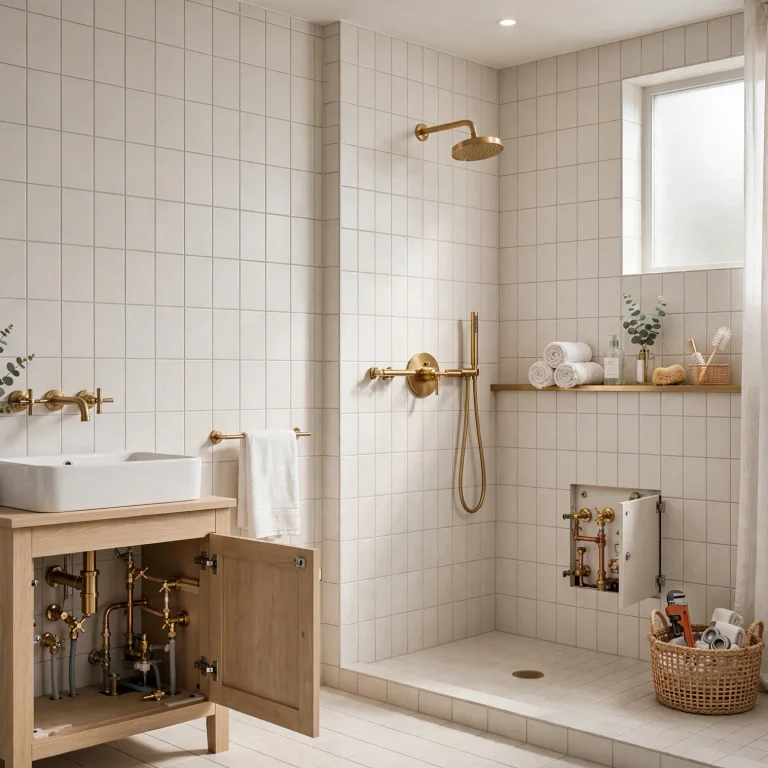
A vessel sink, sitting above rather than recessed into a console or simple table-style base, gives a bathroom vanity a sculptural, furniture-like quality while providing minimal but sufficient storage for a half bathroom or powder room. This configuration works particularly well when storage needs are genuinely low, since the open console beneath typically doesn’t offer the closed cabinet storage a full vanity provides. Choosing a vessel sink in an interesting material, hammered metal, natural stone, or a textured ceramic, allows this fixture to serve as the room’s primary design statement.
Find inspiring japandi bathroom ideas that make the most of limited space without sacrificing style or functionality.
5. Vintage or Antique Dresser Conversion
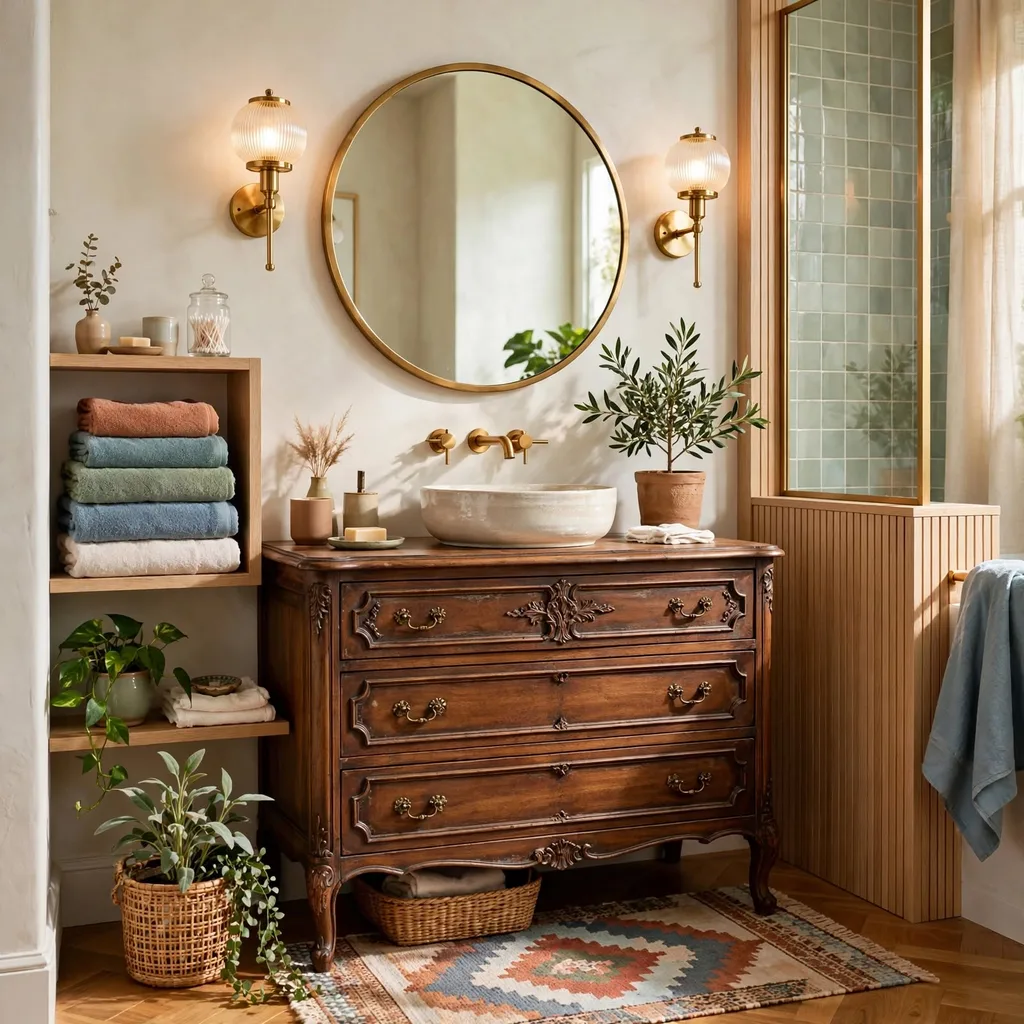
Converting a genuine vintage or antique dresser into a bathroom vanity, with a sink and appropriate plumbing added by a professional, brings authentic character and history to the room that new furniture, regardless of price, typically can’t replicate. This approach requires proper waterproofing of the wood surface and professional plumbing modification to safely accommodate a sink and faucet. This vanity style suits a powder room or a primary bathroom with lower moisture exposure particularly well, given genuine wood furniture’s greater sensitivity to constant humidity compared to a purpose-built bathroom vanity.
6. Natural Stone Countertop Vanity
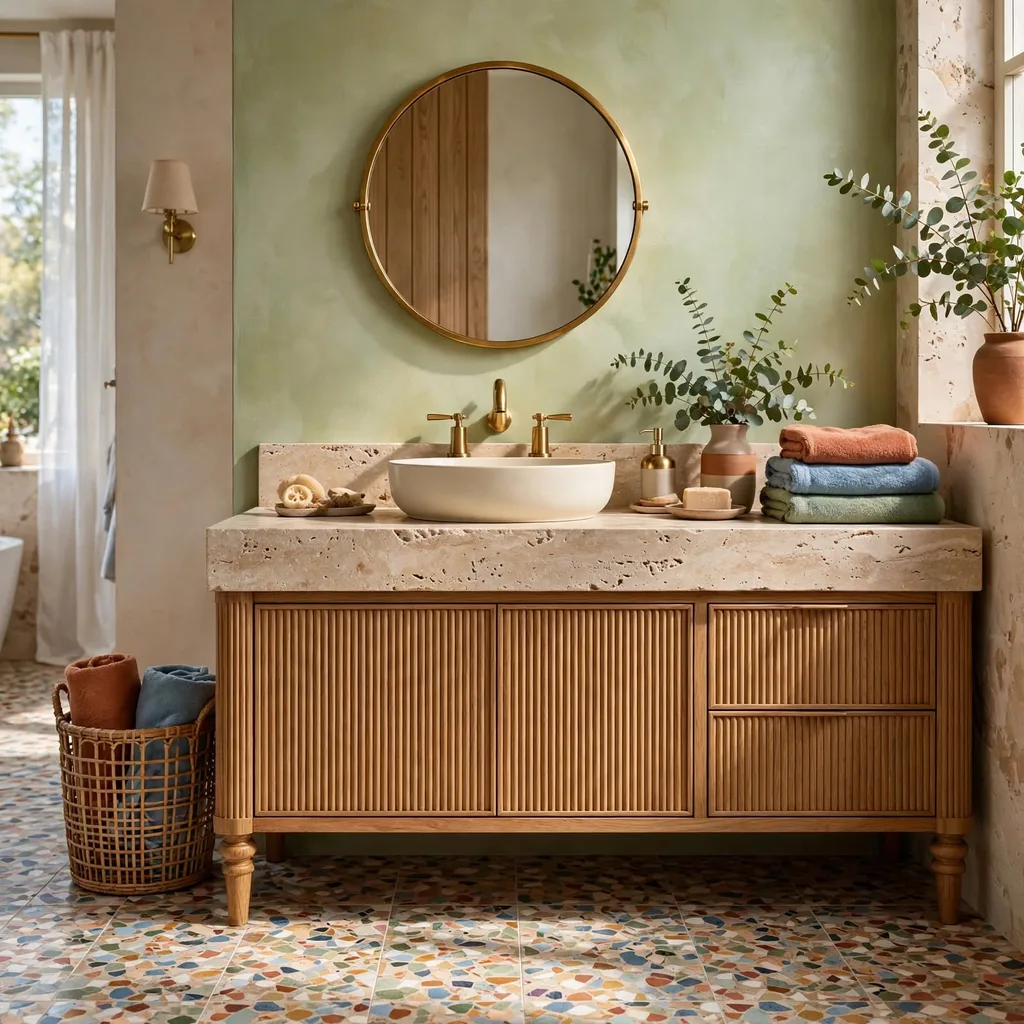
A vanity topped with natural stone, marble, quartzite, or granite, brings genuine material texture and visual interest that a solid-color laminate or basic engineered surface can’t replicate. Choosing a honed rather than polished finish shows water spots and daily use less visibly, an important practical consideration given the vanity’s constant exposure to splashing water and toiletry products. Quartz, an engineered stone requiring less maintenance than natural marble while still offering a similar organic appearance, provides a lower-maintenance alternative for households wanting the aesthetic without the sealing and staining concerns natural stone can involve.
7. Wall-Mounted Vanity With Open Shelving Below
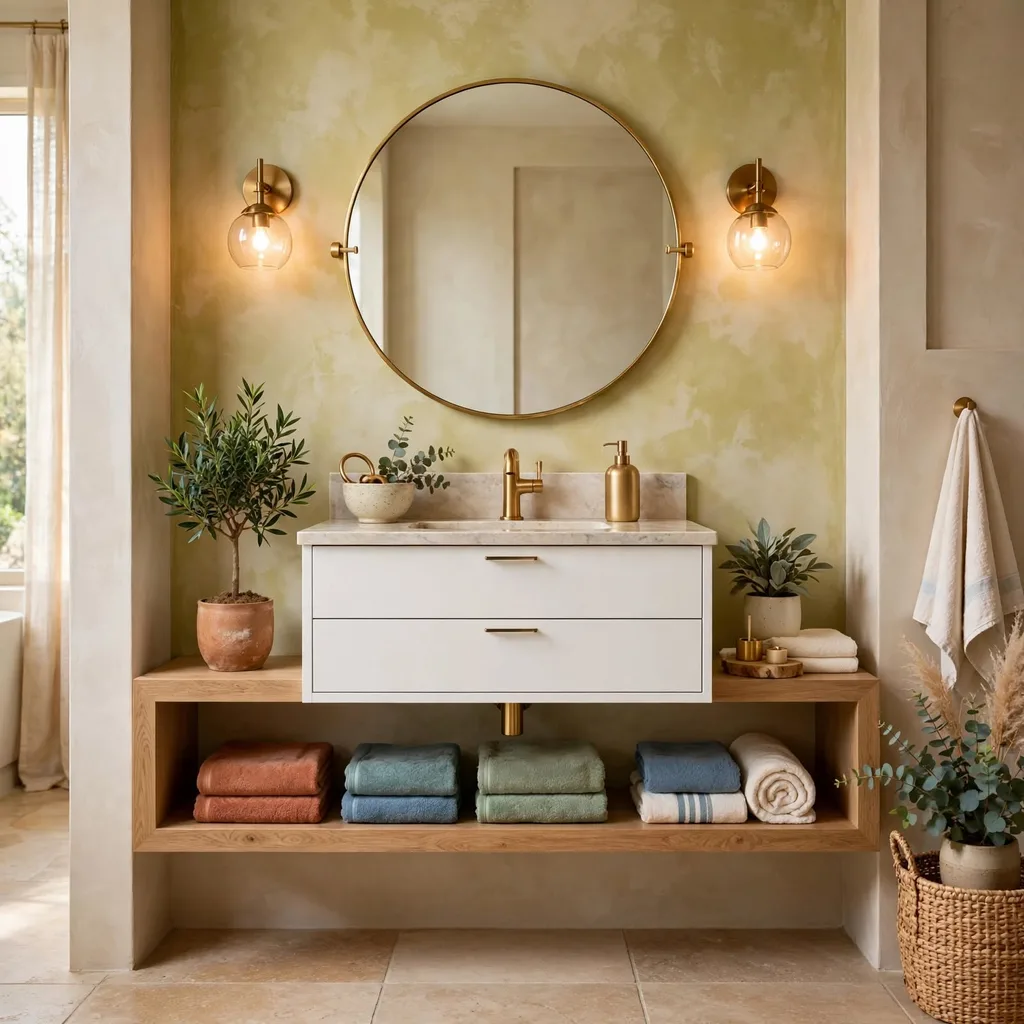
A wall-mounted vanity that skips a fully enclosed cabinet in favor of open shelving beneath the counter provides some storage capacity while maintaining more of the visual openness a fully floating vanity offers. This configuration works well for storing folded towels or baskets in clear view, requiring more disciplined, tidy organization than closed cabinet storage would demand. This style suits a contemporary or Scandinavian-influenced bathroom particularly well, where visible, orderly storage aligns with the room’s overall restrained aesthetic.
8. Mixed-Material Vanity Combining Wood and Metal
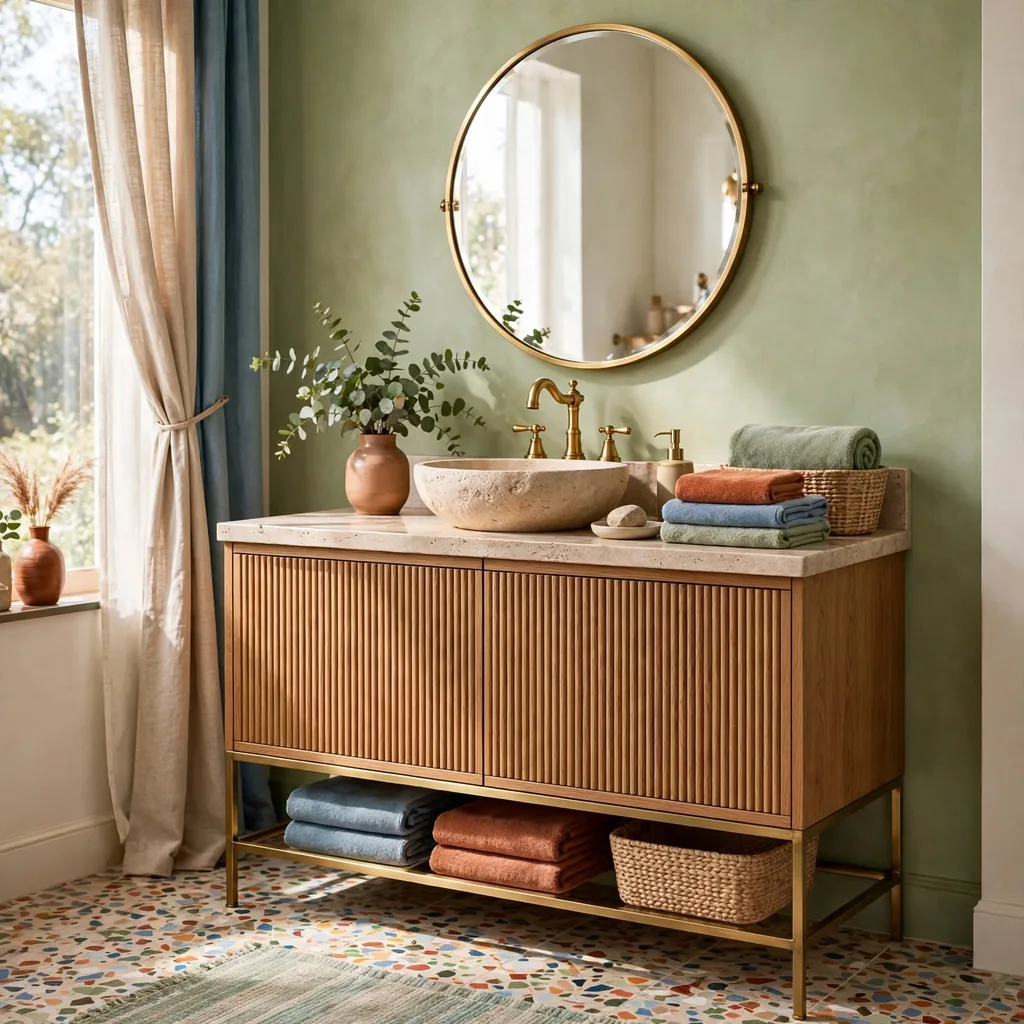
A vanity combining a solid wood cabinet body with black metal legs or hardware brings material contrast and a more contemporary, layered look than a single-material vanity provides. This combination suits a modern farmhouse or transitional bathroom particularly well, echoing the same wood-and-black-metal material pairing found throughout other rooms designed in that style. Choosing a matte black finish for the metal elements, rather than a glossy or polished alternative, keeps this pairing feeling current rather than dated.
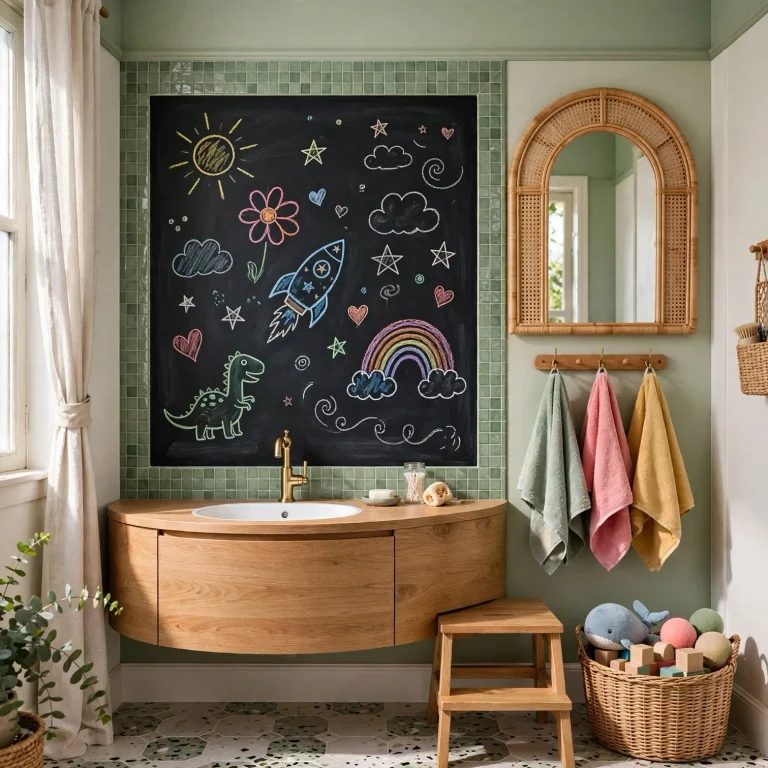
9. Compact Corner Vanity
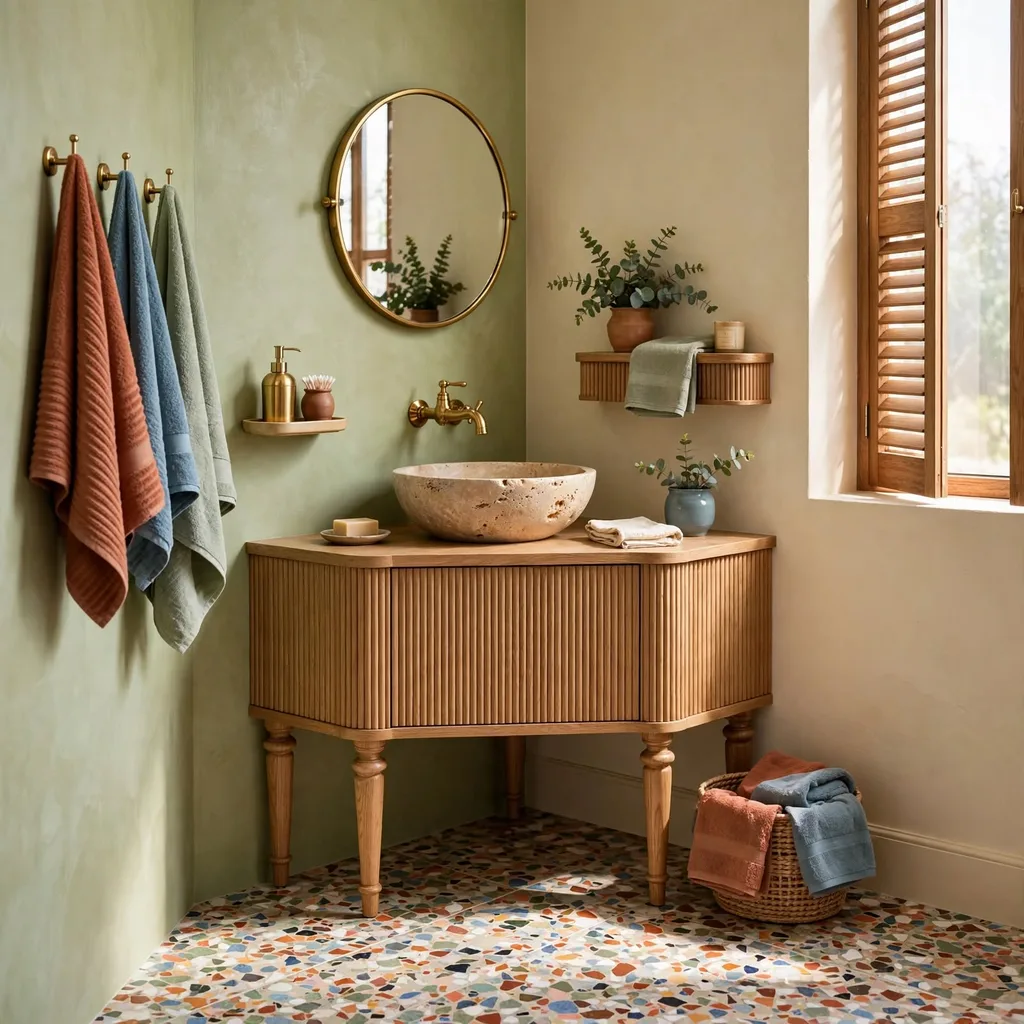
A corner vanity, designed specifically to fit diagonally into a bathroom’s corner rather than along a flat wall, reclaims meaningful floor space in a smaller bathroom where a standard rectangular vanity would consume proportionally more of the room’s limited footprint. This style typically offers less counter and storage space than a standard vanity, so pairing it with a small wall-mounted shelf or medicine cabinet nearby helps compensate for that reduced capacity. This configuration suits a tiny bathroom or an awkwardly shaped room particularly well, where standard vanity dimensions genuinely don’t fit the available space.
10. Vanity With Integrated Hamper Storage
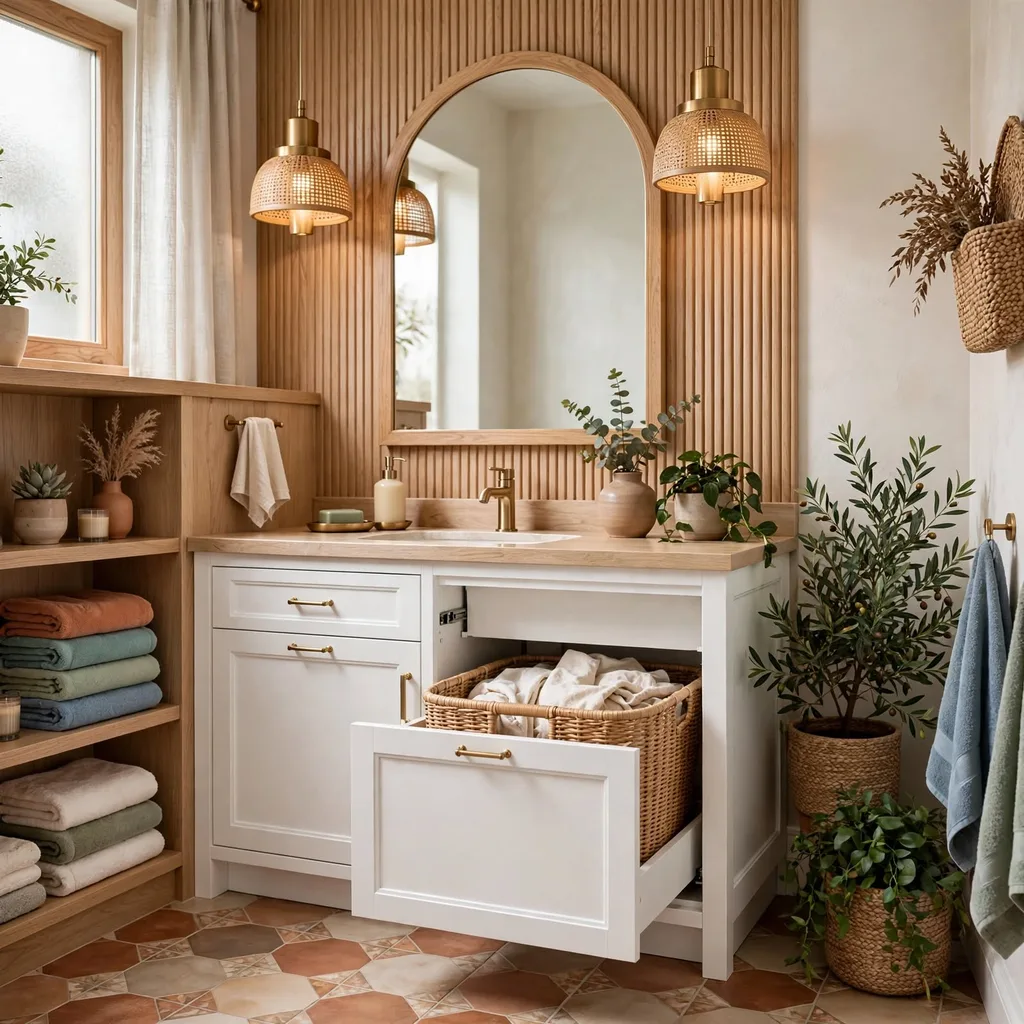
A vanity design incorporating a pull-out or built-in hamper compartment addresses a genuine practical need, laundry storage, without requiring a separate freestanding hamper to occupy additional bathroom floor space. This configuration works particularly well in a primary bathroom connected to a bedroom closet, where laundry naturally accumulates and needs a designated, contained location. Choosing a vanity with this integrated storage from the outset, rather than retrofitting the feature later, ensures proper ventilation and drainage are accounted for within the compartment’s design.
11. Backlit or Illuminated Vanity Mirror Integration
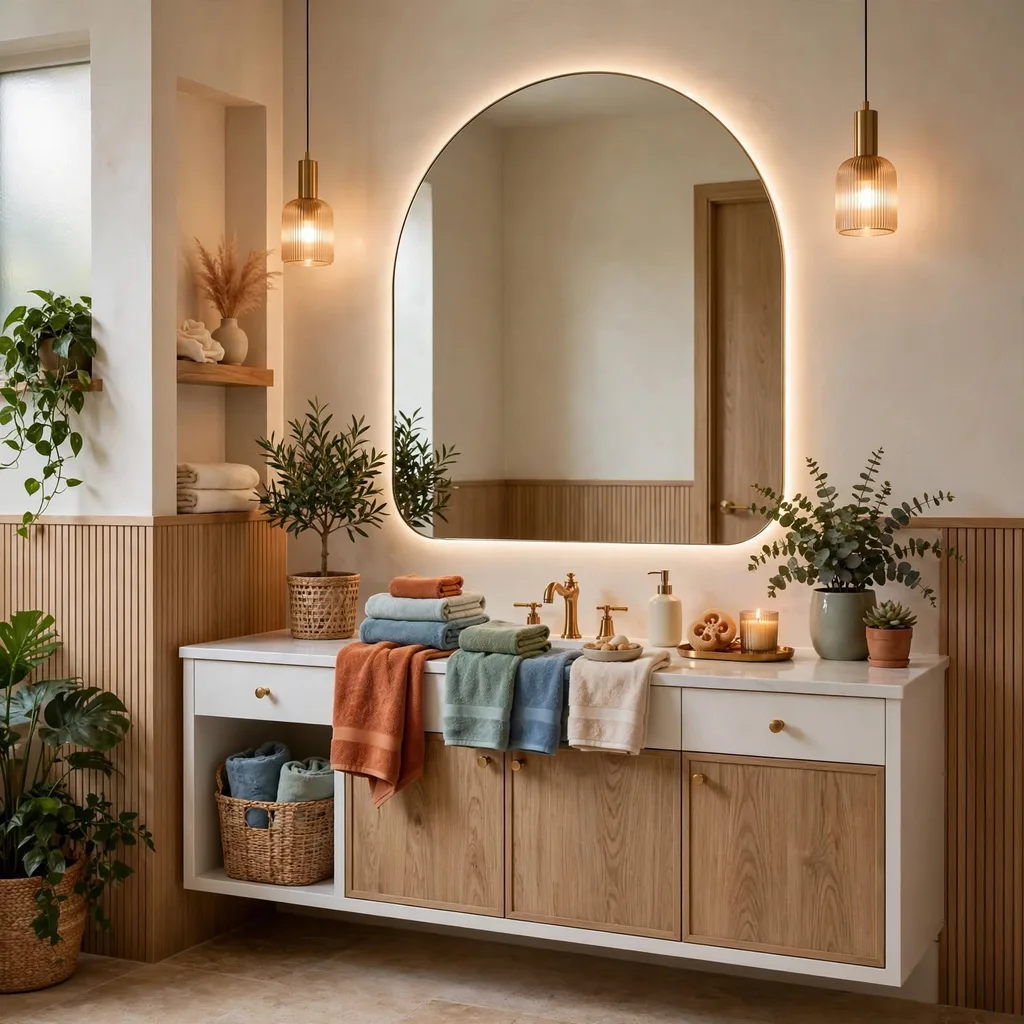
Pairing a vanity with a backlit or edge-lit mirror, rather than a standard mirror paired with separate sconce lighting, creates a cohesive, integrated lighting and reflection solution that suits a contemporary bathroom’s clean-lined aesthetic particularly well. This approach reduces the visible hardware needed for adequate vanity lighting, since the light source is built directly into the mirror itself rather than requiring separate fixtures. Choosing a mirror with adjustable color temperature adds functional flexibility, allowing the light to shift between a brighter, cooler tone for grooming tasks and a warmer glow for evening use.
12. Powder Room Statement Vanity
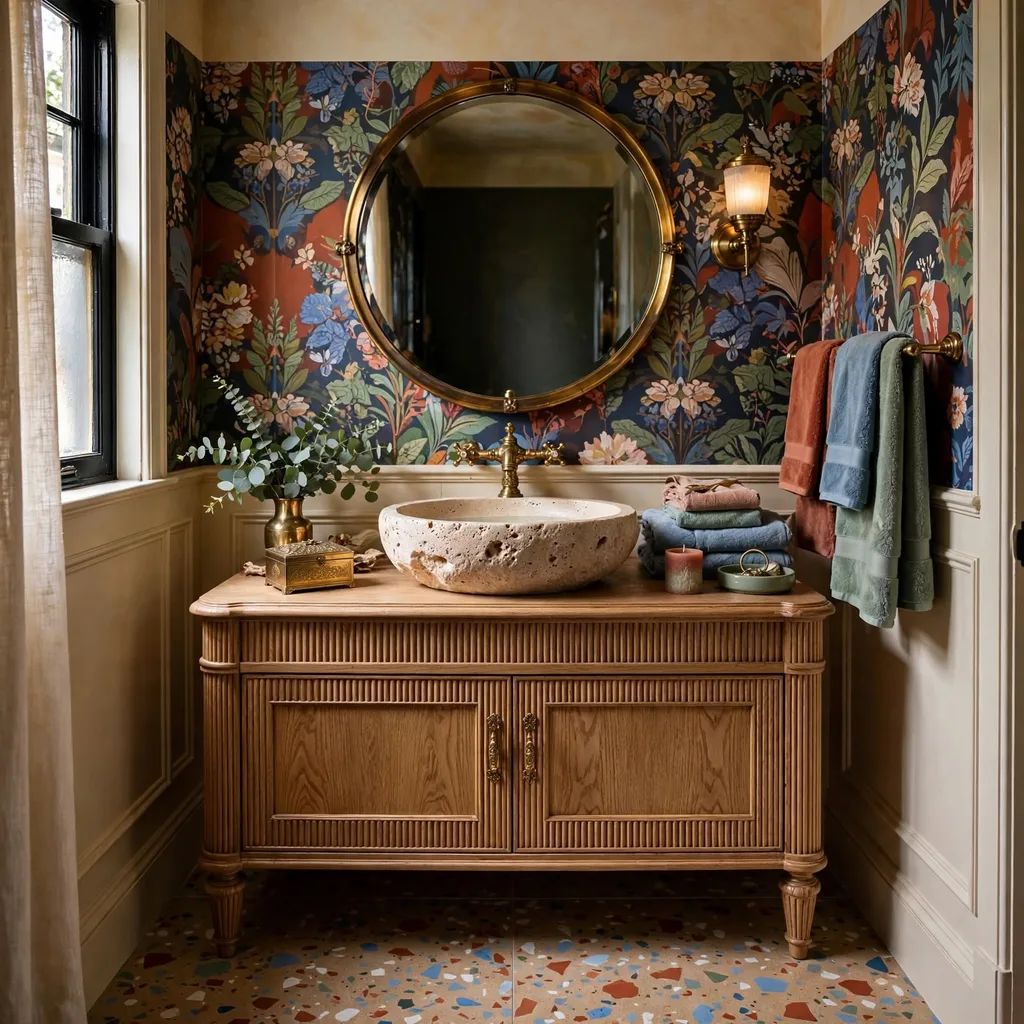
A statement vanity specifically chosen for a powder room, in a bold color, unusual material, or striking silhouette, takes advantage of this smaller, occasional-use room’s tolerance for a bolder design choice than a primary bathroom’s daily-use practicality might support. This approach concentrates a genuine design investment into a room where its impact on visitors is disproportionately significant relative to the room’s actual size. Choosing a vanity with minimal storage needs, appropriate given a powder room’s typically minimal function, allows the design to prioritize visual impact over storage capacity.
13. Slab-Front Minimalist Vanity
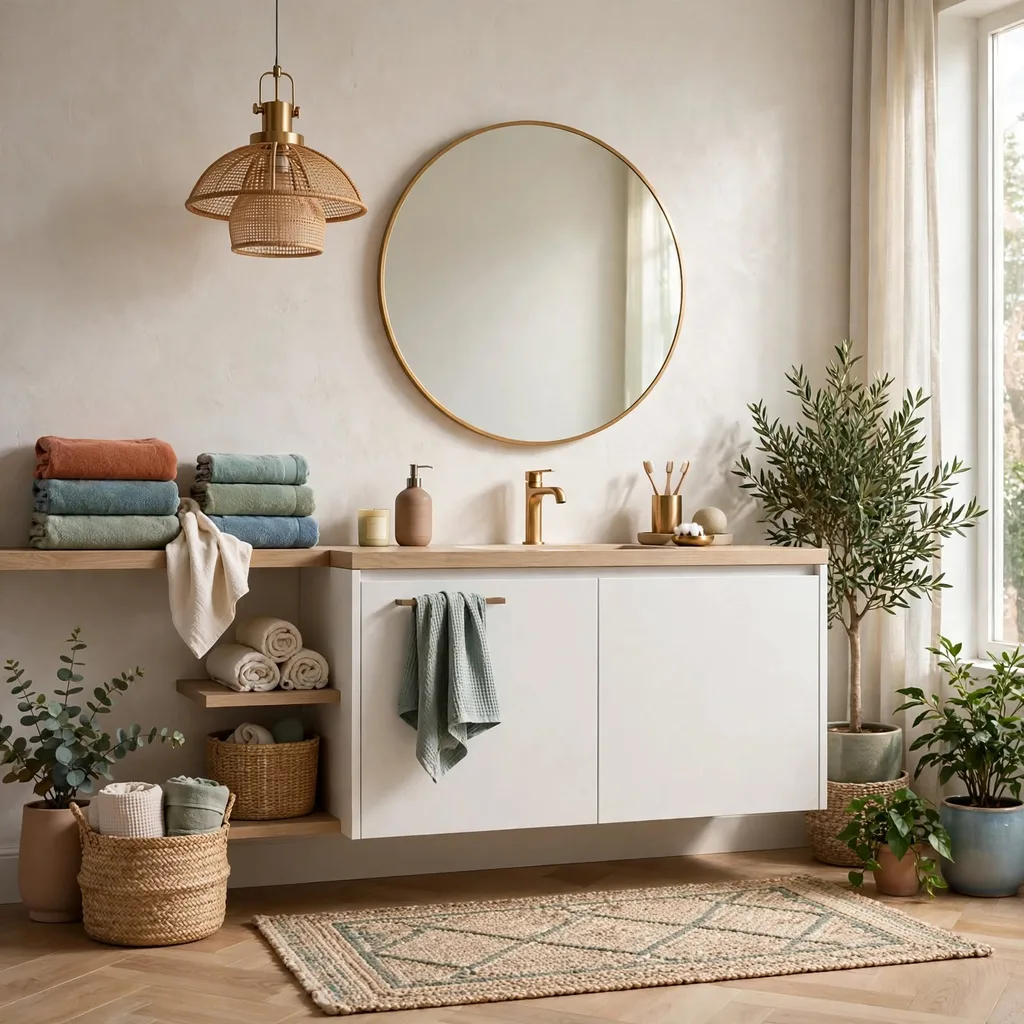
A slab-front vanity, using flat, unadorned cabinet doors without visible paneling or ornamental detail, gives a bathroom a clean, minimalist look that suits contemporary and Scandinavian-influenced spaces particularly well. Choosing push-to-open door mechanisms, rather than visible pulls or knobs, further reinforces this pared-back, hardware-minimal aesthetic. This vanity style works particularly well finished in a warm wood tone, since the simple slab front allows the wood grain itself to provide visual interest without additional applied detail.
14. Two-Tone Vanity for Visual Interest
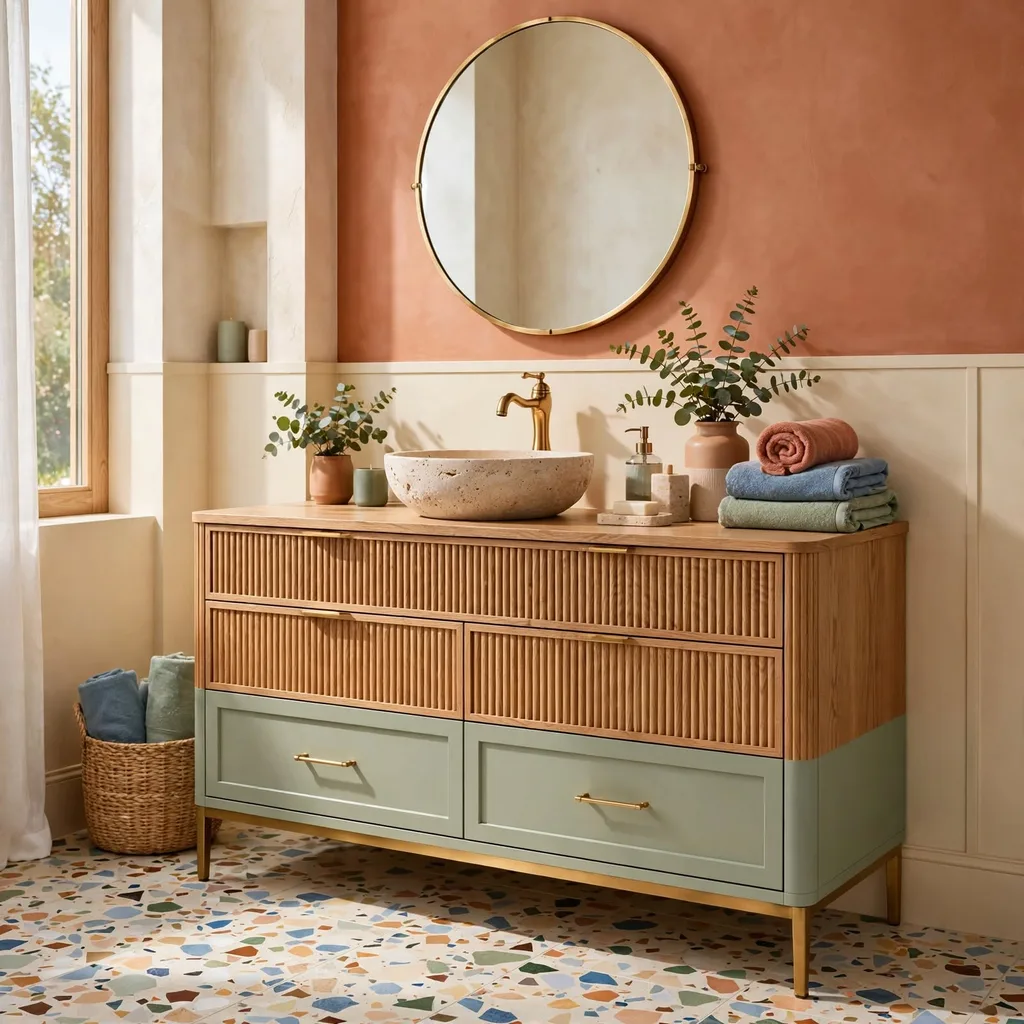
A two-tone vanity, combining two different cabinet finishes, a wood lower section with a painted upper portion, or contrasting drawer and door colors, adds visual interest and a more custom, considered appearance than a single-finish vanity provides. This approach works particularly well when the two chosen tones relate to other materials already present in the bathroom, tying the vanity into the room’s broader palette. Choosing complementary rather than jarring tone combinations keeps this detail feeling intentional rather than randomly assembled.
15. Compact Single-Basin Vanity for Small Bathrooms
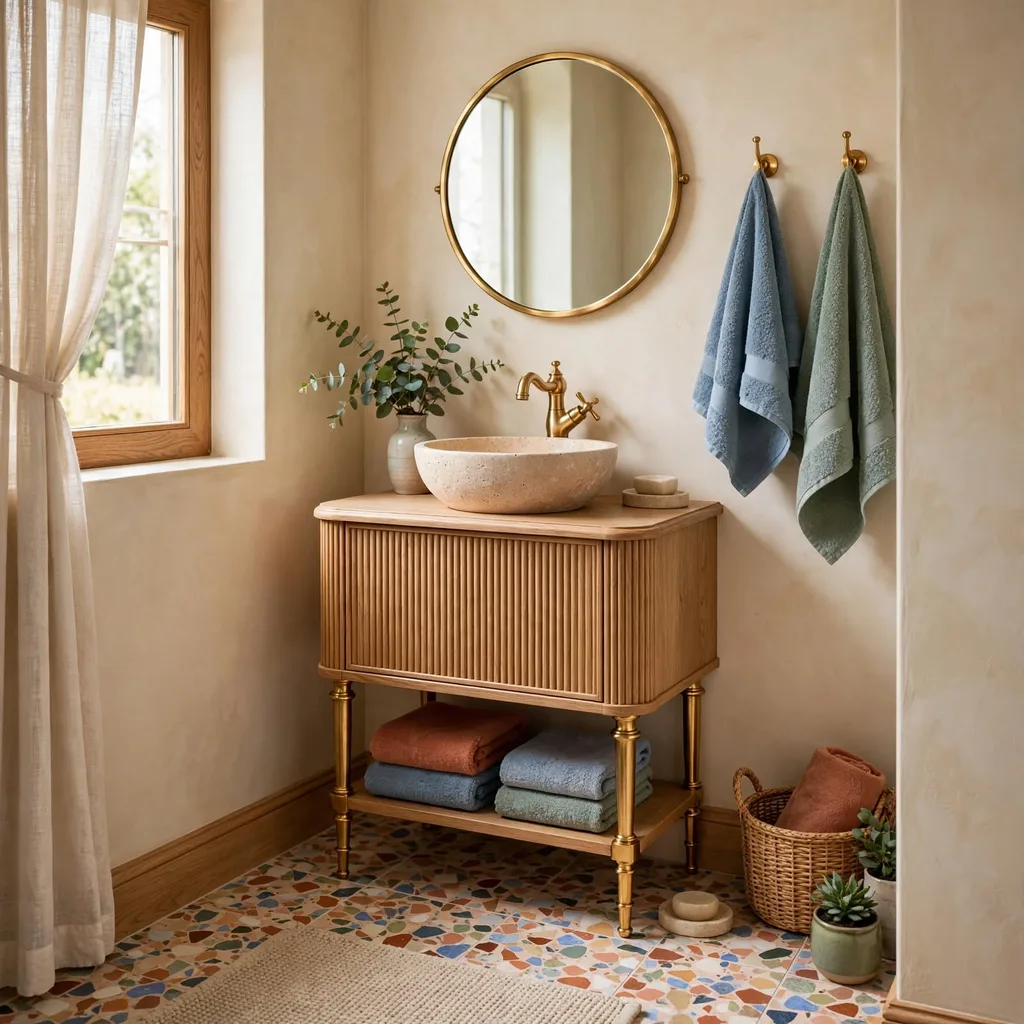
A compact single-basin vanity, typically 24 to 30 inches wide, provides adequate function for a smaller bathroom without overwhelming the room’s limited floor space the way an oversized vanity would. Choosing a vanity with efficient internal organization, drawer dividers or a built-in outlet for grooming tools, maximizes the functional capacity within this smaller footprint. This vanity size works particularly well paired with a slim-depth design, further conserving floor space in a genuinely compact bathroom.
Shop the Look
For a contemporary bathroom, start with a floating slab-front vanity in white oak, paired with a backlit mirror and matte black fixtures. For a traditional space, choose a furniture-style vanity with turned legs and a natural stone countertop, paired with a vintage-inspired faucet. For a small bathroom, prioritize a compact single-basin or corner vanity with efficient internal storage to make the most of limited square footage.
Common Mistake to Avoid
A common mistake when choosing a bathroom vanity is prioritizing style over an honest assessment of the household’s actual storage needs, resulting in a beautiful but genuinely impractical fixture that quickly leads to visible clutter on the counter or floor. A floating or open-shelf vanity, however visually appealing, may not suit a household that needs substantial concealed storage for daily toiletries and grooming supplies. Matching the vanity’s actual storage capacity to the household’s genuine daily needs, rather than choosing based on appearance alone, prevents this common and frustrating mismatch after installation.
FAQs
What size vanity is right for my bathroom?
A single-basin vanity generally works well between 24 and 36 inches wide for a smaller bathroom, while a double vanity requires at least 60 inches to comfortably accommodate two sinks with adequate counter space between them. Measuring the actual available wall space, and accounting for necessary clearance around the vanity for comfortable use, matters more than defaulting to a specific size based on room type alone. Leaving at least a few inches of clearance on either side of the vanity, rather than sizing it to fill the entire available wall, generally produces a more comfortable and better-proportioned result.
Is a floating vanity or a furniture-style vanity better for my bathroom?
A floating vanity suits a smaller bathroom or a contemporary design direction particularly well, opening up visual floor space and simplifying cleaning, while a furniture-style vanity offers more traditional storage capacity and visual grounding suited to a traditional or transitional bathroom. The choice ultimately depends on both the room’s size and the household’s genuine storage needs, since a floating vanity typically offers less overall storage than a full furniture-style cabinet reaching to the floor. Considering both the room’s proportions and daily function needs, rather than style preference alone, helps make this decision.
What countertop material is best for a bathroom vanity?
Quartz offers an excellent balance of durability, low maintenance, and aesthetic appeal for a bathroom vanity countertop, resisting staining and etching better than natural marble while still providing an attractive, often stone-look appearance. Natural stone, like marble or granite, offers genuine material beauty and uniqueness but requires more regular sealing and careful maintenance to prevent staining and etching from bathroom products. Laminate provides a lower-cost alternative with less durability and a shorter expected lifespan compared to either stone option, worth factoring into a budget-conscious renovation decision.
Can I convert a piece of furniture into a bathroom vanity myself?
Converting furniture into a bathroom vanity requires professional plumbing work to properly install a sink, drain, and water supply lines, along with appropriate waterproofing of the wood surface to protect it from the bathroom’s moisture exposure, making this generally a project requiring professional help rather than a fully do-it-yourself undertaking. Attempting this conversion without proper waterproofing can lead to water damage and warping over time, undermining the piece’s long-term durability in this specific application. Working with a plumber and, ideally, a woodworker familiar with this type of conversion produces a more reliable, long-lasting result.
How do I choose vanity hardware that matches my bathroom’s other fixtures?
Choosing vanity hardware in the same metal finish as the bathroom’s faucet, showerhead, and any other visible fixtures generally produces the most cohesive overall result, rather than mixing several different metal tones throughout the room. If a two-metal combination is genuinely preferred, applying one finish consistently to larger elements and reserving the second for smaller accents helps maintain some intentional structure to the mix. Bringing a physical sample or photo of the bathroom’s other fixture finishes when shopping for vanity hardware helps ensure an accurate match rather than relying on memory alone.
Conclusion
Choosing the right bathroom vanity comes down to balancing genuine storage needs against the room’s available space and desired style, since the vanity affects both daily function and overall visual character more than almost any other single bathroom fixture. Save this guide to Pinterest for reference while planning your next bathroom update, and check out our related post on bathroom ideas for more fixture and material guidance to pair with your chosen vanity.