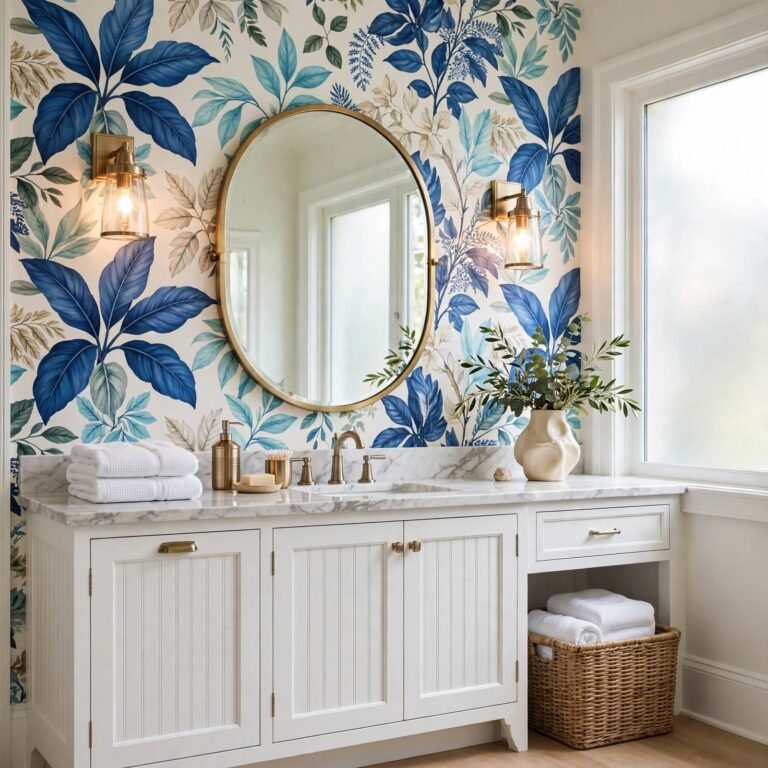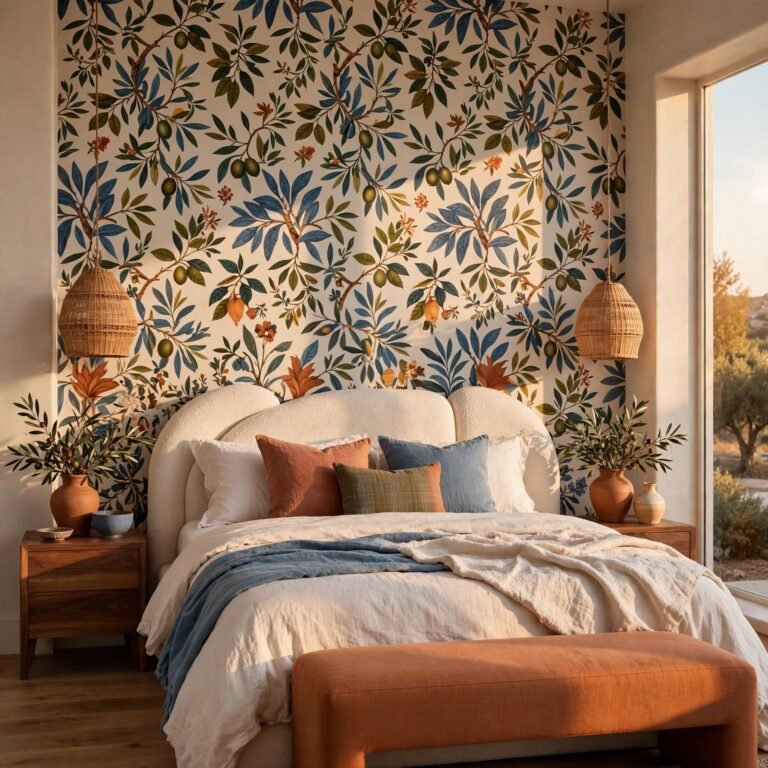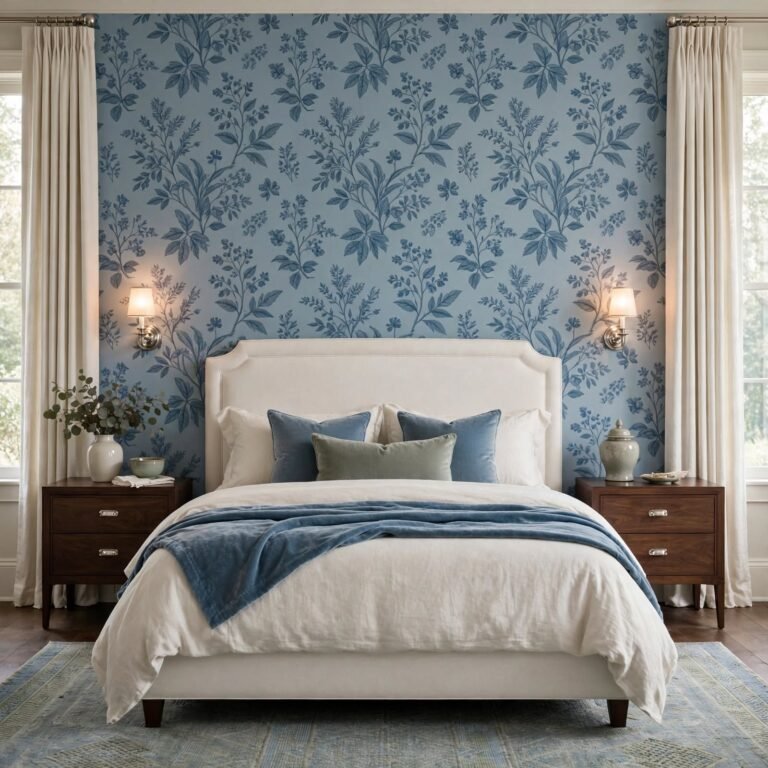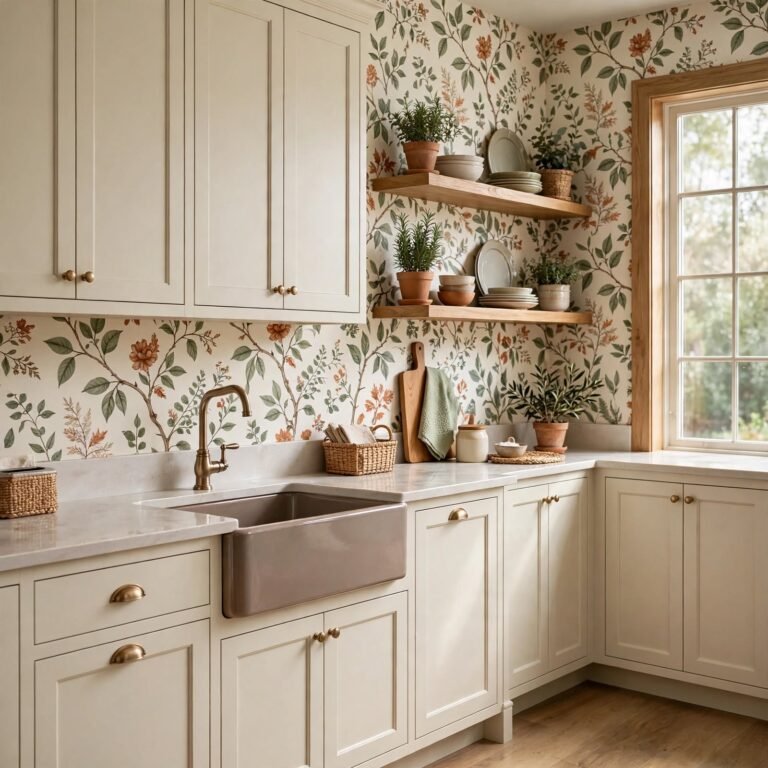
Brilliant Wallpaper Decor Ideas: 14 Wonderful Uses
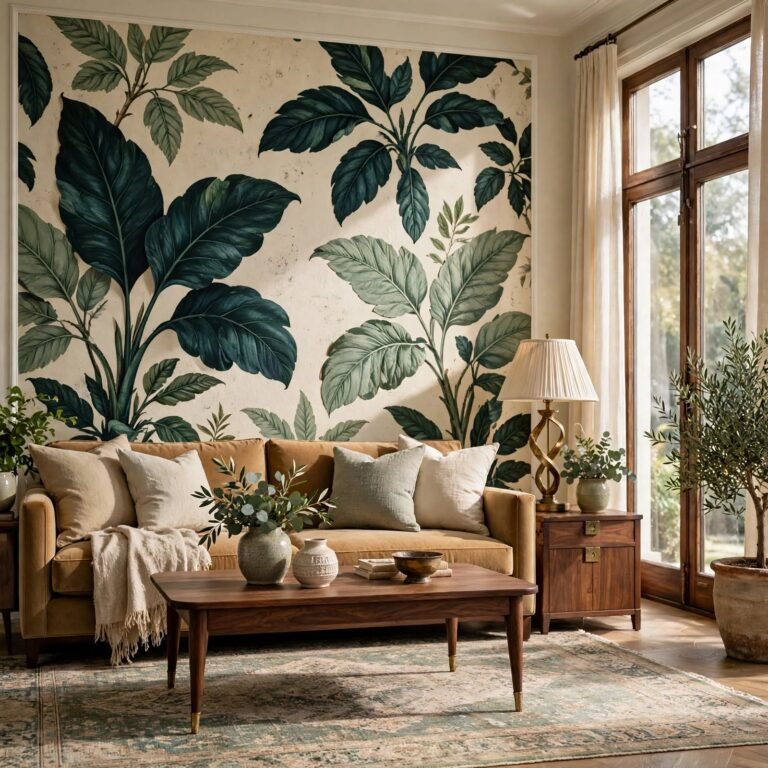
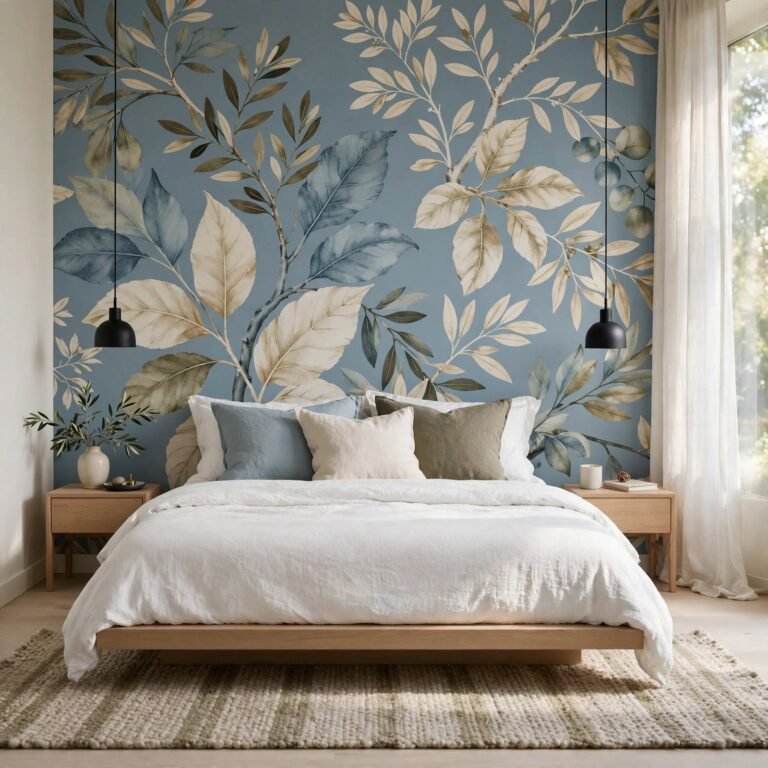
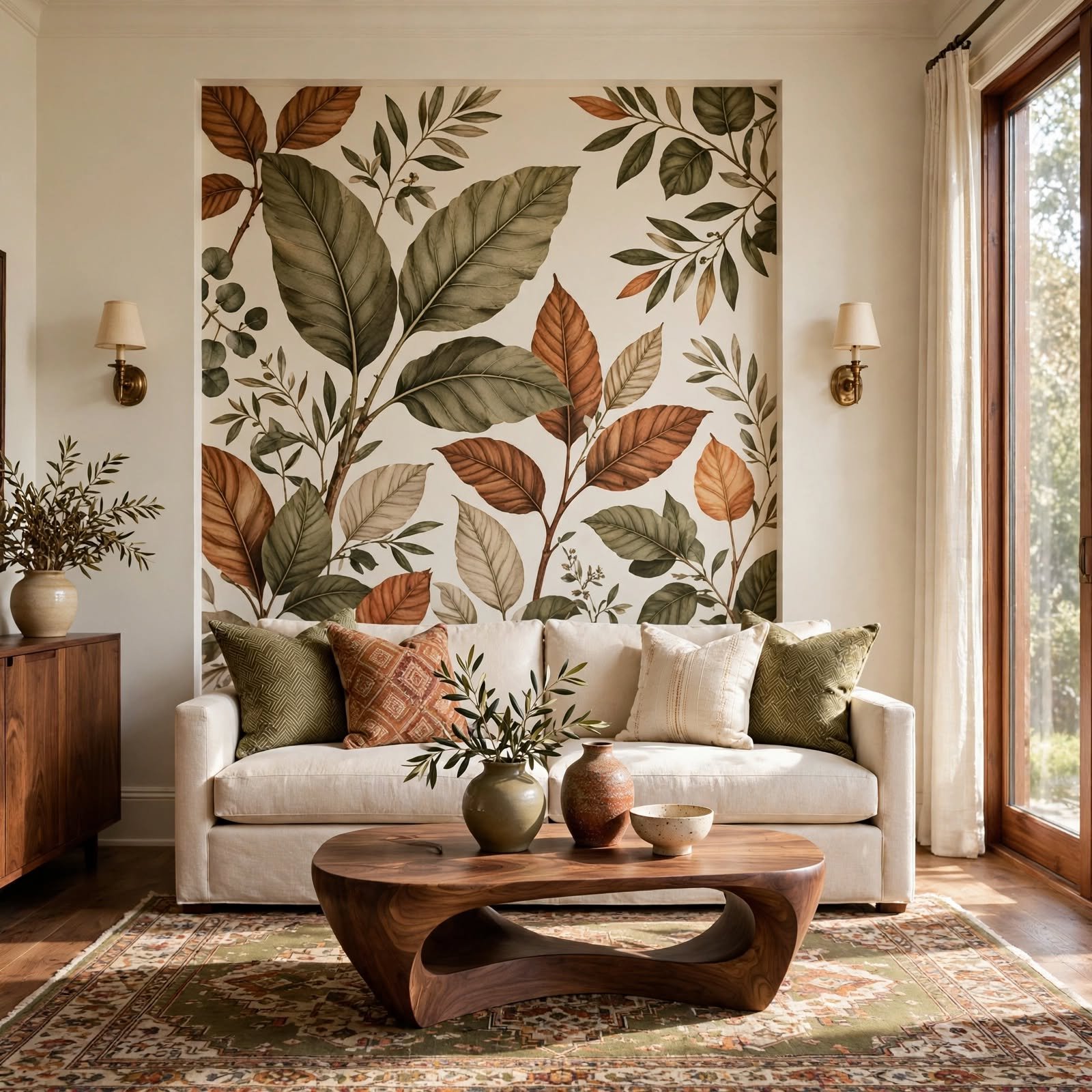
Think wallpaper decor only means covering a wall? This guide covers 14 wonderful, unexpected ways to use leftover or purchased wallpaper, from a lampshade makeover to a wallpapered fireplace surround, proving the material works far beyond a single accent wall. Wallpaper decor gets far more mileage when treated as a versatile material for smaller projects rather than reserved exclusively for full walls, especially since most rolls leave meaningful leftover material after a typical wall project. This guide walks through fourteen specific small-scale applications covering furniture, fixtures, and functional objects, each with notes on execution. Readers will come away with genuinely fresh ways to use wallpaper throughout the home.
Trend & Background
Wallpaper decor applications have expanded well beyond walls as more people recognize how much leftover material a typical roll leaves behind and look for ways to use it rather than let it go to waste. This reflects a broader trend toward maximizing the value of home decorating materials, treating wallpaper as a flexible design tool rather than a single-purpose wall covering. This matters now because peel-and-stick formats have made these smaller, unconventional applications, like a switch plate cover or a lampshade wrap, considerably easier to execute than they would be with traditional pasted wallpaper. Interest in repurposing wallpaper remnants for smaller projects has grown as more people complete a wall project and look for creative ways to use the material that remains.
Key Takeaways
- These 14 wallpaper decor ideas apply the material to furniture, fixtures, and small objects rather than only full walls.
- A coverage yield table helps estimate how much of a typical roll these smaller projects actually use.
- Several ideas make excellent use of leftover wallpaper remnants from a larger wall project.
- Every idea here works well with peel-and-stick material specifically, simplifying application to these smaller, often curved surfaces.
1. Wallpapered Lampshade Makeover for Wallpaper Decor
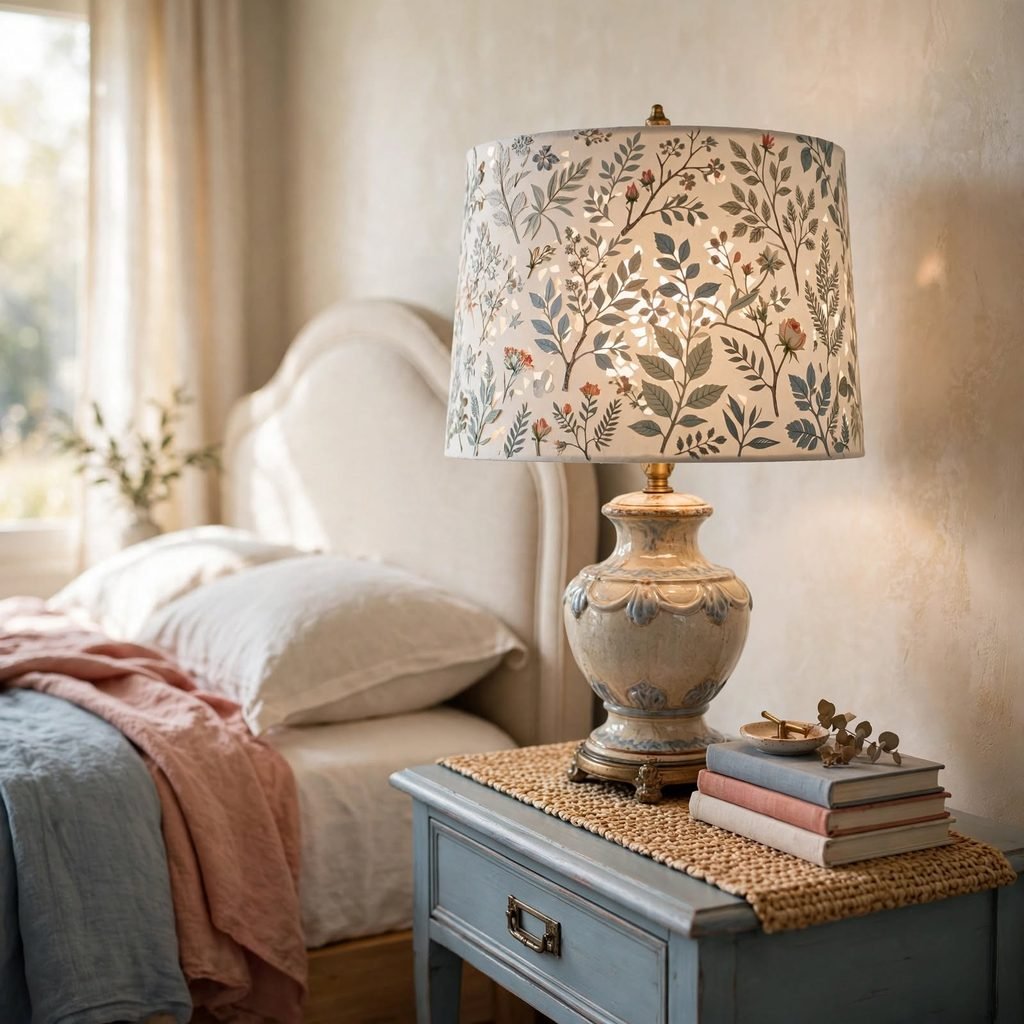
Wrapping a plain fabric or paper lampshade in a coordinating wallpaper pattern transforms a basic lamp into a genuine styled piece without replacing the entire fixture. Cutting a paper template of the shade’s shape first, then tracing it onto the wallpaper before cutting, ensures a precise, clean fit around the curved surface. This idea works particularly well using leftover wallpaper from a larger room project, tying a lamp directly into that room’s overall pattern story.
2. Wallpaper Drawer Liner Surprise for Wallpaper Decor
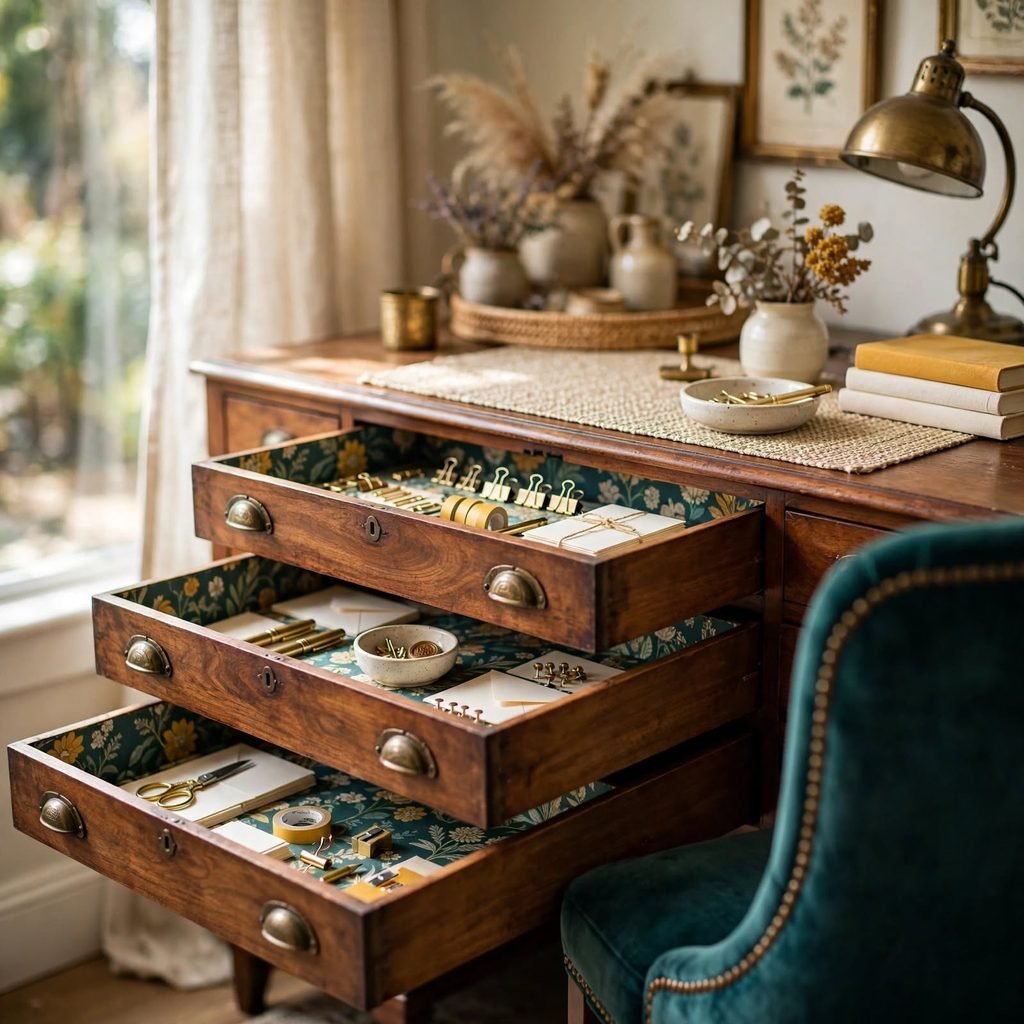
Lining dresser or kitchen drawers with a bold, unexpected wallpaper pattern creates a small, delightful surprise each time the drawer opens, using material that would otherwise go to waste after a larger project. Choosing a durable, wipeable wallpaper for kitchen drawer applications specifically helps the liner hold up to daily contact with utensils and dishware. This idea works particularly well as a low-cost, low-commitment way to add personality to furniture that shows no visible pattern from the outside.
3. Wallpapered Switch Plate Covers for Wallpaper Decor
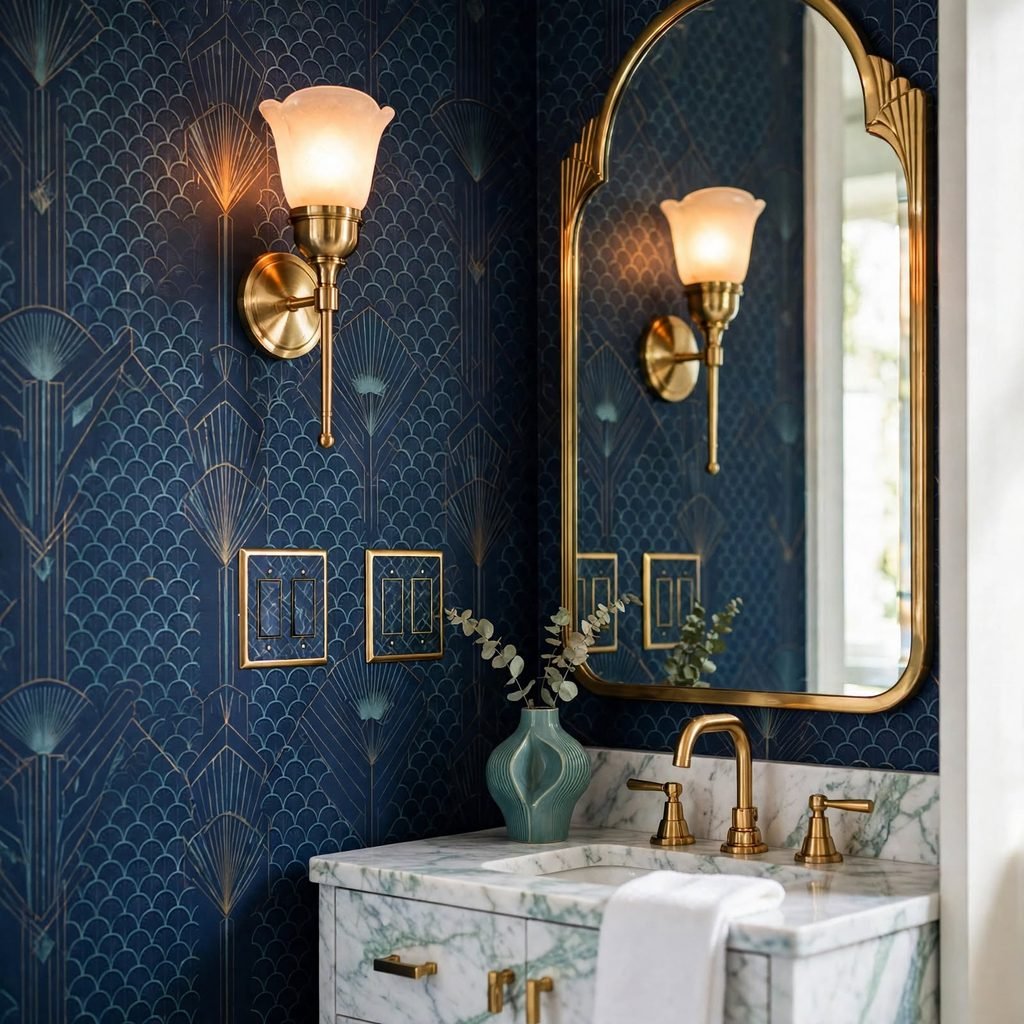
Covering standard light switch and outlet plates with a matching wallpaper pattern helps these typically overlooked fixtures blend seamlessly into an accent wall rather than standing out as a stark, mismatched interruption. Removing the plates before applying wallpaper, then reattaching once the covering is trimmed and secured, produces the cleanest result. This idea works particularly well as a finishing touch for any accent wall project, since unmatched switch plates can otherwise undercut an otherwise polished wallpaper installation.
4. Wallpapered Picture Frame Mat for Wallpaper Decor
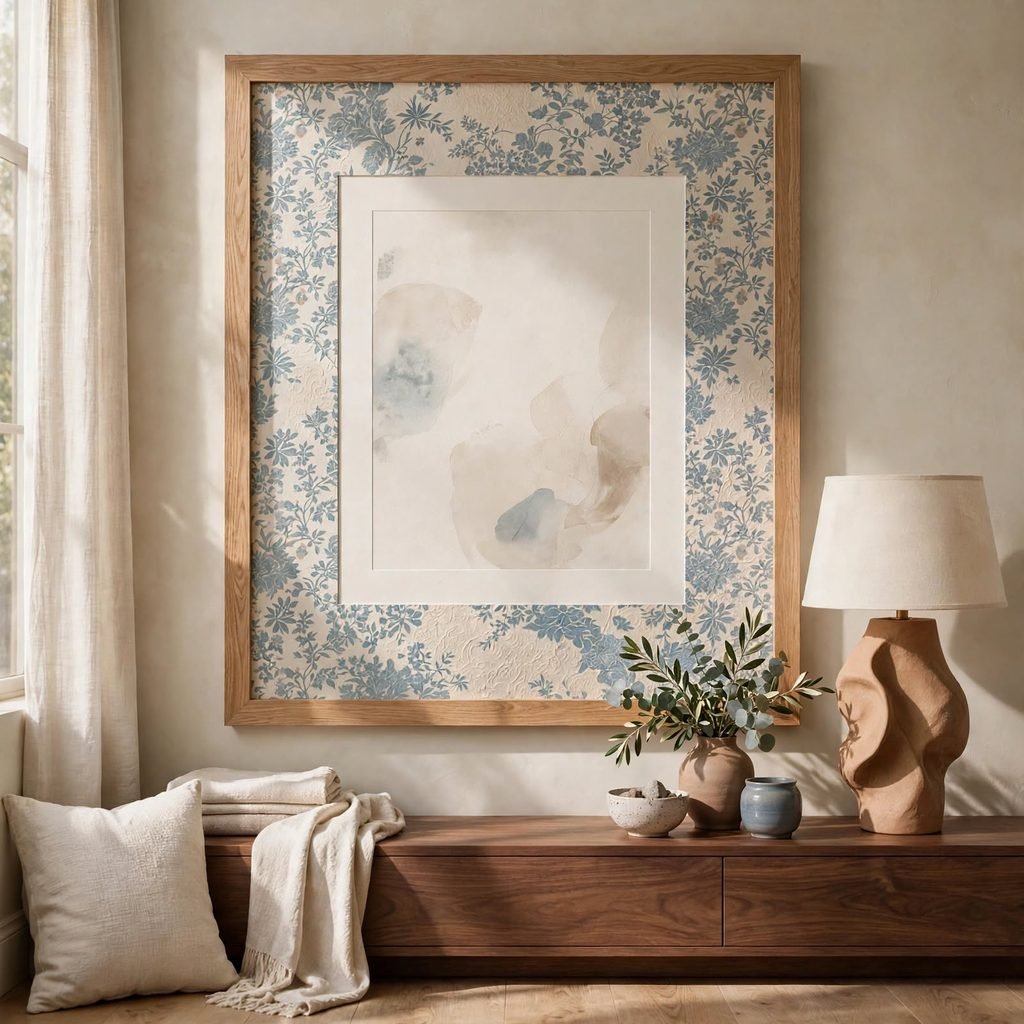
Replacing a standard white or cream mat board within a picture frame with a piece of coordinating wallpaper adds an unexpected layer of pattern surrounding the framed art or photo itself. Cutting the wallpaper to the mat’s exact dimensions using a straight edge and sharp craft knife ensures clean, professional edges. This idea works particularly well for framing a piece of art that shares a color palette with the wallpaper pattern chosen for the mat.
5. Wallpapered Fireplace Surround for Wallpaper Decor
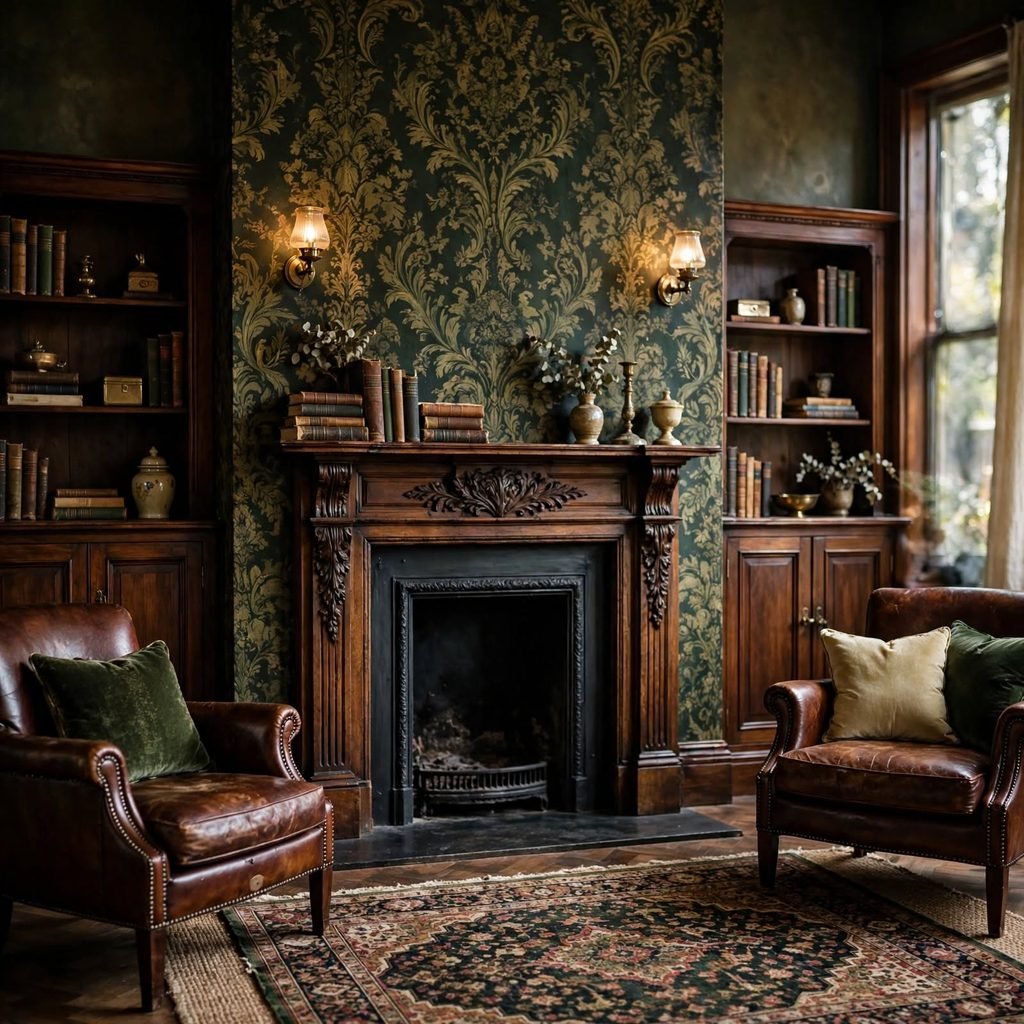
Applying a heat-appropriate, moisture-resistant wallpaper to the wall surrounding a fireplace, avoiding any area with direct heat exposure, creates a focal point treatment for one of a living room’s most naturally prominent architectural features. Choosing a bold pattern for this contained application allows it to serve as the room’s clear visual anchor. This idea works particularly well in a room where the fireplace already draws the most attention, reinforcing rather than competing with that existing focal point.
6. Wallpapered Radiator Cover Panel for Wallpaper Decor
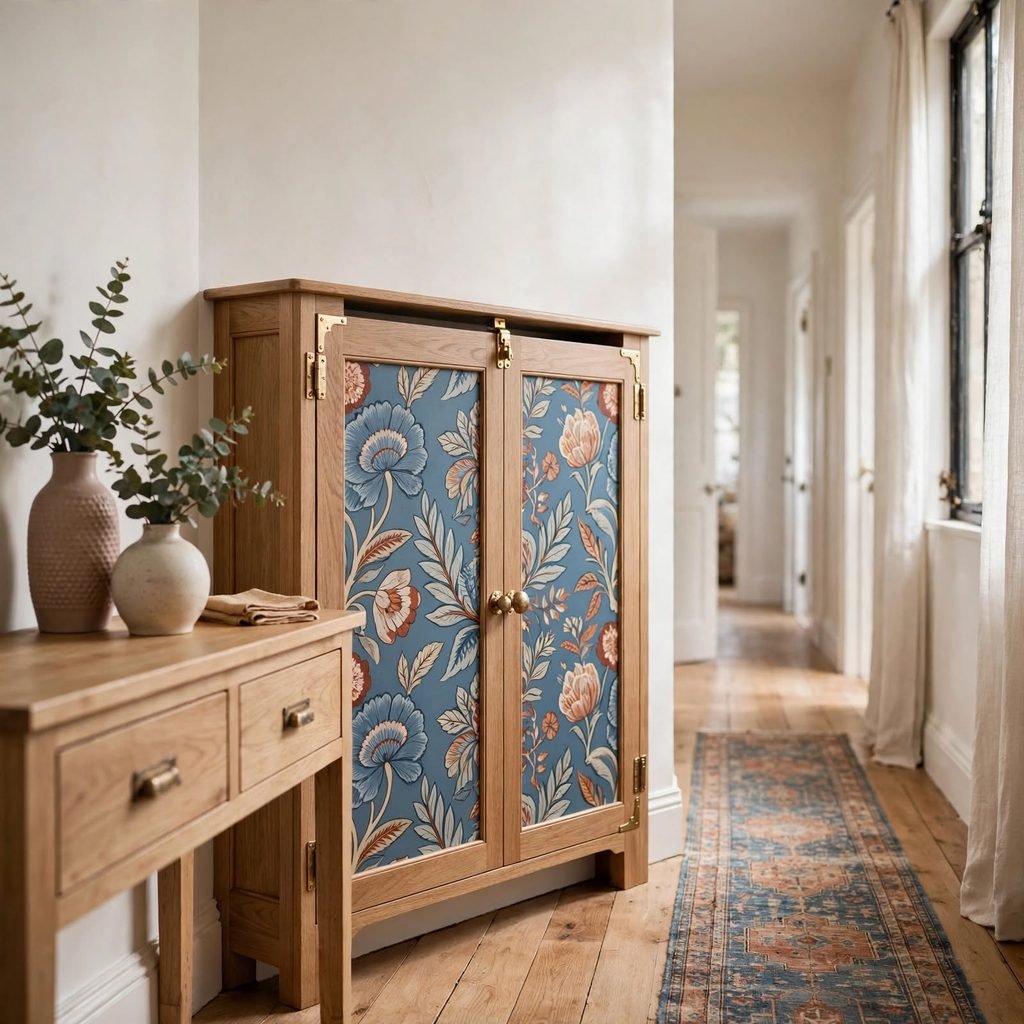
Applying wallpaper to the front panel of a radiator cover disguises a typically utilitarian object as a more considered piece of furniture within the room. Choosing a durable, heat-tolerant wallpaper formulation is important given the panel’s proximity to the radiator’s heat output. This idea works particularly well in older homes with visible radiators, giving that functional necessity a genuine design upgrade.
7. Wallpapered Serving Tray for Wallpaper Decor
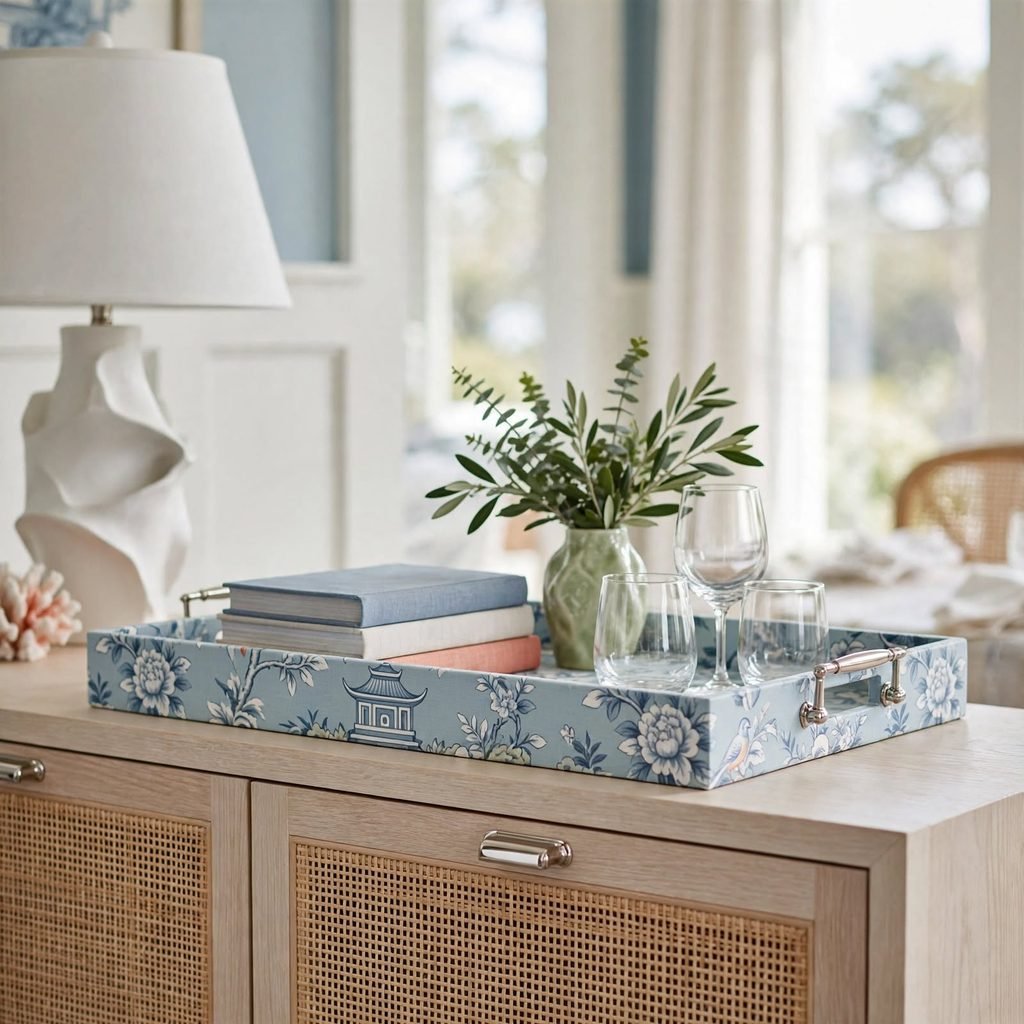
Adhering a piece of wallpaper to the bottom interior of a plain wood or metal serving tray, then sealing it with a clear protective coating, creates a custom, patterned piece from an otherwise generic object. The table below offers a general estimate of how much wallpaper coverage several of these smaller projects typically use from a single standard roll.
| Small Project | Approximate Material Used | Rolls Typically Needed |
| Serving tray | Under 1 sq ft | Well under one roll |
| Lampshade makeover | 1 to 3 sq ft | Well under one roll |
| Switch plate covers (set of 5) | Under 1 sq ft total | Well under one roll |
8. Wallpapered Light Fixture Drum Shade for Wallpaper Decor
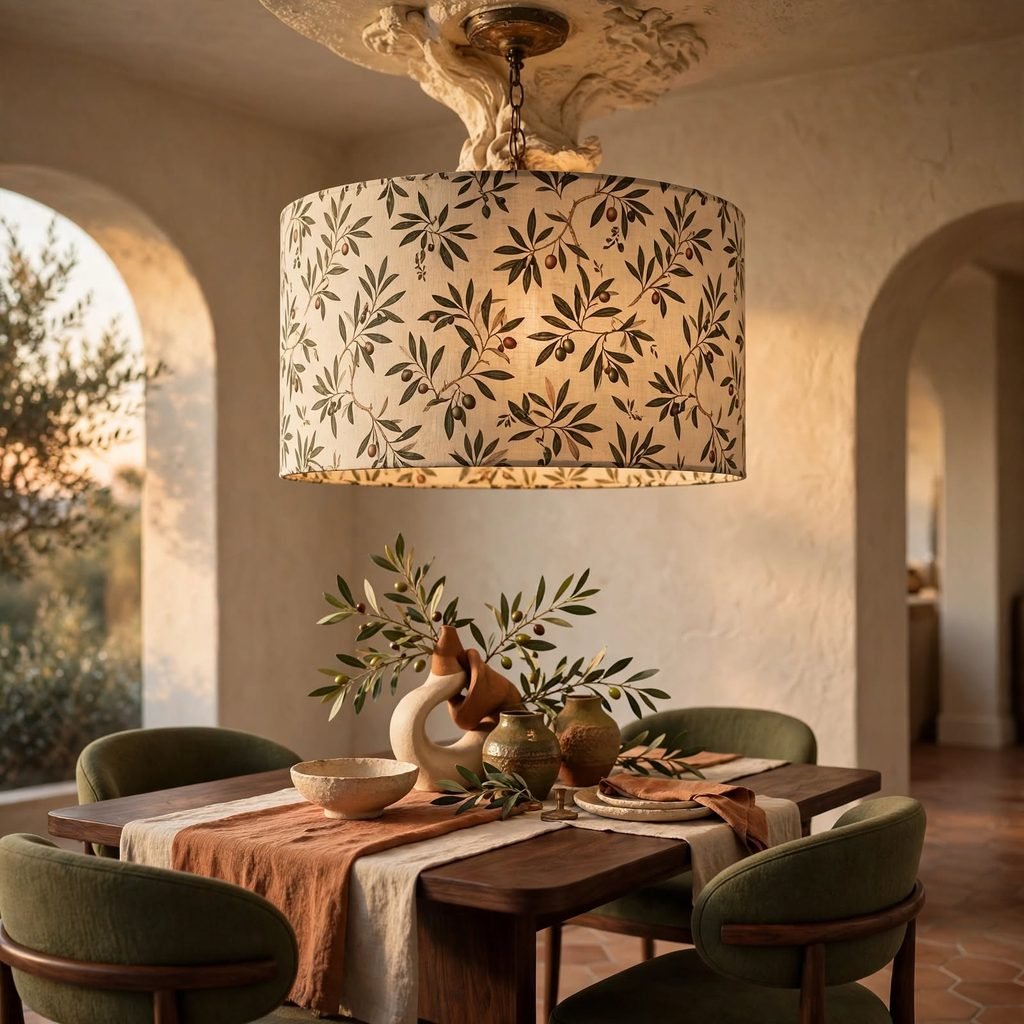
Wrapping a plain fabric or paper drum pendant shade in a coordinating wallpaper pattern transforms a basic overhead fixture into a genuine styled statement piece. This technique requires the same careful template-tracing approach used for a lampshade, adjusted for the drum shade’s typically larger cylindrical surface. This idea works particularly well as a way to update an existing light fixture without any electrical work, simply swapping the visual treatment of the shade itself.
9. Wallpapered Step Stool Accent for Wallpaper Decor
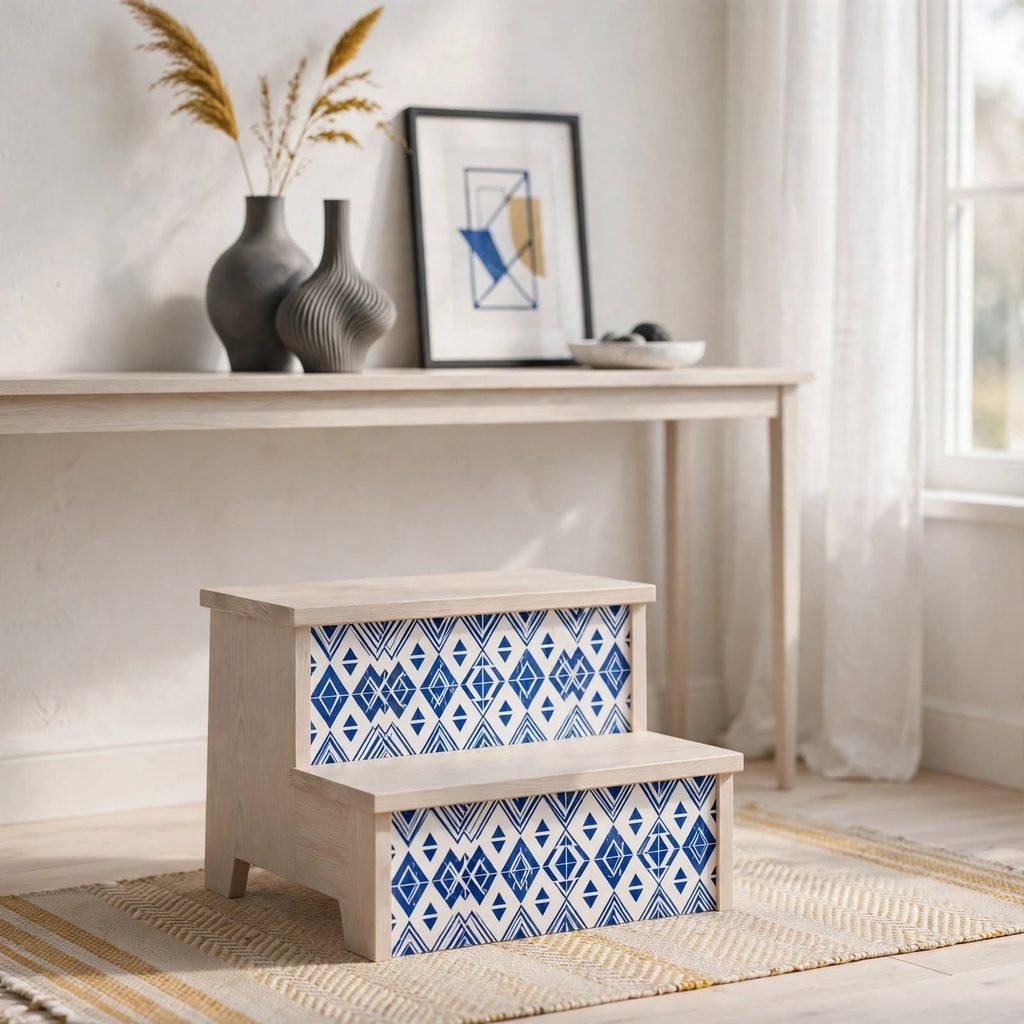
Applying wallpaper to the flat top surface or side panels of a wood step stool turns a purely functional object into a small styled accent piece, especially when the stool doubles as decor when not actively in use. Sealing the finished wallpaper with a protective clear coat helps it withstand the stool’s regular foot traffic. This idea works particularly well for a step stool kept visible in a kitchen or closet, rather than one stored away out of sight.
10. Wallpapered Mudroom Bench Backing for Wallpaper Decor Ideas
Applying a durable, washable wallpaper to the wall section directly behind a mudroom bench adds a defined, styled backdrop to a typically purely functional entry area. Choosing a pattern that coordinates with any nearby hooks or storage baskets ties the small vignette together cohesively. This idea works particularly well in a mudroom or entry that otherwise lacks much visual interest beyond its practical storage function.
11. Wallpapered Piano Interior Lid for Wallpaper Decor
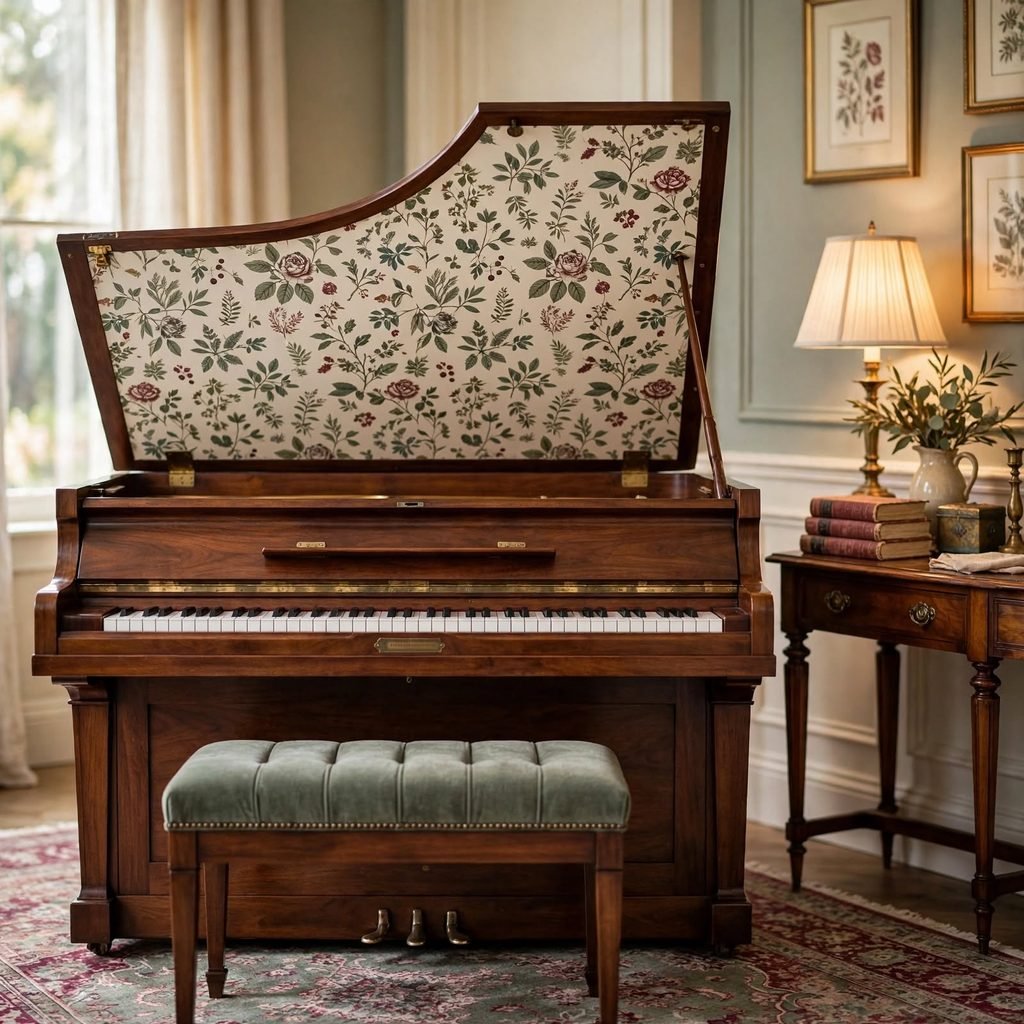
For an upright piano, applying wallpaper to the interior surface visible when the top lid is raised creates a small, personal design detail seen only during actual use of the instrument. Choosing a pattern with personal meaning, such as sheet music-inspired imagery or a favorite color palette, adds a layer of significance beyond pure decoration. This idea works particularly well as a subtle, semi-hidden personalization that doesn’t affect the piano’s overall visible furniture appearance.
12. Wallpapered Planter Pot Wrap for Wallpaper Decor
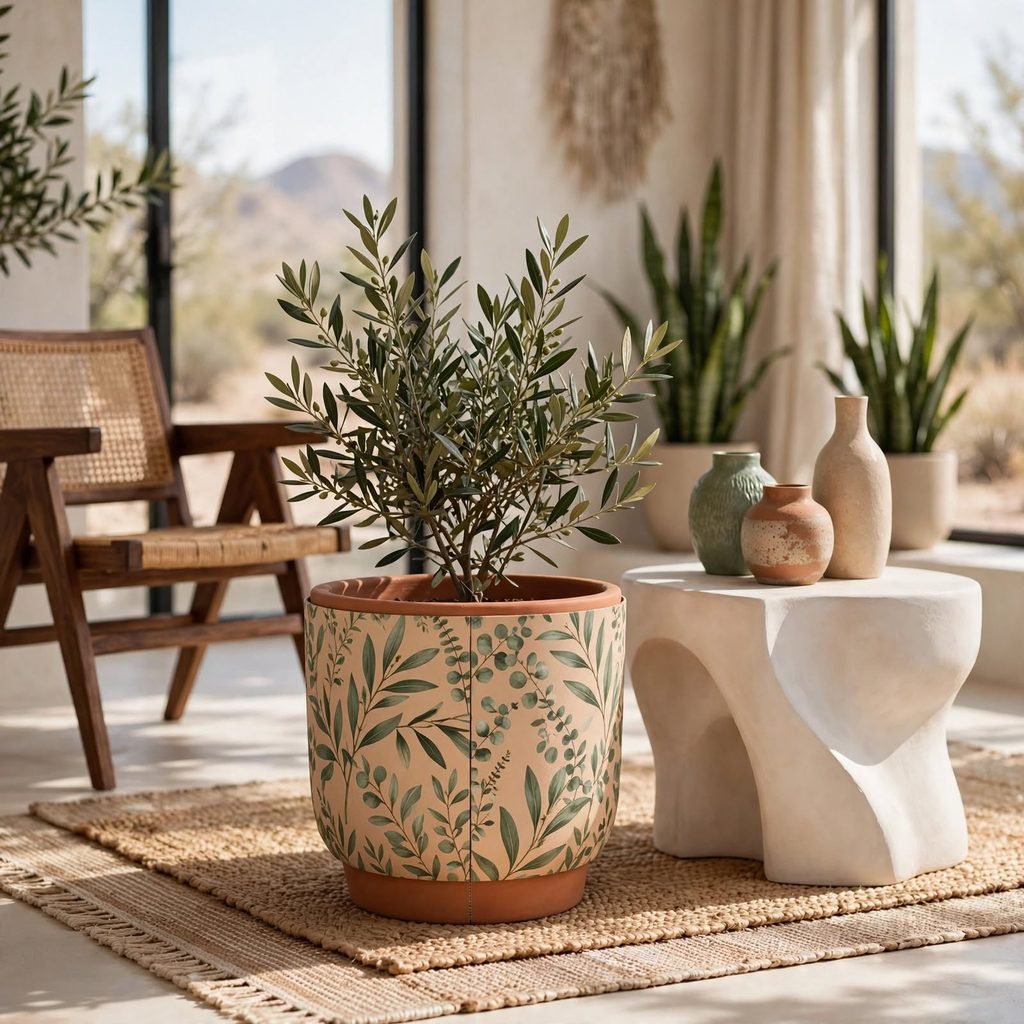
Wrapping a plain terra cotta or plastic planter pot in a coordinating wallpaper pattern, then sealing it with a waterproof finish, transforms a basic container into a genuinely styled piece for displaying plants. Choosing a moisture-resistant wallpaper and thoroughly sealing all edges is essential given the pot’s regular exposure to watering and humidity. This idea works particularly well as a way to coordinate several plant pots throughout a room using leftover material from a larger wallpaper project.
To get inspiring ideas on kitchen wall decor using wallpaper, CLICK HERE.
13. Wallpaper Remnant Headboard Panel for Wallpaper Decor
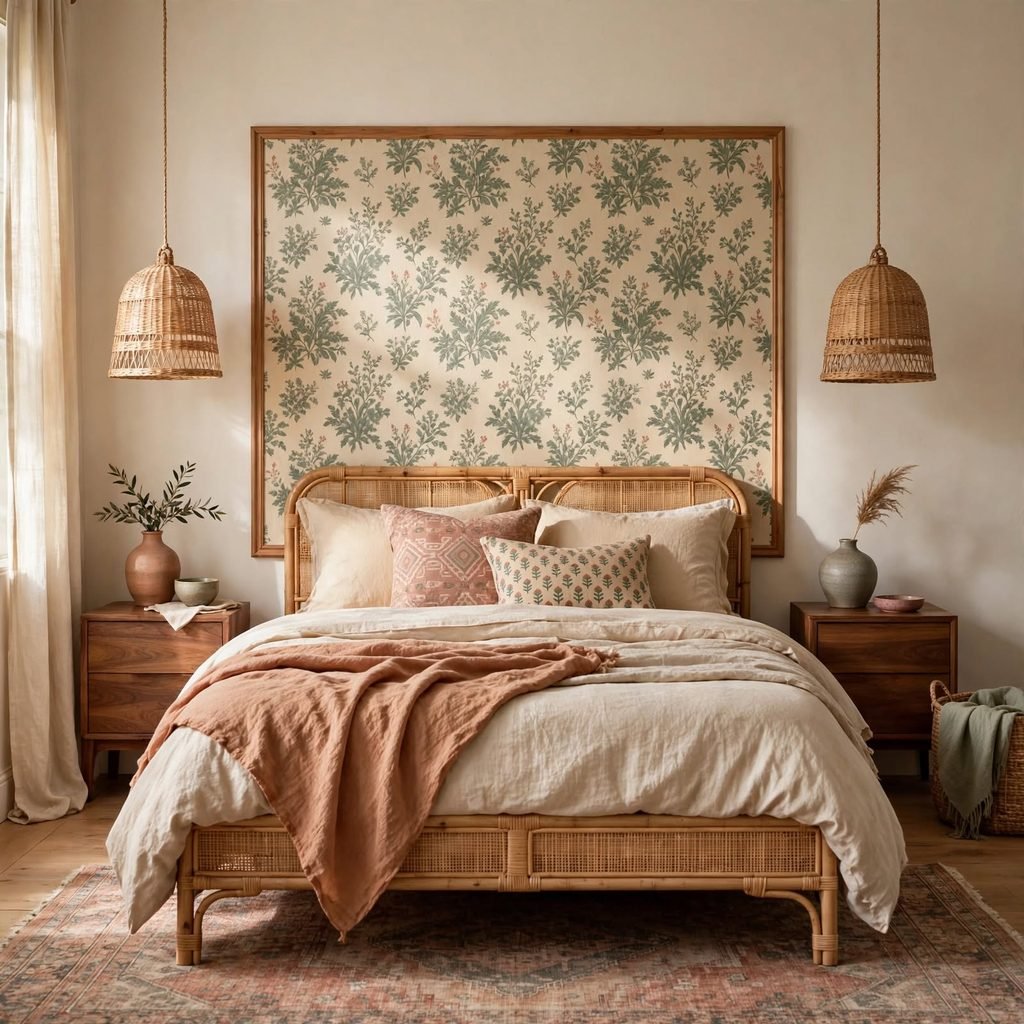
Applying leftover wallpaper to a simple plywood or foam board panel, then mounting it behind the bed as a makeshift headboard, creates a custom furniture piece using material that would otherwise be discarded after a wall project. Framing the finished panel with simple wood trim gives the edges a more polished, finished appearance. This idea works particularly well as a budget-friendly way to add a headboard to a bed frame that doesn’t already include one.
14. Wallpapered Garage Storage Wall for Wallpaper Decor
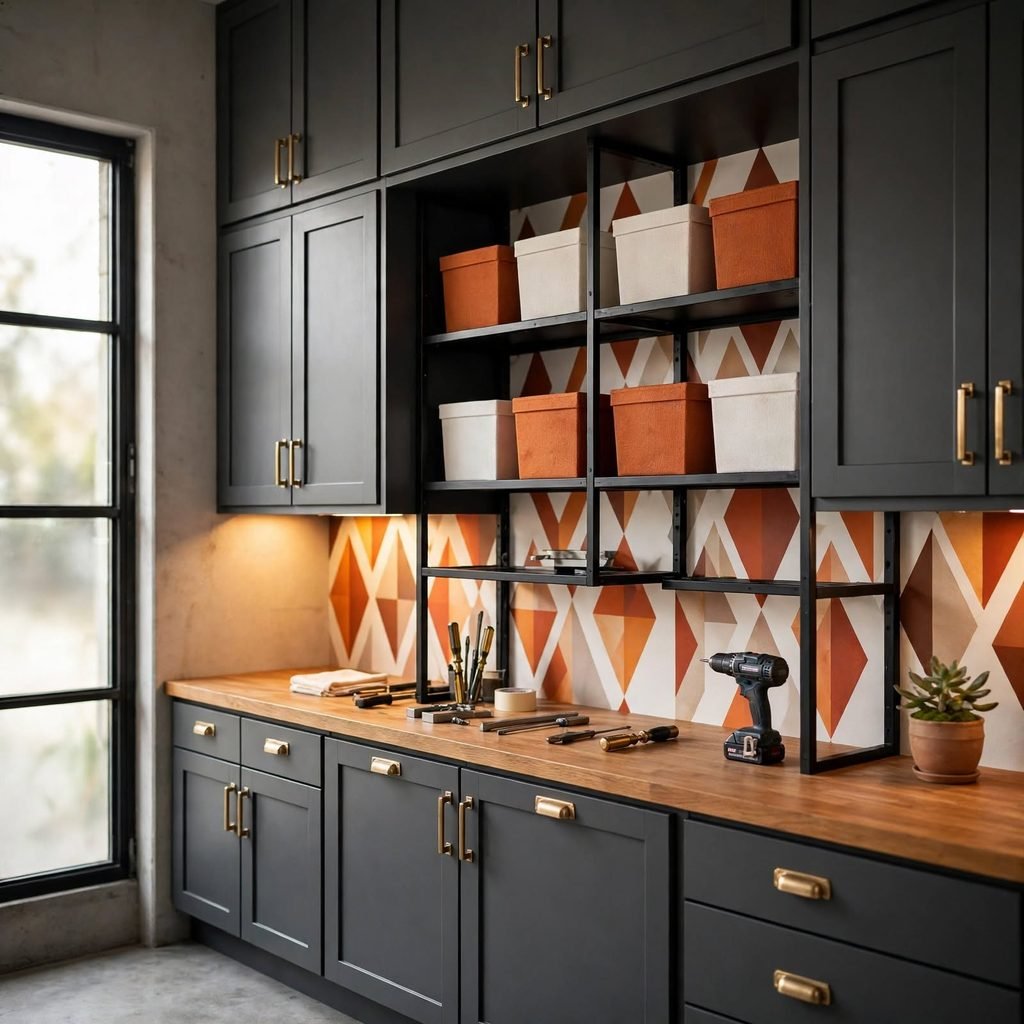
Applying a durable, washable wallpaper to a section of garage wall behind a workbench or storage shelving brings unexpected pattern and personality to a space usually left entirely unfinished. Choosing a bold, graphic pattern for this typically utilitarian space adds a surprising, playful design moment. This idea works particularly well for anyone spending significant time in the garage for hobbies or projects, making the space feel more like a genuine extension of the home rather than purely storage.
Shop the Look
A handful of tools and supplies recur across these wallpaper decor ideas and are worth having on hand for several smaller projects. A sharp craft knife and a metal straight edge support precise cutting for picture frame mats and switch plate covers. A clear protective sealant coat extends the durability of applications like serving trays and planter pots that see regular handling or moisture exposure. Basic paper for template tracing helps achieve accurate cuts for curved surfaces like lampshades and drum shades, and a small leftover remnant from any larger wallpaper project provides more than enough material for most of these smaller applications.
Common Mistake to Avoid
A common mistake in smaller wallpaper decor projects is skipping a protective sealant on items that will see regular handling or moisture exposure, like a serving tray or planter pot, which leads to premature peeling or water damage much sooner than expected. Applying a clear, appropriate sealant, matched to the specific project’s exposure level, significantly extends how long these smaller applications hold up to daily use. Testing the sealant on a small hidden area first also helps confirm it doesn’t alter the wallpaper’s color or finish in an undesirable way before committing to the full project.
What to Do With Leftover Wallpaper
Most standard wallpaper rolls leave meaningful material remaining after a typical accent wall project, and these smaller wallpaper decor ideas offer a practical way to use that leftover material rather than letting it go to waste. Storing leftover rolls flat or loosely rolled, away from direct sunlight and humidity, helps preserve the material’s condition for these future smaller projects. Keeping a small collection of remnants from different past projects also opens up the possibility of mixing multiple patterns across different small decor items throughout the home.
Frequently Asked Questions
How much leftover wallpaper do I typically have after a wall project?
Most standard wallpaper rolls leave somewhere between fifteen and thirty percent of the material remaining after a typical single accent wall project, depending on the wall’s exact dimensions and how much pattern matching waste occurred during installation. This leftover amount is generally more than sufficient for several of the smaller projects covered in this guide, like switch plate covers or a lampshade makeover. Measuring the remaining material before starting a new small project helps confirm there’s enough for the specific application planned.
Do I need special wallpaper for smaller decor projects, or can I use leftover wall wallpaper?
Leftover wallpaper from a wall project generally works well for most of these smaller decor applications, though projects with higher moisture or wear exposure, like a serving tray or planter pot, benefit from choosing a more durable, washable wallpaper type from the start if possible. For projects like a picture frame mat or a piano lid interior, which see minimal handling, standard wallpaper leftover from a wall project works perfectly well without any special considerations. Matching the wallpaper’s durability level to the specific project’s expected wear and exposure is the main factor to consider.
Is peel-and-stick wallpaper easier to use for these smaller projects than traditional wallpaper?
Yes, peel-and-stick wallpaper is generally considerably easier to use for smaller decor projects, since it can be repositioned during application and doesn’t require mixing or applying separate paste. This makes it particularly well-suited to curved surfaces like lampshades and planter pots, where precise, careful application matters more than on a large flat wall. Traditional pasted wallpaper can still work for these projects but generally requires more skill and patience to achieve a clean result on smaller, more detailed surfaces.
Can these wallpaper decor projects be undone if I change my mind later?
Most of these smaller wallpaper decor projects are relatively easy to undo or redo, since items like a lampshade, switch plate cover, or planter pot wrap can simply be replaced or re-covered with a new pattern without significant cost or effort. Projects using peel-and-stick material specifically tend to be even easier to remove and change than those using more permanent adhesive. This flexibility makes these smaller applications a lower-risk way to experiment with bold or trendy patterns compared to committing to a full wall.
What’s the best small wallpaper decor project for a beginner to try first?
A switch plate cover or a picture frame mat are generally the best small wallpaper decor projects for a beginner to try first, since both involve small, manageable surfaces with straightforward, mostly flat cutting requirements. These projects also use minimal material, making them a low-risk way to practice cutting and applying wallpaper accurately before attempting a more involved curved surface like a lampshade or planter pot. Success with one of these simpler projects tends to build confidence for tackling a more ambitious wallpaper decor application next.
Conclusion
These fourteen wallpaper decor ideas move well beyond the wall itself, applying the material to furniture, fixtures, and small functional objects throughout the home. Using leftover wallpaper from a larger wall project for these smaller applications makes practical use of material that would otherwise go to waste while extending a room’s pattern story into unexpected details. Save this guide to Pinterest for later reference, and check out the related DIY and budget decorating posts for more ideas.