Wallpaper Bedroom Ideas: 14 Dreamy Looks
Trying to find wallpaper bedroom ideas that go past the one obvious spot behind the headboard? This guide covers 14 dreamy, realistic placements, from a ceiling canopy drape effect to wallpapered closet doors, each chosen specifically for how a bedroom’s particular layout and furniture create unique wallpaper opportunities. A bedroom offers more wallpaper placement options than most rooms, since features like nightstands, closets, and window seats each create a natural boundary for a smaller, more contained pattern application. This guide walks through fourteen specific ideas covering walls, ceilings, and furniture-adjacent spots, each with notes on execution and pattern scale.
Trend & Background
Wallpaper bedroom ideas have expanded well beyond the single headboard accent wall as more people recognize how many distinct zones a typical bedroom actually contains, from closet interiors to window seat nooks. This reflects the broader wallpaper resurgence happening across home design, now applied with more specificity to the bedroom’s particular furniture and architectural features. This matters now because peel-and-stick wallpaper has made smaller, more contained bedroom applications, like a closet door or a dressing alcove, considerably more approachable than committing to a full wall. Interest in less obvious bedroom wallpaper placements has grown as more people move past the standard headboard wall toward more creative, personalized applications throughout the room.
Key Takeaways
- These 14 wallpaper bedroom ideas explore placements beyond the standard headboard accent wall.
- A pattern scale table offers guidance on matching wallpaper print size to bedroom dimensions.
- Several ideas use smaller, contained applications, like closet doors or a reading nook, to lower the commitment level.
- Every idea here considers how existing bedroom furniture and architecture shape the wallpaper’s most natural placement.
1. Ceiling Canopy Wallpaper Drape Effect for Wallpaper Bedroom
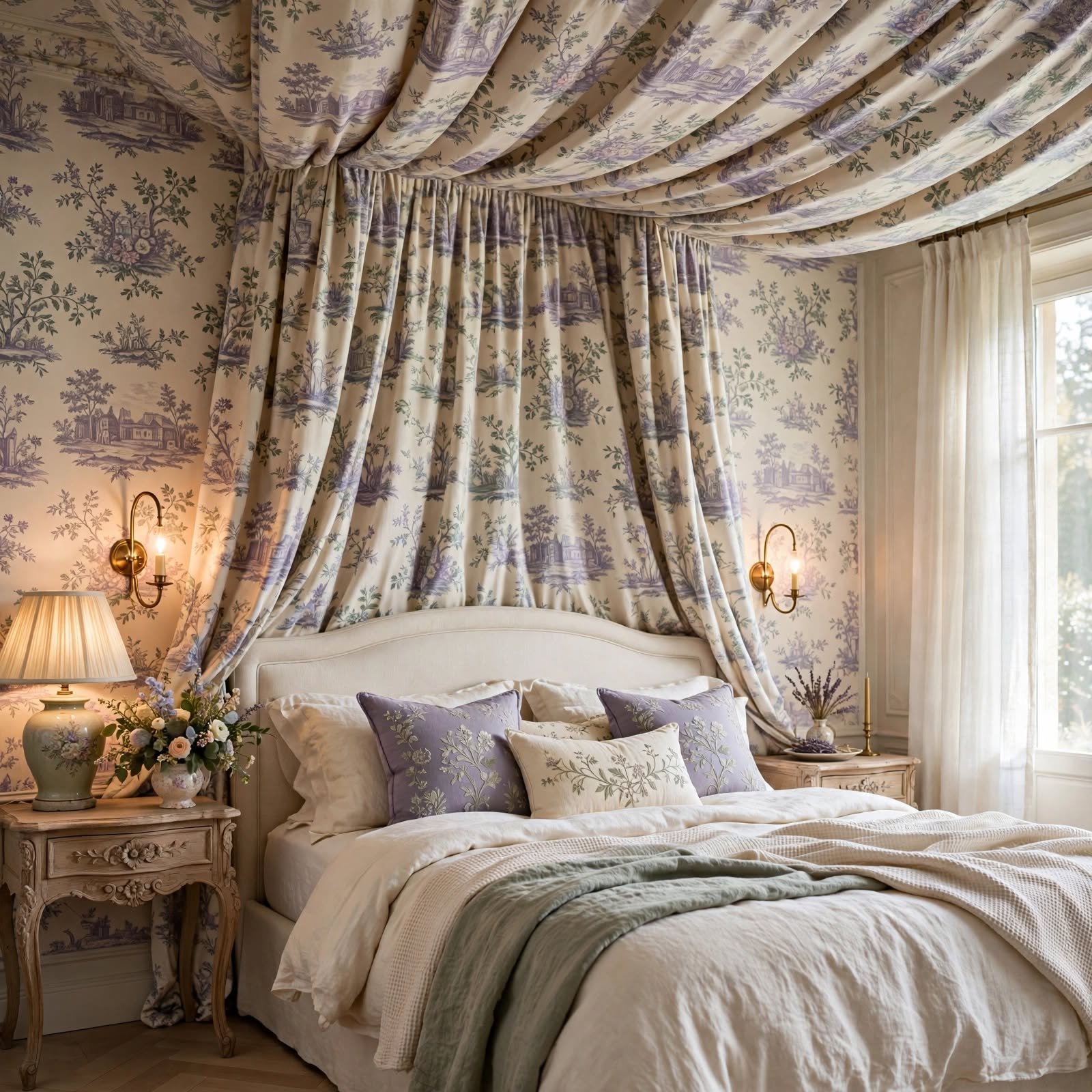
Wallpapering a section of the ceiling directly above the bed, sometimes combined with a painted or wallpapered border extending slightly down the adjacent walls, creates a canopy-like effect without any actual fabric draping required. Choosing a softer, more subtle pattern for this overhead application keeps the effect soothing rather than visually heavy when viewed from a lying position. This idea works particularly well in a bedroom wanting a romantic, enveloping feel without committing to full four walls of pattern.
2. Wallpapered Closet Doors for Bedroom Wallpaper
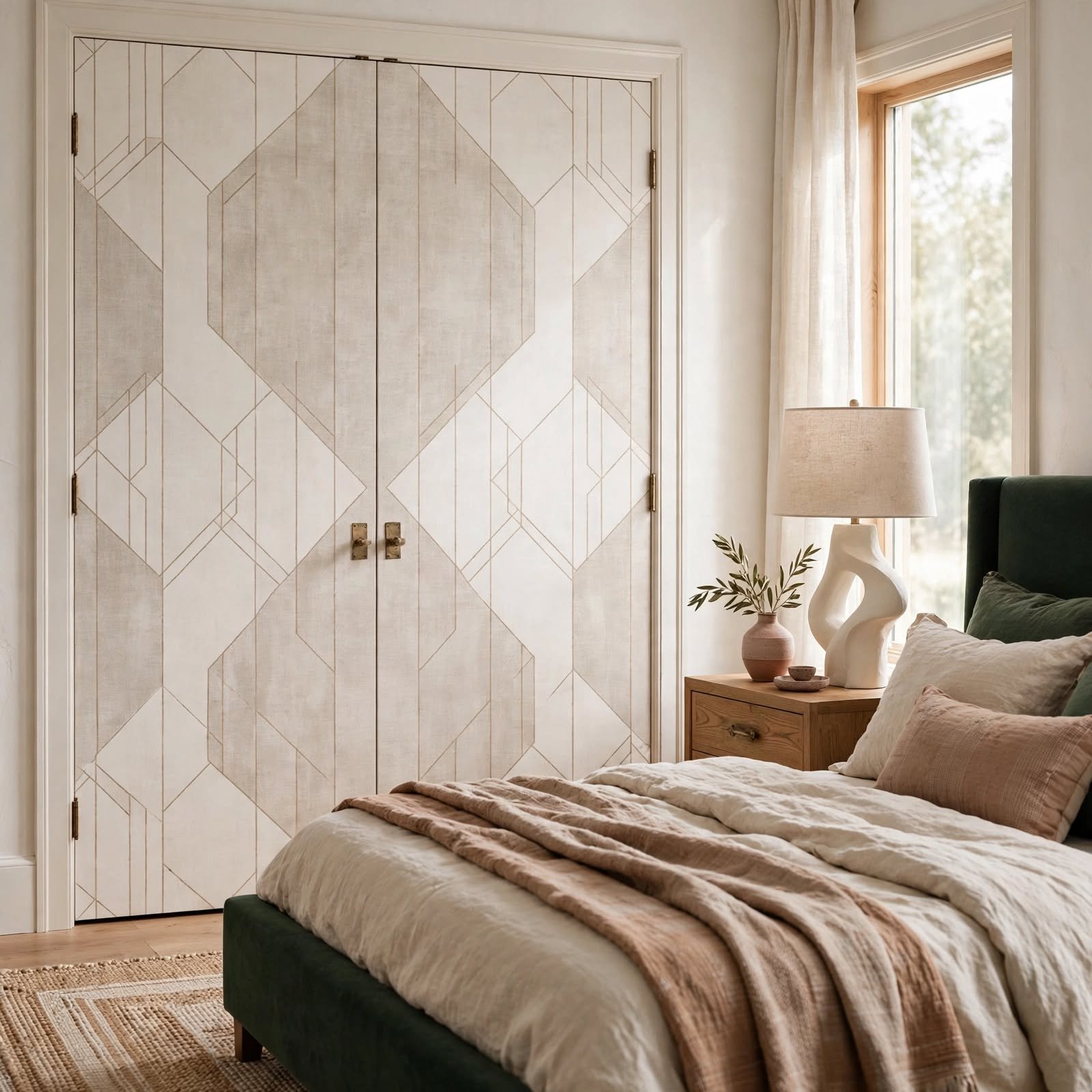
Applying a bold, unexpected pattern to the closet doors specifically, rather than the surrounding bedroom walls, allows for a much braver pattern choice contained to a smaller, defined area. This works particularly well with sliding or flat panel closet doors, which provide a clean, uninterrupted surface for the pattern. This idea keeps the main bedroom walls neutral while still injecting real personality through this contained, secondary surface.
3. Nursery Whimsical Animal Wallpaper for Wallpaper Bedroom
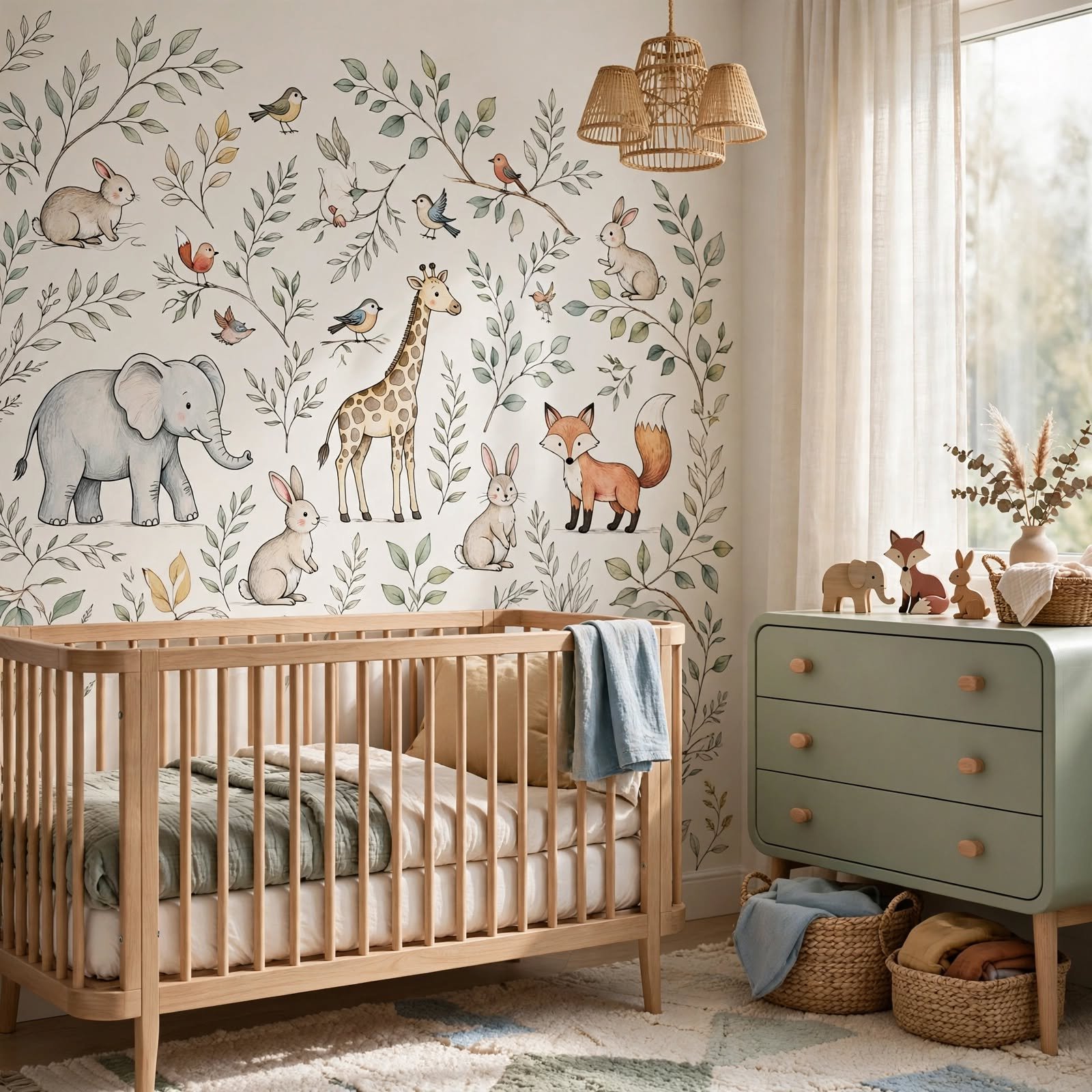
A whimsical animal print, featuring gentle illustrated creatures in a soft color palette, remains one of the most popular wallpaper choices for a nursery specifically, creating a calming, storybook atmosphere for a baby’s room. Choosing a pattern with a muted, non-gendered color palette keeps the wallpaper relevant even as the child grows into a toddler bedroom later. This idea works particularly well on a single accent wall behind the crib, keeping the overall room from feeling overly busy.
4. Dark Moody Bedroom Wallpaper Wash for Wallpaper Bedroom
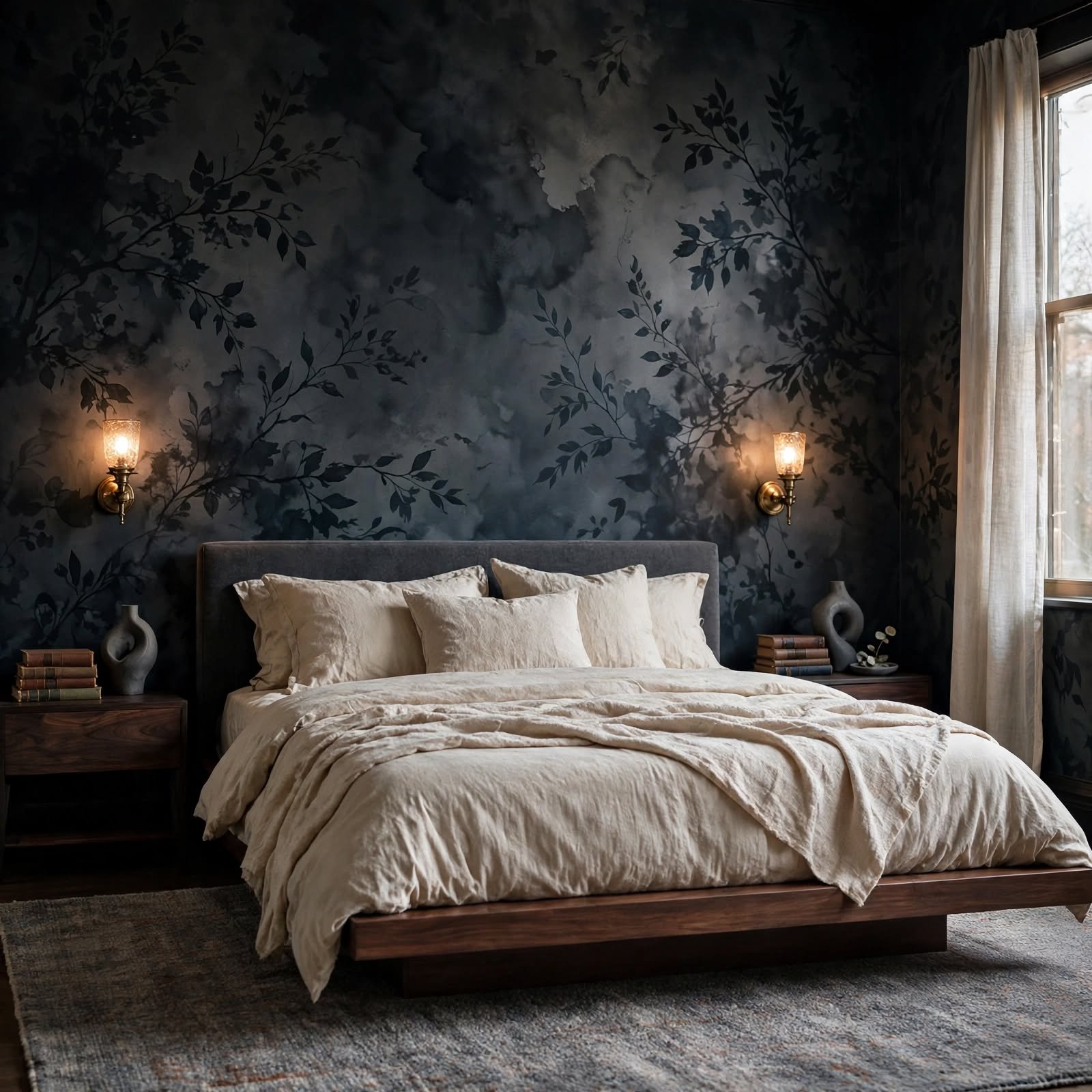
A deep, richly patterned wallpaper in a dark base color, such as charcoal, forest green, or navy, creates an enveloping, cocoon-like atmosphere that suits a bedroom’s function as a space for rest better than a bright, high-contrast pattern might. Applying the dark wallpaper across all four walls, rather than a single accent wall, maximizes this moody, immersive effect. This idea works particularly well in a bedroom with good window light during the day, balancing the darker wallpaper with adequate natural brightness.
5. Wallpapered Reading Nook Corner for Wallpaper Bedroom
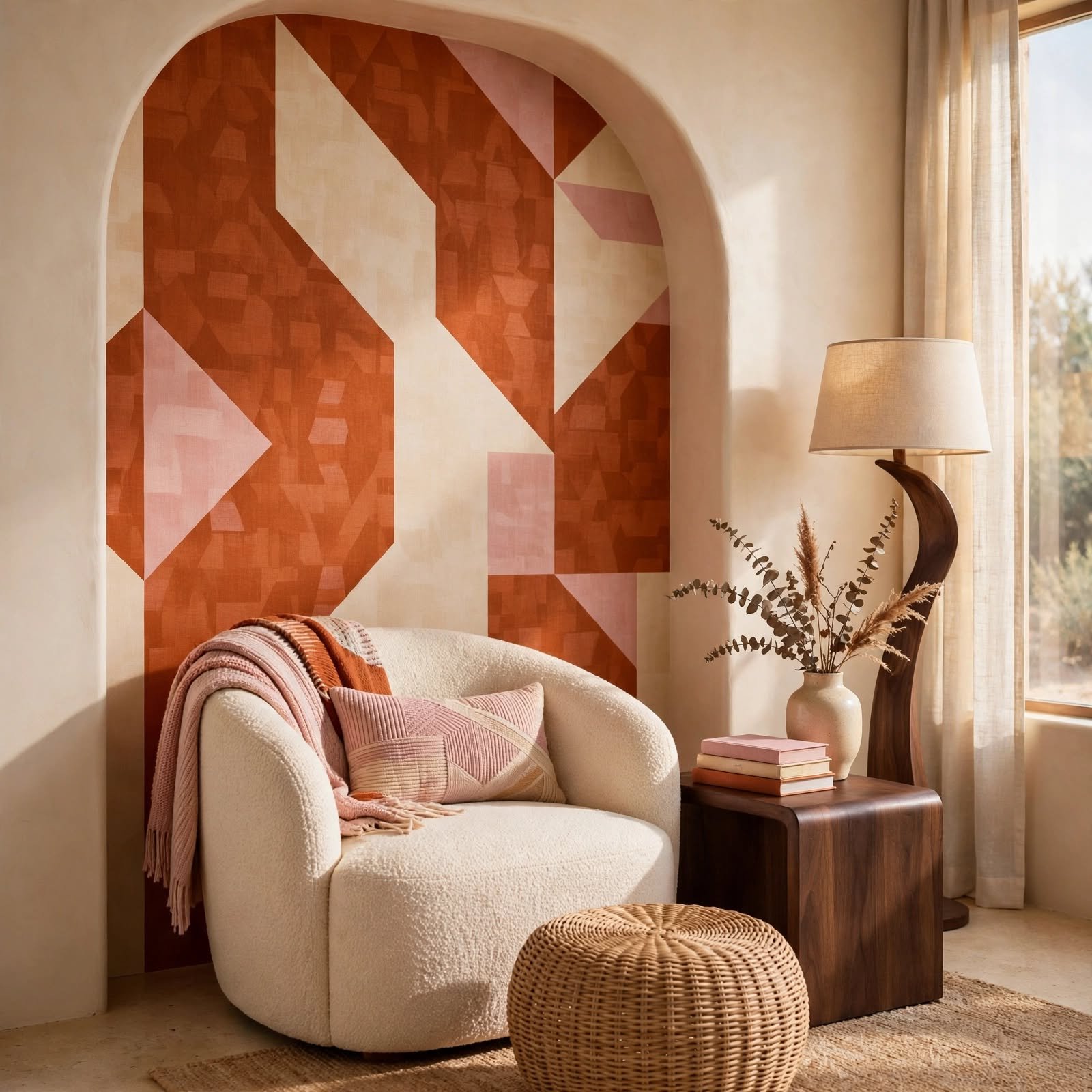
Applying wallpaper specifically to the corner or alcove housing a reading chair creates a defined, cozy zone distinct from the rest of the bedroom’s wall treatment. Choosing a pattern that complements rather than exactly matches the main bedroom wallpaper, if one exists elsewhere, adds layered interest without feeling disconnected. This idea works particularly well in a bedroom with an existing architectural nook or corner that already suggests a natural boundary for the contained pattern.
6. Wallpaper Behind Floating Nightstands for Wallpaper Bedroom
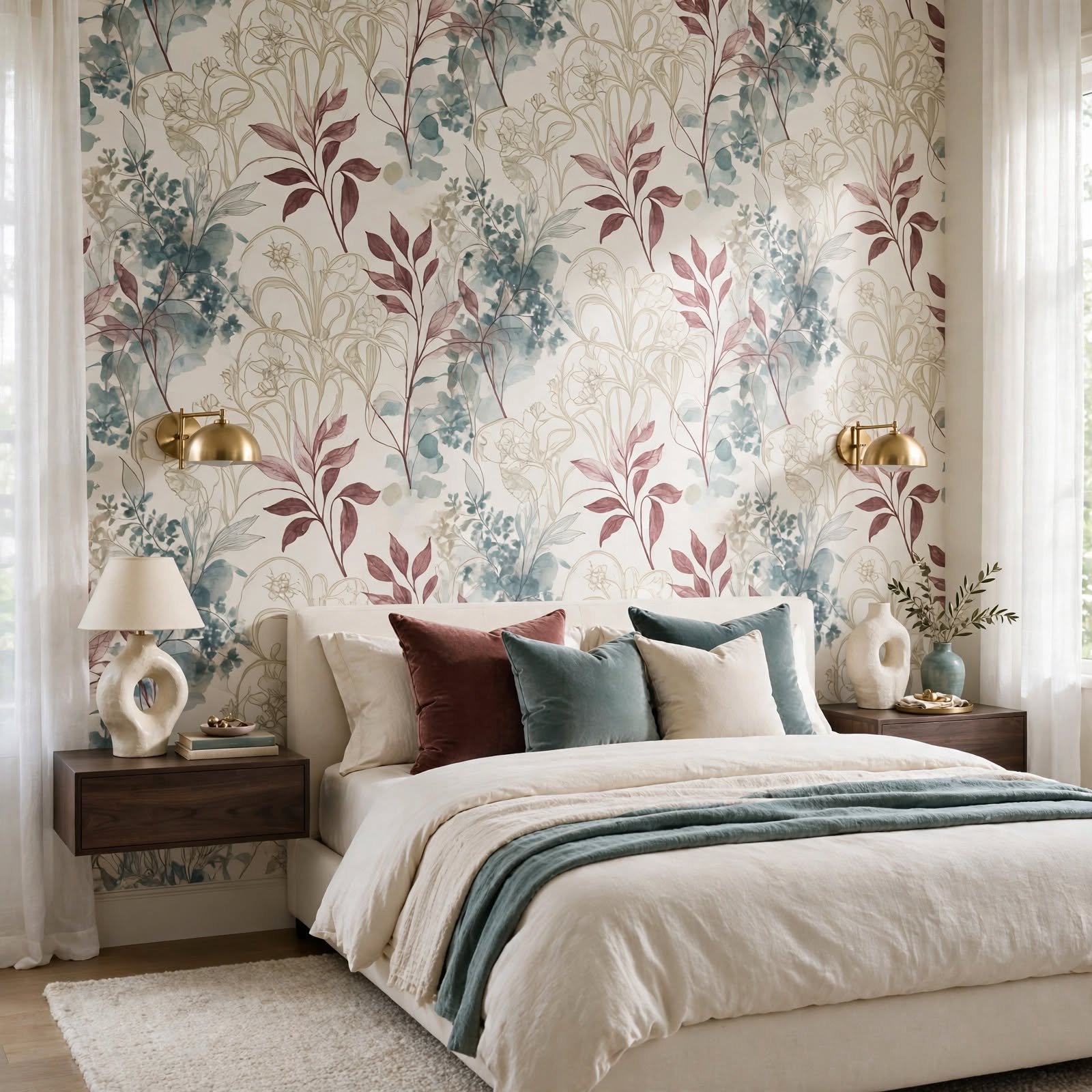
A contained section of wallpaper installed specifically behind a pair of floating nightstands, rather than extending across the full headboard wall, creates a framed, intentional design moment at a smaller, more manageable scale. Choosing a bold pattern for this contained application allows for more visual punch than the same pattern might have across a much larger wall. This idea works particularly well in a bedroom with a minimalist platform bed and wall-mounted nightstands, since the clean furniture lines create a natural boundary for the wallpaper section.
7. Textured Linen-Look Wallpaper for Wallpaper Bedroom
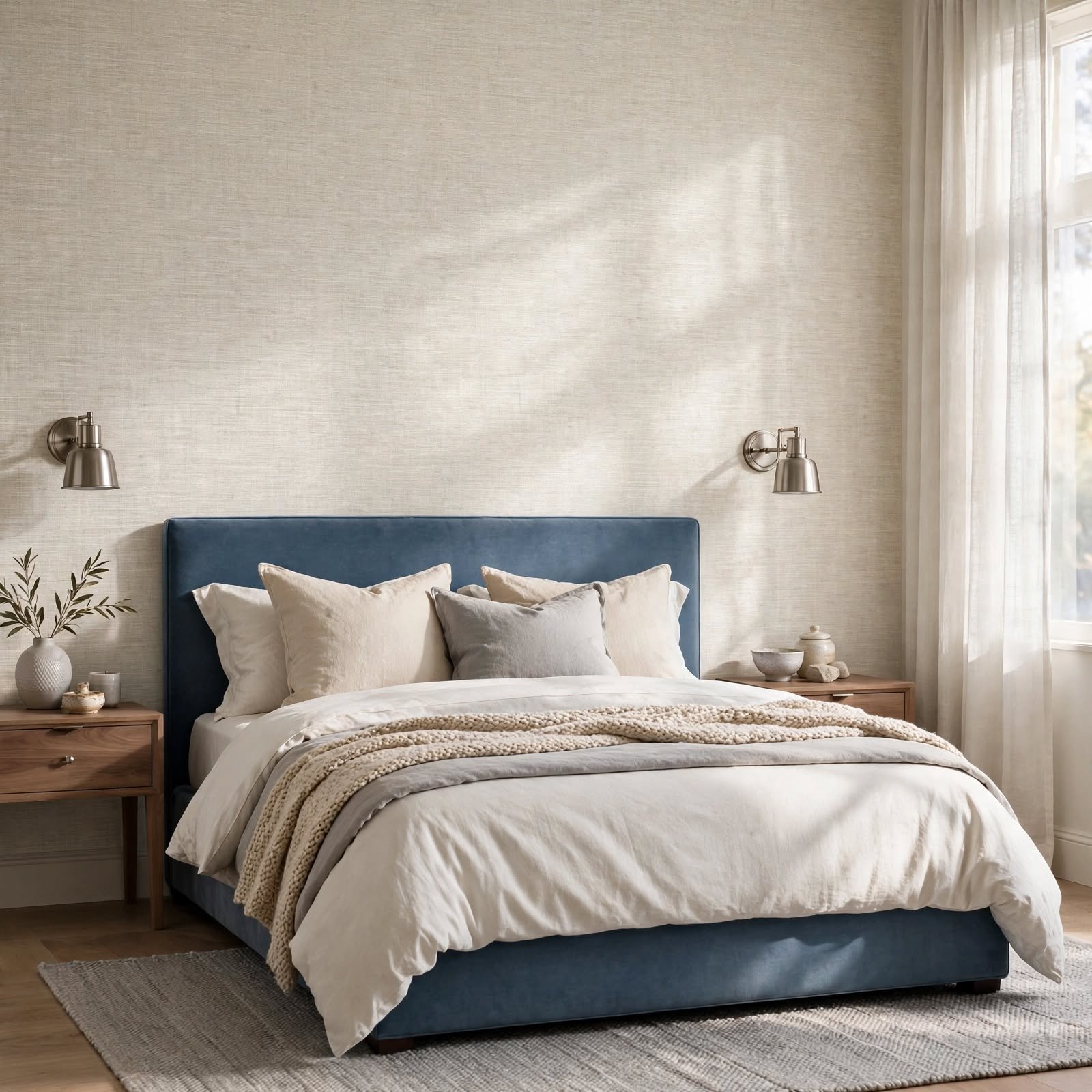
Wallpaper printed or textured to mimic the appearance of woven linen fabric adds a soft, tactile quality to bedroom walls without any actual fabric installation. This style works particularly well for anyone wanting the visual warmth of an upholstered wall without the higher cost and more involved installation of true fabric paneling. Choosing a linen-look paper in a warm neutral tone supports a calm, restful bedroom atmosphere consistent with the room’s primary function.
To get more ideas on wallpaper decor for your home , CLICK HERE.
8. Wallpapered Dressing Table Alcove for Wallpaper Bedroom
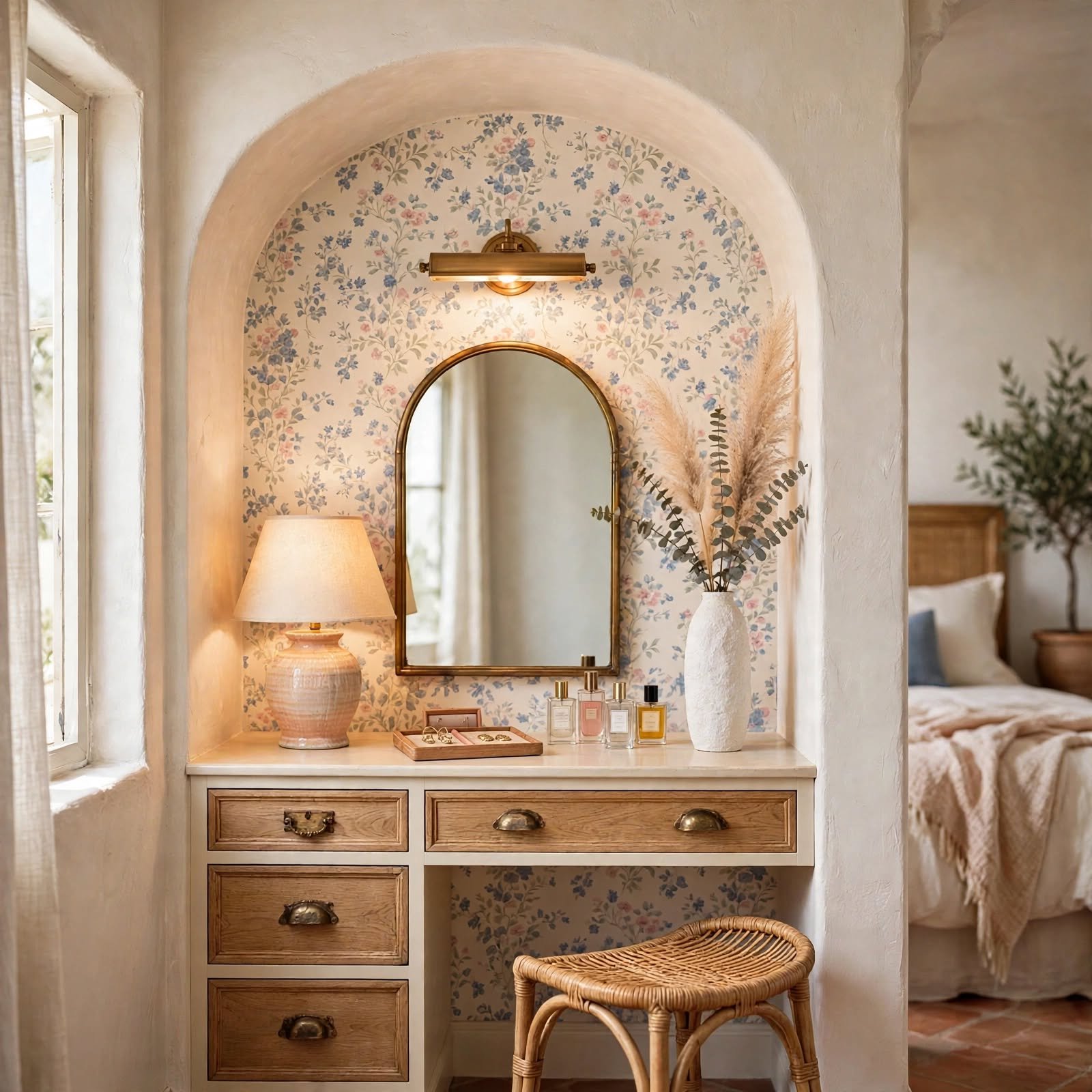
A small dressing table or vanity nook, wallpapered specifically within its recessed alcove, creates a jewel-box effect that makes the daily routine of getting ready feel a bit more special. Choosing a wallpaper with a subtle shimmer or metallic finish enhances this effect, especially when paired with vanity lighting. This idea works particularly well in a bedroom with an existing architectural nook that naturally separates the dressing area from the main sleeping space.
9. Wallpaper and Wainscot Pairing for Wallpaper Bedroom
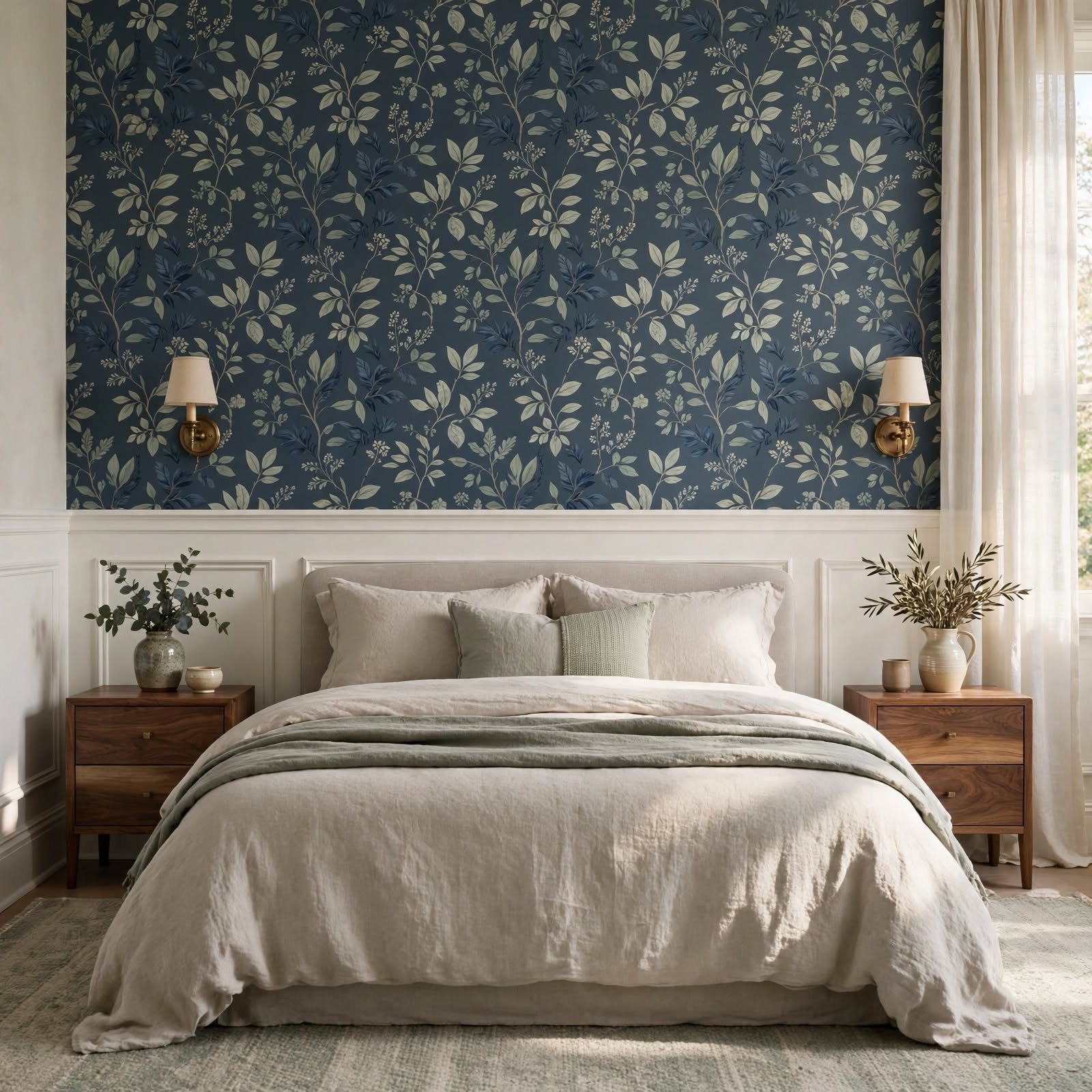
Combining a wainscoting panel on the lower half of the wall with a patterned wallpaper on the upper half creates a layered, traditional look that divides the wall into two distinct zones. The table below offers general guidance on matching wallpaper pattern scale to bedroom size for this and other larger wall applications.
| Bedroom Size | Recommended Pattern Scale | Notes |
| Small (under 120 sq ft) | Small to medium print | Avoids overwhelming the space |
| Medium (120 to 200 sq ft) | Medium to large print | Most versatile scale range |
| Large (200+ sq ft) | Large or mural-style print | Room can support bold, dramatic scale |
10. Wallpapered Window Seat Backdrop for Wallpaper Bedroom
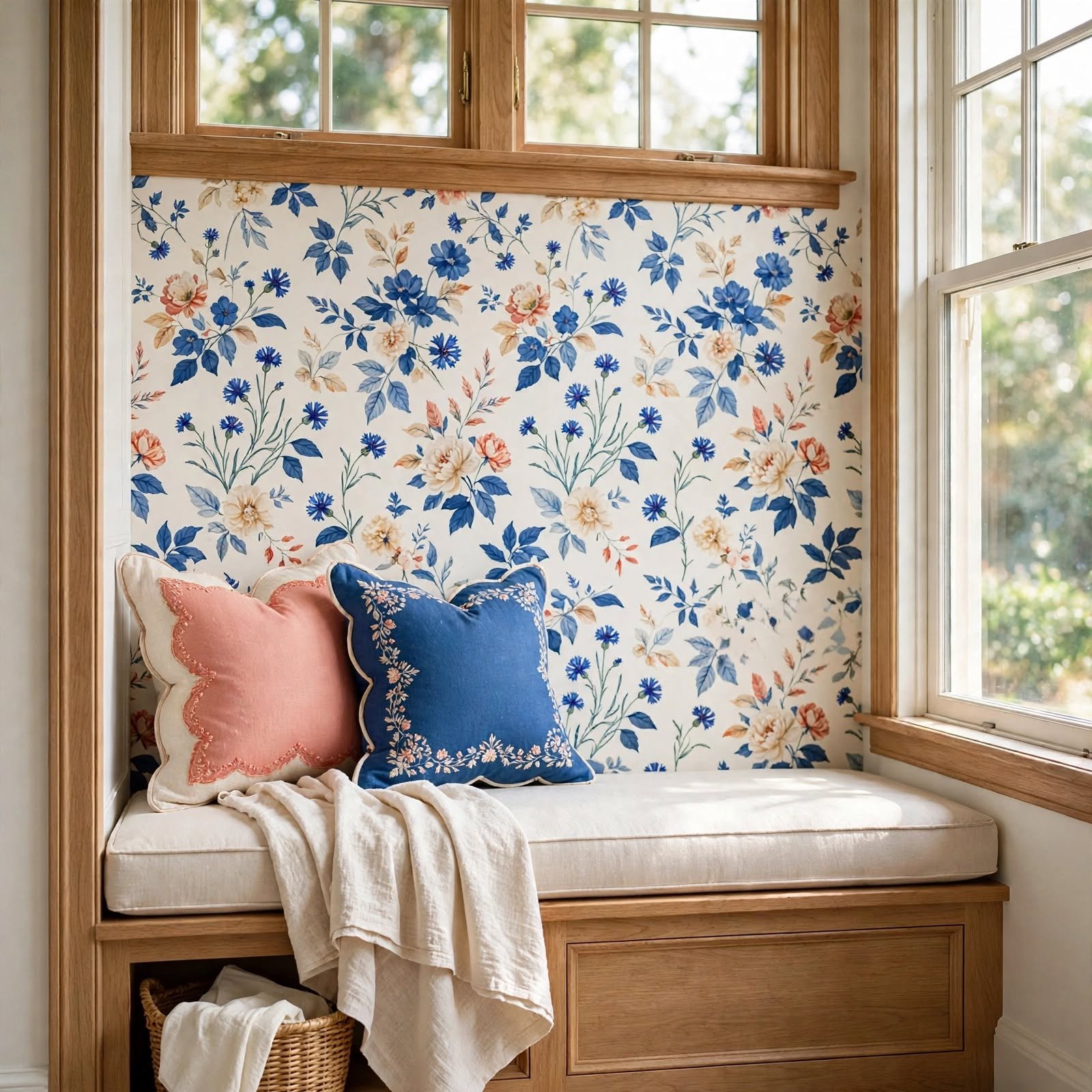
Applying wallpaper specifically within the recessed wall space of a window seat creates a framed, cozy backdrop for that particular nook, distinct from the rest of the bedroom’s wall treatment. Choosing a pattern that complements the window seat’s cushion fabric ties the small styled area together as a cohesive unit. This idea works particularly well in older homes with a genuine architectural window seat already built into the room.
11. Wallpaper Ceiling Medallion Accent for Wallpaper Bedroom
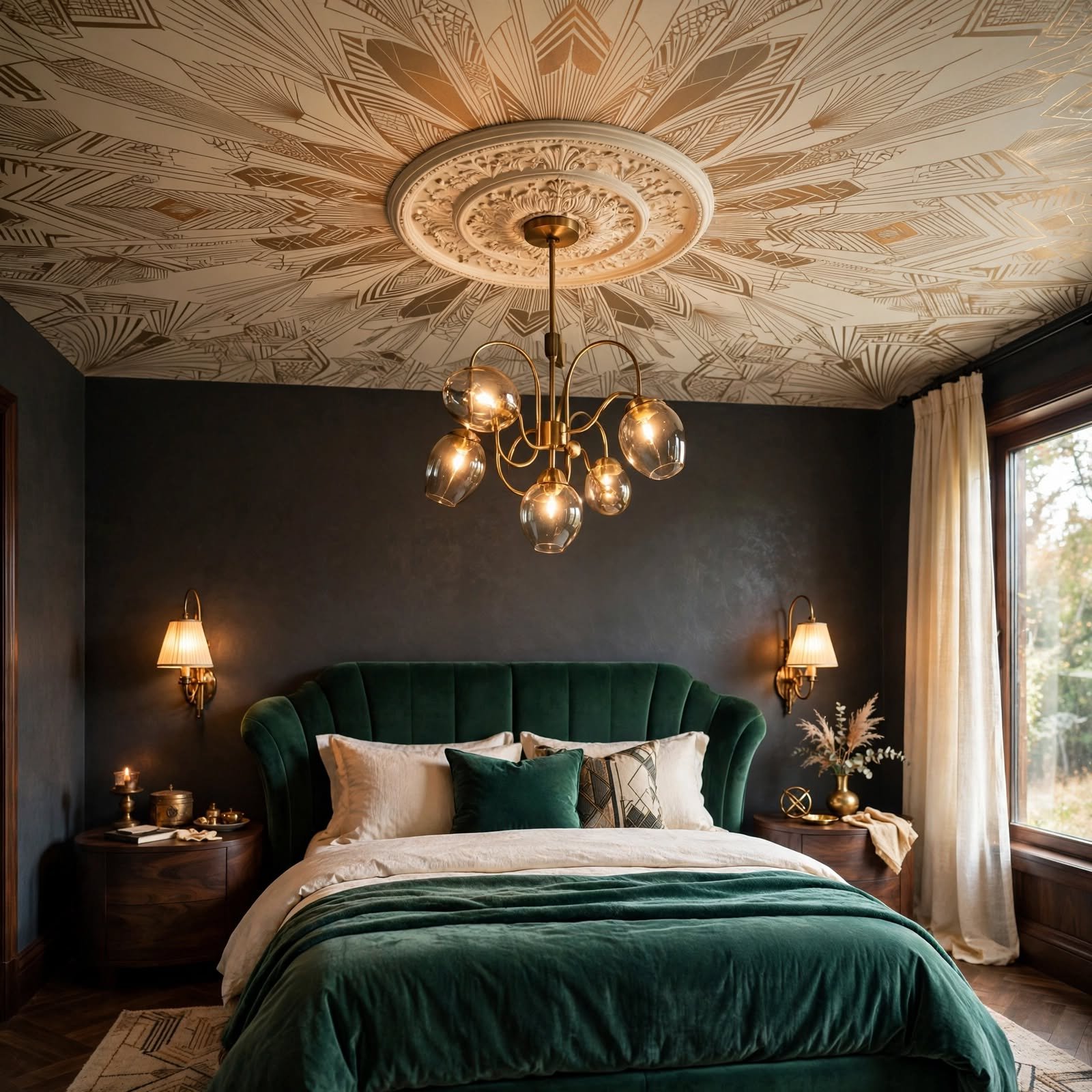
Pairing a smaller circular or geometric wallpaper medallion, applied to the ceiling around a light fixture, with a plain surrounding ceiling color creates a more contained, formal accent than wallpapering the entire ceiling surface. This detail works particularly well in a bedroom with a statement pendant or chandelier, since the medallion draws additional attention to that existing fixture. Choosing a medallion pattern that echoes a smaller design element elsewhere in the room ties the accent into the broader decor scheme.
12. Wallpapered Built-In Shelving Backing for Wallpaper Bedroom
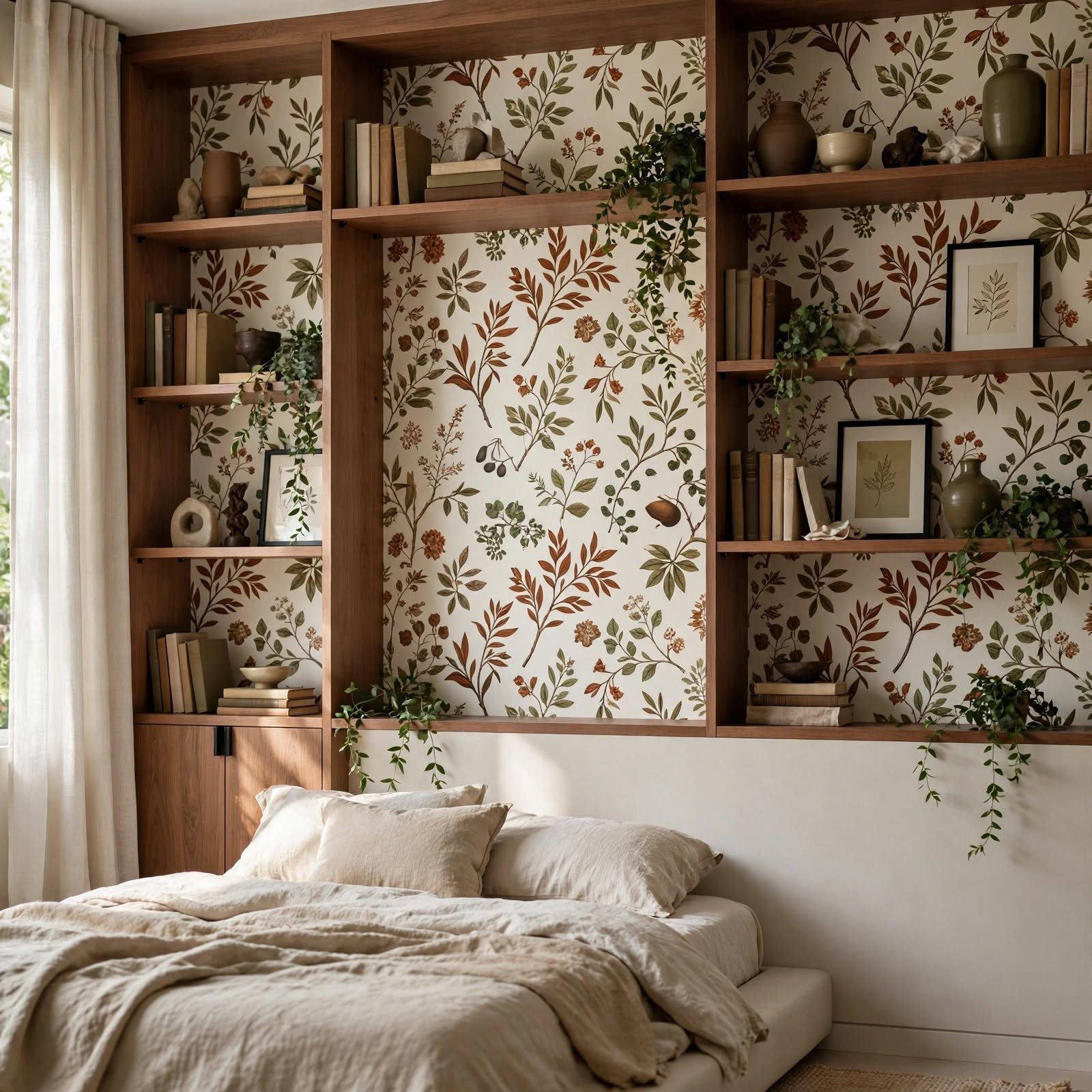
Applying wallpaper to the back panel of built-in bedroom shelving or a bookcase adds a pop of pattern that peeks through between displayed books and objects, similar to the technique used in a living room bookshelf but scaled to bedroom-specific furniture. This is a considerably smaller and more affordable wallpaper project than a full wall application. This idea works particularly well in a bedroom with existing built-in shelving that could use a bit more visual interest.
13. Wallpaper Doorway Frame Accent for Wallpaper Bedroom
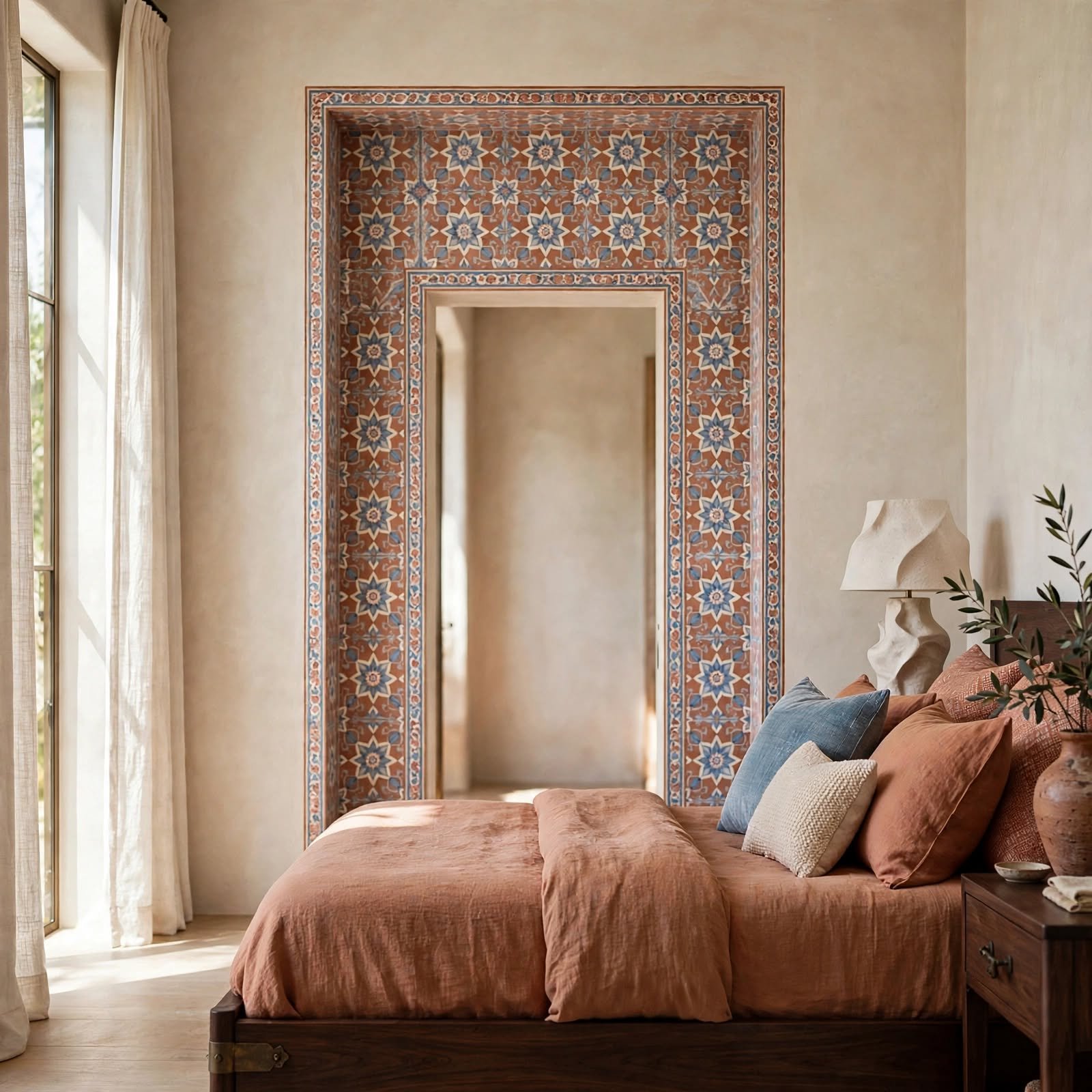
Wallpapering the small recessed area around a bedroom’s interior doorway, rather than the door itself, adds a subtle framing detail that most people don’t consider when planning a room’s overall wallpaper strategy. This works particularly well as a low-cost way to add a touch of pattern without a larger wall commitment. This idea suits a bedroom wanting just a hint of pattern rather than a bold, room-defining statement.
14. Color-Matched Paint and Wallpaper Blend for Wallpaper Bedroom
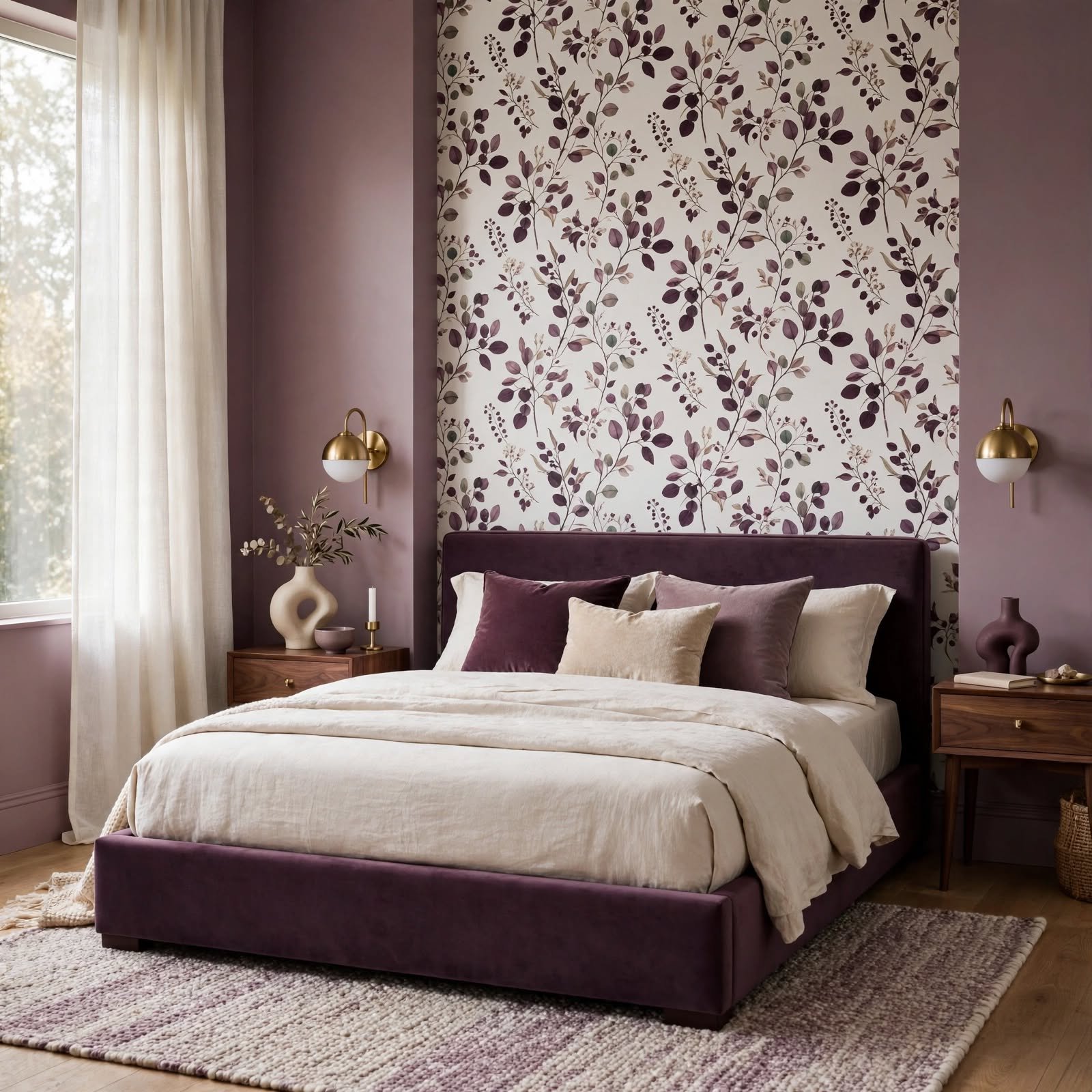
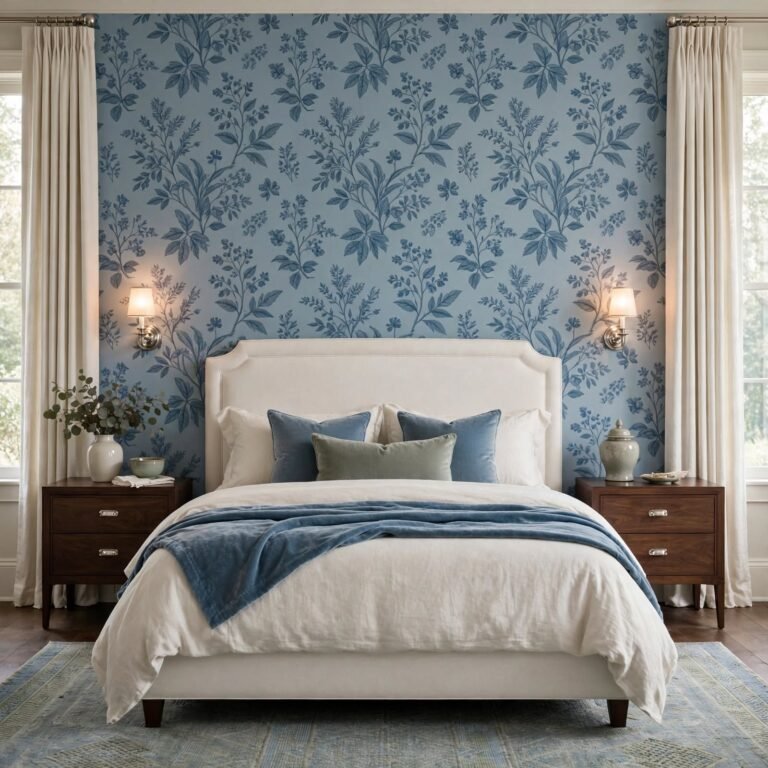
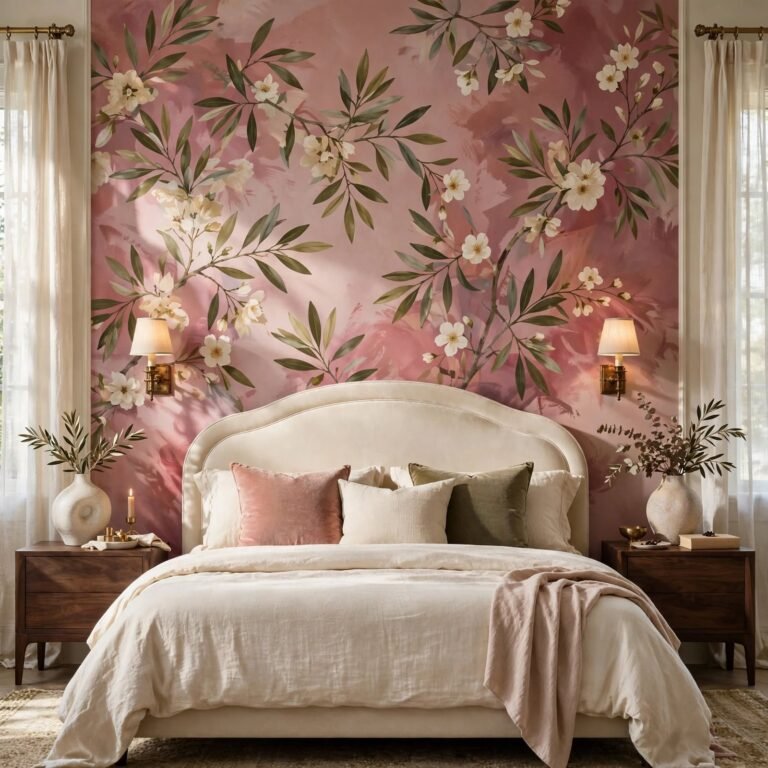
Choosing a wallpaper pattern with a background color that closely matches the paint color used on the bedroom’s remaining walls creates a seamless transition between the patterned accent wall and the surrounding painted surfaces. This technique prevents the stark, disconnected feeling that can occur when a wallpaper’s background color contrasts too sharply with the adjacent wall paint. This idea works particularly well for anyone wanting to introduce pattern gradually without the accent wall reading as a dramatically separate design decision from the rest of the room.
Shop the Look
A handful of considerations recur across these wallpaper bedroom ideas and are worth prioritizing when planning a project. A smaller, contained pattern works well for a closet door or nightstand backdrop application, while a softer, more subtle print suits a ceiling canopy treatment viewed from a lying position. A linen-look texture supports a calm, restful overall mood, and a metallic or shimmer finish elevates a dressing table alcove specifically. A wallpaper sample book with a range of scales helps test options against the room’s actual dimensions before committing to a full order.
Common Mistake to Avoid
A common mistake in wallpaper bedroom projects is choosing a pattern scale without first testing it against the room’s actual dimensions and furniture placement, which can result in a print that feels either overwhelming or barely noticeable once installed. Taping a printed sample or a physical swatch to the intended wall and viewing it at different times of day, since natural light affects how a pattern reads, helps avoid this common sizing mismatch. Considering how much of the pattern will actually remain visible around existing furniture, like a tall headboard or built-in shelving, also affects which scale will read most effectively in the finished room.
Frequently Asked Questions
What wallpaper pattern works best for a small bedroom?
Smaller-scale prints, subtle textures, or vertical stripe patterns generally work best for a small bedroom, since these tend to feel less overwhelming than a large, bold pattern repeat in a limited square footage. Lighter background colors within the chosen pattern also help the room feel more open compared to a dark, dense print covering every wall. Testing a sample swatch in the actual room before committing helps confirm the specific pattern doesn’t feel too busy for the available space.
Is dark wallpaper a good choice for a bedroom, or does it make the room feel too small?
Dark wallpaper can work very well in a bedroom, often creating a cozy, enveloping atmosphere that suits the room’s restful function, provided the space has adequate natural light during the day to balance the deeper tone. Bedrooms with good window exposure tend to handle dark wallpaper more successfully than a windowless or already dim room. Testing the dark pattern with a sample before committing helps confirm it doesn’t feel oppressive in the specific room’s actual lighting conditions.
How do I wallpaper a closet door without it looking mismatched to the rest of the room?
Choosing a wallpaper pattern that shares a color or theme with the bedroom’s existing palette, even if the specific print differs from any other pattern in the room, helps a wallpapered closet door feel intentional rather than randomly mismatched. Keeping the surrounding bedroom walls simpler and more neutral also allows the closet door’s bolder pattern to read as a deliberate accent rather than competing for attention. Removing the door temporarily for a flatter, easier wallpapering surface, then rehanging it once complete, produces a cleaner final result than attempting the application with the door still mounted.
Can wallpaper be used safely in a nursery?
Yes, wallpaper can be used safely in a nursery, provided it’s applied well below any areas a child might reach and chew on directly, and using a low-VOC or specifically child-safe formulated wallpaper adhesive reduces any concern about off-gassing in the room. Choosing a wallpaper positioned higher on the wall, above crib rail height, or applied only to a single accent wall away from the crib itself, adds an extra layer of caution. Checking specific product safety certifications before purchasing provides additional peace of mind for this particular application.
How do I decide between wallpapering just one wall or the whole bedroom?
Choosing a single accent wall generally works well for bolder, more dramatic patterns, while wallpapering all four walls tends to suit calmer, more subtle prints that won’t feel overwhelming in a fully enveloping application. Budget also plays a practical role, since a full room commitment costs proportionally more in both materials and installation time. Testing the chosen pattern on a smaller contained area first, like a closet door or nightstand backdrop, can help gauge whether a fuller room commitment feels right before committing to that larger investment.
Conclusion
These fourteen wallpaper bedroom ideas explore placements well beyond the standard single headboard accent wall, making use of closets, ceilings, nooks, and furniture-adjacent spaces throughout the room. Testing a pattern’s scale against the room’s actual dimensions and furniture layout before committing helps ensure the finished wallpaper feels balanced rather than overwhelming or underwhelming. Save this guide to Pinterest for later reference, and check out the related bedroom color palette and accent wall posts for more ideas.