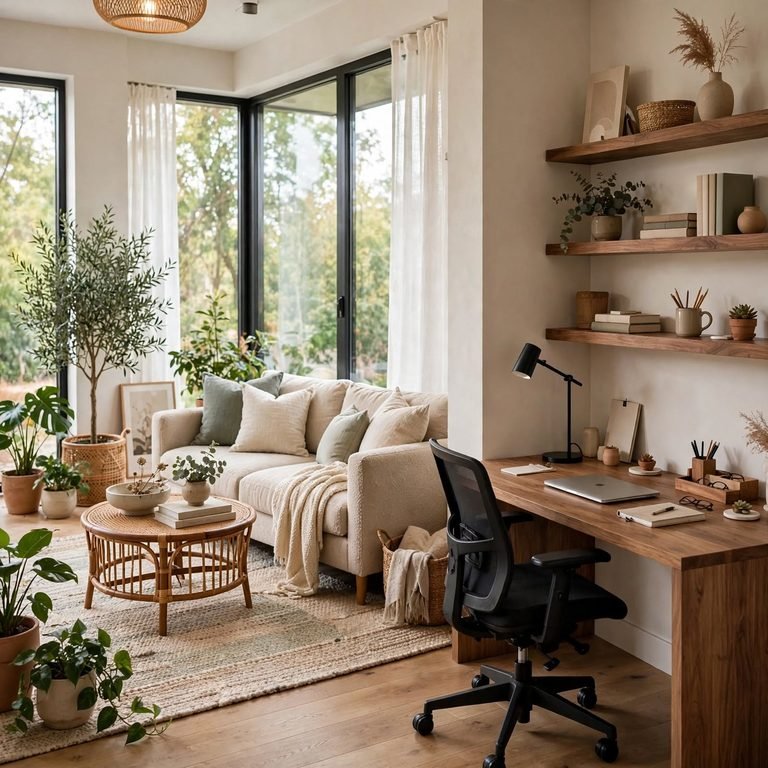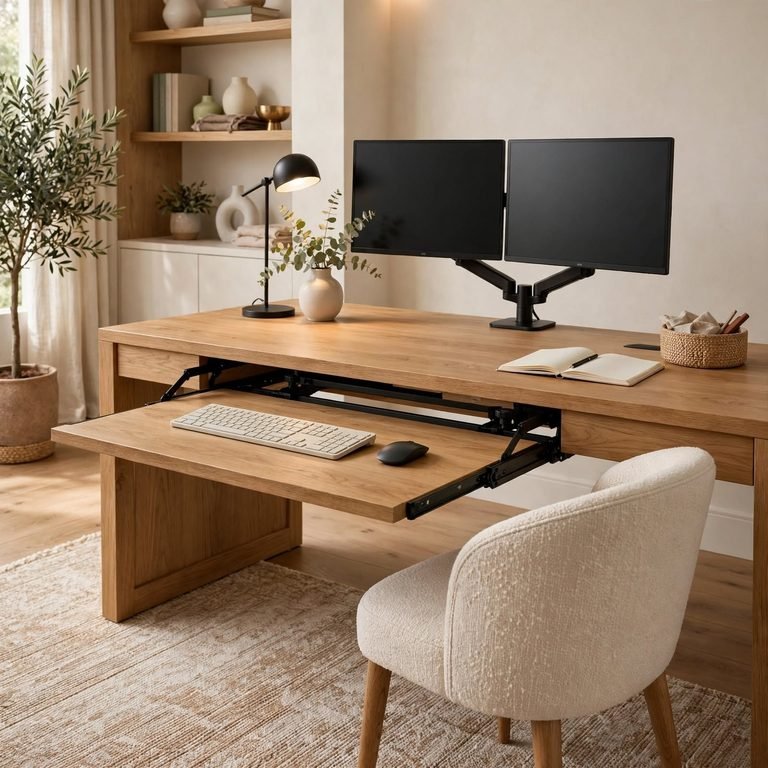
12 Inspiring Cozy Home Office Ideas That Still Feel Productive
A cozy home office sounds like it should be easy add a rug, a candle, a soft chair, but most attempts end up either too sparse to feel warm or too cluttered to actually work in. The difference comes down to layering: warm materials against a functional layout, soft lighting that still supports focus, and textures that don’t interfere with the desk itself. Twelve specific ideas follow, each aimed at making a workspace feel lived-in without sacrificing what makes it a workspace.
Trend & Background
As home offices have become permanent rooms rather than temporary setups, style preferences have shifted away from the sterile, all-white minimalism common a few years ago toward warmer, more textured interiors that people actually want to spend eight hours a day in. Search interest in cozy and “hygge-style” workspaces has grown alongside broader interest in warm minimalism across home design, reflecting a preference for rooms that feel personal rather than corporate. That shift has pushed people toward wood tones, layered textiles, and warm lighting even in spaces built primarily for work.
Key Takeaways
- A cozy home office relies on warm materials and layered lighting rather than soft furniture alone to stay functional.
- Wood tones, wool textiles, and warm-white bulbs do more for atmosphere than any single decorative object.
- Closed storage keeps a soft, layered room from tipping into visual clutter.
- Small-scale comfort additions a reading chair, a throw, a rug work best when they don’t compete with the actual workspace.
1. Walnut Wood Desk
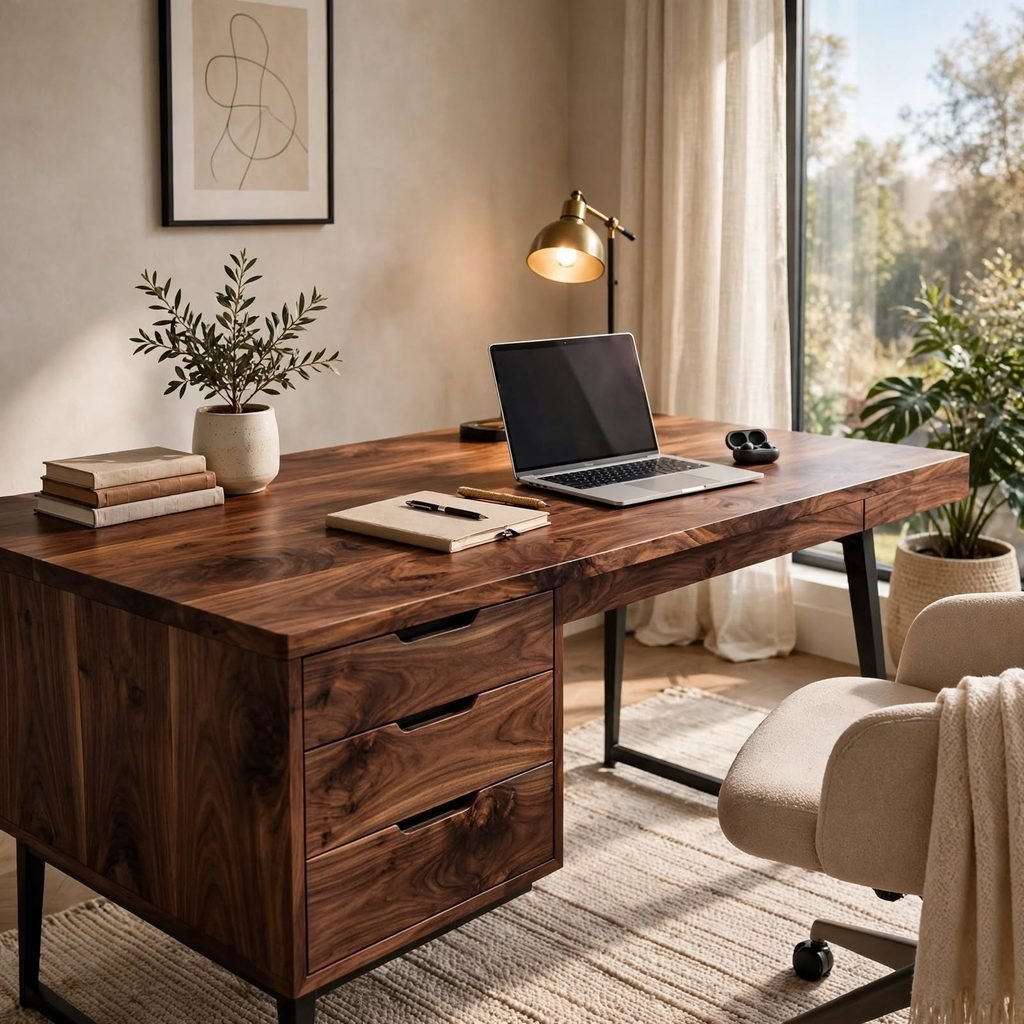
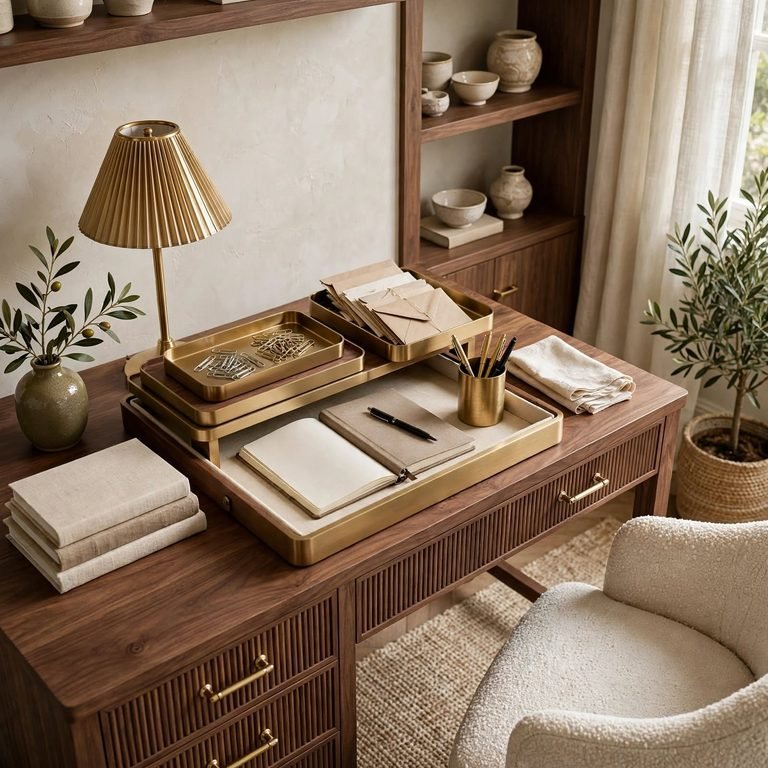
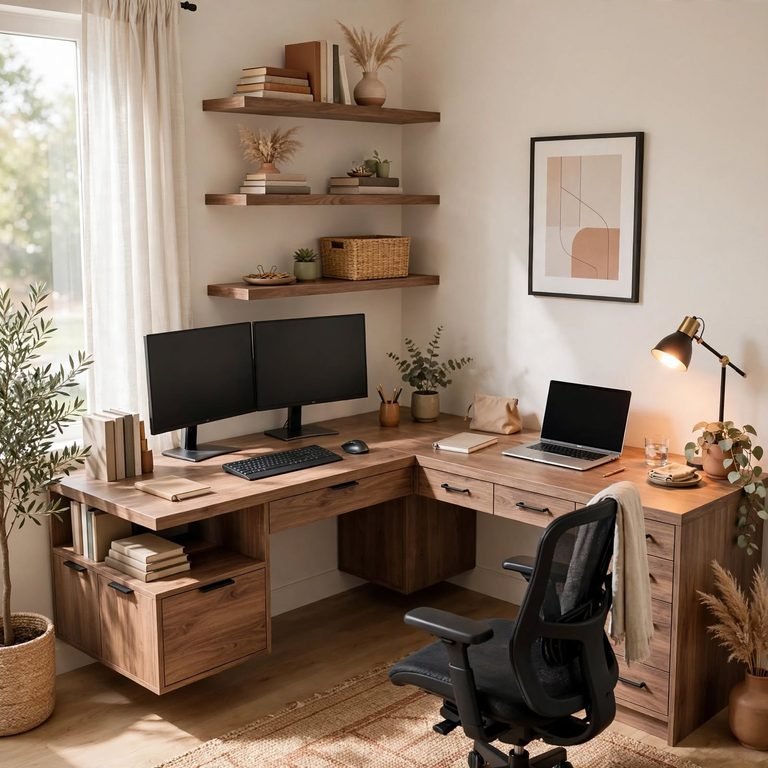
A solid walnut or walnut veneer desk sets a warm tone for the entire room before anything else is added, since wood grain reads as inherently cozier than glass, glossy laminate, or painted white surfaces. Choose a desk with turned or tapered legs rather than sharp steel hairpin legs if the goal is a softer, more traditional feel. Pairing the desk with a matching wood bookshelf or credenza keeps the material palette consistent instead of scattered across mismatched pieces.
2. Wool Area Rug
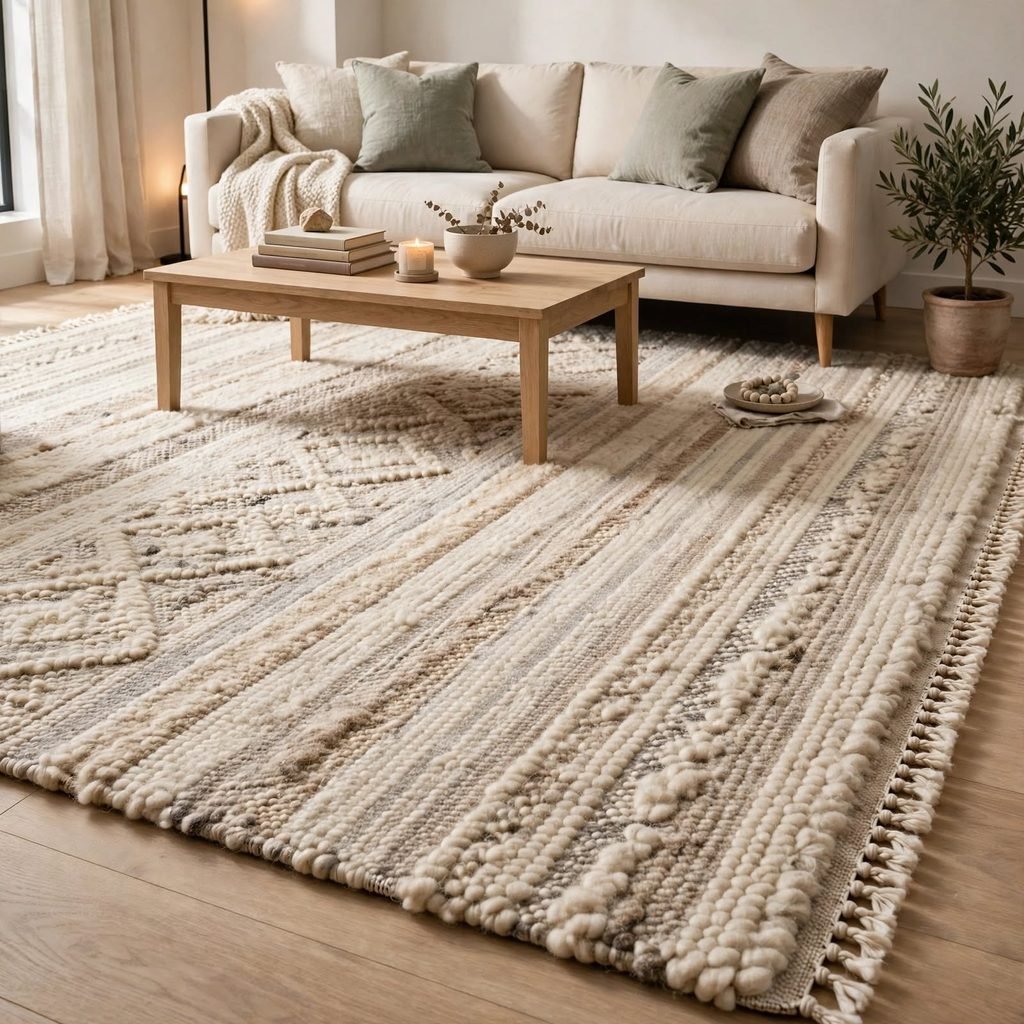
A wool area rug under the desk adds both visual warmth and sound absorption, cutting down on the hard-floor echo that makes a room feel colder and less private during calls. Choose a low-pile weave in a muted pattern a faded Persian-style print or a simple herringbone rather than a flat solid color, which tends to show wear faster in a high-traffic desk area. Size the rug so the desk and chair sit fully on it, with roughly 18 inches of rug extending beyond the chair on all sides.
3. Warm-White Task Lighting
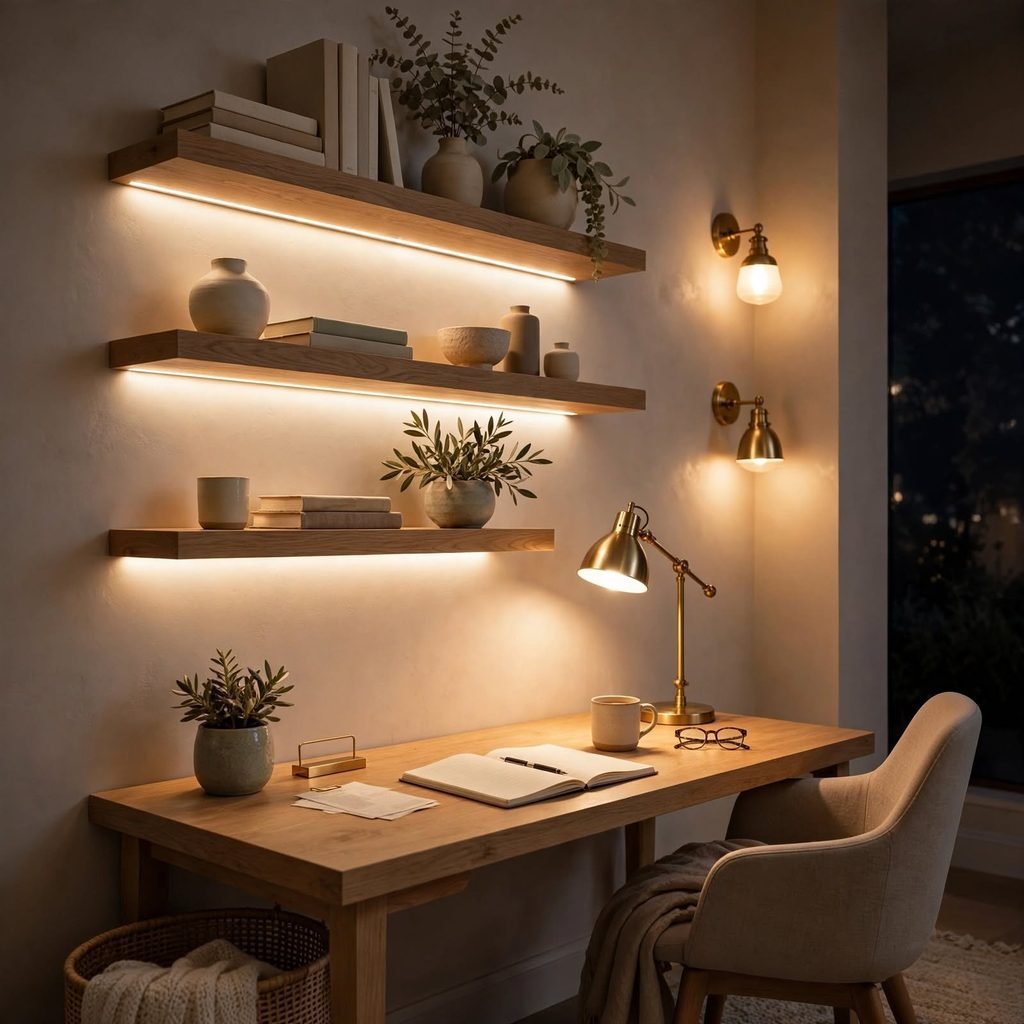
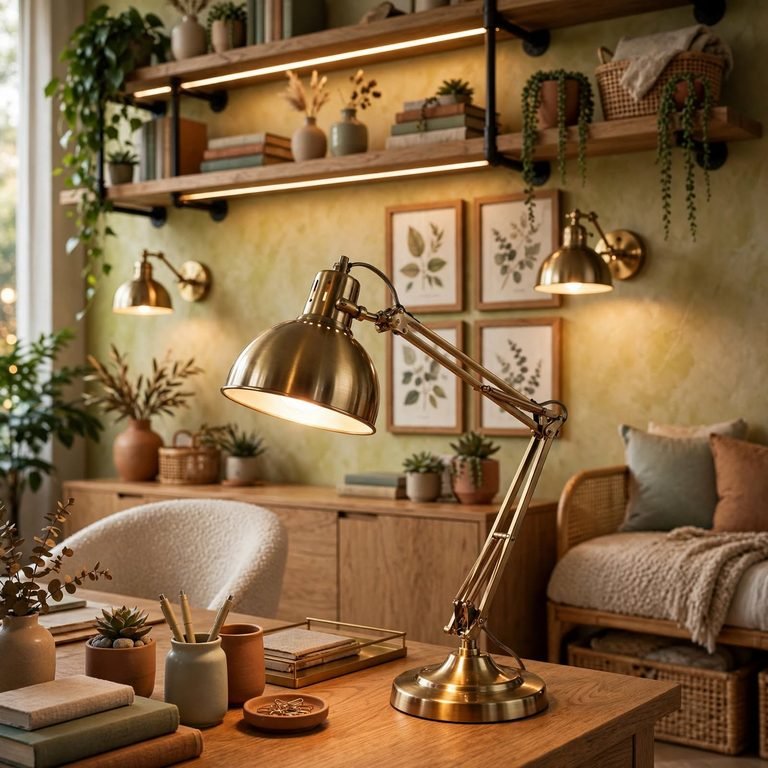
Swapping cool-white bulbs for warm-white ones, generally in the 2700K to 3000K range, shifts the entire feel of a room without changing a single piece of furniture, since cooler light tends to read as clinical rather than inviting. A brass or wood-toned desk lamp with a fabric shade softens the light further compared to an exposed bulb or bare metal fixture. Keep a slightly brighter, more neutral bulb near the desk itself for focus, and let ambient fixtures around the room run warmer.
| Light Source | Recommended Temp | Best Use |
| Desk lamp | 3000K–3500K | Task focus |
| Floor or table lamp | 2700K | Ambient warmth |
| Overhead fixture | 2700K–3000K, dimmable | General light |
4. Reading Nook Chair
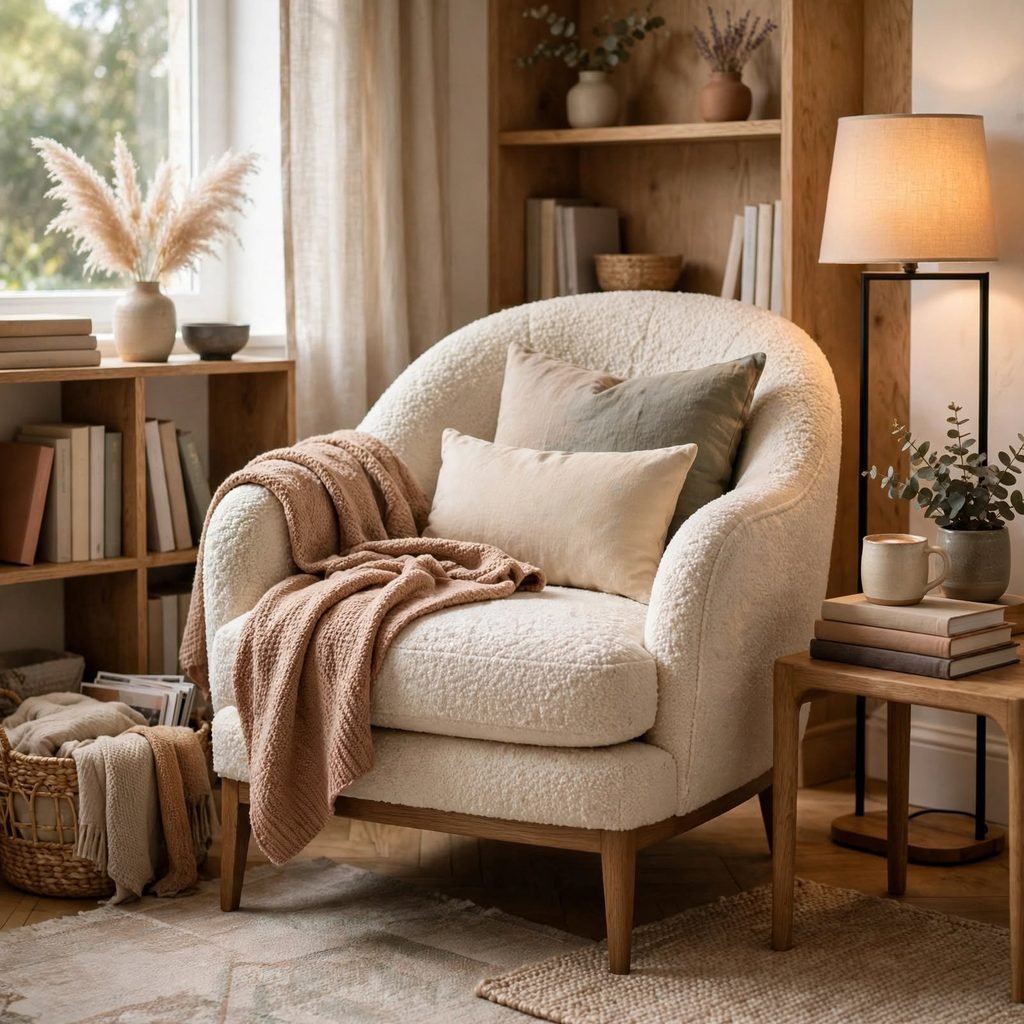
A small upholstered armchair positioned near a window or in an unused corner gives the room a secondary zone for reading, calls, or breaks that isn’t tied to the desk itself. Boucle, corduroy, or a nubby wool-blend fabric adds texture that a smooth leather or vinyl chair wouldn’t, and a low side table nearby keeps a coffee cup or notebook within reach. This works especially well in offices with at least 9 by 9 feet of floor space to spare.
5. Layered Throw Textiles
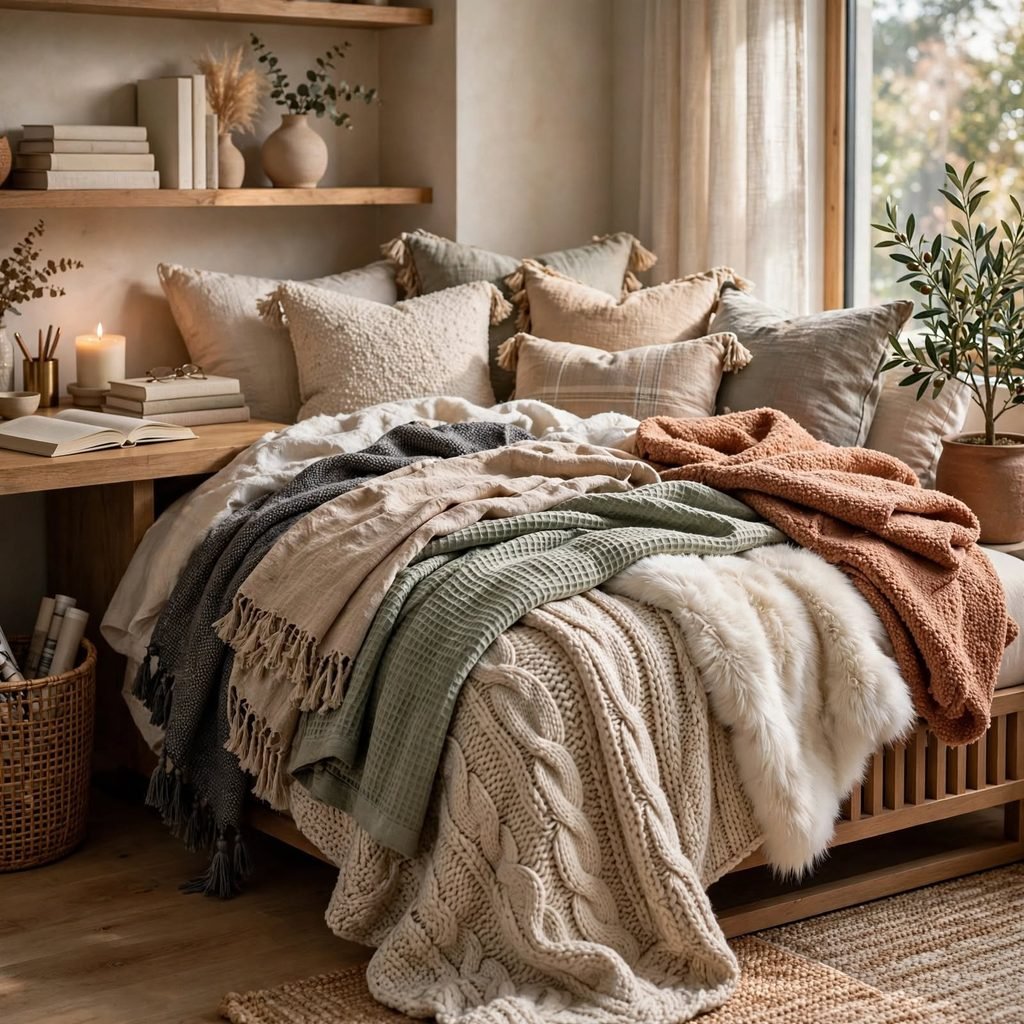
A wool or knit throw draped over a reading chair, plus a smaller textured runner along a shelf or credenza, adds tactile warmth without introducing new furniture into the room. Rotating textiles seasonally a heavier knit in cooler months, a lighter woven cotton in warmer ones keeps the space from feeling static year-round. Stick to two or three coordinating tones rather than a full mismatched pile, which starts to look unintentional past a certain point.
6. Built-In Bookshelf Wall
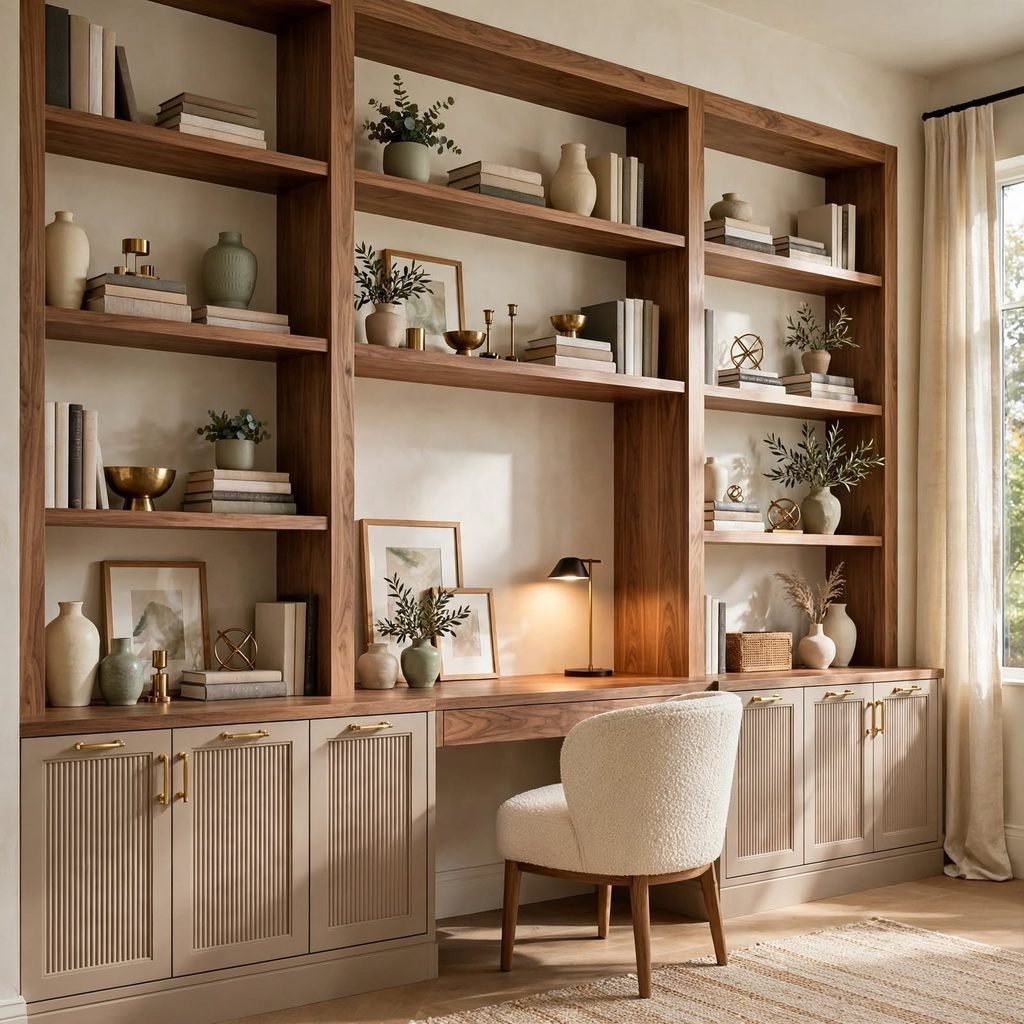
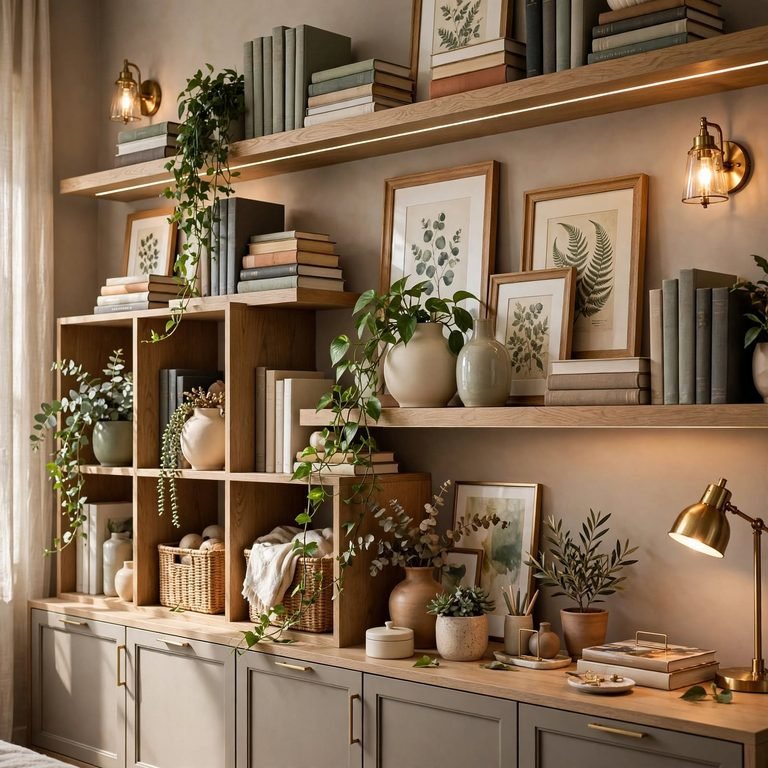
A built-in bookshelf spanning one wall gives a cozy home office the layered, collected look that comes from displaying books, framed pieces, and small objects at varying depths and heights, rather than leaving walls bare. Open shelving mixed with a few closed cabinet sections keeps supplies out of sight while still allowing for display. Wood-toned shelving in oak or walnut reads warmer than painted white built-ins, which tend to feel more clinical.
Make the most of every inch with these practical and stylish small home office ideas.
7. Linen Window Treatments
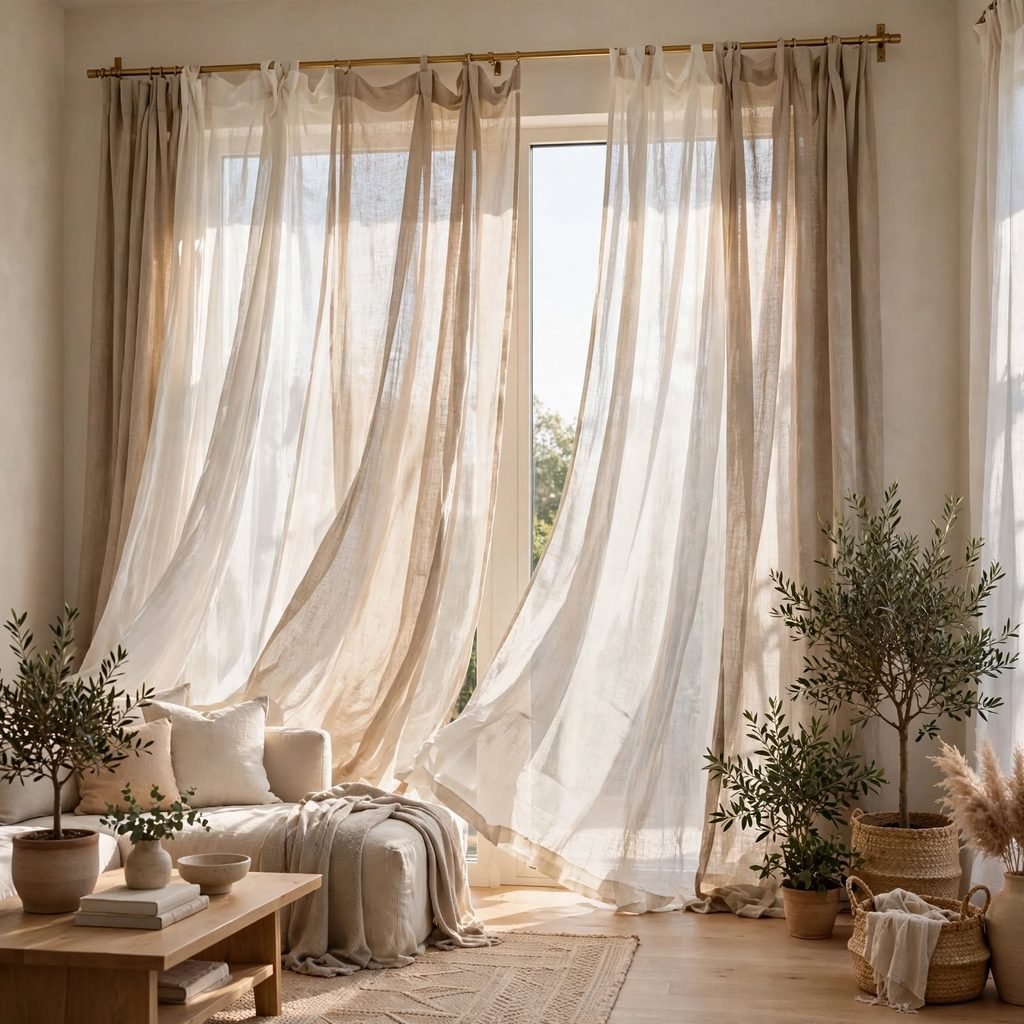
Linen curtains in a natural or warm-toned shade soften hard window light and add texture to an otherwise plain wall, while still allowing enough daylight through for actual work. Floor-length panels read more intentional than shorter curtains that stop above the sill, and a simple rod in brass or matte black keeps the hardware from competing with the fabric. This matters most in offices with large windows that otherwise dominate the room’s visual weight.
8. Ceramic Desk Accessories
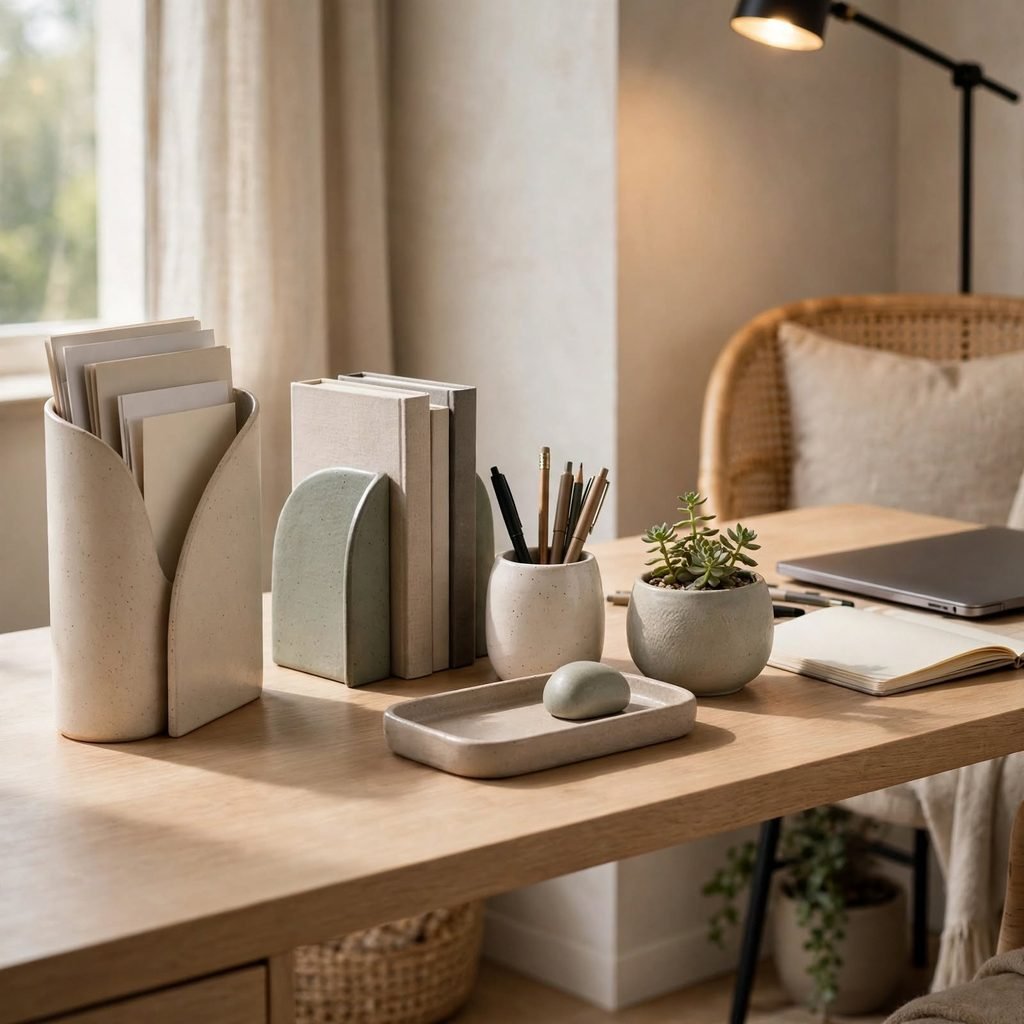
Swapping plastic organizers, pen cups, and trays for ceramic or stoneware versions in a matte glaze adds warmth to the desktop itself, which is often the most overlooked surface in a cozy office. A handmade or hand-thrown look, even from a mass-produced source, reads more personal than a uniform matching set. Keep the palette limited to two or three earthy tones terracotta, sage, cream so the desktop doesn’t start competing with the rest of the room.
9. Closed Storage Credenza
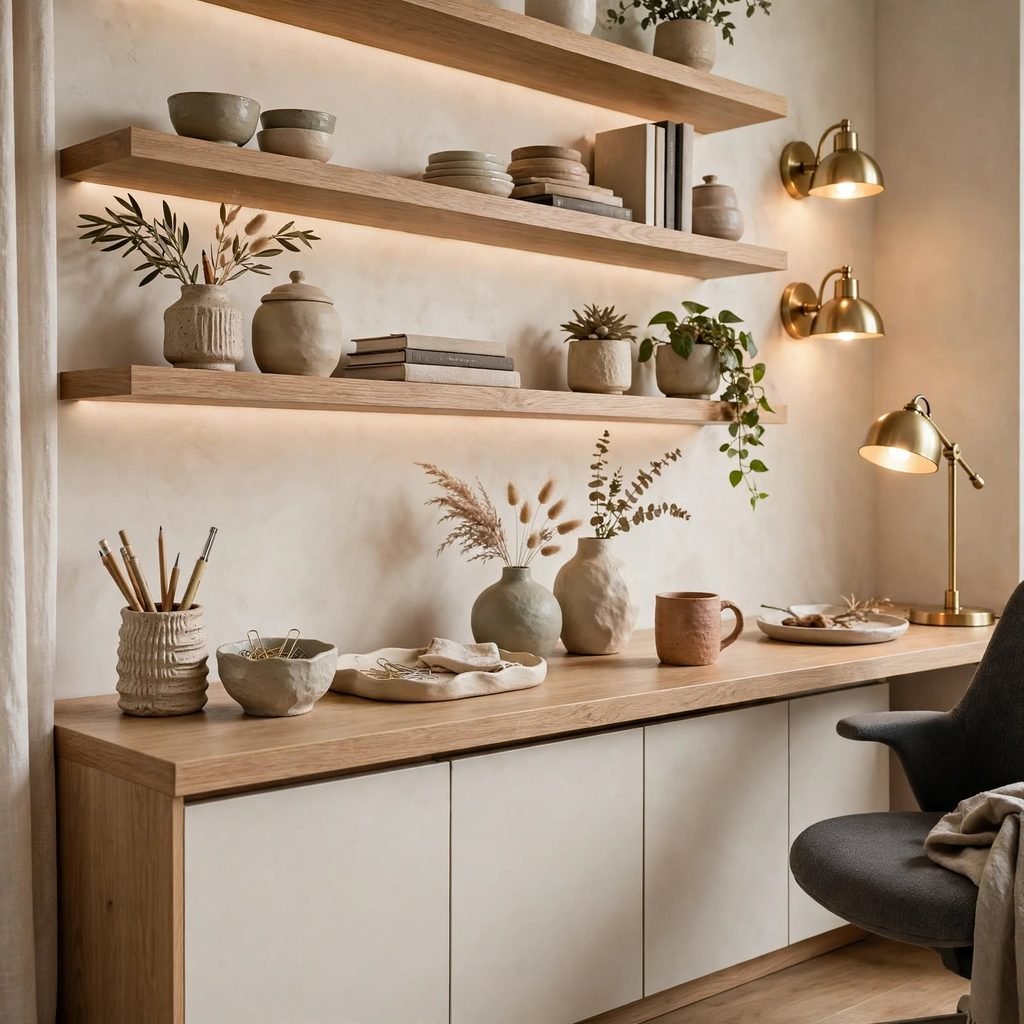
A low wood credenza with closed doors keeps files, cables, and supplies out of view, which matters more in a cozy office than a minimalist one, since visual clutter competes directly with the layered, warm look the other elements are building. Choose a piece with brass or leather pulls rather than exposed steel hardware to keep the material palette consistent with the rest of the room. This also gives you a flat surface for a lamp, a plant, or a small stack of books.
10. Layered Wall Gallery
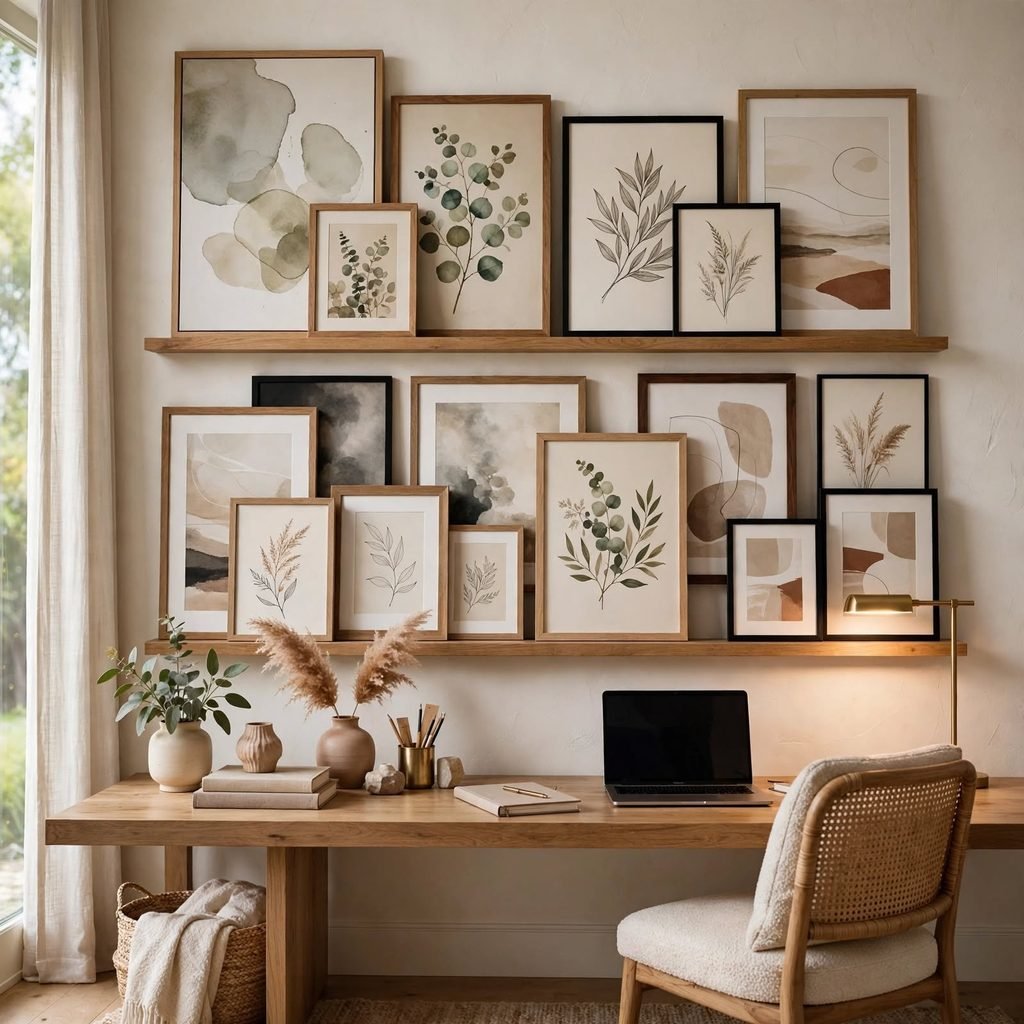
A gallery wall combining framed art, a small mirror, and one or two textured pieces like a woven wall hanging or dried botanical arrangement adds depth to the wall behind or beside the desk without requiring new furniture. Mixing frame finishes in warm tones brass, walnut, or aged gold rather than a uniform black keeps the arrangement from feeling like a corporate print set. This is one of the more affordable additions on this list relative to its visual impact.
11. Indoor Plant Cluster
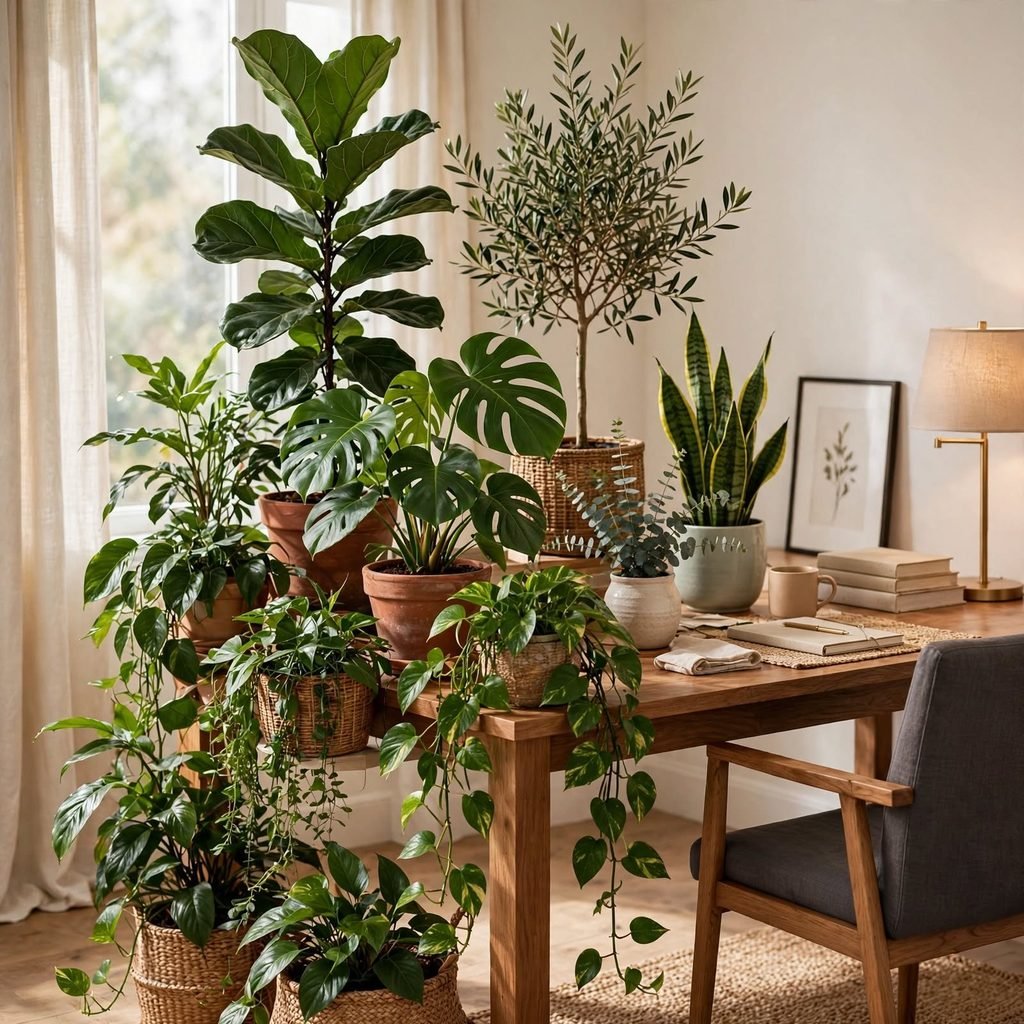
Grouping two or three plants of varying heights near the desk or window adds organic texture and a sense of life to the room, which flat surfaces and hard materials can’t provide on their own. Lower-maintenance options like a pothos, snake plant, or ZZ plant hold up better in offices with inconsistent light than higher-maintenance varieties. Terracotta or stoneware pots keep the material palette consistent with other warm elements in the room rather than introducing plastic planters.
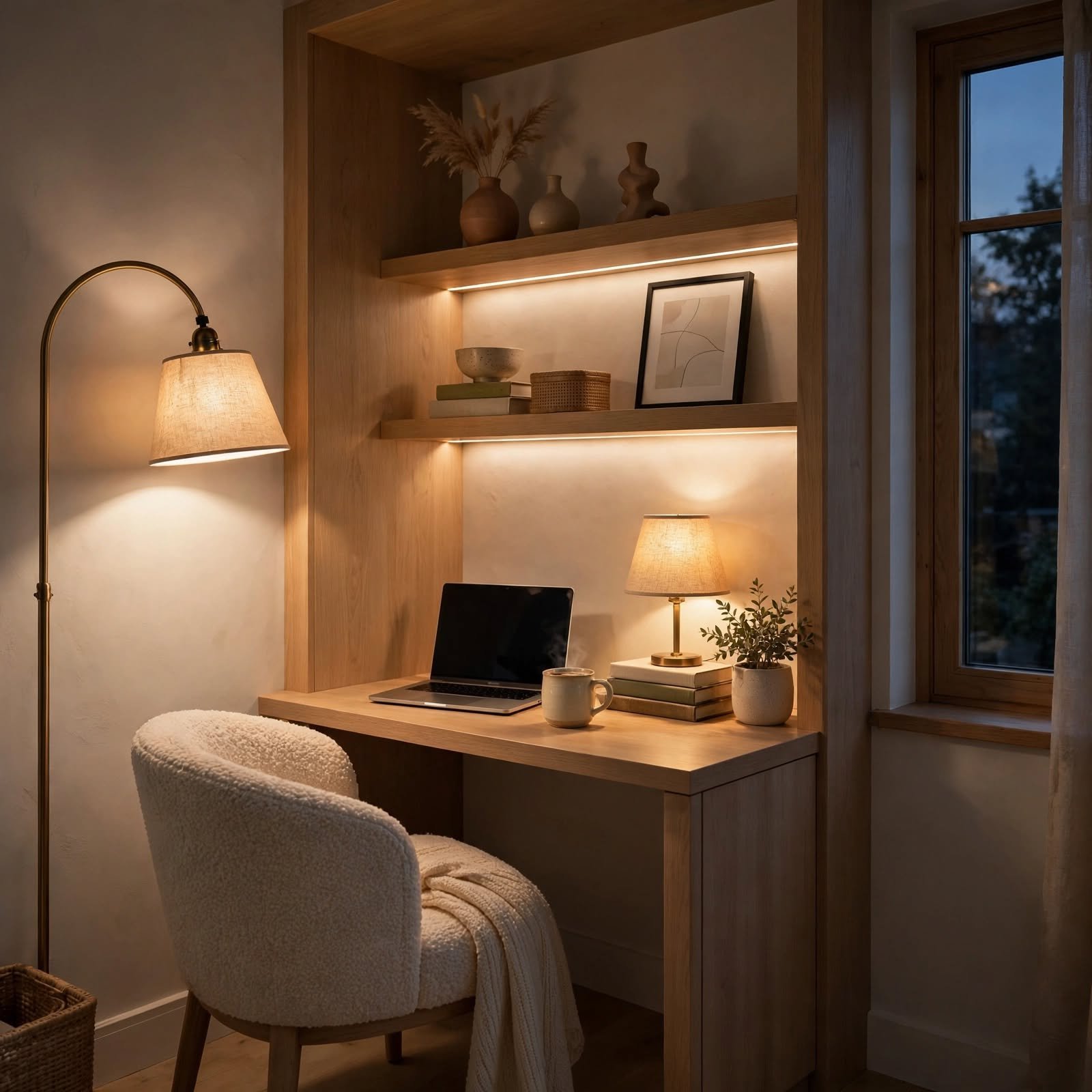
12. Cozy Home Office Lighting Nook
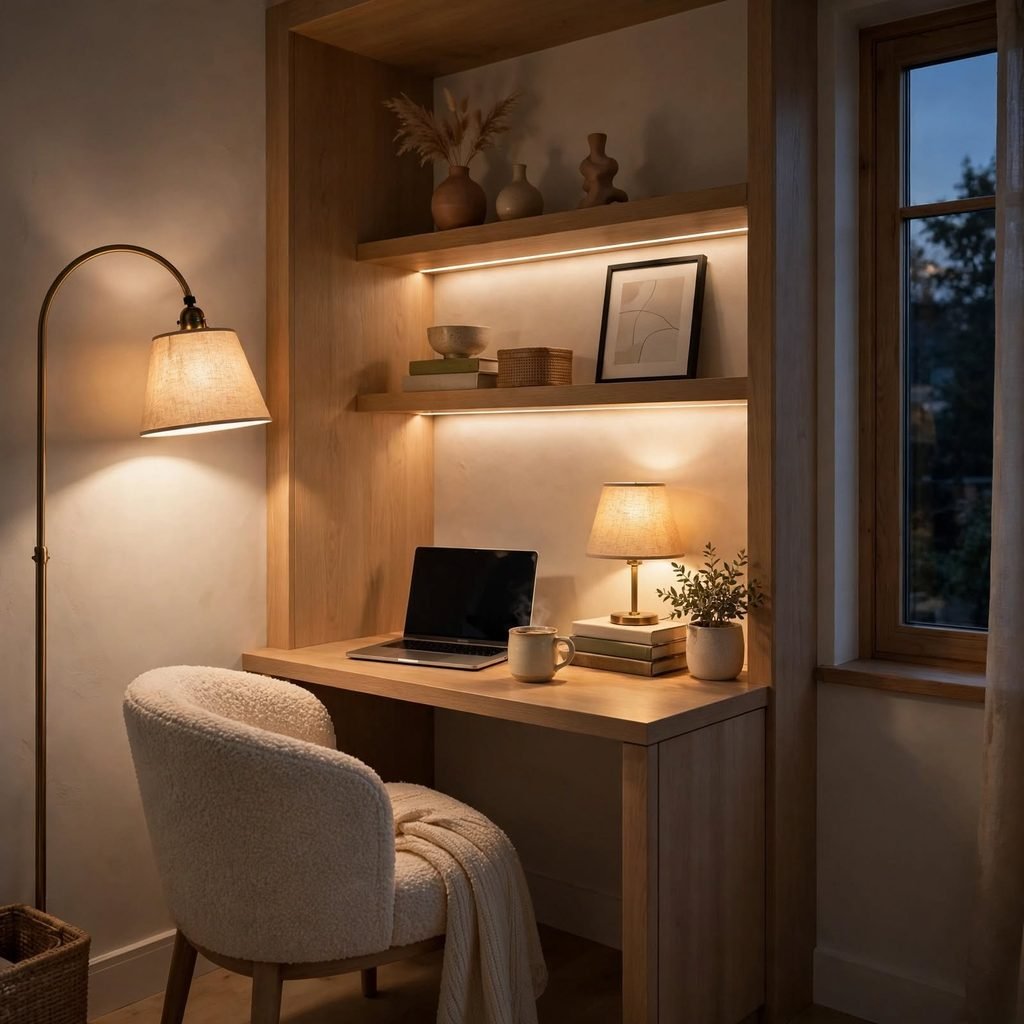
A dedicated corner combining a floor lamp, a small side table, and a soft rug creates a secondary lighting zone separate from the desk’s task lighting, giving the cozy home office layout a warmer focal point for breaks or reading. This nook works best tucked near a window or in an underused corner rather than centered in the room, where it would compete with the desk for attention. Keeping this zone’s lighting warmer and dimmer than the desk area helps signal the shift from focused work to downtime.
Shop the Look
A solid walnut writing desk with tapered legs anchors this kind of room, paired with a boucle-upholstered reading chair and a low-pile wool area rug in a muted herringbone pattern. Add a brass-and-fabric-shade desk lamp for warm task lighting, plus a set of ceramic desk accessories in matching earthy tones to finish the desktop.
Common Mistake to Avoid
The most common mistake is over-layering textiles and soft furniture to the point that the room stops functioning as a workspace, leaving no clear surface for the actual desk work and too much visual noise for calls. Keep soft elements concentrated in one secondary zone a reading nook or a single accent chair rather than scattering throws, pillows, and rugs evenly across the whole room, and make sure the desk area itself stays visually calm.
FAQs
How do I make my home office feel cozy without cluttering it?
Concentrate soft, textured elements like throws, rugs, and upholstered seating in one secondary zone rather than spreading them across the entire room, and keep the desk surface itself relatively clear. Warm lighting and wood tones do more for a cozy feel than adding more objects, so prioritize material and light temperature changes before buying additional decor.
What lighting makes an office feel warmer?
Bulbs in the 2700K to 3000K range read noticeably warmer than standard 4000K daylight bulbs, and swapping just the ambient and secondary lighting to this range while keeping task lighting slightly brighter balances warmth with actual function. A fabric lampshade over a bare bulb also softens the light output further compared to an exposed fixture.
What colors work best for a cozy home office?
Warm neutrals like terracotta, cream, sage green, and warm greige tend to create a cozier feel than stark white or cool gray, especially when paired with wood-toned furniture. Deeper accent tones, such as a rust or deep olive on one wall, add warmth without making the room feel small if used on a single surface rather than throughout.
Can a cozy home office still be productive?
Yes, as long as the desk area itself stays functional and uncluttered, task lighting, ergonomic seating, and clear surfaces matter as much in a cozy room as in a minimalist one. Coziness comes from material choices and a secondary relaxation zone, not from softening the actual work surface, so the two goals aren’t in conflict when the layout is planned deliberately.
What furniture makes a home office feel more inviting?
A wood-toned desk, an upholstered reading chair, and closed storage in a warm finish do the most to shift a room’s feel compared to metal-and-glass furniture or exposed wire shelving. Adding one piece with visible texture, like a boucle chair or a woven storage basket, tends to have a bigger effect than several smaller decorative objects.
Conclusion
A cozy home office comes down to warm materials, layered lighting, and one dedicated soft zone that doesn’t interfere with the desk itself. Comfort and function aren’t actually competing goals here. Save this list to Pinterest for your next office refresh, and check out our related guide on small bedroom storage solutions for more warm, space-conscious layouts.