12 Brilliant Home Office Decor Ideas for a Room That Still Works
Decorating a home office comes with a constraint most other rooms don’t have: the space has to look good and still function for hours of focused work, video calls, and everyday clutter. The strongest home office decor ideas solve for both at once — a wall treatment that also cuts down on echo, a rug that also protects the floor from a rolling chair. Twelve specific ideas follow, moving from the wall behind your desk chair to the smaller details that finish the room.
Trend & Background
Home offices have shifted from temporary setups into rooms people plan and budget for the same way they would a living room, which has changed what “decorated” means in this context. Where generic motivational prints and mismatched storage bins were once standard, current interest has moved toward considered material choices wood tones, natural textiles, and warm metal finishes that match the rest of a home’s interior. Video calls have accelerated this shift specifically, since the wall behind a desk chair is now visible to colleagues and clients for hours each week, making it one of the most scrutinized backdrops in the house.
Key Takeaways
- Home office decor holds up longest when every piece is chosen for the camera frame as much as the room itself.
- Textiles and wall treatments carry more visual weight than desktop accessories in a functional workspace.
- A consistent material palette across two or three finishes ties decor together better than variety.
- Decor should frame the desk, not crowd it clear surfaces still matter more than styled ones.
1. Textured Wall Treatment
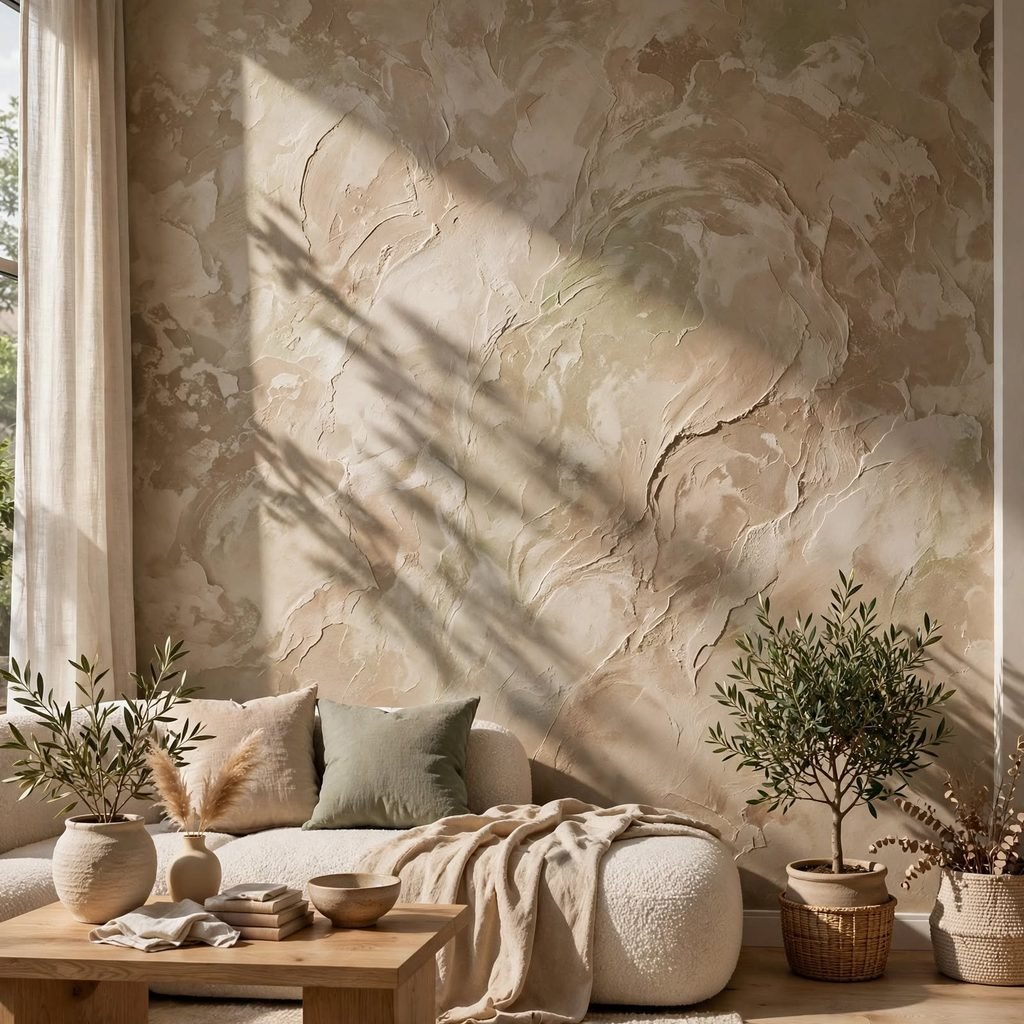
A textured wall treatment limewash paint, a wood slat panel, or a grasscloth wallpaper behind the desk chair adds depth that flat paint can’t, and it’s one of the first things visible on a video call. Limewash gives a soft, mottled finish that reads as intentional rather than unfinished, while vertical wood slats in oak or walnut add warmth and slight acoustic benefit. Choose one accent wall rather than treating the whole room, so the texture stays a feature instead of overwhelming the space.
2. Framed Art Grid
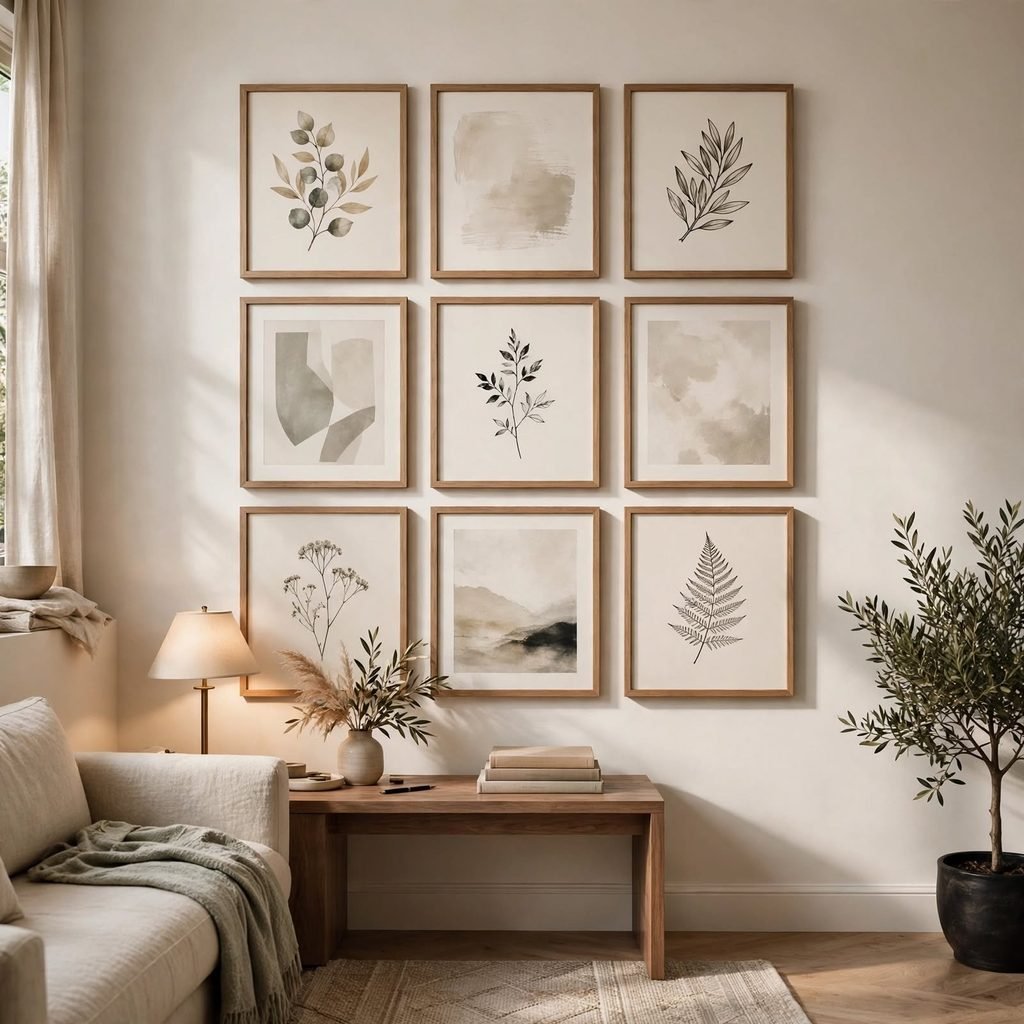
A grid of same-size framed prints, arranged in even rows of four, six, or nine, gives a wall a gallery-clean look without the planning a mixed gallery wall requires. Keeping frame color and mat width identical across every piece is what makes the grid read as intentional rather than assembled from leftover frames. This works well above a credenza or on a wall with enough clear space to keep the spacing between frames consistent, typically 2 to 3 inches.
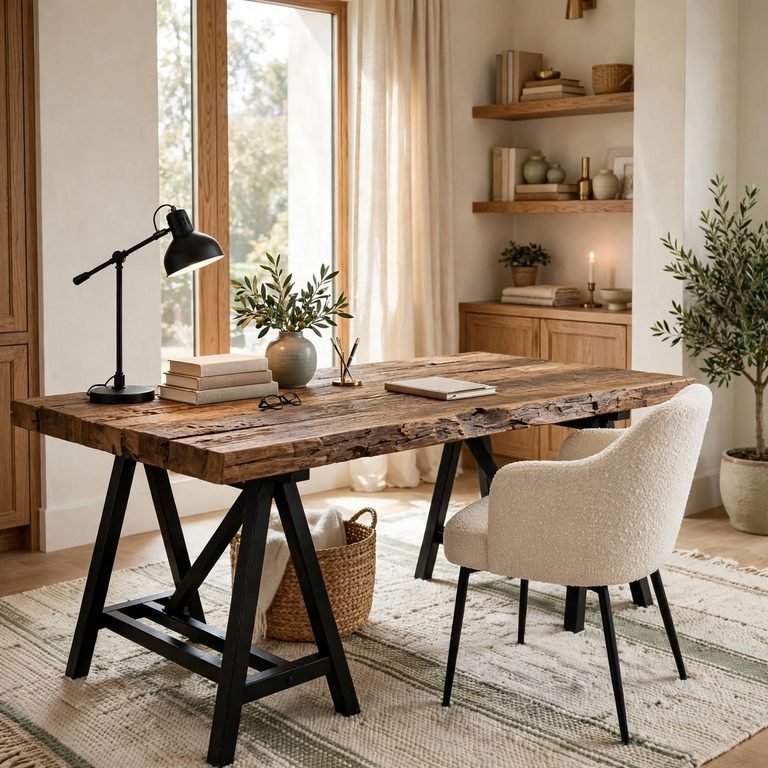
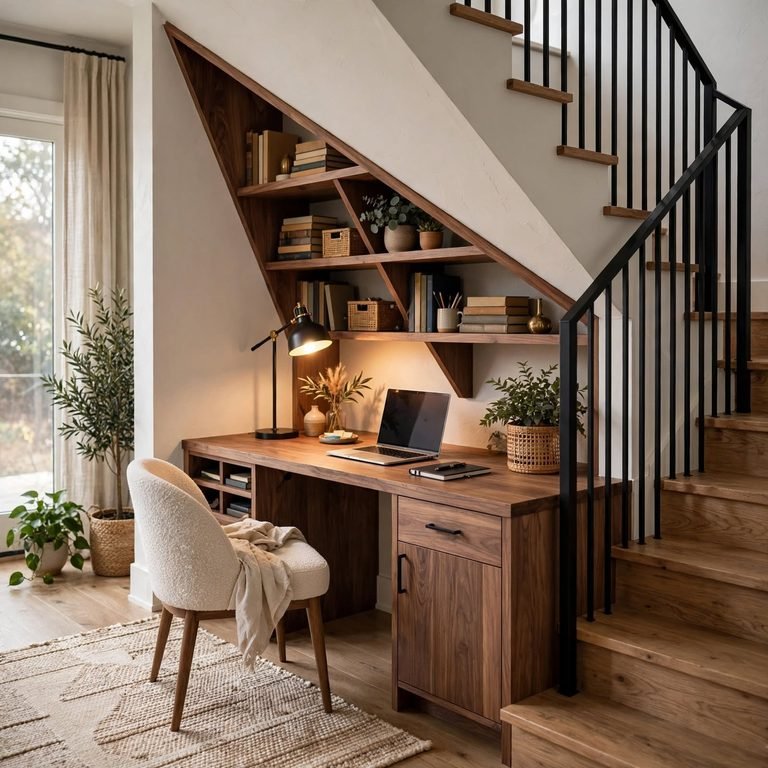
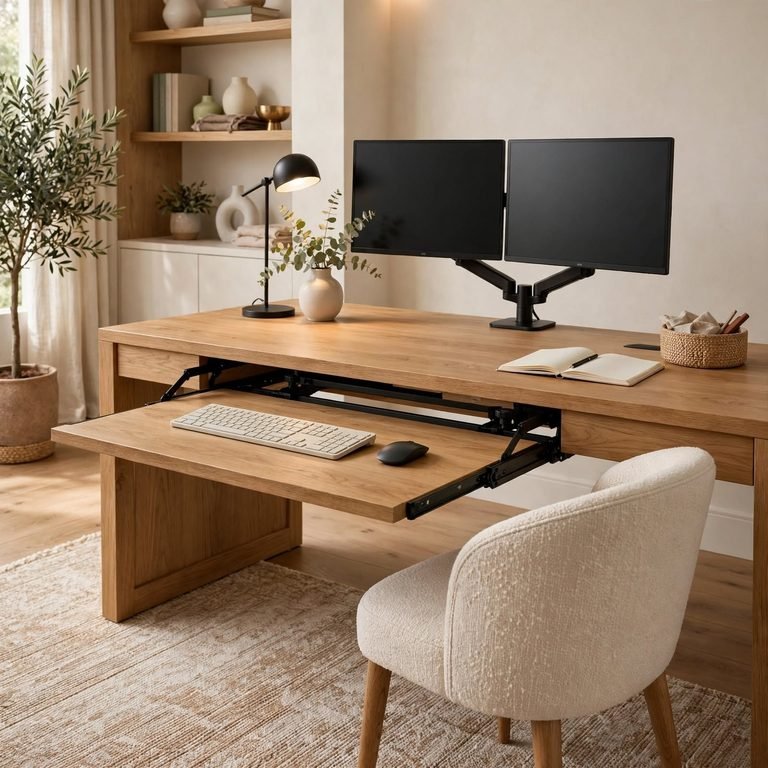
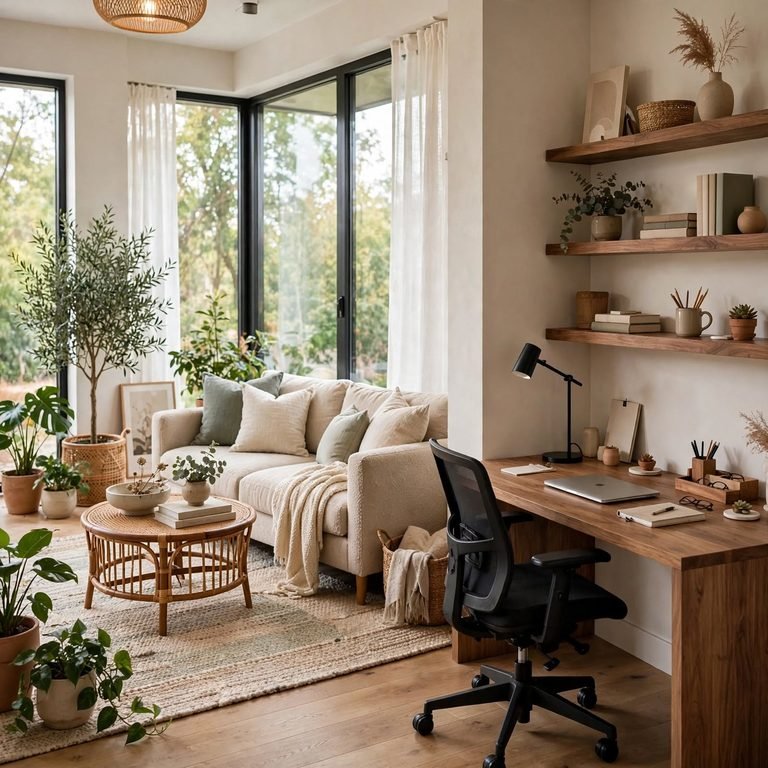
Transform a compact room into a productive workspace with these inspiring office decor ideas.
3. Woven Basket Storage
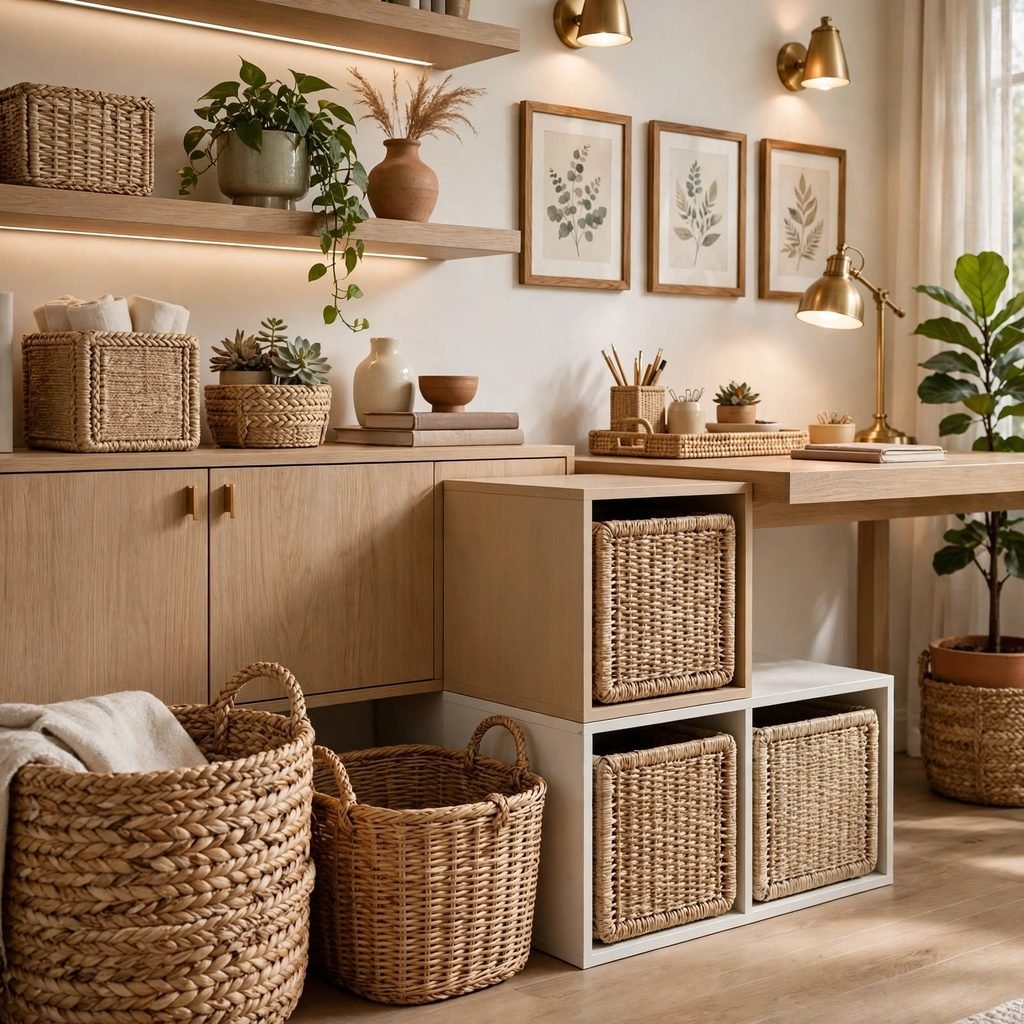
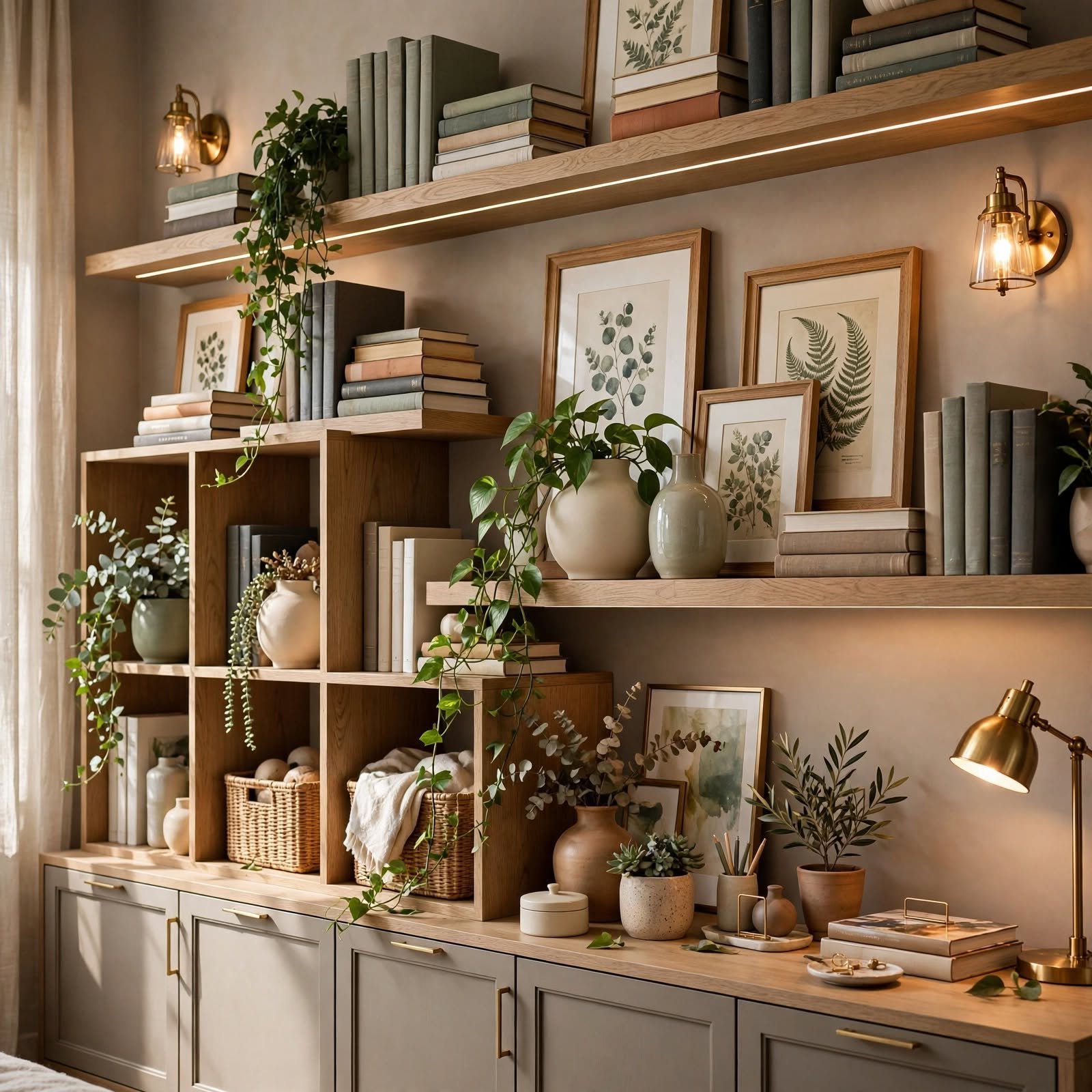
Woven seagrass or rattan baskets on open shelving hide loose supplies cords, paper, small electronics while adding a natural texture that closed plastic bins can’t. Sizing baskets to fit shelf depth exactly, rather than leaving gaps or overhang, keeps the shelving looking styled instead of makeshift. This is one of the more affordable home office decor ideas that solves a real clutter problem at the same time.
4. Brass Task Lamp
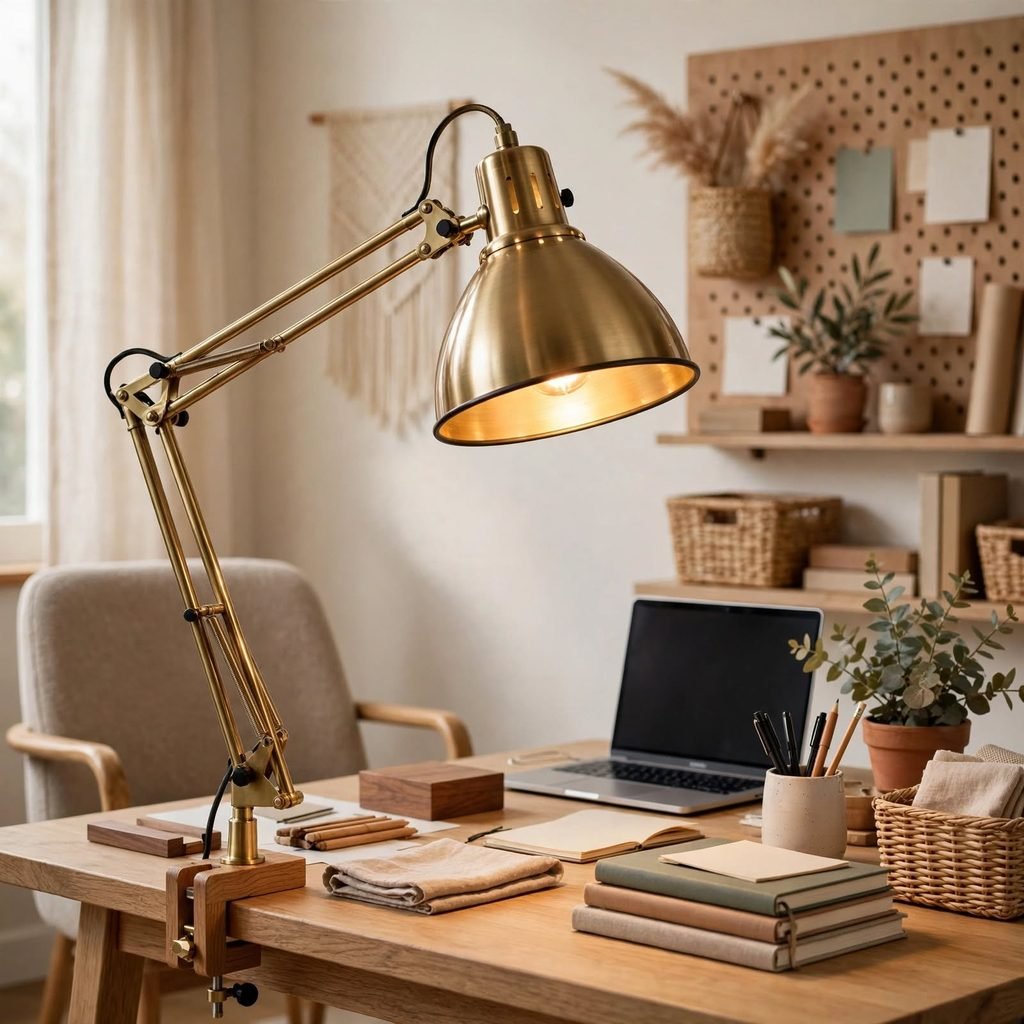
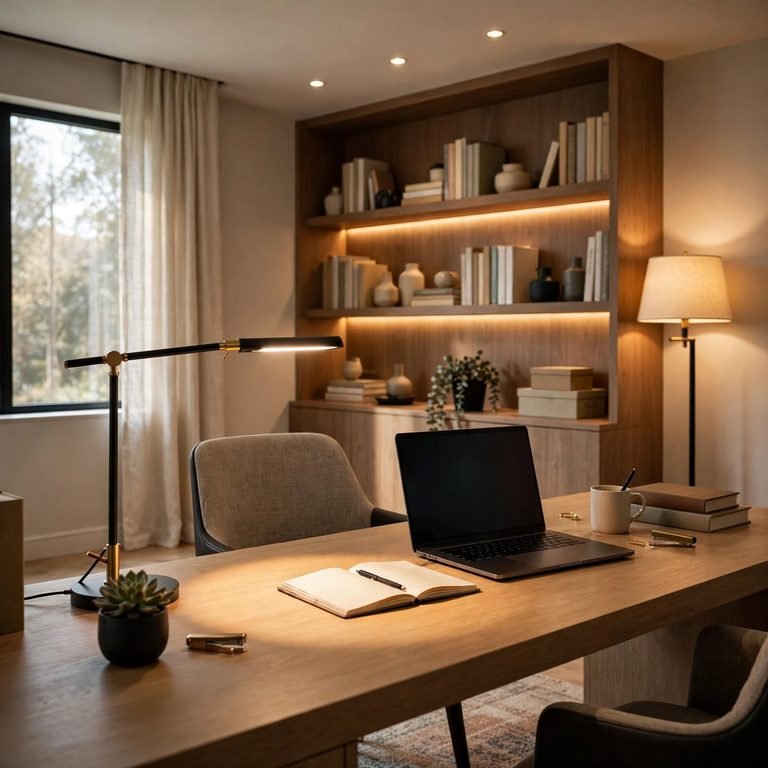
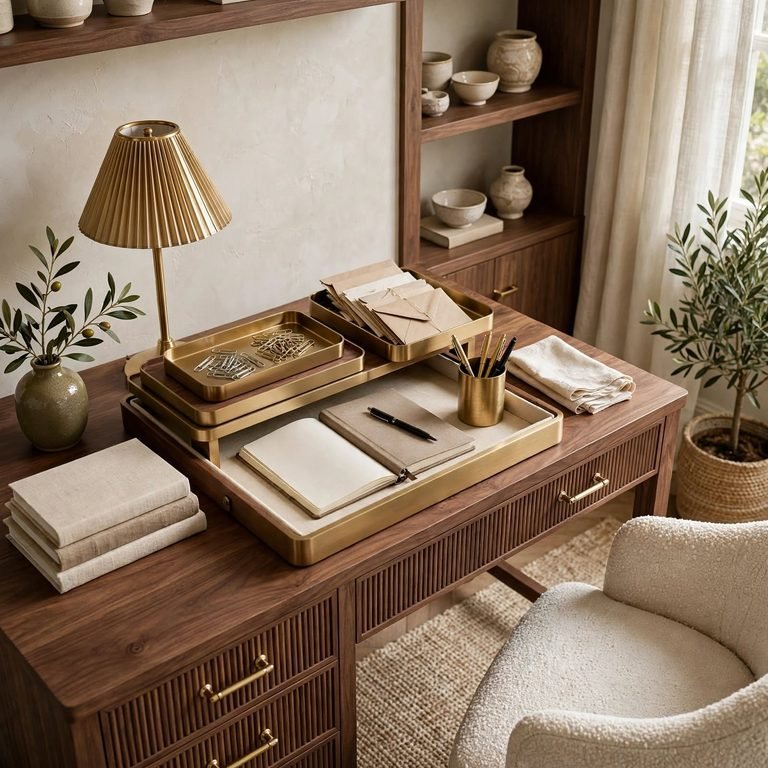
A brass or brass-finished task lamp with an adjustable arm adds a warm metal accent to the desktop while still functioning as the room’s primary close-work lighting. Pairing it with a fabric or glass shade softens the light output compared to an exposed bulb, which also photographs better on video calls. Matching the lamp’s finish to any other brass hardware in the room drawer pulls, picture frame edges keeps the metal palette from feeling scattered.
| Element | Recommended Finish | Approx. Cost |
| Task lamp | Brass or brushed brass | $60–$150 |
| Drawer hardware | Matching brass | $8–$15/pull |
| Frame edges | Matching or complementary | $15–$40/frame |
5. Low-Pile Wool Rug
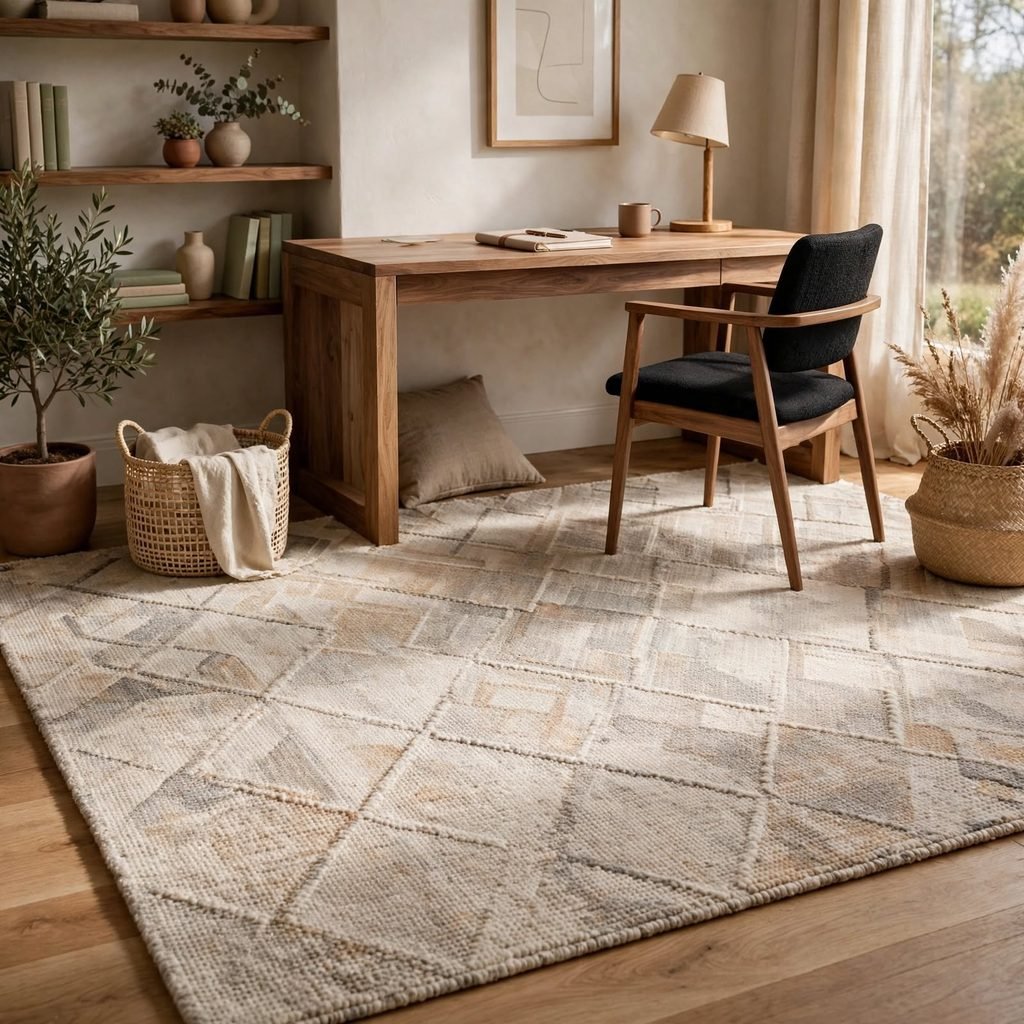
A low-pile wool rug under the desk area adds color and softens hard flooring, while standing up to a rolling chair better than a high-pile or shag option, which tends to catch on caster wheels. Muted patterns a faded medallion, a simple stripe, or a herringbone weave hide wear better than a solid color in a high-traffic desk zone. Size the rug so it extends roughly 18 inches beyond the chair on all sides to keep the setup from feeling cramped.
6. Ceramic Vessel Styling
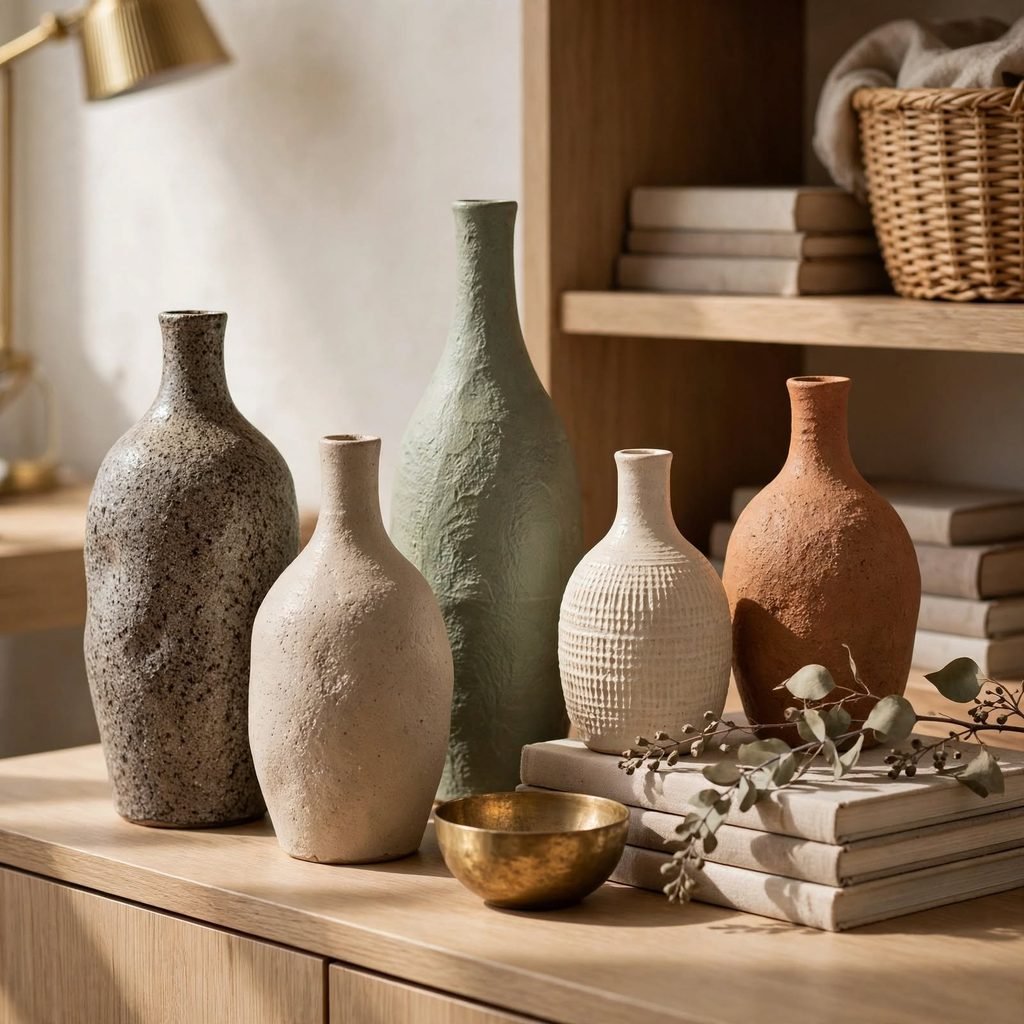
A small collection of ceramic vessels a vase, a low bowl, a textured pot styled on a shelf or credenza adds shape and material variety without requiring wall space. Grouping in odd numbers, typically three, and varying height slightly creates a more natural arrangement than a matched set lined up evenly. Sticking to two or three glaze tones keeps the grouping from competing with other decor in the room.
7. Linen Roman Shade
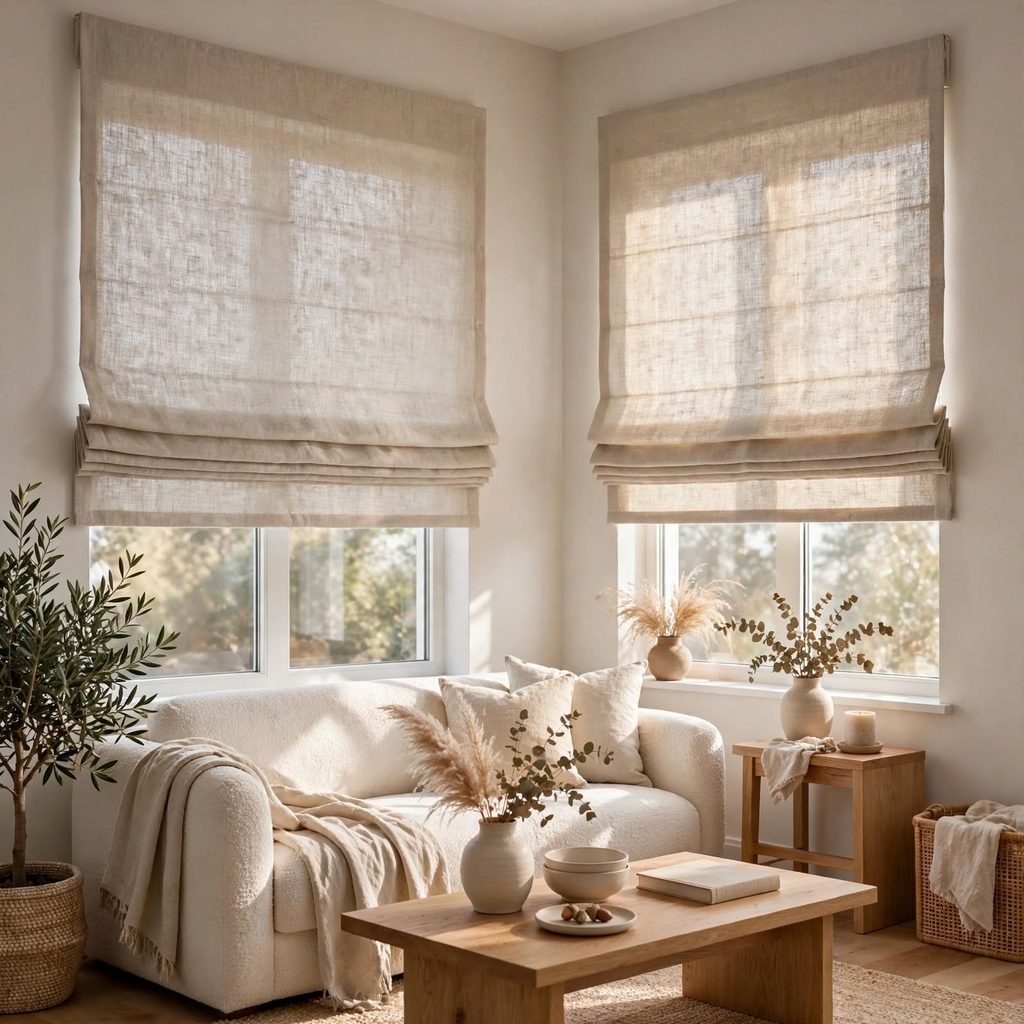
A linen Roman shade in a natural or warm-toned fabric softens window light and adds texture without the bulk of full-length curtains, which suit smaller home offices better. The fabric’s texture reads as more considered than a plastic blind or bare window, and a natural linen tone works with most existing wall colors without requiring a full repaint. This decor choice also functions practically, cutting glare on a monitor during peak sun hours.
8. Cork Bulletin Board
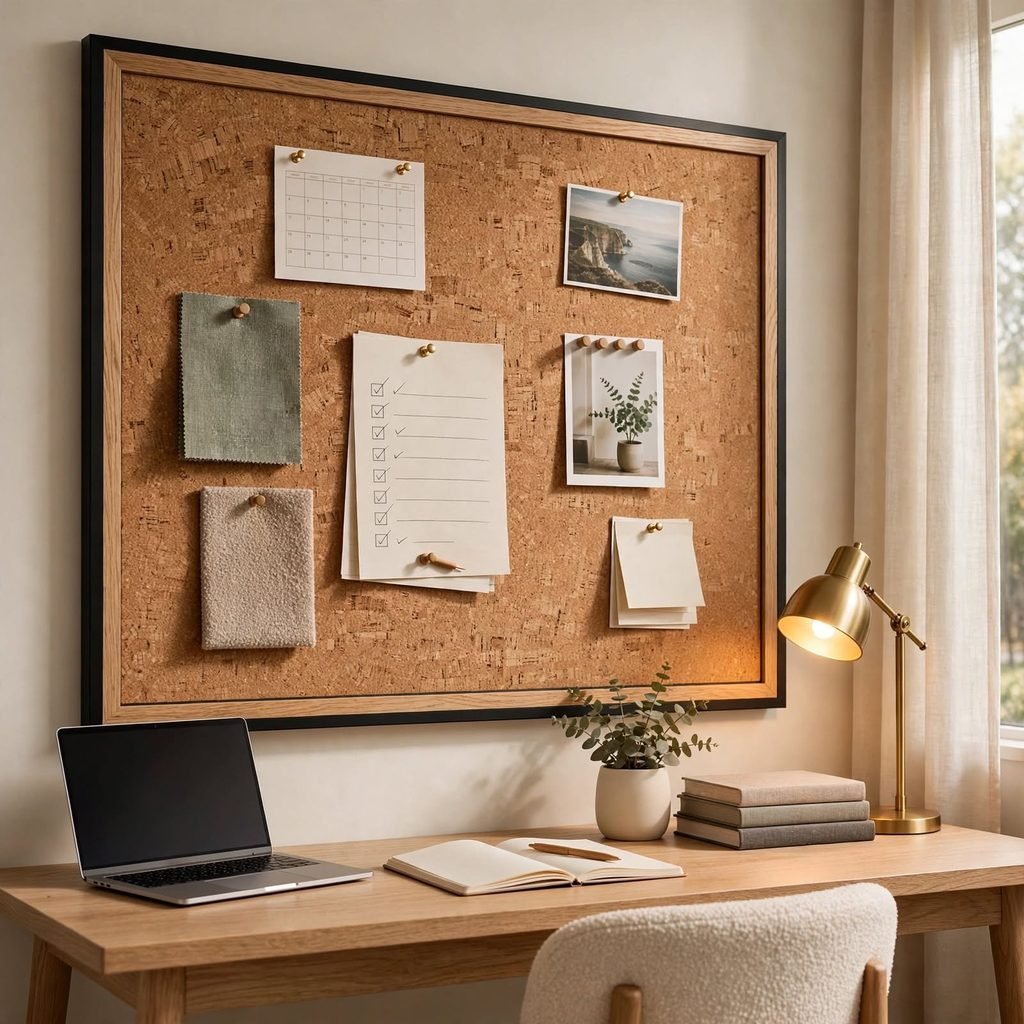
A framed cork bulletin board gives a wall a spot for notes, photos, and reference material while still reading as decor rather than a purely functional office supply. A wood or brass frame around the cork ties it into the room’s material palette instead of leaving a bare cork rectangle exposed. Positioning it just outside the primary video call frame keeps pinned items from becoming visual clutter on calls while still being within reach at the desk.
9. Layered Bookshelf Styling
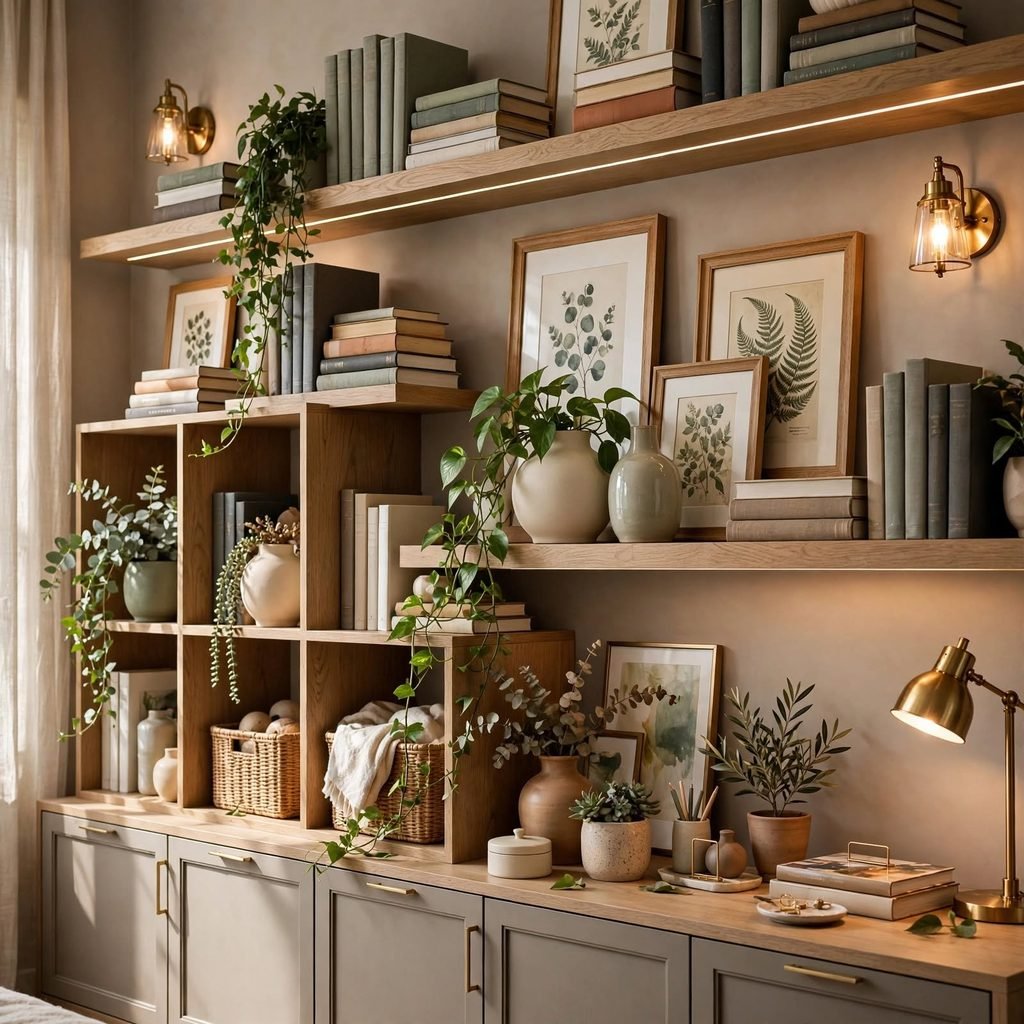
Arranging books by spine color or height, with occasional horizontal stacks, turns a bookshelf into a decor feature rather than plain storage, and works particularly well on open or built-in shelving. Leaving small gaps for a plant, a framed photo, or a ceramic piece prevents the shelf from reading as overstuffed. This is one of the lowest-cost home office decor ideas, since it typically uses items already owned rather than new purchases.
10. Woven Wall Hanging
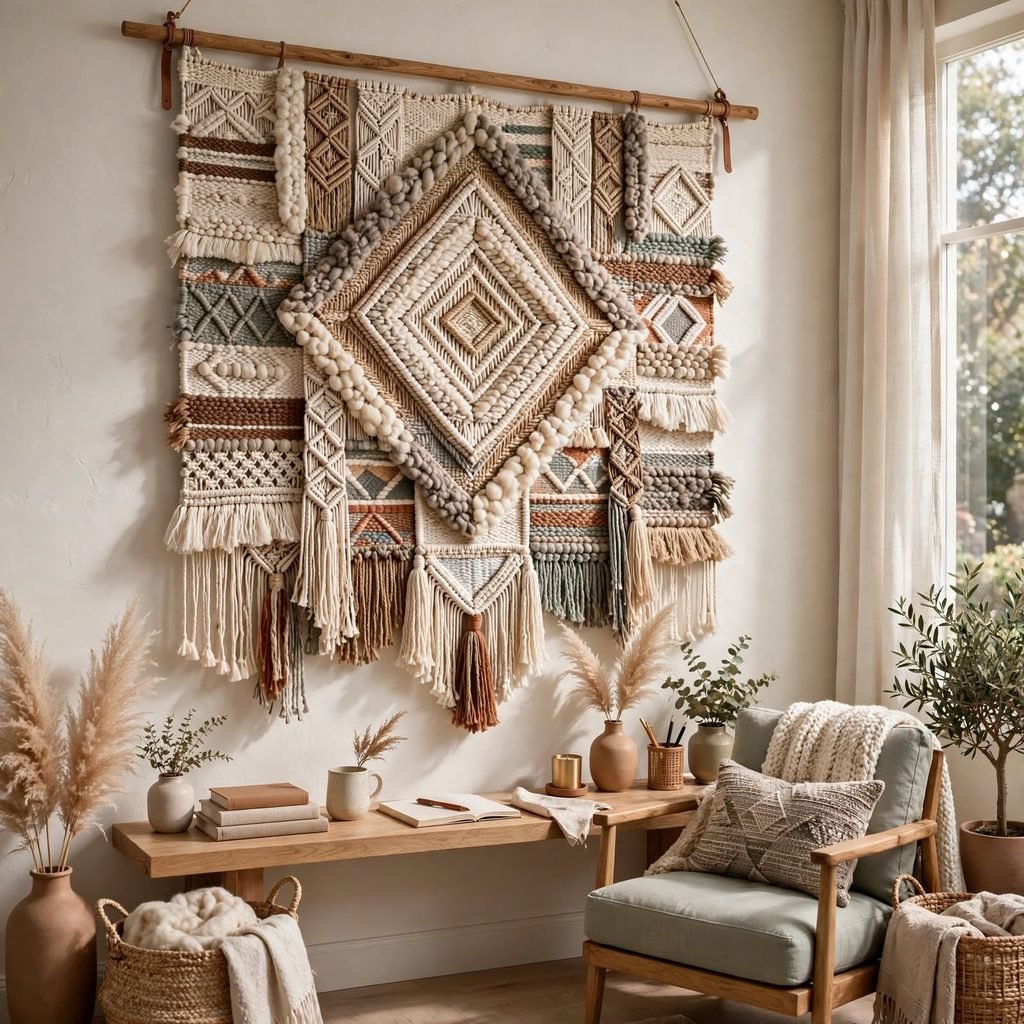
A woven wall hanging in jute or cotton adds texture to a wall that would otherwise need a framed piece, and works well as a standalone statement above a credenza or as an anchor within a larger gallery arrangement. Choosing a neutral or earth-toned piece keeps it flexible if other decor in the room changes later. This is a lower-cost alternative to large framed art with a comparable visual effect on camera.
11. Matching Desk Accessory Set
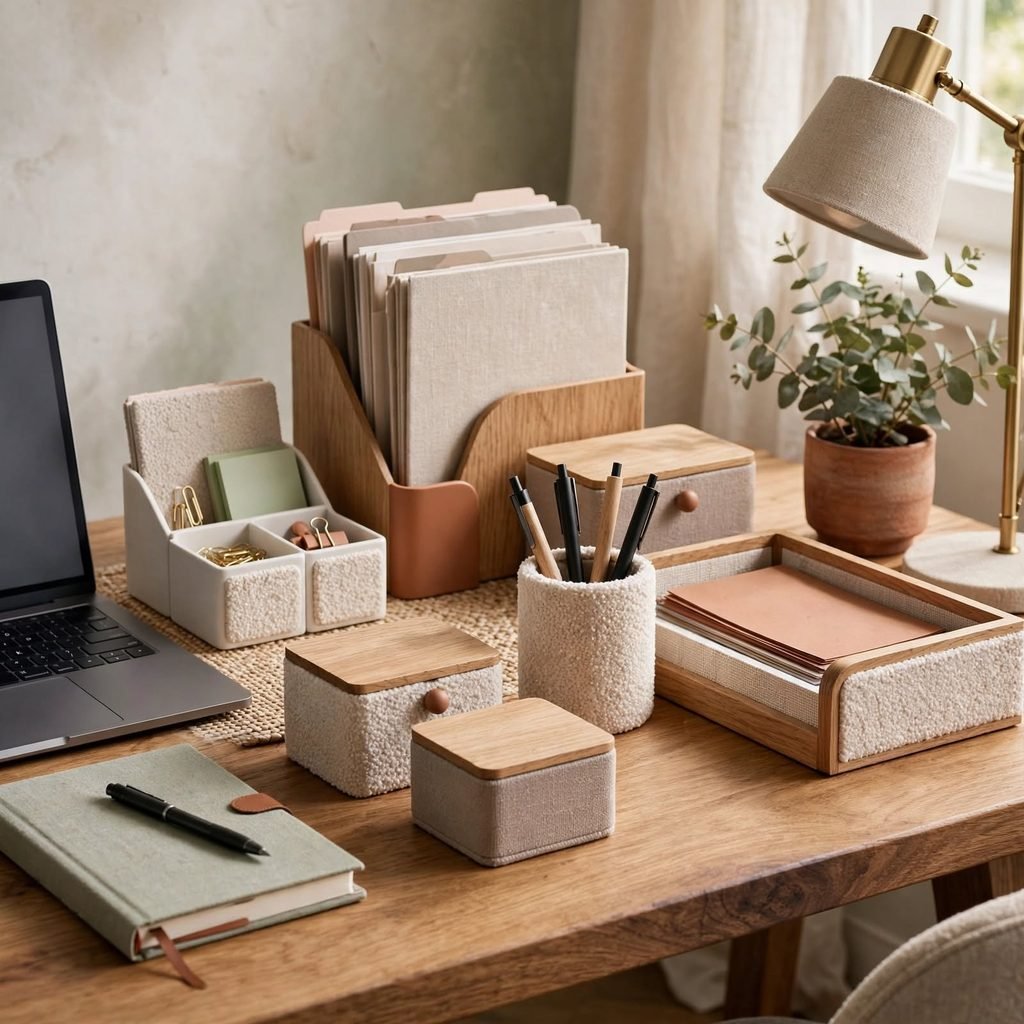
A matching set of desk accessories tray, pen cup, notepad holder in the same material and finish, whether ceramic, wood, or matte metal, gives the desktop a cohesive look instead of a mismatched collection built up over time. Limiting the set to what’s actually used daily keeps the desktop functional rather than styled to the point of being impractical. This is one of the more visible home office decor ideas simply because the desktop is in frame during nearly every video call.
12. Indoor Plant Corner
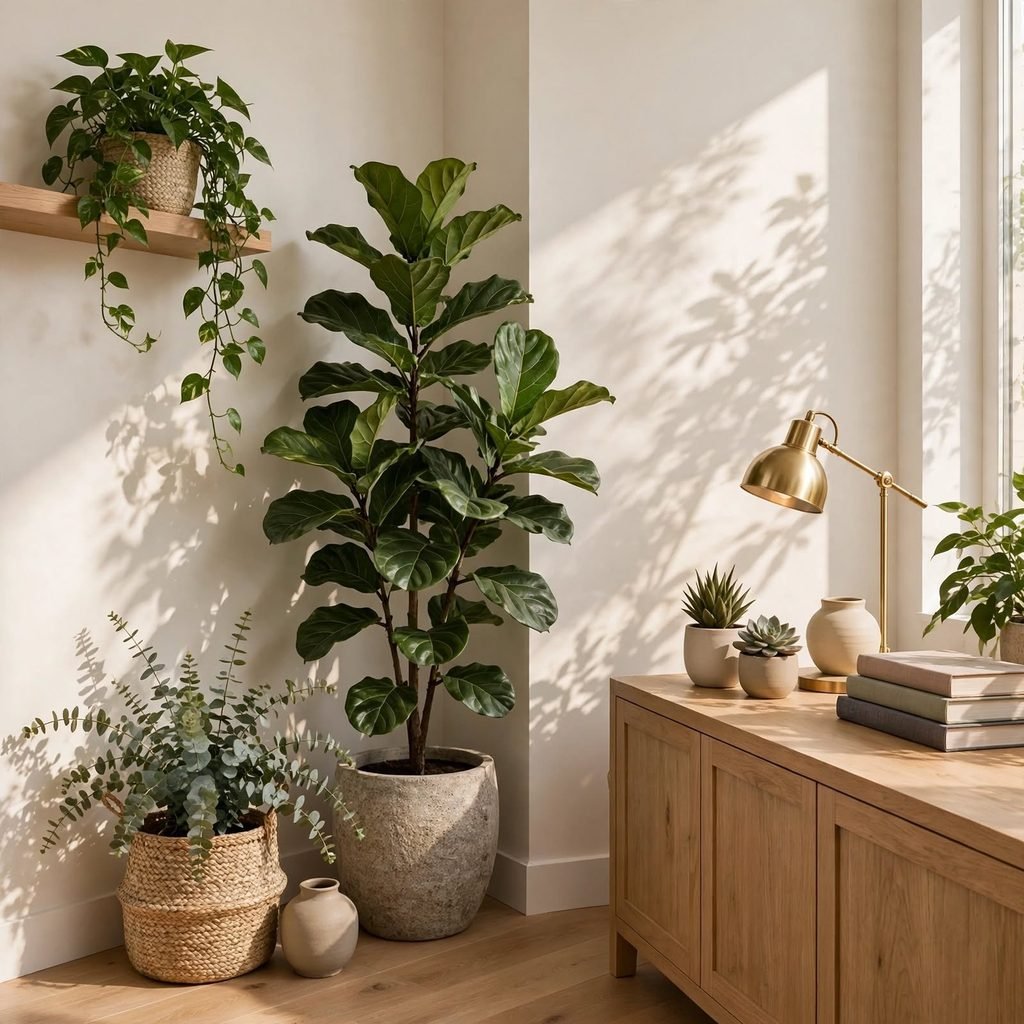
A small cluster of two or three plants at varying heights, placed near the desk or window, adds a natural element that hard surfaces and flat walls can’t provide on their own. Lower-maintenance options like a pothos, snake plant, or ZZ plant tolerate the inconsistent light many home offices get better than higher-maintenance varieties. Matching pot materials, such as all stoneware or all terracotta, keeps the grouping visually consistent with the rest of the room’s decor.
Shop the Look
A brass adjustable task lamp with a fabric shade pairs well with a low-pile wool rug in a muted herringbone print for this kind of room. Add a set of woven seagrass storage baskets for open shelving, a framed art grid in matching walnut frames, and a matching ceramic desk accessory set in a warm neutral glaze.
Common Mistake to Avoid
The most common mistake is decorating the whole room evenly instead of prioritizing what’s actually visible on a video call, which results in a beautifully styled bookshelf off to the side while the wall directly behind the desk chair stays bare or cluttered. Check what’s in frame from your usual seated position before finalizing any wall decor, and put the most considered choices — art, texture, lighting — in that specific sightline first.
FAQs
What is the most important wall to decorate in a home office?
The wall directly behind or beside the desk chair matters most, since it’s what appears in frame during nearly every video call and gets far more visual attention than other walls in the room. Prioritizing art, texture, or a plant in that specific spot before decorating elsewhere gives the room’s decor the most practical payoff.
How much does it cost to decorate a home office?
A basic refresh using hardware swaps, a framed print or two, and a plant can cost under $150, while a fuller update involving a rug, task lamp, and wall treatment typically runs $400 to $800 depending on material choices. Prioritizing the camera-frame wall and desktop accessories first gives the most visible return for a limited budget.
Should home office decor match the rest of the house?
Keeping the office loosely consistent with the home’s existing material palette similar wood tones, matching metal finishes creates a more cohesive feel throughout, though the office can lean more functional than a living or dining room. The camera-frame wall is the one area where matching the home’s broader style matters most, since it’s effectively visible to people outside the household.
What decor should I avoid in a home office?
Busy patterns, high-pile rugs that catch on chair casters, and overly personal or cluttered arrangements within the video call frame tend to distract more than they add. Fragile or easily knocked-over objects placed too close to the desk edge are also worth avoiding, given how often that surface gets used.
How do I add color to a home office without it feeling distracting?
Introducing color through a rug, a single accent wall, or textiles like a throw or pillow keeps the desk area and camera-frame wall visually calm while still adding personality elsewhere in the room. Limiting the palette to two or three coordinating tones prevents the room from feeling busy, even when multiple colored elements are present.
Conclusion
Home office decor works best when it treats the camera-frame wall and the desktop as priorities, then fills in texture and color around a room that still has to function every day. Save this list to Pinterest for your next office refresh, and check out our related guide on small bedroom storage solutions for more layout and styling inspiration.