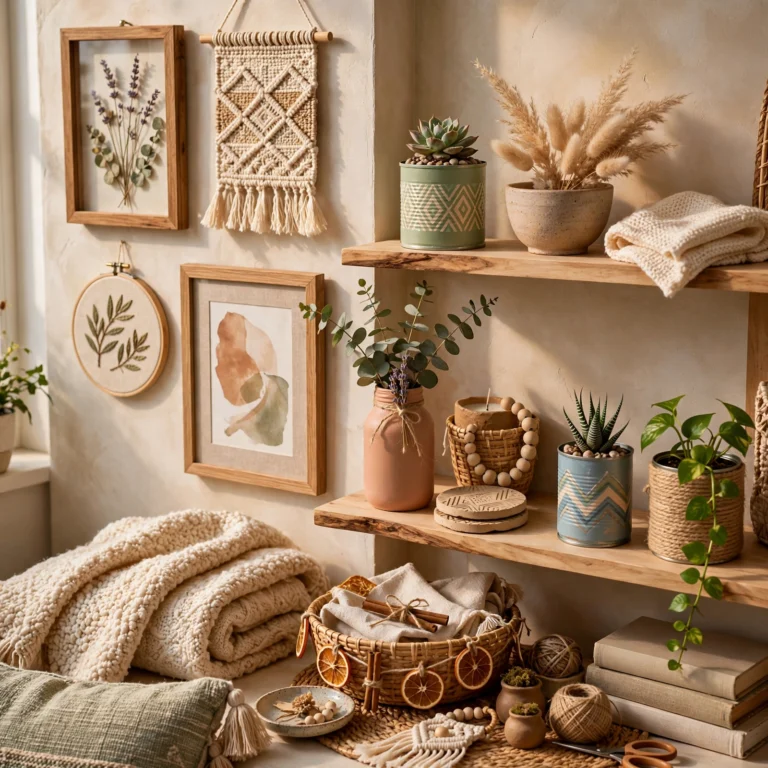
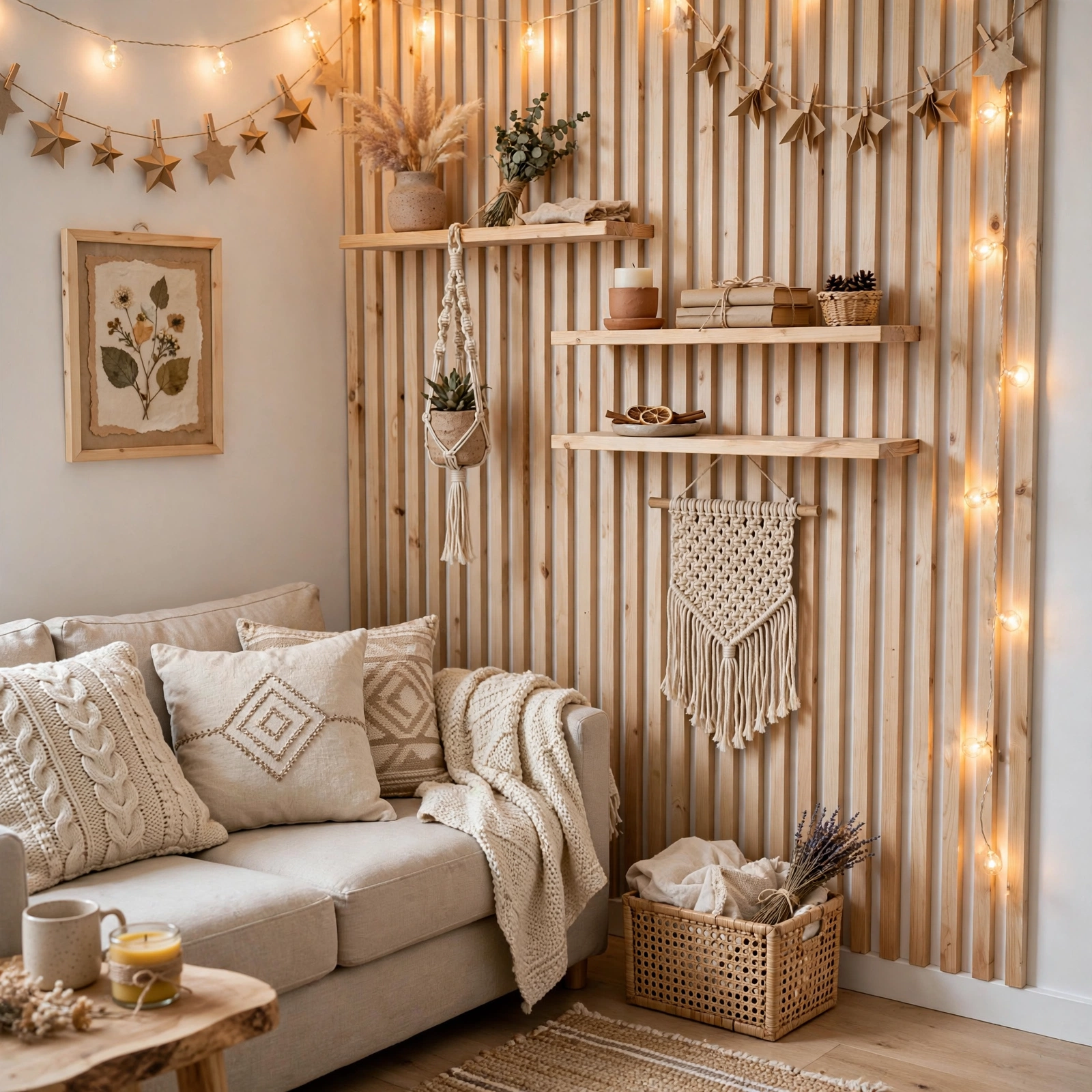
15 Gorgeous Easy DIY Room Decor Projects Anyone Can Finish
Not every room upgrade requires a trip to a furniture store or a big budget. This list covers fifteen easy diy room decor projects that use basic tools, affordable materials, and a free afternoon or weekend, ranging from paint touch-ups to simple builds. Each one includes what you’ll need and roughly how it comes together, so you can pick a project that matches the time and tools you actually have on hand.
Trend & Background
DIY home projects have grown steadily as people spend more time researching materials and tutorials online before committing to a purchase, and as renters look for changes they can undo before moving out. Removable materials like adhesive wallpaper, no-nail hanging strips, and paint-over hardware have made it easier to personalize a space without permanent changes or landlord approval. At the same time, rising furniture prices have pushed more people toward refinishing or building simple pieces themselves rather than buying new.
Key Takeaways
- Most projects here take under a weekend and use materials available at a hardware or craft store.
- Paint, fabric, and simple hardware swaps deliver the biggest visual change for the least skill required.
- A few projects, like shelving and headboards, need basic tools but no carpentry experience.
- Mixing two or three finished DIYs with store-bought pieces keeps a room from looking overly handmade.
1. Painted Accent Wall
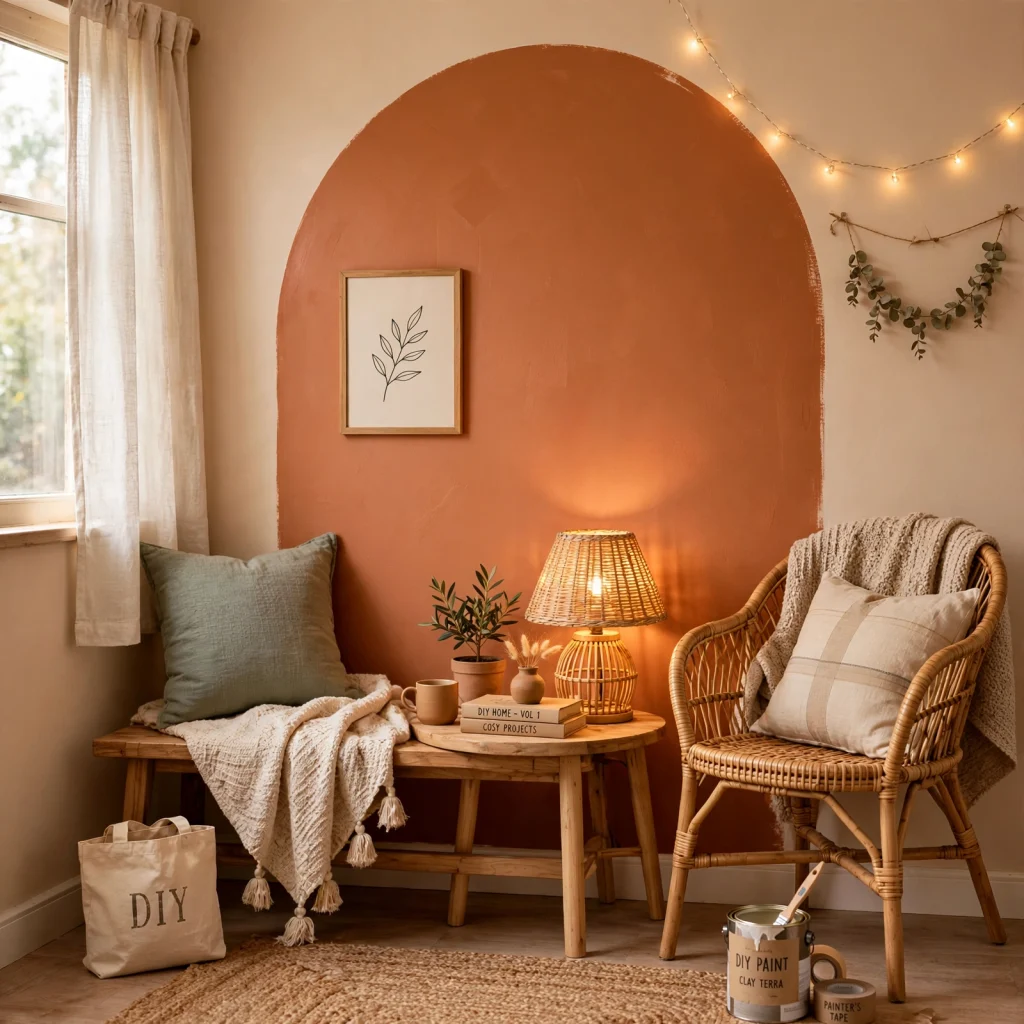
A painted accent wall uses a single can of paint on one wall to create a focal point without repainting the entire room. It’s one of the lowest-cost, lowest-skill projects on this list, requiring painter’s tape, a roller, and an afternoon to complete, including drying time between coats. Choosing the wall opposite the door, or the one behind the bed, tends to have the most visual impact since it’s the first surface seen when entering the room.
2. No-Sew Curtain Panels
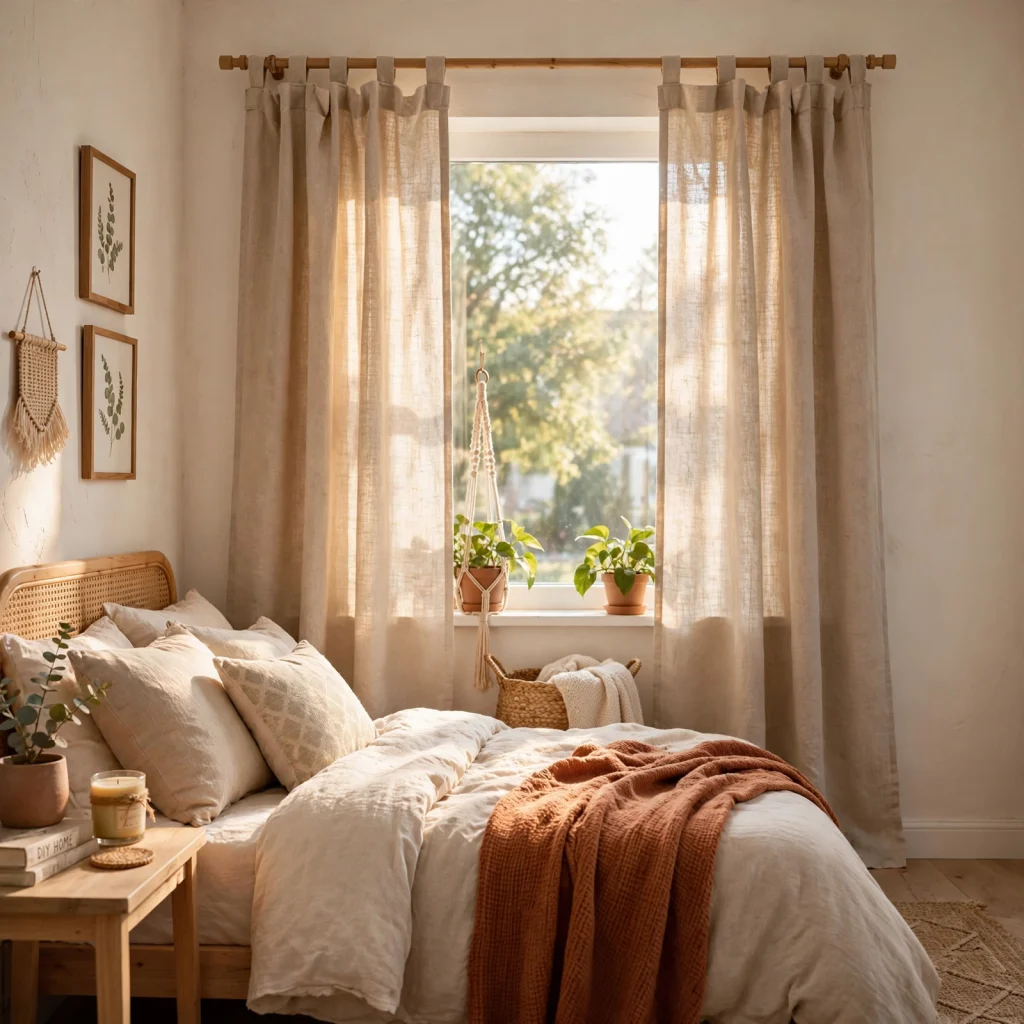
No-sew curtain panels use fabric tape or a fusible hem adhesive activated with an iron instead of a sewing machine, making them achievable for anyone without sewing experience. A few yards of linen or cotton fabric, a curtain rod, and clip rings are typically all that’s needed beyond the adhesive tape itself. Hanging the rod higher than the window frame, rather than directly above it, makes the finished curtains look more custom and the ceiling feel taller.
To see more cool room decor
3. Framed Fabric Wall Art
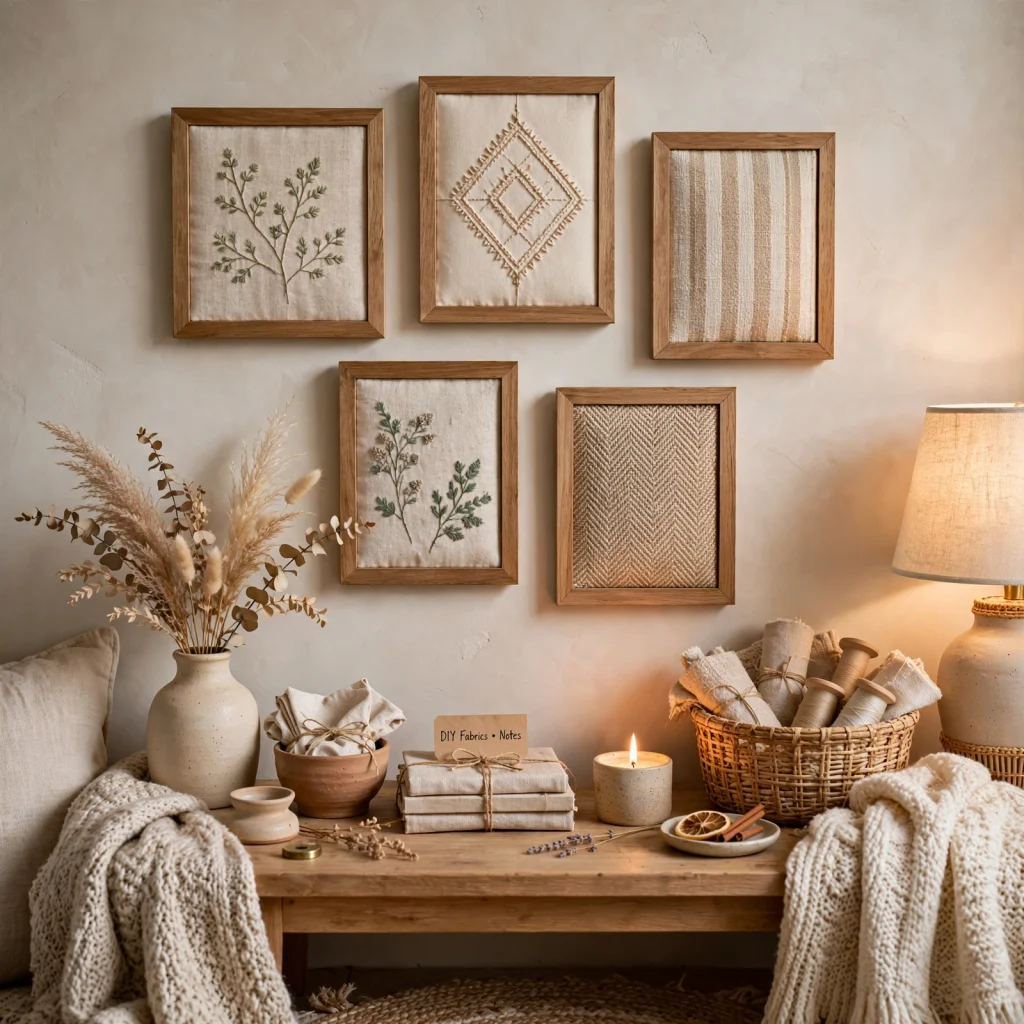
Framed fabric wall art stretches a patterned fabric remnant over a canvas frame or embroidery hoop instead of hanging a printed poster. It works well for filling a large blank wall cheaply, since fabric remnants cost significantly less per square foot than framed prints of a similar size. Stapling the fabric taut around the back of the frame, rather than gluing it, keeps the surface smooth and allows the fabric to be swapped later if you want a different pattern.
4. Easy DIY Room Decor Floating Shelf
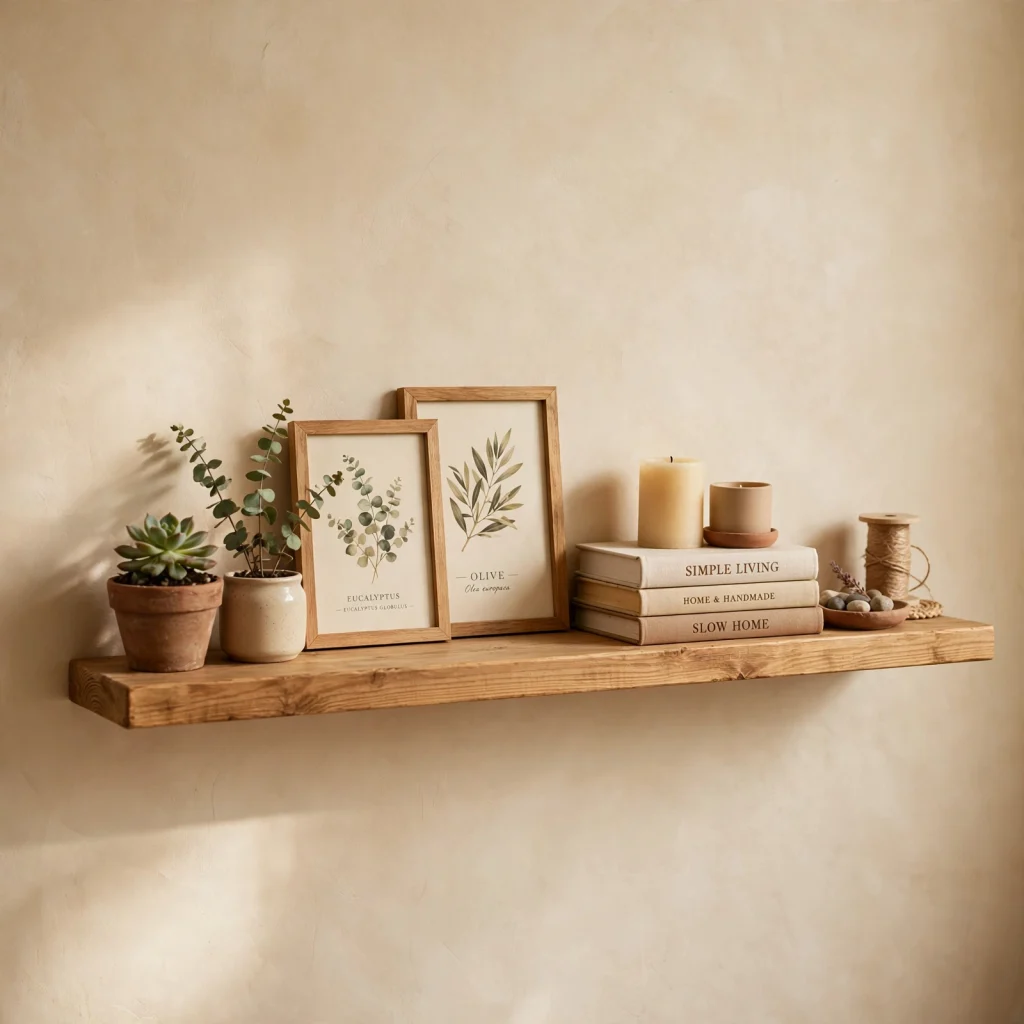
A floating shelf built from a pre-cut wood board and a hidden bracket kit gives a wall functional storage without needing woodworking experience. This kind of easy diy room decor project usually takes under an hour once the bracket is level and secured into wall studs, with the board slid on afterward to hide the hardware completely. Sanding and staining the board beforehand lets you match existing furniture finishes rather than settling for the wood’s natural color.
5. Painted Furniture Refresh
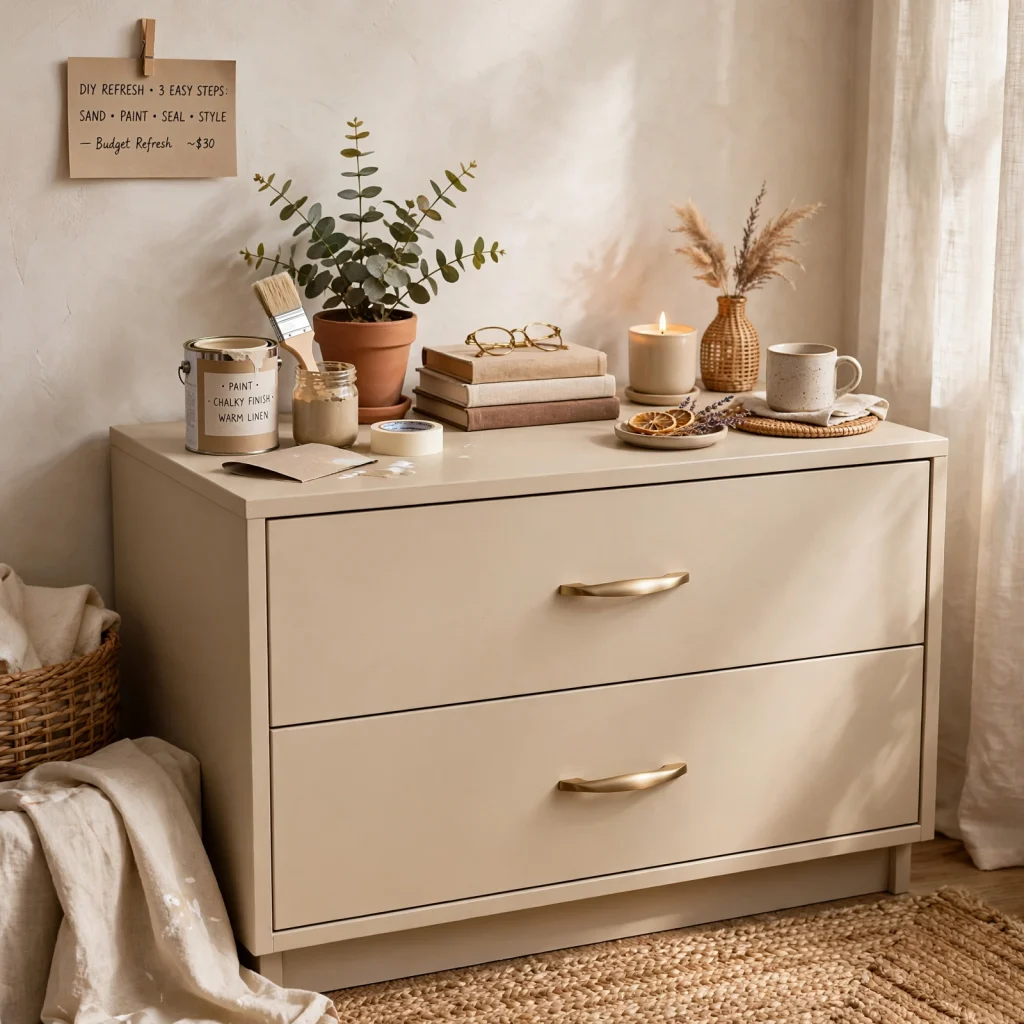
A painted furniture refresh uses chalk paint or a bonding primer to update an existing dresser, nightstand, or bookshelf without stripping the old finish first. Chalk paint in particular adheres to most surfaces without heavy sanding, which makes it approachable for a first-time furniture project. Two thin coats generally cover better than one thick coat, and a clear wax or matte sealant afterward protects the paint from scuffing over time.
6. Macrame Plant Hanger
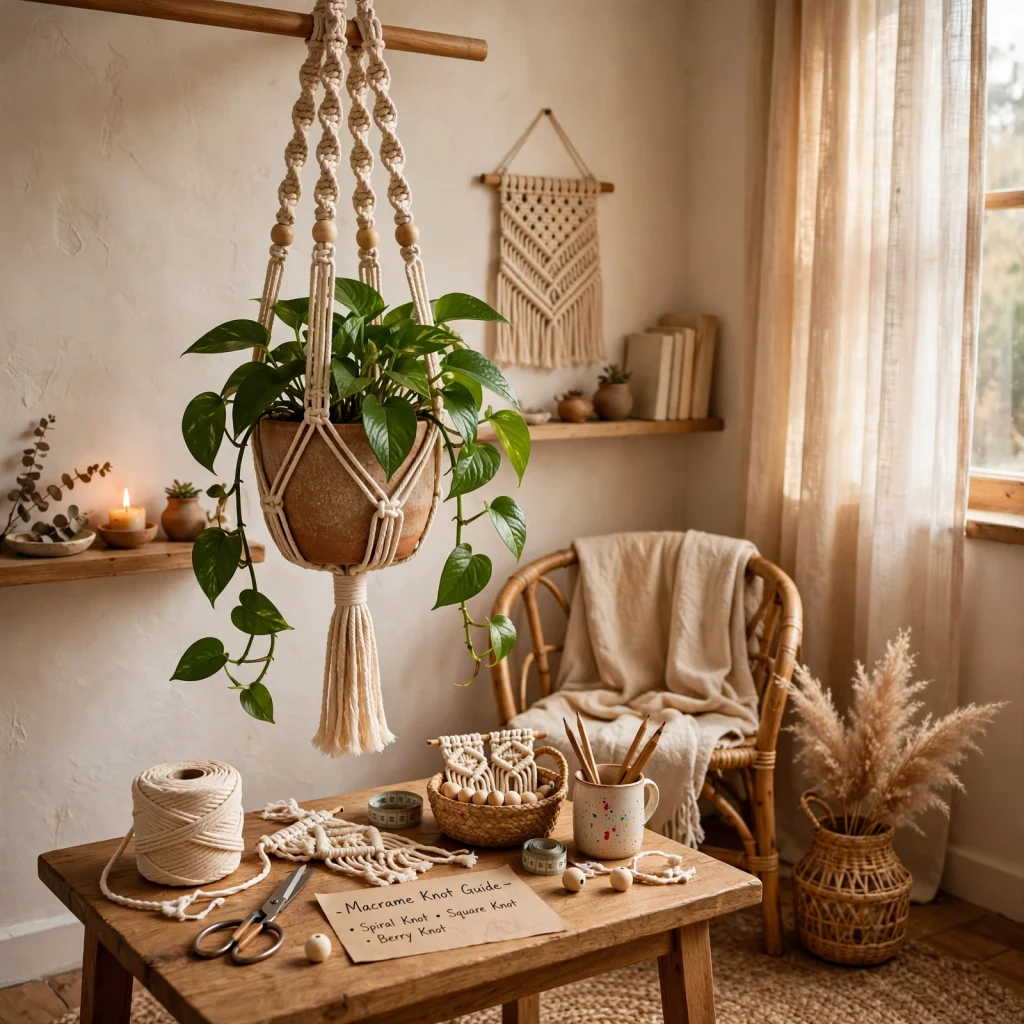
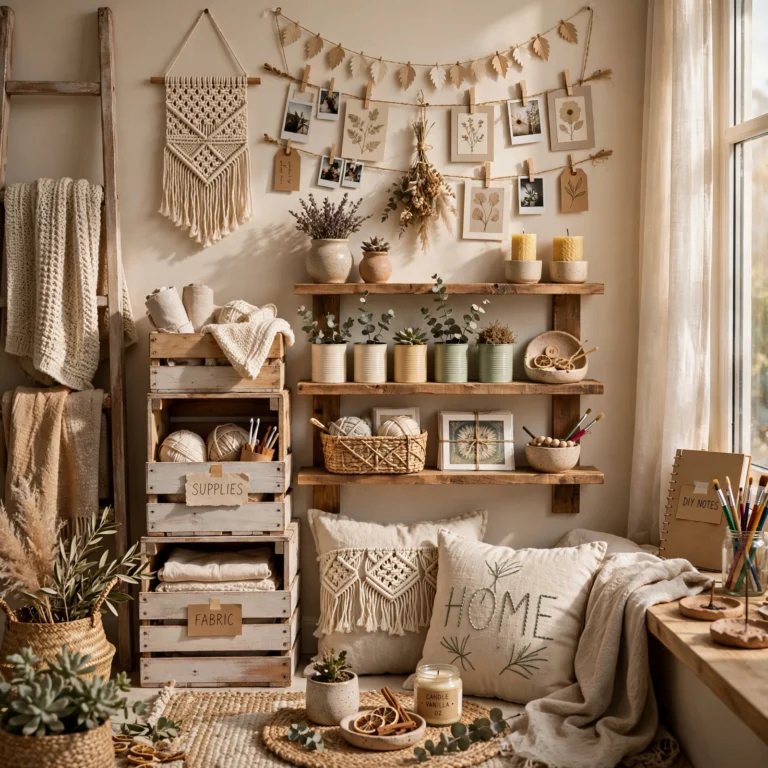
A macrame plant hanger uses knotted cotton cord to suspend a potted plant from the ceiling or a wall hook instead of placing it on a shelf or floor. Basic square knots and half-hitch knots are enough to complete a simple hanger, and tutorials for both are widely available for anyone who hasn’t macraméd before. This project works especially well in rooms with limited floor or shelf space, since it uses vertical space that would otherwise sit empty.
7. Washi Tape Wall Design
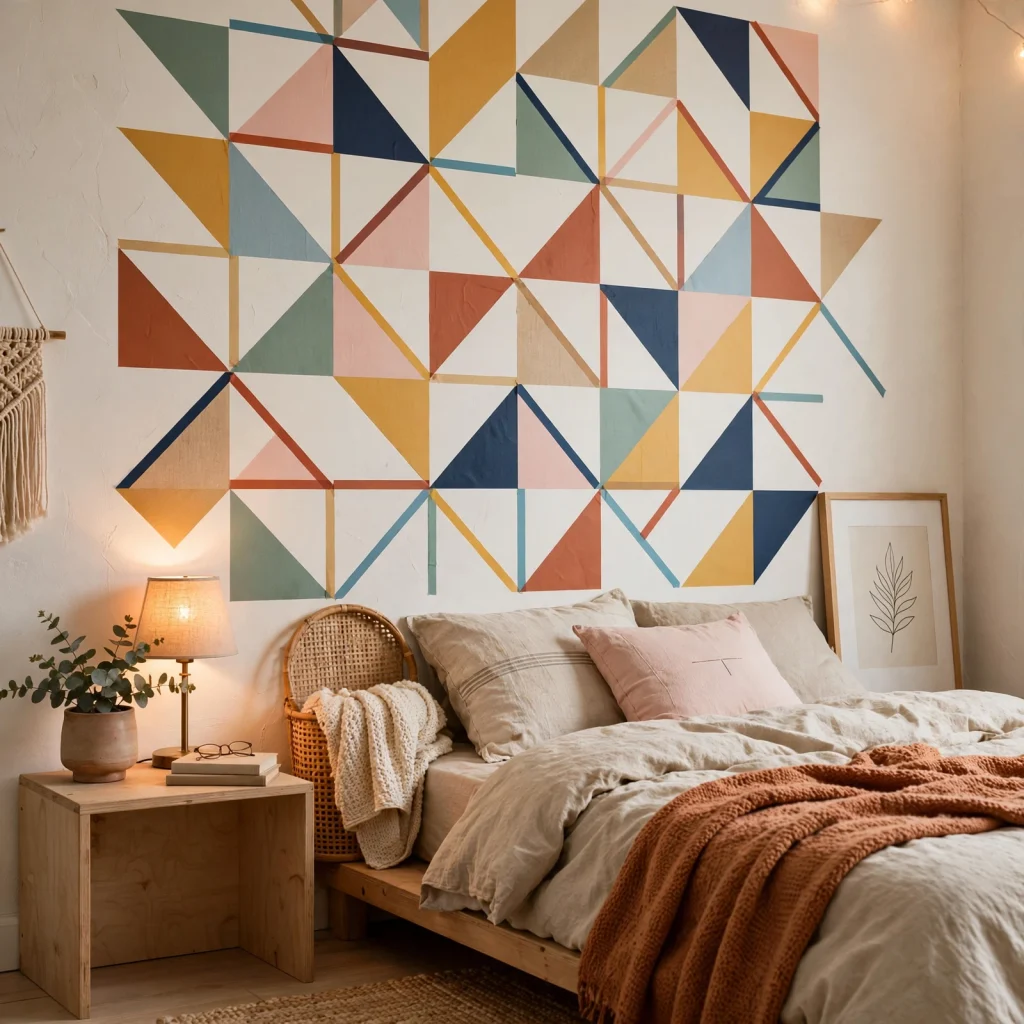
A washi tape wall design uses strips of decorative paper tape to create a geometric pattern, border, or faux headboard shape directly on the wall. Because washi tape removes cleanly from most painted surfaces, it’s one of the most renter-friendly projects on this list and can be redone in a different pattern whenever you want a change. Measuring and marking a light pencil guide before applying the tape keeps lines straighter than eyeballing the pattern as you go.
8. Upcycled Glass Jar Lighting
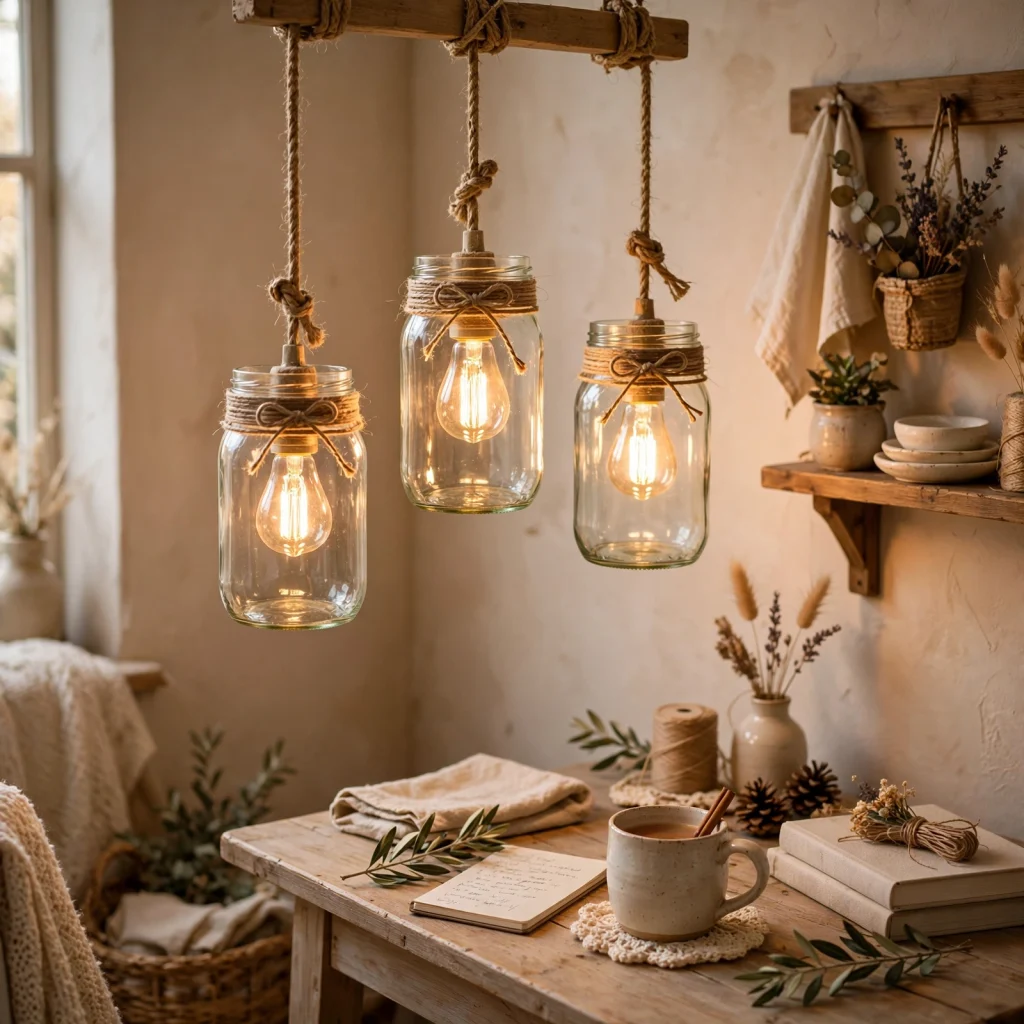
Upcycled glass jar lighting repurposes mason jars or other glass containers as pendant shades or lantern-style candle holders instead of buying new fixtures. For a pendant version, a cord kit with a socket is threaded through a hole drilled in the jar lid, while a no-drill version simply places a battery-powered puck light inside the jar. This project works well in a corner, above a nightstand, or along a windowsill where a soft, low light is more useful than bright overhead lighting.
9. Corkboard Photo Display
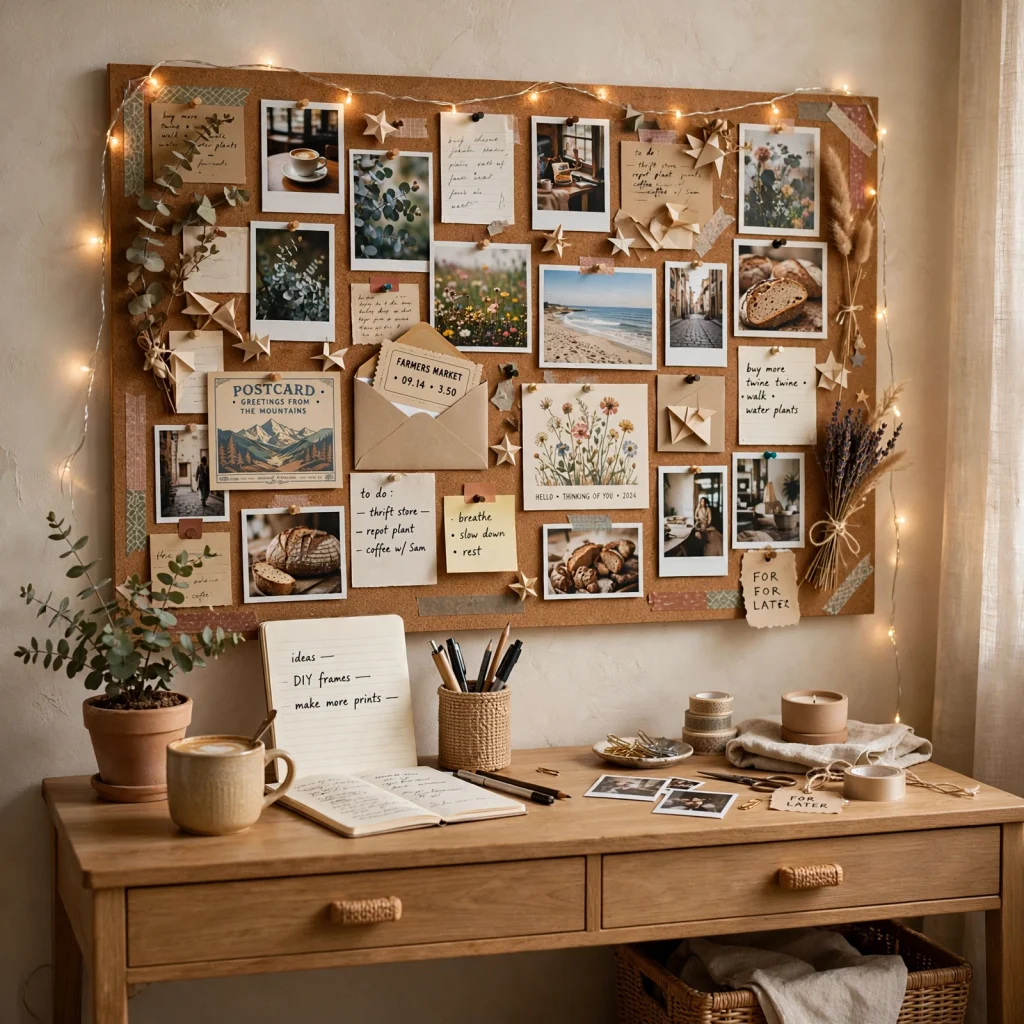
A corkboard photo display uses a plain cork panel, painted or framed to match the room, as a spot to pin printed photos, ticket stubs, or small notes. It’s a low-cost alternative to a full gallery wall and takes only as long as mounting the board itself, usually with a few screws or heavy-duty adhesive strips. Arranging the pins in a loose grid rather than scattering them randomly gives the display a more organized, intentional look.
10. Painted Terracotta Pots
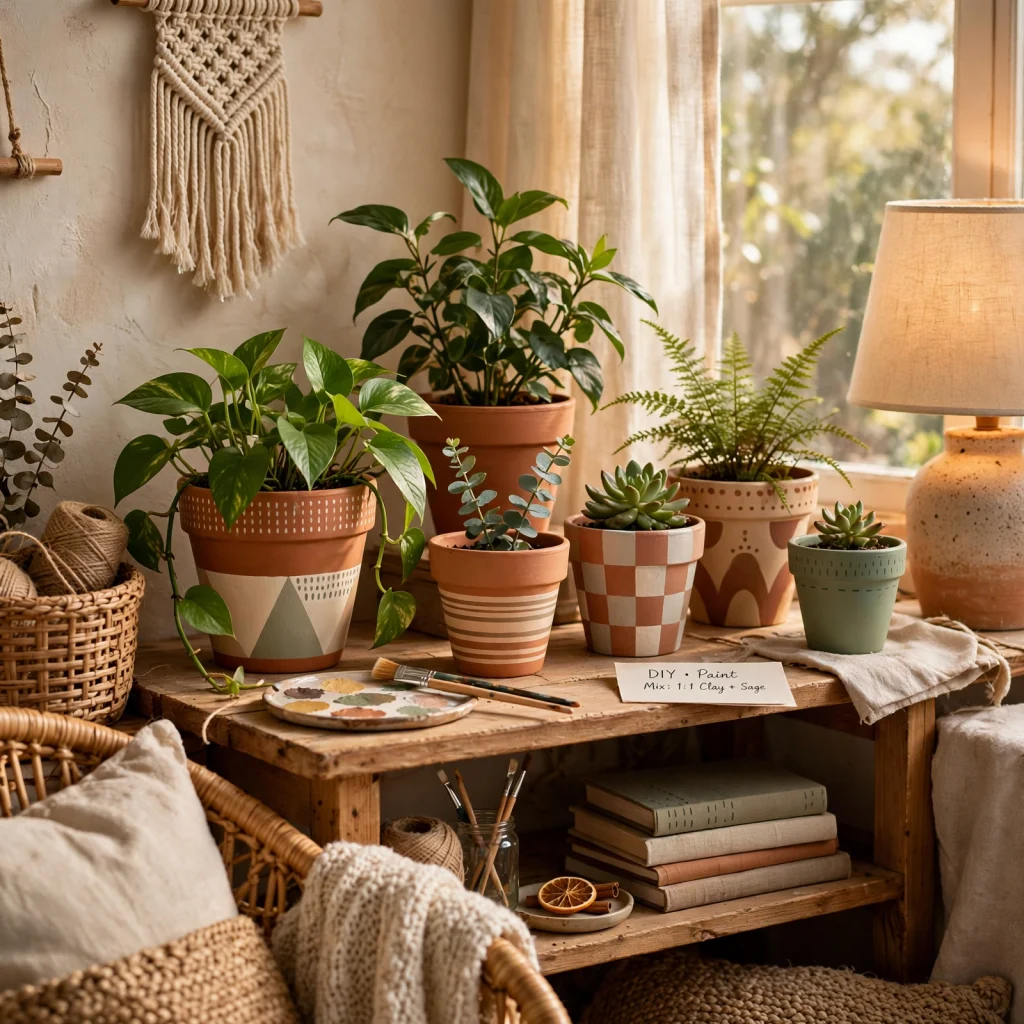
Painted terracotta pots use acrylic or outdoor-rated paint to add pattern or color to plain clay planters instead of buying pre-decorated ones. Simple designs like stripes, dots, or a dipped two-tone look are achievable without prior painting experience, and a coat of sealant afterward protects the paint from chipping during watering. Grouping several painted pots of different sizes together on a shelf or windowsill creates more visual interest than a single matching set.
11. Fabric-Covered Bulletin Board
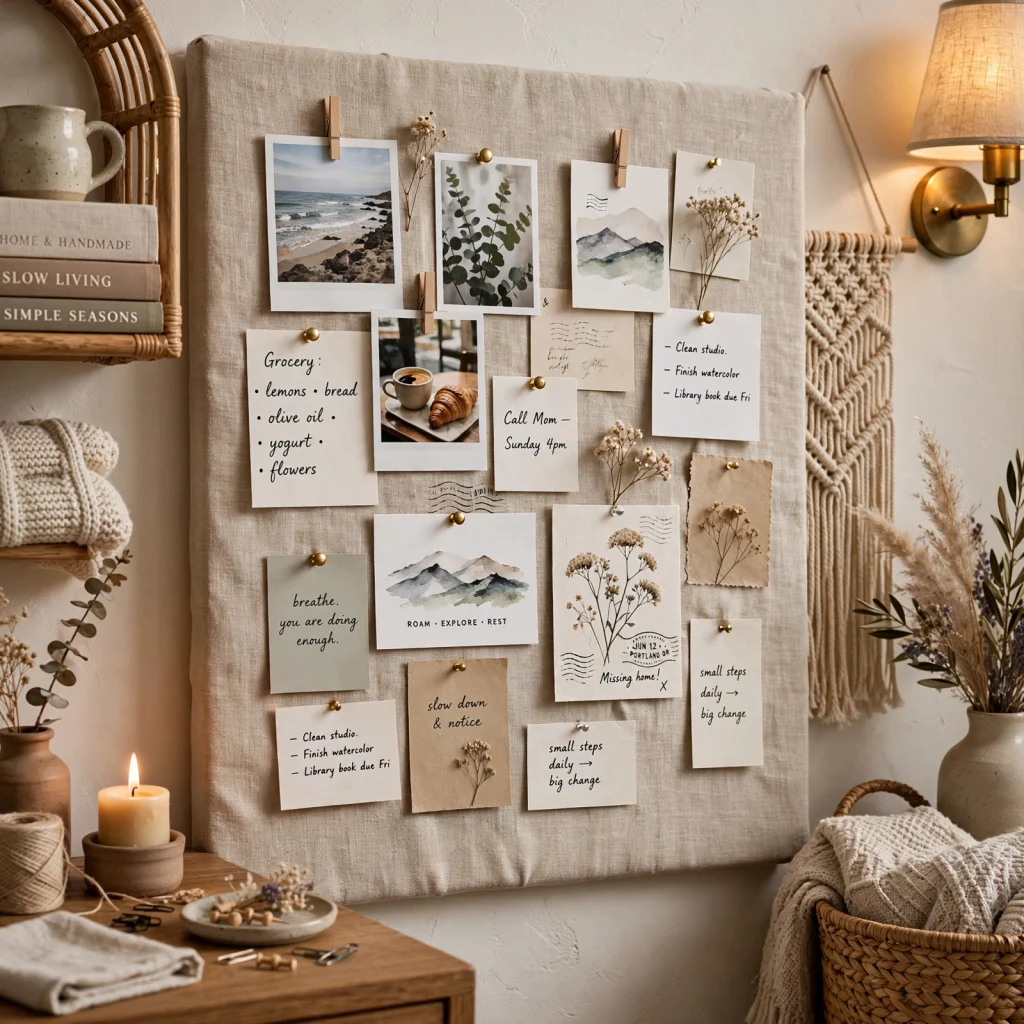
A fabric-covered bulletin board wraps a plain cork panel in batting and a fabric remnant instead of leaving the cork exposed, giving it a softer, more finished look. The fabric and batting are stapled to the back of the board the same way upholstery is finished, which keeps the front smooth and taut. This project pairs well with the corkboard photo display idea above, using the same base materials with a different finish.
12. DIY Headboard Panel
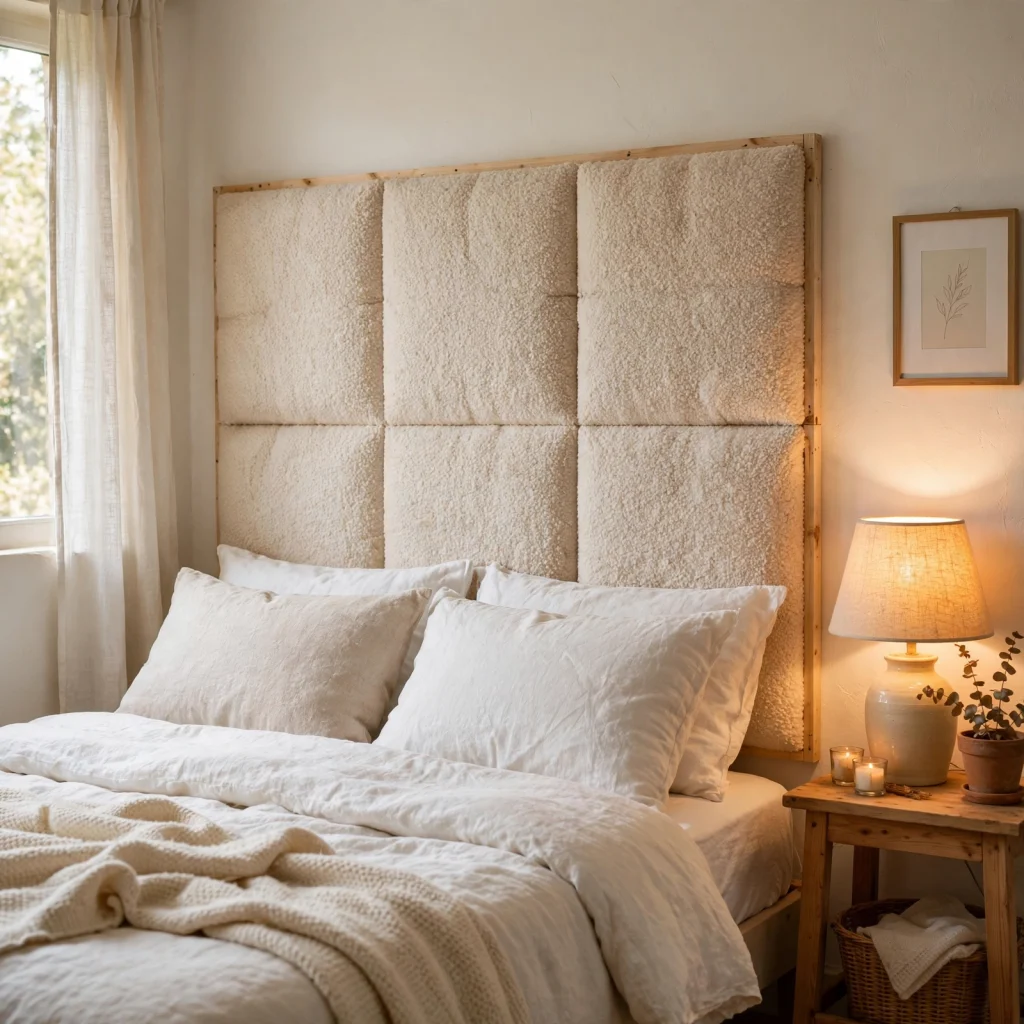
A DIY headboard panel uses plywood wrapped in batting and fabric, mounted directly to the wall above the mattress, as a budget alternative to a store-bought upholstered headboard. Cutting the plywood to the width of the mattress, rather than the bed frame, keeps proportions looking correct once it’s mounted and the bed is pushed back against the wall. This project requires a staple gun and roughly half a day, including time for the fabric to be pulled taut and secured evenly.
| Mattress Size | Panel Width | Panel Height |
| Twin | 39 in | 24–30 in |
| Full/Queen | 60 in | 30–36 in |
| King | 76 in | 36–40 in |
13. Stenciled Rug Refresh
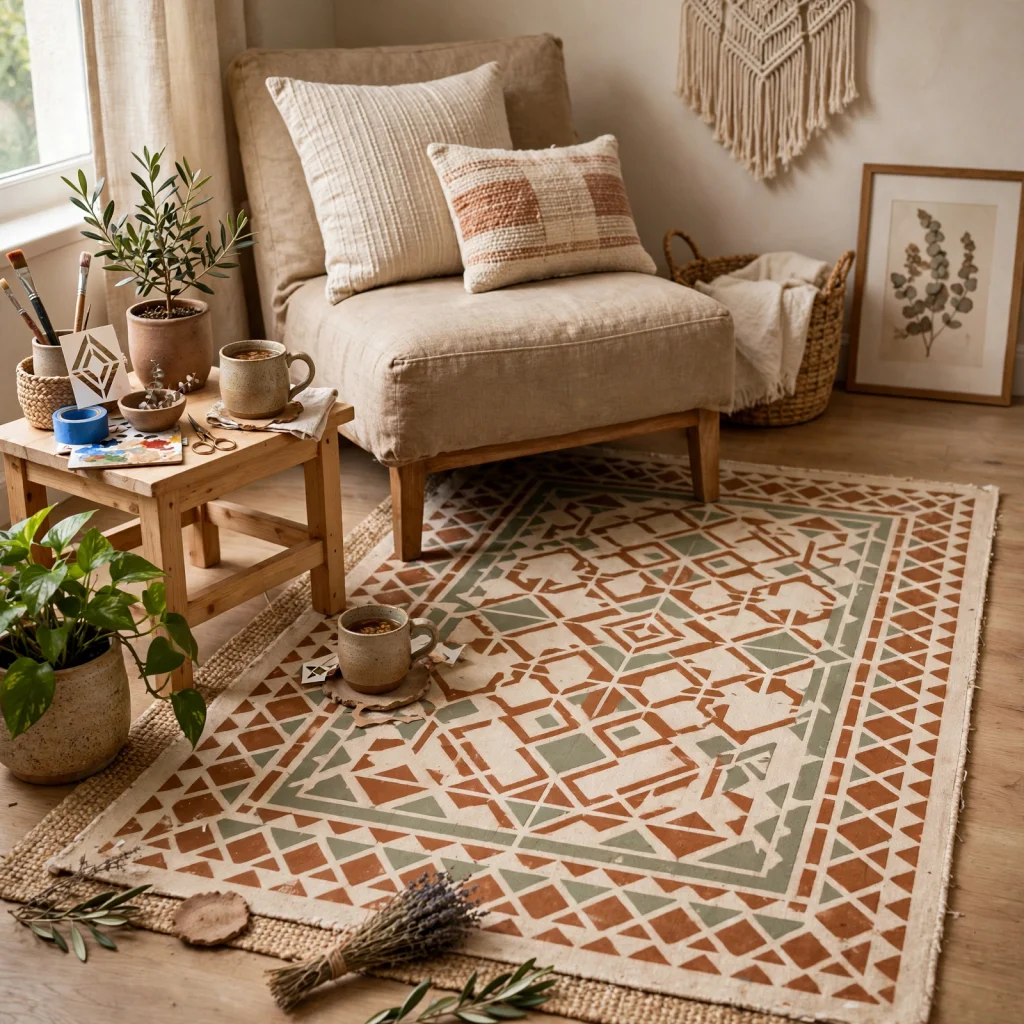
A stenciled rug refresh uses fabric paint and a reusable stencil to add pattern to a plain jute or sisal rug instead of buying a printed one. This works especially well on natural fiber rugs, since the texture holds paint better than a smooth synthetic weave. Taping off the stencil section by section and letting each area dry before moving it prevents smudging and keeps pattern lines crisp across the full rug.
14. Wall-Mounted Pegboard Organizer
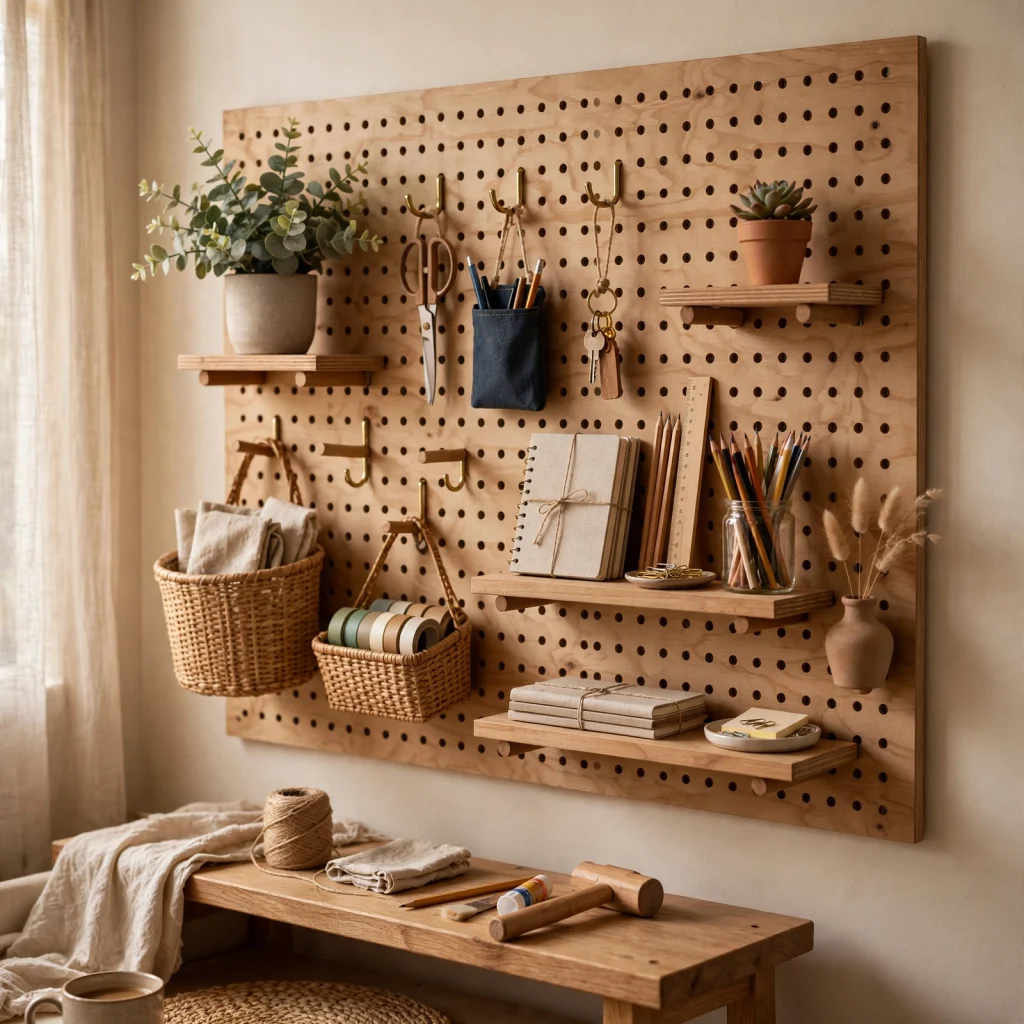
A wall-mounted pegboard organizer uses a painted pegboard panel with hooks and small shelves to hold jewelry, hats, or craft supplies in a way that doubles as decor. It mounts with standoff spacers so hooks can be inserted anywhere on the grid, and rearranged later without needing new hardware. This project suits a room without much closet or drawer space, since it turns an empty wall into functional storage.
15. Painted Ceiling Medallion
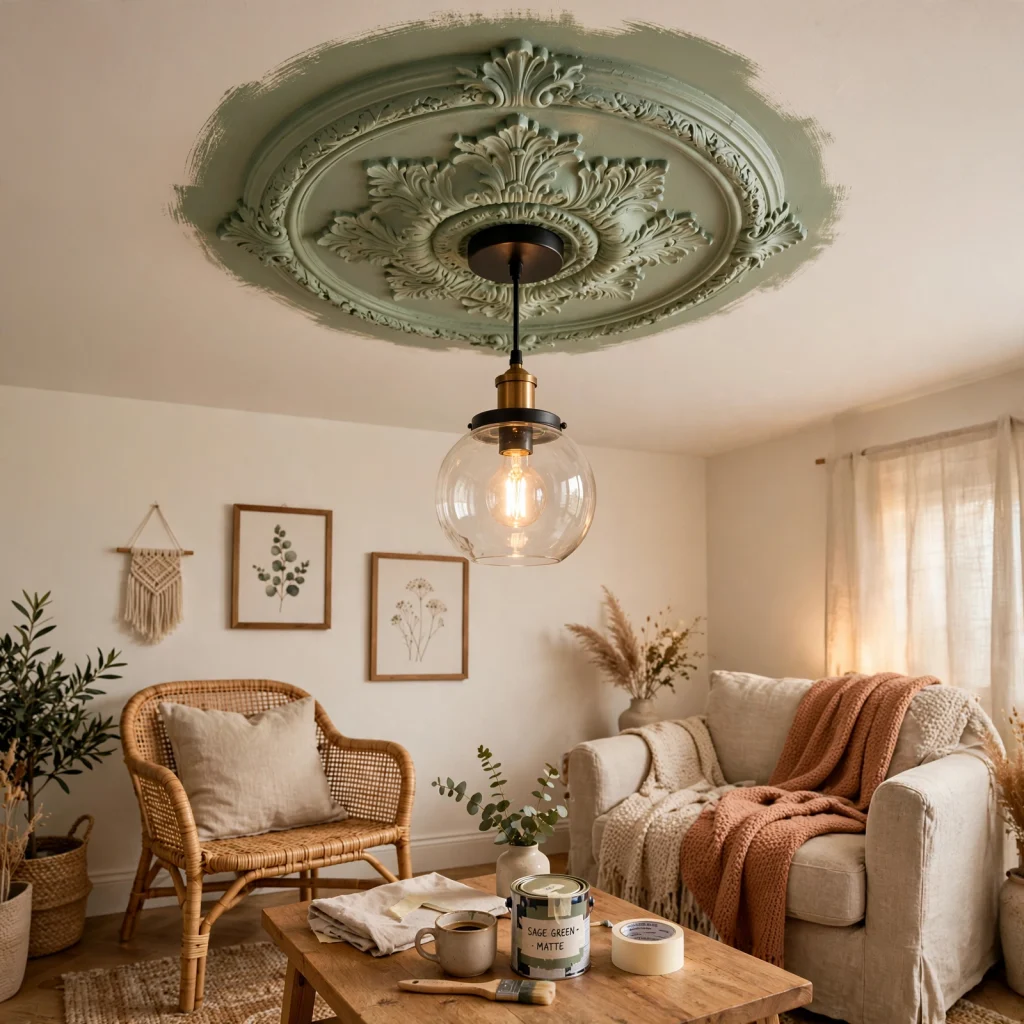
A painted ceiling medallion adds a decorative plaster or foam medallion around a ceiling light fixture, then paints it to blend with or contrast the ceiling color. Foam medallions are lightweight enough to install with strong adhesive rather than screws, and most come pre-scored for the wiring cutout. This project adds a small architectural detail to a plain ceiling and works particularly well in bedrooms or dining areas where the ceiling is otherwise the least decorated surface in the room.
Shop the Look
A short list to gather before starting: a quart of chalk paint in a neutral tone, a pre-cut floating shelf kit with hidden brackets, cotton macrame cord, a roll of washi tape in a coordinating pattern, and a fusible hem tape kit for no-sew curtains. Most of these materials are inexpensive enough to try more than one project in the same weekend without a large upfront cost.
Common Mistake to Avoid
A common mistake with DIY projects is skipping prep work to save time, like sanding furniture before painting or letting fabric adhesive fully cure before hanging curtains, which usually leads to peeling, bubbling, or uneven results within a few weeks. Rushing the drying or curing time between steps is the most frequent cause of a project needing to be redone, so building in extra time for each stage tends to save more effort overall than trying to finish everything in one sitting.
FAQs
What is the easiest DIY room decor project for a beginner?
A painted accent wall or a no-sew curtain panel tends to be the easiest starting point, since both require minimal tools and are difficult to get seriously wrong. Painter’s tape and a roller are the only real skills needed for the wall, while no-sew curtains rely on fusible tape and an iron rather than any sewing technique. Both projects can also be finished in a single afternoon, which makes them good confidence-builders before attempting something like a headboard panel.
How much does easy DIY room decor typically cost?
Most of the projects on this list cost between fifteen and sixty dollars in materials, depending on the size of the room and the quality of paint or fabric chosen. Projects like washi tape designs or painted terracotta pots sit at the lower end, while a DIY headboard panel or floating shelf tends to cost more due to plywood, batting, and hardware. Buying materials in smaller quantities first, rather than assuming a full project’s worth, helps avoid overspending on leftovers.
Do I need special tools for beginner DIY decor projects?
Most projects on this list use tools already common in a household toolkit, such as a staple gun, a basic drill, painter’s tape, and a level, rather than specialized woodworking equipment. A few projects, like the floating shelf or headboard panel, do require finding wall studs and a drill with the correct bits, but no advanced carpentry skills are necessary. Renting or borrowing a staple gun for a single project is usually more practical than buying one if you don’t already own it.
How long do these DIY room decor projects usually take?
Simpler projects like washi tape designs, painted terracotta pots, or a corkboard display typically take one to two hours from start to finish. More involved builds, such as a headboard panel or floating shelf, usually take a half day once wall prep, drying time, and hardware installation are factored in. Spacing projects across a weekend rather than attempting several in one day tends to produce cleaner results, since paint and adhesive need uninterrupted drying time.
Can renters do these DIY room decor projects without losing their deposit?
Several projects on this list, including washi tape designs, macrame hangers, and fabric wall art, are specifically renter-friendly since they avoid paint on walls or permanent wall damage. Projects involving paint or wall-mounted hardware, like the accent wall or floating shelf, are riskier for renters and worth checking against lease terms first. Choosing removable adhesive strips over screws where possible is generally the safest approach for anyone unsure about their lease restrictions.
Conclusion
Easy diy room decor doesn’t have to mean an ambitious weekend build even a single painted wall or a set of no-sew curtains can shift how a room feels. Pick one project from this list to start, see how it turns out, and build from there rather than tackling all fifteen at once. Save this post to Pinterest for later, or check out our related guide on renter-friendly decor swaps for more low-commitment ideas.