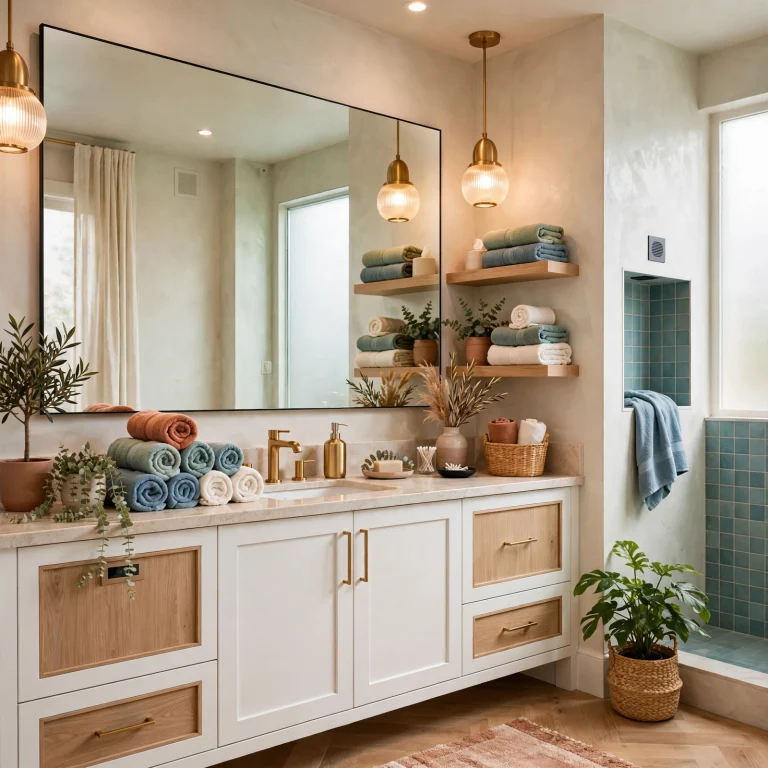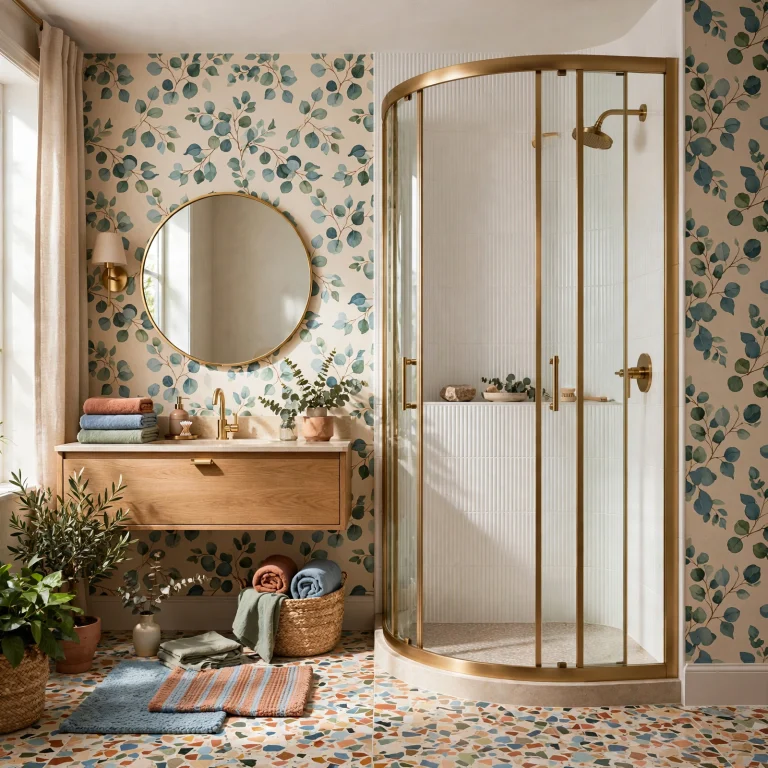
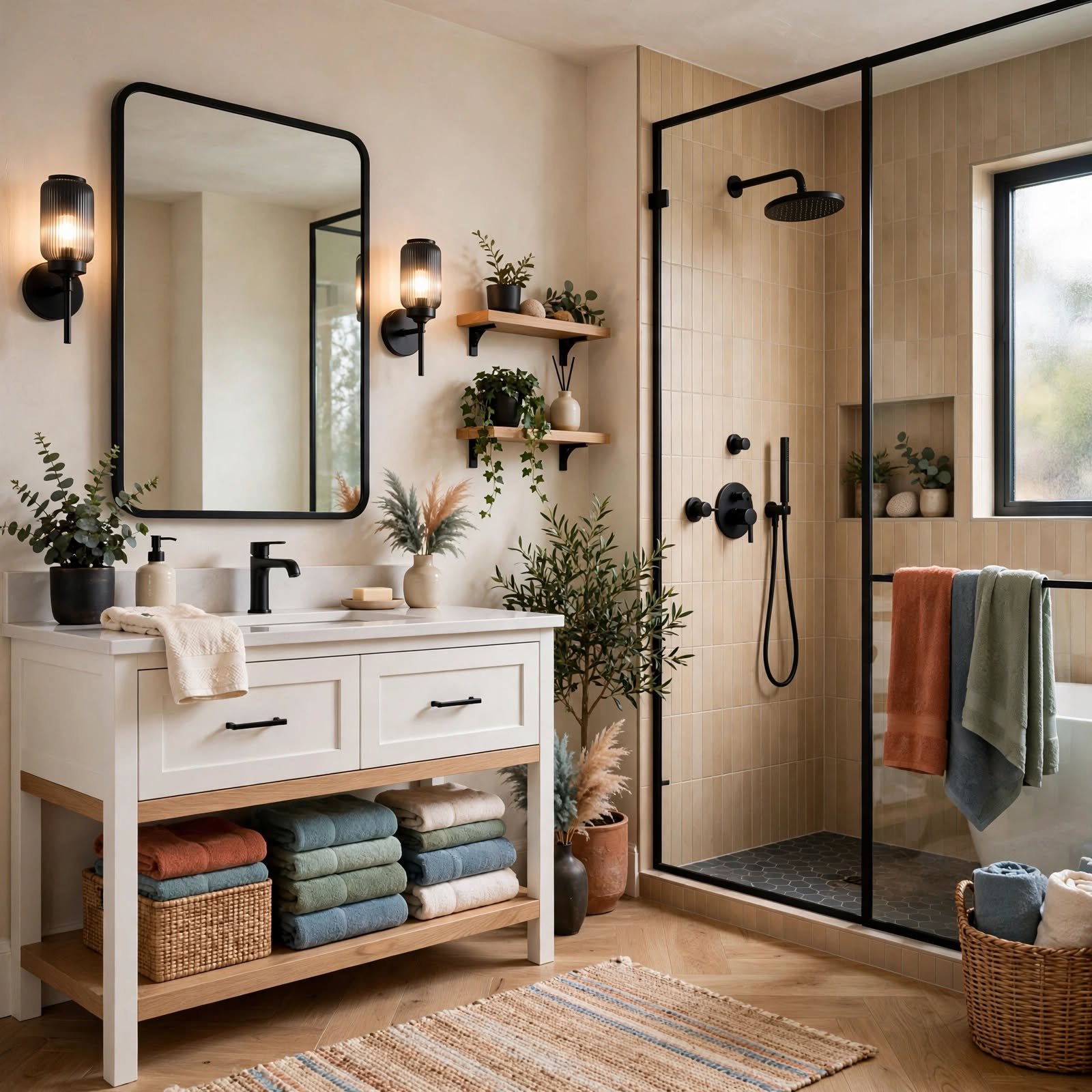
15 Beautiful Japandi Bathroom Ideas for Calm, Grounded Design
A japandi bathroom brings the same calm, materially honest design language found in japandi living spaces into one of a home’s most utilitarian rooms, softening its typically clinical character with natural wood, muted tone, and grounded proportions. This guide covers fifteen ideas for building that atmosphere, from a wood-slat bath mat to a stone vessel sink, going deeper into the specific materials and fixture choices that distinguish this style from a generically minimalist or Scandinavian bathroom. Each idea reflects the deliberate blend of restraint and warmth central to japandi design.
Trend & Background
Japandi bathroom design has grown as an extension of the broader japandi movement into one of the home’s more function-driven rooms, applying the same Japanese-Scandinavian material honesty to a space typically dominated by hard, glossy, and clinical surfaces. This style differs meaningfully from a purely Scandinavian bathroom, which tends toward brighter, lighter execution, by incorporating deeper earth tones and a stronger emphasis on visible material imperfection drawn from Japanese wabi-sabi principles. The style has also drawn on traditional Japanese bathing culture specifically, with low, grounded fixtures and natural material choices referencing ofuro-style bathing more directly than a general Scandinavian bathroom would.
Key Takeaways
- A japandi bathroom pairs Japanese material honesty with Scandinavian warmth, favoring natural texture over polish or shine.
- Low, grounded fixtures and furniture reflect traditional Japanese bathing culture more than a purely Scandinavian bathroom would.
- A muted, earthy palette with occasional black accents defines japandi bathroom style more than any single fixture choice.
- Genuine material imperfection, visible wood grain, an uneven glaze, is treated as a feature rather than something to disguise.
1. Low Wooden Stool for Bathing
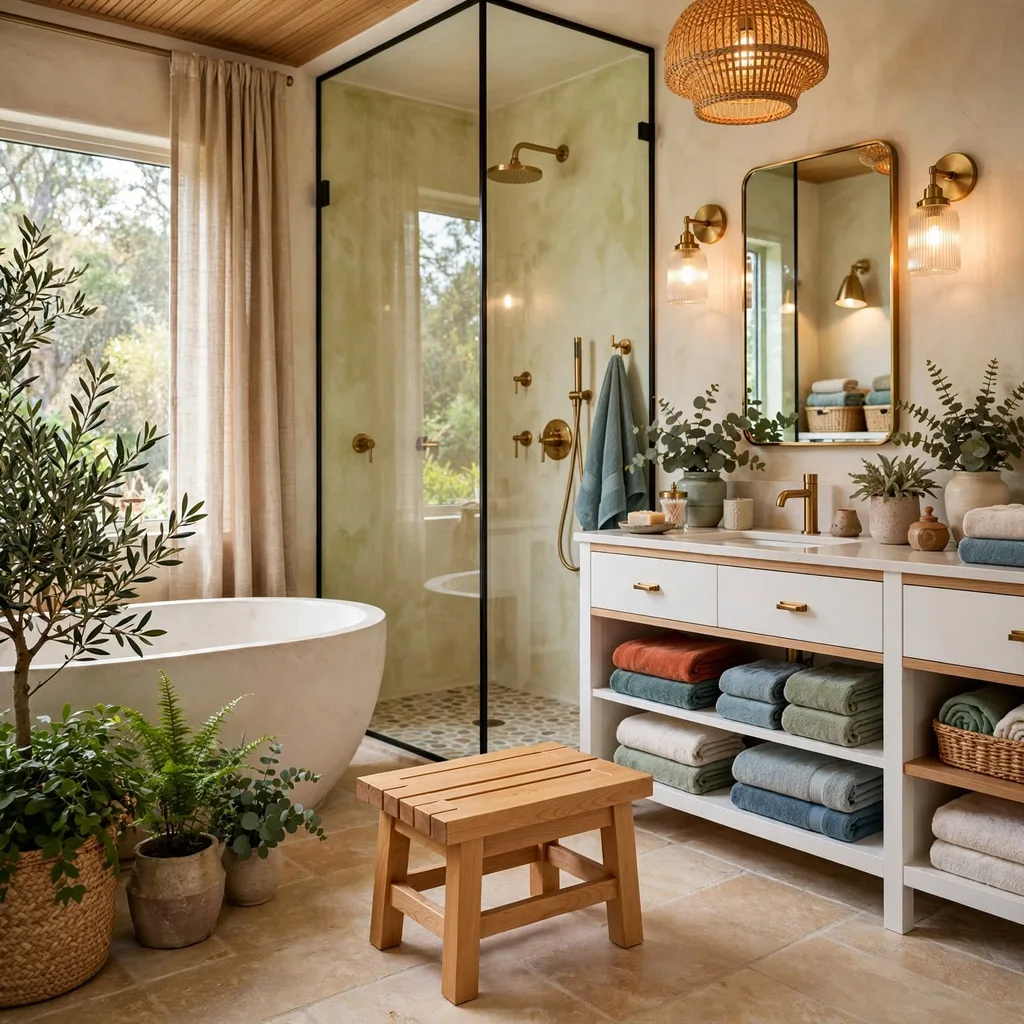
A low wooden stool, referencing traditional Japanese bathing culture, brings both function and genuine cultural material honesty to a japandi bathroom, offering a place to sit while washing before entering a soaking tub. Choosing a solid oak or hinoki cypress stool, left in a raw or lightly oiled finish, keeps this piece consistent with the room’s broader natural material palette. This detail works particularly well in a bathroom that includes a deep soaking tub, extending the ritual, grounded quality of the space beyond the tub itself.
2. Stone Vessel Sink
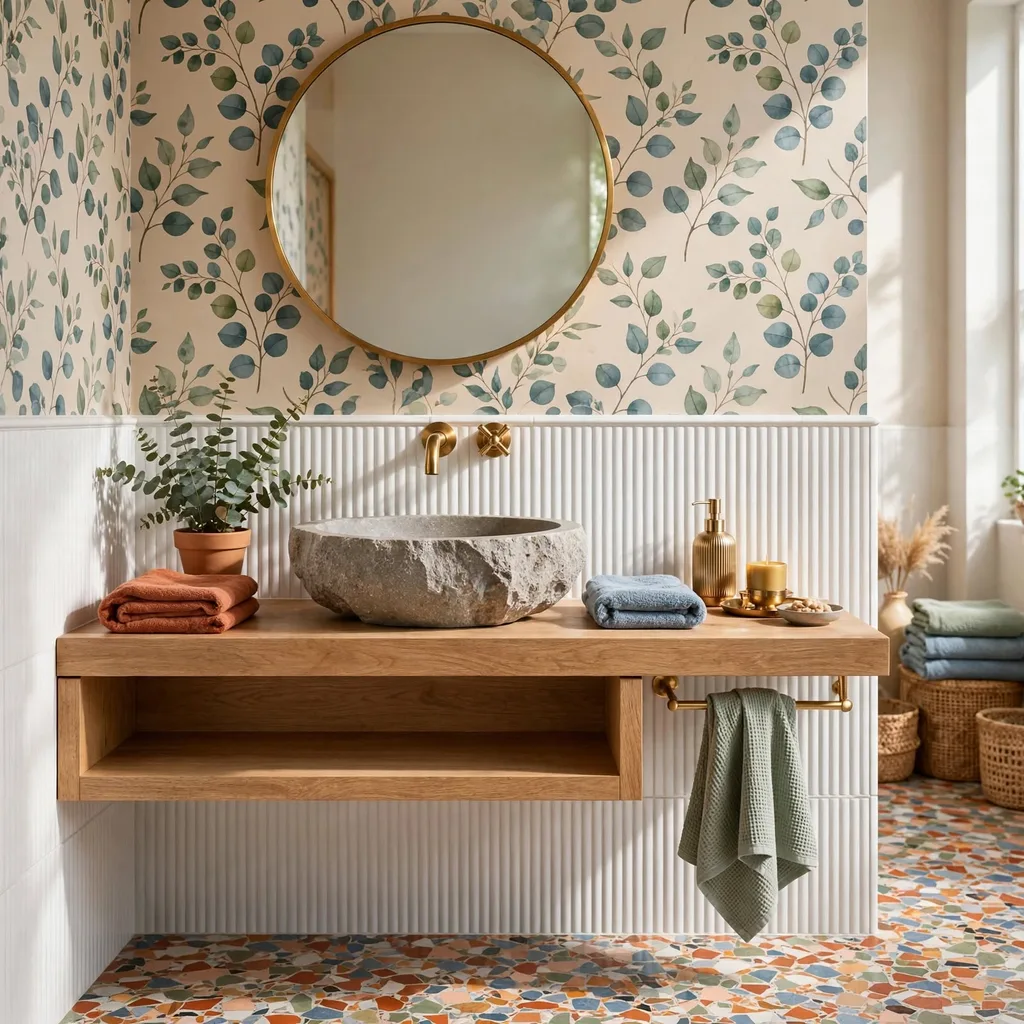
A stone vessel sink, in a honed granite, basalt, or a similarly textured natural material, gives a japandi bathroom’s vanity area genuine material weight and organic texture that a standard ceramic sink can’t replicate. Choosing a sink with visible natural variation in its surface, rather than a uniformly smooth finish, reflects the style’s embrace of material imperfection as a design feature. Pairing this stone vessel with a simple wall-mounted or freestanding faucet in matte black keeps the overall fixture grouping consistent with japandi’s restrained material language.
3. Wood Slat Bath Mat and Flooring Accent
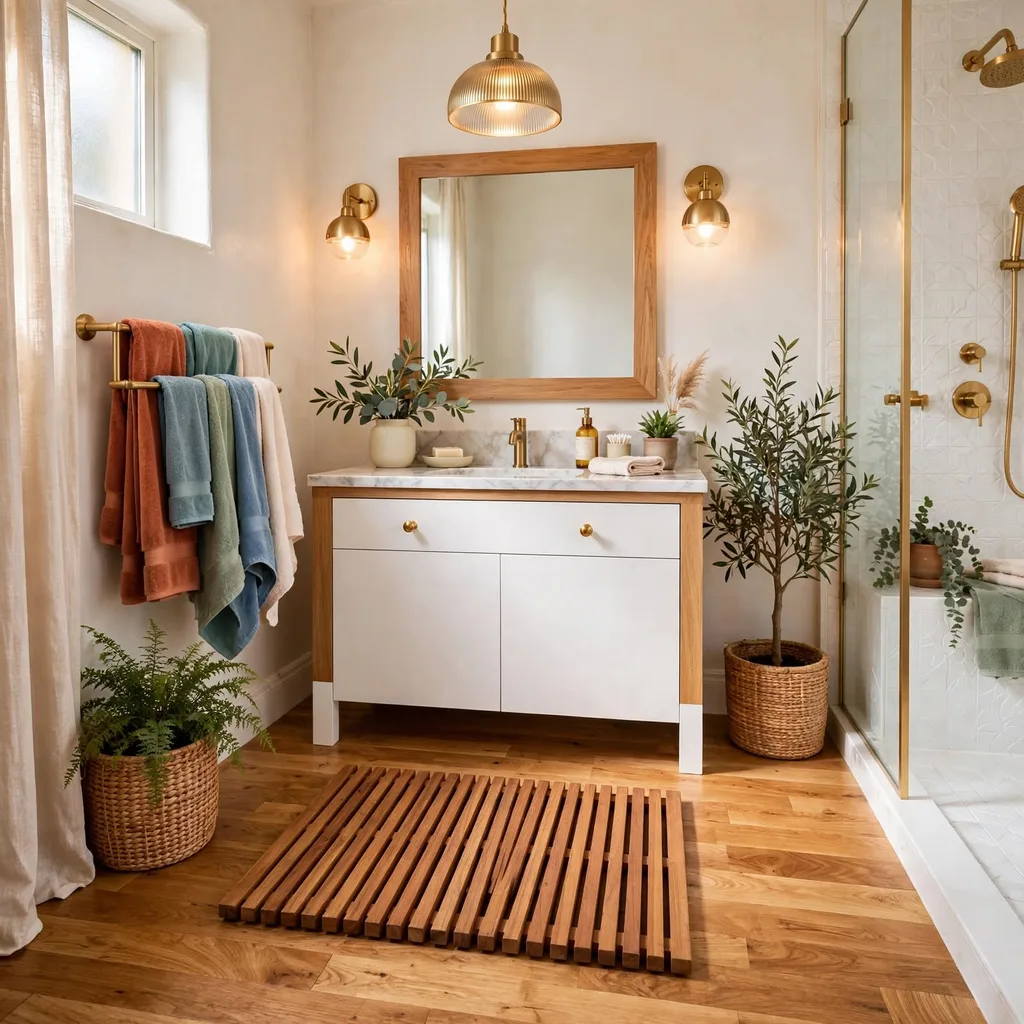
A wood slat bath mat, or a small wood slat flooring section positioned in front of the tub or shower, brings warmth underfoot that tile alone doesn’t provide, while also referencing traditional Japanese bathhouse flooring details. Choosing teak or another naturally water-resistant wood species ensures this detail holds up to the bathroom’s consistent moisture exposure over time. This detail works particularly well combined with a low wooden stool, extending the same natural material story across multiple functional elements within the same bathing zone.
| Element | Japandi Choice | Standard Scandinavian Choice |
| Sink | Stone vessel, textured | Simple white ceramic |
| Palette | Earth tones, muted | Bright white and pale gray |
| Bath accessory | Wood stool, slat mat | Minimal, often absent |
| Imperfection | Embraced, celebrated | Generally minimized |
4. Deep Soaking Tub
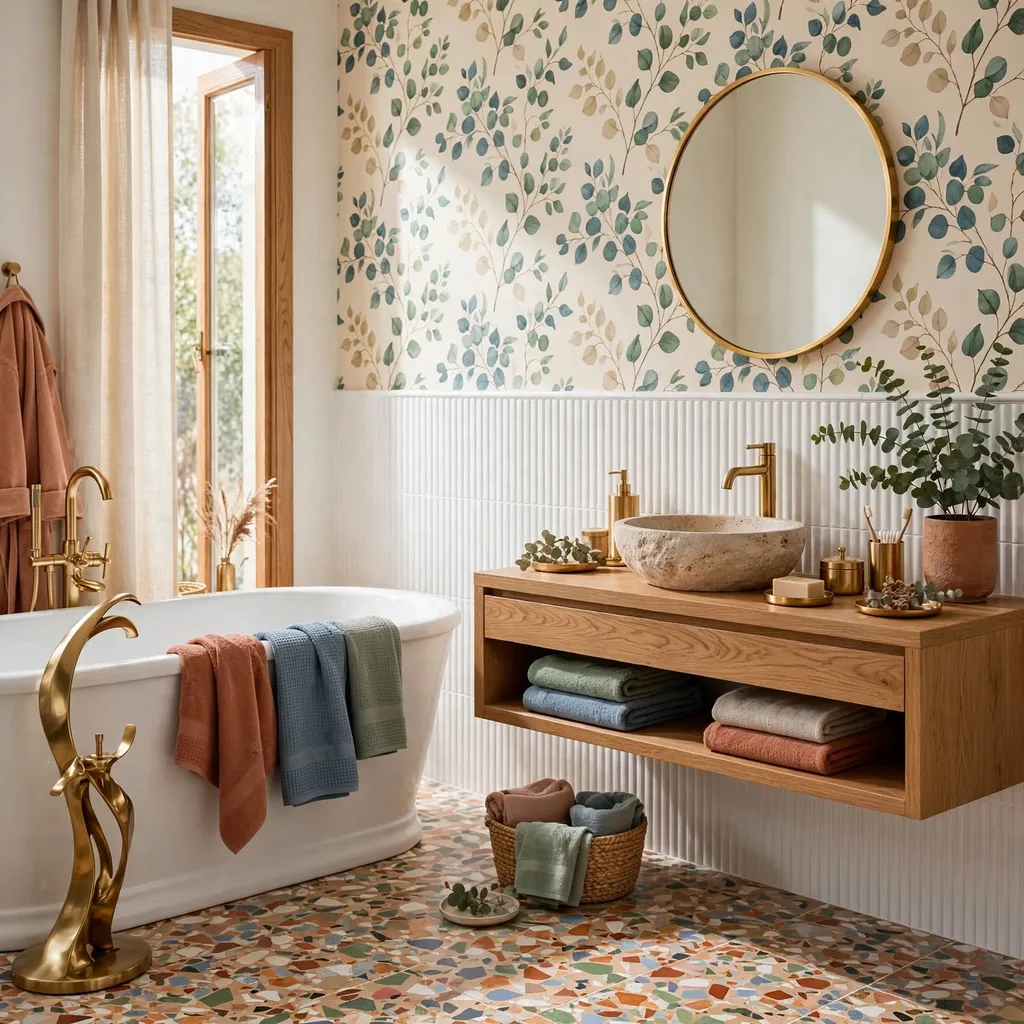
A deep soaking tub, taller and narrower than a standard Western bathtub, references traditional Japanese ofuro bathing culture and its emphasis on full-body immersion for relaxation rather than a shallow reclining bath. Choosing a tub in a natural material like hinoki wood or a matte stone-look material, rather than a glossy acrylic finish, keeps this centerpiece fixture consistent with the room’s broader material honesty. Positioning the tub near a window, where privacy allows, extends the bathing ritual’s connection to natural light and the outdoors.
5. Muted Earth-Tone Tile Palette
A muted earth-tone tile palette, built around warm clay, sand, and soft charcoal rather than stark white or cool gray, gives a japandi bathroom’s walls and floor genuine warmth while still maintaining the style’s overall restraint. Choosing a matte rather than glossy tile finish reinforces this grounded, natural quality, avoiding the reflective shine more common in a purely contemporary bathroom. This palette differs meaningfully from a bright, white-dominant Scandinavian bathroom, leaning instead toward the deeper, more textured tones found in traditional Japanese interiors.
6. Fluted or Textured Wood Vanity
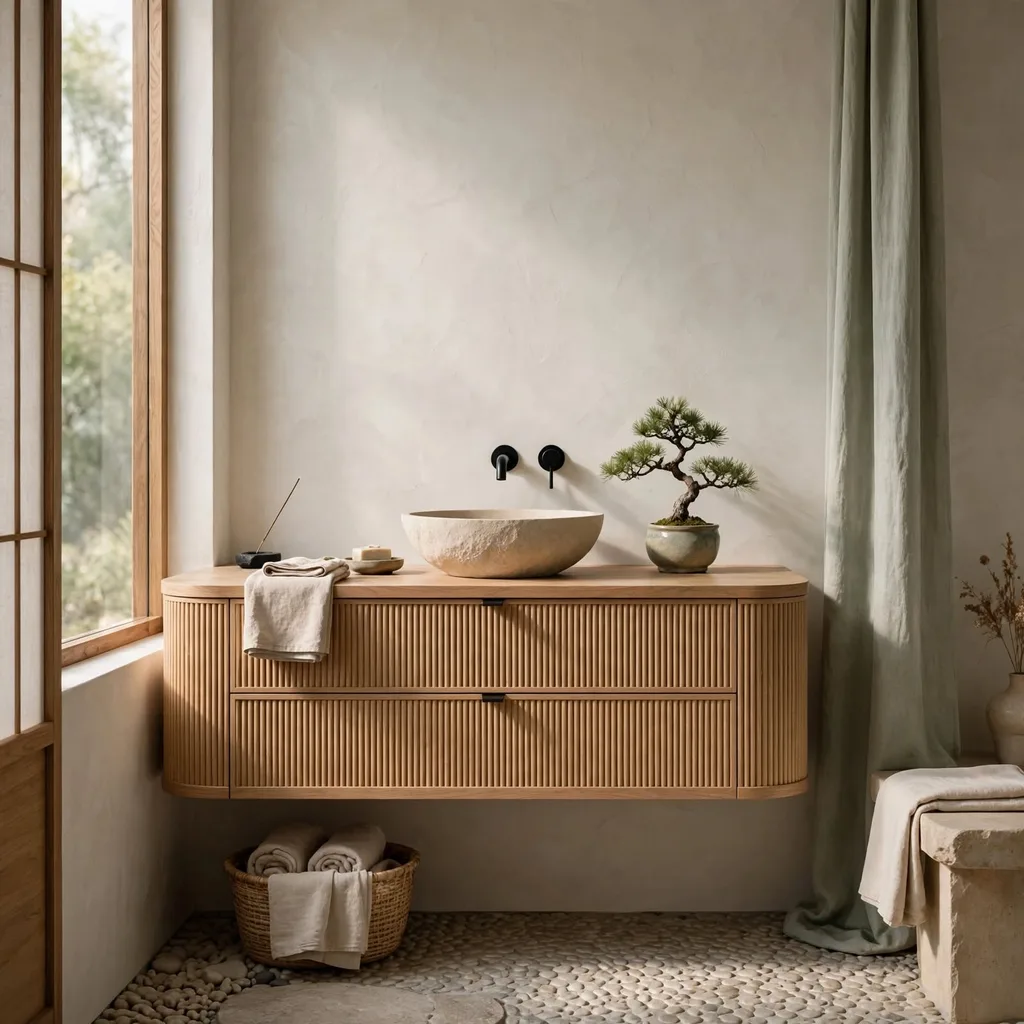
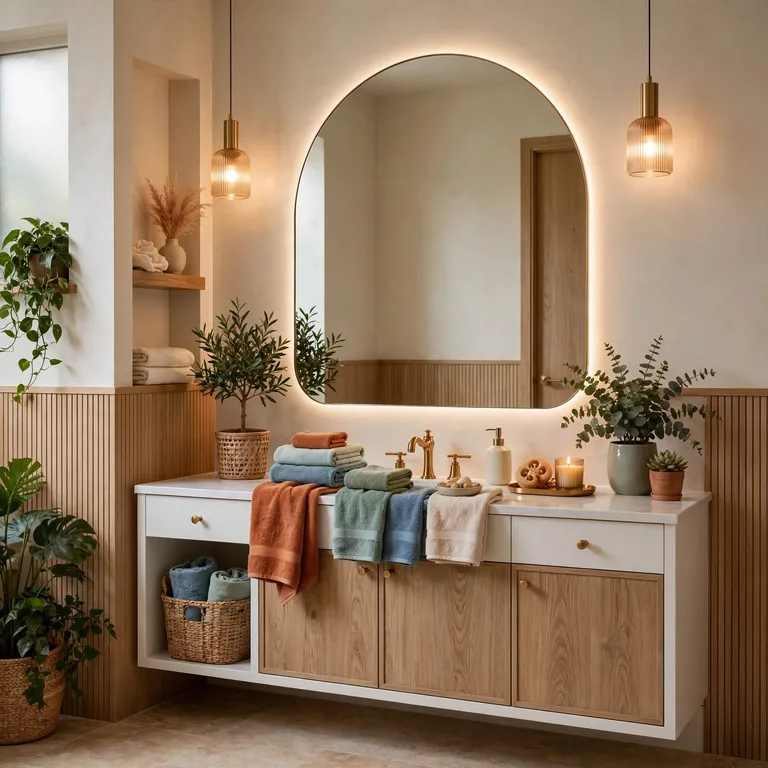
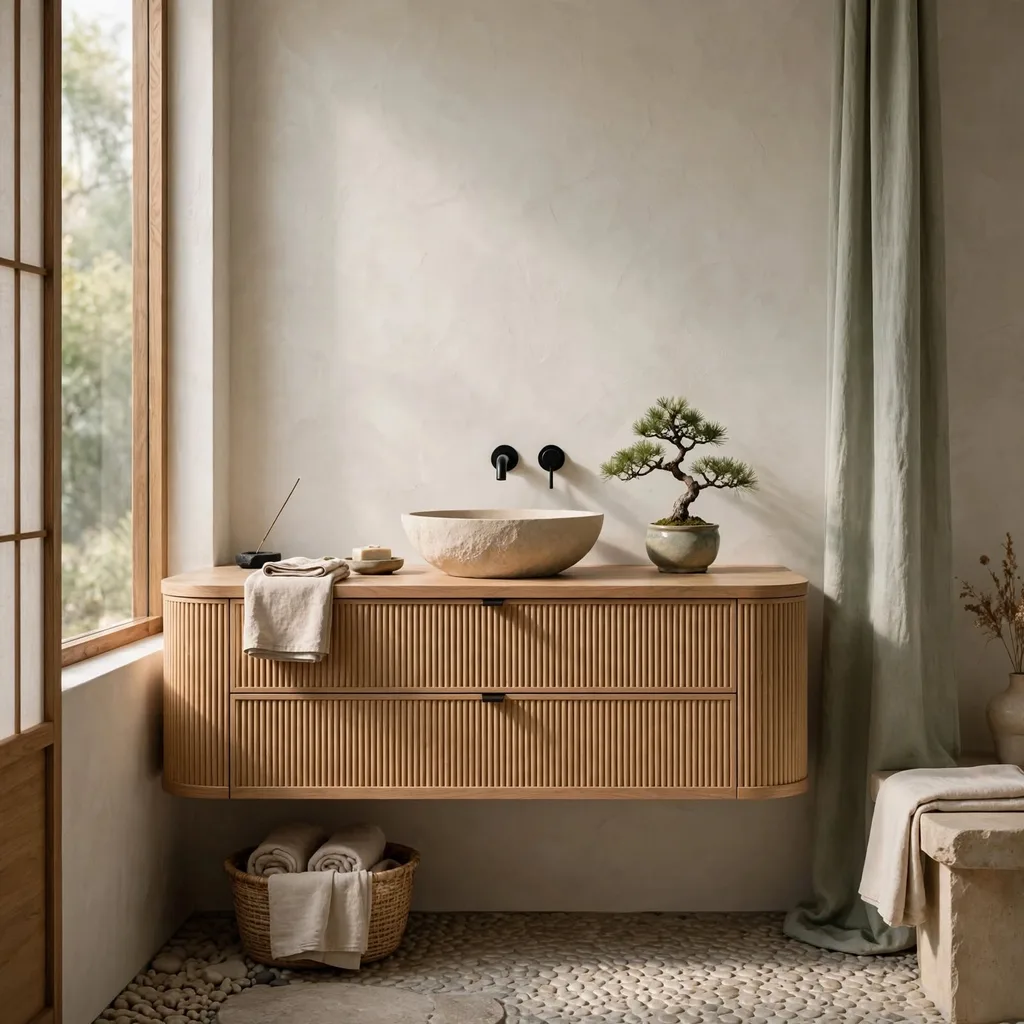
A fluted or textured wood vanity, in raw or lightly oiled white oak or walnut, brings visible grain and dimensional texture to a japandi bathroom’s primary storage piece. Choosing a low-profile design with simple, exposed joinery reflects the style’s broader preference for visible construction honesty over concealed, seamless cabinetry. This vanity style suits a floating installation particularly well, keeping the room’s floor space visually open while still showcasing the wood’s natural character.
Explore these modern bathroom ideas featuring beautiful fixtures, stylish finishes, smart layouts, and practical storage solutions.
7. Paper or Rice-Paper Light Fixture
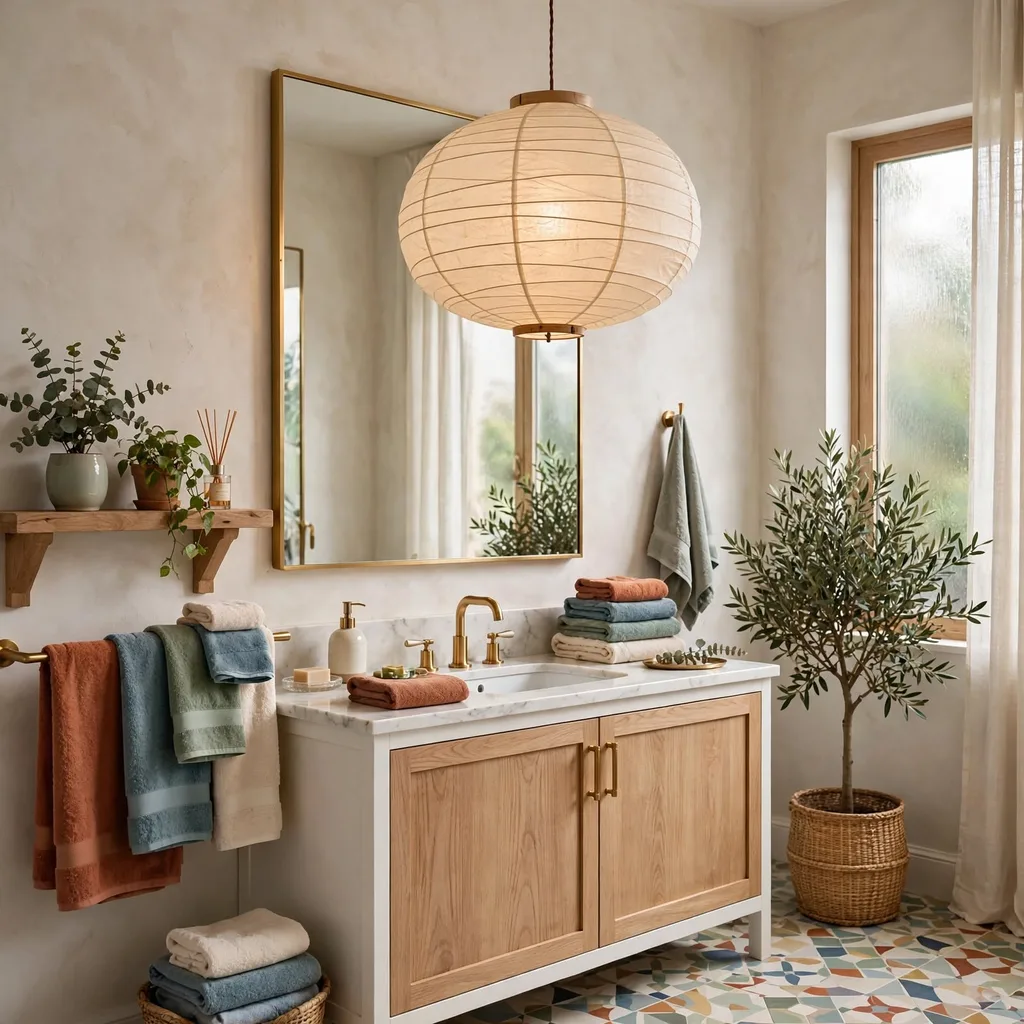
A paper or rice-paper pendant or wall sconce, with a simple round or rectangular silhouette, brings a distinctly Japanese lighting reference into a japandi bathroom while producing a soft, diffused glow well suited to the room’s overall calm atmosphere. This fixture type requires a rating appropriate for bathroom moisture exposure, so confirming a specific product’s suitability for wet or damp locations matters before installation. This lighting detail works particularly well positioned away from direct water exposure, such as near a vanity rather than directly above a shower.
8. Single Bonsai or Sculptural Plant
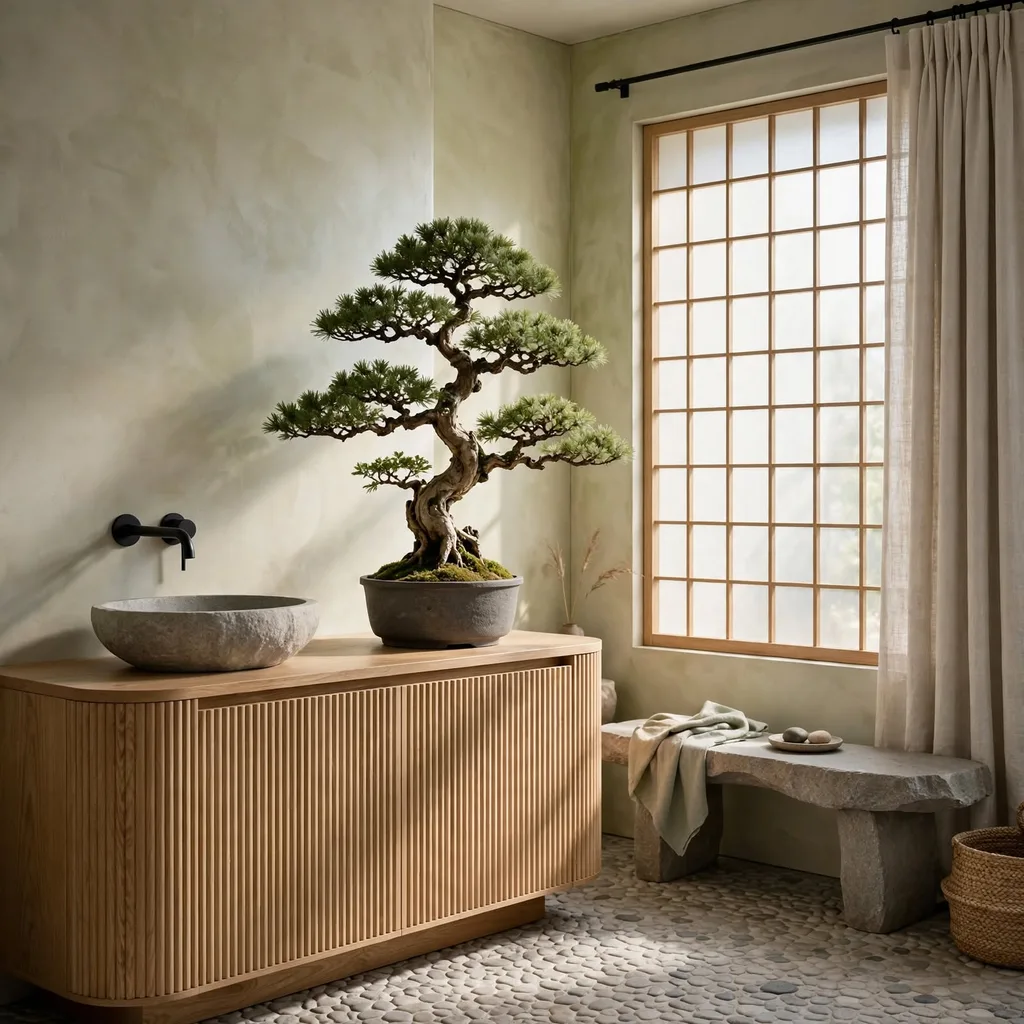
A single bonsai tree or another sculptural, considered plant, displayed on a windowsill or a small shelf, brings living greenery into a japandi bathroom without the visual busyness multiple smaller plants would create. This detail reflects the Japanese tradition of treating a single plant as an almost sculptural object rather than purely decorative filler. Choosing a plant genuinely tolerant of a bathroom’s humidity and light conditions ensures this detail remains a genuine long-term feature rather than a short-lived styling choice.
9. Matte Black Fixture Accents
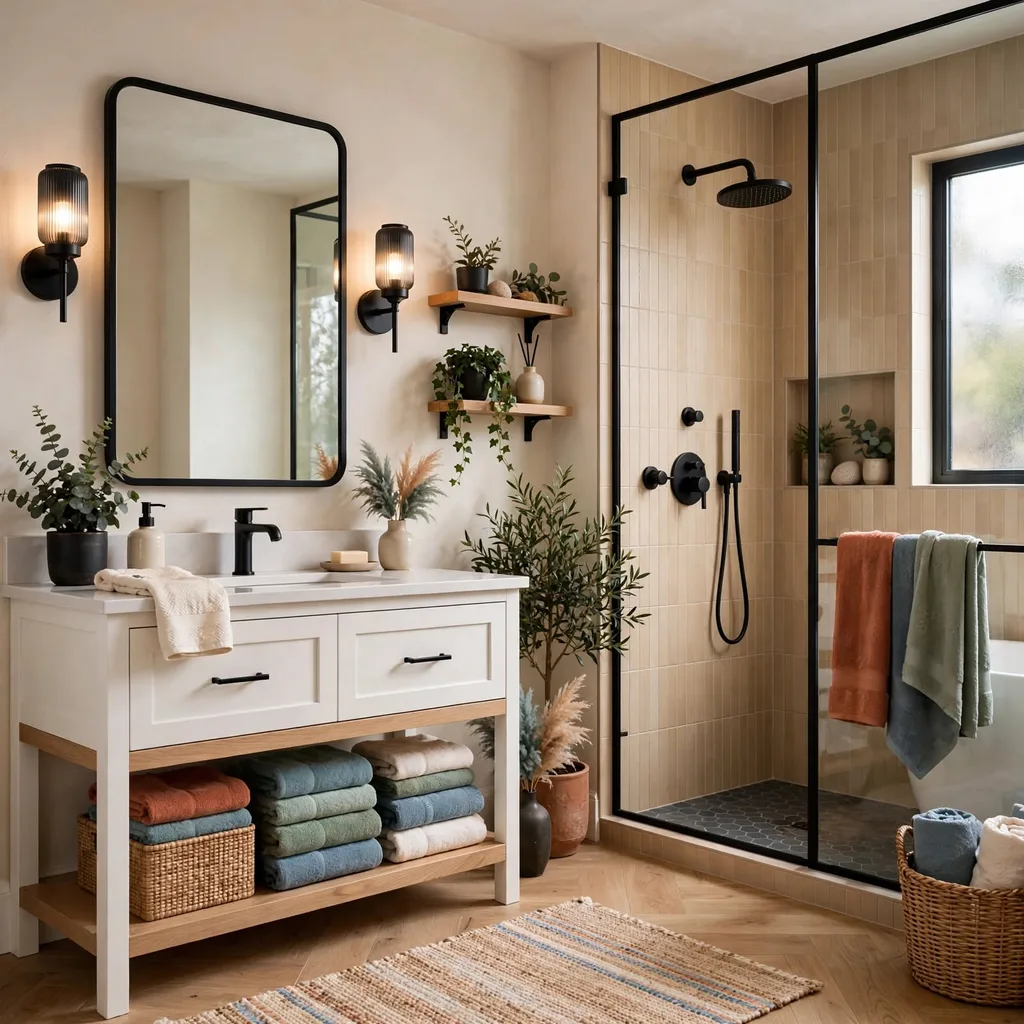
Matte black fixture accents, through a faucet, showerhead, or towel bar, provide grounding contrast within a japandi bathroom’s otherwise warm, earthy palette, reflecting the style’s Scandinavian half more directly than its Japanese influences. Limiting this black accent to just one or two fixture categories, rather than applying it throughout every element in the room, keeps the detail feeling intentional rather than overused. This pairing works particularly well against a lighter wood vanity, echoing the light-and-dark material contrast common throughout japandi design generally.
10. Shoji-Inspired Window or Shower Screen
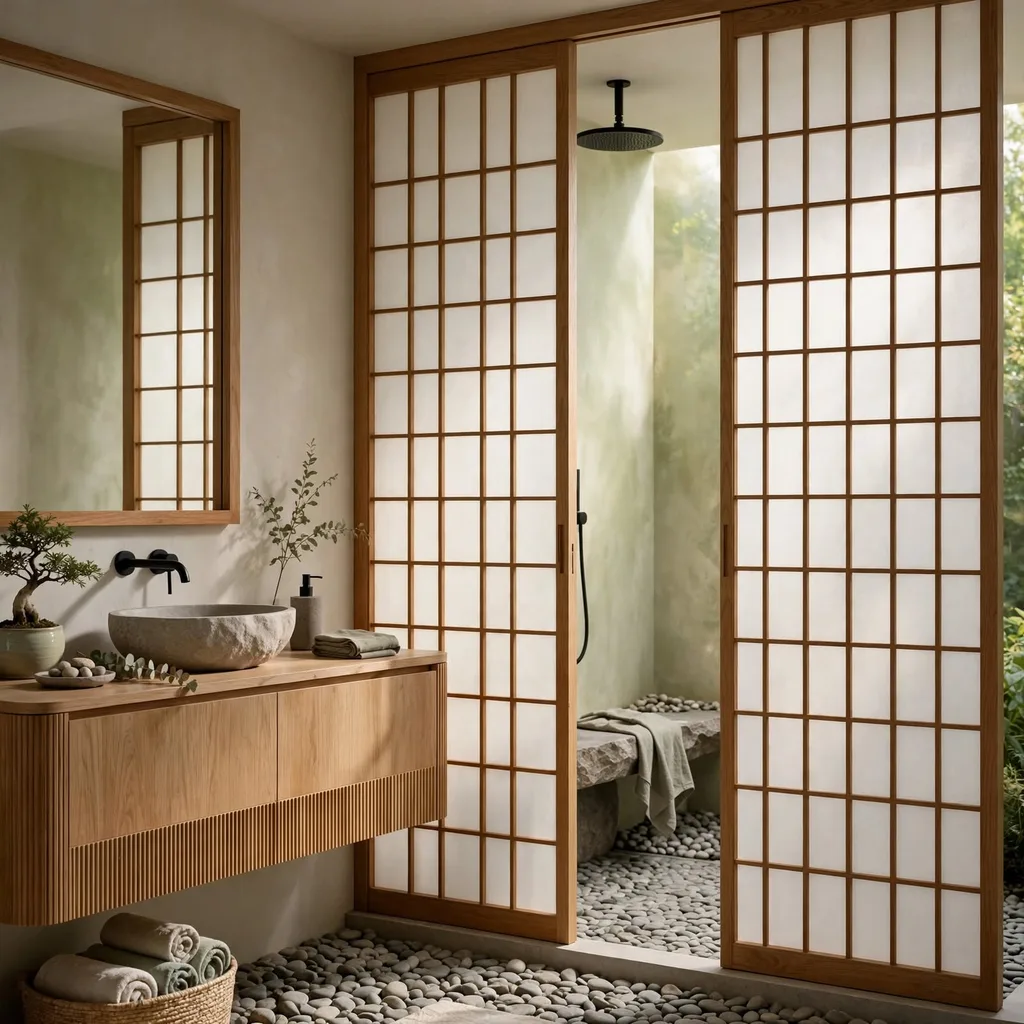
A shoji-inspired screen, using a simple wood lattice frame with translucent paneling, can serve as either a window treatment or a shower partition within a japandi bathroom, referencing traditional Japanese room dividers while providing genuine function within the space. This detail requires moisture-appropriate materials if used near a shower specifically, differing from the paper and wood construction of a traditional shoji screen used elsewhere in a home. This screen style adds a distinctive linear pattern and soft, filtered light quality that a standard glass or curtain treatment doesn’t provide.
11. Exposed Wood Beam or Ceiling Detail
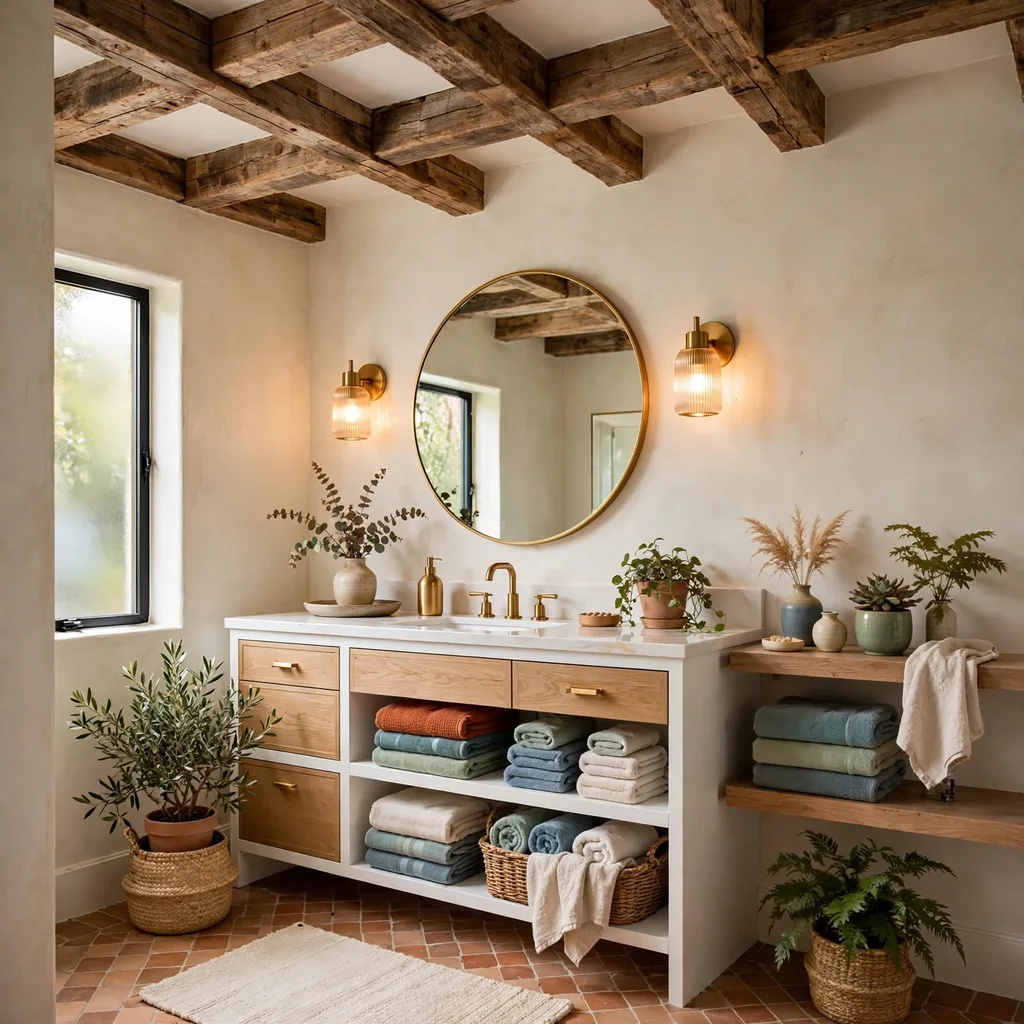
An exposed or applied wood beam ceiling detail, in a natural or lightly treated finish, extends japandi’s material honesty upward into a bathroom’s often-overlooked ceiling surface. This detail works particularly well in a bathroom with adequate ceiling height, where the beams add texture and warmth without requiring additional furniture or decor to balance their visual weight. Ensuring any wood used in this application is appropriately sealed or treated for the room’s humidity protects the material’s longevity in this specific, moisture-prone application.
12. Woven Basket Storage
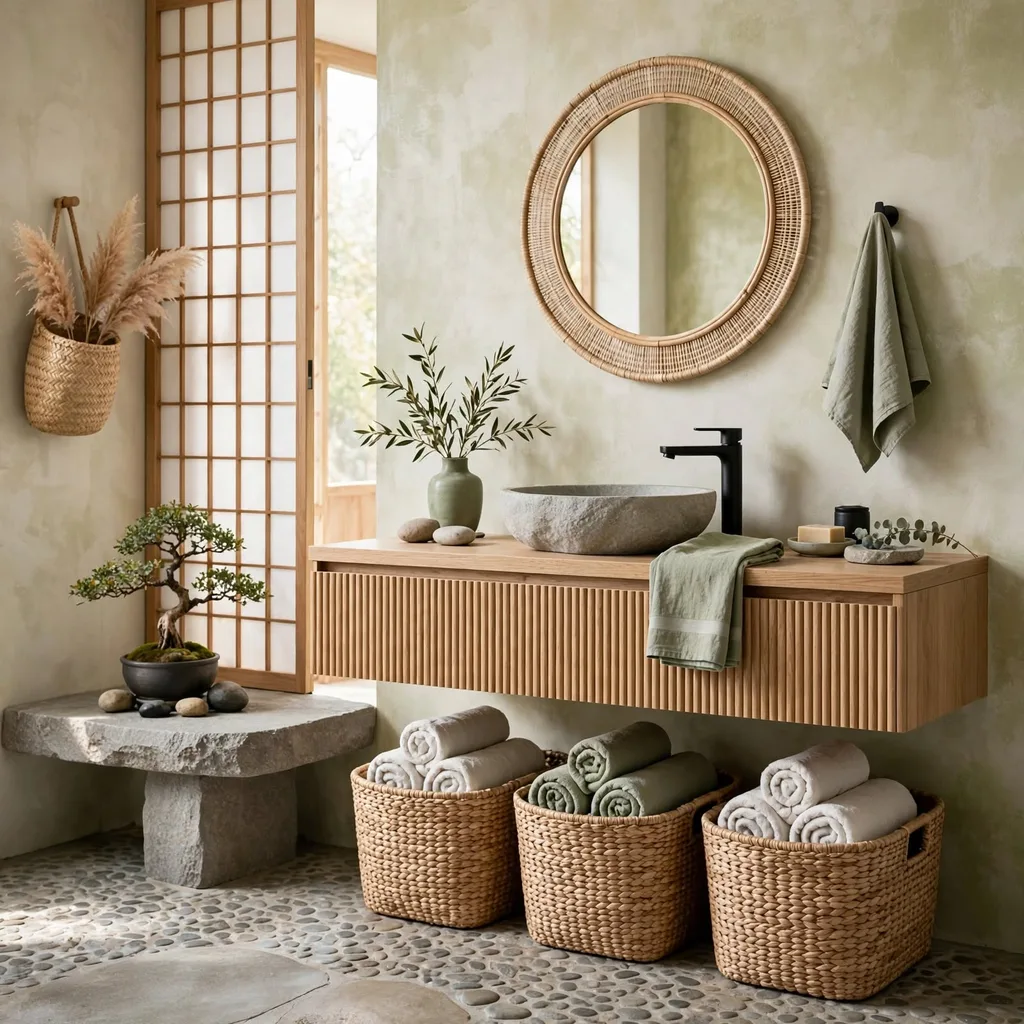
Woven baskets, in seagrass or a similar natural fiber, provide a japandi bathroom’s storage needs, towels, extra toiletries, and bath accessories, with genuine organic texture that a plastic or metal bin doesn’t offer. Choosing baskets in varying heights, grouped in twos or threes, creates visual rhythm while keeping the room’s overall storage feeling considered rather than purely utilitarian. This detail also reflects the style’s broader preference for functional objects that carry genuine handmade or natural material character.
13. Low, Grounded Furniture Silhouette
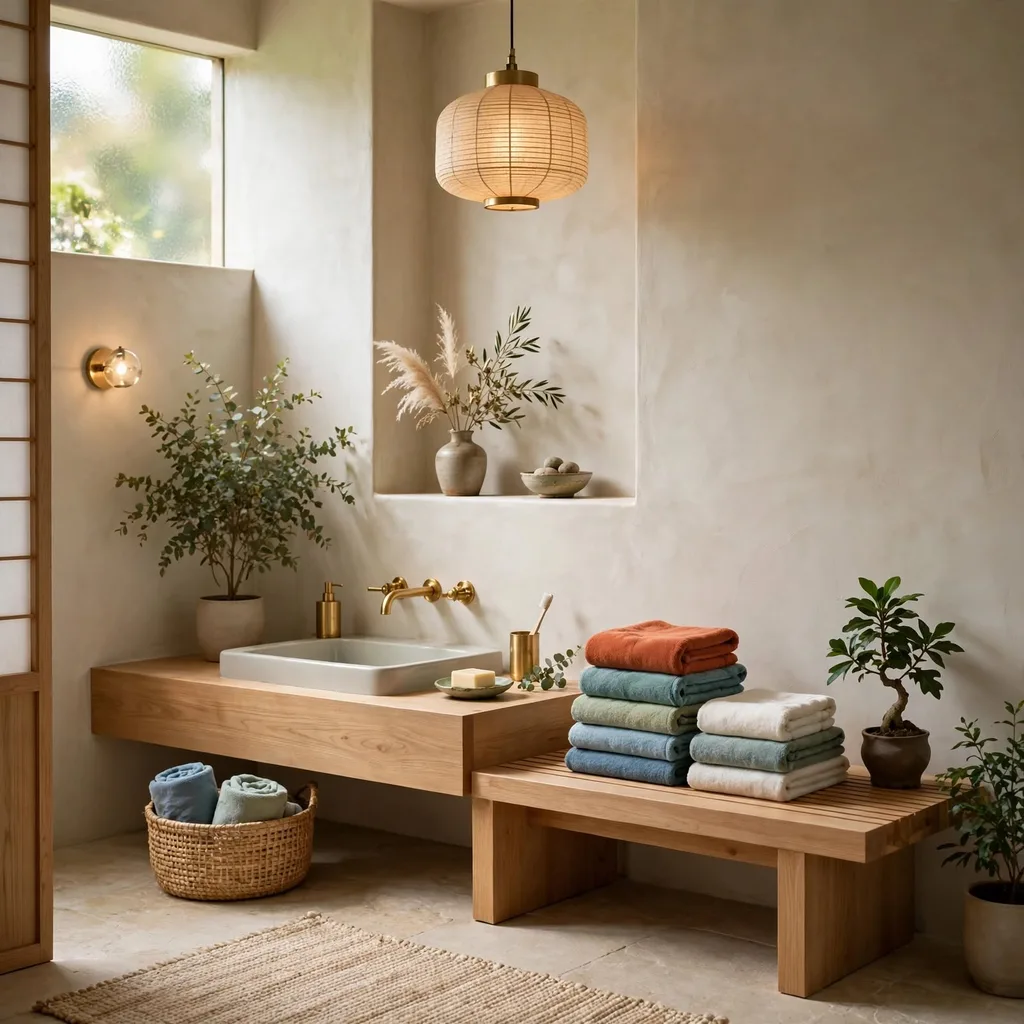
Choosing any freestanding furniture within a japandi bathroom, a small stool, a low shelving unit, in a deliberately low, grounded silhouette rather than taller, more vertical pieces reflects the same horizontal proportion emphasis found throughout japandi living spaces. This low profile also references traditional Japanese floor-level living and bathing culture more directly than a taller, more standard Western furniture height would. This detail matters particularly for any bathroom furniture positioned near the tub, reinforcing the grounded, ritual quality of the bathing experience itself.
14. Negative Space as an Intentional Design Choice
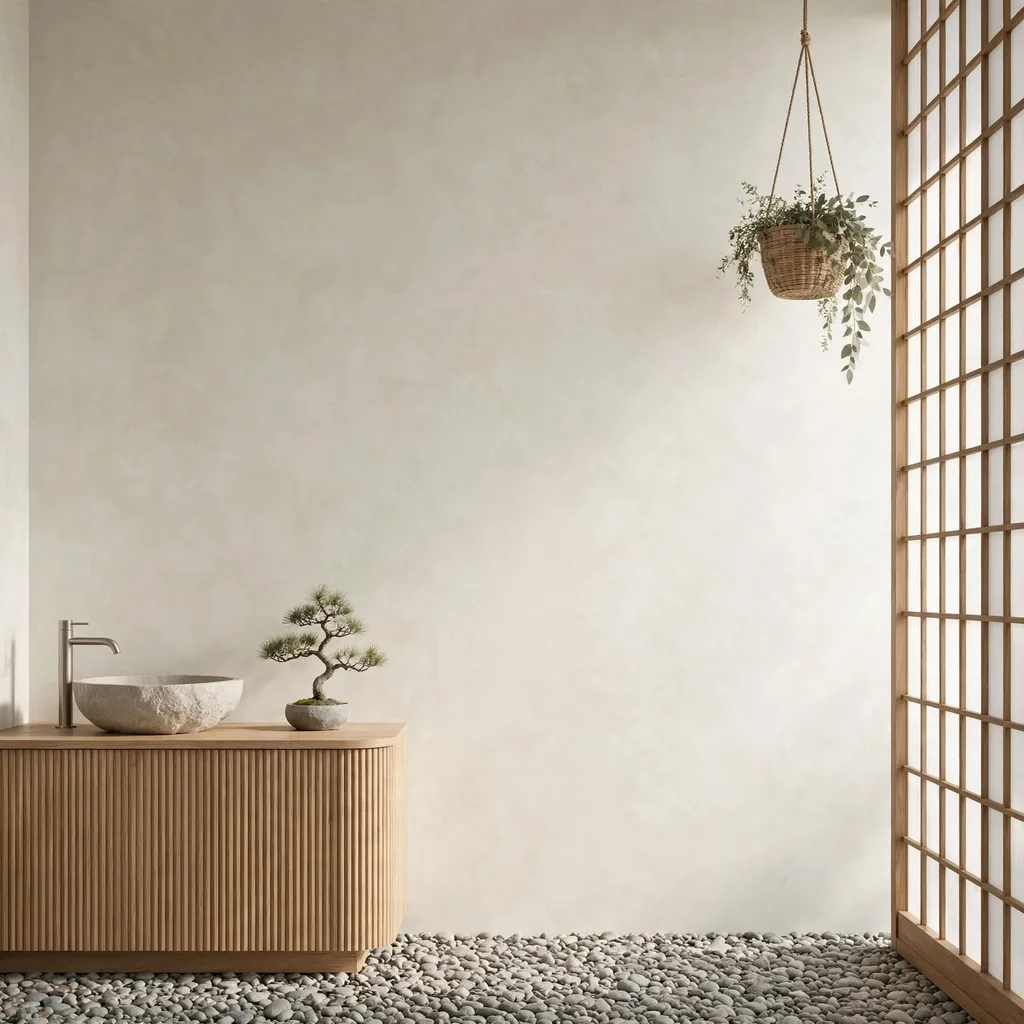
Deliberately keeping a japandi bathroom’s surfaces uncluttered, with only a small number of intentionally chosen objects displayed at any time, reflects the same emphasis on negative space found throughout japandi design generally. This restraint applies to the vanity counter, any open shelving, and the room’s overall accessory count, favoring calm and order over decorative density. This principle matters particularly in a bathroom, where genuine clutter, extra product bottles, miscellaneous items, can accumulate easily without ongoing attention to this restraint.
15. Handmade Ceramic Accessories
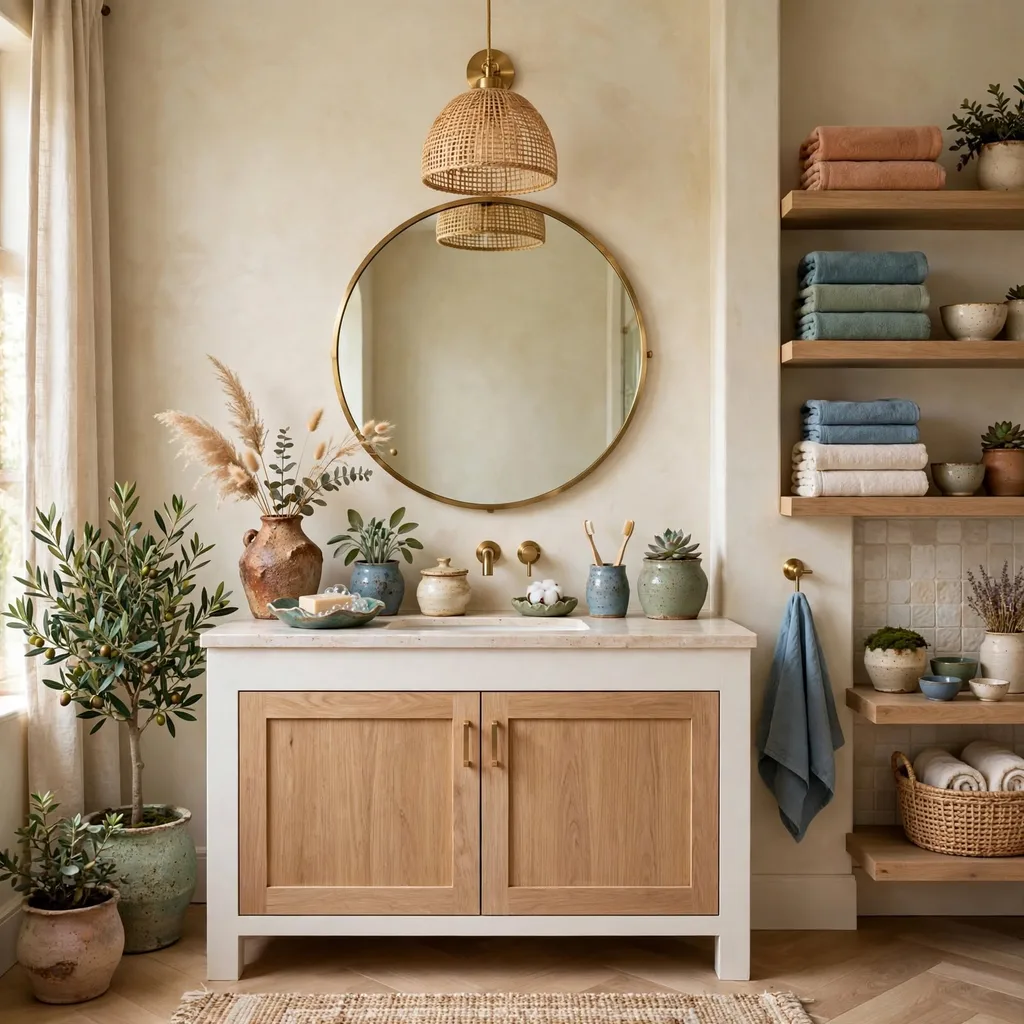
Handmade ceramic soap dishes, toothbrush holders, and small vessels, each carrying slight variation and visible texture rather than uniform, mass-produced perfection, reinforce a japandi bathroom’s embrace of material imperfection as a genuine design value. Sourcing these small accessories from independent potters or small studios, where possible, produces pieces most consistent with the style’s handmade, considered character. These small details, while individually minor, collectively reinforce the room’s overall commitment to authentic material honesty over purely functional, characterless accessories.
Shop the Look
Start with a stone vessel sink, a floating white oak vanity, and matte black fixtures for grounding contrast. Add a deep soaking tub with a low wooden bathing stool nearby, a wood slat mat, and a paper pendant light rated for bathroom use. Finish with handmade ceramic accessories, a single sculptural plant, and woven baskets for towel storage.
Common Mistake to Avoid
A common mistake in japandi bathroom design is treating the style as simply a lighter version of Scandinavian bathroom design, relying entirely on bright white surfaces without incorporating the deeper earth tones and genuine material imperfection that distinguish japandi’s Japanese influences. A successful japandi bathroom specifically balances Scandinavian brightness with Japanese groundedness and texture, meaning a room that skips the warmer, more textured half of this pairing misses a core part of what makes the style distinct. Ensuring both influences remain genuinely present, not just the lighter, more familiar Scandinavian half, produces a more authentic result.
FAQs
How is a japandi bathroom different from a Scandinavian bathroom?
A japandi bathroom incorporates deeper earth tones, more visible material texture, and specific references to Japanese bathing culture, like a low wooden stool or a deep soaking tub, that a purely Scandinavian bathroom, generally brighter and more uniformly pale, typically doesn’t include. Scandinavian bathroom design tends to prioritize light, functional simplicity above all else, while japandi specifically balances that Scandinavian brightness with Japanese wabi-sabi principles emphasizing texture and imperfection. Both styles share a restrained, uncluttered foundation, but japandi generally reads as warmer and more textured than a strictly Scandinavian bathroom.
What materials are essential to japandi bathroom design?
Natural wood, particularly oak, walnut, or a water-resistant species like teak or hinoki cypress, along with natural stone and handmade ceramics, form the core material palette of japandi bathroom design, replacing the more uniform tile and chrome typical of a standard contemporary bathroom. Choosing materials with visible natural variation, wood grain, an uneven glaze, matters more to this style than selecting perfectly uniform, mass-produced surfaces. Matte black metal accents provide the style’s primary contrast material, typically applied more sparingly than the natural wood and stone that carry the room’s overall material identity.
Is a japandi bathroom practical for daily use with the wood elements involved?
Choosing appropriately water-resistant wood species, teak, cedar, or hinoki cypress, and ensuring any wood elements are properly sealed or treated for bathroom humidity makes japandi bathroom design genuinely practical for daily use despite its wood-forward material palette. Positioning wood elements slightly away from the most direct water exposure, like a vanity rather than inside a shower stall itself, further protects these materials over time. With appropriate material selection and maintenance, a japandi bathroom performs just as reliably as a bathroom built around more conventional tile and ceramic materials.
Can I incorporate japandi elements into an existing bathroom without a full renovation?
Adding a wood slat bath mat, handmade ceramic accessories, a single sculptural plant, and woven storage baskets can introduce meaningful japandi character into an existing bathroom without requiring any structural or plumbing changes. Swapping fixture hardware to matte black and introducing warmer, more muted-toned towels and accessories further reinforces the aesthetic using purely cosmetic, easily reversible changes. A full renovation, incorporating elements like a stone vessel sink or a deep soaking tub, allows for a more complete japandi transformation but isn’t required to bring meaningful elements of the style into an existing space.
What plants work well in a japandi bathroom given the humidity?
Plants that genuinely tolerate higher humidity and lower light conditions, such as certain fern varieties, pothos, or a small bonsai positioned near a window with adequate light, generally perform best in a japandi bathroom’s specific environmental conditions. Choosing just one or two considered, well-placed plants, rather than several scattered throughout the room, aligns with the style’s overall preference for restraint and negative space. Confirming a specific plant variety’s actual light and humidity needs against the bathroom’s real conditions, rather than assuming any houseplant will thrive there, helps this detail remain a genuine long-term feature.
Conclusion
A japandi bathroom succeeds by genuinely balancing Japanese material honesty and grounded ritual with Scandinavian brightness and restraint, rather than defaulting to a lighter, more familiar Scandinavian bathroom alone. Save this guide to Pinterest for reference while planning your next update, and check out our related post on japandi living room ideas for a related take on this material-driven, calming design approach.