15 Amazing Bathroom Mirror Ideas Beyond the Standard Rectangle
A bathroom mirror Ideas serves an obvious daily function, but its shape, frame, and lighting integration affect the room’s overall character as much as any single fixture choice. This guide covers fifteen bathroom mirror ideas, from arched silhouettes to fully integrated smart mirrors, with guidance on sizing, placement, and pairing each style with the right vanity and lighting setup. Every idea addresses both the mirror’s practical function and its contribution to the room’s design.
Trend & Background
Bathroom mirror design has moved well beyond the standard framed or frameless rectangle, with arched, circular, and irregularly shaped mirrors all gaining popularity as homeowners seek more distinctive options than a builder-grade default. This shift mirrors broader interior design trends toward curved, organic silhouettes replacing the sharper, more uniform shapes common in previous design periods. Integrated lighting, backlit or edge-lit mirrors with built-in LED sources, has also become considerably more accessible and affordable, moving from a luxury-only feature into a widely available option even for moderate-budget bathroom updates.
Key Takeaways
- A bathroom mirror should be sized proportionally to the vanity beneath it, generally no wider than the counter itself.
- Shape alone can shift a bathroom’s entire character, softening a boxy room or reinforcing a more geometric, contemporary one.
- Integrated lighting and smart features have become widely available even at moderate price points, not just in high-end renovations.
- A double vanity benefits from either two matching mirrors or one continuous piece, but rarely from two mismatched ones.
Bathroom Mirror Ideas
Explore the best bathroom mirror ideas, including modern designs, tile inspiration, color schemes, storage, lighting, showers, vanities, and stylish decorating ideas for every home.
1. Arched Mirror for Softened Geometry
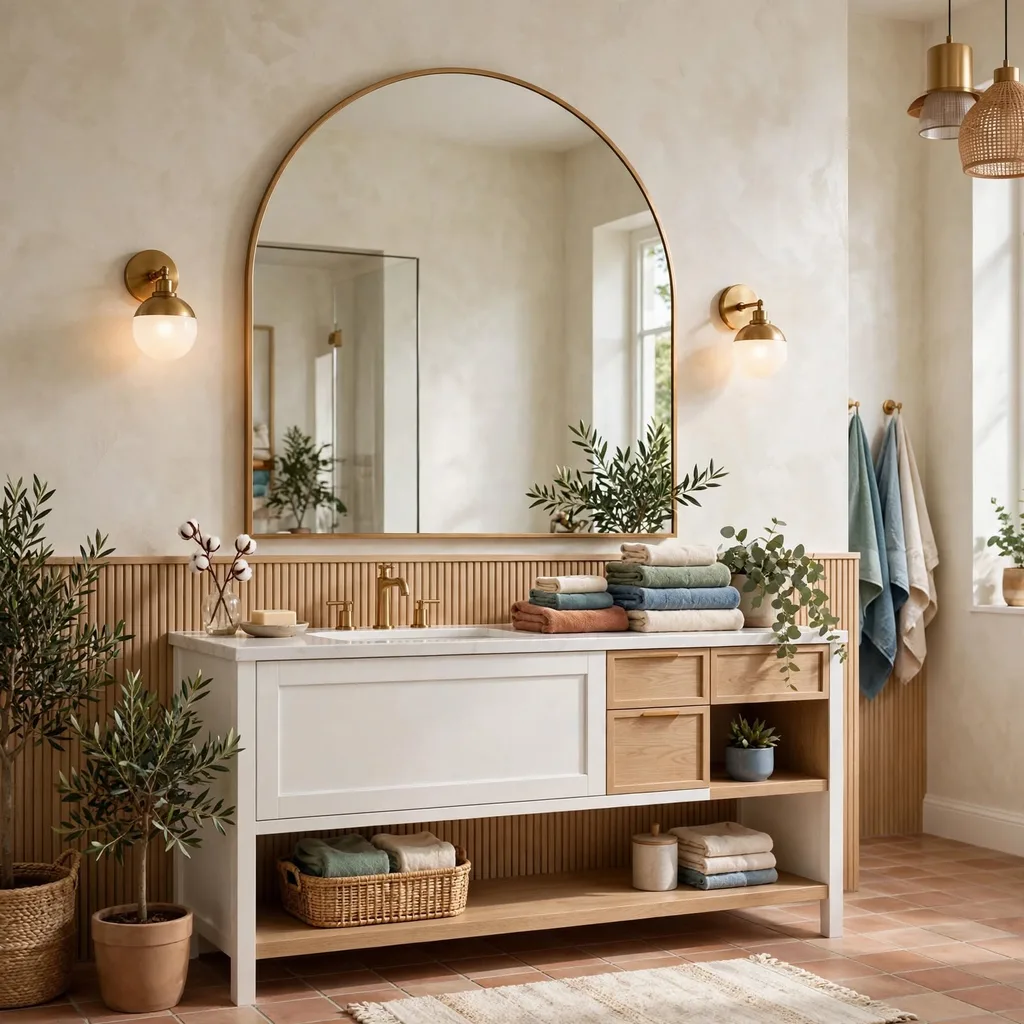
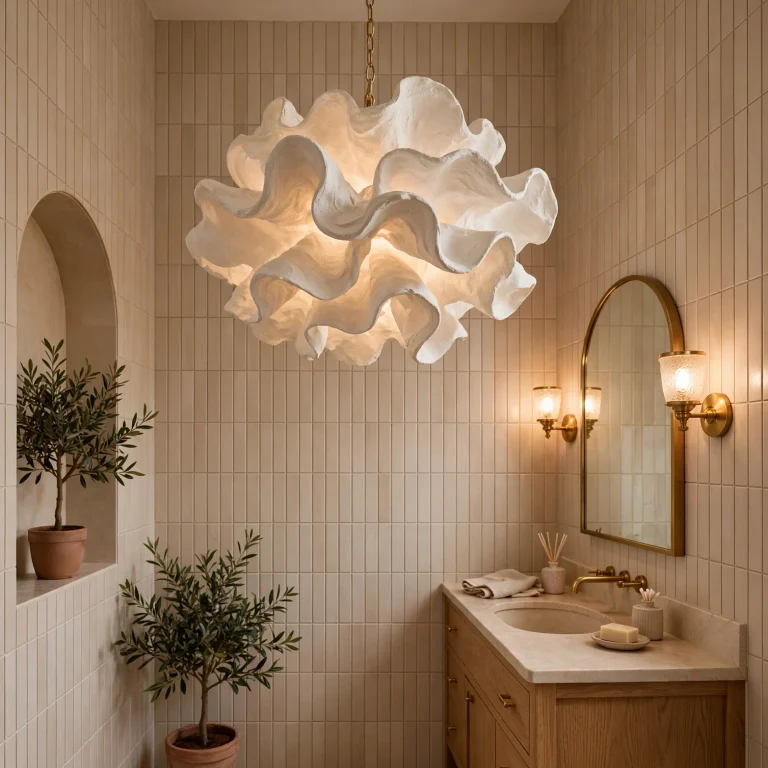
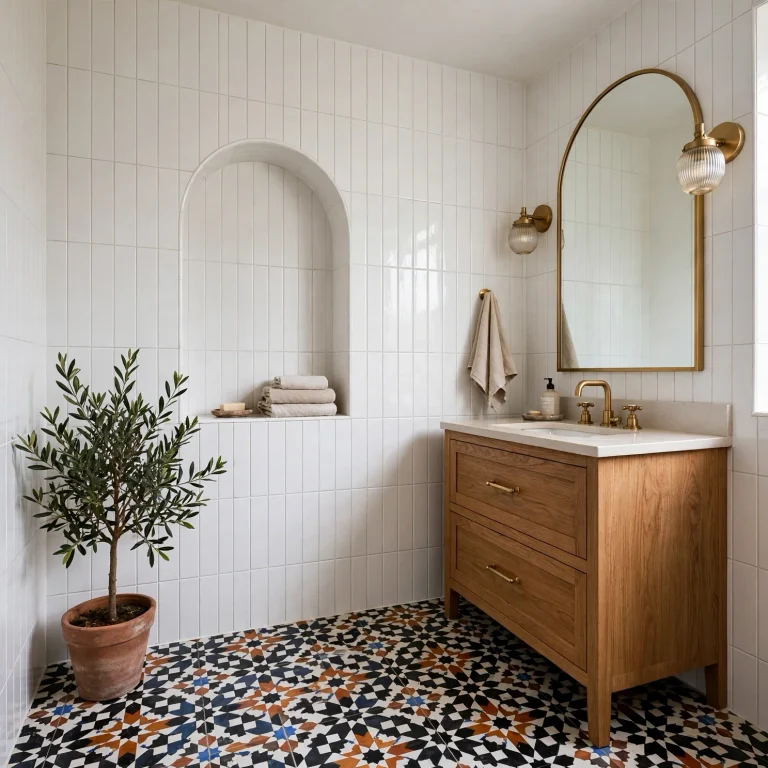
An arched mirror, with a rounded top rather than a fully rectangular shape, softens a bathroom’s often boxy, angular geometry, particularly effective paired with a straight-edged vanity and square tile. This shape suits both traditional and contemporary bathrooms, reading as classic in one context and softly modern in another depending on the surrounding fixtures and frame material. Choosing a slim metal or wood frame keeps the arch feeling current rather than ornate.
2. Circular Mirror as a Focal Point
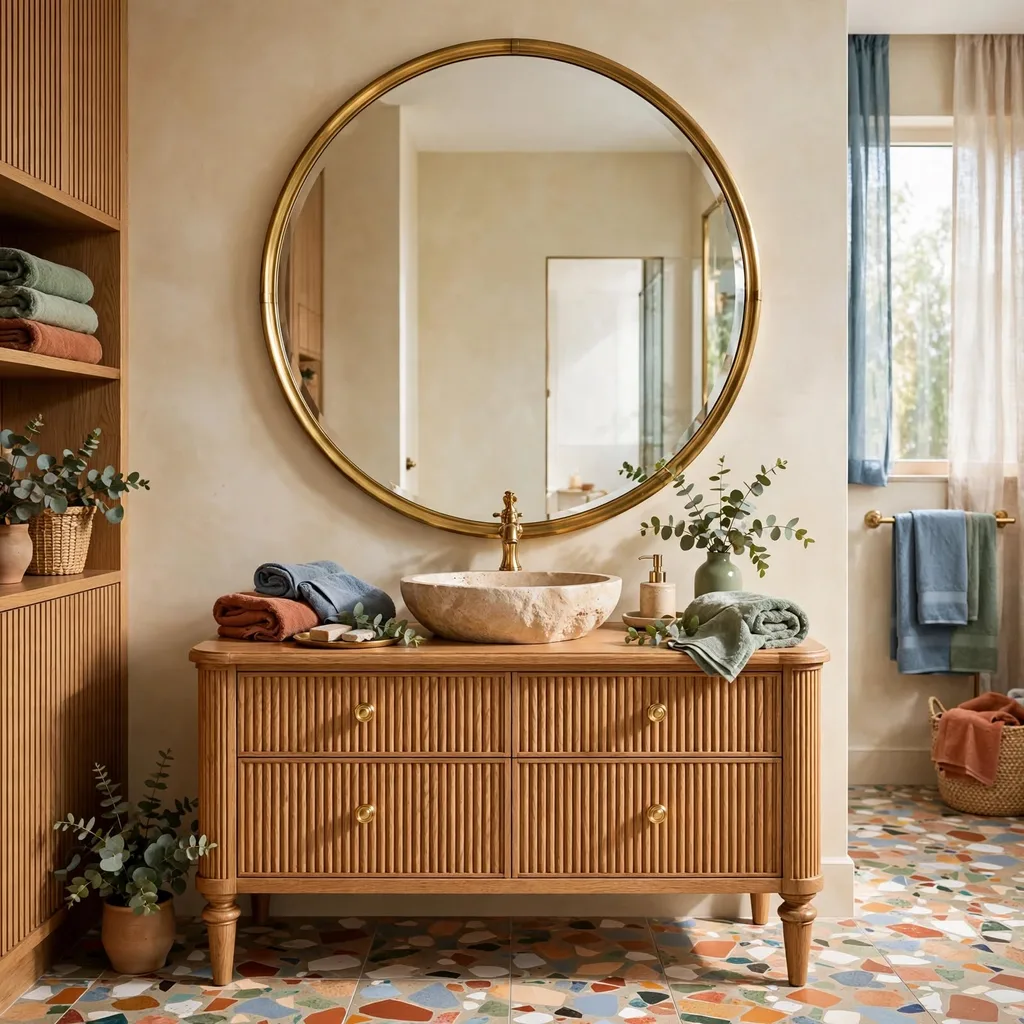
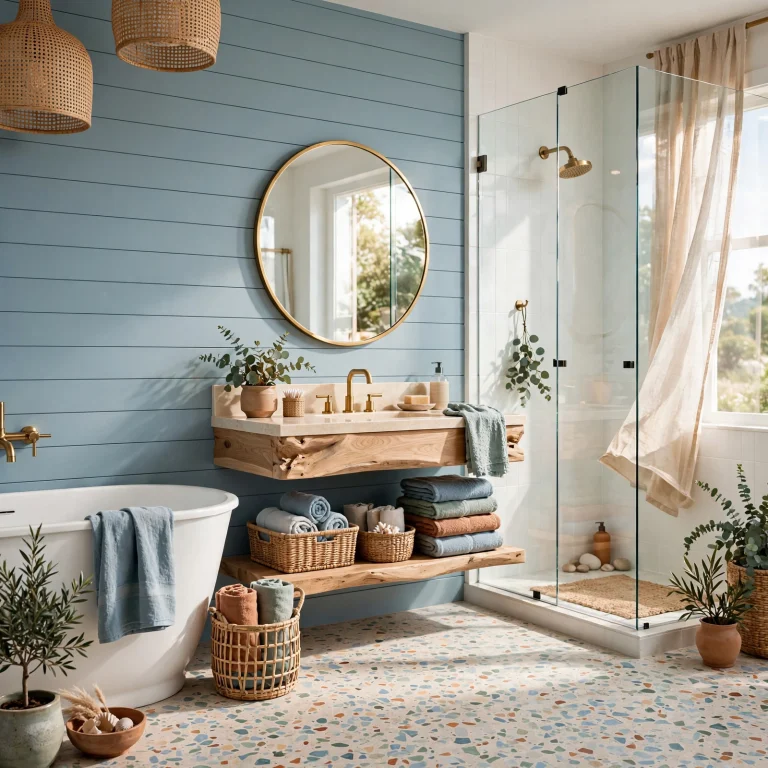
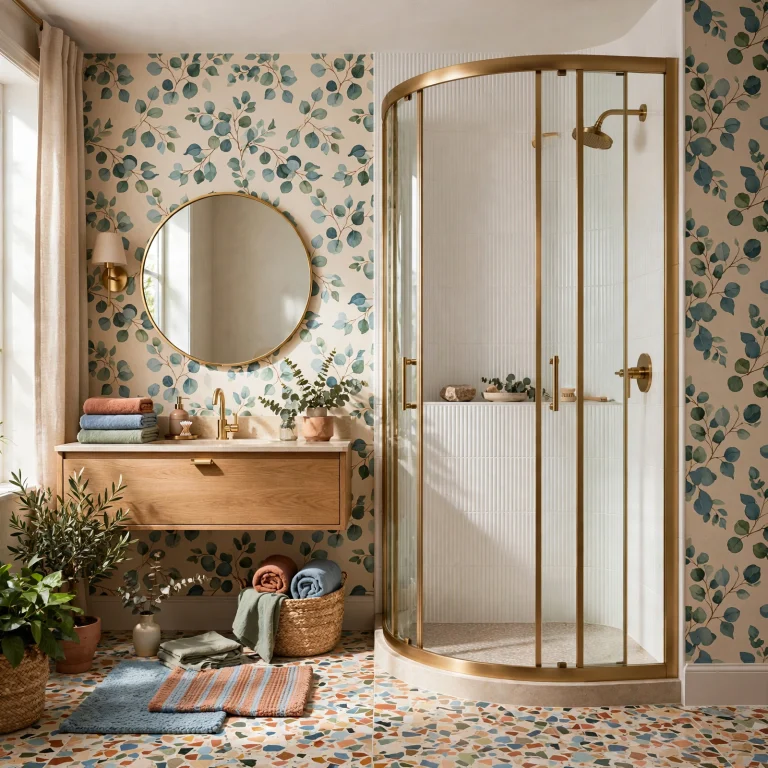
A circular mirror, particularly in a larger scale relative to the vanity beneath it, provides a strong, clean focal point that suits a minimalist or contemporary bathroom’s preference for simple geometric forms. This shape works especially well paired with a rectangular vanity, offering intentional contrast between the mirror’s round silhouette and the counter’s straight lines below. Choosing a thin frame or a fully frameless circular mirror keeps this shape from feeling overly heavy within the room.
3. Backlit Mirror With Integrated LED Lighting
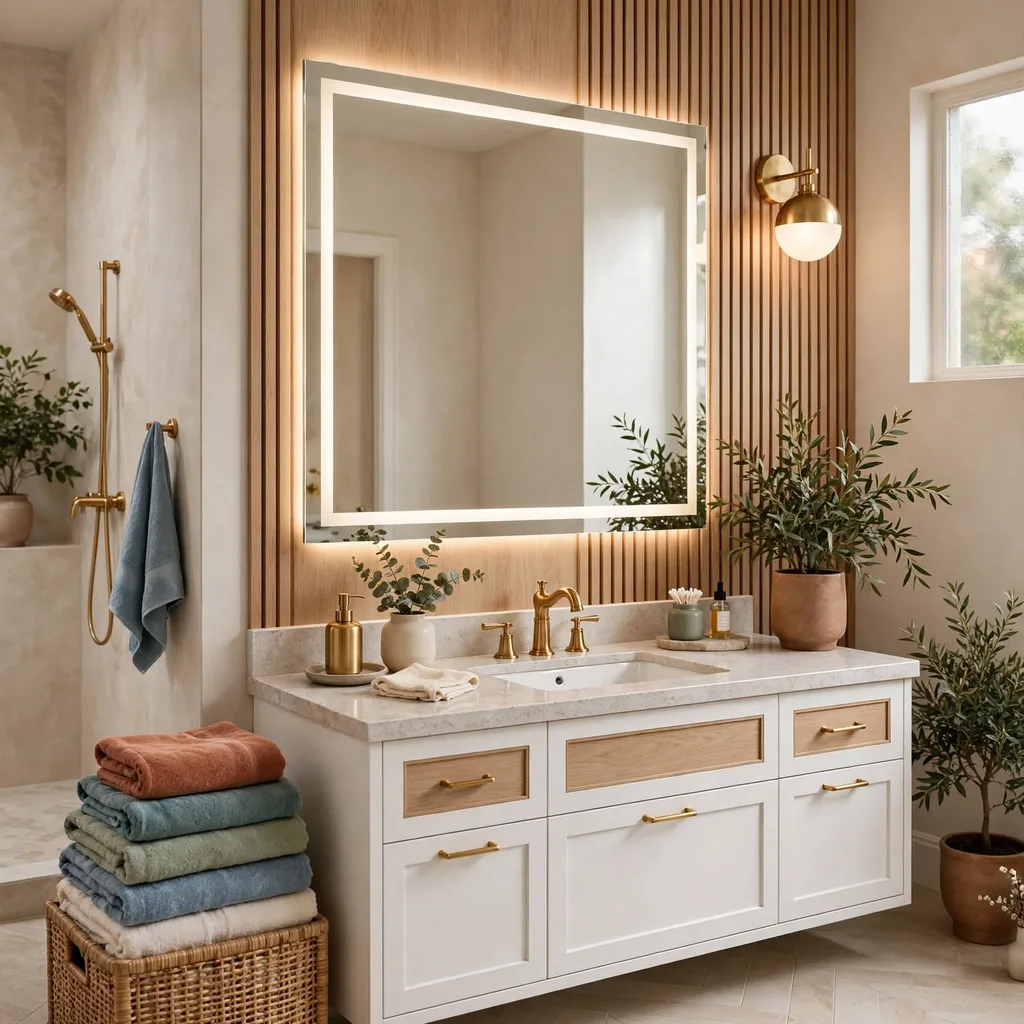
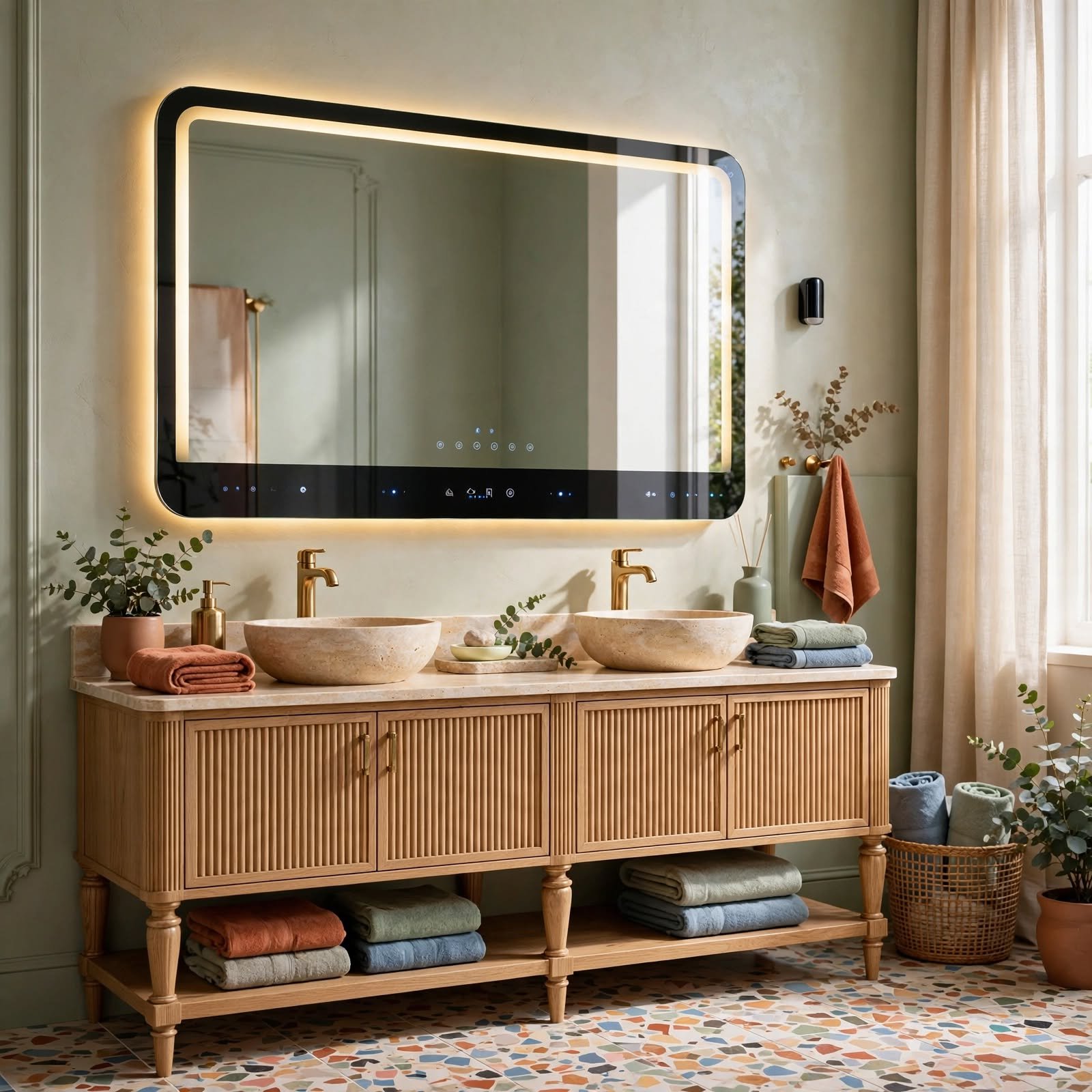
A backlit mirror, with LED lighting built into its edge or shining through a frosted perimeter, combines function and design into a single fixture, reducing the need for separate visible sconces or vanity lights. This style provides notably even, shadow-reducing illumination directly at face level, an improvement over a single overhead or side-positioned fixture. Choosing a mirror with adjustable color temperature adds further flexibility, allowing the light to shift between a brighter, cooler tone for grooming tasks and a warmer glow for evening use.
| Mirror Shape | Best Paired Vanity | Effect |
| Arched | Straight-edged, traditional | Softens geometry |
| Circular | Rectangular, minimalist | Strong focal contrast |
| Full wall-to-wall | Double vanity, wide counter | Maximum light reflection |
| Irregular/organic | Simple, unadorned vanity | Sculptural statement |
4. Full Wall-to-Wall Mirror for Double Vanities
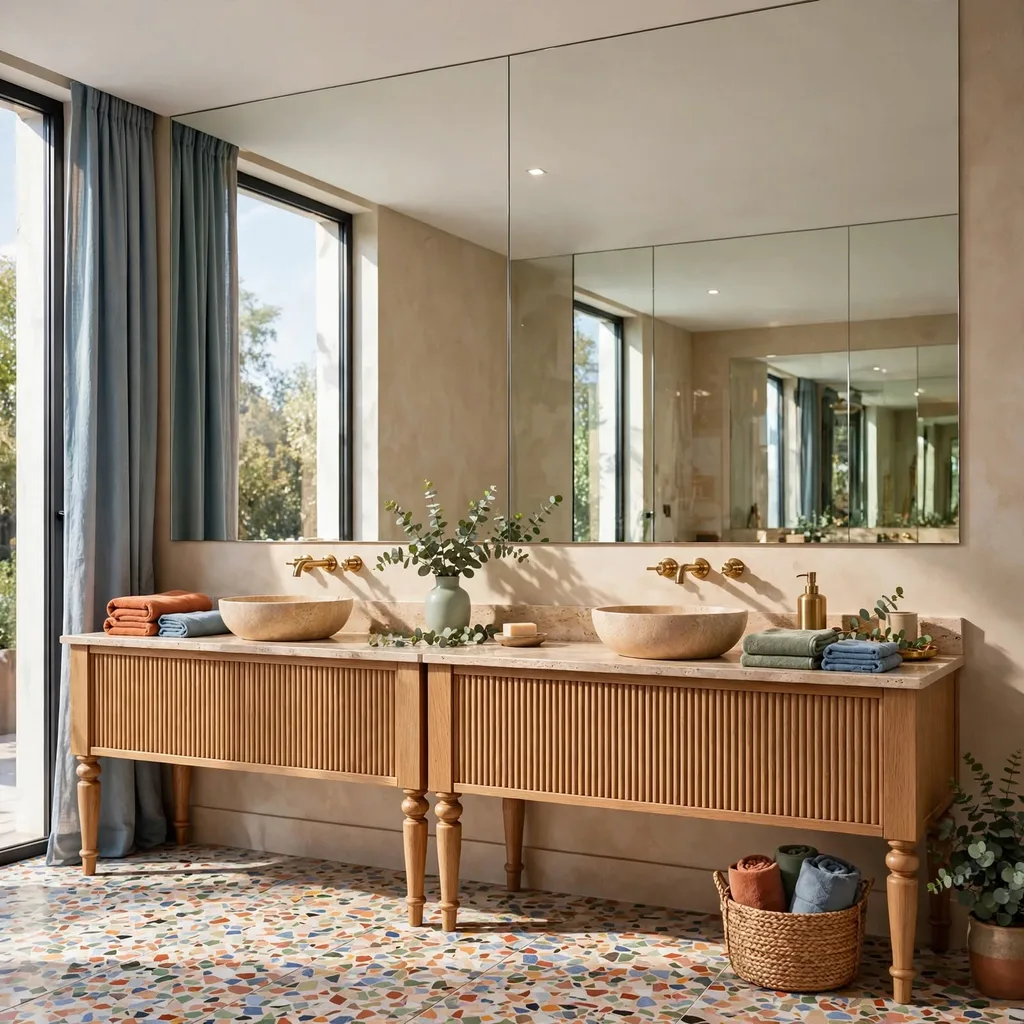
A single, continuous mirror spanning the full width of a double vanity, rather than two separate mirrors above each sink, creates a cohesive, expansive look while maximizing the amount of light reflected across the room. This approach works particularly well in a bathroom prioritizing a sense of spaciousness, since the uninterrupted mirror surface amplifies available natural and artificial light more effectively than two smaller mirrors with a wall gap between them. This style does sacrifice some of the individual personalization two separate mirrors might offer to each side of a shared vanity.
5. Sculptural Organic-Shaped Mirror
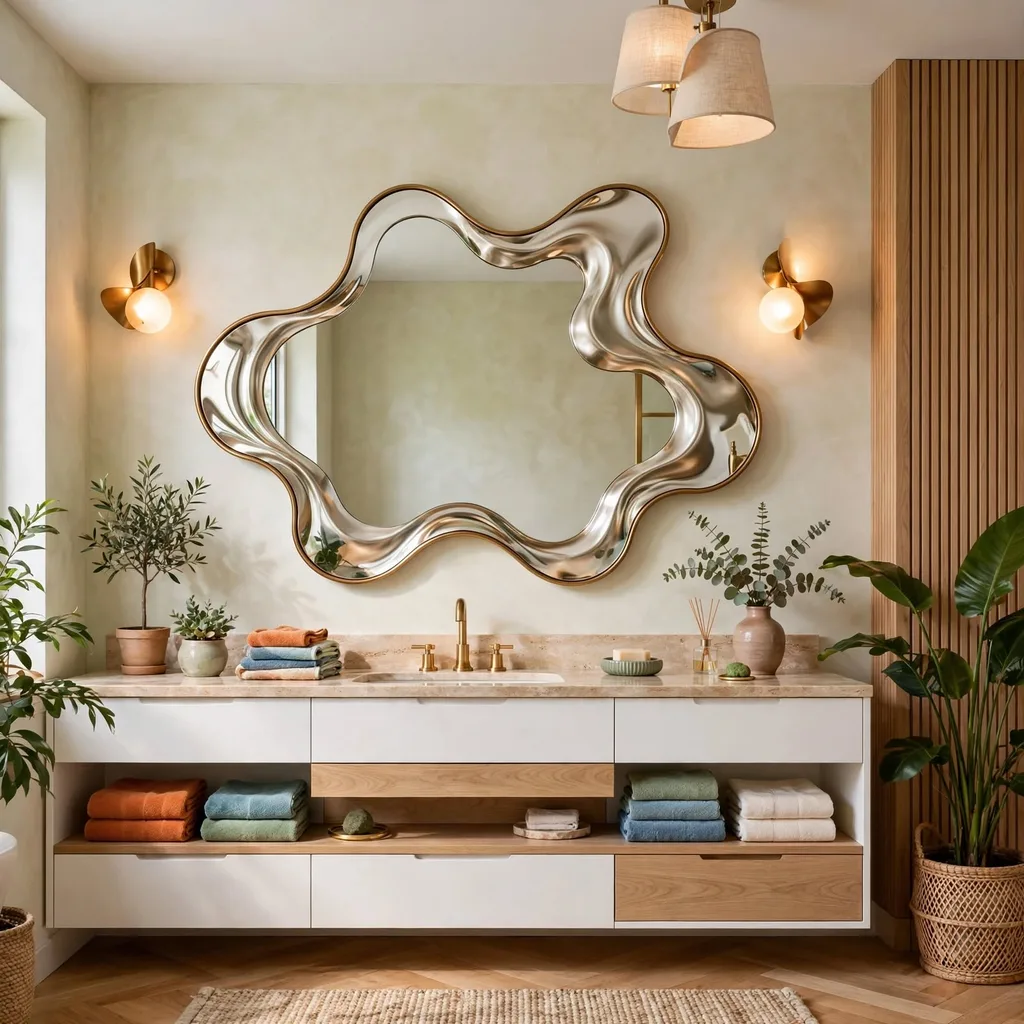
An irregularly shaped, organic mirror, following a freeform silhouette rather than any standard geometric shape, functions as a genuine art piece within a bathroom, particularly effective in a room that wants a distinctive design statement beyond a purely functional fixture. This style works best paired with simpler, more restrained surrounding elements, an unadorned vanity and minimal additional wall decor, allowing the mirror’s unusual shape to remain the room’s clear focal point. Choosing a mirror from a maker known for genuine craftsmanship, rather than a mass-produced version, often produces a more convincing, well-executed result with this style.
6. Smart Mirror With Integrated Technology
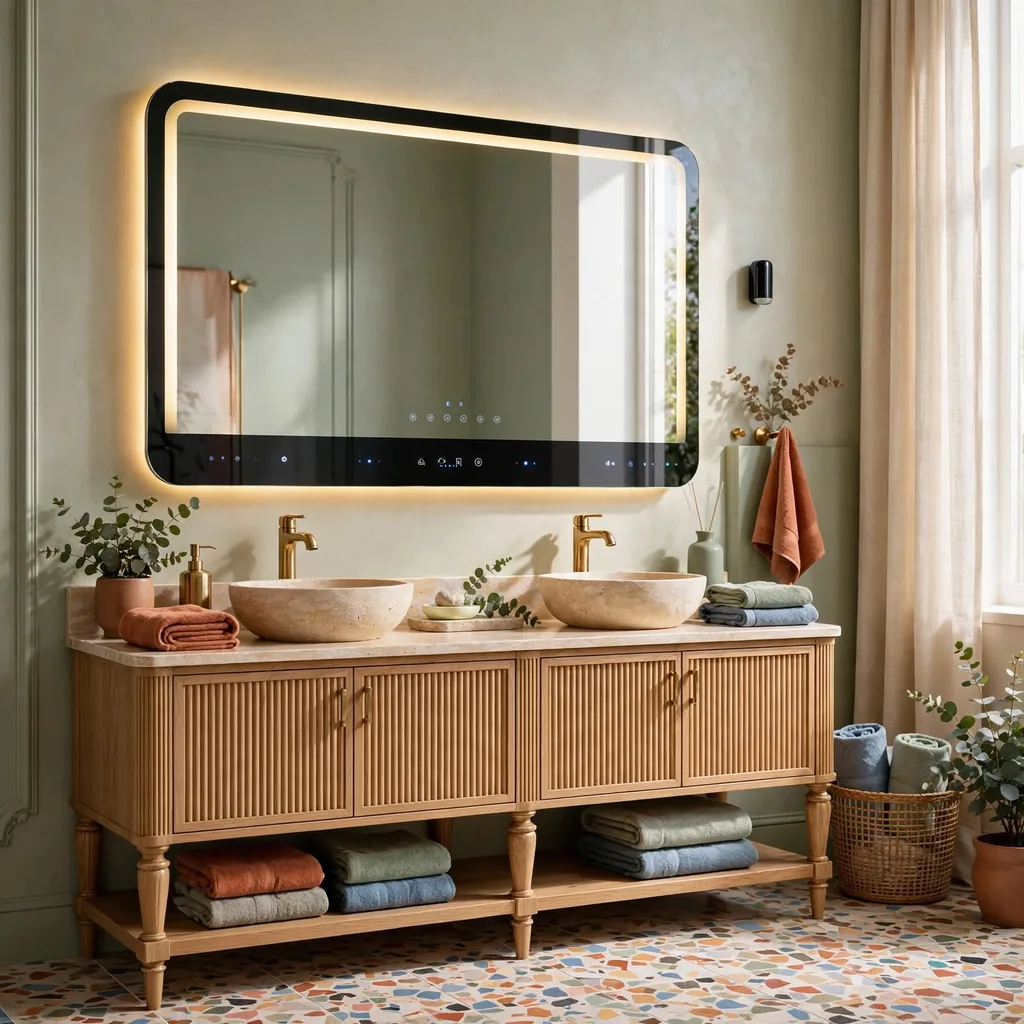
A smart mirror, incorporating features like a built-in display, voice control, or connected lighting adjustment, brings genuine technological function into a bathroom mirror beyond its purely reflective purpose. This style suits a contemporary or modern bathroom particularly well, where integrated technology aligns with the room’s overall clean-lined, tech-forward aesthetic. Confirming a specific smart mirror product’s moisture rating and installation requirements matters before purchase, given the bathroom’s consistent humidity exposure.
Explore creative bathroom vanity ideas to add texture, personality, and visual interest to your walls and floors.
7. Vintage or Antique Mirror Conversion
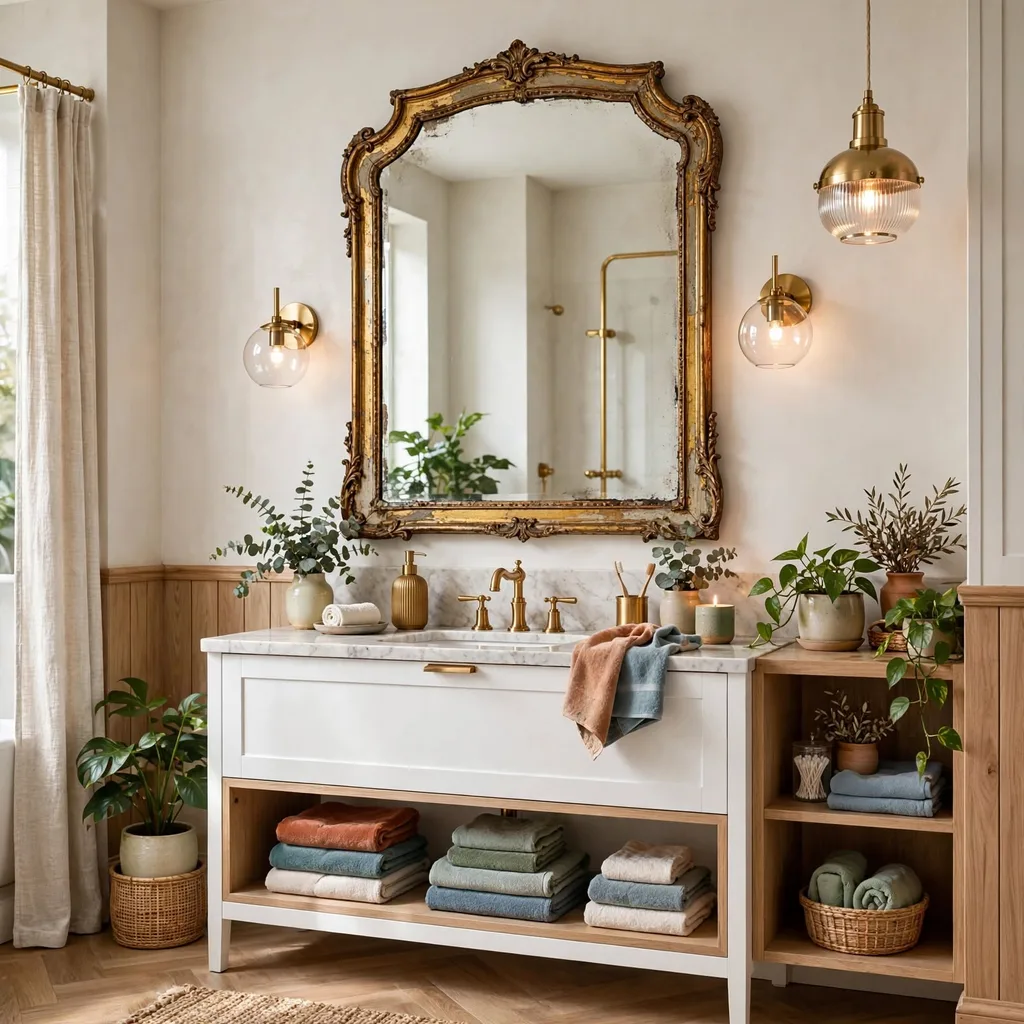
Incorporating a genuine vintage or antique mirror, sourced from an estate sale or antique dealer, brings authentic character and history to a bathroom that a new mirror, regardless of price, typically can’t replicate. This approach requires confirming the mirror’s backing and frame can tolerate the bathroom’s humidity without deteriorating, since older mirror backing wasn’t always manufactured with bathroom-specific moisture resistance in mind. This style suits a powder room or a primary bathroom with lower moisture exposure particularly well, given genuine antique materials’ greater sensitivity to constant humidity.
8. Two-Tier Mirror With Lower Magnifying Section
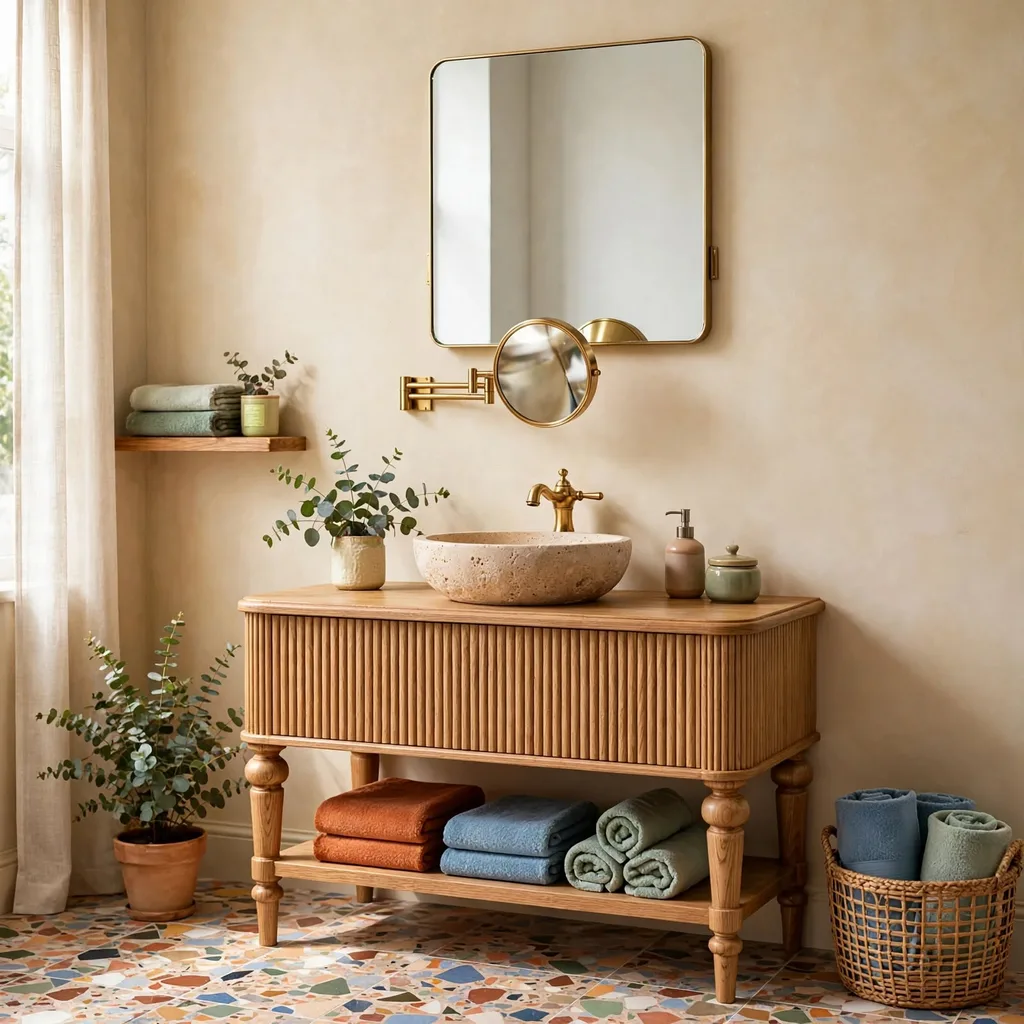
A two-tier mirror arrangement, combining a full-sized primary mirror with a smaller, separately mounted magnifying mirror positioned lower or to the side, addresses genuine grooming function needs, like applying makeup or shaving with more precision, without requiring a full magnifying mirror to dominate the vanity space. This approach works particularly well for a household that genuinely uses a magnifying mirror regularly, rather than treating it as an occasional or unnecessary addition. Choosing a magnifying mirror with an adjustable arm allows it to be positioned precisely when needed and tucked away against the wall otherwise.
9. Mirror With a Substantial Wood Frame
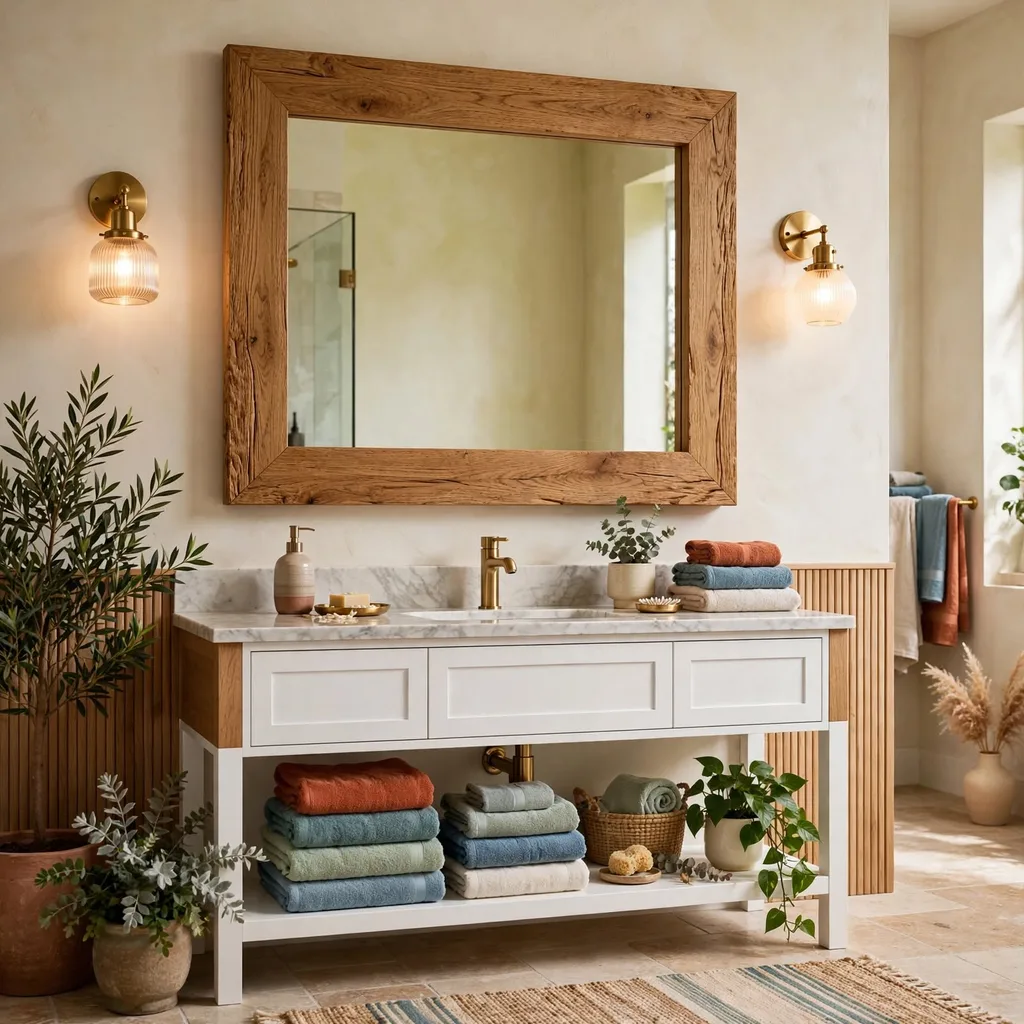
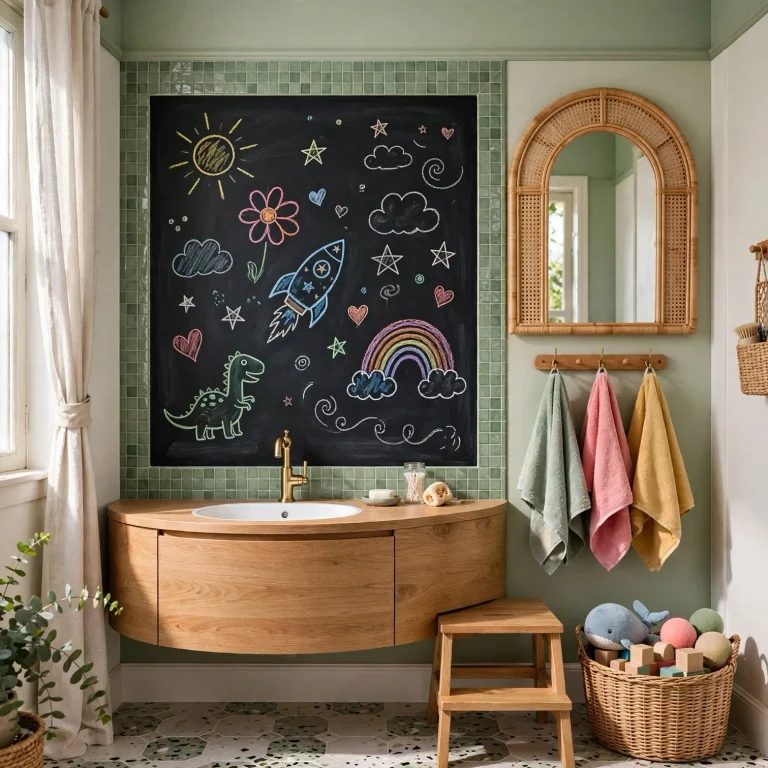
A mirror with a substantial, genuinely dimensional wood frame brings warmth and material texture to a bathroom that a thin metal or fully frameless mirror doesn’t provide. This style suits a japandi, Scandinavian, or organic modern bathroom particularly well, echoing the same natural wood material found in the vanity or other fixtures throughout the room. Choosing a frame finish that closely matches or intentionally complements the vanity’s wood tone helps this mirror feel integrated into the room’s broader material story rather than an unrelated addition.
10. Mirrored Medicine Cabinet for Function and Reflection
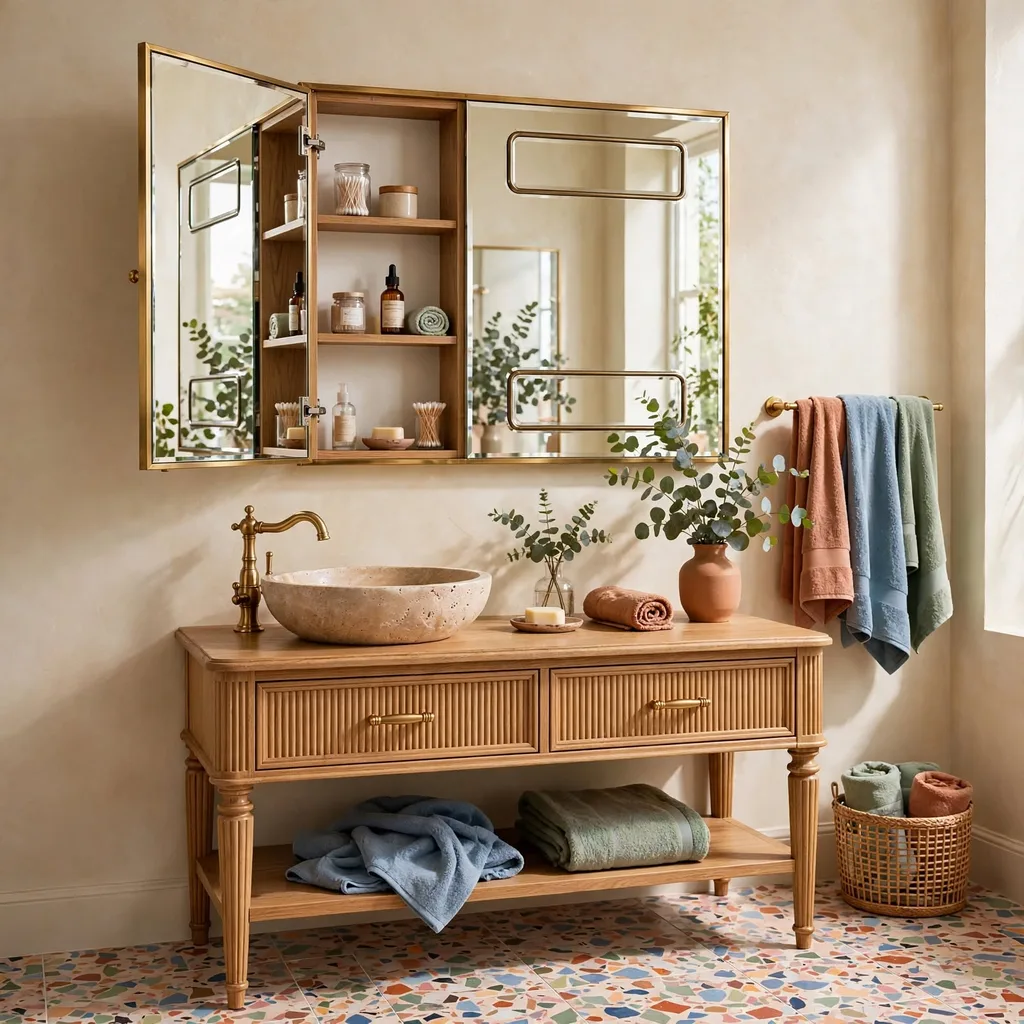
A mirrored medicine cabinet, combining a fully functional mirror surface with concealed storage behind it, addresses a bathroom’s mirror and storage needs simultaneously within a single fixture. This approach works particularly well in a smaller bathroom where separate mirror and storage solutions would consume more combined wall space than a single integrated fixture. Choosing a recessed installation, built into the wall cavity rather than surface-mounted, produces a cleaner, more streamlined final appearance despite requiring more involved installation.
11. Mixed-Metal Mirror Frame for Contrast
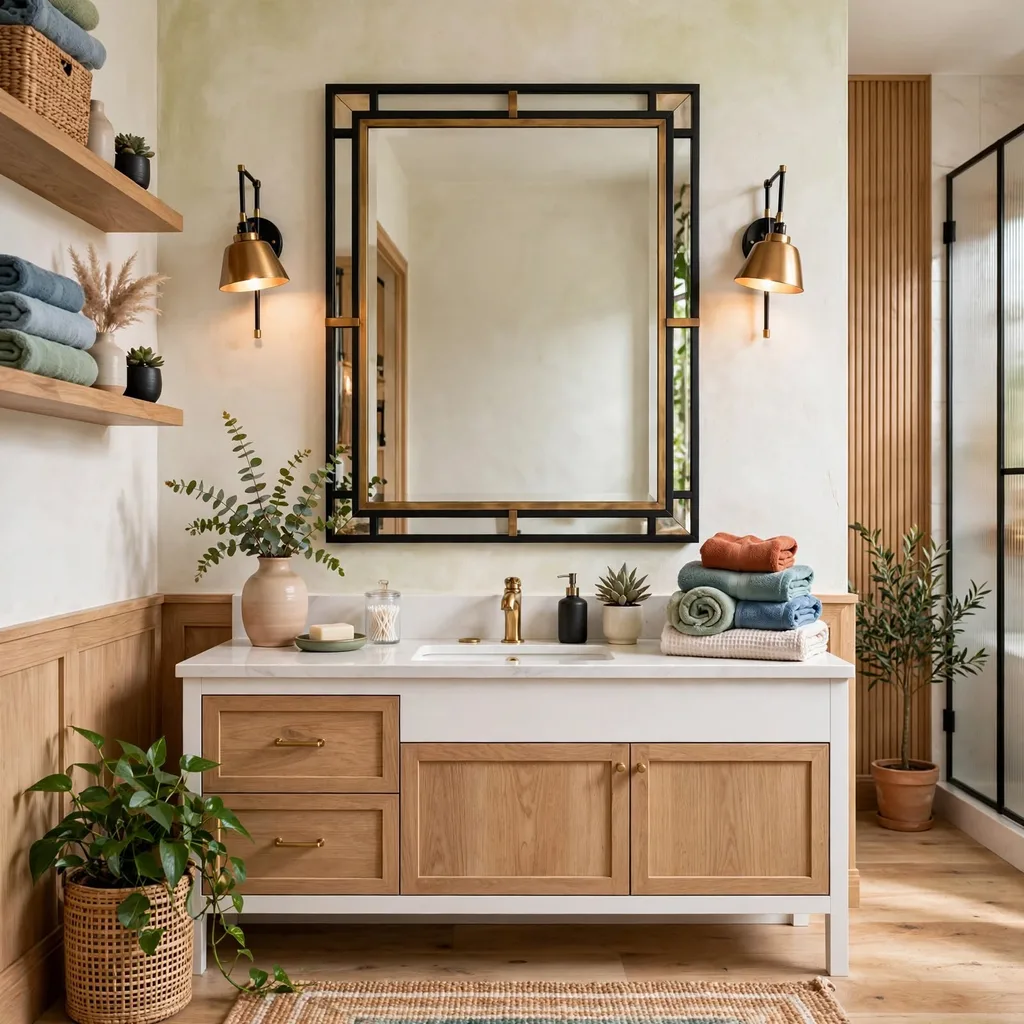
A mirror frame in a metal finish that intentionally contrasts with the bathroom’s other fixture finishes, a brass frame against matte black hardware, for instance, adds a layer of considered material variety rather than defaulting to a single uniform metal throughout the room. This approach requires more deliberate planning than simply matching every finish, since an unintentional mismatch reads differently than a genuinely considered contrast. Choosing this contrast with confidence, applying it consistently as an intentional design choice rather than an accident, produces the most successful result.
12. Oversized Mirror for Small Bathroom Light Amplification
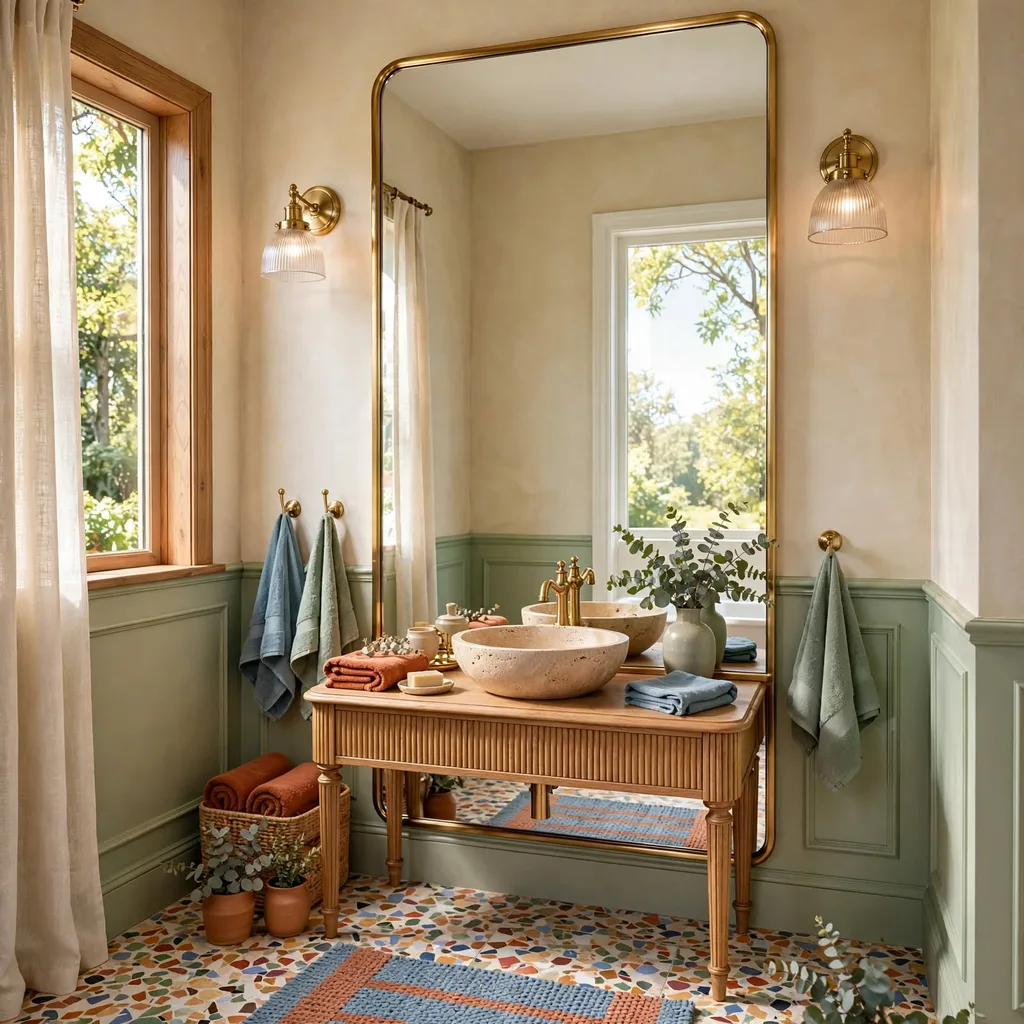
An oversized mirror, sized larger than the vanity beneath it or extending to a genuinely substantial scale relative to the room, bounces available light around a small bathroom and creates a visual sense of increased depth that meaningfully affects how spacious the space feels. Positioning this larger mirror to reflect a window, where one exists, maximizes this light-amplifying effect even further. This approach works as one of the lowest-cost, highest-impact changes available for a small bathroom, requiring no structural modification.
13. Hexagonal or Geometric Mirror
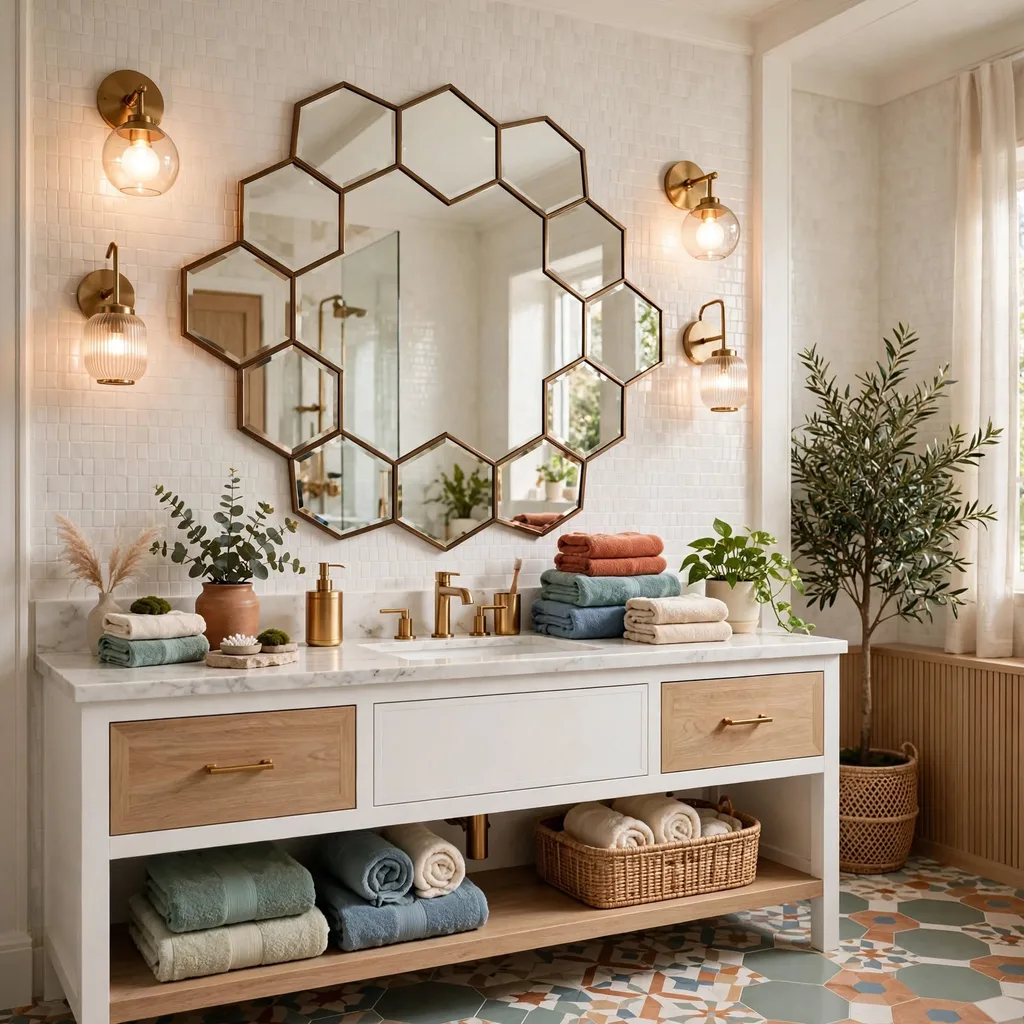
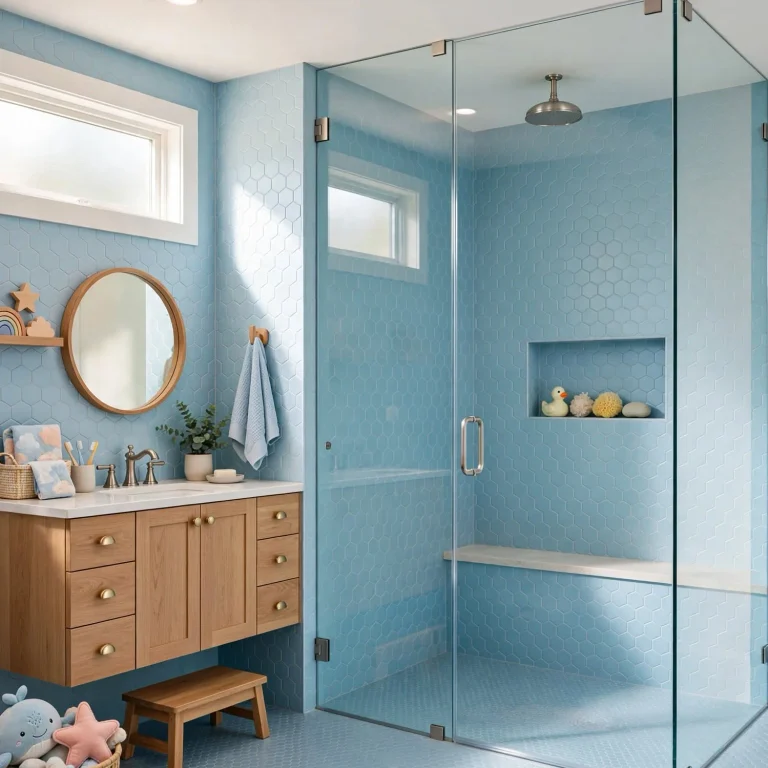
A hexagonal or other multi-sided geometric mirror shape brings a distinctive, contemporary silhouette to a bathroom, differing meaningfully from the more common round, arched, or rectangular options. This shape pairs particularly well with a bathroom already incorporating hexagonal tile elsewhere in the room, extending that geometric motif consistently throughout the space. Choosing a thin, unobtrusive frame allows this less common shape to read clearly without additional visual competition from a heavier frame detail.
14. Mirror With Integrated Anti-Fog Technology
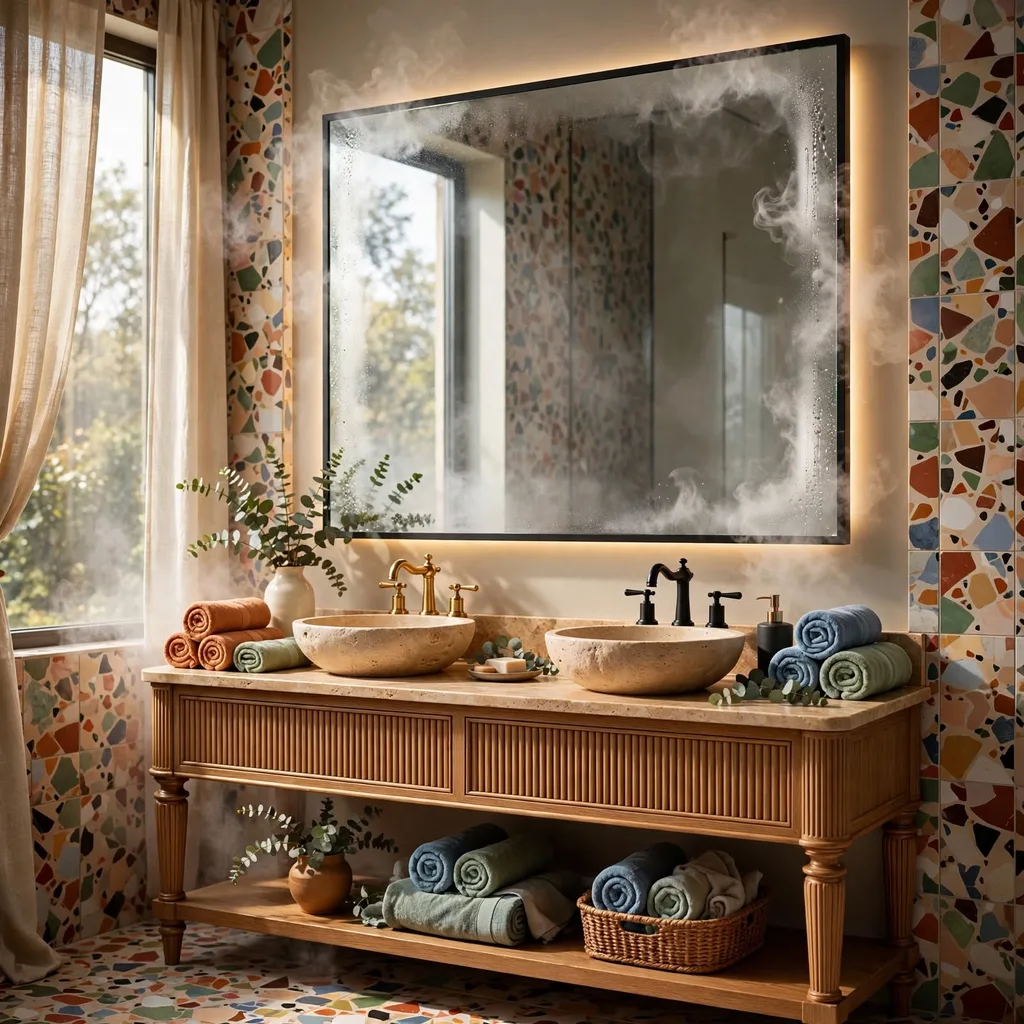
A mirror with integrated anti-fog heating technology, keeping the surface clear even during and after a hot shower, addresses a genuine daily frustration that a standard mirror doesn’t solve. This feature has become increasingly available even outside high-end custom installations, making it a worthwhile consideration for any household that regularly experiences mirror fogging. Choosing a mirror with this feature built in during initial installation, rather than attempting to retrofit a separate anti-fog pad or film later, generally produces a cleaner, more seamless result.
15. Powder Room Statement Mirror
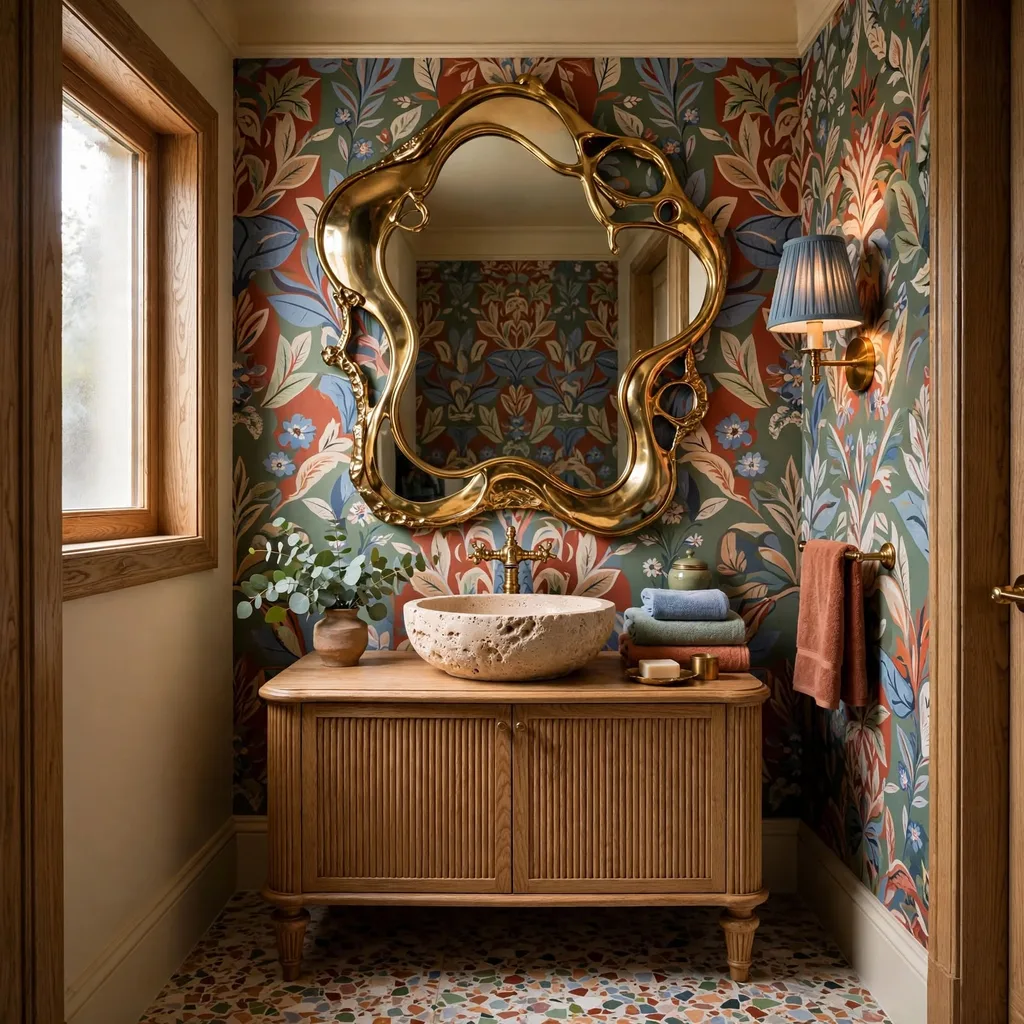
A genuinely bold or unusual mirror, chosen specifically for a powder room’s smaller, occasional-use space, takes advantage of this room’s tolerance for a design choice a primary bathroom’s daily practicality might not support as comfortably. This approach concentrates a design investment into a highly visible but lower-use room, where the mirror’s impact on visitors is disproportionately significant relative to the room’s actual size. Choosing a mirror with genuine sculptural or decorative presence, an oversized sunburst frame or an irregular organic shape, allows this single fixture to serve as the room’s primary design statement.
Shop the Look
For a contemporary bathroom, start with a backlit circular or arched mirror above a floating vanity, choosing adjustable color temperature for lighting flexibility. For a traditional space, pair an arched or substantial wood-framed mirror with a furniture-style vanity and warm sconce lighting. For a powder room, invest in one genuinely bold, sculptural mirror as the room’s clear design statement, keeping the surrounding fixtures simple in support.
Common Mistake to Avoid
A common mistake when choosing a bathroom mirror is selecting a size disconnected from the vanity beneath it, either significantly wider or narrower than the counter, which throws off the room’s overall proportion regardless of how attractive the mirror looks in isolation. A mirror generally works best sized close to the vanity’s width, whether slightly narrower for a framed style or extending the full width for a frameless or backlit design. Measuring the vanity’s actual dimensions before mirror shopping, rather than choosing a mirror based purely on its appearance in a showroom or online listing, prevents this common and easily avoidable proportion mismatch.
FAQs
What size mirror should I choose for my bathroom vanity?
A bathroom mirror generally looks best sized close to the vanity’s width, either matching it closely for a frameless or backlit style, or sitting a few inches narrower if the mirror includes a substantial frame. For a double vanity, choosing either two individual mirrors sized to each sink’s section or one continuous mirror spanning the full width both work, provided the choice is applied consistently rather than mismatched. Measuring the actual vanity dimensions before shopping, rather than estimating, helps ensure the final proportions read as intentional.
Is a backlit mirror worth the extra cost compared to a standard mirror with separate lighting?
A backlit or edge-lit mirror consolidates lighting and reflection into a single fixture, often providing more even, shadow-reducing illumination than a separate overhead or side-mounted light source alone, which can justify its typically higher cost for households prioritizing both function and a streamlined look. This style has also become considerably more affordable in recent years, moving from an exclusively high-end feature into a more broadly accessible option. For a household on a tighter budget, a standard mirror paired with well-positioned sconce lighting can still achieve similarly functional illumination at a lower overall cost.
What mirror shape works best for a small bathroom?
A larger, simply framed or frameless mirror generally works better for a small bathroom than a smaller, more ornately framed option, since the mirror’s overall size affects how much light it reflects and how spacious the room feels more than its specific shape does. An oversized round or arched mirror can be particularly effective, since its softer edges avoid emphasizing the room’s often boxy, constrained geometry the way a sharply rectangular mirror might. Prioritizing size and light reflection over an intricate frame or unusual shape tends to produce the best result specifically for a small bathroom’s spatial constraints.
Can I install a bathroom mirror myself, or does it require professional help?
A standard surface-mounted mirror, hung using appropriate wall anchors rated for its weight, is generally a manageable do-it-yourself project for most households, provided the mirror’s weight and the wall’s construction are properly matched to secure mounting hardware. Backlit mirrors, smart mirrors requiring electrical connection, and recessed medicine cabinet mirrors typically require professional installation, given the electrical or wall-modification work involved. Confirming a specific mirror’s installation requirements before purchase helps set accurate expectations for whether professional help will be necessary.
How do I choose a mirror frame finish that coordinates with my bathroom’s other fixtures?
Choosing a mirror frame in the same metal finish as the bathroom’s faucet, showerhead, and cabinet hardware generally produces the most cohesive result, though an intentional, consistent contrast, like a brass frame against matte black fixtures, can also work well when applied deliberately rather than accidentally. Bringing a physical sample or photo of the bathroom’s other finishes when shopping for a mirror frame helps ensure an accurate match or a genuinely considered contrast rather than an unintentional mismatch. This coordination matters most for a mirror with a substantial, visible frame, and less for a fully frameless option where this consideration doesn’t apply.
Conclusion
A bathroom mirror’s shape, size, and lighting integration affect the room’s overall character and function as much as any other fixture, making it worth choosing as deliberately as the vanity it hangs above. Save this guide to Pinterest for reference while planning your next bathroom update, and check out our related post on bathroom vanity ideas for guidance on pairing the right vanity with your chosen mirror.