15 Charming Bathroom Design Styles to Define Your Space
Bathroom design style shapes every other decision in the room, from tile pattern to fixture finish, yet it’s often the last thing decided rather than the first. This guide covers fifteen distinct bathroom design styles, from spa-inspired minimalism to art deco glamour, each with the specific materials, colors, and fixture choices needed to execute the look authentically. Every idea works as a starting point for a full renovation or a smaller, style-focused refresh.
Trend & Background
Bathroom design style has become an increasingly deliberate starting point for renovation planning, with more homeowners identifying a specific aesthetic direction before selecting individual tile, fixtures, or paint colors rather than assembling those choices piecemeal. This shift mirrors broader interior design trends toward intentional, cohesive style planning, but carries particular importance in bathrooms given the room’s higher proportion of fixed, expensive-to-change elements like tile and plumbing fixtures. Spa-inspired and minimalist styles have remained consistently popular request categories, reflecting the bathroom’s growing role as a genuine retreat space rather than a purely utilitarian room.
Key Takeaways
- Bathroom design style should guide material and fixture choices from the start, rather than being decided after individual purchases.
- Spa-inspired and minimalist directions remain the most requested current bathroom design styles for primary bathrooms.
- A bathroom’s design style doesn’t need to match the rest of the home exactly, though some material or color continuity helps.
- Smaller bathrooms and powder rooms tolerate bolder, more committed style choices better than a frequently used primary bathroom.
1. Spa-Inspired Bathroom Design
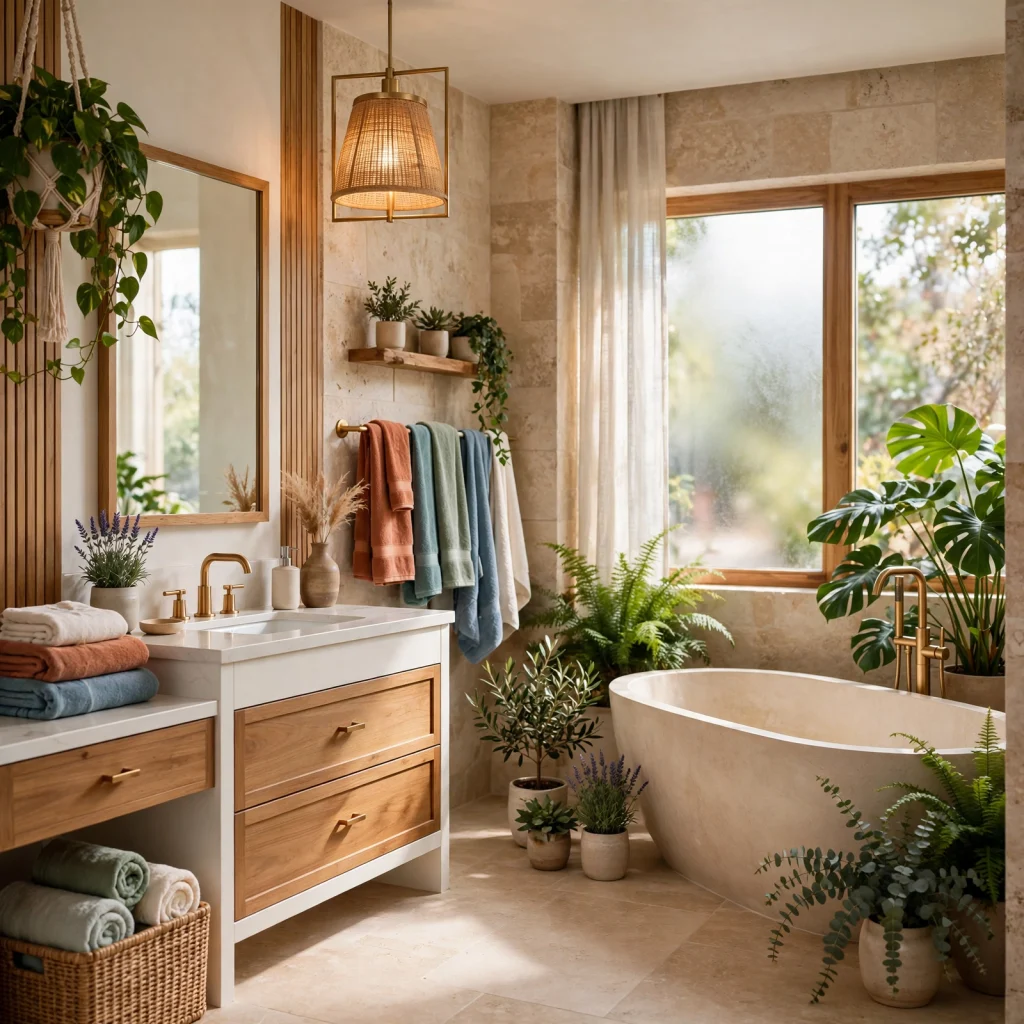
Spa-inspired bathroom design prioritizes a calm, natural material palette, stone, wood-look tile, and soft neutral tones, aiming to recreate the tranquil atmosphere of a professional spa within a home bathroom. A freestanding soaking tub, a rainfall showerhead, and warm, layered lighting all reinforce this direction. This style suits a primary bathroom particularly well, where the household spends meaningful daily time and benefits most from a genuinely relaxing atmosphere.
2. Minimalist Bathroom Design
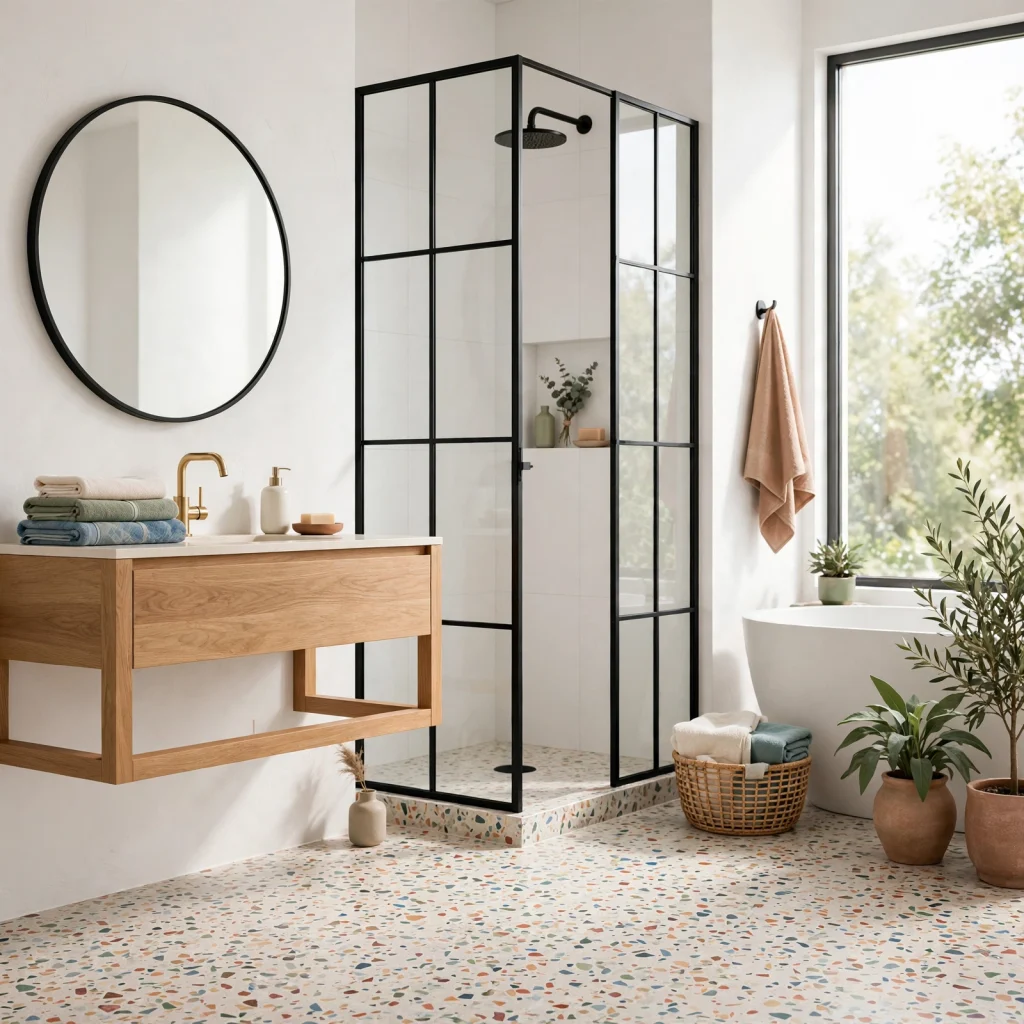
Minimalist bathroom design strips the room down to clean lines, a restrained neutral palette, and carefully edited fixtures, avoiding excess ornamentation or decorative clutter. A floating vanity with concealed storage, simple unadorned tile, and minimal visible hardware all support this restrained approach. This style requires more disciplined storage planning than most other directions, since minimalism depends on genuinely tidy surfaces rather than simply fewer decorative objects.
| Style | Core Materials | Best Room Type |
| Spa-inspired | Stone, wood-look tile | Primary bathroom |
| Minimalist | Simple tile, floating vanity | Any size |
| Art deco | Black and white tile, brass | Powder room, primary |
| Farmhouse | Subway tile, shiplap | Family bathroom |
3. Art Deco Bathroom Design
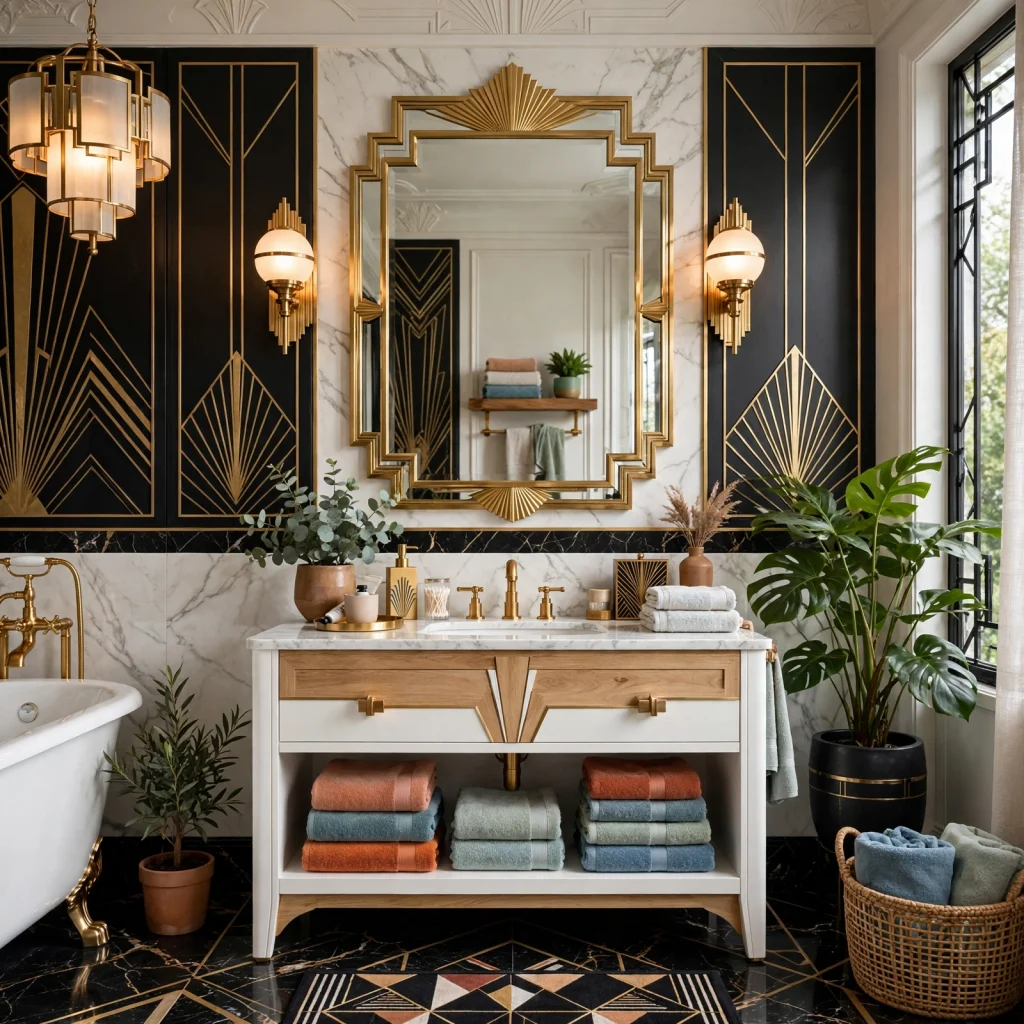
Art deco bathroom design references the bold geometry and glamour of the 1920s and 1930s, using black and white tile in graphic patterns, brass fixtures, and sunburst or fan-shaped decorative details. Hexagonal or checkerboard floor tile in high contrast forms the foundation of this style, often paired with a deep, saturated wall color like emerald or navy. This style suits a powder room particularly well, where its dramatic, high-contrast character has less overall square footage to become overwhelming.
4. Farmhouse Bathroom Design
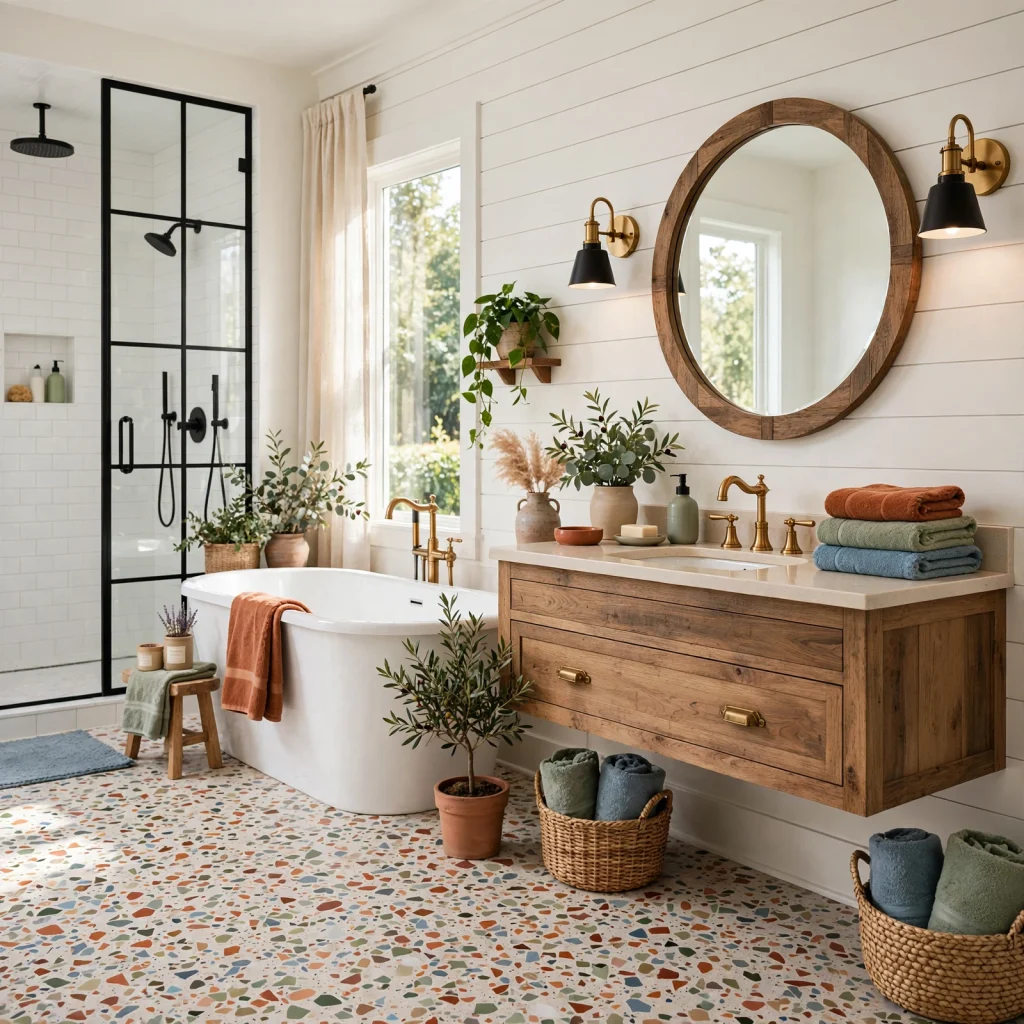
Farmhouse bathroom design combines practical, durable materials, subway tile, matte black fixtures, and shiplap paneling, with a warm, slightly rustic overall character suited to a busy family bathroom. A freestanding or apron-front tub, wood-look flooring, and simple woven storage baskets all reinforce this style’s practical, unfussy sensibility. This design direction has moved toward a more restrained modern farmhouse execution in recent years, favoring cleaner lines over heavily distressed or overly decorated detailing.
Discover our bathroom ideas for creating a stylish, comfortable, and functional space with modern design inspiration.
5. Scandinavian Bathroom Design
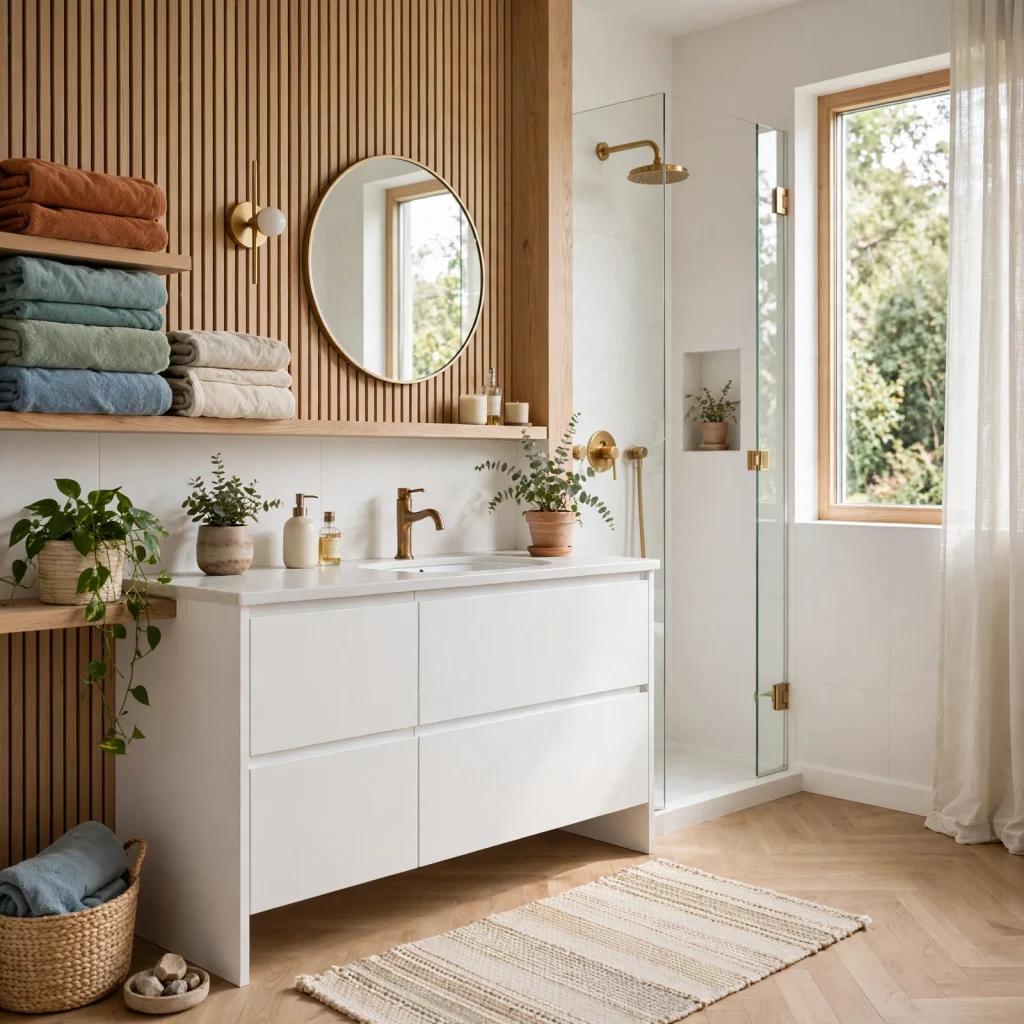
Scandinavian bathroom design emphasizes light, natural materials and functional simplicity, using pale wood-look tile, white or light gray walls, and simple, unornamented fixtures to maximize a sense of brightness and calm. A wall-mounted vanity in light oak, paired with black accent hardware for contrast, reflects this style’s core material pairing. This design direction suits a bathroom with limited natural light particularly well, since its pale palette helps compensate for that constraint.
6. Industrial Bathroom Design
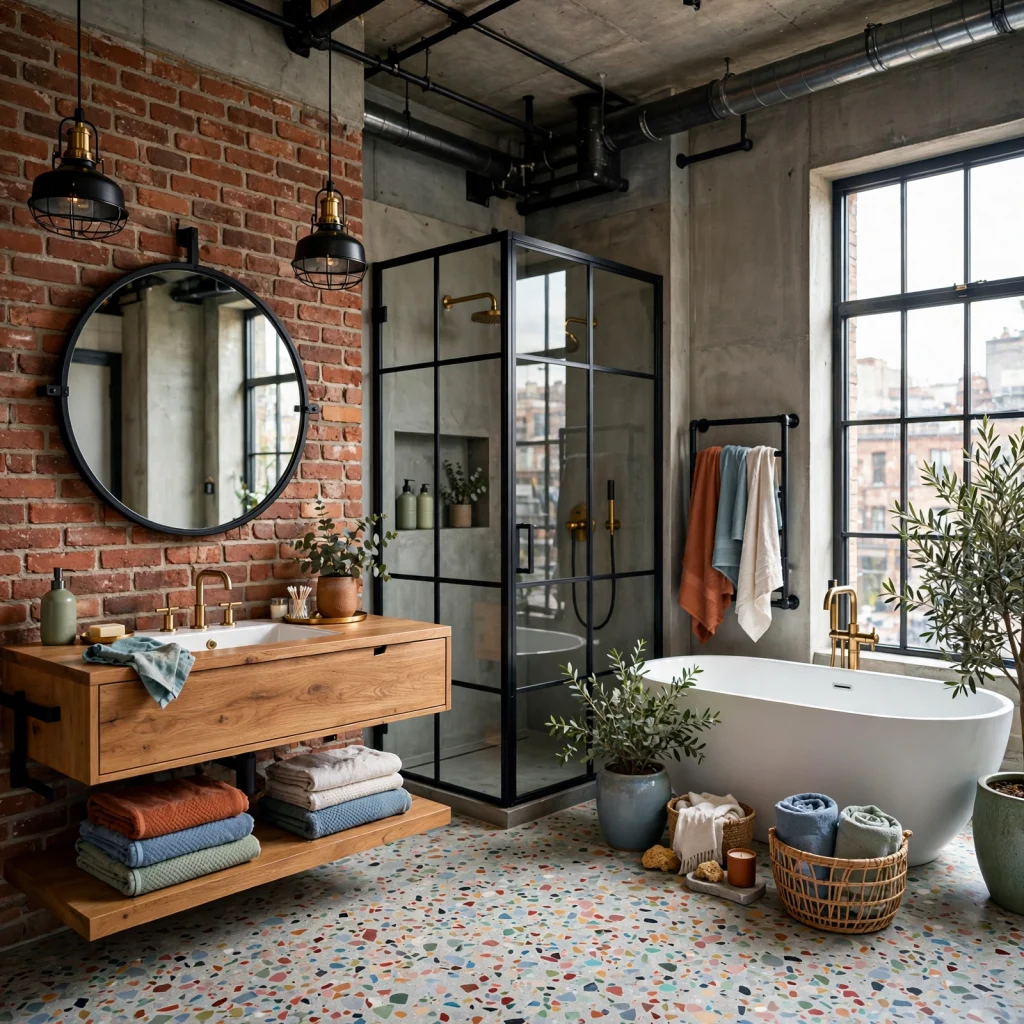
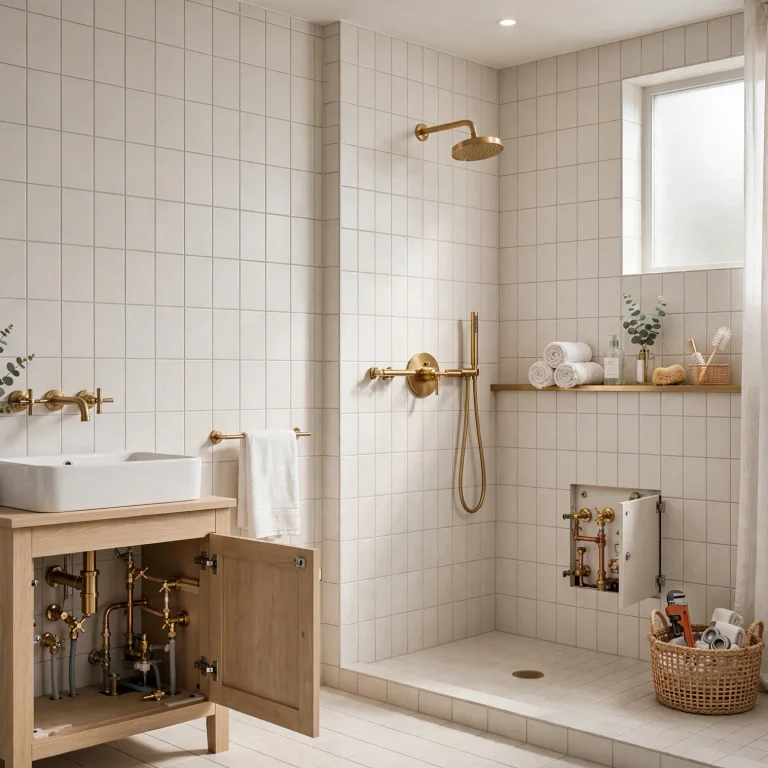
Industrial bathroom design incorporates raw, unfinished-looking materials, exposed concrete, black metal fixtures, and sometimes exposed piping, to create a bathroom with an urban, warehouse-inspired character. A concrete or concrete-look vanity countertop, paired with black matte fixtures and Edison-style lighting, reinforces this aesthetic. This style works particularly well in a home with genuine loft or converted industrial architecture, though the look can also be approximated through material choices in a more standard home.
7. Traditional Bathroom Design
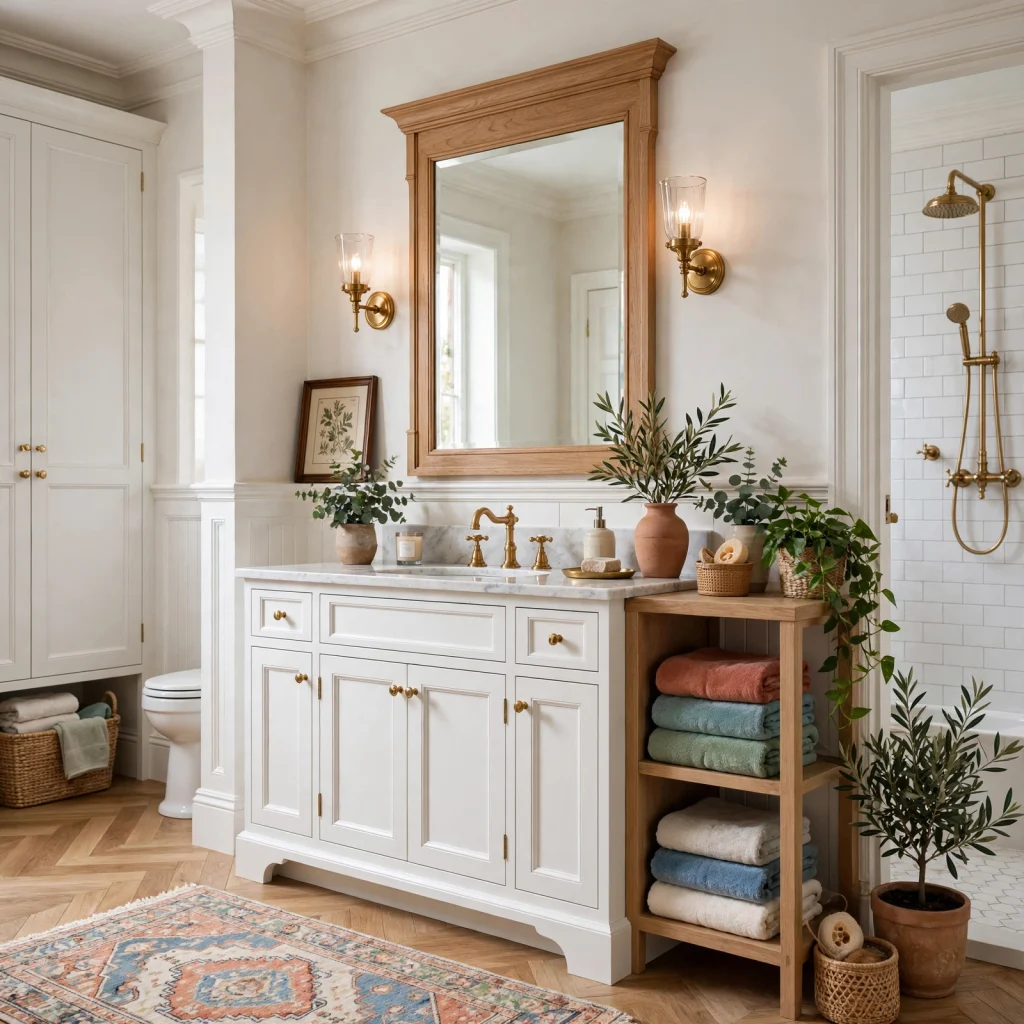
Traditional bathroom design draws on classical architectural details, crown molding, a furniture-style vanity, and a more formal, symmetrical layout, creating a bathroom that reads as timeless rather than tied to a specific contemporary trend. A pedestal or clawfoot tub, paired with polished nickel or brass fixtures and a patterned tile floor, supports this classical direction. This style suits a primary bathroom in a traditionally styled home particularly well, maintaining consistency with the rest of the home’s architectural language.
8. Coastal Bathroom Design
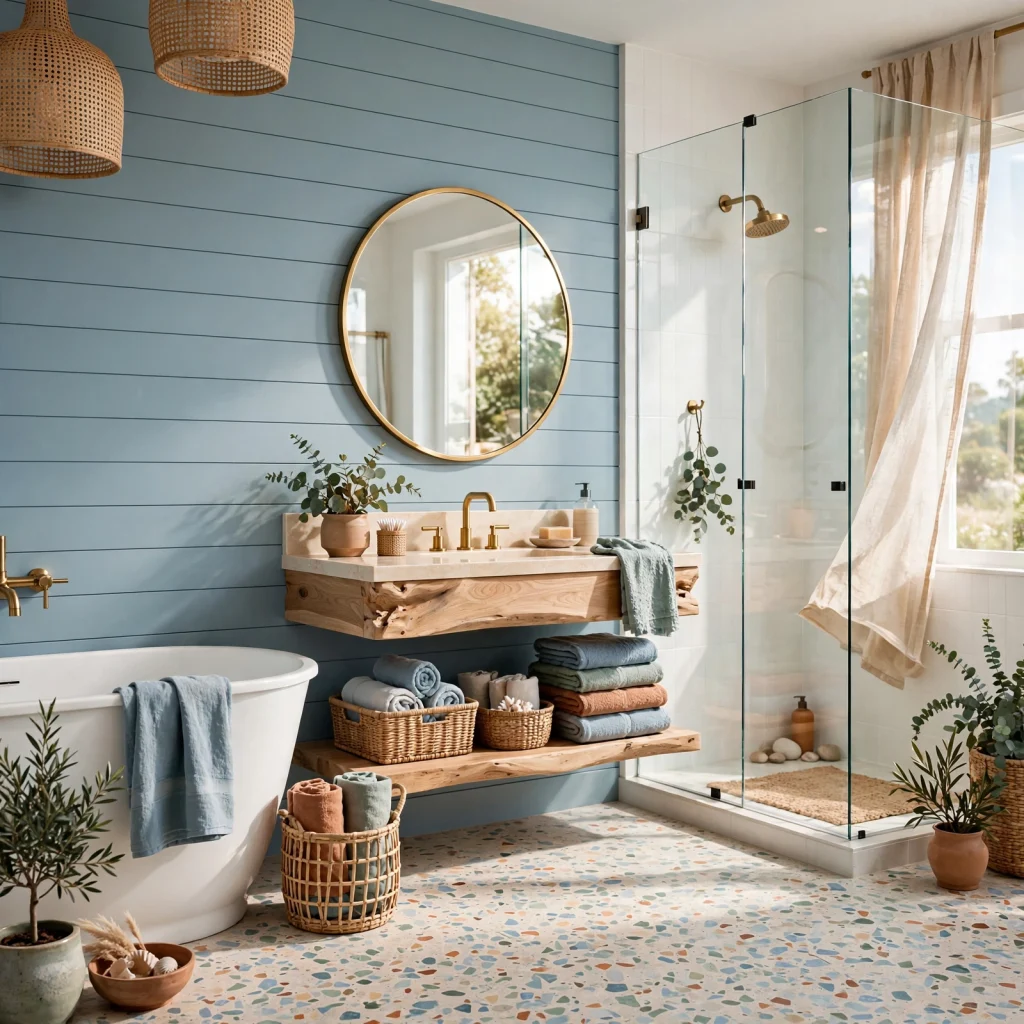
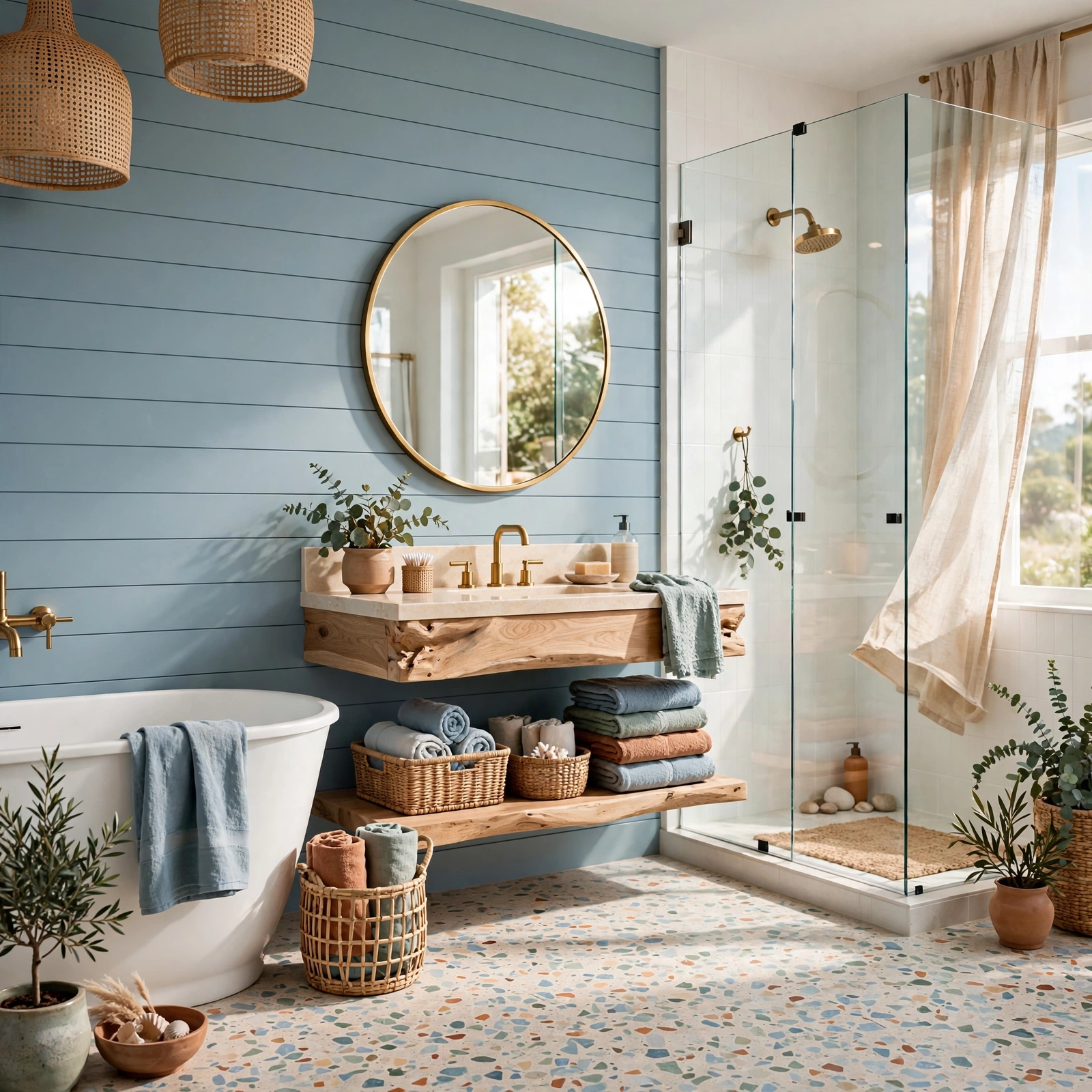
Coastal bathroom design uses a light, breezy palette of white, soft blue, and natural wood tones, along with woven and rope-adjacent textures, to evoke a relaxed, beach-house atmosphere. White subway tile, a light wood vanity, and simple woven storage baskets all reinforce this airy, casual style. This design direction works particularly well in a home near water, though its light, calming palette translates easily into any climate or location.
9. Japandi Bathroom Design
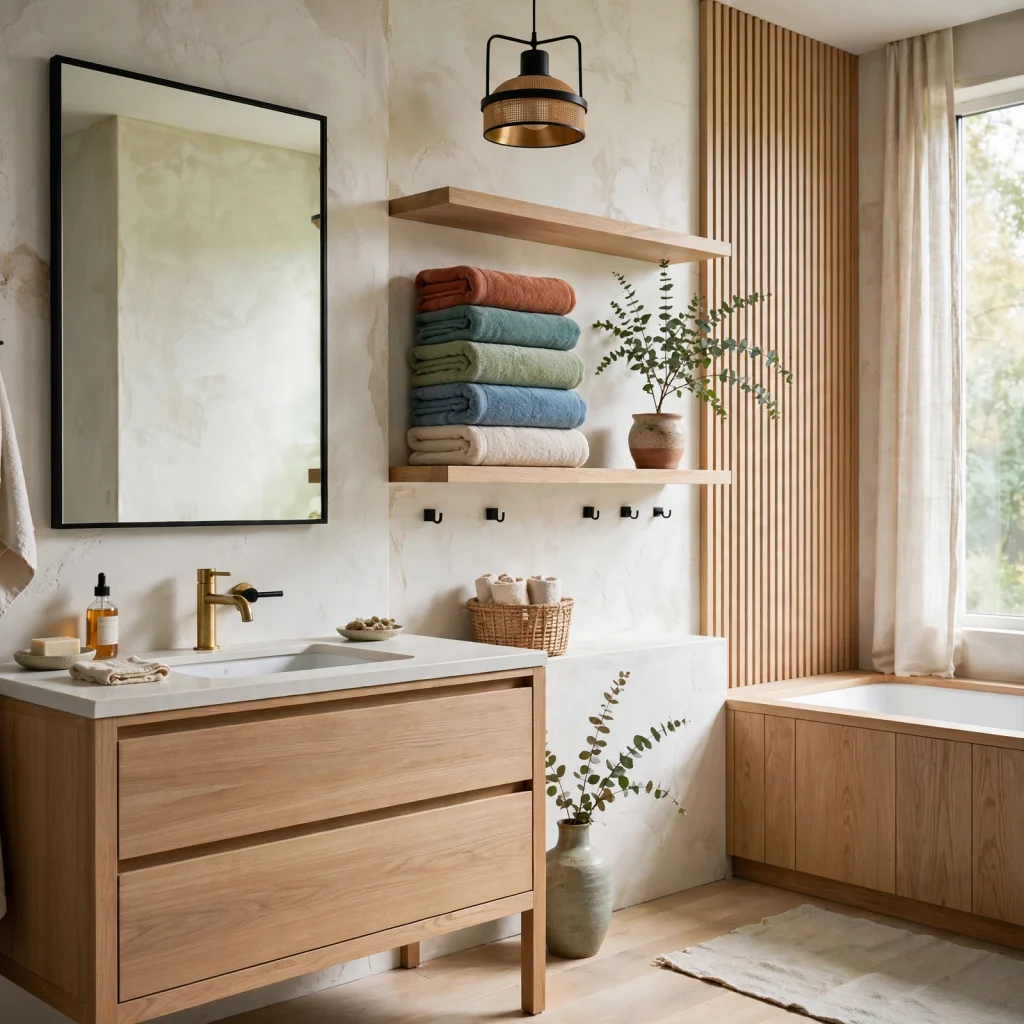
Japandi bathroom design blends Japanese minimalism with Scandinavian warmth, using natural wood, a muted earth-tone palette, and simple, low-profile fixtures to create a calm, grounded bathroom space. A wood-slat bath mat, a low wooden stool, and a stone vessel sink all reflect this style’s material honesty and restraint. This design direction suits a primary bathroom that doubles as a genuine relaxation space, echoing the same principles found in a japandi-influenced living room.
10. Modern Glam Bathroom Design
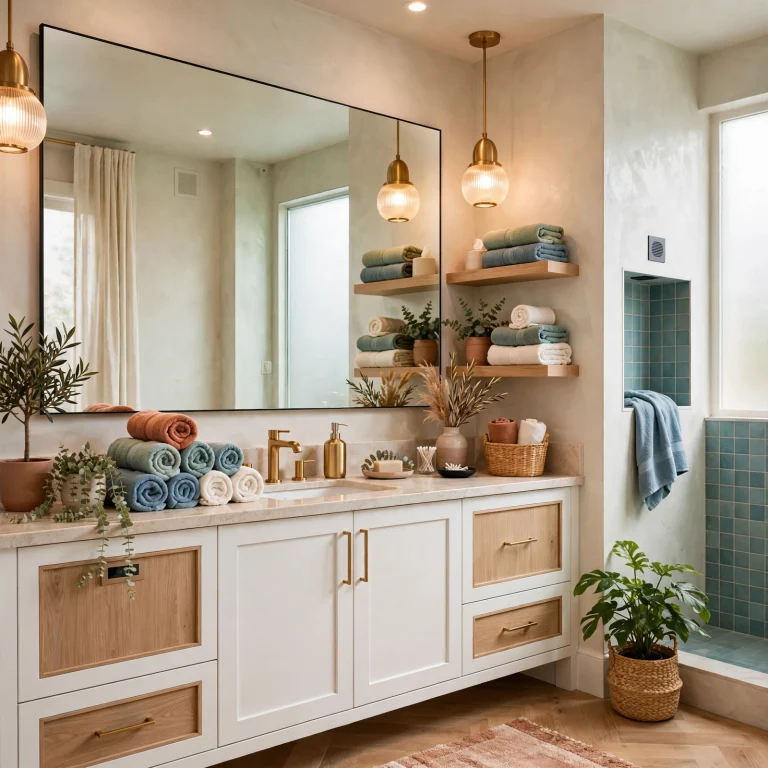
Modern glam bathroom design combines clean contemporary lines with luxurious material choices, marble, brass, and a statement mirror or chandelier, creating a bathroom with genuine visual drama and polish. A marble slab shower surround, paired with brass fixtures and a large sculptural pendant light, defines this style’s material language. This design direction suits a primary bathroom in a higher-end renovation particularly well, where the budget supports genuine natural stone and custom lighting.
11. Mediterranean Bathroom Design
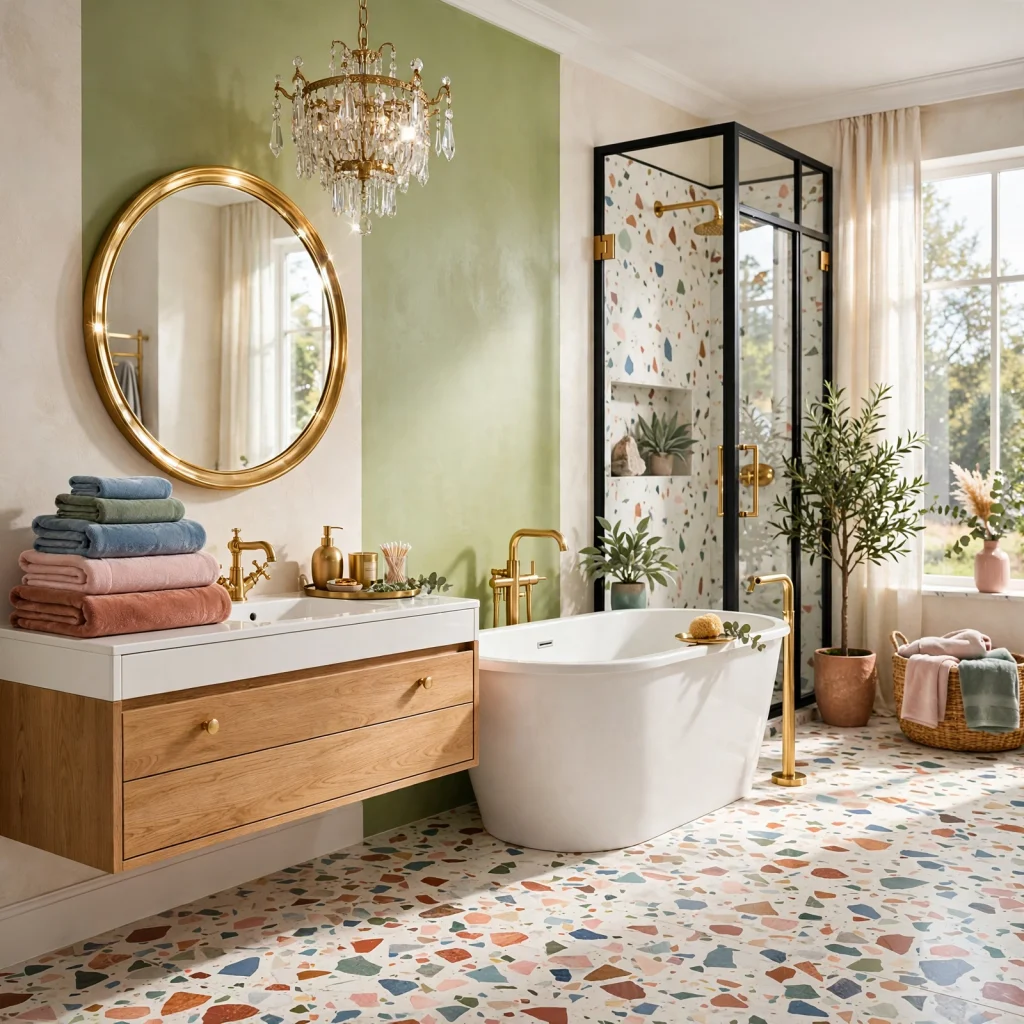
Mediterranean bathroom design uses warm, sun-washed colors, terracotta and hand-painted tile, arched details, and wrought iron fixtures to evoke the coastal architecture of Southern Europe. Zellige tile, with its characteristic handmade variation and subtle sheen, forms a particularly popular material choice within this style. This design direction works particularly well in a warmer climate home, though its warm, textured character also brings welcome contrast to a home in a cooler region.
12. Contemporary Bathroom Design
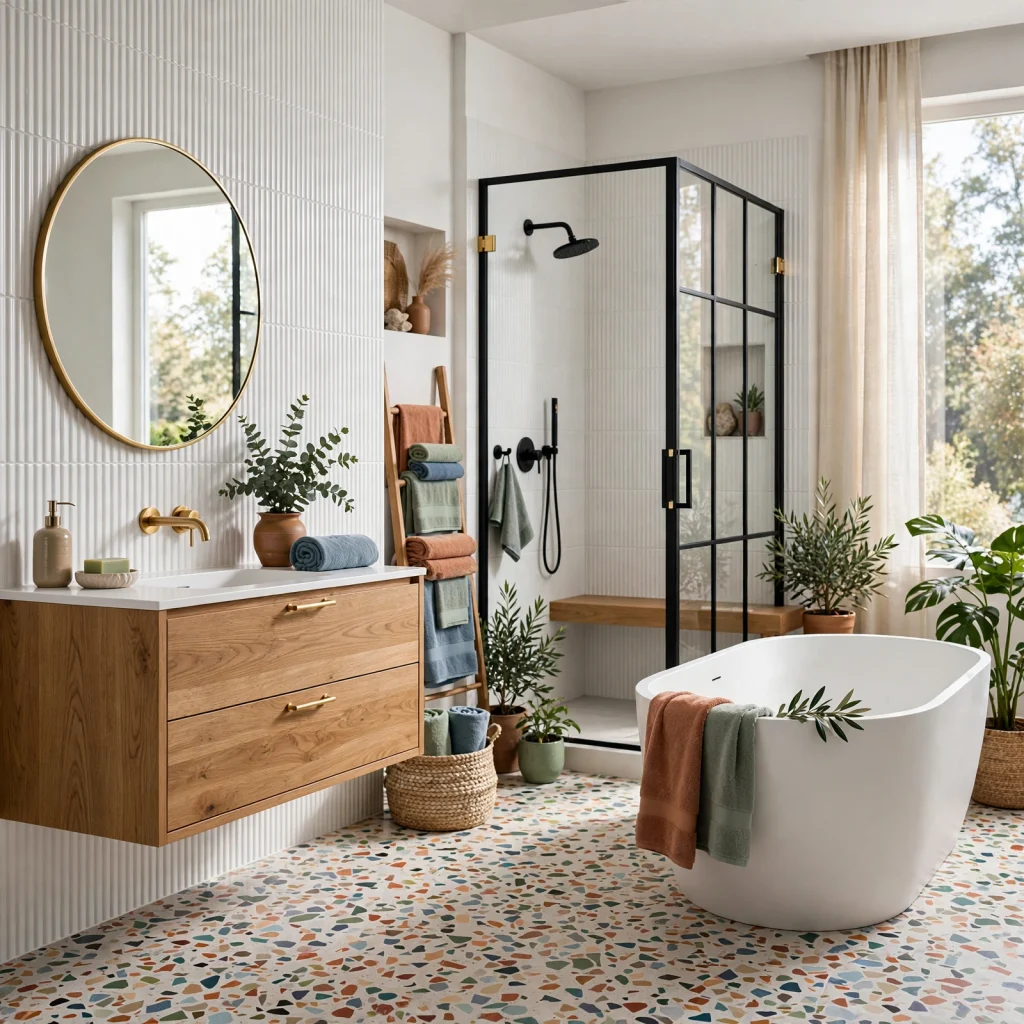
Contemporary bathroom design reflects current trends rather than a fixed historical style, currently favoring curved mirror shapes, warm neutral tile, and mixed metal finishes, similar to the broader contemporary movement seen throughout other rooms in a home. This style evolves over time more than most others on this list, meaning its specific material and color choices shift as broader design trends change. Choosing quality, adaptable fixtures within this evolving style helps the bathroom age more gracefully even as specific contemporary trends shift.
13. Transitional Bathroom Design
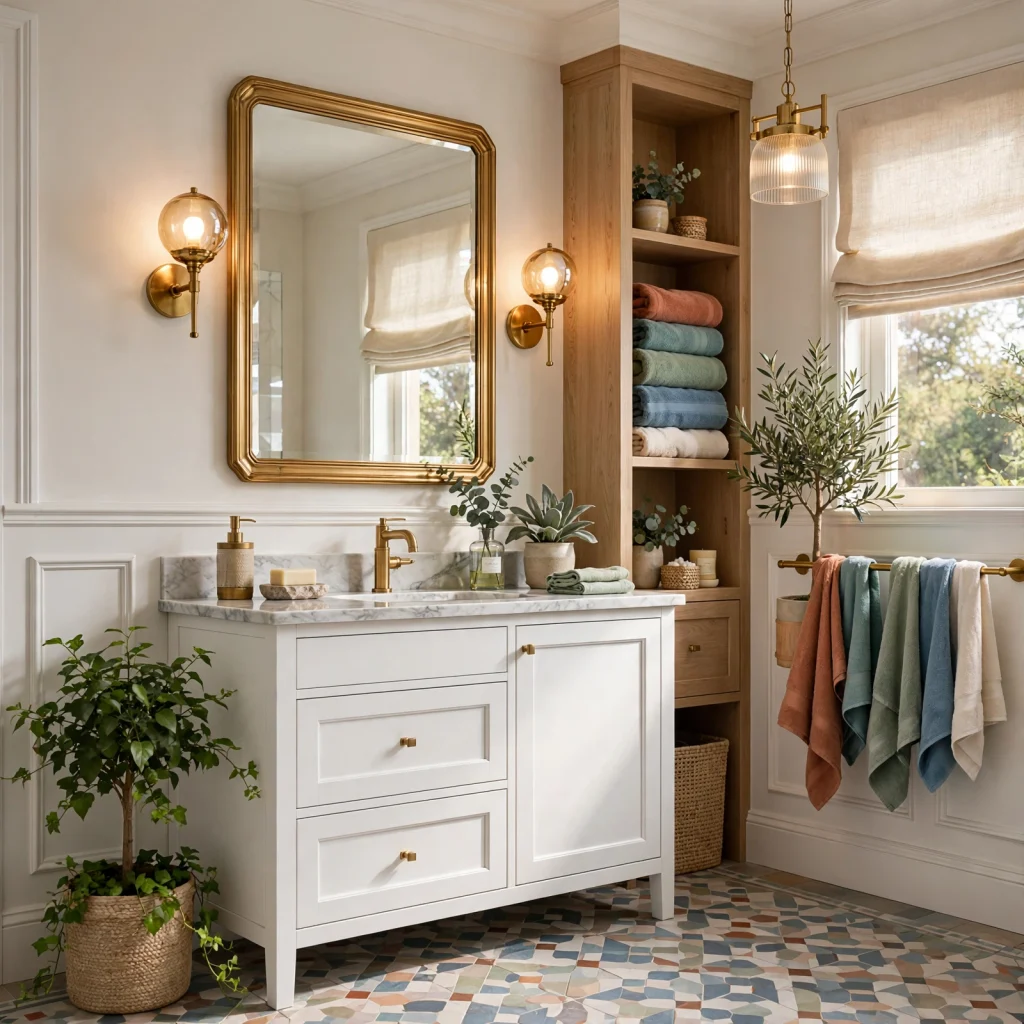
Transitional bathroom design blends traditional architectural elements with more contemporary simplicity, offering a middle ground between a fully classical bathroom and a starkly modern one. A furniture-style vanity with clean, simple lines, paired with a neutral tile in a subtle pattern and brushed nickel fixtures, reflects this style’s balanced approach. This design direction suits households wanting a bathroom that feels current without being tied too closely to any single strong stylistic statement.
14. Bohemian Bathroom Design
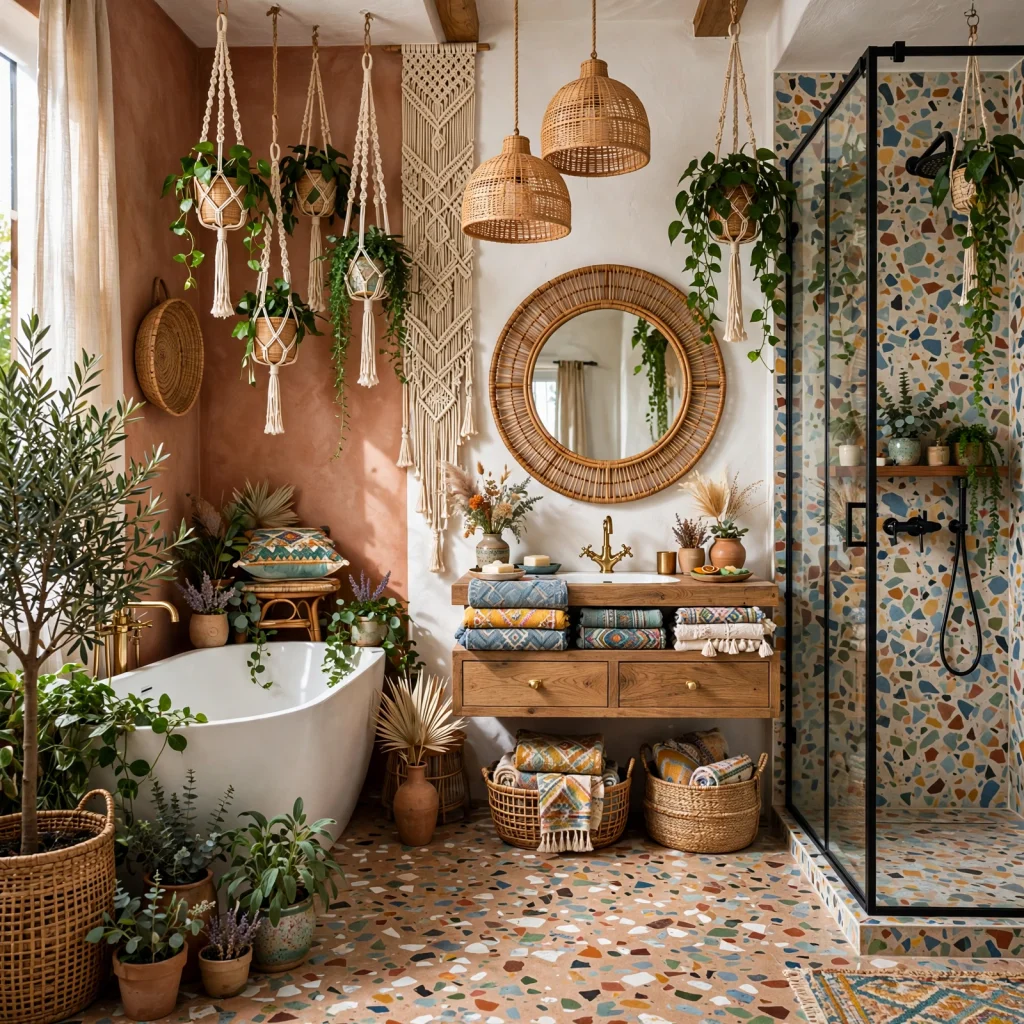
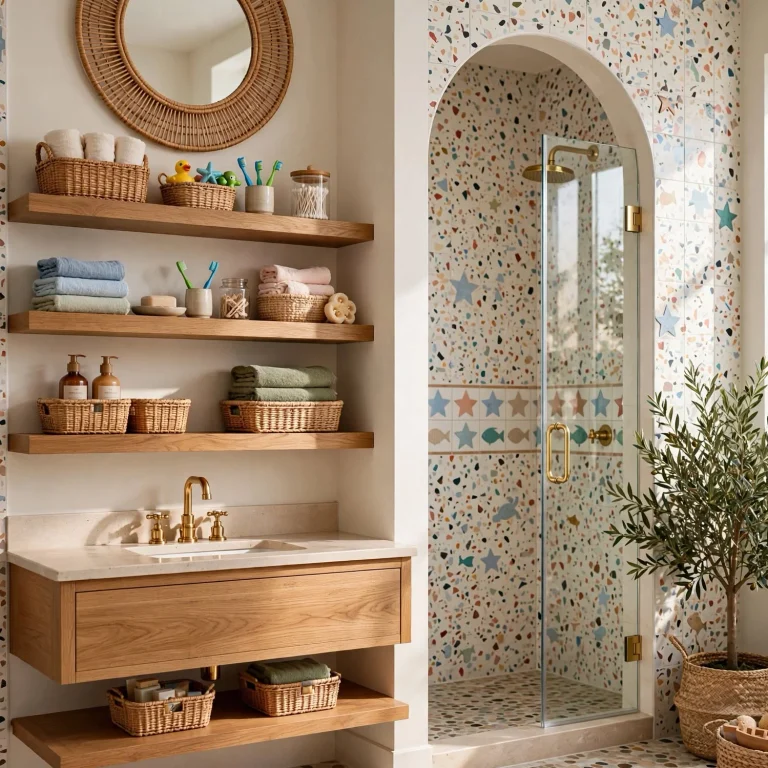
Bohemian bathroom design incorporates natural textures, patterned tile, rattan accents, and abundant greenery, bringing the same layered, collected quality found in boho living room design into the bathroom space. A patterned encaustic cement tile floor, paired with a woven rattan mirror frame and trailing plants near a window, defines this style’s material and decorative language. This design direction requires more attention to moisture-tolerant plant varieties and mold-resistant materials than most other bathroom styles, given the room’s humidity.
15. Modern Farmhouse Bathroom Design
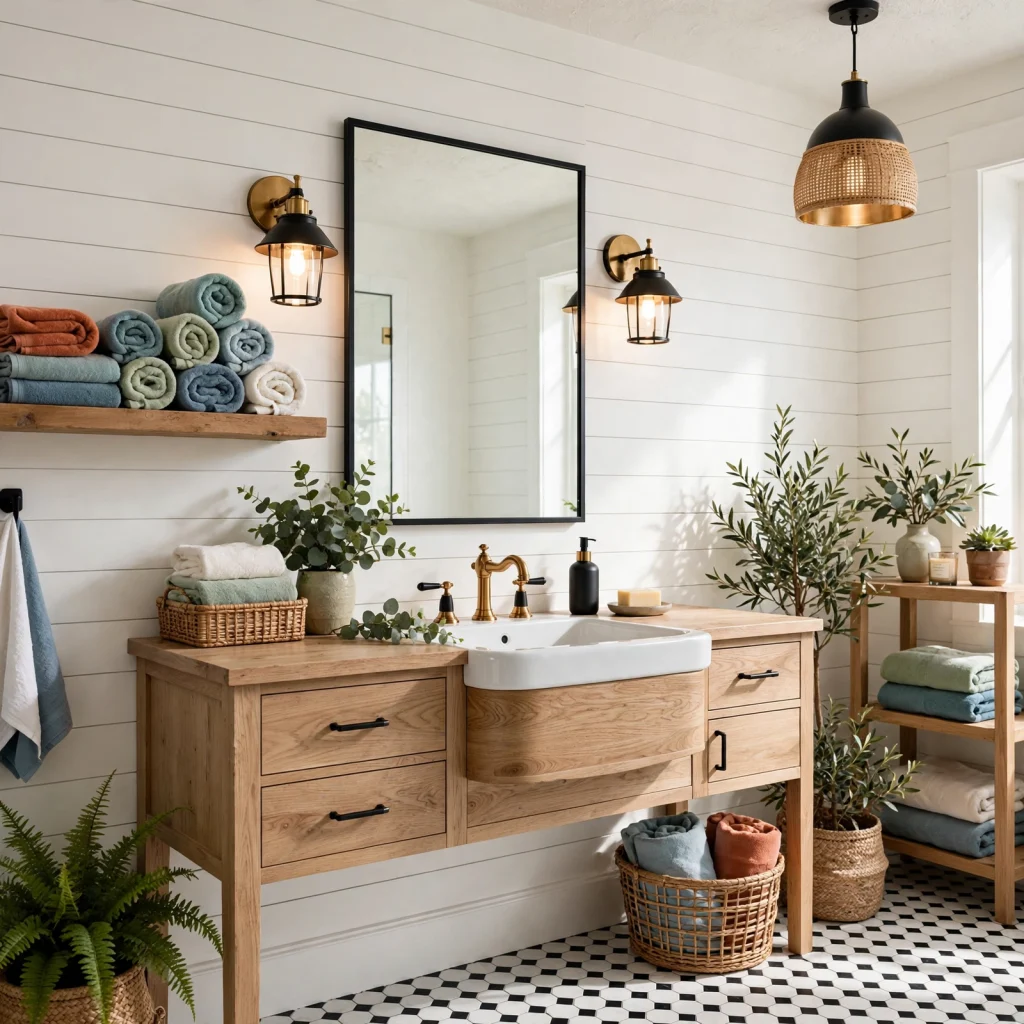
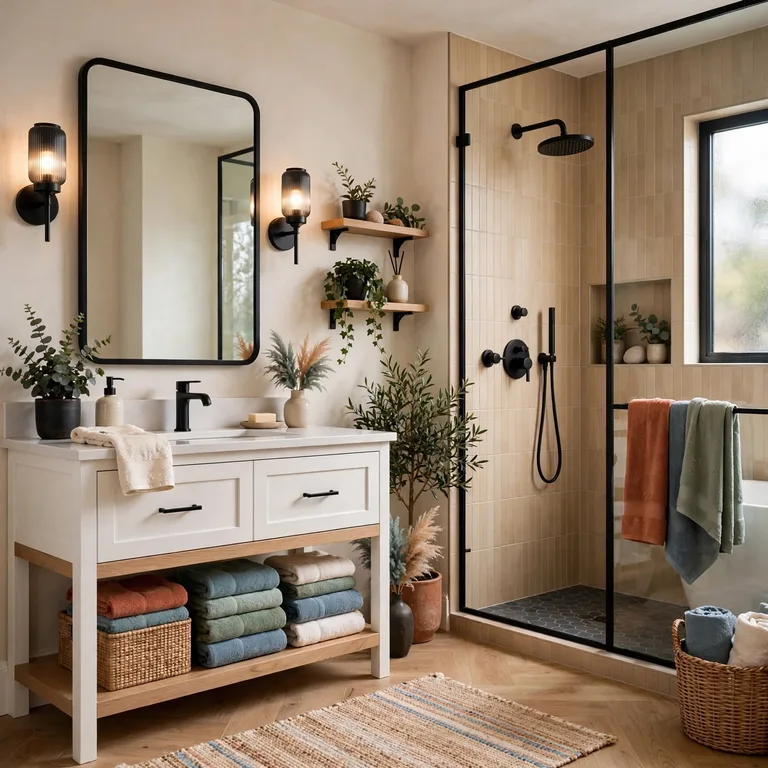
Modern farmhouse bathroom design refines traditional farmhouse’s rustic character with cleaner lines and a more restrained material palette, using white oak, matte black fixtures, and simple subway tile without the heavier, more distressed detailing of traditional farmhouse style. A floating white oak vanity, paired with matte black hardware and a simple white tile pattern, reflects this more current interpretation. This design direction suits a household drawn to farmhouse warmth but wanting a bathroom that feels more current than a fully traditional farmhouse execution.
Shop the Look
For a spa-inspired direction, start with a natural stone vanity top, a freestanding tub, and layered warm lighting throughout. For art deco drama in a powder room, choose black and white hexagonal floor tile, brass fixtures, and a deep emerald or navy wall color. For Scandinavian calm, prioritize pale wood-look tile, a light oak floating vanity, and black accent hardware for contrast.
Common Mistake to Avoid
A common mistake in bathroom design is selecting individual tile, fixtures, and paint colors before establishing an overall style direction, resulting in a room where each element looks reasonable in isolation but fails to cohere into a genuine, identifiable style once installed. Identifying a specific design direction first, then selecting materials and fixtures that support that chosen style, produces a far more successful and cohesive final result than assembling choices piecemeal. This sequencing matters particularly in bathrooms, where tile and plumbing fixtures are expensive and difficult to change once installed.
FAQs
How do I choose a bathroom design style that fits my whole home?
Reviewing the design style already established in a home’s other rooms, then identifying a bathroom style that shares some material, color, or era connection to that broader home aesthetic, generally produces a more cohesive overall result than choosing a bathroom style in complete isolation. The bathroom doesn’t need to match every other room exactly, but some continuity, a consistent wood tone or metal finish, for example, helps the space feel like part of the same home. A powder room or guest bathroom tolerates more independent style choices than a primary bathroom connected more directly to the home’s main living areas.
Which bathroom design style works best for resale value?
Transitional and contemporary bathroom design styles generally appeal to the broadest range of potential buyers, since their moderate, adaptable character doesn’t commit as strongly to a specific aesthetic that some buyers might find overly personal or dated. More distinctive styles, like art deco or heavily bohemian design, can still work well for resale in the right market or neighborhood, but they carry more inherent risk of appealing to a narrower buyer pool. Prioritizing quality materials and construction within whichever style is chosen matters more for long-term value than the specific style itself in most cases.
Can I mix two bathroom design styles together?
Combining two complementary styles, such as japandi and Scandinavian, which already share significant overlap in natural materials and restraint, generally works more successfully than combining two styles with fundamentally opposing characteristics, like heavily ornate traditional and starkly industrial. Choosing one style as the primary direction and incorporating select elements from a second, related style tends to produce a more cohesive result than blending the two as equal influences. Testing the combination through a mood board or material sample board before committing to purchases helps identify potential conflicts early.
How much does bathroom design style affect renovation cost?
Certain bathroom design styles carry inherently higher material costs, natural stone in modern glam or spa-inspired design, custom tile work in art deco or Mediterranean styles, compared to styles relying more on paint, simpler tile, and moderately priced fixtures, like transitional or Scandinavian design. Choosing a style doesn’t have to dictate an unlimited budget, however, since engineered alternatives like quartz or porcelain tile can approximate the look of pricier natural materials at a lower cost within nearly any style direction. Establishing a realistic budget alongside the desired style early in the planning process helps identify where material substitutions might be needed.
How do I know which bathroom design style suits a small powder room versus a primary bathroom?
A small powder room, given its limited square footage and lack of daily heavy use, tolerates bolder, more dramatic style choices, like art deco or richly patterned Mediterranean tile, better than a primary bathroom used daily for practical grooming and bathing needs. A primary bathroom generally benefits from a calmer, more functional style direction, spa-inspired, minimalist, or Scandinavian, that supports comfortable daily use without visual fatigue. Considering how frequently and for what purpose each specific bathroom is used helps guide this style decision beyond personal aesthetic preference alone.
Conclusion
Choosing a bathroom design style before selecting individual materials and fixtures produces a far more cohesive, intentional result than assembling choices piecemeal, particularly given how costly and difficult bathroom elements are to change once installed. Save this guide to Pinterest for reference while planning your next renovation, and check out our related post on bathroom ideas for specific fixture and material choices within whichever style direction you choose.