15 Trending Modern Bathroom Ideas to Transform Your Space With Sleek Style
Modern bathroom ideas rely on the same core design principles found throughout modern interior design generally, clean lines, functional simplicity, and minimal ornamentation, applied specifically to the materials and fixtures suited to a wet, high-use room. This guide covers fifteen ideas for building that streamlined look, from large-format tile to floating vanities, with the material and fixture guidance needed to keep the space feeling genuinely current rather than dated. Each idea reflects modern design’s emphasis on function and restraint over decoration.
Trend & Background
Modern bathroom design continues to draw from the same mid-century design principles found throughout modern interiors generally, favoring geometric simplicity and functional clarity over ornamental detail. Within bathrooms specifically, this has translated into a preference for large-format tile with minimal visible grout lines, floating vanities that keep floor space visually open, and a restrained material palette built around just a few key finishes. Matte black and warm brass fixtures have largely replaced the polished chrome once considered a modern bathroom default, reflecting the same warmer material shift seen across modern design more broadly.
Key Takeaways
- Modern bathroom design relies on clean lines, minimal ornamentation, and a restrained material palette rather than decorative detail.
- Matte black and warm metal finishes have replaced polished chrome as the defining modern bathroom hardware choice.
- Large-format tile with minimal grout lines reinforces the clean, uninterrupted surfaces central to modern bathroom style.
- Concealed storage and integrated technology keep a modern bathroom’s surfaces clear and its lines uncluttered.
Modern Bathroom Ideas
Explore the best bathroom ideas, including modern designs, tile inspiration, color schemes, storage, lighting, showers, vanities, and stylish decorating ideas for every home.
1. Large-Format Tile With Minimal Grout Lines
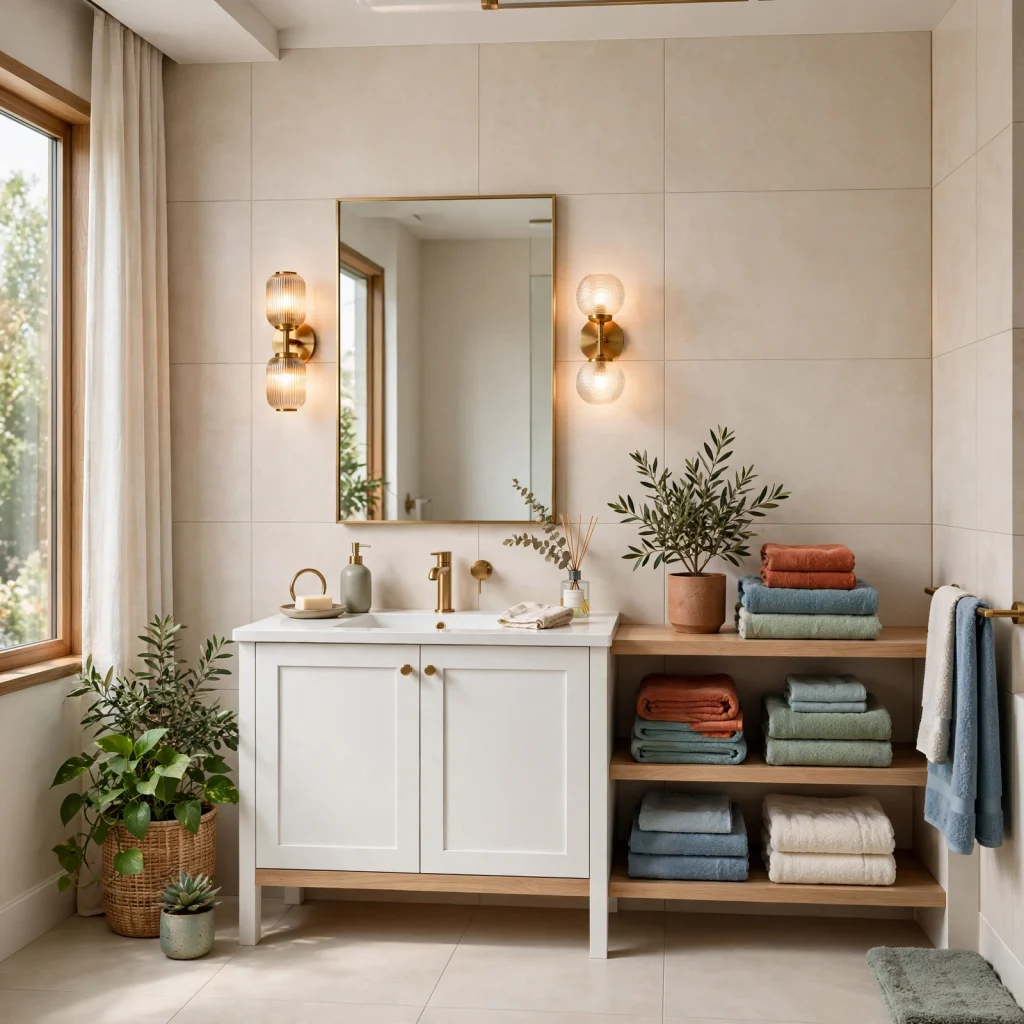
Large-format tile, in dimensions of 24 by 24 inches or larger, reduces the number of visible grout lines across a bathroom’s walls and floor, reinforcing the clean, uninterrupted surface quality central to modern bathroom design. Choosing a tile with a subtle, consistent texture rather than a busy pattern maintains this streamlined effect while still adding some material interest. This approach also simplifies cleaning considerably, since fewer grout lines mean less surface area prone to collecting grime over time.
2. Floating Vanity With Concealed Storage
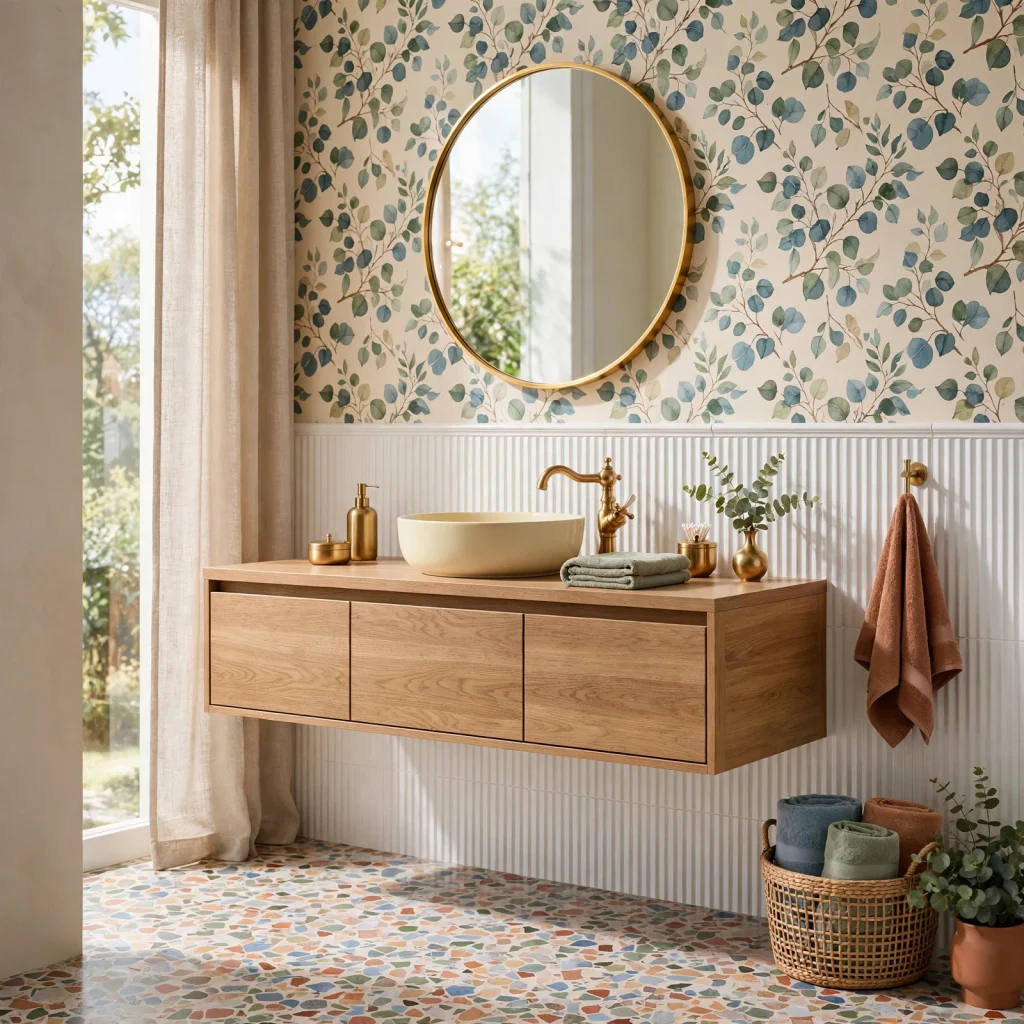
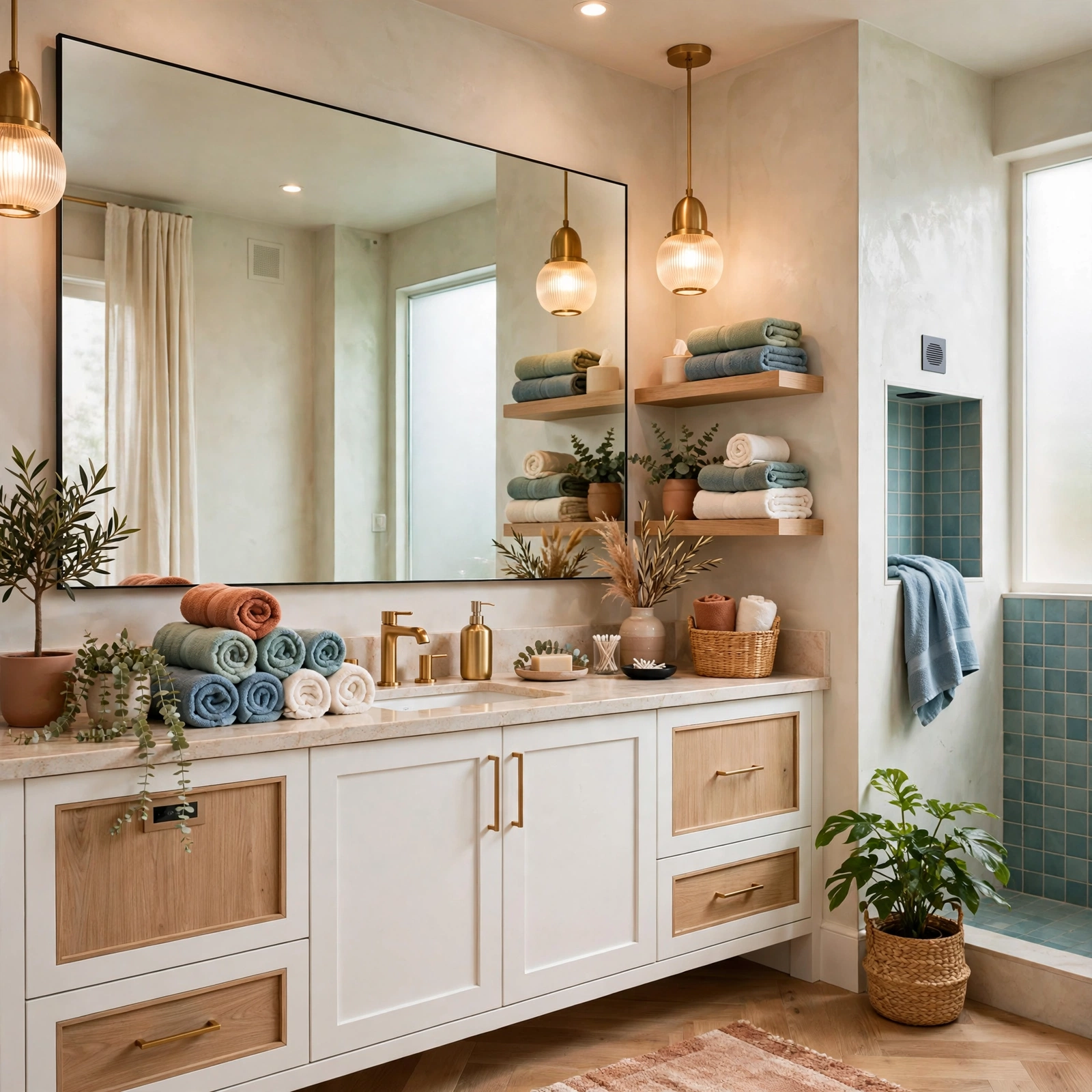
A floating vanity, mounted directly to the wall with no visible base touching the floor, keeps a modern bathroom’s floor space visually open while its concealed cabinet storage maintains the room’s clean, uncluttered surfaces. Push-to-open cabinet mechanisms, rather than visible pulls or knobs, further reinforce this minimal hardware approach. This fixture style requires proper wall reinforcement during installation to safely support the vanity’s weight along with whatever it holds.
3. Matte Black Fixture Finish
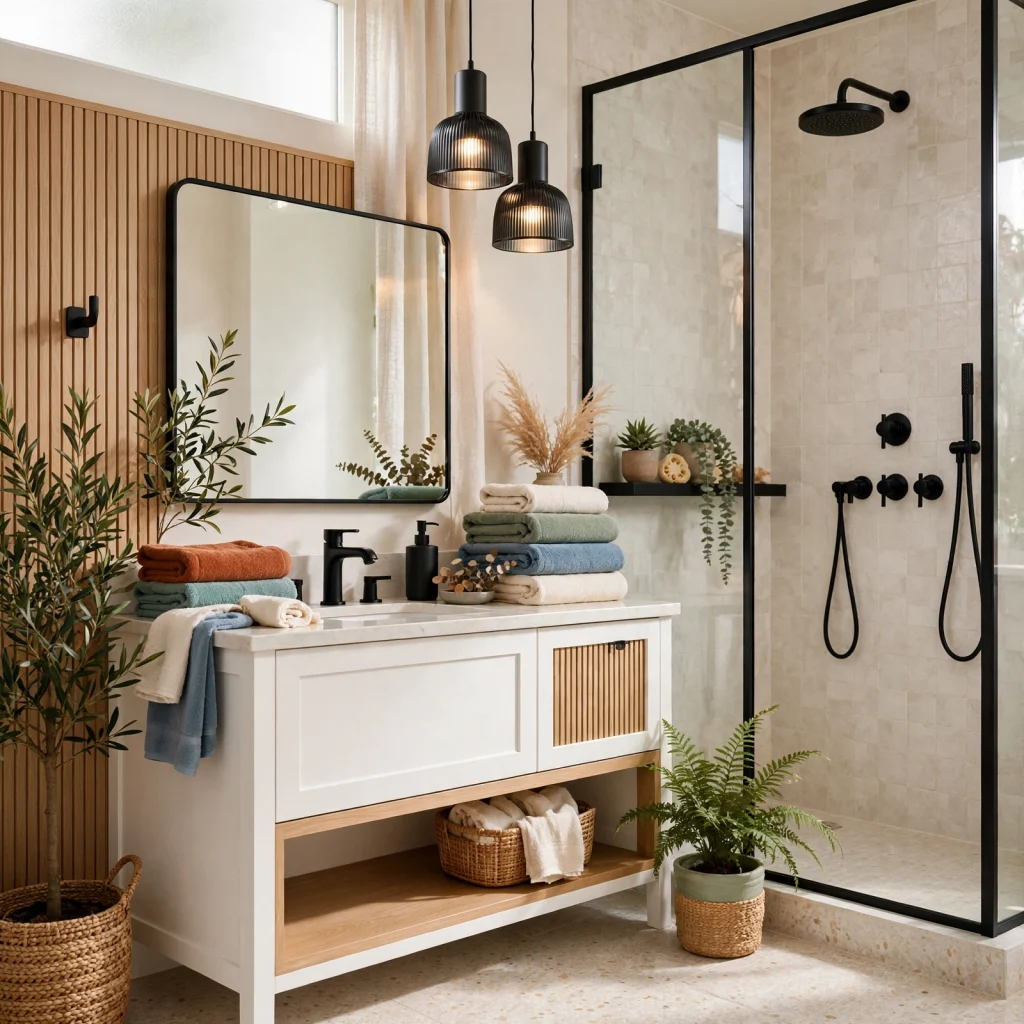
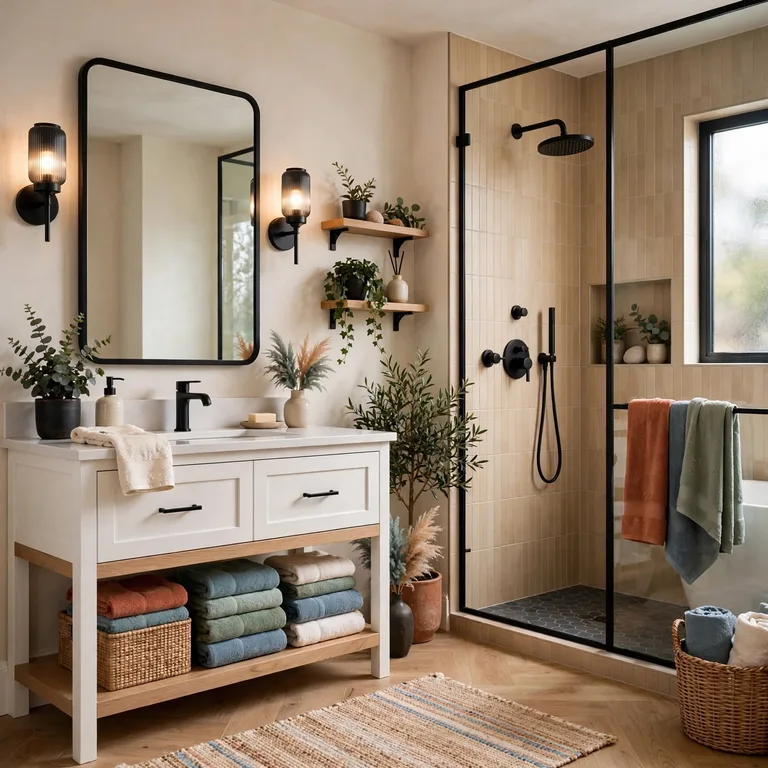
Matte black fixtures, faucets, showerheads, and cabinet hardware, have become one of the clearest signatures of current modern bathroom design, offering strong visual contrast against typically lighter tile and wall colors. This finish choice suits the geometric, clean-lined silhouettes common in modern fixture design particularly well, reinforcing rather than competing with those simple shapes. Keeping this black finish consistent across every fixture in the room produces a more cohesive result than mixing it with other metal tones.
| Element | Modern Choice | Traditional Alternative |
| Fixture finish | Matte black or brushed brass | Polished chrome |
| Tile size | Large-format, minimal grout | Small mosaic, busy pattern |
| Vanity style | Floating, concealed storage | Furniture-style, visible legs |
| Mirror shape | Geometric, frameless | Ornate, heavily framed |
4. Frameless Walk-In Shower
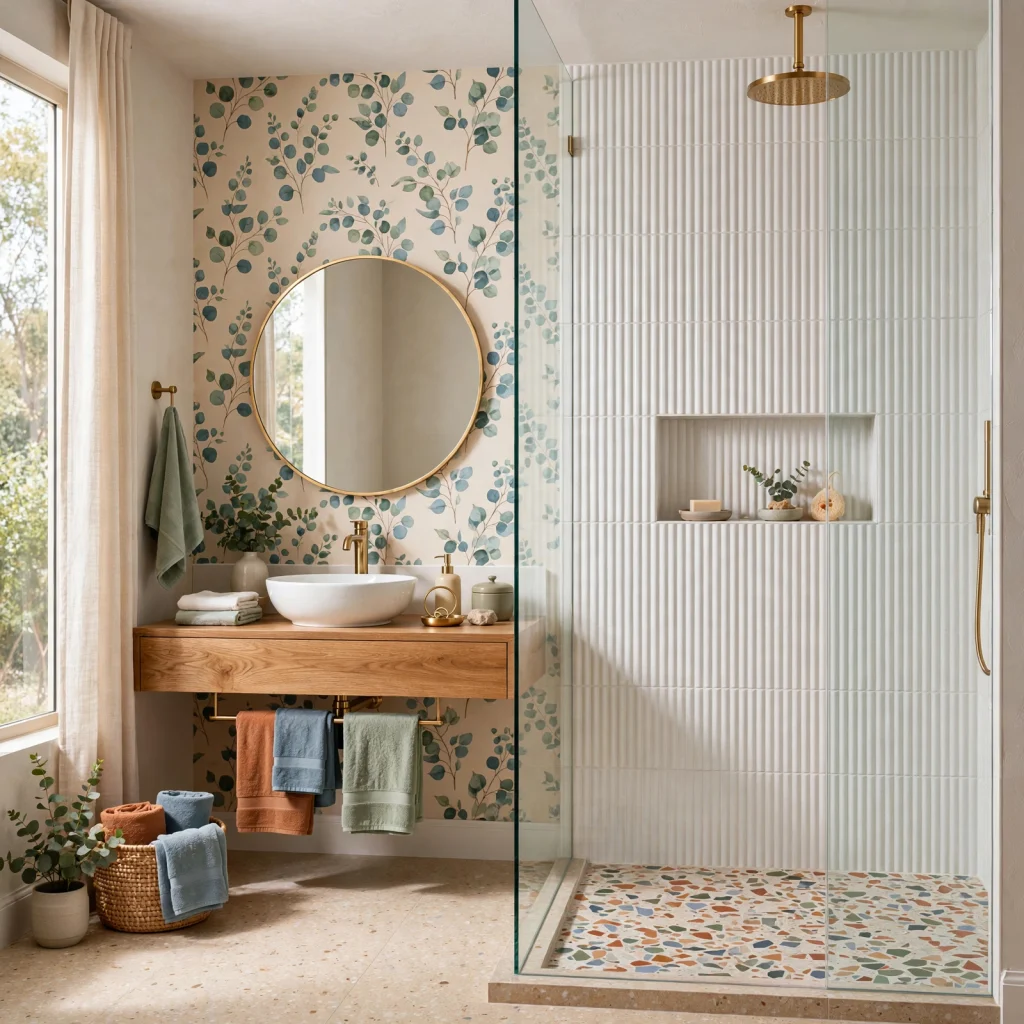
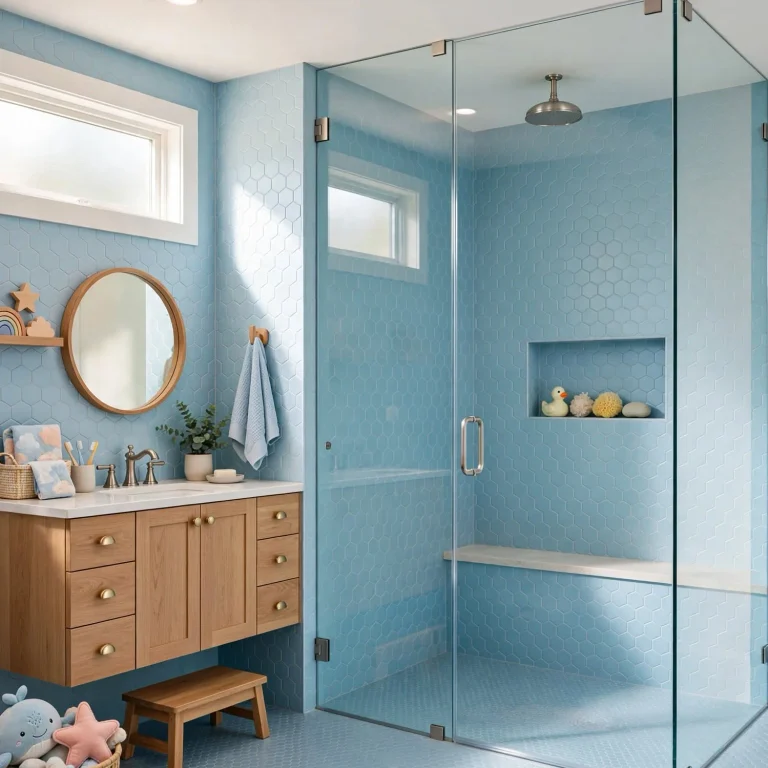
A frameless walk-in shower, using minimal or no visible metal framing around the glass panels, reinforces modern bathroom design’s emphasis on clean, uninterrupted sightlines throughout the room. This approach typically requires a curbless or low-curb shower base, along with careful waterproofing during installation, to achieve the seamless look modern design calls for. Pairing this shower style with the same large-format tile used elsewhere in the room extends the space’s visual continuity even further.
Find inspiring tiny bathroom ideas that make the most of limited space without sacrificing style or functionality.
5. Geometric Mirror Shapes
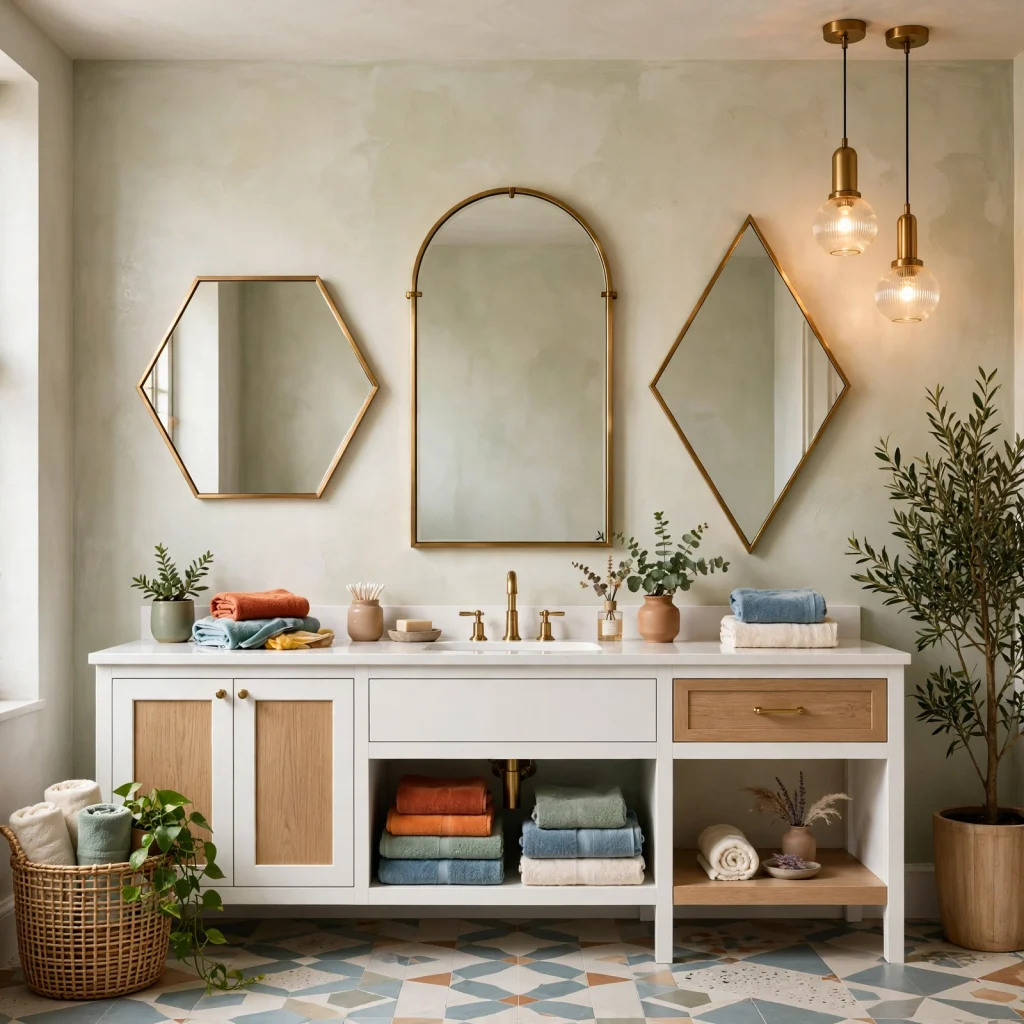
A geometric mirror, in a simple circular, rectangular, or hexagonal shape without an ornate frame, suits modern bathroom design’s overall preference for clean lines over decorative detail. A frameless or thin black metal frame maintains this restrained approach while still providing some definition against the wall. Choosing a mirror sized proportionally to the vanity below it, generally no wider than the counter itself, keeps this fixture feeling intentional rather than oversized for the space.
6. Wall-Hung Toilet for a Streamlined Look
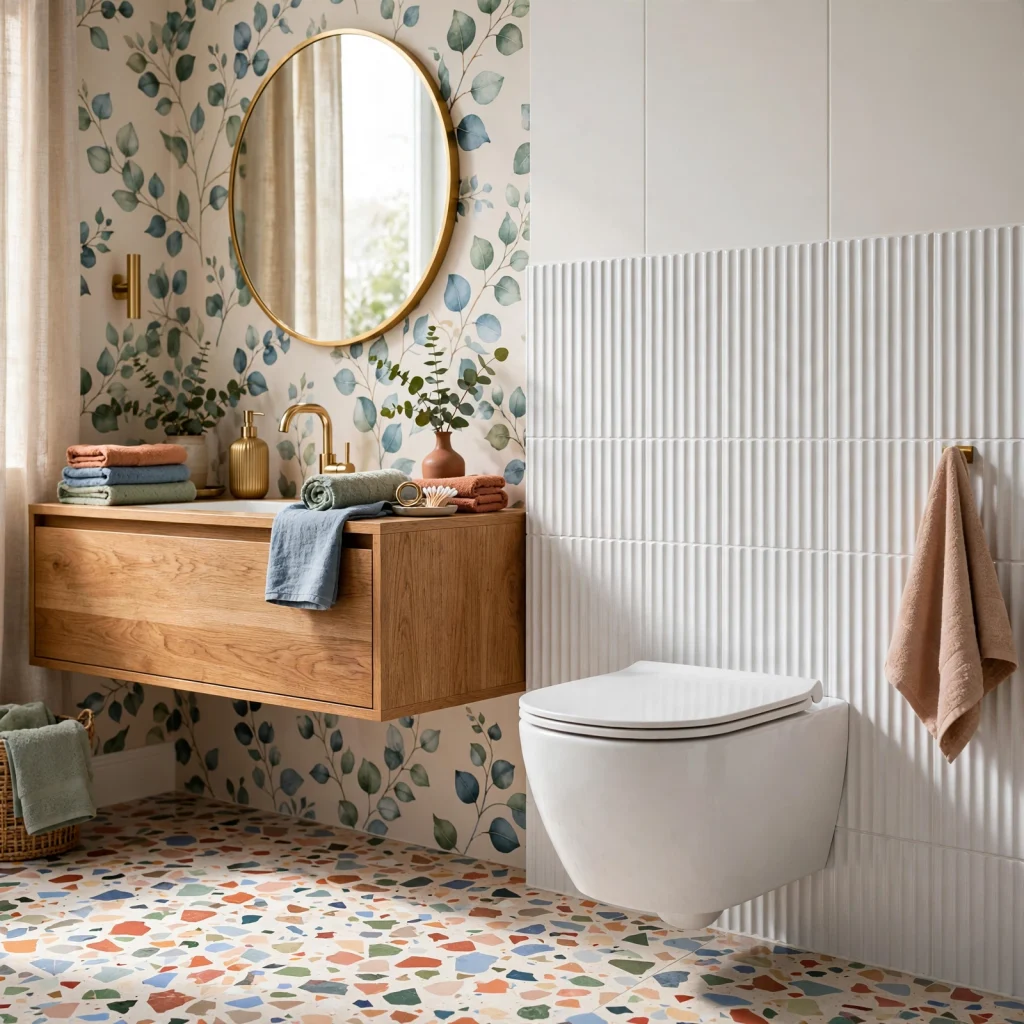
A wall-hung toilet, with its tank concealed within the wall and the bowl mounted at a fixed height above the floor, contributes to modern bathroom design’s clean, minimal aesthetic while also simplifying floor cleaning considerably. This installation requires more significant plumbing modification than a standard toilet, making it best suited to a full renovation project. The resulting streamlined silhouette, without a visible tank or full base touching the floor, reinforces the uninterrupted lines central to this design style.
7. Monochromatic Color Palette
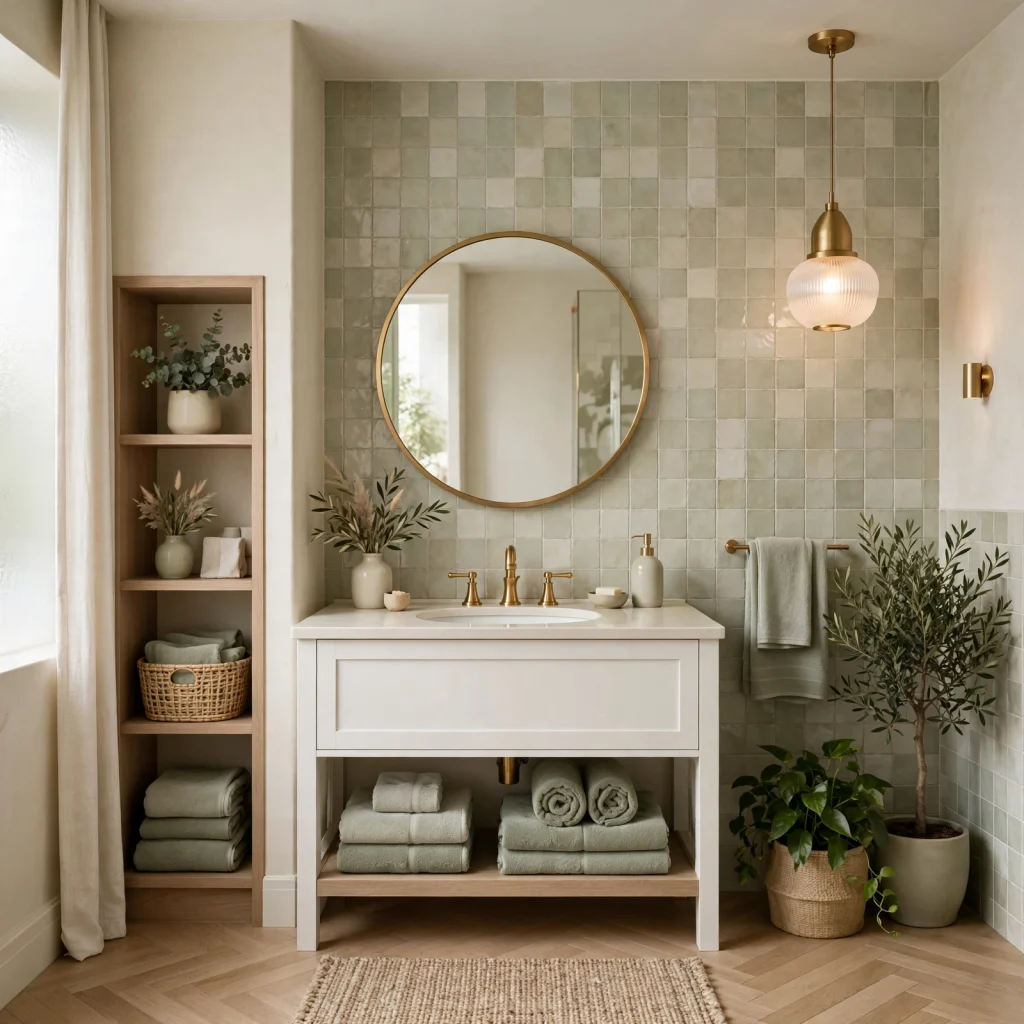
A monochromatic color palette, built around varying shades of a single neutral tone, gives a modern bathroom cohesion and calm without requiring additional color to create visual interest. Layering different textures and finishes within this limited palette, a matte tile alongside a glossy fixture, for instance, prevents the monochromatic approach from feeling flat despite its restrained color range. This approach suits modern design’s overall preference for material and texture over color and pattern as the primary source of visual interest.
8. Integrated LED Mirror Lighting
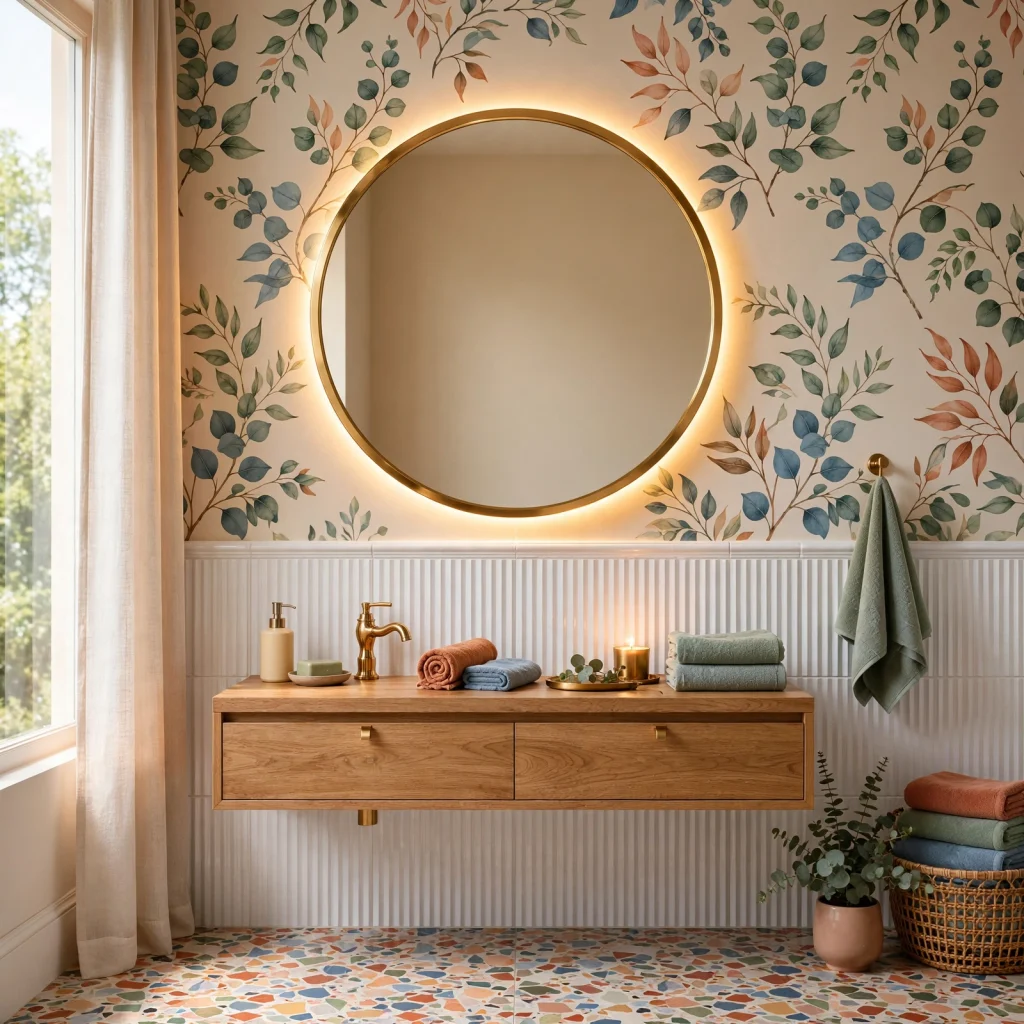
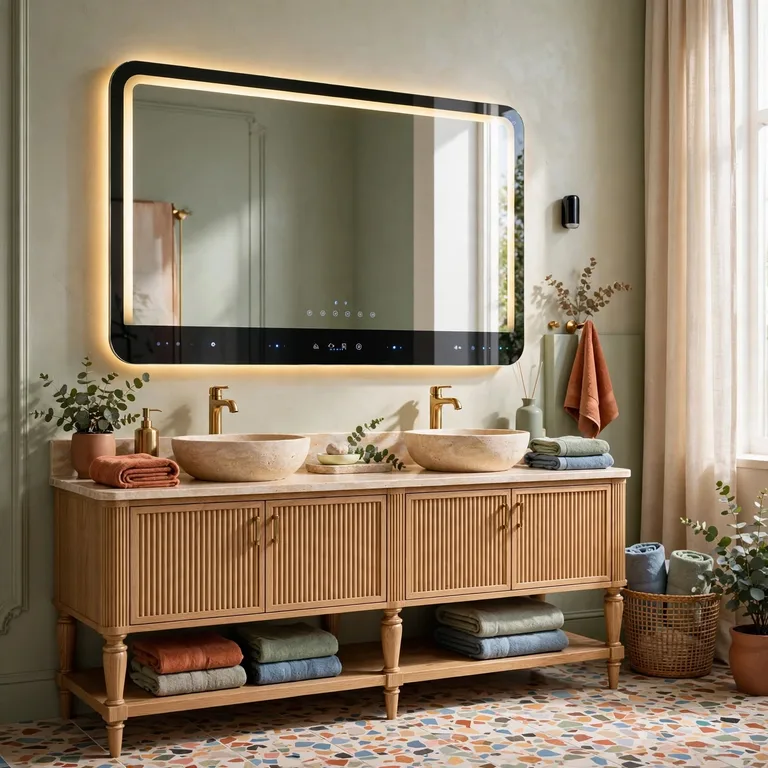
An integrated LED mirror, with lighting built directly into the mirror’s edge or backlit behind its surface, provides both function and a distinctly modern lighting solution without requiring separate visible sconces or fixtures. This approach keeps the wall surrounding the mirror clean and uninterrupted, consistent with modern design’s minimal hardware philosophy. Choosing a mirror with adjustable color temperature adds further functional flexibility, allowing the light to shift between a brighter, cooler tone for grooming tasks and a warmer glow for evening use.
9. Freestanding Tub With Simple Silhouette
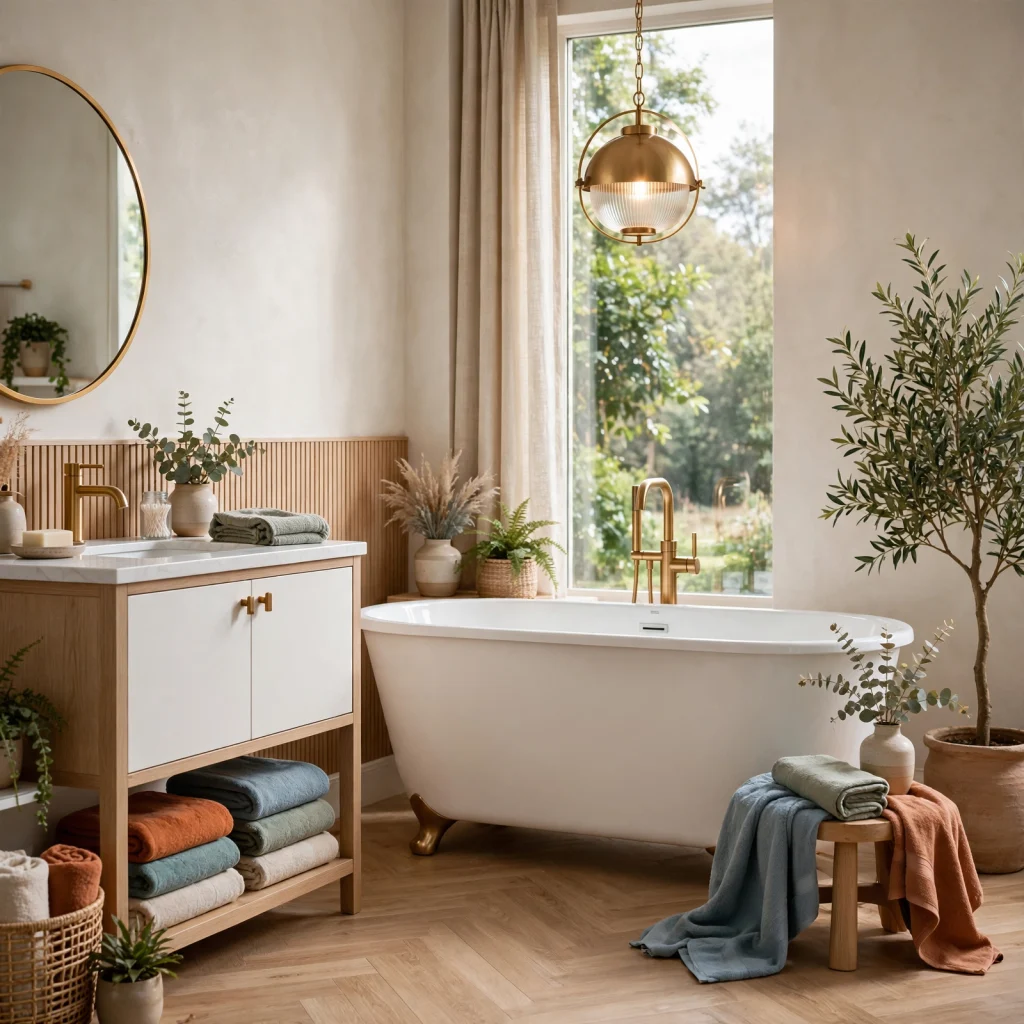
A freestanding tub, in a simple, unornamented oval or rectangular silhouette rather than a more traditional clawfoot or ornately shaped alternative, suits modern bathroom design’s overall preference for clean geometric form. Positioning the tub as a genuine sculptural feature within the room, rather than tucked against a wall, allows its simple shape to serve as a design statement in its own right. A matte or stone-look finish on the tub’s exterior further reinforces the room’s overall material restraint.
10. Recessed Niche Shower Storage
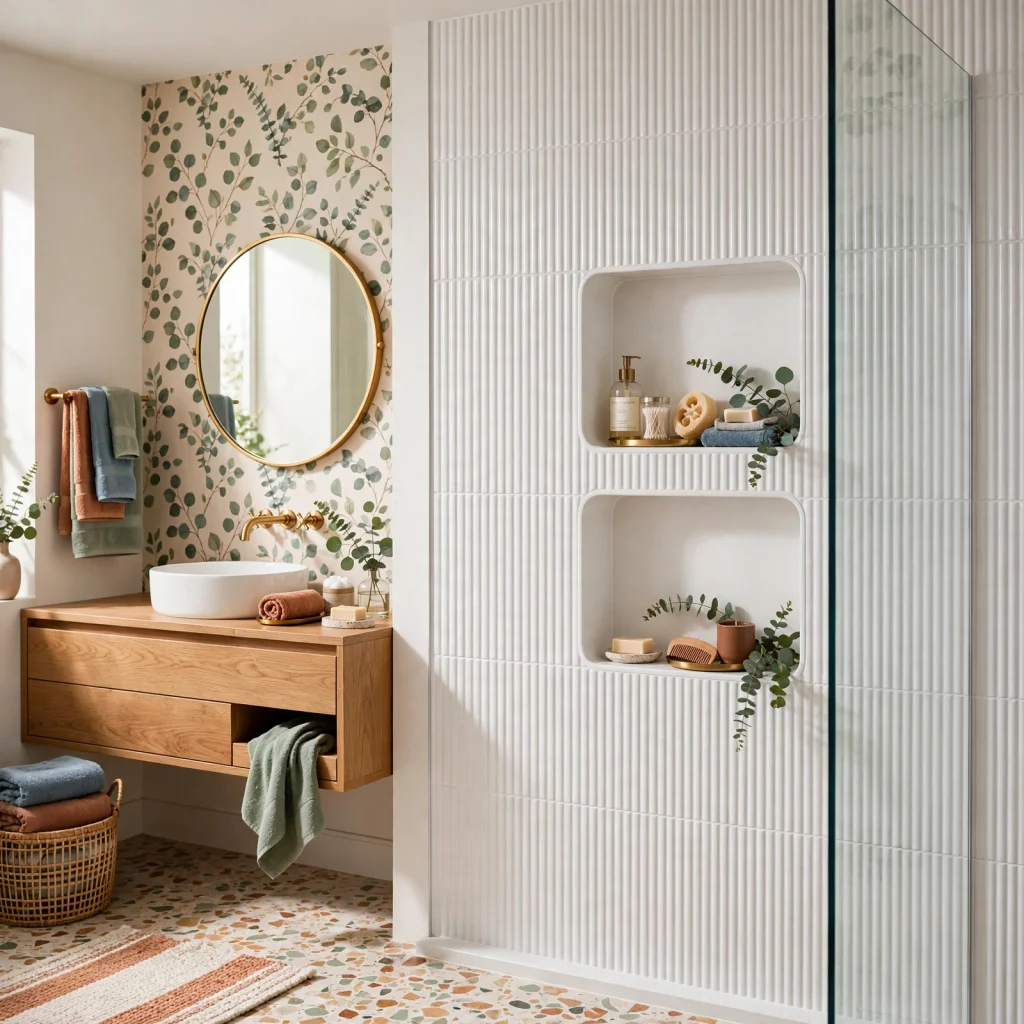
A recessed shower niche, built directly into the tiled wall during construction, provides shampoo and soap storage without requiring a hanging caddy or corner shelf that would disrupt modern bathroom design’s clean surfaces. Sizing the niche flush with the surrounding tile, using the same material for a seamless integration, maintains this streamlined look. This built-in approach requires planning during the initial tile installation, making it more suited to new construction or a full renovation than a later retrofit.
11. Minimal Visible Hardware Throughout
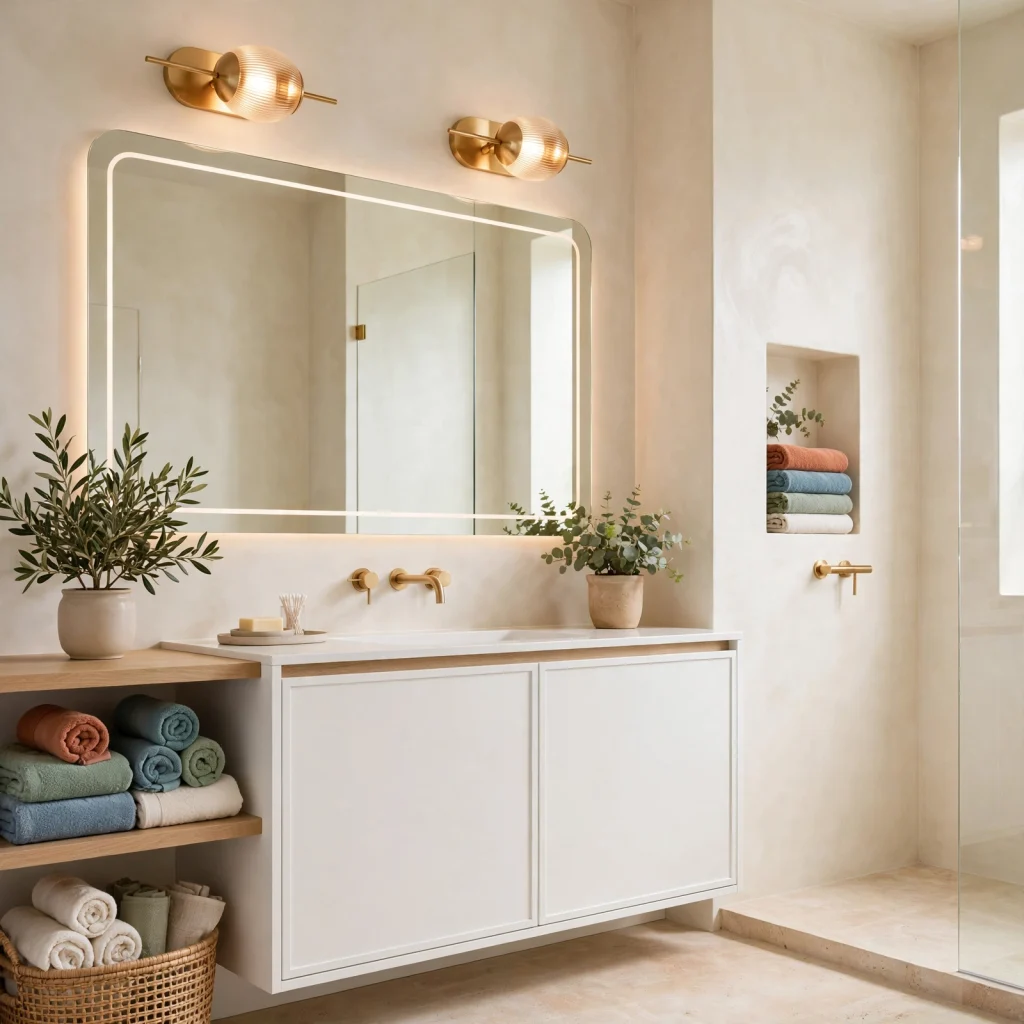
Minimizing visible hardware throughout a modern bathroom, choosing push-to-open cabinet mechanisms, integrated towel bars, and concealed hinges wherever possible, reinforces the room’s overall commitment to clean, uninterrupted surfaces. This approach requires more precise manufacturing and installation than standard visible hardware, but produces a noticeably sleeker overall result. This detail applies particularly to vanity cabinetry and any built-in storage, where visible pulls and knobs can otherwise disrupt an intentionally minimal composition.
12. Wood Accent Against Cool Materials
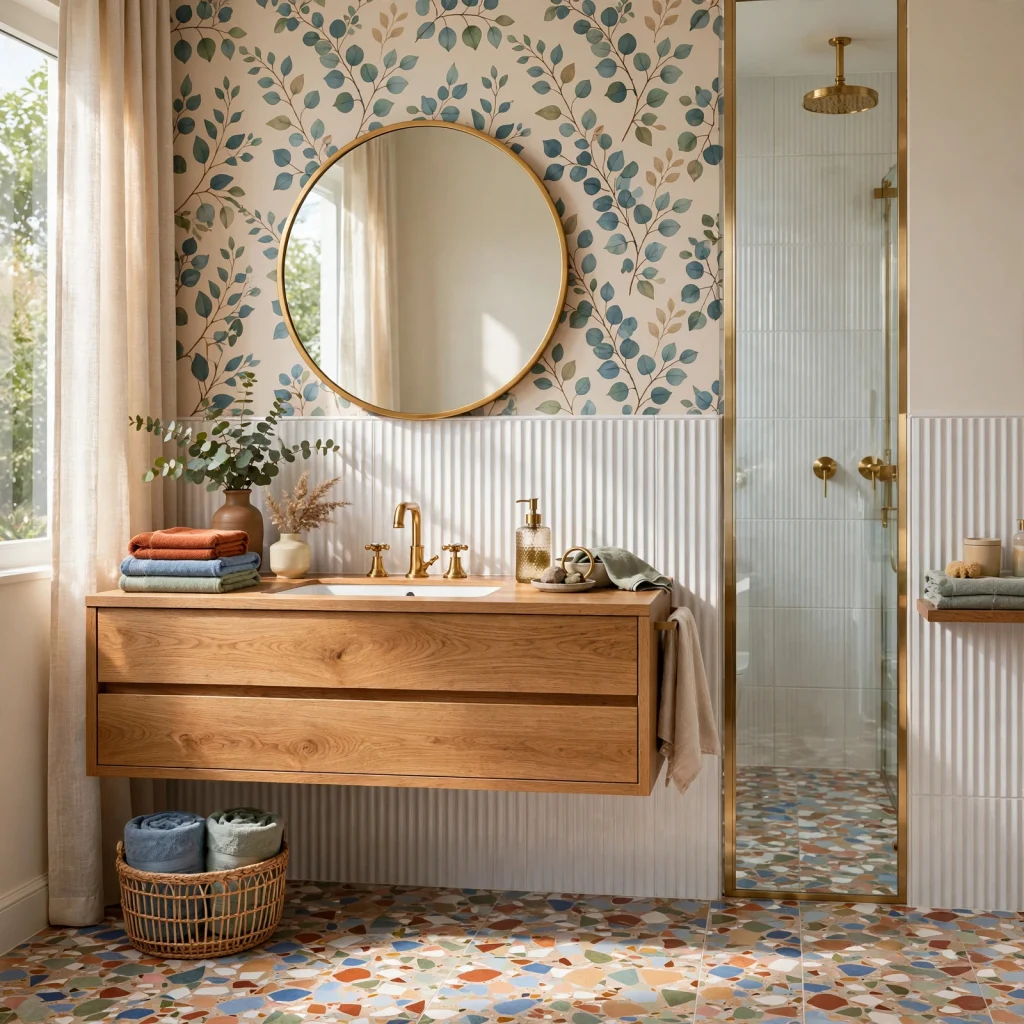
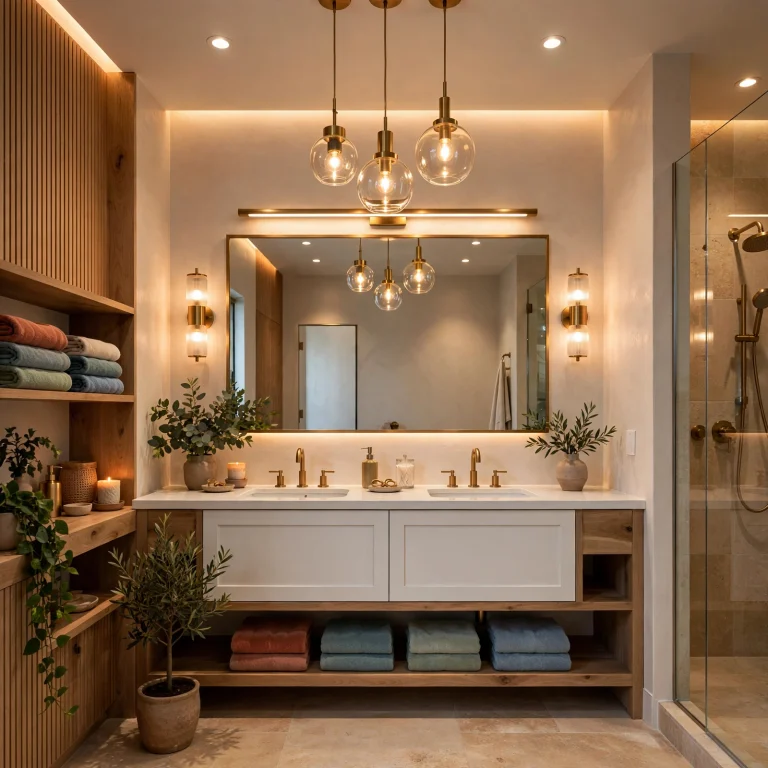
Introducing a warm wood accent, a floating vanity or a slatted wall detail, against the cooler tile and metal materials more typically associated with modern design prevents the room from feeling overly clinical or sterile despite its restrained overall palette. This pairing has become increasingly common in current modern bathroom design specifically to address this potential coldness. Choosing a single wood element, rather than incorporating wood throughout multiple surfaces, keeps this warming detail feeling intentional rather than diluting the room’s overall modern clarity.
13. Curbless Shower Entry
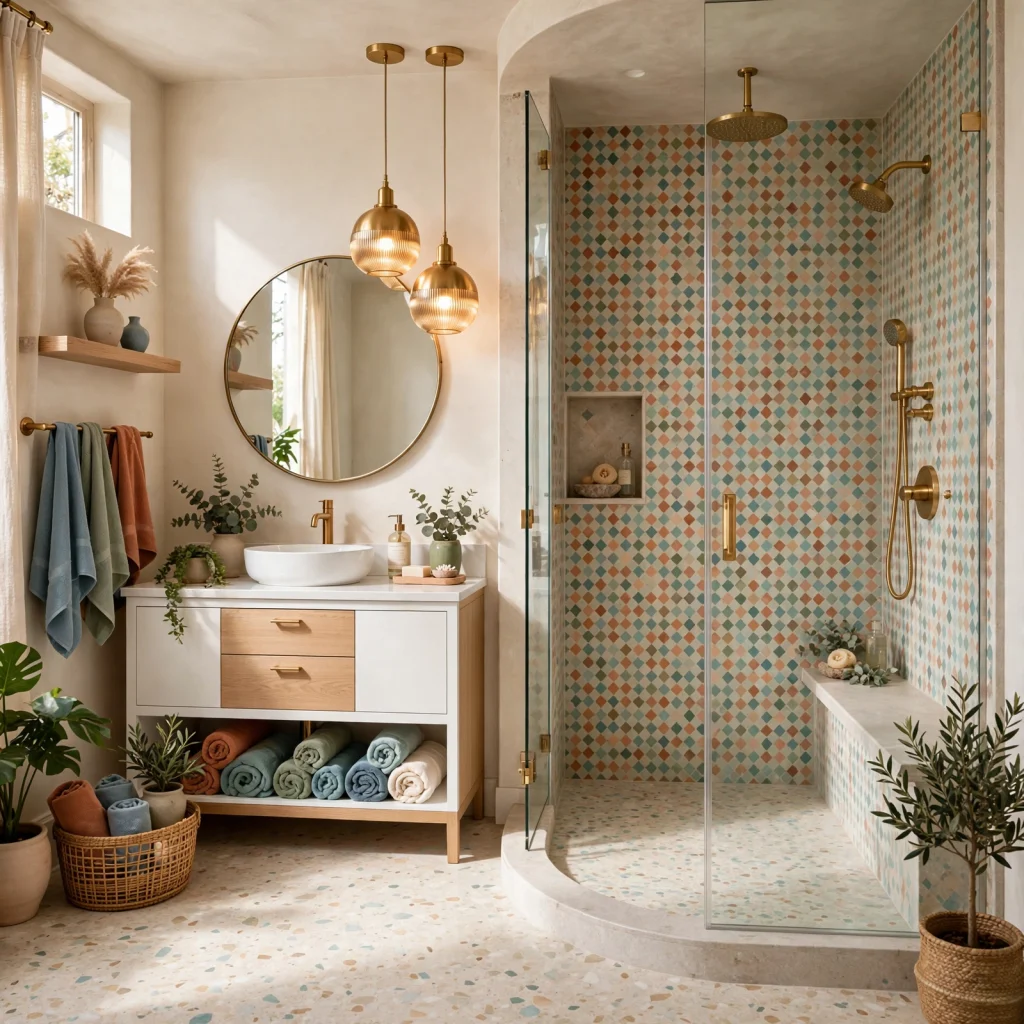
A curbless shower entry, where the shower floor sits flush with the surrounding bathroom floor rather than requiring a raised threshold, reinforces modern bathroom design’s emphasis on uninterrupted, continuous surfaces throughout the room. This installation requires careful attention to floor slope and drainage during construction to prevent water from spreading beyond the shower area despite the absence of a physical barrier. This detail also improves accessibility, making a modern bathroom easier to navigate for anyone with mobility considerations.
14. Sculptural Freestanding Faucet
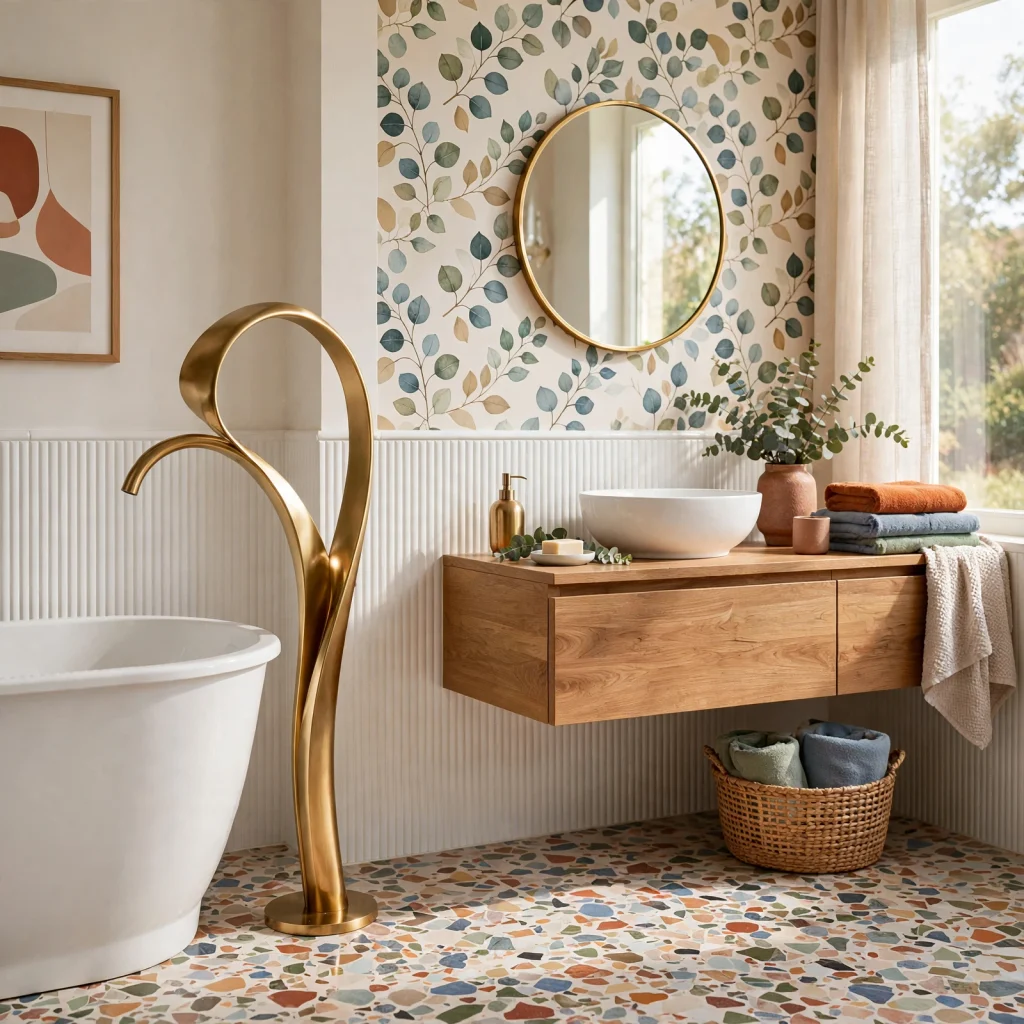
A sculptural freestanding faucet, mounted directly to the floor beside a freestanding tub rather than to the tub’s own rim or an adjacent wall, adds a genuine architectural statement to modern bathroom design while serving its practical filling function. This fixture type requires specific floor plumbing installation, making it a consideration primarily for new construction or a full bathroom renovation. Choosing a matte black or brushed brass finish for this statement fixture ties it into the room’s broader material palette.
15. Concealed Technology Integration
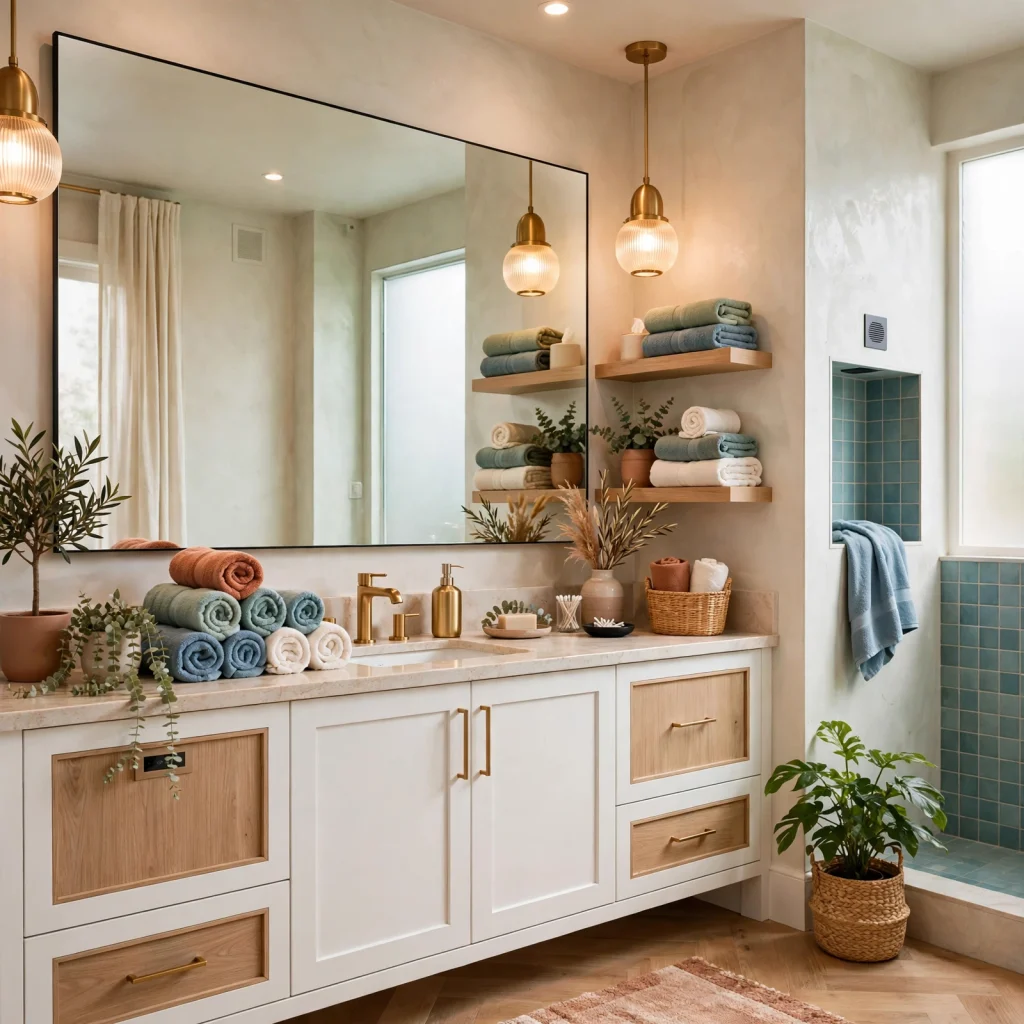
Concealing technology, a built-in speaker system, a smart mirror with integrated display, or hidden device charging, within a modern bathroom’s fixtures and surfaces reflects the style’s broader preference for function without visual clutter. This approach requires planning during the initial renovation or construction phase, since retrofitting concealed technology into finished surfaces is considerably more difficult and costly. Choosing technology that genuinely improves daily function, rather than adding features purely for novelty, keeps this integration consistent with modern design’s overall functional priorities.
Shop the Look
Start with large-format porcelain tile in a warm neutral tone, a floating vanity with push-to-open storage, and matte black fixtures throughout. Add a frameless walk-in shower with a recessed niche, a geometric frameless mirror with integrated LED lighting, and a freestanding tub with a simple oval silhouette. Finish with a single warm wood accent, whether the vanity itself or a slatted wall detail, to prevent the room’s cooler materials from feeling overly clinical.
Common Mistake to Avoid
A common mistake in modern bathroom design is prioritizing coolness and minimalism to the point of sterility, relying entirely on hard, glossy materials and stark white without any warming counterpoint to soften the overall effect. Introducing at least one warm element, wood, a warmer metal accent, or textured tile, prevents this common pitfall while still maintaining the style’s core commitment to clean lines and restraint. A successful modern bathroom balances genuine minimalism with enough warmth to remain inviting for daily use rather than feeling clinical or uncomfortable.
FAQs
What’s the difference between modern and contemporary bathroom design?
Modern bathroom design specifically references the clean lines and functional simplicity associated with mid-20th century design principles, remaining relatively fixed in its core characteristics regardless of current trends, while contemporary bathroom design reflects whatever styles are currently popular and evolves over time. This means a modern bathroom designed today shares core characteristics with one designed decades ago, while a contemporary bathroom’s specific material and color choices shift as broader trends change. In casual conversation, the terms are often used interchangeably, but this distinction matters for anyone sourcing fixtures or referencing specific design inspiration accurately.
What tile size works best for a modern bathroom?
Large-format tile, generally 24 by 24 inches or larger, works particularly well for modern bathroom design, since its reduced number of grout lines reinforces the clean, uninterrupted surface quality central to this style. Smaller mosaic or subway tile can still work within a modern bathroom as an accent detail, such as within a shower niche, but shouldn’t dominate the room’s primary wall and floor surfaces if a genuinely modern look is the goal. Choosing a tile with minimal pattern or texture variation further supports this streamlined, large-format approach.
Is matte black or brushed brass better for a modern bathroom?
Both matte black and brushed brass suit modern bathroom design well, with the choice generally coming down to the room’s broader color palette and personal preference rather than one finish being definitively more current than the other. Matte black tends to suit a cooler, more monochromatic modern palette, while brushed brass often pairs better with a warmer neutral scheme. Choosing one finish and applying it consistently across all fixtures in the room matters more to achieving a cohesive modern look than which specific finish is ultimately selected.
Can a small bathroom still achieve a modern design aesthetic?
A small bathroom can successfully achieve modern design principles, and in some ways benefits particularly well from this style’s emphasis on clean lines and minimal clutter, since a smaller space generally reads as more spacious when kept simple and uncluttered. Choosing space-efficient modern fixtures, a floating vanity, a wall-hung toilet, and large-format tile all work well within a compact footprint while still delivering the style’s core aesthetic. Modern design’s overall restraint, in fact, often suits a small bathroom’s practical space constraints more naturally than a more ornate or heavily decorated style would.
How do I prevent a modern bathroom from feeling too cold or clinical?
Introducing at least one warm material, a wood vanity or accent wall, warm metal fixtures, or a textured natural stone, alongside modern design’s typically cooler tile and glass elements helps prevent the room from feeling sterile despite its overall restraint. Warm lighting, particularly avoiding an overly bright, cool-toned bulb throughout the room, also significantly affects how inviting a modern bathroom feels in daily use. Balancing genuine minimalism with these specific warming touches produces a modern bathroom that feels considered and comfortable rather than clinical.
Conclusion
A successful modern bathroom relies on clean lines, minimal visible hardware, and a restrained material palette, balanced with at least one warm element to keep the space feeling inviting rather than clinical. Save this guide to Pinterest for reference while planning your next renovation, and check out our related post on bathroom design for more style directions to compare against this modern approach.