12 Amazing Flower Garden Ideas for Color All Season Long
Flower garden ideas succeed or fail on one thing most people overlook: bloom timing. A bed full of gorgeous plants that all flower in May and go bare by July isn’t a flower garden, it’s a spring display. This post walks through twelve specific approaches, from a dedicated cutting bed to a moon garden that glows at dusk, each with real plant names, spacing, and a clear sense of how the pieces fit together across a full growing season.
Trend & Background
Flower gardening has moved noticeably toward pollinator-focused plantings, naturalized bulb drifts, and cutting gardens grown specifically to be harvested rather than only admired in place. Native perennial nurseries report rising demand for straight species plants over heavily bred cultivars, since straight species tend to produce more nectar and pollen for bees and butterflies. At the same time, more gardeners are carving out a dedicated cutting bed separate from ornamental beds, treating fresh-cut arrangements as a routine part of the garden rather than an occasional splurge.
Key Takeaways
- These 12 flower garden ideas cover cutting gardens, perennial borders, rose arbors, and shade-tolerant woodland beds
- Five ideas perennial borders, rose arbors, container groupings, bulb drifts, and raised beds — include sizing, spacing, or material comparison tables
- Bloom succession planning matters more than any single plant choice for color that lasts from spring through fall
- Most of these ideas layer well together rather than requiring a single dominant style
1. Cutting Garden Bed
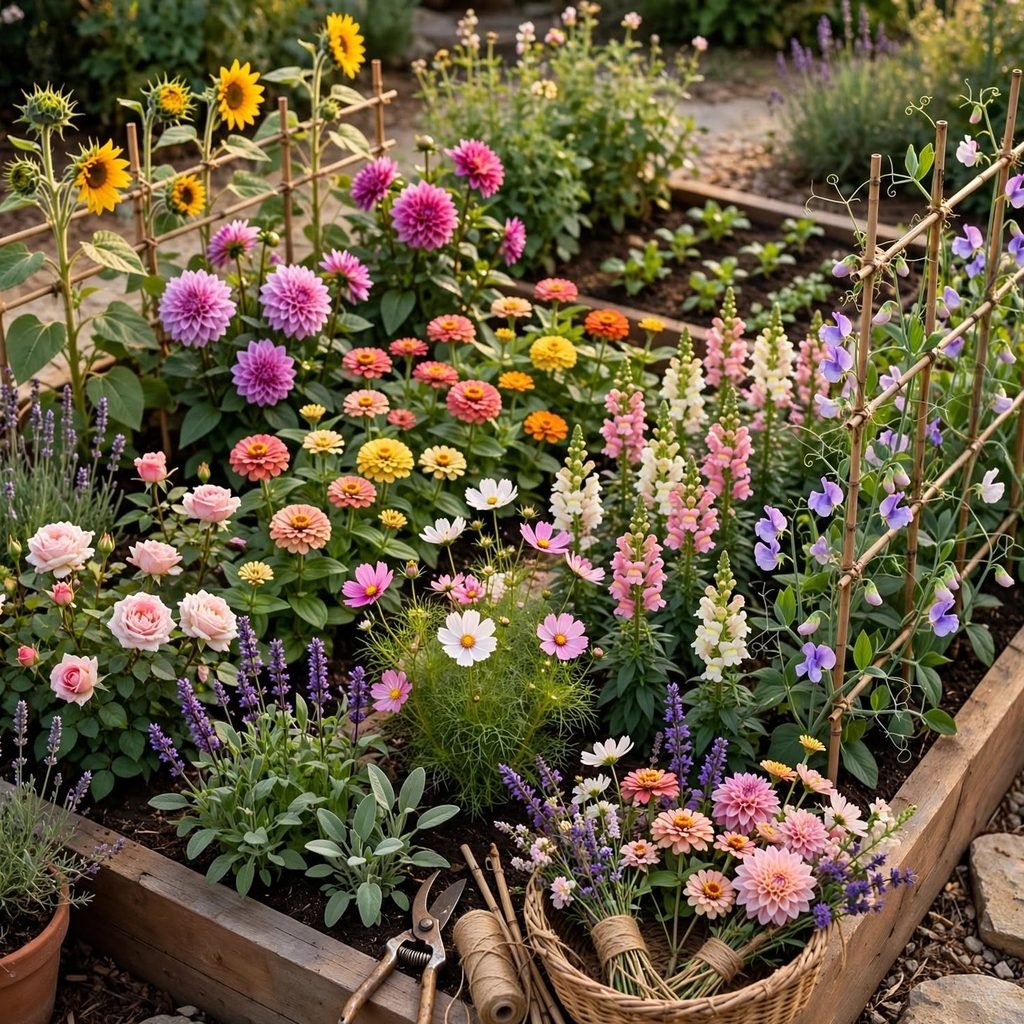
A cutting garden bed is planted specifically to be harvested, so it sits apart from ornamental beds where removing stems would leave visible gaps. Zinnias, dahlias, cosmos, and snapdragons are reliable repeat bloomers that respond to cutting by producing more flowers rather than fewer. Rows spaced about 12 inches apart make harvesting easier than a mixed drift planting, and succession sowing zinnias and cosmos every three weeks through early summer keeps the bed producing until the first frost.
2. Perennial Border
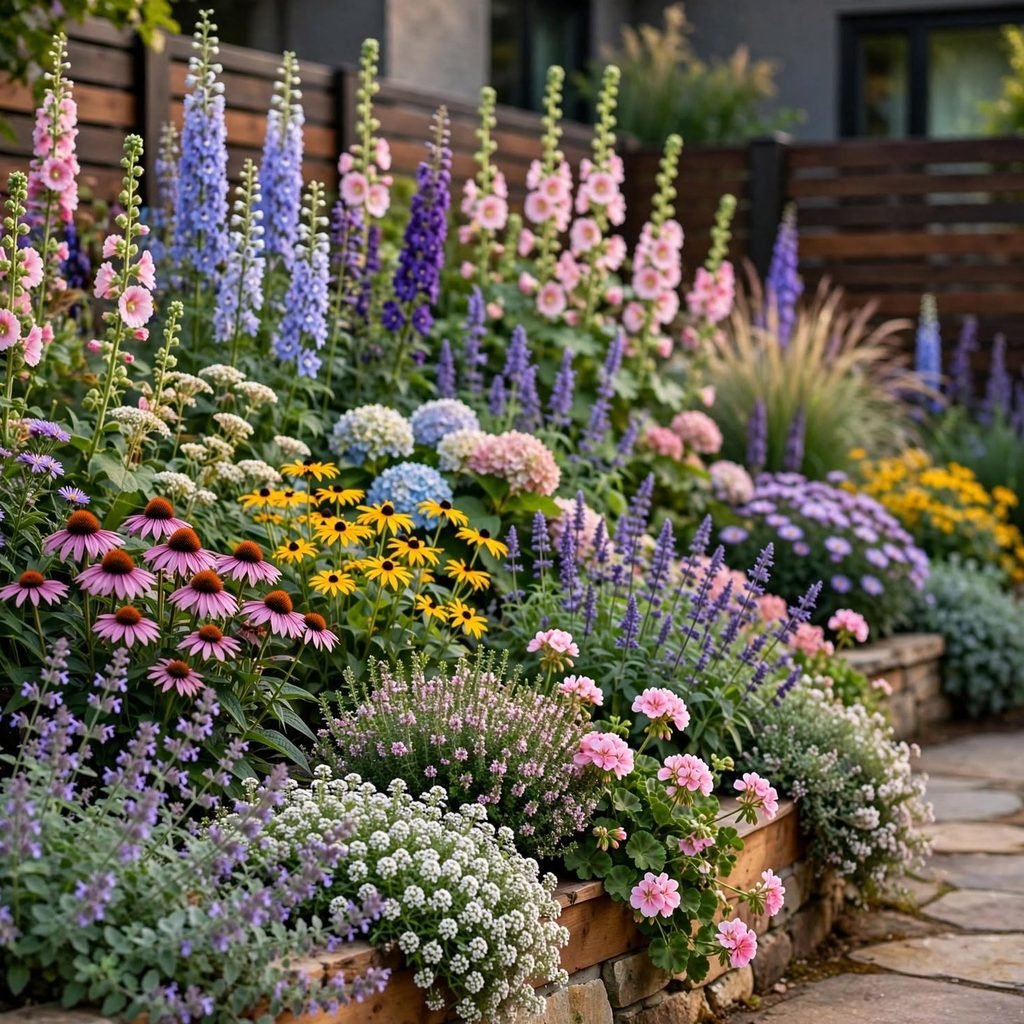
A perennial border layers plants by mature height, with the tallest varieties at the back against a fence or wall and the shortest spilling over the front edge, so nothing blocks anything else once everything fills in. Delphinium and phlox anchor the back tier, coneflower and salvia hold the middle, and creeping thyme or dianthus edge the front. Spacing depends heavily on mature spread, not the size the plant is at purchase, which is where most new borders end up overcrowded within two seasons.
| Border Tier | Typical Height | Example Plants | Spacing |
| Back | 4–6 ft | Delphinium, hollyhock | 18–24 in |
| Middle | 2–3 ft | Coneflower, salvia | 12–18 in |
| Front | 6–12 in | Creeping thyme, dianthus | 8–10 in |
3. Rose Arbor
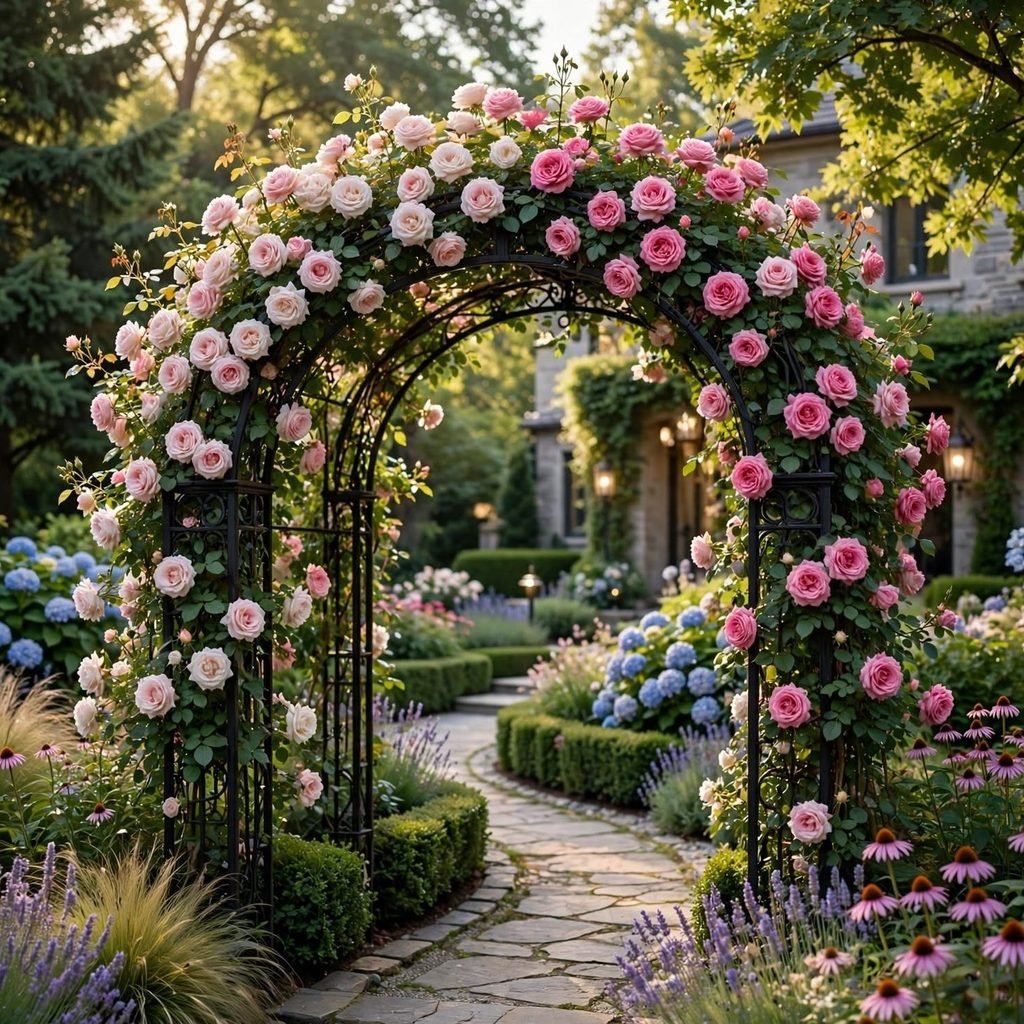
A rose arbor frames an entry point or path with a climbing rose trained up and over a wood or metal structure, giving height and a focal point that a flat border can’t provide on its own. Cedar arbors weather to a soft gray and need minimal upkeep, powder-coated steel holds a cleaner architectural line, and wrought iron carries the most traditional look but needs periodic repainting to prevent rust. New Dawn and Zephirine Drouhin are two climbing varieties known for tolerating the repeated bending training onto an arbor requires.
| Material | Style | Maintenance | Cost Range |
| Cedar | Rustic/cottage | Low | $200–400 |
| Powder-coated steel | Modern/formal | Very low | $350–600 |
| Wrought iron | Traditional | Moderate (repaint) | $400–700 |
See our rose pruning schedule for exact timing on training climbers correctly.
4. Pollinator Meadow Patch
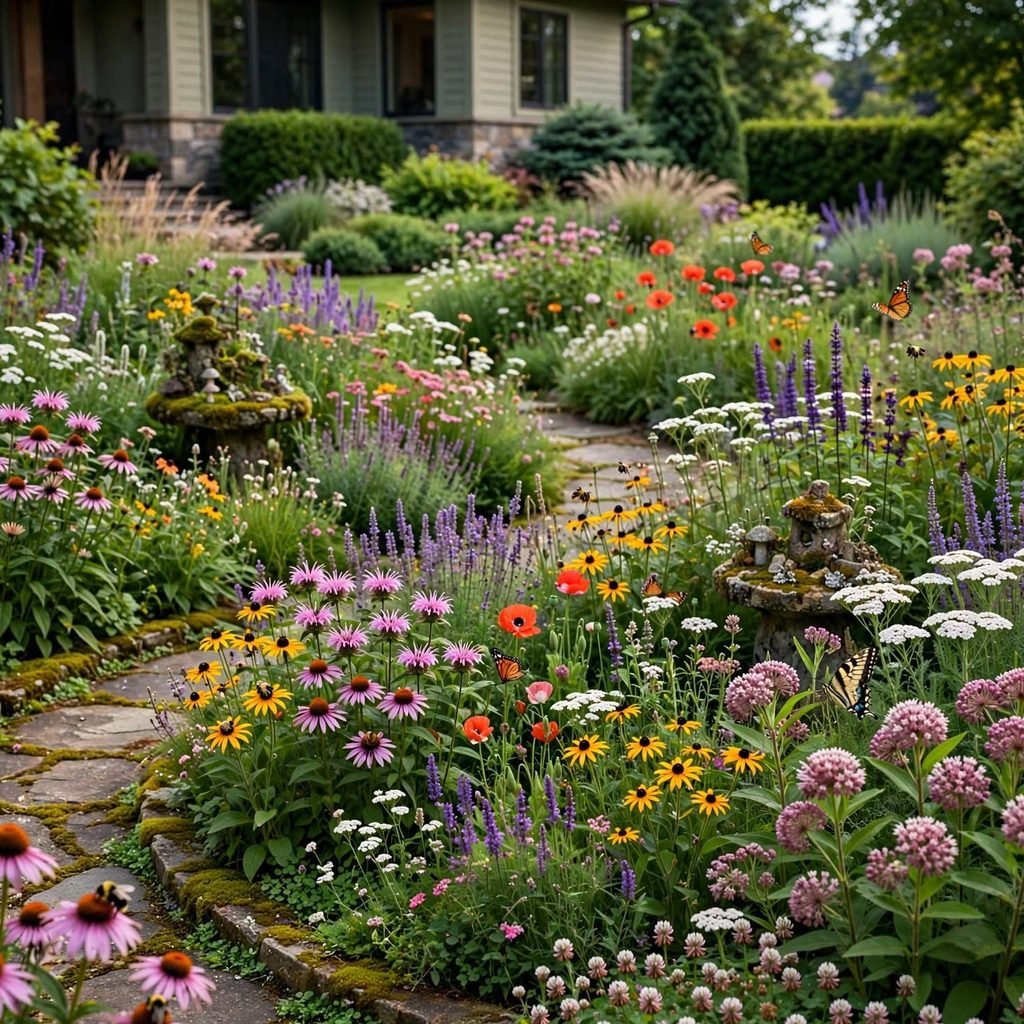
A pollinator meadow patch replaces a section of ornamental bed or lawn with a dense mix of nectar and pollen plants chosen specifically to support bees, butterflies, and other beneficial insects rather than for a curated look. Bee balm, milkweed, coneflower, and native asters cover a long bloom window from early summer into fall, which matters more to pollinators than any single showy plant. Leaving seed heads standing through winter rather than deadheading everything also gives overwintering insects a place to shelter.
Find garden design ideas to add color, charm, and personality to your outdoor space.
5. Container Flower Grouping
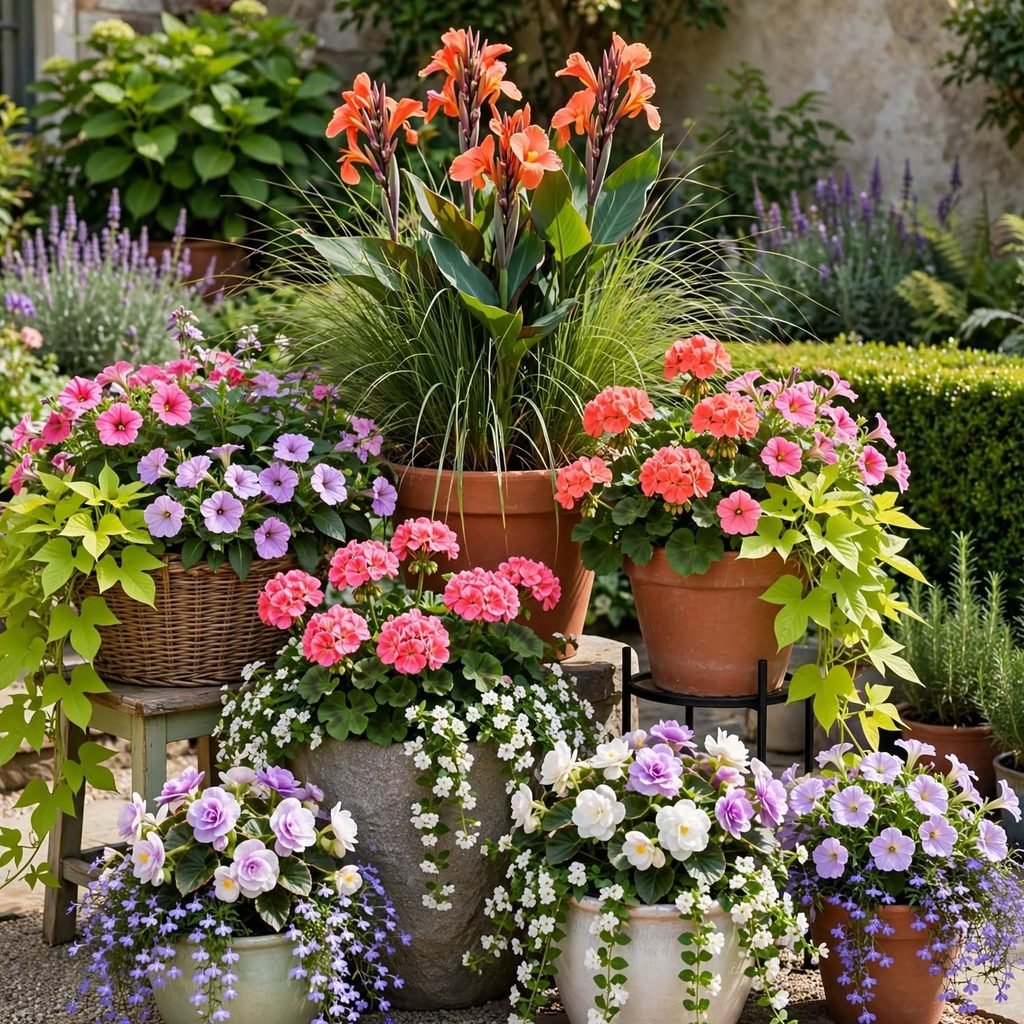
A container flower grouping lets you build color on a patio, deck, or entryway where there’s no ground bed to plant into, and clustering three to five pots of varying heights reads as far more intentional than scattering single pots around. The classic thriller-filler-spiller formula — one upright plant, several mounding plants, and one trailing plant per pot — keeps each container balanced on its own while the group works together as a whole composition.
| Pot Size | Plant Count | Best Use |
| 10–12 in | 1 thriller + 2 filler | Small entry accent |
| 14–16 in | 1 thriller + 3 filler + 1 spiller | Standard patio pot |
| 18–24 in | 1–2 thriller + 4 filler + 2 spiller | Statement piece |
6. Woodland Shade Bed
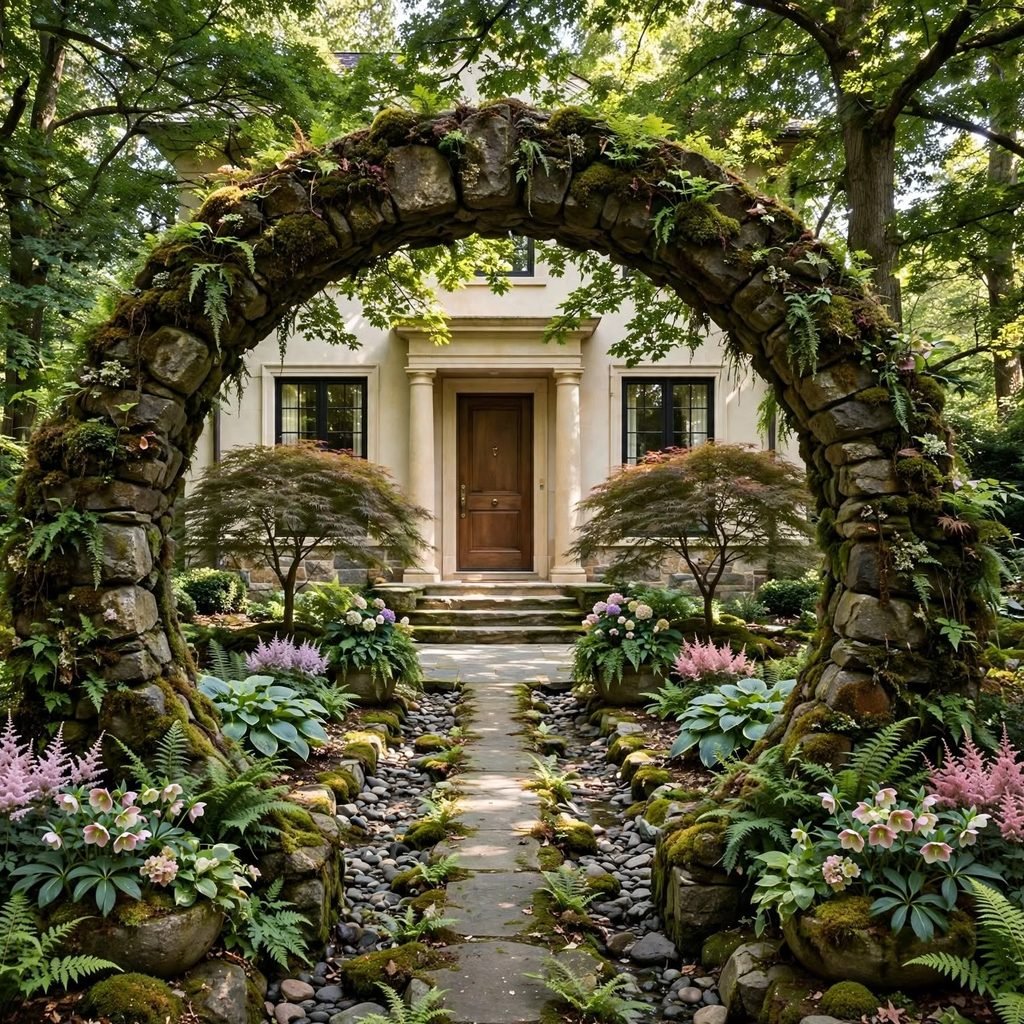
A woodland shade bed works in the dappled or full shade under mature trees where most flowering perennials struggle, using plants adapted to low light and the root competition that comes with growing near established trees. Hosta, astilbe, bleeding heart, and hellebore all tolerate these conditions and bloom in sequence from early spring hellebore through summer astilbe. Amending the soil with compost matters more here than in sunnier beds, since tree roots pull moisture and nutrients away from anything planted nearby.
7. Cottage Flower Garden Ideas
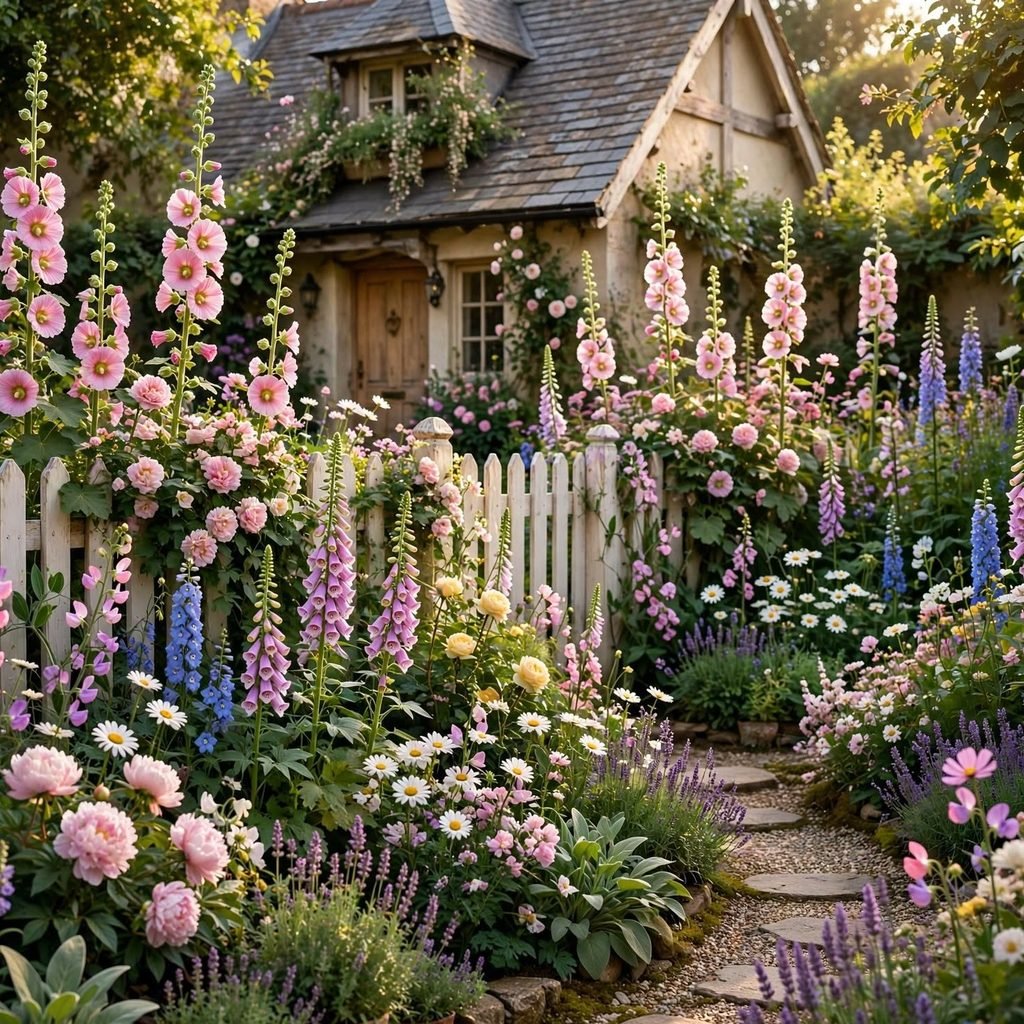
Cottage flower garden ideas favor a deliberately loose, overflowing look built from self-seeding annuals and old-fashioned perennials planted close together so the bed reads as full rather than gapped. Foxglove, hollyhock, cosmos, and sweet pea are classic choices, often allowed to reseed year to year rather than replanted from scratch each spring. A low picket edge or informal stone border keeps the planting from spilling entirely into the lawn while still preserving the relaxed, unstructured character the style is known for.
8. Climbing Vine Trellis
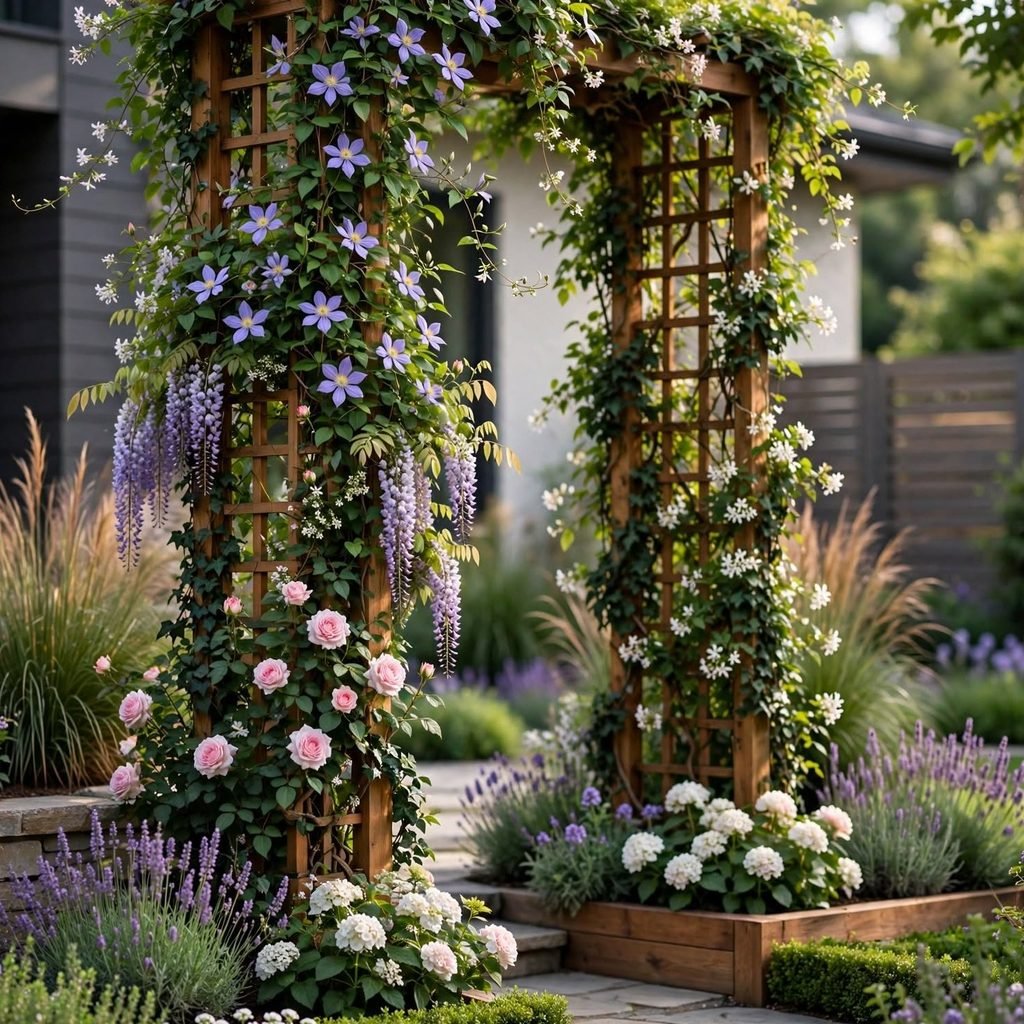
A climbing vine trellis adds vertical flowering interest against a bare wall or fence without taking up any bed space at ground level. Clematis, morning glory, and sweet pea all train readily onto a simple wire or wood lattice trellis, though clematis prefers cool, shaded roots even when the vine itself climbs into full sun, which usually means mulching heavily at the base or planting a low groundcover in front of it to shade the root zone.
9. Bulb Naturalizing Drift
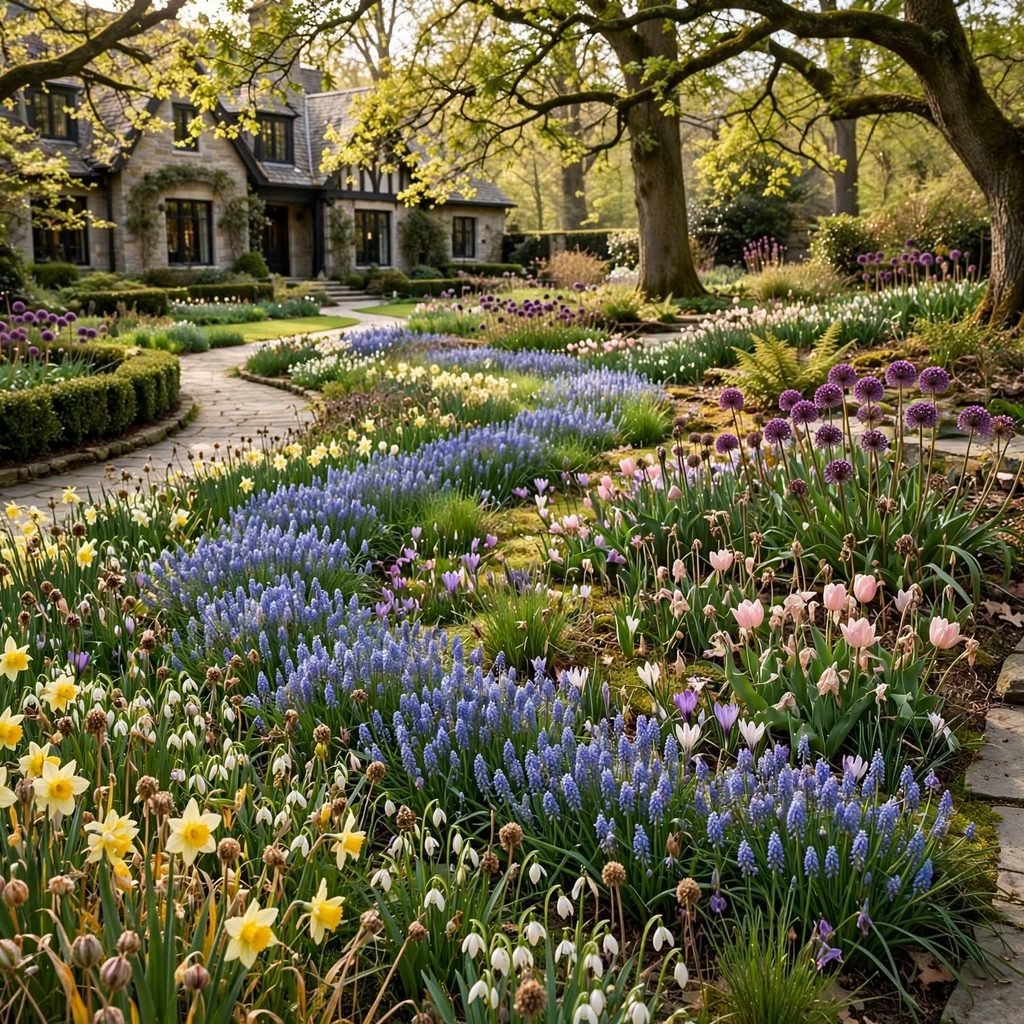
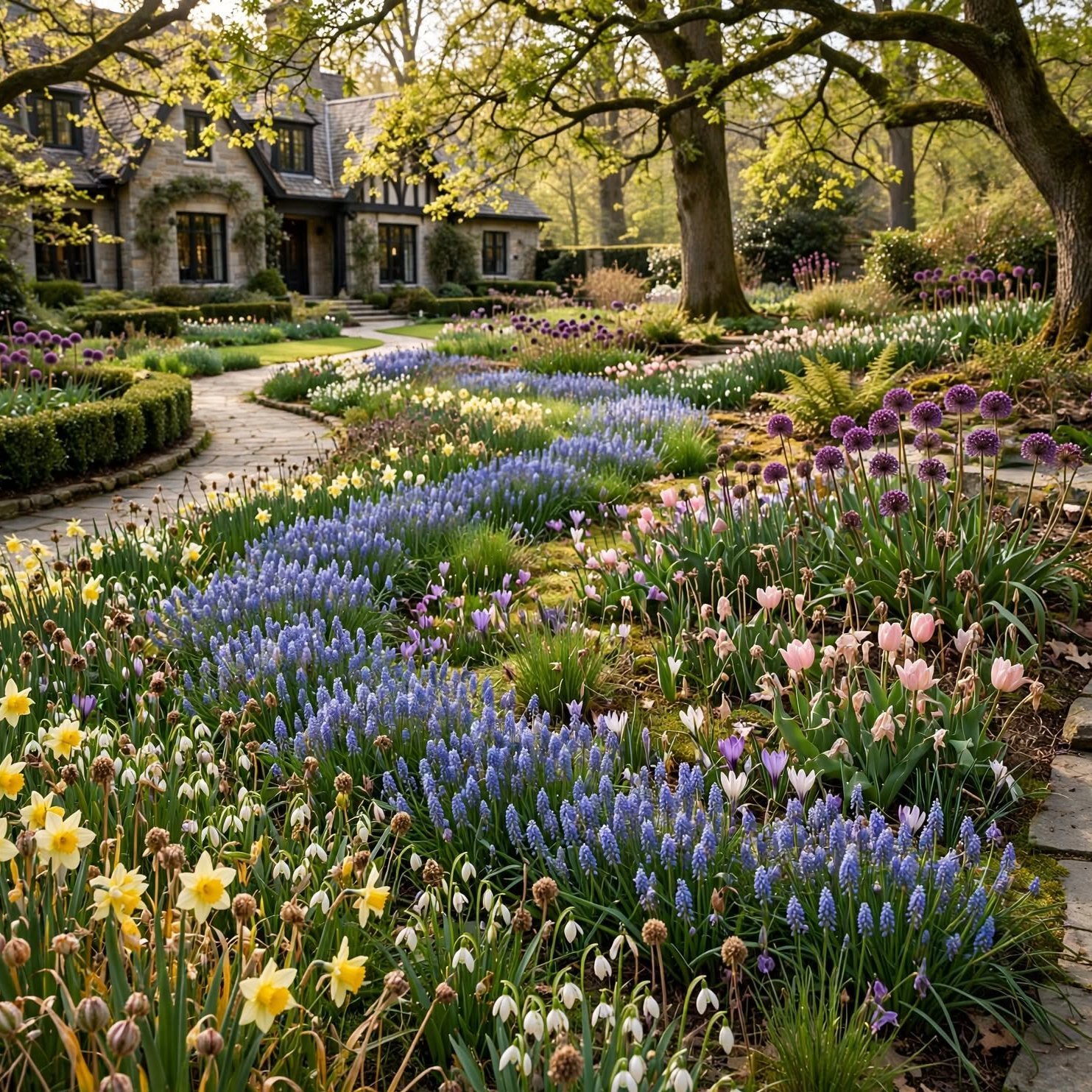
A bulb naturalizing drift scatters spring bulbs in loose, irregular groupings across a lawn or meadow edge rather than planting them in tidy rows, mimicking how bulbs spread on their own in the wild. Daffodil and crocus naturalize reliably and multiply on their own over several years, while tulips generally need replanting since they decline after their first season or two in most climates. Bulbs are planted at a depth roughly three times their own height, measured from the base of the bulb.
| Bulb Type | Planting Depth | Spacing | Naturalizes Well? |
| Daffodil | 6 in | 4–6 in | Yes |
| Crocus | 3 in | 2–3 in | Yes |
| Tulip | 6–8 in | 4–6 in | No, replant yearly |
10. Picket Fence Border
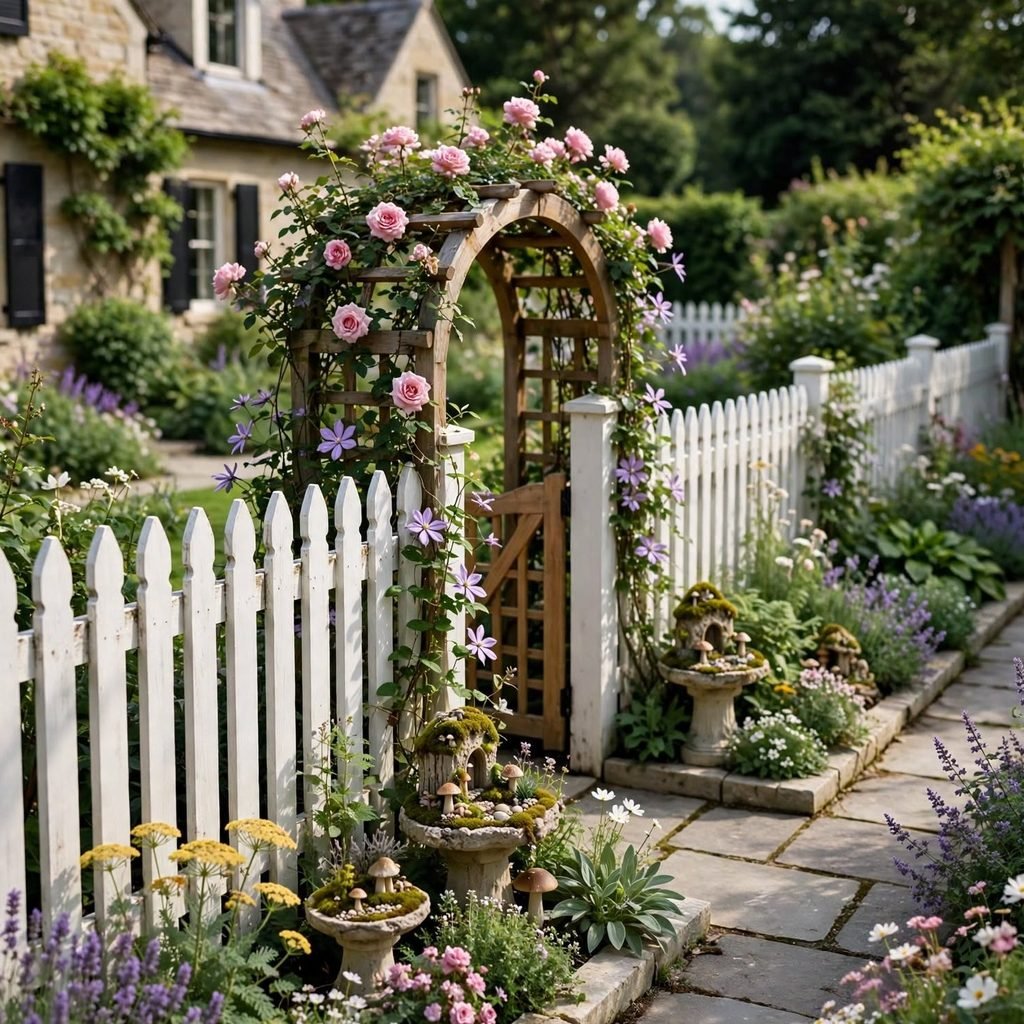
A picket fence border plants directly along a low wood picket fence line, using the fence itself as a backdrop that gives even a simple planting a finished, framed look. Climbing sweet pea or morning glory can be woven through the pickets themselves, while shorter perennials and annuals fill the ground in front. This works particularly well for a front-yard bed facing the street, since the fence line reads clearly from a distance even before the flowers are close enough to identify individually.
11. Raised Flower Bed
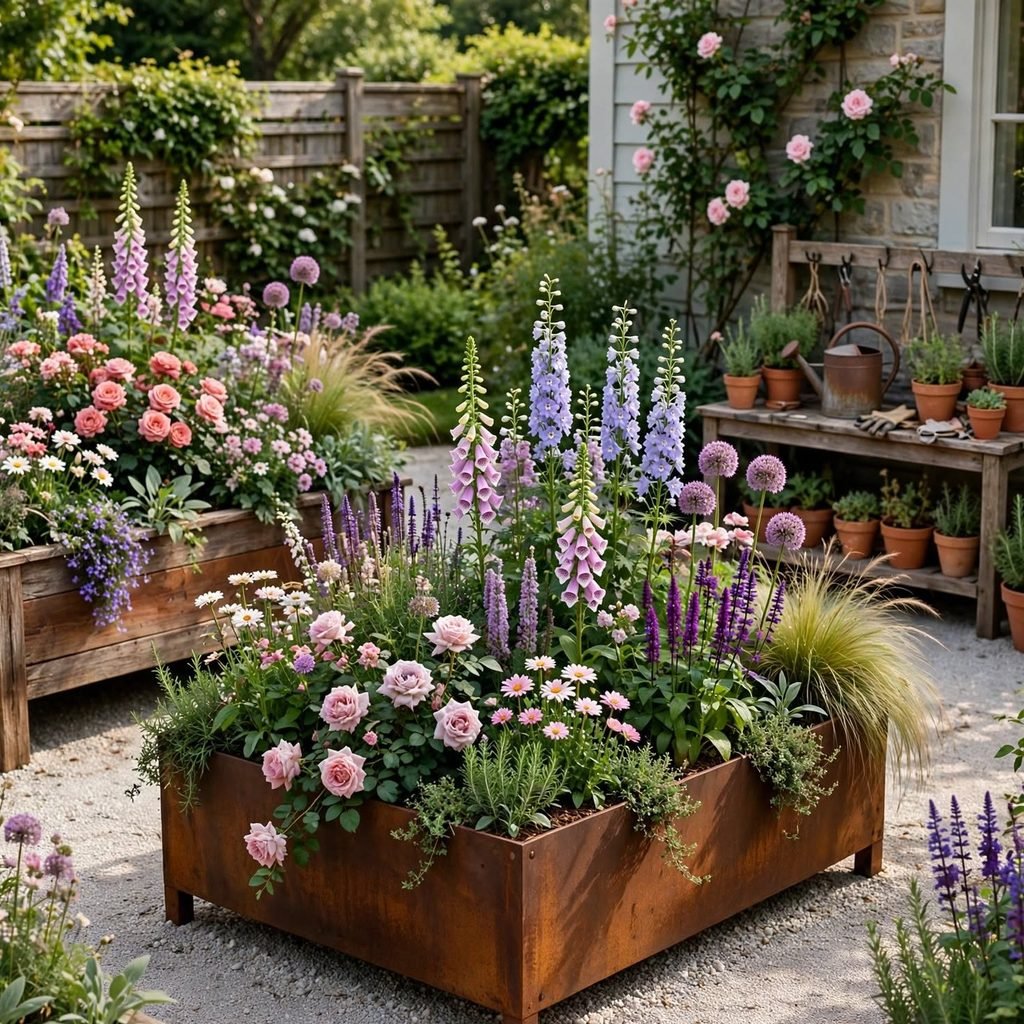
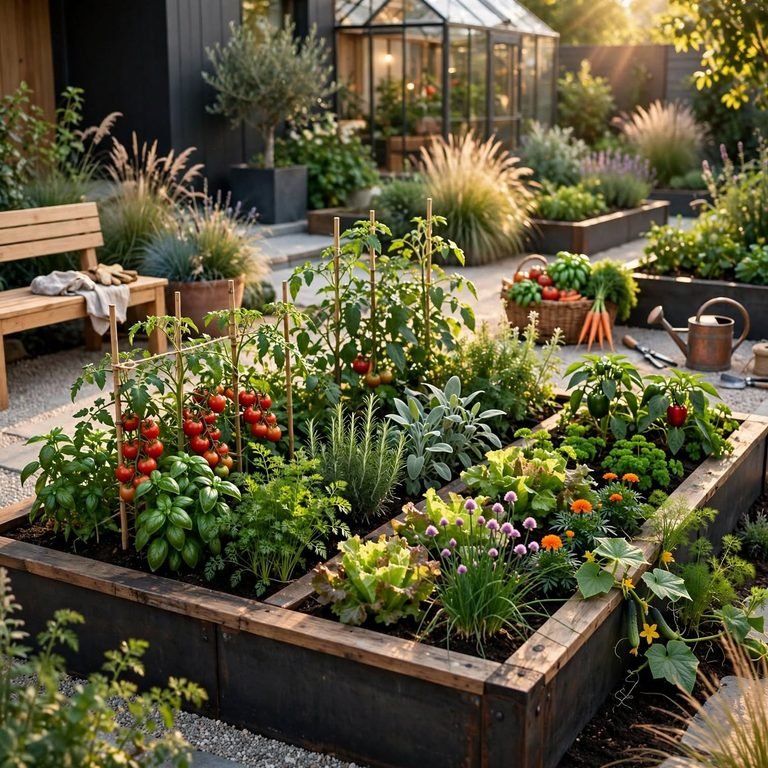
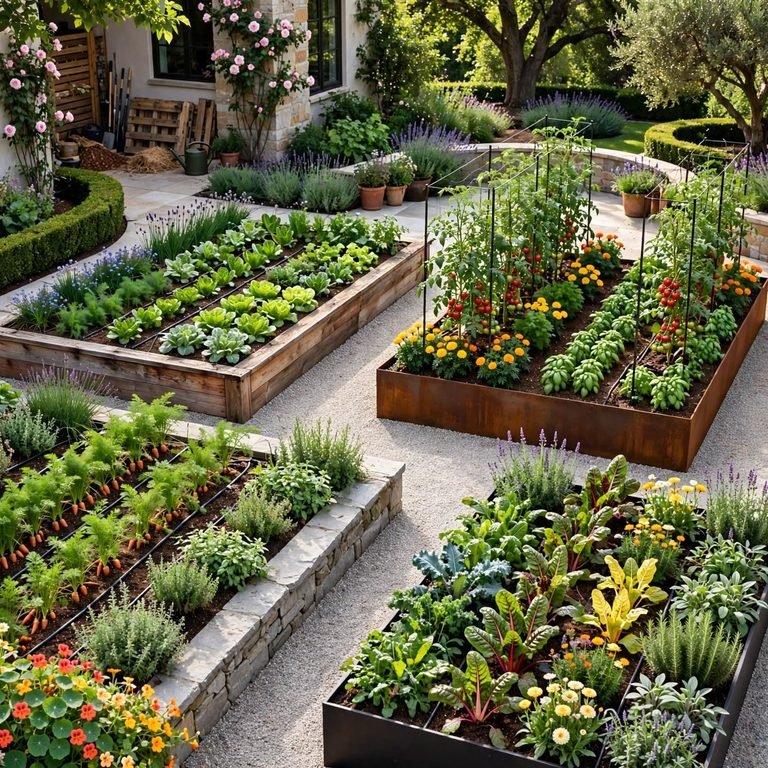
A raised flower bed solves poor drainage or heavy clay soil the same way a raised vegetable bed does, filling a contained frame with a soil mix suited to the specific flowers being grown rather than fighting the native ground soil. Cedar holds up well without chemical treatment, galvanized metal lasts decades but heats up faster in full sun, and stacked stone gives the most permanent, formal look. A depth of 10 to 12 inches suits most annuals and shallow-rooted perennials without needing the deeper fill vegetable beds require.
| Material | Lifespan | Heat Retention | Cost per 4×6 Bed |
| Cedar | 10–15 yrs | Low | $100–180 |
| Galvanized metal | 20+ yrs | High | $180–280 |
| Stacked stone | 25+ yrs | Moderate | $300–500 |
12. Moon Garden
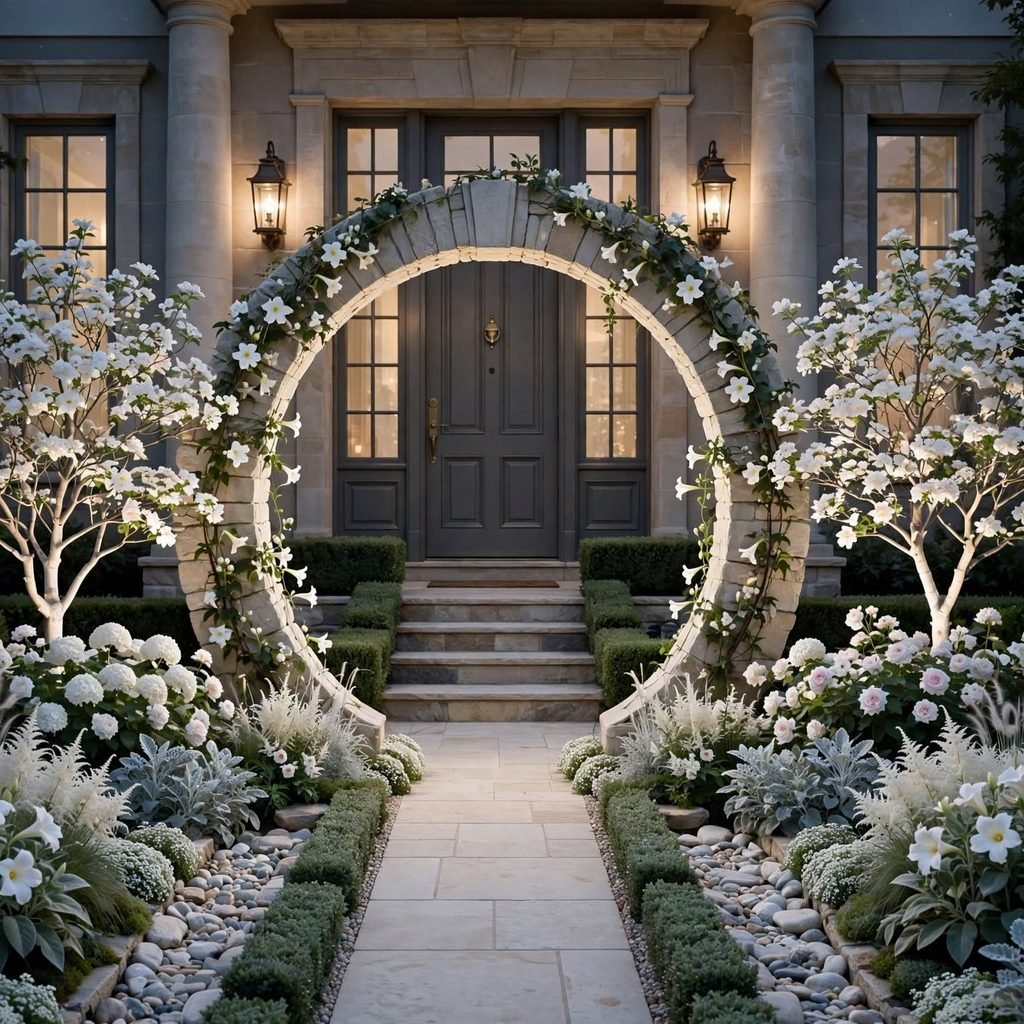
A moon garden is planted entirely in white and pale-toned flowers, chosen specifically to remain visible and even glow slightly at dusk and under moonlight, and is usually positioned near a patio, porch, or bench where it gets used in the evening. White cosmos, moonflower, white coneflower, and nicotiana are common choices, with several moonflower and nicotiana in particular also releasing their strongest fragrance after dark rather than during the day. Silver-leafed plants like dusty miller reinforce the pale palette even before anything blooms.
Shop the Look
A few pieces carry these ideas from planted bed to finished garden room. A galvanized metal cutting bucket or trug makes harvesting from the cutting garden bed easier than carrying loose stems by hand. A cedar or teak garden bench set inside the moon garden or at the end of a picket fence border gives the space somewhere to sit and actually use it in the evening. A simple wire obelisk trellis works for sweet pea or clematis in a spot too small for a full arbor, and a set of glazed terracotta pots in graduated sizes pulls the container flower grouping together as one composition rather than mismatched pots.
Common Mistake to Avoid
The most common mistake in flower garden design is planting for one big spring show and giving no thought to what blooms after it fades. Beds planted entirely with spring bulbs and early perennials go visually flat by midsummer, right when the garden gets used the most. Building in succession spring bulbs, early-summer perennials, and heat-tolerant annuals like zinnia or cosmos filling the same bed at staggered points keeps color running from April through the first frost instead of stopping in June.
Frequently Asked Questions
What are the easiest flowers for a beginner flower garden?
Zinnias, cosmos, marigolds, and sunflowers are the most forgiving choices for a beginner flower garden because they germinate quickly from direct-sown seed, tolerate average soil, and bloom reliably without much intervention. All four also perform well as cut flowers, which makes them a practical first choice if you want color both in the bed and indoors. None require staking, deadheading on a strict schedule, or winter protection in most climates.
How do you plan a flower garden for continuous bloom?
Continuous bloom comes from layering plants with staggered flowering windows rather than relying on a handful of showy plants that all peak at once. Spring bulbs like daffodils and tulips start the season, early perennials such as peony and iris carry into early summer, and heat-tolerant annuals like zinnia and cosmos fill the gap through late summer and fall. Mapping bloom times before planting, rather than choosing plants purely by appearance, is what actually produces color across the full season.
What flowers work best for shade gardens?
Hosta, astilbe, bleeding heart, and hellebore are the most reliable performers in shaded flower beds, since all four tolerate low light and the root competition common under mature trees. Astilbe in particular needs consistently moist soil to perform well in shade, so it pairs best with regular watering or a spot that naturally holds moisture. Impatiens work as a shade-tolerant annual if you want season-long color without relying entirely on perennials.
How far apart should flowers be planted in a garden bed?
Spacing depends on the plant’s mature spread rather than its size at purchase, and most nursery tags list a spacing range specifically for this reason. Taller back-of-border perennials like delphinium generally need 18 to 24 inches between plants, mid-height plants like coneflower need 12 to 18 inches, and low front-edge plants like dianthus can go as tight as 8 to 10 inches. Planting too close is the more common mistake, since a bed that looks sparse at installation fills in fast.
What is the best way to naturalize bulbs in a lawn?
Scattering bulbs by hand and planting them exactly where they land, rather than lining them up in rows, produces the most natural-looking drift once they bloom. Daffodils and crocus are the best choices for true naturalizing since both multiply and spread on their own over several years, unlike tulips, which decline after their first bloom in most climates. Mowing should wait until the bulb foliage has died back on its own, since cutting it early weakens next year’s bloom.
Conclusion
The strongest flower garden ideas on this list share the same underlying principle: plan for bloom succession first, then choose the individual plants. Whether you start with a single cutting garden bed or build up to a full perennial border and rose arbor, staggering bloom times is what keeps a garden interesting from April through the first frost. Save this post to Pinterest for reference as you map out your own beds, or read our related guide to pollinator-friendly plant spacing before you start digging.