12 Transformative Rock Garden Ideas for Low-Maintenance Beauty
Rock garden ideas solve a problem most other garden styles create more of: a slope, a patch of poor soil, or a spot too dry for anything else to thrive. Rather than fighting those conditions, a rock garden builds around them, using stone placement and gravel mulch to create the sharp drainage that alpine and drought-tolerant plants actually need. This post walks through twelve specific approaches, from a scree bed to a Japanese dry landscape, each with real stone types, depths, and plant pairings.
Trend & Background
Rock gardens have moved well beyond the traditional alpine style, with more designers building modern gravel-and-boulder compositions that use fewer, larger stones as sculptural focal points rather than dense rock-and-plant mixes. Drought conditions across much of the country have also pushed rock gardens from a niche hobbyist style into a mainstream response to water restrictions, since a well-built rock garden needs little to no irrigation once established. At the same time, dry stream beds have become a common crossover feature, functioning as both a rock garden element and practical stormwater management for runoff-prone yards.
Key Takeaways
- These 12 rock garden ideas range from classic alpine scree beds to Japanese-inspired dry landscapes and modern gravel-and-boulder compositions
- Five ideas scree beds, boulder placement, dry stream beds, terraced slopes, and gravel mulch beds include depth, sizing, or material comparison tables
- Drainage and stone selection matter more than plant variety for a rock garden that actually survives its first winter
- Several of these ideas work together on a sloped site, layering a terrace, a dry stream, and a scree bed into one continuous design
1. Alpine Scree Bed
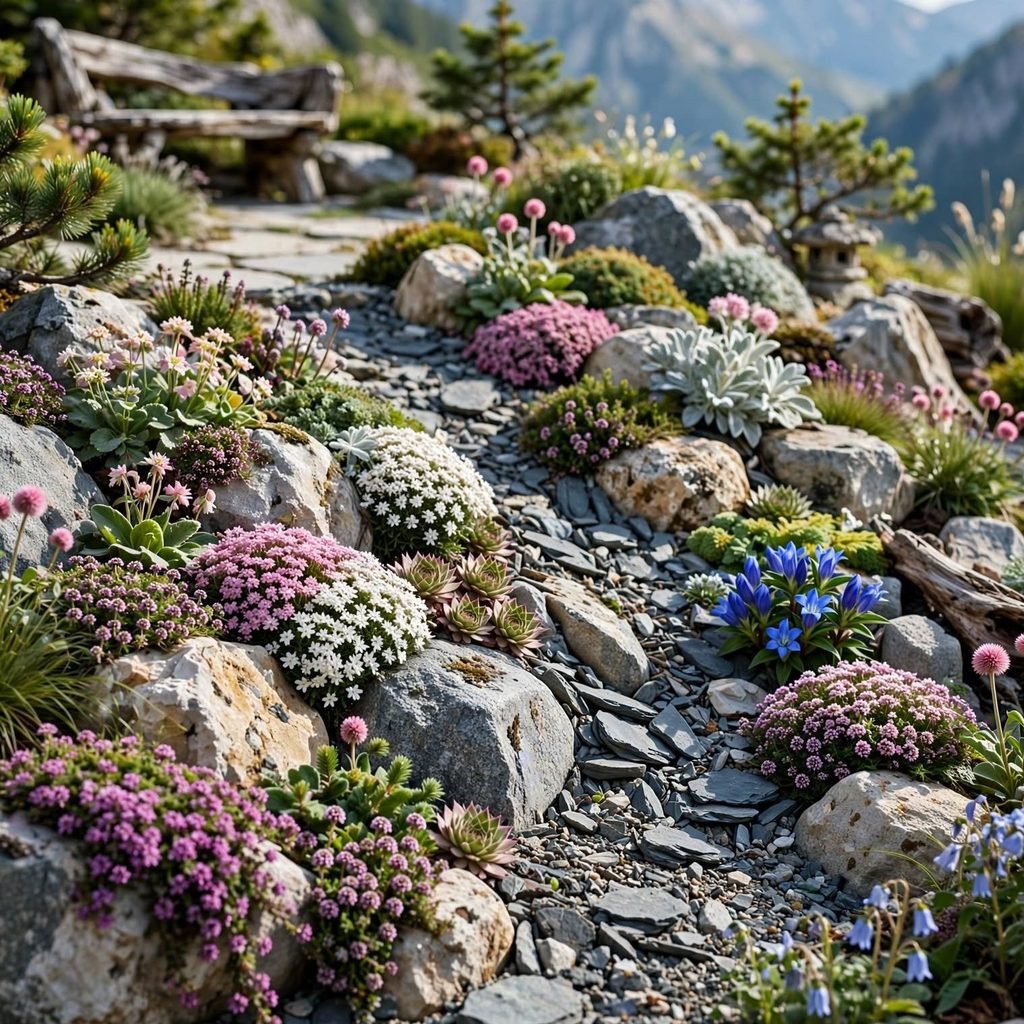
An alpine scree bed replicates the loose, fast-draining mineral soil found naturally on mountain slopes, built from a deep layer of crushed gravel mixed with a small percentage of native soil rather than standard garden compost. Saxifrage, sempervivum, and dwarf dianthus all thrive in this sharply drained mix, since their roots rot quickly in anything richer or slower to drain. A depth of at least 12 inches gives roots enough loose material to establish, and the bed should sit slightly mounded so water sheds outward instead of pooling at the center.
| Scree Depth | Drainage Rate | Best Plants |
| 8–10 in | Good | Sedum, thyme |
| 12–14 in | Excellent | Saxifrage, sempervivum |
| 16+ in | Excellent, best for winter-wet climates | Dwarf dianthus, alpine phlox |
2. Boulder Focal Point
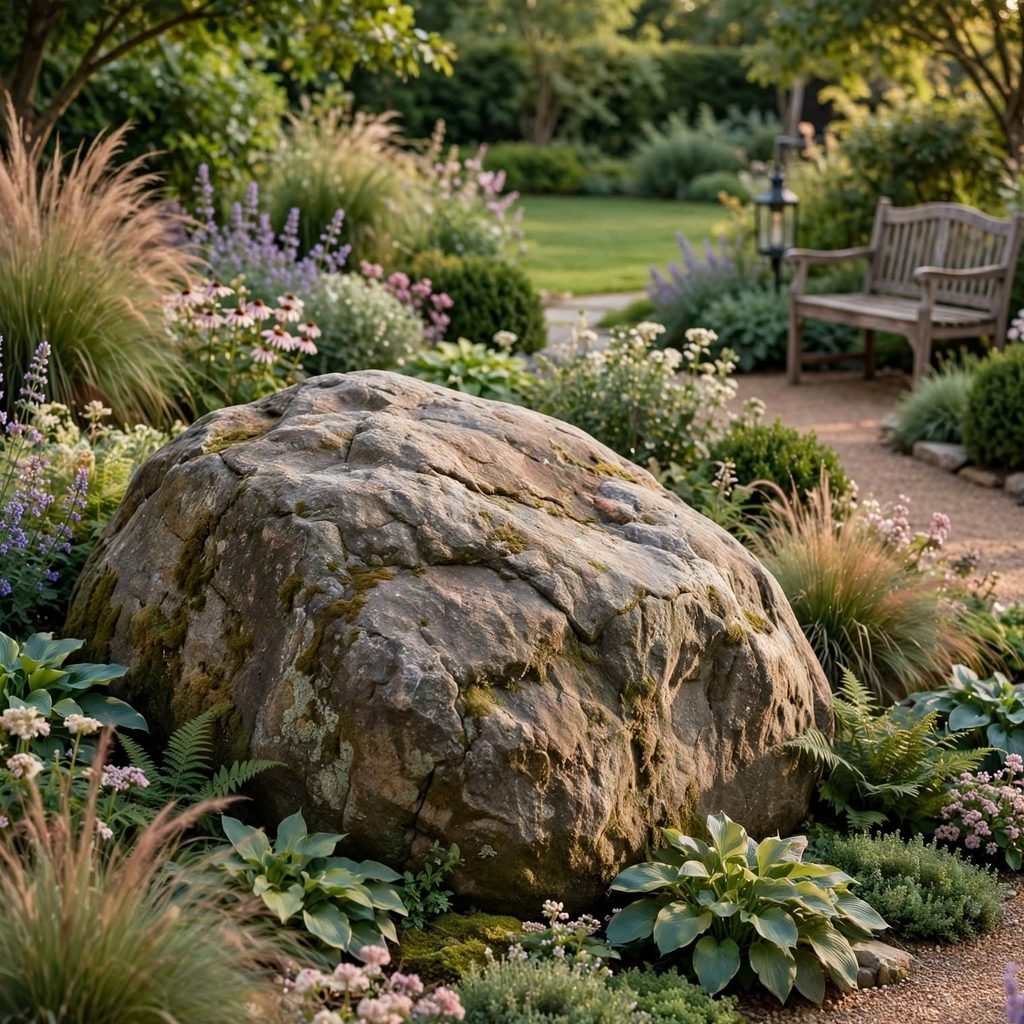
A boulder focal point uses one or two large stones as the visual anchor of a bed, positioned before any plants go in since moving a half-buried boulder later is far harder than placing it correctly the first time. Burying roughly a third of the stone’s height gives it a settled, natural look rather than the placed-on-top appearance that comes from setting a boulder directly on the soil surface. Local fieldstone or granite blends into most regional landscapes better than imported decorative stone, which often reads as visibly out of place against native soil color.
3. Dry Stream Bed
A dry stream bed channels stormwater runoff away from a foundation or low spot while functioning as a planted rock garden feature for the rest of the year. River rock in graduated sizes forms the base, with larger stones along the outer banks and smaller cobble concentrated where water would actually flow during heavy rain, mimicking how a real streambed sorts material by current strength. Ornamental grasses like blue fescue planted along the edges keep the feature from reading as a bare gravel strip during dry months.
4. Crevice Garden
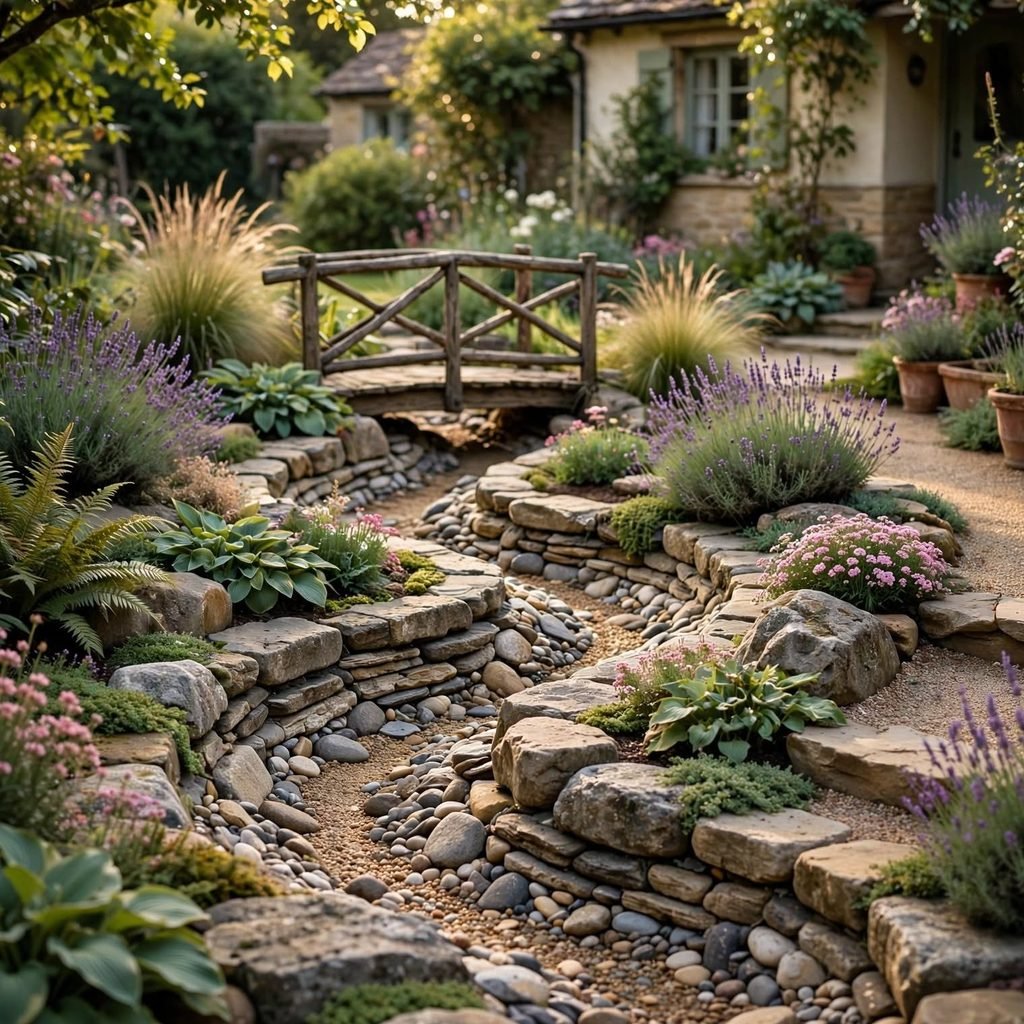
A crevice garden stacks flat stone slabs on edge with narrow vertical gaps between them, creating deep, cool root channels that many alpine plants prefer over the more open scree bed style. This technique originated with botanical garden alpine houses trying to replicate actual mountain rock fissures, and it suits plants with long taproots or a strong preference for shaded, moisture-retentive roots under a hot, dry surface. Building one requires more precise stone-setting than most rock garden styles, since the slabs need to lean at a consistent angle to stay structurally stable over time.
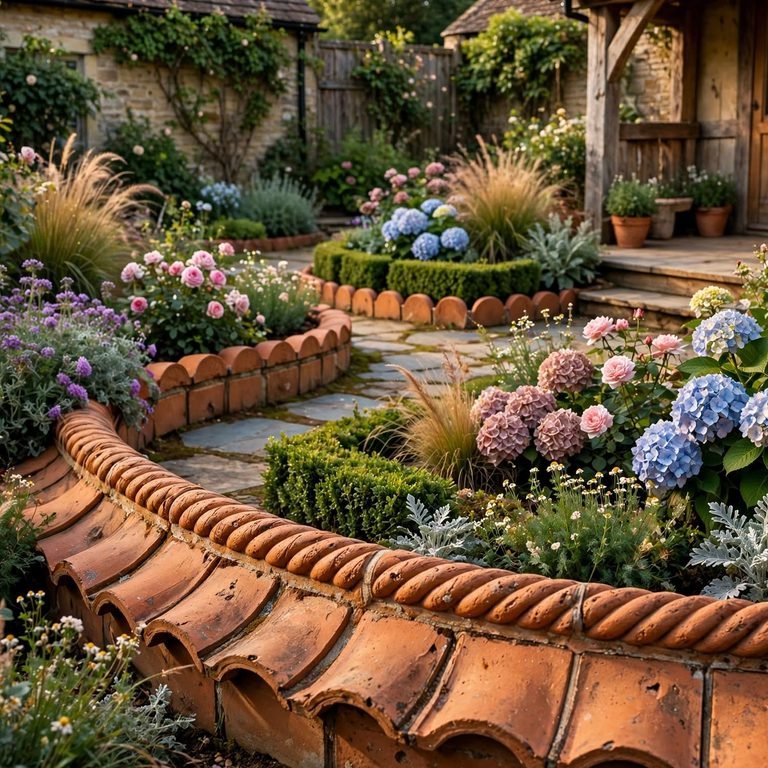
Explore charming rock garden ideas for a natural, romantic, and welcoming outdoor look.
5. Terraced Rock Garden Slope
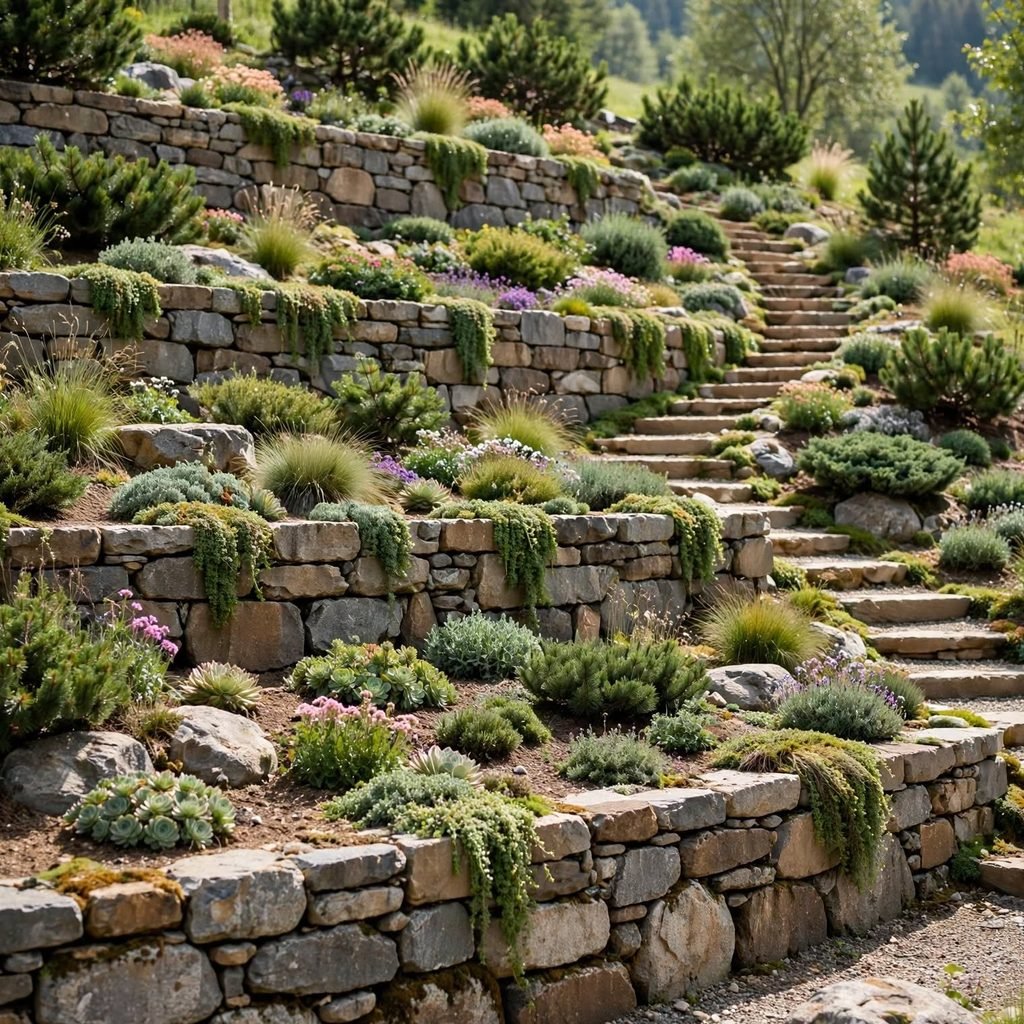
A terraced rock garden slope breaks a steep grade into a series of flat planting shelves held back by dry-stacked stone retaining walls, solving both the erosion problem a bare slope creates and the practical difficulty of planting or maintaining anything on a steep incline. Dry-stacked fieldstone walls under about 3 feet don’t typically require mortar or engineering permits, though taller walls generally do and should be checked against local building code. Each terrace can hold a different microclimate, with drought-tolerant plants at the sun-exposed top and moisture-loving varieties collecting at the base.
| Wall Height | Construction Method | Permit Typically Needed? |
| Under 2 ft | Dry-stacked fieldstone | No |
| 2–3 ft | Dry-stacked with base gravel | Often no, check local code |
| 3+ ft | Engineered/mortared | Usually yes |
6. Japanese Dry Landscape
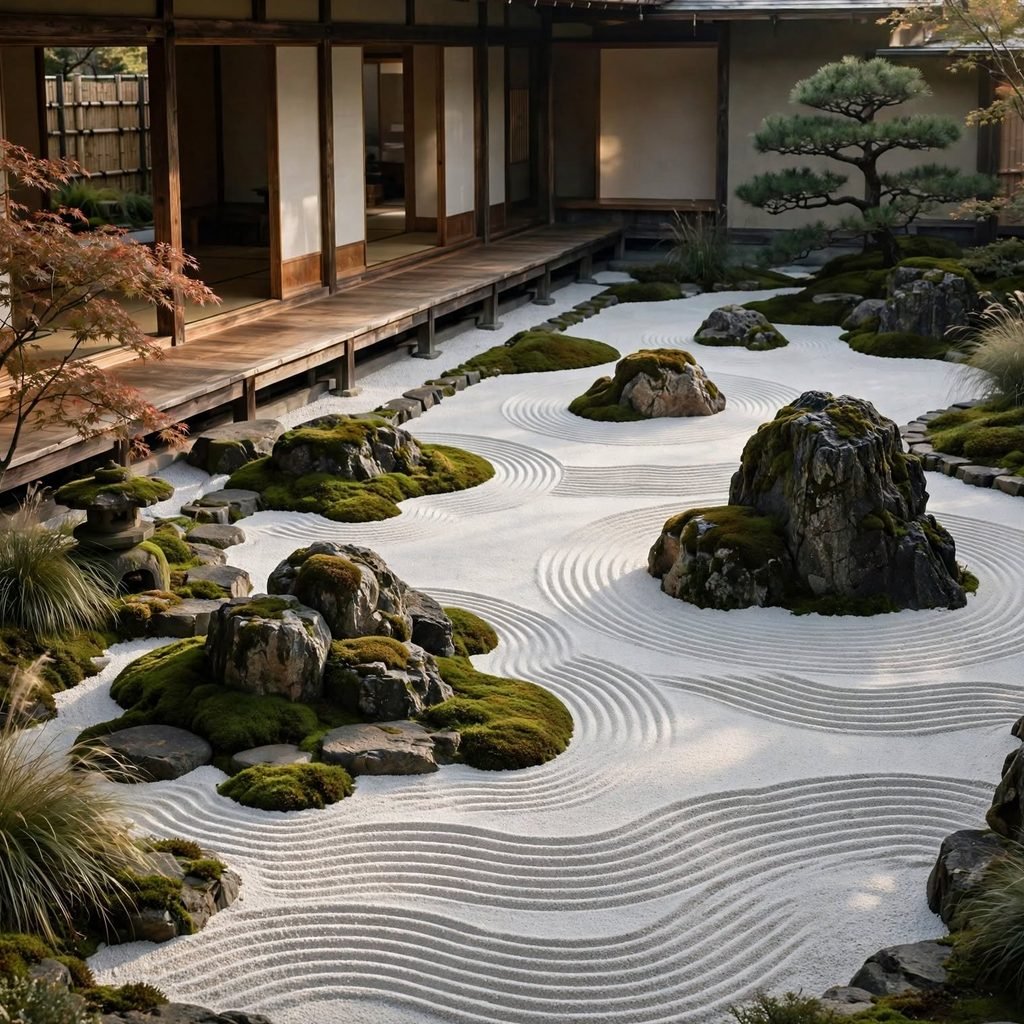
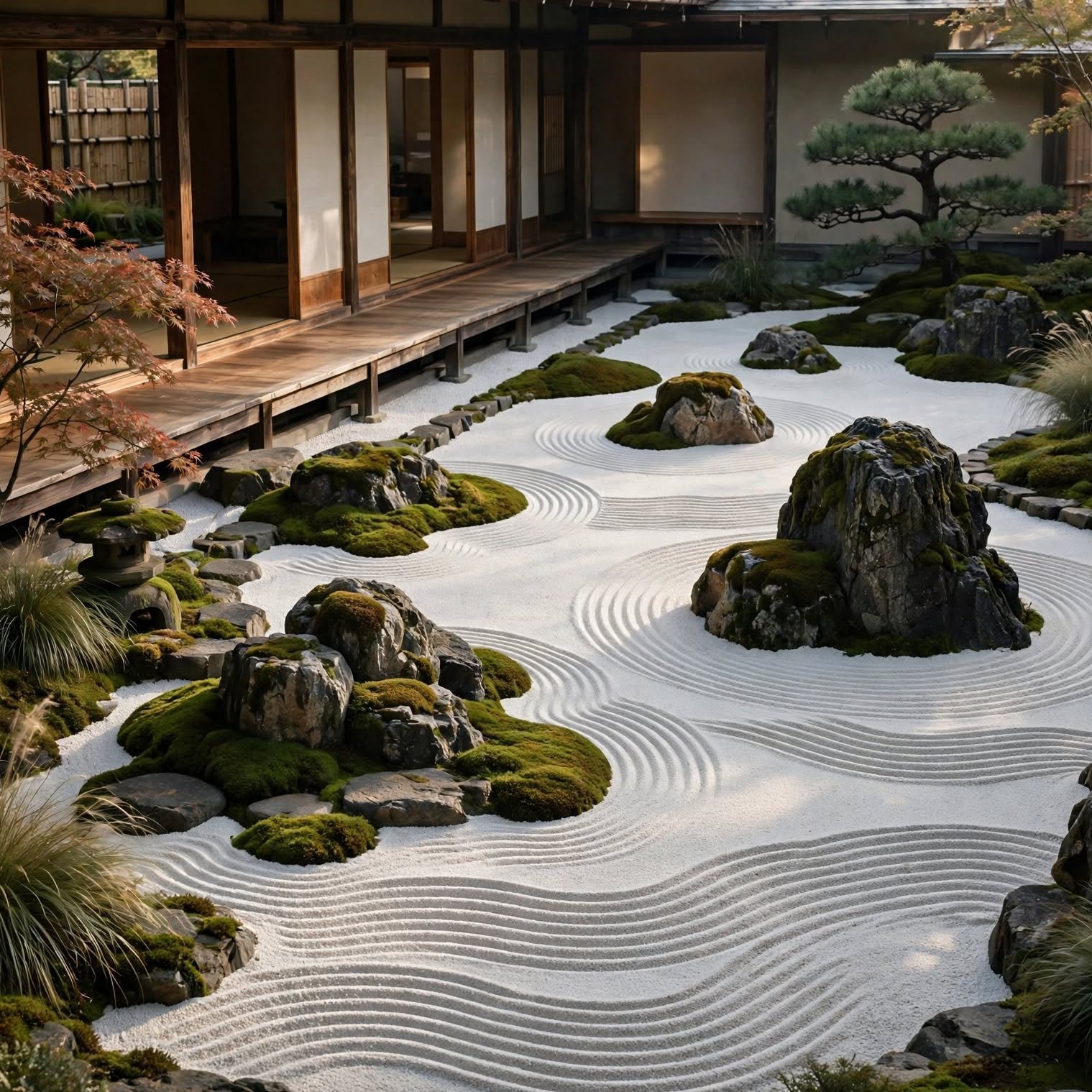
A Japanese dry landscape, or karesansui, uses raked gravel, moss, and carefully placed stone instead of flowering plants to create a space built for quiet contemplation rather than seasonal color. Anchor rocks are set in odd-numbered groupings and varying heights to avoid the symmetrical look that reads as artificial, and a wide-tined rake pulls the gravel into concentric patterns around them that get re-raked periodically as part of ongoing maintenance. Japanese maple and black pine are the two most traditional plantings if any greenery is included at all.
7. Succulent Rock Garden
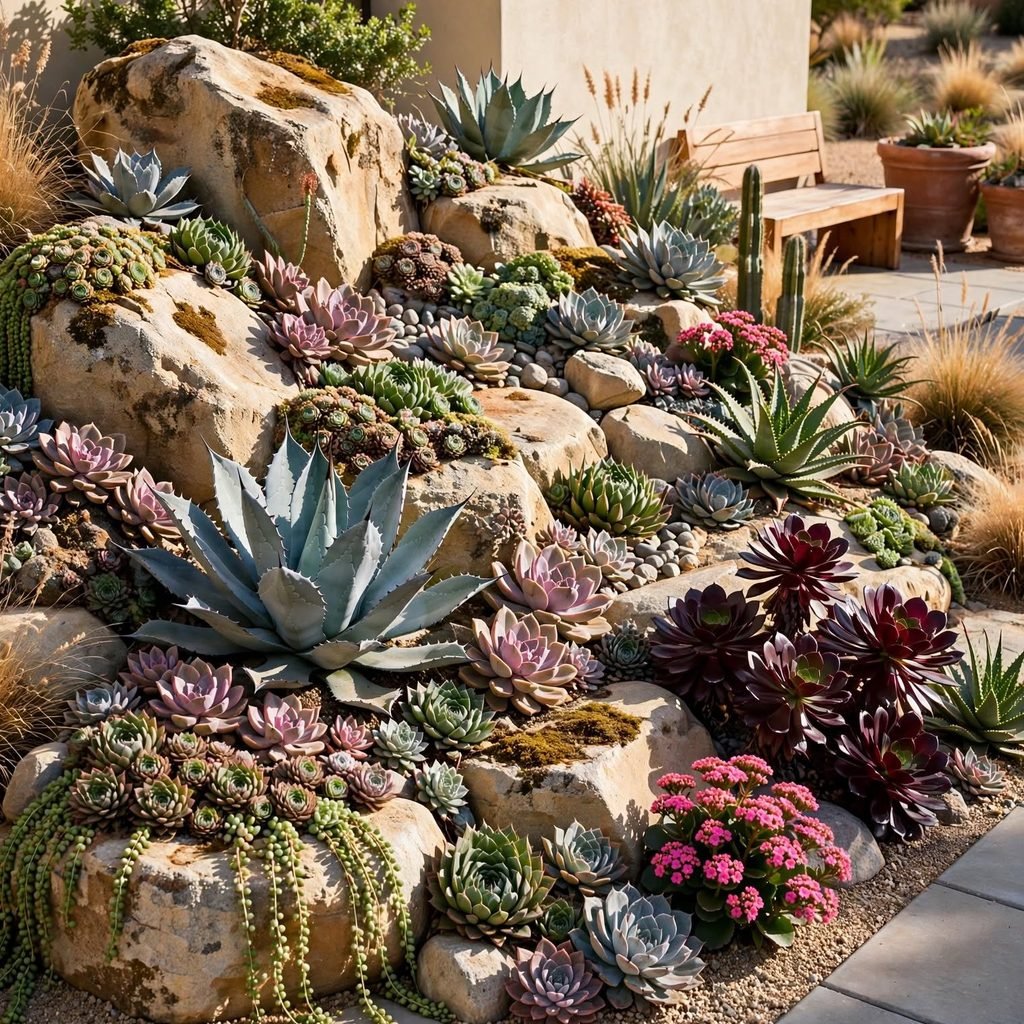
A succulent rock garden pairs drought-tolerant succulents with stone in a combination suited to hot, dry climates where even scree-bed alpines would struggle with summer heat. Sedum, echeveria, and various agave species tolerate reflected heat off surrounding stone that would scorch most other plants, and many spread readily by offsets, filling gaps between rocks without additional planting over a few seasons. Well-draining cactus mix rather than standard garden soil prevents the root rot that’s the leading cause of succulent failure in ground-planted rock gardens.
8. Rock Garden Ideas for Shaded Slopes
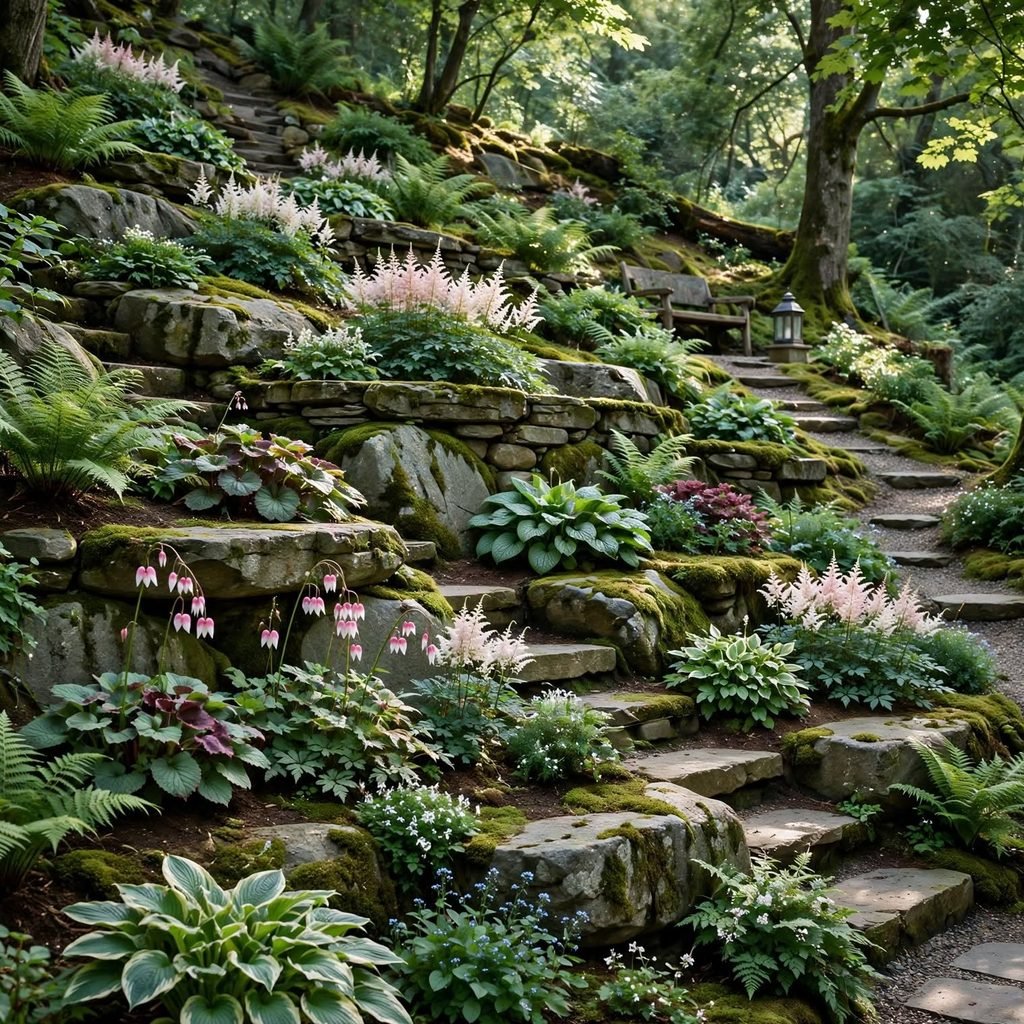
Rock garden ideas for shaded slopes shift the plant palette entirely away from sun-loving alpines toward moss, fern, and shade-tolerant groundcovers that actually prefer the cooler, moisture-retentive conditions stone provides in low light. Moss establishes directly on damp, shaded rock surfaces without any soil at all, while maidenhair fern and foamflower fill the gaps between stones where a thin layer of leaf-mold-enriched soil collects. This approach works well under mature trees where a sunny rock garden style would fail outright from lack of light.
9. Gravel Mulch Bed
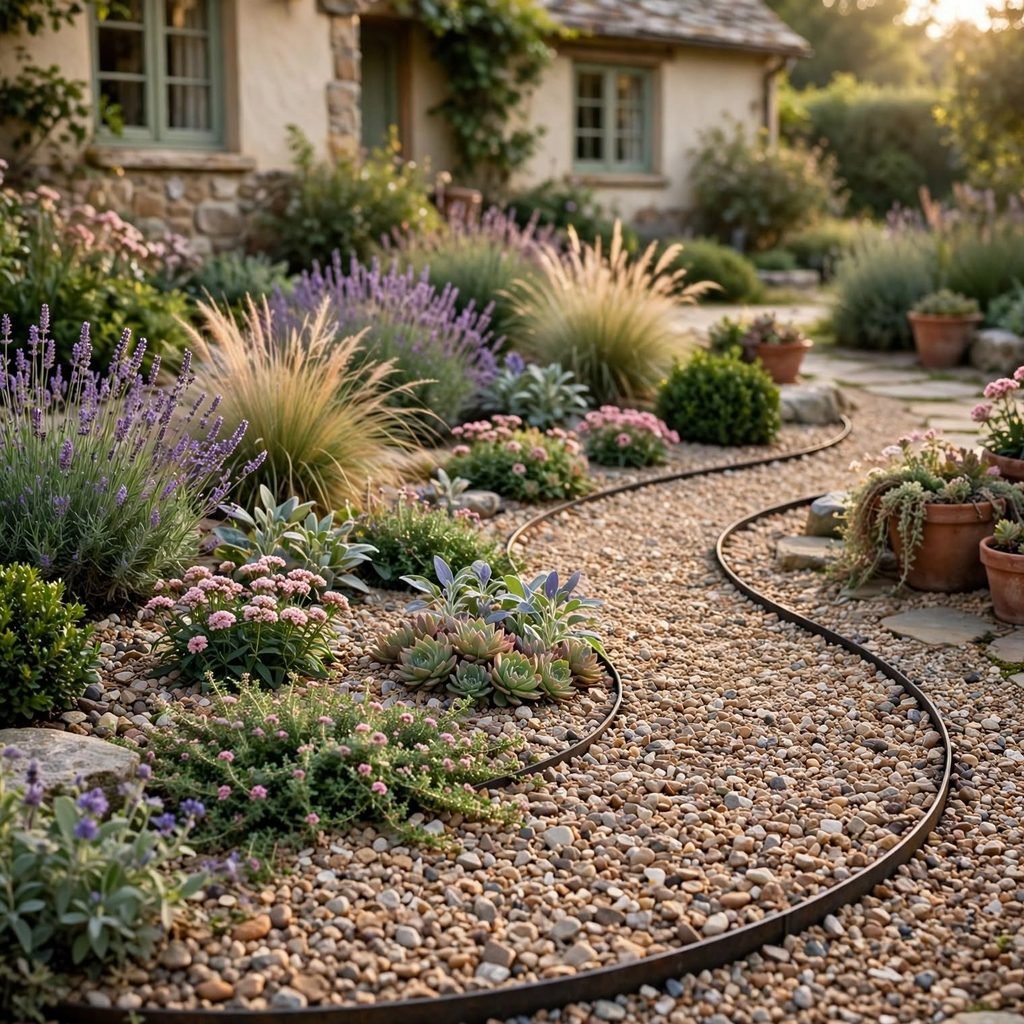
A gravel mulch bed replaces organic mulch like bark with a layer of crushed stone spread across the soil surface around widely spaced drought-tolerant plants, cutting evaporation and weed germination without the annual replacement organic mulch requires. Pea gravel and decomposed granite are the two most common choices, with decomposed granite compacting into a firmer surface that resists shifting underfoot better than loose pea gravel. A 2 to 3 inch depth suits most beds, laid directly over landscape fabric to prevent weeds from rooting into the soil beneath.
| Gravel Type | Depth | Weed Suppression | Cost per Sq Ft |
| Pea gravel | 2–3 in | Good | $1.50–3 |
| Decomposed granite | 2–3 in | Very good | $2–4 |
| Crushed granite (3/8″) | 2–3 in | Very good | $2.50–5 |
10. Rockery Wall Garden
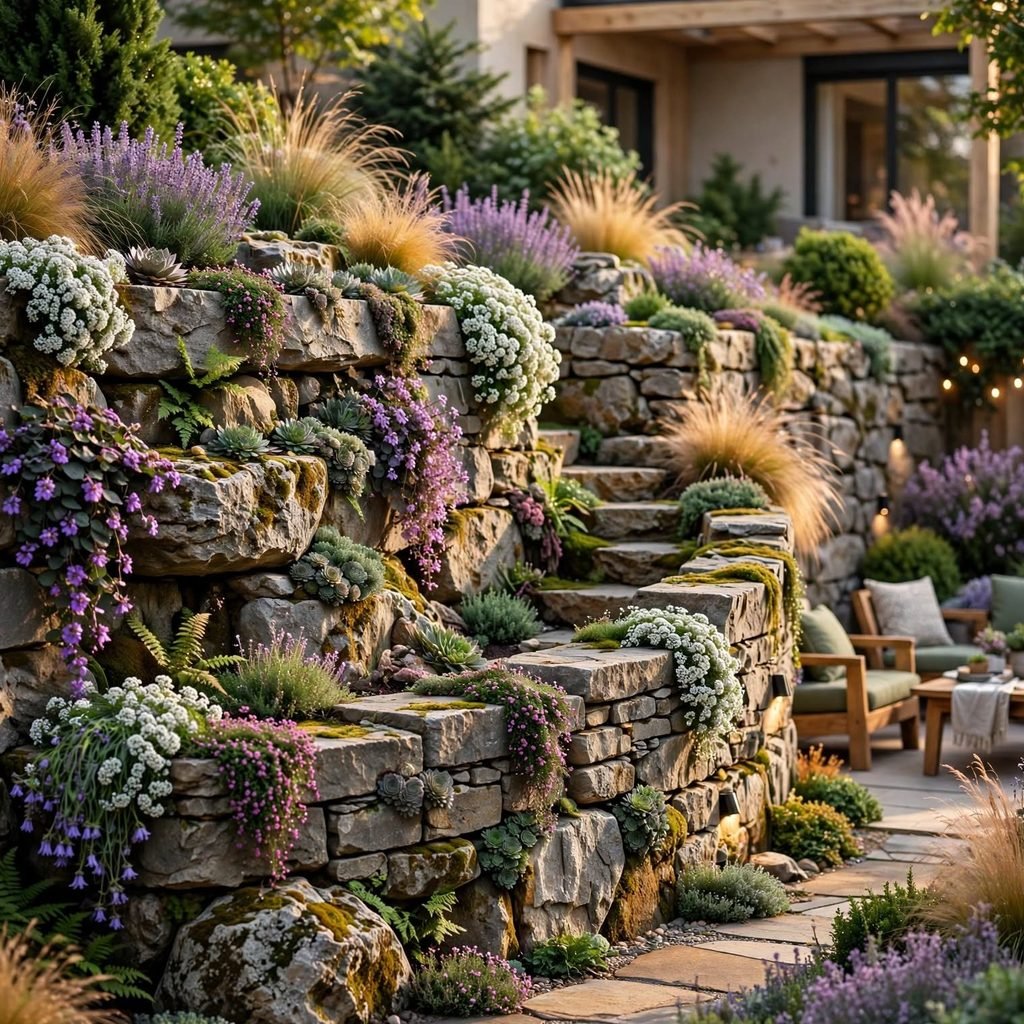
A rockery wall garden plants directly into the gaps and pockets of a freestanding or retaining dry-stack stone wall, using the wall itself as growing space rather than treating it purely as a structural element. Trailing plants like creeping thyme and aubrieta root into small soil-filled pockets left between stones during construction, cascading down the wall face over a season or two. Building the planting pockets in during wall construction works far better than trying to force soil into gaps after the wall is already finished and settled.
11. Rock Garden Water Feature
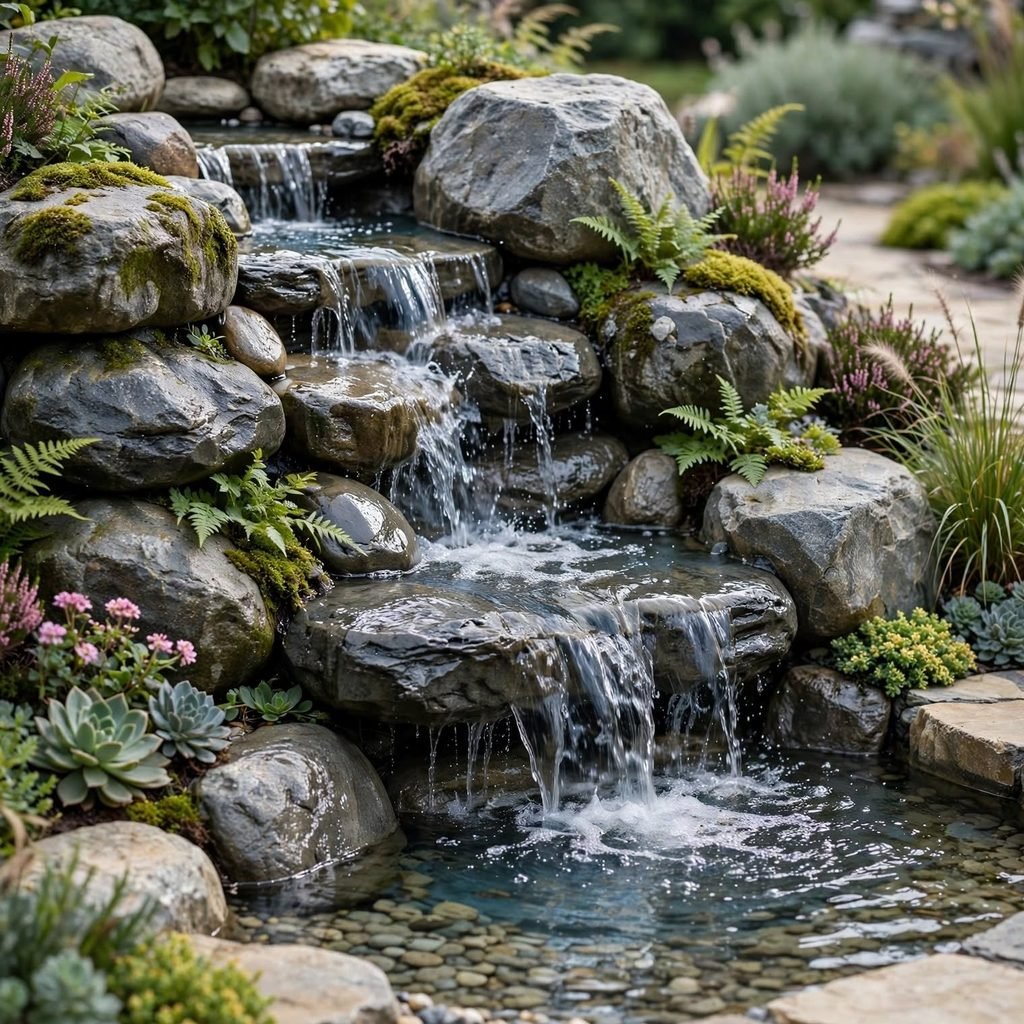
A rock garden water feature integrates a small recirculating pond, bubbler, or spillway directly into the stone composition, adding movement and sound without the scale or maintenance a full koi pond would require. A pre-formed liner or rigid basin hidden beneath surrounding stone keeps the build simpler than a fully excavated pond, and a submersible pump circulates water over a spillway stone positioned at the high point of the arrangement. Moisture-loving plants like Japanese iris can ring the base where the feature keeps the surrounding soil consistently damp.
12. Modern Minimalist Rock Garden
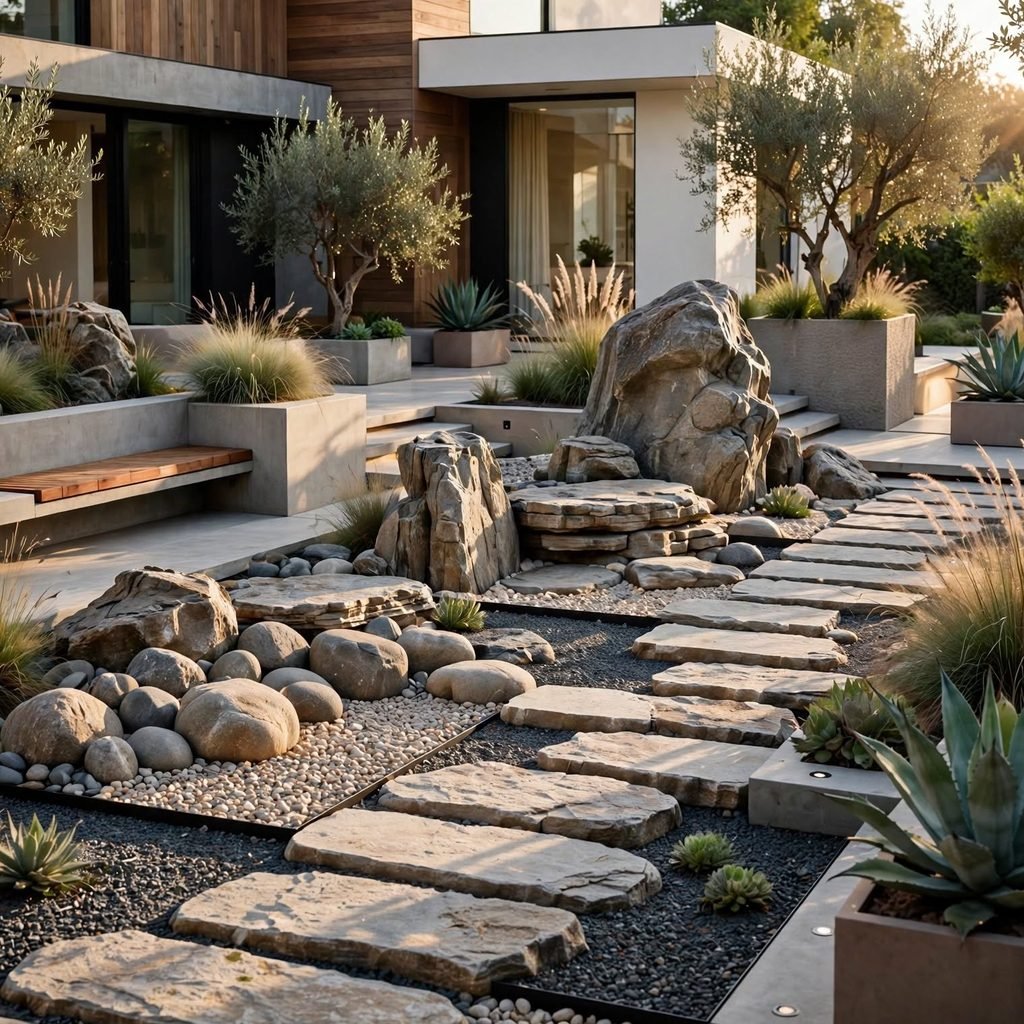
A modern minimalist rock garden strips the style down to a small number of large, sculptural stones set in a field of raked gravel with very sparse, architectural planting rather than the dense plant-and-rock mix traditional alpine gardens use. Ornamental grasses like feather reed grass or a single specimen Japanese maple provide the only vertical interest, letting the stone shapes and negative space carry the composition instead. This approach suits contemporary architecture particularly well, since the restrained plant palette echoes the clean lines of the building it surrounds.
Shop the Look
A handful of pieces support most of these builds. A soil probe or long digging bar makes positioning and burying boulders significantly easier than relying on a shovel alone. A set of Corten steel edging strips holds a clean line between gravel and surrounding lawn or planting beds while developing a matching rust patina over time. A wide-tined bamboo or steel rake is essential for maintaining a Japanese dry landscape’s raked pattern, and a battery-powered drip irrigation timer keeps establishment-phase plants watered without daily manual attention until their roots take hold in the surrounding stone.
Common Mistake to Avoid
The most common mistake in rock garden ideas is skipping a landscape fabric or fully compacted base layer before placing stone, which leads to gravel sinking unevenly into the soil below and weeds pushing straight up through gaps within the first season. This is especially costly with larger installations like a dry stream bed or gravel mulch area, where re-lifting settled stone to add fabric afterward means redoing most of the work already completed. A properly compacted base and fabric layer installed correctly the first time prevents both problems and keeps the gravel looking clean for years longer.
Frequently Asked Questions
What plants grow best in a rock garden?
Alpine and drought-tolerant plants with shallow, fibrous root systems perform best in a rock garden, since most need the sharp drainage stone and gravel provide rather than the moisture retention of standard garden soil. Sedum, sempervivum, creeping thyme, and dwarf dianthus are reliable choices across most climates, while succulents like echeveria suit hotter, drier regions specifically. Matching plant choice to the actual drainage and sun exposure of the specific rock garden style being built matters more than any general plant list.
How do you build a rock garden on a budget?
Sourcing stone locally rather than through a landscape supplier significantly cuts cost, since many regions have quarries or excavation sites offering fieldstone at a fraction of decorative imported stone prices. Building smaller sections in phases, starting with a single boulder placement or scree bed rather than a full terraced slope, also spreads material costs over multiple seasons. Propagating plants from divisions of an existing sedum or sempervivum patch rather than buying new nursery stock for every gap further reduces the overall budget.
Do rock gardens need irrigation?
A well-established rock garden using drought-tolerant alpine or succulent plants generally needs little to no supplemental irrigation once plants are settled, typically after their first full growing season in the ground. New plantings do need regular watering during the initial establishment period, usually four to six weeks, before their roots extend deep enough into the surrounding gravel and soil to access moisture independently. Climates with consistently heavy summer rainfall may actually need less irrigation planning and more attention to drainage instead.
How do you keep weeds out of a rock garden?
A compacted base layer topped with landscape fabric before adding gravel or stone is the most effective long-term weed barrier, since it blocks weed seeds already in the soil from reaching light and germinating up through the rock layer. Any weeds that do establish, typically from windblown seed landing directly in the gravel rather than pushing up from below, pull easily by hand since they haven’t rooted into compacted soil. A pre-emergent herbicide applied to the gravel surface in early spring can further reduce weed pressure in larger installations.
What size rocks should be used in a rock garden?
A mix of stone sizes reads more natural than uniform rock throughout, with one or two larger boulders as a focal point, medium fieldstone for structural elements like terracing or edging, and smaller gravel or cobble filling the spaces between plants. Using only small gravel with no larger stone tends to look more like a mulched bed than an actual rock garden, while using only large boulders with no gravel transition can look sparse and unfinished. Layering all three sizes together is what creates the natural, settled look most rock garden styles are aiming for.
Conclusion
The strongest rock garden ideas on this list work because they treat drainage and stone selection as the foundation of the design, with plant choice filling in around conditions the stone has already created. Whether you start with a simple boulder focal point or build up to a full terraced slope with a dry stream running through it, getting the base layer and stone placement right the first time saves significant rework later. Save this post to Pinterest for reference as you plan your own rock garden, or read our related guide to drought-tolerant plant selection before you start placing stone.