15 Stunning Garden Ideas to Create a Beautiful Outdoor Space
A garden Ideas that genuinely gets used and enjoyed comes from honest planning around actual sun conditions, maintenance capacity, and how the space will really be used, rather than assembling whatever plants look appealing at a nursery. This guide covers fifteen garden ideas, from seasonal bloom layering to defined hardscaping, addressing both the practical planning and the design techniques that produce a garden worth the ongoing investment. Every idea treats the garden as a genuine extension of daily living space rather than a purely decorative afterthought.
Trend & Background
Garden design has moved toward greater emphasis on native and regionally appropriate plant selection, sustainability-conscious water use, and genuine year-round interest rather than gardens planned purely around a single peak bloom period followed by months of comparative dormancy. This shift reflects both growing environmental awareness and practical recognition that a garden requiring excessive water, fertilizer, or maintenance to sustain non-native plantings often disappoints its owners over time as that maintenance burden proves unsustainable. Defined hardscaping and genuine outdoor living integration have also received more deliberate attention, with gardens increasingly planned as functional extensions of a home’s living space rather than purely ornamental plantings viewed from a distance.
Key Takeaways
- A successful garden starts with honest assessment of sun exposure, soil, and how much maintenance time you genuinely have available.
- Layering plant heights and bloom times keeps a garden visually interesting across seasons rather than only during a brief peak period.
- Hardscaping, paths, seating areas, and defined beds, gives a garden structure that plantings alone don’t provide.
- Native and regionally appropriate plants generally require less ongoing maintenance than exotic species chosen purely for appearance.
Garden Ideas
Discover 15 inspiring garden ideas to transform your outdoor space into a beautiful, cozy, and relaxing retreat.
1. Honest Sun Exposure Assessment Before Plant Selection
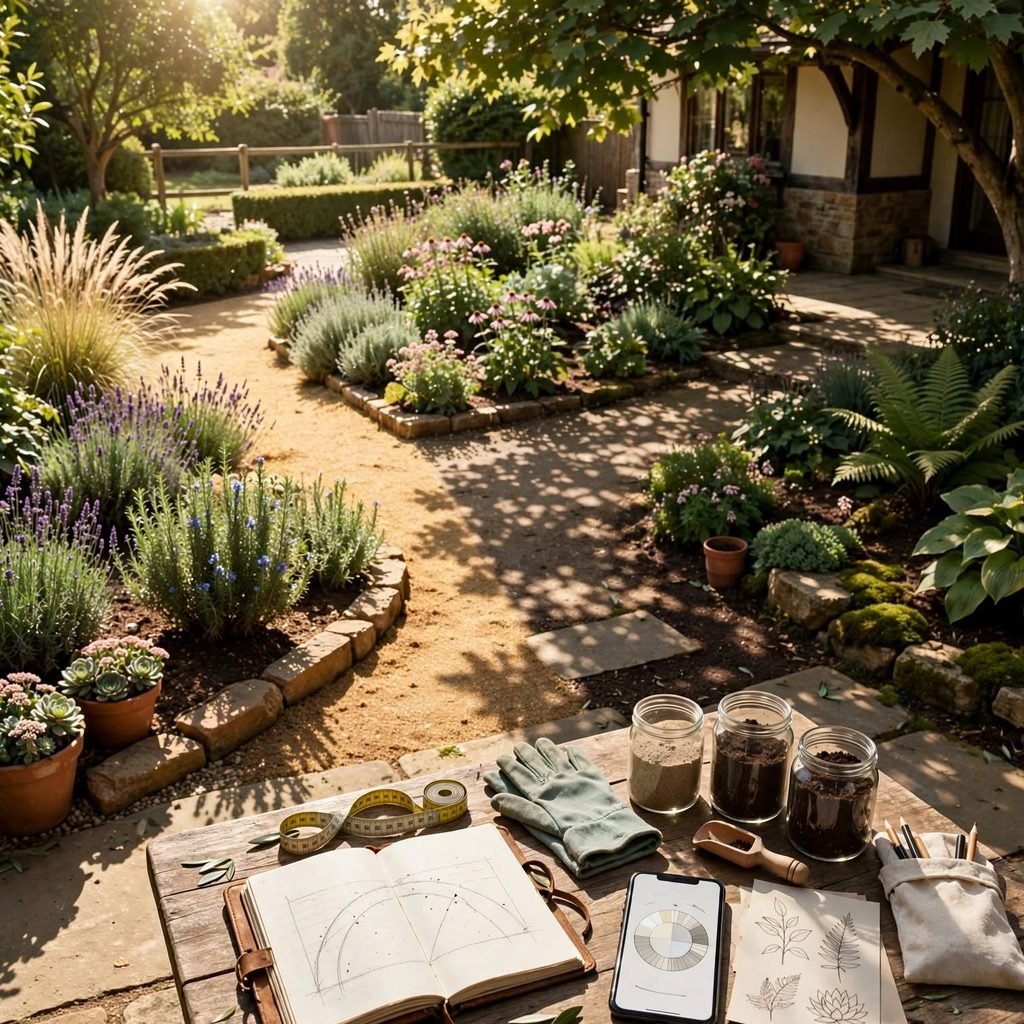
Genuinely observing and documenting how much direct sun each area of a garden actually receives throughout a full day, rather than guessing or assuming based on a quick glance, provides the essential foundation for selecting plants that will actually thrive rather than struggle in mismatched light conditions. This assessment should ideally happen across a full growing season, since sun exposure shifts considerably as deciduous trees leaf out or the sun’s angle changes between seasons. Matching plant selection specifically to this documented sun exposure, full sun, partial shade, full shade, prevents the common frustration of plants that never quite thrive because they were placed based on assumption rather than genuine observed conditions.
2. Layered Plant Heights for Visual Depth
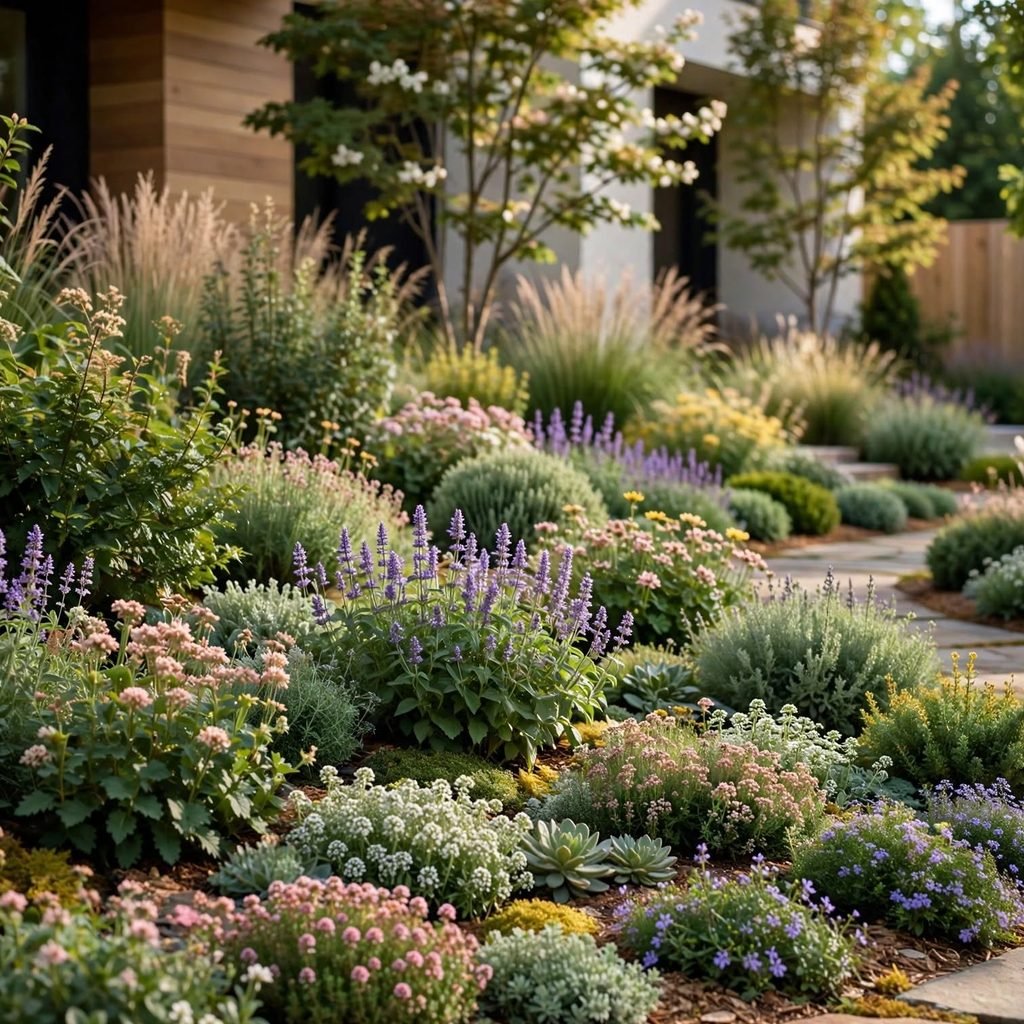
Arranging plants in layered heights, taller specimens toward the back of a bed or the center of an island planting, medium height plants in the middle ground, and low groundcover or edging plants toward the front, creates visual depth and ensures every plant remains visible rather than shorter specimens being hidden behind taller neighbors. This layering technique mirrors principles used throughout interior design generally, applied specifically to a garden’s three-dimensional plantings. Sketching a rough planting plan noting mature heights before purchasing plants helps avoid the common mistake of placing a plant that will eventually grow tall directly in front of shorter specimens it will later obscure.
3. Succession Planting for Extended Seasonal Interest
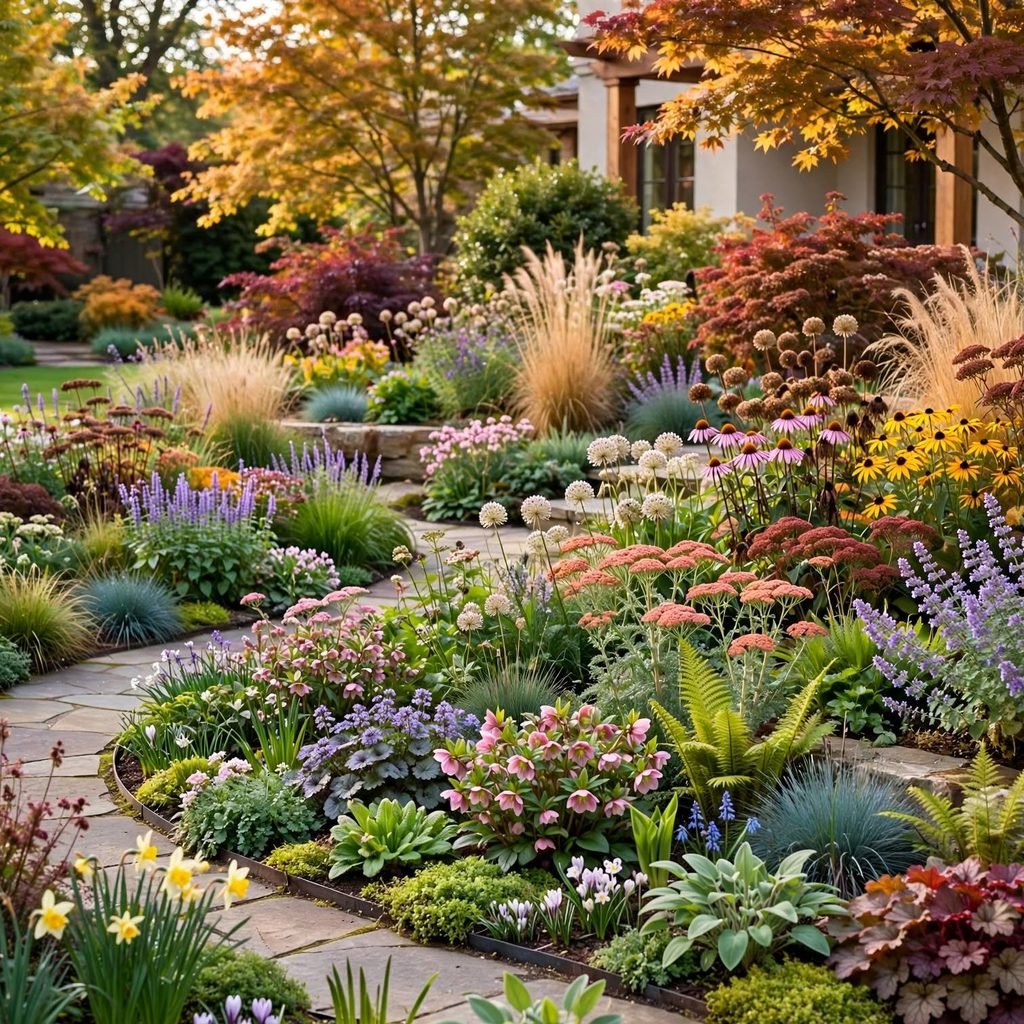
Choosing plants with staggered bloom times, some flowering in early spring, others in summer, and still others extending interest into fall, ensures a garden maintains visual interest across many months rather than peaking briefly during one concentrated bloom period and then offering little visual reward for the remainder of the growing season. This succession planning requires research into specific plant bloom periods for the local climate zone, since timing varies considerably by region. Incorporating some plants valued for foliage texture and color, rather than relying entirely on flowers, extends visual interest even further into periods when few plants are actively blooming.
| Consideration | Why It Matters | Common Oversight |
| Sun exposure | Determines which plants will thrive | Guessing rather than observing |
| Plant height layering | Keeps all plants visible | Tall plants blocking shorter ones |
| Succession bloom timing | Extends visual interest across seasons | Planning only around peak bloom |
| Native plant selection | Reduces ongoing maintenance | Choosing purely for initial appearance |
4. Native and Regionally Adapted Plant Selection
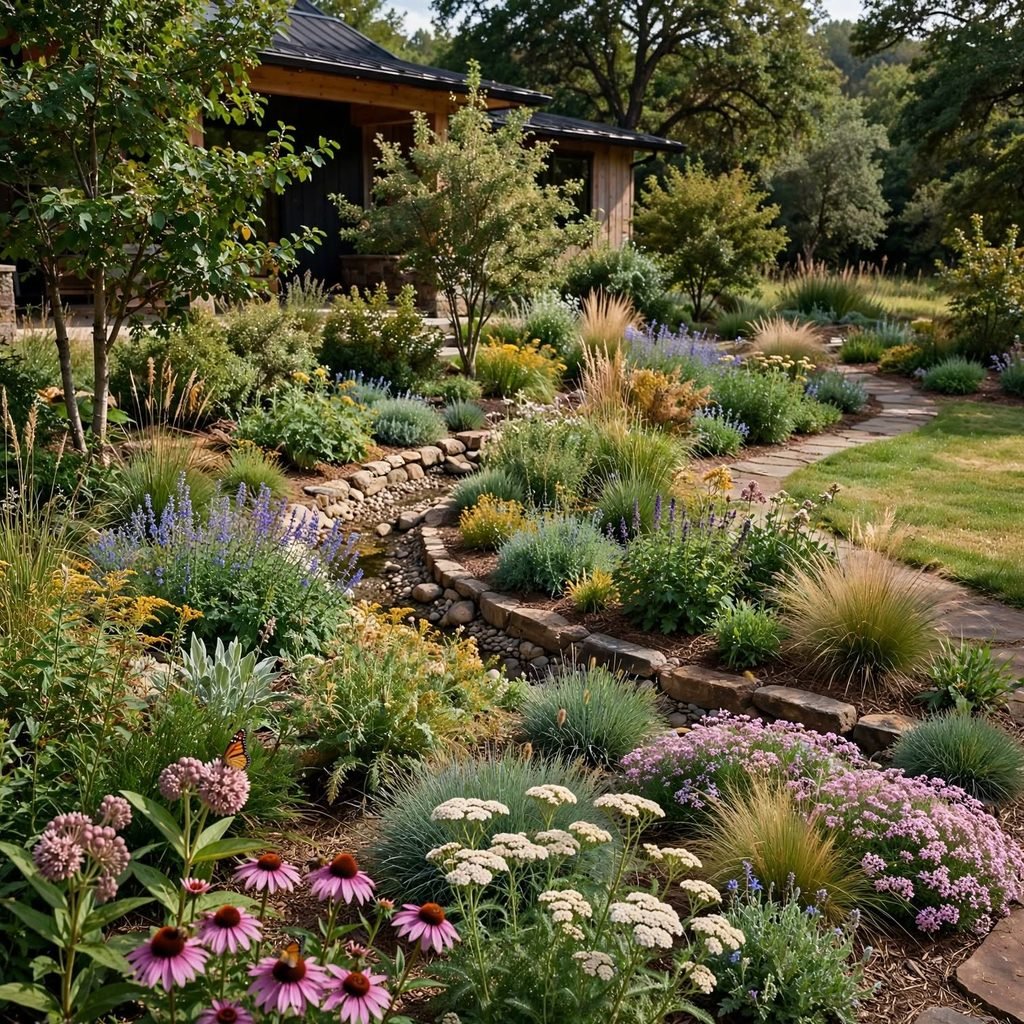
Prioritizing native or regionally well-adapted plant species, rather than exotic plants requiring more water, fertilizer, and pest management to survive outside their natural climate conditions, produces a garden that genuinely thrives with less ongoing maintenance while also typically supporting local pollinators and wildlife more effectively. This approach doesn’t require an exclusively native plant palette, since many well-adapted non-native species also perform reliably with modest care, but rather a general prioritization of plants genuinely suited to the local climate over purely aspirational choices from a different growing region. Consulting a local extension office or native plant society for region-specific recommendations provides more reliable guidance than generic gardening advice not calibrated to the specific local climate.
Explore these beautiful apartment inspiration to create a relaxing and inviting outdoor space.
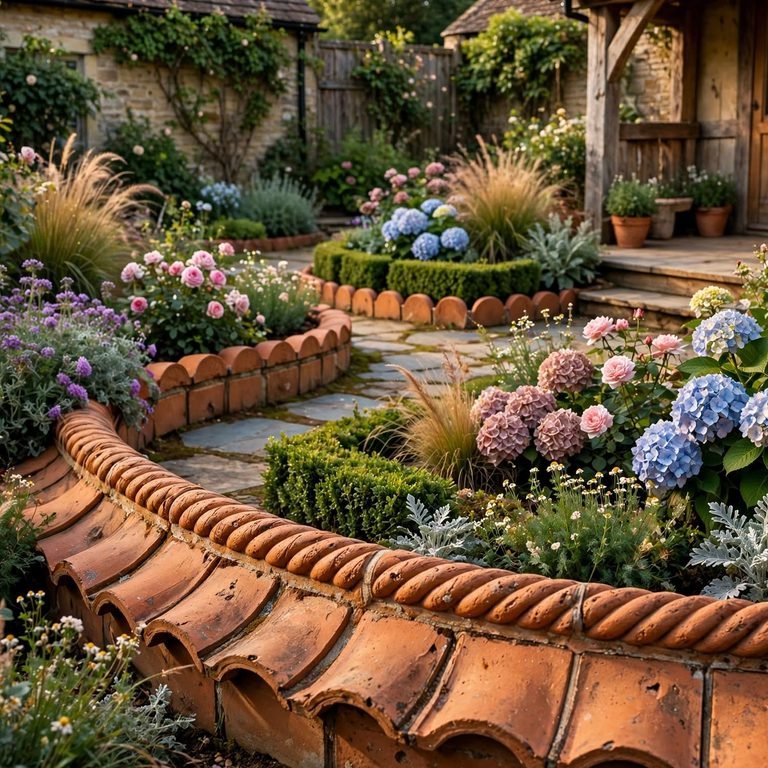
5. Defined Garden Beds With Clear Edges
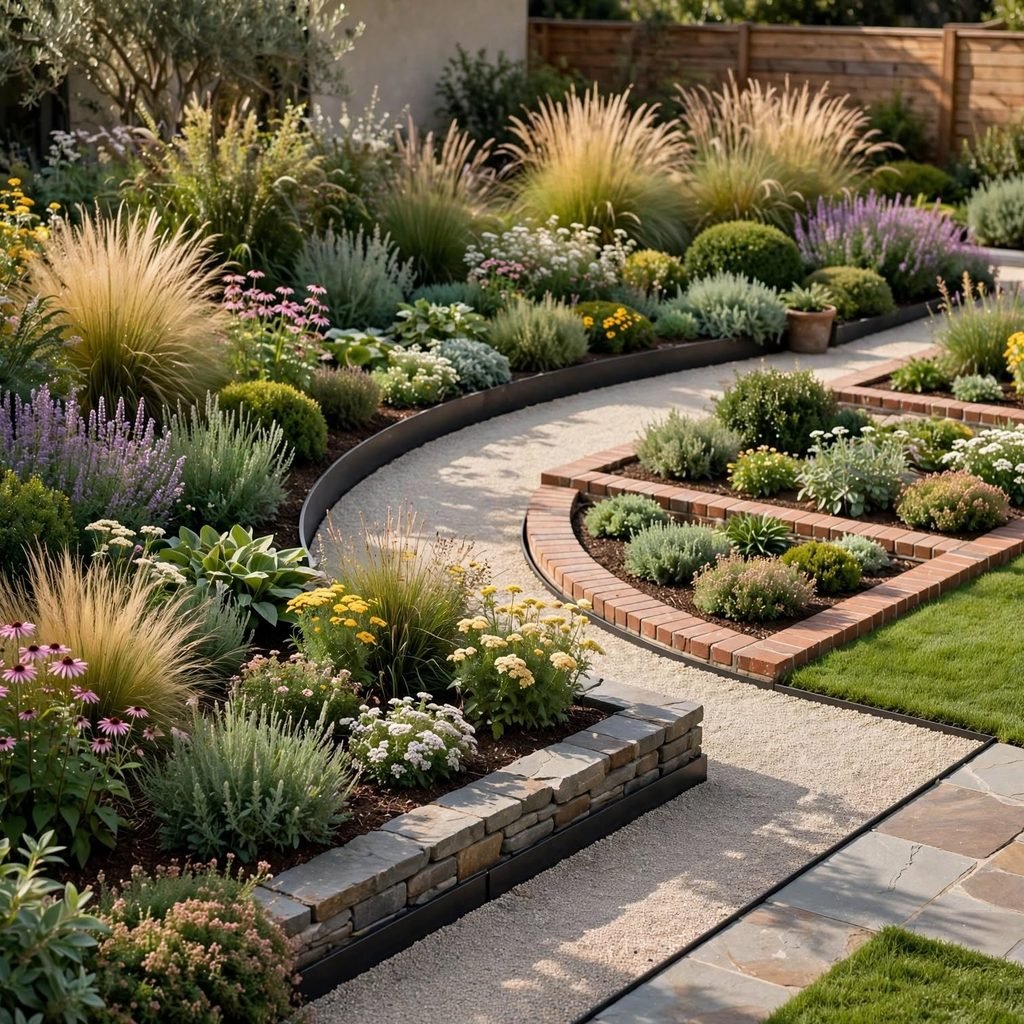
Creating clearly defined garden bed edges, whether through a physical border material, a dug edge, or simply a consistently maintained line between planted and lawn areas, gives a garden a considered, intentional structure that loosely scattered plantings without clear boundaries don’t achieve. This definition also simplifies ongoing maintenance, since a clear edge makes mowing, trimming, and mulching considerably more straightforward than an undefined, gradually blurred transition between garden and lawn. Choosing an edging material or technique appropriate to the garden’s overall style, from a simple mown edge for an informal cottage garden to a more structured brick or stone border for a formal design, reinforces the garden’s intended overall character.
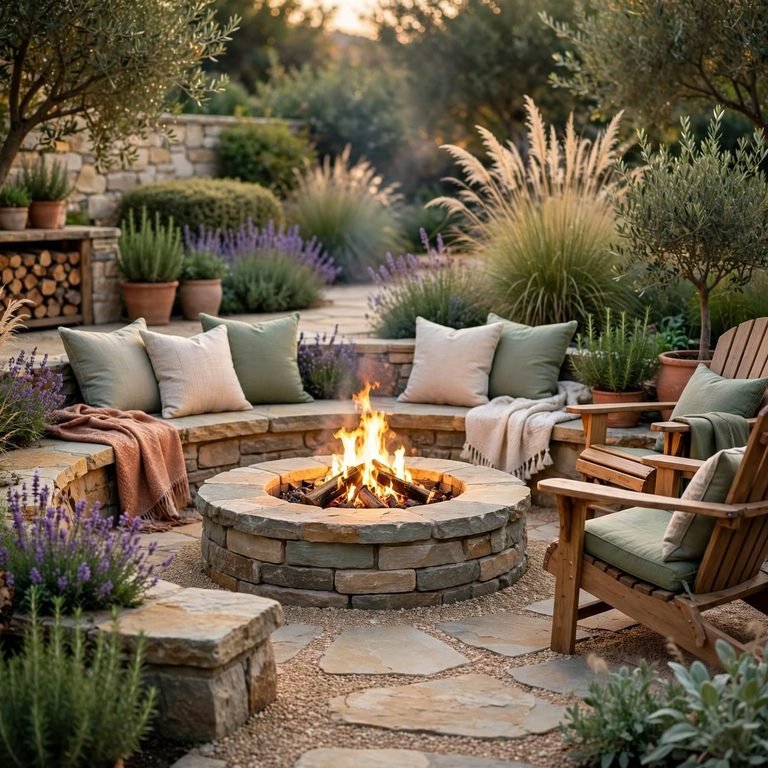
6. A Genuine Outdoor Seating Area Within the Garden
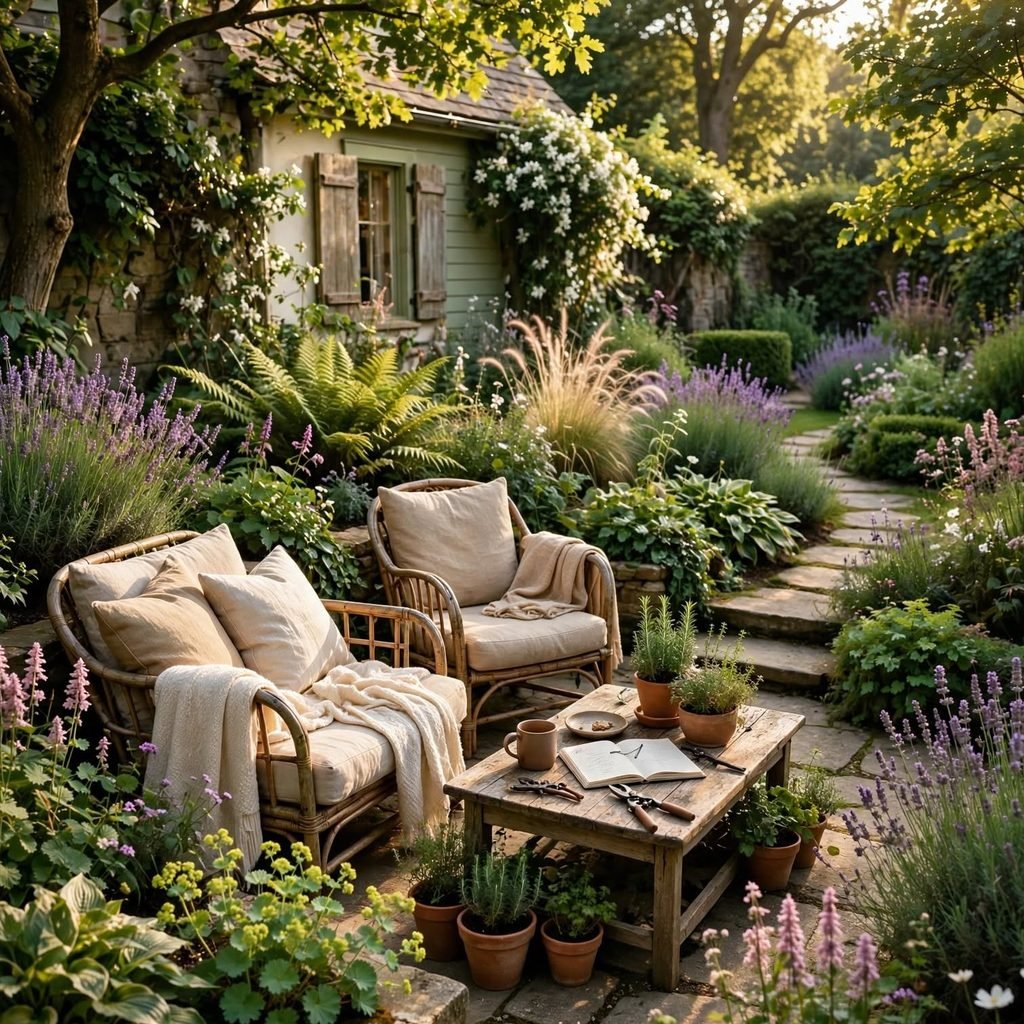
Incorporating an actual seating area within or immediately adjacent to a garden, rather than treating the garden purely as something viewed from inside the house or while walking past, transforms the space into genuine usable outdoor living area rather than purely ornamental landscaping. This seating area benefits from some sense of enclosure or definition, surrounding plantings, a pergola, or simply a defined patio surface, that creates a genuine sense of place distinct from the broader open yard. Positioning this seating to enjoy the garden’s most attractive views or its most pleasant seasonal conditions, morning sun or afternoon shade depending on climate and preference, ensures the space actually gets used regularly.
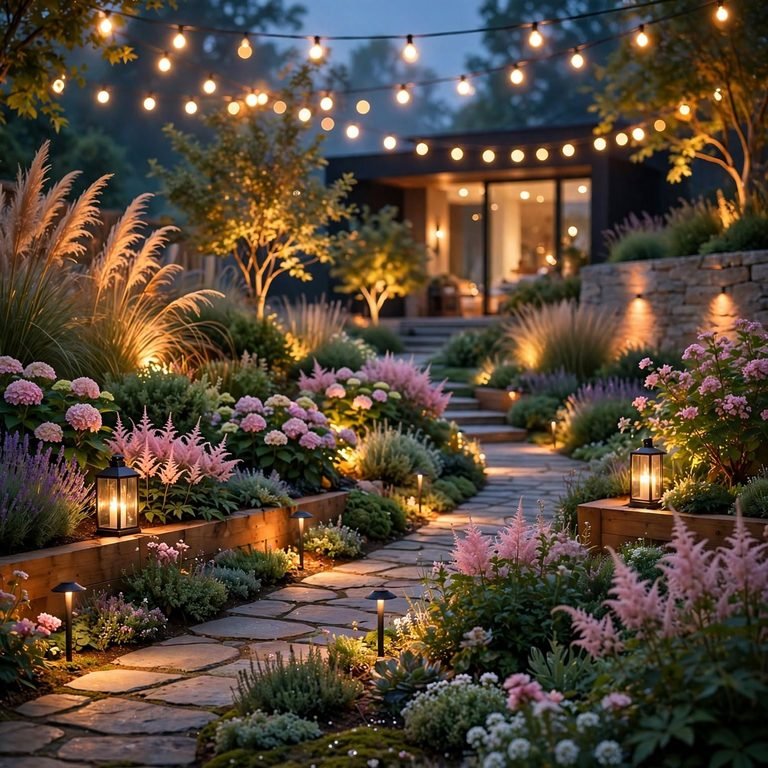
7. A Defined Pathway Through Larger Garden Areas
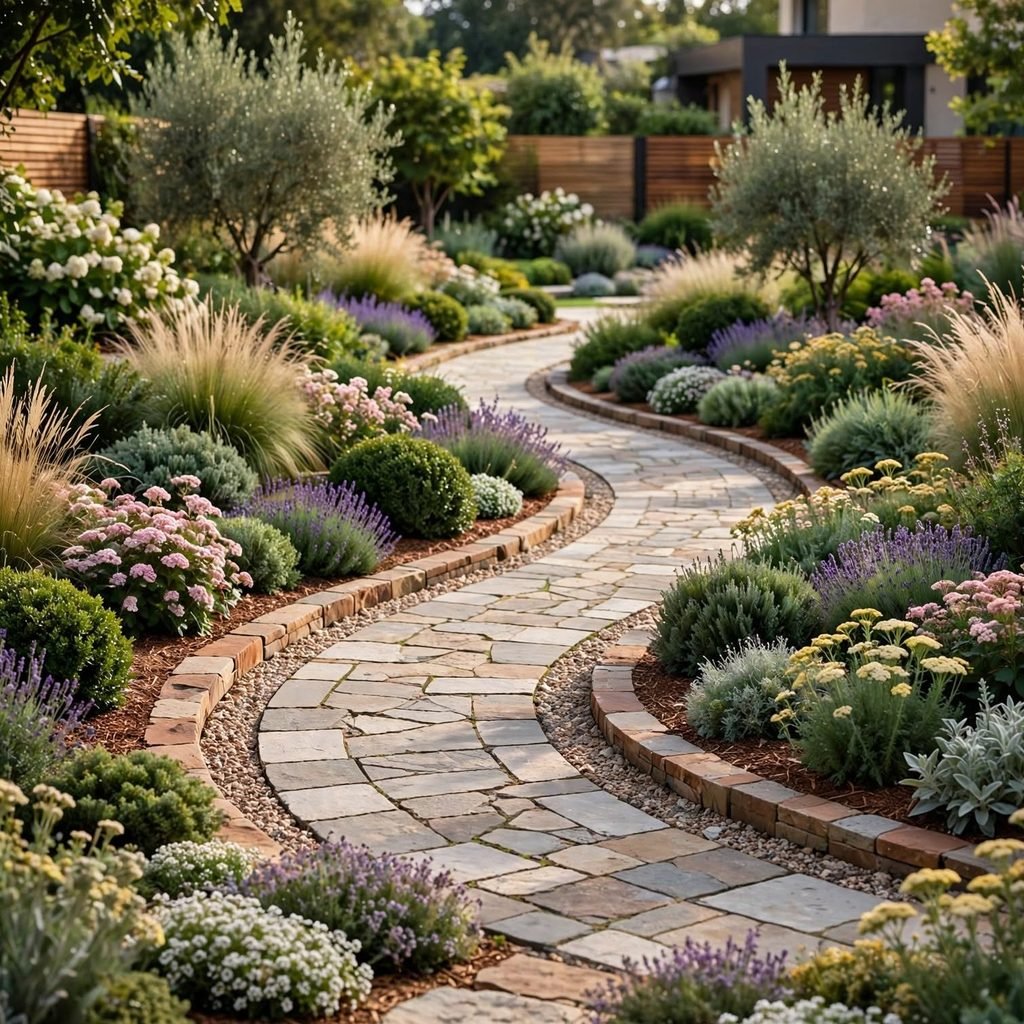
A clearly defined pathway, in gravel, stepping stones, brick, or another appropriate material, through a larger garden area guides movement intentionally through the space while also protecting plantings from the compaction and wear that undefined foot traffic can cause over time. This pathway also provides a practical, all-weather route for garden maintenance access, watering, weeding, harvesting, without requiring walking directly through planted beds. Curving this pathway gently rather than running it in a stark straight line, where the garden’s overall style suits this softer approach, often creates a more inviting, exploratory sense of movement through the space.
8. Container Gardening for Flexibility and Small Spaces
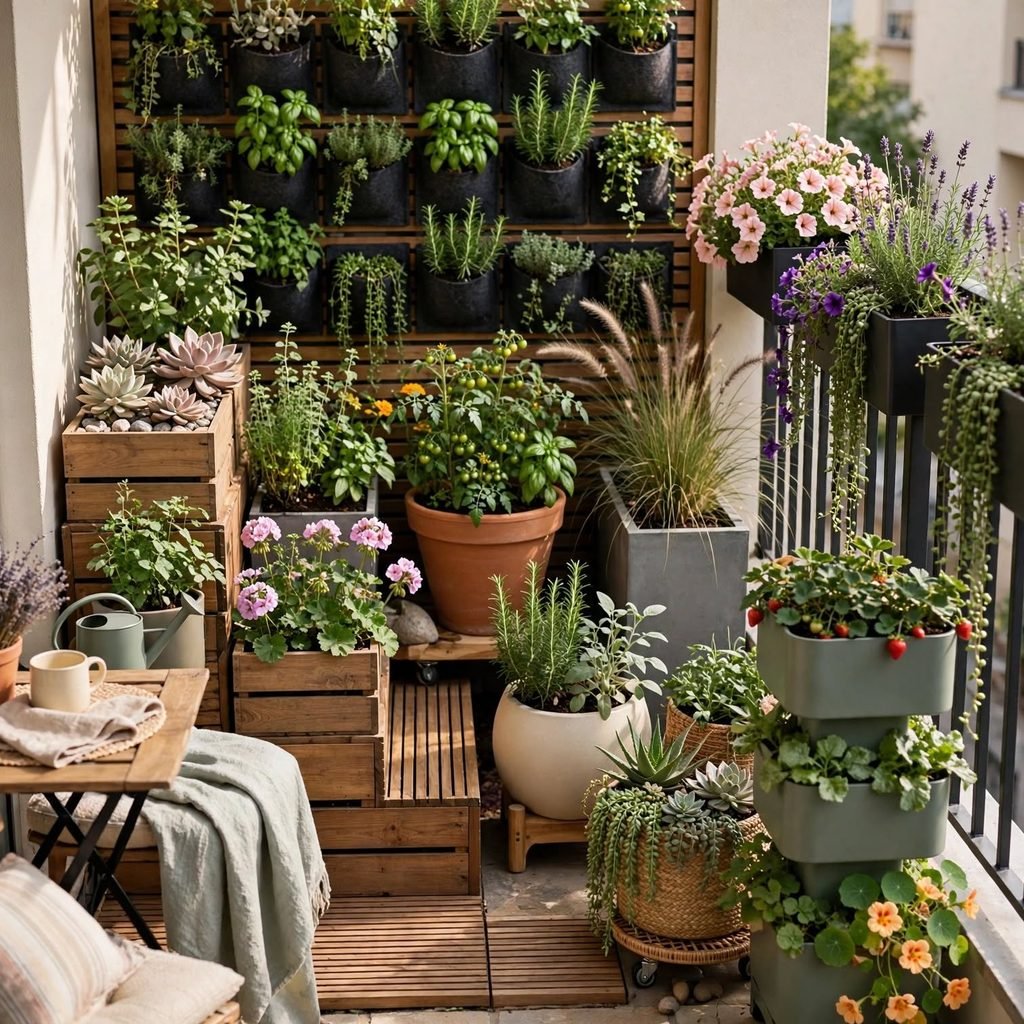
Incorporating container plantings, whether as a primary gardening approach for a small patio or balcony space, or as a flexible supplement to in-ground beds in a larger garden, offers genuine flexibility to move plants for optimal sun exposure, replace seasonal displays easily, and garden successfully even without access to genuine ground planting space. Choosing containers with adequate drainage and appropriate sizing for the specific plants’ mature root systems prevents the common container gardening frustration of plants that struggle despite reasonable care due to inadequate container conditions. Grouping several containers together in varying heights, rather than spacing them individually and evenly, often creates a more visually cohesive and impactful display than scattered single containers.
9. A Water-Wise Irrigation Strategy
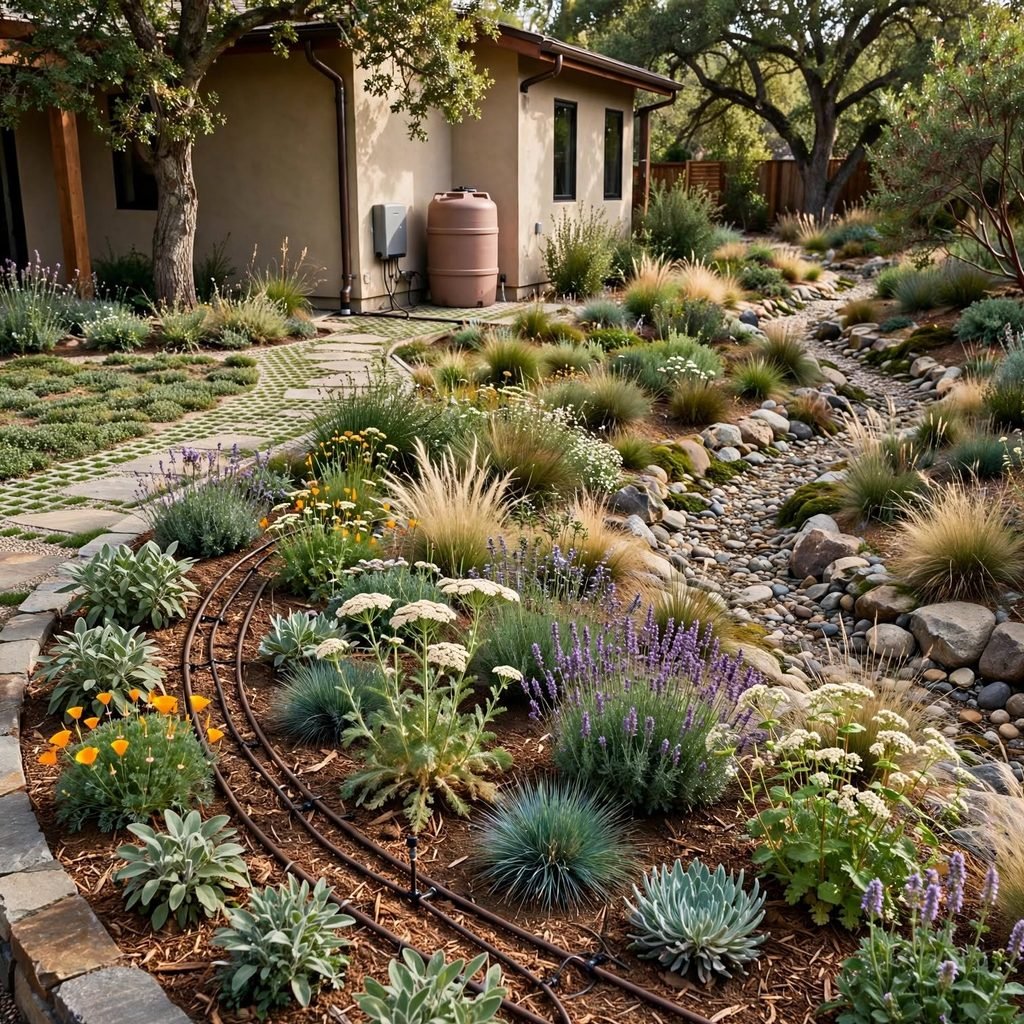
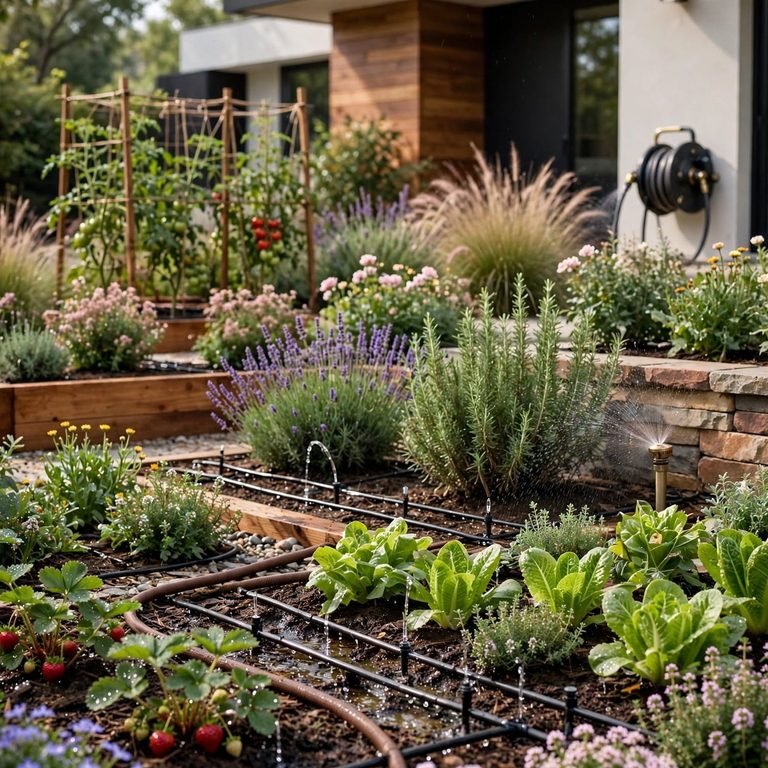
Planning a garden’s irrigation approach deliberately, grouping plants with similar water needs together, incorporating drip irrigation for efficient, targeted watering rather than broad overhead sprinklers, and choosing drought-tolerant plants for less accessible or lower-priority garden areas, reduces both water consumption and the ongoing maintenance burden of managing a garden’s water needs. This water-wise approach matters considerably more in regions facing genuine water scarcity or drought concerns, though the underlying efficiency principles benefit gardens in any climate through reduced water waste and more consistent plant health. Installing a simple timer on any irrigation system removes the daily manual watering task while ensuring plants receive consistent moisture even during periods when manual watering might otherwise be forgotten or delayed.
10. A Dedicated Cutting Garden for Fresh Flowers
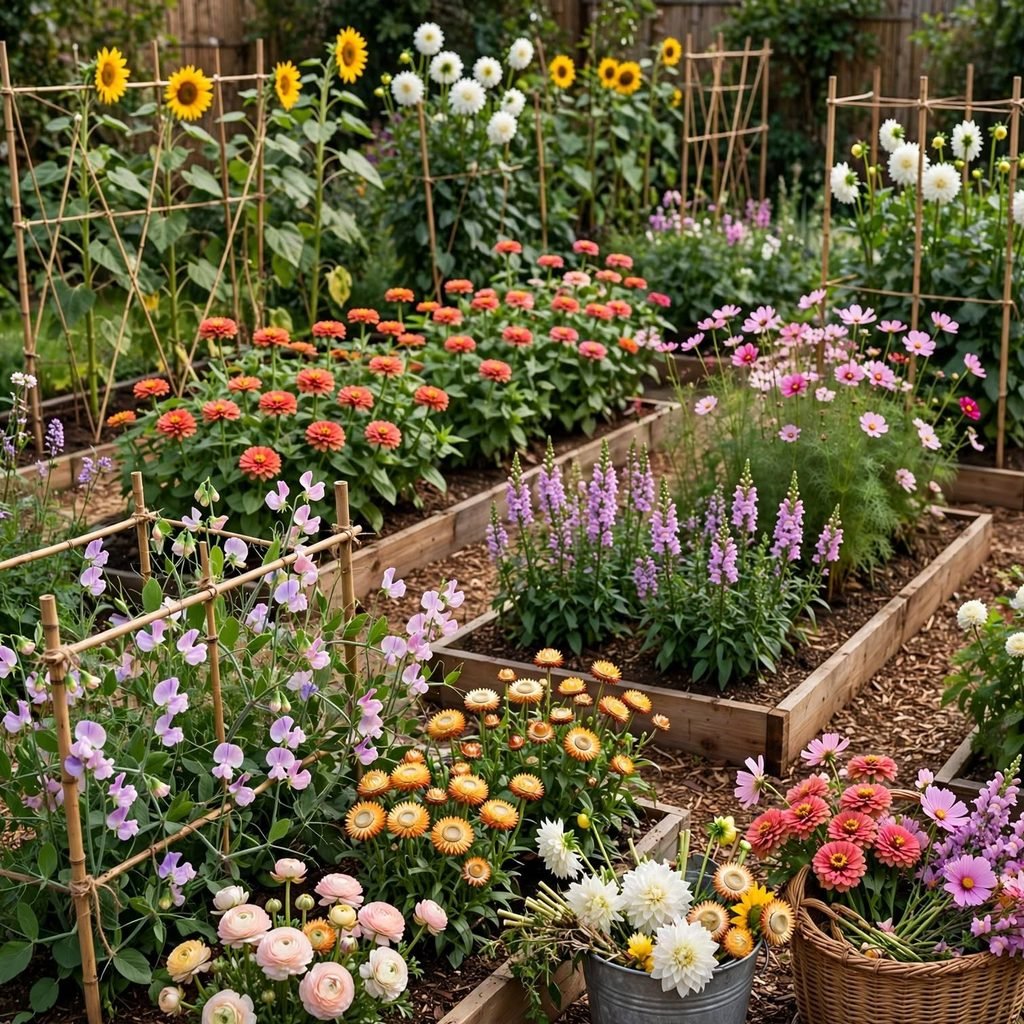
A small, dedicated cutting garden area, planted specifically with flowers intended for regular harvesting into fresh arrangements rather than left to bloom purely for outdoor display, provides genuine ongoing enjoyment through cut flowers for the home while also encouraging more continuous blooming in many flower varieties that respond to regular cutting with extended flower production. This dedicated area can be relatively modest in size while still providing meaningful cut flower material for regular home use, and works well positioned in a less prominent garden area since it’s expected to look somewhat different, and sometimes sparser, than a purely ornamental bed due to regular harvesting. Choosing varieties specifically known for good vase life and continued blooming after cutting maximizes this dedicated space’s genuine practical value.
11. Vertical Gardening for Limited Ground Space
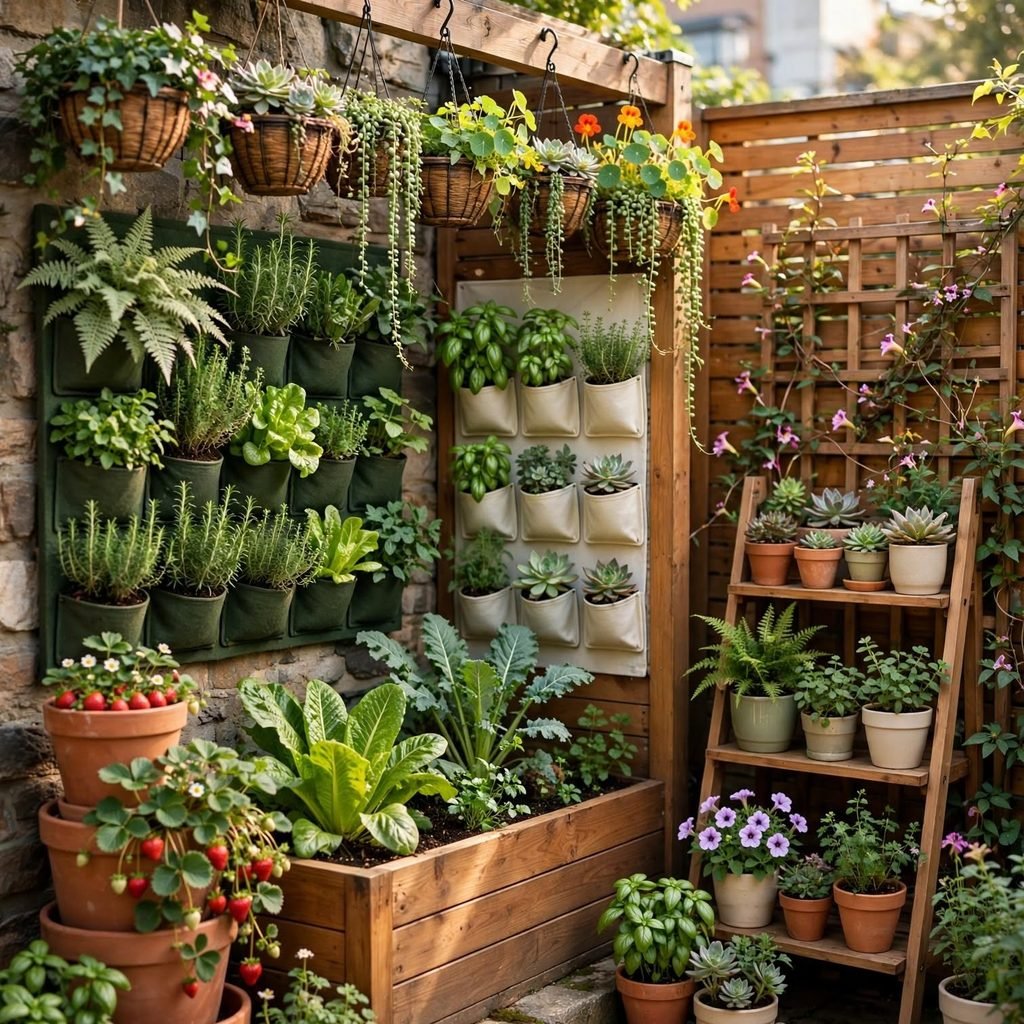
Incorporating vertical gardening elements, a trellis for climbing plants, a living wall system, or simply tall, narrow planters, allows a garden to make use of vertical space when ground area is genuinely limited, particularly valuable in a smaller yard, a patio, or an urban garden setting. Choosing climbing plants appropriate to the specific vertical structure’s material and the plant’s actual growth habit, twining vines needing a different support structure than clinging vines with adhesive tendrils, ensures the vertical element functions successfully rather than the plant failing to properly climb its intended support. This approach also works well combined with a privacy goal, using a trained vine or living wall to screen an undesirable view or provide separation from a neighboring property.
12. A Kitchen Garden Positioned Near the Home
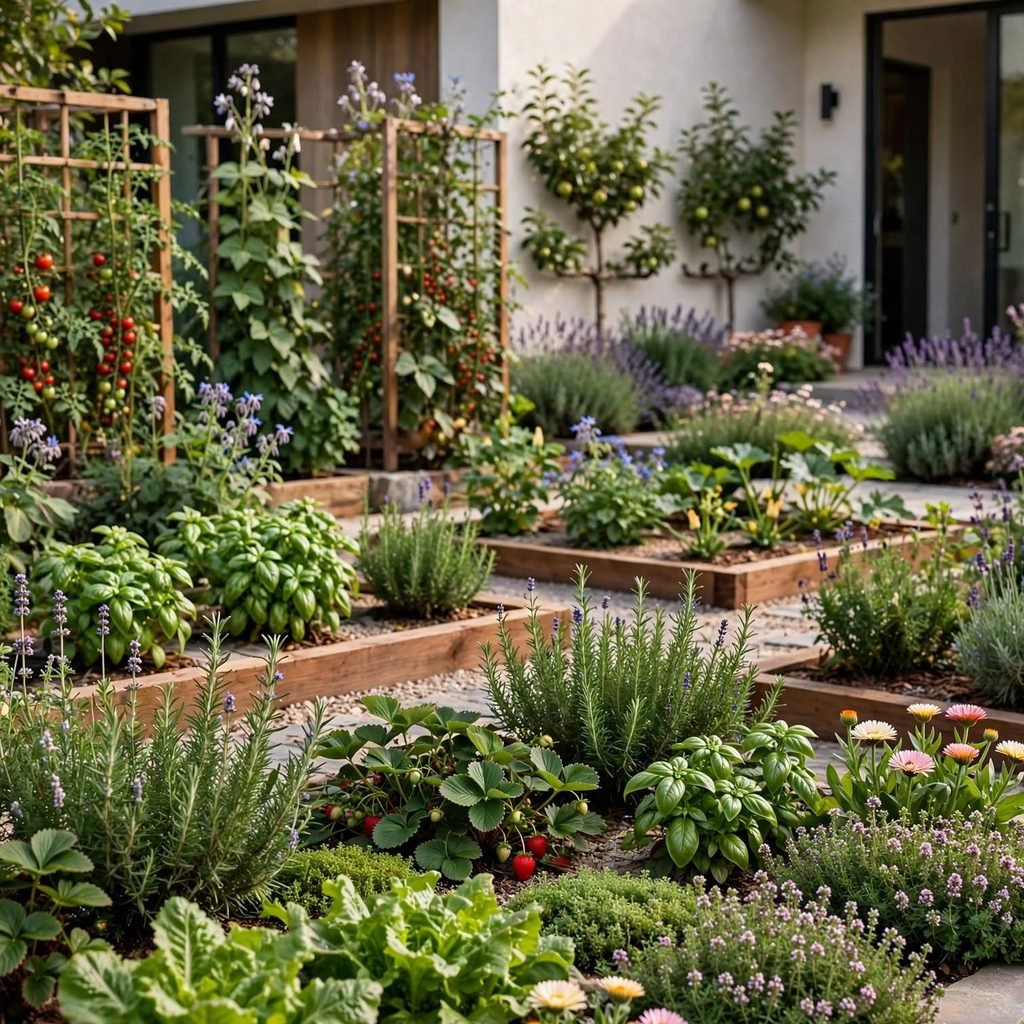
Positioning an edible or kitchen garden, vegetables, herbs, and fruit, in a location genuinely convenient to the kitchen, rather than relegated to the most distant corner of the property, significantly increases how often it actually gets used for cooking, since a garden requiring a lengthy walk sees considerably less regular harvesting than one just steps from the kitchen door. This proximity consideration matters as much as the garden’s actual planting design, since even a beautifully planned kitchen garden provides little genuine value if its distance from daily cooking activity discourages regular use. Incorporating herbs specifically in a container or small bed immediately outside a kitchen door, even separate from a larger vegetable garden further from the house, ensures these frequently used ingredients remain genuinely convenient for daily cooking.
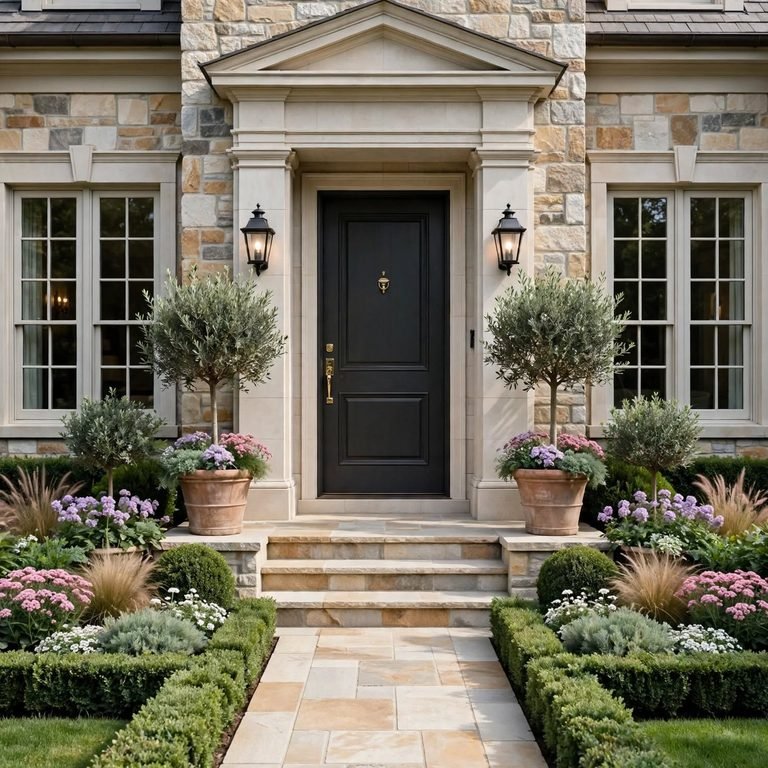
13. Seasonal Structure Through Evergreen Anchors
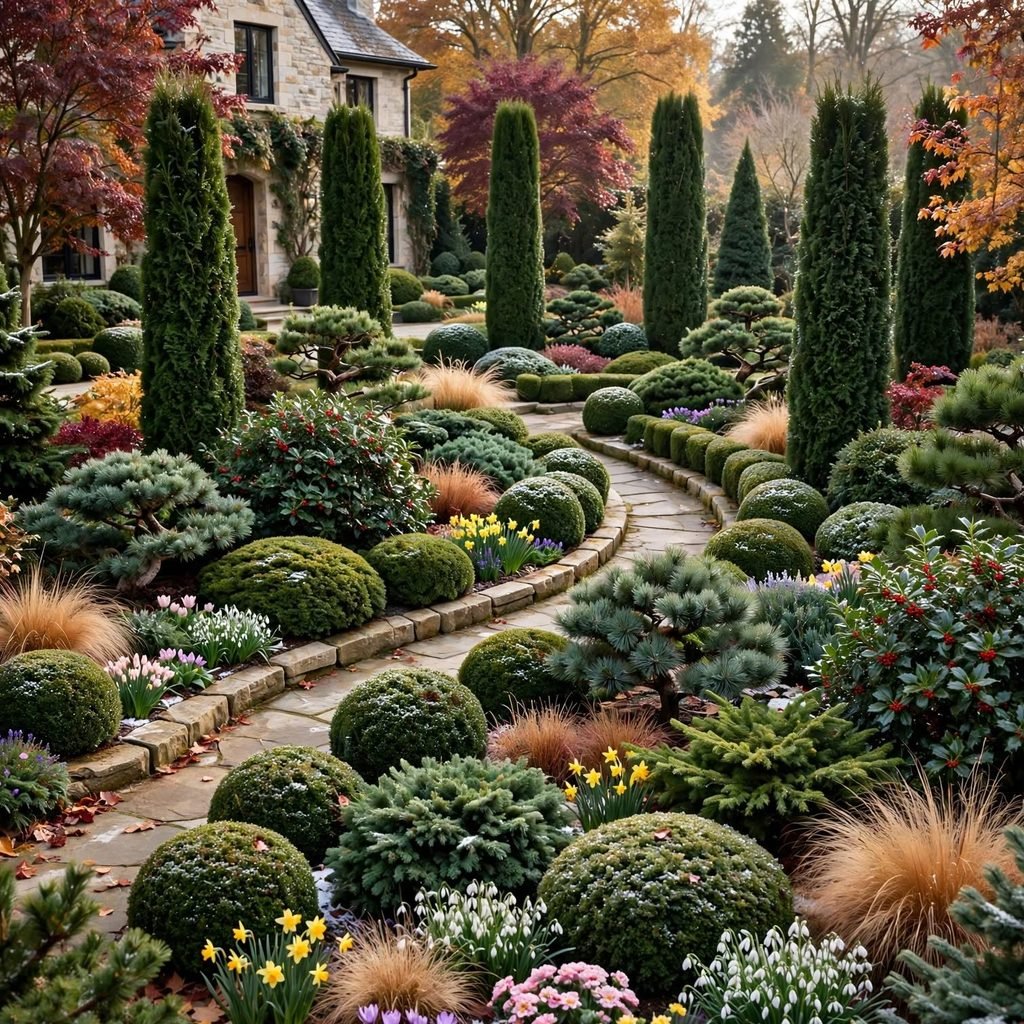
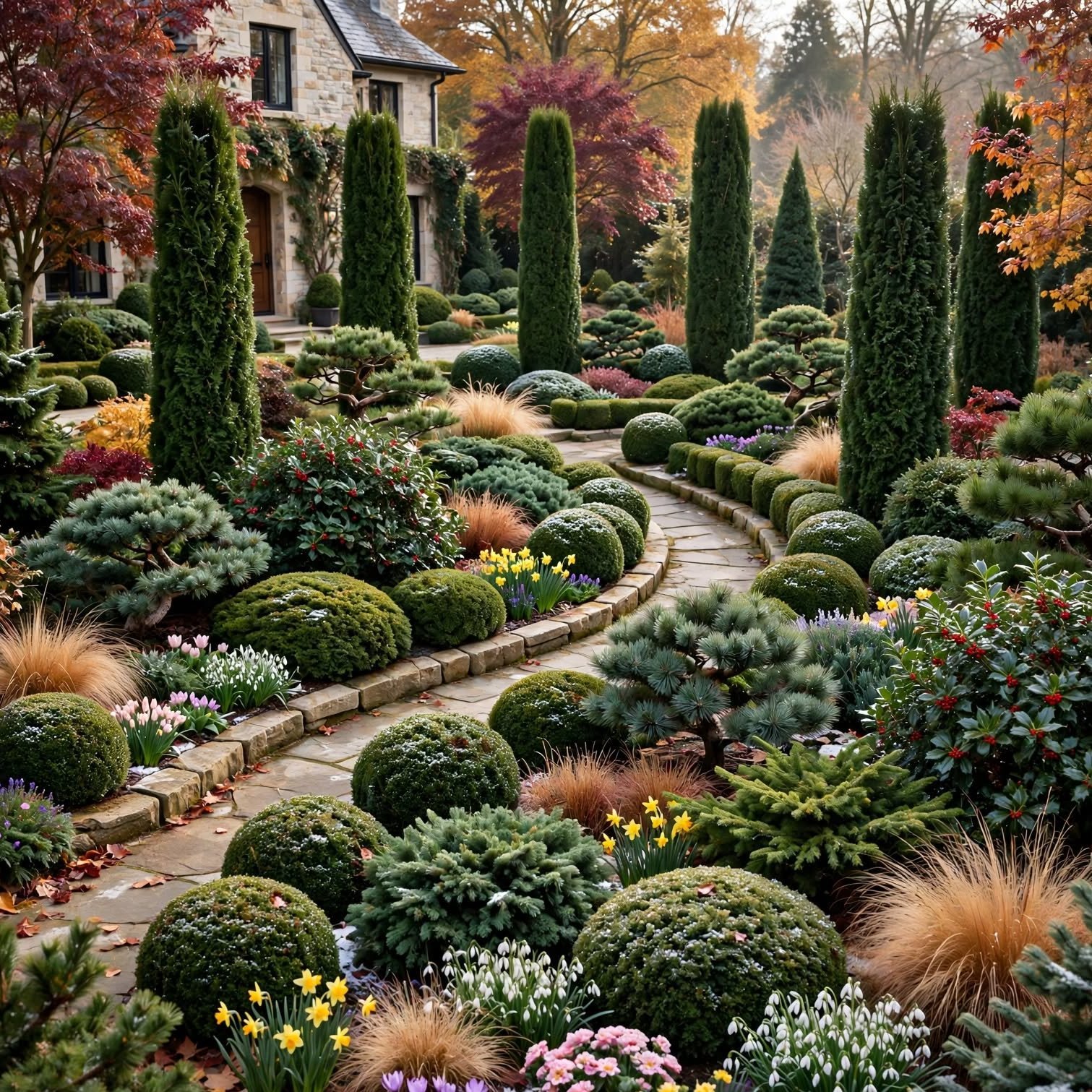
Incorporating evergreen shrubs or trees as structural anchors throughout a garden ensures the space maintains genuine visual structure and interest even during winter months when deciduous plants and perennials have died back or lost their leaves. These evergreen elements provide a consistent framework the garden’s seasonal, changing plantings can play against throughout the year, preventing the garden from appearing entirely bare or formless during its dormant season. Positioning these evergreen anchors thoughtfully within the overall garden design, rather than scattered randomly, allows them to genuinely provide structural definition rather than existing as isolated, disconnected elements.
14. A Genuine Wildlife and Pollinator Habitat Component
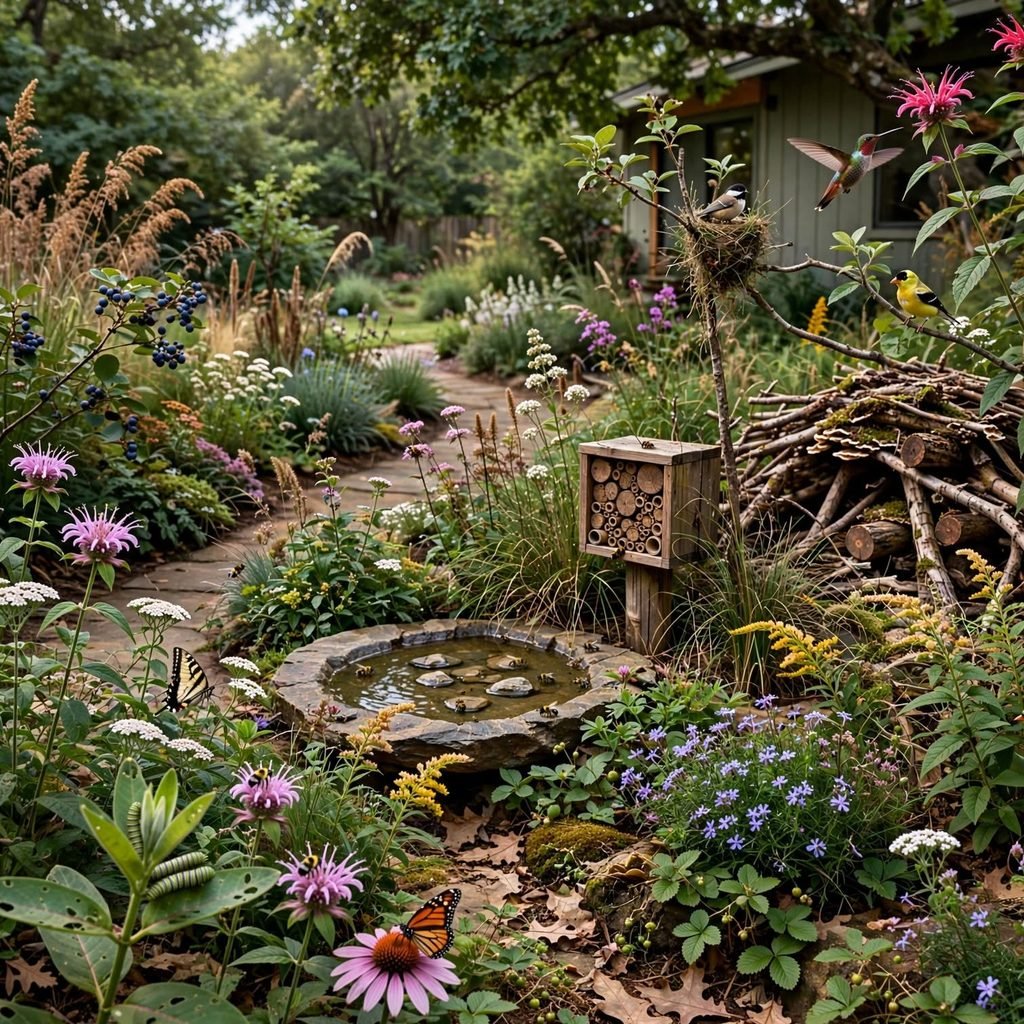
Incorporating plants and features specifically supporting local pollinators and wildlife, native flowering plants providing genuine nectar sources, a small water feature, and avoiding excessive pesticide use, contributes to a garden’s ecological value beyond purely aesthetic considerations while also often providing genuine enjoyment through observing the birds, butterflies, and other wildlife these features attract. This consideration has grown in popularity alongside broader environmental awareness, reflecting genuine interest in gardens that contribute positively to local ecosystems rather than existing purely as decorative, ecologically inert landscaping. Researching which specific native plants support local pollinator species provides more targeted guidance than generic “pollinator-friendly” plant lists not calibrated to the specific regional ecosystem.
15. Realistic Maintenance Planning Matched to Available Time
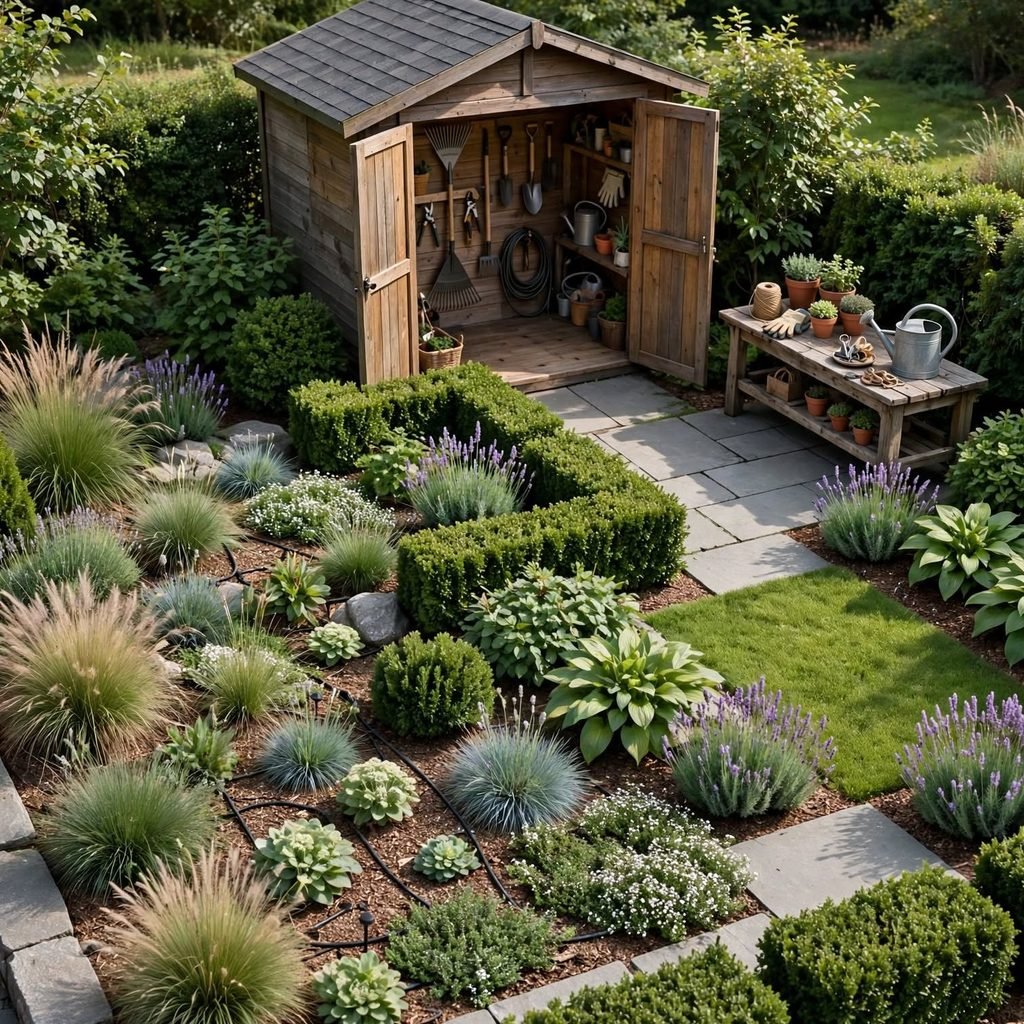
Honestly assessing how much genuine ongoing maintenance time is actually available, weekly weeding, seasonal pruning, regular watering, and selecting a garden’s overall scale and plant complexity accordingly, prevents the common disappointment of an ambitious garden design that gradually becomes overgrown and neglected once initial enthusiasm meets the genuine ongoing time commitment gardening requires. A lower-maintenance garden built around drought-tolerant, well-adapted plants and simpler overall design generally provides more sustained satisfaction than an elaborate, high-maintenance garden that exceeds the household’s realistic available time. Starting with a more modest, manageable garden scope and expanding gradually as genuine capacity and interest develop, rather than beginning with an overly ambitious full design, often produces better long-term results and satisfaction.
Shop the Look
Start by documenting your garden’s actual sun exposure across a full day, then select native or regionally adapted plants matched honestly to those conditions and to your realistic available maintenance time. Layer plant heights within defined bed edges, and incorporate at least one genuine outdoor seating area positioned to enjoy the garden’s best views or seasonal conditions. Add practical elements, a defined pathway, drip irrigation, evergreen structural anchors, that support both the garden’s daily function and its year-round visual interest.
Common Mistake to Avoid
A common mistake in garden planning is selecting plants purely based on their appearance at a nursery or in inspiration photos, without honestly assessing whether those specific plants suit the garden’s actual sun exposure, soil conditions, and the household’s genuine available maintenance time, resulting in a garden that struggles or requires far more ongoing effort than initially anticipated. Matching plant selection to documented, real site conditions and honest maintenance capacity, rather than aspirational assumptions, produces a garden that genuinely thrives and remains enjoyable to maintain over years rather than becoming a source of ongoing frustration. This foundational planning matters more to a garden’s long-term success than any single design technique or plant choice.
FAQs
How do I figure out what plants will actually work in my specific garden?
Documenting your garden’s actual sun exposure across a full day and, ideally, across different seasons, testing or researching your soil’s drainage and pH characteristics, and identifying your specific USDA hardiness zone or regional equivalent together provide the essential foundation for selecting plants genuinely suited to your actual conditions rather than plants that simply appealed to you in a photograph or at a nursery display. Consulting a local extension office, native plant society, or an experienced local nursery staff member, rather than relying purely on generic online gardening advice not calibrated to your specific region, provides more reliable, locally relevant plant recommendations. Starting with a smaller selection of well-researched plants genuinely suited to your documented conditions, rather than a large initial purchase based on appearance alone, reduces the risk of significant plant loss and wasted investment.
How much maintenance does a typical garden actually require?
Garden maintenance demands vary enormously based on the specific plants chosen, the garden’s overall scale, and the local climate, ranging from a genuinely low-maintenance native, drought-tolerant garden requiring only occasional seasonal attention to a more elaborate, high-maintenance garden requiring weekly or even more frequent hands-on care throughout the growing season. Honestly assessing your realistic available time before finalizing a garden’s scope and plant complexity, rather than assuming you’ll find more time than your actual schedule typically allows, helps match the garden’s demands to genuine ongoing capacity. Starting with a more modest garden scope and expanding gradually as your available time, interest, and gardening skill develop generally produces better long-term satisfaction than beginning with an overly ambitious design that quickly becomes unmanageable.
Should I prioritize native plants over other options for my garden?
Native and regionally well-adapted plants generally require less water, fertilizer, and pest management than plants imported from significantly different climate conditions, while also typically providing better support for local pollinators and wildlife, making them a strong default priority for most garden planning even without an exclusively native-only approach. That said, many well-adapted non-native species also perform reliably with modest care and can coexist successfully alongside native plantings within the same garden design. Consulting regional native plant resources for specific recommendations, while remaining open to well-adapted non-native additions that genuinely suit your conditions and aesthetic preferences, provides a balanced approach that prioritizes ecological and maintenance benefits without requiring rigid exclusivity.
How do I keep a garden looking good throughout the entire year, not just during peak bloom?
Incorporating evergreen structural elements that maintain visual presence through winter months, planning for succession blooming across different seasons rather than concentrating all flowering plants around one peak period, and valuing foliage texture and color alongside flowers all contribute to a garden that maintains genuine year-round interest rather than looking bare or uninteresting for much of the year. Researching specific bloom times and foliage characteristics for plants under consideration, rather than selecting purely based on how they appear during their single peak display period, helps build this more complete seasonal picture during the planning stage. Walking through the garden mentally, or literally sketching out, what it will look like during each season helps identify gaps in year-round interest before they become apparent as genuine seasonal disappointment after planting.
What’s the most important first step before starting any garden project?
Honestly documenting your specific site’s actual conditions, sun exposure across a full day, soil characteristics, and drainage patterns, alongside a realistic assessment of how much ongoing maintenance time you genuinely have available, provides the essential foundation that should inform every subsequent garden decision rather than skipping straight to plant selection or design based on inspiration alone. This foundational assessment prevents the common and costly mistake of investing in plants and design choices that don’t actually suit your real conditions or capacity, only to discover this mismatch after time and money have already been spent. Taking the time for this honest groundwork before any purchasing or planting begins consistently produces better long-term garden success than rushing directly into plant selection.
Conclusion
A garden that genuinely gets enjoyed over years comes from honest planning around real sun conditions, appropriate plant selection, and realistic maintenance capacity, layered with thoughtful design techniques like height variation and seasonal succession, rather than an aspirational design assembled without regard for actual site conditions or available time. Save this guide to Pinterest for reference while planning your next garden project, and check out our related post on house exterior design for how garden and landscaping choices work together with a home’s overall exterior presentation.