12 Stylish Office Desk Ideas for Every Layout and Workflow
A desk is the one piece of office furniture that has to get everything right at once enough surface for the actual work, the correct depth for comfortable reach, and a footprint that fits the room without dominating it. These office desk ideas cover a range of styles and use cases, from compact wall-mounted options to full executive setups, so the choice can start from function rather than appearance alone. Twelve specific desk styles follow, each suited to a different room size, workflow, or budget.
Trend & Background
As home offices have become permanent fixtures rather than temporary setups, desk choices have shifted from generic flat-pack options toward pieces selected for a specific workflow dual monitors, writing by hand, drafting, or laptop-only use rather than a one-size-fits-all design. Interest in sit-stand and ergonomically adjustable desks has grown steadily as more people spend full workdays at home, alongside continued demand for space-saving styles like wall-mounted and fold-down desks in smaller homes. That shift has pushed manufacturers toward more specialized desk categories instead of a single standard size and shape.
Key Takeaways
- Office desk ideas should start from how the desk gets used daily, not just how it looks in a room.
- Desk depth and width matter more to comfort than material or finish once basic ergonomics are in play.
- Built-in and wall-mounted desks solve space constraints that standalone furniture can’t match.
- The right desk style depends as much on workflow writing, dual monitors, drafting as on room size.
1. Sit-Stand Desk Frame
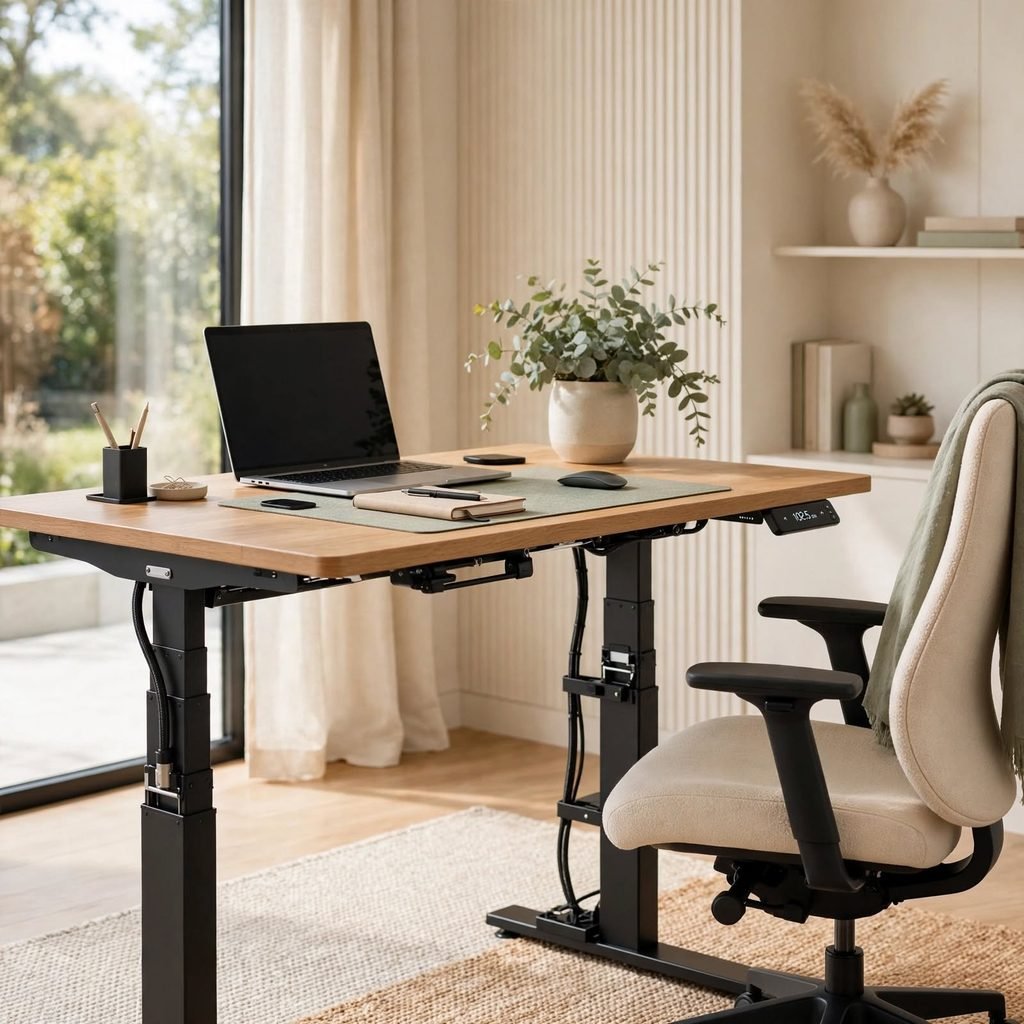
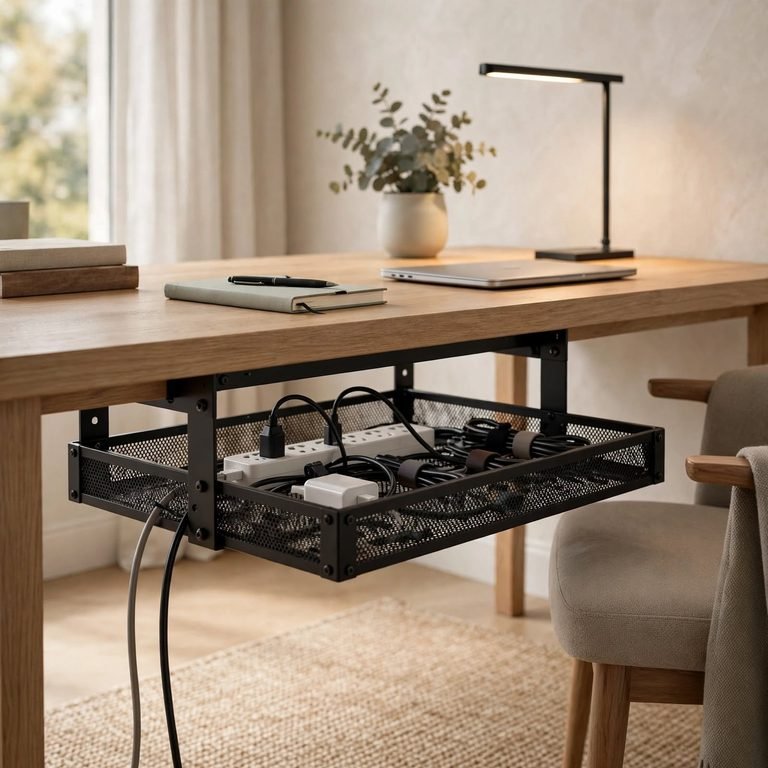
A sit-stand desk frame lets you alternate between sitting and standing using an electric or hand-crank lift mechanism, which reduces the stiffness that comes from staying in one position for a full workday. Frames rated to at least 200 pounds handle dual-monitor setups without sag, and a desktop of at least 60 inches wide keeps enough surface area usable at both heights. Cable management trays mounted underneath keep cords from tangling as the height changes throughout the day.
| Desk Width | Recommended For | Weight Capacity Needed |
| 48 in | Laptop-only | 100 lbs |
| 60 in | Single monitor + laptop | 150 lbs |
| 72 in+ | Dual monitor setup | 200 lbs |
2. Wall-Mounted Floating Desk
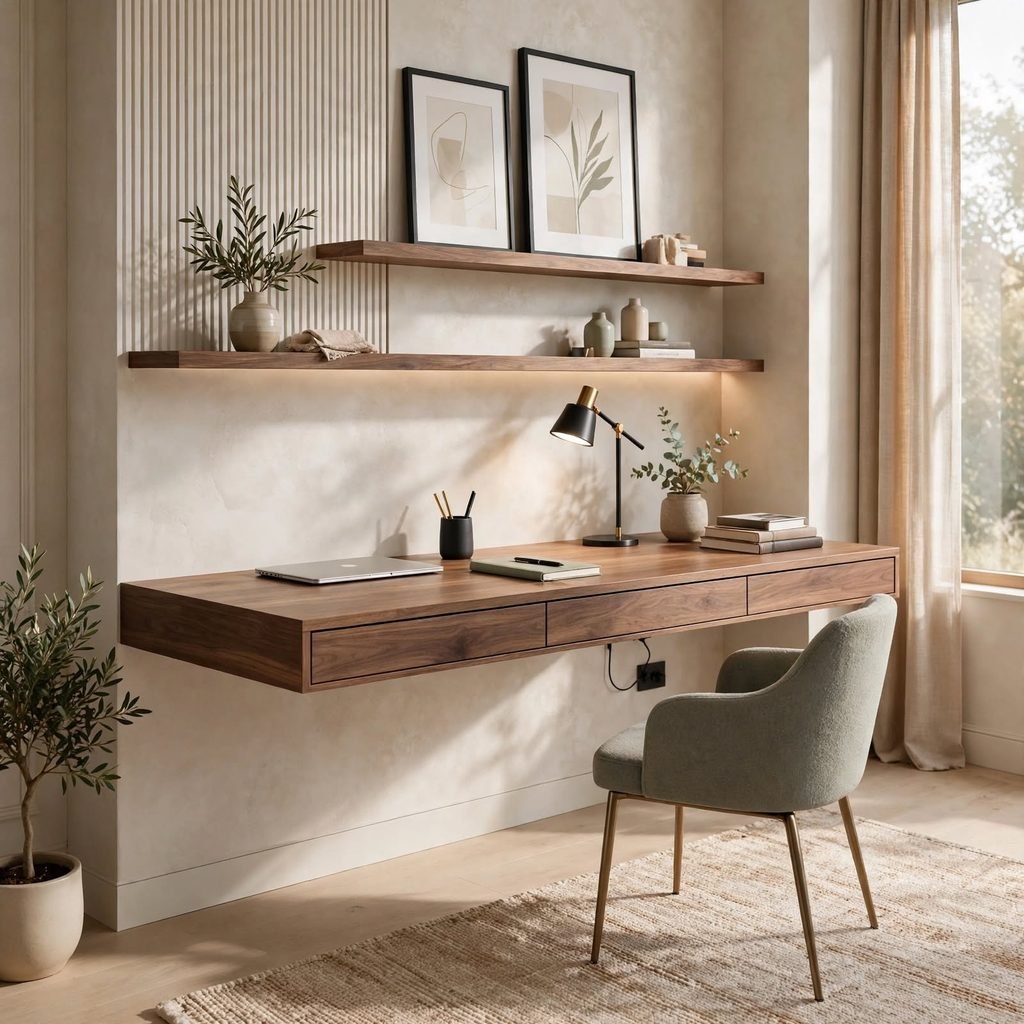
A wall-mounted floating desk attaches directly to wall studs with a bracket system, removing the legs and frame a standalone desk needs and freeing up the floor space beneath it entirely. Depths of 18 to 20 inches suit laptop use, while 24 inches leaves enough room for a keyboard and external monitor. Because there’s no understructure, this style works especially well in small rooms where a chair needs to tuck fully out of the way when not in use.
3. L-Shaped Corner Desk
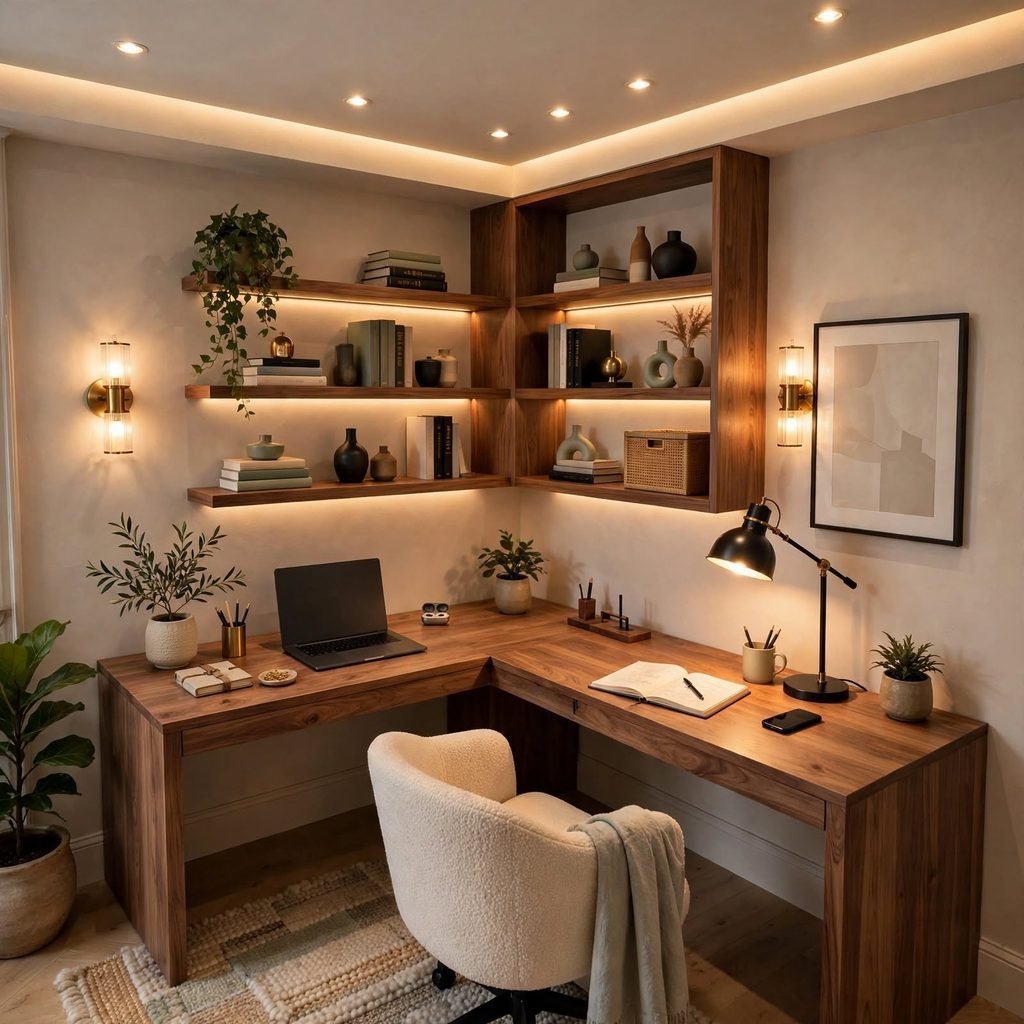
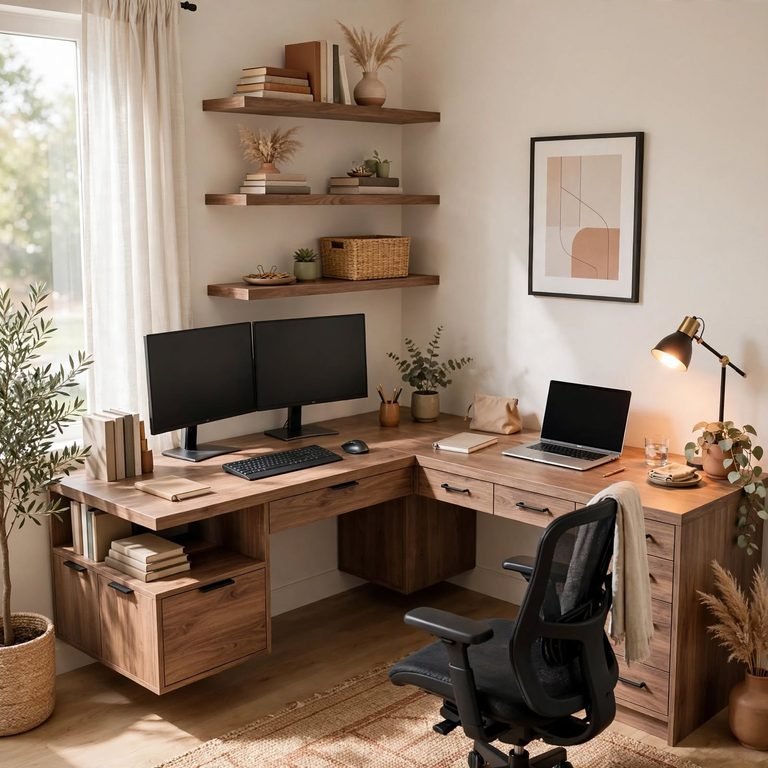
An L-shaped desk fitted into a corner creates two distinct work zones one for a monitor setup, one for writing or paperwork while using wall space a straight desk against one wall would leave empty. Most L-desks need at least 48 inches along each wall to avoid feeling cramped, so measuring the corner before buying matters more with this style than most others. A walnut veneer or white oak finish keeps the piece from visually dominating a smaller room the way a bulky dark desk can.
4. Executive Pedestal Desk
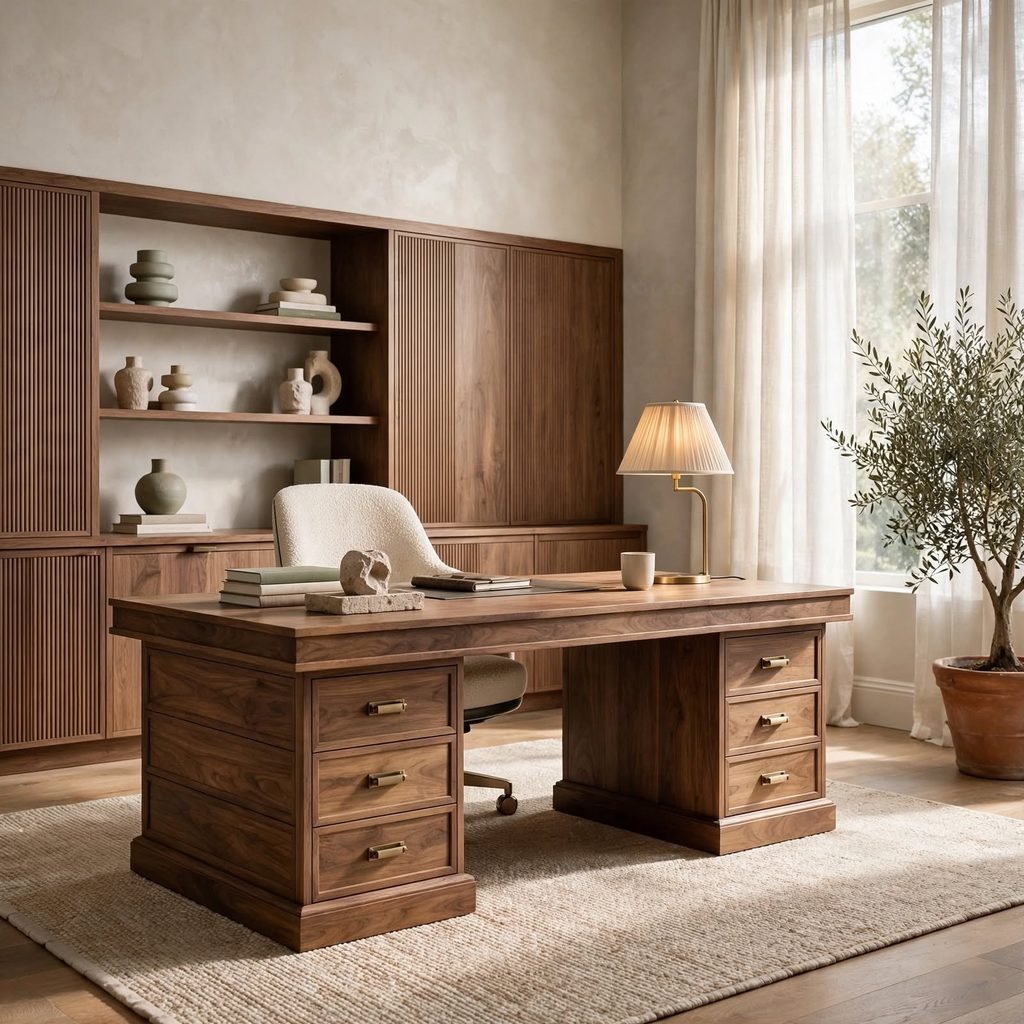
An executive pedestal desk, typically in solid wood with drawer pedestals on one or both sides, suits a dedicated office room where the desk itself functions as a statement piece rather than a purely utilitarian surface. Depths of 30 inches or more give ample room for paperwork, a keyboard, and a monitor without feeling crowded. This style works best in a room with at least 100 square feet, since its larger footprint doesn’t suit compact spaces well.
5. Secretary Writing Desk
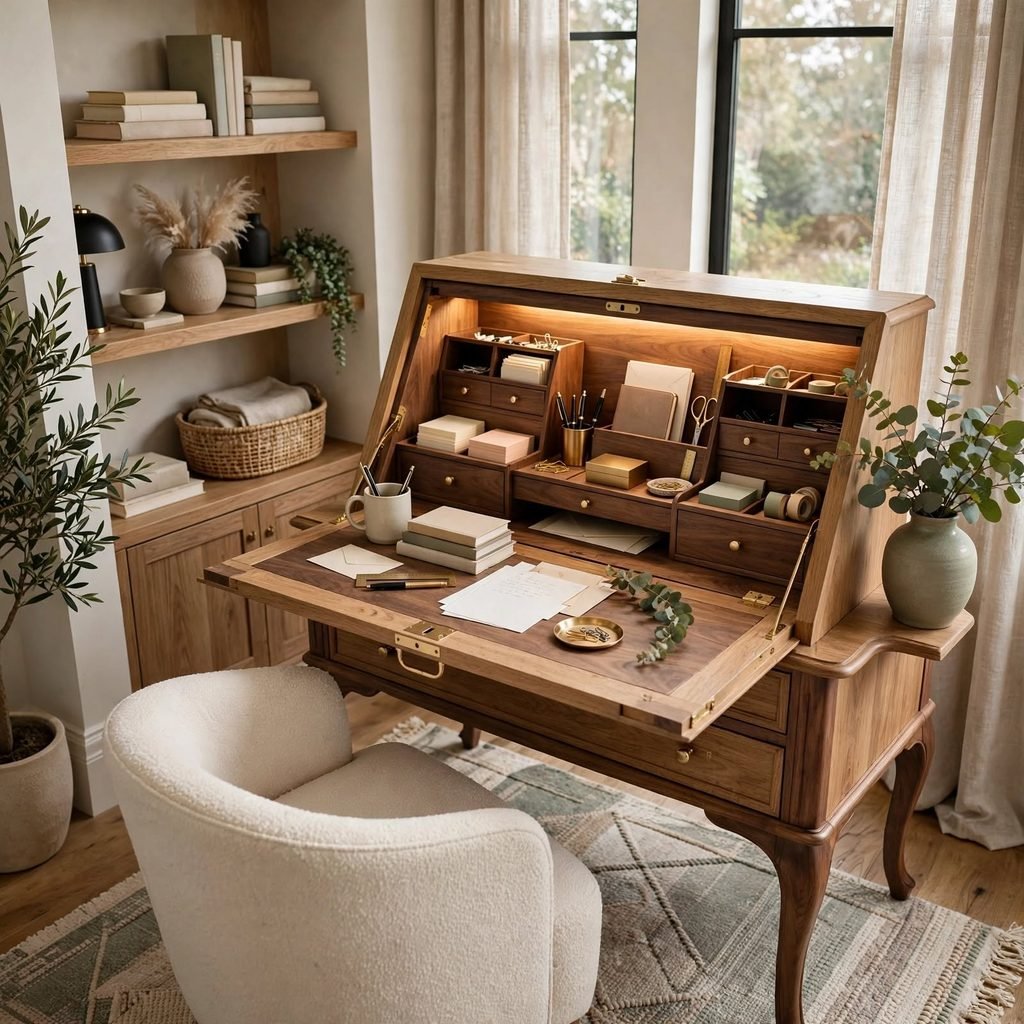
A secretary writing desk, with a fold-down or slim fixed writing surface and built-in storage above, suits handwriting-focused work or occasional desk use better than a full-size setup built around a computer. Depths of 16 to 20 inches keep the footprint minimal, making this one of the most space-efficient desk ideas for a room without much square footage to spare. Vintage and reproduction versions both work well, though reproduction pieces typically offer sturdier hardware for daily use.
Discover space-saving office design ideas that combine comfort, organization, and modern style.
6. Glass-Top Modern Desk
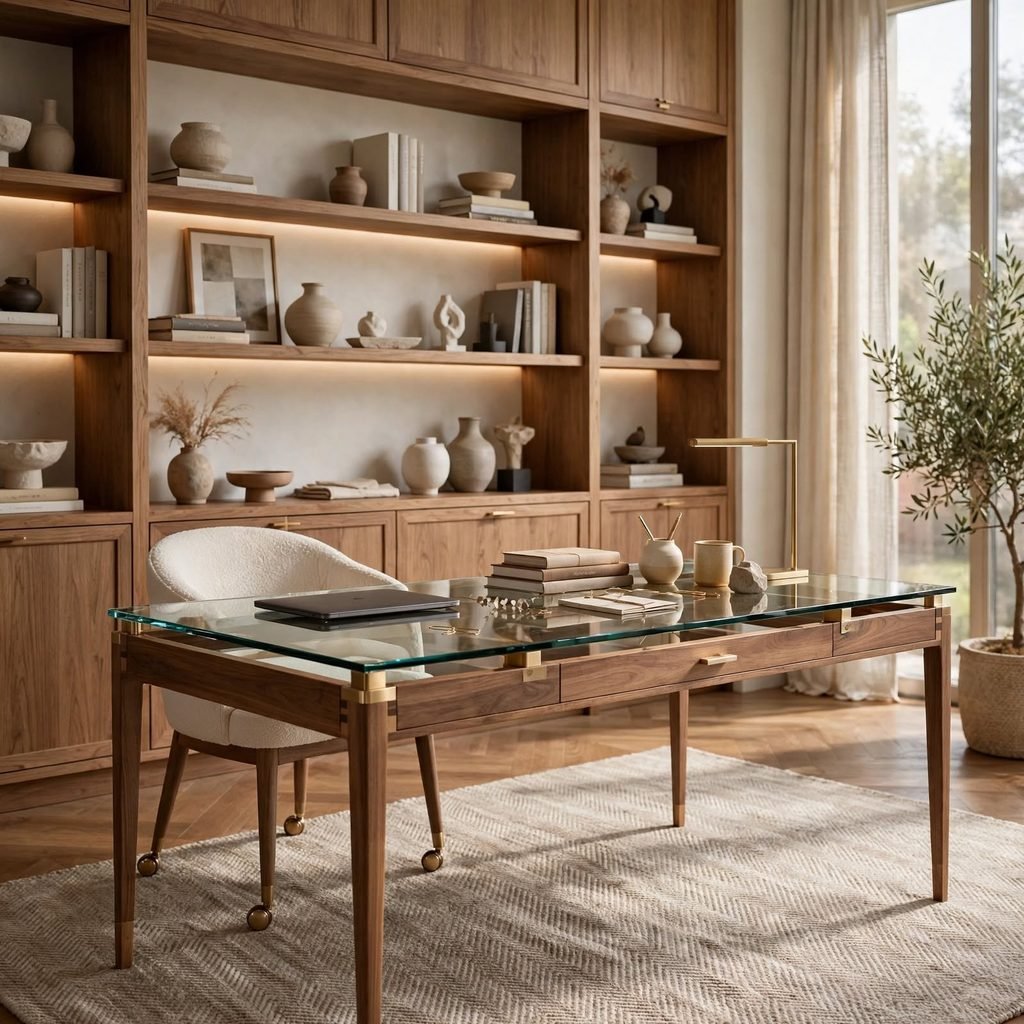
A glass-top desk on a metal or wood frame reads lighter and more open than a solid wood surface, which helps a desk feel less bulky in a smaller or brightly lit room. Tempered glass at least 3/8 inch thick resists scratching and cracking better than thinner options, and a frosted or etched finish hides fingerprints and dust more effectively than clear glass. This style suits a minimalist or contemporary room better than one built around warmer, traditional materials.
7. Drafting or Adjustable-Angle Desk
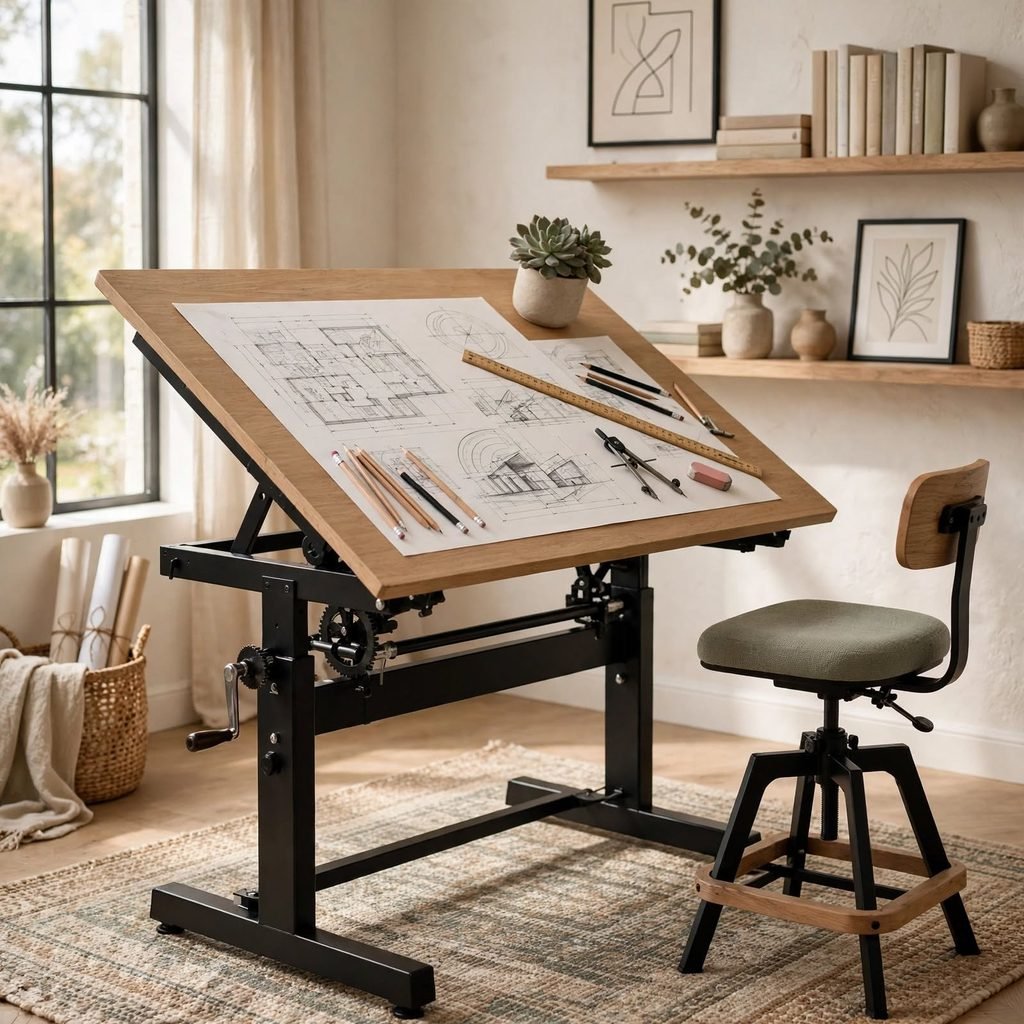
A drafting desk with an adjustable-angle top suits anyone doing hand-drawing, design work, or detailed reading, since the tilted surface reduces neck strain compared to a flat desktop. Look for a model with a locking mechanism at multiple angles rather than just two fixed positions, giving more flexibility across different tasks. This desk style works well paired with a stool or an adjustable-height chair, since the ideal seated position shifts with the desktop angle.
8. Built-In Bench Desk
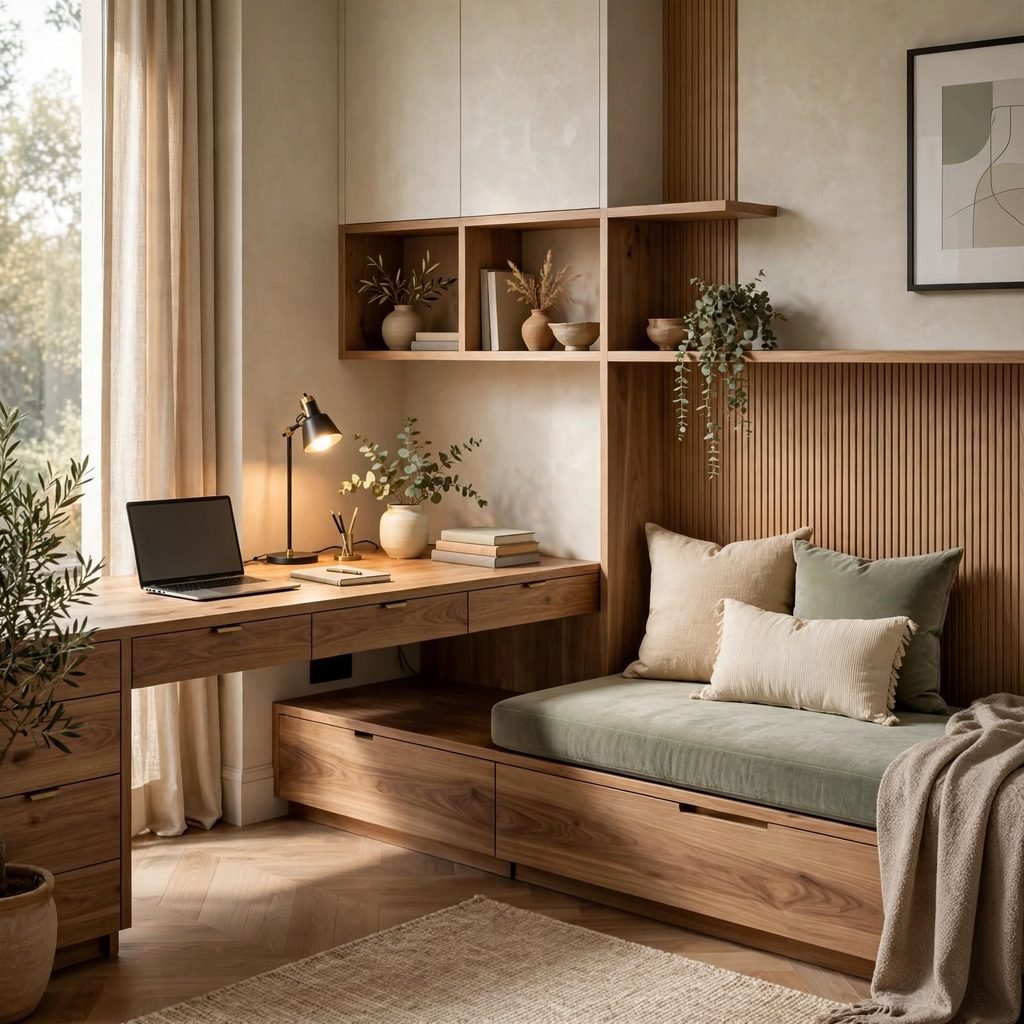
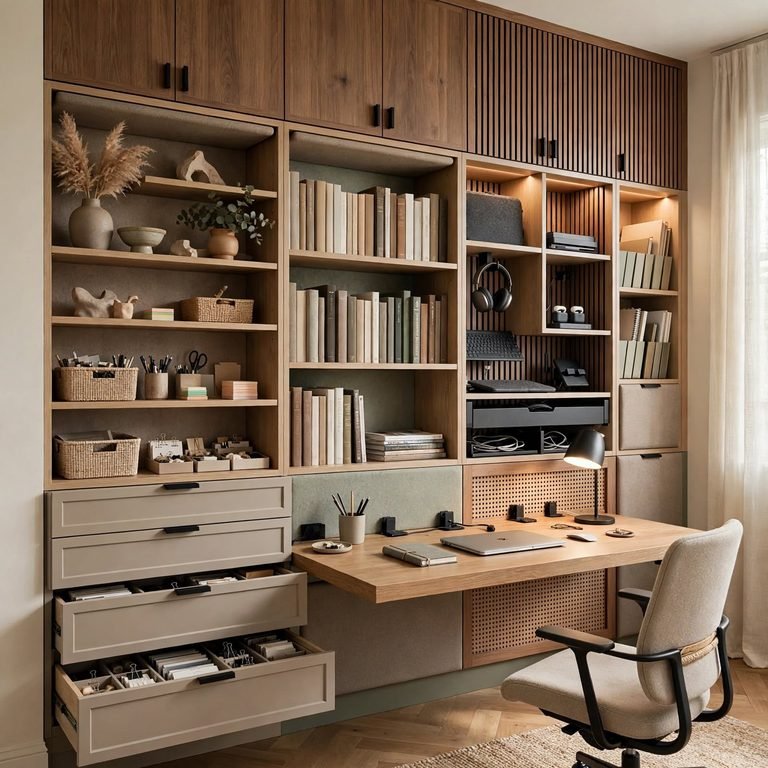
A built-in bench desk runs the full length of a wall on a fixed frame, typically 24 to 30 inches deep, giving continuous surface area without the visual bulk of a freestanding desk. Anchored directly into wall studs, it can support floating shelving above without needing separate bracing. This works particularly well in narrow rooms or alcoves where a standard desk’s legs and frame would eat into already-limited walking space.
9. Fold-Down Wall Desk
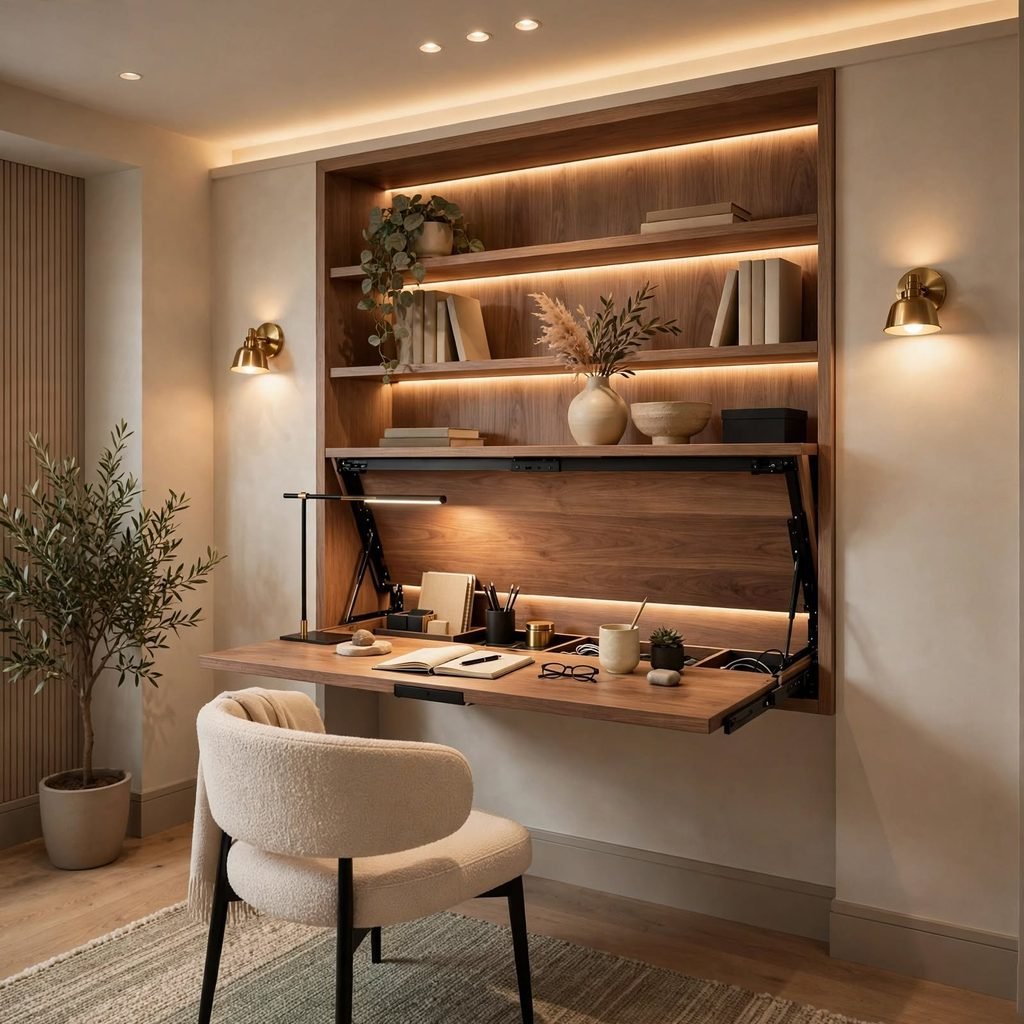
A fold-down wall desk hinges flat against the wall when not in use, unfolding into a full working surface supported by a drop-leg or bracket system, then collapsing back to just a few inches deep. This suits a room under 50 square feet especially well, since the desk essentially disappears outside of work hours. Look for a model with built-in cubbies on the wall-facing side, so supplies stay organized even when the desk is folded shut.
10. Console Desk
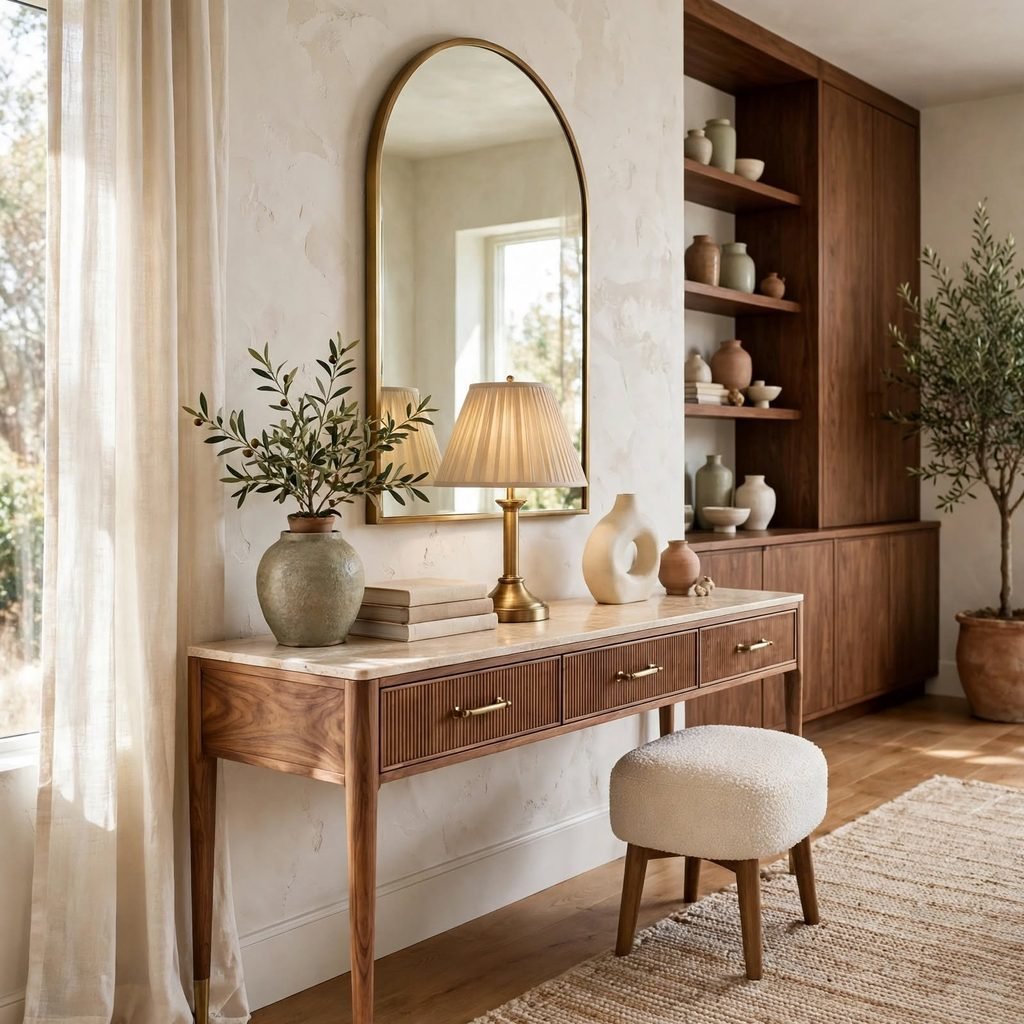
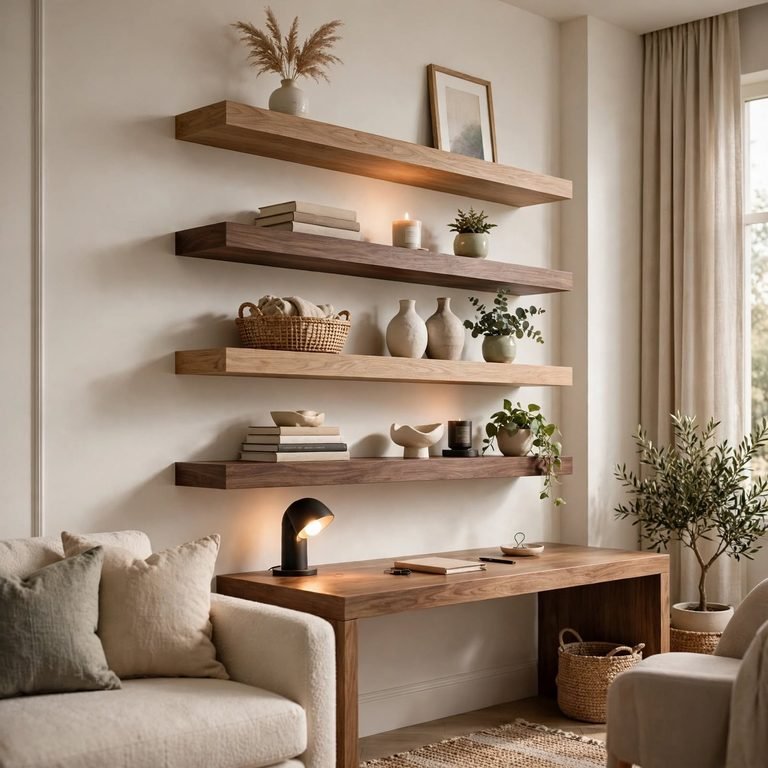
A narrow console desk, typically 12 to 16 inches deep, suits a hallway, landing, or a secondary spot in a bedroom better than a dedicated office room, since its shallow profile keeps it from disrupting the room’s main function. This style works best for laptop use or occasional tasks rather than a primary daily workstation, given the limited surface depth. Choosing one with a drawer or lower shelf adds minimal storage without increasing the footprint.
11. Reclaimed Wood Trestle Desk
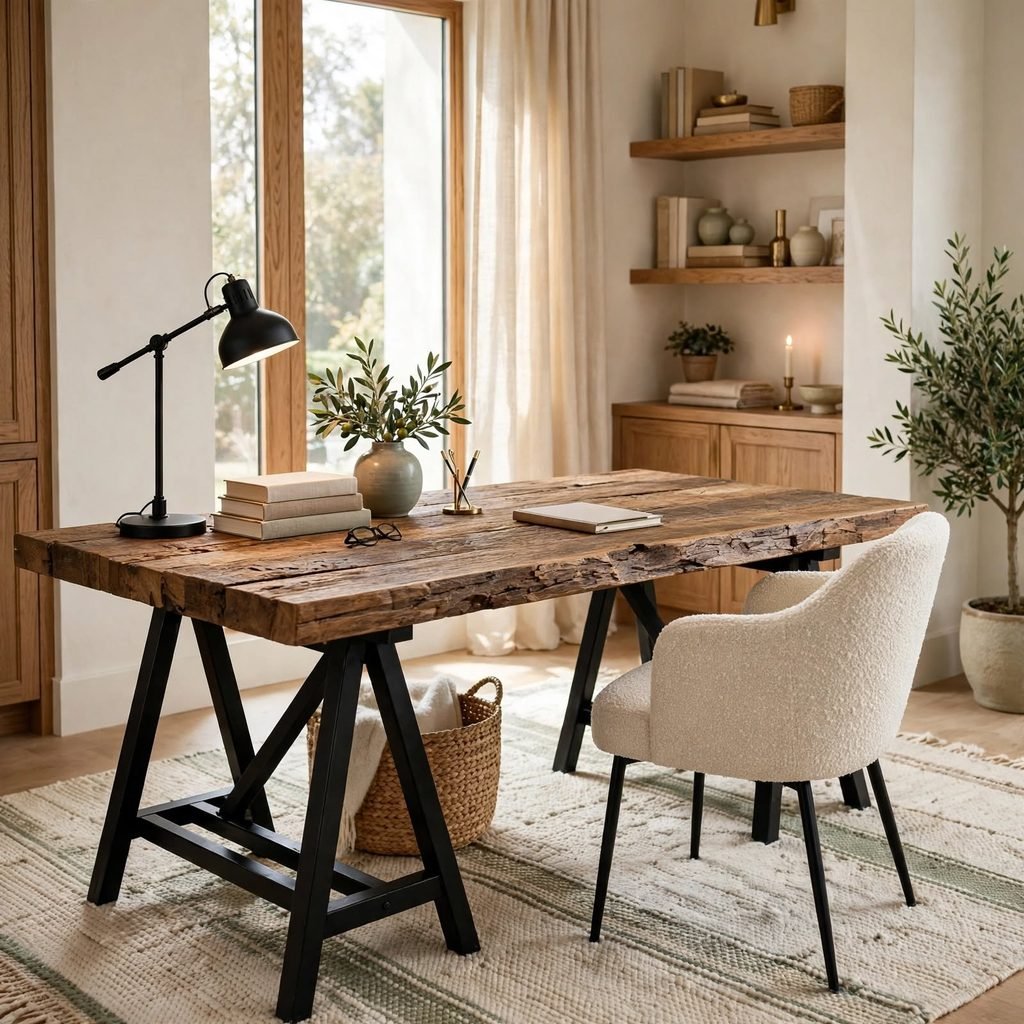
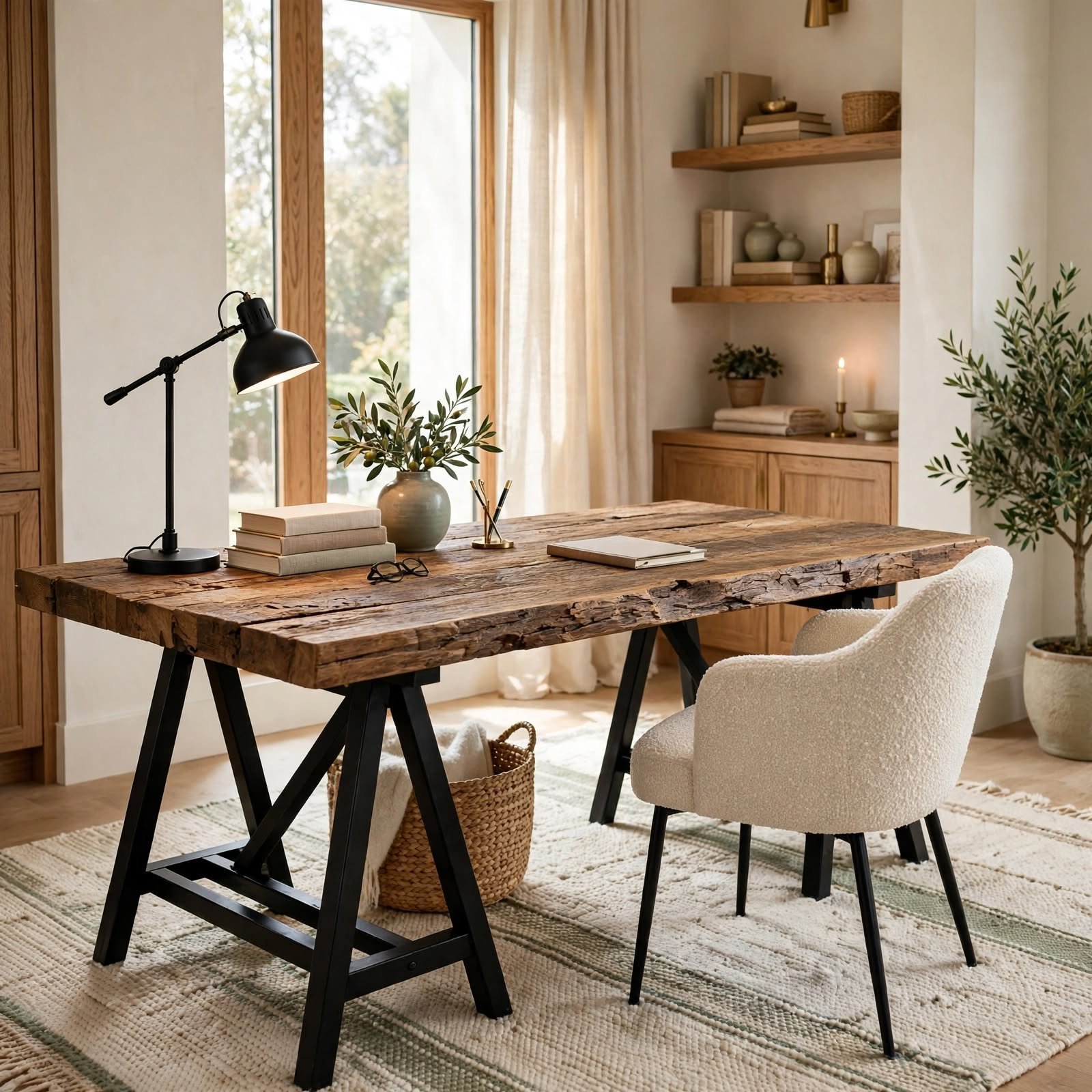
A trestle-leg desk built from reclaimed or live-edge wood adds texture and a sense of history that a mass-produced desk can’t replicate, with the trestle base leaving more legroom underneath than a solid pedestal design. Each piece varies slightly in grain and edge shape, since the material comes from reclaimed sources rather than a uniform manufacturing process. This style suits a room built around warm, natural materials and an eclectic or farmhouse-adjacent design direction.
12. Compact Corner Ladder Desk
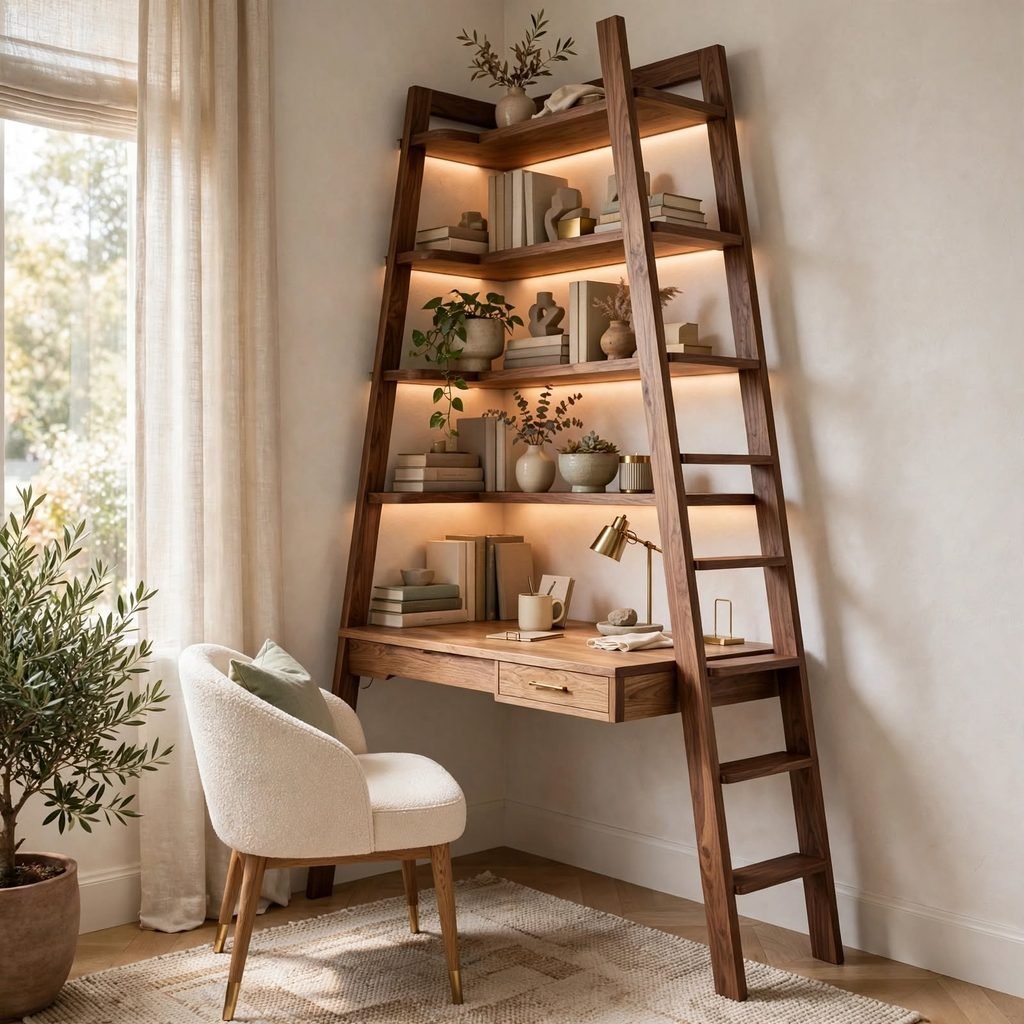
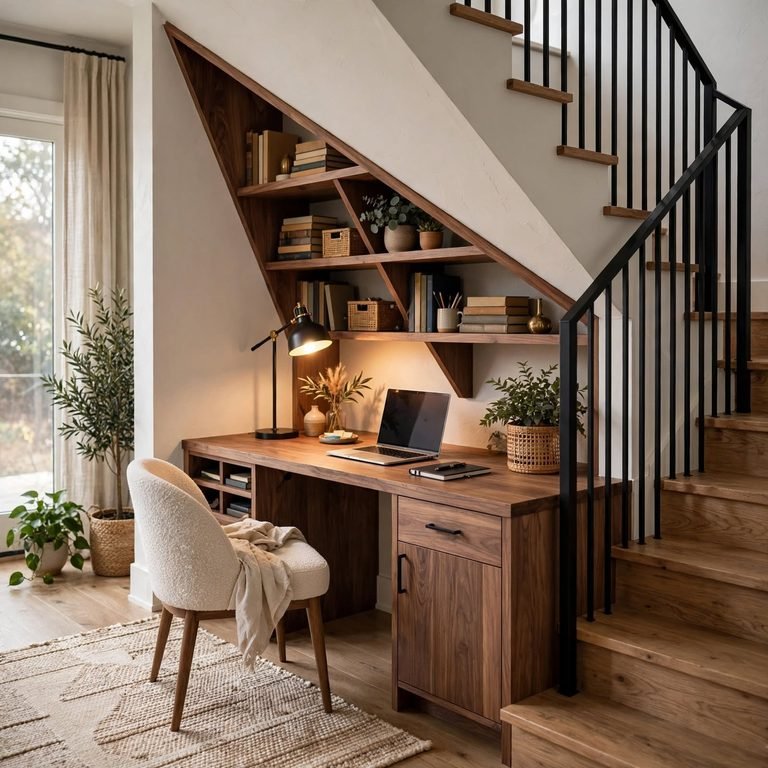
A ladder-style desk, with tiered shelving built into a slim A-frame structure and a desktop at one level, works well in very tight rooms where even a small L-desk wouldn’t fit comfortably. The tiered shelves above the desktop provide storage without requiring separate wall-mounted shelving, making this one of the most space-efficient full desk-and-storage combinations available. This style suits laptop-only use, since the desktop itself is usually too shallow for a full monitor setup.
Shop the Look
An electric sit-stand desk frame with a walnut veneer top suits most workflows well, paired with an L-shaped corner desk in white oak for rooms needing dual zones. Add a wall-mounted floating desk for compact spaces, a drafting desk for hand-drawing work, and a reclaimed wood trestle desk for a room built around warmer, natural materials.
Common Mistake to Avoid
The most common mistake is choosing a desk based on appearance without measuring the room’s actual clearance, which results in a drawer that won’t open because it hits a wall, or a chair that can’t push back far enough to stand up comfortably. Always measure the full footprint of the desk plus at least 36 inches of clearance behind the chair and account for door swing before buying, especially with larger styles like an executive pedestal desk.
FAQs
What’s the ideal desk depth for dual monitors?
A desk depth of 28 to 30 inches gives enough room for two monitors positioned at a comfortable viewing distance without feeling cramped, compared to the 18 to 20 inches that works fine for laptop-only use. Going shallower than 24 inches with a dual-monitor setup usually forces the screens too close to be comfortable over a full workday.
Is a sit-stand desk worth it for a home office?
For anyone spending more than four hours a day at the desk, a sit-stand frame generally pays off in reduced stiffness and better posture variety compared to a fixed-height desk. Electric models with programmable height presets suit daily switching better than hand-crank versions, though both accomplish the same basic function.
What desk style works best for a small room?
Wall-mounted floating desks and fold-down wall desks make the most of a small room’s floor space, since neither requires the legs, frame, or clearance a standalone desk needs. A narrow console desk also works well for occasional or laptop-only use in a room that isn’t dedicated to office work full-time.
Should I choose a wood or glass desk?
Wood desks generally read as warmer and more substantial, suiting traditional or warm-toned rooms, while glass-top desks read lighter and more contemporary, working better in bright, minimalist spaces. The choice mostly comes down to the room’s existing material palette rather than one being more functional than the other.
How much desk surface do I actually need?
For laptop-only use, 36 to 42 inches of width is generally enough, while a setup with a keyboard, monitor, and paperwork benefits from 60 inches or more to avoid feeling crowded. Considering your actual daily workflow not just what looks proportional in the room gives a more accurate sense of the surface area needed.
Conclusion
Office desk ideas work best when chosen around actual workflow and room constraints rather than appearance alone, since the desk is the one piece of furniture that has to function correctly every single day. Save this list to Pinterest for your next office refresh, and check out our related guide on small bedroom storage solutions for more furniture-specific ideas.