12 Gorgeous Office Organization Ideas That Actually Hold Up
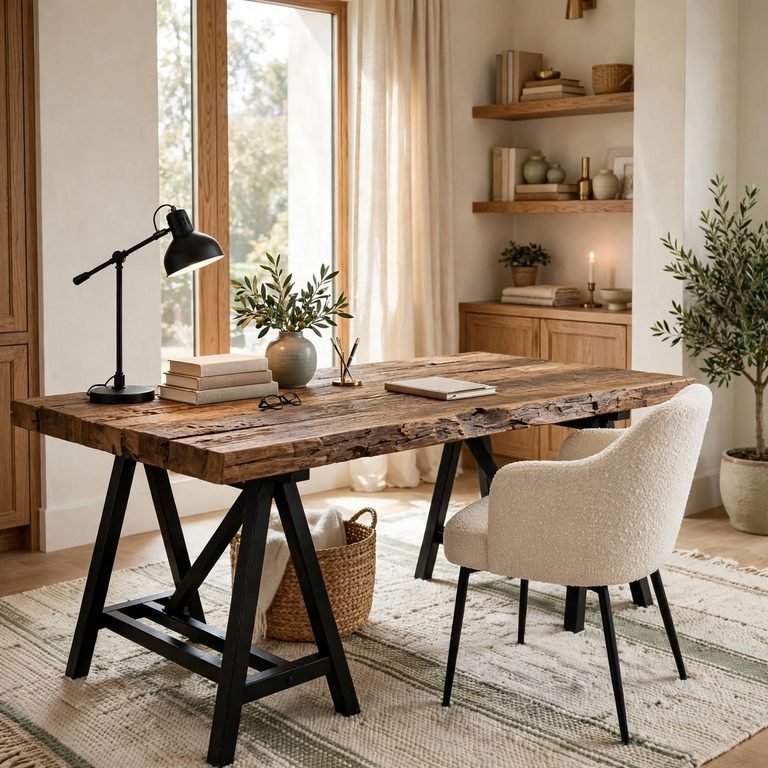
An office can be fully furnished and still feel chaotic if the storage system doesn’t match how the room actually gets used day to day. These office organization ideas focus on practical systems zoned storage, labeling, and containers sized to what they’re actually holding rather than one-time tidying that falls apart within a few weeks. Twelve specific approaches follow, covering everything from desktop supplies to long-term file storage, each aimed at a system that holds up under daily use.
Trend & Background
As home offices have taken on more of the storage load that used to sit in a dedicated supply closet or a shared family office, organization systems have had to scale accordingly, moving from a single junk drawer toward zoned, purpose-built storage. Interest in modular and labeled storage systems has grown alongside broader home organization trends, as more people manage paperwork, equipment, and supplies for work entirely from one room. That shift has pushed office organization toward systems built for daily maintenance rather than an occasional deep clean, since there’s rarely a separate space to offload overflow.
Key Takeaways
- Office organization ideas work best when storage is zoned by how often items get used, not just by category.
- Vertical storage solves more clutter problems than floor-based bins or cabinets in most office layouts.
- Labeling and consistent containers matter more to long-term upkeep than the storage system itself.
- Desktop surfaces stay clear longest when supplies have one defined home, not several possible spots.
1. Zoned Supply Drawers
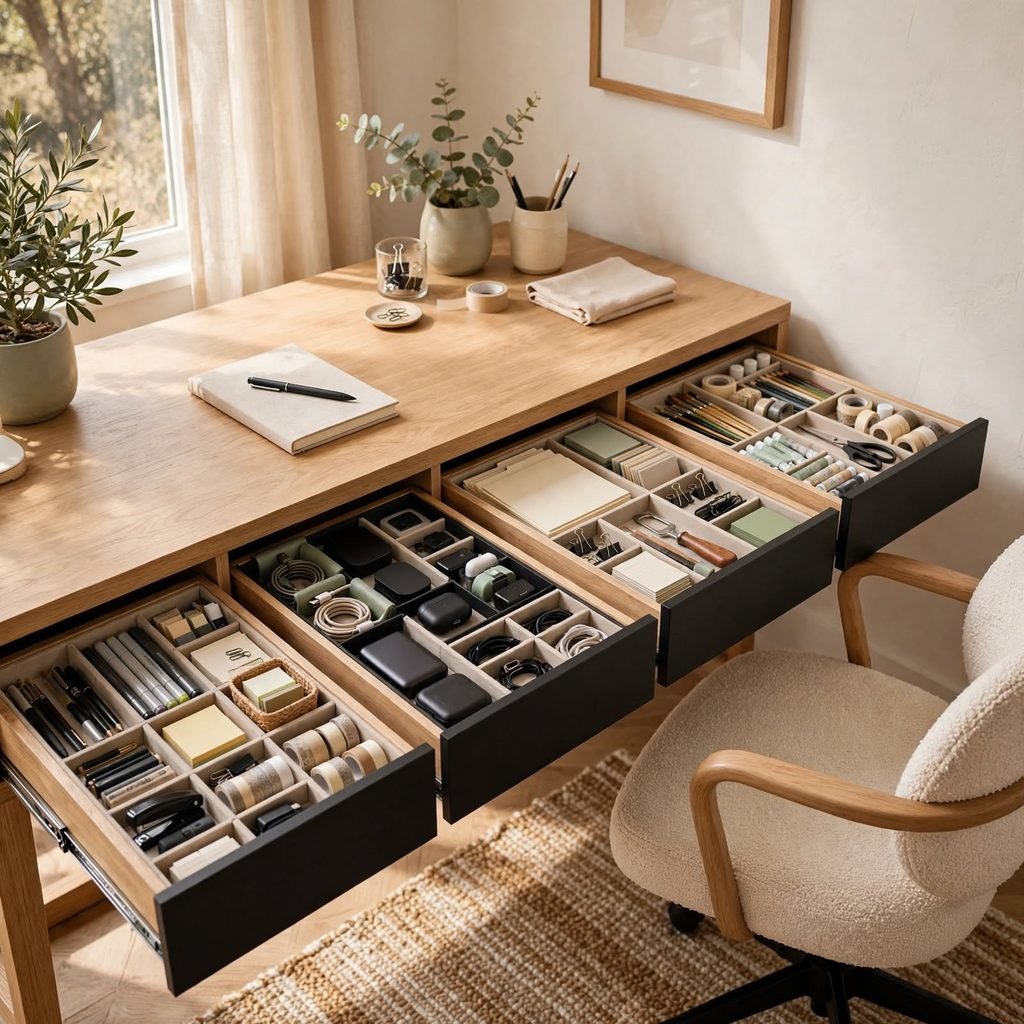
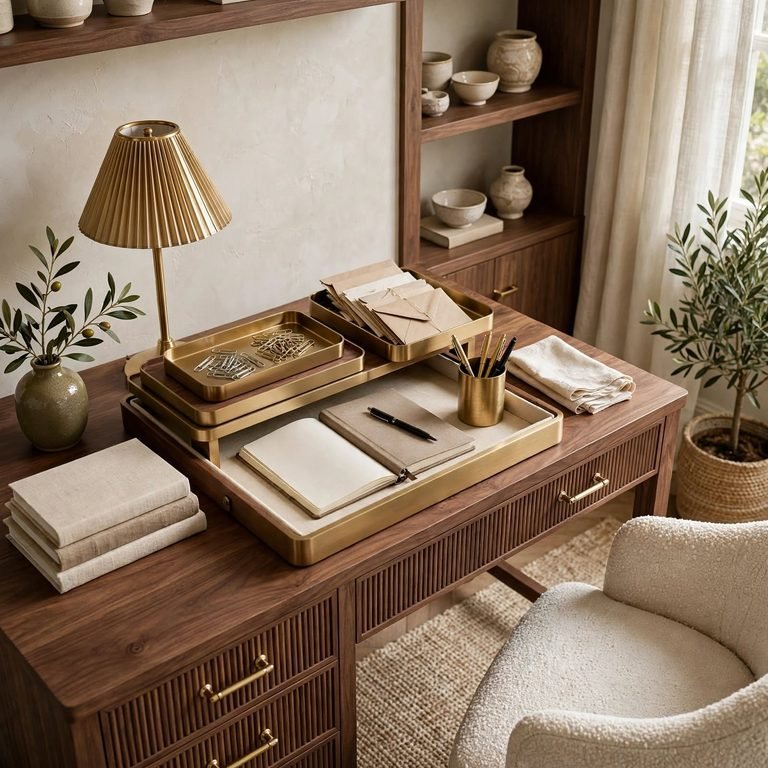
Dividing a desk’s drawers into specific zones daily-use pens and notepads in the top drawer, less frequent supplies like tape and extra chargers below keeps the most-used items within easy reach without digging through a mixed pile. Drawer dividers or small trays sized to the drawer’s interior prevent supplies from sliding into one jumbled mass every time the drawer opens and closes. This zoning matters more than the drawer’s material or finish, since it directly affects how quickly the system breaks down under daily use.
2. Vertical File Sorter
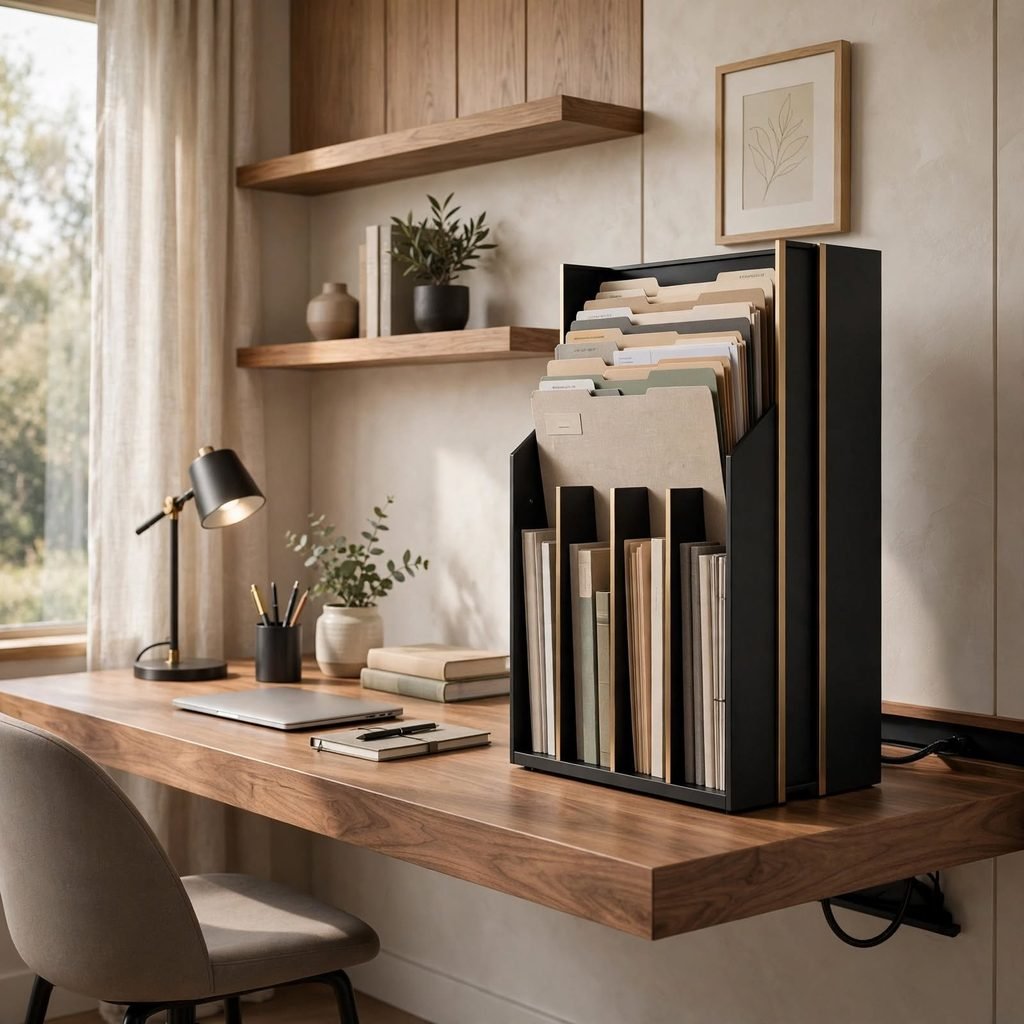
A vertical file sorter, either desktop or wall-mounted, keeps active paperwork upright and visible instead of stacked flat, where documents tend to get buried and forgotten. Metal wire or wood-slot sorters with three to five compartments handle most active project needs without requiring a full filing cabinet for daily-use paper. This works best limited to current or frequently referenced documents, with anything long-term moved to closed archival storage instead.
3. Labeled Storage Bins
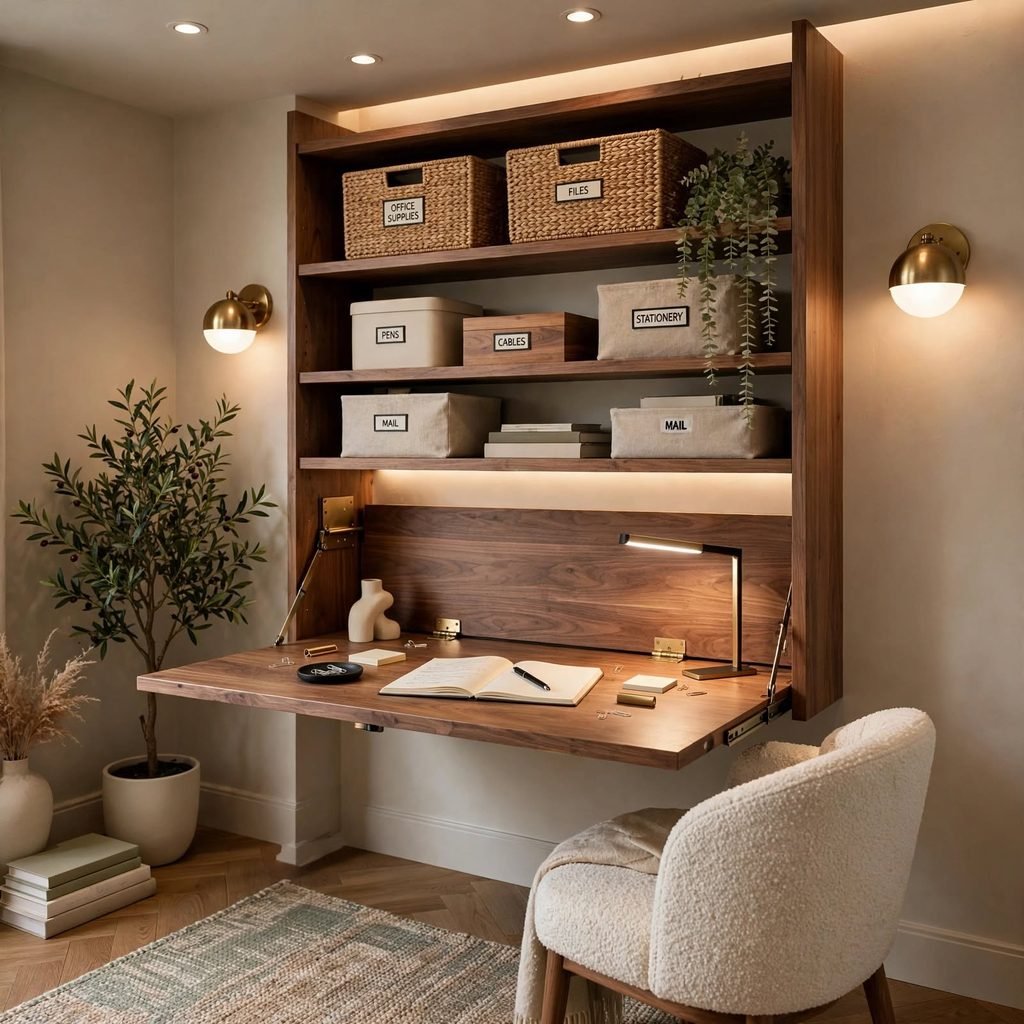
Uniform storage bins with clear labels, whether printed, handwritten, or a label-maker style remove the guesswork of where a given item belongs, which is often what causes an organization system to break down within a few weeks. Matching bin size and material across a shelf or closet keeps the storage area looking intentional rather than a mismatched collection accumulated over time. Labeling by category rather than by specific item allows the same bin to keep working even as its exact contents change.
| Bin Size | Best For | Recommended Label Style |
| Small (shoebox) | Cables, small electronics | Category label |
| Medium (banker’s box) | Active files, supplies | Category + date range |
| Large (storage tote) | Archival, seasonal items | Category + contents list |
4. Wall-Mounted Pegboard System
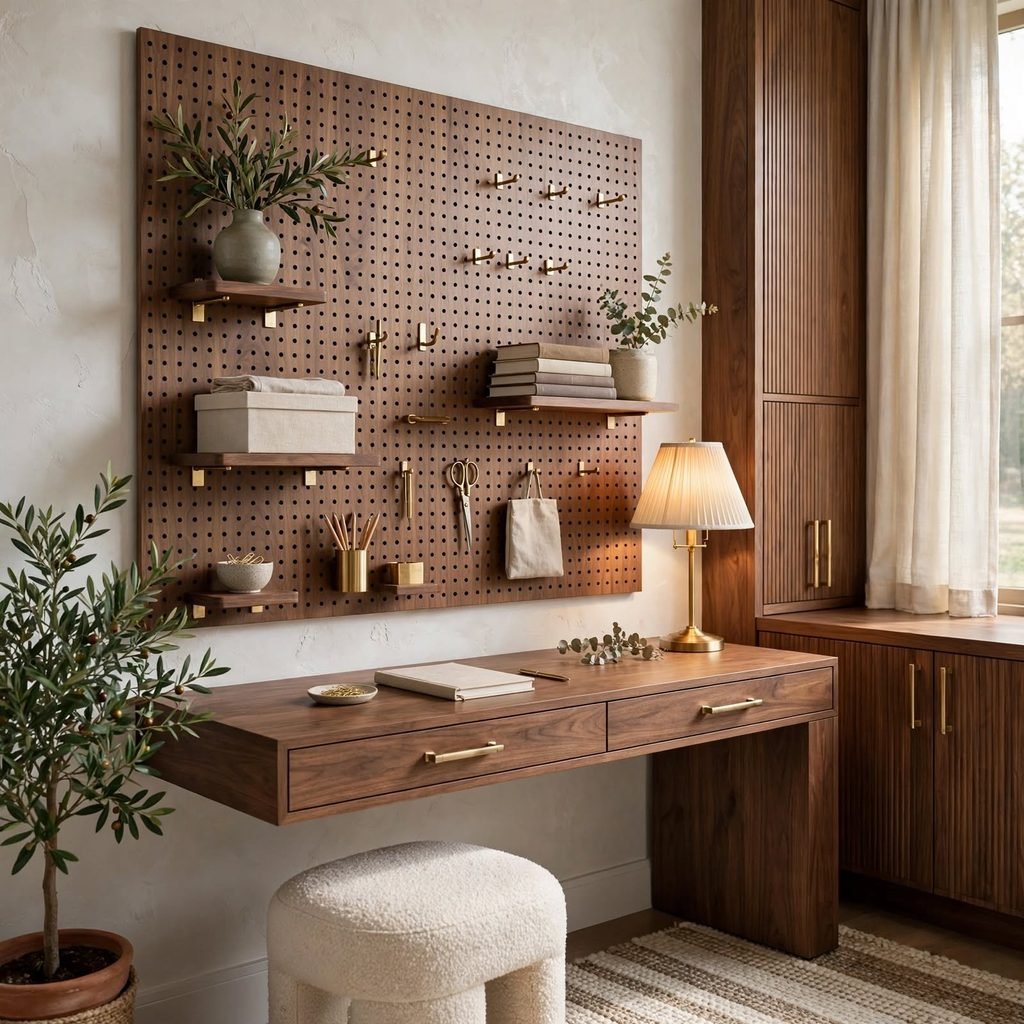
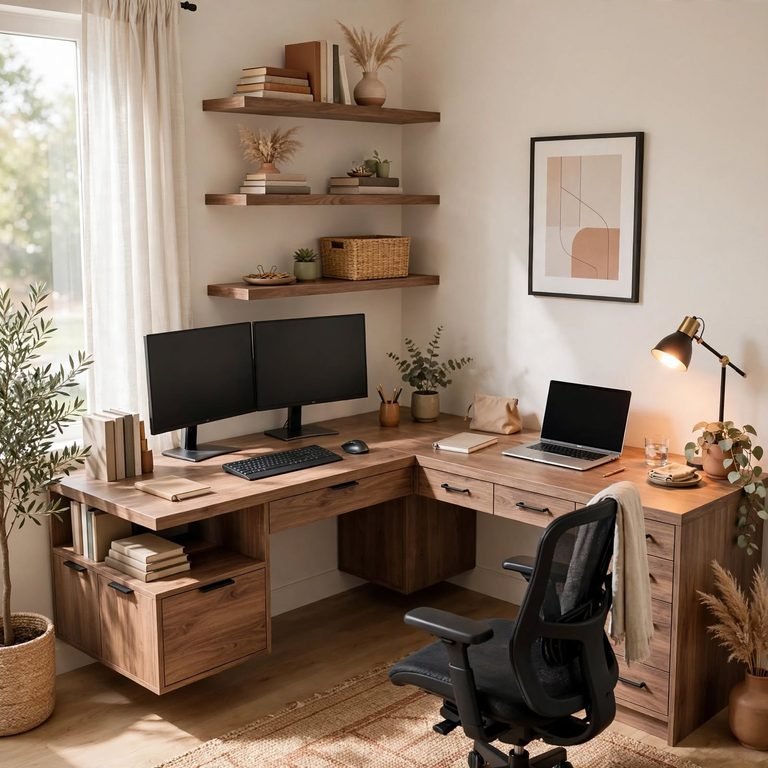
A pegboard mounted above or beside the desk holds frequently used tools and supplies on hooks, small shelves, and bins in a fully adjustable configuration that can shift as needs change. This keeps everyday items off the desktop and drawer space entirely, which matters most in offices where surface area is limited. Grouping similar items together on the board all cables in one section, all writing tools in another makes the system easier to scan at a glance than a random arrangement.
5. Cable Management Boxes
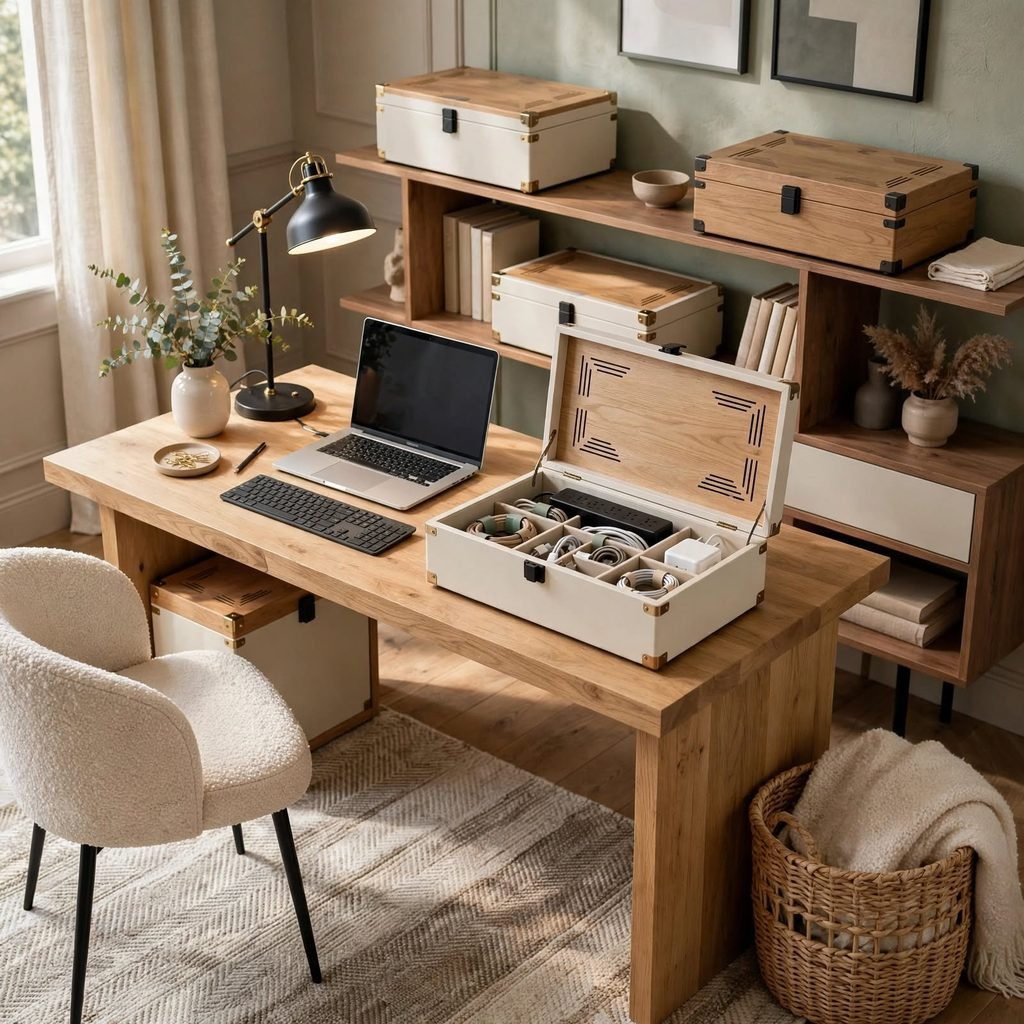
A cable management box hides power strips and excess cord length inside a ventilated case, solving one of the most persistent sources of visual clutter in any office regardless of how organized the rest of the room is. Routing cords through a single entry point on the box, rather than letting them trail loosely, keeps the area behind the desk from becoming a tangled mess over time. This is a low-cost fix relative to how much it improves the room’s overall sense of order.
Create a clutter-free workspace with these office desk ideas for small rooms.
6. Closed Cabinet Archive Storage

Closed cabinets reserved specifically for archival or rarely accessed paperwork keep long-term storage out of daily sightlines while still being accessible when needed. Labeling by year or project range, rather than a vague general category, makes it possible to locate a specific document without opening every folder in the cabinet. This distinction between active and archival storage is what usually separates an organization system that holds up from one that becomes a single overflowing catch-all.
7. Modular Shelving with Bins
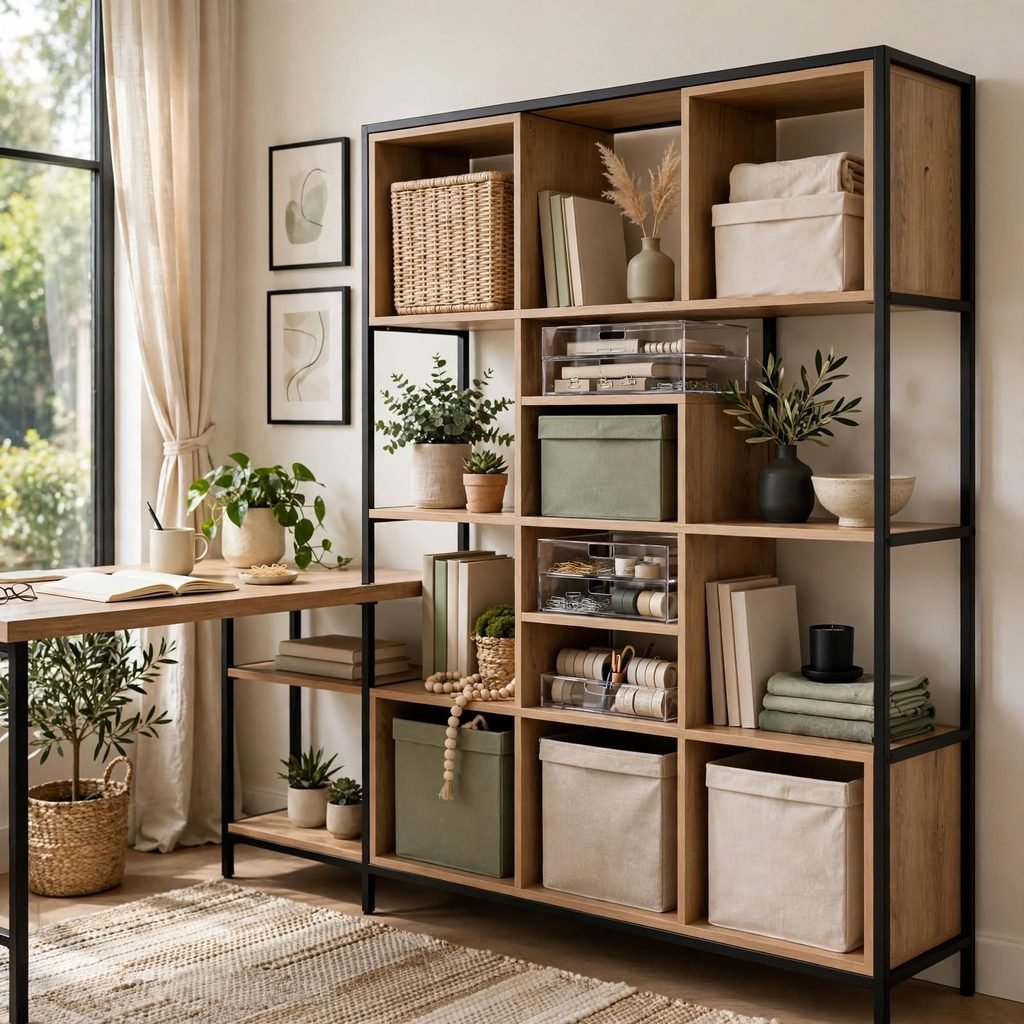
Modular shelving units sized to hold uniform bins combine open-shelf visibility with the contained order that loose items on a shelf can’t provide. Starting with a smaller unit and adding modules as storage needs grow keeps the initial footprint appropriate to current needs rather than overbuilt from the start. Mixing a few open display sections with the bin storage keeps the unit from reading as purely utilitarian.
8. Drawer Organizer Inserts
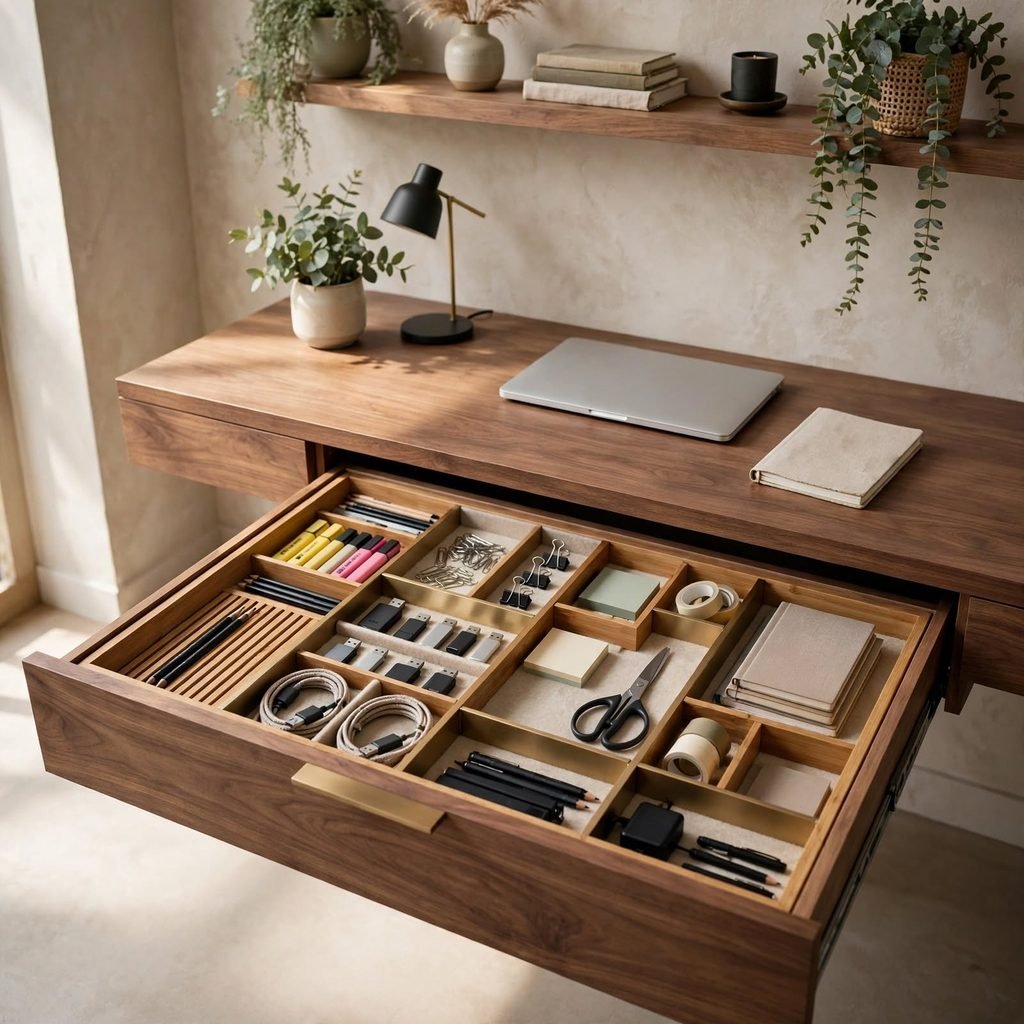
Drawer organizer inserts, whether adjustable plastic trays or a wood divider system, keep small items like paper clips, sticky notes, and USB drives from mixing into a single loose pile every time a drawer opens. Choosing an insert sized to the exact drawer dimensions, rather than a generic size that leaves gaps, keeps items from sliding out of their designated sections. This is one of the lowest-cost office organization ideas relative to how much daily friction it removes.
9. Digital-to-Physical File System
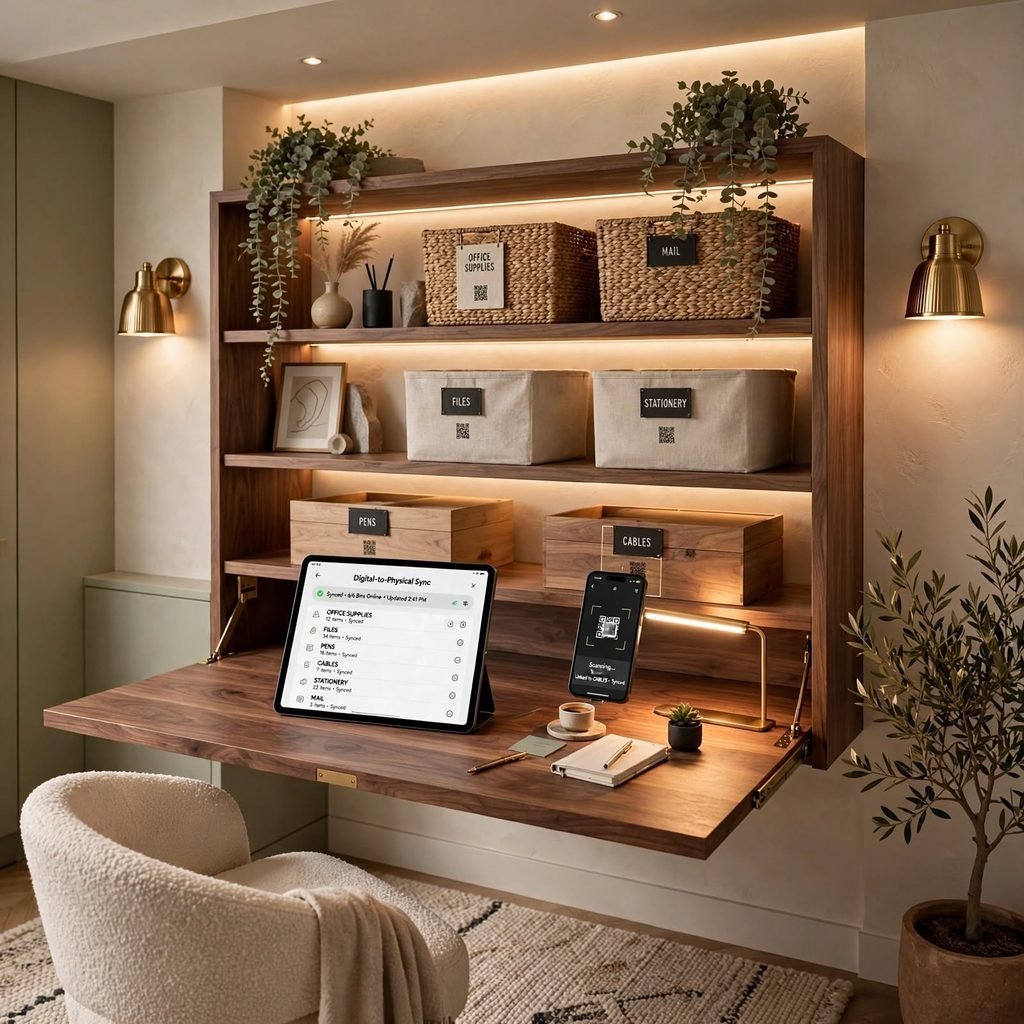
Pairing a labeled physical filing system with a matching digital folder structure using the same category names in both makes it easier to find a document regardless of which format it exists in. Scanning physical documents that don’t need to be kept in hard copy reduces the amount of paper storage the room needs long-term. This hybrid approach suits anyone managing both digital and physical paperwork for work, rather than committing fully to one system or the other.
10. Rolling Cart Storage
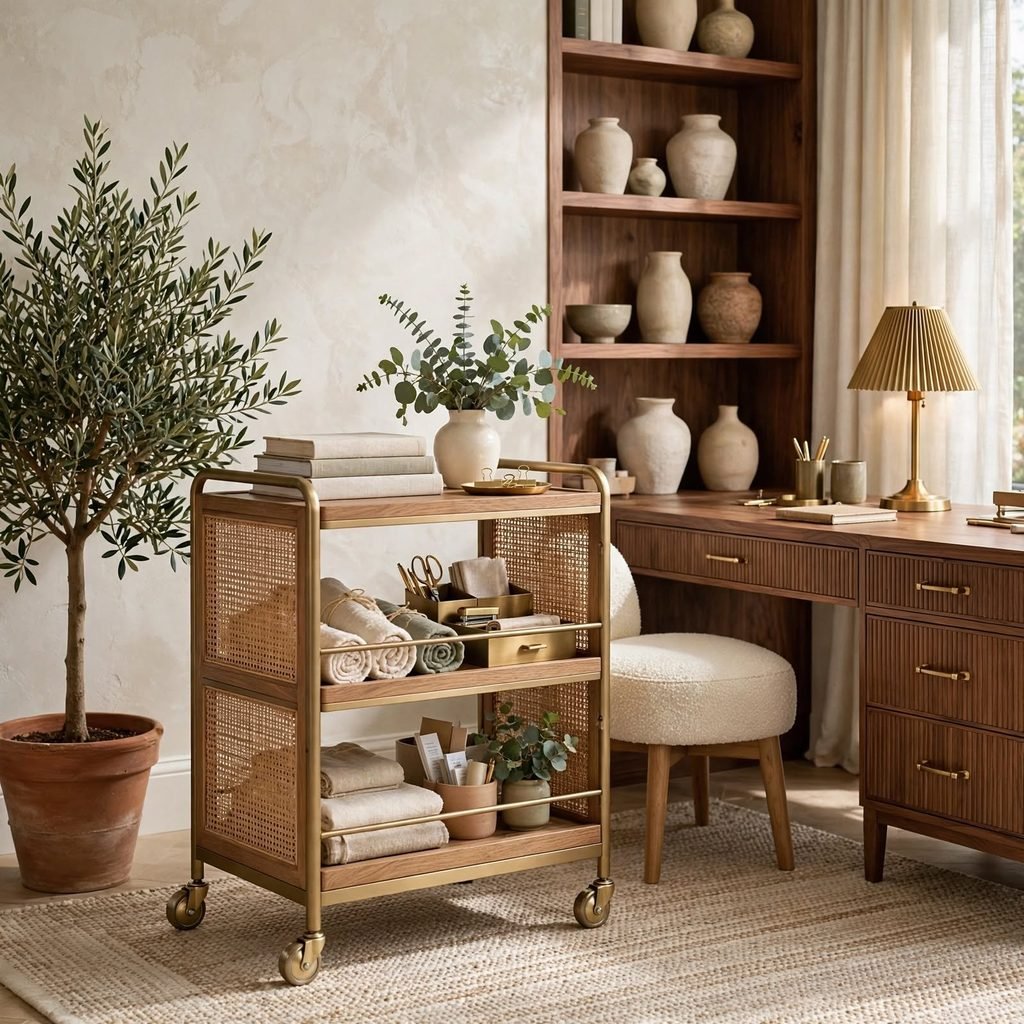
A rolling cart with multiple tiers or drawers provides mobile storage that can tuck under or beside a desk during work and roll out when access is needed, which suits offices without room for a fixed filing cabinet or bookshelf. Locking casters keep the cart from sliding in smaller rooms where floor space is already tight. This works particularly well for supplies used intermittently rather than daily, since the cart doesn’t need to stay within arm’s reach at all times.
11. Charging Station Organizer
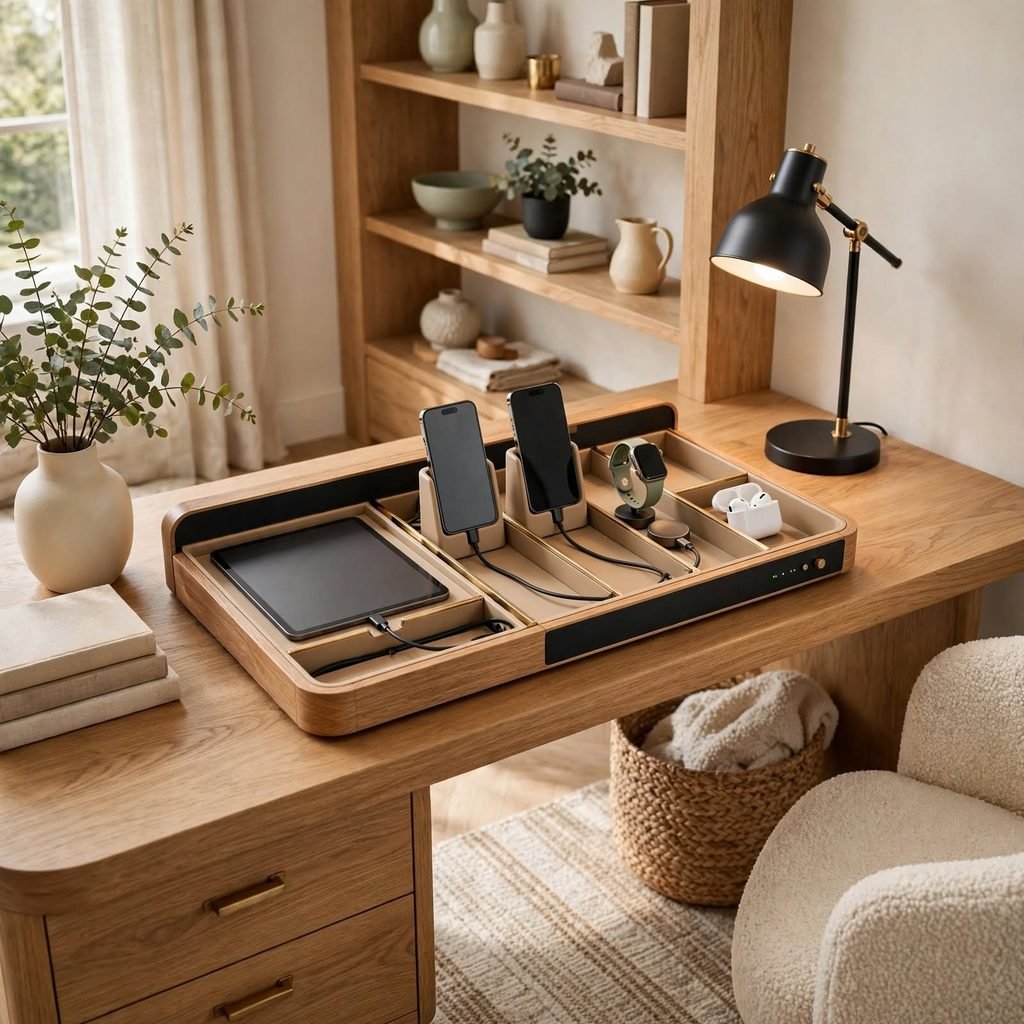
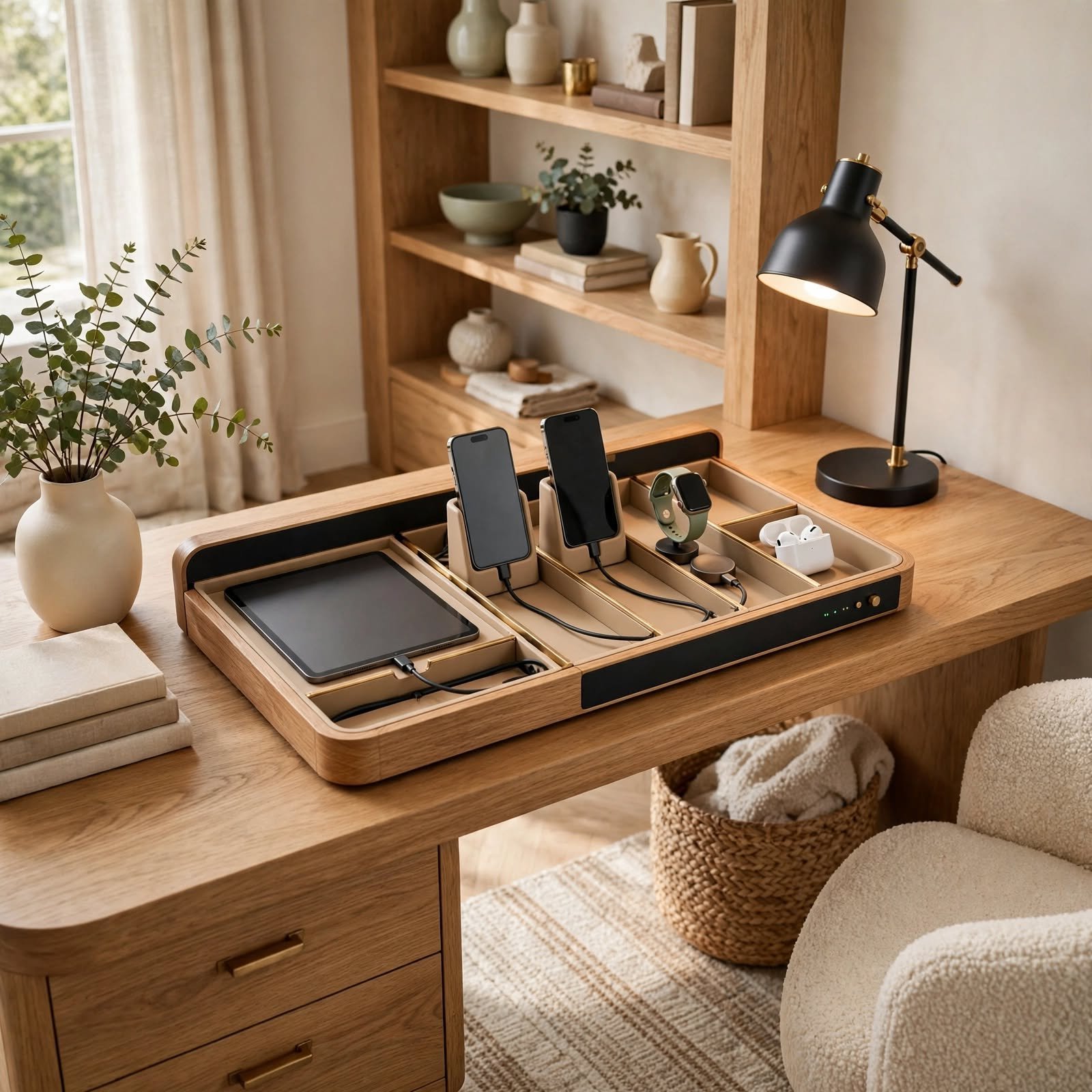
A dedicated charging station, whether a drawer insert or a small tray with built-in cord slots, keeps phones, tablets, and other devices in one consistent spot rather than scattered across the desktop with cords trailing in different directions. Positioning it near an outlet but out of the primary work zone keeps devices accessible without cluttering the main desktop surface. This is one of the more overlooked office organization ideas, despite solving a clutter source most people deal with daily.
12. Open Shelf Category Zones

Assigning specific categories to specific sections of open shelving reference books on one level, supplies in bins on another, display items on a third turns a bookshelf into an organized system rather than a place where anything gets placed wherever there’s room. Keeping the same category in the same zone consistently, even as individual items change, is what makes the system easy to maintain over time. This works especially well combined with labeled bins on the storage-heavy sections of the shelf.
Shop the Look
A set of labeled canvas storage bins pairs well with a wall-mounted pegboard system for this kind of setup. Add a metal wire vertical file sorter for active paperwork, a ventilated cable management box to hide cords, and a rolling storage cart with multiple drawers for supplies used less frequently.
Common Mistake to Avoid
The most common mistake is setting up an organization system based on how the room looks in a single moment rather than how items actually get used day to day, which results in bins that don’t match their contents within a few weeks and a system that quietly reverts to clutter. Build the system around actual daily habits what gets used most, what can be put away out of sight rather than an idealized version of how the room should be used, and revisit the zoning every few months as needs change.
FAQs
What’s the best way to organize a small office?
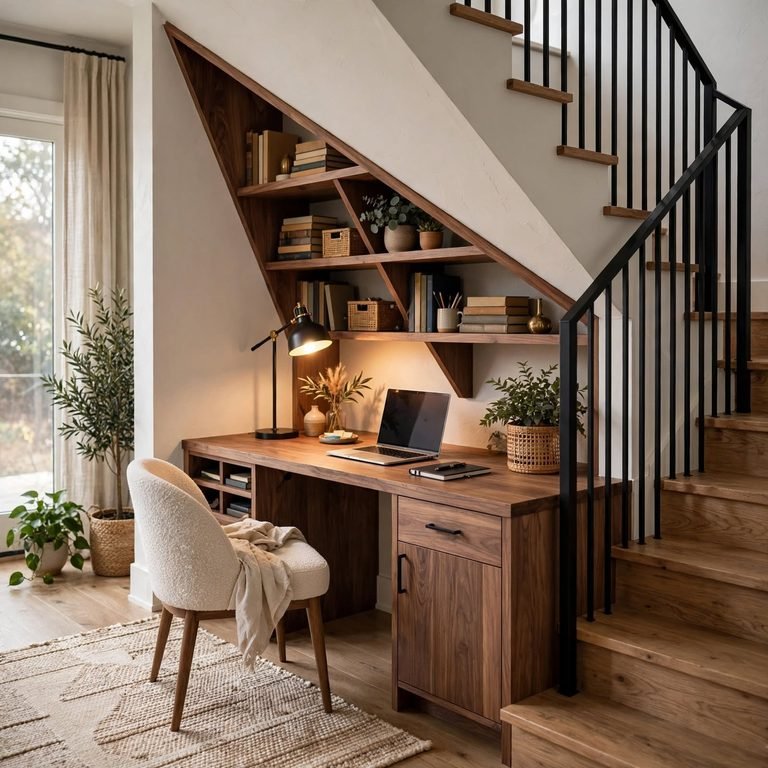
Vertical storage wall-mounted shelving, a pegboard, or stacked bins makes the most of limited floor space, since it uses wall area a small room usually has more of than open floor. Keeping only daily-use items within arm’s reach and moving everything else to closed or archival storage also prevents a small room from feeling cluttered.
How do I keep my desk organized long-term?
Assigning every item on the desktop a specific home a drawer, a bin, a tray rather than allowing loose placement is what keeps a desk organized beyond the first week of a fresh setup. Doing a quick five-minute reset at the end of each workday, returning items to their designated spots, prevents small piles from accumulating into a larger mess.
Should I organize paperwork digitally or physically?
A hybrid system generally works best, using matching category names across both physical and digital folders so documents are easy to locate regardless of format. Scanning documents that don’t legally or practically need a hard copy reduces the physical storage the room needs over time, while keeping essential originals in labeled, closed archival storage.
What storage container works best for office supplies?
Uniform bins in a consistent size and material, clearly labeled by category, hold up better long-term than mismatched containers accumulated over time, since consistent sizing makes shelving and stacking more efficient. Clear or labeled bins also make it faster to locate an item without opening multiple containers to search.
How often should I reorganize my office?
A quick review every few months is generally enough to catch zones that have drifted from their original purpose, rather than a full reorganization from scratch. Paying attention to which bins or drawers consistently end up mismatched with their labels is usually the clearest sign that a category needs to be redefined or resized.
Conclusion
Office organization ideas hold up longest when the system is built around actual daily habits rather than a one-time tidy-up, with zoned storage and consistent labeling doing most of the long-term work. Save this list to Pinterest for your next organization project, and check out our related guide on small bedroom storage solutions for more system-based storage inspiration.