16 Stunning Simple Kitchen Design Ideas That Feel Effortless
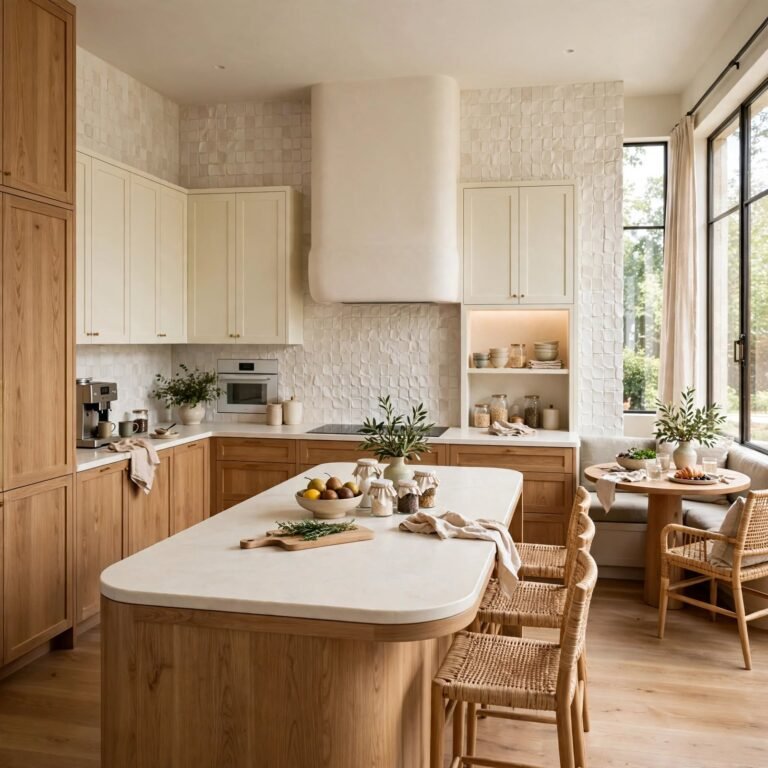
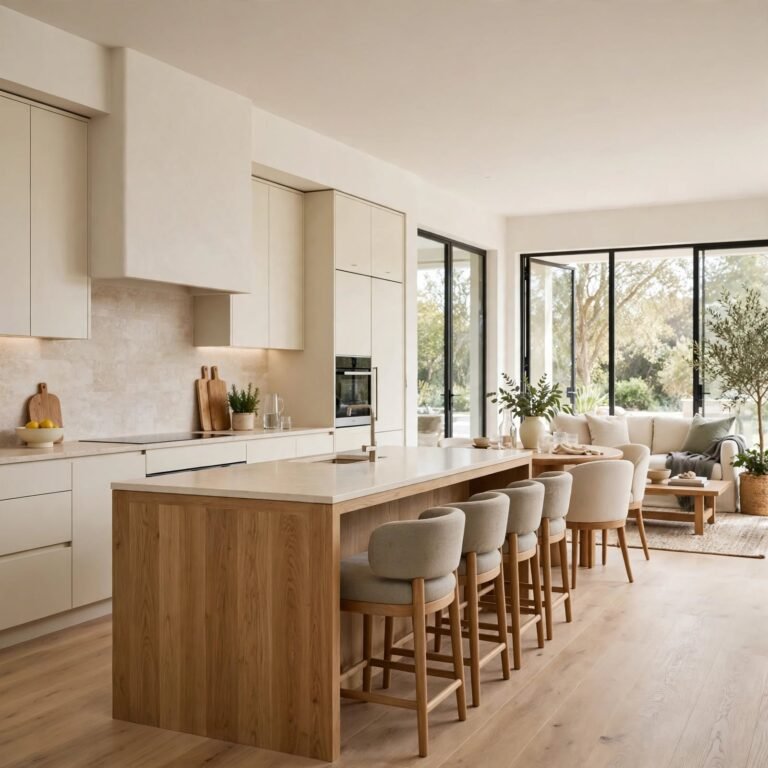
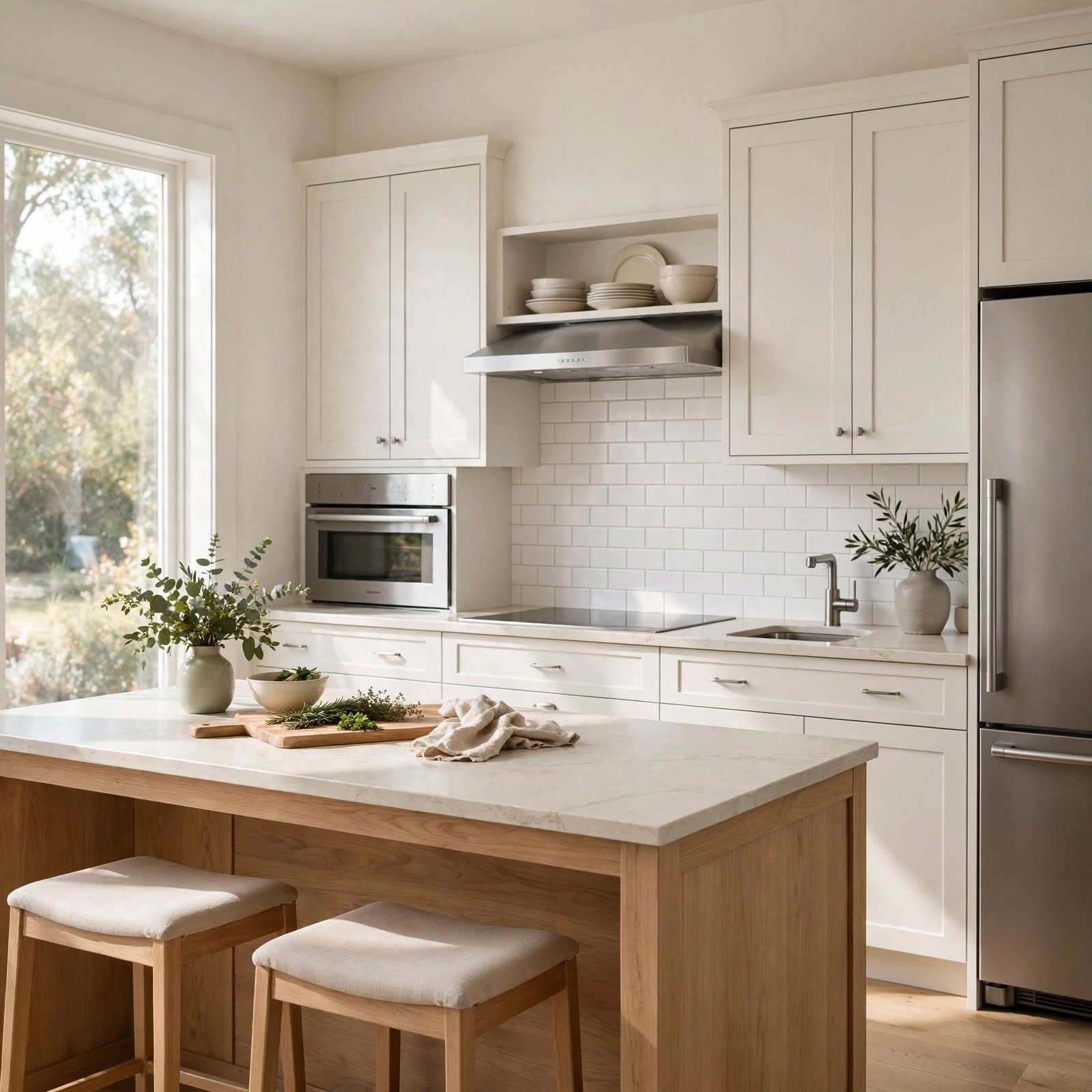
A cluttered kitchen rarely feels calm, and that’s exactly why simple kitchen design has become such a steady favorite among homeowners planning updates this year. Stripping back to fewer materials, quieter colors, and cabinetry without excess detail creates a room that’s easier to clean and easier to live in.
Trend & Background
Kitchens have spent the last decade getting busier, layering in bold backsplashes, mixed metals, and statement islands, but many homeowners are now pulling back toward restraint. Rising renovation costs and a growing preference for spaces that photograph well without feeling staged have pushed simple kitchen design into the mainstream. Shaker cabinets, quartz counters in muted tones, and slim hardware are replacing ornate details. The shift matters now because a simpler kitchen tends to age better, cost less to maintain, and adapt more easily to future trends than a heavily themed one.
Key Takeaways
- Simple kitchen design leans on clean lines, functional layouts, and a limited material palette rather than heavy ornamentation.
- Open shelving, minimalist cabinetry, and neutral tones are consistent threads across the most popular simple kitchen looks.
- Smart storage solutions keep a pared back kitchen from feeling empty or impractical.
- Small budget swaps like hardware and lighting can shift a kitchen toward a simpler aesthetic without a full renovation.
Simple Kitchen Design Ideas
This post walks through sixteen practical ideas for building a simple kitchen design, from cabinet styles to lighting choices, along with a few shopping suggestions and mistakes worth sidestepping along the way.
1. Shaker Cabinet Fronts Simple Kitchen Design
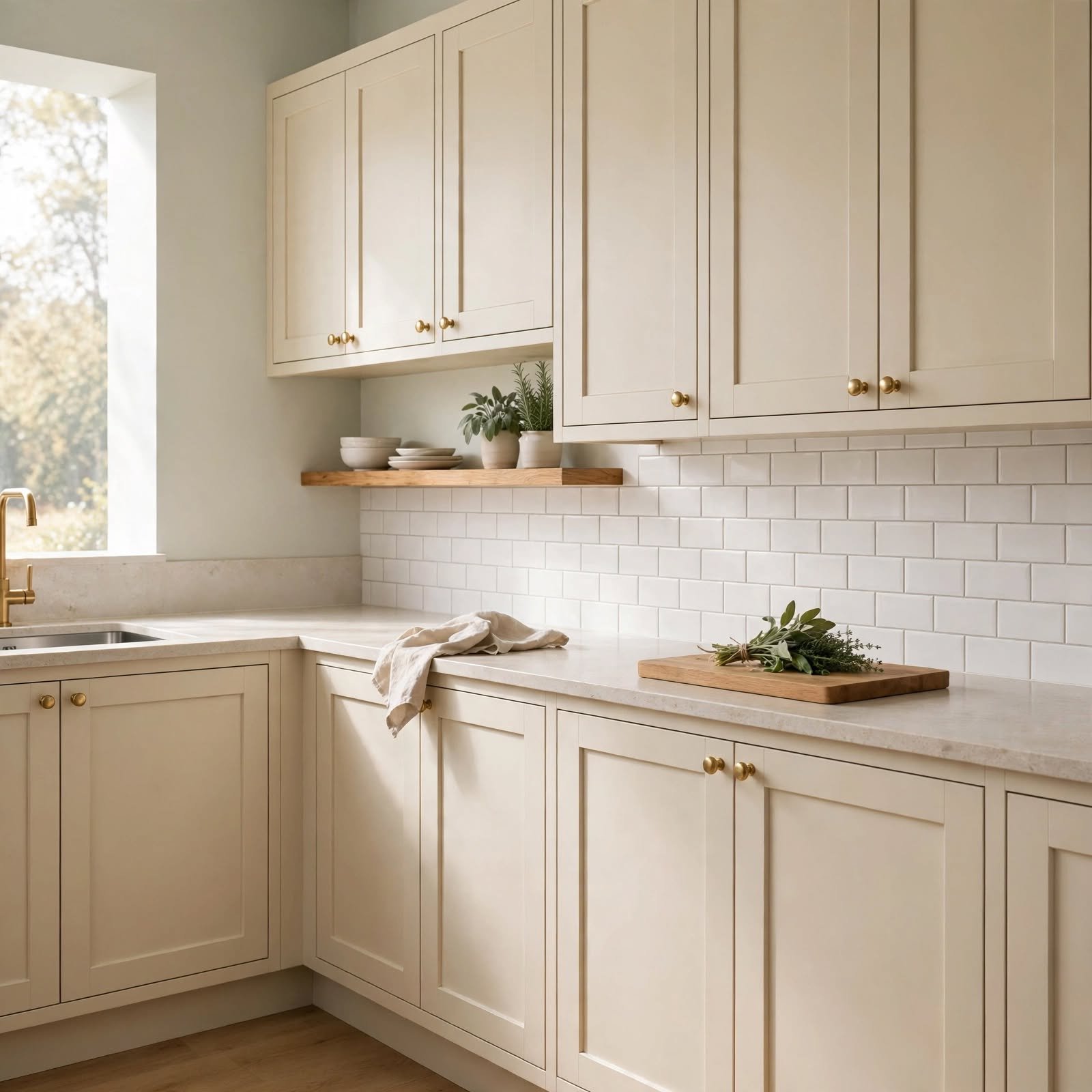
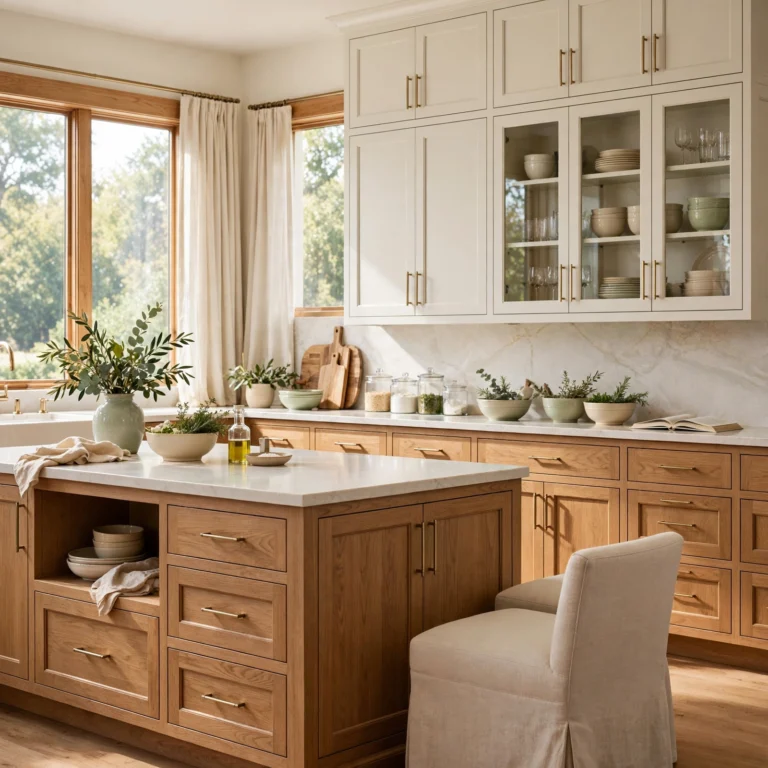
Shaker cabinets remain the backbone of most simple kitchen design projects because their recessed panel is clean without being severe. The style works in painted finishes like white, sage, or greige, and it pairs equally well with brass or matte black hardware. Because the panel detail is subtle, shaker fronts don’t compete with countertops or backsplash tile, which keeps the whole room feeling coordinated. They’re also widely available at multiple price points, from stock cabinetry to custom builds.
2. Handleless Cabinetry Simple Kitchen Design
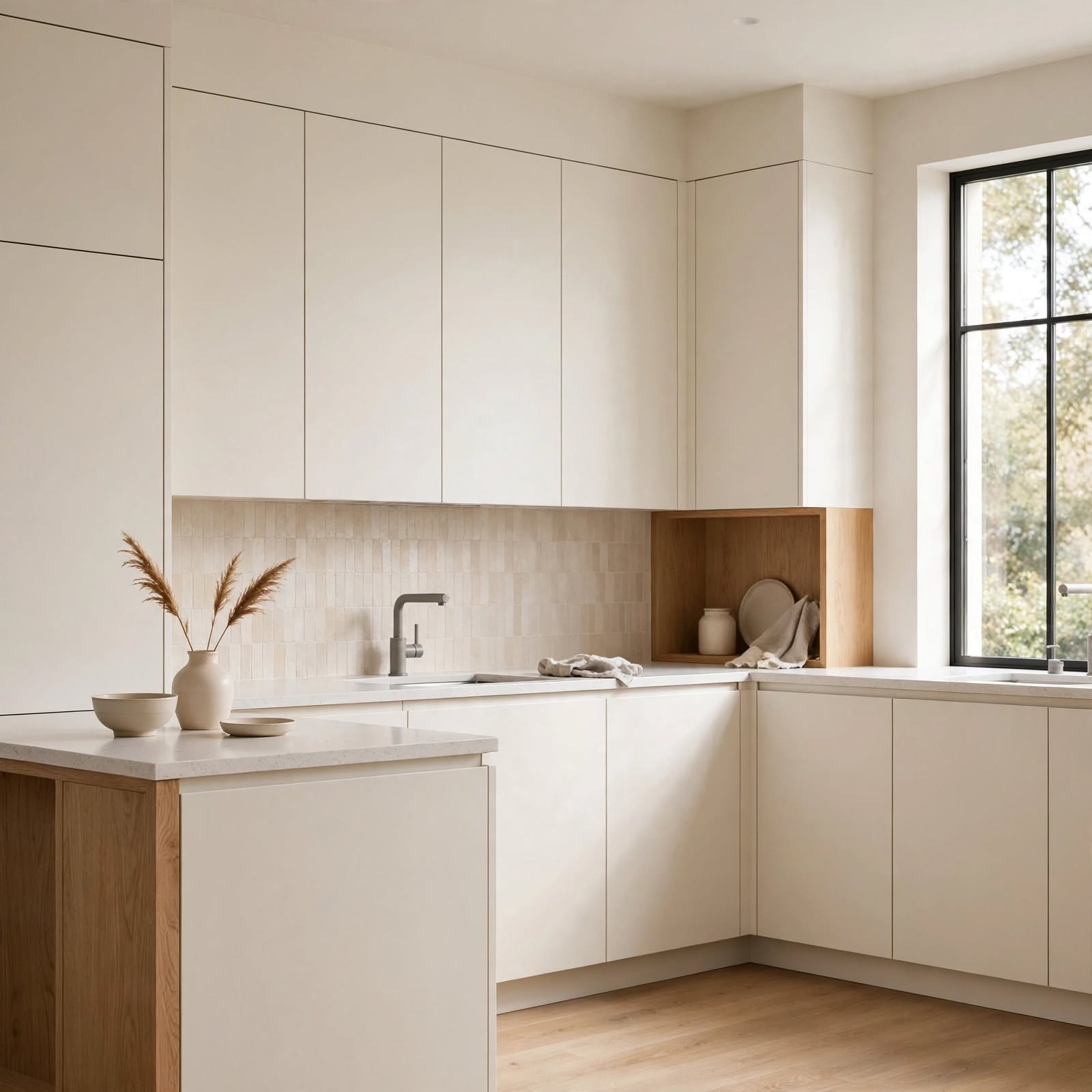
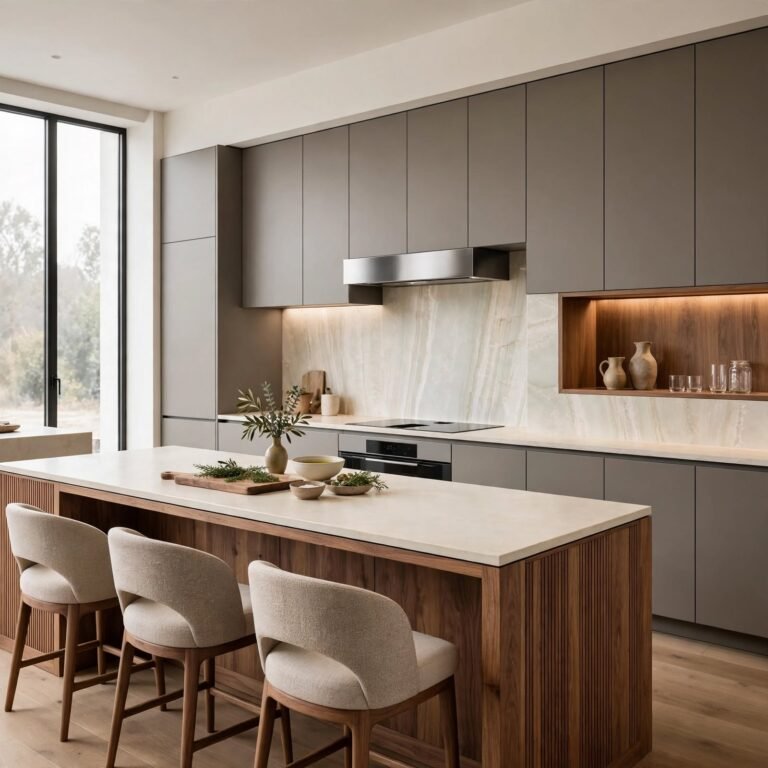
A handleless or push to open cabinet system removes visual clutter entirely from the cabinet face, leaving flat, uninterrupted surfaces. This works especially well in smaller kitchens where hardware can start to feel busy against tight cabinet runs. The look reads as more architectural than decorative, and it pairs naturally with integrated appliances. Installation typically requires specific hinge hardware, so it’s worth planning for during a renovation rather than retrofitting existing boxes.
3. Open Wood Shelving Simple Kitchen Design
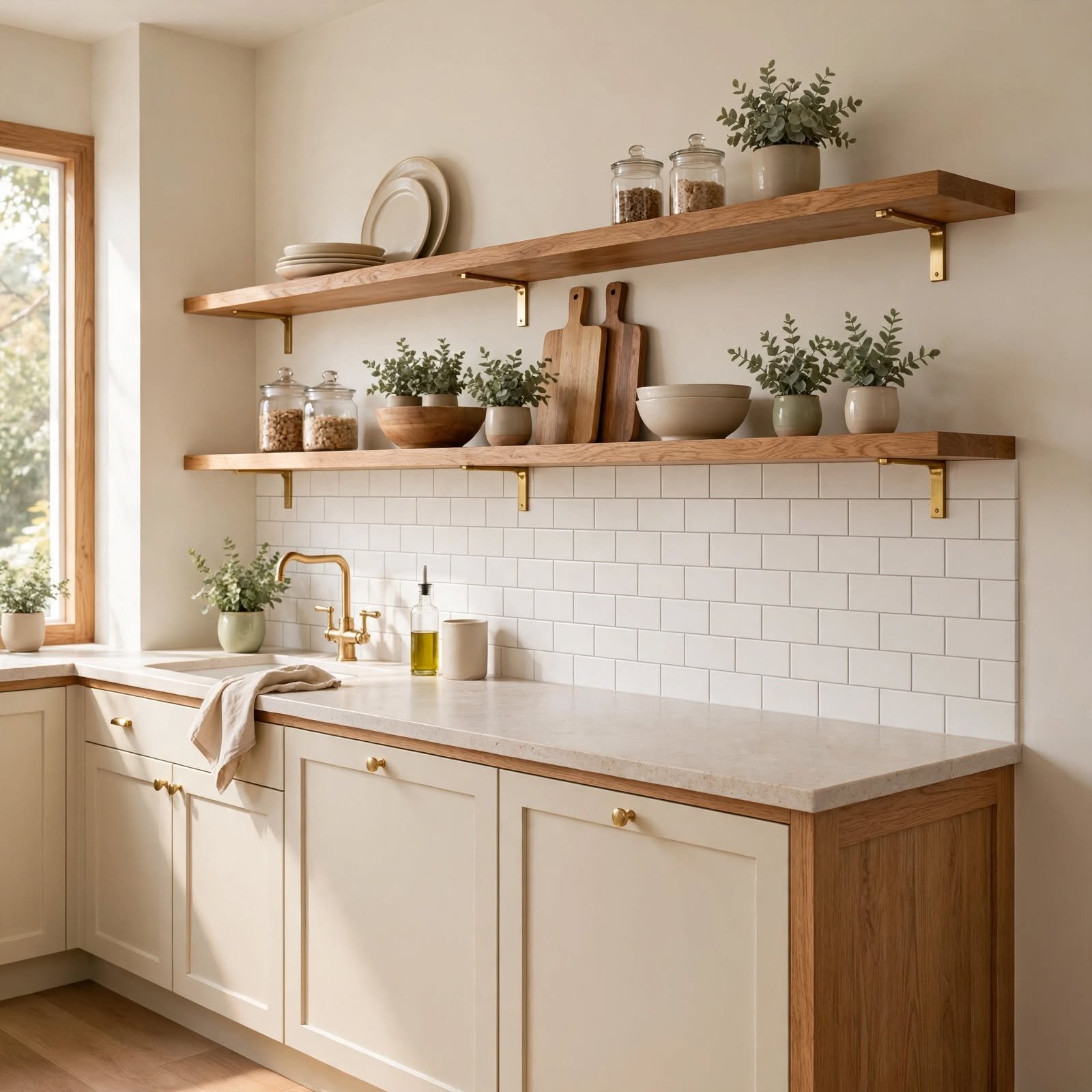
Open shelving in a light wood like oak or ash swaps closed storage for a display friendly alternative that keeps everyday dishware in reach. It works best when paired with a small, curated set of items rather than an overstuffed collection, since the whole point is visual breathing room. Pairing wood tones with white or pale cabinetry keeps the palette from feeling heavy. It’s also one of the more budget friendly updates on this list.
Learn More About Modern Kitchen Design.
4. Quartz Waterfall Countertop Simple Kitchen Design
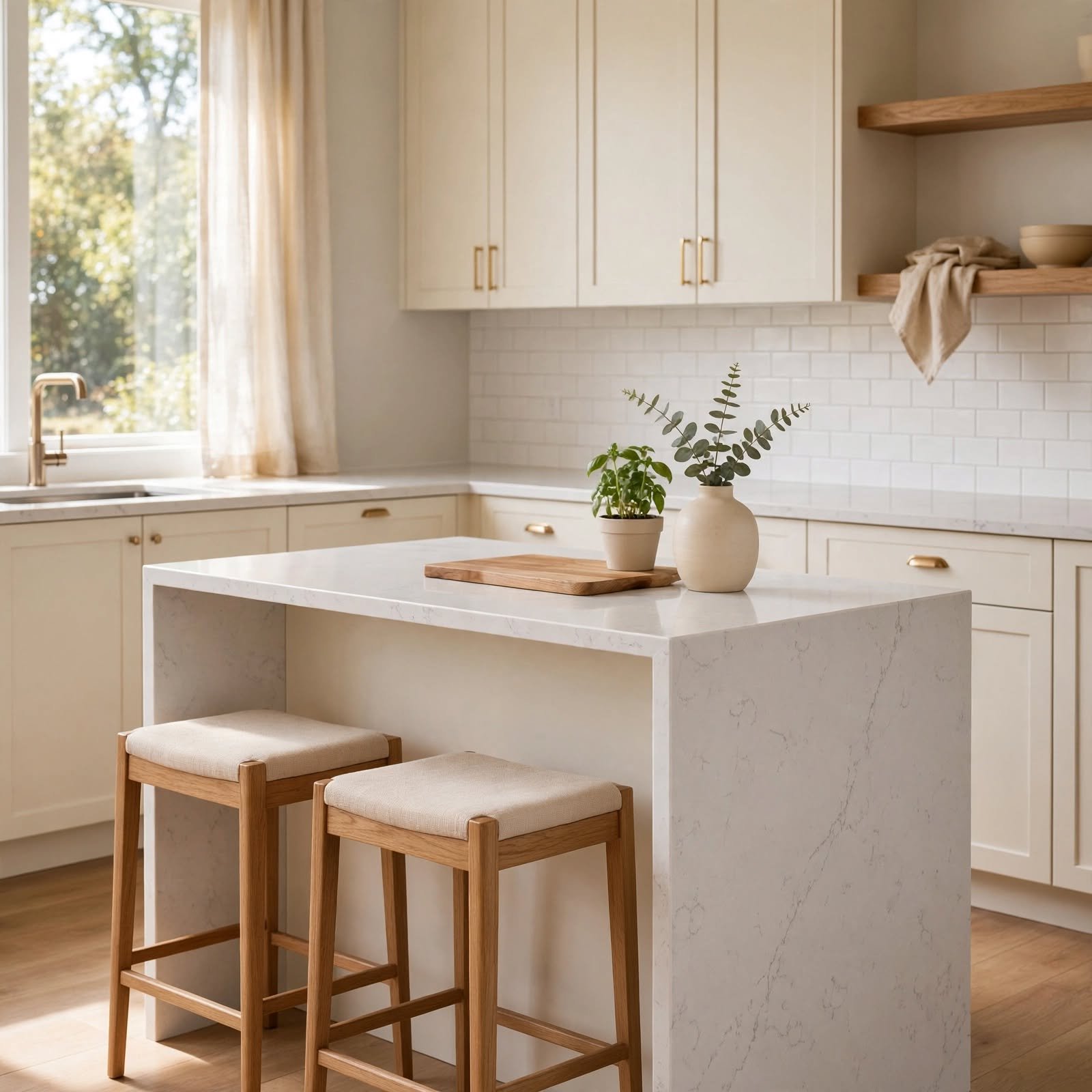
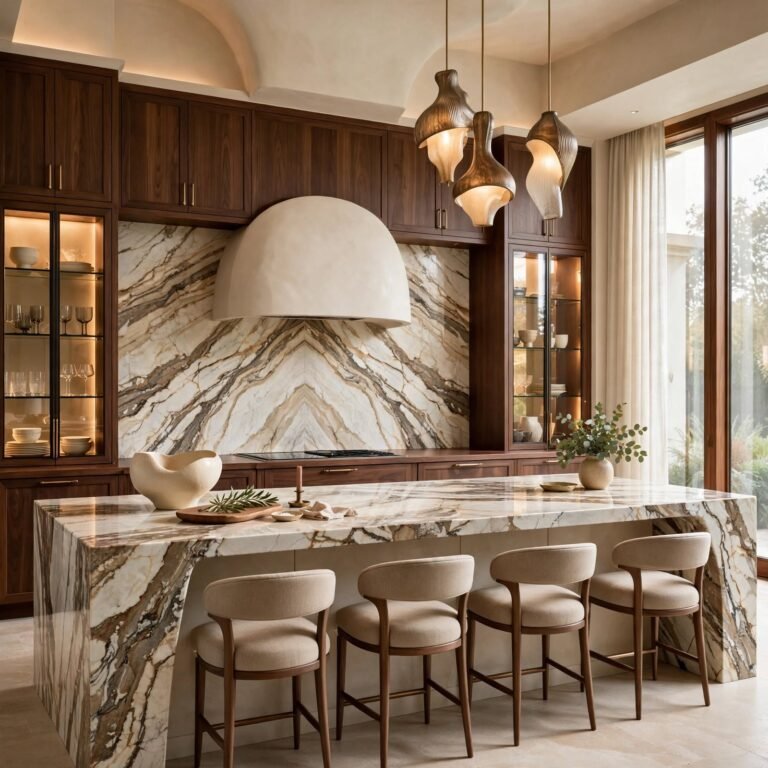
A waterfall edge countertop, where the slab wraps down the side of an island, adds a sculptural moment without introducing pattern or color. Quartz in particular offers a consistent, low maintenance surface that won’t need sealing like natural stone. Because the material continues in one unbroken plane, it reinforces the pared back look better than a mitered edge. This idea works especially well as the single “statement” feature in an otherwise quiet kitchen.
5. Monochrome Color Palette Simple Kitchen Design
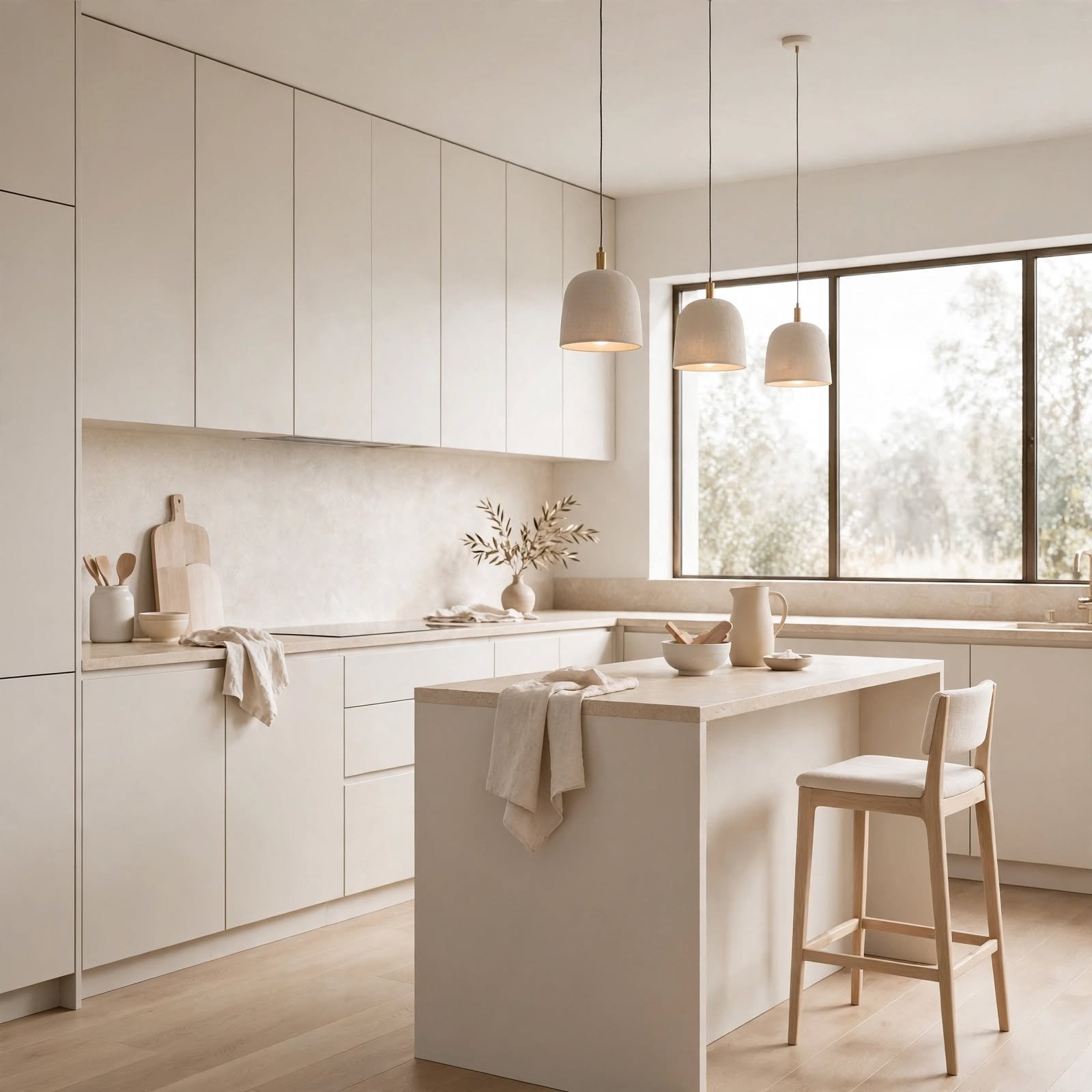
Committing to one dominant hue across cabinetry, walls, and even trim removes visual breaks that can make a kitchen feel busy. White on white is the most common version, but soft greige or pale sage monochrome schemes are gaining ground too. Texture becomes the main source of visual interest here, whether that’s a matte cabinet finish against a glossy tile or a woven light fixture against smooth walls. This approach photographs particularly well in natural light.
6. Slim Profile Cabinet Hardware Simple Kitchen Design
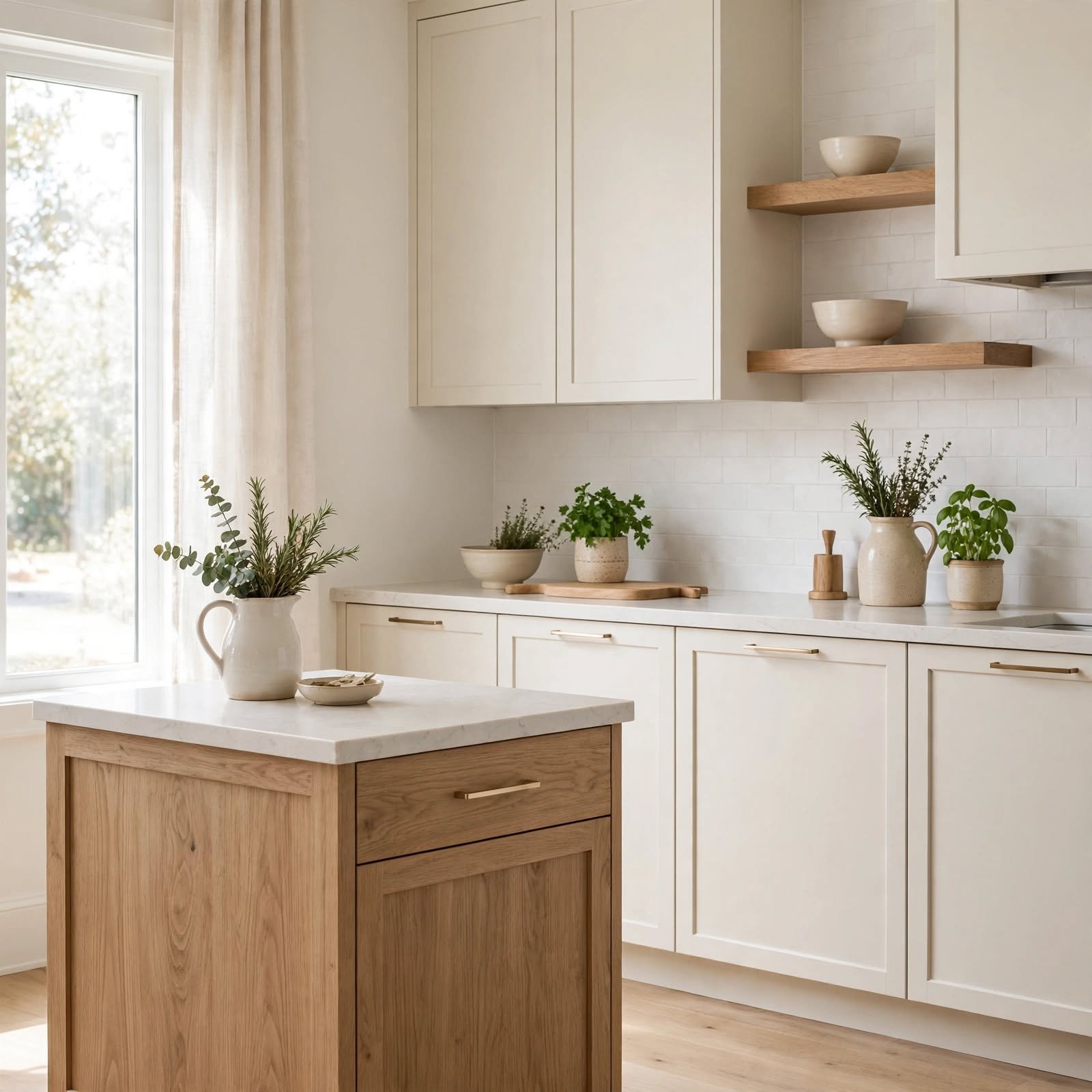
Thin bar pulls or knobs in a single finish keep cabinetry looking tidy instead of decorative. Choosing one hardware style throughout, rather than mixing knobs and pulls, reinforces the sense of a considered, simple kitchen design. Matte black, brushed nickel, and unlacquered brass are the most common finishes for this look right now. Hardware is also one of the lowest cost ways to shift an existing kitchen toward a simpler feel without touching cabinet boxes.
7. Integrated Appliances Simple Kitchen Design
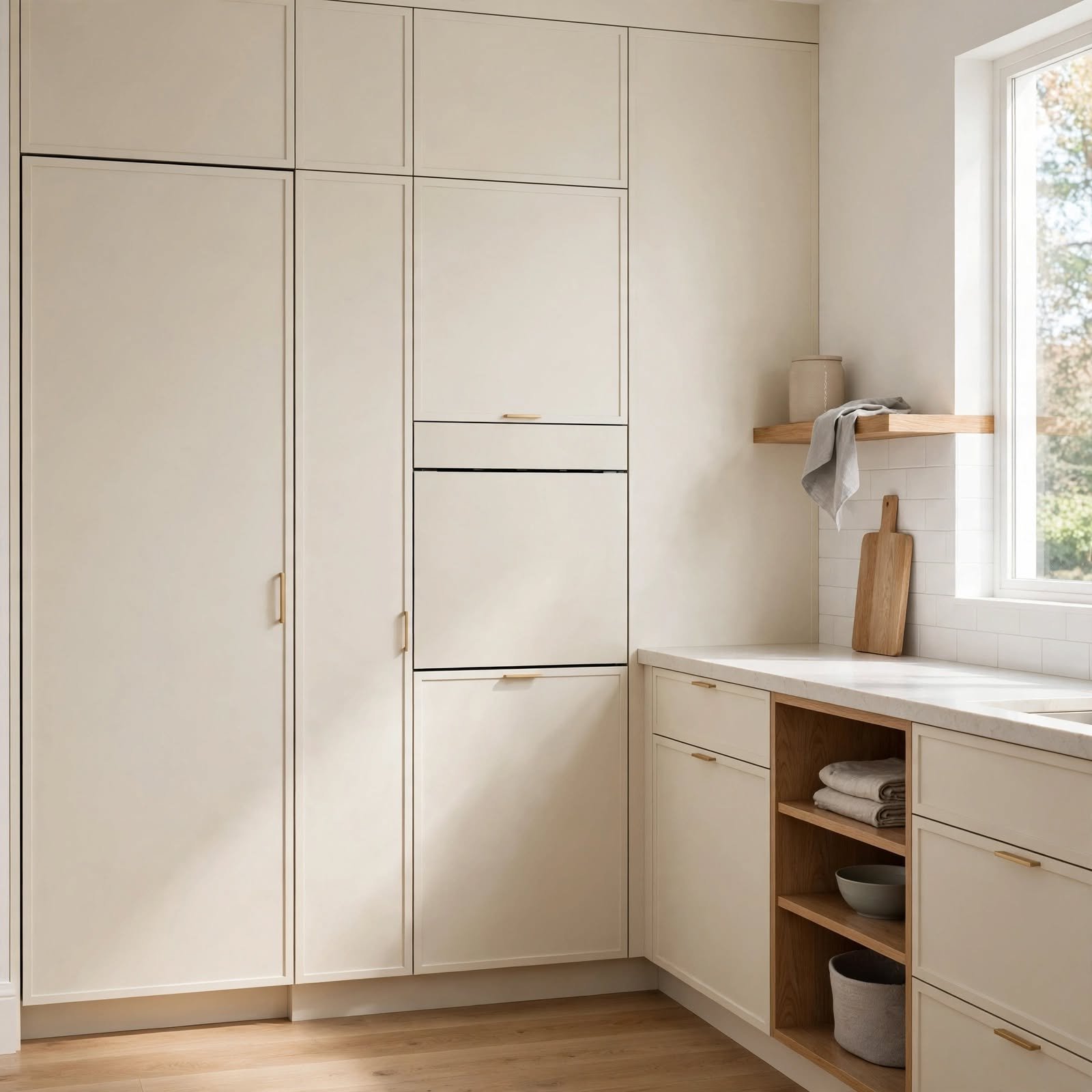
Paneled or integrated refrigerators and dishwashers blend into surrounding cabinetry instead of standing out as stainless steel blocks. This keeps sightlines clean and lets the cabinetry read as one continuous surface. It’s a popular choice in smaller kitchens where every visible appliance face adds to a sense of clutter. The tradeoff is cost, since integrated appliance packages typically run higher than standard freestanding models.
8. Subway Tile Backsplash Simple Kitchen Design
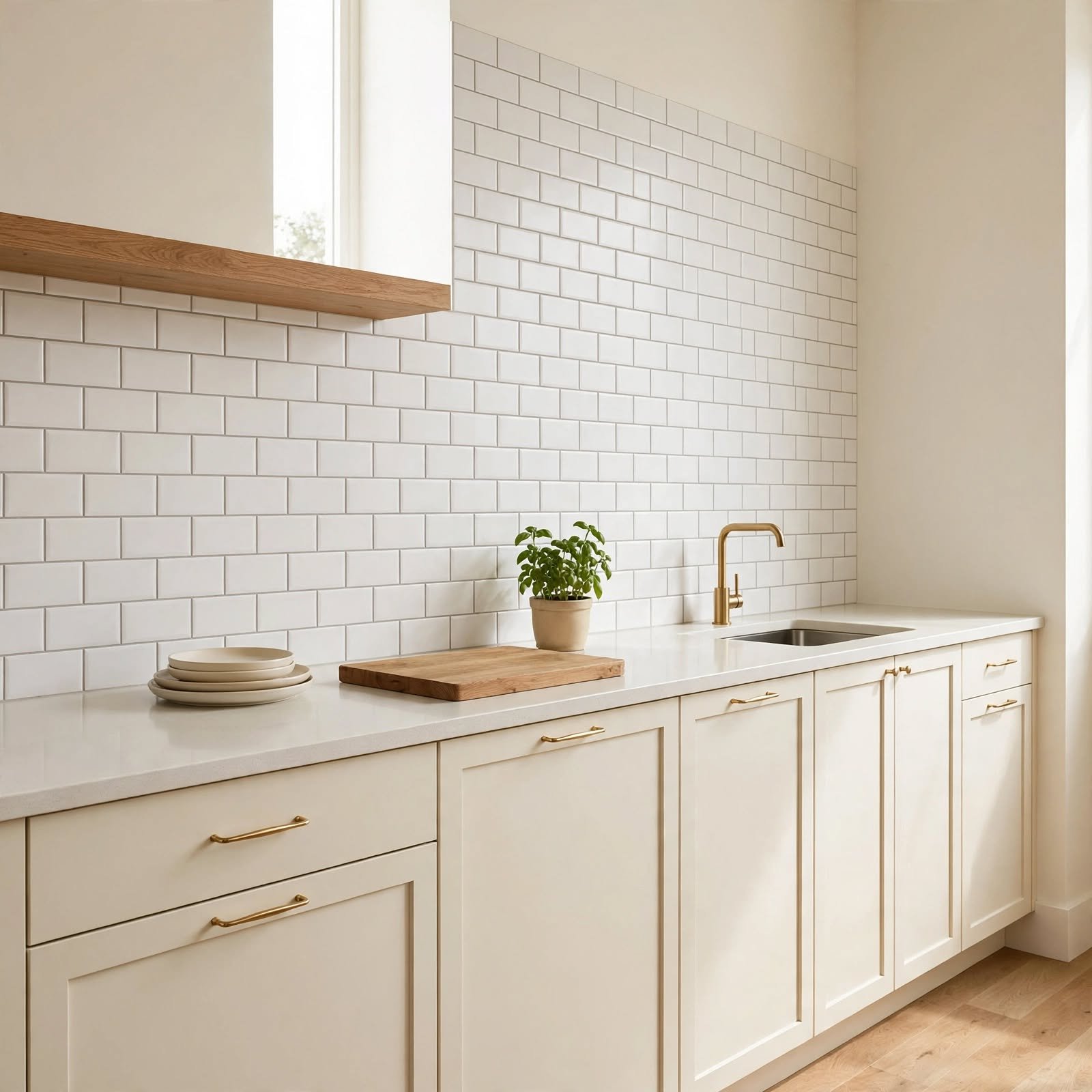
A classic white or off white subway tile remains one of the most dependable choices for a simple kitchen because it’s timeless without demanding attention. Running it in a straight stack or offset pattern keeps grout lines minimal and clean. Pairing it with a matching grout color, rather than a contrasting one, softens the pattern even further. It’s also one of the more affordable backsplash materials on the market.
| Backsplash Style | Approx. Cost per Sq Ft | Visual Weight |
| Subway Tile | $5–$15 | Light |
| Slab Stone | $40–$100 | Medium |
| Patterned Cement Tile | $10–$25 | Heavy |
9. Single Bowl Farmhouse Sink Simple Kitchen Design
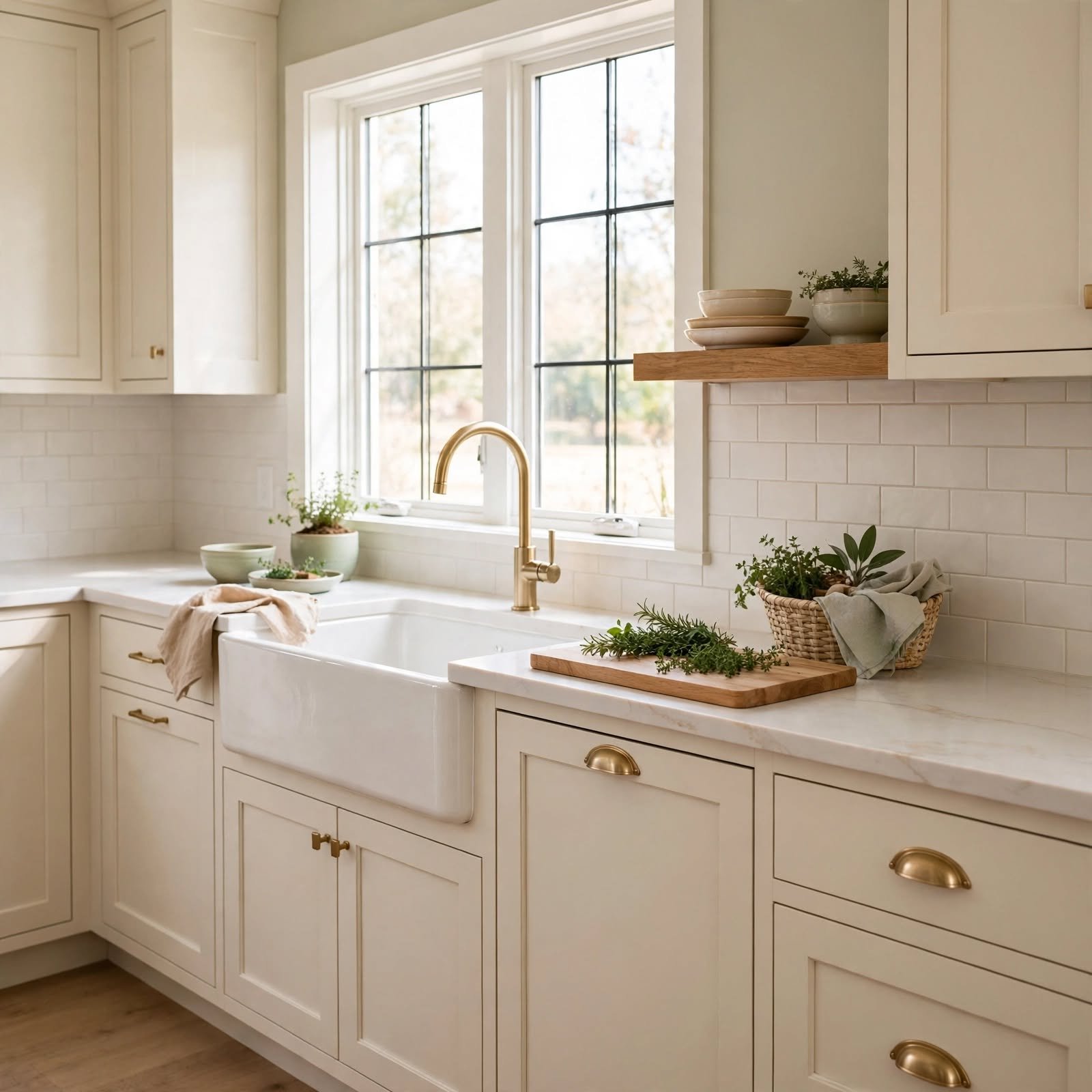
A single basin farmhouse sink in white fireclay or stainless steel gives the kitchen a functional focal point without extra ornamentation. Because it skips the center divider found in double bowl sinks, it’s easier to wash large pots and sheet pans. The exposed apron front also adds a bit of texture to an otherwise flat cabinet run. This idea pairs particularly well with shaker cabinetry and a waterfall countertop.
10. Neutral Stone Flooring Simple Kitchen Design
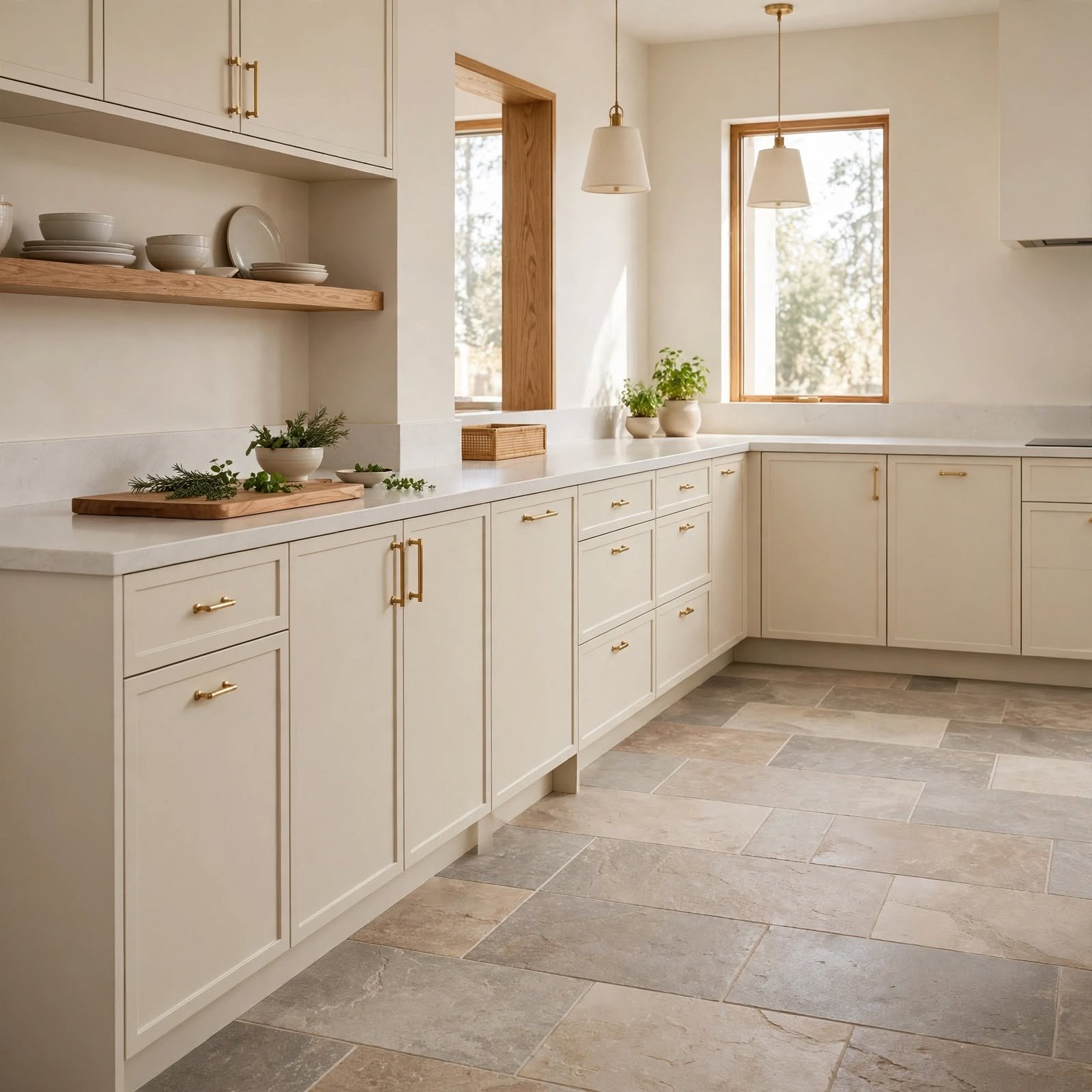
Large format porcelain or natural stone tile in a warm gray or beige tone keeps the floor from competing with cabinetry and countertops. Fewer grout lines, achieved through larger tile sizes, also reinforce the sense of a calm, uncluttered room. This flooring choice works well in open concept homes where the kitchen flows directly into a living or dining space. It’s also more forgiving of daily wear than lighter, more delicate flooring materials.
11. Pendant Lighting Trio Simple Kitchen Design
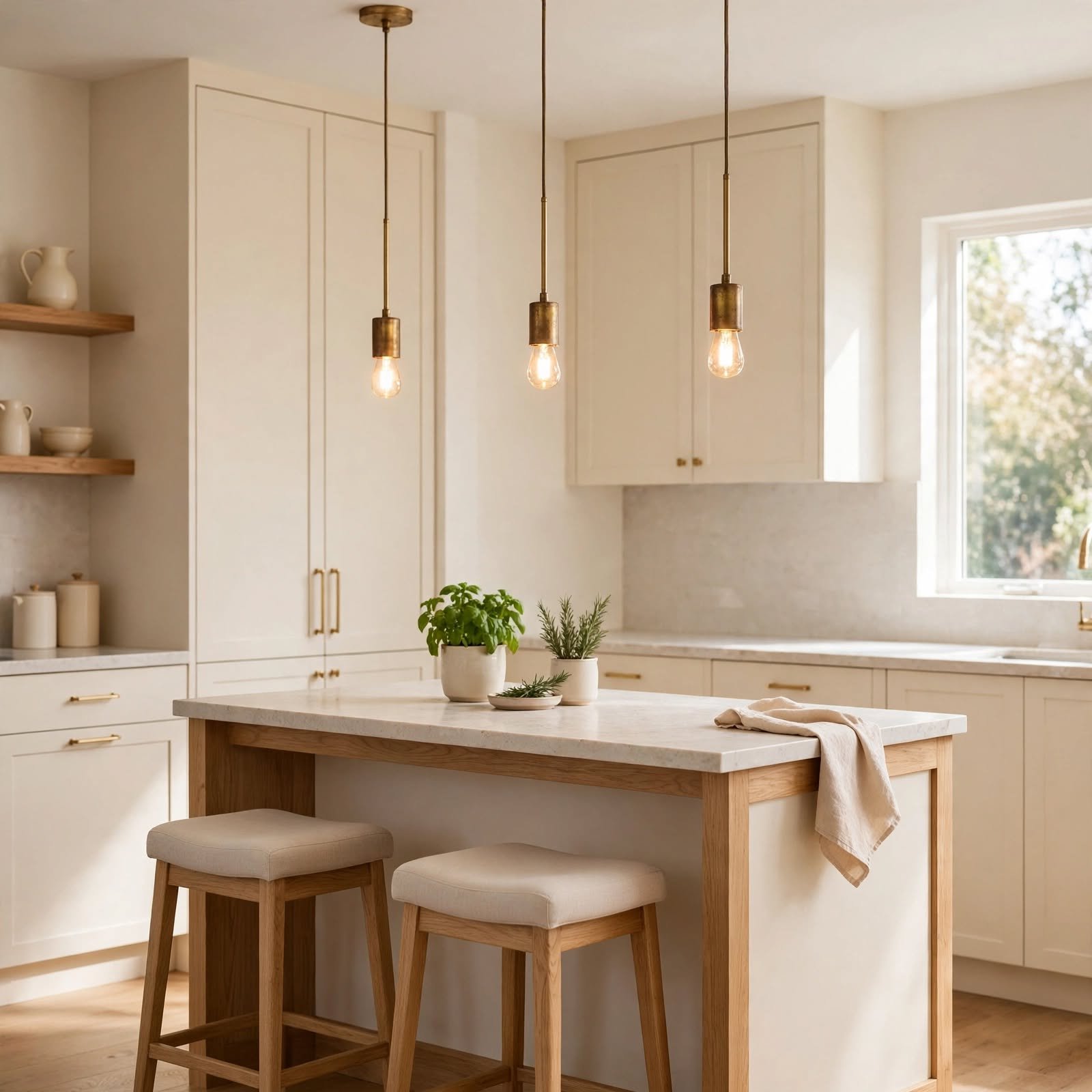
Three matching pendant lights hung in a row over an island add rhythm without introducing pattern or color. Sticking to one fixture style, rather than mixing shapes, keeps the lighting from becoming a competing focal point. Glass, ribbed ceramic, and matte metal pendants are all common choices for a simple kitchen design. Spacing them evenly, typically 24 to 30 inches apart, keeps the look balanced over a standard island length.
| Island Length | Recommended Pendant Count | Spacing |
| Under 5 ft | 2 pendants | 20–24 in |
| 5–7 ft | 3 pendants | 24–30 in |
| Over 7 ft | 3–4 pendants | 28–32 in |
12. Floating Corner Shelf Simple Kitchen Design
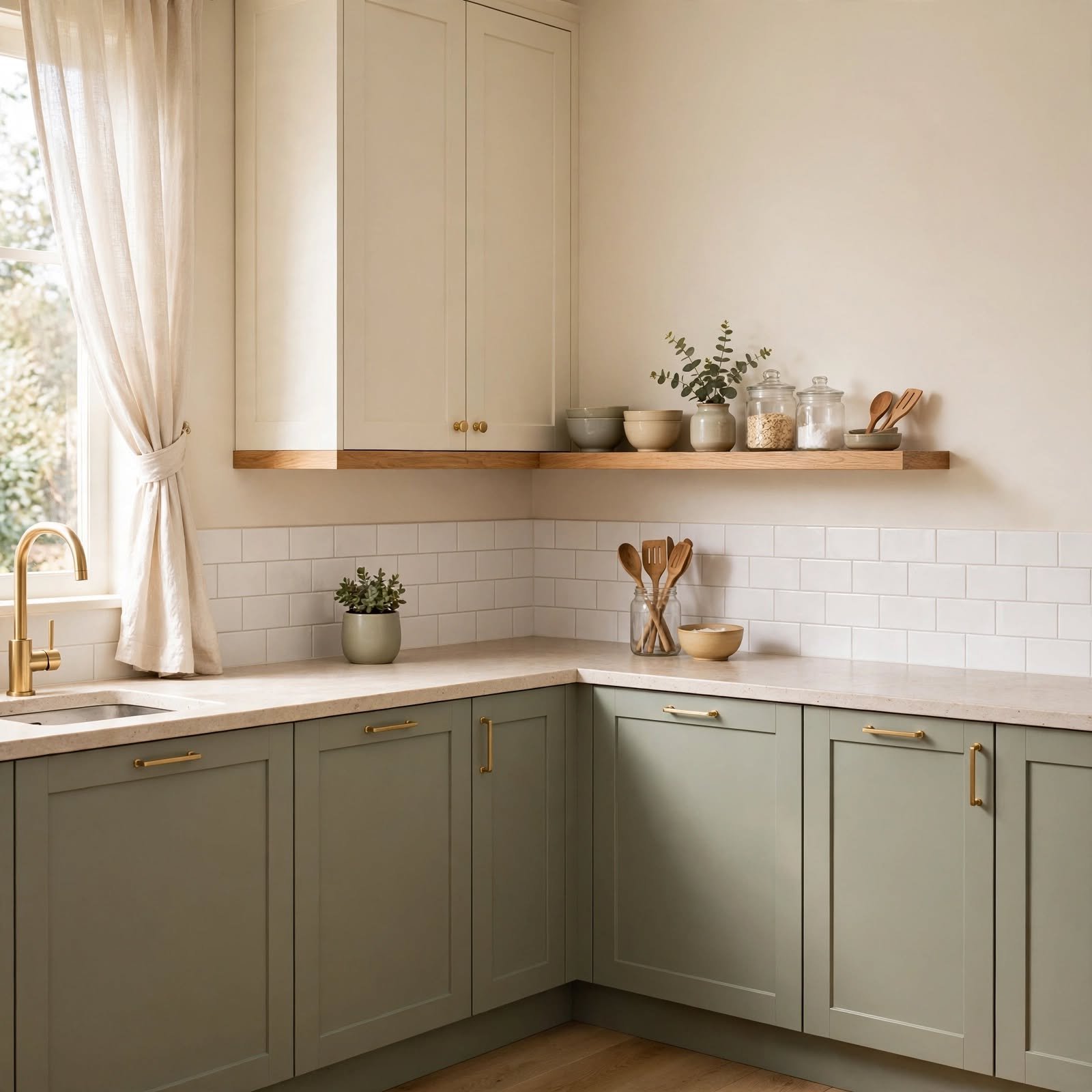
A single floating shelf tucked into an underused corner offers a small display spot without the bulk of a full cabinet run. It works especially well for a plant, a stack of cookbooks, or a small collection of ceramics. Because it’s a small gesture rather than a full wall of shelving, it won’t overwhelm a compact kitchen. Mounting hardware should be rated for the intended weight to keep the shelf secure long term.
13. Butcher Block Island Top Simple Kitchen Design
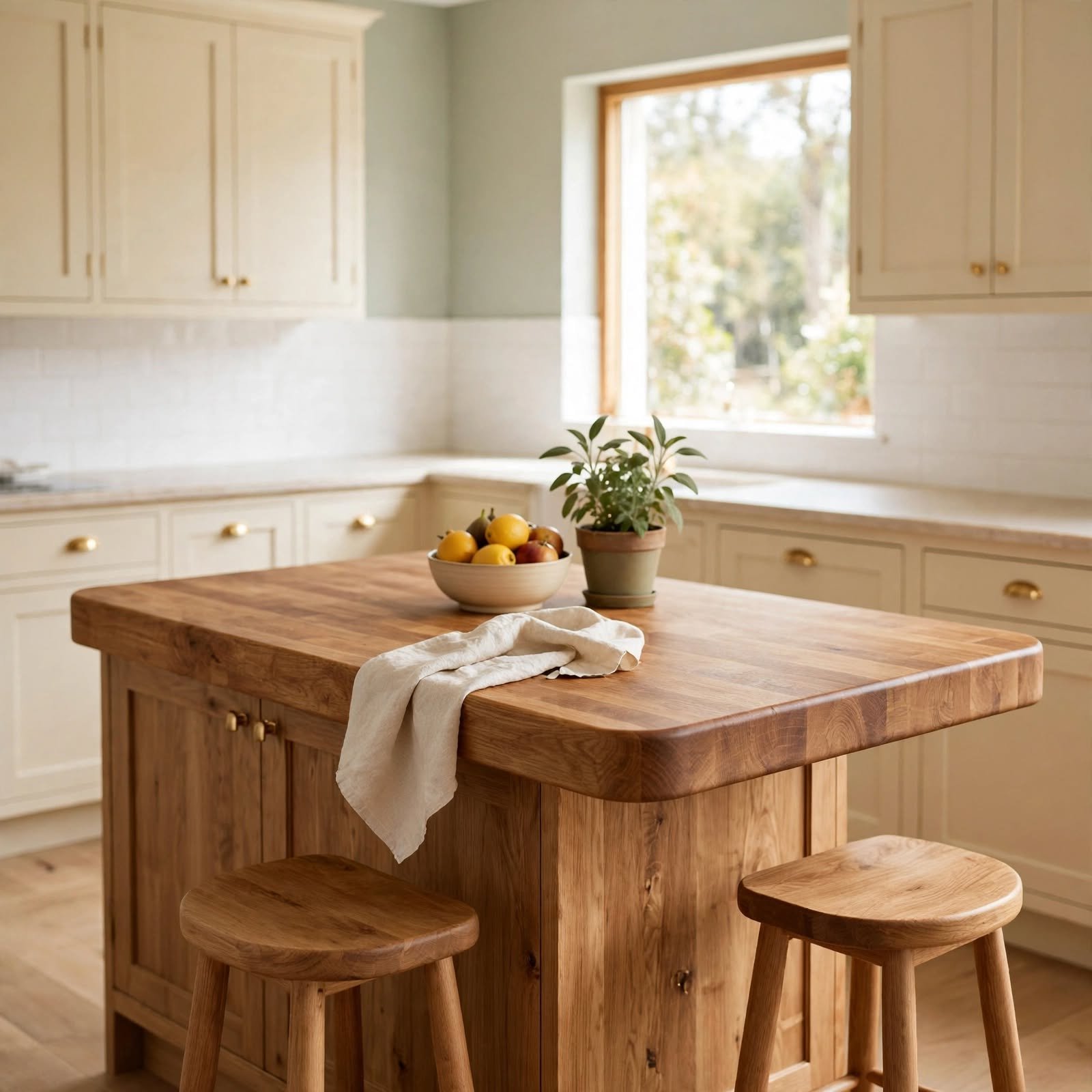
Swapping a stone island top for a butcher block introduces warmth and texture into an otherwise cool, neutral kitchen. Maple and walnut are the most common wood choices, and both develop a natural patina with regular use and oiling. This idea works particularly well when the surrounding countertops stay in quartz or stone, so the island reads as an intentional contrast rather than a mismatch. Regular oiling every few months keeps the wood protected from water and stains.
14. Matte Black Faucet Simple Kitchen Design
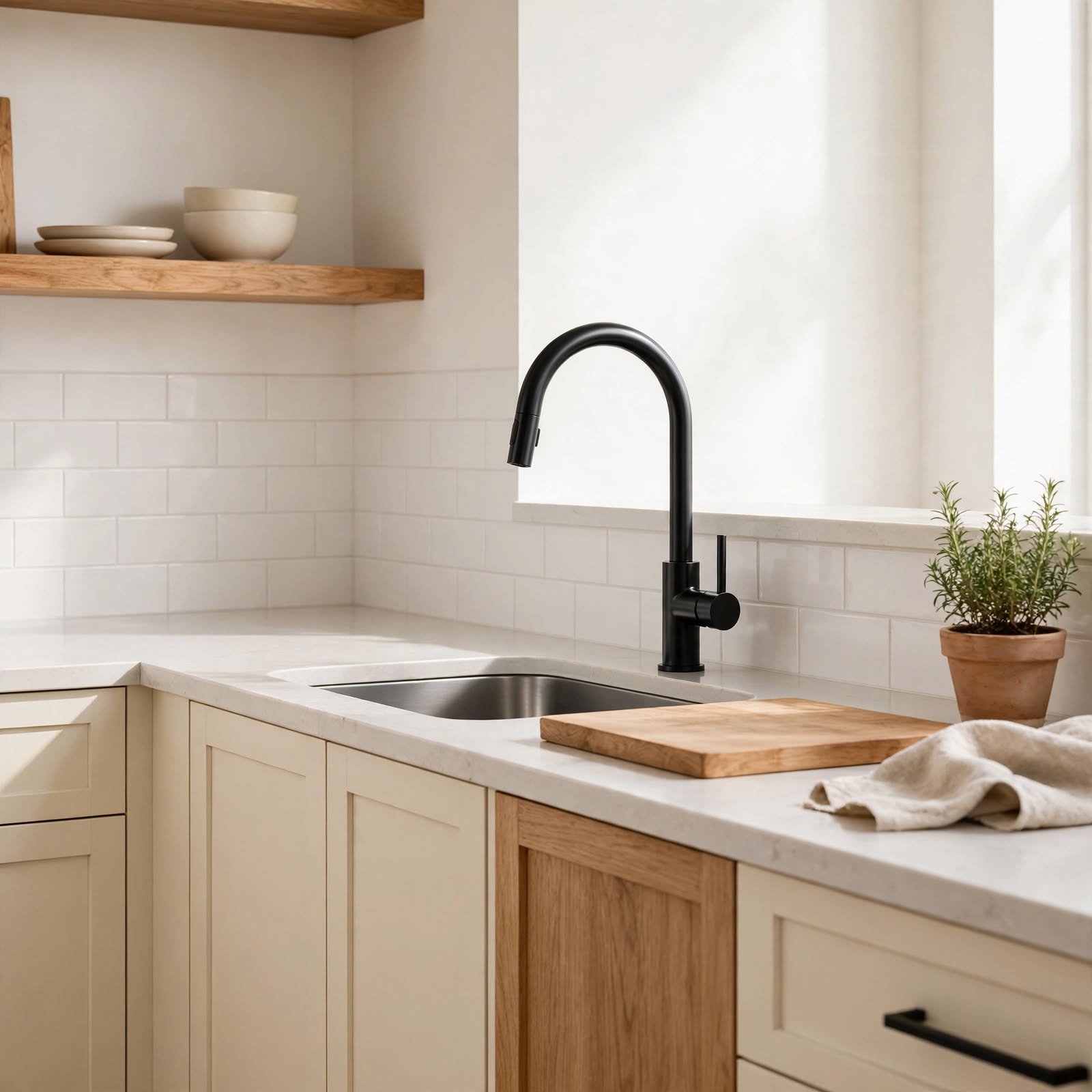
A single matte black faucet against white or pale cabinetry creates a small but noticeable point of contrast. Because it’s the only dark element in many simple kitchens, it draws the eye without requiring any additional decor. Matte finishes also tend to show water spots less than polished chrome, which helps the sink area stay looking tidy between cleanings. Pairing the faucet finish with matching cabinet hardware ties the whole space together.
15. Recessed Panel Range Hood Simple Kitchen Design
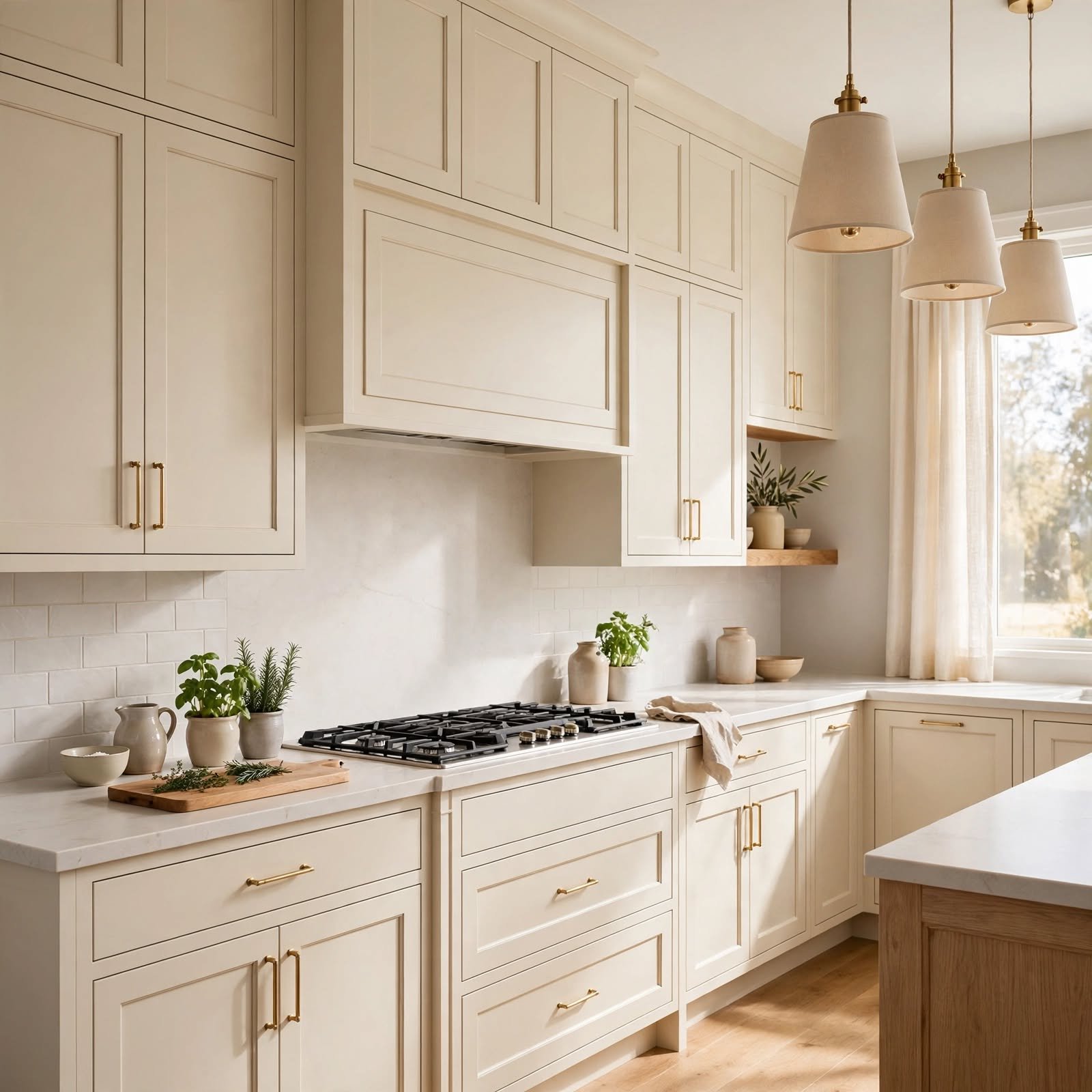
A custom range hood built to match surrounding cabinetry, rather than a standalone stainless steel unit, keeps the wall looking continuous. This works especially well in kitchens already committed to a monochrome or shaker cabinet look. The hood insert sits behind the panel, so ventilation performance isn’t affected by the added woodwork. It’s a mid range upgrade that tends to have a noticeable impact on how finished the whole kitchen feels.
16. Minimal Window Treatments Simple Kitchen Design
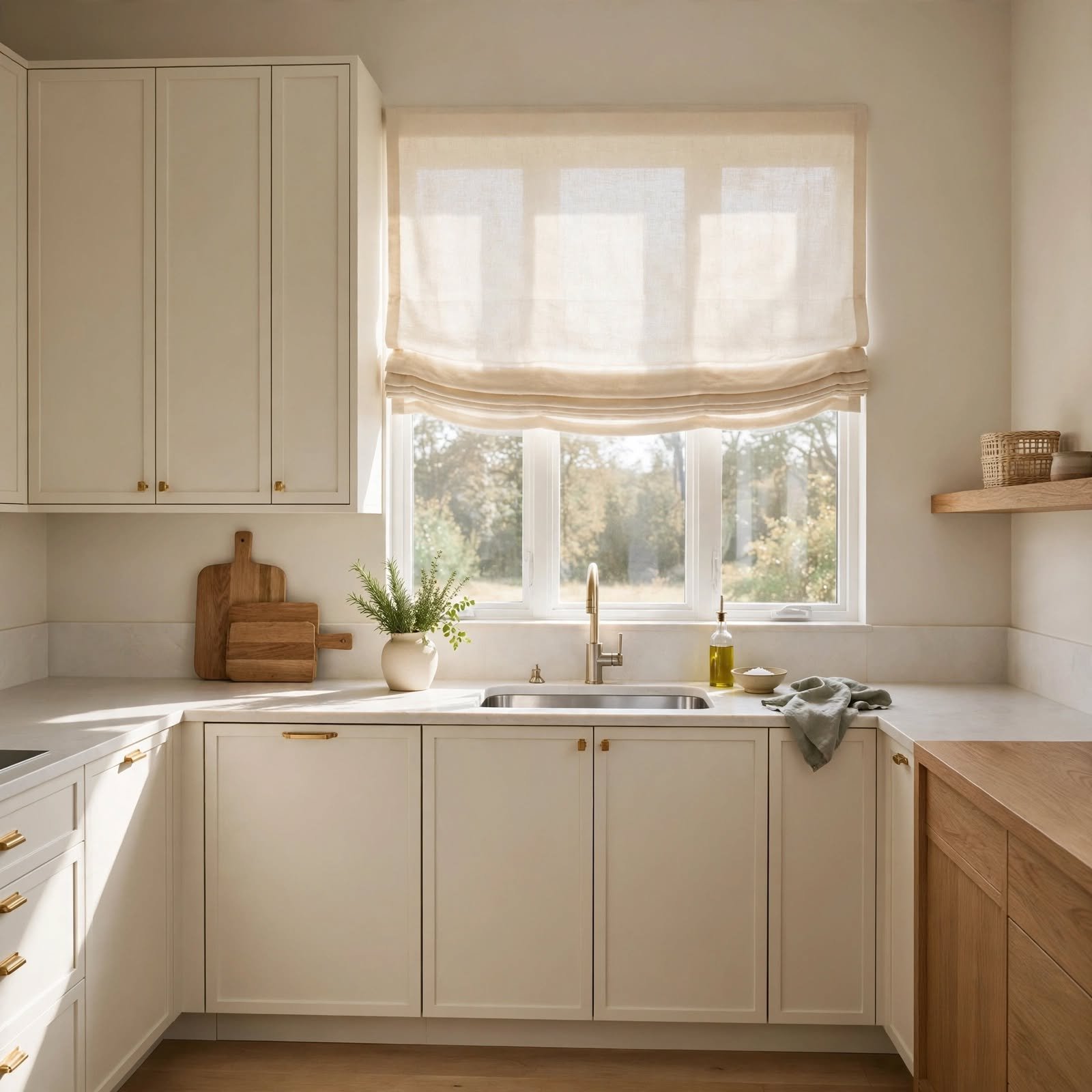
Skipping heavy curtains in favor of a simple roller shade or bare window keeps natural light unobstructed and the room feeling open. When privacy is needed, a linen roman shade in a neutral tone adds softness without pattern. This idea costs very little compared to most others on this list, making it an easy final touch for a simple kitchen design that’s already close to finished. Natural light also does a lot of work in making a pared back kitchen feel warm rather than sterile.
Shop the Look
A few pieces make it easy to bring this look home. A set of unlacquered brass bar pulls adds warmth to painted cabinetry, while a ribbed glass pendant light trio anchors an island without extra pattern. A fireclay farmhouse sink in white brings texture to the sink wall, and a linen roman shade softens a bare window. A maple butcher block cutting board doubled as counter styling ties the wood tones together across the room.
Common Mistake to Avoid
The most common misstep is mistaking “simple” for “empty,” which leaves a kitchen feeling cold instead of calm. Skipping every trace of texture, wood tone, or hardware detail in favor of an all white, all flat surface often reads as unfinished rather than intentional. A truly simple kitchen design still needs at least one warm material, like wood shelving or a butcher block top, to keep the space from feeling sterile. Balance matters more than restriction here.
Frequently Asked Questions
What makes a kitchen design simple?
A simple kitchen design relies on a limited material palette, clean lined cabinetry, and minimal decorative detail rather than an empty or unfinished look. Shaker or flat panel cabinets, a neutral color scheme, and streamlined hardware are the most common building blocks. The goal is a kitchen that feels calm and functional rather than one stripped of all warmth. Texture from wood, stone, or woven materials usually keeps the space from feeling too bare.
What colors work best for a simple kitchen?
White, soft greige, and pale sage are the most reliable choices for a simple kitchen because they don’t compete with cabinetry hardware or countertop veining. Warmer neutrals tend to photograph better in natural light than stark white. Many homeowners pair one dominant neutral with a single accent, like matte black fixtures or brass hardware, to avoid a flat or sterile result. Sticking to two or three tones total keeps the palette from feeling busy.
Is open shelving practical in a simple kitchen?
Open shelving can be practical when it holds a curated, regularly used set of items rather than an overstuffed collection. It works best paired with closed storage nearby for less attractive essentials like pots or pantry goods. Dust and grease near a stove can be a maintenance consideration, so many homeowners reserve open shelving for areas away from direct cooking splatter. Used selectively, it adds warmth without sacrificing function.
How much does a simple kitchen renovation typically cost?
Costs vary widely depending on whether cabinetry is replaced, refaced, or repainted, but simple kitchen design projects often cost less than heavily detailed renovations because materials and finishes are more standardized. Refacing existing cabinets with shaker style fronts and swapping hardware can update a kitchen for a fraction of a full remodel. Larger investments like quartz countertops or integrated appliances raise the budget significantly, so many homeowners phase these updates over time.
Does a small kitchen benefit from simple design?
Small kitchens tend to benefit significantly from a simple design approach because fewer competing colors, patterns, and finishes make the space feel larger. Light cabinetry, minimal hardware, and a single countertop material all reduce visual clutter in a way that’s especially noticeable in tight square footage. Reflective surfaces like glass pendants or a glossy tile backsplash can also help bounce light around a smaller room.
Conclusion
Simple kitchen design comes down to restraint applied with intention, not the absence of personality. A handful of these sixteen ideas, mixed and matched to fit an existing layout and budget, can shift any kitchen toward that calmer, more functional feel. Save this post to Pinterest for reference during planning, or check out our related bedroom and living room design guides for more room-by-room inspiration.