16 Brilliant Craft Room Decor Ideas for Function and Style
A craft room works best when storage and style are solved together rather than treated as separate problems. This list covers sixteen craft room decor ideas, from wall-mounted organizers to lighting and display pieces, aimed at keeping supplies accessible while still making the space feel like somewhere you want to spend time. Whether you’re setting up a spare bedroom or squeezing a craft corner into a shared space, there’s a mix of storage solutions and finishing touches here to work from.
Trend & Background
Dedicated craft spaces have grown more common as hobbies like sewing, scrapbooking, and paper crafting have seen a resurgence, partly driven by more people working from home and wanting a separate creative space nearby. At the same time, modular and wall-mounted storage systems have become more affordable and widely available, making it easier to organize a small or awkwardly shaped room without built-in cabinetry. This has shifted craft room decor away from purely functional shelving toward setups that also look intentional and finished.
Key Takeaways
- Storage-first pieces like pegboards, rolling carts, and labeled bins do more for a craft space than decorative accents alone.
- Good task lighting and a proper cutting surface matter more in a craft room than in most other rooms of the house.
- Displaying finished projects and tools as decor keeps the space feeling personal instead of purely utilitorial.
- Combining a few statement pieces, like a vintage sewing machine or a gallery wall, with practical storage keeps the room from feeling like a supply closet.
1. Pegboard Wall Organizer
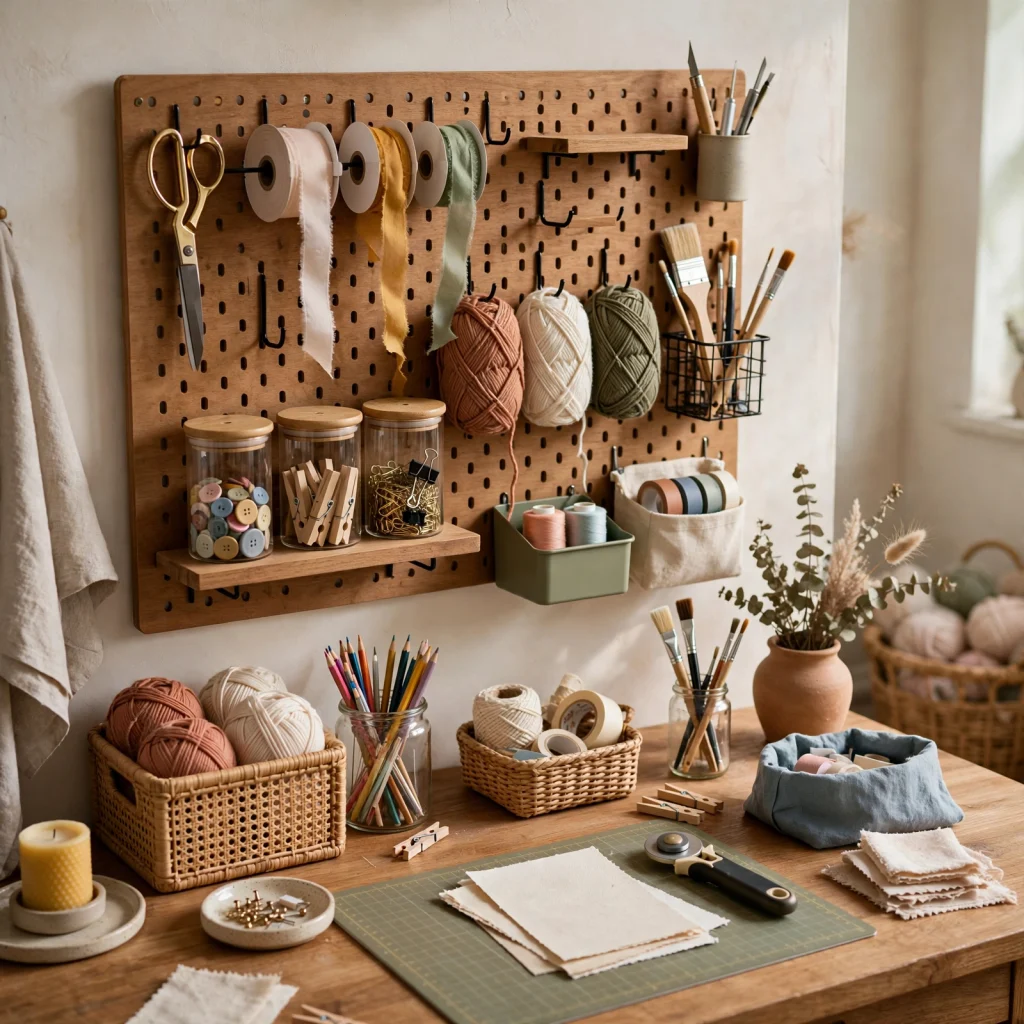
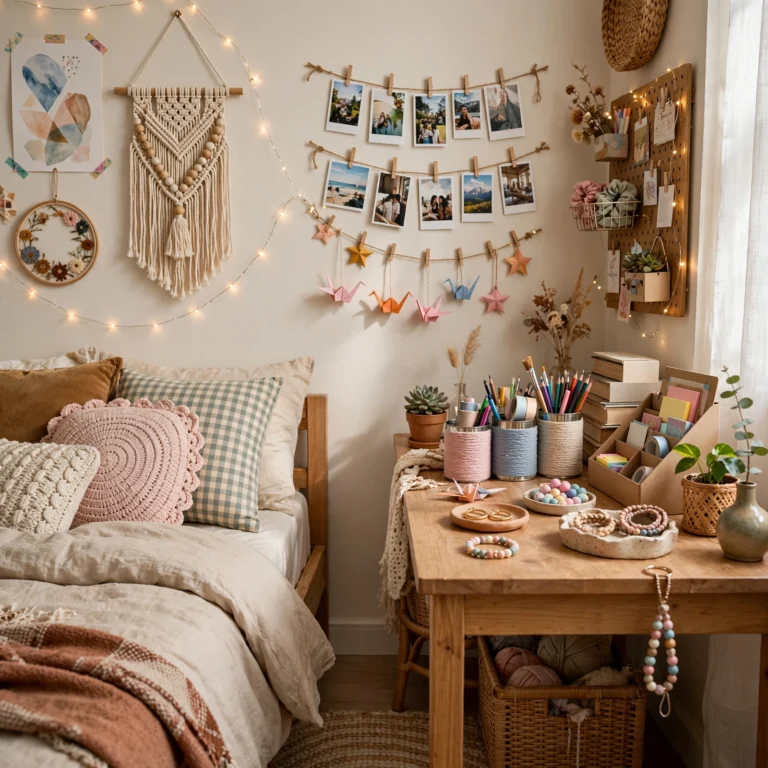
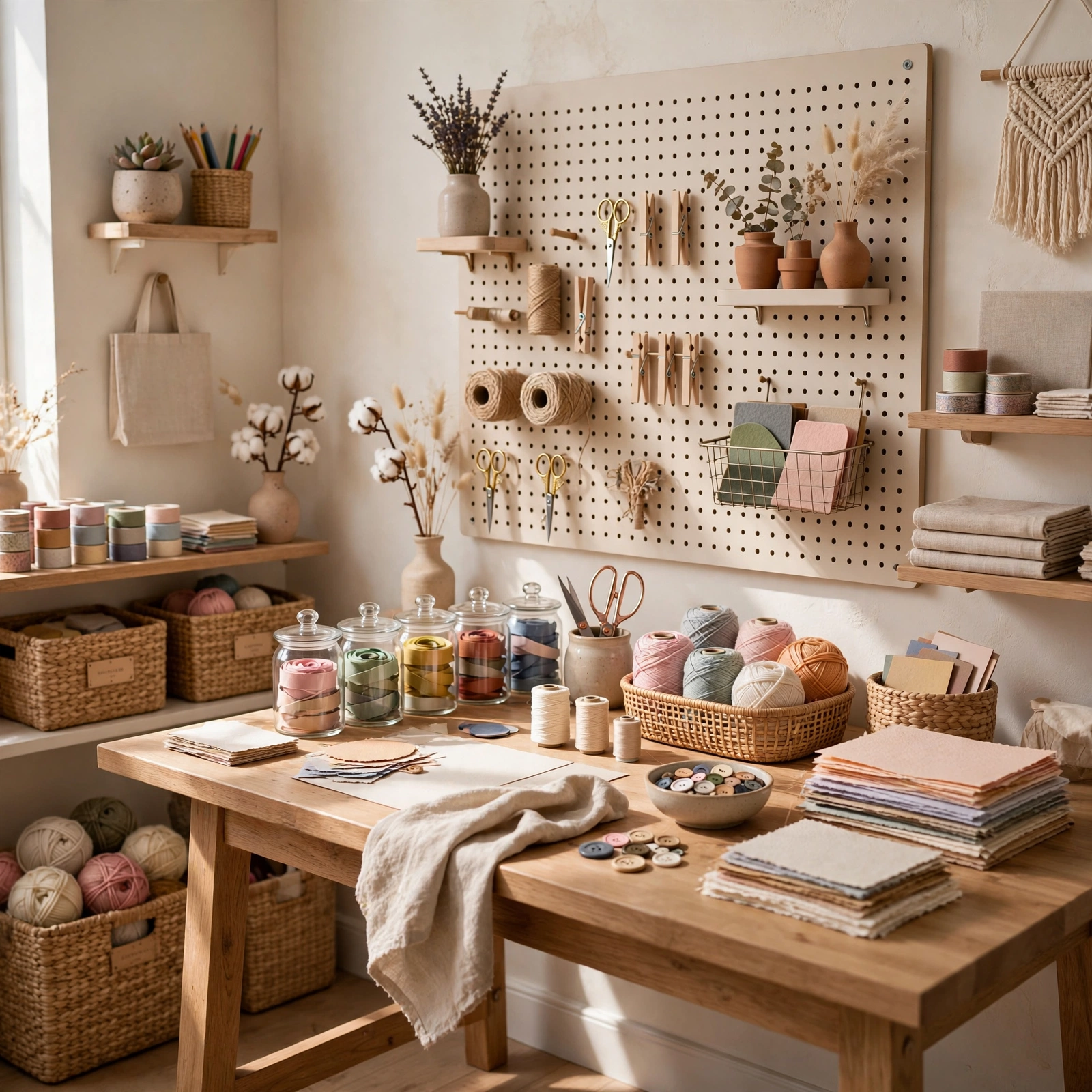
A pegboard wall organizer mounts a perforated board directly to the wall, allowing hooks, small shelves, and bins to be rearranged as tool and supply needs change. It works well above a work table or sewing machine, keeping frequently used items like scissors, rulers, and thread within reach without taking up counter space. Painting the board a color that matches the room, rather than leaving it the standard tan, helps it read as decor rather than garage storage.
2. Rolling Craft Cart
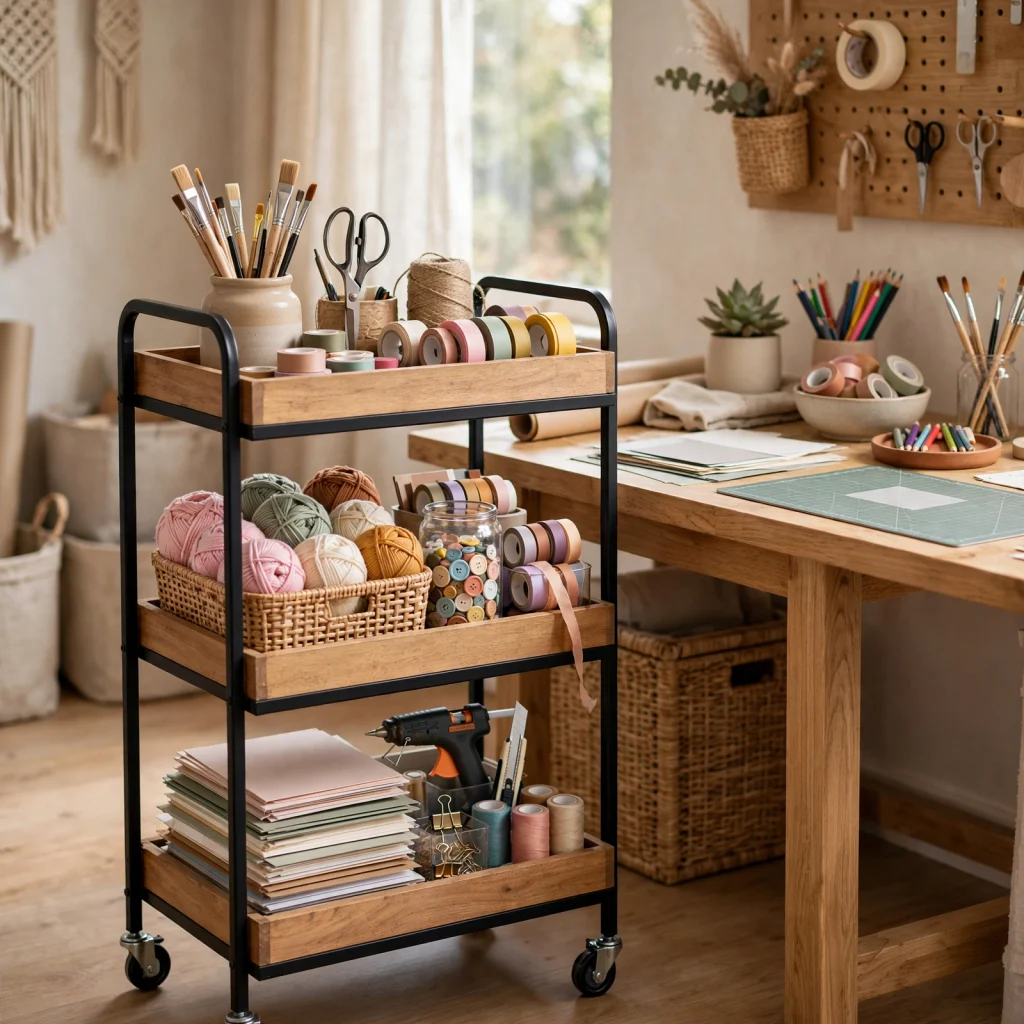
A rolling craft cart uses a multi-tier cart on wheels to hold supplies that need to move between a work table and a storage corner, such as paint, fabric scraps, or a sewing kit. It suits smaller craft rooms or shared spaces where a fixed cabinet isn’t practical, since the entire cart can be tucked out of the way when not in use. Baskets or bins on each tier keep smaller supplies from sliding around while the cart is being moved.
3. Ribbon Spool Rack
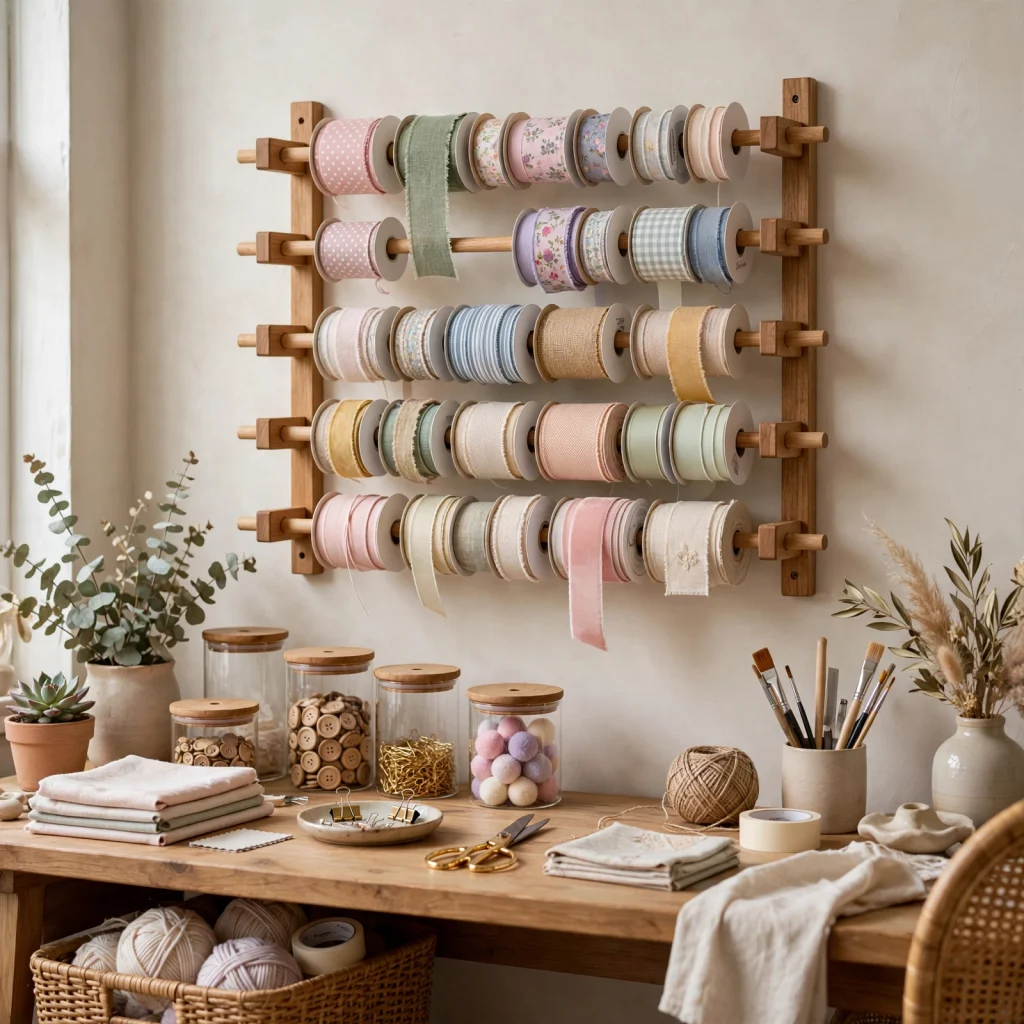
A ribbon spool rack uses a dowel or rod system to hold ribbon spools in a row, allowing each roll to unwind and be cut without removing it from storage. It’s typically mounted on the inside of a cabinet door or on a wall near the cutting table, keeping ribbon visible and sorted by color rather than tangled together in a drawer. A rack sized for twenty to thirty spools covers most home craft collections without needing a second unit.
To see more study room decor CLICK HERE
4. Clear Bin Labeling System
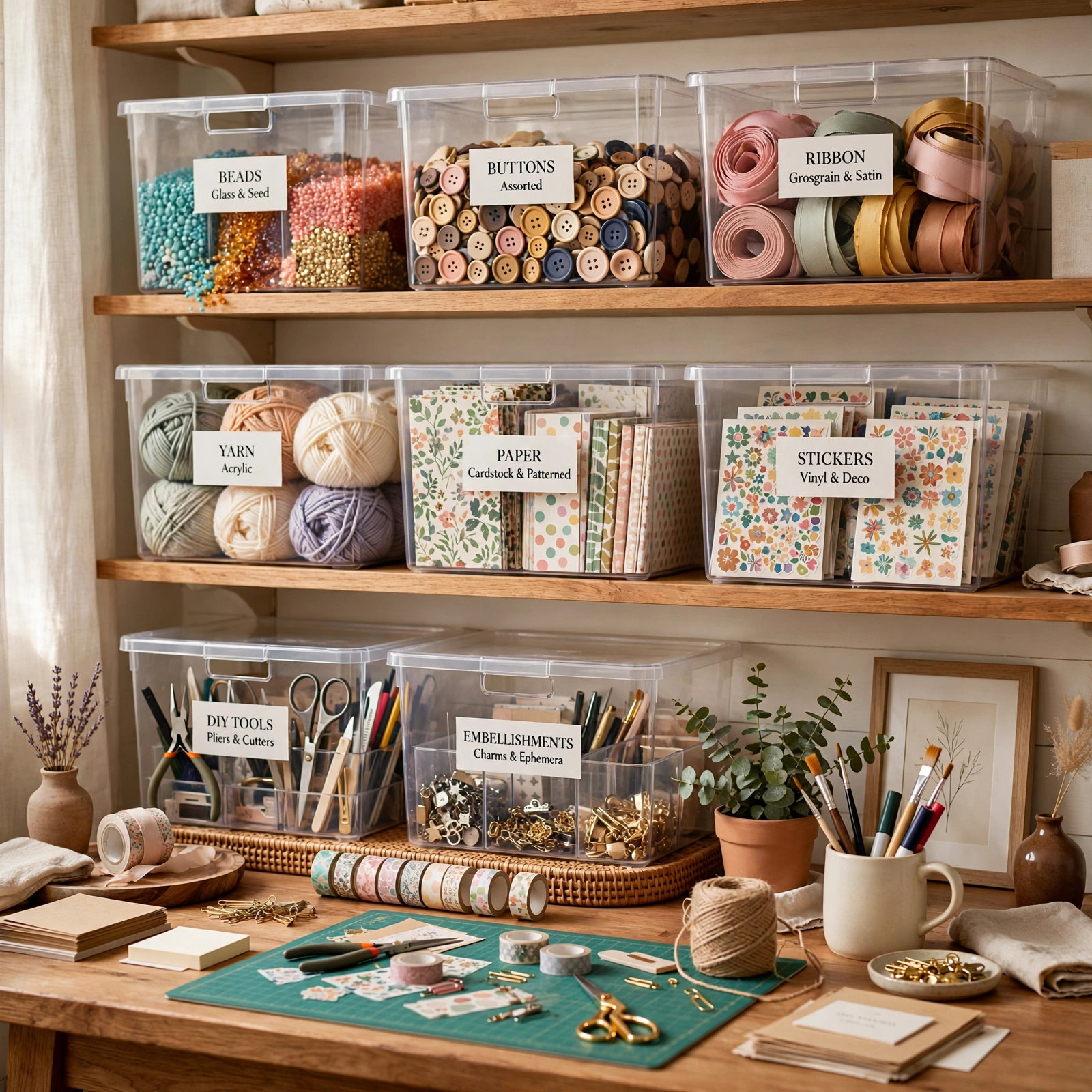
A clear bin labeling system uses uniform, see-through storage bins with printed or hand-lettered labels to sort supplies by category, such as beads, fabric scraps, or paper. Clear bins let you spot what’s inside without opening every container, which speeds up finding supplies mid-project, while matching labels give a shelf of otherwise mismatched supplies a more organized, cohesive look. Choosing one label style and sticking with it across all bins keeps the system looking intentional rather than thrown together over time.
| Bin Size | Best For | Shelf Depth Needed |
| Small (6×6 in) | Beads, buttons, small tools | 8 in |
| Medium (10×10 in) | Fabric scraps, yarn | 12 in |
| Large (14×14 in) | Paper stock, fabric bolts | 16 in |
5. Craft Room Decor Cutting Table
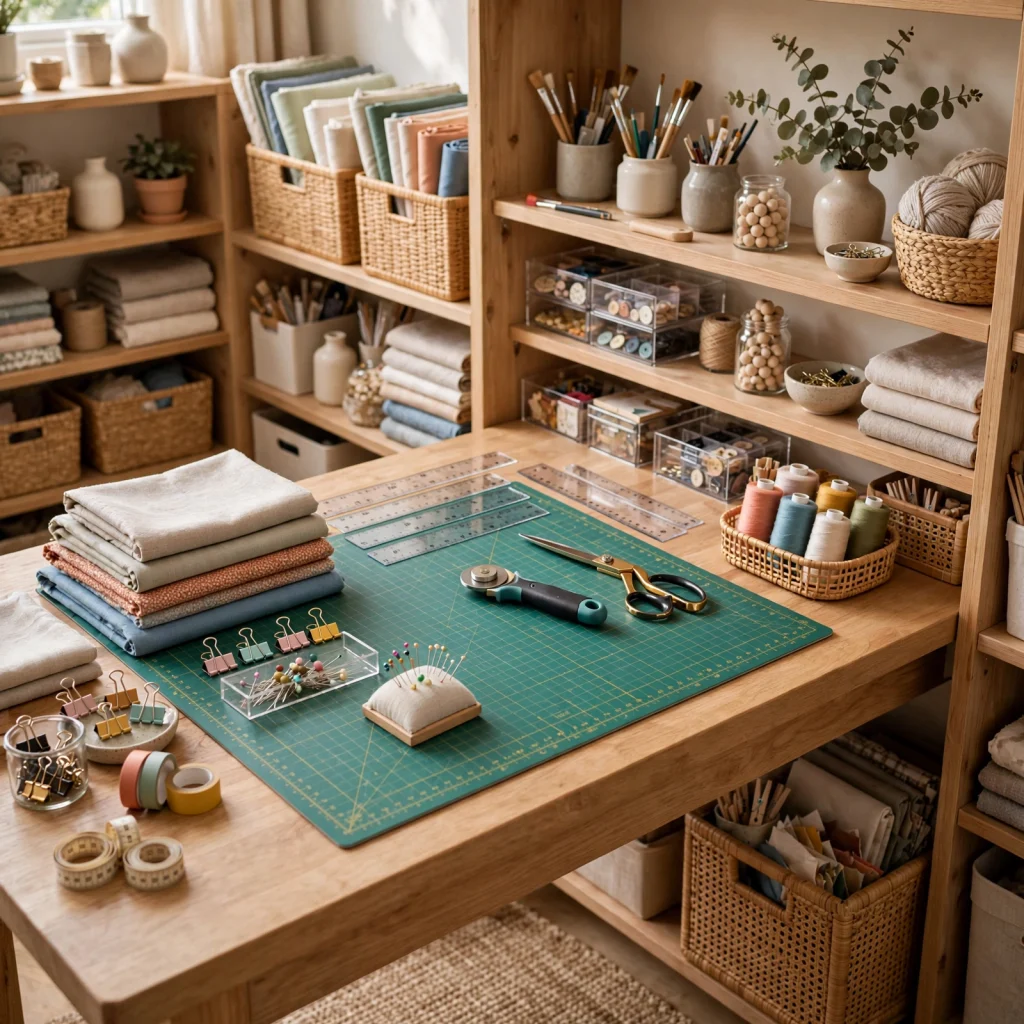
A cutting table gives a craft room a dedicated flat surface at the right height for cutting fabric, paper, or vinyl without hunching over a low desk. Many craft room decor setups use a table around thirty-six inches high, taller than a standard desk, which reduces back strain during long cutting sessions. A self-healing cutting mat placed on top protects the table surface and provides grid lines useful for measuring fabric or paper without a separate ruler.
6. Washi Tape Storage Drawer
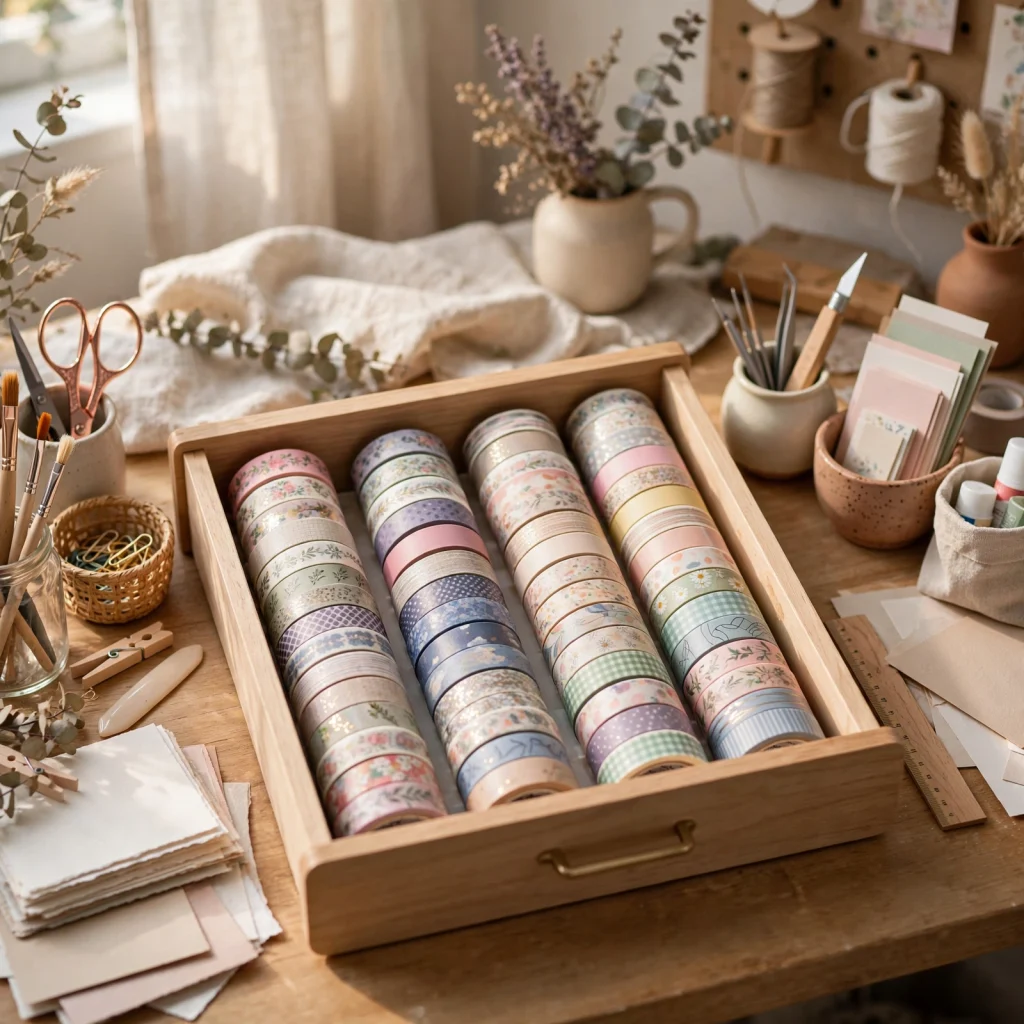
A washi tape storage drawer uses a shallow, divided drawer insert or dedicated dispenser rack to keep rolls of tape sorted by color or pattern instead of piled loosely in a bin. Because washi tape rolls are lightweight and prone to unraveling if stacked carelessly, a drawer with individual slots keeps each roll contained and easy to see at a glance. This kind of storage works especially well built into a rolling cart drawer or a small dresser repurposed for craft supplies.
7. Wall-Mounted Fabric Rack
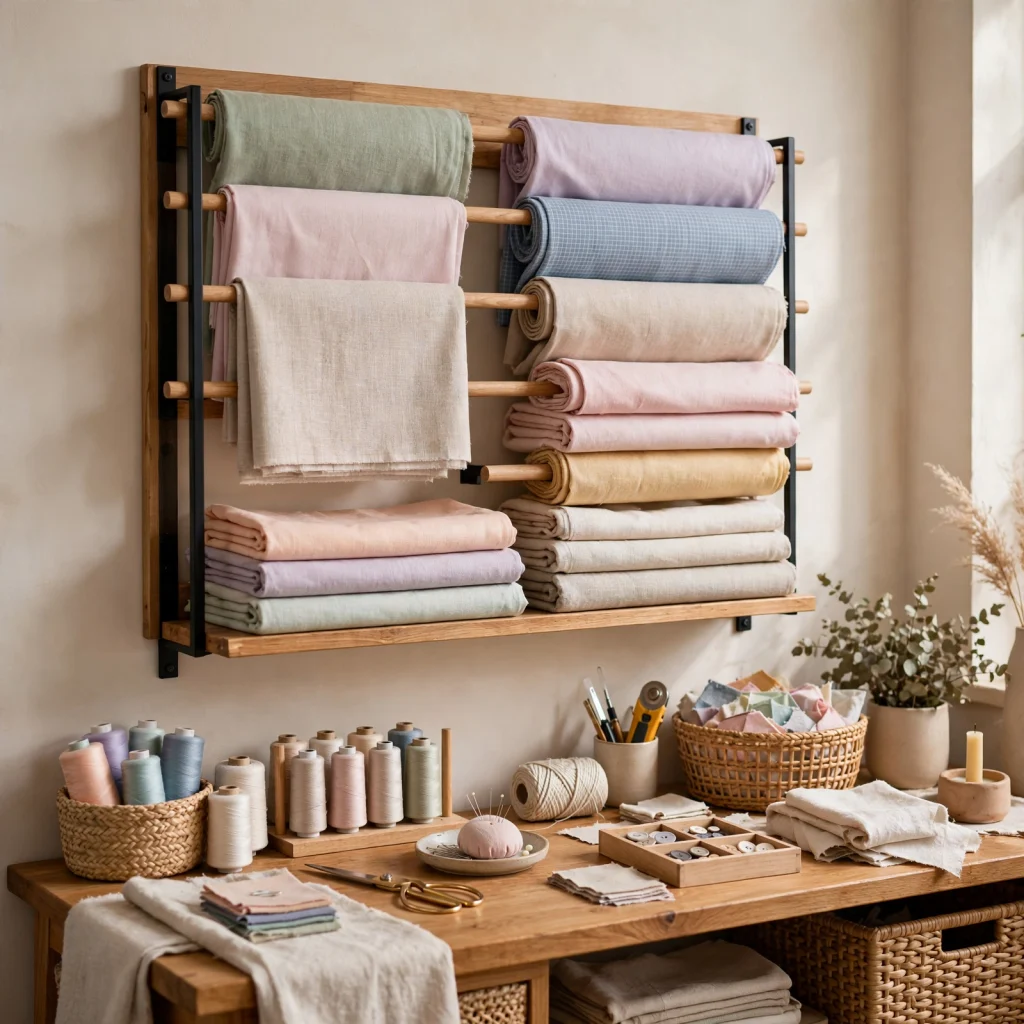
A wall-mounted fabric rack uses a bracket-and-rod system to hold rolled or folded fabric bolts upright against the wall instead of stacked flat on a shelf. Storing fabric this way makes it easier to see the full pattern and yardage available without unfolding a stack to find what’s underneath. It also keeps larger fabric collections from taking over shelf space that could otherwise hold smaller supplies or finished projects.
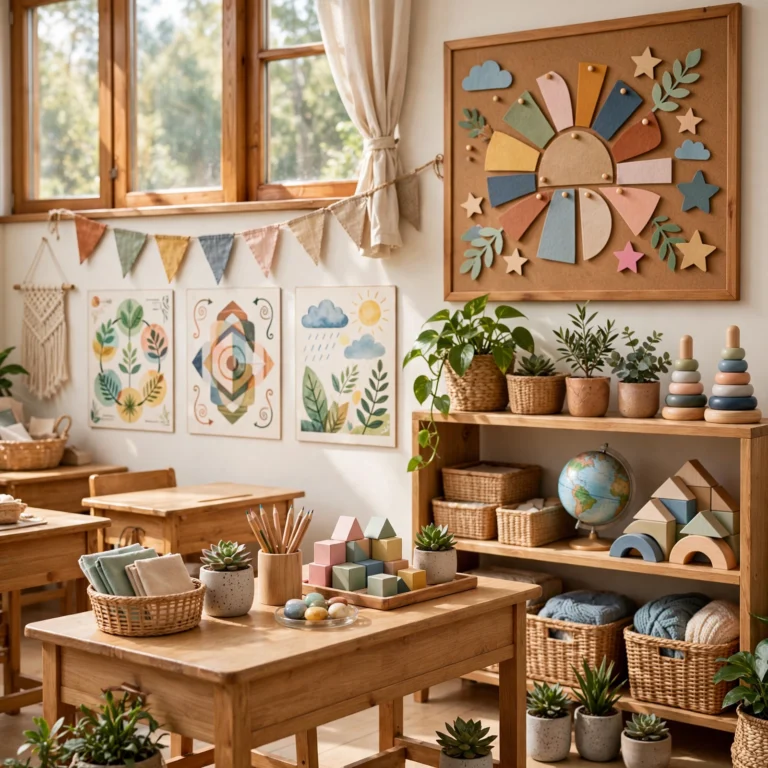
8. Cork Inspiration Board
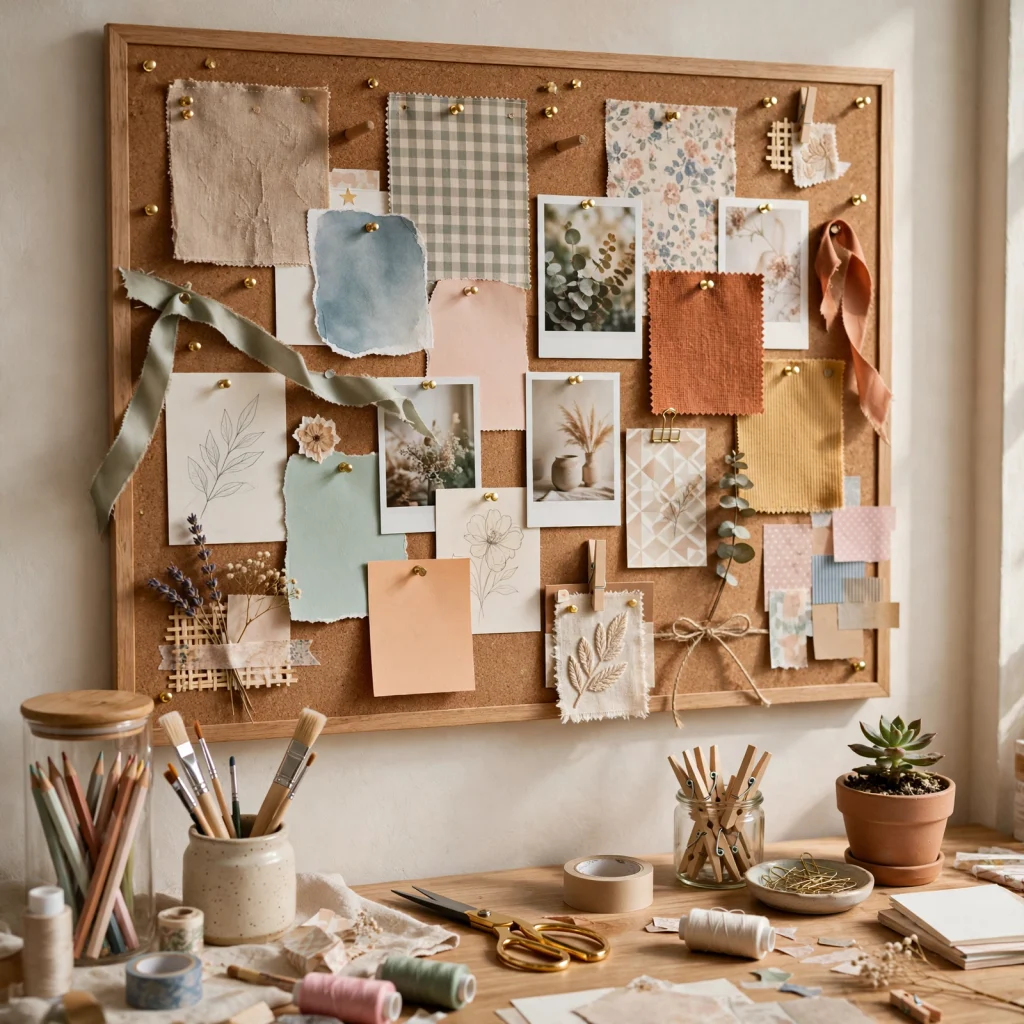
A cork inspiration board gives a wall a dedicated spot for pinning fabric swatches, color palettes, sketches, or reference photos for an in-progress project. Unlike a printed mood board, a cork version can be updated in seconds as a project evolves, making it more useful for active planning than for permanent decor. Framing the cork panel in wood or painted trim keeps it from reading as a plain utilitarian board once it’s mounted on the wall.
9. Floating Book Ledge
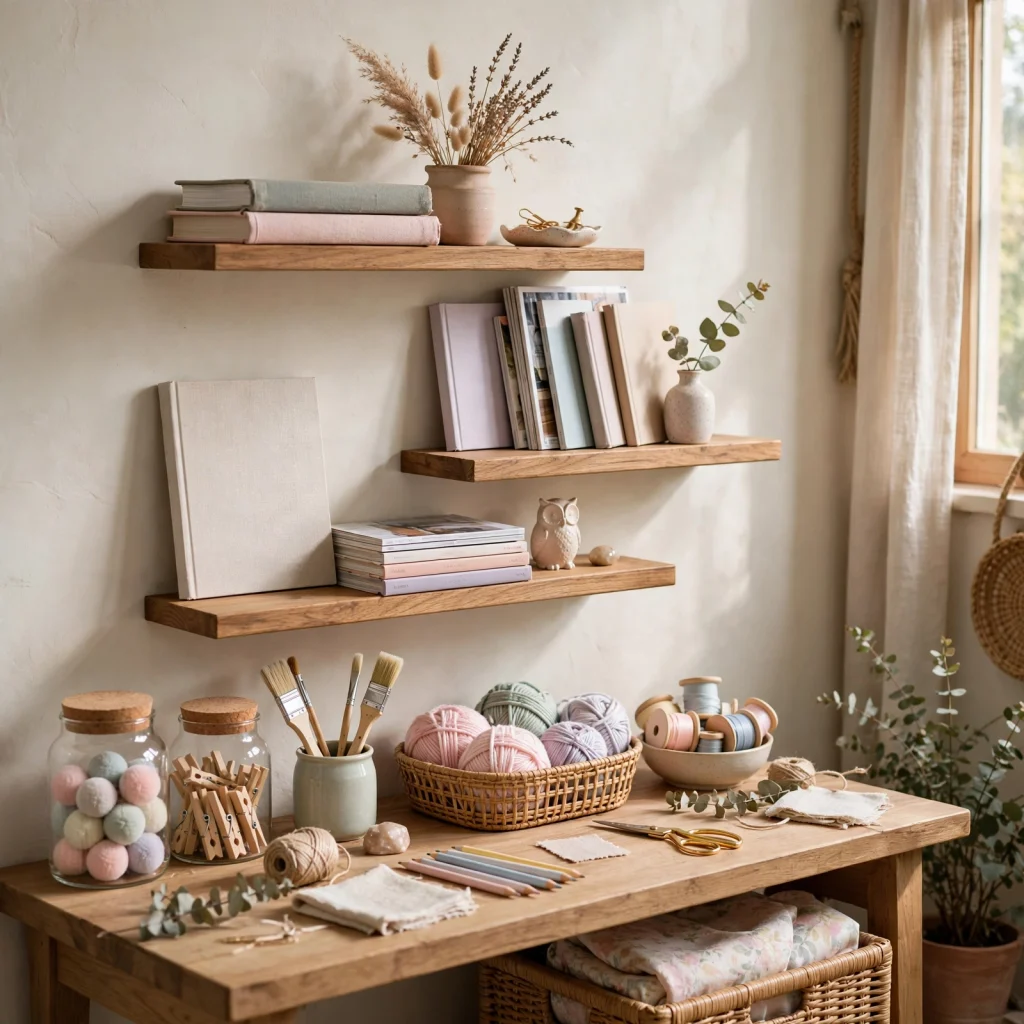
A floating book ledge holds pattern books, craft magazines, or reference guides face-out along a wall, similar to how a bookstore displays new releases. This makes it easier to flip through options while planning a project compared to searching spine-out titles on a traditional shelf. A ledge mounted near the cutting table or sewing station keeps frequently used references within arm’s reach during a project.
10. Vintage Sewing Machine Display
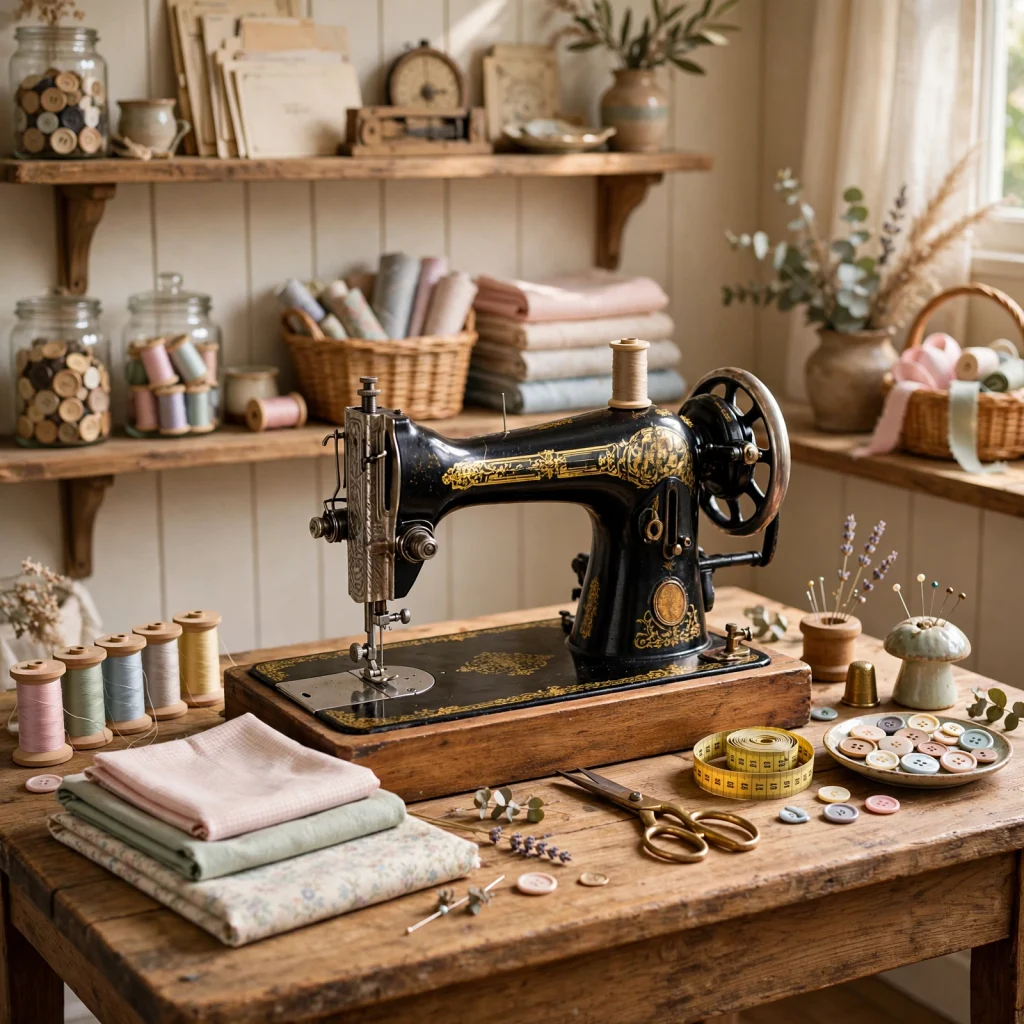
A vintage sewing machine display uses an older, non-functional or lightly-used machine as a decorative centerpiece on a shelf or side table rather than storing it out of sight. Many vintage machines have decorative metal detailing and wood cabinet bases that read as furniture on their own, even without being used regularly. This works particularly well in a craft room with a sewing focus, giving the space a collected, personal feel beyond its storage function.
11. Thread Spool Wall Art
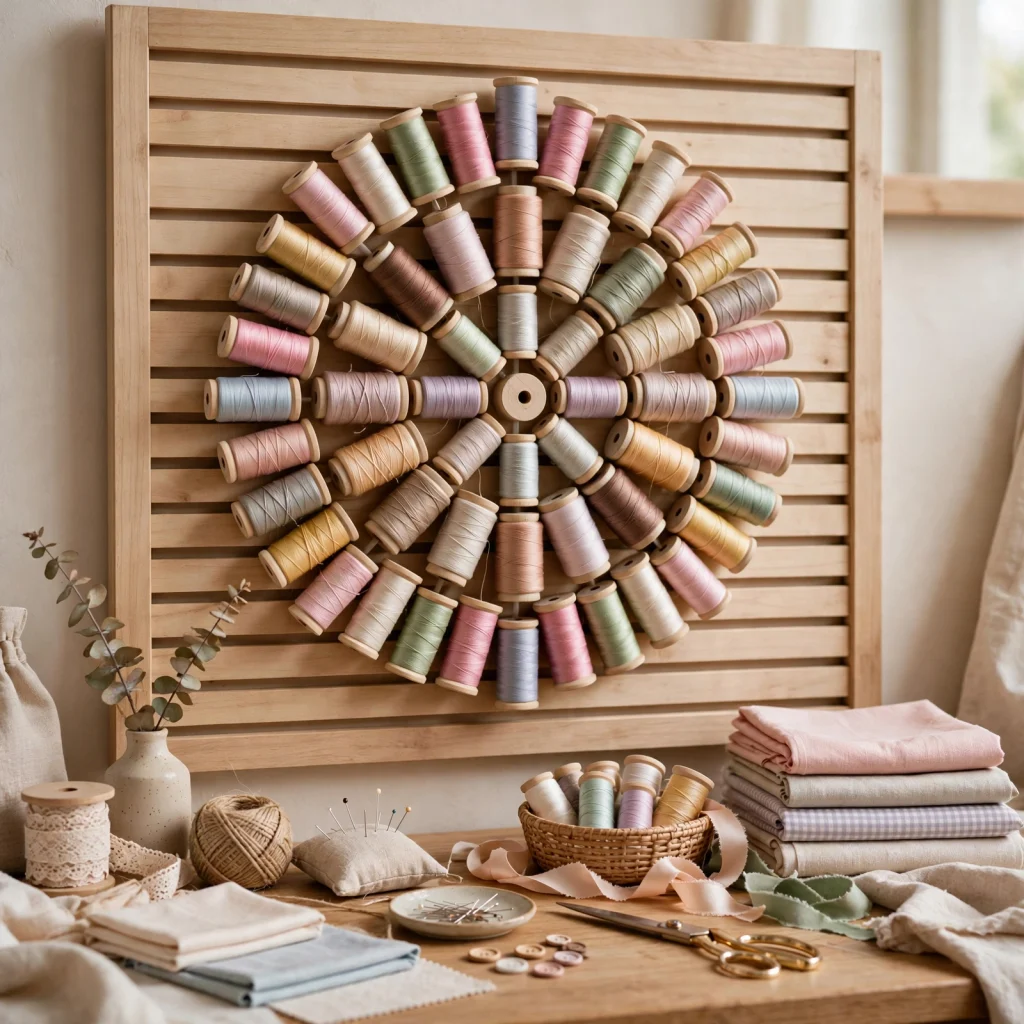
Thread spool wall art arranges a collection of thread spools by color into a shadow box or open wall-mounted frame, turning a practical supply into a decorative gradient display. It works well for anyone with a large existing thread collection, since the spools are already being stored somewhere and this simply makes that storage visible and organized by color. A shadow box with small dividers keeps spools from rolling out while still displaying the color arrangement clearly.
12. Magnetic Scissor Strip
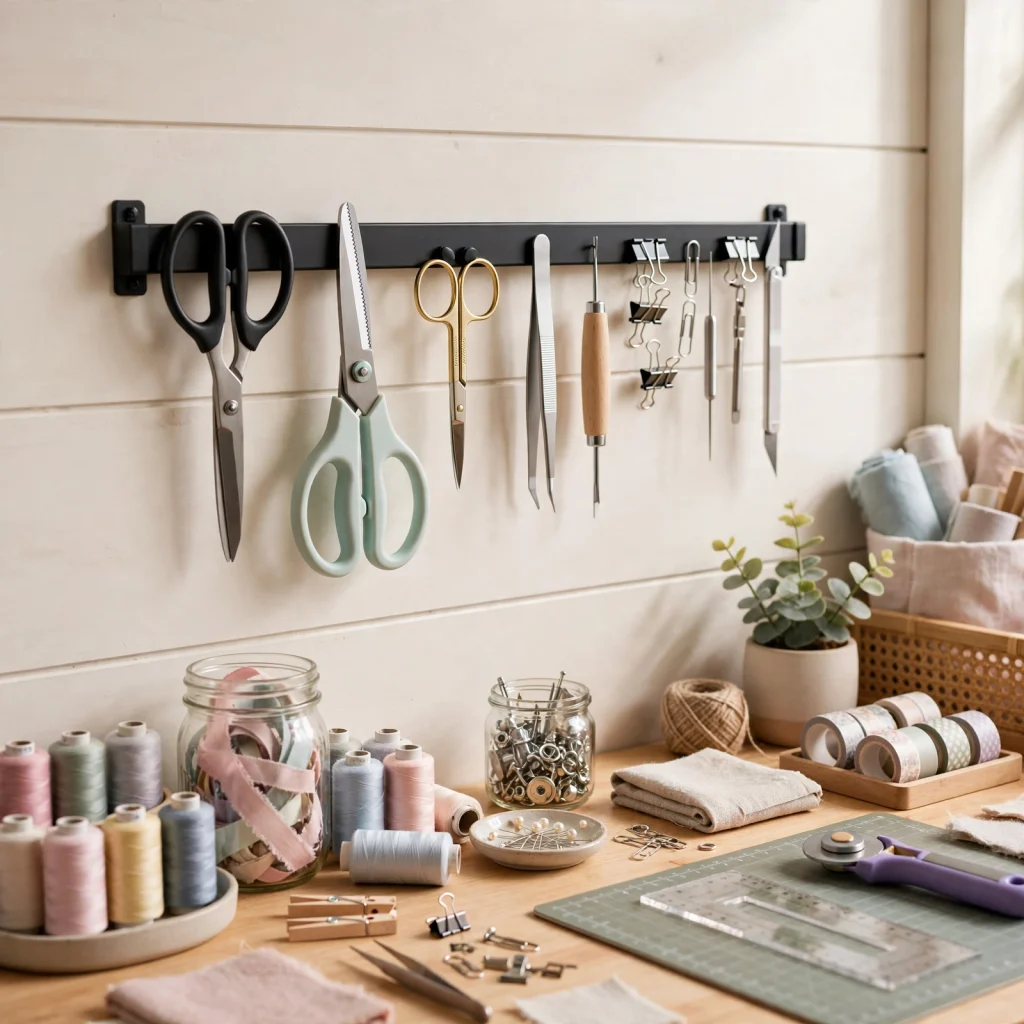
A magnetic scissor strip mounts a slim magnetic bar to the wall or inside a cabinet door, holding metal scissors, pins, and small tools in place without a drawer. It keeps frequently used cutting tools visible and within reach at the work table, reducing time spent searching drawers mid-project. This is a low-cost addition that pairs well with a pegboard setup, handling smaller metal tools that don’t fit neatly on pegboard hooks.
13. Task Lighting Fixture
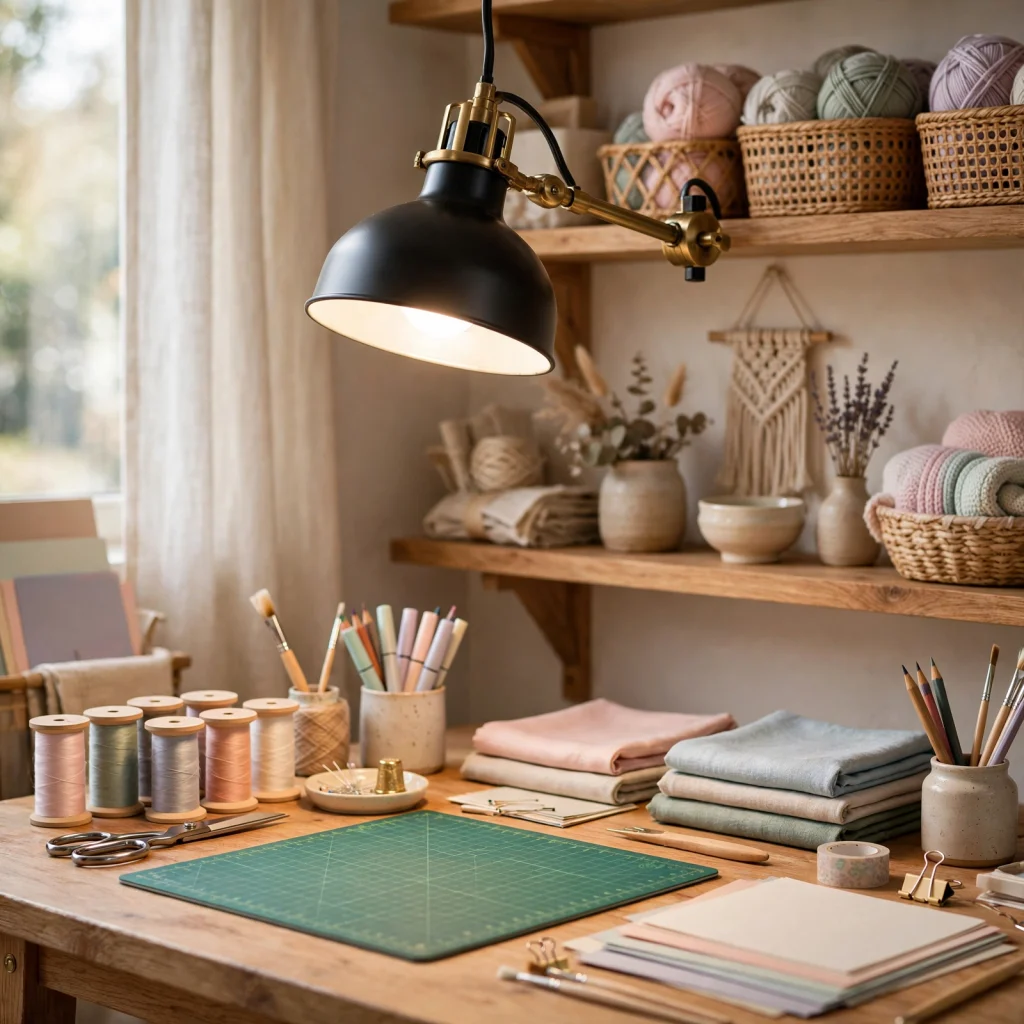
A task lighting fixture adds a focused, adjustable light source directly above a cutting table or sewing station, supplementing overhead room lighting that’s often too dim or too indirect for detailed work. A gooseneck lamp or a clamp-mounted fixture works well since both can be repositioned as needed without taking up desk space permanently. Daylight-balanced bulbs, rather than warm yellow-toned ones, make it easier to judge true fabric or paint color while working.
| Light Type | Best For | Placement |
| Gooseneck lamp | Detail work, sewing | Clamped to table edge |
| Under-shelf LED strip | General work surface | Mounted under shelving |
| Floor lamp | Ambient room lighting | Near seating or reading area |
14. Chalkboard Label Tags
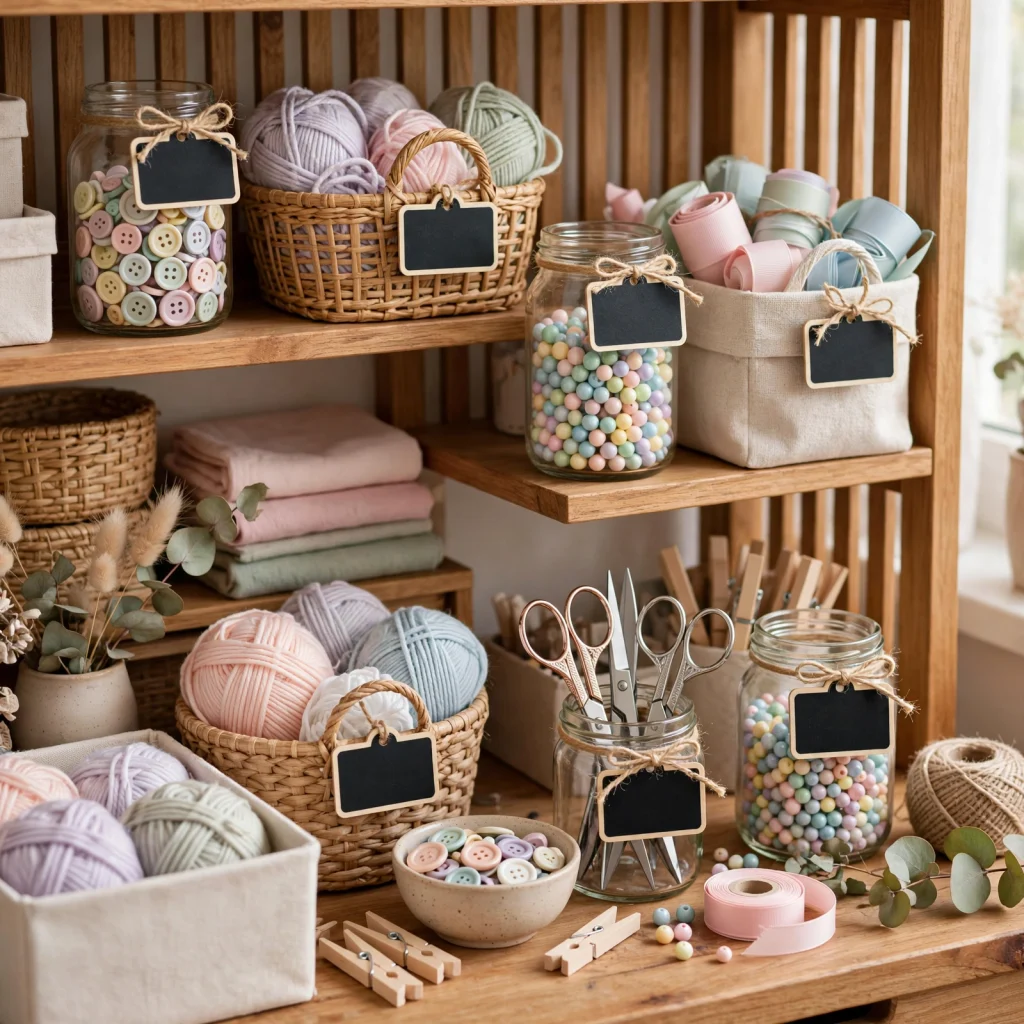
Chalkboard label tags use small chalkboard-painted wood or metal tags tied or clipped to bins, jars, and baskets, allowing labels to be updated by hand as supplies change. This works better than printed labels for a craft room where categories shift often, since a label can be wiped clean and rewritten instead of replaced. Hand-lettered tags also add a personal, handmade touch that fits naturally into a room centered around making things.
15. Stackable Paper Trays
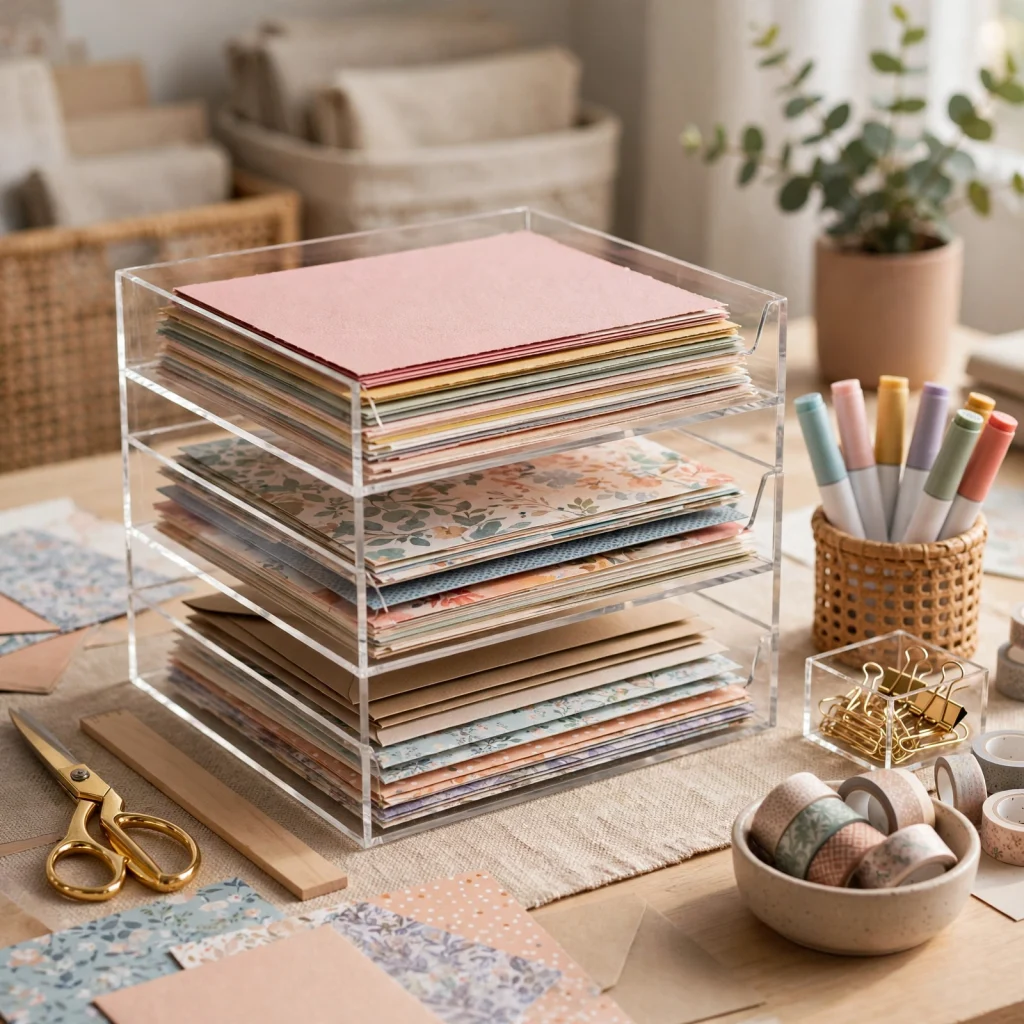
Stackable paper trays hold cardstock, patterned paper, or stencils flat and sorted by size or color, preventing larger sheets from bending or curling in a drawer. Trays that stack vertically make efficient use of shelf height in a smaller craft room, and clear or wire-frame trays let you see paper stock without pulling each one out. This kind of storage is especially useful for scrapbooking or card-making setups where paper takes up a large share of total supplies.
16. Gallery Wall of Finished Projects
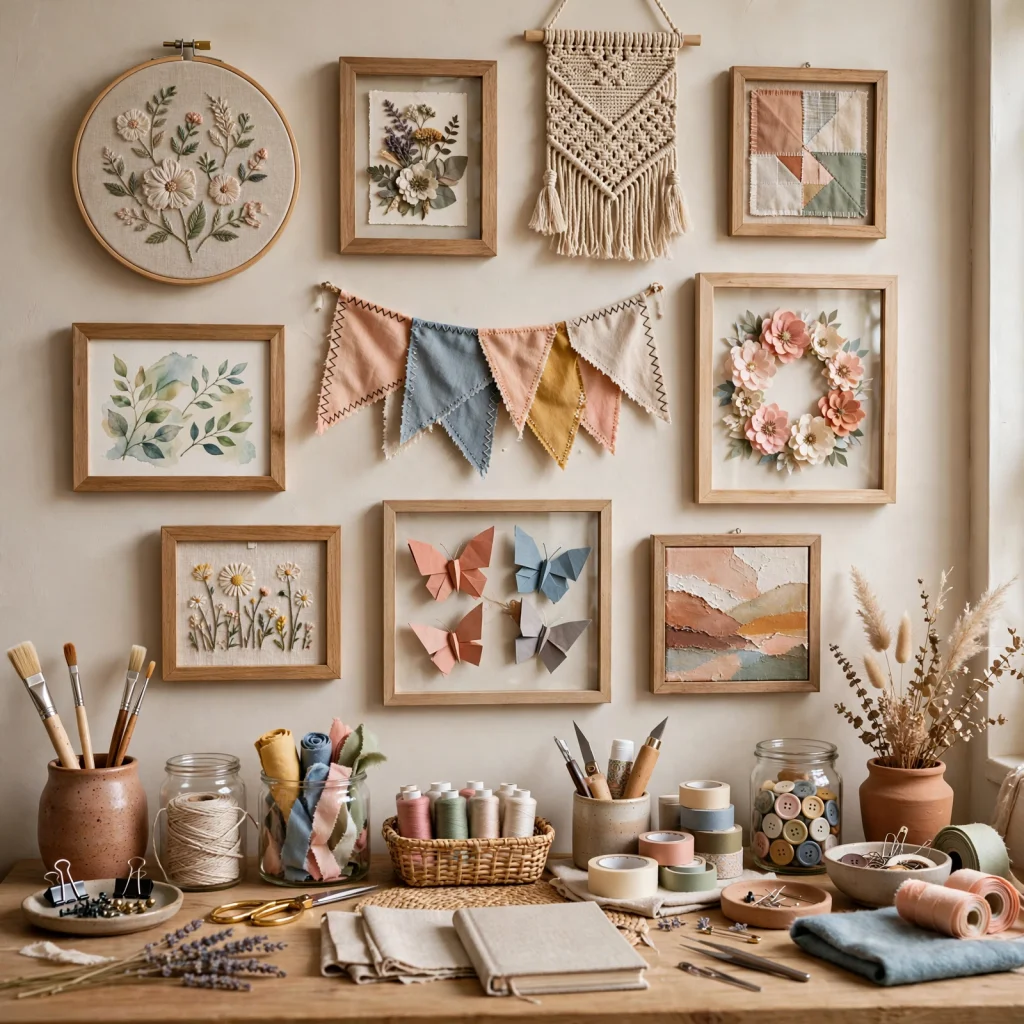
A gallery wall of finished projects displays completed crafts, embroidery hoops, or framed fabric pieces on a dedicated wall instead of storing finished work in a closet or drawer. It gives the room a sense of progress and personal history, and it doubles as informal inspiration when starting a new project. Rotating pieces in and out as new projects are finished keeps the wall feeling current rather than static.
Shop the Look
A few pieces to start with: a paintable pegboard organizer kit, a three-tier rolling craft cart, a set of clear labeled storage bins in matching sizes, a clamp-on gooseneck task lamp, and a self-healing cutting mat sized for a standard folding table. These cover most of the functional gaps in a craft space before adding more decorative pieces like display shelving or a gallery wall.
Common Mistake to Avoid
A common mistake is buying storage bins and shelving before measuring the actual supplies and wall space available, which often leads to mismatched bin sizes or shelves that are too shallow for fabric bolts or paper stock. Sorting and roughly measuring your supply categories first, then choosing storage sized to fit them, prevents the frustrating cycle of returning bins or squeezing oversized items into containers that don’t quite work.
FAQs
What’s the most important thing to plan first in craft room decor?
Layout should come before any decorative choices, since a craft room only feels finished once supplies have a clear, accessible place to live. Starting with a pegboard or shelving system sized to your actual supply volume, then adding a properly sized cutting or work table, gives the room a functional foundation. Decorative elements like a gallery wall or vintage display piece work best layered in after the practical setup is settled.
How do I organize a small craft room without built-in storage?
Wall-mounted solutions like pegboards, floating shelves, and magnetic strips make the most of a small craft room since they don’t take up floor space the way cabinets or freestanding shelving units do. A rolling cart also helps in tight spaces, since it can be tucked into a corner or closet when not actively in use. Prioritizing vertical storage over floor-level bins tends to free up more usable workspace in a smaller room.
What kind of lighting works best for a craft room?
A combination of general overhead lighting and focused task lighting at the work table tends to work best, since overhead light alone often isn’t bright or direct enough for detailed cutting or sewing. Daylight-balanced bulbs, rather than warm-toned ones, make it easier to judge true color when working with fabric, paint, or paper. A clamp-on or gooseneck lamp positioned directly over the main work surface is usually enough to fill that gap.
How can I make a craft room feel decorated instead of just functional?
Displaying finished projects, a collection of tools like vintage sewing machines, or a color-sorted thread or ribbon arrangement turns everyday supplies into decor rather than hiding everything away in closed storage. A gallery wall of completed work or a cork inspiration board also adds a personal, evolving element that a purely storage-focused room often lacks. Mixing in even one or two of these display pieces alongside practical storage makes a noticeable difference.
Do I need a dedicated cutting table, or can I use a regular desk?
A regular desk can work for smaller projects, but a dedicated cutting table set at a taller height reduces back strain during longer cutting sessions, particularly for fabric or paper work involving repeated bending over the surface. If space or budget doesn’t allow for a separate table, adding a self-healing cutting mat to an existing desk at least protects the surface and provides measurement guides, even without the added height benefit.
Conclusion
Craft room decor works best when storage comes first and the decorative touches, like a gallery wall or a vintage display piece, get layered in around it. Start with whichever storage gap is causing the most daily frustration, whether that’s fabric, paper, or small tools, and build outward from there. Save this post to Pinterest for later, or check out our related guide on small space storage solutions for more ideas.