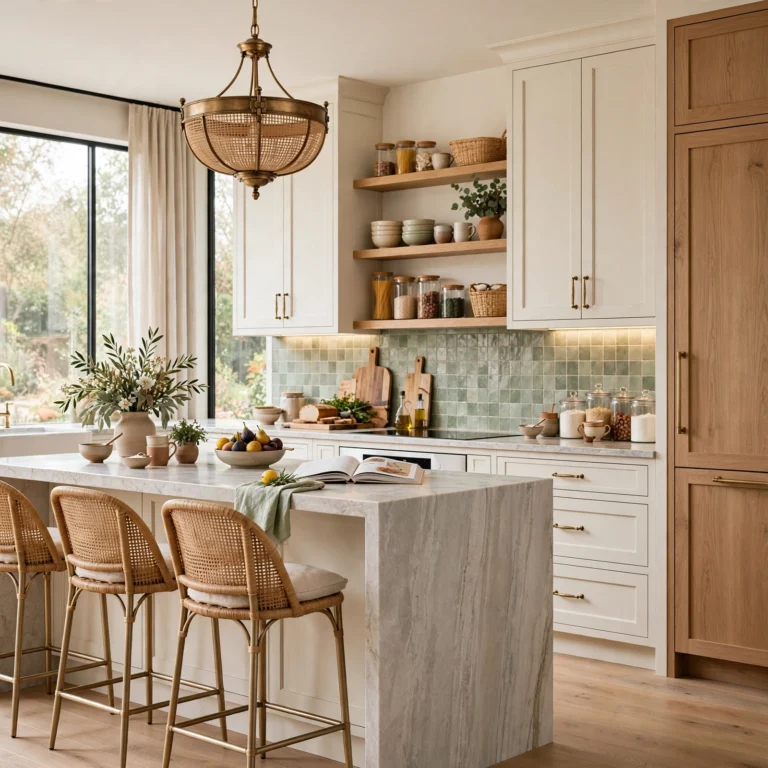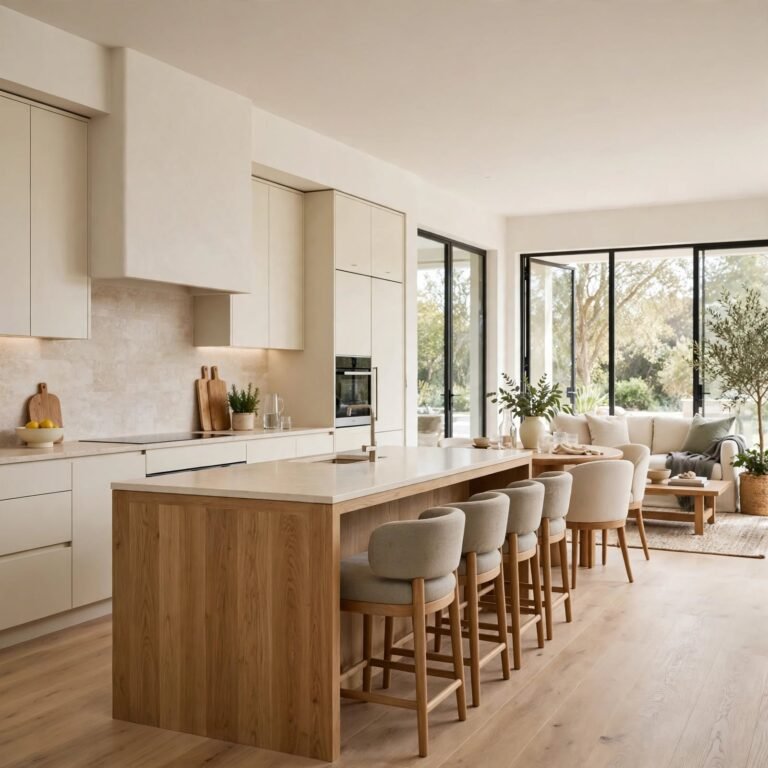
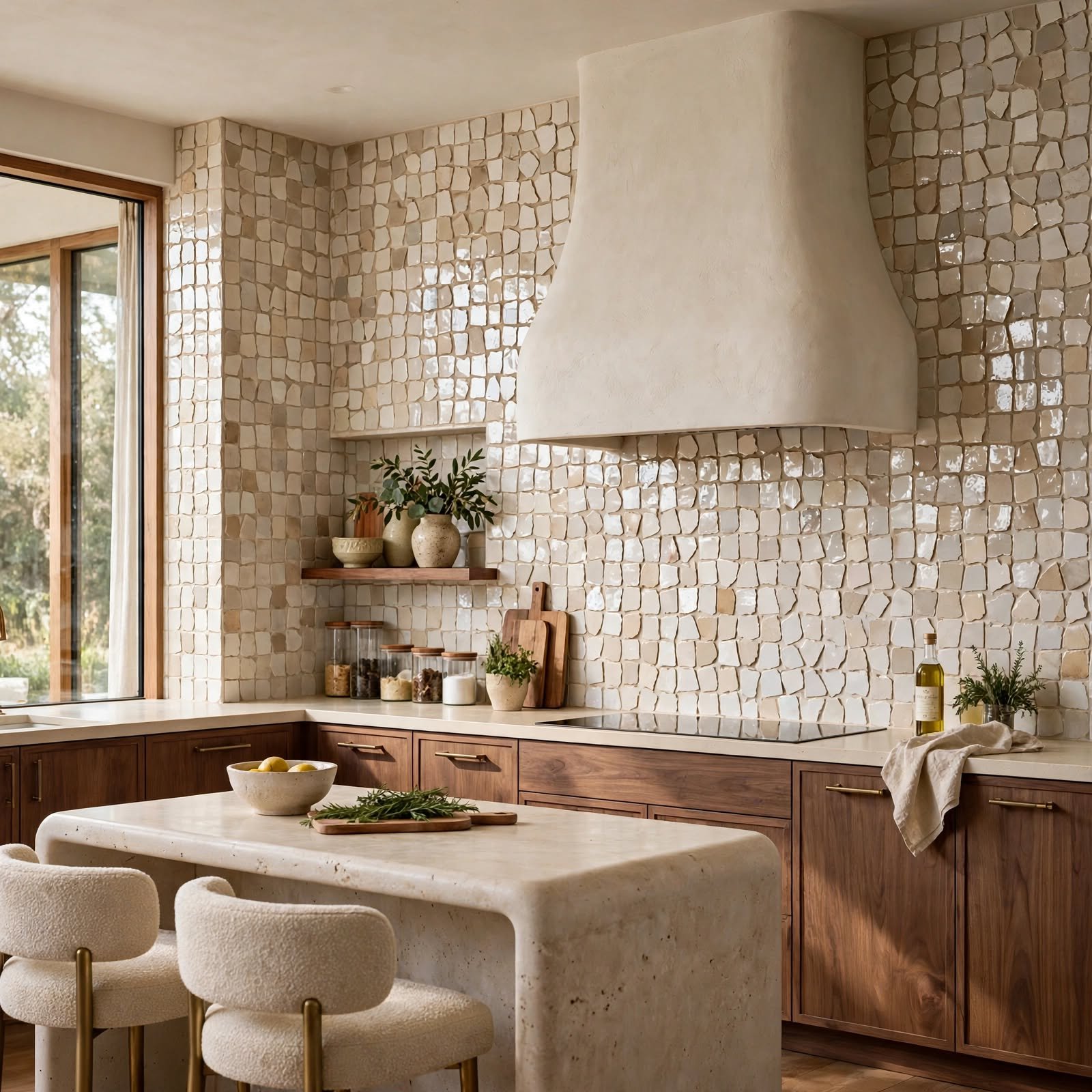
14 Trendy Kitchen Backsplash Ideas That Define Every Style
Choosing among kitchen backsplash ideas can feel overwhelming once you start browsing tile showrooms and design boards. The right backsplash pulls together your countertops, cabinetry, and appliances into one finished look, while the wrong choice can make a newly renovated kitchen feel disjointed.
Trend & Background
Kitchen backsplashes have moved well past the standard white subway tile that dominated kitchens for over a decade. Homeowners are now leaning into handmade zellige tile, bold color, and full stone slabs that treat the backsplash as a design feature rather than an afterthought. This shift is partly driven by social platforms where visual first kitchens get shared widely, and partly by a renovation market where buyers want kitchens that photograph well and stand out from builder grade defaults. Material innovation in porcelain and engineered stone has also made once expensive looks more accessible.
Key Takeaways
- Kitchen backsplash ideas range from classic subway tile to bold zellige and stone slab designs, each suited to different budgets and kitchen styles.
- Material choice affects maintenance, with natural stone requiring sealing while porcelain and glass stay low maintenance.
- Grout color and tile layout change the visual impact of a backsplash as much as the tile itself.
- Pairing backsplash material with countertop and cabinet finishes creates a cohesive kitchen design.
Kitchen Backsplash Ideas You’ll Love
This guide walks through fourteen distinct backsplash styles, from budget friendly subway tile to statement making stone slabs, so you can find the direction that fits your kitchen’s layout, your maintenance tolerance, and your renovation budget.
1. Zellige Tile Kitchen Backsplash Ideas
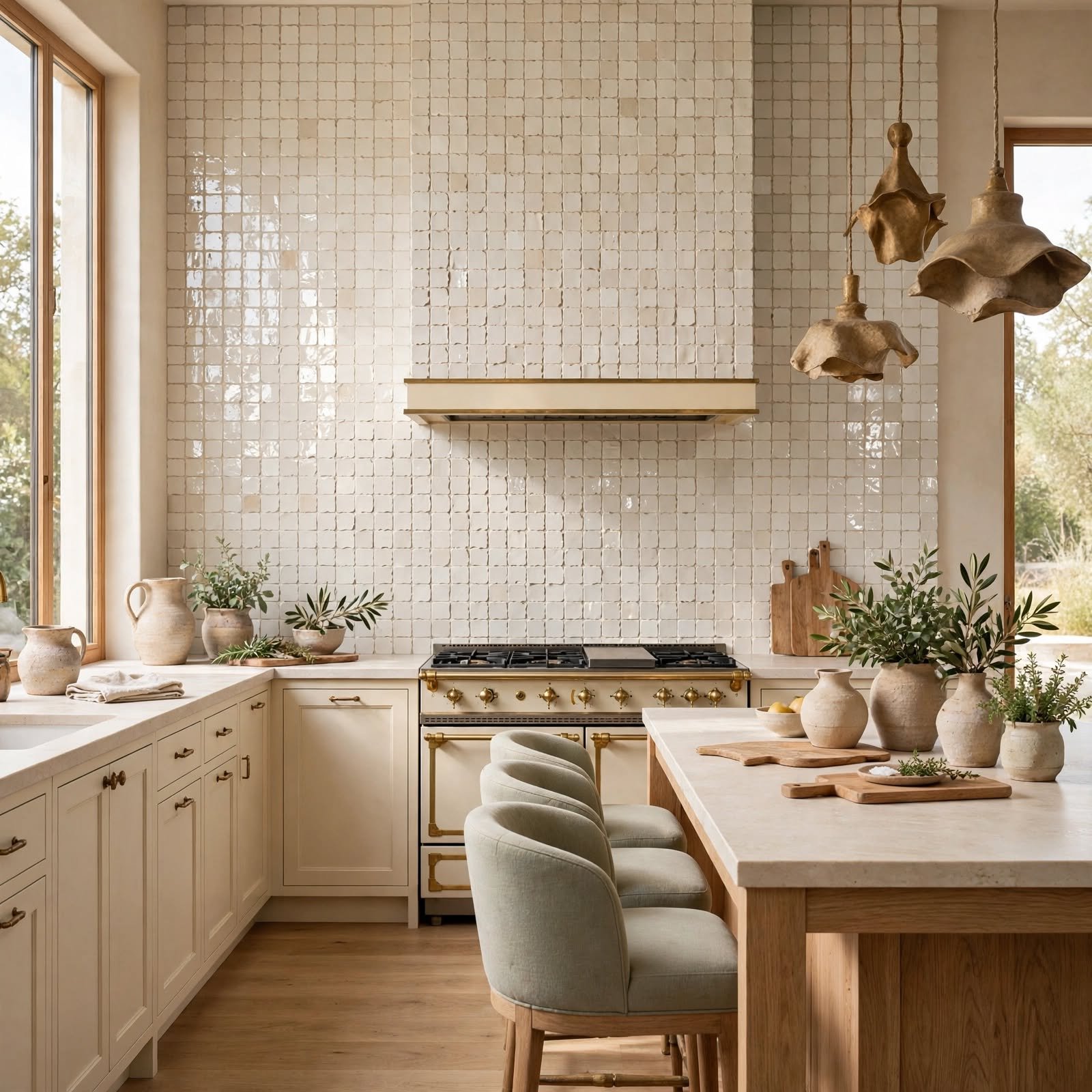
Zellige tile is handmade Moroccan clay tile known for its irregular surface, slight color variation, and glossy, glass like finish. Because each tile is fired and glazed individually, no two pieces are identical, which gives a backsplash movement and depth that machine made tile can’t replicate. It works especially well in kitchens with simple white or wood cabinetry, since the tile itself becomes the visual anchor. Installers recommend a skilled tile setter for zellige, since the uneven edges require careful spacing and a slightly wider grout line.
2. Subway Tile Herringbone Kitchen Backsplash Ideas

A herringbone layout takes standard rectangular subway tile and arranges it in a diagonal zigzag rather than the traditional running bond pattern. This single change adds visual energy to an otherwise classic tile shape, making it a favorite for kitchens that want a timeless material with a more current layout. Herringbone works in ceramic, porcelain, or marble, and pairs well with both shaker and flat panel cabinet styles. Installation takes longer than straight set tile due to the angled cuts required at edges.
3. Full Marble Slab Kitchen Backsplash Ideas
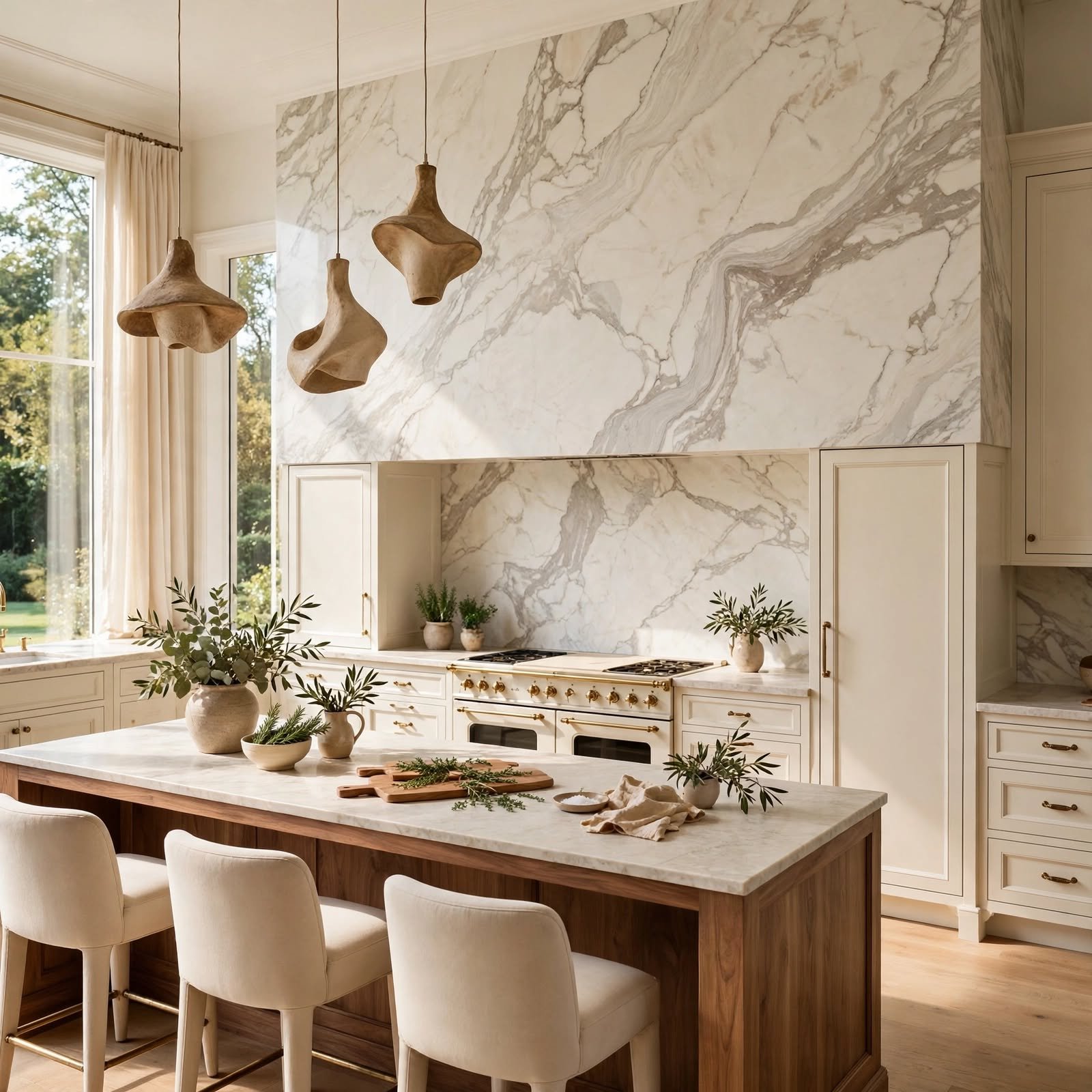
A full marble slab backsplash extends the countertop material straight up the wall, often behind the range, eliminating grout lines entirely for a seamless, high end look. This approach is popular in kitchens that already feature marble or quartzite countertops, since matching the slab creates continuity between surfaces. Fabricators typically book the slab as a continuation of the countertop piece to match veining. The main tradeoff is cost, since slab material and cutting fees run higher than tile per square foot.
Check Out More About Kitchen Design Ideas.
4. Fluted Wood Panel Kitchen Backsplash Ideas
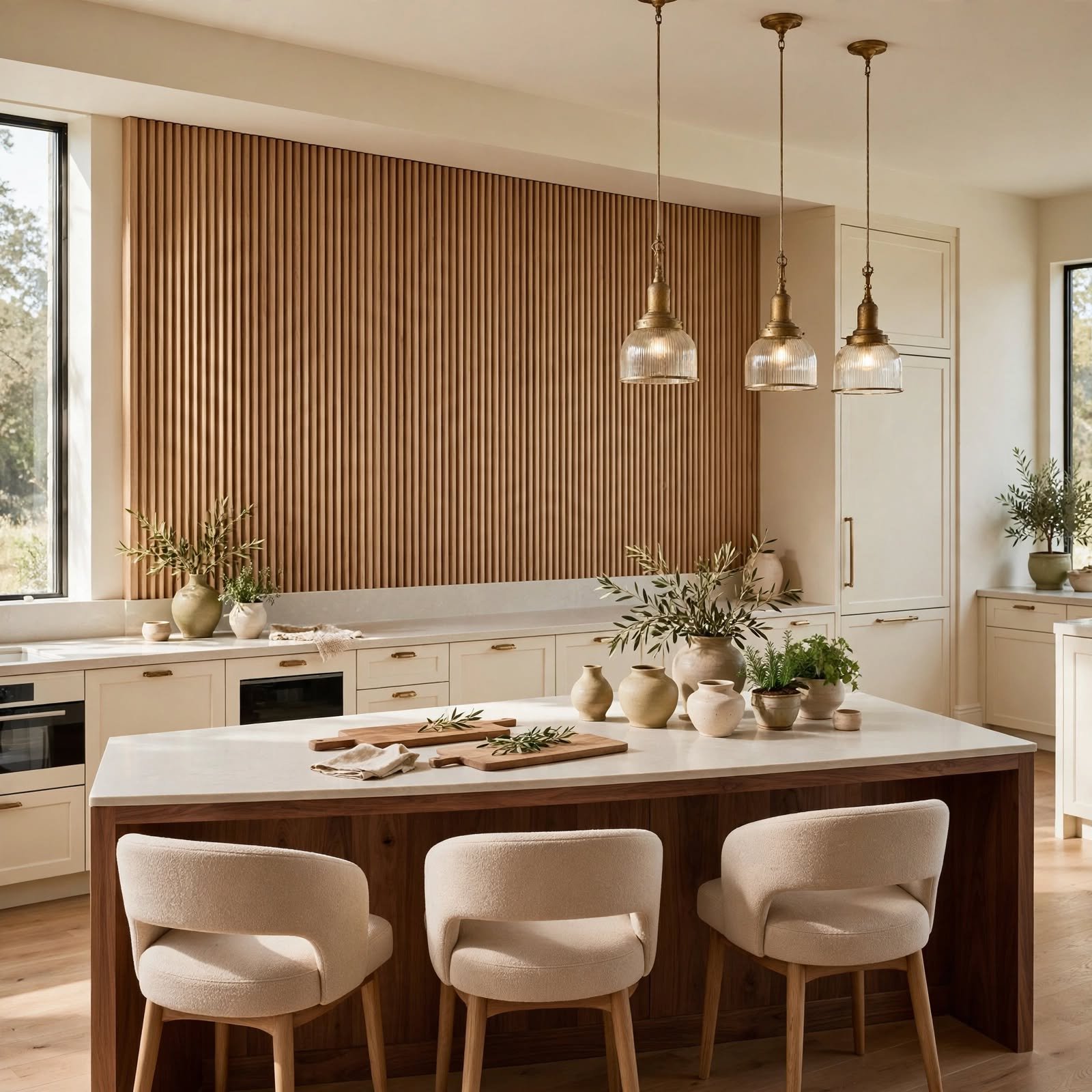
Fluted wood panel backsplashes bring a ribbed, vertical groove wood texture into the kitchen, most often used behind open shelving or as an accent section rather than full wall coverage. The material introduces warmth and texture that tile can’t match, and it pairs naturally with brass or matte black hardware. Because wood near a cooktop needs protection from heat and moisture, this style works best away from direct splash zones or with a sealed, moisture resistant panel product. It’s a strong fit for Scandinavian or Japandi kitchens.
5. Checkerboard Tile Kitchen Backsplash Ideas
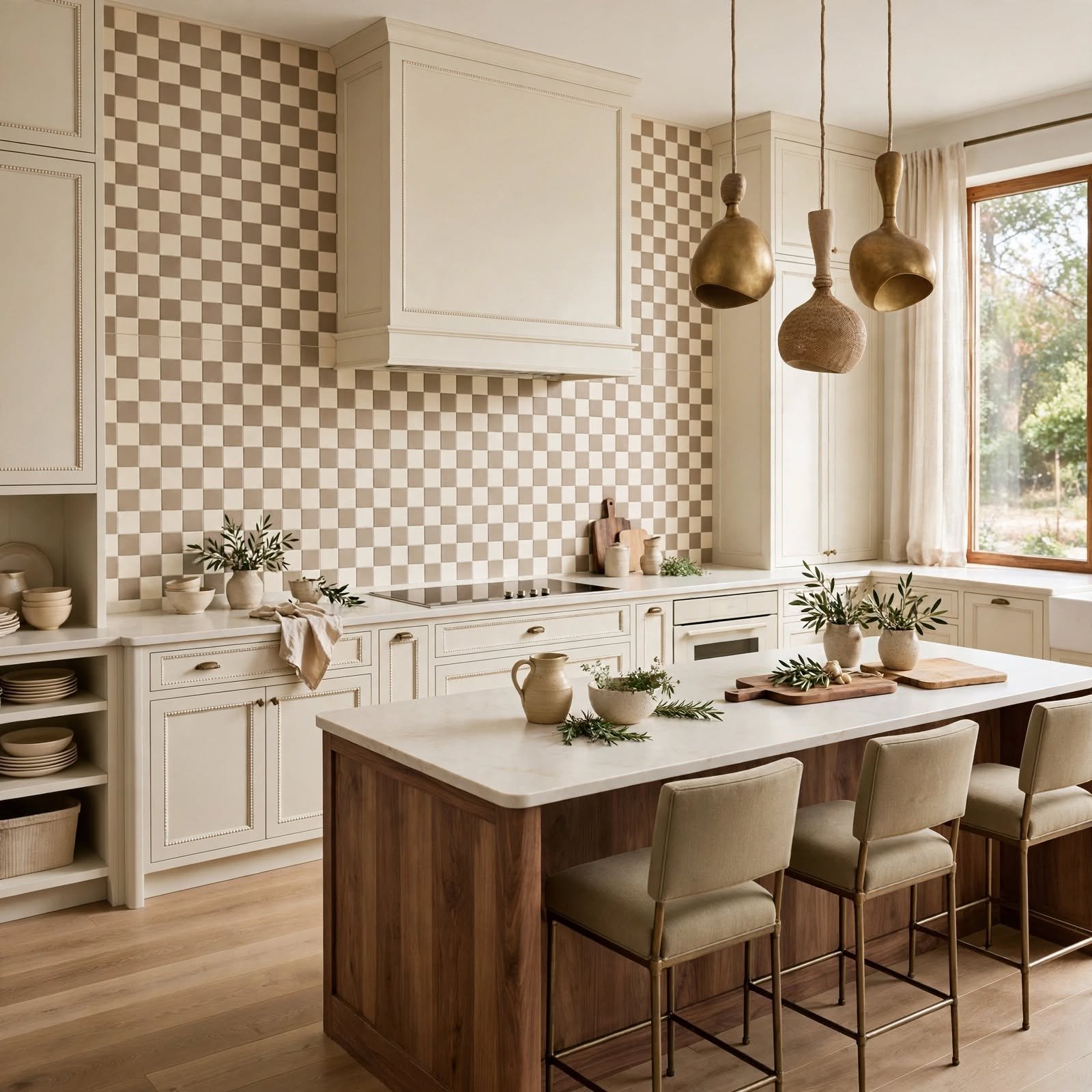
Checkerboard tile alternates two contrasting tile colors in a grid pattern, most classically black and white, though kitchens now use softer combinations like sage and cream or terracotta and white. The pattern draws the eye and works well as a floor to backsplash matching elements or as a standalone wall feature. Smaller tile sizes, such as two inch squares, tend to read as more traditional, while larger format checkerboard feels more modern. This style suits kitchens that want a graphic statement without relying on color alone.
6. Handpainted Talavera Tile Kitchen Backsplash Ideas
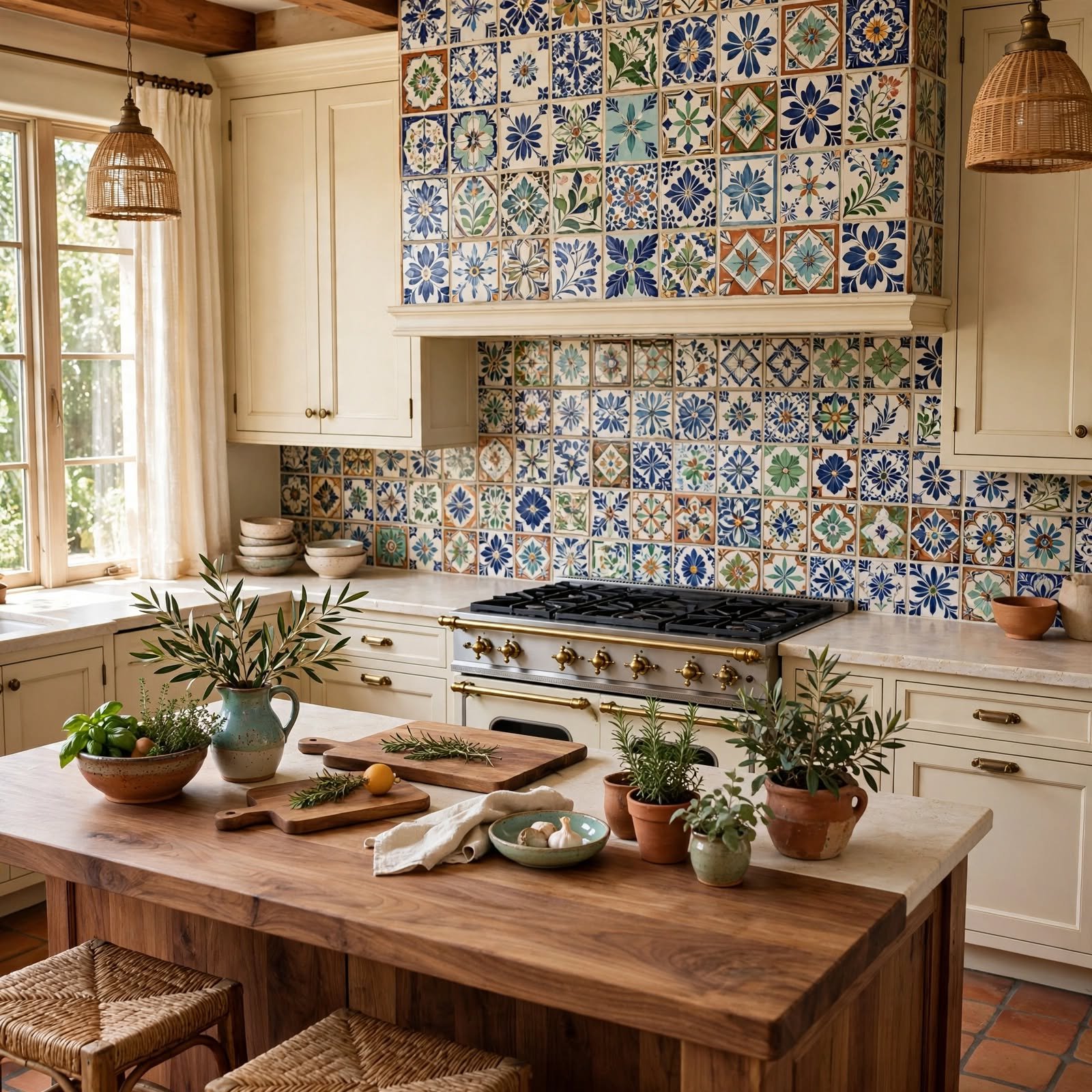
Handpainted Talavera tile originates from Mexican ceramic traditions and features bold floral or geometric motifs in saturated blues, yellows, and terracottas. Unlike solid color tile, Talavera brings pattern and story to a backsplash, often used as a framed accent behind a range or as a full wall feature in kitchens with a maximalist or bohemian direction. Because the patterns are dense, designers usually pair Talavera with simple, unadorned cabinetry and countertops so the tile remains the visual focal point rather than competing with other patterned elements.
7. Glass Subway Tile Kitchen Backsplash Ideas
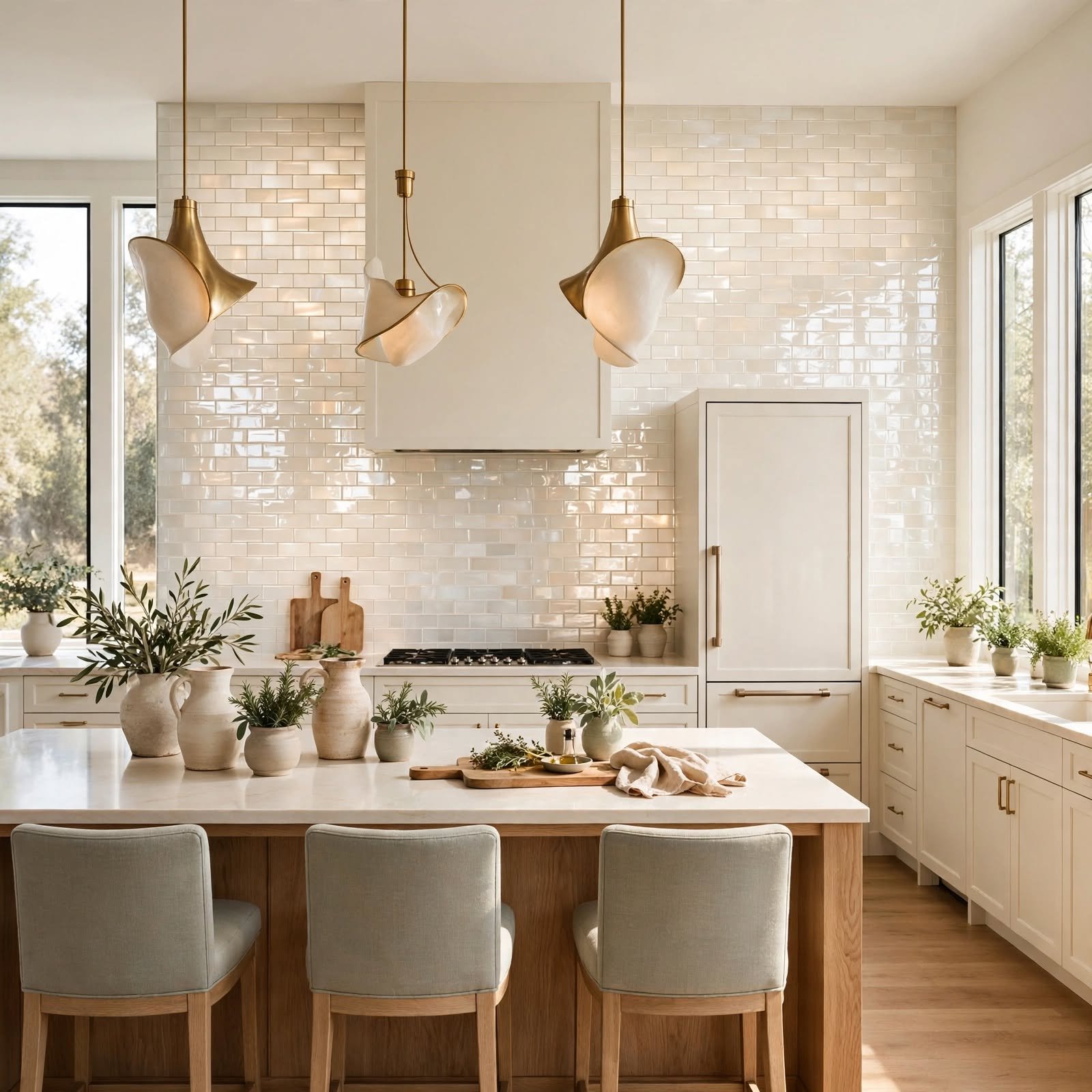
Glass subway tile uses the same rectangular shape as ceramic subway tile but reflects light differently, giving the backsplash a subtle sheen and a sense of depth behind the glass surface. It’s easy to wipe clean, resists staining, and works particularly well in kitchens with limited natural light, since the reflective surface brightens the space. Glass tile is available in nearly any color, making it useful for kitchens built around a specific accent tone, such as sage green or deep teal cabinetry.
8. Skinny Stacked Brick Tile Kitchen Backsplash Ideas
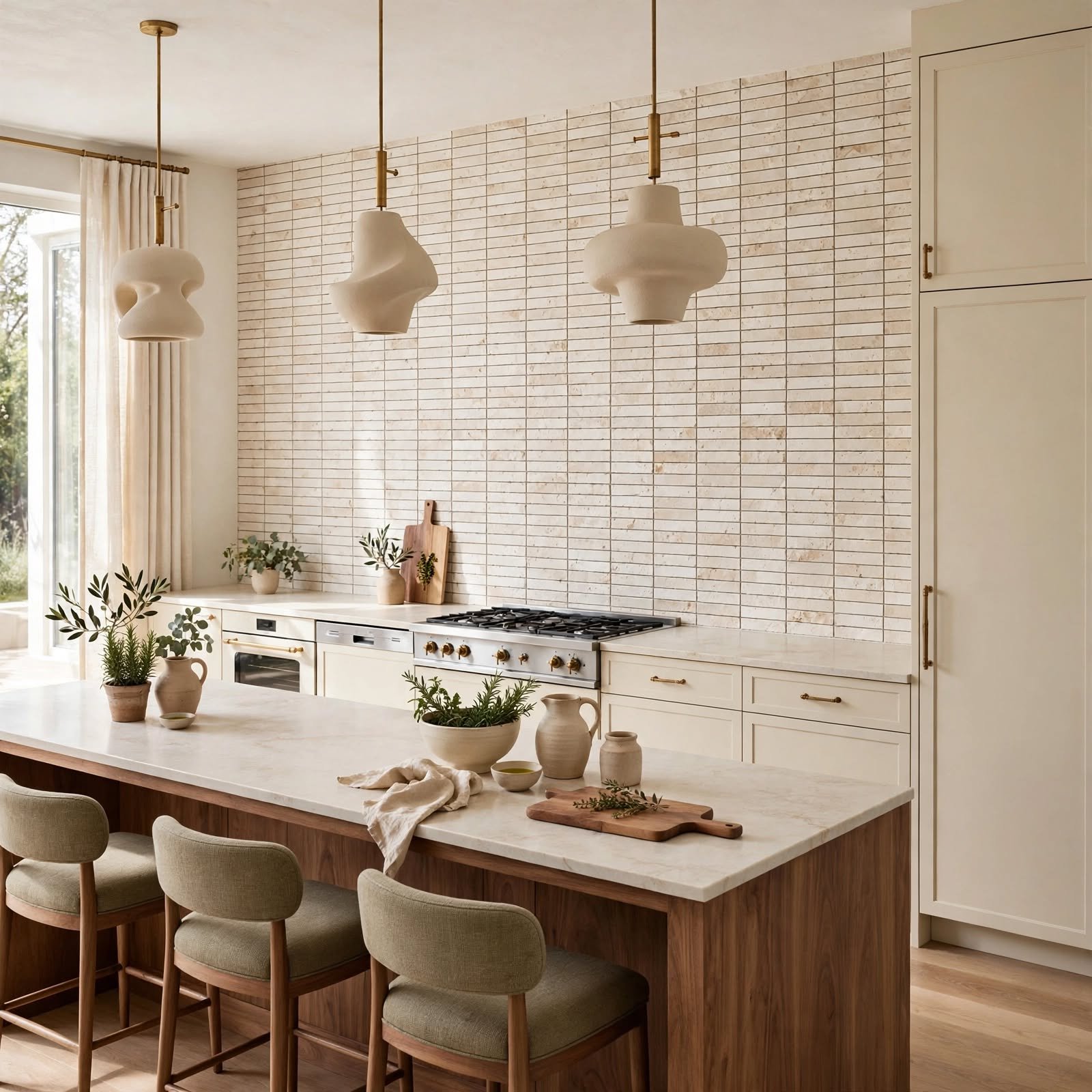
Skinny stacked brick tile uses narrow, elongated rectangular tiles set in a straight vertical or horizontal stack rather than the offset brick lay pattern. The tall, slim proportions elongate a wall and work well in kitchens with limited backsplash height, such as those with windows over the sink. This layout minimizes grout lines compared to smaller tile formats, giving a cleaner, more streamlined appearance. It suits transitional kitchens that want texture without the busyness of a patterned tile.
9. Terracotta Tile Kitchen Backsplash Ideas
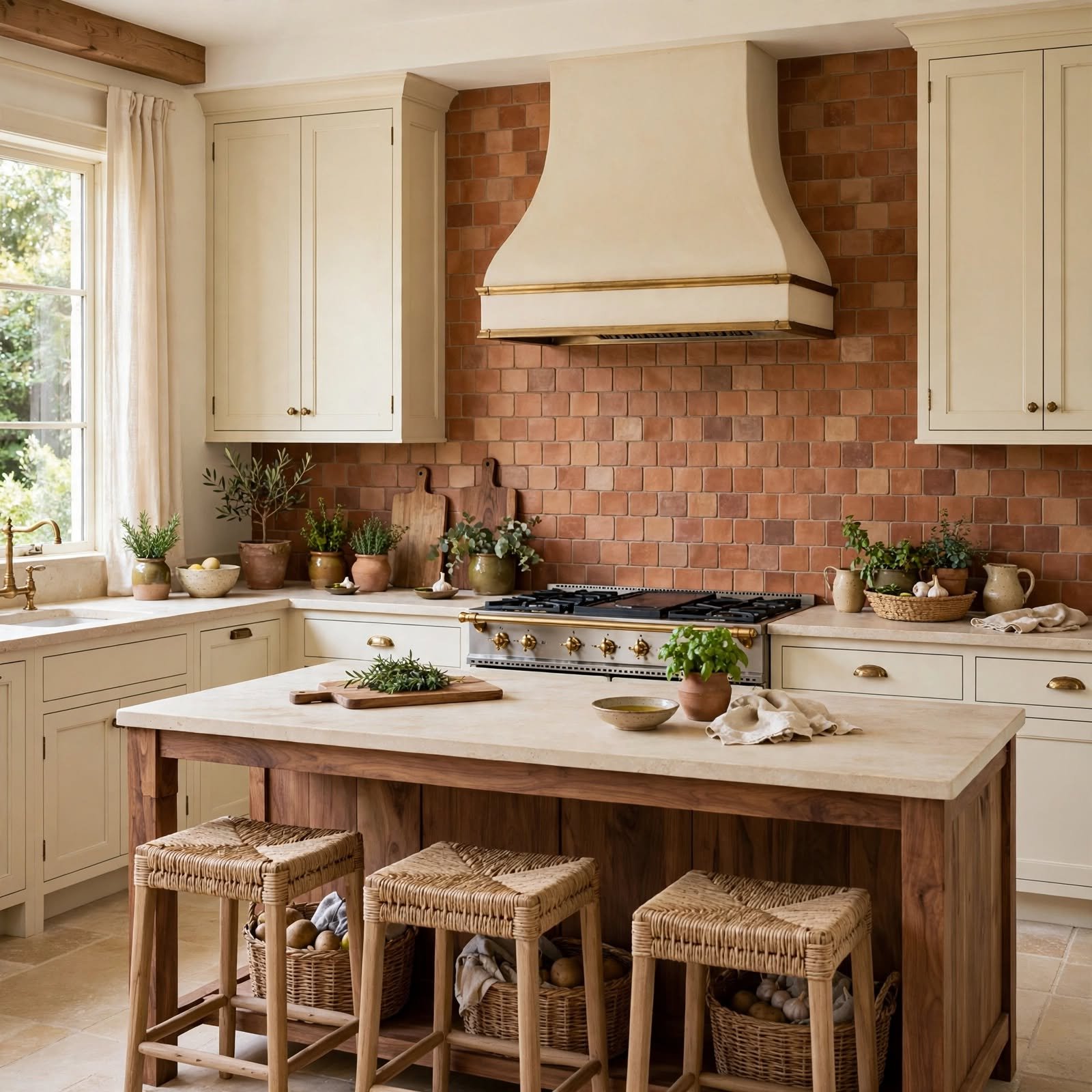
Terracotta tile brings warm, earthy clay tones to the backsplash, often in a slightly irregular, handmade-looking square or hexagon shape. It pairs naturally with wood cabinetry, brass fixtures, and warm-toned countertops, and has become a go-to choice for kitchens moving away from all white color schemes. Unsealed terracotta can stain, so most kitchen installations use a sealed or glazed version specifically rated for wet areas. This tile style fits Mediterranean, Spanish colonial, and modern rustic kitchen directions particularly well.
10. Quartz Waterfall Backsplash Kitchen Ideas
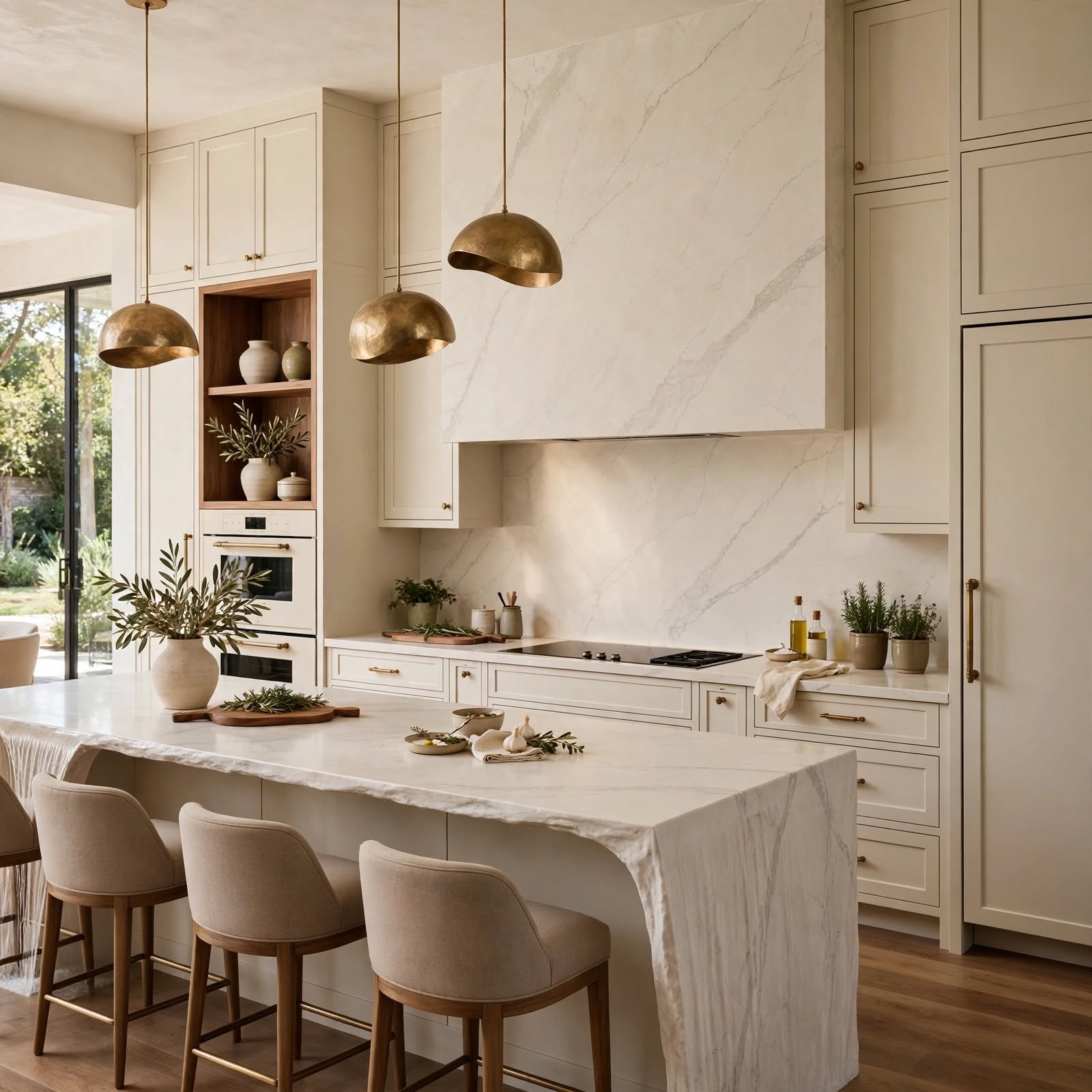
A quartz waterfall backsplash matches the countertop slab and continues up the wall, similar to a marble slab approach but using engineered quartz for a more uniform, low maintenance surface. Quartz resists staining and doesn’t require sealing, making it a practical choice for busy kitchens that still want the seamless slab look. Fabricators cut the backsplash piece from the same slab as the countertop when possible, ensuring the pattern lines up without visible seams or mismatched veining.
11. Fish Scale Tile Kitchen Backsplash Ideas
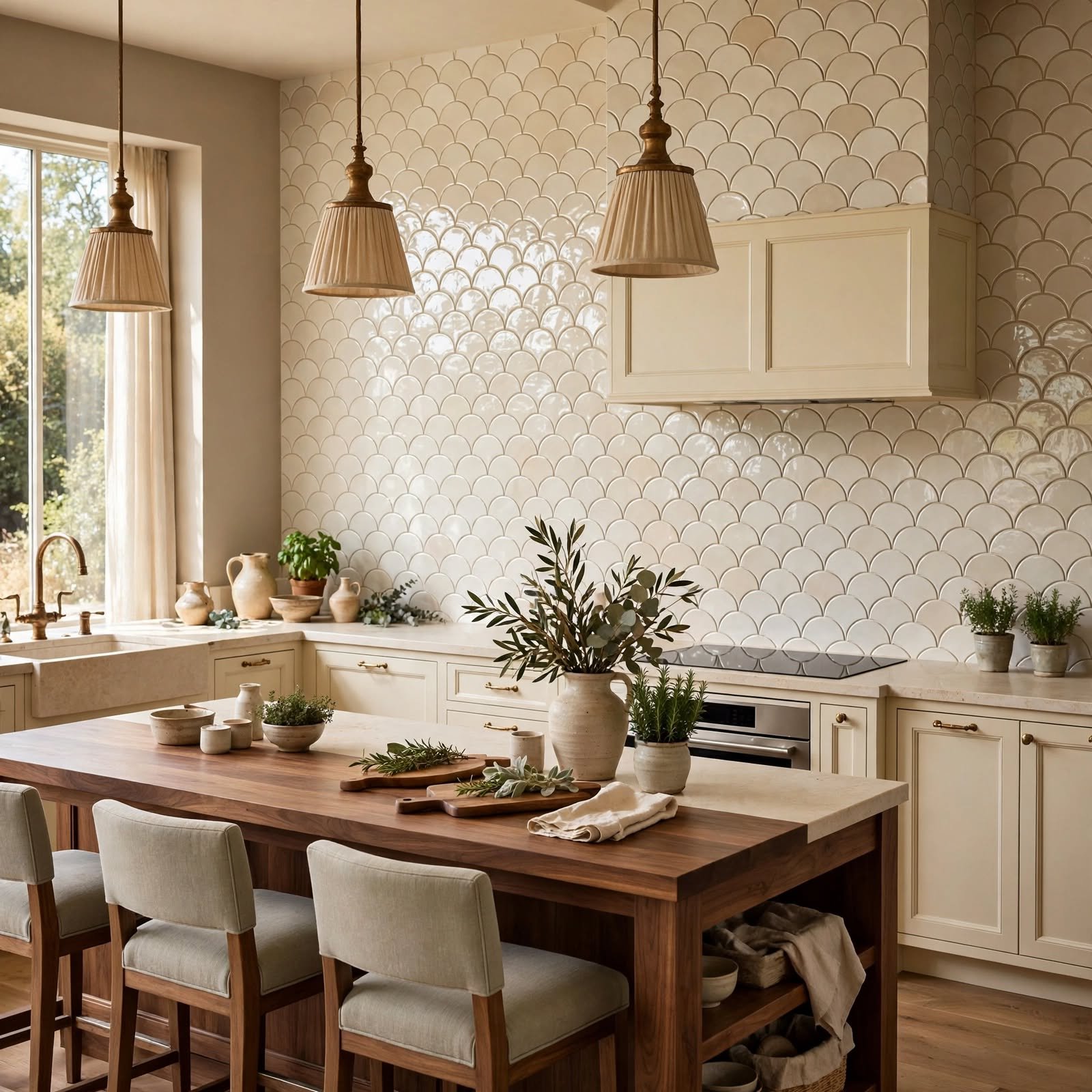
Fish scale tile, also called mermaid or scallop tile, uses a curved, overlapping shape instead of a standard rectangle or square. The rounded edges soften a kitchen’s overall geometry, which works well against straight lined cabinetry and countertops. Fish scale tile is often installed in a single accent color or a two tone gradient for added dimension. Because the curved edges require more precise cutting at wall boundaries, installation labor typically costs more than standard rectangular tile formats.
12. Encaustic Cement Tile Kitchen Backsplash Ideas
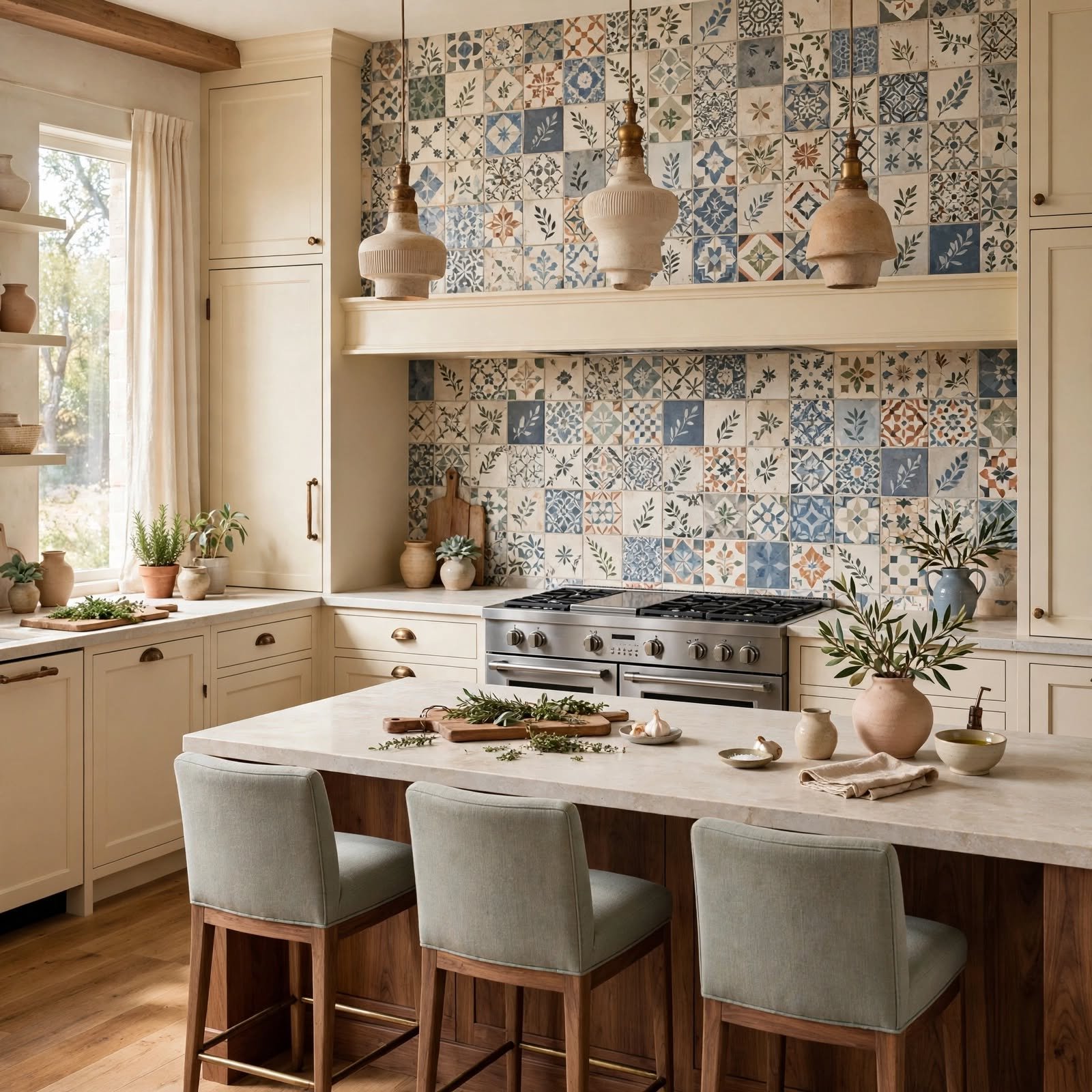
Encaustic cement tile features pigment inlaid directly into the tile body rather than glazed on top, producing a matte, richly patterned surface often seen in Moroccan and Spanish inspired kitchens. The patterns range from geometric to floral, and the matte finish gives a more vintage, lived in feel compared to glossy ceramic tile. Cement tile requires sealing before and after grouting to prevent staining, since the porous material absorbs liquid more readily than porcelain or glass alternatives.
13. Bookmatched Stone Slab Kitchen Backsplash Ideas
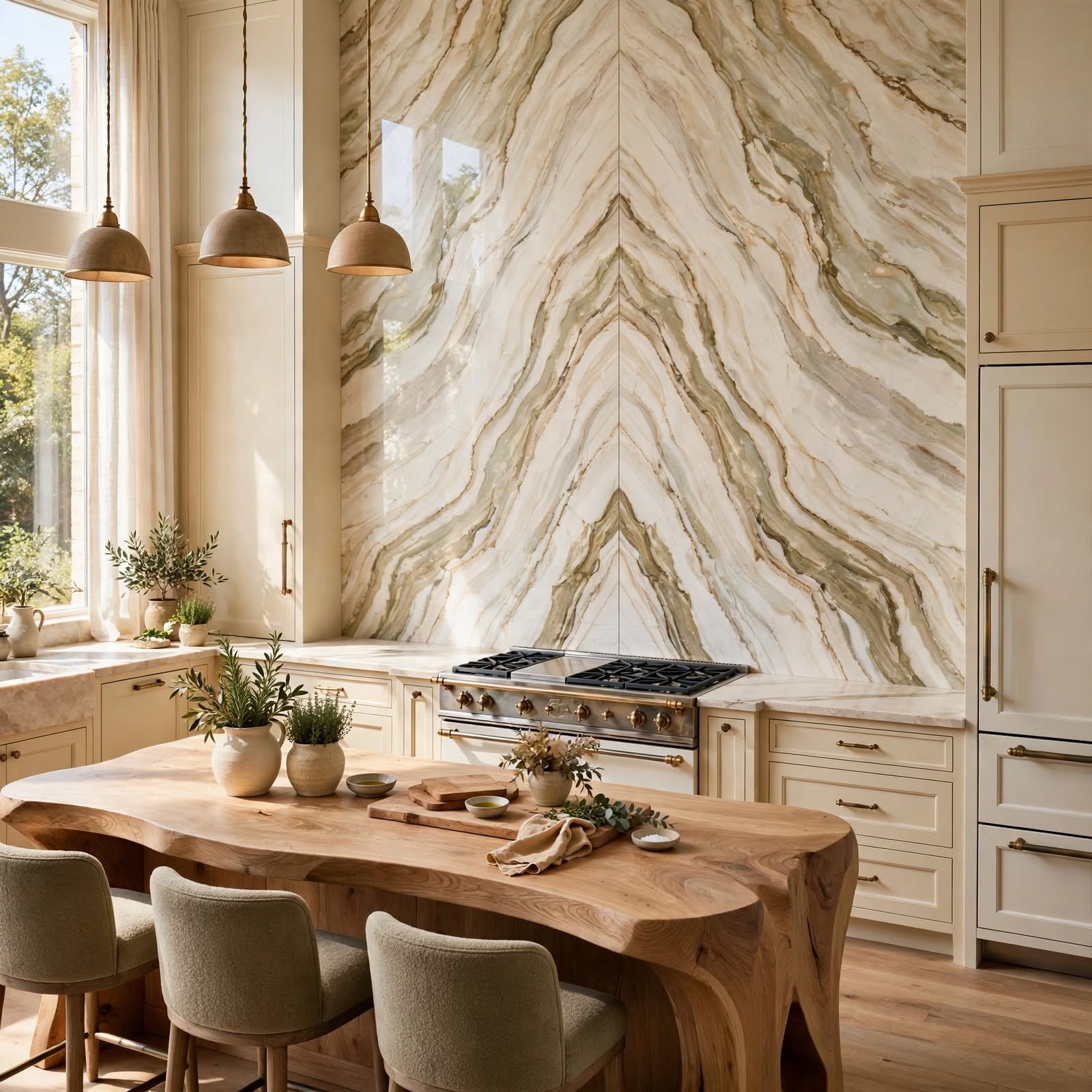
Bookmatched stone slab backsplashes use two adjacent slab cuts arranged so their veining mirrors symmetrically, creating a dramatic, almost artistic pattern across the wall. This technique is most common with materials like quartzite, marble, or granite that have strong natural veining. Bookmatching requires purchasing both slab halves from the same block, which raises material cost but produces a one of a kind focal wall, often positioned directly behind a range as the kitchen’s centerpiece.
14. Penny Round Tile Kitchen Backsplash Ideas
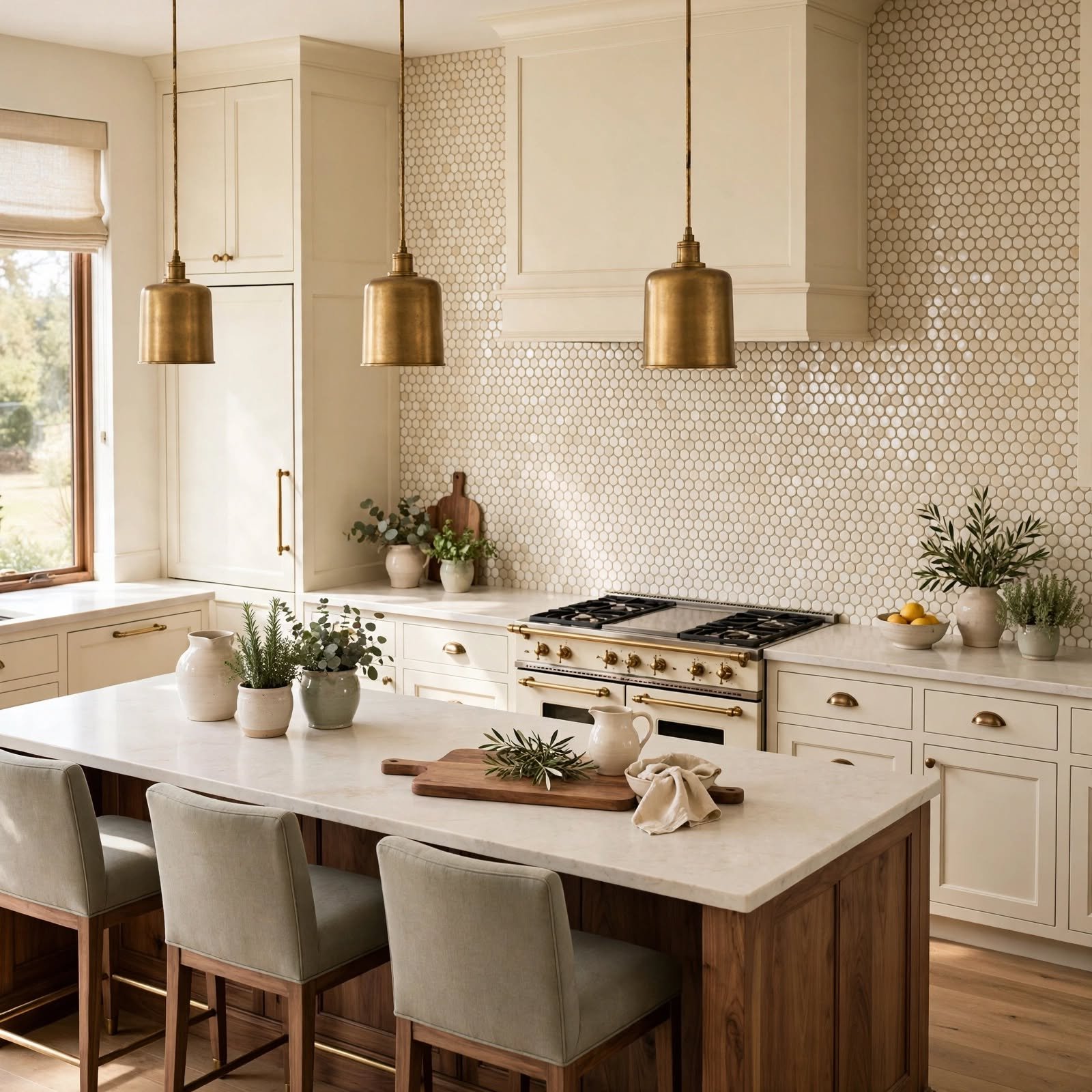
Penny round tile uses small circular tiles, typically under an inch in diameter, arranged in a tight grid with visible grout lines throughout. The small scale creates texture and a slightly retro feel, especially in black and white or two tone combinations. Penny round tile suits smaller backsplash areas, such as behind a bar sink or coffee station, where a bold pattern in a compact space won’t overwhelm the room. Grout maintenance is higher due to the sheer number of tile pieces.
| Tile Size | Best Use Area | Grout Line Width |
| Penny Round (¾”) | Accent walls, bar areas | Wide (1/8″–3/16″) |
| Standard Subway (3×6″) | Full backsplash coverage | Narrow (1/16″–1/8″) |
| Slab (large format) | Statement walls, range areas | Minimal to none |
| Zellige (4×4″) | Full or partial backsplash | Medium (3/16″–1/4″) |
Shop the Look
A matte black faucet grounds a zellige or terracotta backsplash without competing with the tile’s texture. Brass cabinet pulls complement warm materials like fluted wood panel or encaustic cement tile. For glass or slab backsplashes, a simple stainless or brushed nickel pot filler keeps the wall’s reflective quality uninterrupted. Open wood shelving pairs naturally with fluted panel or terracotta tile, reinforcing the warm material palette already established on the wall.
Common Mistake to Avoid
The most common backsplash mistake is choosing tile before finalizing countertop and cabinet samples, which often results in clashing undertones once everything is installed together. A tile that reads warm white in a showroom can look stark or cool next to a specific quartz countertop. Always bring physical tile samples home and view them beside your actual countertop slab and cabinet door in both daylight and evening lighting before placing a full order.
Frequently Asked Questions
What is the most popular kitchen backsplash material right now?
Zellige tile and full stone slab backsplashes are currently the most requested styles among kitchen designers, replacing the plain white subway tile that dominated the previous decade. Zellige appeals to homeowners wanting handmade texture and subtle color variation, while slab backsplashes suit those pursuing a seamless, high end look that matches their countertop material directly. Both styles photograph well and work across a range of cabinet colors, which has helped drive their popularity on design platforms.
How high should a kitchen backsplash go?
Standard backsplash height runs 18 inches from the countertop to the bottom of upper cabinets, though full height backsplashes now extend all the way to the ceiling or to the range hood, especially in kitchens using slab or statement tile. A full height installation removes the visible transition line between backsplash and wall paint, giving a more finished, continuous appearance. Homeowners working with a smaller budget often limit full coverage to just the area behind the cooktop.
Is a tile backsplash still in style?
Tile backsplashes remain in style, but the specific tile shapes and layouts favored today have shifted toward handmade looking materials like zellige, terracotta, and encaustic cement, along with layout changes like herringbone and stacked brick. Plain, glossy white subway tile in a standard running bond pattern has become less of a design focal point and more of a neutral background choice. Textured, patterned, and irregular tile options are what’s currently driving new kitchen backsplash decisions.
What backsplash is easiest to clean?
Glass tile and quartz slab backsplashes are the easiest to maintain, since both surfaces are non-porous and resist staining without requiring sealant. A quick wipe with a damp cloth removes most cooking splatter from either material. Porcelain tile is a close third, offering similar stain resistance at a lower price point than glass or quartz. Natural stone and cement tile require more upkeep, since both are porous and need periodic resealing to prevent staining.
Can I install a backsplash myself?
Straight-set tile like standard subway tile or penny rounds is achievable for an experienced DIYer with proper tile cutting tools and patience for spacing and leveling. Materials like zellige, fish scale, or bookmatched slab require professional installation due to irregular edges, precise pattern matching, or the sheer weight and size of slab pieces. Attempting complex layouts without experience often results in uneven grout lines or wasted material from miscut tile.
Conclusion
These fourteen kitchen backsplash ideas cover everything from budget-conscious subway tile to investment-level stone slab, giving you a starting point regardless of your kitchen’s style or renovation budget. Save this post to Pinterest to reference while you’re collecting samples, and check out our related post on kitchen countertop pairings for material combinations that work well together.