12 Stunning Front Garden Ideas That Frame Your Home’s Entry
Front garden ideas serve as a home’s daily first impression, seen by the household and every passerby far more consistently than a backyard tucked out of view. These front garden ideas focus on plantings, hardscaping, and lighting choices that genuinely complement a home’s entry and architecture rather than existing as a separate landscaping decision. By the end, you’ll have a clear framework for building a front yard that reads as intentional from the street, not assembled piecemeal over several seasons.
Trend & Background
Front garden design has shifted toward genuine architectural integration, with plantings and hardscaping chosen specifically to frame a home’s actual facade rather than a generic foundation scheme applied without regard to window placement or entry proportions. This reflects growing recognition that a front garden’s constant visibility deserves more deliberate attention than a backyard visited more privately. Drought-tolerant and native plant selection has also become a bigger priority, both for genuine water savings and because a struggling plant here reflects on the whole property far more immediately than the same neglect would in back.
Key Takeaways
- Front garden ideas work best when plantings respond directly to the home’s architecture rather than being chosen independently of it.
- Foundation beds should stay lower beneath windows and taller near corners to preserve sightlines and frame the facade.
- Low-maintenance, drought-tolerant plants matter more here than in a backyard, since decline is visible to the entire street.
- Year-round structure through evergreens and lighting keeps a front garden welcoming regardless of season or time of day.
Front Garden Ideas
From charming planting ideas to stylish landscaping touches, find creative ways to make your garden more inviting and enjoyable.
1. Window-Height Foundation Beds
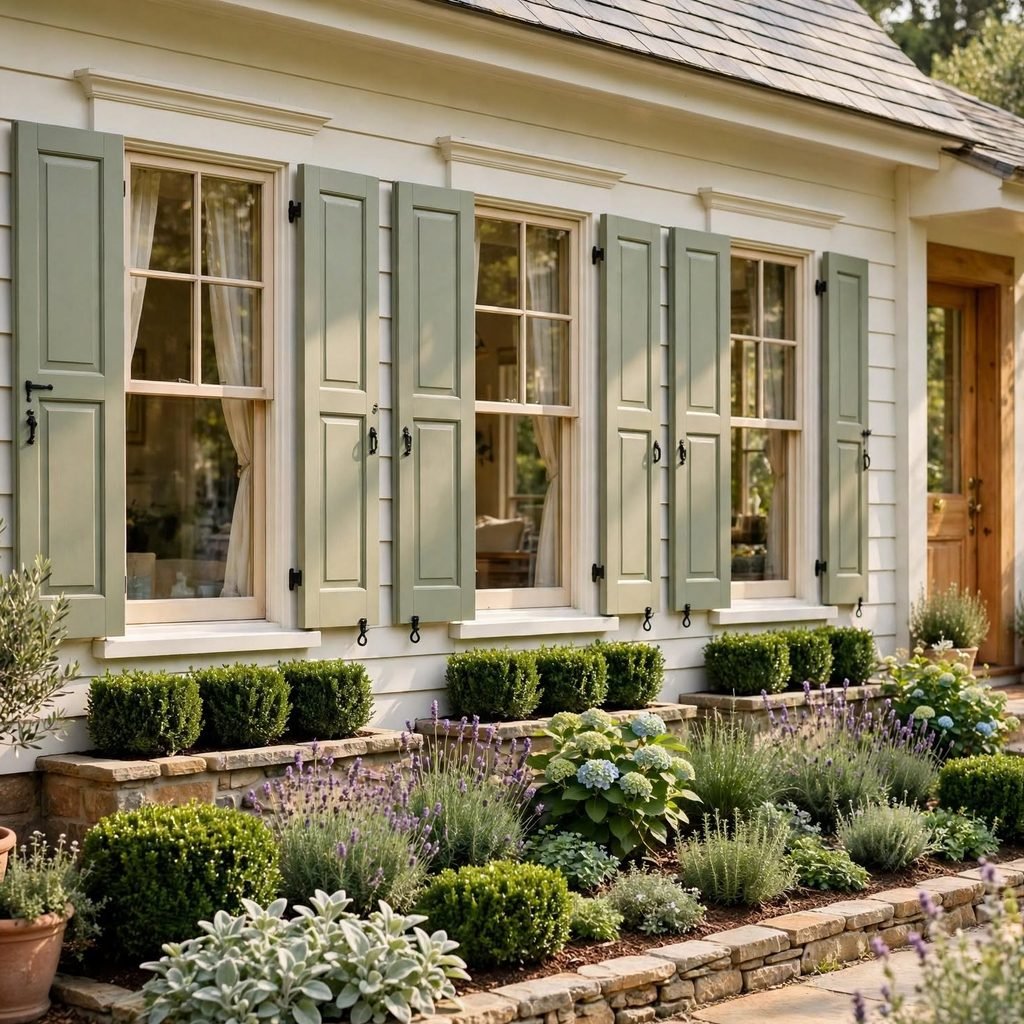
Foundation plantings positioned along a home’s front facade should stay low enough beneath windows to preserve natural light and sightlines, reserving taller shrubs for corners and blank wall sections where height won’t obstruct anything. This prevents the common problem of an overgrown hedge eventually swallowing a window entirely. Measure actual sill heights before choosing plant varieties, and select mature sizes that stay below that line permanently rather than requiring aggressive yearly pruning to keep in check.
| Zone | Planting Height | Purpose |
| Beneath windows | Low, under sill line | Preserves light and views |
| Wall corners | Medium to tall | Anchors hard edges |
| Entry sides | Balanced, matched pairs | Frames the door |
2. Framed Walkway Border
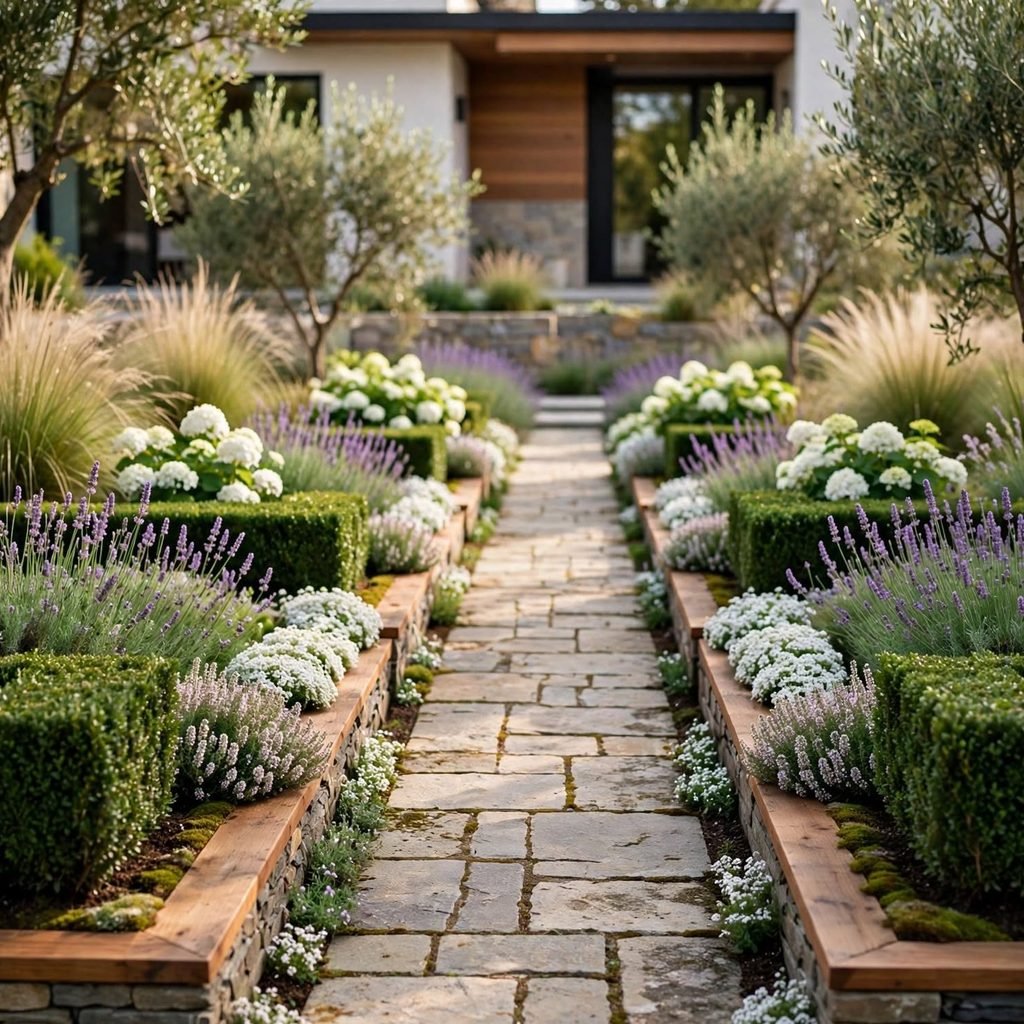
Lining a front walkway with low border plants and occasional taller accents guides visitors intuitively toward the entry while softening what’s often a plain concrete or paver path. Choose plants that won’t eventually spill over and narrow the usable path width, or commit to regular trimming if a slightly relaxed edge is the intended look. Repeating one plant variety at consistent intervals along the walkway’s length creates rhythm rather than a randomly scattered planting.
3. Defined Bed Edging
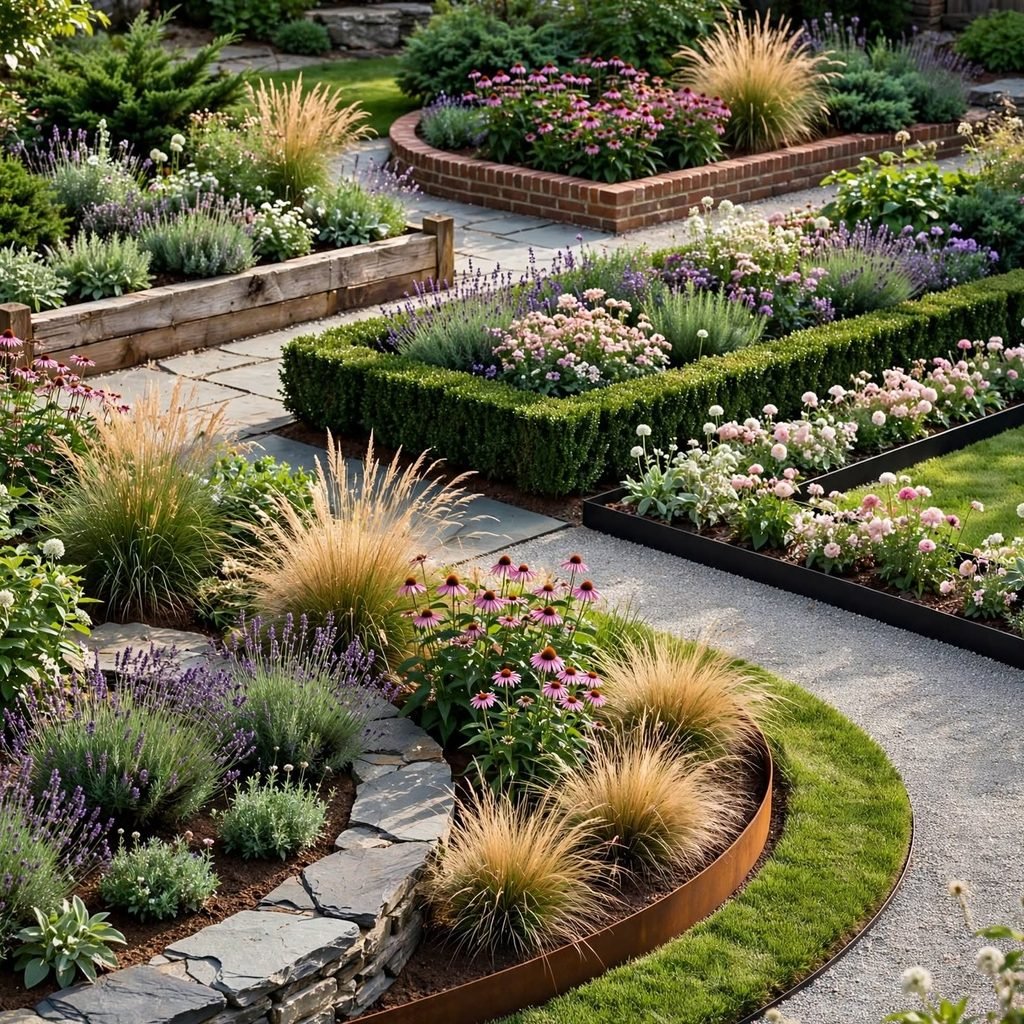
Clearly defined bed shapes, marked with a physical edging material, a clean dug line, or simply consistent maintenance, give a front yard intentional composition that reads clearly from the curb. Straight edges suit a contemporary or formal facade, while gentler curves suit a cottage or traditional home. Scattered individual plants without any organizing bed structure tend to look unplanned no matter how nice each specimen is on its own, so establishing this structure first matters more than any single plant choice.
4. Entry Focal Planting
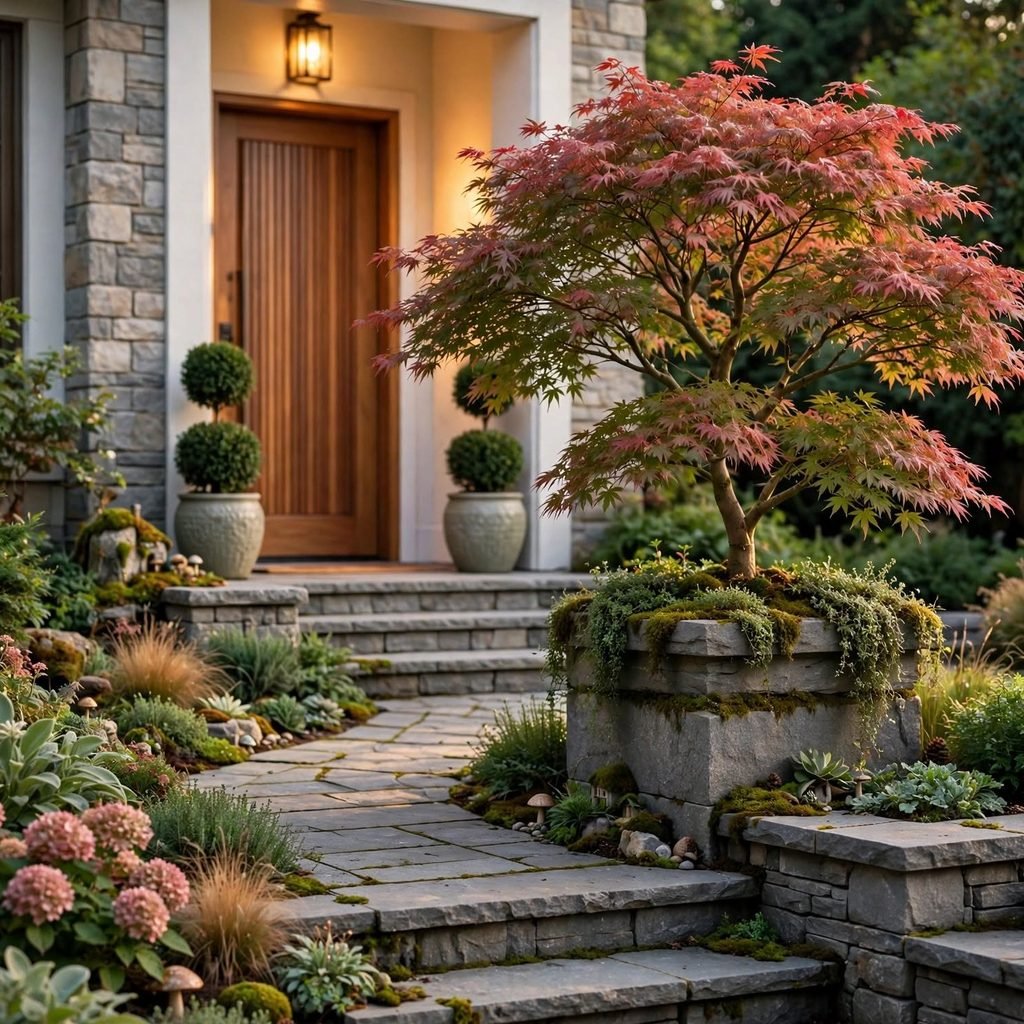
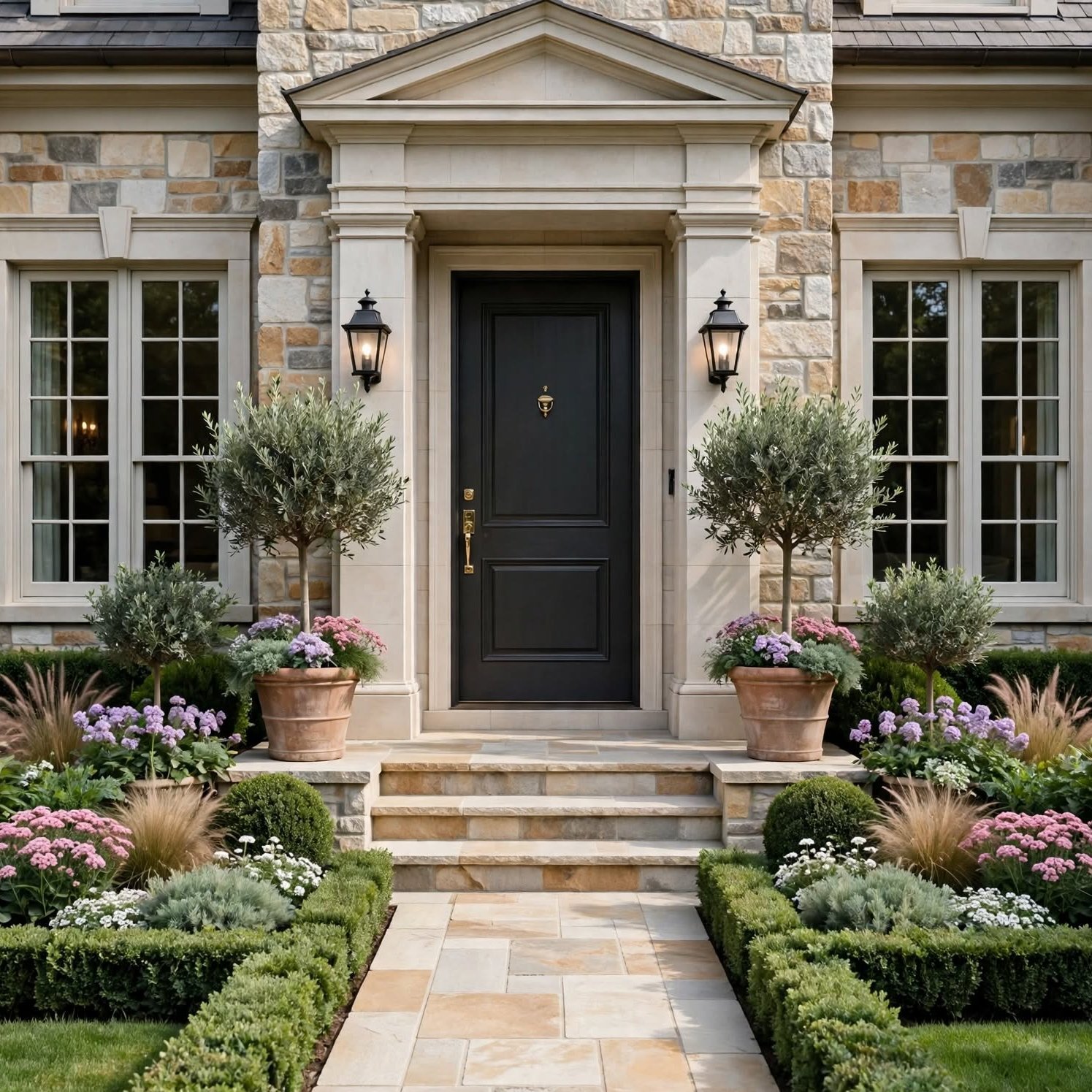
Concentrating a front garden’s most striking specimen, whether a single dramatic plant, a well-styled container pair, or the best-maintained bed, directly around the front door gives the home’s most important feature the visual priority it deserves. This spot also warrants the most consistent care, since any decline here disproportionately affects the whole property’s impression. If you’re only rotating seasonal color in one location, this is the location worth prioritizing over any other spot in the yard.
5. Drought-Tolerant Palette
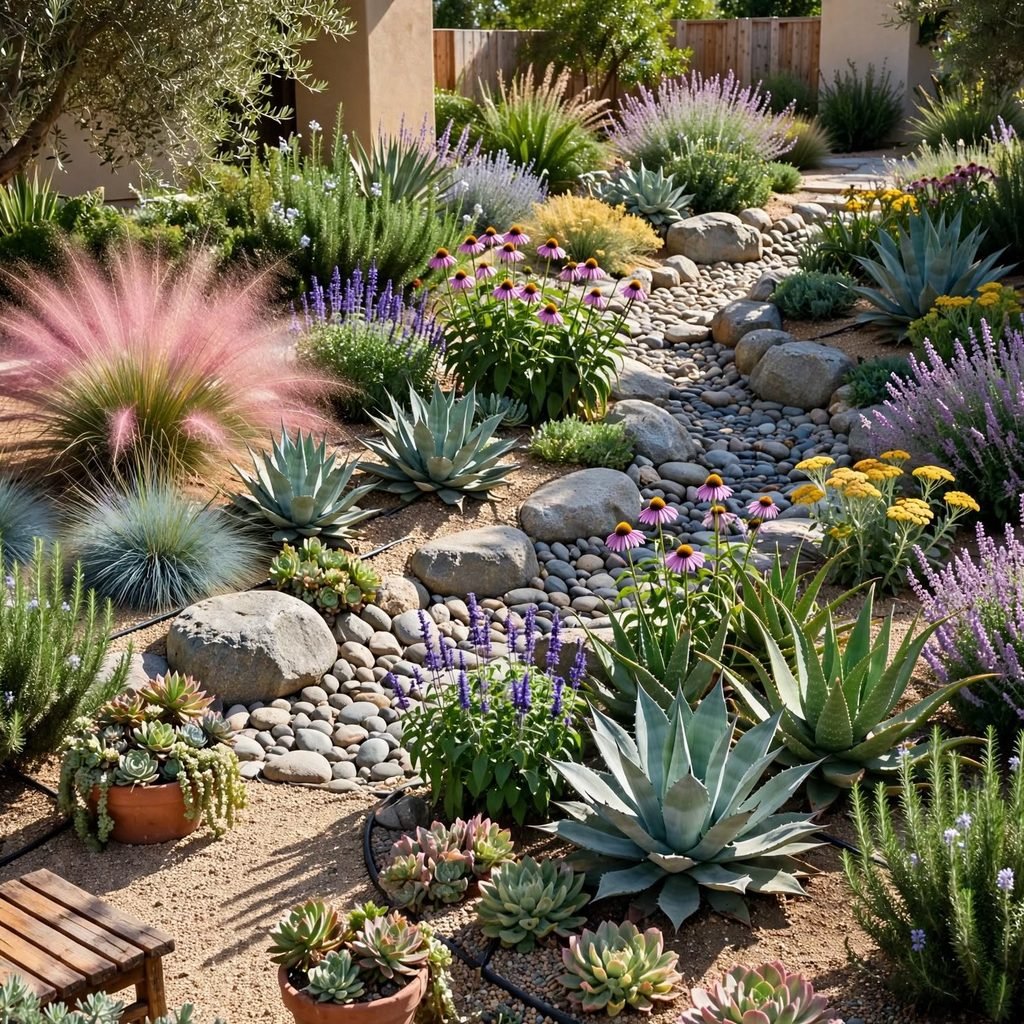
Prioritizing genuinely low-water plant varieties throughout the front garden matters more here than almost anywhere else on the property, since any visible stress from underwatering is immediately apparent from the street. This doesn’t mean an exclusively cactus-and-gravel palette, but rather choosing plants realistically suited to the climate and to how much time you actually have for upkeep. A local extension office or native plant nursery will offer far more reliable regional guidance than a generic drought-tolerant plant list found online.
6. Symmetrical Entry Pairing
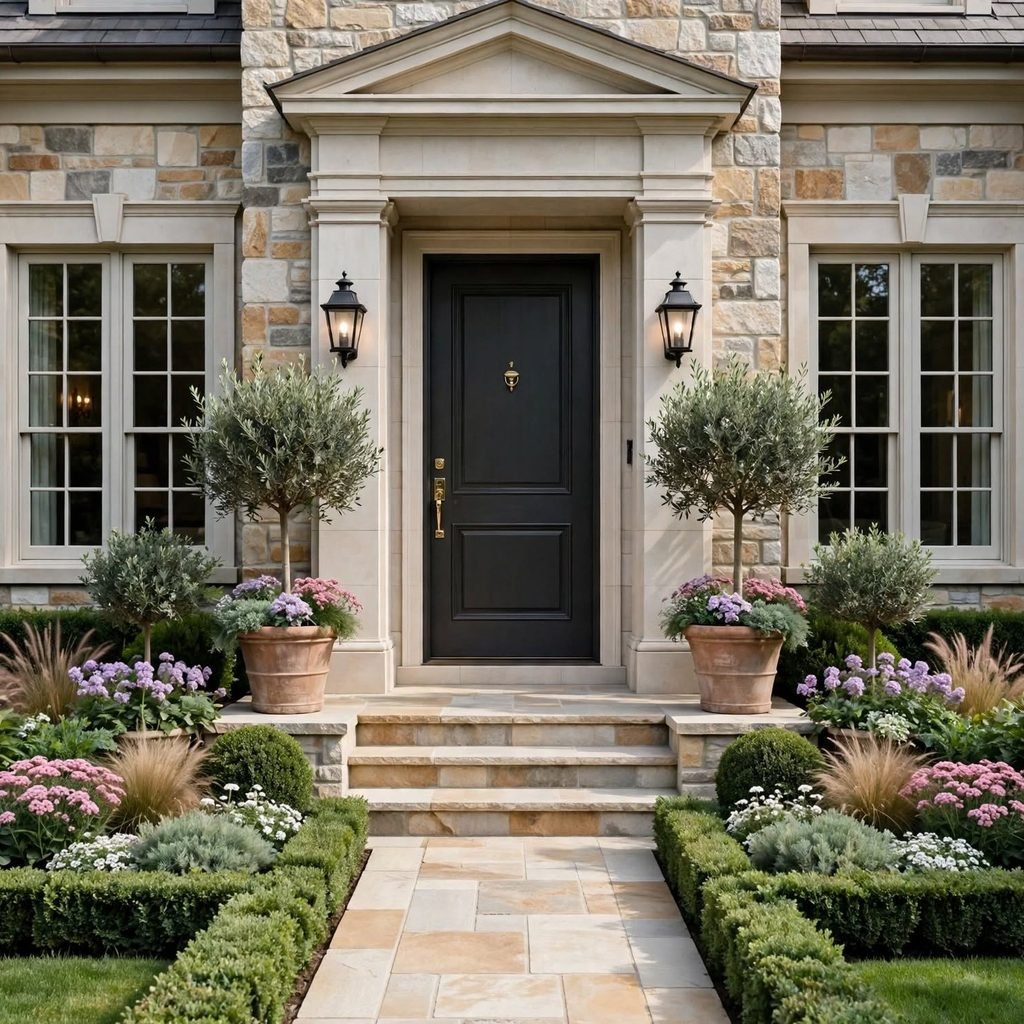
Matching or visually balanced plantings on either side of a front door, whether identical container pairs or mirrored foundation shrubs, create the sense of order traditionally associated with a welcoming entry. This symmetry doesn’t need to extend across the whole yard, just the entry itself, where the formal effect matters most. Check that both sides actually receive similar sun exposure before committing to identical plant choices, since one side of a door often gets noticeably more shade than the other.
Explore small garden ideas that make even compact outdoor spaces feel stylish and welcoming.
7. Evergreen Structure
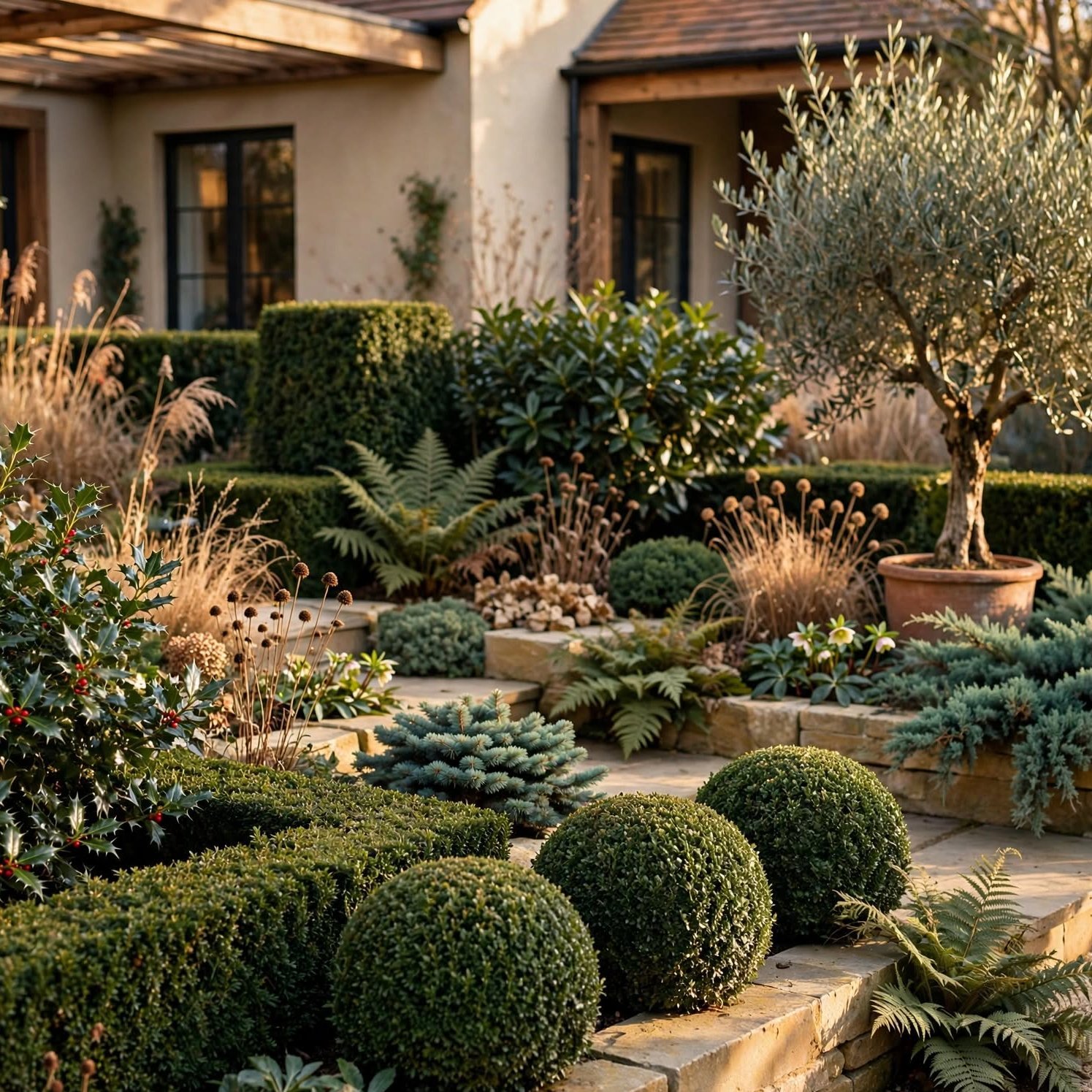
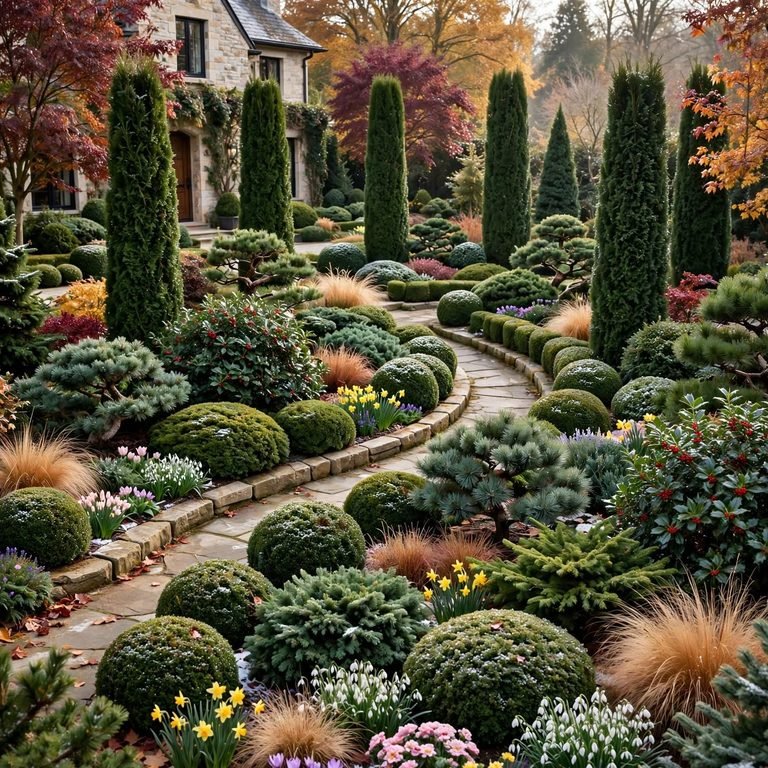
Evergreen shrubs and small trees keep a front garden looking intentional through winter, when constant daily visibility makes seasonal bareness far more noticeable than it would be in a backyard visited less often. Position these structural anchors at the entry, at bed corners, and along property lines so the more seasonal plantings have something consistent to play against throughout the year. Skipping evergreens entirely often leaves a front yard looking abandoned for several months at a stretch.
8. Seasonal Color Rotation
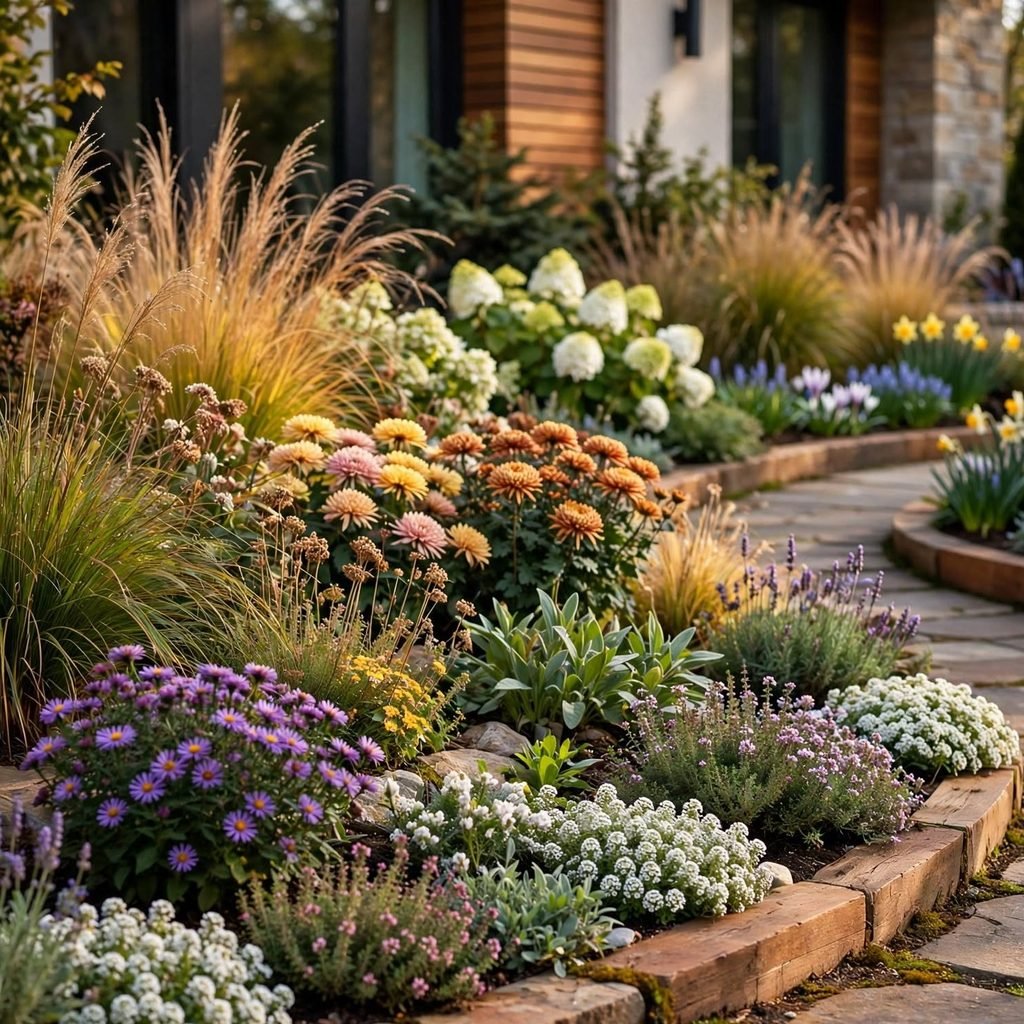
Rotating annual plantings in a defined bed section or a set of containers near the door keeps a front garden feeling actively cared for, offering a visible, recurring signal of attention that a static permanent planting doesn’t provide on its own. Concentrate this rotation at the entry rather than spreading it thin across the entire yard, which keeps the maintenance commitment manageable while still delivering real seasonal impact exactly where visitors and passersby will notice it most.
9. Landscape Path Lighting
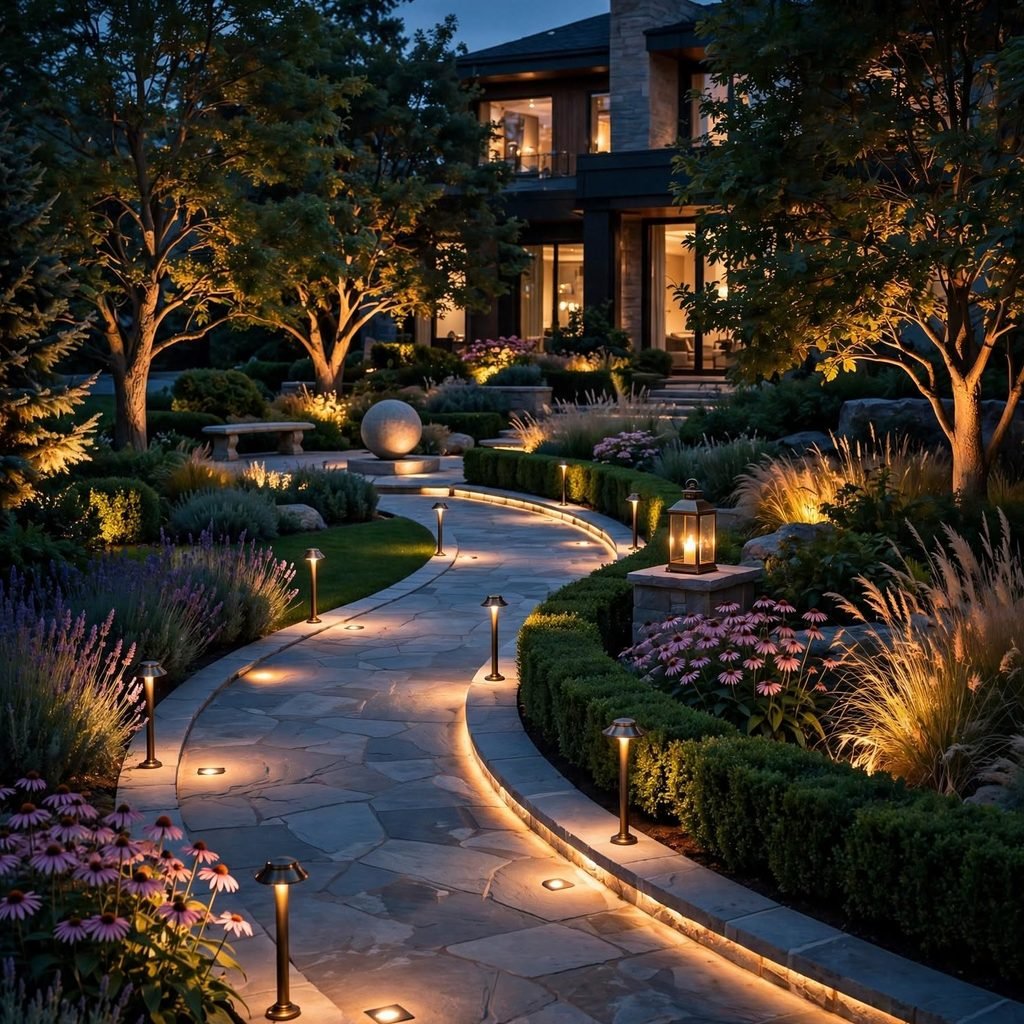
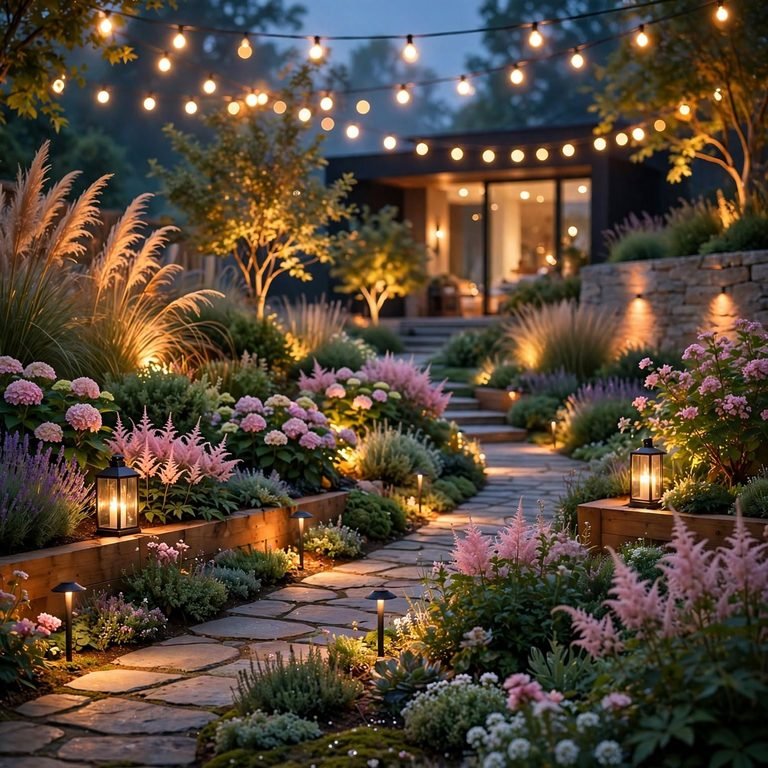
Low path lights along a walkway, combined with a fixture or two near the entry, extend a front garden’s appeal into the evening while giving visitors genuine visibility navigating the approach after dark. Stick to warm-toned bulbs that match any other exterior lighting already on the house, and layer at least two light sources rather than relying on a single bright fixture, which tends to flatten the space instead of highlighting it.
10. Lawn Alternative Beds
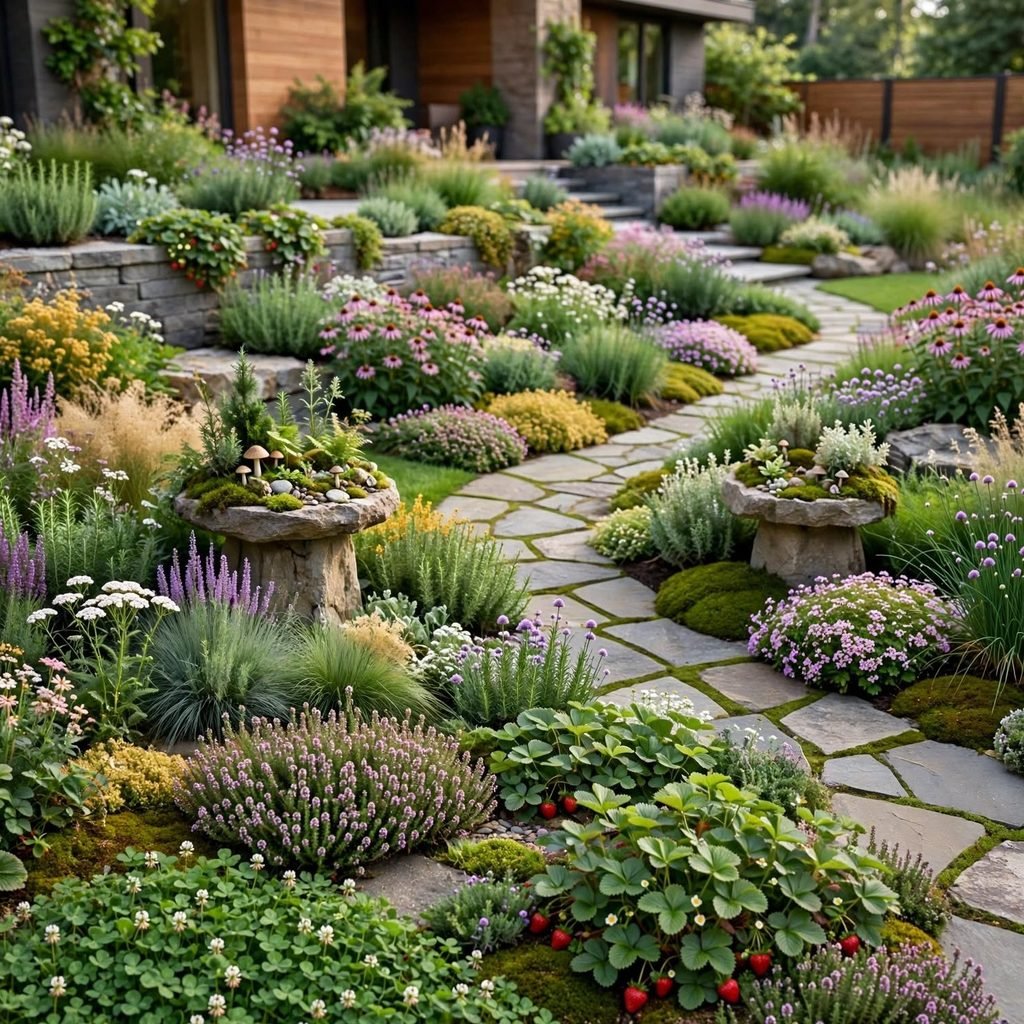
Replacing some or all of a front lawn with groundcover, ornamental grasses, or expanded planting beds cuts both water use and mowing time while usually offering more visual interest than a flat stretch of turf. Confirm any homeowners association or municipal rules before a full lawn conversion, since some jurisdictions restrict how much front-yard turf can be replaced. Leaving at least a modest patch of open space, even reduced from a full lawn, keeps the yard from feeling entirely enclosed by planting.
11. Exterior Color Coordination
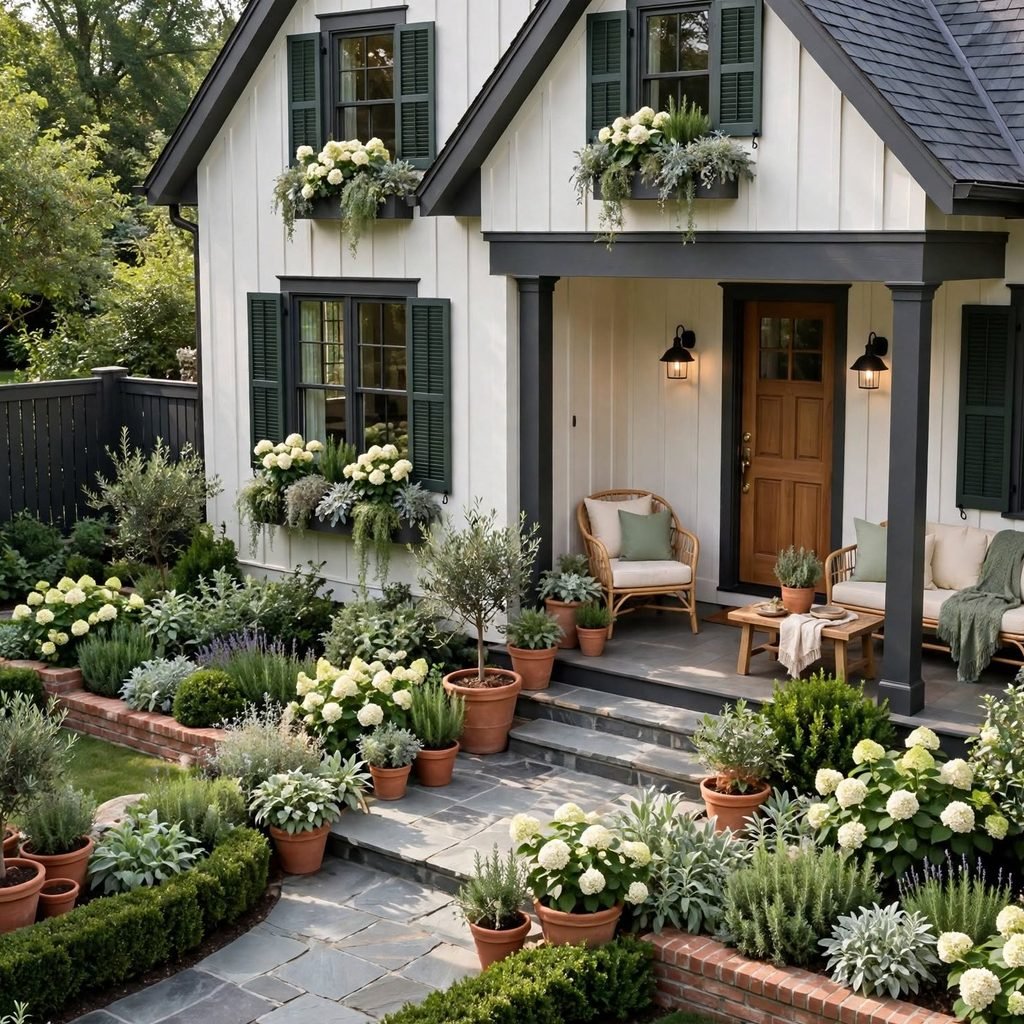
Choosing hardscaping materials and container colors that genuinely coordinate with a home’s siding, trim, and door color ties the front garden into one cohesive presentation instead of a landscaping decision made in isolation from the architecture. Bring an actual paint chip or material sample outside before finalizing container or paver colors, since lighting and context change how a color reads compared to viewing it indoors or on a screen.
12. Native Plant Priority
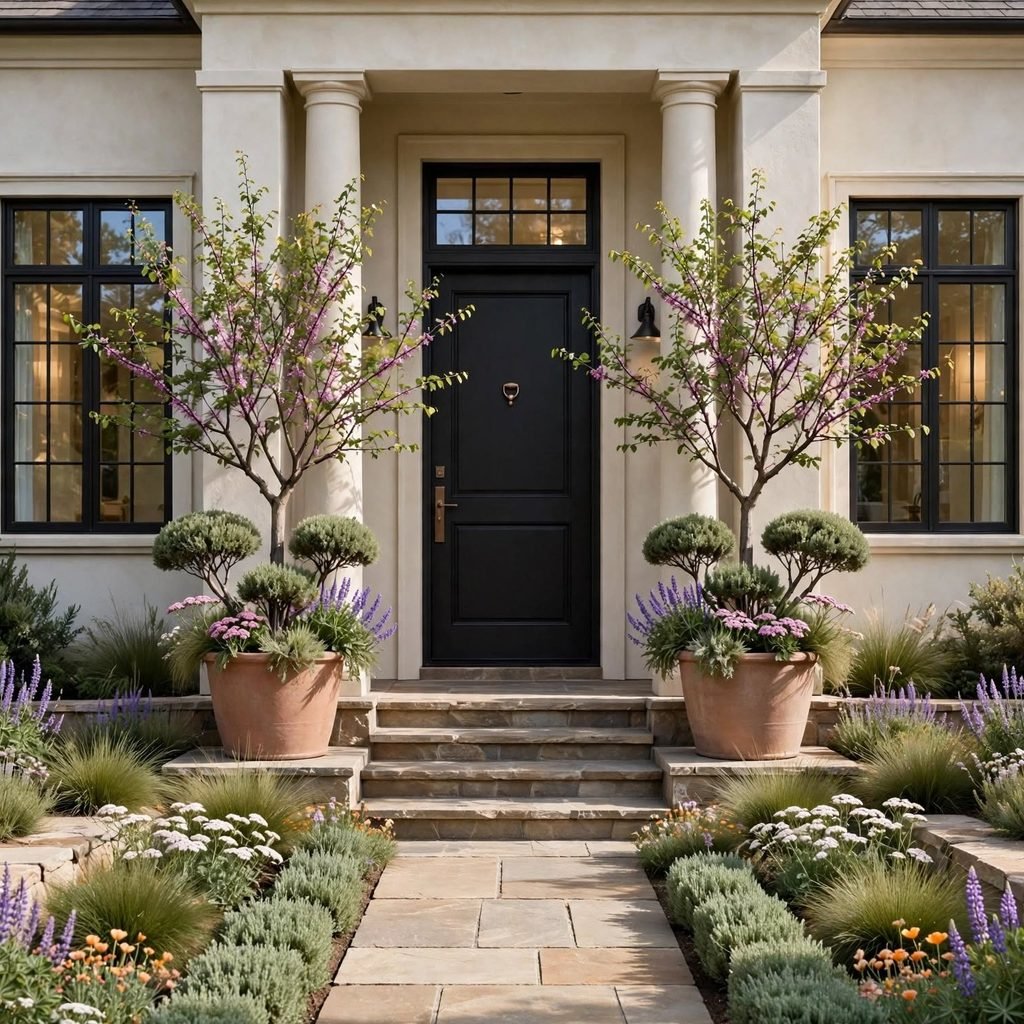
Choosing native species wherever the household’s aesthetic preferences allow supports local pollinators and generally requires less water and intervention than plants poorly suited to the region’s actual climate. This matters especially here, since a struggling non-native plant becomes obvious fast in a space seen daily by the whole street. A local native plant society can usually point toward species that also suit a specific architectural style, so this doesn’t have to mean sacrificing a considered, polished look.
Shop the Look
Pair boxwood or dwarf hollies for foundation structure with a pair of matched glazed ceramic urns flanking the entry for seasonal color. Add solar or low-voltage path lights in a bronze or matte black finish to coordinate with black window trim, and finish with a natural stone or brick walkway edge that echoes the home’s existing masonry.
Common Mistake to Avoid
The most common mistake is planting without real consideration of the architecture behind it, letting foundation shrubs eventually block windows, choosing bed shapes disconnected from the home’s own lines, or picking a plant palette unrelated to the exterior color scheme. The result reads as separate from the house rather than integrated with it. Treating the front garden as a genuine extension of the home’s design, not a standalone landscaping decision, produces a far more cohesive and convincing result.
People Also Ask
How do I stop foundation plants from blocking my windows?
Research a plant’s actual mature height before buying it, and choose varieties that stay below the windowsill naturally rather than ones that will need constant pruning to keep in check. Measuring real sill heights against a plant’s documented mature size, instead of judging by its appearance at the nursery, prevents this from becoming a problem several seasons down the line.
Does my front garden need to match my backyard?
Not exactly. A front garden benefits from coordinating with the home’s exterior color and architecture since it’s viewed alongside the facade directly, but a backyard can serve an entirely different, more private function and doesn’t need an identical style. The consistency that actually matters most is between the front garden and the house itself, not between the front and back yards.
How much upkeep does a front garden actually need?
It varies with plant choice, but a front garden generally benefits from more consistent attention than a backyard, since decline is visible to the whole street rather than staying private. Prioritizing drought-tolerant, low-maintenance plants for the bulk of the foundation planting cuts this demand considerably, leaving more manageable, higher-effort care concentrated only at the entry focal point.
Can I remove my front lawn entirely?
Often yes, though it’s worth checking local HOA rules or municipal codes first, since some places restrict how much front turf can be replaced with beds or hardscaping. Where it’s allowed, groundcover, ornamental grasses, or expanded planting beds usually cut both water use and mowing time while adding more visual interest than a flat lawn ever provided.
What’s the single best change to improve curb appeal fast?
Focus on the entry itself first, the walkway and the immediate area around the front door, since that zone carries disproportionate weight in a visitor’s overall impression compared to anywhere else in the yard. Clearing any window-blocking foundation shrubs and adding basic evergreen structure for year-round presence are the next highest-impact, lowest-effort fixes.
Conclusion
The best front garden ideas treat the space as a genuine extension of the home’s architecture, framing windows, balancing the entry, and staying low-maintenance enough to hold up under daily public view. Save this guide to Pinterest for your next front yard refresh, and check out our related post on house exterior design for the curb appeal choices that pair with it.