12 Inspiring Home Office Organization Systems That Actually Stick
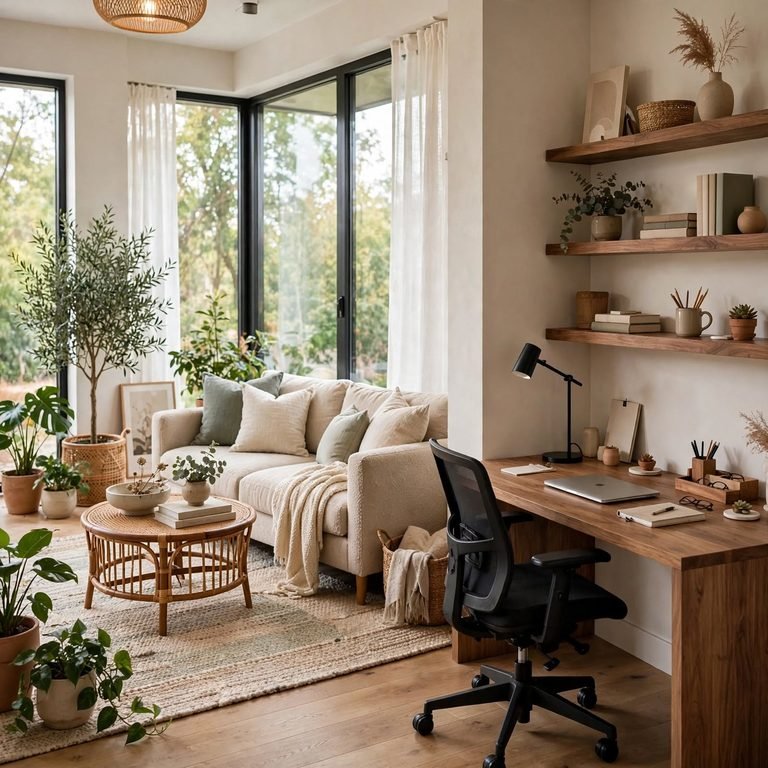
A home office tends to accumulate more clutter than a dedicated workplace desk, since it’s also absorbing mail, chargers, and household paperwork that has nowhere else to go. Real home office organization means building a system around how the room actually gets used, not just clearing the surface for a single photo-ready moment. Twelve specific systems follow, covering everything from desktop zones to long-term document storage, each built to hold up under daily household use rather than falling apart within a few weeks.
Trend & Background
As home offices have absorbed more of the paperwork, equipment, and supplies that used to live in a dedicated household office or supply closet, organization systems have had to scale to match, shifting from a single catch-all drawer toward zoned, purpose-built storage. Interest in labeled containers and modular shelving has grown alongside broader home organization trends, since many people are now managing both work and personal admin from the same room. That shift has pushed home office organization toward systems designed for daily upkeep rather than an occasional deep clean, since there’s rarely a separate space to offload overflow items.
Key Takeaways
- Home office organization holds up longest when storage is zoned by frequency of use, not just by item category.
- Vertical solutions free up floor space that a home office rarely has to spare.
- A consistent container system across the room prevents the mismatched look that makes clutter more visible.
- Daily reset habits matter as much as the storage system itself for keeping a home office organized long-term.
1. Frequency-Based Drawer Zoning
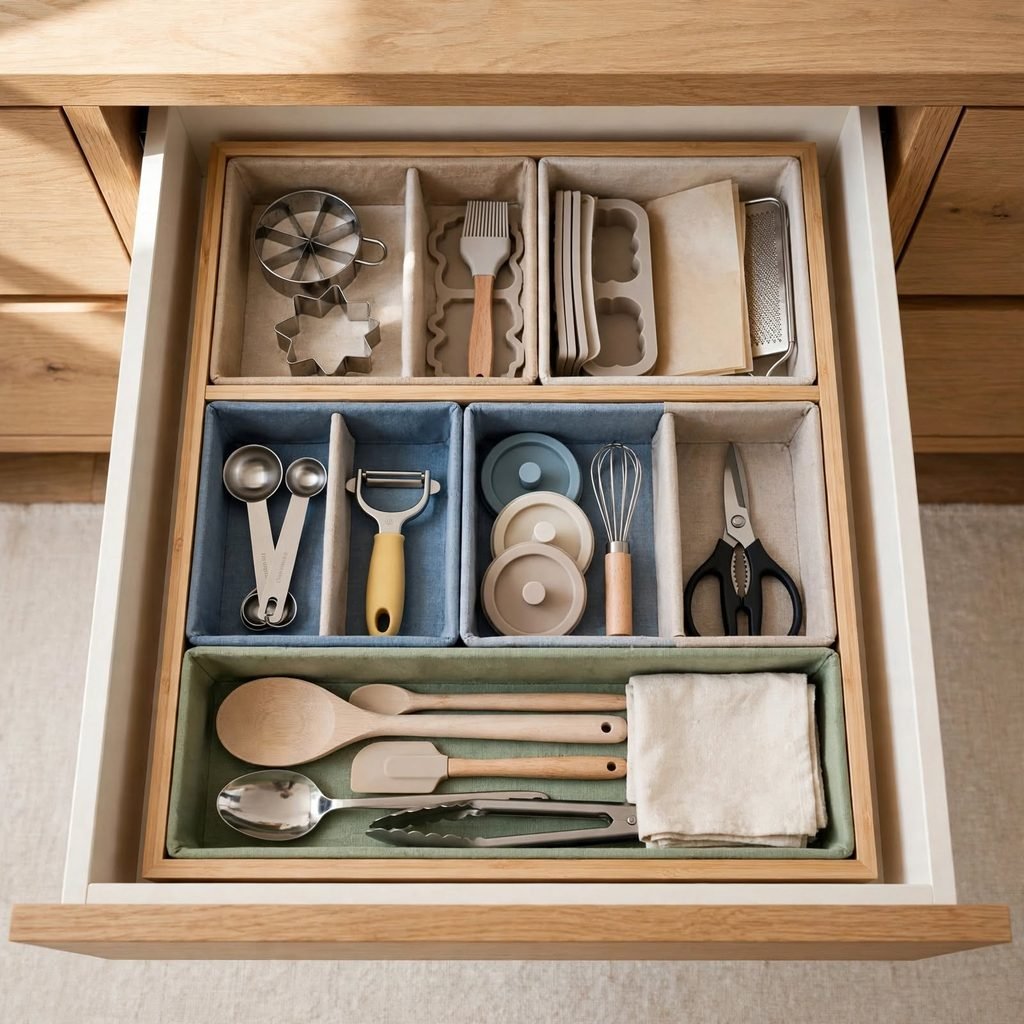
Organizing drawers by how often items get used daily supplies like pens and notepads in the top drawer, occasional items like tape or spare chargers below keeps the most-needed things within easy reach without digging through a mixed pile every time. Small trays or dividers sized to the drawer’s interior prevent items from sliding into a jumbled mass with regular opening and closing. This zoning logic matters more than any specific container style, since it directly determines how quickly the drawer reverts to clutter.
2. Wall-Mounted Command Center
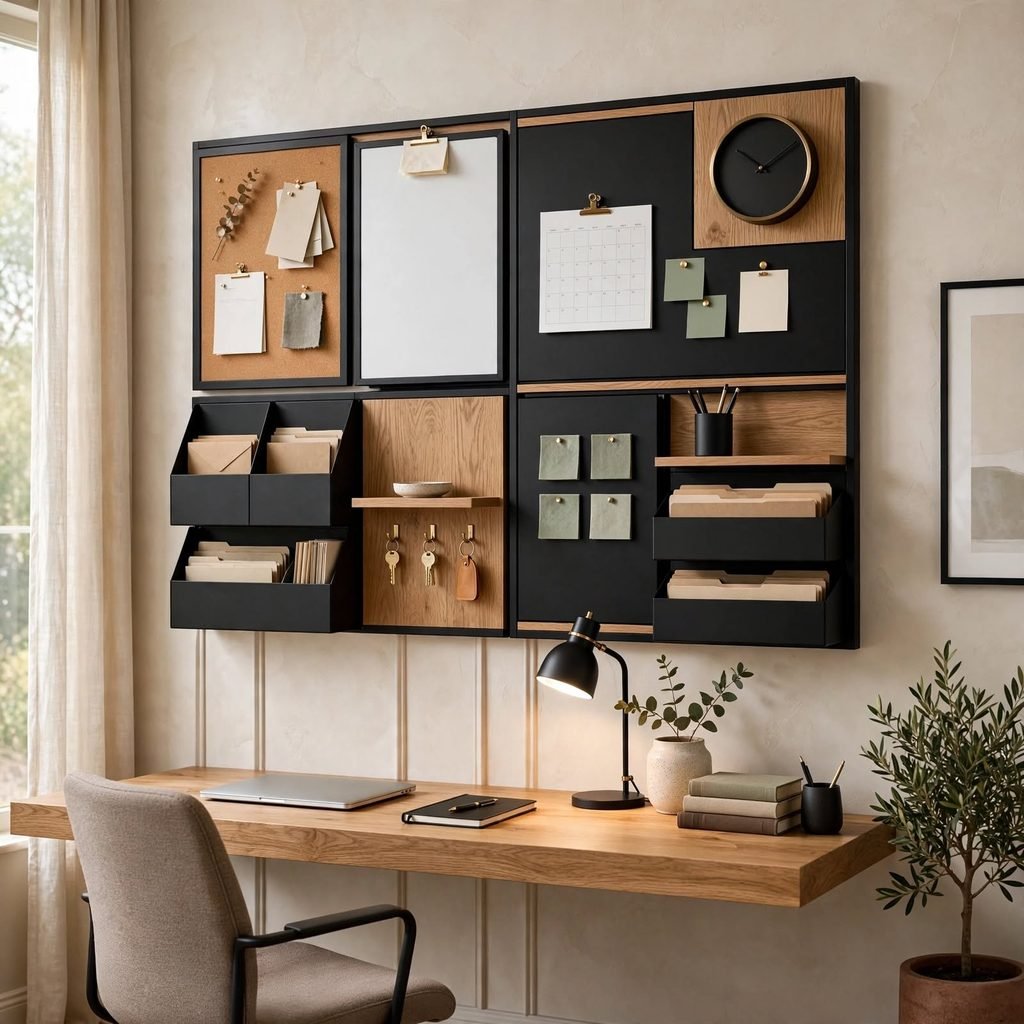
A wall-mounted command center combining a small whiteboard, a mail sorter, and a key hook consolidates the household admin tasks that tend to pile up on a home office desk into one contained wall system. Positioning it near the room’s entry point, rather than beside the desk itself, keeps incoming mail and notes from spreading onto the actual work surface. This works especially well in a home office that also functions as the household’s paperwork hub.
| Component | Function | Placement |
| Whiteboard | Quick notes, reminders | Eye level near entry |
| Mail sorter | Incoming paperwork | Below whiteboard |
| Key hook | Daily-carry items | Side of sorter |
3. Labeled Bin System
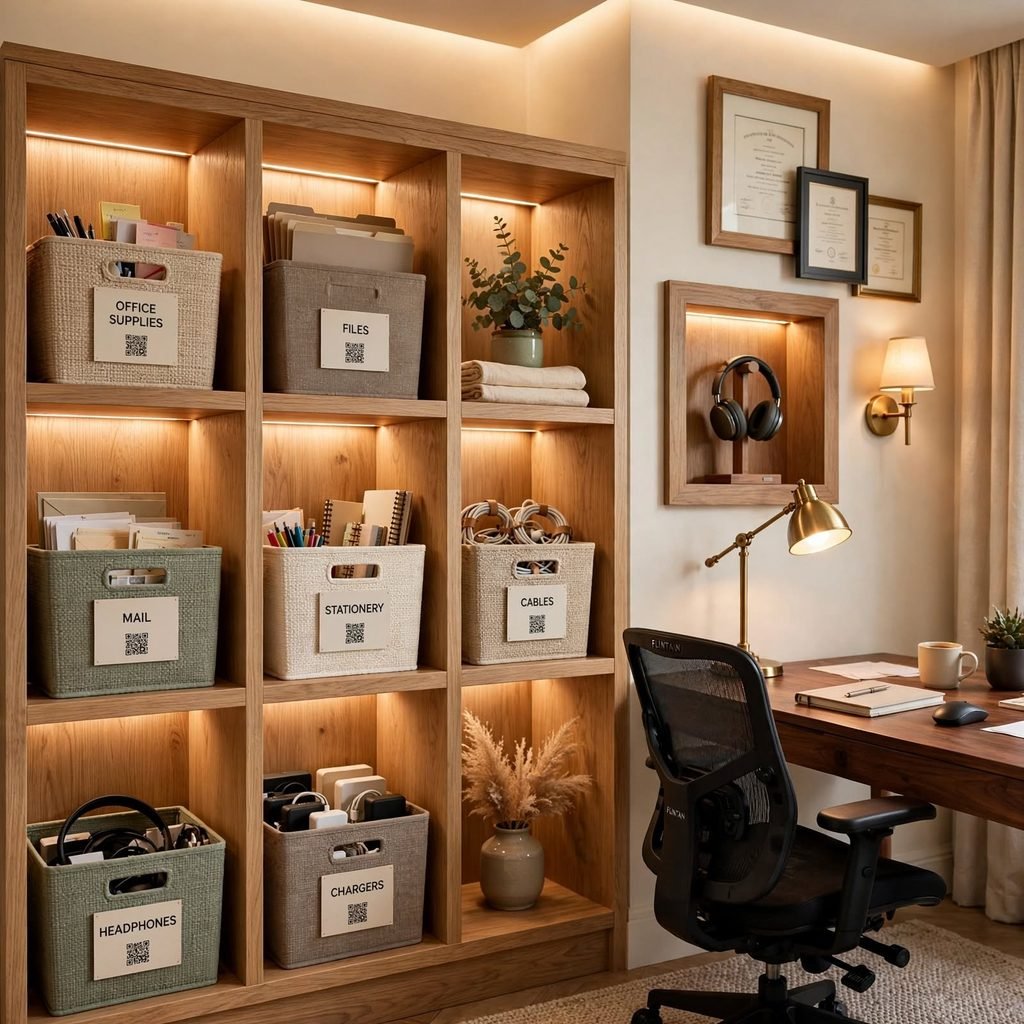
Uniform bins labeled by category cables, office supplies, seasonal paperwork remove the daily guesswork of where an item belongs, which is usually what causes a home office organization system to break down within a few weeks. Matching bin size and material across a shelf keeps the storage area looking intentional rather than a mismatched collection gathered over time. Labeling by broad category rather than specific contents lets the same bin keep working even as what’s inside it changes.
Discover smart small home office ideas that make even the tightest spaces feel functional and stylish.
4. Closed Cabinet for Household Paperwork
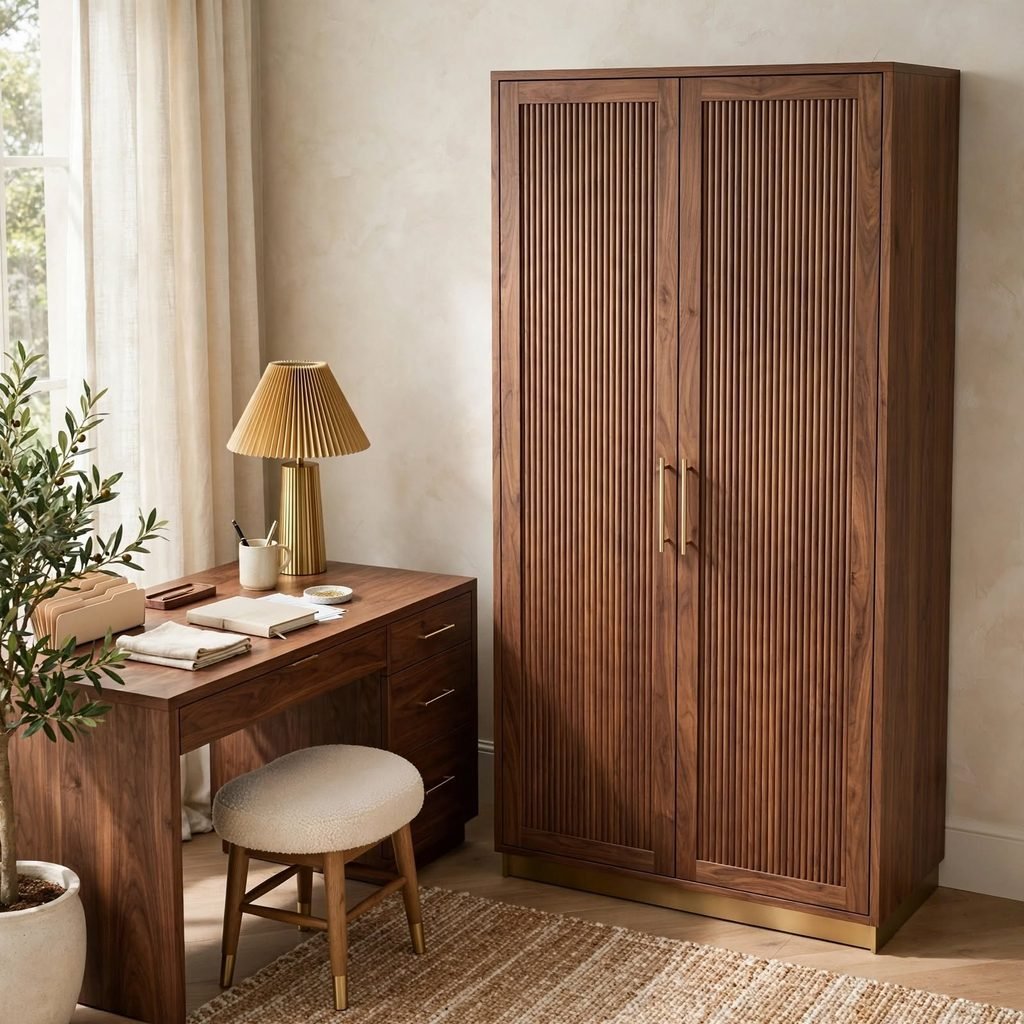
A closed cabinet reserved specifically for household paperwork bills, warranties, tax documents separates personal admin from work materials, which prevents the two from merging into one disorganized pile on the desk. Labeling folders by year or category, rather than a vague general system, makes it possible to locate a specific document without searching through everything. This distinction between work and household paperwork is often what determines whether a home office stays organized or slowly becomes a catch-all room.
5. Vertical Pegboard for Supplies
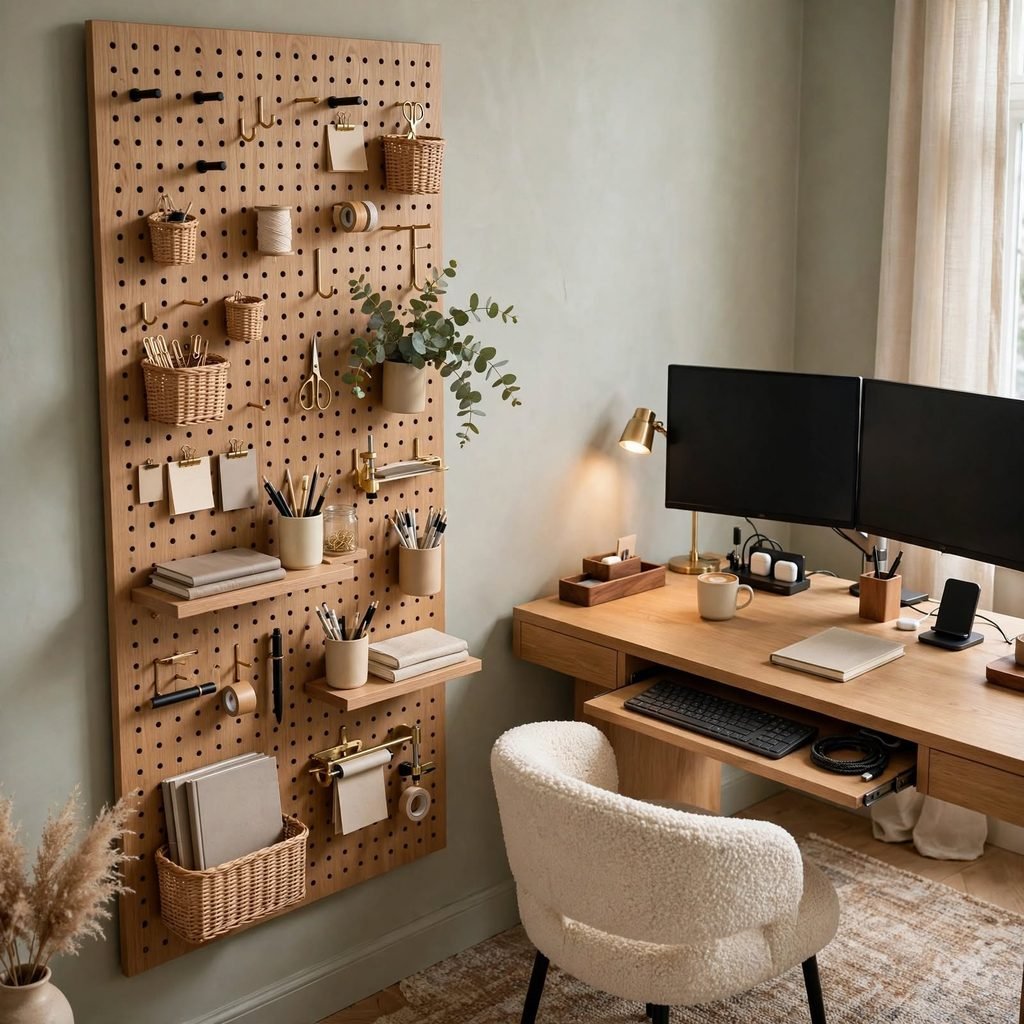
A pegboard mounted above or beside the desk holds frequently used supplies on hooks and small shelves in a configuration that can be rearranged as needs change, which keeps everyday items off the desktop and out of drawers entirely. This matters most in a home office where drawer space is already committed to household paperwork rather than just office supplies. Grouping similar items together on the board makes the system easier to scan at a glance.
6. Charging Station Drawer

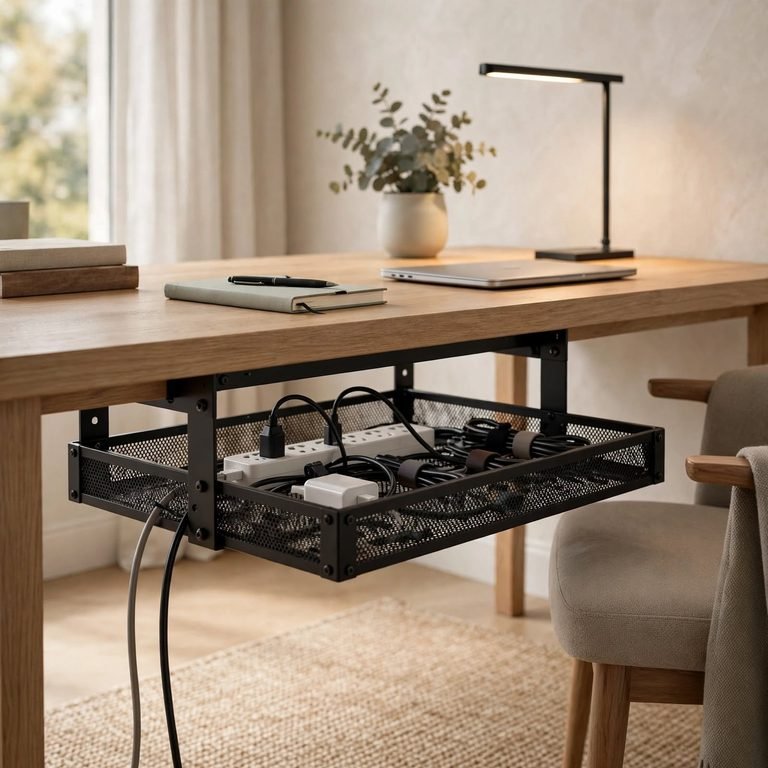
A dedicated charging drawer or tray keeps phones, tablets, and other household devices in one consistent spot instead of scattered across the desktop with cords trailing in different directions, which is a common source of clutter in a home office that doubles as the household’s device hub. Positioning it near an outlet but away from the primary work surface keeps devices accessible without cluttering the desk itself. This is one of the more overlooked systems, despite solving a near-daily source of visual mess.
Discover smart office ideas for work that make even the tightest spaces feel functional and stylish.
7. Modular Bin Shelving
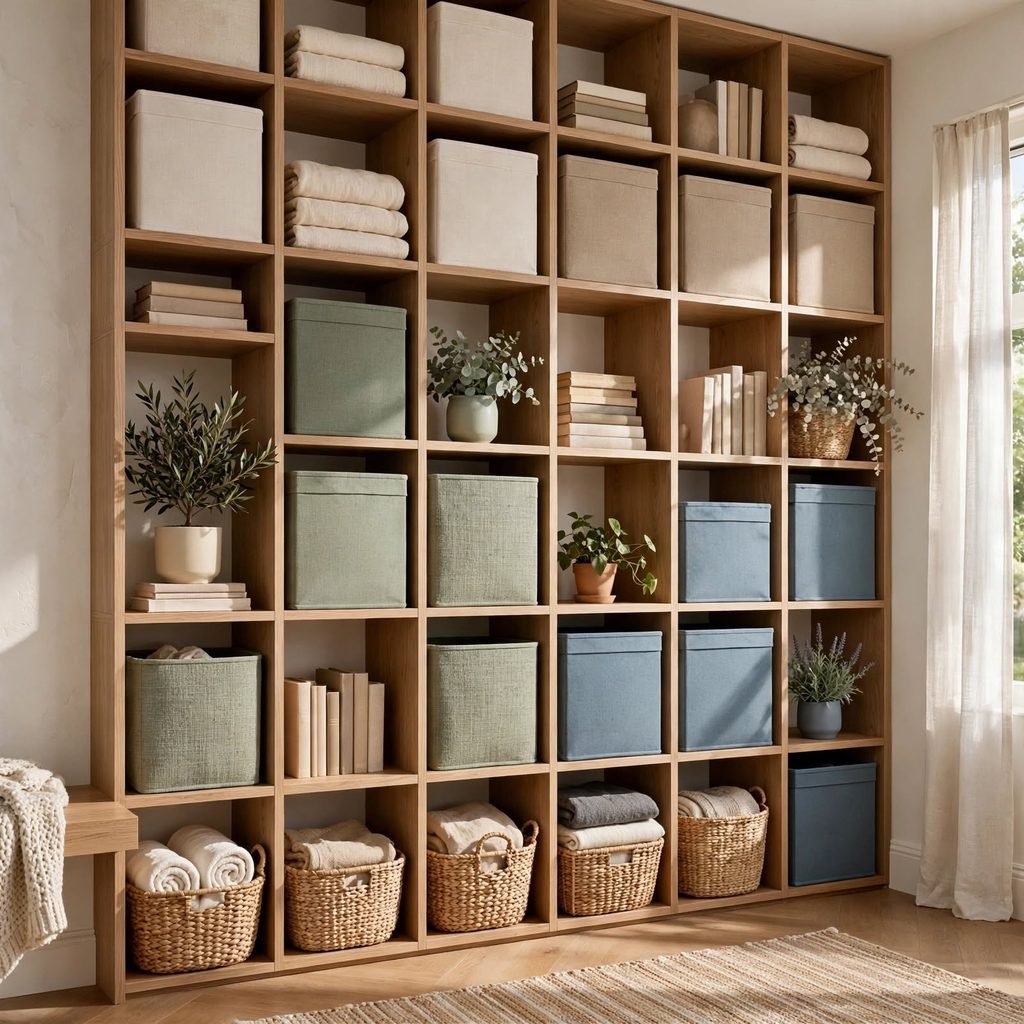
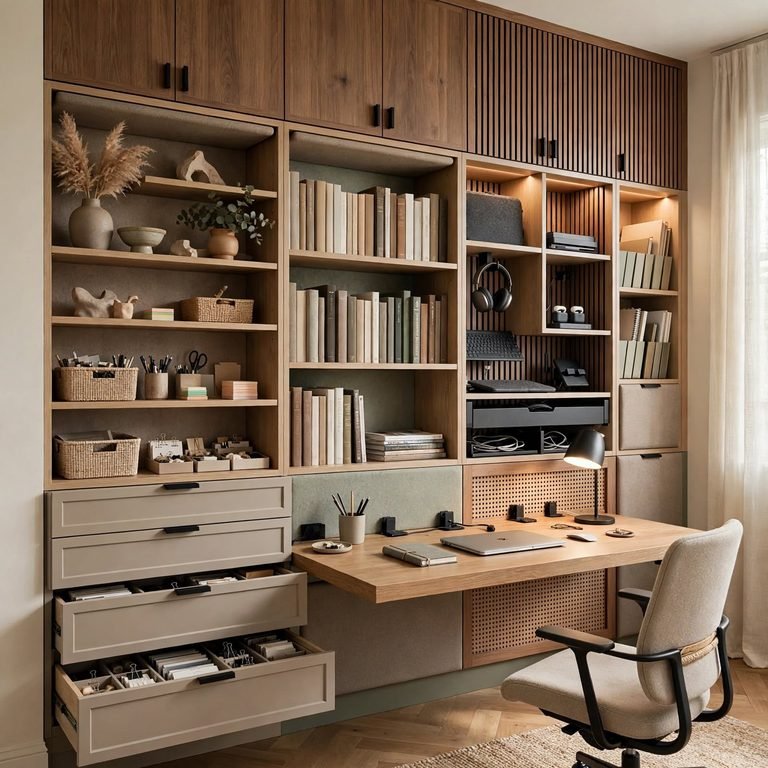
Modular shelving sized to hold uniform bins combines open visibility with the contained order loose items on a shelf can’t provide, and it scales as a home office’s storage needs grow over time. Starting with a smaller unit and adding modules later keeps the initial footprint matched to current needs rather than overbuilt from day one. Mixing a few open display sections with the bin storage keeps the shelving from reading as purely utilitarian.
8. Digital-Physical Filing Match
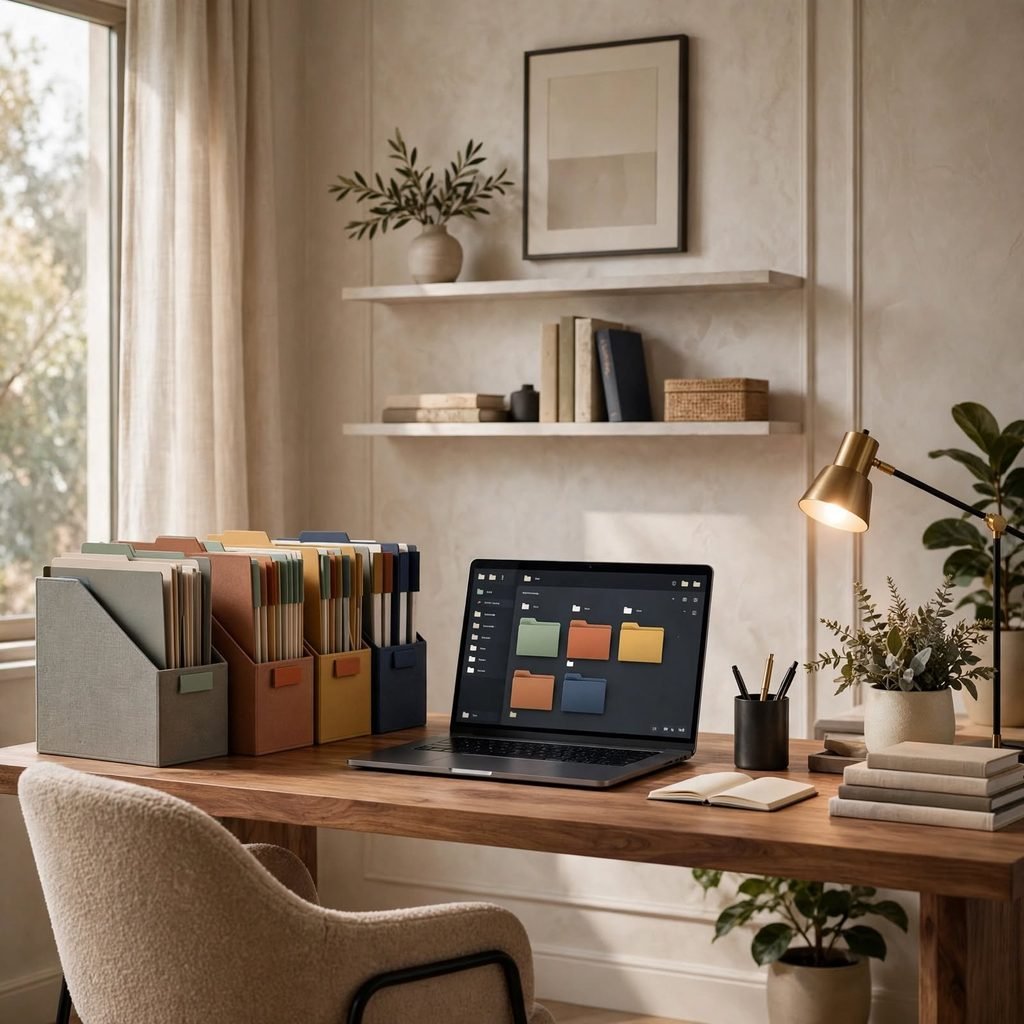
Pairing a labeled physical filing system with a matching digital folder structure, using identical category names in both, makes any document easier to locate regardless of which format it exists in. Scanning documents that don’t need to be kept in hard copy reduces how much physical storage the home office actually needs over time. This hybrid approach suits a room managing both work files and household paperwork better than committing fully to one system alone.
9. Rolling Cart for Overflow
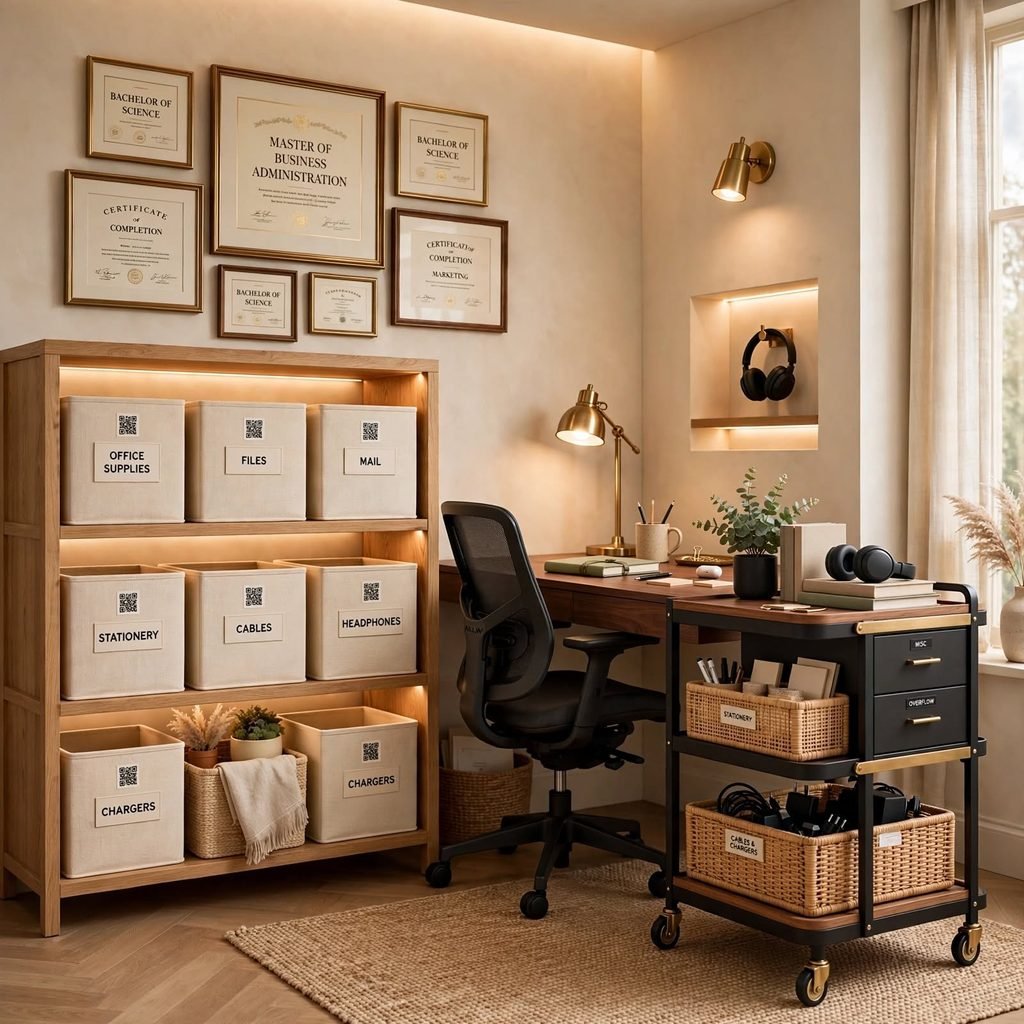
A rolling cart with multiple tiers provides mobile storage for supplies or paperwork used intermittently, which can tuck under or beside the desk during work and roll out when access is needed. This suits a home office without room for a fixed filing cabinet, and works particularly well for seasonal items like tax documents that only need retrieval a few times a year. Locking casters keep the cart from sliding in smaller rooms.
10. Desktop Tray System
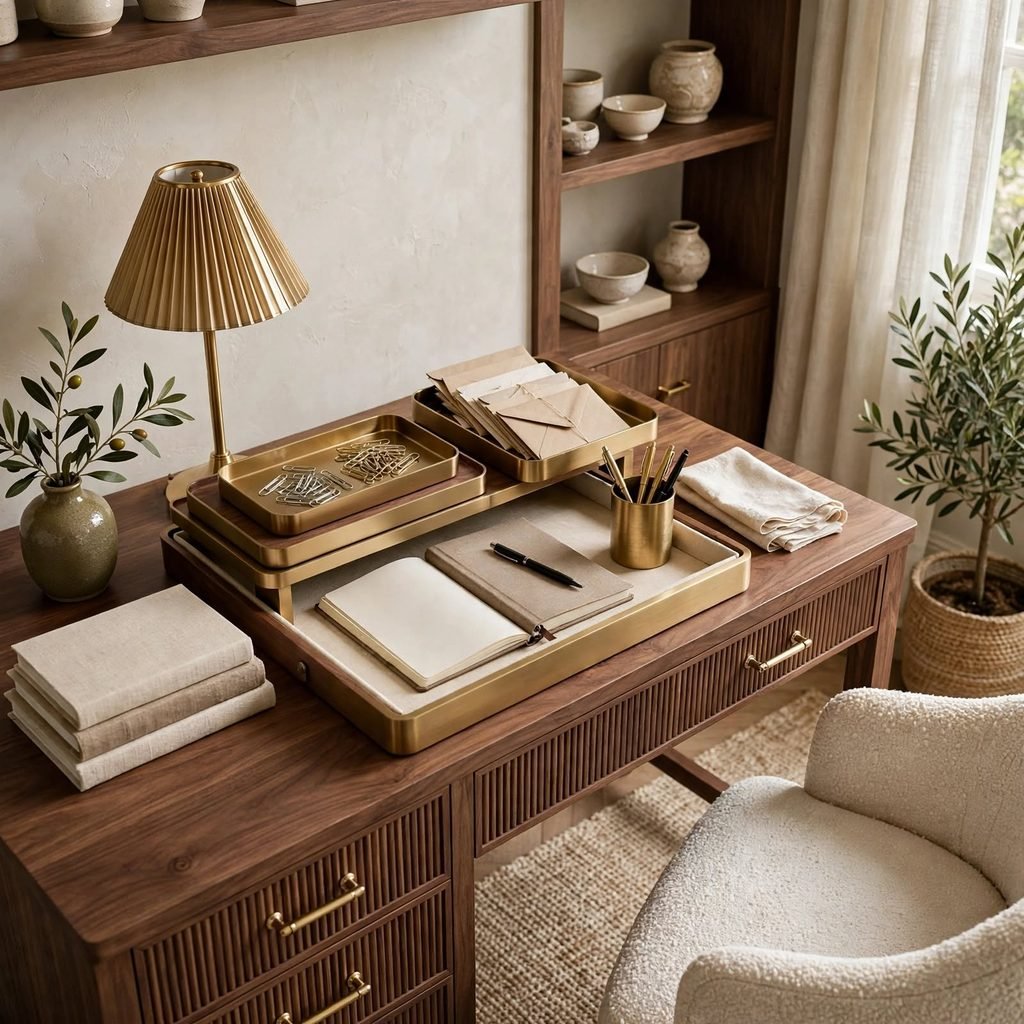
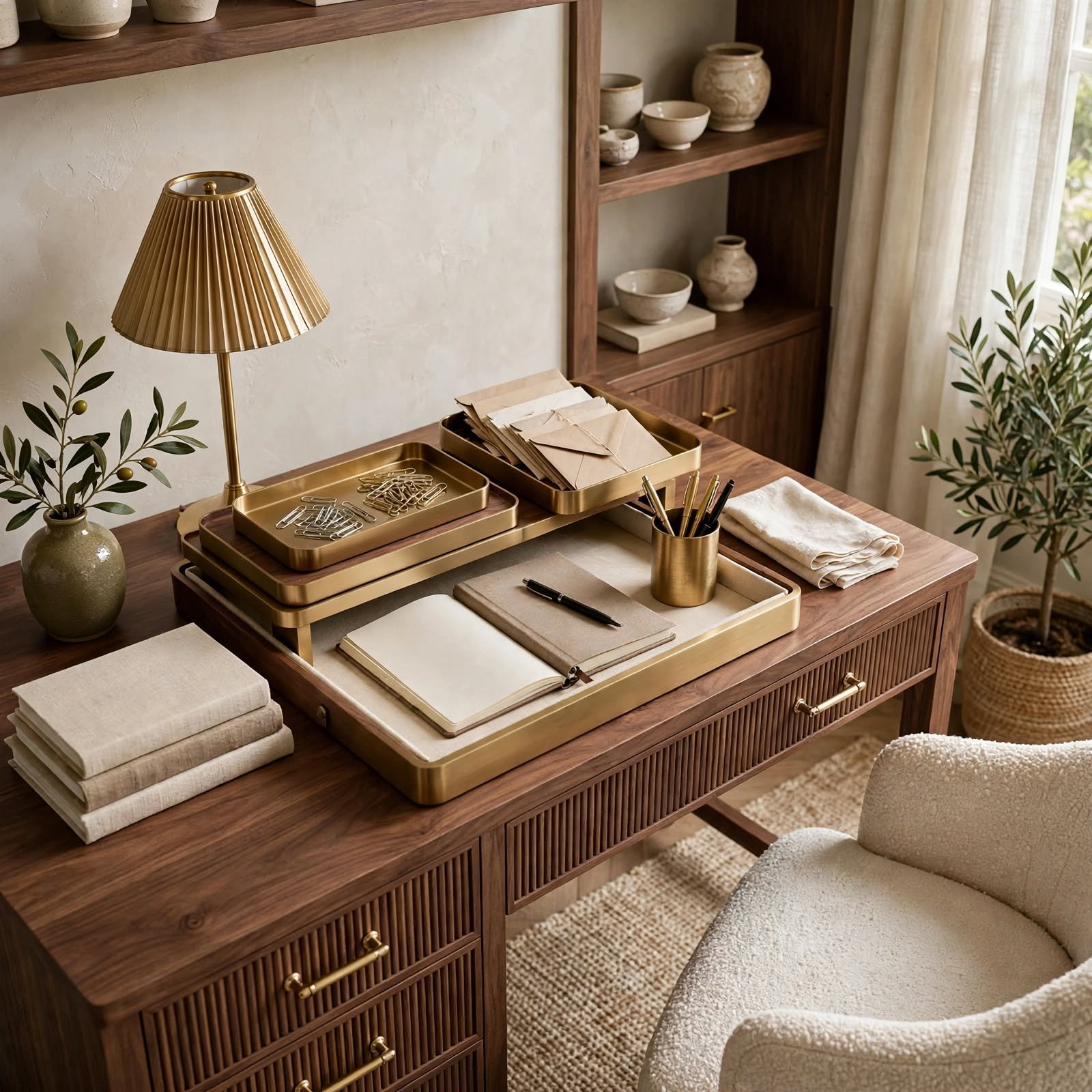
A layered desktop tray system inbox, active projects, to-file keeps loose paper contained to a defined stack rather than spreading across the entire desk surface, which is one of the most common sources of visible clutter in a home office. Committing to clearing the inbox tray at least weekly prevents the system from becoming just another pile with a label. This works best combined with the closed cabinet system for anything that needs longer-term storage beyond the desktop trays.
11. Open Shelf Category Zones
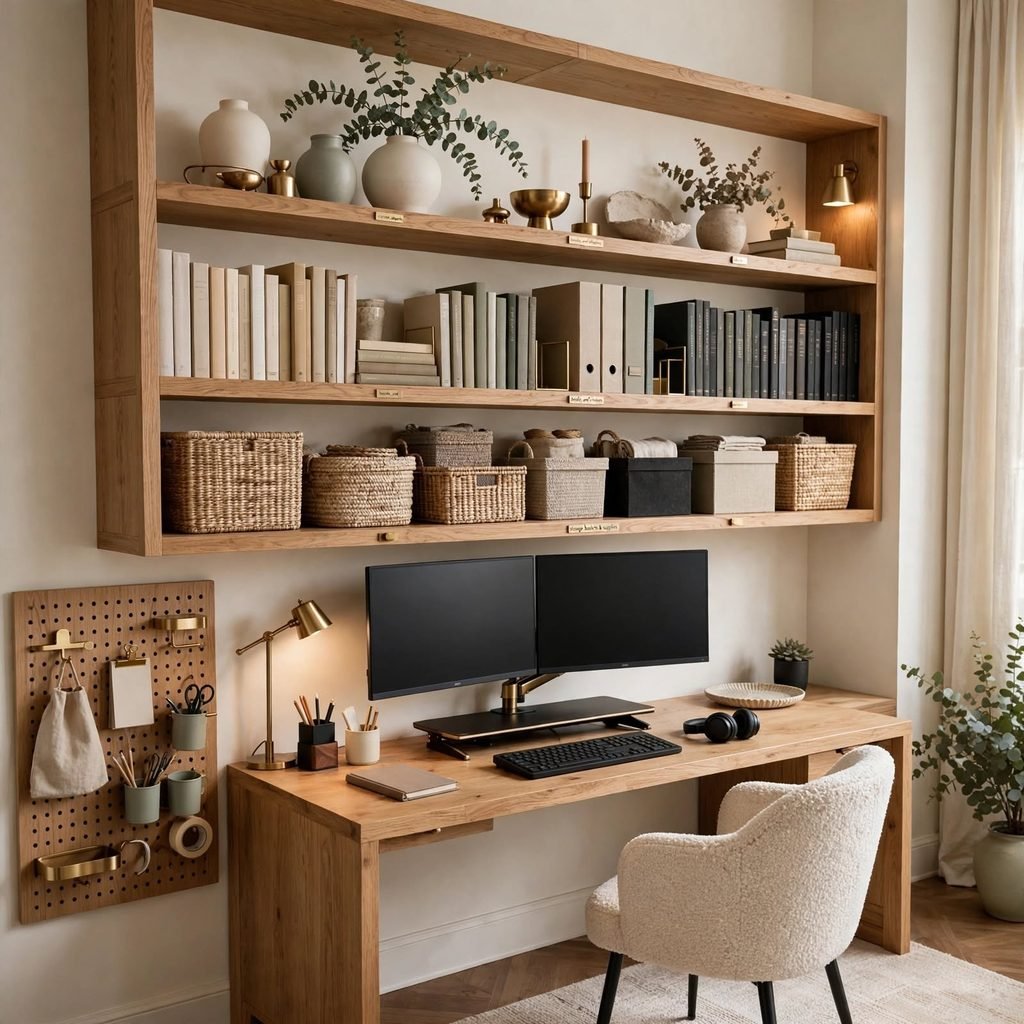
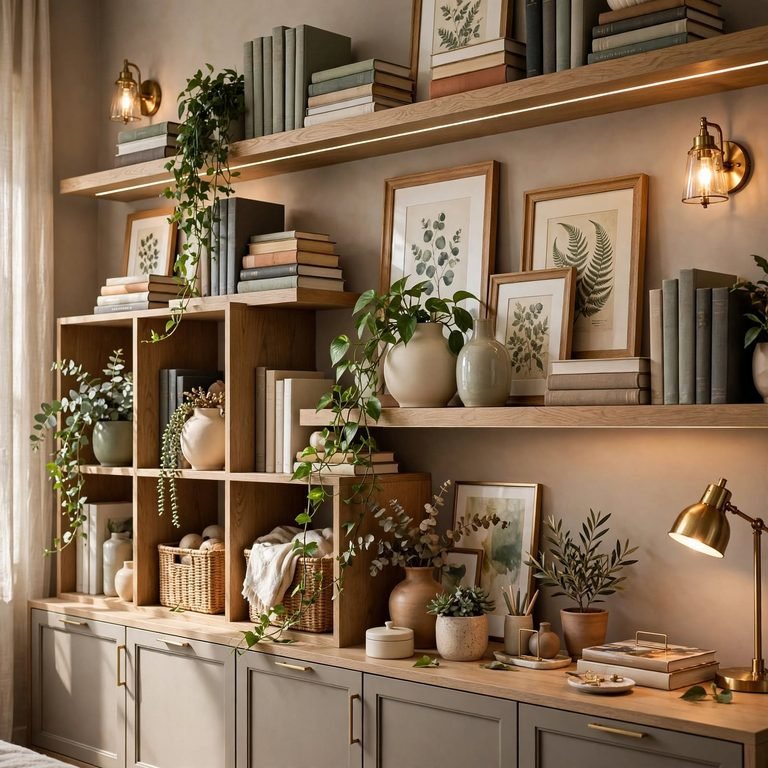
Assigning specific categories to specific sections of open shelving reference books on one level, labeled bins on another, display items on a third turns a bookshelf into an organized system rather than a spot where anything gets placed wherever there’s room. Keeping the same category in the same zone consistently, even as individual items change, is what makes the system easy to maintain without frequent reorganizing. This works especially well combined with labeled bins on the storage-heavy sections.
12. Weekly Reset Routine
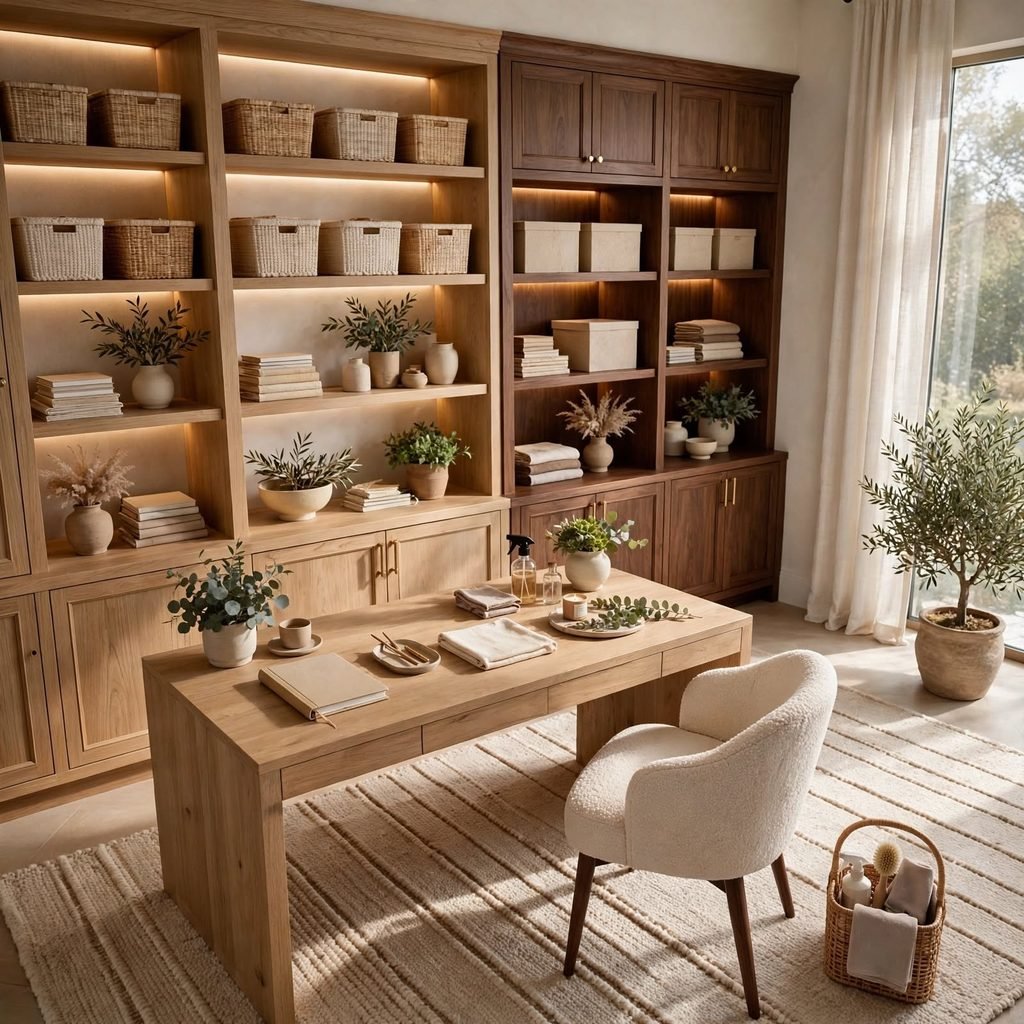
A short weekly reset clearing the desktop tray, returning drawer items to their zones, and filing loose paperwork does more for long-term home office organization than any single storage purchase, since even the best system degrades without regular maintenance. Scheduling this for a consistent day, like Friday afternoon or Sunday evening, keeps the task from being skipped indefinitely. This routine also surfaces which bins or zones consistently end up mismatched with their labels, signaling where the system needs adjusting.
Shop the Look
A set of labeled canvas bins pairs well with a wall-mounted command center for household admin near the room’s entry. Add a modular shelving unit sized for the bins, a closed cabinet for household paperwork, and a layered desktop tray system to keep loose paper contained on the work surface itself.
Common Mistake to Avoid
The most common mistake is organizing a home office once and expecting the system to hold indefinitely without any maintenance, which results in bins that no longer match their labels and a desktop that slowly reverts to its original clutter within a month or two. Build in a short weekly reset from the start, and treat the labeling and zoning as something to revisit every few months as household and work needs shift, rather than a one-time setup.
FAQs
How do I organize a home office that also handles household paperwork?
Keeping work materials and household admin in physically separate zones a closed cabinet for bills and warranties, a different drawer or shelf for work files prevents the two from merging into one disorganized pile. A wall-mounted command center near the room’s entry point can also intercept incoming mail before it reaches the desk itself.
What’s the best way to keep a home office desk clear?
Assigning every item on the desktop a specific home a drawer, a bin, or a tray rather than allowing loose placement is what keeps a desk clear beyond the first week of a fresh organization system. A brief daily or weekly reset, returning items to their designated spots, prevents small piles from accumulating into a larger mess.
Should I organize a home office by category or by frequency of use?
Frequency of use generally works better for daily-function items like drawer contents, keeping the most-needed supplies within easy reach, while broader categories work better for less frequently accessed storage like archival paperwork or seasonal items. Combining both approaches, frequency for daily zones and category for long-term storage, tends to hold up better than relying on just one system.
How do I stop a home office from becoming a catch-all room?
Designating specific zones for non-office items that tend to migrate into the room mail, chargers, miscellaneous household supplies rather than letting them land wherever there’s open space keeps the room from slowly losing its primary function. A dedicated command center or bin specifically for these overflow items gives them a defined home instead of a random surface.
What storage works best for a home office with limited space?
Vertical solutions wall-mounted shelving, a pegboard, or stacked modular bins make the most of a small home office, since they use wall space that’s usually more available than open floor area. Keeping only daily-use items within arm’s reach and moving less frequent supplies to closed or archival storage prevents a small room from feeling cluttered.
Conclusion
Home office organization holds up longest when the system accounts for both work materials and household admin, with zoned storage and a regular reset routine doing most of the long-term work. Save this list to Pinterest for your next organization project, and check out our related guide on small bedroom storage solutions for more system-based storage inspiration.