15 Smart Apartment Living Room Ideas for Renters and Owners Alike
An apartment living room comes with a distinct set of constraints, tighter square footage, shared walls, and often a lease that limits permanent changes, that a typical house doesn’t face in the same way. This guide covers fifteen ideas built specifically around those realities, from renter-friendly wall treatments to furniture that adapts to awkward layouts. Each idea works whether the space is a studio, a one-bedroom, or a larger apartment shared with roommates.
Trend & Background
Apartment living room design has increasingly focused on flexibility and reversibility, driven by rising rental rates and a growing share of the population living in apartments for longer stretches of their adult lives. Removable wallpaper, peel-and-stick tile, and tension-mounted shelving systems have all improved significantly in quality, making it easier for renters to personalize a space without violating lease terms or losing a security deposit. At the same time, smaller average apartment sizes in many markets have pushed furniture makers to design more genuinely multi-functional pieces rather than simply scaled-down versions of full-size furniture.
Key Takeaways
- An apartment living room benefits most from furniture that adapts to unusual layouts and non-standard room shapes.
- Removable, damage-free solutions let renters add real design impact without violating lease terms.
- Multi-functional furniture matters more in an apartment than in a house, since square footage is almost always at a premium.
- Sound and light management, through rugs, curtains, and lighting layers, address common apartment-specific challenges like thin walls and limited natural light.
1. Removable Peel-and-Stick Wallpaper
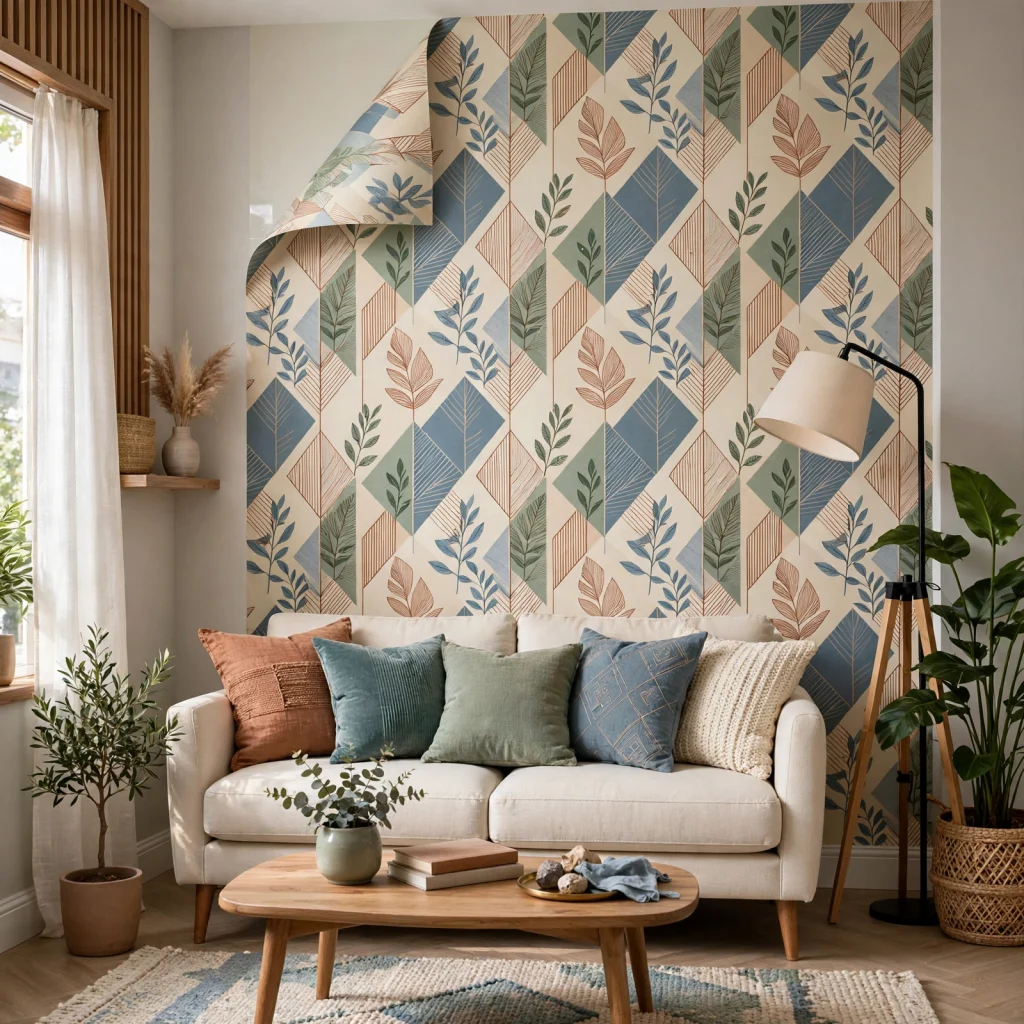
Removable peel-and-stick wallpaper allows an apartment living room to incorporate pattern or texture on a feature wall without the commitment or lease risk of paint or permanent wall treatments. Textured, grasscloth-style, or subtle tonal patterns tend to look more intentional and higher-end than bold, busy prints in a rental setting. Testing a small section in an inconspicuous spot before committing to a full wall confirms the product removes cleanly from the specific wall surface and paint type.
2. Tension Rod Curtain Rods
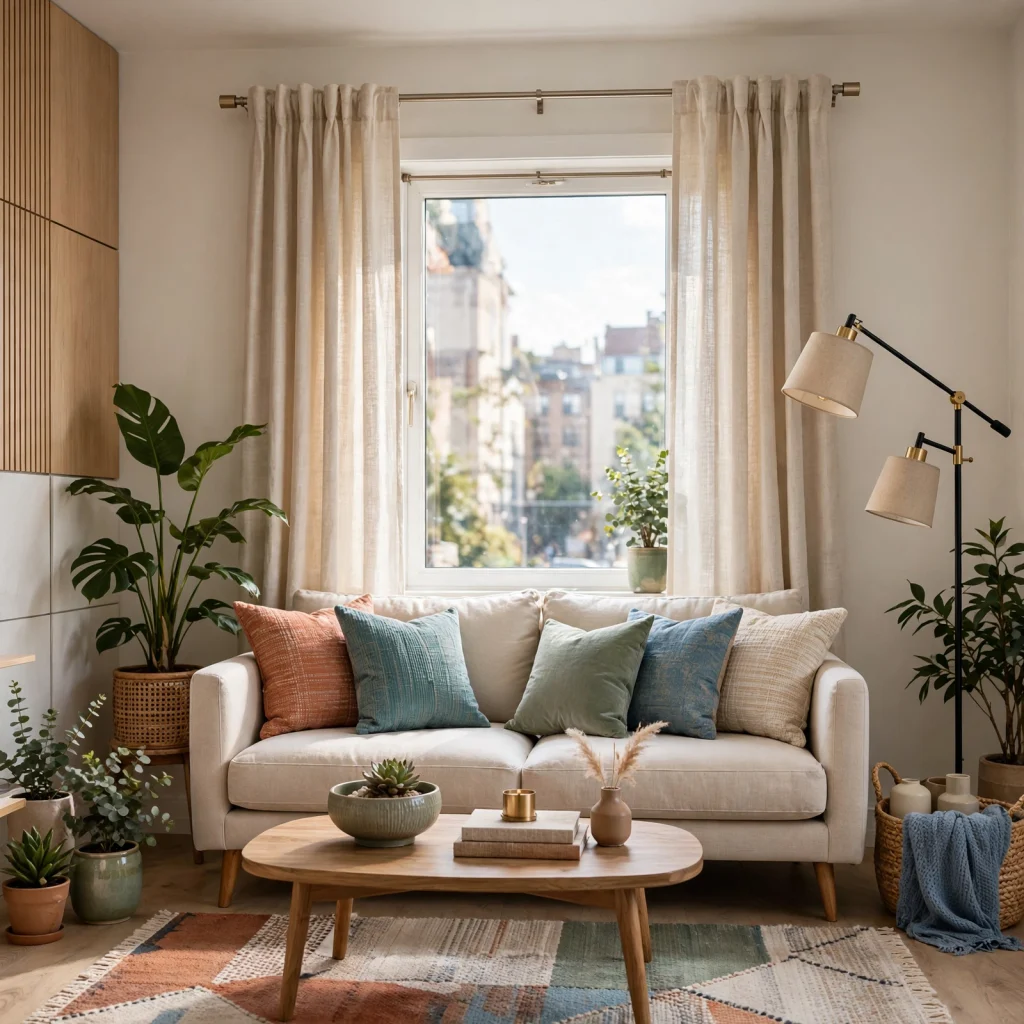
Tension rod curtain hardware, which wedges into place without screws or drilled holes, lets an apartment living room have fully custom window treatments without damaging walls or window frames. This hardware works particularly well for lighter linen or cotton panels, though heavier drapery may require a slightly higher-tension rod to avoid sagging over time. Choosing a rod finish in matte black or brass still allows for a considered, designed look despite the temporary installation method.
| Curtain Weight | Recommended Rod Type | Weight Capacity Needed |
| Light sheer | Standard tension rod | Under 3 lbs |
| Medium linen | Heavy-duty tension rod | 3–6 lbs |
| Full blackout | Wall-mounted bracket rod | 6+ lbs |
3. Apartment-Sized Sectional
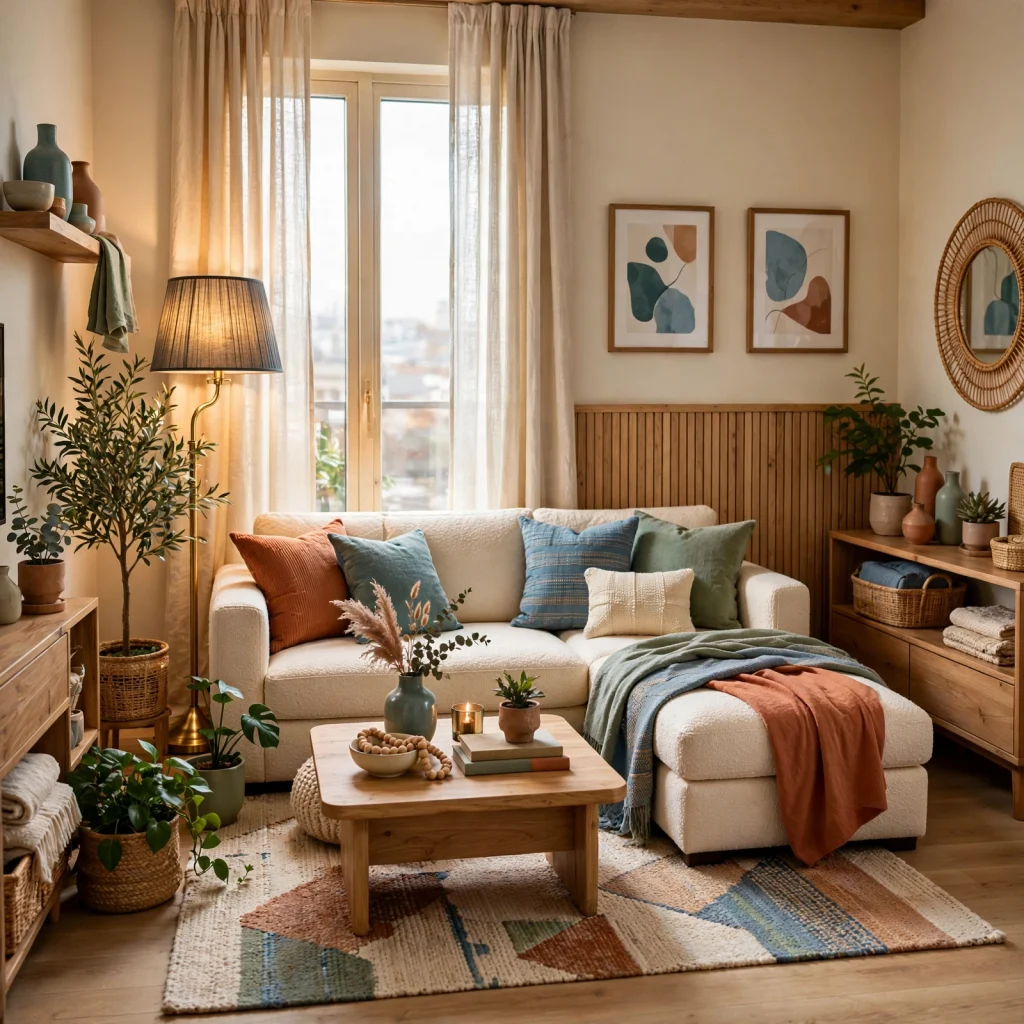
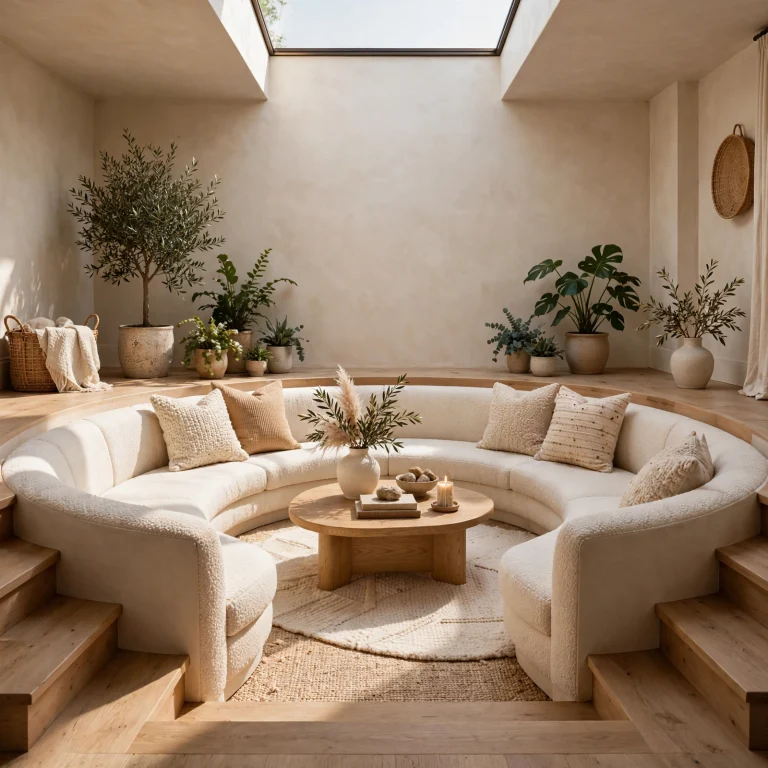
An apartment-sized sectional, scaled down from standard dimensions with sections typically under 90 inches combined length, provides generous seating without overwhelming a compact apartment living room. Choosing a modular design with pieces that can separate allows the sofa to be maneuvered through narrow doorways and stairwells common in older apartment buildings. This scaling also makes the sectional easier to reconfigure if the household later moves to a different apartment layout.
4. Command Strip Gallery Wall
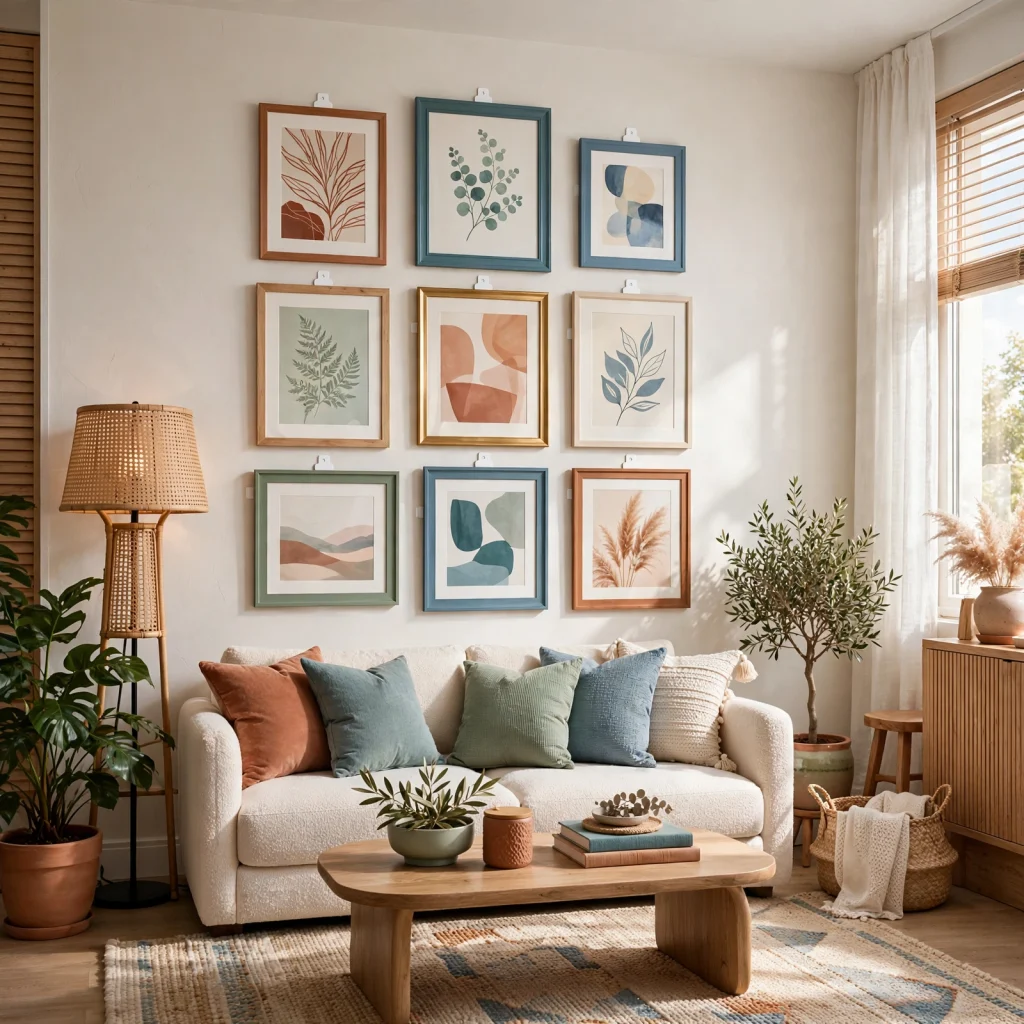
A gallery wall hung entirely with adhesive picture-hanging strips, rather than nails or screws, gives an apartment living room a personalized art display without any wall damage. Following the manufacturer’s weight limits closely, since most strips support only a few pounds per frame, keeps the arrangement secure over time. This approach also makes rearranging the gallery simple, since strips can be repositioned without patching holes the way traditional hanging methods would require.
5. Furniture with Exposed Legs
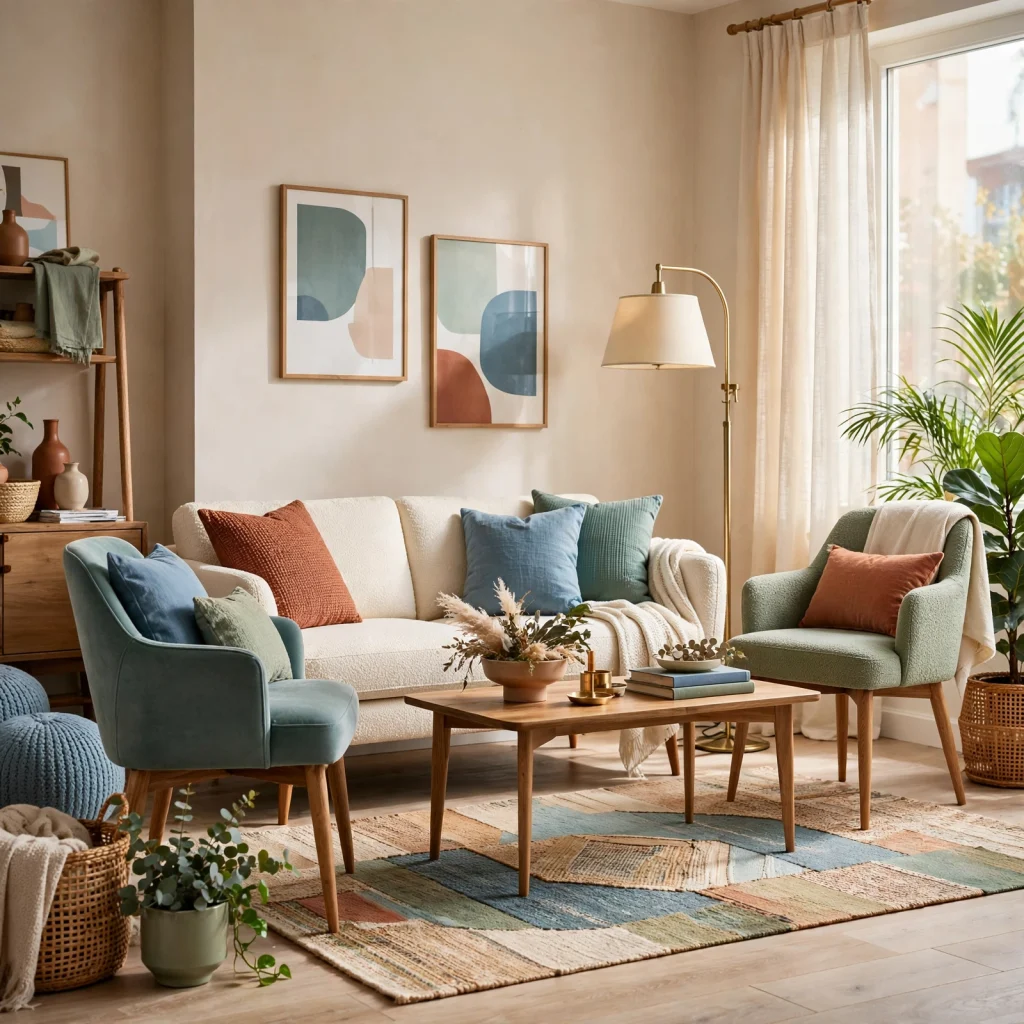
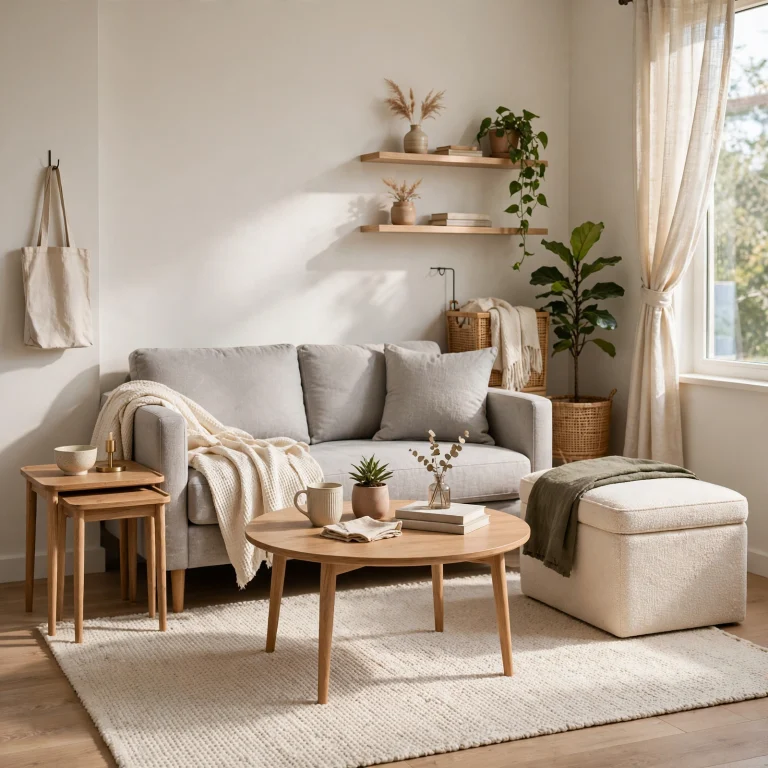
Choosing furniture with exposed, visible legs rather than a fully skirted or boxy base keeps an apartment living room feeling more open, since sightlines pass underneath the furniture rather than stopping at a solid base. This detail matters more in a compact apartment than in a larger house, where the visual weight of furniture has more room to be absorbed. Lighter wood tones on exposed legs also tend to make furniture feel less bulky overall, even at the same physical dimensions.
6. Room Divider for Studio Layouts
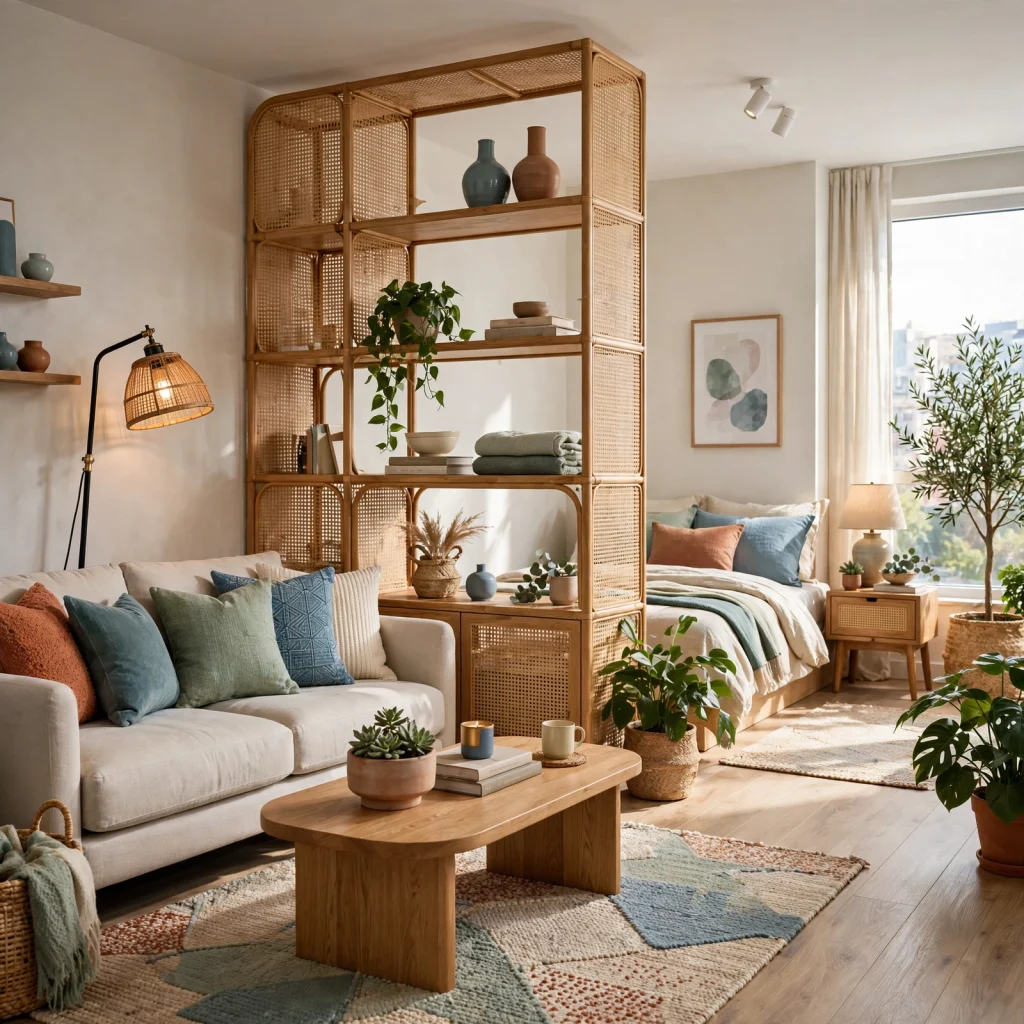
A freestanding room divider, whether a folding screen, an open bookshelf, or a curtain track, allows a studio apartment living room to visually separate a sleeping area from the main living space without permanent construction. An open-back bookshelf divider offers the added benefit of storage and display space on both sides, making it more functional than a purely decorative screen. Positioning the divider to maintain natural light flow between zones keeps the studio from feeling chopped up despite the visual separation.
Give your walls a stylish makeover with these living room wall decor ideas for creating an attractive focal point.
7. Area Rug Over Existing Flooring
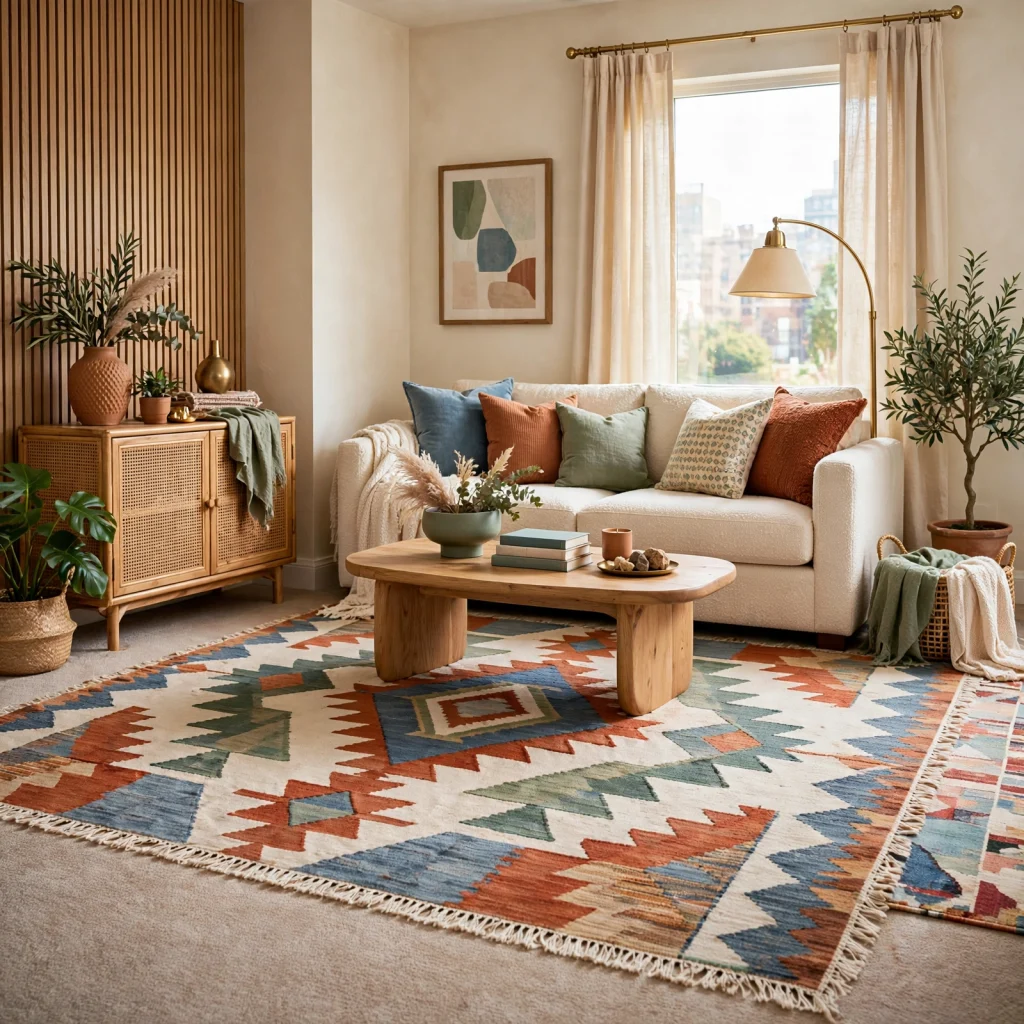
A well-chosen area rug defines a seating zone within an apartment living room while also covering existing flooring that renters often can’t change, whether worn carpet, dated tile, or laminate that doesn’t match personal style preferences. Sizing the rug so the full seating group sits within its edges gives the room a cohesive, intentional feel despite the underlying floor. This is also one of the most impactful, fully reversible design changes available to renters, since it requires no installation at all.
8. Multi-Purpose Storage Ottoman
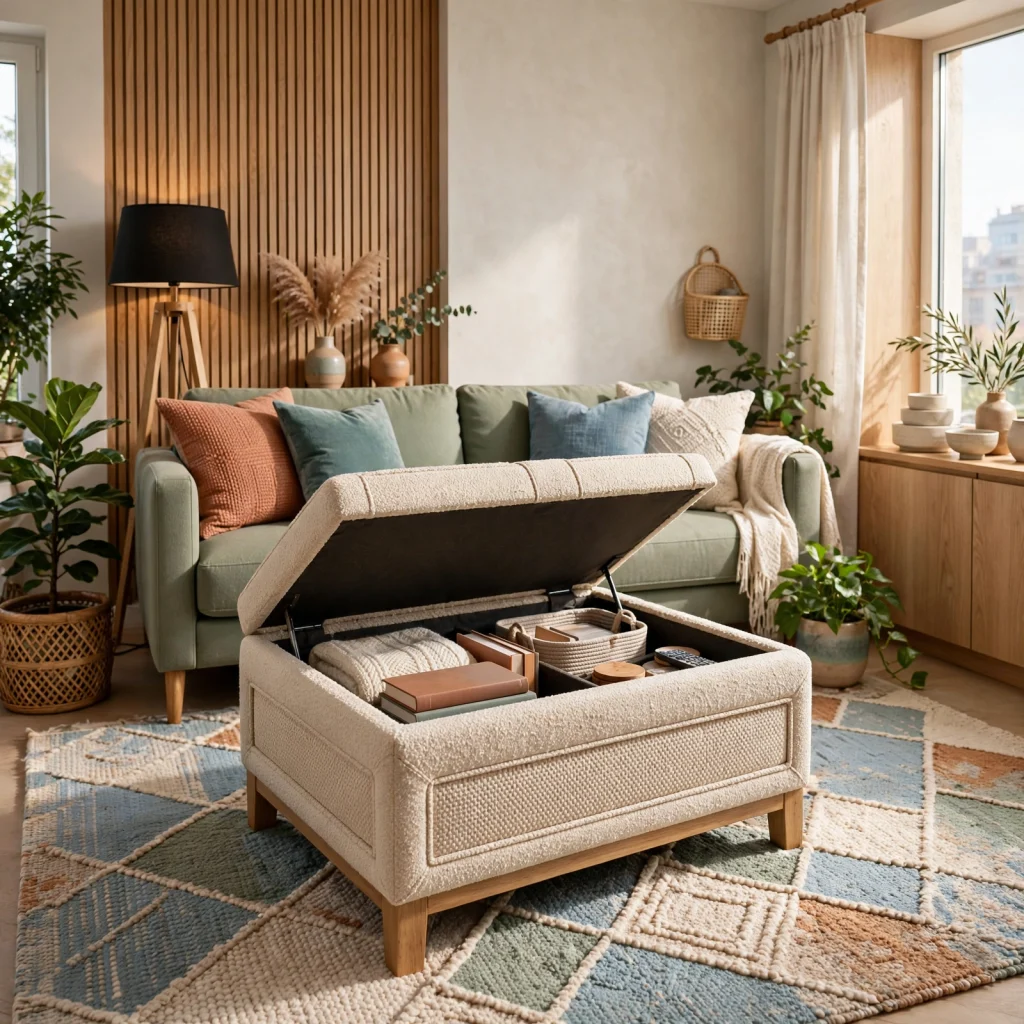
A storage ottoman, doubling as a coffee table, extra seating, and hidden storage, addresses the more limited closet and cabinet space common in many apartment layouts. Choosing one with a removable tray top keeps it functional as a surface while still providing access to the storage compartment underneath. This single piece often reduces the need for additional storage furniture that a larger apartment or house might otherwise accommodate more easily.
9. Vertical Storage Solutions
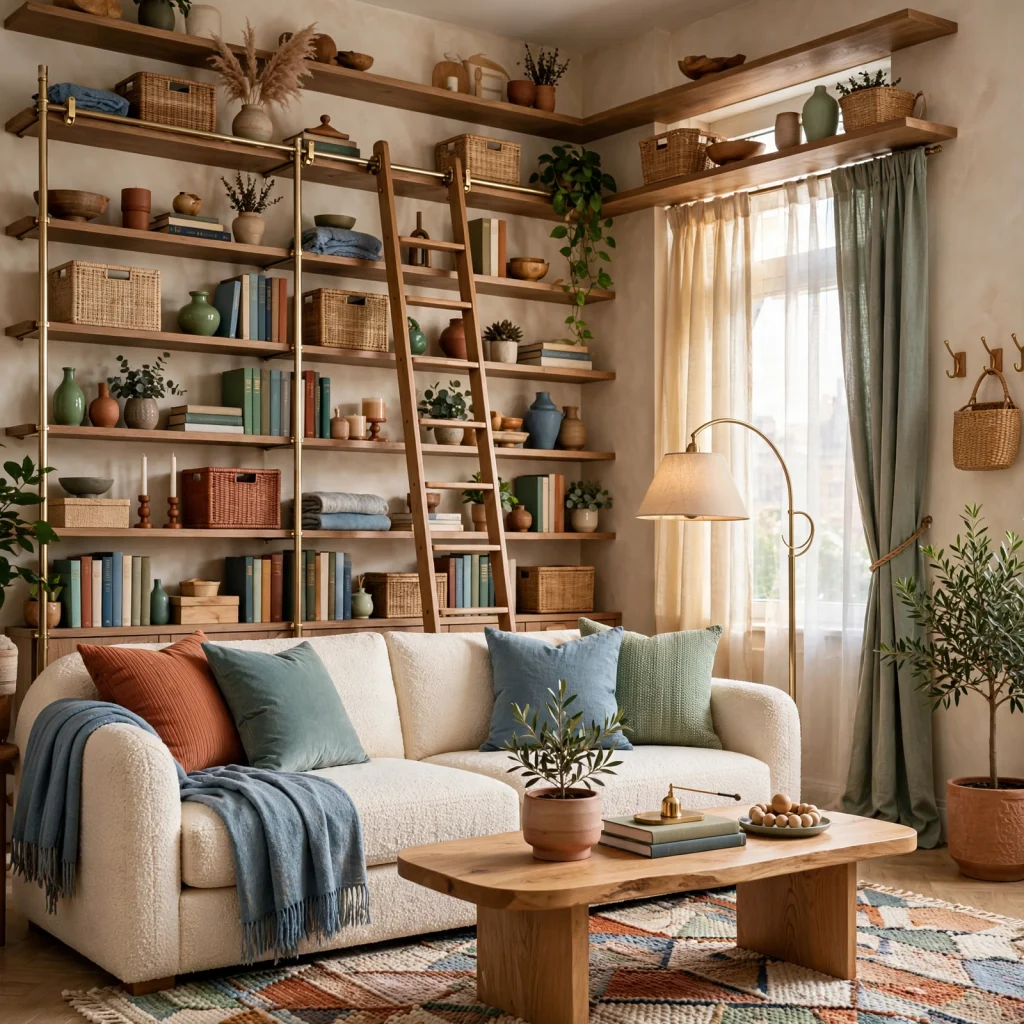
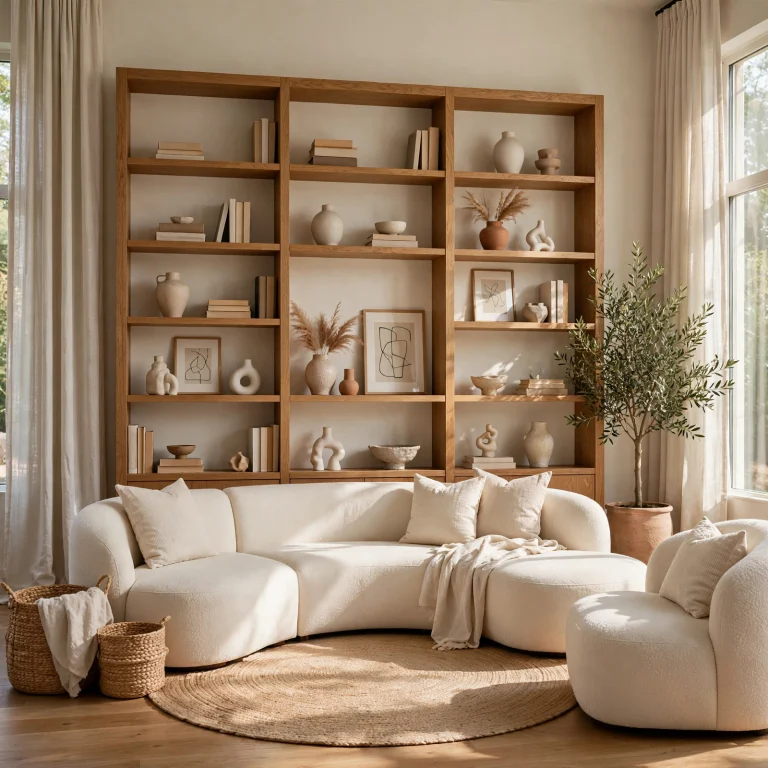
Tall, narrow storage pieces, such as a slim bookshelf or a vertical media cabinet, take advantage of an apartment living room’s often underused vertical space rather than requiring a wider footprint that eats into limited floor area. This approach is particularly useful in apartments with higher ceilings but a smaller overall square footage, a common combination in older or converted buildings. Anchoring taller furniture to the wall, even in a rental, is an important safety step that most landlords permit despite the general no-drilling policies for other changes.
10. Adhesive LED Strip Lighting
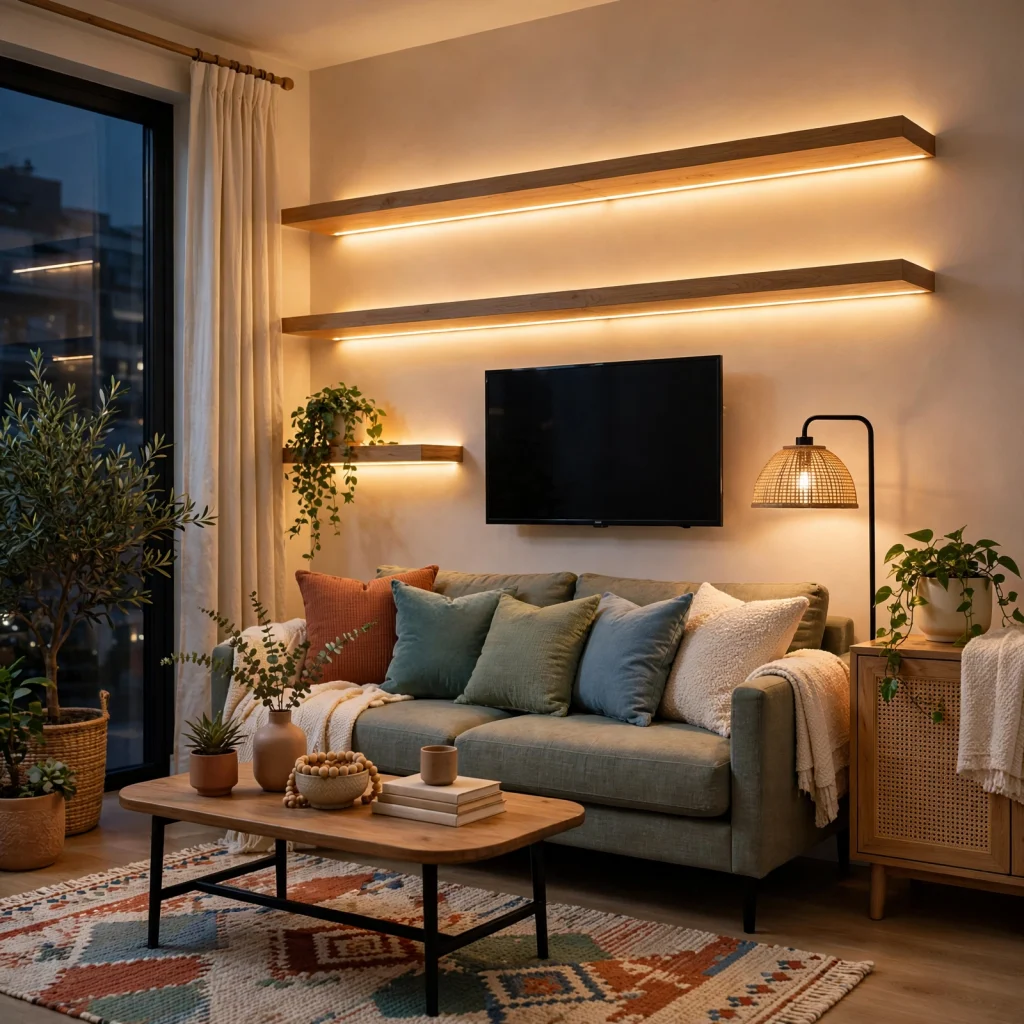
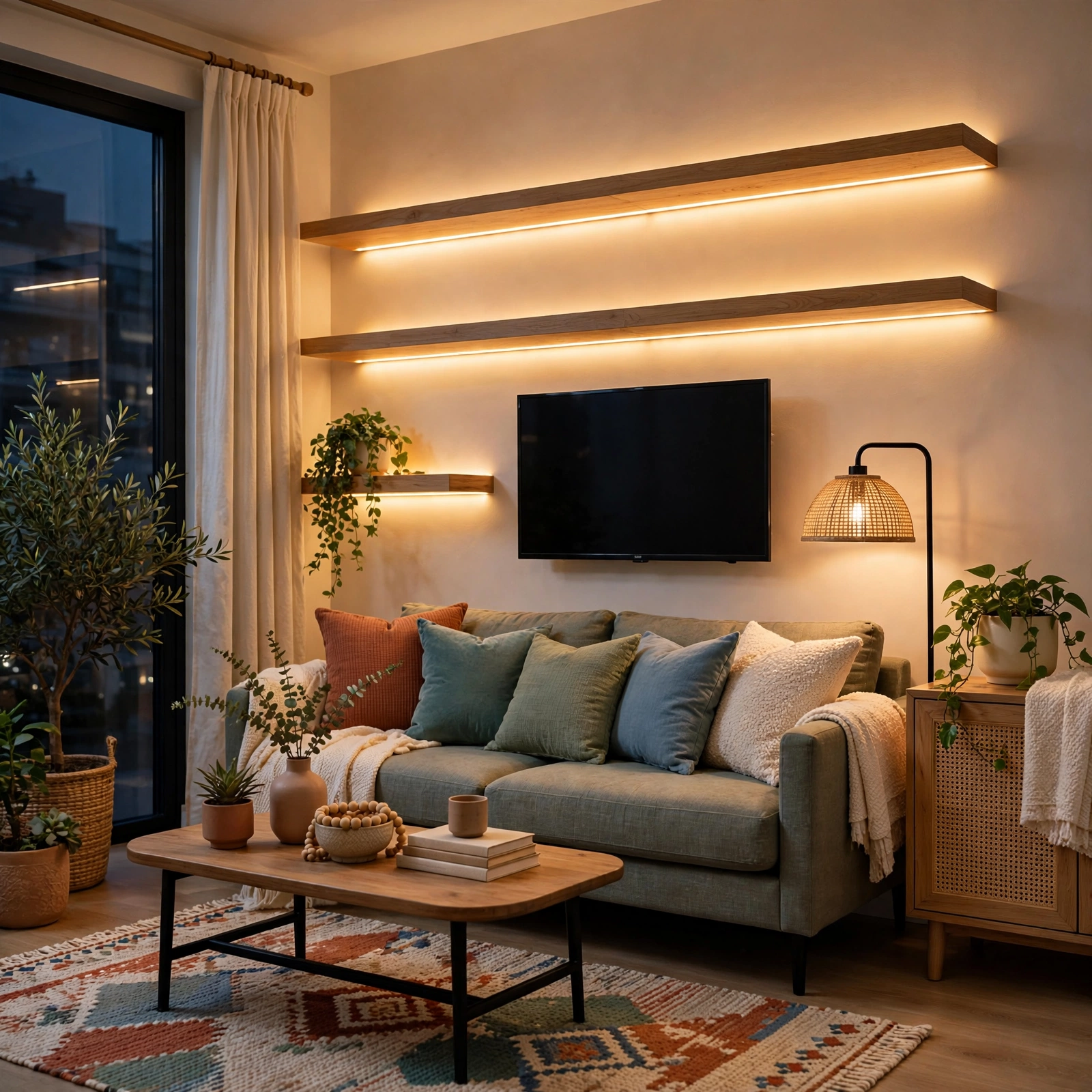
Adhesive LED strip lighting, installed along a shelf edge, behind a media console, or around a mirror frame, adds a layered lighting option to an apartment living room without requiring any electrical work or permanent fixtures. Battery-powered or plug-in versions avoid the need for hardwiring entirely, making this one of the more accessible lighting upgrades for a rental. Warm white tones in the 2700K to 3000K range keep the effect cozy rather than clinical.
11. Floating Shelf with No-Drill Brackets
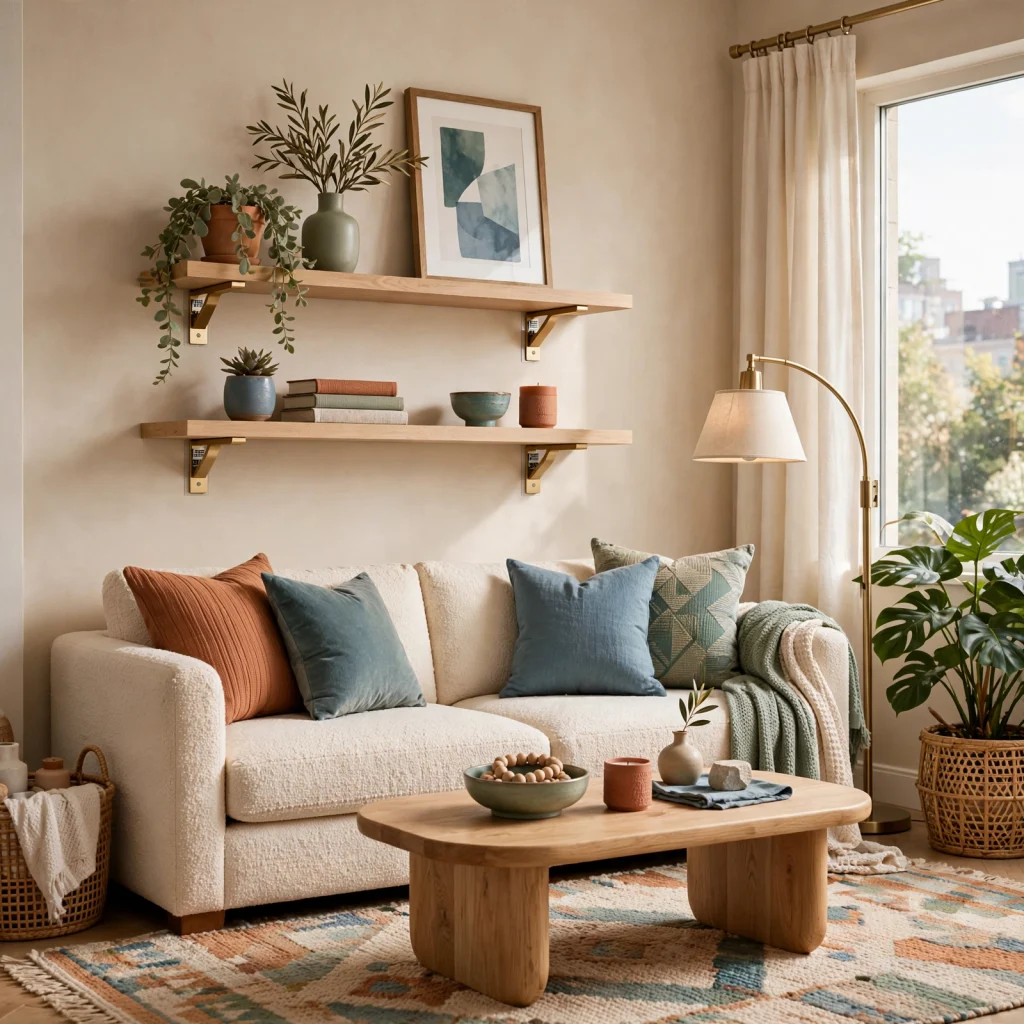
Floating shelves using tension-mounted or adhesive no-drill brackets allow an apartment living room to gain display and storage space without the wall damage traditional bracket-and-screw shelving requires. Weight capacity is more limited with these systems, so heavier items like large books or decorative objects should be tested carefully before committing to a full display. This solution works particularly well in a rental kitchen-adjacent living space where additional storage is often needed but drilling isn’t permitted.
12. Furniture Sized for Doorway Clearance
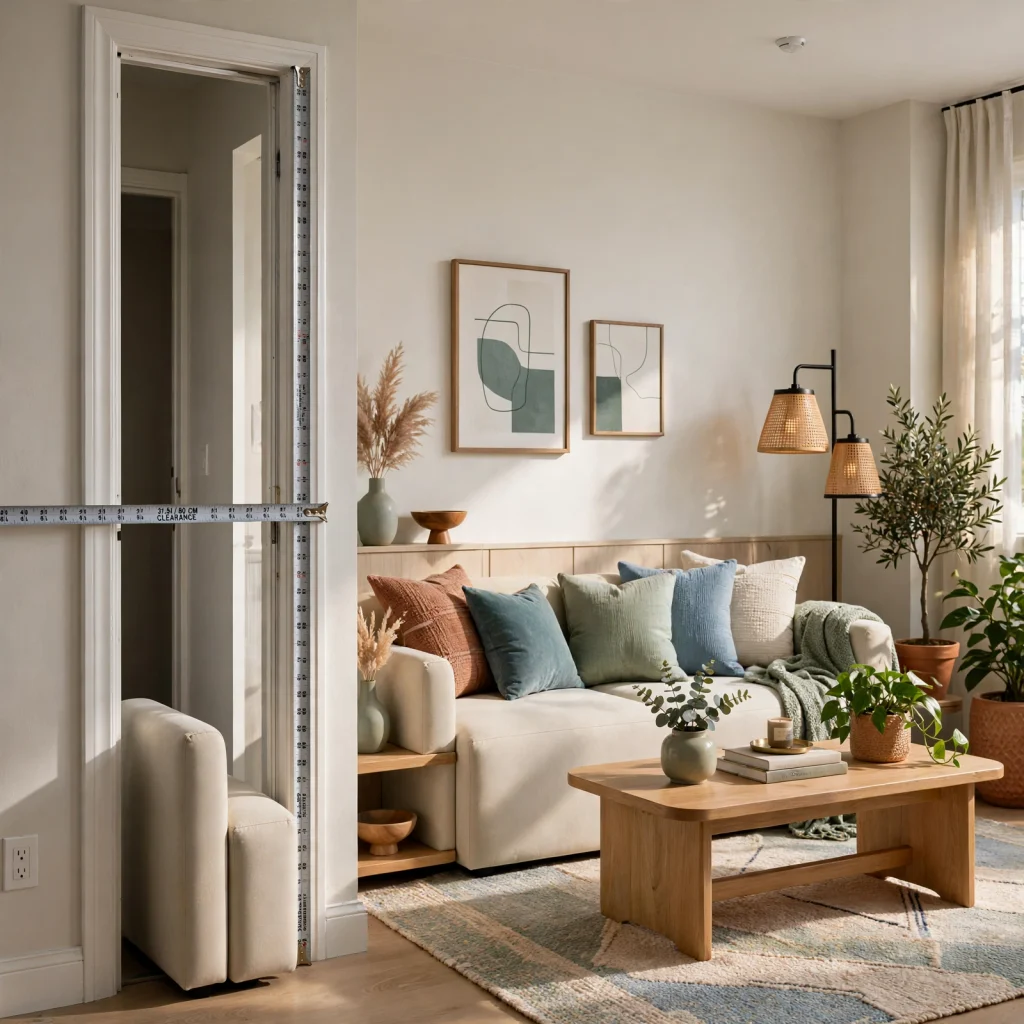
Measuring doorways, hallways, and stairwells before purchasing larger furniture pieces prevents the common apartment problem of buying a sofa or media console that physically cannot be maneuvered into the unit. Modular or sectional pieces that break down into smaller components generally navigate tight apartment building corridors more easily than a single fixed-frame sofa. This planning step, while not a decor idea in the traditional sense, prevents one of the most common and costly apartment furnishing mistakes.
13. Blackout Curtain Liner for Light Control
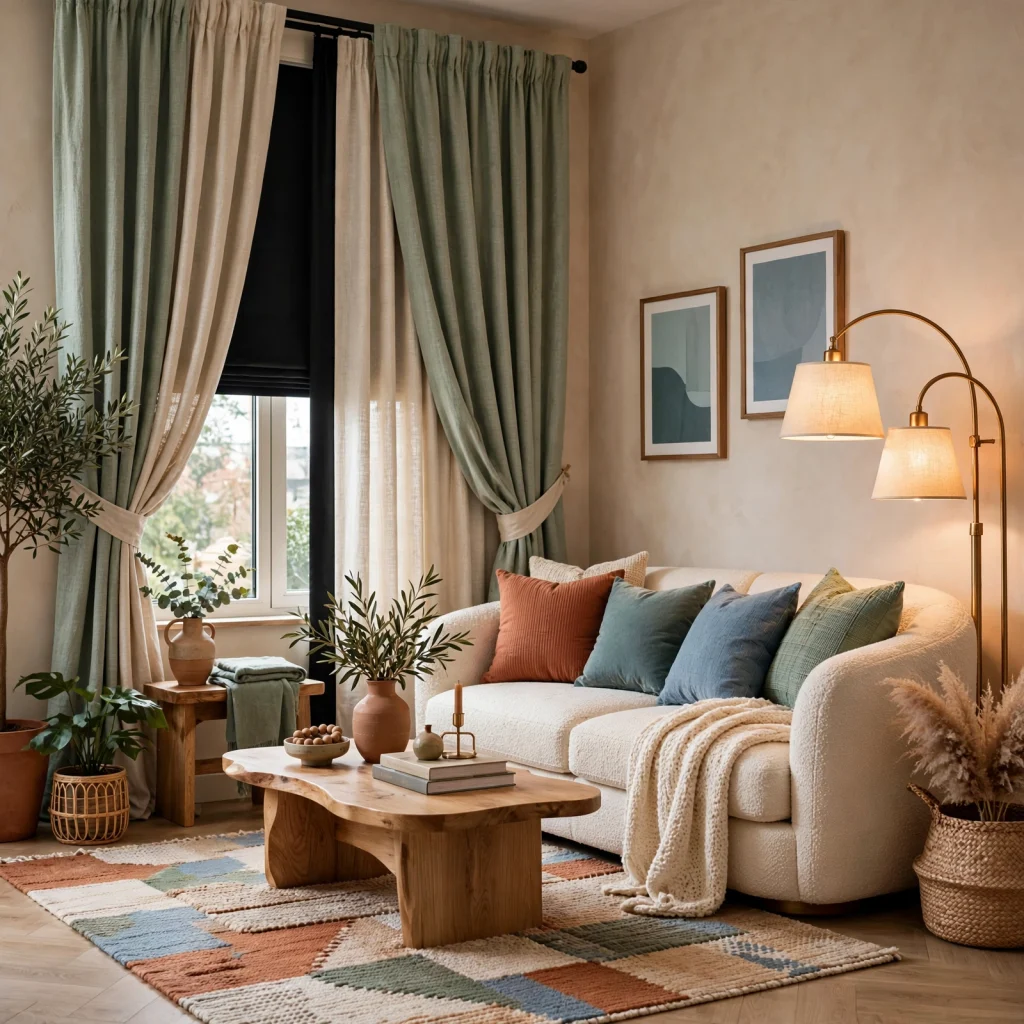
Adding a blackout curtain liner behind an existing decorative curtain panel improves light control and privacy in an apartment living room, which is particularly useful in units facing streetlights, other buildings, or a bright exterior wall. This liner attaches with clip rings or a simple sew-in method to an existing panel, avoiding the need to replace curtains entirely for better function. This upgrade also helps with temperature regulation, keeping a room slightly cooler in summer and warmer in winter by blocking additional light and some airflow through the window.
14. Area Rug for Sound Dampening
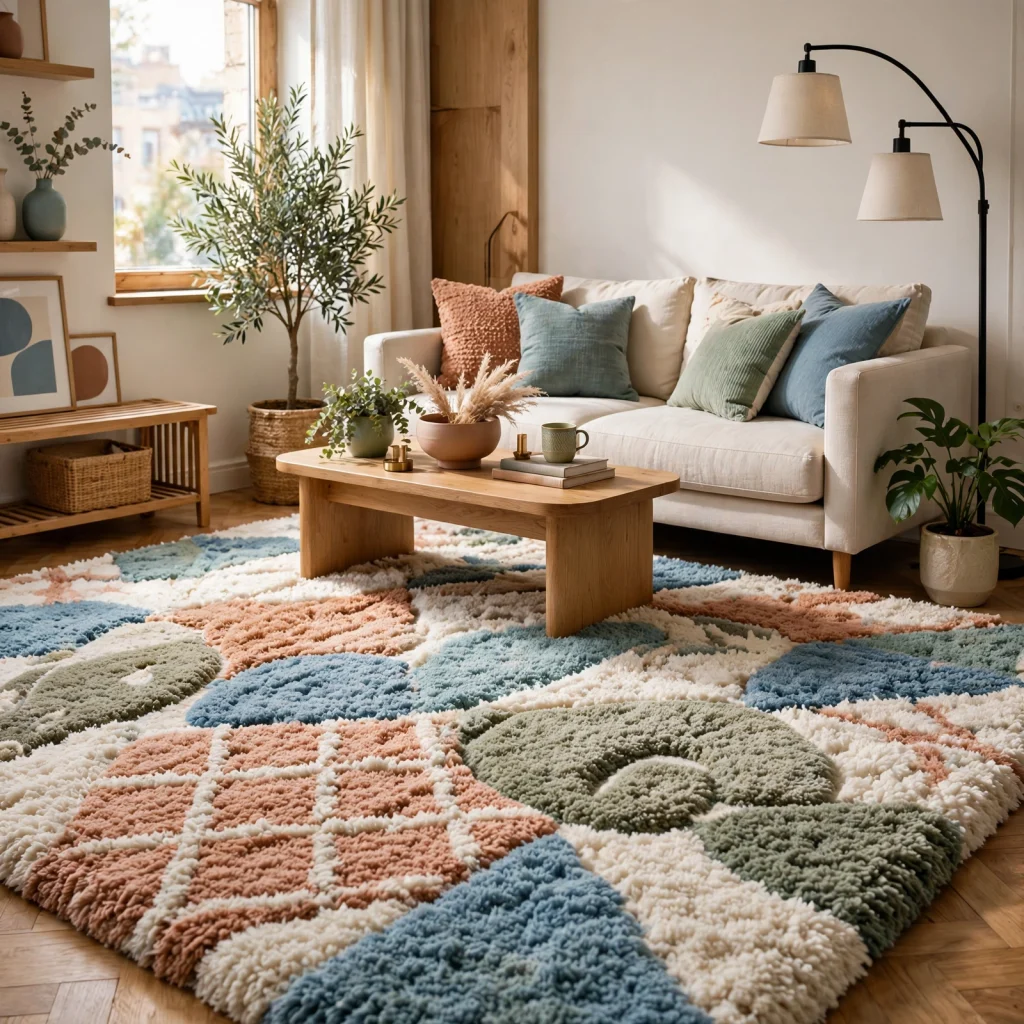
Beyond its decorative role, a thick area rug with a rug pad underneath helps dampen sound transfer in an apartment living room, both reducing noise traveling to units below and softening echo within the room itself. This matters particularly in older buildings with hardwood or laminate flooring and limited soundproofing between floors. A rug pad specifically designed for sound dampening, rather than a purely decorative thin pad, offers a more meaningful noise reduction benefit.
15. Neutral Base with Removable Personal Accents
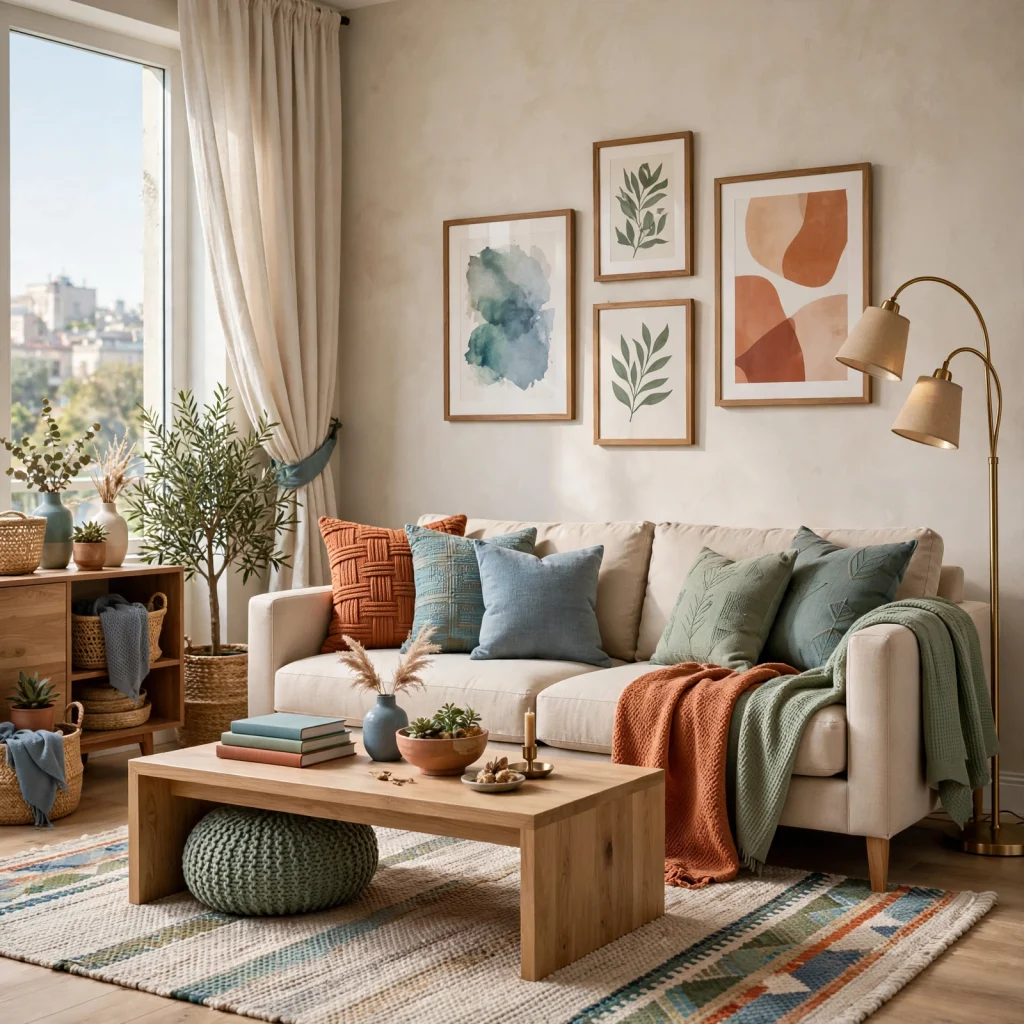
Building an apartment living room around a neutral base of furniture and larger pieces, while concentrating personal style into fully removable elements like pillows, art, and rugs, allows the space to feel personalized without conflicting with a lease’s restrictions on permanent changes. This approach also makes moving between apartments considerably easier, since the foundational furniture pieces work in a variety of different room shapes and colors. Keeping personal, trend-driven choices in the lower-cost, swappable layer also allows the room’s style to evolve without replacing major furniture investments.
Shop the Look
Start with an apartment-sized modular sectional, a large area rug with a sound-dampening pad, and a tall, narrow bookshelf anchored to the wall for vertical storage. Add tension rod curtains with a blackout liner, a storage ottoman with a removable tray, and adhesive LED strip lighting behind a media console. Finish with a command-strip gallery wall and a set of no-drill floating shelves for additional display space.
Common Mistake to Avoid
A common mistake in an apartment living room is purchasing furniture sized for a future, larger home rather than the actual space currently available, resulting in a room that feels cramped and difficult to navigate. Measuring the room’s actual dimensions, along with doorway and hallway clearance, before any furniture purchase prevents this issue and ensures the space functions well for as long as the apartment is home. Buying appropriately scaled furniture now, even if it means replacing pieces later for a larger space, produces a far more livable result in the interim.
FAQs
How can I decorate a rental apartment living room without losing my deposit?
Removable wallpaper, command strip hanging systems, tension rod curtains, and no-drill floating shelves all allow significant personalization without permanent wall damage that could affect a security deposit. Area rugs, furniture, and textiles provide additional ways to add color and texture without touching the walls at all. Testing any adhesive product in a small, inconspicuous area first and documenting the apartment’s original condition with photos before making changes are both good practices for protecting a deposit.
What furniture works best for an awkwardly shaped apartment living room?
Modular sectionals, furniture on casters, and pieces with a smaller overall footprint tend to adapt better to awkward or irregular apartment living room shapes than large, fixed-dimension furniture designed for standard rectangular rooms. Round or curved furniture, like a round coffee table or a curved sectional, can also help soften awkward angles that rectangular pieces make more obvious. Measuring the room’s actual usable space carefully, including any nooks or angled walls, before shopping helps avoid furniture that doesn’t fit the room’s real shape.
How do I add storage to a small apartment living room?
Multi-purpose furniture like storage ottomans and benches, combined with vertical solutions like tall narrow bookshelves or no-drill floating shelves, generally add the most storage capacity without consuming significant floor space in a small apartment living room. Under-furniture storage, such as a coffee table with a lower shelf, also adds capacity without requiring an additional standalone piece. Prioritizing hidden storage over open shelving helps keep the room looking tidy despite the limited space available.
Can I soundproof an apartment living room without construction?
While full soundproofing typically requires construction, several non-permanent changes can meaningfully reduce noise in an apartment living room, including a thick area rug with a sound-dampening pad, heavier curtains, and upholstered furniture that absorbs sound rather than reflecting it. Adding a bookshelf along a shared wall can also help, since the books and shelving provide some sound absorption. These changes won’t eliminate noise entirely but often make a noticeable difference, particularly for airborne sound like conversation or television audio.
Should I invest in expensive furniture for a temporary apartment living room?
Whether to invest in higher-cost furniture for a temporary apartment depends largely on how long the stay is expected to last and whether the pieces would transfer well to a future home. Choosing versatile, well-made furniture in neutral tones and standard proportions generally makes more financial sense than either very cheap, disposable pieces or highly customized items that might not fit a future space. Modular and multi-functional furniture tends to offer the best balance, since it adapts more easily to different room configurations over time.
Conclusion
An apartment living room can feel just as considered and personal as a house, using furniture and design choices scaled to the space’s real constraints rather than working against them. Save this guide to Pinterest for reference while planning your next apartment update, and check out our related post on small living room ideas for more space-maximizing strategies.