15 Creative Living Room Wall Designs Beyond Plain Paint
A plain painted wall is often the least interesting surface in a living room Wall Designs, even though walls make up the majority of the room’s visible square footage. This guide covers fifteen living room wall design ideas, from board-and-batten paneling to full stone treatments, each with sizing and material guidance for a result that reads as intentional rather than trend-chasing. Whether the goal is subtle texture or a dramatic architectural statement, these ideas apply to a range of budgets and room styles.
Trend & Background
Living room wall design has moved well beyond a single accent color, with homeowners increasingly investing in dimensional treatments like millwork, wood paneling, and natural stone that add texture and architectural presence. This shift reflects both a renewed interest in craftsmanship-driven interiors and the wider availability of modular molding and paneling kits that make these treatments more accessible than a fully custom installation. Textural wall treatments have also proven more durable in terms of design longevity than paint trends, which tend to cycle through popular colors more quickly.
Key Takeaways
- Living room wall designs add architectural interest through texture, molding, and material rather than color alone.
- Panel and molding treatments generally cost less than full material changes like stone or wood slats but deliver similar visual impact.
- A single feature wall, rather than treating every wall equally, keeps a room from feeling overdesigned.
- Scale and proportion matter as much as the treatment itself, since the wrong scale can make even a well-chosen design look off.
1. Board and Batten Paneling
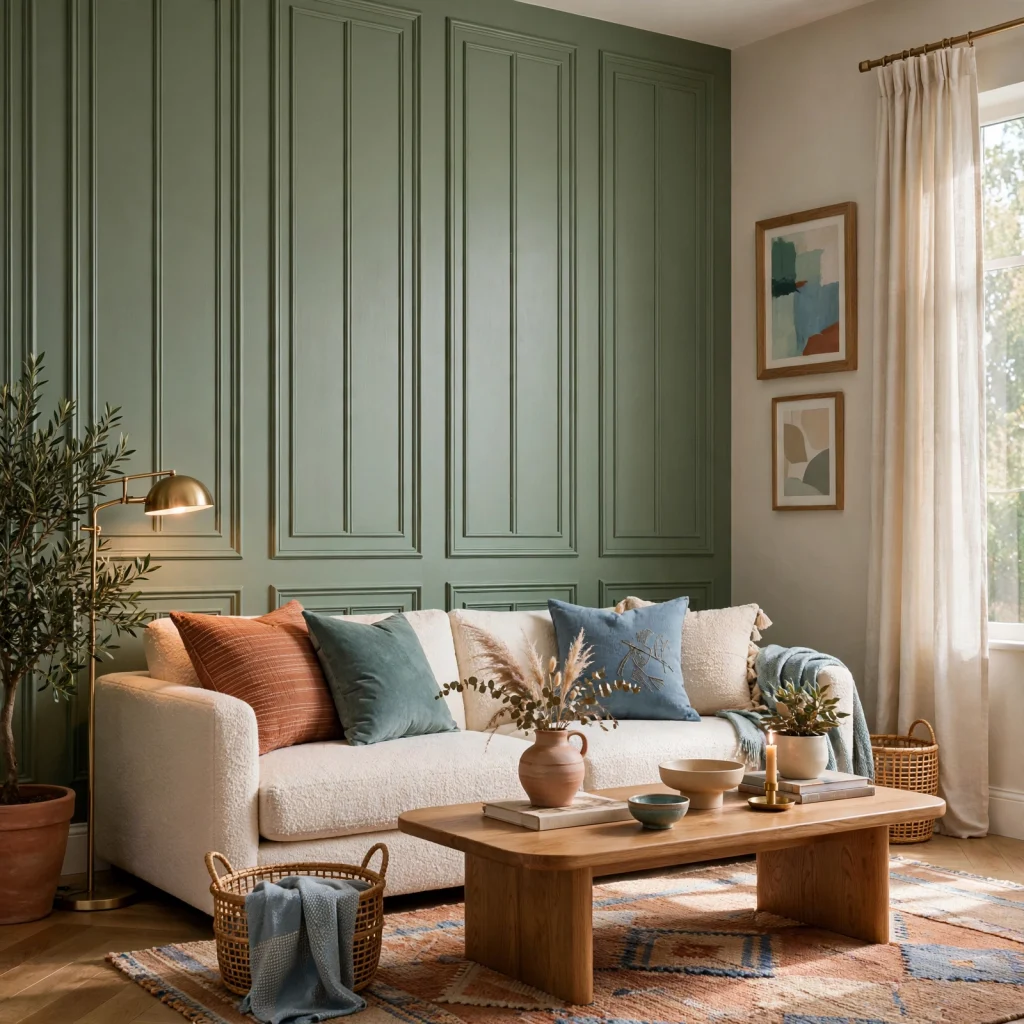
Board and batten paneling, using vertical wood strips applied over a flat backing, adds dimensional texture to a living room wall at a lower cost than full wood slat treatments. Painting the paneling and the wall above it the same color keeps the look cohesive and lets the shadow lines created by the raised battens do the visual work. This treatment typically covers the lower two-thirds of the wall, with a simple painted section above, though full-height coverage works well in rooms with lower ceilings that benefit from a single continuous surface.
2. Picture Frame Molding Grid
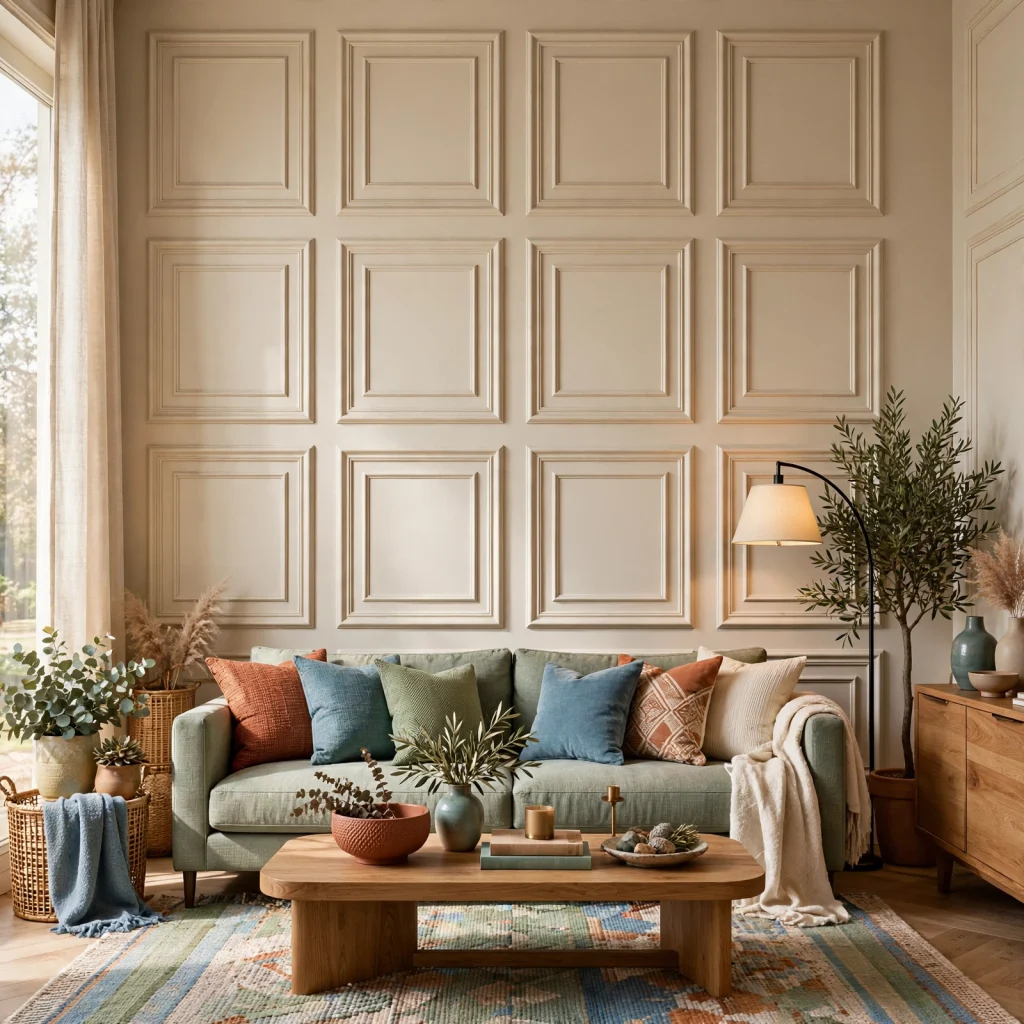
Picture frame molding, applied in a repeating rectangular grid across a living room wall, references classical paneling traditions using a relatively affordable trim carpentry approach. Keeping the molding and wall color identical, rather than using contrast, produces a subtle, sophisticated result suited to more traditional or transitional rooms. Spacing the grid evenly and accounting for outlets, switches, and existing trim before installation prevents an awkward, unbalanced final layout.
| Ceiling Height | Molding Rows | Best Suited Style |
| 8 ft | 2 rows | Traditional, transitional |
| 9 ft | 2–3 rows | Transitional, formal |
| 10 ft+ | 3 rows | Formal, classical |
3. Wood Slat Accent Wall
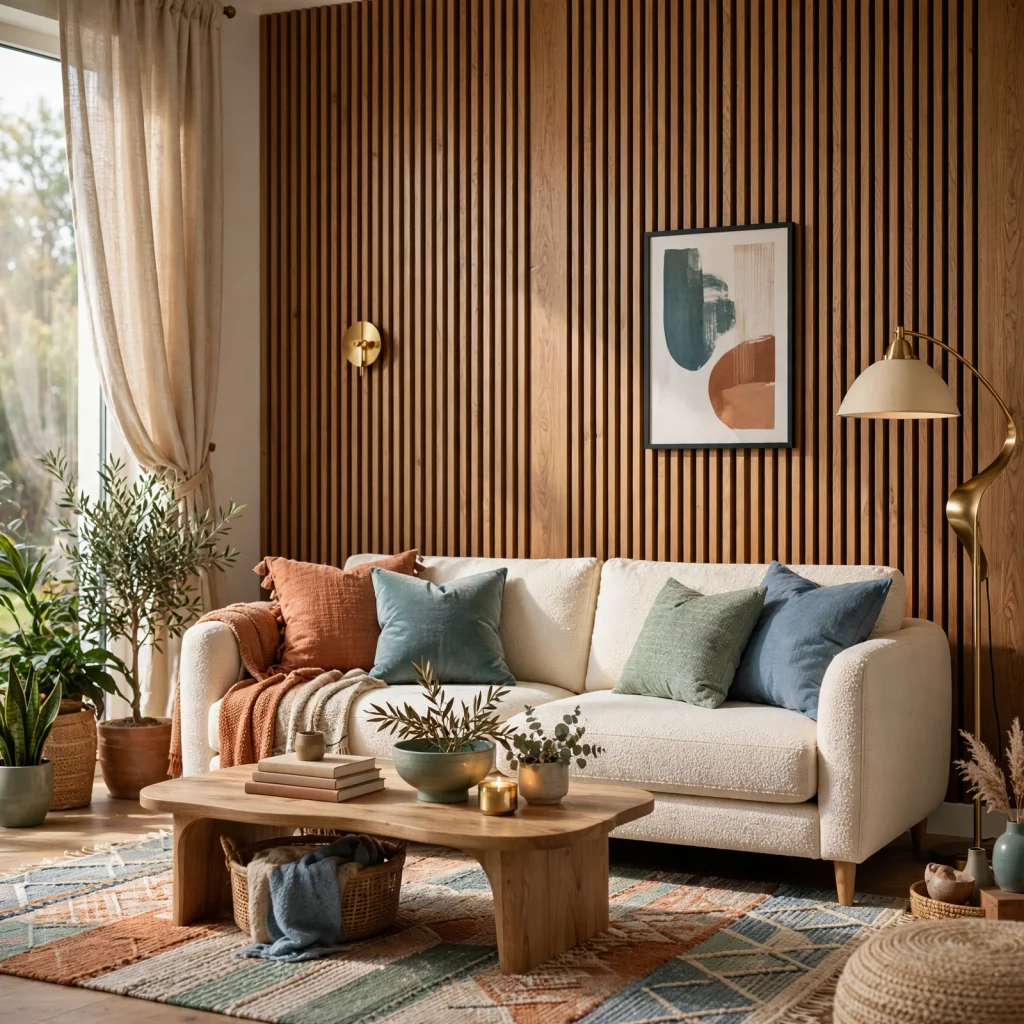
A wood slat accent wall, with evenly spaced vertical strips mounted over a contrasting felt or acoustic backing, gives a living room wall texture and warmth while also improving sound absorption in a room with hard flooring. Walnut or white oak slats in a natural or lightly stained finish suit most contemporary and japandi-influenced living rooms. This treatment typically spans a single feature wall, often behind a sofa or media area, rather than covering the entire room.
4. Natural Stone or Ledger Panel
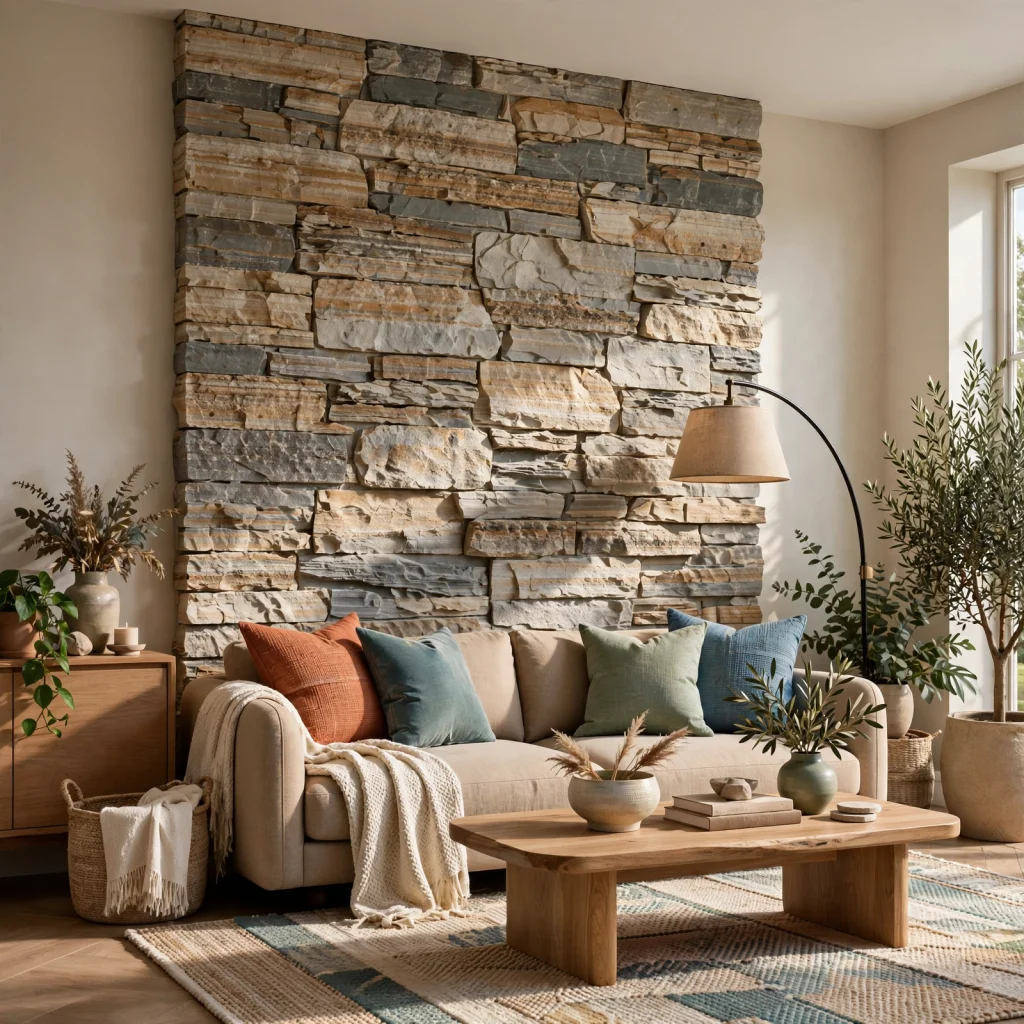
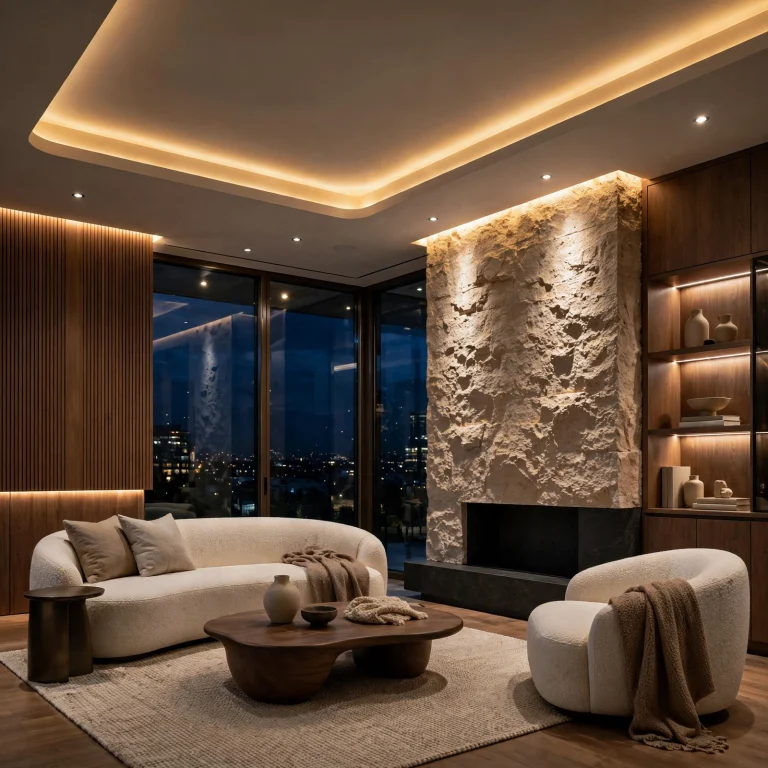
A natural stone or ledger panel wall, whether full-height or applied as a lower wainscot section, brings substantial texture and material weight to a living room wall, most commonly around a fireplace. Limestone or a large-format porcelain tile with a stone-like finish offers a similar visual effect with lower installation cost and maintenance than solid natural stone. This treatment works best as a single focal wall, since covering multiple walls in stone can make a room feel heavier than intended.
5. Venetian Plaster Finish
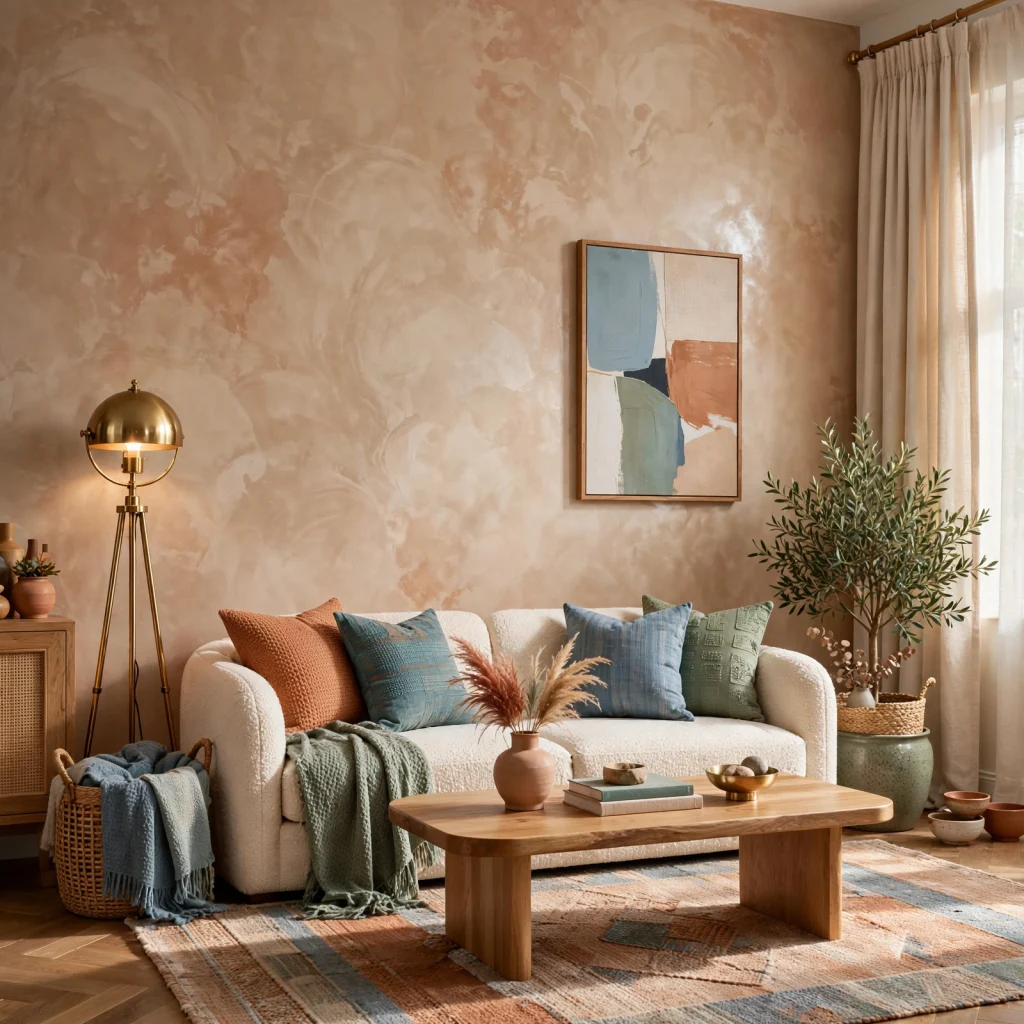
A Venetian or limewash plaster finish, applied in thin hand-troweled layers, gives a living room wall a soft, textured surface that catches light differently throughout the day compared to flat paint. This treatment suits warm, earthy color palettes particularly well, since the plaster’s subtle variation adds depth even within a single tone. Hiring an experienced plasterer for at least the first feature wall is generally recommended, since the technique requires practice to achieve a smooth, professional-looking result.
Make the most of your available space with these japandi living room ideas that combine style and functionality.
6. Arched Niche Detail
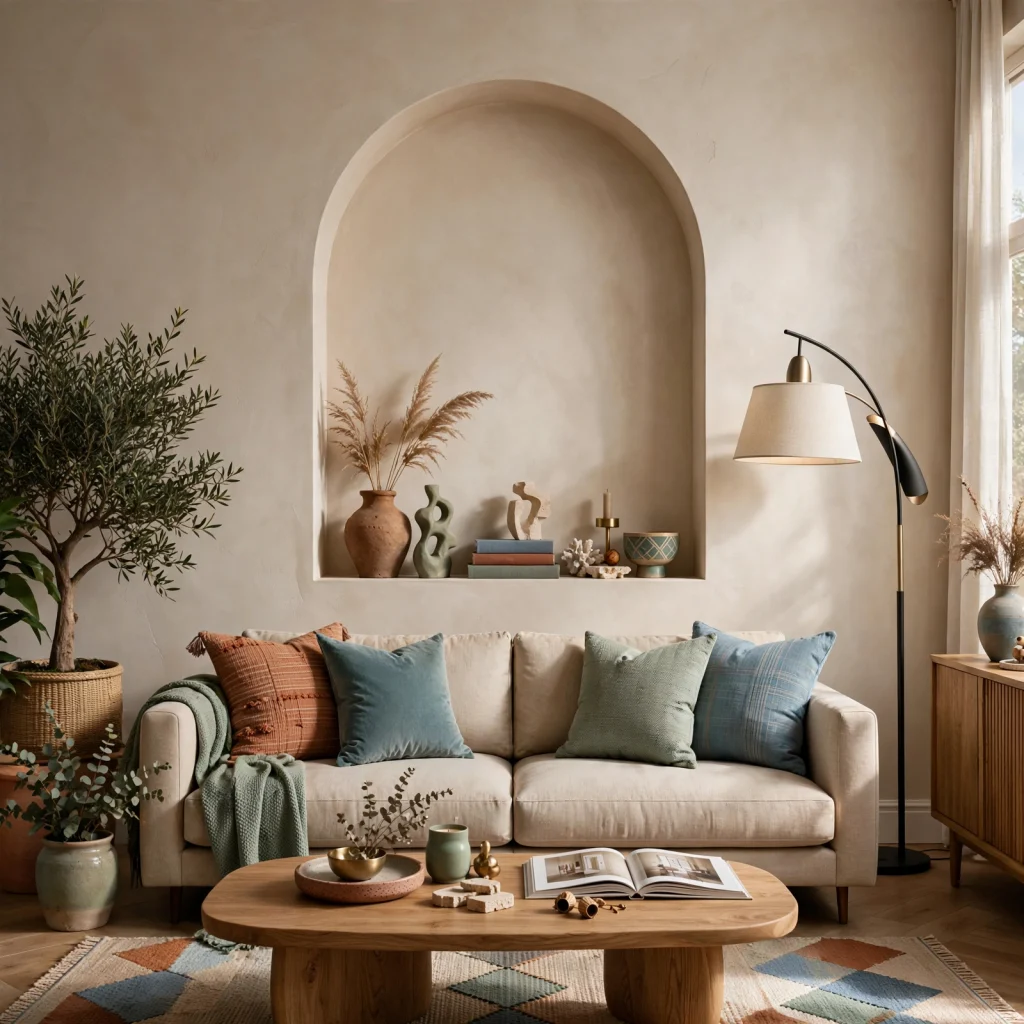
An arched niche, recessed into a living room wall to display art, a plant, or a small collection of objects, adds architectural interest through shape rather than surface texture alone. This detail requires structural framing if it’s cutting into a load-bearing wall, so consulting a contractor before installation is necessary in most cases. Painting the interior of the niche a contrasting or deeper tone than the surrounding wall gives the recessed shape more visual depth and draws attention to whatever is displayed inside it.
7. Two-Tone Color Blocking
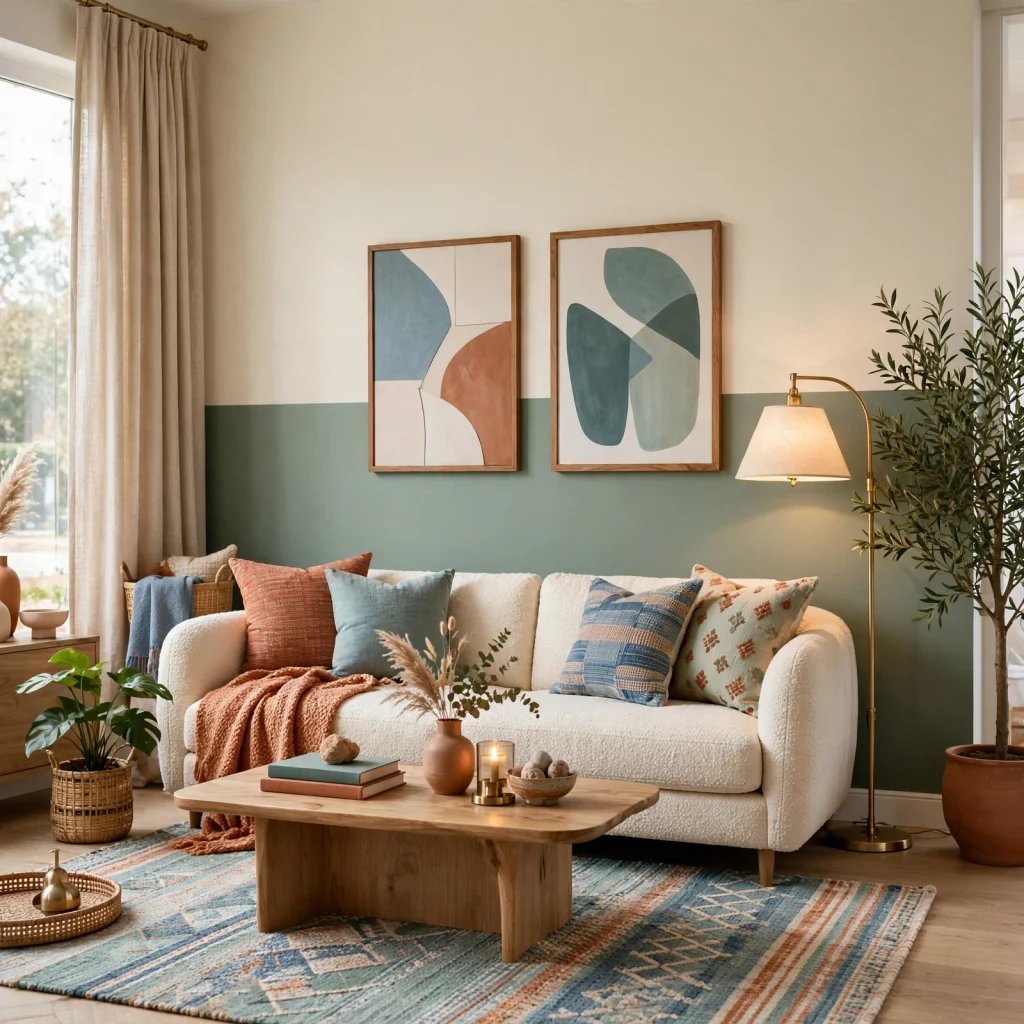
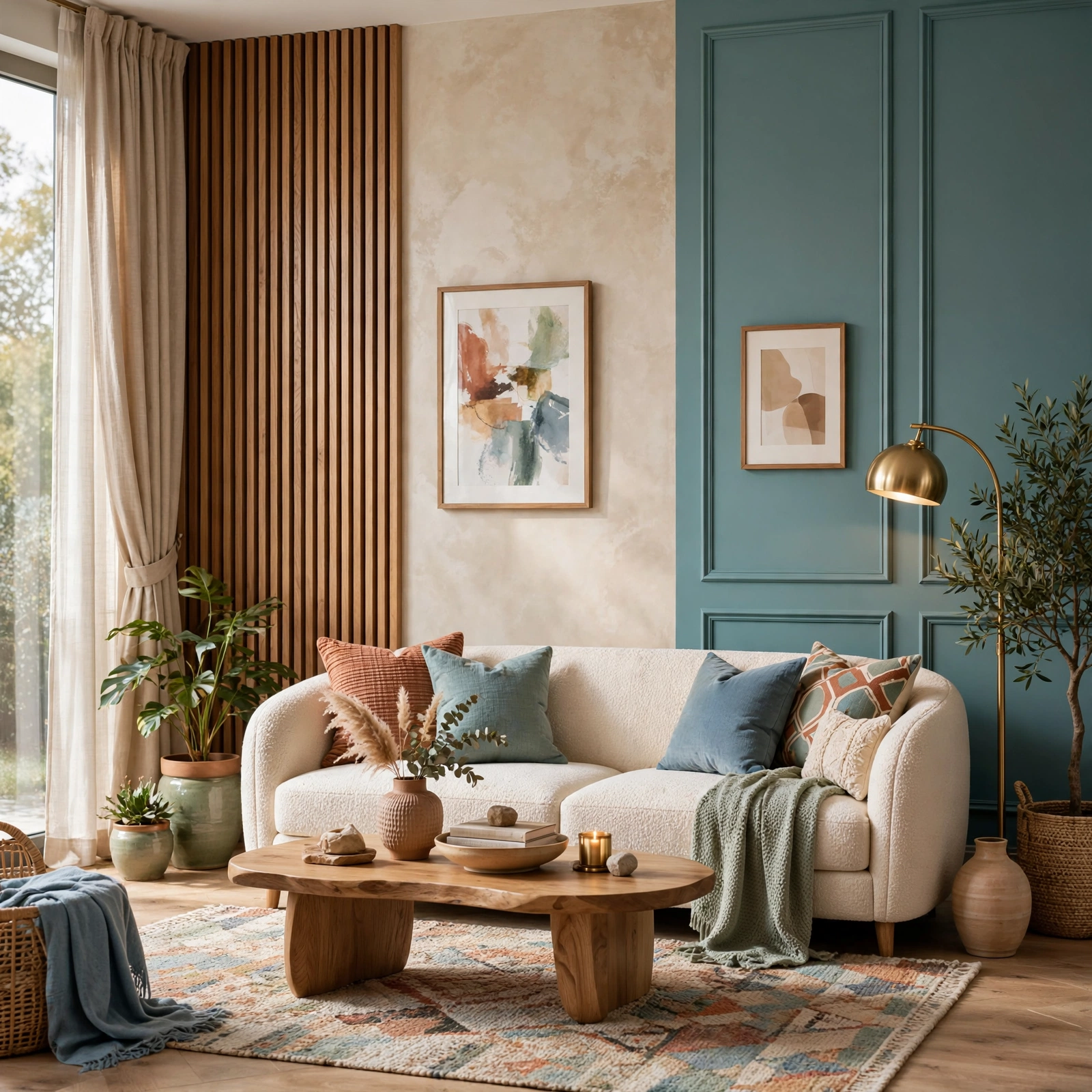
Two-tone color blocking, dividing a living room wall into distinct painted sections using a geometric line rather than a traditional chair rail, gives a room a modern architectural detail using only paint. A diagonal, curved, or stepped division line reads as more contemporary than a straight horizontal split, though the latter remains a more classic option. This treatment costs significantly less than any dimensional wall treatment while still adding a noticeable design layer to an otherwise flat wall.
8. Fluted Wall Panel Feature
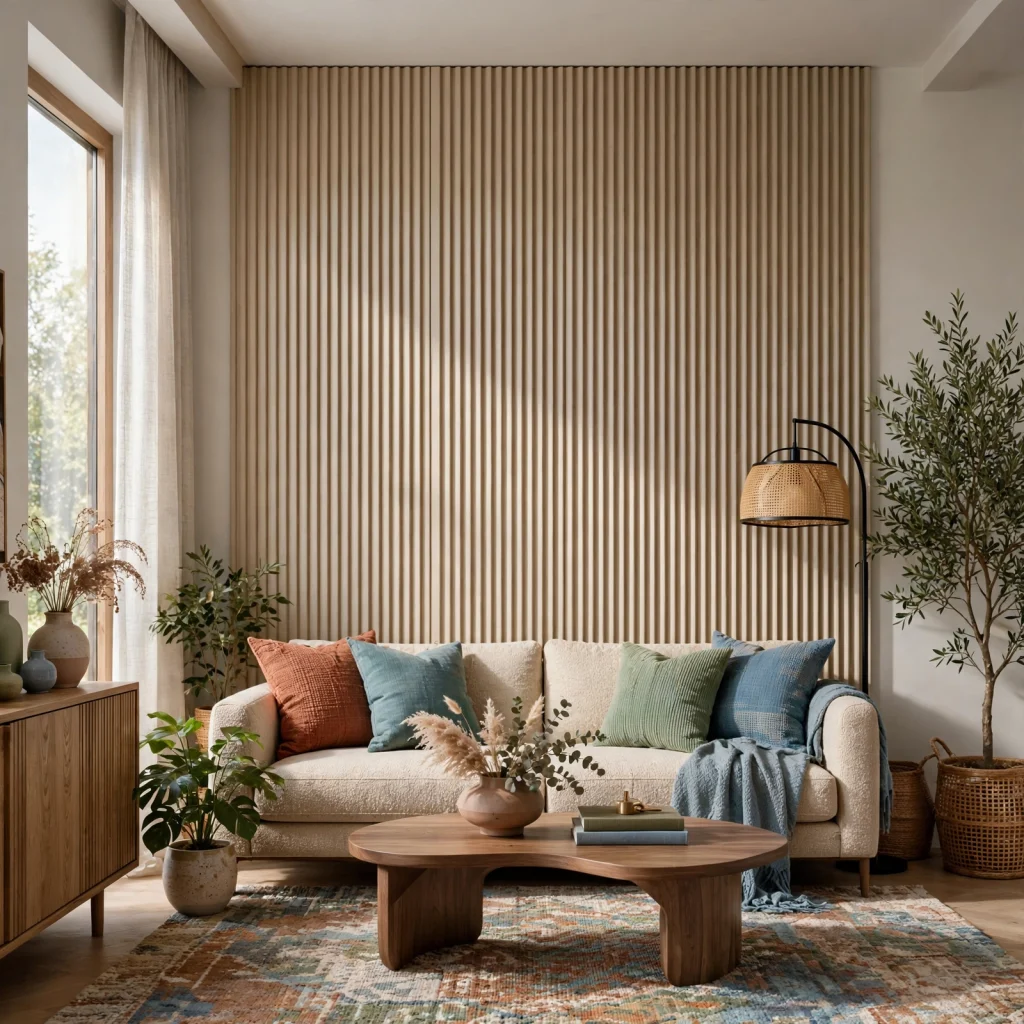
Fluted wall panels, with a continuous run of shallow vertical grooves rather than the more pronounced gaps of slat paneling, add a subtle rippled texture to a living room wall. This detail suits both modern and traditional interiors depending on the finish chosen, with a painted finish reading more classical and a natural wood finish leaning contemporary. Fluted panels are often used behind a television or fireplace as a refined alternative to a flatter slat treatment.
9. Gallery Wall as Architectural Feature
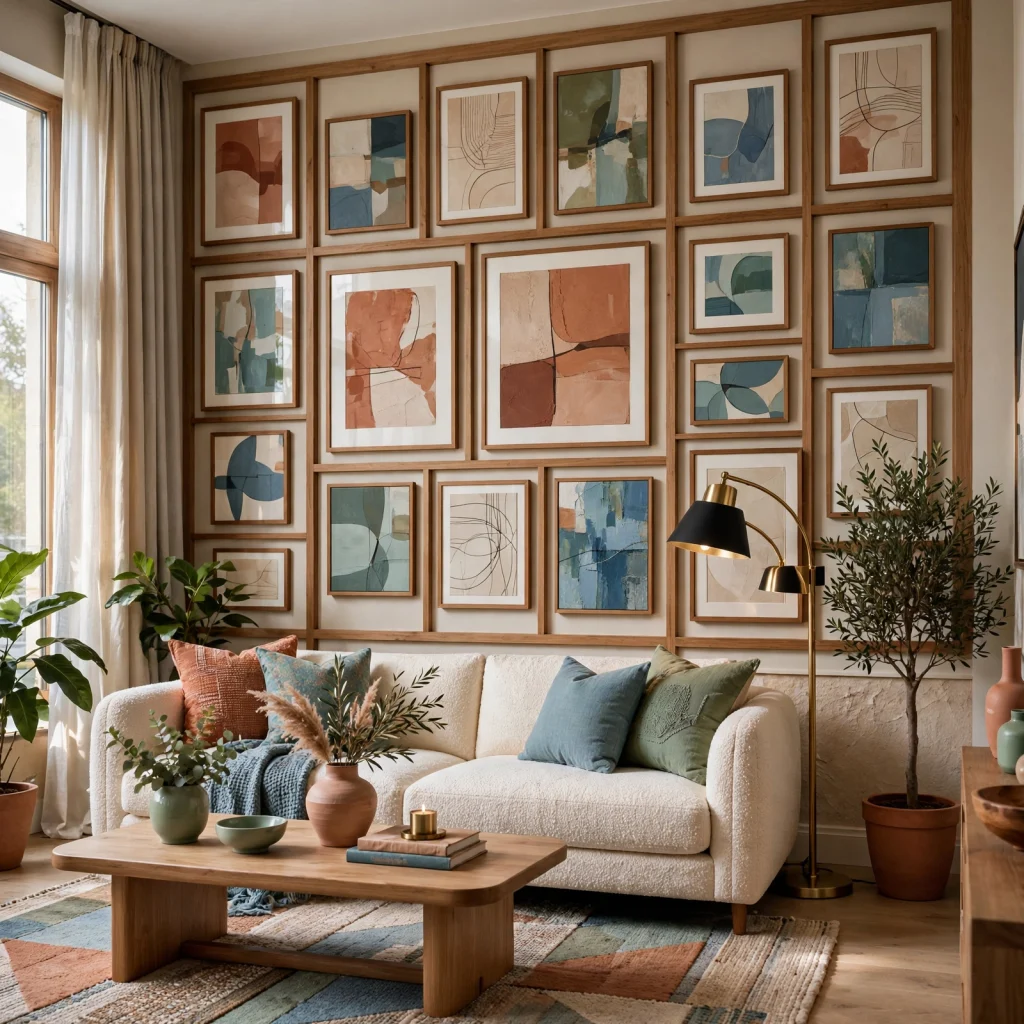
Treating a gallery wall as an architectural feature, rather than simply a collection of hung art, involves planning the arrangement with the same intentionality as a molding or paneling installation. Using a paper template to test spacing and alignment before hanging anything ensures the final grid or cluster reads as cohesive rather than accidental. This approach works particularly well on a large blank wall that would otherwise need a dimensional treatment to avoid feeling empty.
10. Exposed Brick Wall Feature
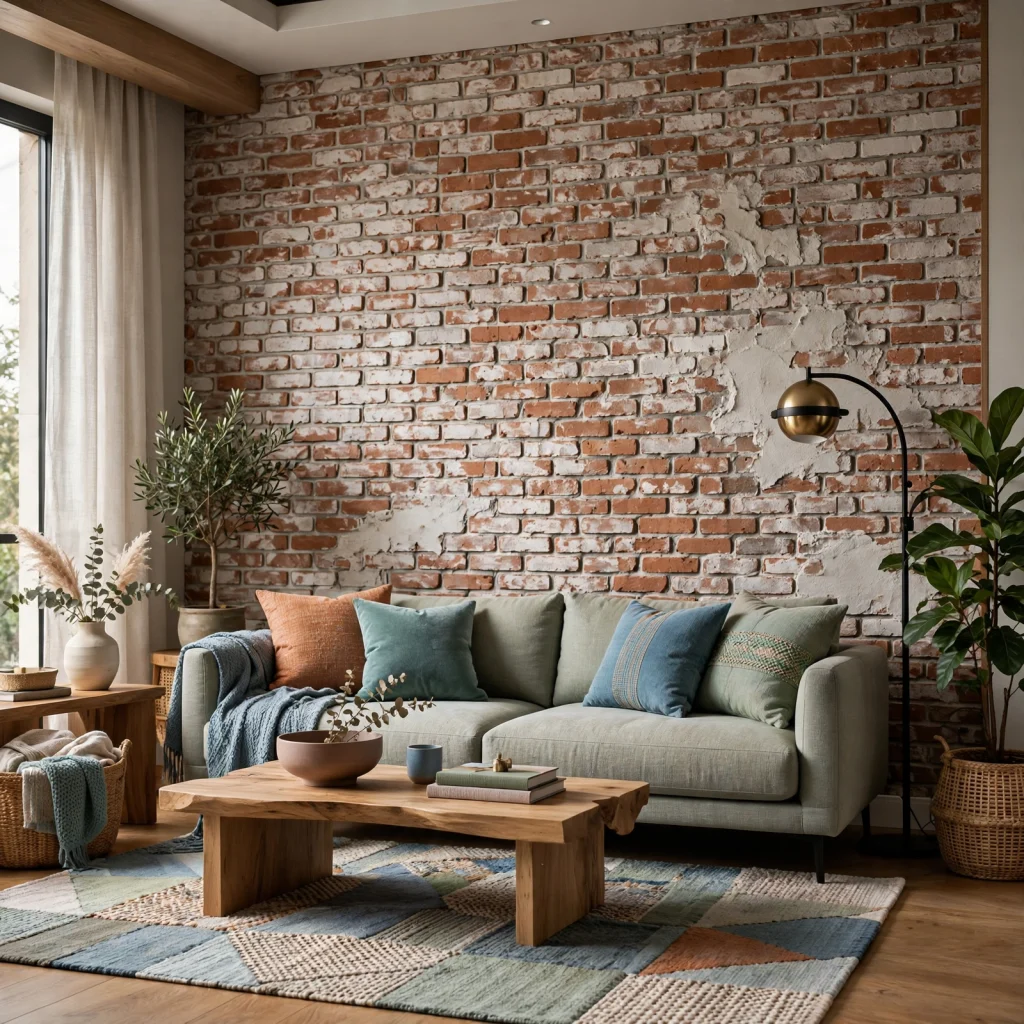
An exposed or faux brick wall, whether original to the home or added through a thin brick veneer product, gives a living room a raw, textural focal point that contrasts with smoother furniture and finishes elsewhere in the room. Whitewashing or lightly limewashing the brick softens its industrial character, making it easier to integrate into a broader range of design styles beyond strictly industrial interiors. This treatment works particularly well as a backdrop for a fireplace or media area, where the texture adds visual weight without competing with furniture.
11. Wallpaper Feature Wall
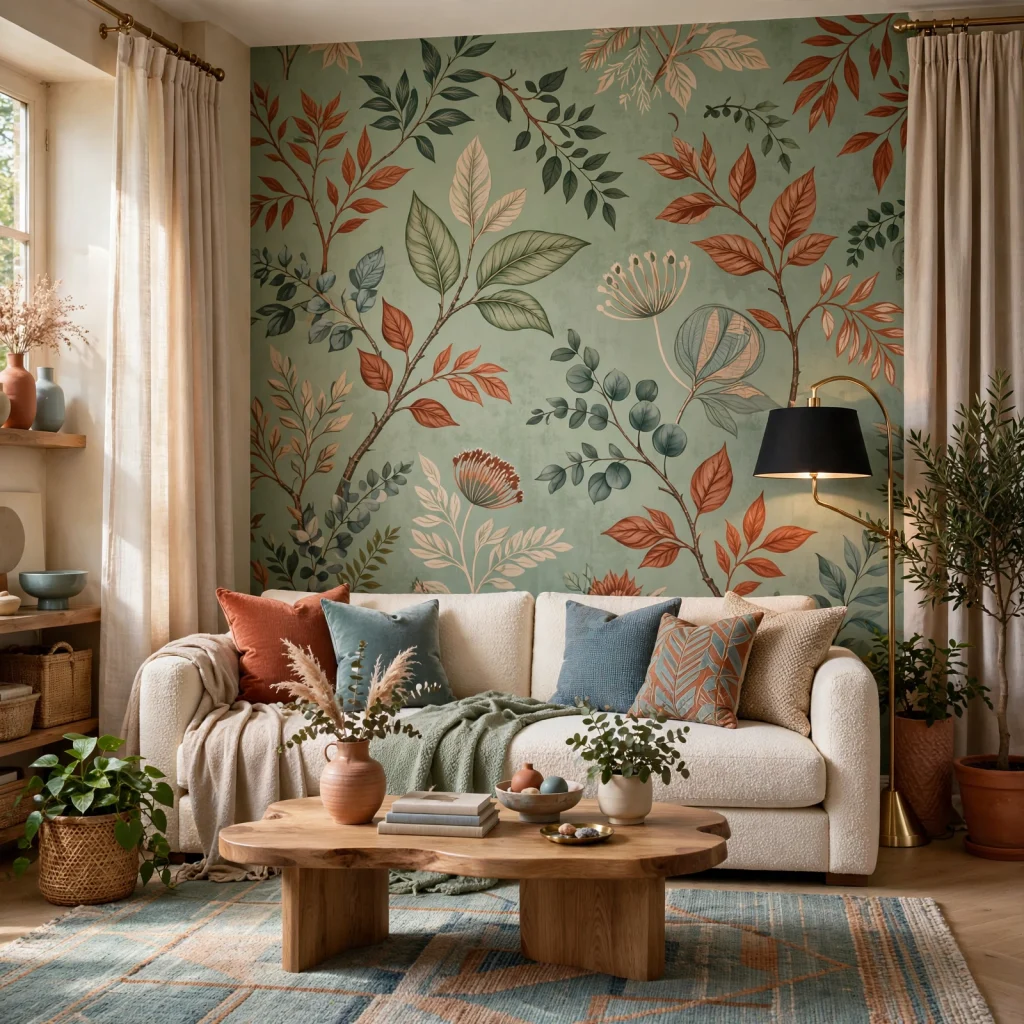
A wallpaper feature wall, applied to a single wall rather than the entire room, allows a living room to incorporate bolder pattern or color without the commitment or overwhelming effect of covering every surface. Textured, grasscloth, or subtle tonal wallpapers tend to age better and suit more design styles than a strongly patterned print, though a bold statement paper works well in a smaller room or a less dominant wall section. Choosing a wall without heavy furniture in front of it lets the wallpaper’s pattern remain visible rather than obscured.
12. Wainscoting with Raised Panels
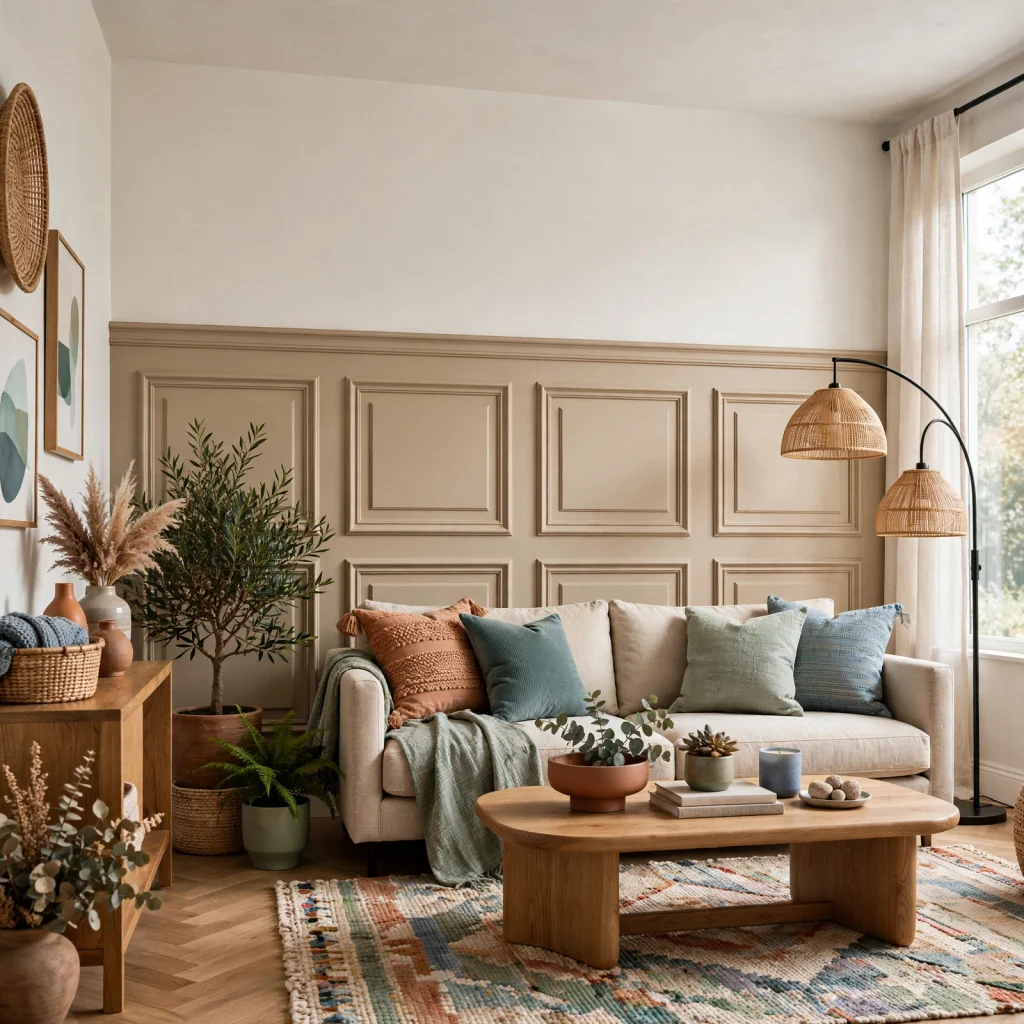
Traditional wainscoting, using raised rectangular panels rather than flat board and batten strips, gives a living room a more formal, classical wall treatment suited to traditional or transitional interiors. Typically installed to a height of 32 to 36 inches, wainscoting pairs well with a chair rail cap and a painted or wallpapered section above. This treatment tends to work better in rooms with existing traditional architectural details, like crown molding or a formal fireplace mantel, rather than a fully contemporary space.
13. Mixed Material Wall Composition
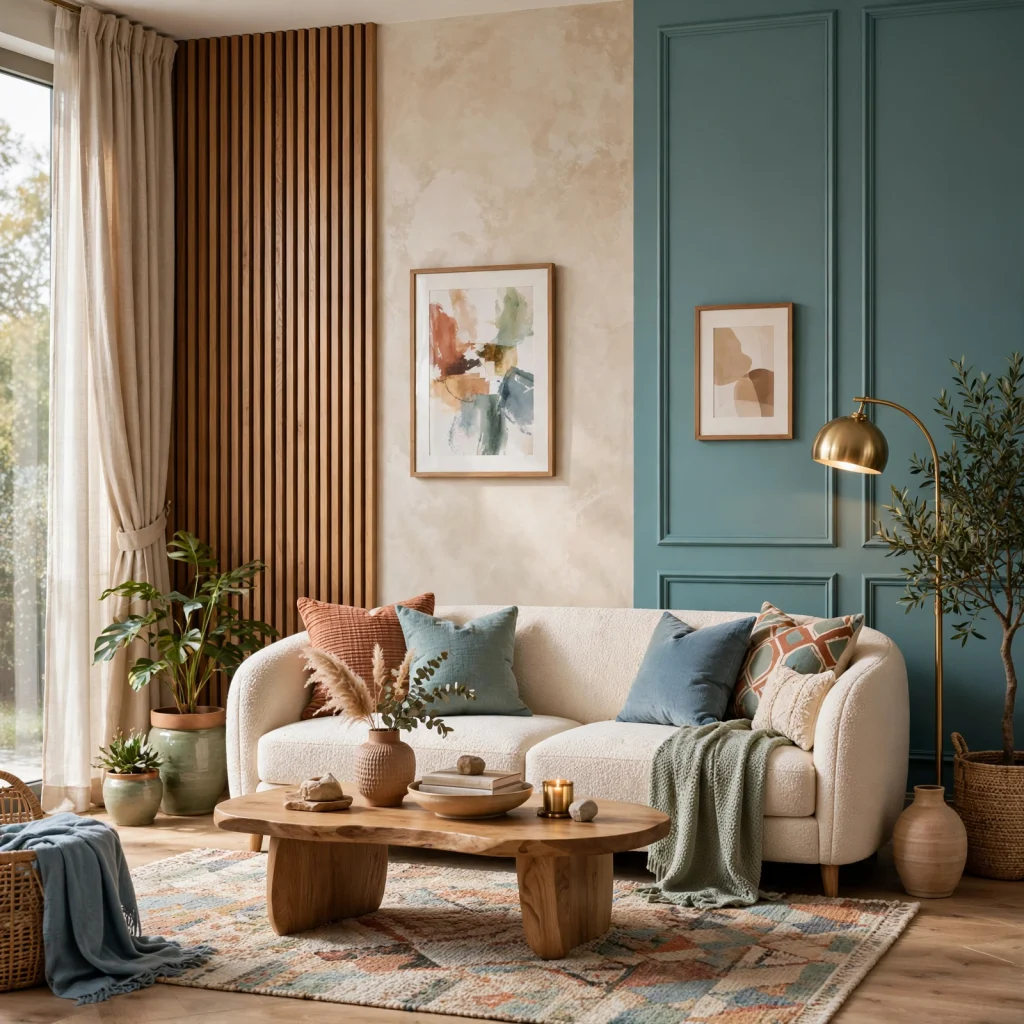
A mixed material wall composition, combining wood paneling on the lower section with a stone or plaster upper portion, creates a layered living room wall design that draws on multiple textures within a single feature. A clear delineation point, such as a wood cap or trim line, keeps the transition between materials looking intentional rather than accidental. This approach works particularly well on a large fireplace wall, where the added complexity suits the wall’s role as the room’s primary focal point.
14. Recessed LED Wall Washing
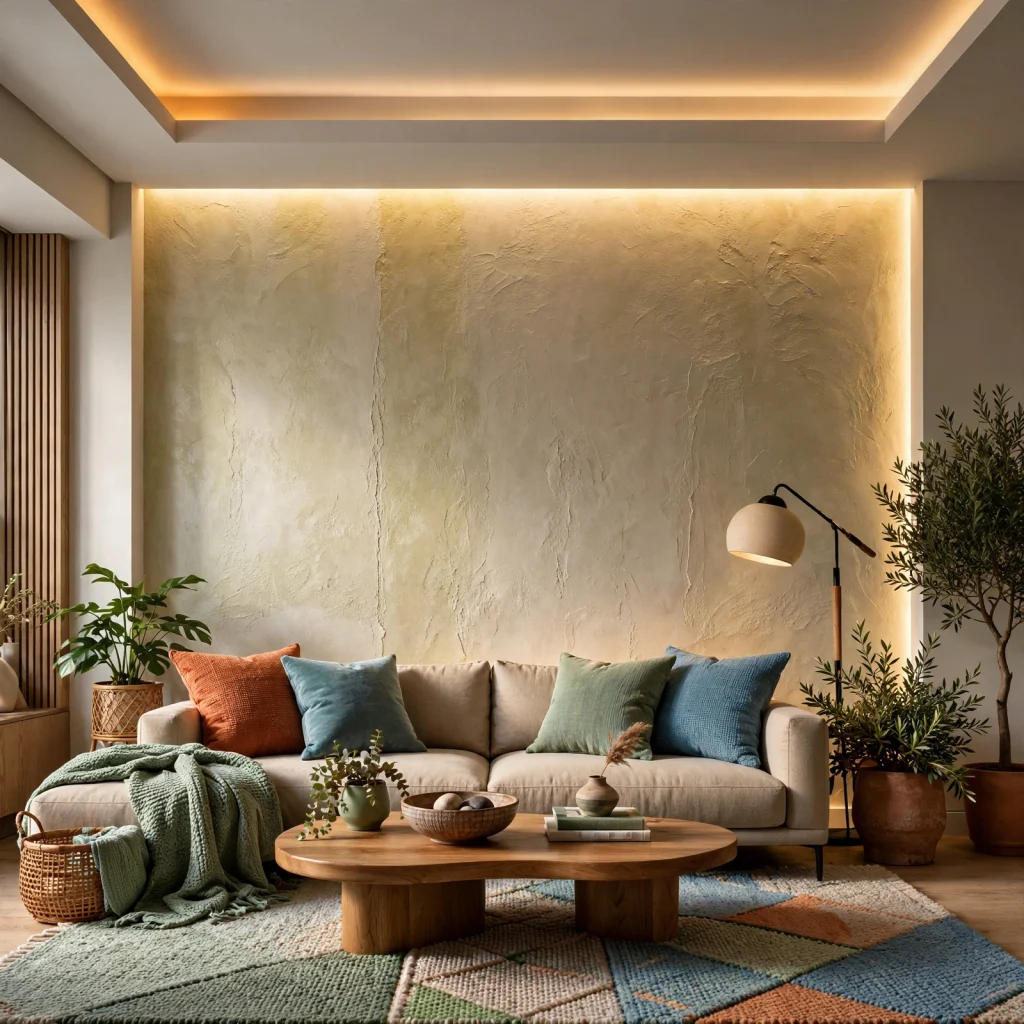
Recessed LED strip lighting, installed to wash light evenly across a textured living room wall from above or below, emphasizes the dimensional quality of paneling, plaster, or stone treatments, particularly in the evening. This lighting technique works especially well with Venetian plaster or wood slat walls, where the raking light angle deepens shadows and highlights texture that flat, direct lighting would flatten out. A dimmer on this lighting layer allows the intensity to be adjusted separately from the room’s other light sources.
15. Curved or Organic Wall Niche
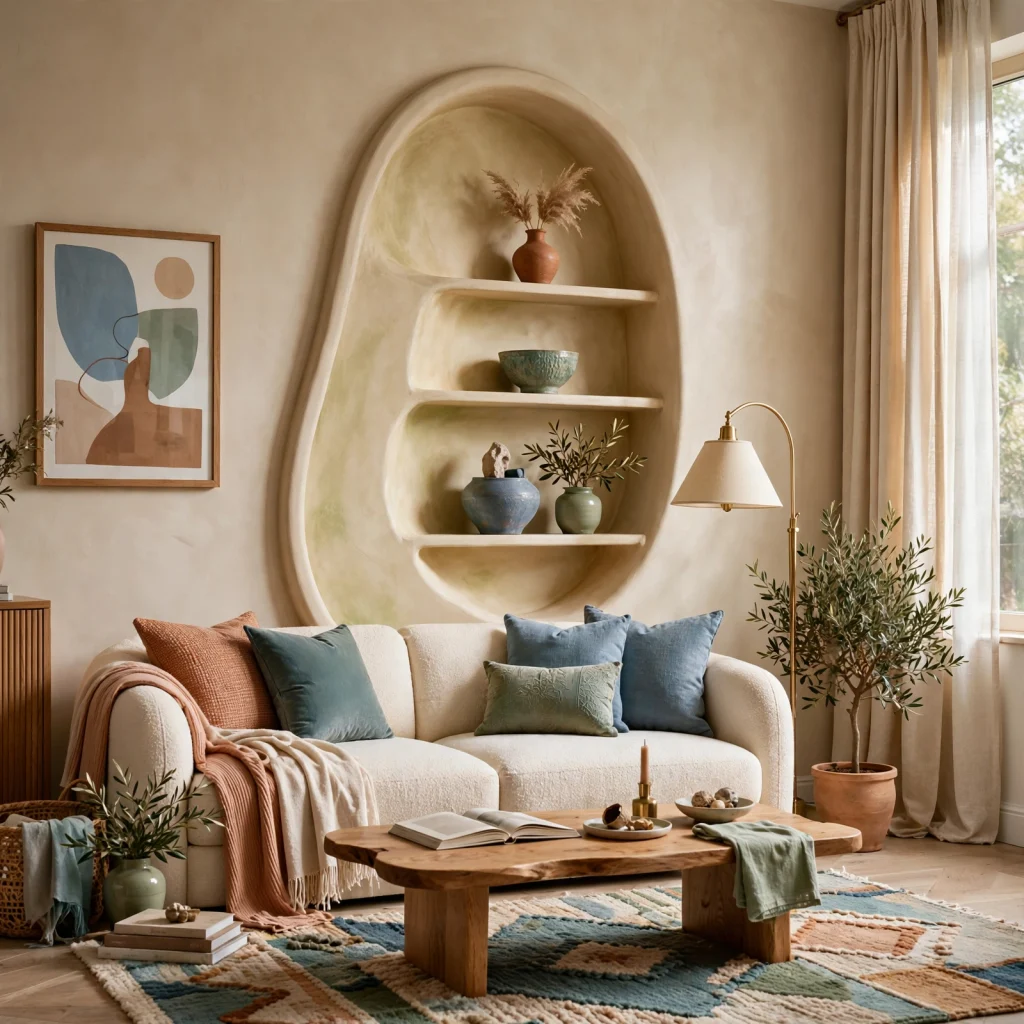
A curved or organic-shaped wall niche, softening the typically rectangular geometry of a standard recessed detail, adds a more contemporary architectural feature to a living room wall. This treatment often appears behind a sofa or as a backdrop for a media area, using the curve to soften the room’s otherwise straight furniture lines. Plastering the curved surface smoothly requires more specialized skill than a standard rectangular niche, so this detail typically involves a higher installation cost.
Shop the Look
Start with board and batten paneling painted to match the wall color, a set of picture-light fixtures for above any framed art, and a small collection of large-format art pieces if opting for a gallery wall treatment instead. Add recessed LED wall-washing strips to highlight a textured wall, and consider a limewash or Venetian plaster kit for a smaller DIY-friendly feature section. Finish with wood cap trim to define the transition point on any mixed-material wall composition.
Common Mistake to Avoid
A common mistake with living room wall designs is applying a dimensional treatment to every wall in the room, which quickly becomes visually overwhelming and diminishes the impact each individual wall might have had on its own. Choosing a single feature wall, typically the one with the strongest architectural presence like a fireplace or the wall facing the room’s main entry, and keeping surrounding walls simpler allows that one treatment to read as a genuine design statement. Restraint elsewhere in the room is what makes the featured wall feel intentional rather than excessive.
FAQs
What is the most affordable living room wall design option?
Two-tone color blocking and picture frame molding are generally the most affordable living room wall design options, since both rely primarily on paint and basic trim carpentry rather than specialized materials like stone or custom millwork. A DIY-friendly board and batten installation also keeps costs relatively low compared to hiring out a full wood slat or plaster treatment. Costs increase significantly with natural stone, custom millwork, or specialized finishes like Venetian plaster, which typically require professional installation.
Should I choose one feature wall or design the whole room?
Choosing a single feature wall, typically the one with the room’s strongest architectural presence such as behind a fireplace or facing the main entry, is generally recommended over applying a dimensional treatment to every wall in a living room. This approach lets the featured wall stand out as an intentional design statement while keeping the rest of the room from feeling overdesigned or visually competing. Multiple feature walls can work in larger, more architecturally complex homes, but this requires more careful planning to avoid visual overload.
How do I choose a wall design that matches my living room’s style?
Board and batten and wainscoting suit traditional or transitional living rooms, while wood slat walls and fluted panels lean more contemporary and work well in modern or japandi-influenced spaces. Natural stone and exposed brick fit both rustic and industrial styles depending on the finish chosen, and Venetian plaster suits a warm, understated luxury aesthetic. Matching the wall treatment’s material and level of formality to the room’s existing furniture and trim style generally produces the most cohesive result.
Can living room wall paneling be installed without hiring a contractor?
Board and batten, basic picture frame molding, and prefabricated slat panel kits are all reasonably DIY-friendly projects for someone comfortable with basic trim carpentry and a miter saw. More complex treatments, including natural stone installation, curved niches, and Venetian plaster, generally require professional expertise to achieve a polished result. Starting with a smaller, simpler wall section before attempting a larger or more complex installation helps build the skills needed for more ambitious projects.
Does a textured wall treatment make a living room feel smaller?
A textured wall treatment doesn’t inherently make a living room feel smaller, and in many cases, treatments like vertical wood slats or tall wainscoting can actually make ceilings feel taller through their vertical lines. Choosing a lighter or tonal color for the treatment, rather than a dark, high-contrast finish, helps maintain a sense of openness in smaller rooms. Limiting the treatment to a single wall, rather than applying it throughout the entire room, also helps prevent any feeling of enclosure.
Conclusion
Living room wall designs offer one of the most effective ways to add architectural interest and personality to a room without a full furniture overhaul. Save this guide to Pinterest for reference while planning your next update, and check out our related post on living room TV wall ideas for more ways to treat a specific feature wall.