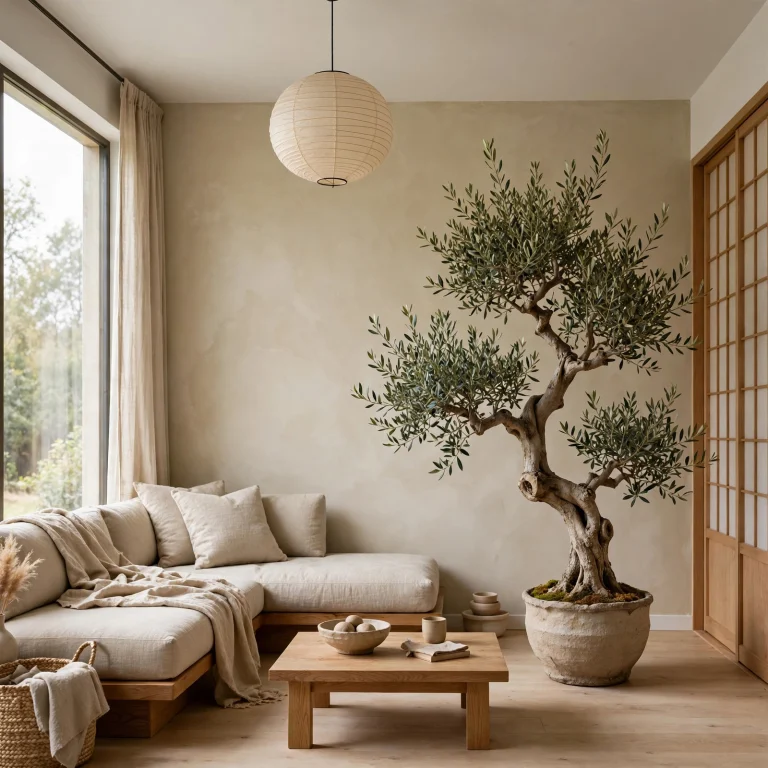
15 Gorgeous Living Room Decor Ideas for a Stylish Home
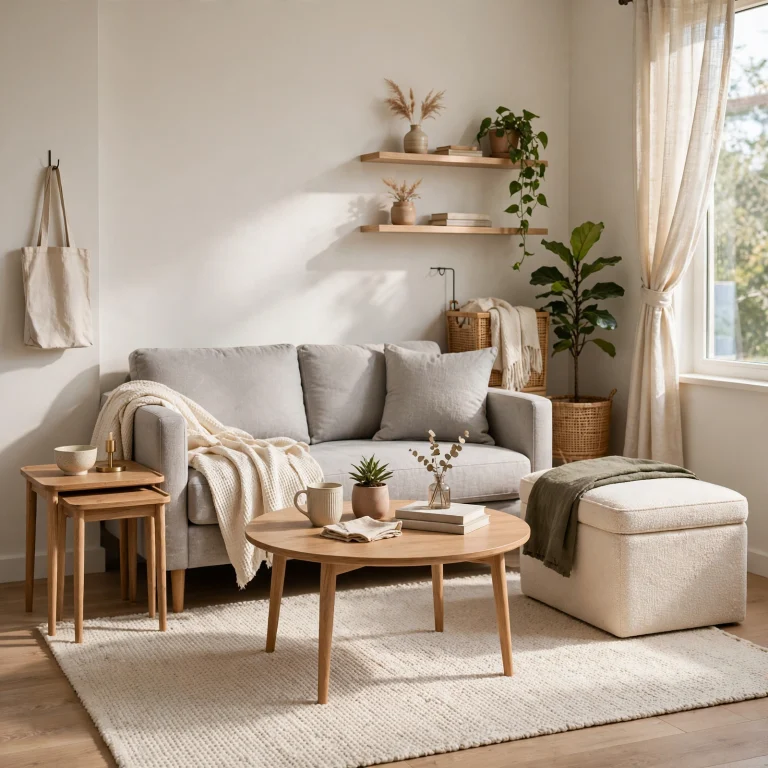
Living room decor ideas don’t need to involve new furniture to make a real difference, since accessories, textiles, and small styling choices often carry as much visual weight as the pieces underneath them. This guide covers fifteen accessible decor updates, from throw pillow layering to console table styling, each with enough detail to apply immediately regardless of budget. Every idea here works as a standalone update or as part of a larger room refresh.
Trend & Background
Living room decor has moved toward a more personal, collected approach, with homeowners favoring a mix of vintage finds, handmade objects, and a few well-chosen new pieces over matched decor sets bought all at once. Texture has also become a bigger focus than color, with boucle, rattan, and unglazed ceramics appearing across pillows, vases, and small furniture accents. This shift reflects both a preference for rooms that feel lived-in rather than staged and a growing interest in sourcing decor gradually rather than furnishing a room in a single shopping trip.
Key Takeaways
- Small, low-cost decor changes like pillow covers, tray styling, and wall art often shift a living room’s feel more than furniture purchases.
- Repeating two or three materials across accessories, such as wood, ceramic, and woven fiber, keeps a room’s decor from looking scattered.
- Seasonal decor swaps let a living room stay current without replacing anything permanent.
- Layering height, texture, and a few personal objects does more visual work than buying a full matching decor set.
Living Room Decor Ideas
Discover 15 trending living room decor ideas that anyone can pull off, from simple wall updates and cozy textiles to stylish furniture and affordable accents.
1. Layered Throw Pillow Arrangement
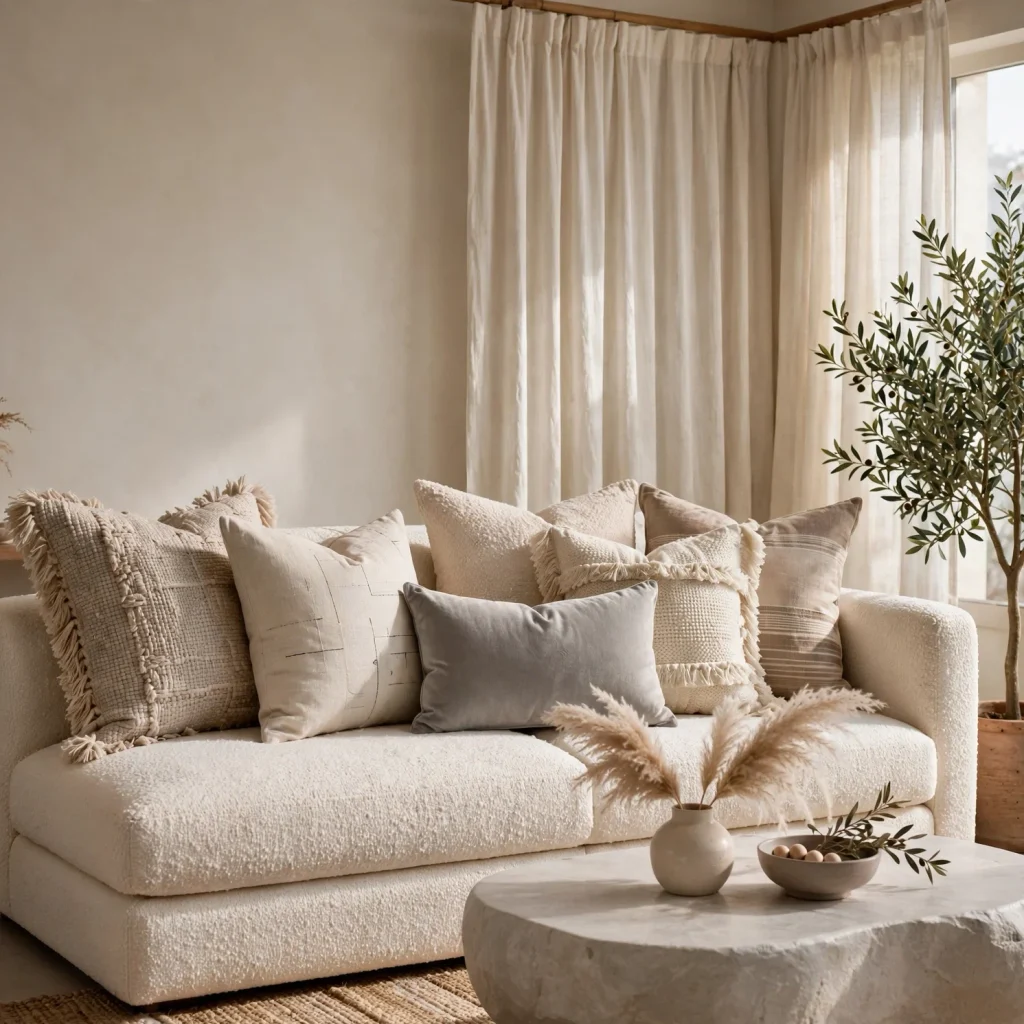
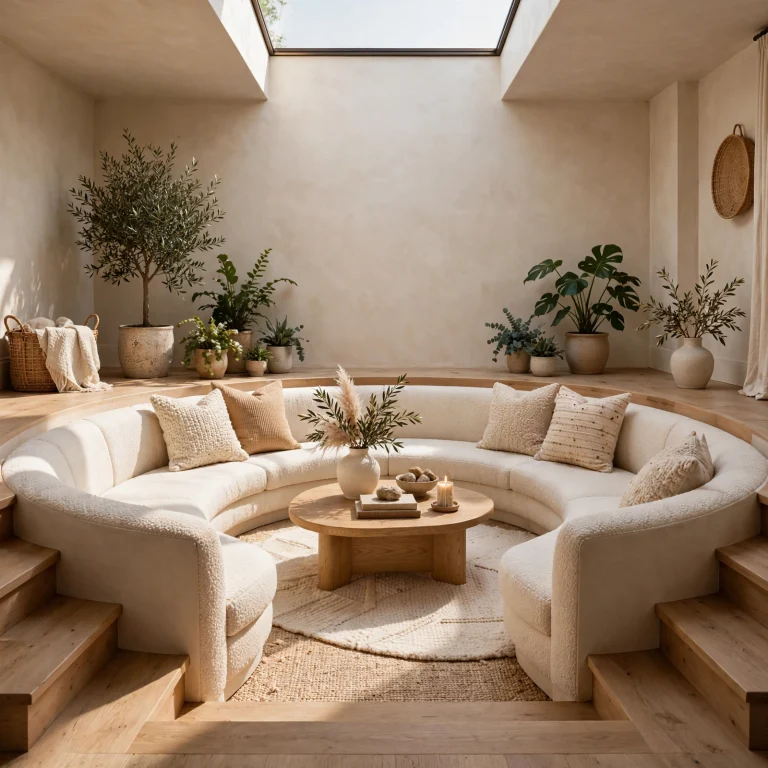
A layered throw pillow arrangement, mixing two or three coordinating textures like boucle, linen, and a subtle woven pattern, adds warmth to a living room’s sofa without requiring a full reupholstery. Sticking to an odd number of pillows per section, typically two or three, and varying their sizes slightly creates a more relaxed look than a perfectly matched, symmetrical set. Removing one pillow after initial styling often prevents the arrangement from looking overly staged.
2. Coffee Table Tray Styling
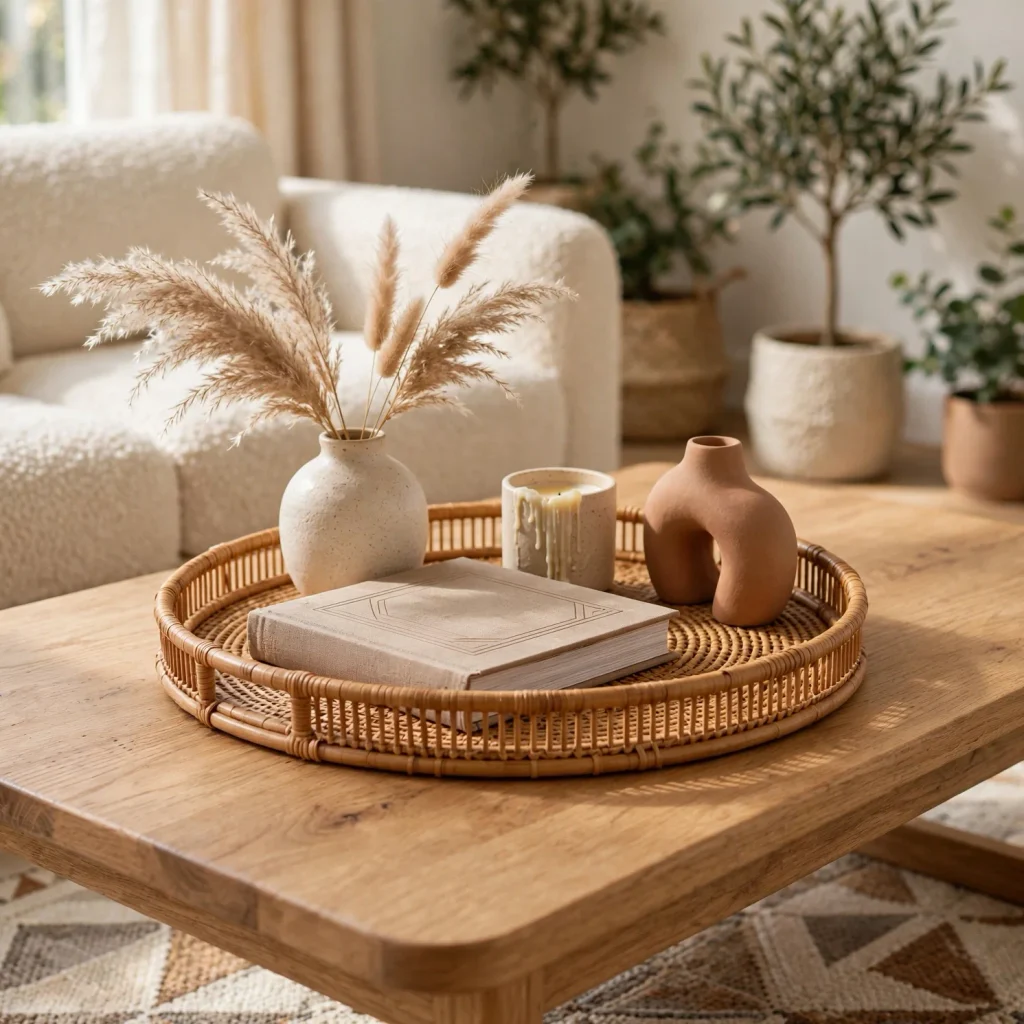
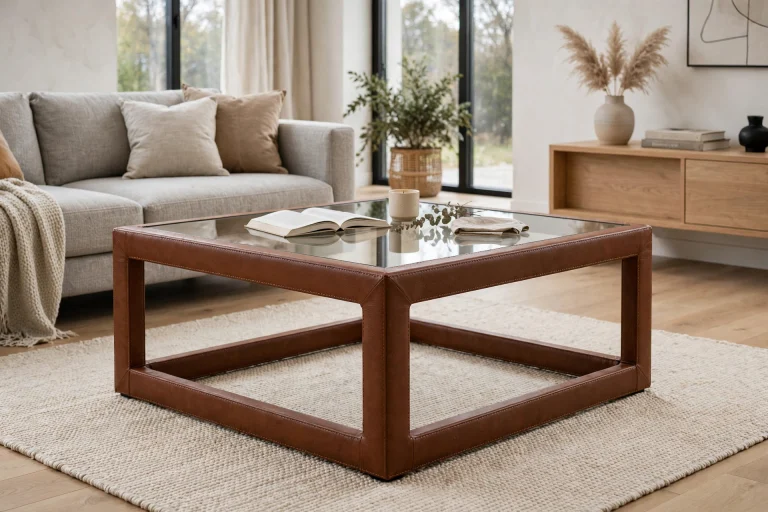
A styled tray on a coffee table corrals smaller decor items, like a candle, a small stack of books, and a low ceramic dish, into one organized visual grouping rather than scattering them across the surface. A wood or woven rattan tray suits most living room palettes better than glass or metal, which can look colder in a room built around natural materials. Leaving space around the tray on the rest of the table keeps the surface from feeling overcrowded.
| Tray Size | Best For | Item Count |
| Small (12–14 in) | Side tables | 2–3 items |
| Medium (16–18 in) | Standard coffee tables | 3–4 items |
| Large (20+ in) | Oversized coffee tables | 4–5 items |
3. Gallery Wall of Personal Photography
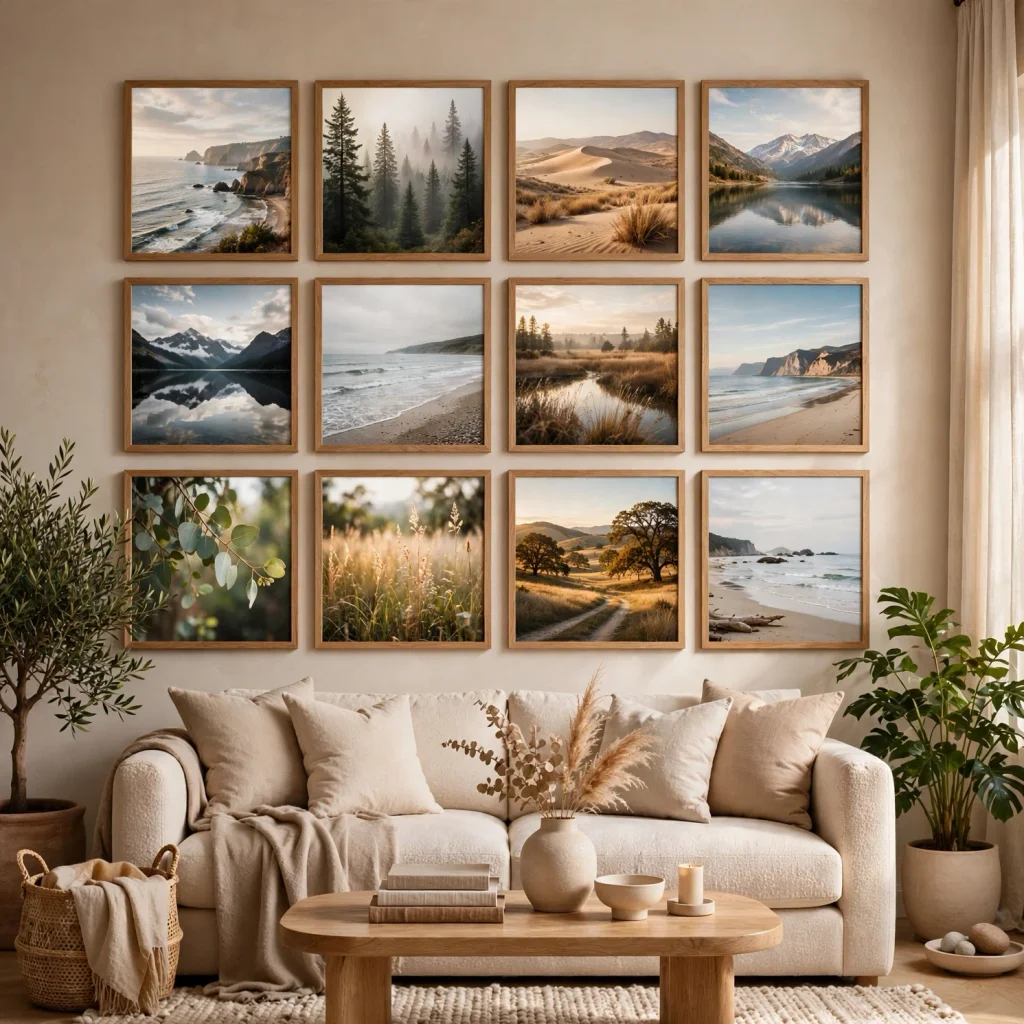
A gallery wall built from personal photography, rather than purchased stock art, gives a living room a decor feature that’s genuinely unique to the household. Printing photos in a consistent black-and-white or sepia tone, regardless of when they were originally taken, unifies the collection visually even if the images span different years and locations. Matting each print with at least two inches of white space before framing also gives the wall a more polished, gallery-style finish.
4. Woven Basket Grouping
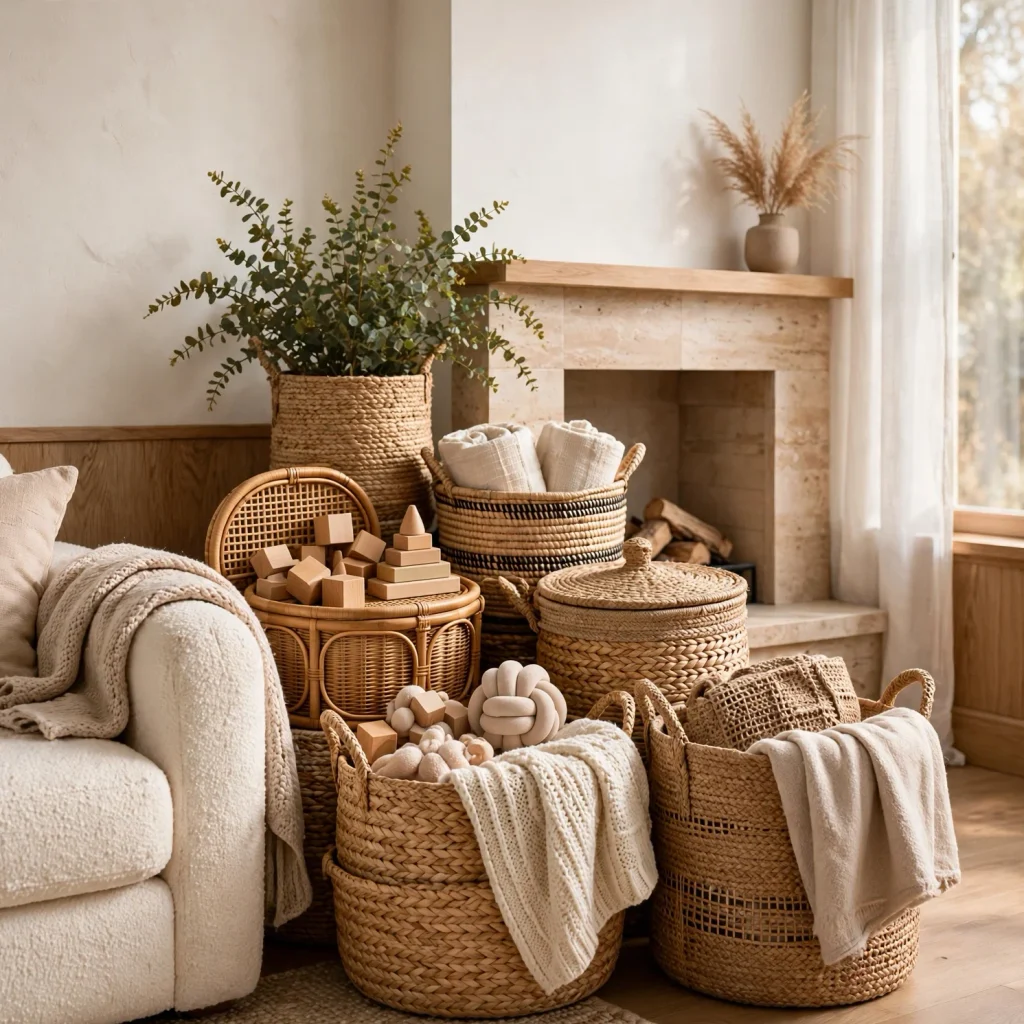
A grouping of two or three woven baskets, in varying heights and placed beside a sofa or under a console table, adds natural texture to a living room while providing functional storage for blankets or magazines. Seagrass, water hyacinth, or rattan all work well, and mixing two materials within the same neutral tone range keeps the grouping cohesive rather than mismatched. This decor idea also doubles as practical storage, making it one of the more functional entries on this list.
Looking for inspiration? Explore our collection of modern living room ideas to create a stylish and comfortable space.
5. Ceramic Vase Collection
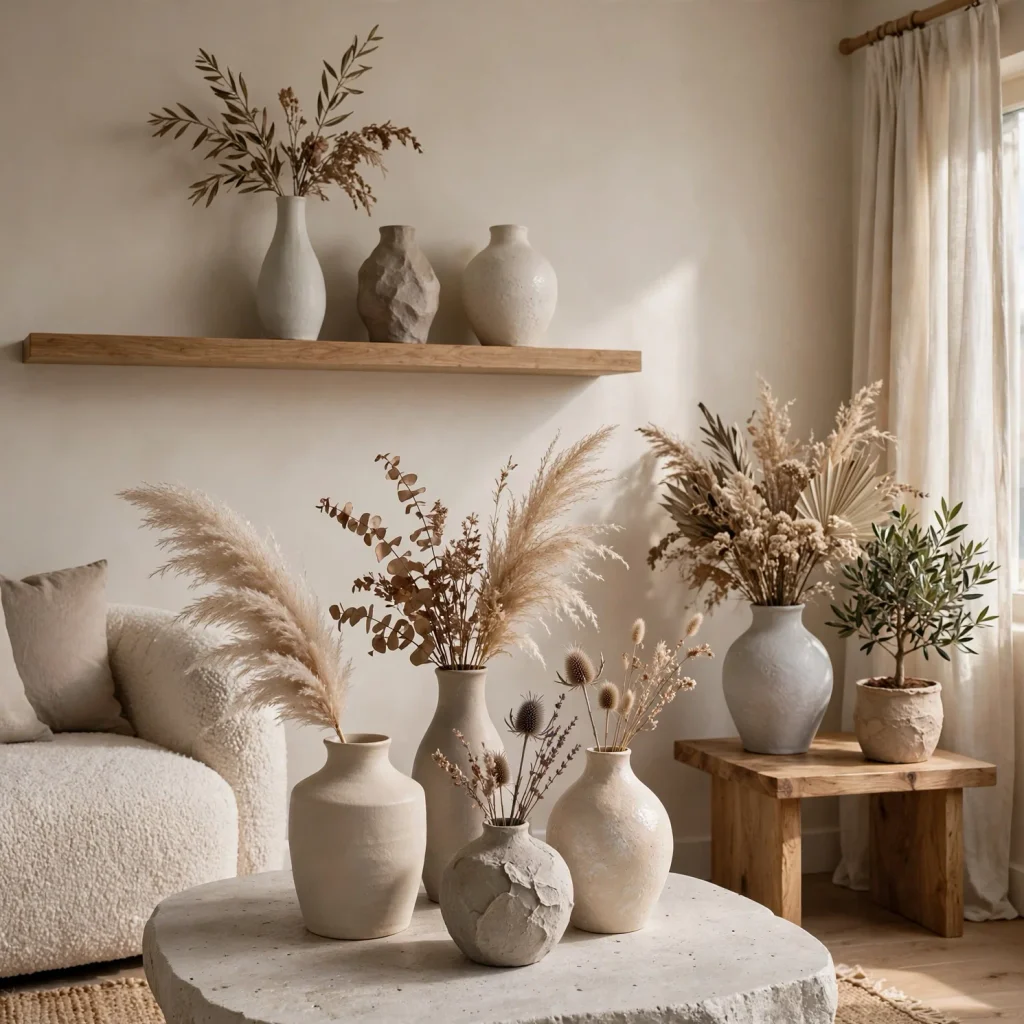
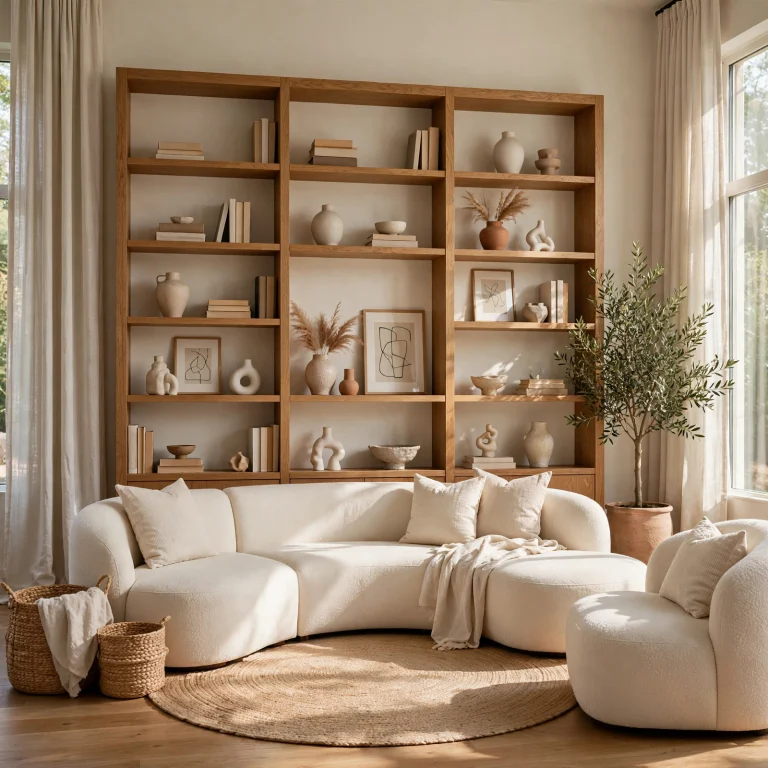
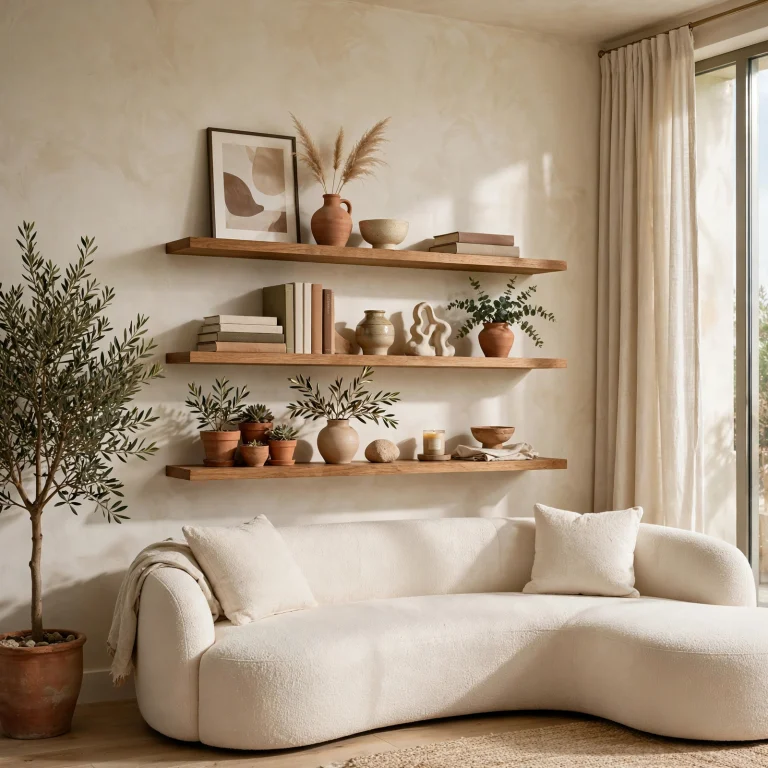
A small collection of ceramic vases, in varying heights and glazes but within a limited color family, gives a living room’s shelving or console a decor feature that feels curated rather than purchased as a set. Grouping three vases together, with at least one holding a single dried stem or small branch, adds asymmetry that a matched trio placed in a straight row typically lacks. Sourcing pieces gradually from different makers or shops, rather than buying a boxed set, usually produces a more interesting final grouping.
6. Statement Table Lamp
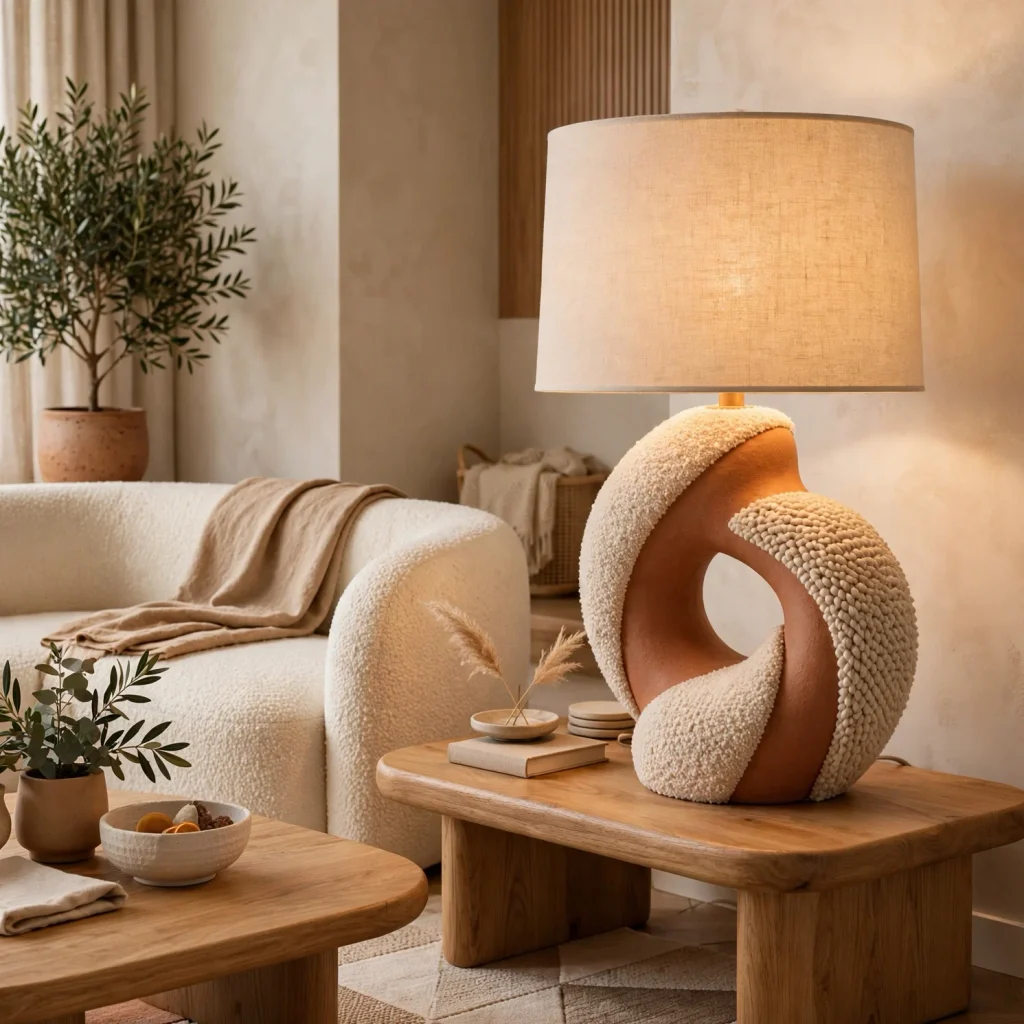
A statement table lamp, with a sculptural base in ceramic, wood, or textured plaster, adds a decor focal point to a side table or console while still serving a functional lighting purpose. Choosing a lamp with a shade in a natural fiber, like linen or rattan, keeps the light warm and diffused rather than harsh. This idea is particularly effective in a living room that otherwise relies only on overhead lighting, since a single well-chosen lamp adds both visual interest and a softer light layer.
7. Framed Botanical Prints
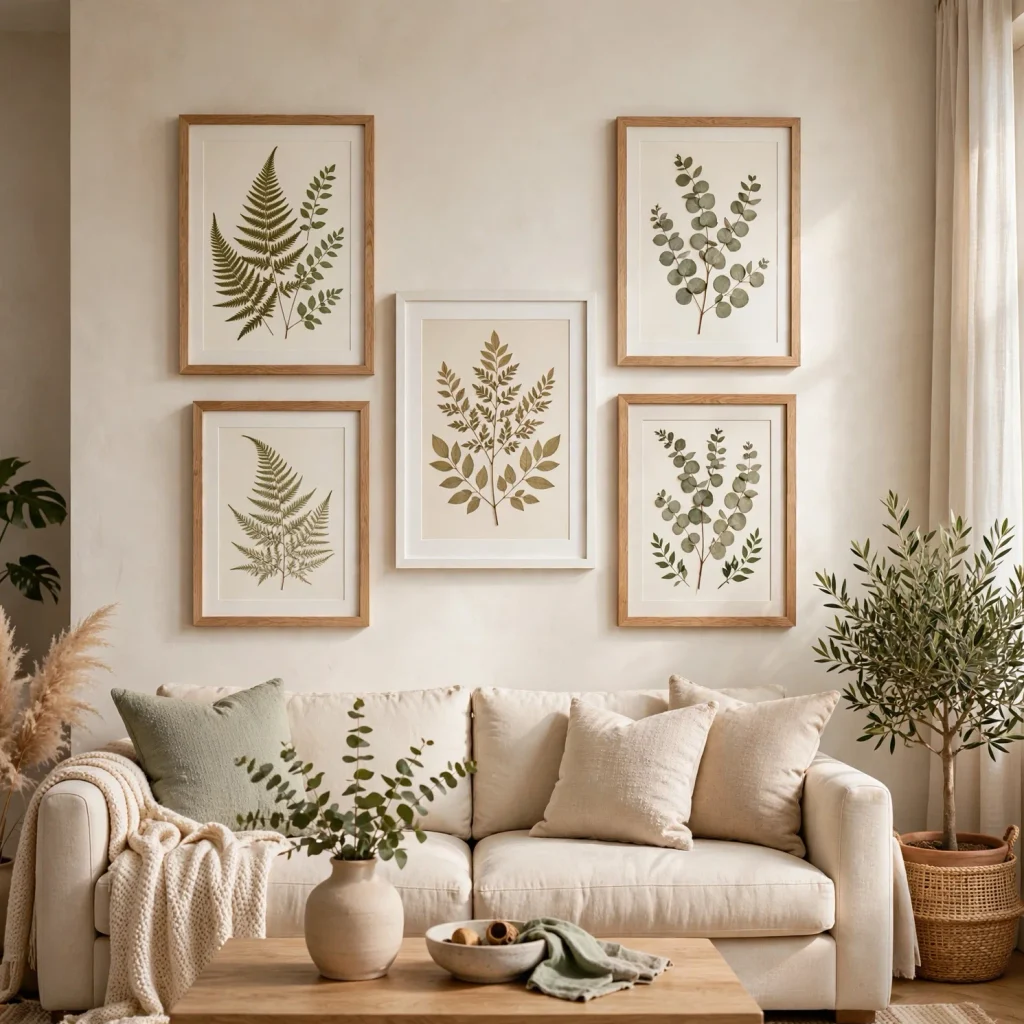
Framed botanical prints, in a simple black or natural wood frame, give a living room’s walls a subtle decorative detail without the cost or scale commitment of a large original art piece. Grouping two or three prints in matching frames but slightly varied artwork adds visual interest without requiring a full gallery wall layout. This idea works especially well in a small hallway-adjacent nook or above a console table where a single larger piece might feel out of scale.
8. Textured Throw Blanket Draping
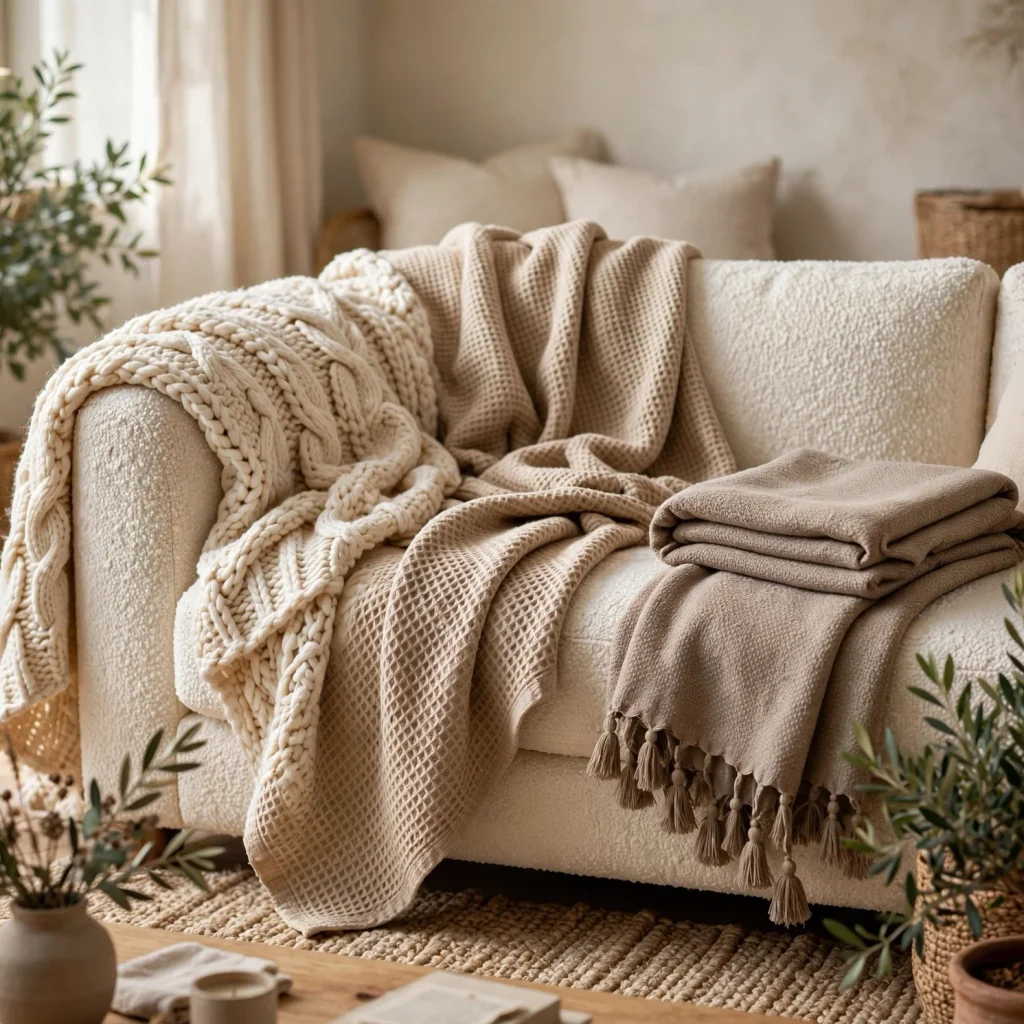
Draping a textured throw blanket, such as chunky knit or waffle-weave, over the arm or back of a sofa adds a layer of tactile warmth to a living room at minimal cost. Folding the blanket loosely rather than perfectly straight keeps the styling from looking overly staged, and layering two blankets in complementary but not matching textures adds more depth than a single flat piece. This decor idea is also one of the easiest to rotate seasonally without any additional cost.
9. Decorative Mirror Placement
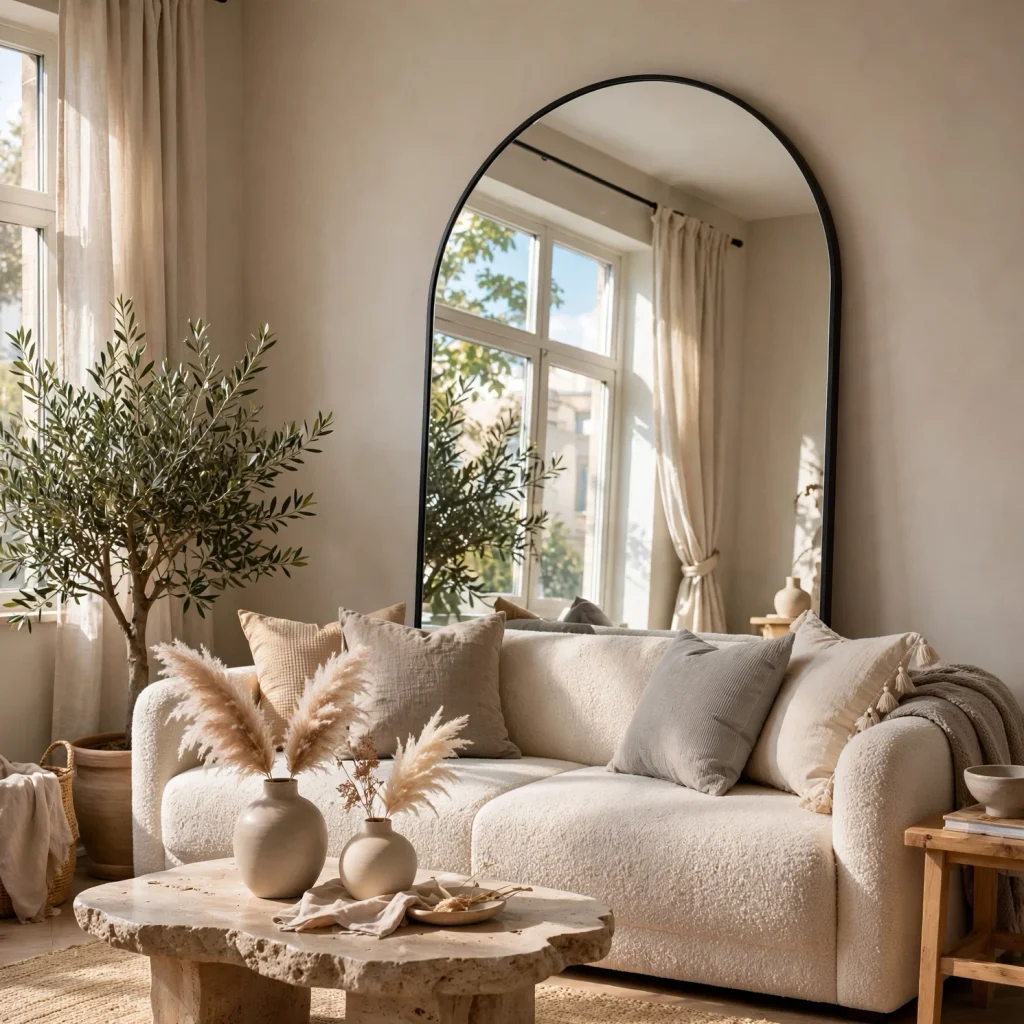
A decorative mirror, hung on a wall opposite a window or light source, adds both a functional light-bouncing benefit and a design feature to a living room. An arched, organic, or sunburst-shaped frame in brass or wood breaks up a room dominated by rectangular furniture and art. Sizing the mirror to roughly match the width of the furniture piece below it, whether a console or sofa, keeps the proportions feeling intentional rather than random.
10. Books as Decorative Objects
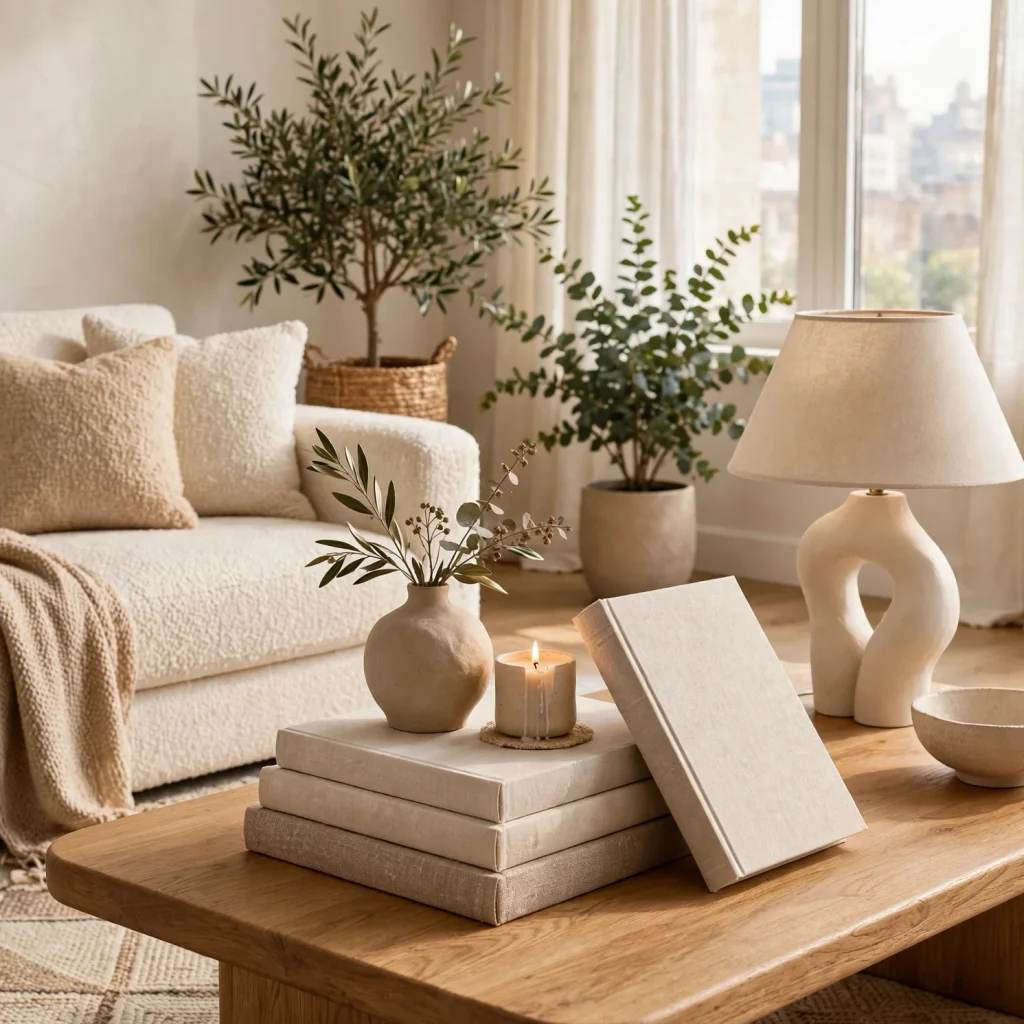
Using books as decorative objects, stacked horizontally under a small sculpture or vase, or displayed spine-out on open shelving, gives a living room personality that purchased decor alone can’t replicate. Grouping books loosely by cover color or spine height creates a more polished look than a random stack, without requiring any actual reorganization of a personal library. This idea costs nothing beyond what’s already owned, making it one of the most accessible entries on this list.
11. Scented Candle Styling
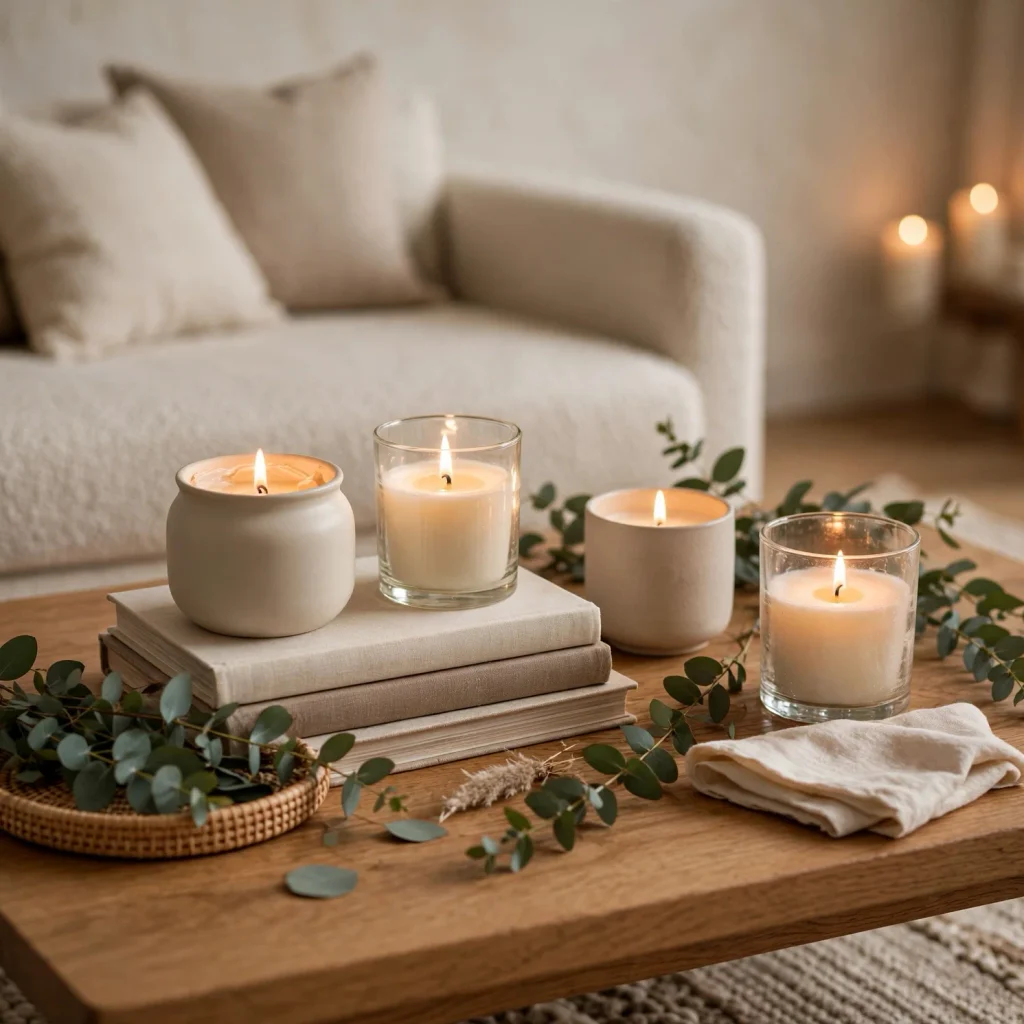
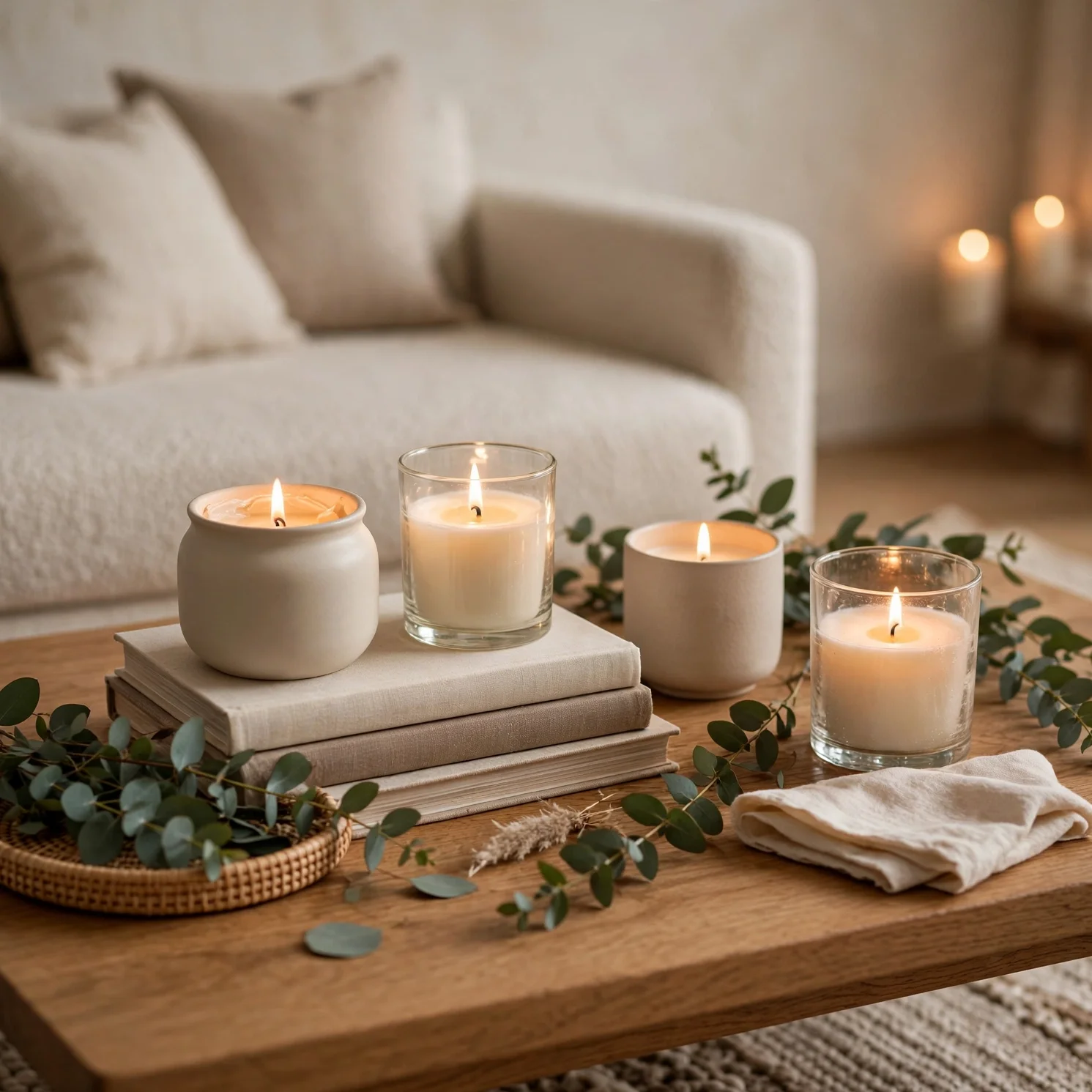
Scented candles, grouped in varying heights on a coffee table or console, add both ambiance and a finishing decorative touch to a living room without requiring significant investment. Choosing candles in matte ceramic or glass vessels, rather than brightly labeled retail packaging, keeps the styling looking intentional even when the candles themselves are budget-friendly. Grouping two or three together, rather than spacing single candles around the room, creates a more visually cohesive moment.
12. Wall-Mounted Plant Shelf
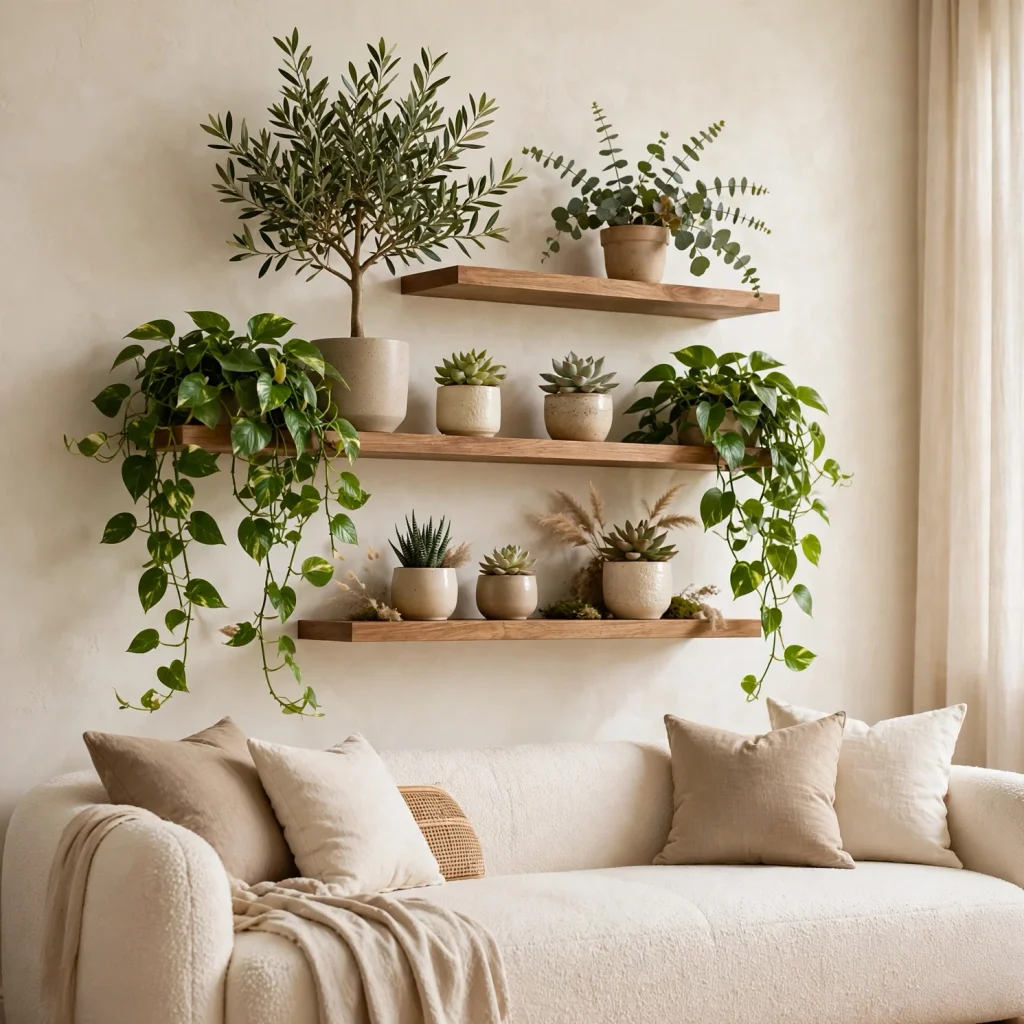
A small wall-mounted plant shelf, positioned near a window with adequate natural light, gives a living room a place to display trailing or small potted plants without taking up floor or table space. Pothos, string of pearls, or other trailing varieties work particularly well here, since their draping growth adds movement that a single upright plant doesn’t provide. This idea suits smaller living rooms especially well, where floor space for a larger plant may not be available.
13. Seasonal Mantel or Shelf Styling
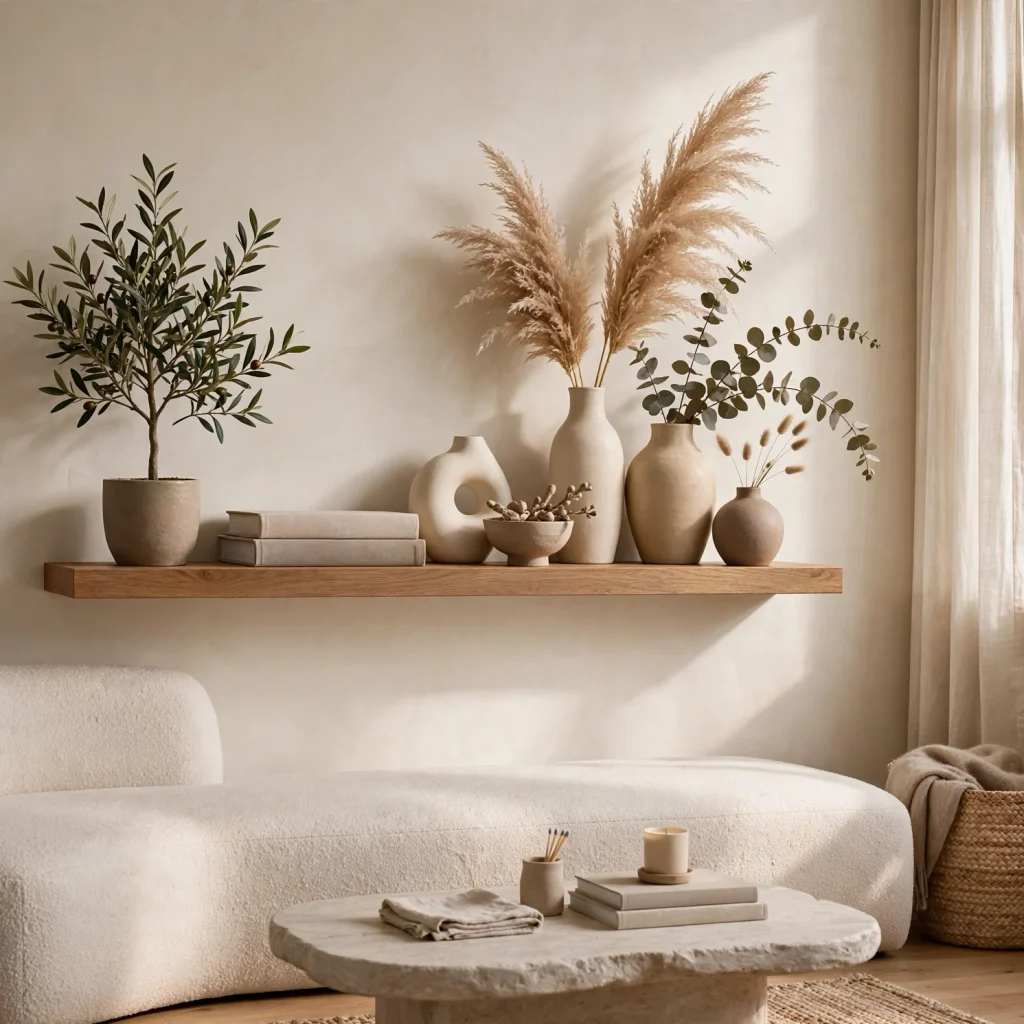
Rotating the decor on a fireplace mantel or open shelf with the seasons, using a small mix of candles, greenery, and a piece of art or mirror, keeps a living room’s focal point feeling current without a full redesign. A consistent base layer, such as a mirror or art piece that stays in place year-round, gives the rotation structure so each seasonal refresh takes only a few added pieces rather than starting from scratch. This idea also spreads decor costs out over the year instead of requiring one larger purchase.
14. Rug Layering for Visual Texture
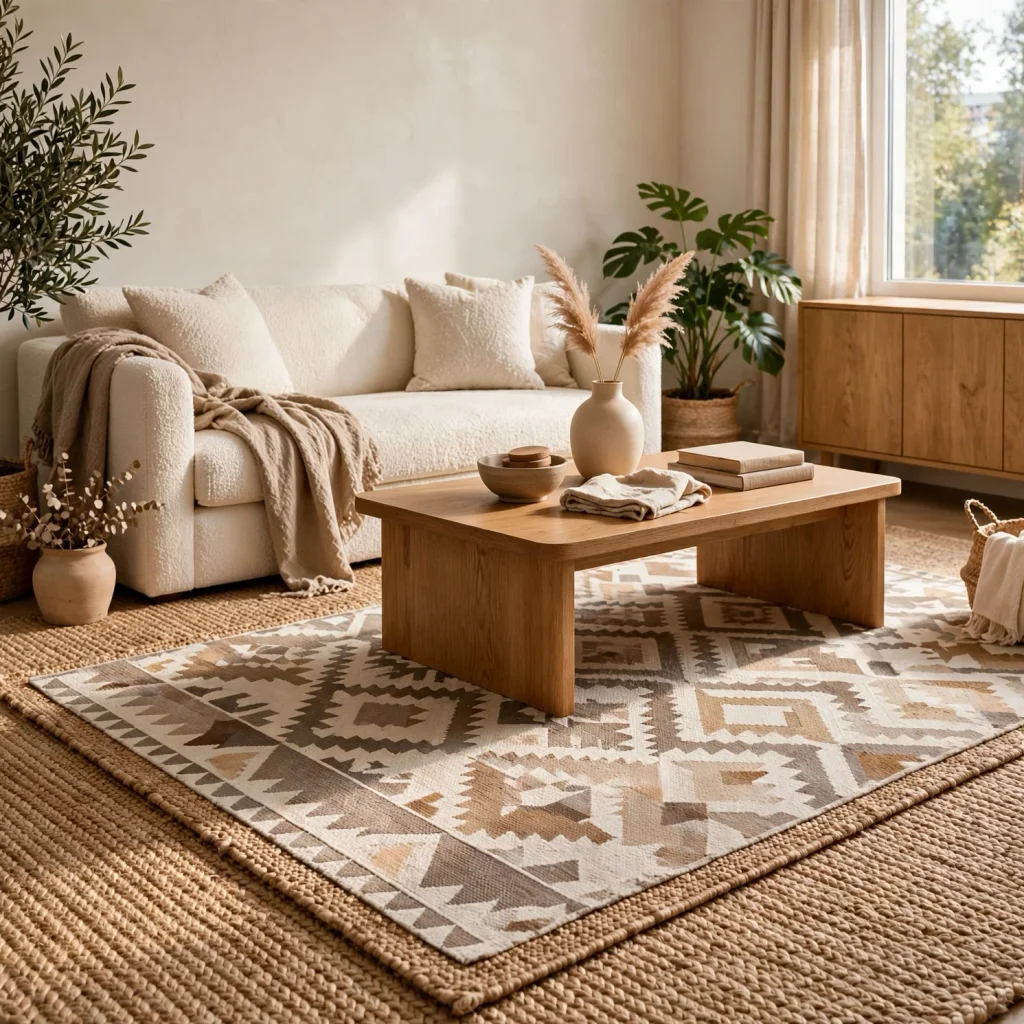
Layering a smaller patterned or textured rug over a larger neutral base rug adds visual interest to a living room’s floor without the cost of replacing an existing rug entirely. A jute or sisal base paired with a smaller vintage-style wool rug on top is a common and affordable combination. Positioning the top rug slightly off-center, rather than perfectly centered, gives the layered look a more relaxed, collected feel than a precisely aligned pairing.
15. Personal Object Display
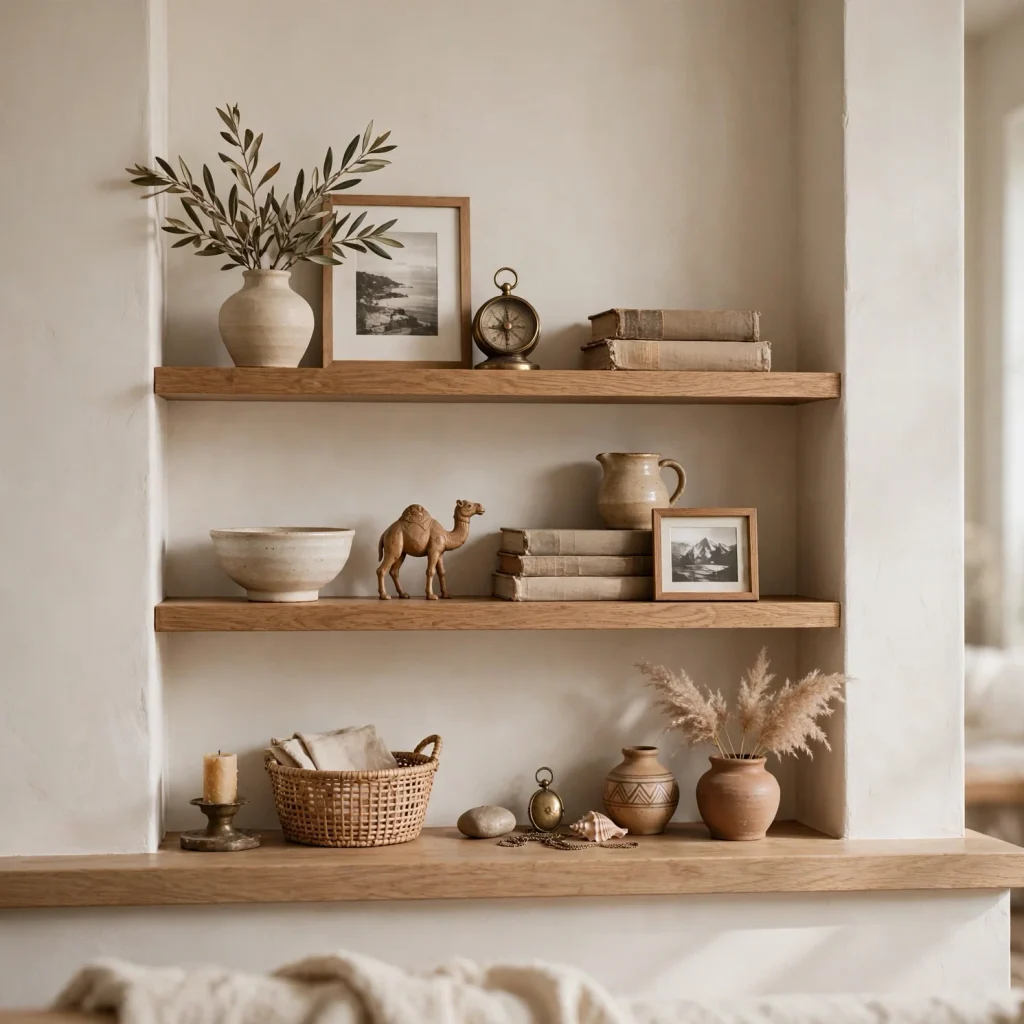
Displaying a small collection of personal objects, such as travel souvenirs, family heirlooms, or handmade pottery, on a shelf or console gives a living room decor that no retail purchase can replicate. Grouping the objects within a similar color or material family, even if their origins are unrelated, helps them read as a cohesive display rather than a random assortment. This idea is one of the most effective ways to make a living room feel personal rather than generic, regardless of budget.
Shop the Look
Start with a set of boucle and linen throw pillow covers, a rattan coffee table tray, and a trio of ceramic vases in a warm neutral glaze. Add a sculptural ceramic table lamp with a linen shade, an arched brass mirror, and a pair of seagrass storage baskets. Finish with a chunky knit throw blanket and a small wall-mounted plant shelf near a window for trailing greenery.
Common Mistake to Avoid
A common mistake with living room decor is buying every accessory from a single matched collection, which often results in a room that looks like a catalog page rather than a personal space. Mixing sources, combining a few new pieces with thrifted, handmade, or long-owned items, generally produces a more interesting and collected result. Slowing the styling process down and adding pieces gradually also helps avoid the overly uniform look that a single large decor purchase tends to create.
FAQs
How can I update my living room decor on a small budget?
Swapping throw pillow covers, adding a new throw blanket, and rearranging existing books and objects into a more intentional display are some of the lowest-cost ways to refresh a living room’s decor. A single new item, like an affordable ceramic vase or a framed print, can also shift the room’s feel without a large purchase. Rearranging existing furniture and decor into a new layout costs nothing and often reveals a fresher look on its own.
How many throw pillows are too many for a living room sofa?
Most living rooms work well with four to six pillows total across a standard three-seat sofa, typically two to three per section, since going beyond that can start to crowd out actual seating space. Removing one pillow from an initially symmetrical arrangement usually looks more intentional than a perfectly even, matched set. The right number ultimately depends on the sofa’s size and how much of it needs to remain usable for sitting.
What’s the best way to style open shelving in a living room?
Open shelving styles best when objects are grouped in odd numbers, varied in height, and interspersed with roughly a third of each shelf left empty to avoid a cluttered look. Mixing books, a plant, and one or two decorative objects per shelf generally works better than filling every available inch with items. Repeating one or two colors or materials across the shelving also helps the overall display feel connected rather than random.
Should living room decor match throughout the whole room?
Living room decor doesn’t need to match exactly, and a slightly varied, collected approach generally reads as more considered than a fully matched set purchased all at once. Repeating one or two consistent elements, such as a wood tone, metal finish, or color family, across different pieces ties a room together without requiring identical items. This approach also allows decor to be added gradually over time rather than needing to be replaced as a full set.
How often should living room decor be updated?
Smaller decor elements like pillow covers, throws, and candles are often refreshed every season or two, while larger decorative pieces like art, mirrors, and vases can generally stay in place for several years without needing replacement. There’s no fixed timeline that applies to every household, and updates are often driven more by wear, a change in color scheme, or simply wanting a change than by any set schedule. Watching for visible wear on frequently used textiles is a more practical guide than a fixed calendar.
Conclusion
Living room decor ideas don’t require a full furniture overhaul to make a noticeable difference, since small, well-chosen accessories and styling adjustments often carry more visual weight than expected. Save this guide to Pinterest for reference while planning your next refresh, and check out our related post on minimalist living room ideas for a more pared-back take on the same styling principles.