15 Modern Living Room Ideas for a Clean, Current Look
A modern living room is defined less by any single trend and more by a consistent approach: clean geometry, functional furniture, and a palette that avoids unnecessary decoration. This guide covers fifteen ideas that build that look with real materials and sizing guidance, from low-slung sofas to integrated smart lighting, so the room reads as current without feeling sterile. Each idea works independently or as part of a full modern redesign.
Trend & Background
Modern living room design continues to draw from mid-century principles, favoring function and clean geometry, but has increasingly incorporated warmer materials and smart technology that weren’t part of the original mid-century movement. Matte black, warm wood tones, and integrated lighting have replaced some of the chrome-and-glass combinations associated with earlier modern interiors. Smart-home features, from app-controlled lighting to hidden charging stations, have also become a practical expectation rather than a novelty in current modern living room planning.
Key Takeaways
- A modern living room relies on clean lines, functional layouts, and a restrained material palette rather than ornamentation.
- Mixing matte and glossy finishes adds depth to a modern room without introducing pattern or extra color.
- Smart-home integration and multi-use furniture are increasingly core to how a modern living room actually functions day to day.
- Bold geometric shapes in lighting or furniture work best as a single statement rather than repeated throughout the room.
1. Low-Slung Platform Sofa
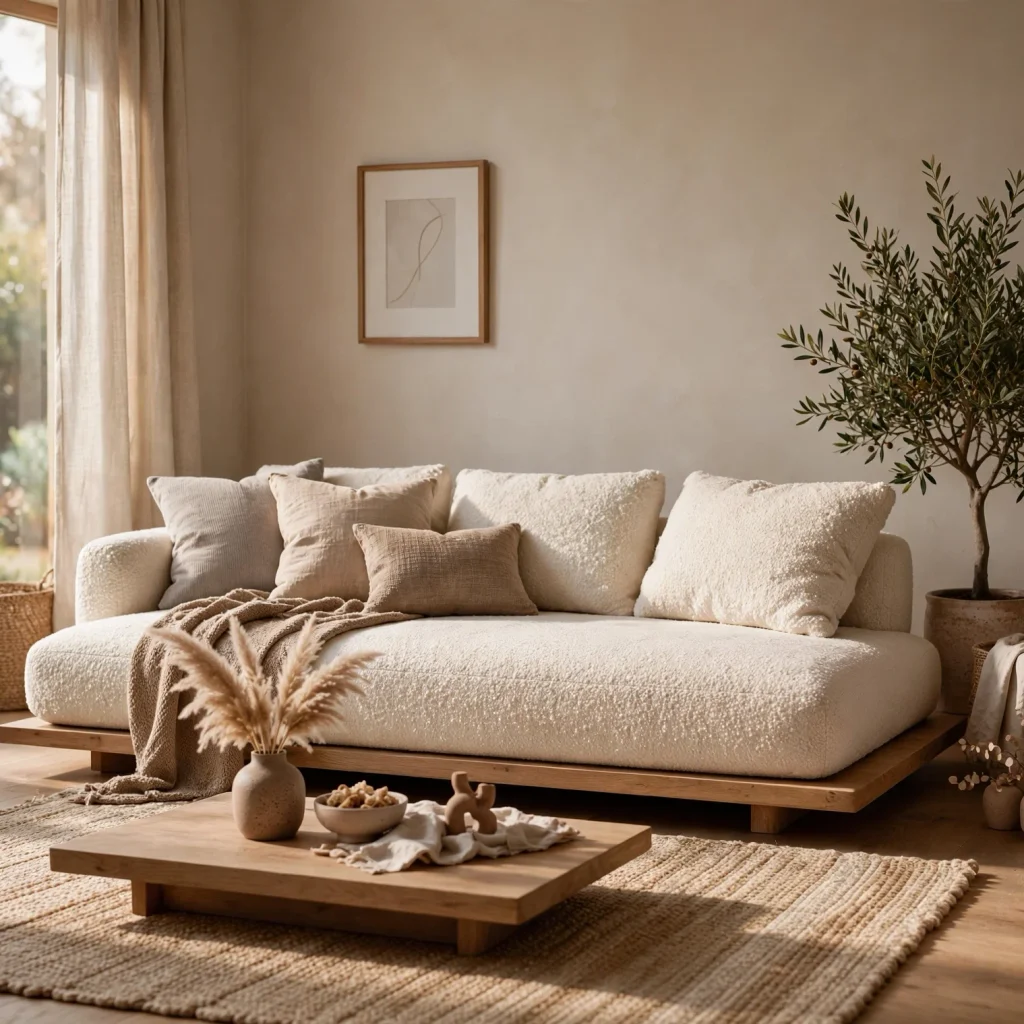
A low-slung platform sofa, with a frame sitting close to the floor and minimal visible legs, is one of the clearest markers of a modern living room’s silhouette. Clean track arms and a solid-color performance fabric, typically in charcoal, oatmeal, or a deep forest green, keep the piece from reading as overly casual. This lower profile also opens up sightlines across the room, which matters in open-concept spaces where the living room connects visually to a kitchen or dining area.
2. Geometric Area Rug
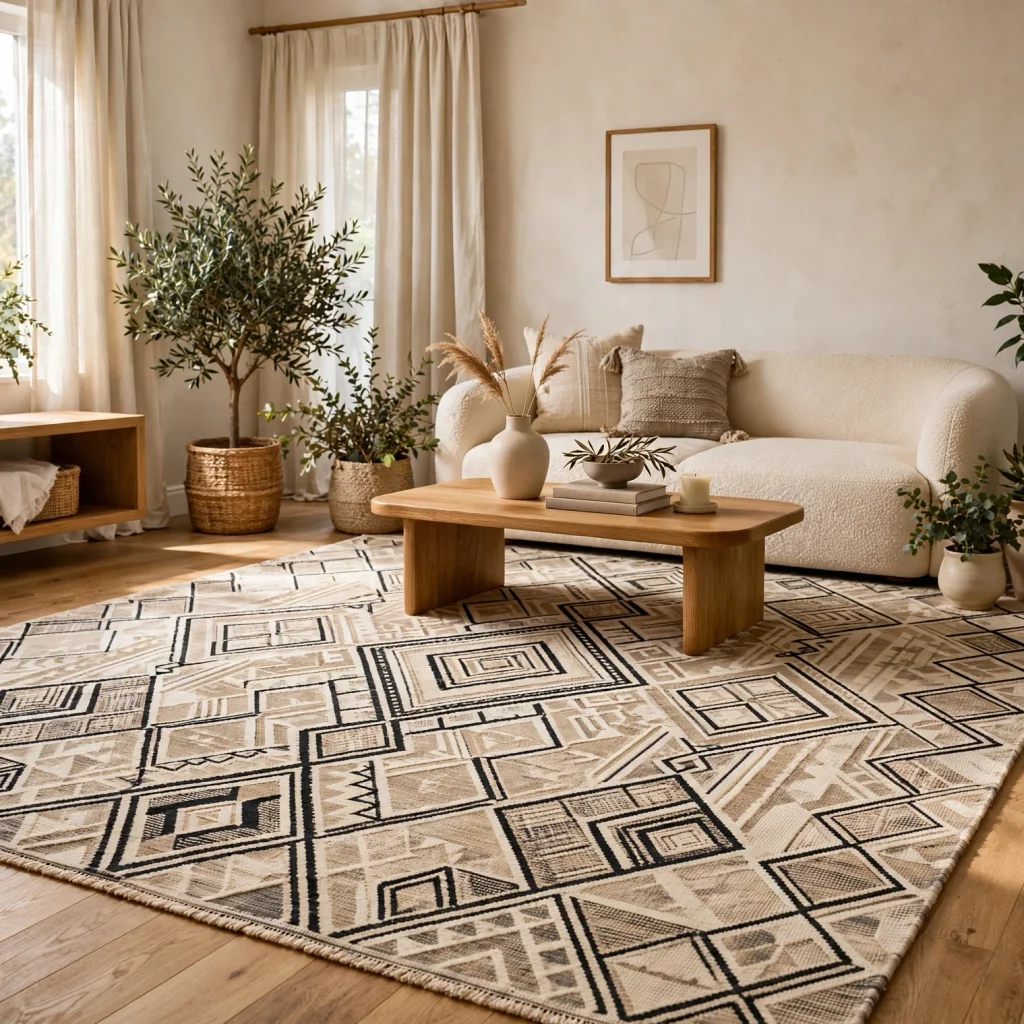
A geometric area rug, with a clean repeating pattern in two or three tones, gives a modern living room visual interest on the floor without relying on busy furniture upholstery to carry the pattern. Wool or a wool-blend construction in a low pile holds sharp geometric lines better than a plush or shag texture, which tends to blur pattern definition. Keeping the rug’s color palette limited to shades already present in the room prevents it from becoming a competing focal point.
| Pattern Scale | Room Size | Best Placement |
| Small repeat | Compact rooms | Full room coverage |
| Medium repeat | Standard rooms | Under seating group |
| Large-scale | Open-concept spaces | Zone-defining anchor |
3. Matte Black Fireplace Surround
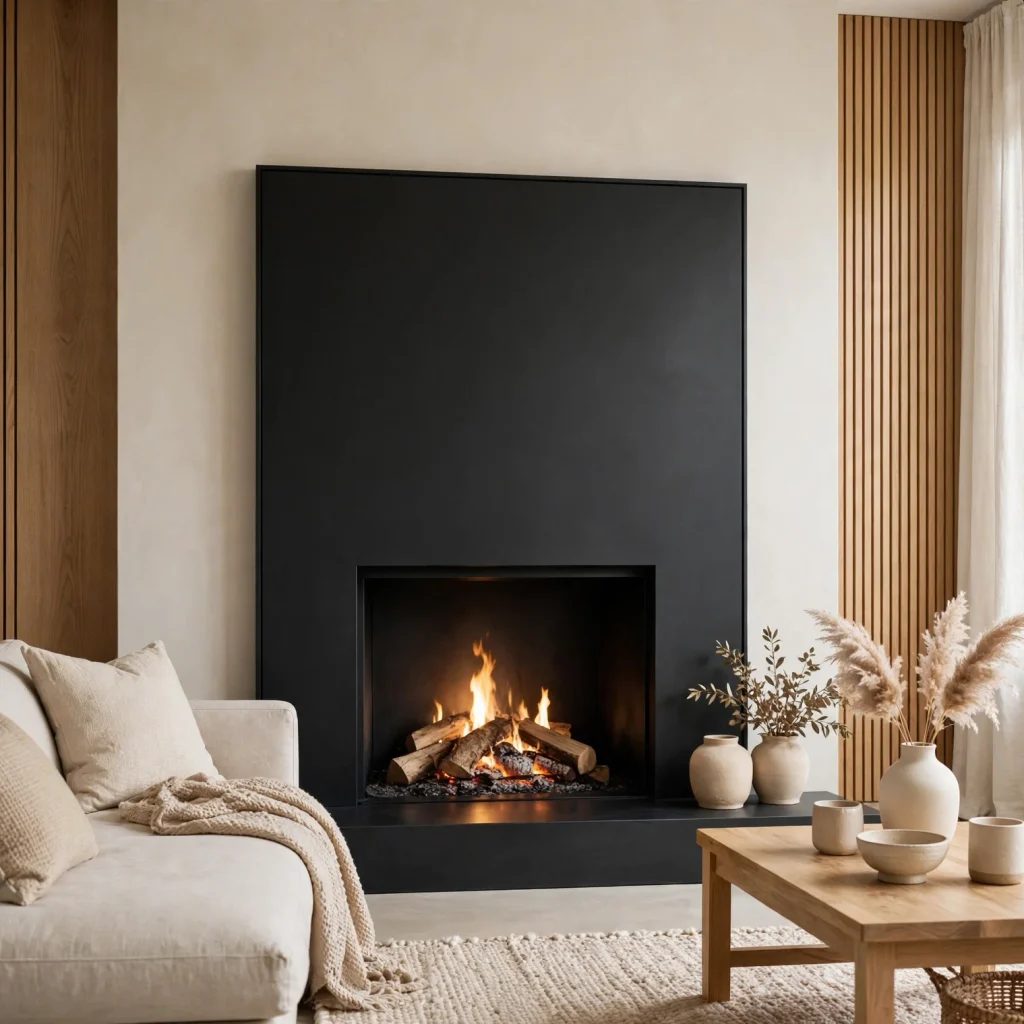
A matte black fireplace surround, whether in painted steel, tile, or a matte-finish stone, gives a modern living room a strong architectural anchor without the visual weight of a traditional stone mantel. This treatment pairs particularly well with a linear or ribbon-style fireplace insert, since the continuous black line reinforces the room’s clean geometry. Surrounding wall space left mostly bare, aside from minimal art or a mirror, keeps the fireplace as the room’s clear focal point.
4. Integrated LED Cove Lighting
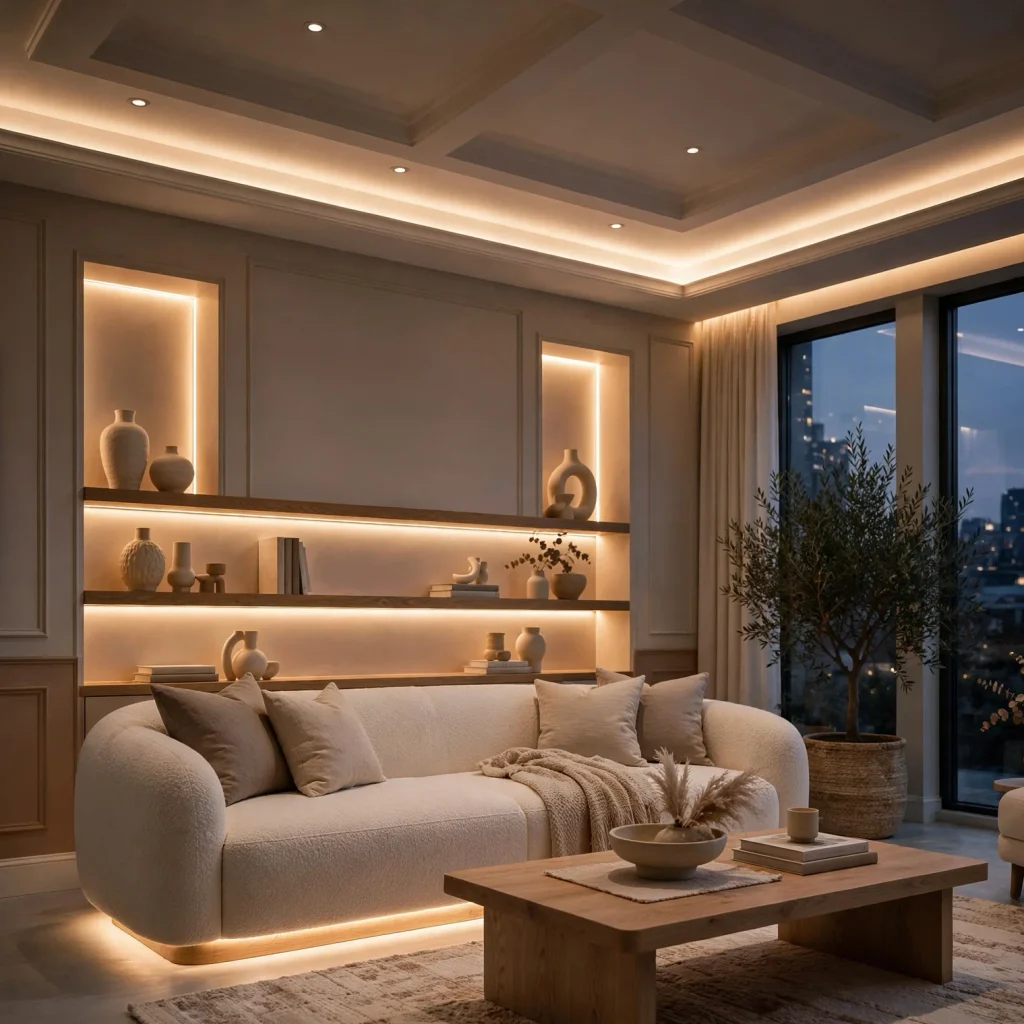
Integrated LED cove lighting, recessed into a ceiling perimeter or behind a media wall, provides ambient light in a modern living room without the visual presence of a traditional fixture. This lighting works especially well paired with a dimmer or smart-home app control, allowing the color temperature to shift from bright white during the day to a warmer tone in the evening. Cove lighting also emphasizes ceiling height and room shape in a way that a single central fixture typically doesn’t.
Make your home feel more inviting with these curtains living room ideas featuring soft colors and natural materials.
5. Modular Wall-Mounted Shelving System
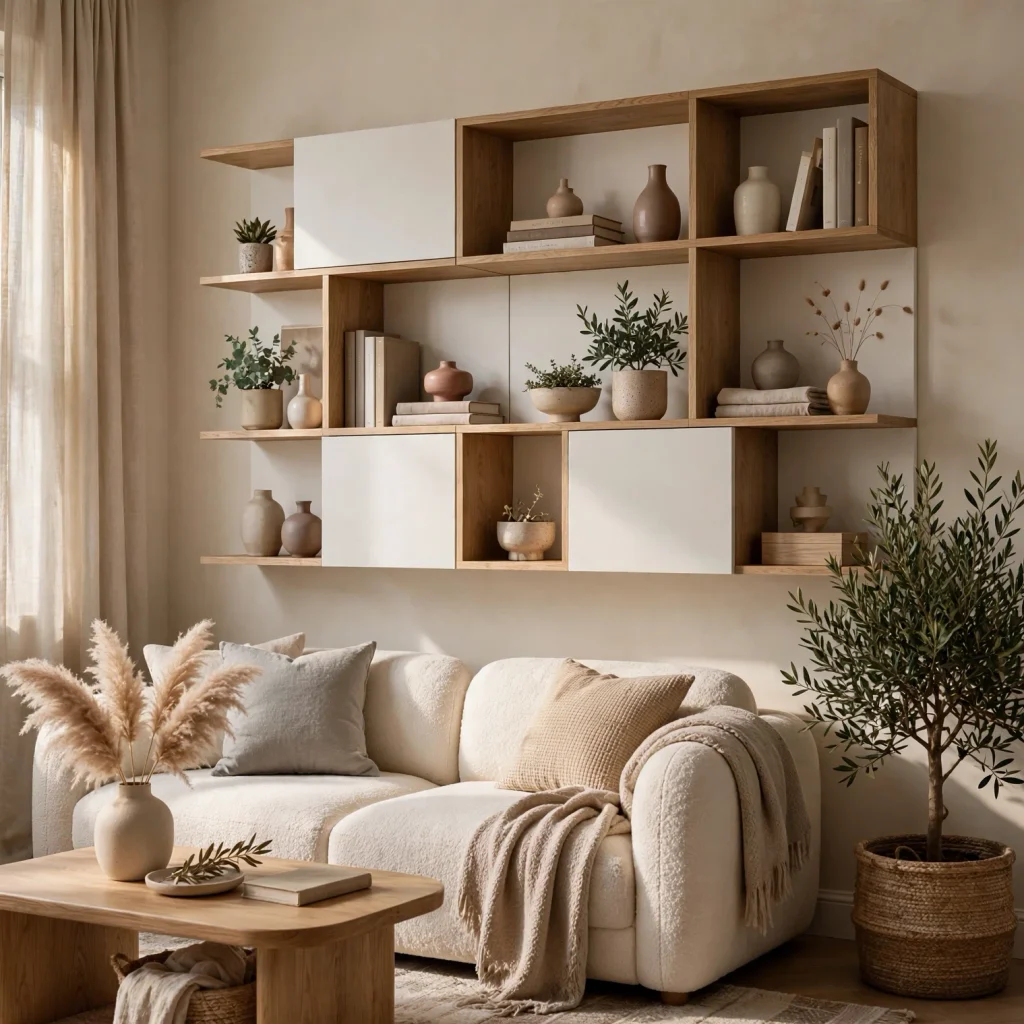
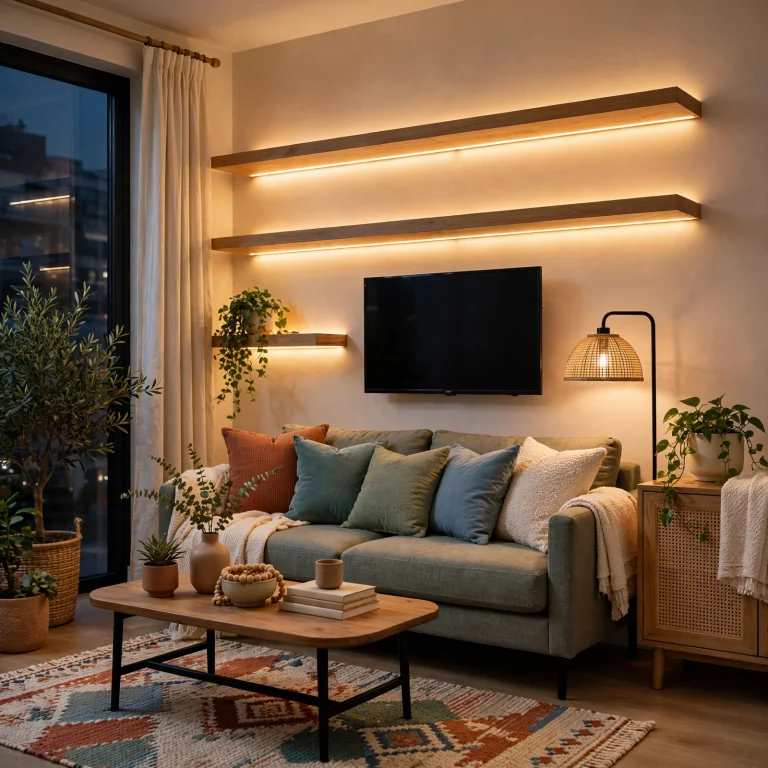
A modular wall-mounted shelving system, using a track-and-bracket design that allows shelves to be added, removed, or repositioned, gives a modern living room adaptable storage that grows with changing needs. Walnut or white oak shelves against a matte black or painted track create clean contrast without extra ornamentation. This system suits media storage, book display, or a mix of both, and can be reconfigured without patching and repainting an entire wall.
6. Sculptural Arc Floor Lamp
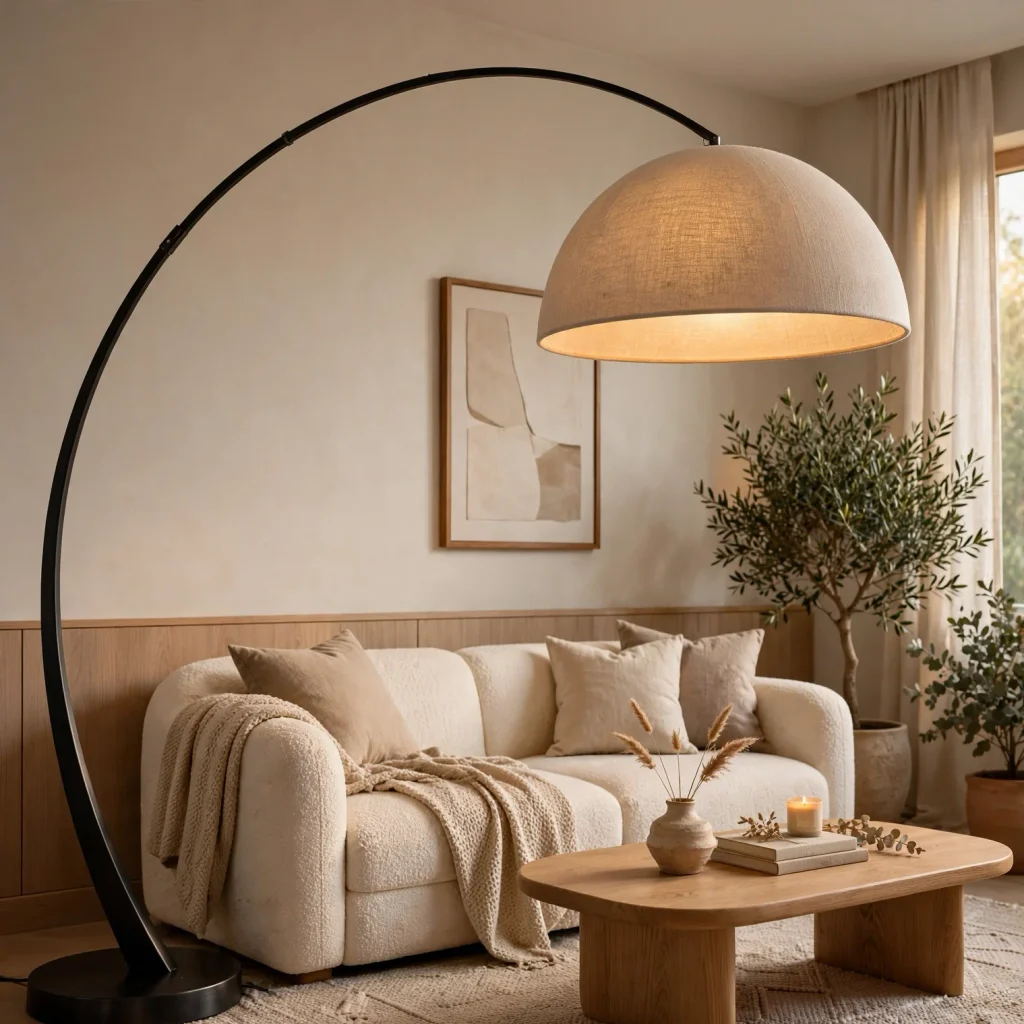
A sculptural arc floor lamp, with a curved metal stem extending from a weighted base to a dome or drum shade positioned over a seating area, adds both function and a strong visual line to a modern living room. This style works particularly well positioned over a sofa’s end table or a reading chair, providing direct light without the need for a nearby table lamp. Matte black, brushed brass, or blackened bronze finishes all suit a modern palette better than a polished chrome finish.
7. Floating Media Console
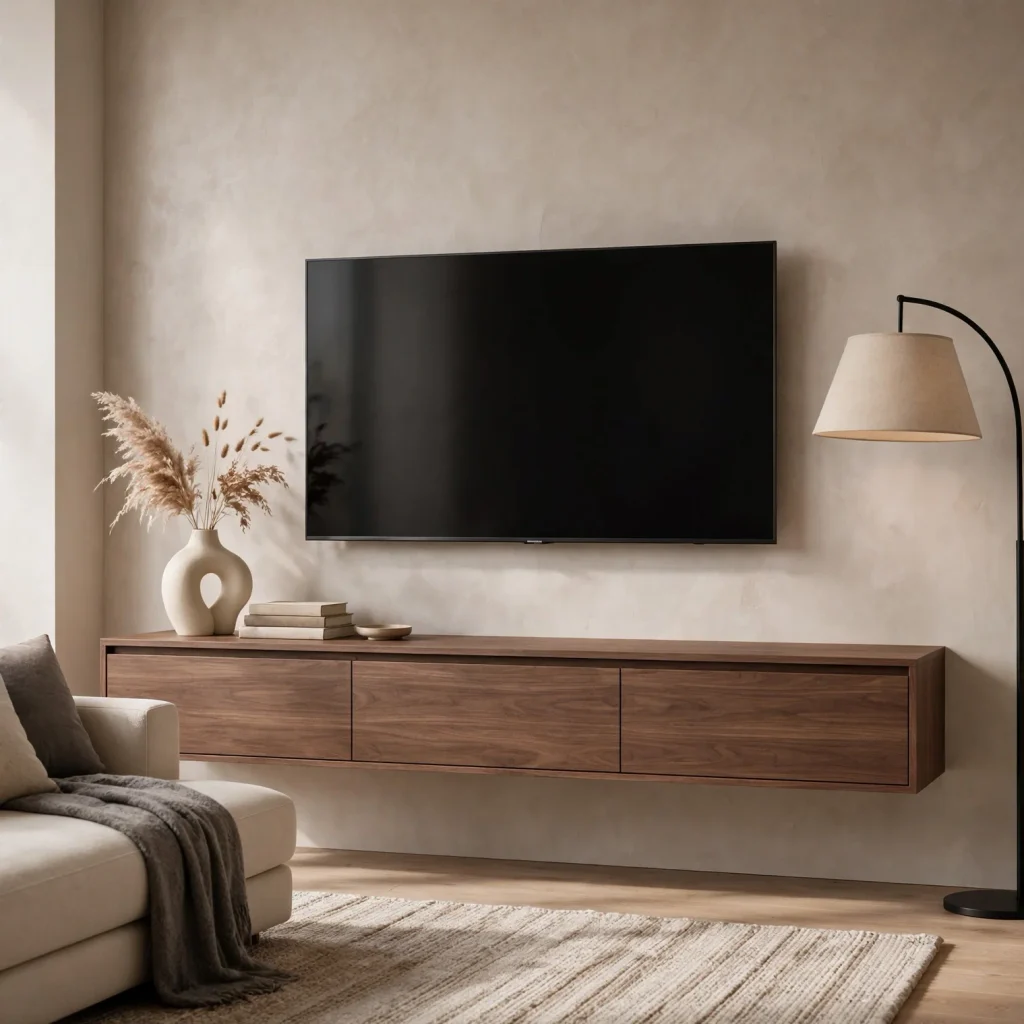
A floating media console, mounted directly to the wall with no visible legs, keeps a modern living room’s floor space open and reinforces the room’s clean, minimal lines. A walnut or white oak console with closed cabinet storage and a cutout for cable management keeps equipment organized without visual clutter. Mounting the console 18 to 20 inches above the floor also makes cleaning underneath easier and gives the wall a lighter overall visual weight.
8. Bold Abstract Art Piece
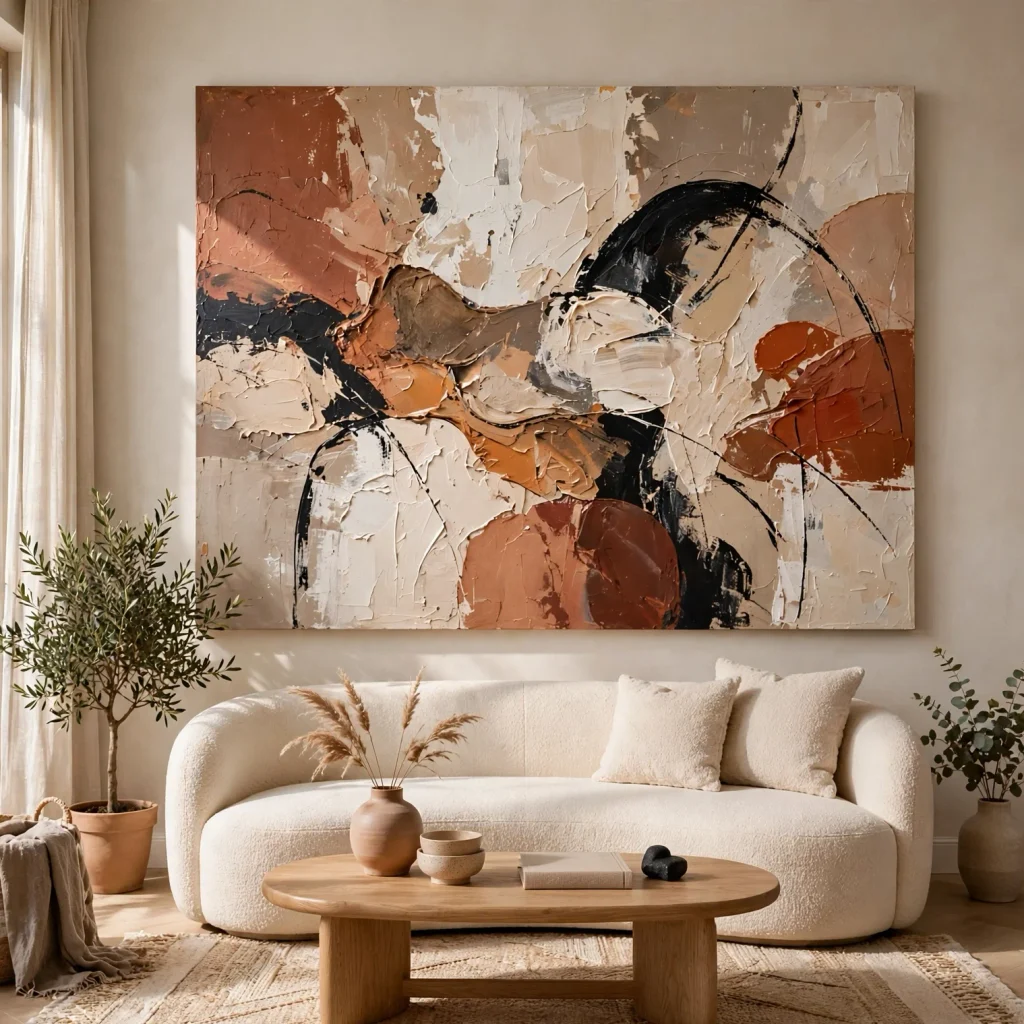
A single large abstract art piece, in a limited color palette that echoes tones already used in the room’s furniture or accessories, gives a modern living room a focal point without introducing competing patterns elsewhere. Oversized scale, roughly two-thirds the width of the sofa or wall it hangs above, reads more intentional than a smaller piece that gets visually lost. A simple black or natural wood frame, or no frame at all on canvas, keeps the piece from feeling overly ornate.
9. Concrete or Polished Stone Coffee Table
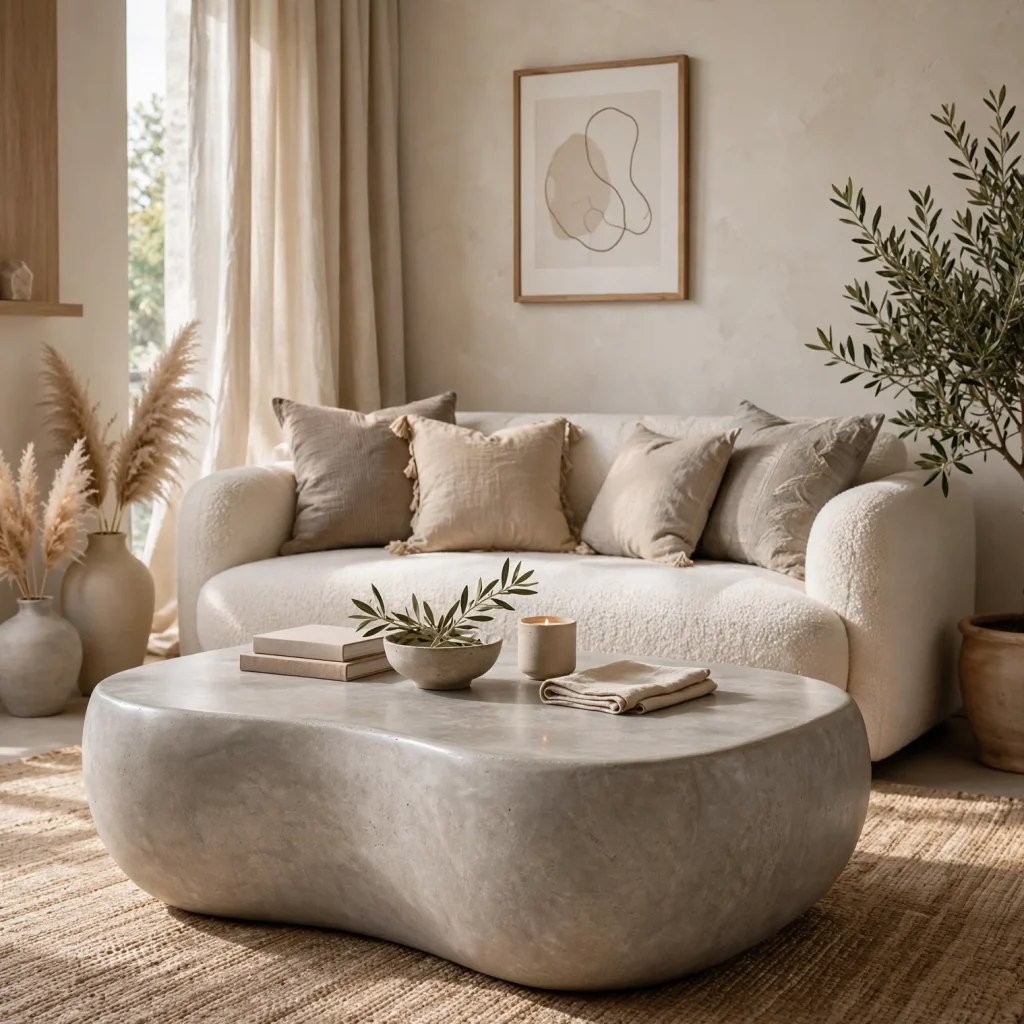
A concrete or polished stone coffee table introduces an industrial-adjacent material that reinforces a modern living room’s clean, structural aesthetic. A simple geometric shape, rectangular or cylindrical, works better than an ornate or organic silhouette in this material, since the stone or concrete’s texture already provides visual interest on its own. Pairing it with softer materials elsewhere in the room, like a boucle sofa or wool rug, keeps the overall palette from feeling too cold or industrial.
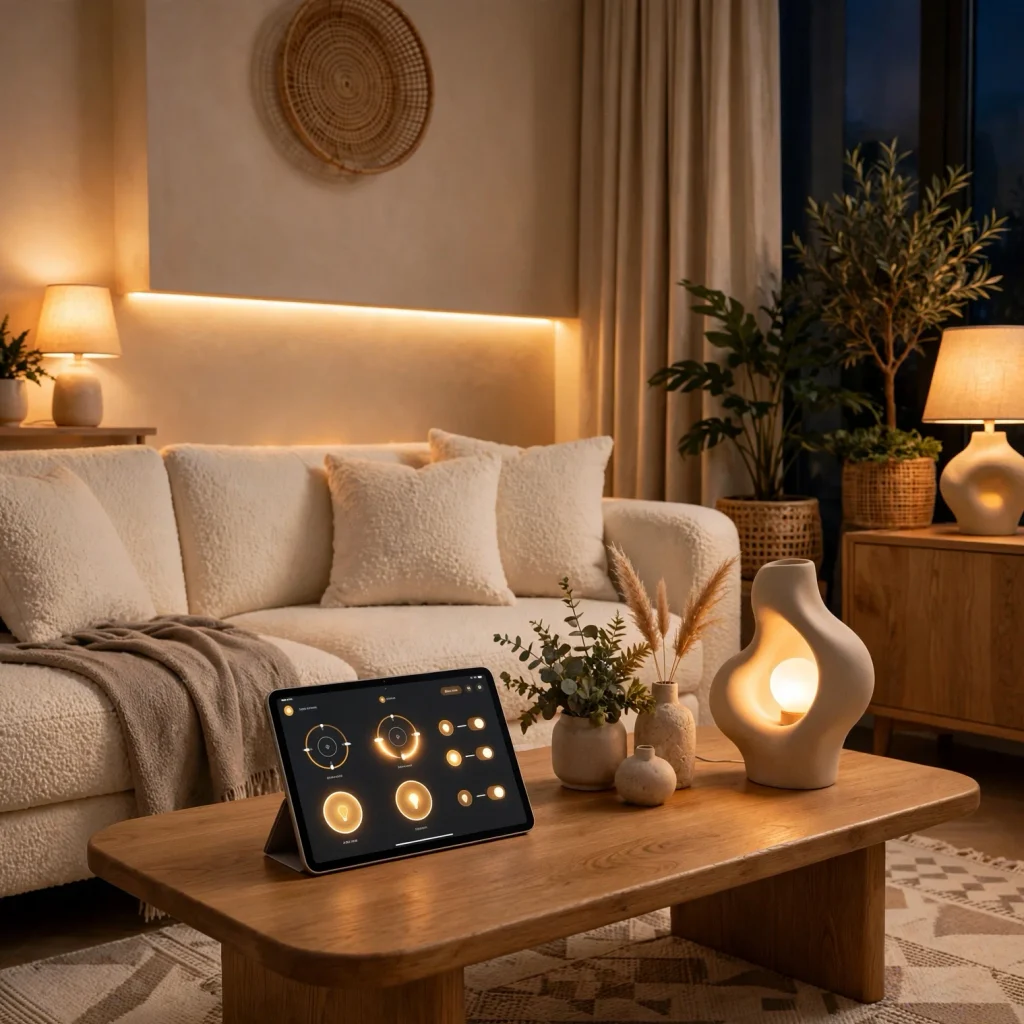
10. Smart Home Lighting Control
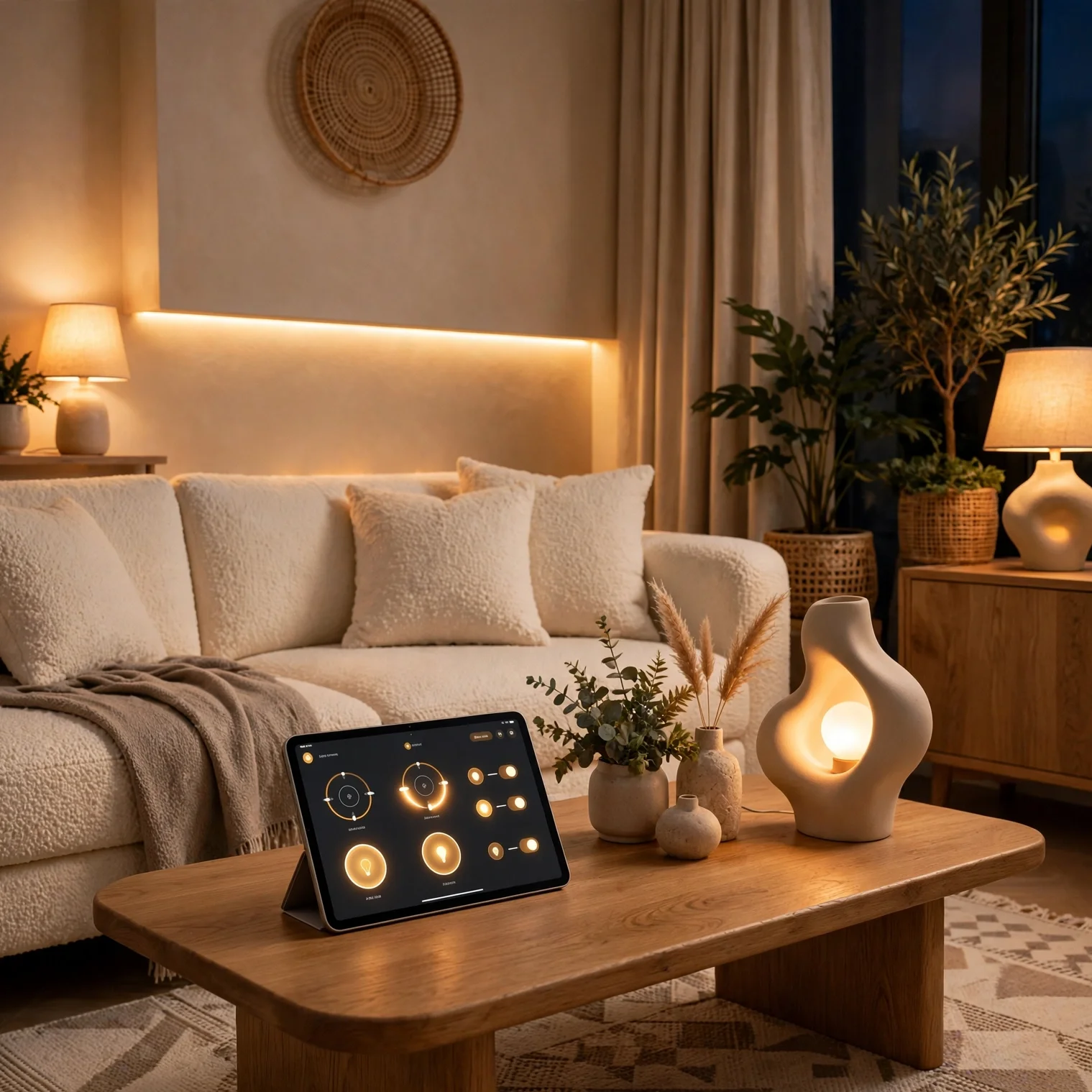
Smart home lighting control, integrating overhead fixtures, lamps, and accent lighting into a single app or voice-controlled system, has become an increasingly standard feature in a modern living room’s overall design. Pre-set scenes, such as a bright setting for daytime tasks and a dimmed, warmer setting for evening relaxation, let the same fixtures serve multiple functions without physical switches for each layer. This system also allows lighting schedules to be automated, which is particularly useful in rooms without much natural light control.
11. Slatted Wood Wall Panel
A slatted wood wall panel, made from evenly spaced vertical wood strips over a contrasting backing, adds texture and warmth to a modern living room without introducing pattern or color. Walnut or white oak slats over a black felt or acoustic backing also improve the room’s sound absorption, which matters in rooms with hard flooring and minimal soft furnishings. This treatment works particularly well as a backdrop for a television or fireplace, giving the wall presence without additional decor.
12. Streamlined Sectional with Chaise
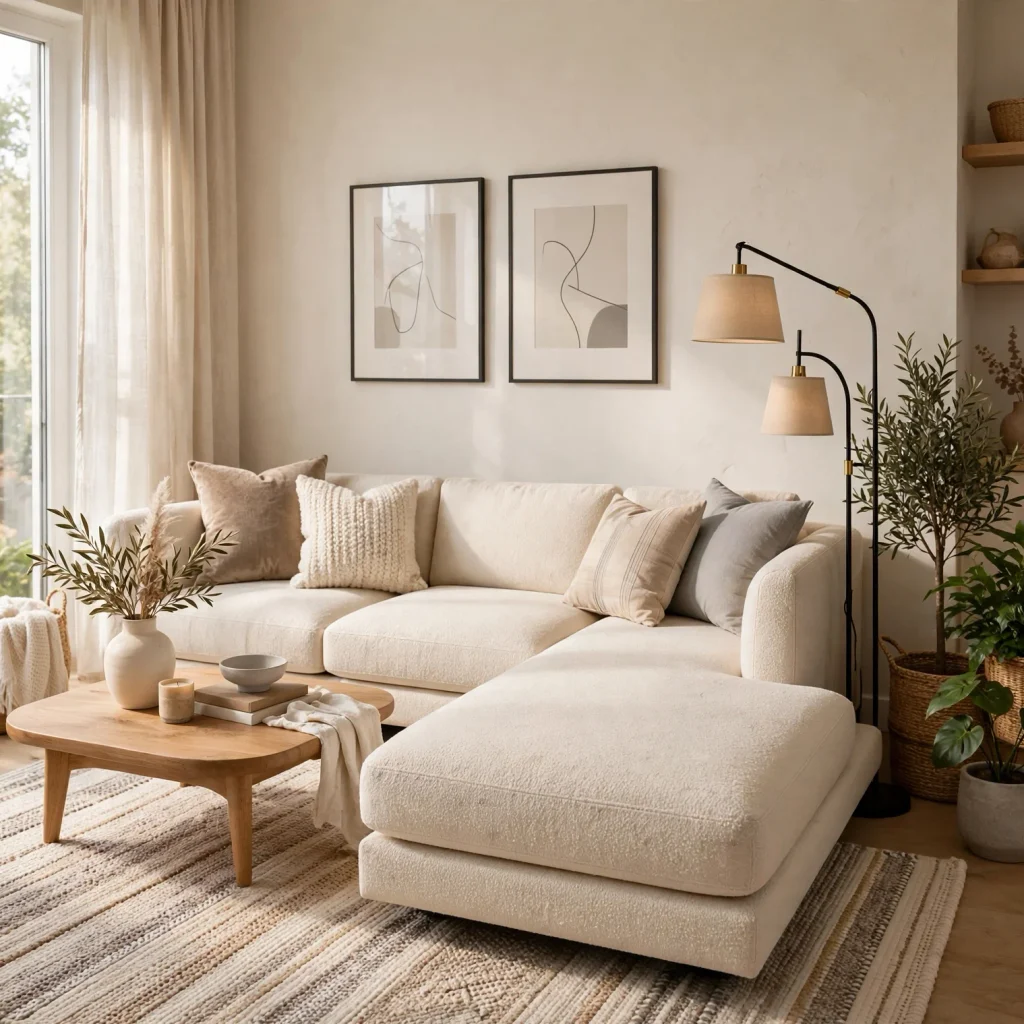
A streamlined sectional with an integrated chaise, in a single continuous silhouette rather than a boxy L-shape built from separate modules, suits a modern living room’s emphasis on clean lines and function. A performance weave fabric in a solid neutral tone keeps the piece from competing with other design elements in an open-concept space. Positioning the chaise end toward a window or the room’s best view maximizes the piece’s dual function as both seating and a place to fully recline.
13. Minimal Black Window Frames
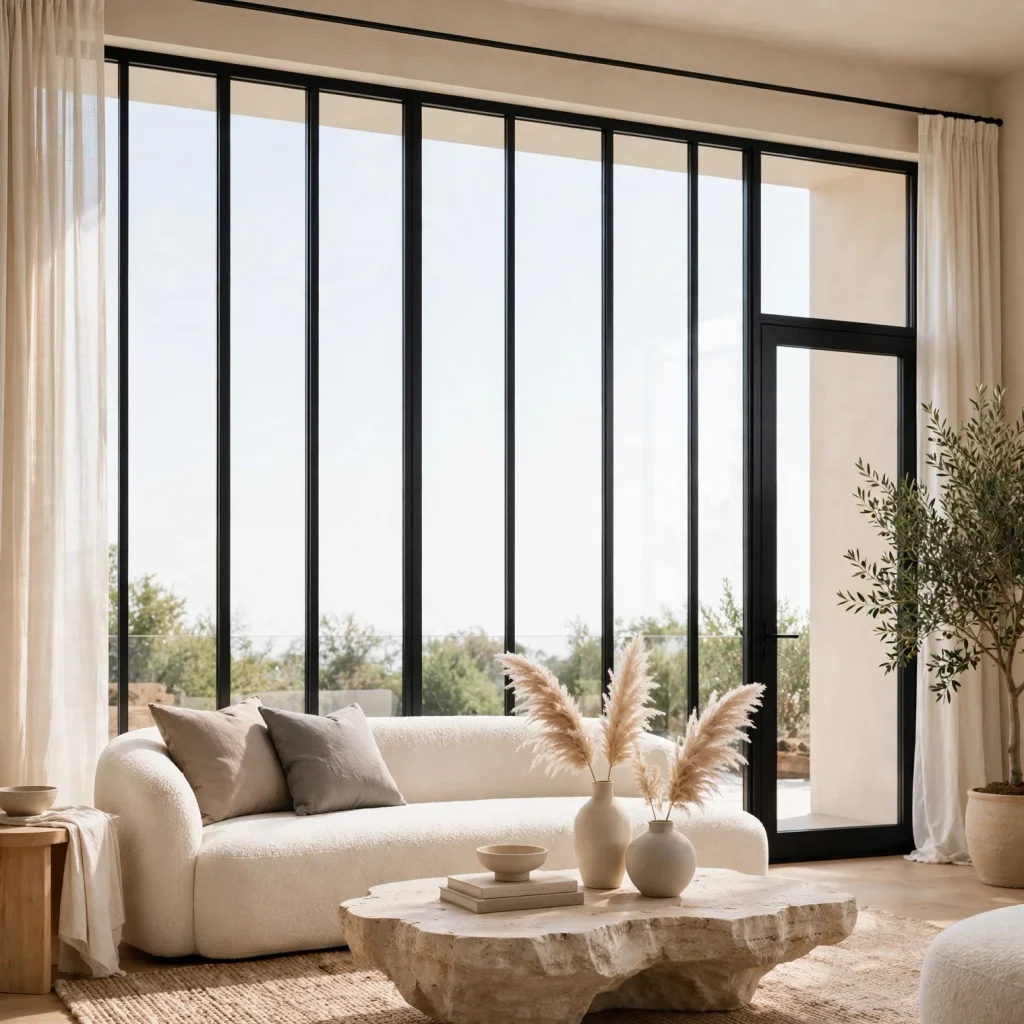
Minimal black window frames, whether original to the home’s architecture or achieved through a frame overlay product, reinforce a modern living room’s clean geometric language from the room’s largest architectural feature. This detail works particularly well in rooms with large windows or sliding glass doors, where the frame’s thin black lines create a strong graphic contrast against lighter walls. Pairing black frames with simple, unfussy window treatments keeps the focus on the architecture itself rather than competing decoration.
14. Statement Pendant Cluster
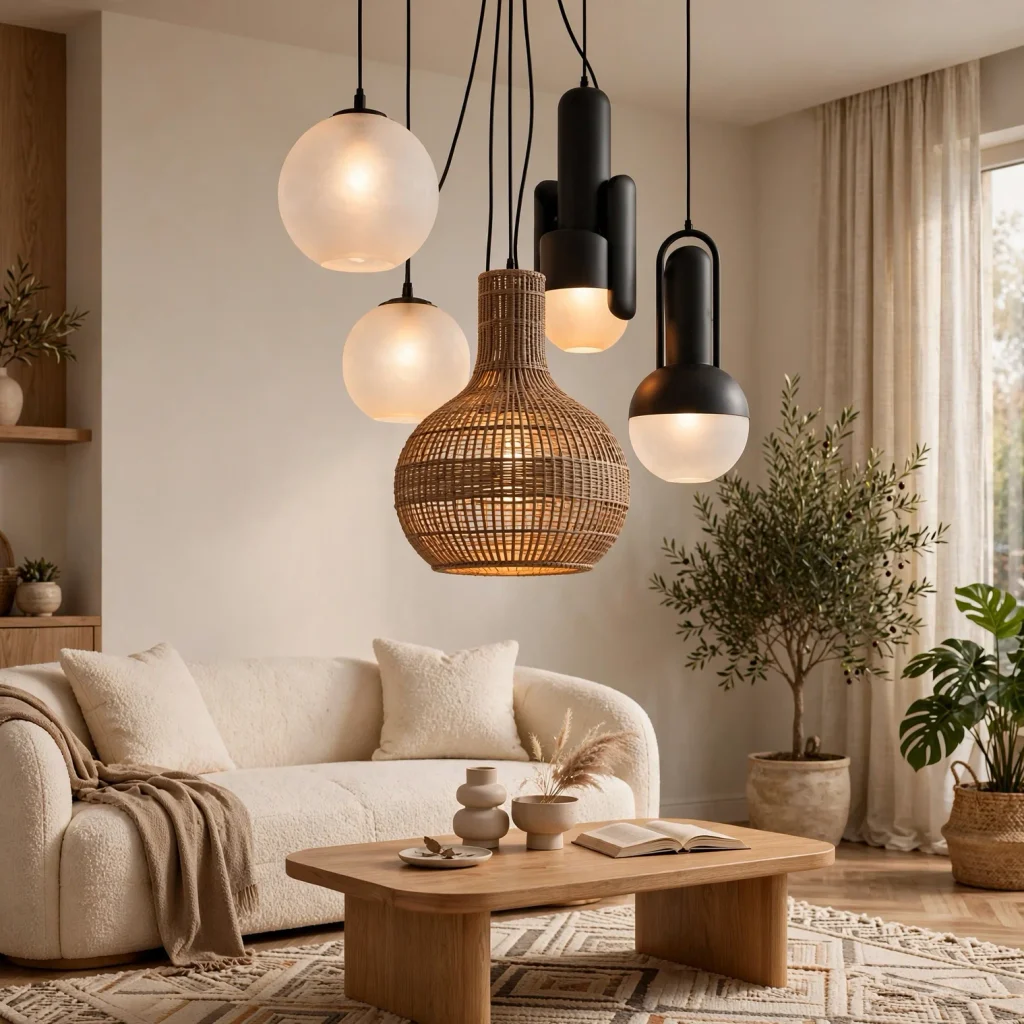
A cluster of three to five pendant lights, grouped at varying heights over a seating area or console rather than a single central fixture, gives a modern living room a sculptural lighting feature with more visual interest than one fixture alone. Glass, matte black metal, or a mix of both in a cohesive shape family keeps the cluster from looking randomly assembled. This idea works particularly well in rooms with higher ceilings, where a single fixture would otherwise look small relative to the space.
15. Indoor-Outdoor Sliding Glass Wall
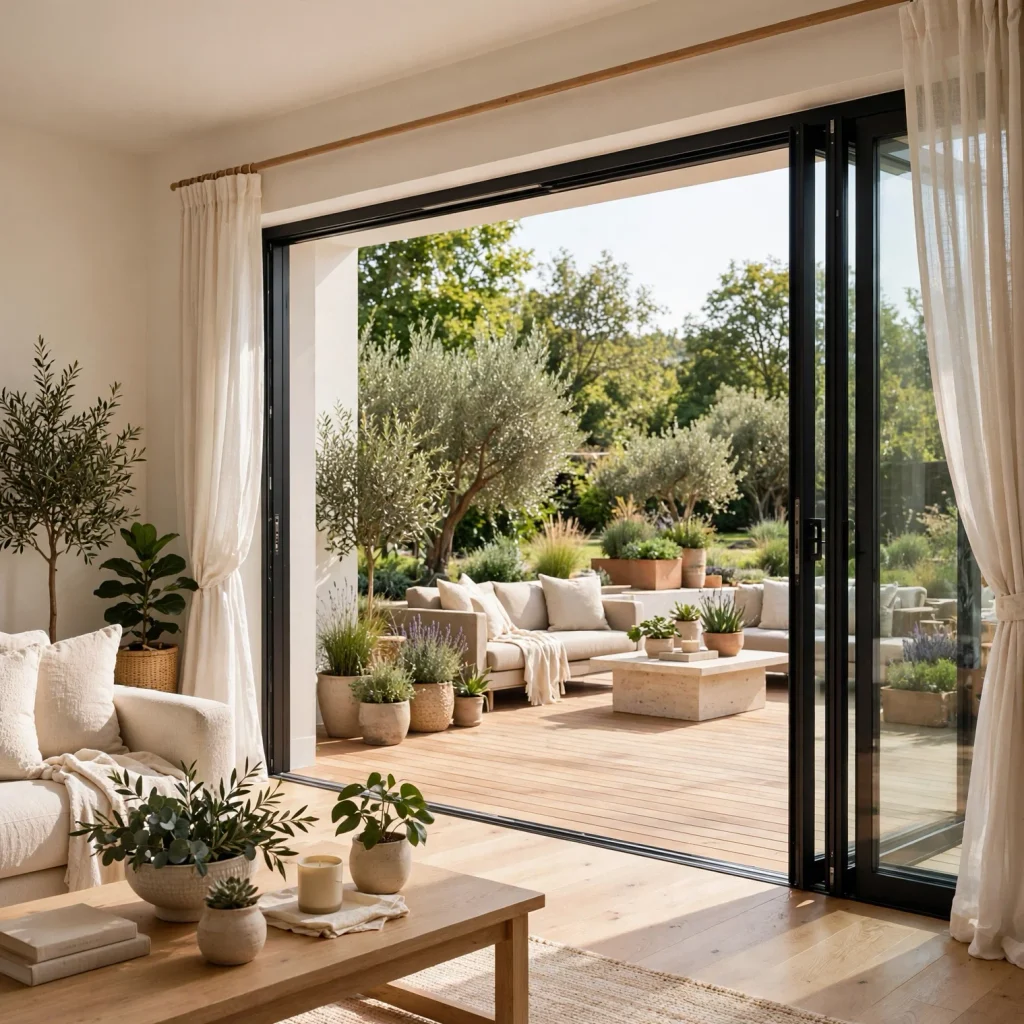
An indoor-outdoor sliding glass wall, replacing a standard window or door with a full-width glass panel system, extends a modern living room’s sense of space by blurring the line between interior and exterior areas. This feature works best in homes with a patio, deck, or garden directly adjacent to the living room, allowing the space to function as a single larger area during warmer months. Minimal black or bronze framing on the glass panels keeps the architectural detail consistent with the room’s overall material palette.
Shop the Look
Start with a low-slung performance-fabric sofa in charcoal, a geometric wool area rug, and a concrete coffee table with clean rectangular lines. Add a floating walnut media console, a sculptural matte black arc floor lamp, and a cluster of three glass pendant lights over the seating area. Finish with a slatted white oak wall panel behind the television and a single oversized abstract art piece in a limited color palette.
Common Mistake to Avoid
A common mistake in a modern living room is mixing too many finishes, chrome, brass, matte black, and glass, without a clear hierarchy, which undermines the cohesive, intentional look the style depends on. Limiting metal finishes to one or two throughout the room, and reserving glossy materials like polished stone or glass for a single feature piece, keeps the space feeling curated rather than assembled from unrelated trends. Consistency in material choice does more for a modern look than any single statement piece.
FAQs
What makes a living room look modern versus contemporary?
A modern living room typically references the specific design principles from the mid-20th century, including clean lines, functional furniture, and minimal ornamentation, while a contemporary living room reflects whatever styles are currently popular and can shift over time. In practice, the terms are often used interchangeably in casual conversation, but a true modern design tends to include specific material and furniture choices rooted in that mid-century design language. Both styles generally favor simplicity over heavy decoration.
What colors work best in a modern living room?
Neutral tones like charcoal, warm white, and taupe form the base of most modern living room palettes, often paired with one or two deeper accent colors like forest green or navy used sparingly through furniture or art. Black is frequently used as an accent through window frames, lighting, or hardware rather than as a dominant wall color. Bright or highly saturated colors are generally avoided in favor of a more restrained, cohesive palette.
Should a modern living room have a lot of furniture?
A modern living room generally works better with fewer, more considered furniture pieces than a room filled with many smaller items, since the style’s clean lines depend on visible negative space to read correctly. Multi-functional furniture, like a storage ottoman or a console with built-in cable management, helps keep the piece count low without sacrificing practical function. Overcrowding a modern room with too many decorative accessories tends to undercut the intended clean, uncluttered look.
Is wood furniture appropriate in a modern living room?
Wood furniture fits well in a modern living room, particularly in warmer tones like walnut and white oak, which have become more common in current modern design than the cooler materials associated with earlier chrome-and-glass interiors. The key is choosing simple, unornamented silhouettes rather than heavily carved or traditional wood furniture styles. Pairing wood with metal accents in matte black or brass also keeps the material feeling current rather than dated.
How do I add warmth to a modern living room without losing the style?
Introducing natural materials like wood, wool, and linen, along with warmer lighting temperatures and a slightly softer color palette, adds warmth to a modern living room without compromising its clean lines. Textured elements, such as a boucle throw pillow or a wool rug, provide tactile warmth without introducing pattern or clutter. Layered lighting, rather than a single bright overhead source, also does significant work toward making a modern room feel inviting rather than sterile.
Conclusion
A modern living room comes together through consistent material choices, clean furniture lines, and a restrained approach to color and decoration rather than any single trendy piece. Save this guide to Pinterest for reference while planning your next update, and check out our related post on layered lighting ideas for living rooms to round out the space’s overall function.