14 Stylish Curtains Living Room Ideas for Every Window Style
Picking curtains for a living room involves more than matching a fabric to the sofa, since length, hanging height, and layering all affect how the finished room actually feels. This guide covers fifteen practical curtain ideas, from linen sheers to blackout-lined drapery, with the sizing and hardware details needed to get a tailored result on the first attempt. Whether the goal is softer daylight or a more dramatic, floor-to-ceiling look, these ideas apply to nearly any window shape.
Trend & Background
Curtain trends for living rooms have moved toward taller, fuller panels that extend from ceiling to floor rather than stopping just below the window frame, a shift driven by the popularity of European-style hanging techniques on home design platforms. Natural fibers like linen and cotton have also overtaken heavier synthetic blends, reflecting a broader preference for textured, relaxed fabrics over stiff, formal drapery. At the same time, layering sheers under heavier panels has become more common as homeowners look for flexible light control throughout the day rather than a single fixed treatment.
Key Takeaways
- Curtains living room choices depend heavily on window height, ceiling height, and how much natural light the room needs to filter.
- Hanging curtain rods higher and wider than the window frame is one of the simplest ways to make a room feel larger.
- Layering sheers with heavier drapery gives a living room both privacy and daytime light control without sacrificing either.
- Fabric weight and lining matter as much as color, especially in rooms with strong afternoon sun or street-facing windows.
1. Floor-to-Ceiling Linen Panels
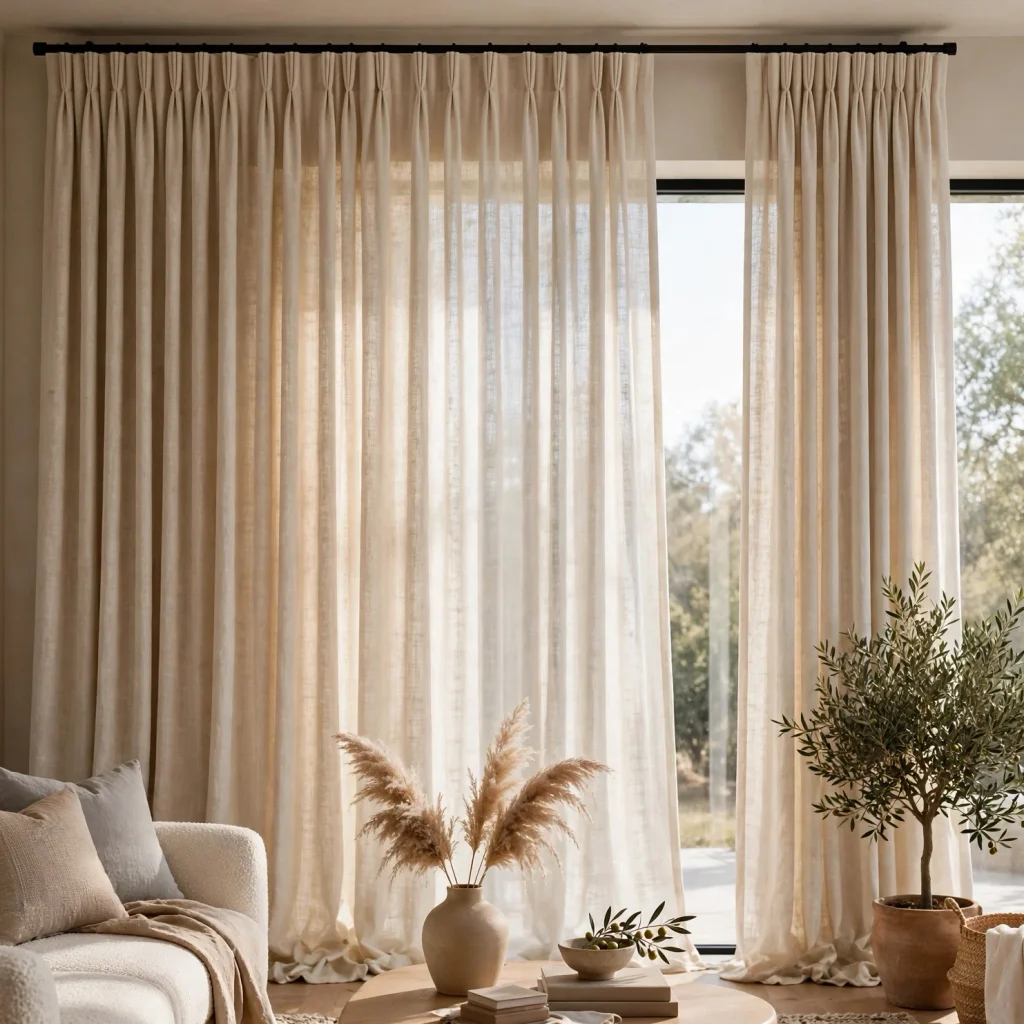
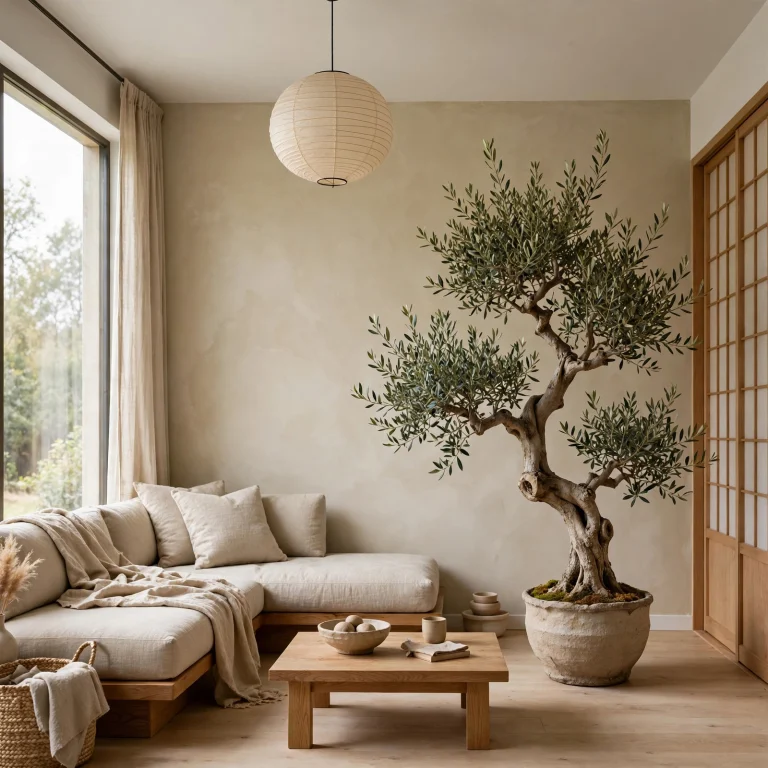
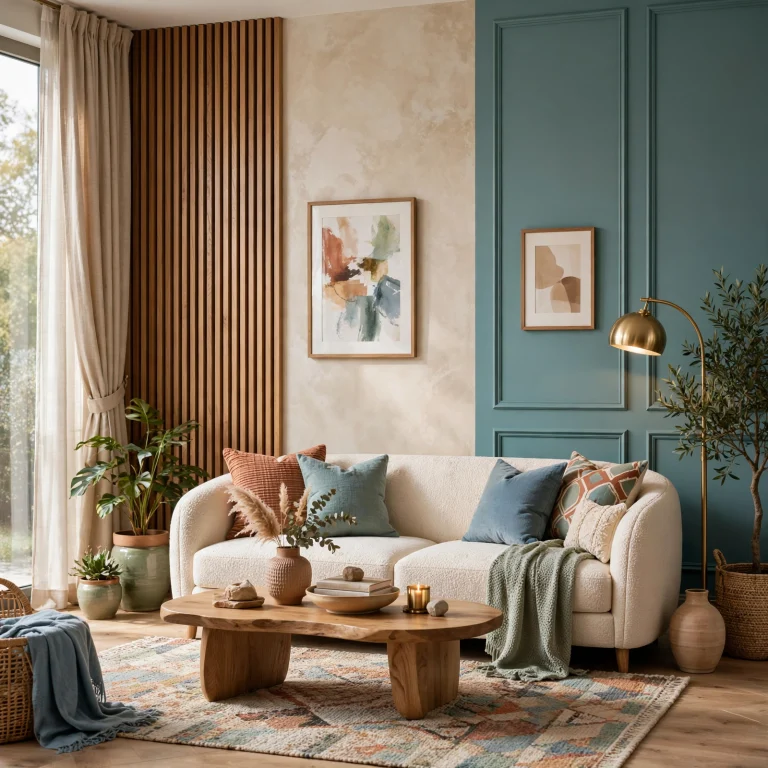
Floor-to-ceiling linen panels, hung just below the ceiling line rather than directly above the window frame, make a living room’s walls appear taller and the window itself look larger than its actual dimensions. A natural or lightly bleached linen in an off-white or oatmeal tone filters daylight softly while maintaining a relaxed, textured look. Mounting the rod six to eight inches beyond each side of the window frame also lets the panels fully clear the glass when open, maximizing the light that enters the room.
2. Layered Sheer and Blackout Panels
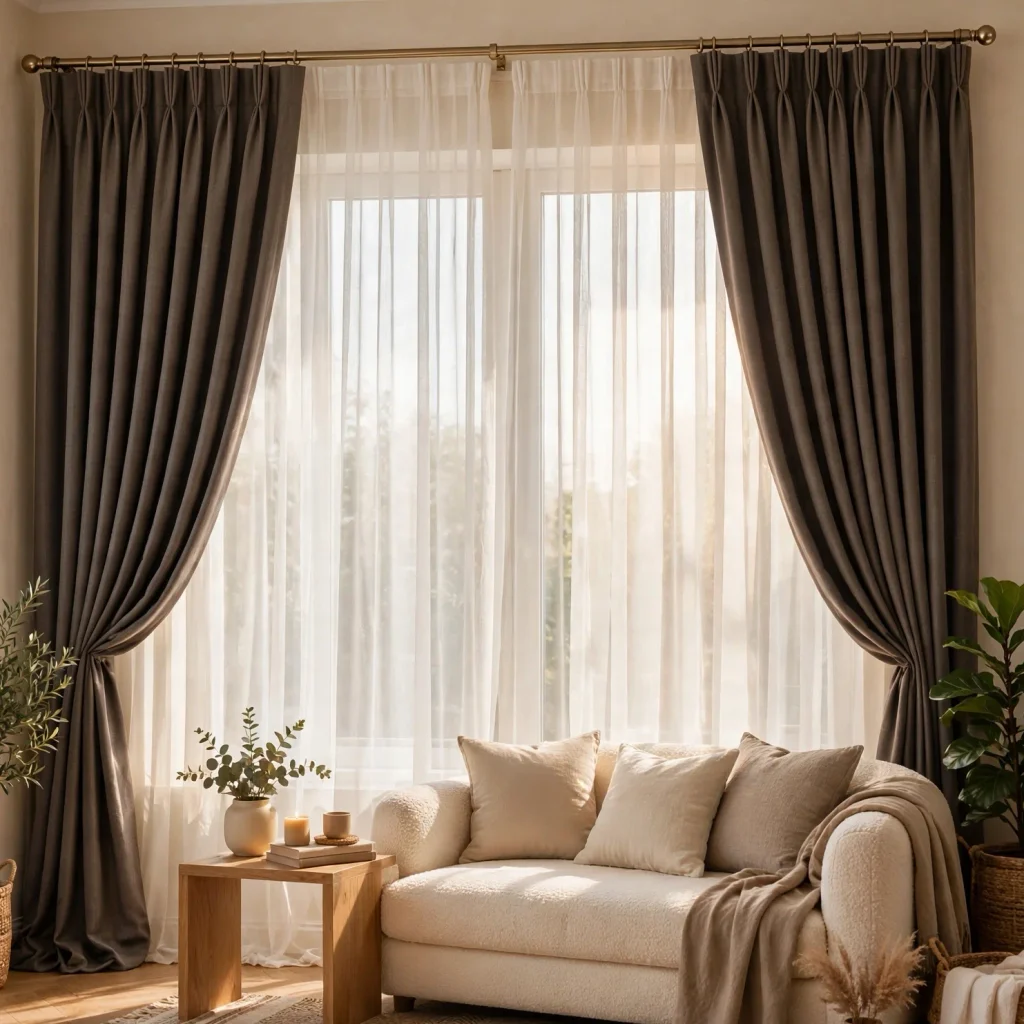
Layering a sheer panel beneath a heavier blackout or room-darkening curtain gives a living room flexible light control, allowing daylight to filter through the sheer alone or blocking it out entirely with both layers closed. A double curtain rod, or a single rod with a sheer track built in, keeps the two layers from tangling when opened and closed independently. This setup works particularly well in living rooms that double as a media or nap space during the day.
| Layer | Fabric | Function |
| Inner | Sheer voile | Daytime privacy, filtered light |
| Outer | Blackout linen blend | Evening privacy, light block |
3. Pinch Pleat Drapery
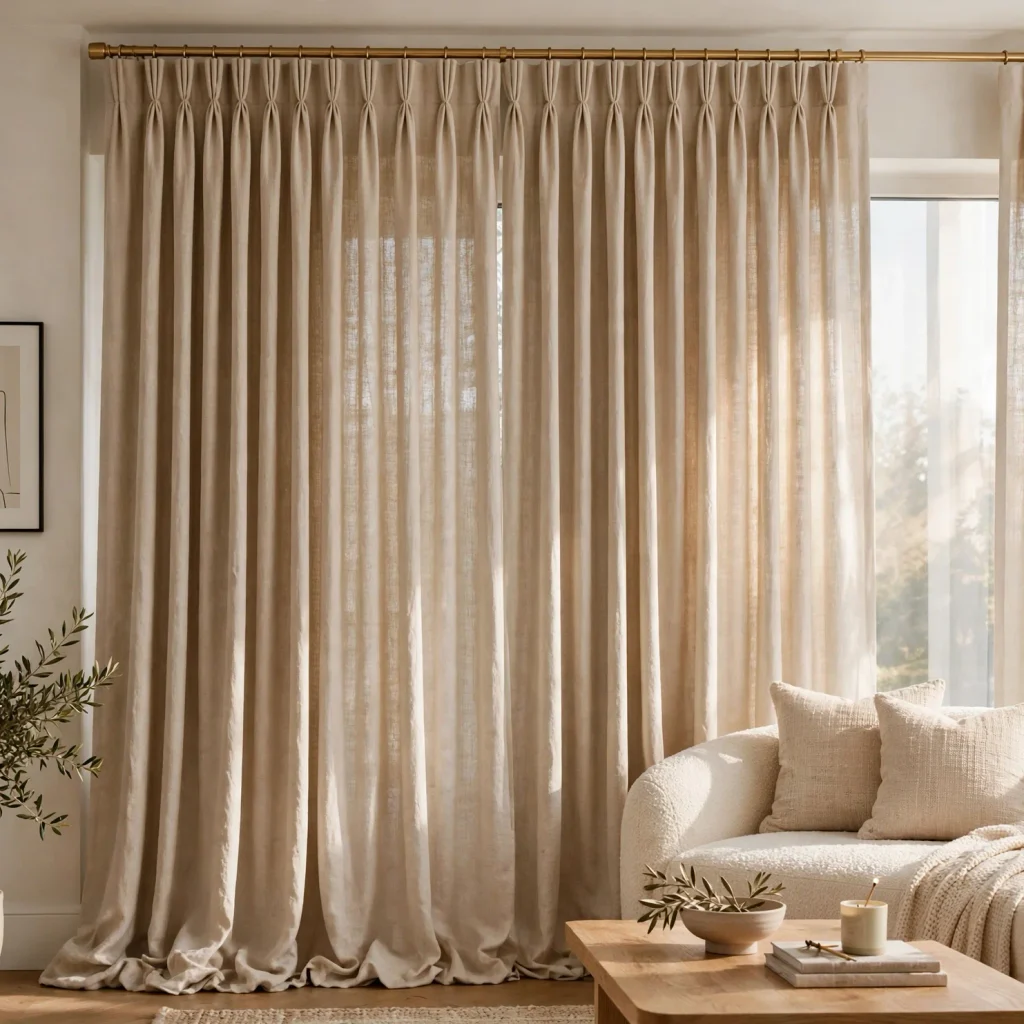
Pinch pleat drapery, with fabric gathered into tailored triple folds at the top of each panel, gives a living room a more formal, structured look than a simple rod-pocket curtain. This style holds its shape well when opened and closed, which matters in rooms where curtains are adjusted throughout the day. A cotton-linen blend in a mid-weight fabric keeps the pleats crisp without the stiffness of a fully synthetic material.
4. Bay Window Curtain Track
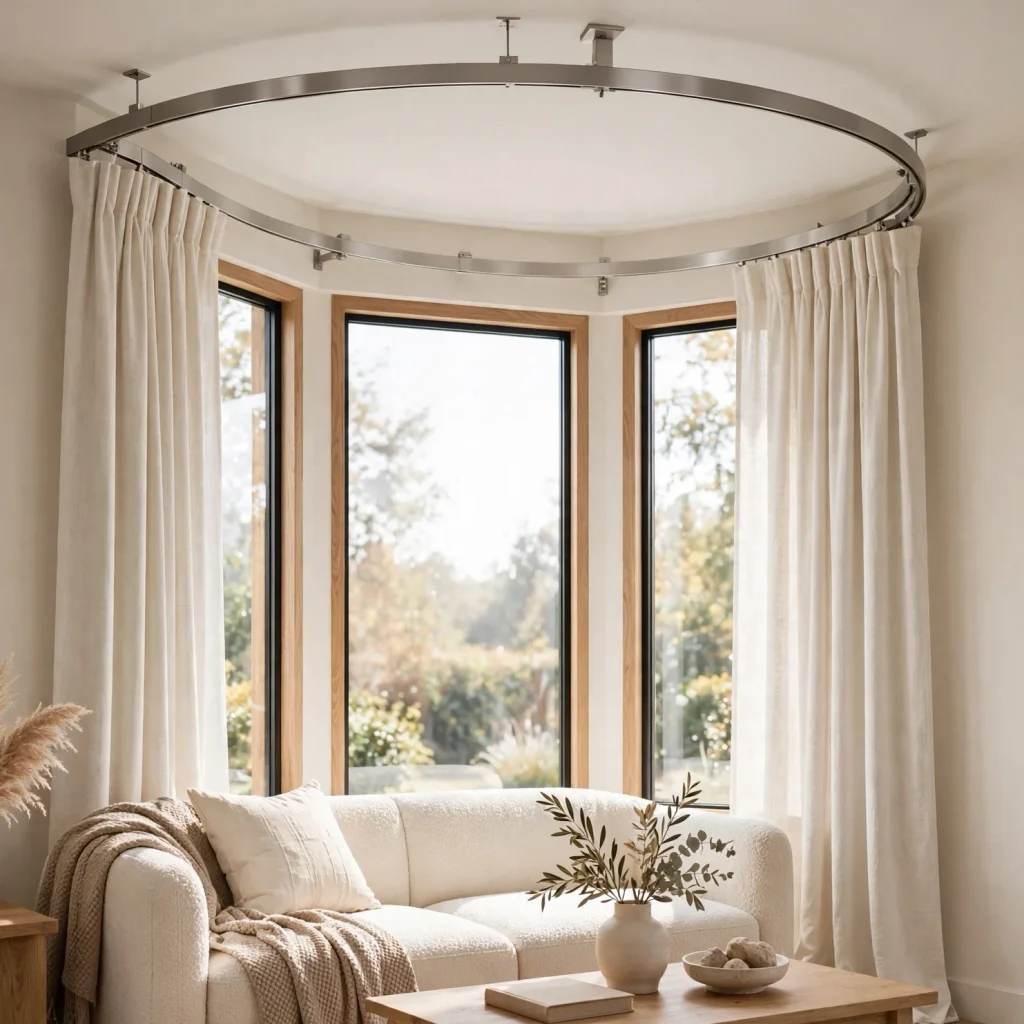
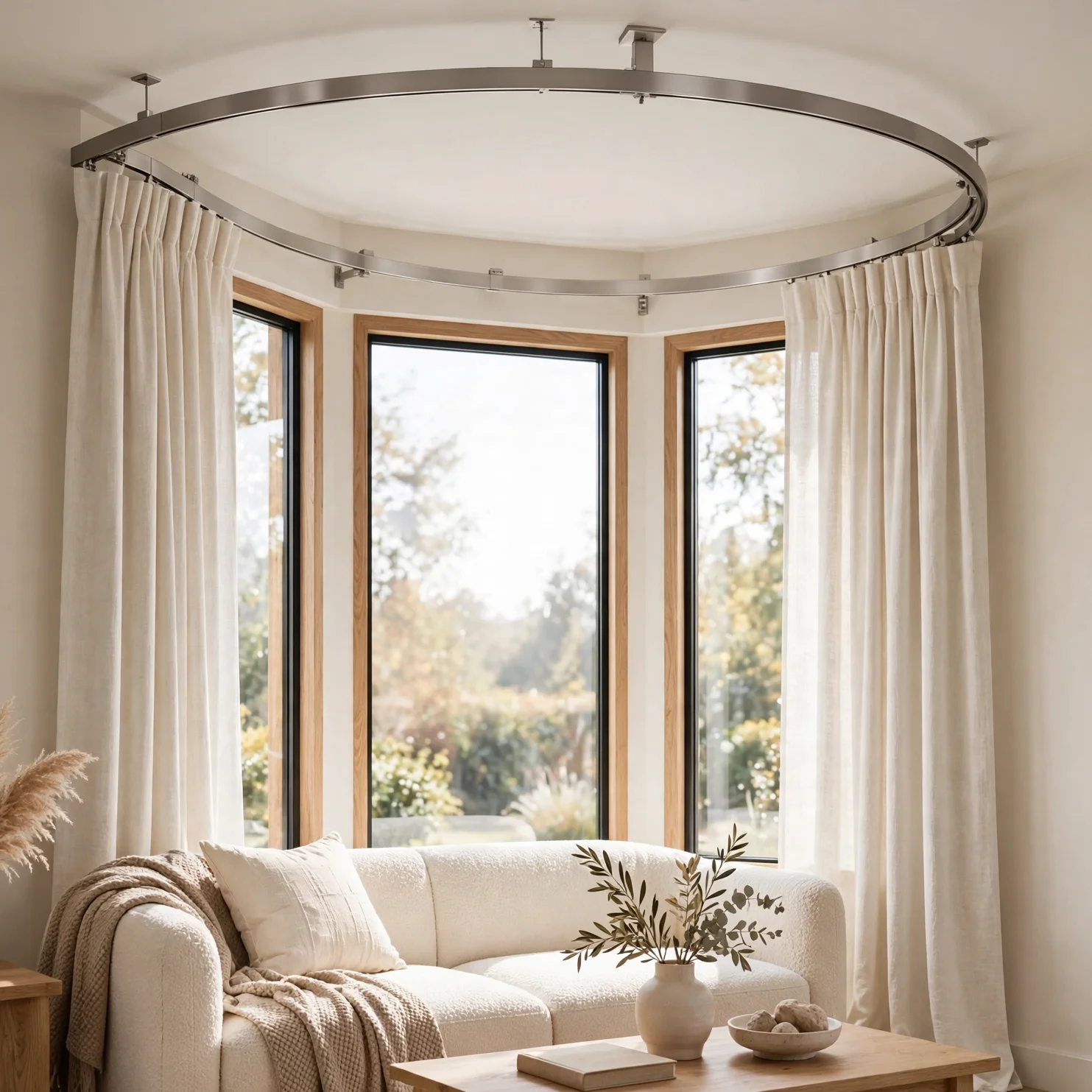
A curved or angled curtain track designed specifically for bay windows allows a single continuous curtain to follow the window’s shape rather than breaking into separate panels for each angle. This setup gives a living room a cleaner, more cohesive look and better light and privacy coverage across the full window area. Measuring each angle of the bay separately before ordering a custom track prevents gaps or overlap where the sections meet.
Make your space more functional with these minimalist living room ideas for choosing and arranging the right pieces.
5. Grommet-Top Curtains
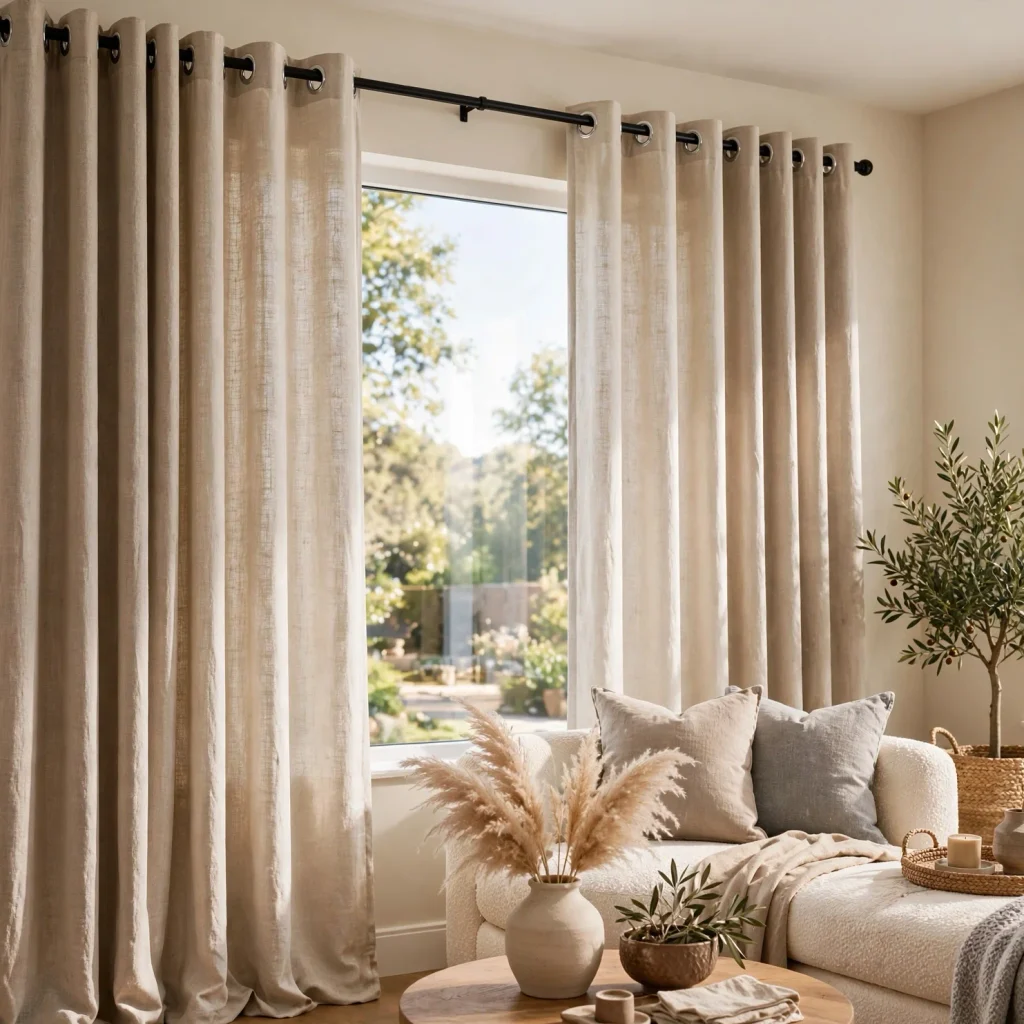
Grommet-top curtains, with large metal rings sewn directly into the fabric header, create soft, even folds when hung and slide easily along the rod without the need for separate rings or hooks. This style suits a more casual, contemporary living room better than a pleated or rod-pocket treatment. A medium-weight cotton or linen blend holds the grommet folds best, since fabric that’s too lightweight can look flat rather than gently draped.
6. Wide Rod Mounting
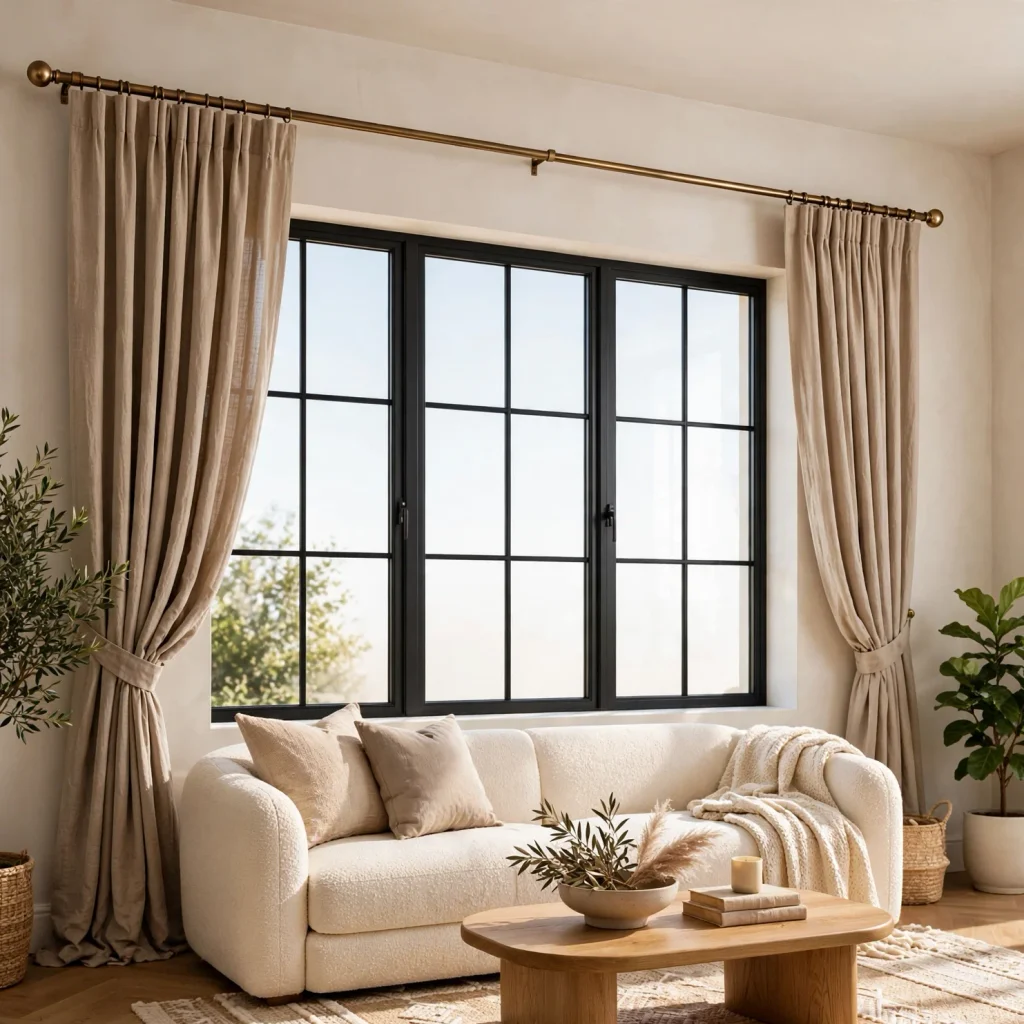
Mounting a curtain rod six to twelve inches beyond each side of the window frame, rather than directly at its edges, is one of the simplest ways to make a living room’s windows look larger without any construction. This wider mount also allows curtains to fully clear the glass when open, letting in the maximum amount of natural light during the day. A rod length that extends well past the frame reads more intentional than one sized to match the window exactly.
7. Textured Boucle Curtains
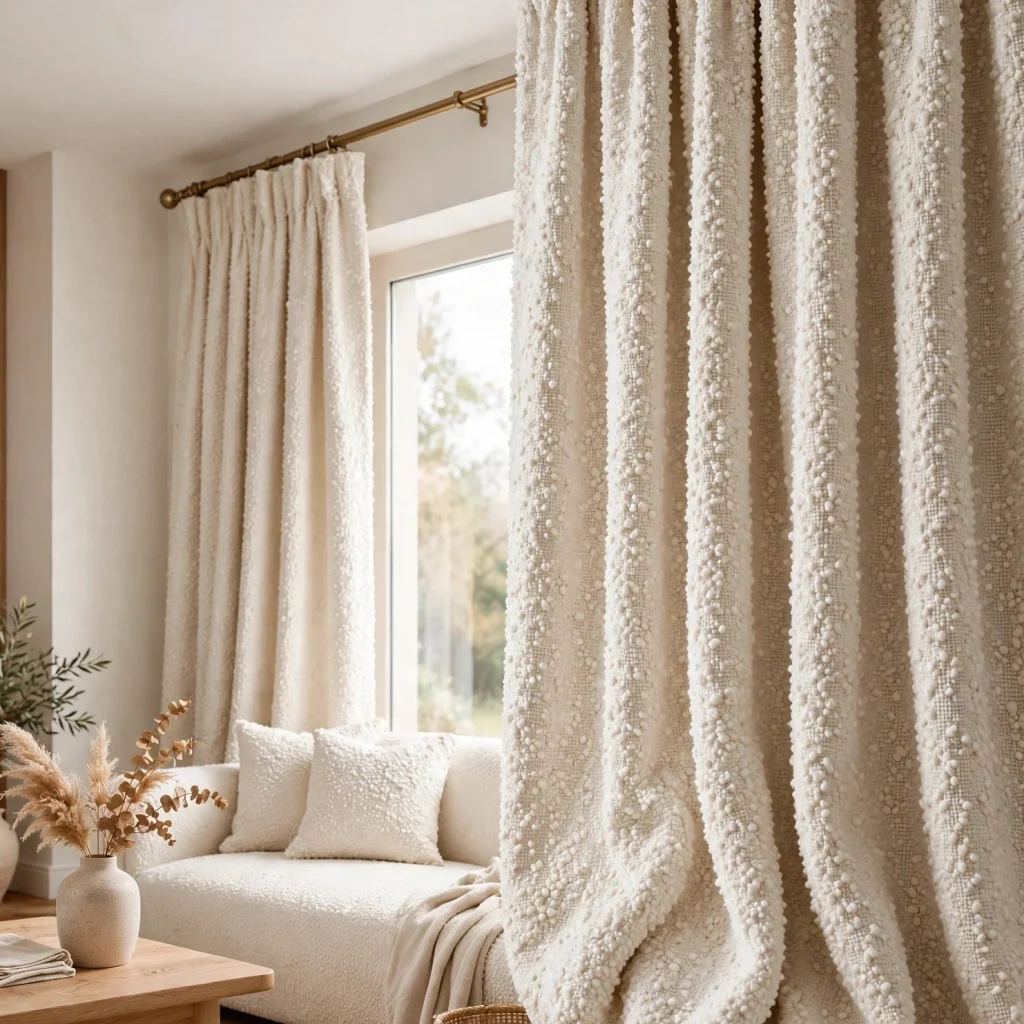
Textured boucle curtains bring the same looped, tactile quality found in boucle upholstery to a living room’s windows, adding dimension that a flat fabric can’t provide. This treatment works especially well in a room already leaning into a warm, textural material palette with similar sofa or chair fabrics. Because boucle tends to be heavier than linen or cotton, it’s better suited to rooms that want a more substantial, insulating drape rather than a light, airy feel.
8. Café Curtain Half-Panels
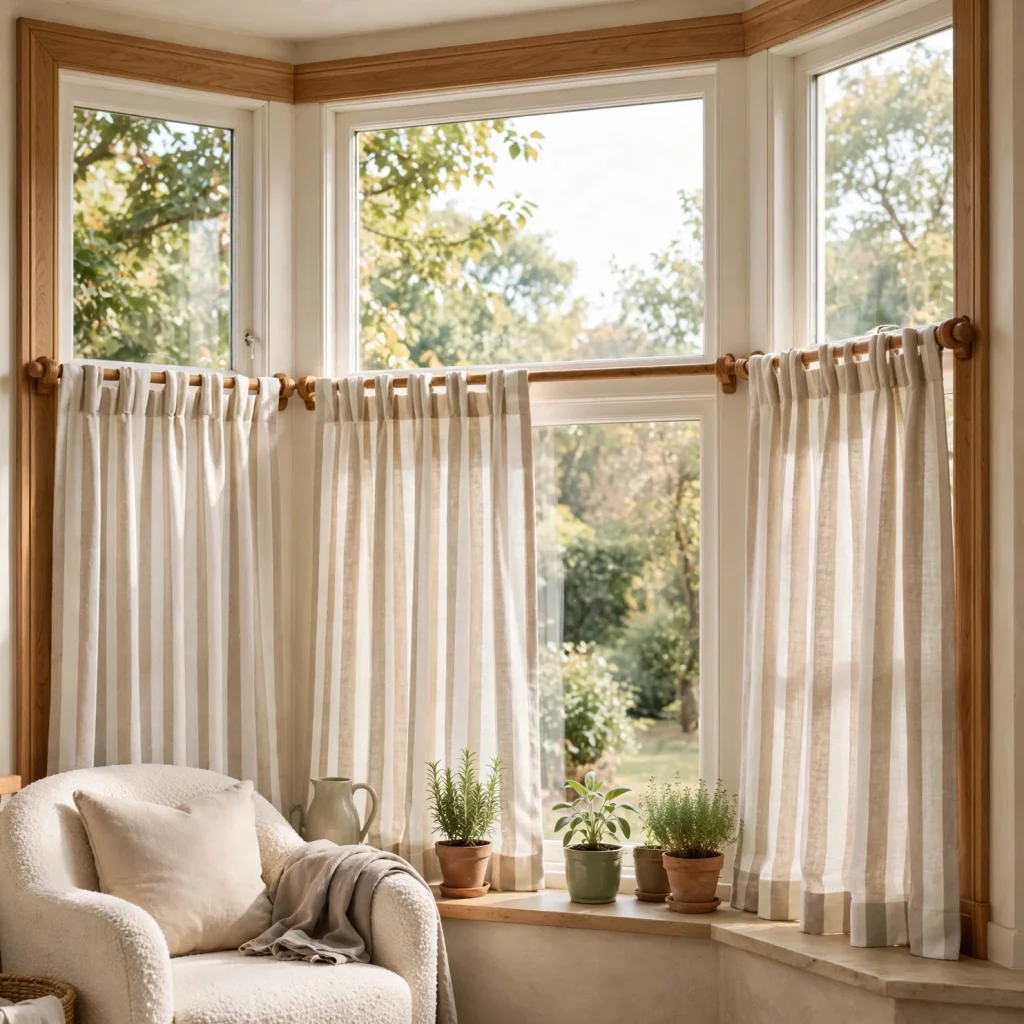
Café curtains, which cover only the lower half of a window on a rod mounted at the midpoint, offer privacy from street level while still allowing full daylight through the upper portion of the glass. This style suits a living room with a street-facing window at ground level better than full-length panels, which can feel unnecessarily heavy for a partial-privacy need. A lightweight cotton or linen in a solid neutral keeps the look simple rather than overly cottage-style.
9. Roman Shade and Curtain Combination
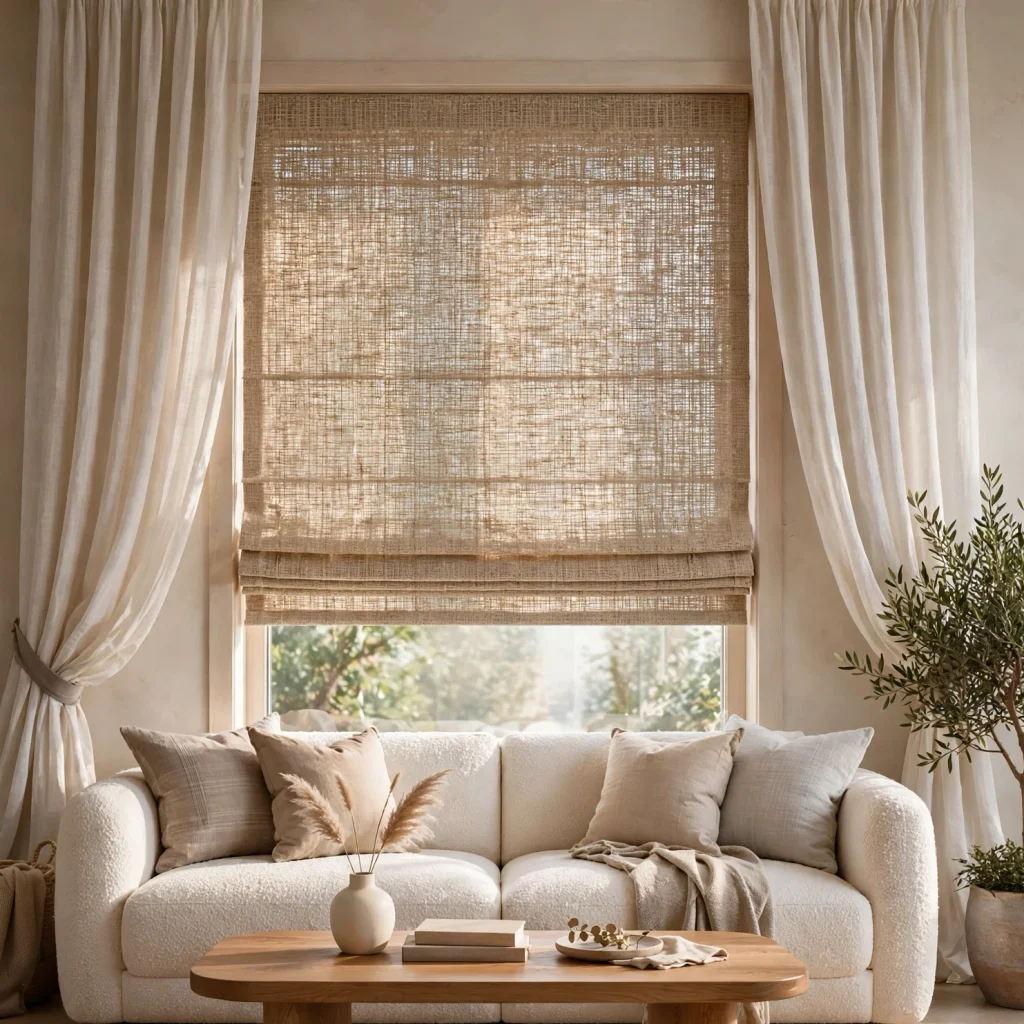
Pairing a fitted roman shade with side curtain panels gives a living room both a tailored, structured base layer and the softness of fabric framing the window. The roman shade handles the primary light and privacy control, while the curtain panels remain mostly decorative and can be left open on either side. This combination works well in living rooms with large windows where a curtain alone would need excessive fabric to fully close.
10. Dark Contrast Drapery
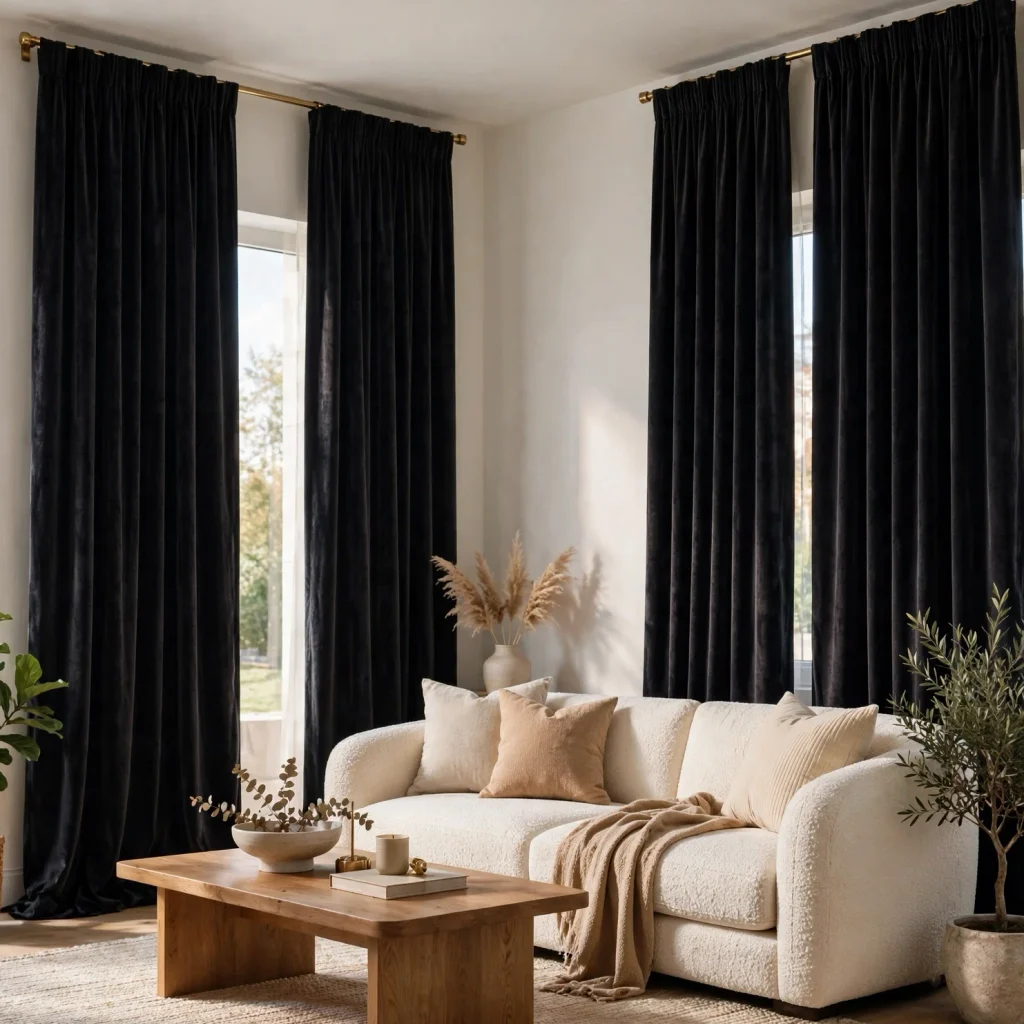
Dark contrast drapery, in a deep charcoal, forest green, or navy linen, adds a dramatic focal point to a living room with predominantly light walls and furniture. This approach works best when the color echoes another element already in the room, such as a dark wood coffee table or a patterned rug, so the curtains don’t feel disconnected from the rest of the palette. Floor-to-ceiling length is particularly important with darker fabrics, since a shorter length can make the dark tone feel heavier and less intentional.
11. Tie-Back Curtain Styling
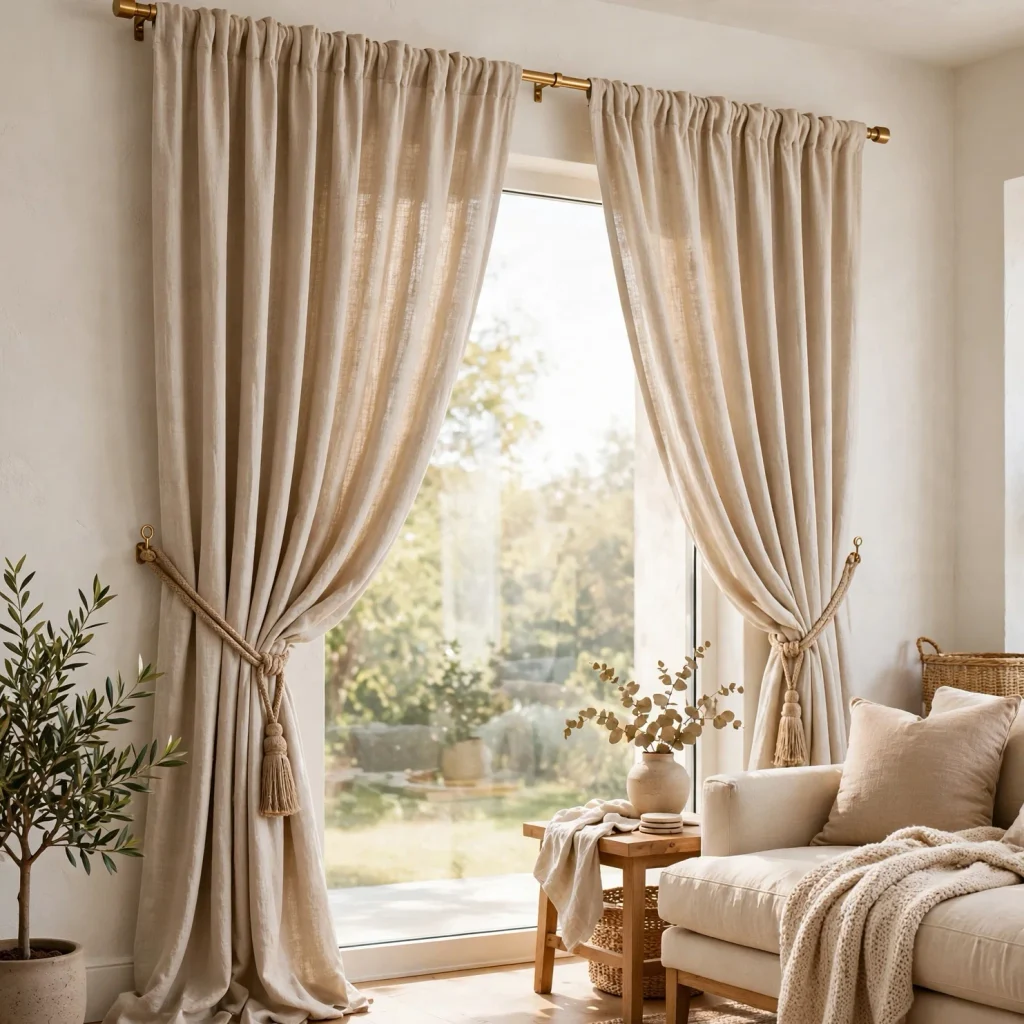
Tie-back curtain styling, using a fabric or rope tie to hold each panel open against the wall during the day, keeps a living room’s curtains from blocking light or windowsill space when full closure isn’t needed. A tie in a contrasting or metallic finish adds a small decorative detail without requiring additional hardware. This styling works particularly well with longer, fuller panels that puddle slightly at the floor, since the tie-back also helps control excess fabric.
12. Solid Neutral Linen with Colored Trim
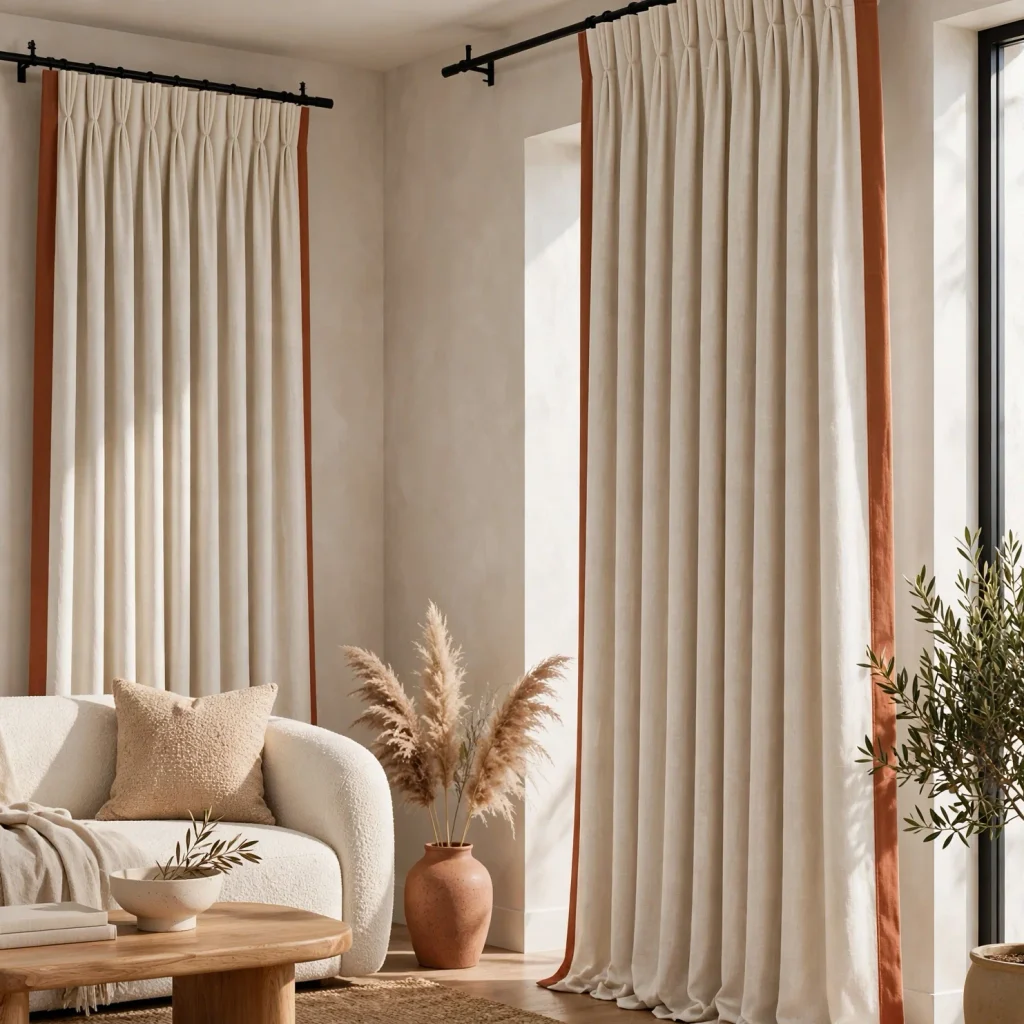
A solid neutral linen curtain with a contrasting colored trim along the leading edge adds a subtle custom detail to a living room without committing to a bold pattern across the entire panel. A trim in terracotta, navy, or forest green against an oatmeal or cream base ties the curtains to smaller accent colors already used elsewhere in the room. This detail reads as more tailored and considered than a plain panel, particularly in more formal or traditional living room designs.
13. Double-Width Fullness Panels
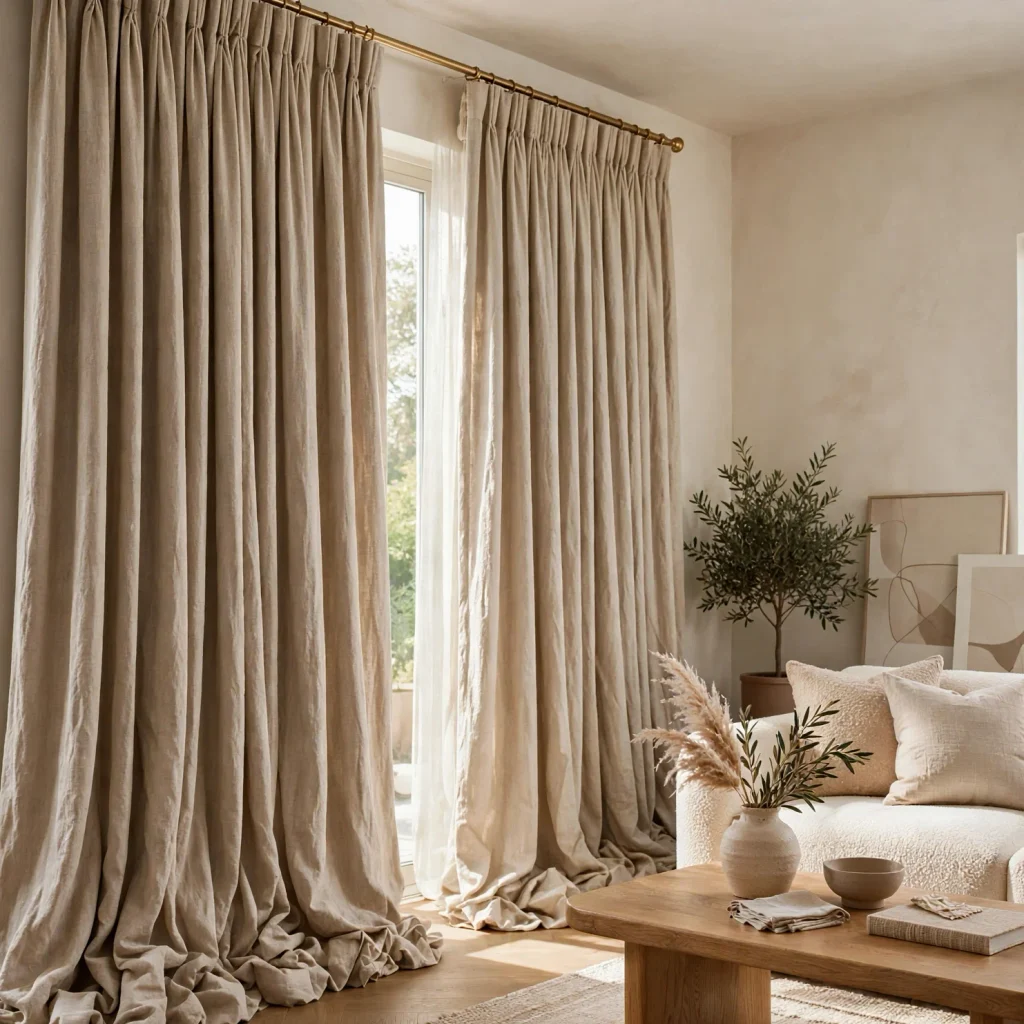
Ordering curtain panels at double or two-and-a-half times the width of the window, rather than a single flat width per side, gives a living room’s curtains a fuller, more luxurious drape when closed. This extra fullness is one of the most common differences between curtains that look tailored and those that appear thin or stretched across the rod. While it does increase fabric cost, the visual difference is significant enough that most higher-end living room curtain installations use this ratio as a baseline.
14. Neutral Linen with Blackout Lining
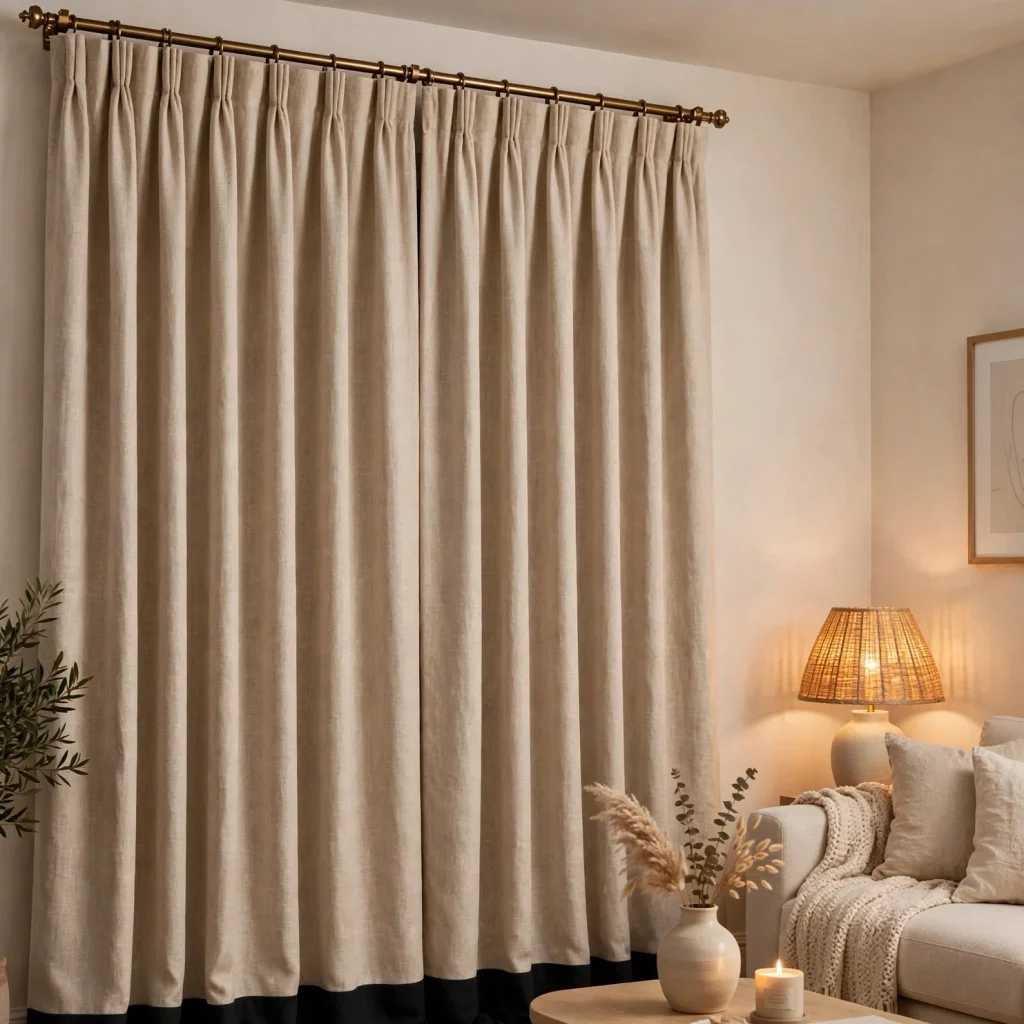
Neutral linen curtains with a hidden blackout lining sewn into the back of the panel combine the soft, textured look of natural linen with full light-blocking function, without the visible layering of a separate blackout curtain. This option suits a living room that doubles as a media or home theater space but still wants a soft, daytime-friendly appearance when the curtains are open. The lining also adds body to lightweight linen, helping the panels hang and fold more like a heavier fabric.
Shop the Look
Start with floor-to-ceiling oatmeal linen panels with a hidden blackout lining, a set of sheer voile inner panels for daytime privacy, and a matte black or brushed brass curtain rod mounted wide beyond the window frame. Add fabric tie-backs in a coordinating metallic tone and, for larger windows, consider a motorized track for easier daily operation. Finish with a contrasting trim in terracotta or forest green if the room’s existing palette calls for a small accent detail.
Common Mistake to Avoid
One of the most common mistakes with living room curtains is hanging them at a length that stops a few inches above the floor, which tends to look unfinished rather than intentional in most rooms. Curtains should either just graze the floor, break slightly like a pair of trousers, or puddle by an inch or two, depending on the desired formality. Measuring from the rod height down to the floor before ordering, rather than relying on standard 84- or 96-inch panel lengths, prevents this common sizing error.
FAQs
How long should curtains be in a living room?
Living room curtains generally look best either just grazing the floor or with a slight break, similar to how trousers fall over shoes, which typically means measuring from the rod to about half an inch above the floor. Puddling, where an extra inch or two of fabric pools on the floor, works well in more formal rooms but can look messy in high-traffic areas. Standard panel lengths of 84, 96, or 108 inches often need hemming to fit a specific room’s rod height and ceiling correctly.
Should living room curtains match the wall color?
Curtains don’t need to match the wall color exactly, and in many cases a close match can make a room feel flat by removing definition around the windows. A tone-on-tone approach, where the curtain is a shade lighter or darker than the wall, adds subtle depth without introducing a jarring contrast. Bolder contrast curtains work well too, particularly in rooms that already have a light, neutral wall color and could use a stronger focal point.
What fabric is best for living room curtains?
Linen and cotton-linen blends are currently the most popular choices for living room curtains, offering a relaxed, textured look that suits most contemporary design styles. Velvet and heavier blackout-lined fabrics work well in rooms that need more light control or added warmth in colder climates. Purely synthetic fabrics tend to look stiffer and less natural, so a natural fiber or blend is generally recommended when budget allows.
How wide should a curtain rod be for a living room window?
A curtain rod should typically extend six to twelve inches beyond each side of the window frame, which allows the curtains to fully clear the glass when open and lets in the maximum amount of natural light. For very large windows or a dramatic floor-to-ceiling look, extending the rod even further, up to the full width of the wall, is increasingly common. A rod sized to match the window frame exactly tends to look cramped once the curtains are hung and drawn open.
Do I need both sheers and heavier curtains in a living room?
Layering sheers with heavier curtains isn’t required, but it does offer more flexibility for controlling light and privacy throughout the day without needing to fully open or close a single heavier panel. Rooms with intense afternoon sun or street-facing windows tend to benefit most from this layered approach. In living rooms with consistent, moderate light and less privacy concern, a single well-chosen curtain panel is often sufficient without the added layer.
Conclusion
The right curtains living room choice comes down to matching fabric weight, length, and hanging height to how the room is actually used throughout the day. Save this guide to Pinterest for reference while planning your next window update, and check out our related post on layered lighting ideas for living rooms to round out the room’s overall daytime and evening feel.