15 Inspiring Small Living Room Decor Ideas That Don’t Overwhelm the Space
Decorating a small living room Decor Ideas comes with a different set of rules than a larger space, since every object competes for limited visual and physical room. This guide covers fifteen decor ideas specifically scaled for compact living rooms, from vertical art placement to space-conscious styling tricks, so the room feels finished rather than crowded. Each idea focuses on adding personality without adding clutter to a room where every square foot matters.
Trend & Background
Small living room decor has increasingly focused on scale and restraint rather than simply shrinking down decor choices used in larger spaces. Homeowners in compact apartments and starter homes have driven demand for decor that serves double duty, combining storage with styling or display with function, rather than purely ornamental objects. Vertical styling, using height instead of floor or surface area, has also become a bigger focus, reflecting the reality that small rooms often have more available wall space than usable floor space.
Key Takeaways
- Small living room decor works best when scaled down in both size and quantity, not just simplified in style.
- A limited, repeated color story across accessories keeps a compact room from feeling visually busy.
- Vertical decor, like tall art or hanging plants, adds personality without consuming floor or surface space.
- Multi-purpose decor pieces, such as a tray that also organizes clutter, do more work in a small room than purely decorative objects.
1. Oversized Single Art Piece
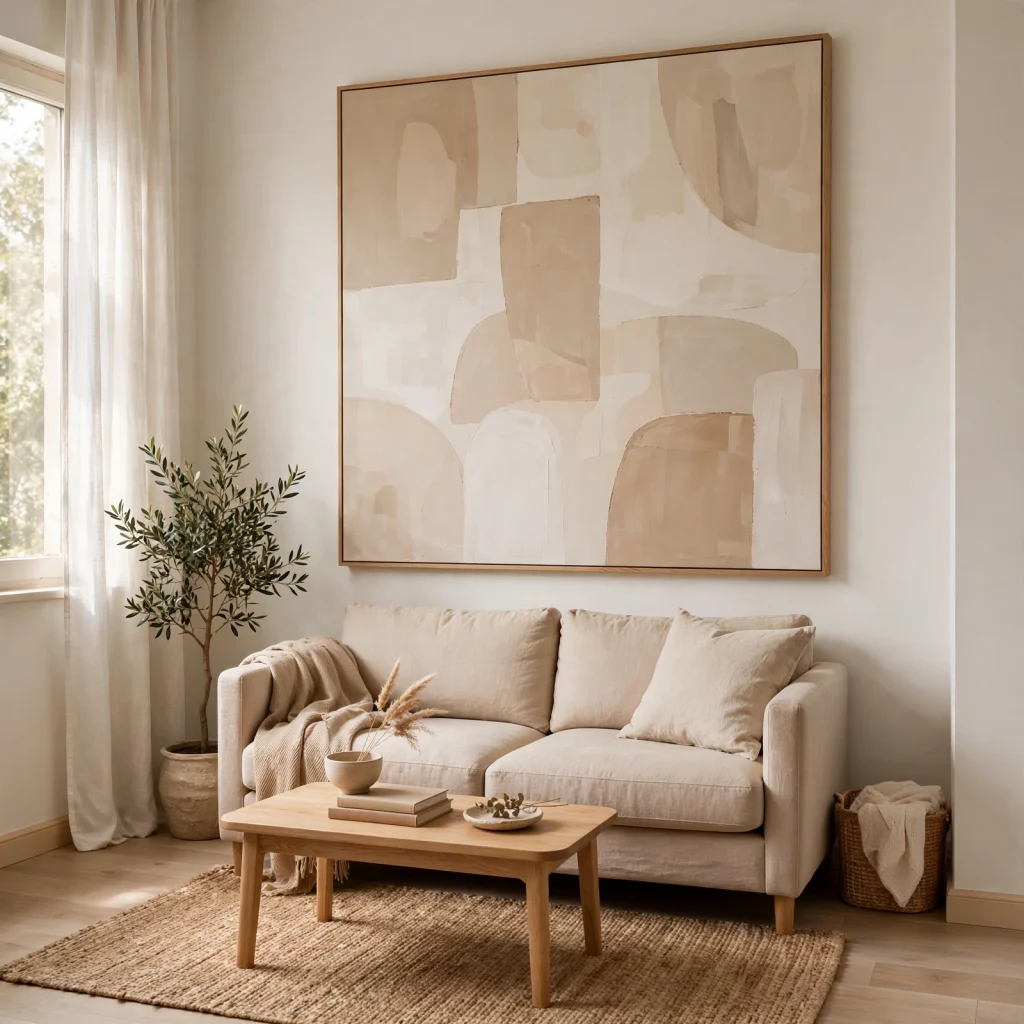
A single oversized art piece, rather than a gallery wall of several smaller frames, gives a small living room a strong focal point without adding the visual clutter that multiple frames can create in a tight space. Sizing the piece to roughly two-thirds the width of the sofa or wall it hangs above keeps the proportions intentional rather than accidental. This approach also simplifies the styling decision considerably, since one well-chosen piece does more work than assembling and balancing a multi-frame arrangement.
2. Vertical Trailing Plant
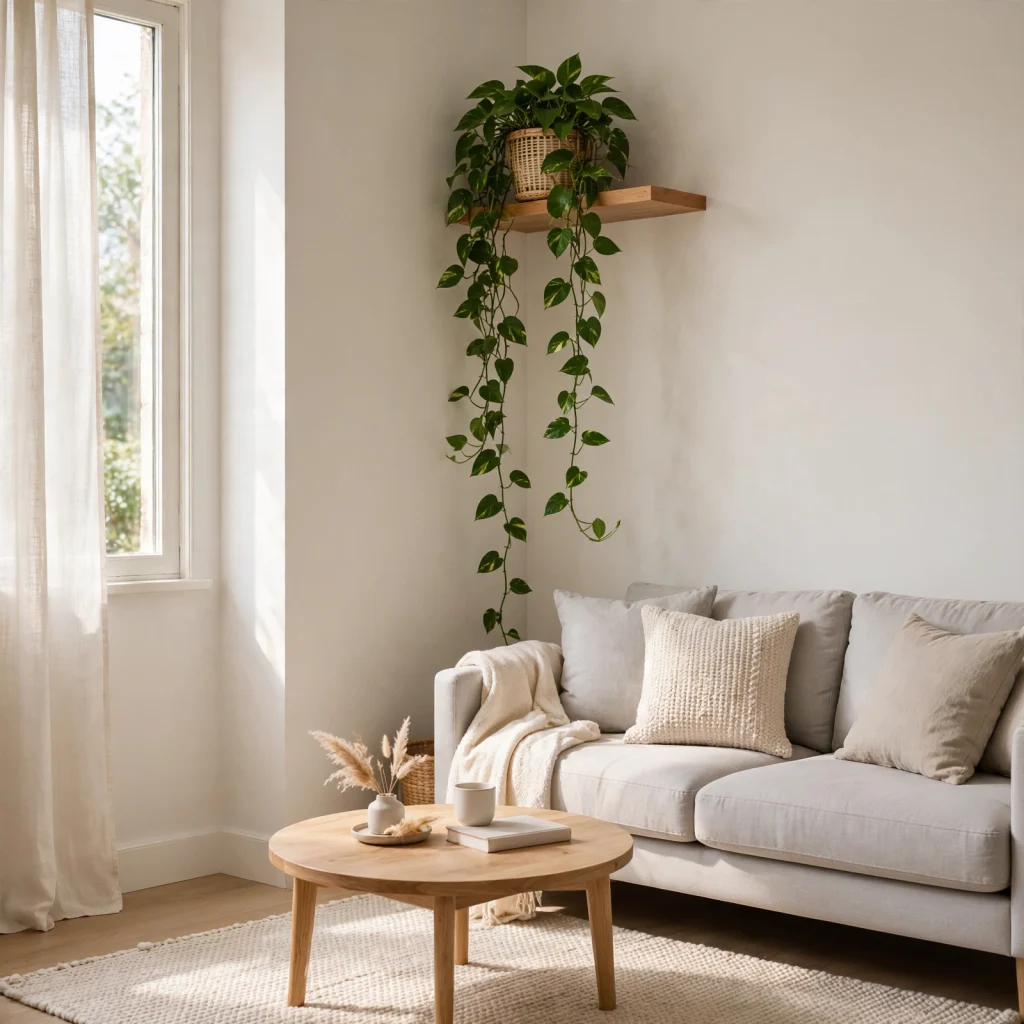
A trailing plant, such as pothos or string of pearls, hung from the ceiling or mounted on a wall bracket, adds greenery to a small living room without occupying any floor or surface space. Positioning it in an underused corner or beside a window lets the plant’s cascading growth fill vertical space that would otherwise sit empty. This idea works particularly well as an alternative to a large floor plant, which can feel disproportionately bulky in a compact room.
| Plant Type | Placement | Space Used |
| Trailing pothos | Wall bracket or hanging hook | Vertical only |
| String of pearls | Small hanging planter | Vertical only |
| Floor fig or palm | Corner floor space | Full floor footprint |
3. Slim Mirror Frame
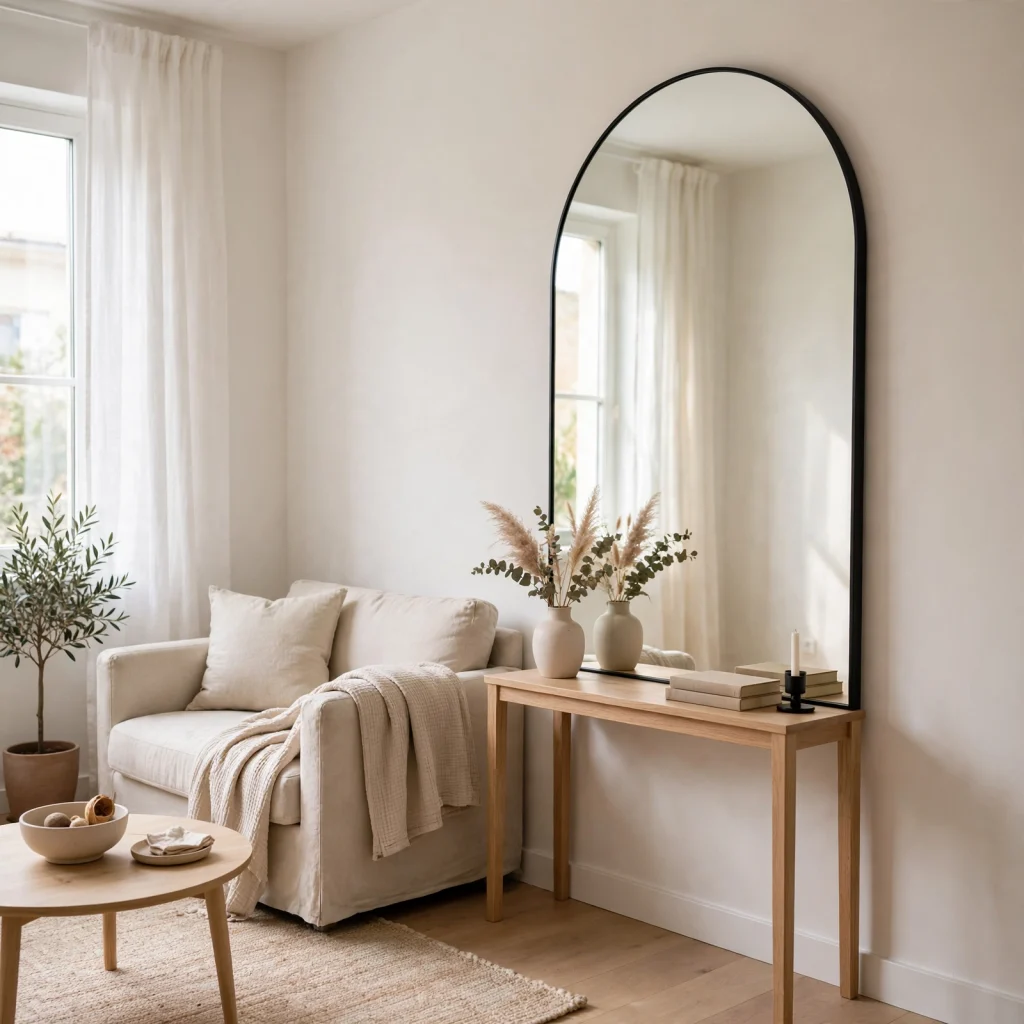
A slim-framed mirror, hung on the wall opposite a window, bounces light around a small living room and adds visual depth without taking up any physical space the way a piece of furniture would. Choosing a tall, narrow mirror rather than a wide one suits most compact rooms better, since it adds height without competing with nearby furniture for wall width. This decor choice also serves a practical function beyond styling, making it one of the more efficient additions for a small space.
4. Tray Styling for Surface Organization
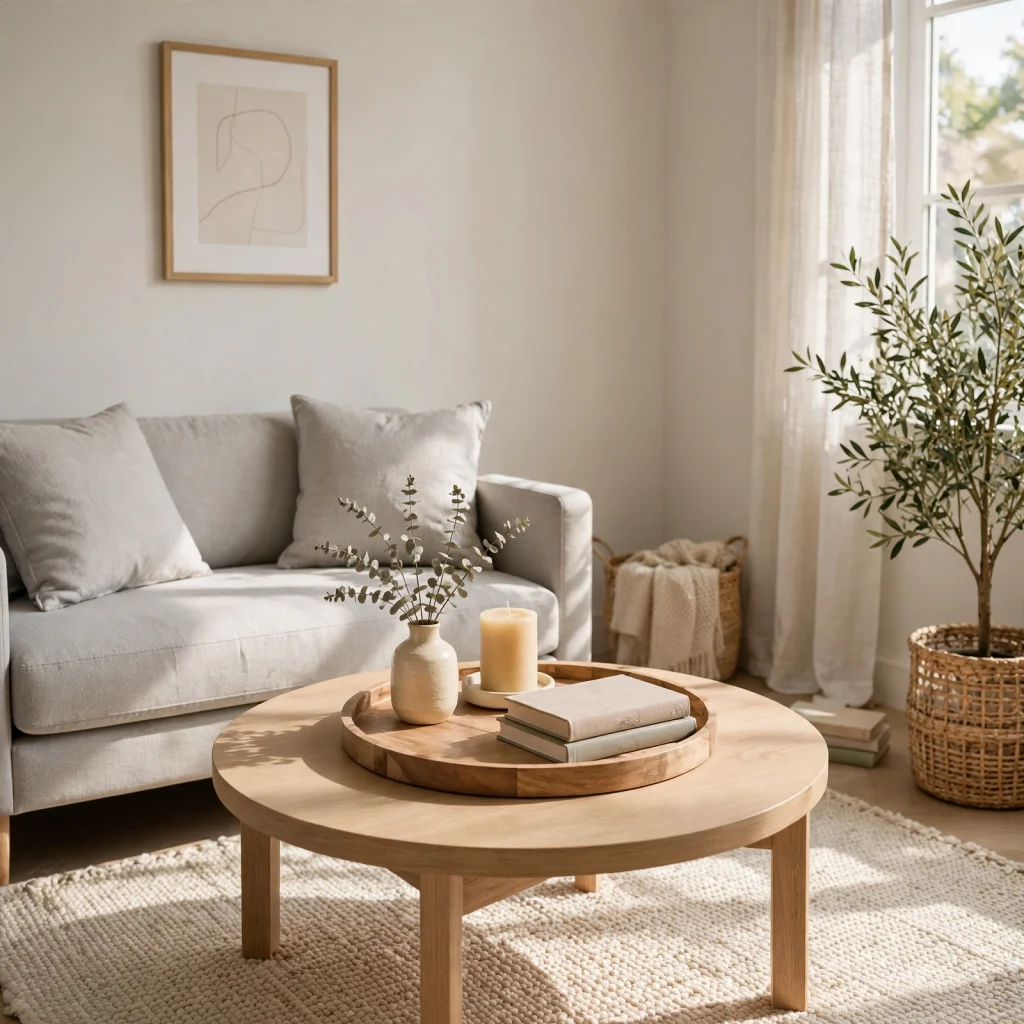
Styling a small tray on a coffee table or console corrals candles, a small stack of books, and a low dish into one organized visual grouping, preventing a compact surface from looking cluttered with loose items. A tray sized to roughly a third of the table’s total surface area leaves enough open space around it to avoid feeling crowded. This idea does double duty, functioning as both decor and a practical way to keep small objects contained on a limited surface.
If you have limited space, discover these small living room ideas for making your room feel larger and more functional.
5. Wall-Mounted Bud Vases
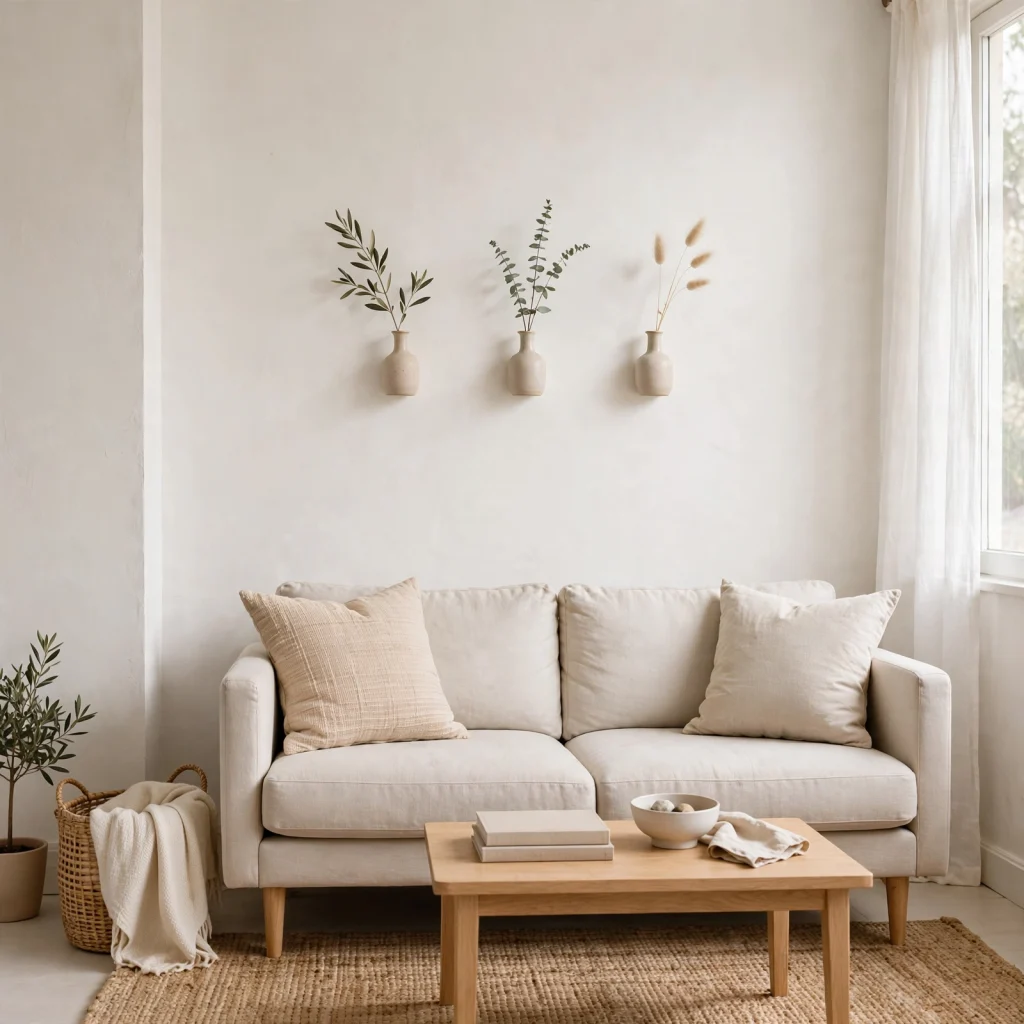
A cluster of small wall-mounted bud vases, each holding a single stem, adds decorative greenery or florals to a small living room without requiring any table or shelf space. Grouping three or four at slightly varied heights on an otherwise blank wall section creates a subtle, low-commitment decorative moment. This idea also allows for easy seasonal swaps, since changing the stems is far simpler than restyling a full tabletop arrangement.
6. Compact Gallery Cluster
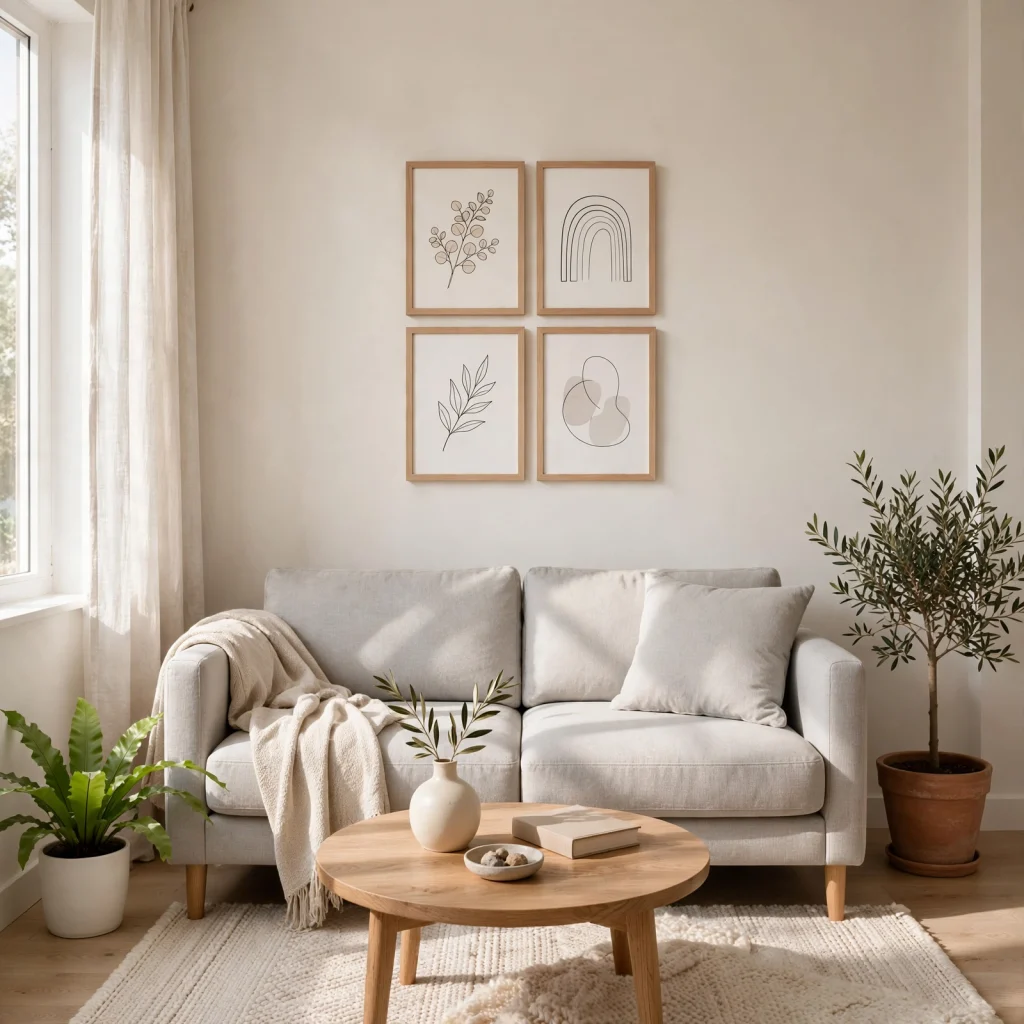
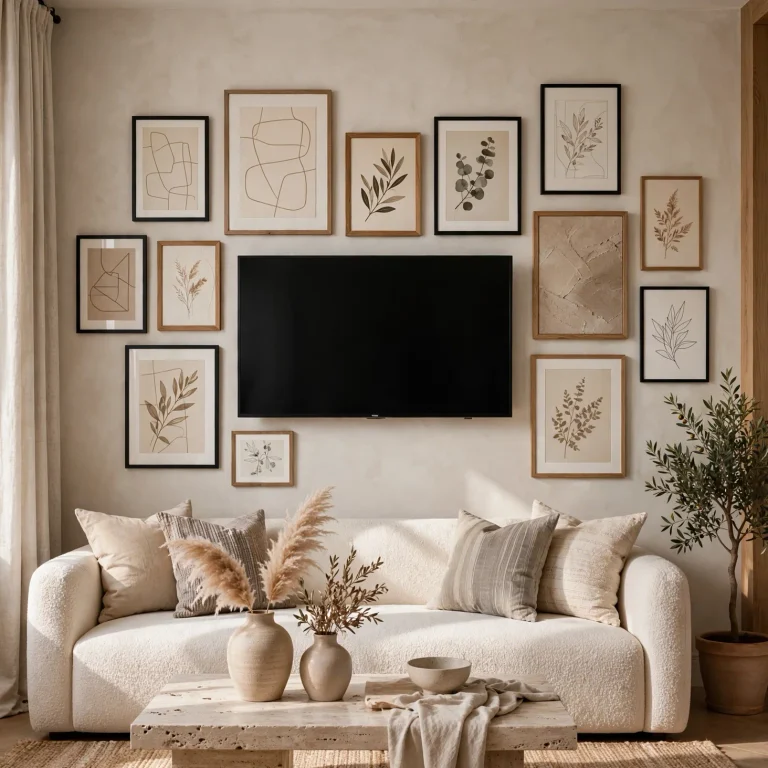
For a small living room that still wants a gallery-style wall, using three to five small frames grouped tightly together in a single defined cluster, rather than spreading them across a wide area, keeps the arrangement contained and proportionate to the room. Choosing frames within a similar size range and consistent finish, rather than a wildly mixed collection, helps the cluster read as intentional in a space with less wall real estate to work with. This scaled-down approach captures the gallery wall effect without demanding the square footage a larger version would need.
7. Multi-Purpose Decorative Basket
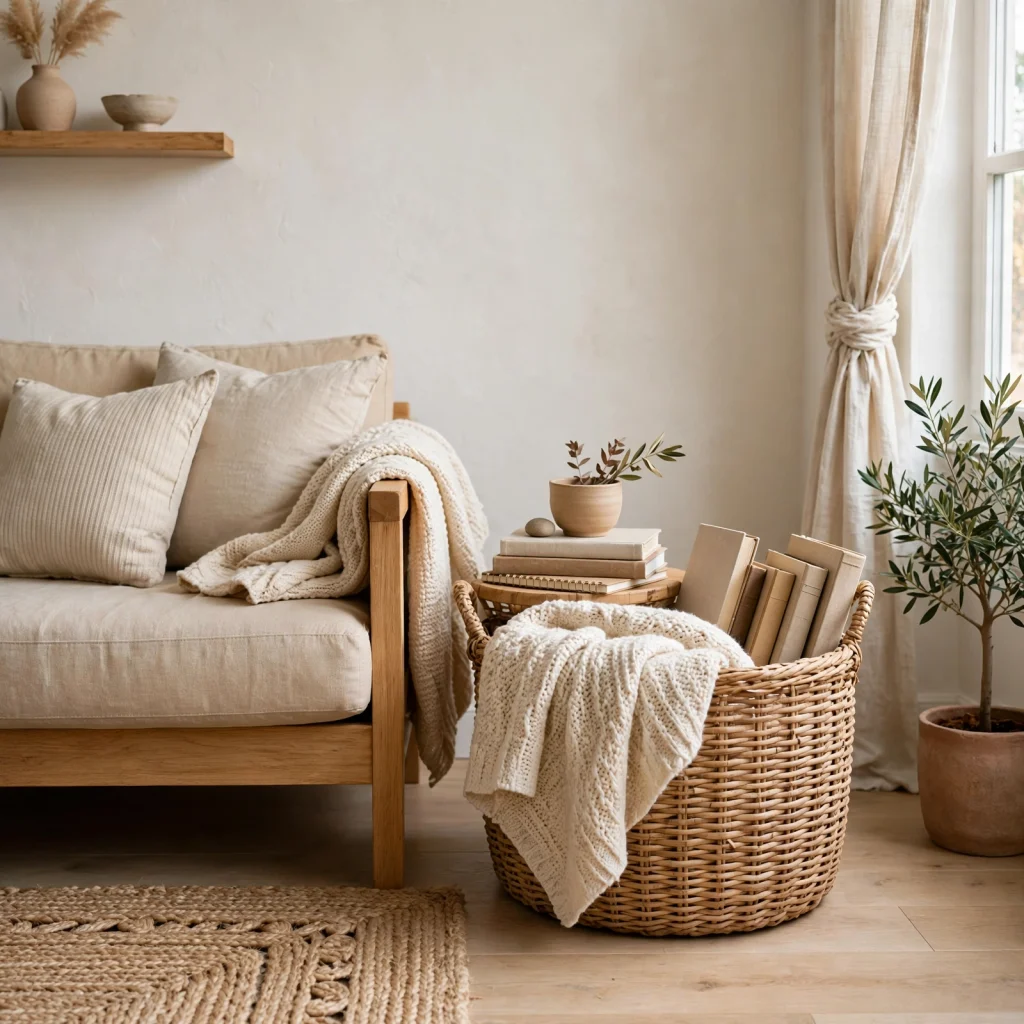
A single well-chosen woven basket, placed beside a sofa or under a console, serves as both a decorative texture piece and functional storage for blankets or magazines in a small living room. Choosing one slightly oversized basket rather than several smaller ones consolidates storage into a single footprint instead of scattering multiple containers around the room. This approach reduces visual clutter while still giving the room a place to stash items that would otherwise pile up on open surfaces.
8. Slim Console Table Styling
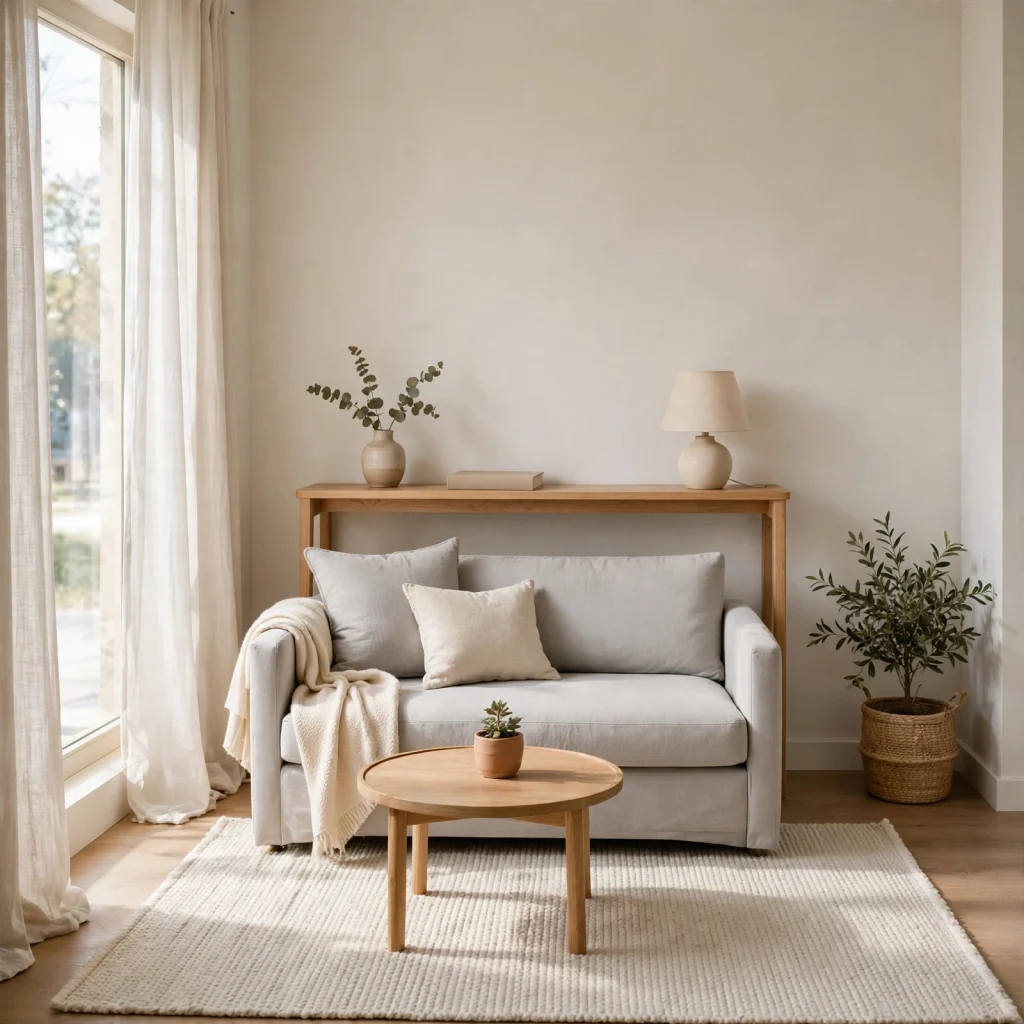
Styling a slim, narrow console table with just two or three objects, such as a small lamp, a single vase, and a stack of books, keeps a small living room’s limited surface space from feeling overloaded. Leaving visible negative space between each item is especially important on a narrow surface, where even a few too many objects can quickly read as cluttered. This restrained approach to styling matters more in a small space than in a larger room, where a slightly fuller surface has more room to breathe visually.
9. Textured Throw Pillow Pair
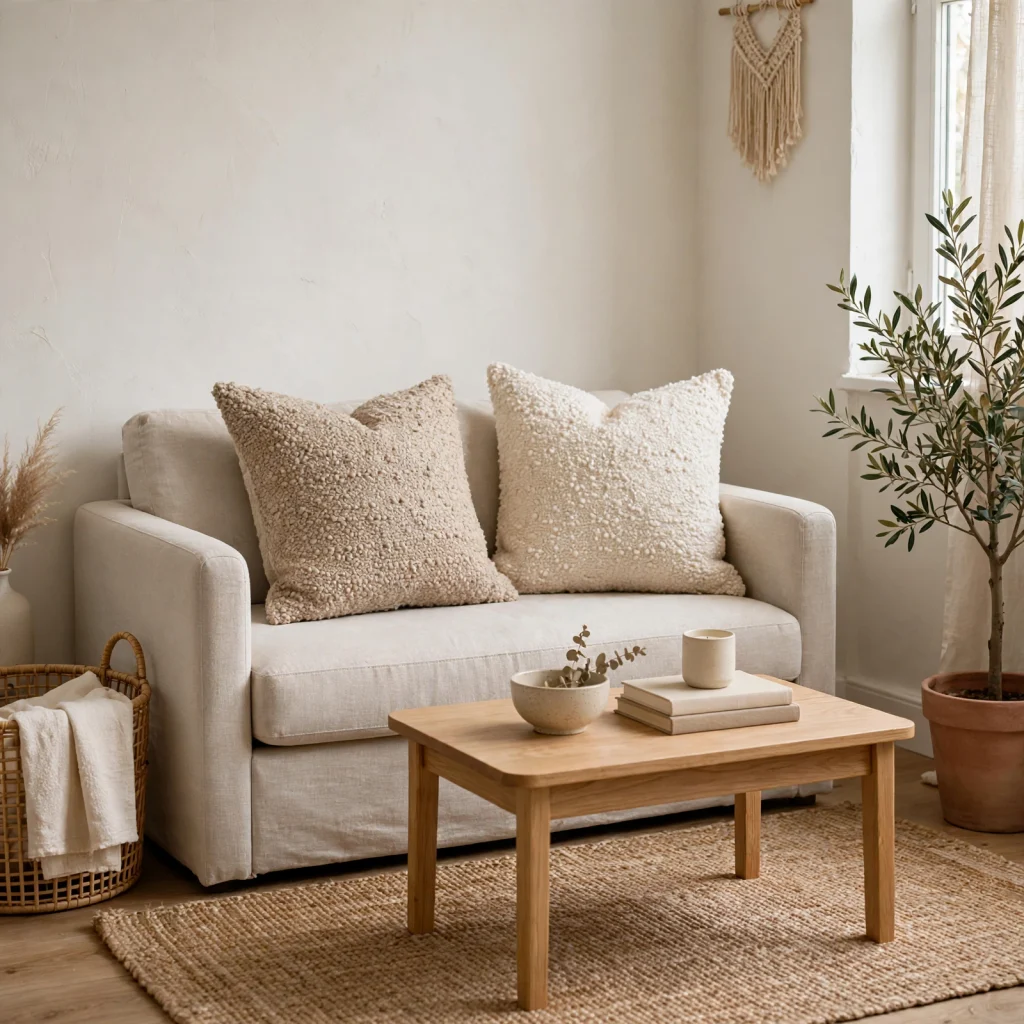
Limiting throw pillows to a single coordinating pair, rather than a fuller five- or six-pillow arrangement, keeps a small living room’s sofa from losing usable seating space to decor. Choosing two pillows in a textured but solid fabric, like boucle or a subtle woven weave, adds warmth without introducing a busy pattern that could make the room feel visually smaller. This restraint also makes the sofa easier to actually use for lounging, which matters more in a compact room with fewer seating options overall.
10. Floating Shelf Vignette
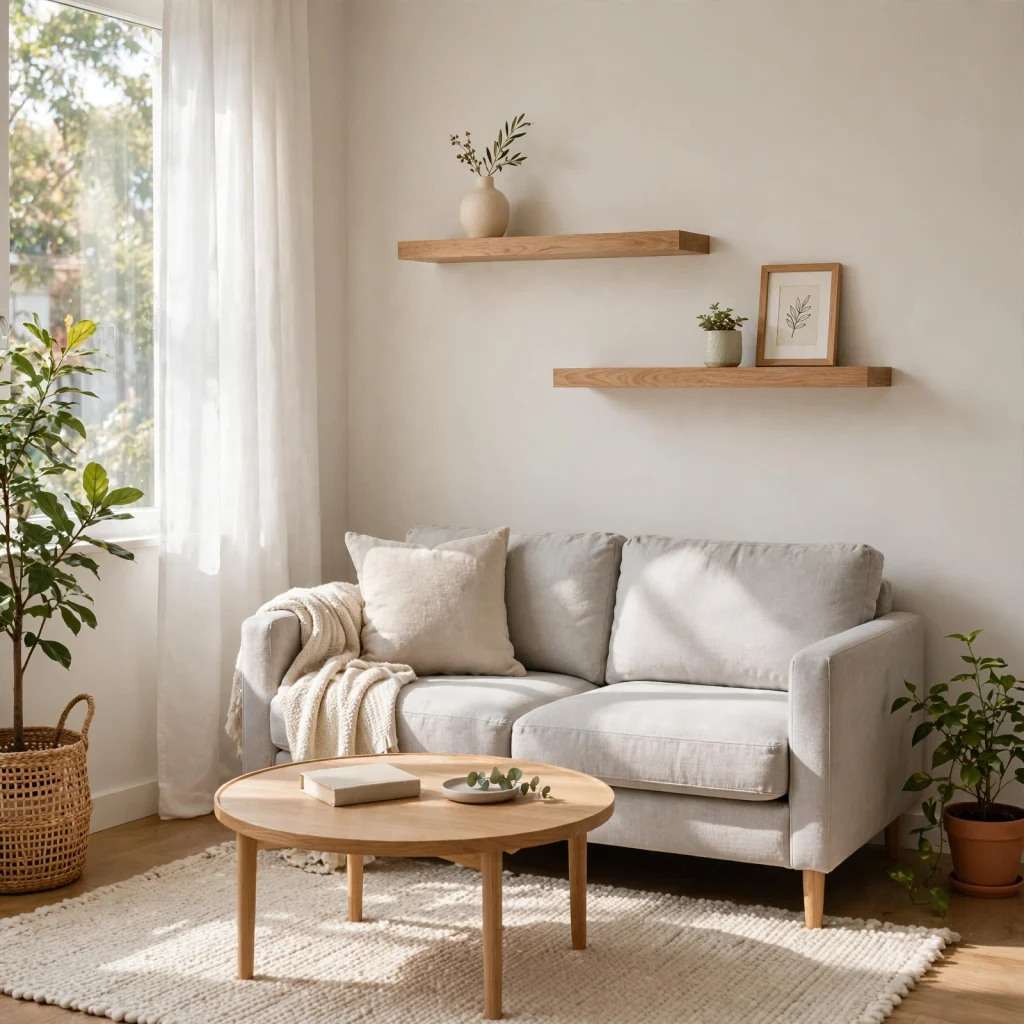
A single floating shelf, styled with just three or four objects, gives a small living room a display area without the bulk of a bookcase or larger shelving unit. Keeping the styling sparse, a small plant, one or two books, and a single decorative object, prevents the shelf from becoming another crowded surface in an already tight room. This idea works especially well above a console or sofa where a larger piece of furniture wouldn’t comfortably fit.
11. Scaled-Down Area Rug
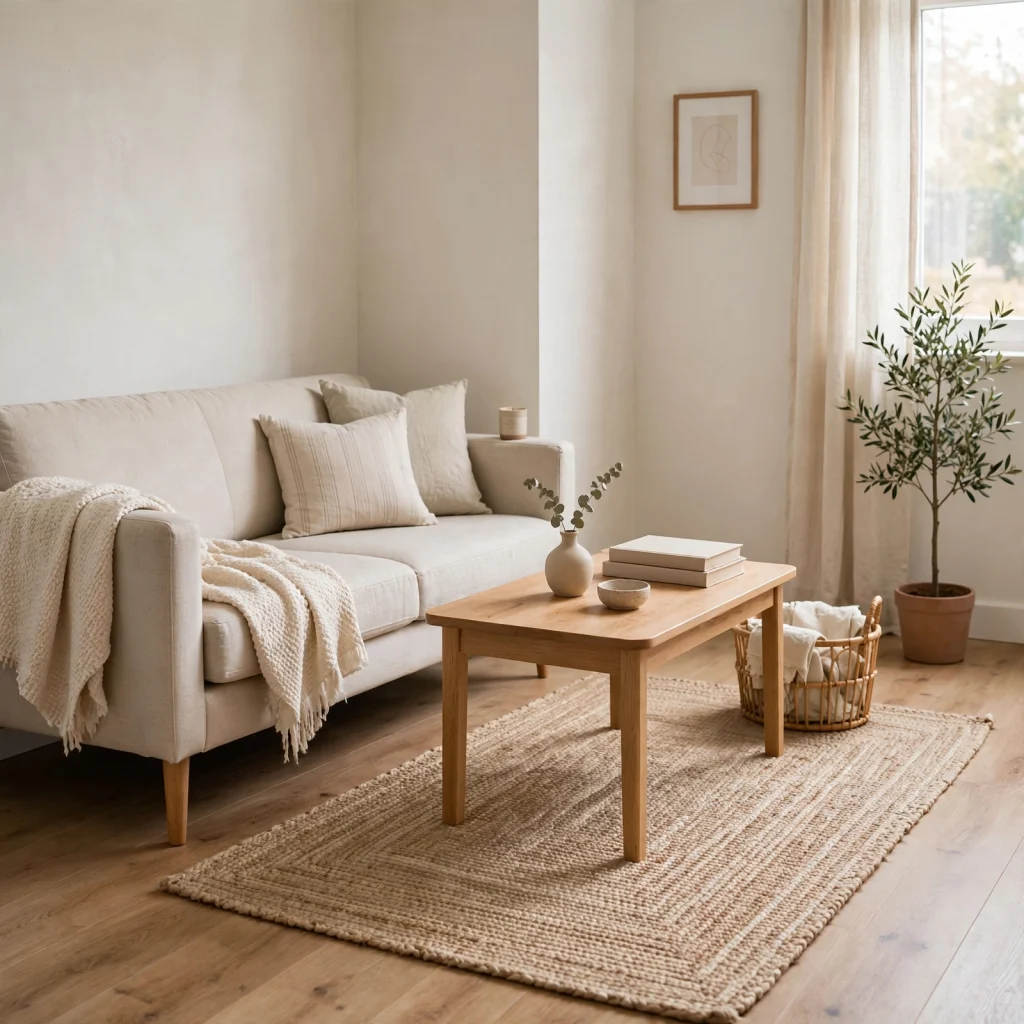
A rug sized appropriately for a small living room’s actual furniture footprint, rather than an oversized rug that leaves little exposed floor, helps define the seating area without making the room feel even more enclosed. A 5-by-7 or 6-by-9 foot rug generally suits a compact living room better than the 8-by-10 size recommended for larger spaces, and a lower pile height keeps the flooring from feeling bulky underfoot. Choosing a rug in a tone close to the surrounding floor, rather than a strong contrast, also helps maintain a sense of openness.
12. Single Statement Table Lamp
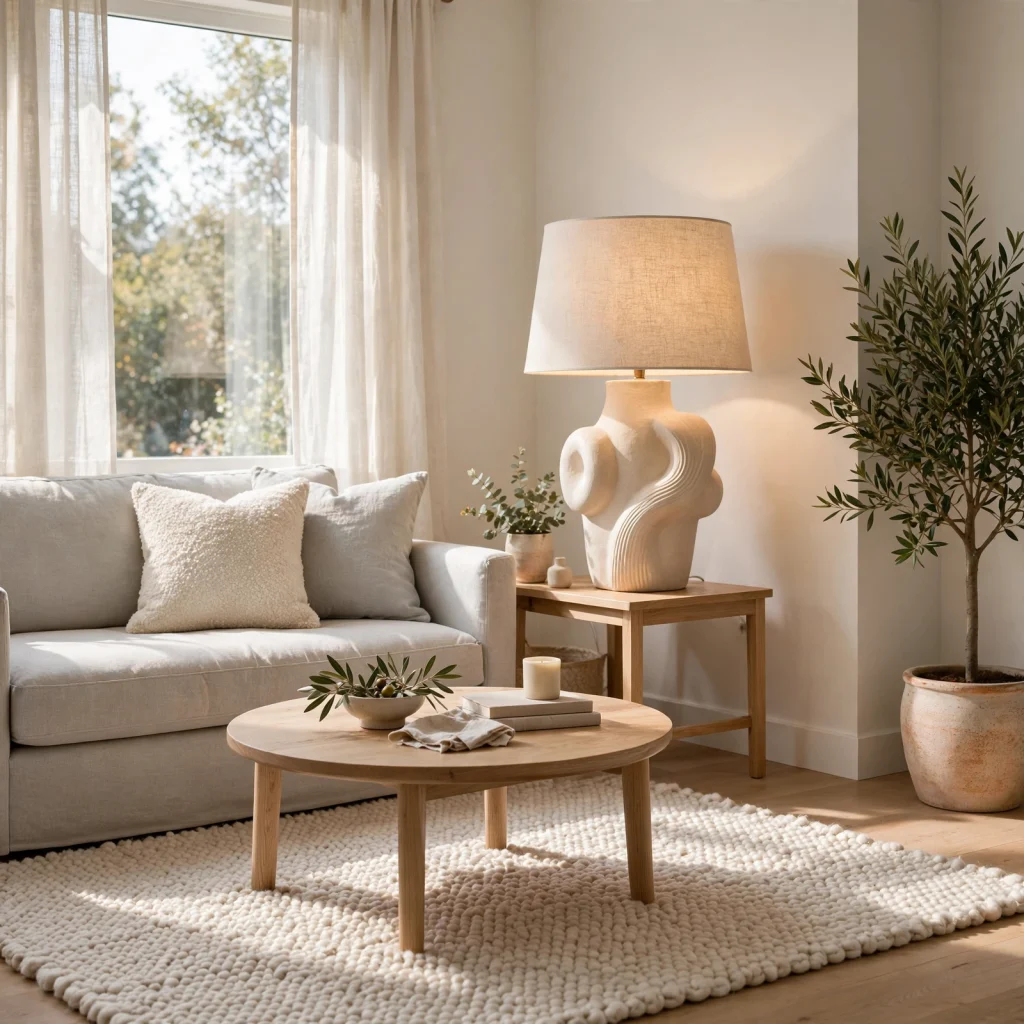
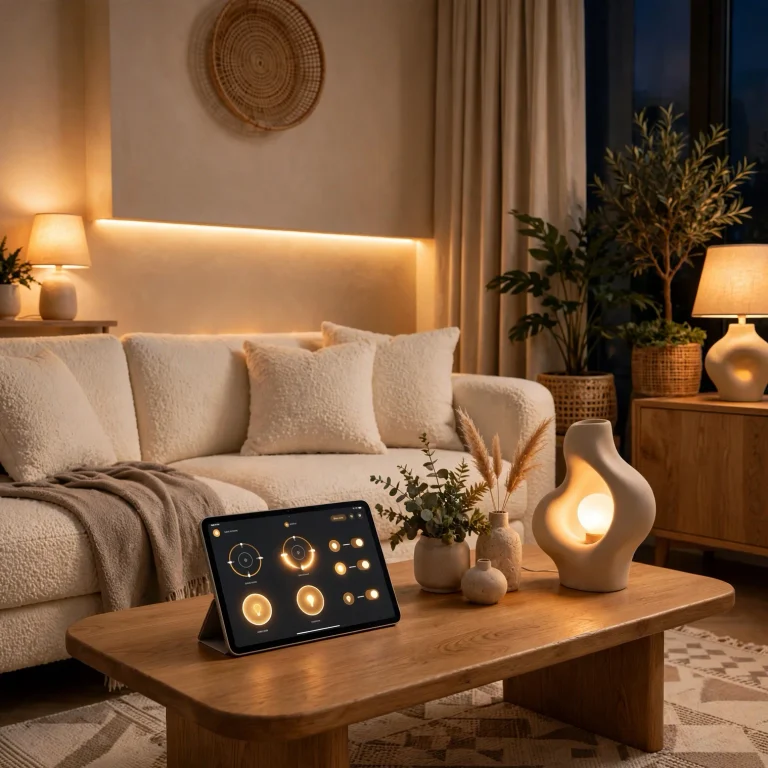
A single statement table lamp, with a distinctive sculptural base, gives a small living room a decorative focal point that also serves a genuine lighting function, avoiding the need for a separate purely decorative object. Positioning it on a console or narrow side table means it contributes both light and personality without requiring additional floor space. This approach is more space-efficient than pairing a plain lamp with several smaller unrelated decor pieces spread around the room.
13. Nested Ceramic Bowl Set
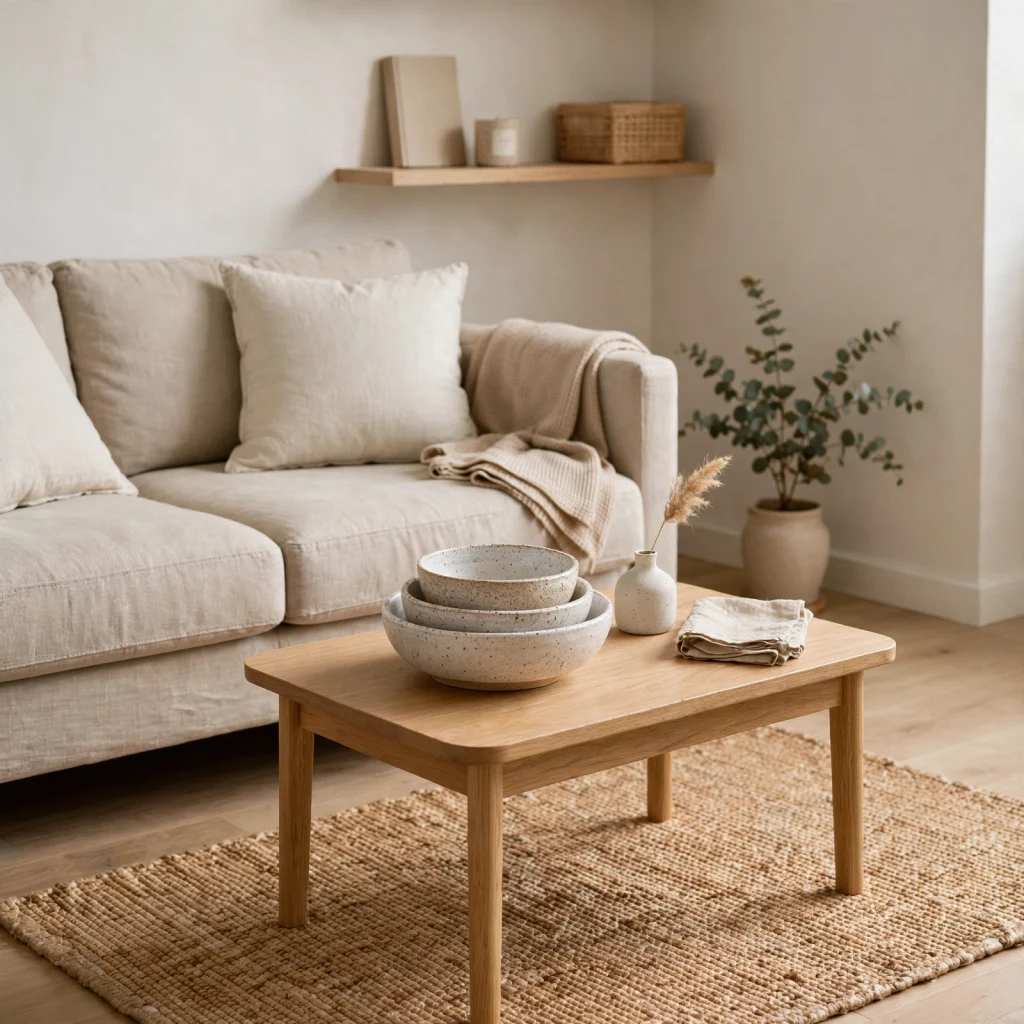
A small nested set of ceramic bowls or dishes, styled together on a coffee table, adds a decorative grouping that takes up minimal surface space compared to spreading several individual objects around a compact room. Varying the bowl sizes slightly and keeping them within the same glaze family creates a cohesive look without requiring extra square footage to display. This idea also offers small functional storage for items like keys or jewelry, adding practicality to the decorative choice.
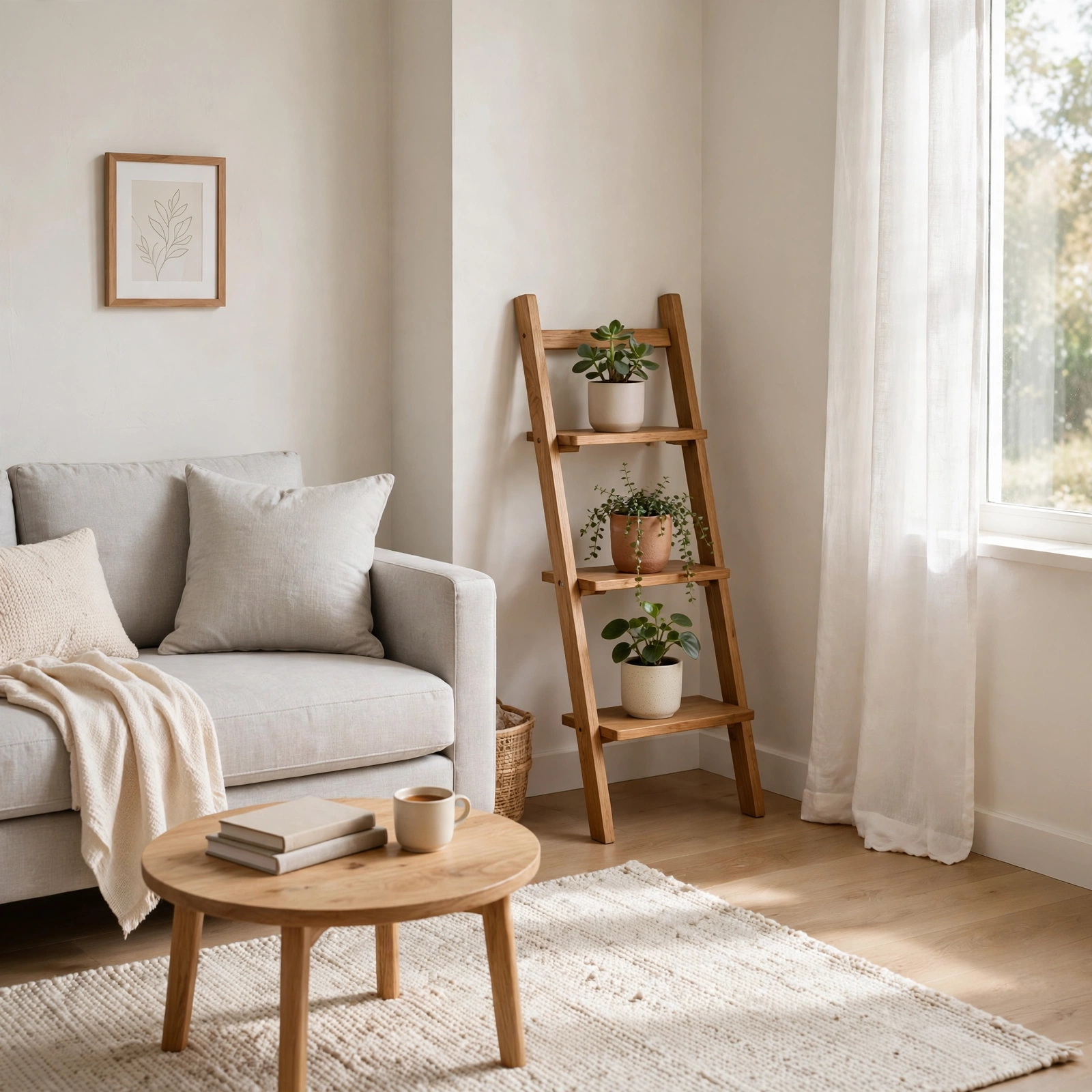
14. Corner Plant Ladder
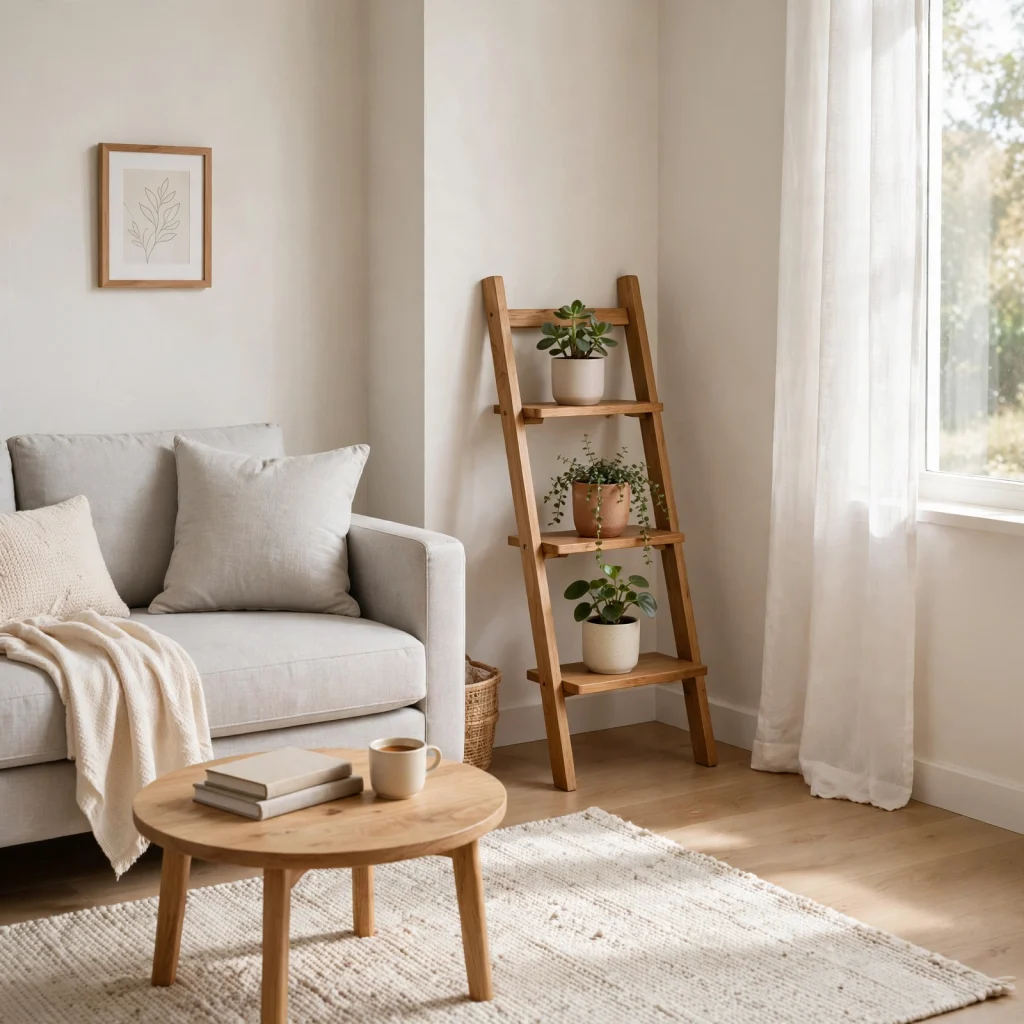
A tiered plant ladder, positioned in an empty corner, allows a small living room to display several small potted plants vertically rather than spreading them across multiple surfaces around the room. This consolidates greenery into a single footprint, typically under 18 inches wide, while still achieving a layered, plant-filled look. Choosing a slim metal or wood ladder frame keeps the piece from adding unnecessary visual bulk to the corner it occupies.
15. Seasonal Mini Vignette
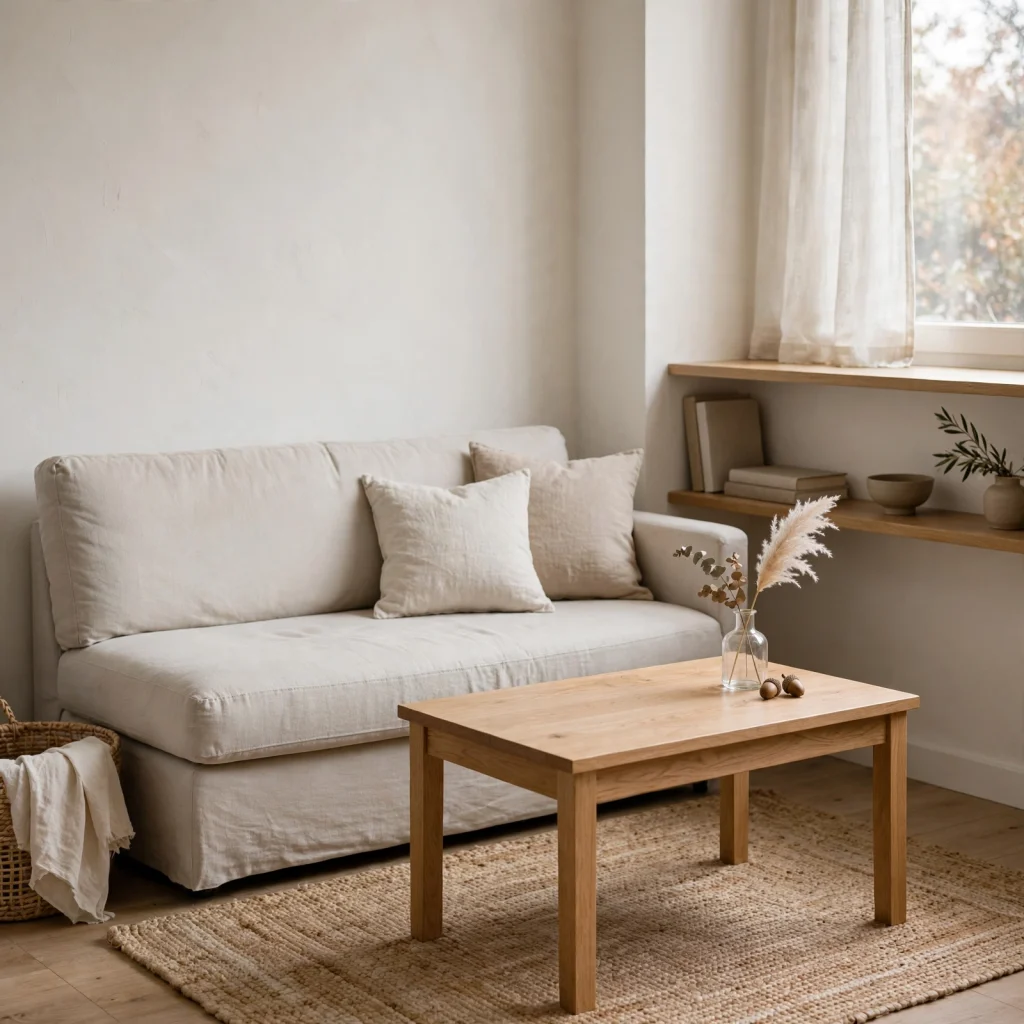
Creating one small seasonal vignette, using just a candle, a small seasonal object, and a single stem in a bud vase, gives a small living room a way to feel current through the year without dedicating significant space to rotating decor. Limiting the vignette to a single small tray or corner of a shelf keeps it from expanding into a larger, more space-consuming display. This approach allows for personality and seasonal change while respecting the space constraints that come with a compact room.
Shop the Look
Start with a single oversized art piece sized to the sofa’s width, a slim console table, and a scaled-down 6-by-9 foot area rug. Add a statement table lamp, a wall-mounted bud vase trio, and a multi-purpose woven basket for blanket storage. Finish with a hanging trailing plant near the window and a coordinating pair of textured throw pillows on the sofa.
Common Mistake to Avoid
A common mistake with small living room decor is trying to fit in every decorative idea seen in inspiration photos, which quickly overwhelms a compact room regardless of how well each individual piece is chosen. Editing down to a handful of intentional decor moments, rather than layering in everything at once, produces a far more finished and spacious-feeling result. Choosing quality and scale over quantity matters significantly more in a small room than in a larger one with more visual room to absorb extra objects.
FAQs
How do I decorate a small living room without making it look cluttered?
Limiting the number of decorative objects and choosing a few larger, well-scaled pieces over many small ones is the most effective way to decorate a small living room without clutter. Repeating a consistent color palette across the chosen decor also helps the room feel cohesive rather than busy. Leaving visible negative space on shelves and surfaces, rather than filling every available inch, is just as important as the individual pieces selected.
Should a small living room have a lot of plants?
A small living room can still incorporate plenty of greenery, but vertical solutions like hanging planters, wall-mounted plant hooks, or a tiered plant ladder generally work better than several individual floor plants, which can quickly consume limited floor space. Focusing on one or two larger plant moments, rather than scattering many small pots throughout the room, tends to look more intentional and take up less overall room. Trailing varieties are particularly effective since their growth fills space without needing a wide footprint.
What size art should I hang in a small living room?
Art in a small living room generally works best when sized to roughly two-thirds the width of the furniture piece it hangs above, since undersized art can look lost while oversized art can overwhelm a compact wall. A single larger piece is usually a better choice than several smaller frames, which require more wall space collectively to achieve a similar visual impact. This approach also simplifies styling decisions, since there’s only one piece to size and position correctly.
How many throw pillows should a small living room sofa have?
A small living room sofa generally works best with two to three throw pillows total, since a fuller five- or six-pillow arrangement common in larger rooms can meaningfully reduce the sofa’s actual usable seating space. Choosing textured but solid-colored pillows, rather than a bold pattern, also helps keep the sofa from visually shrinking the room further. This more restrained approach still adds comfort and style without sacrificing function.
What decor should I avoid in a small living room?
Overly ornate or heavily detailed decor pieces tend to look busier and more overwhelming in a small living room than they would in a larger space, simply because there’s less room to visually absorb the extra detail. Multiple small, unrelated decorative objects scattered individually around the room should also generally be avoided in favor of a few grouped, intentional vignettes. Very large, bulky decorative furniture pieces, like an oversized decorative trunk or an extra-large vase, can also overwhelm a compact room’s limited floor space.
Conclusion
Small living room decor comes down to scale and restraint, choosing fewer, well-sized pieces rather than trying to replicate a larger room’s full decor list in a compact space. Save this guide to Pinterest for reference while planning your next update, and check out our related post on small living room ideas for more ways to make the most of a compact floor plan.