15 Luxury Living Room Design Principles That Define the Look
Luxury living room design is less about any single item in the room and more about the underlying decisions, proportion, spatial flow, and consistency that shape how the whole space feels. This guide covers fifteen design principles and techniques that professional designers rely on to create that high-end feel, from symmetrical furniture planning to custom millwork detailing. Each idea explains not just what to do, but why it produces the polished result associated with genuinely luxury interiors.
Trend & Background
Luxury living room design has increasingly moved toward a principles-first approach, where designers focus on proportion, spatial hierarchy, and craftsmanship rather than layering in visibly expensive individual products. This shift has been driven partly by a broader cultural move toward understated, “quiet luxury” spaces and partly by a recognition that scale and consistency read as expensive regardless of actual furniture cost. Custom millwork and architectural detailing, once reserved almost exclusively for high-end commissions, have also become more accessible through modular systems, allowing more homeowners to apply these design principles without a full custom build.
Key Takeaways
- Luxury living room design depends more on proportion, spatial planning, and craftsmanship than on any single expensive product.
- Symmetry and intentional sightlines are used deliberately in high-end rooms to create a sense of order and calm.
- Custom millwork and tailored built-ins are what most consistently separate a genuinely luxury room from a well-decorated one.
- A limited, considered material palette applied consistently throughout the room reads as more expensive than variety for its own sake.
1. Symmetrical Furniture Planning
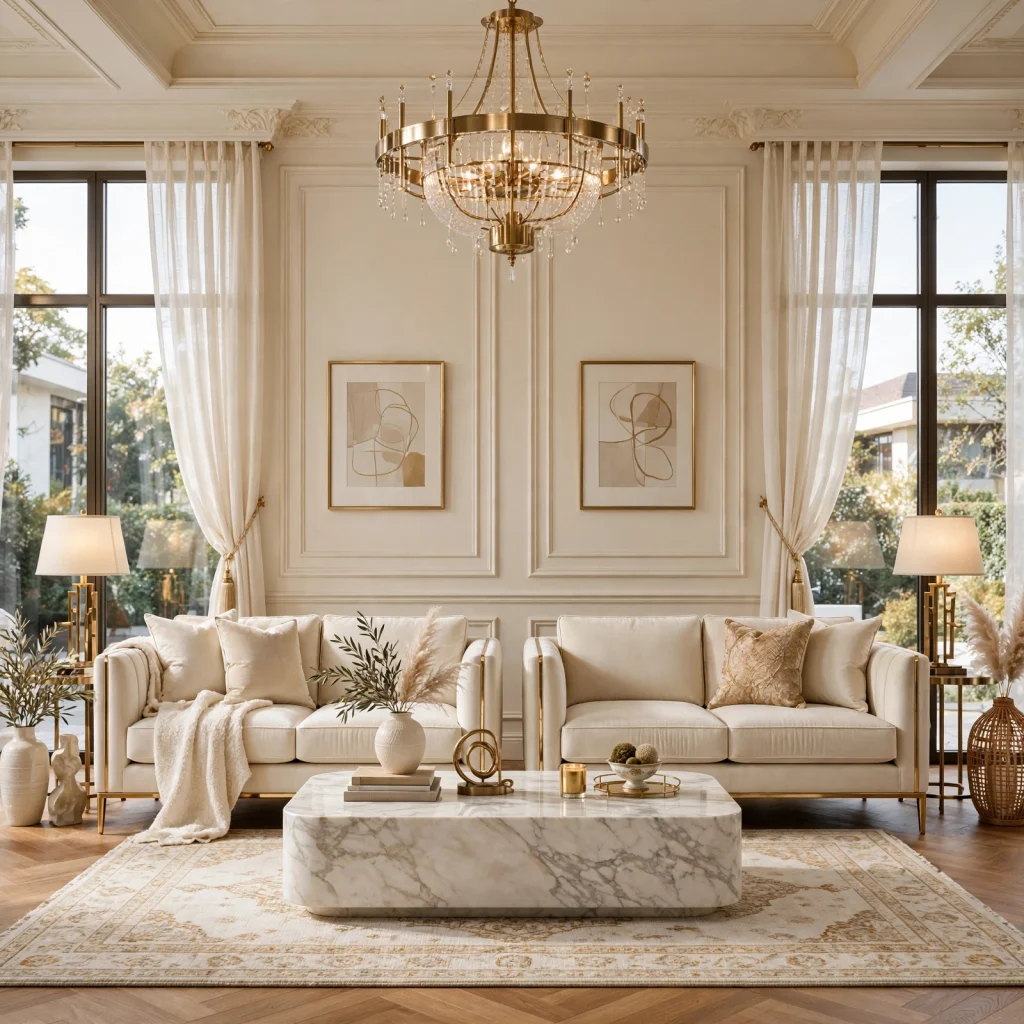
Symmetrical furniture planning, arranging matching pairs of chairs, lamps, or side tables around a central axis like a fireplace or window, gives a luxury living room a sense of formality and calm that asymmetrical arrangements rarely achieve. This principle draws directly from classical architecture, where balance signals intentionality rather than accident. Applying symmetry to at least one major element in the room, even if the rest of the layout stays more relaxed, is often enough to establish the formal, considered feel associated with high-end design.
2. Generous Furniture Scale
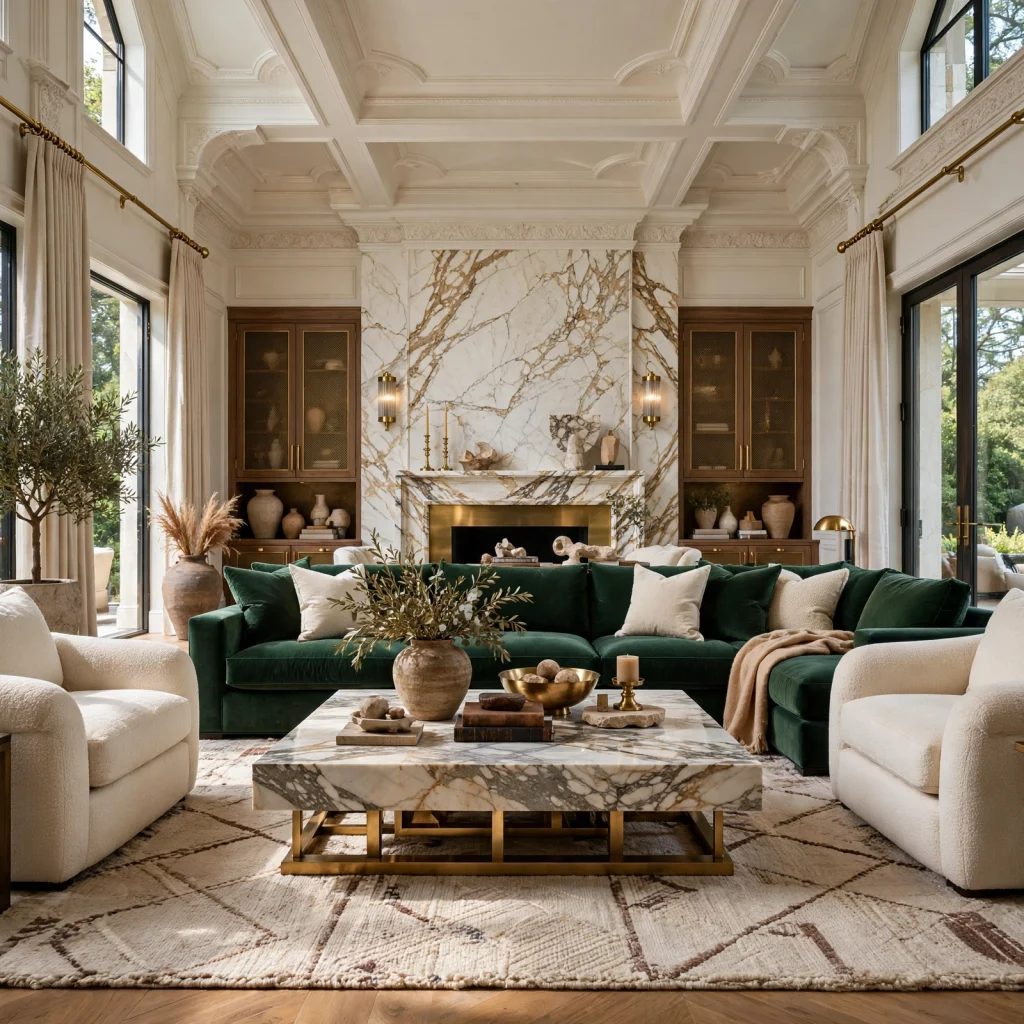
Generous furniture scale, choosing pieces sized comfortably for the room rather than the smallest option that technically fits, is one of the clearest markers of luxury living room design. Undersized furniture in a large room reads as sparse or unfinished, while properly scaled pieces fill the space with intention. Designers typically measure the room’s full dimensions first and select furniture that occupies roughly 60 to 70 percent of the floor area, leaving deliberate negative space rather than furniture scattered thinly across the room.
| Room Size | Recommended Sofa Length | Coffee Table Length |
| 14×16 ft | 84–96 in | 48–54 in |
| 16×20 ft | 96–108 in | 54–60 in |
| 20×24 ft+ | 108–120 in | 60–72 in |
3. Custom Millwork Detailing
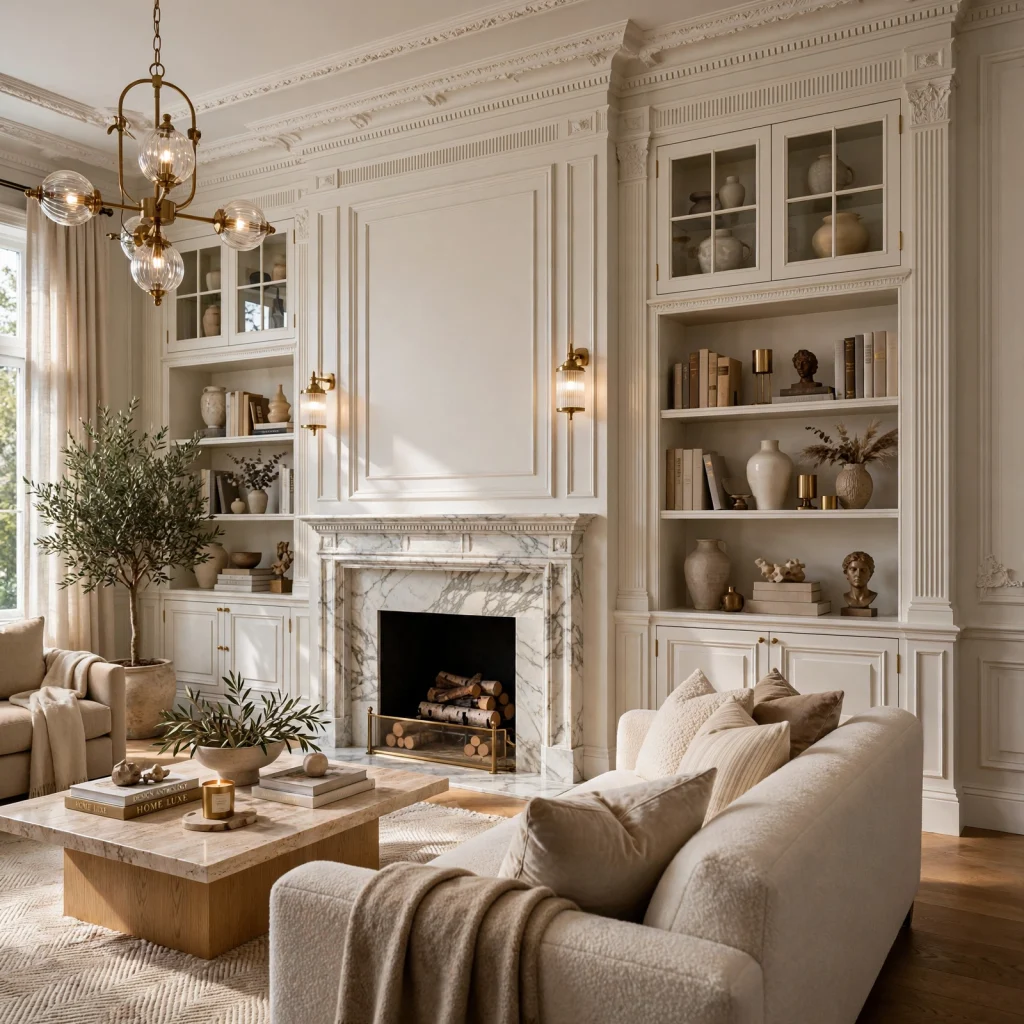
Custom millwork, including crown molding, wainscoting, or built-in cabinetry designed specifically for the room’s dimensions, is one of the most reliable ways to elevate a luxury living room beyond what furniture alone can achieve. Unlike stock trim, custom millwork accounts for the room’s actual proportions, ceiling height, and architectural quirks, producing a seamless result rather than an approximation. Even a single custom element, like a built-in bookcase flanking a fireplace, can shift a room’s entire perceived value.
If you have limited space, discover these small living room decor for making your room feel larger and more functional.
4. Considered Sightlines
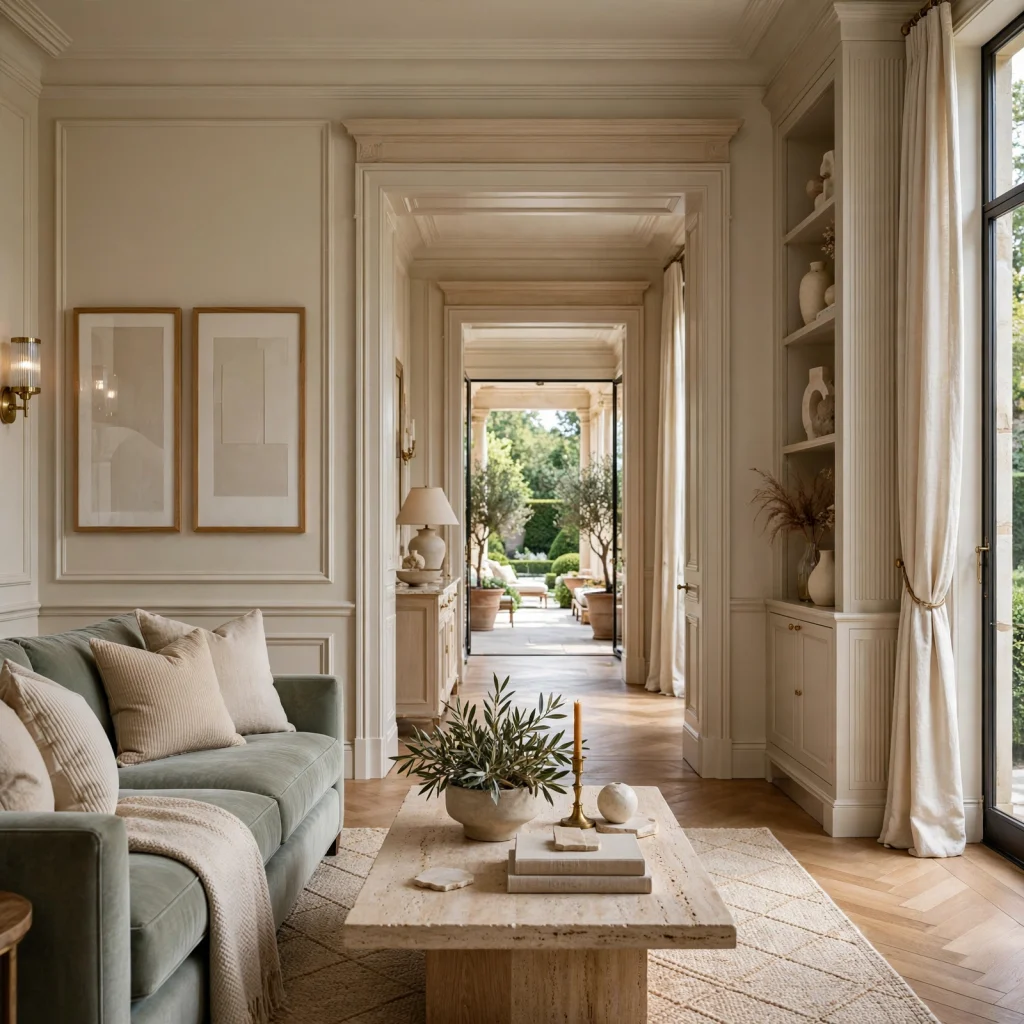
Designing a luxury living room around considered sightlines, planning what’s visible from the room’s main entry point and primary seating, ensures the first impression of the space is intentional rather than accidental. This often means positioning a statement piece, like a piece of art or a well-styled console, directly within view from the doorway, while keeping less polished functional areas, such as a media wall, slightly out of the primary sightline. Walking through the room as a visitor would, rather than designing purely from the seating position, reveals sightline issues that are easy to miss otherwise.
5. Consistent Material Palette
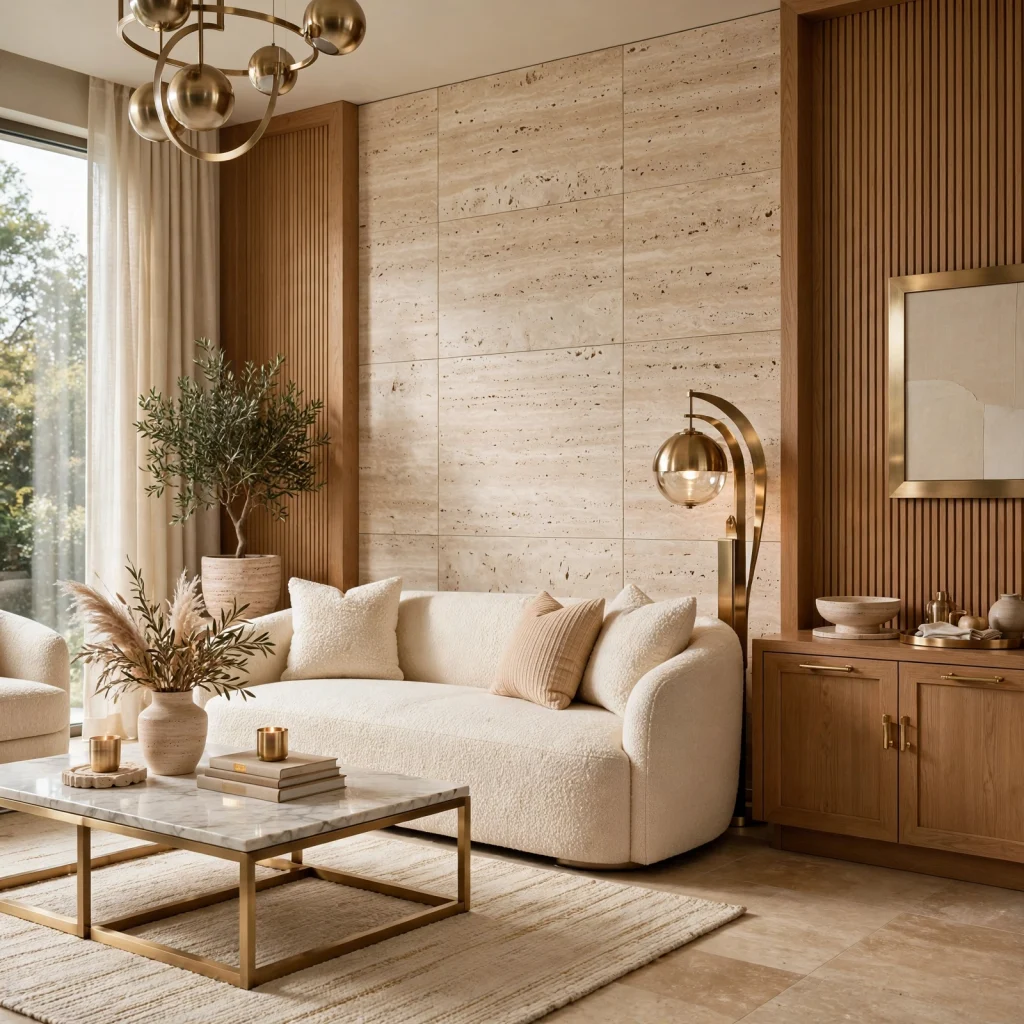
Limiting a luxury living room to two or three core materials, such as walnut wood, brass metal, and a single stone type, applied consistently throughout the space, produces a more cohesive and expensive-reading result than a wider variety of materials used more sparingly. This restraint requires more discipline during the selection process, since it’s often tempting to introduce a new material for each individual piece. Repeating the same wood tone across furniture, flooring, and trim, for example, does more to unify a room than any single standout piece.
6. Layered Ceiling Height Detailing
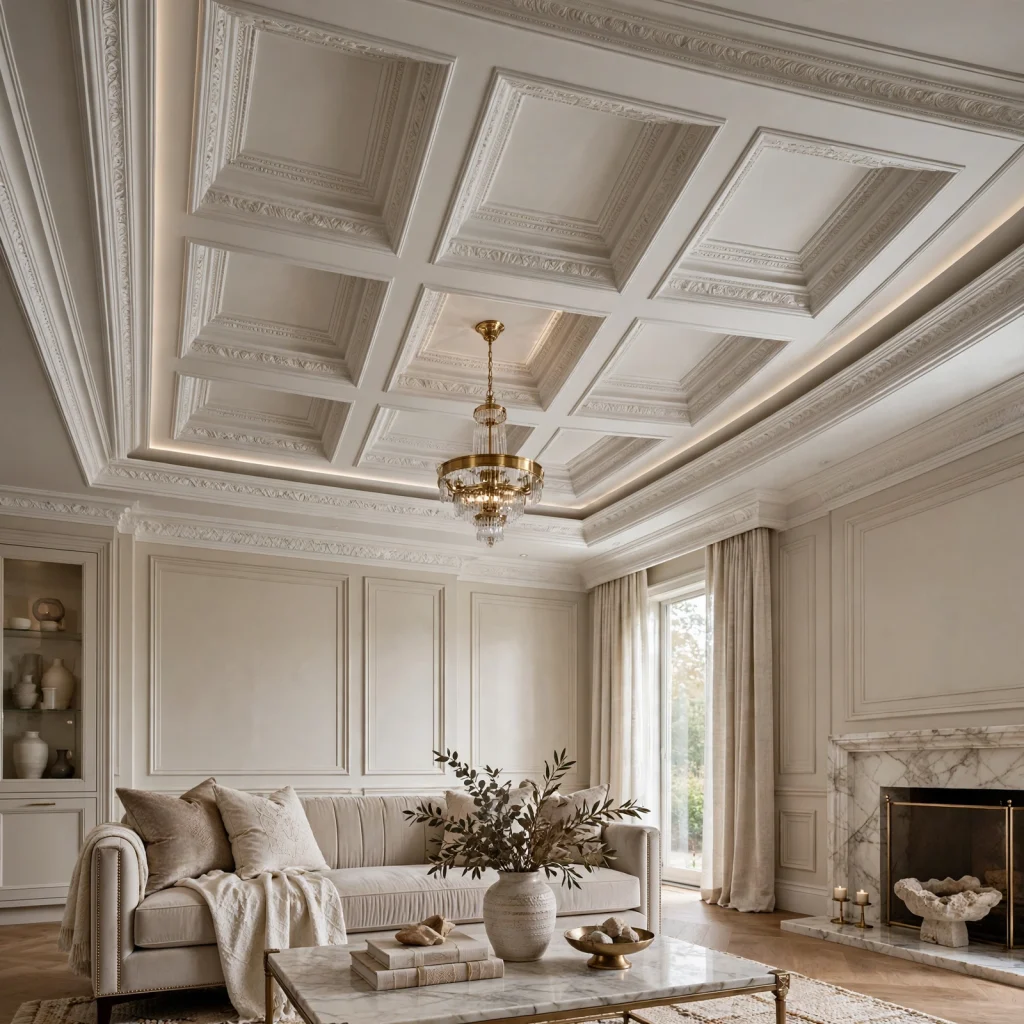
Detailing the ceiling itself, through coffers, a tray ceiling, or exposed structural beams, gives a luxury living room a fifth surface to design rather than treating the ceiling as an afterthought. This detail is particularly effective in rooms with 9-foot or taller ceilings, where the additional height allows for coffered depth or beam projection without feeling cramped. Painting ceiling details a shade or two darker than the surrounding trim, rather than stark white, adds dimension that’s visible without overwhelming the room.
7. Formal and Informal Zone Separation
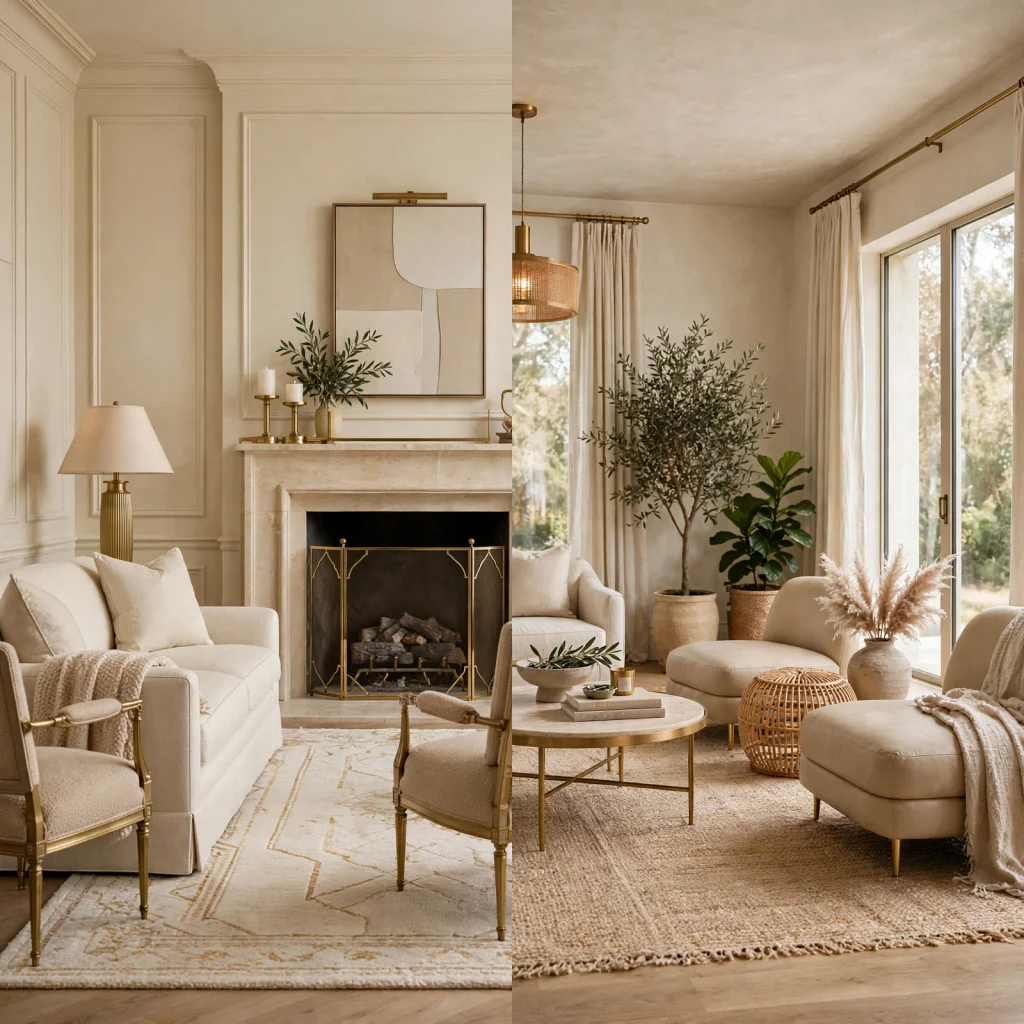
Dividing a large luxury living room into a formal seating zone, arranged for conversation and entertaining, and a more relaxed informal zone, oriented toward a television or fireplace, allows the room to function for multiple purposes without either zone feeling compromised. A change in rug, lighting, or furniture arrangement typically signals the shift between zones without requiring a physical wall. This layout principle is particularly common in larger luxury homes where a single room needs to serve both entertaining and everyday family use.
8. Custom Upholstery Proportions
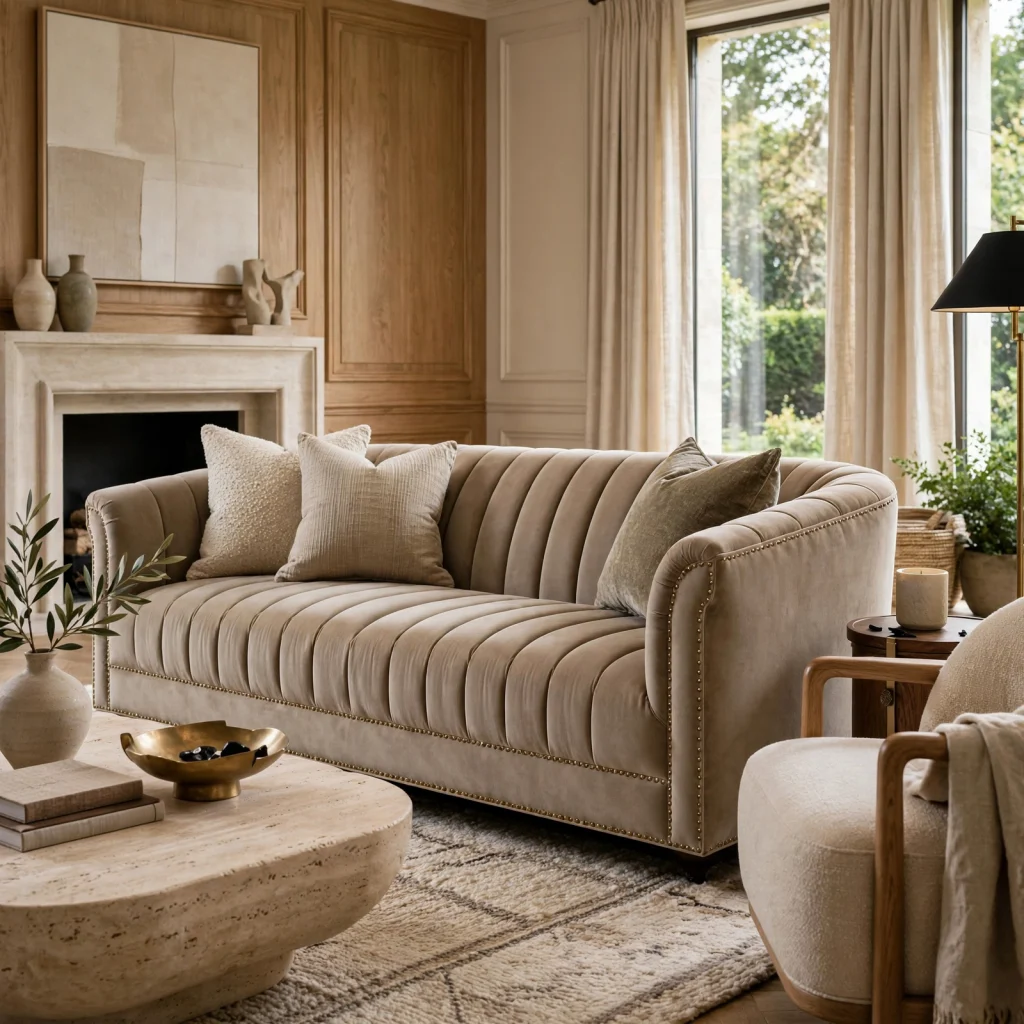
Commissioning custom upholstery, rather than purchasing an off-the-shelf sofa or chair, allows exact control over seat depth, arm width, and back height, tailored to both the room’s proportions and the household’s actual body types. A sofa with a seat depth that’s too shallow or too deep for typical use, even if visually striking, undermines the sense of considered luxury the rest of the room is working toward. This level of customization is one of the more expensive design choices on this list but also one of the most functionally significant.
9. Deliberate Negative Space–
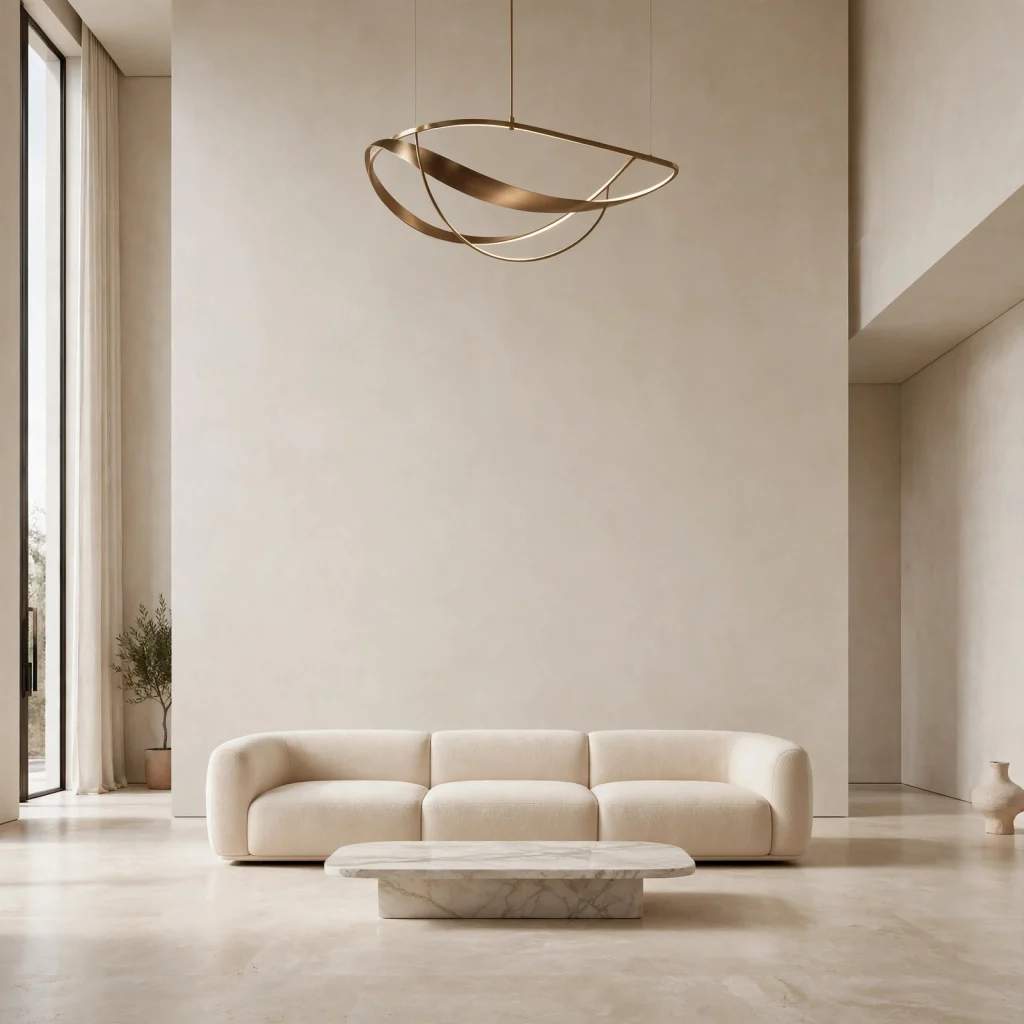
Leaving deliberate negative space around furniture and on surfaces, rather than filling every available inch, is a design principle that separates genuinely luxury interiors from simply well-decorated ones. This restraint requires confidence, since the instinct in a large or expensive room is often to add more to justify the investment. Professional designers frequently edit a room after initial styling, removing objects until only the most considered pieces remain, which reinforces a sense of quality over quantity.
10. Architectural Lighting Integration
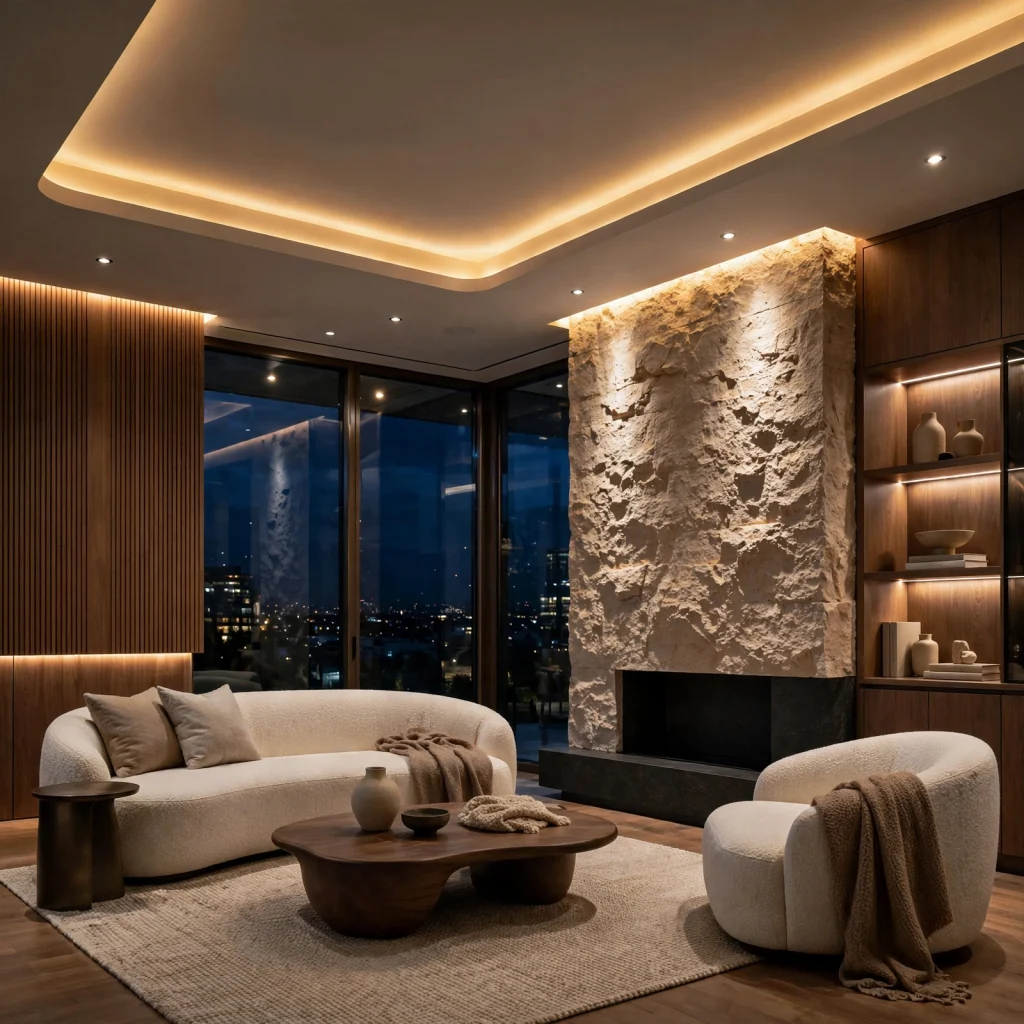
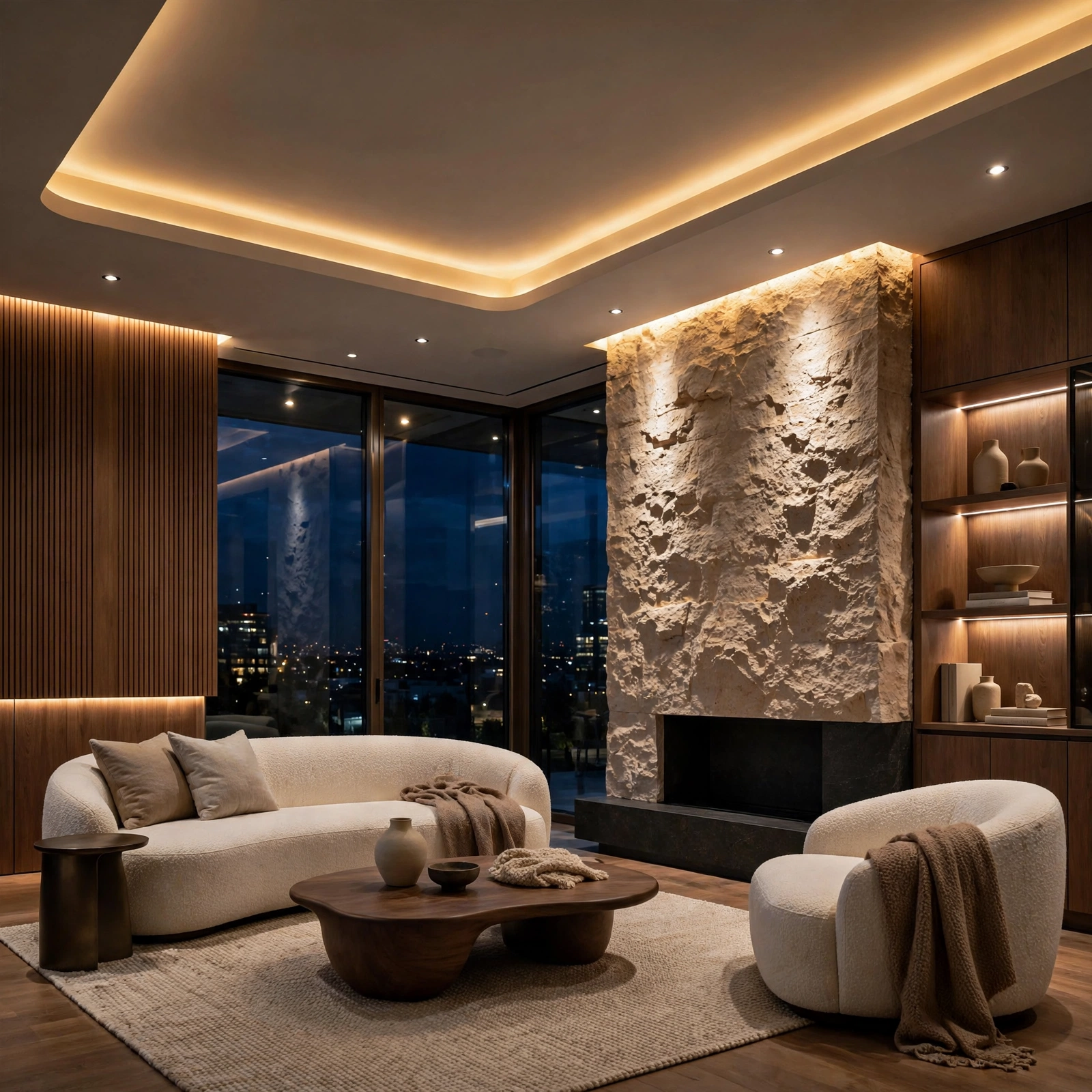
Integrating lighting into the room’s architecture, through recessed cove lighting, integrated picture lights, or built-in sconces flanking a fireplace, gives a luxury living room a more polished light source than table and floor lamps alone can provide. This approach requires planning during construction or renovation rather than being added afterward, which is part of why it’s associated with higher-end builds. Layering this architectural lighting with a statement fixture, rather than relying on either alone, produces the most complete result.
11. Tailored Window Treatments
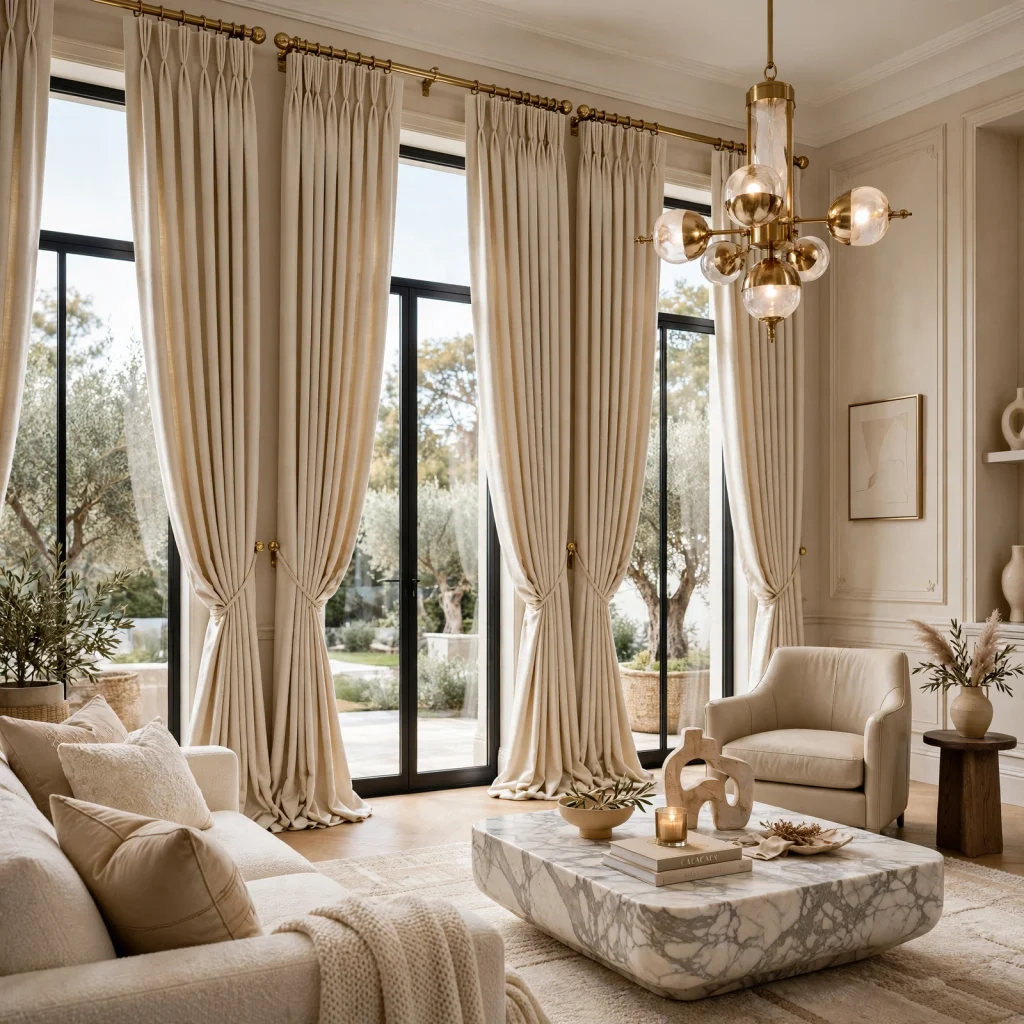
Tailored, floor-to-ceiling window treatments, custom-measured and finished with details like a contrast lining or a decorative leading edge, read as significantly more considered than off-the-shelf curtain panels in a luxury living room. The extra attention to hem length, fullness ratio, and hardware finish are details most visitors won’t consciously notice but that collectively contribute to the room’s overall polish. Working with a workroom or seamstress for custom sizing, rather than adjusting stock panels, is typically necessary to achieve this level of finish.
12. Considered Traffic Flow
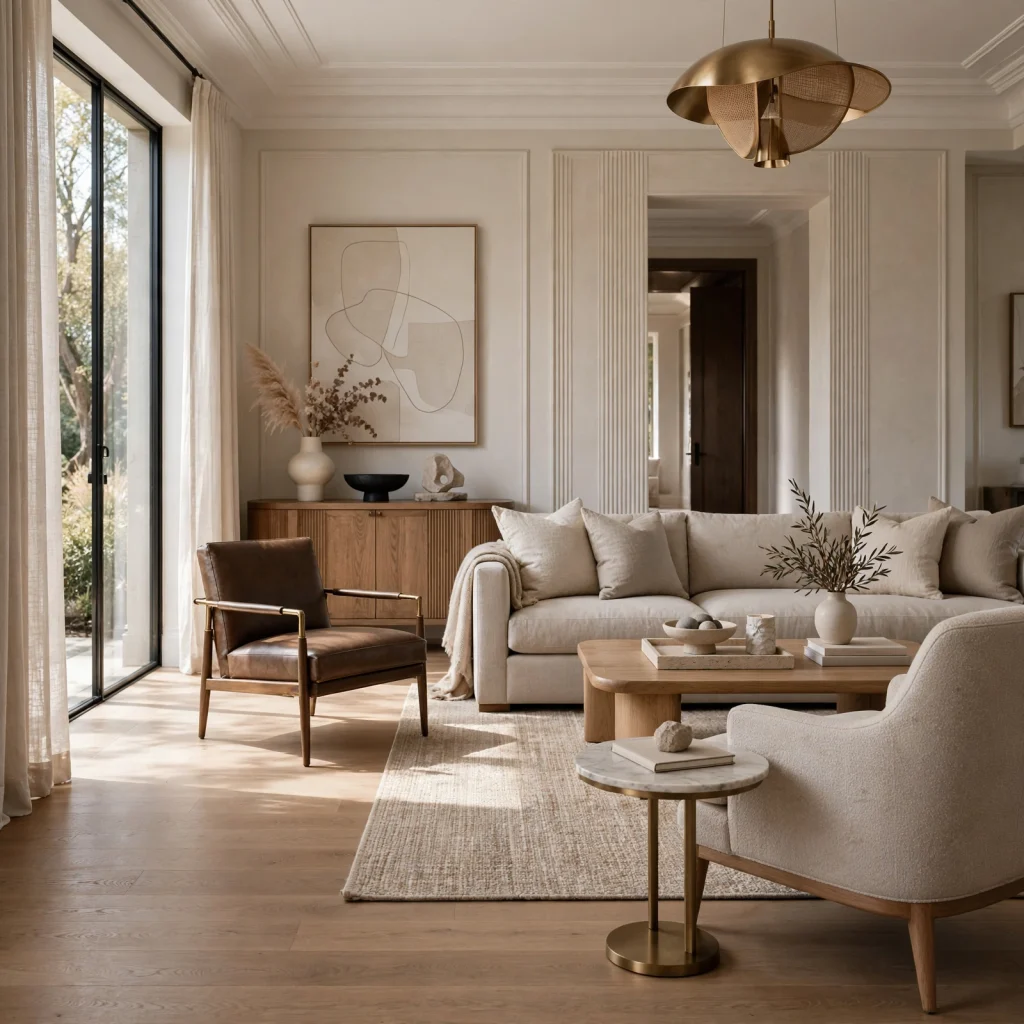
Planning a luxury living room’s furniture layout around genuine traffic flow, ensuring at least 30 to 36 inches of clearance through primary walkways, prevents the room from feeling obstructed regardless of how expensive the individual furniture pieces are. This principle is often overlooked in favor of purely visual furniture placement, but a room that’s difficult to move through undermines the sense of ease that luxury design is meant to convey. Testing the layout by physically walking the space before finalizing furniture placement catches flow issues that floor plans alone can miss.
13. One Dominant Focal Point
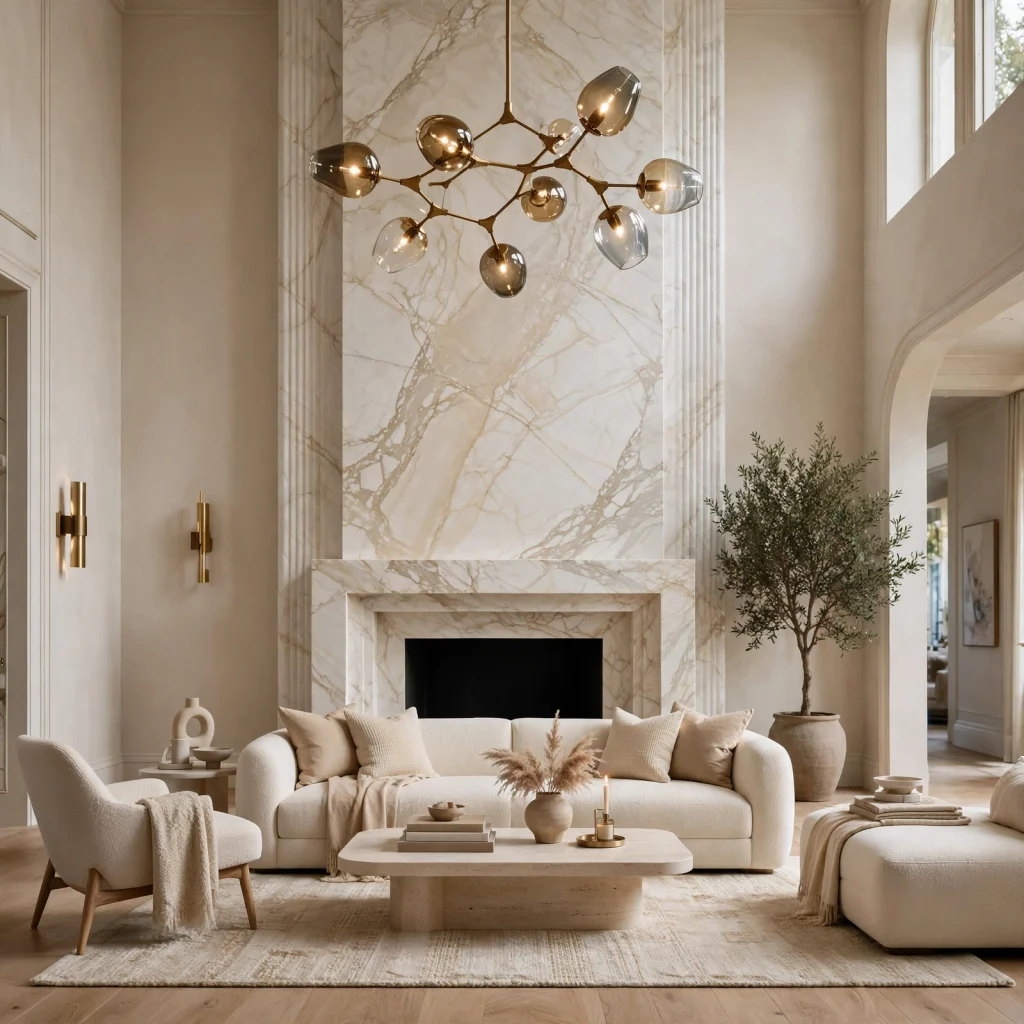
Designing a luxury living room around a single dominant focal point, whether a fireplace, a piece of art, or an architectural window, gives the room a clear visual hierarchy rather than several competing features fighting for attention. Every other design decision, furniture orientation, lighting placement, color accents, should support and lead the eye toward that primary feature rather than distract from it. Rooms with multiple equally weighted focal points often feel busier and less resolved, even when each individual element is well-chosen.
14. Craftsmanship-First Furniture Selection
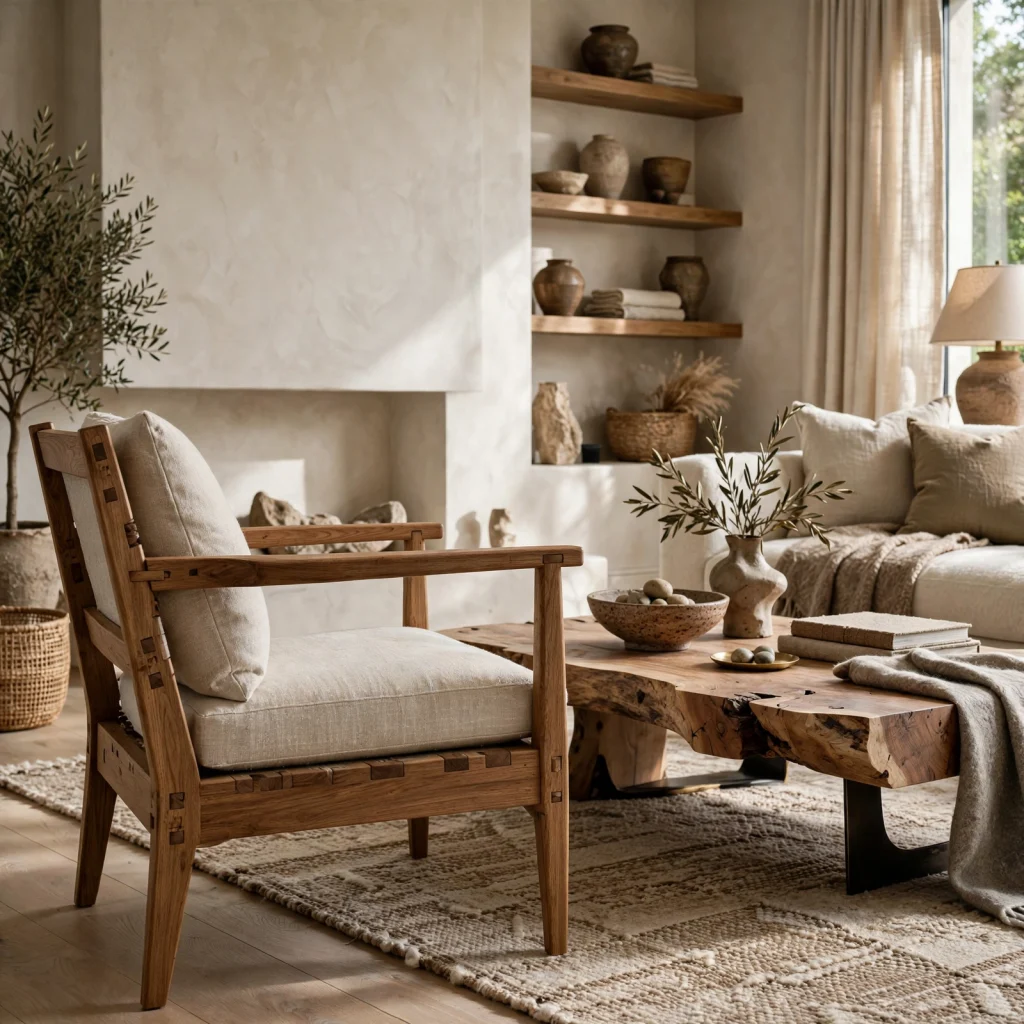
Prioritizing joinery quality, frame construction, and finishing details over brand recognition when selecting furniture is a principle that consistently separates genuinely luxury interiors from rooms that simply display expensive labels. A hardwood frame with dovetail joinery and hand-applied finishes will outlast and outperform a similarly priced piece built primarily for visual appeal. Learning to evaluate construction quality, checking drawer joinery, frame stability, and upholstery stitching, gives a more reliable read on a piece’s actual value than price alone.
15. Seasonal Restraint in Styling Updates
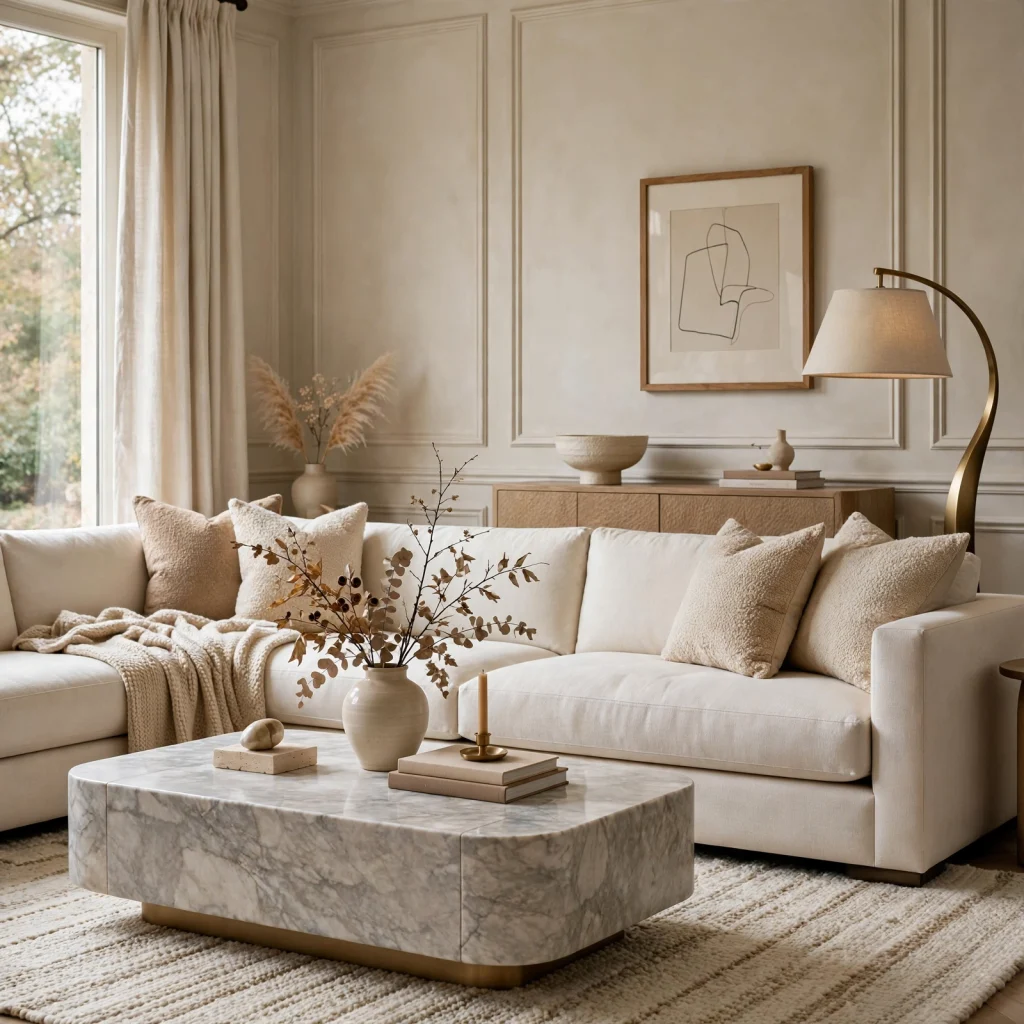
Applying restraint to seasonal or trend-driven styling updates, changing only a small number of textiles or accessories rather than restyling the entire luxury living room each season, preserves the sense of permanence and considered design that defines the style. Frequent, sweeping changes tend to undermine the perception of a carefully planned space, since genuine luxury design reads as timeless rather than reactive to passing trends. Limiting seasonal updates to a throw blanket, a few flowers, or a single accessory swap keeps the room’s foundational design intact year-round.
Shop the Look
Start with a custom-upholstered sofa sized to the room’s actual proportions, a pair of symmetrical armchairs flanking the fireplace, and floor-to-ceiling tailored drapery with a contrast lining. Add architectural cove lighting integrated into the ceiling, a single dominant art piece sized to the room’s scale, and built-in millwork bookcases finished to match the room’s existing wood tones. Finish with a hand-knotted rug sized to anchor the full seating group and a pair of custom sconces flanking the primary focal point.
Common Mistake to Avoid
A common mistake in luxury living room design is prioritizing individually expensive pieces over the underlying proportion and layout decisions that actually create a high-end feel. A room filled with costly furniture but poor traffic flow, mismatched scale, or competing focal points will read as disjointed regardless of the price tags involved. Working through spatial planning, scale, and material consistency first, before selecting individual pieces, produces a far more convincing luxury result than shopping for expensive items in isolation.
FAQs
What’s the difference between luxury living room design and simply expensive furniture?
Luxury living room design refers to the underlying principles, proportion, symmetry, material consistency, and craftsmanship, that shape how a room feels as a whole, while expensive furniture is just one input into that larger system. A room can contain costly individual pieces and still feel disjointed if the layout, scale, and material choices aren’t considered together. Conversely, a room built on strong design principles can feel luxurious even with a moderate furniture budget, since the planning itself carries significant visual weight.
Do I need an interior designer to achieve a luxury living room look?
While a professional designer brings training and experience that can speed up the process and avoid costly mistakes, many of the core principles behind luxury living room design, proportion, symmetry, restraint, and material consistency, can be applied independently with careful planning. Custom elements like millwork or upholstery generally do require working with a contractor or workroom, even without a full design engagement. For a complete room-wide transformation, particularly involving structural changes, professional guidance typically produces a more reliable result.
How important is symmetry in luxury living room design?
Symmetry plays a significant role in luxury living room design because it signals intentionality and creates a sense of visual calm, particularly around a room’s primary focal point like a fireplace or window. It doesn’t need to be applied throughout the entire room, and many high-end spaces balance a symmetrical anchor point with more relaxed, asymmetrical secondary areas. Overly rigid symmetry throughout an entire room can sometimes feel sterile, so most designers apply it selectively rather than universally.
What’s the most cost-effective way to start applying luxury design principles?
Focusing on spatial planning first, correcting furniture scale, improving traffic flow, and establishing a clear focal point, costs little to nothing beyond time and often produces a noticeable improvement before any new purchases are made. Limiting the room’s material and color palette to a smaller, more consistent set also costs nothing and significantly affects how cohesive the space feels. These foundational changes generally deliver more visual impact per dollar than purchasing a single expensive statement piece without addressing the underlying layout.
How long does a full luxury living room design project typically take?
A full luxury living room redesign, particularly one involving custom millwork, upholstery, or architectural lighting changes, commonly takes four to nine months from initial planning through installation, largely due to custom fabrication and construction lead times. Projects limited to furniture, textiles, and styling changes without structural or millwork components can typically be completed in six to ten weeks. Working with contractors and workrooms early in the process, rather than after design decisions are finalized, generally shortens the overall timeline.
Conclusion
Luxury living room design comes down to proportion, restraint, and consistency far more than any single expensive purchase, which is what makes the look achievable through careful planning rather than an unlimited budget. Save this guide to Pinterest for reference while planning a high-end update, and check out our related post on luxury living room ideas for specific materials and pieces that bring these design principles to life.