15 Beautiful Living Room TV Wall Ideas Beyond a Basic Mount
A living room TV wall often ends up as an afterthought, a television mounted at eye level with a media console beneath it and little else. This guide covers fifteen ideas that treat the television as one element within a designed wall rather than the wall’s only feature, from wood slat backdrops to fully concealed media units. Each idea includes the sizing, material, and cable-management details needed to execute a finished result rather than a simple mount-and-done setup.
Trend & Background
Living room TV wall design has shifted from simply mounting a television above a console toward treating the entire wall as a cohesive design feature, often incorporating millwork, stone, or wood paneling that extends beyond the screen itself. This change reflects both larger television sizes, which make an unadorned mount feel more visually dominant, and a broader preference for hiding technology within the room’s overall design rather than letting it stand apart. Concealment options, from sliding panels to disappearing screens, have also become more accessible, giving homeowners more ways to soften the television’s presence when it’s not in use.
Key Takeaways
- A living room TV wall works best when the television is treated as part of a larger design feature rather than the sole focal point.
- Cable concealment, whether through in-wall channels or a slim raceway, is what separates a finished TV wall from an unfinished one.
- Material choices like wood slats, stone, and panel molding can visually soften a television’s dark rectangular shape.
- Sightlines and viewing height should be planned before wall treatment or mounting height, not after.
1. Wood Slat Accent Wall
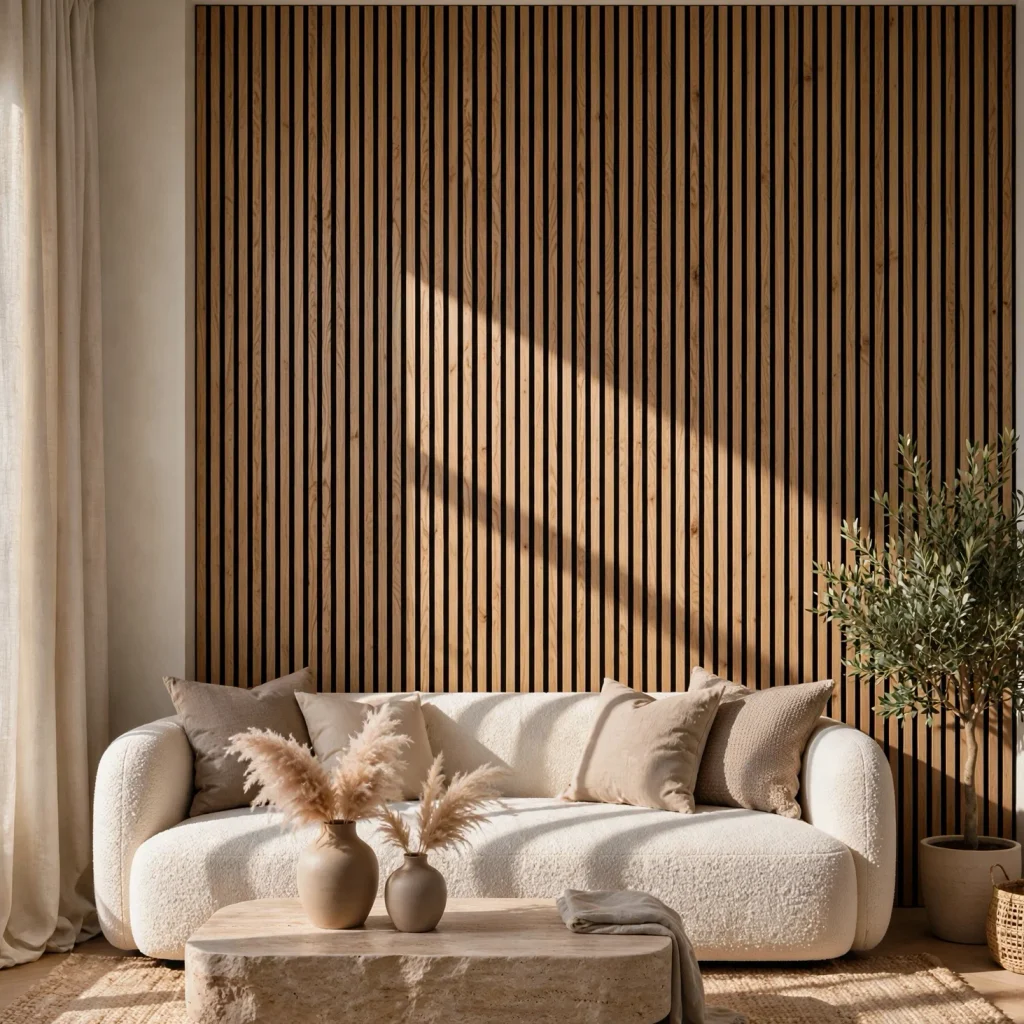
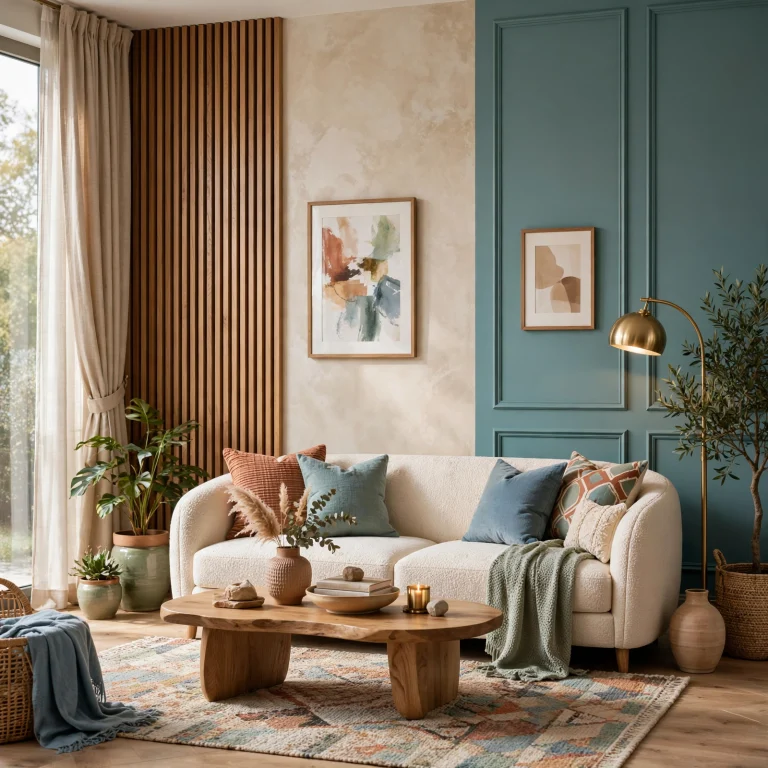
A wood slat accent wall, with evenly spaced vertical strips mounted over a contrasting backing, gives a living room TV wall texture and warmth that a flat painted wall can’t provide. Walnut or white oak slats over a black felt or acoustic backing also help absorb sound in a room with hard flooring, and the dark backing between slats makes a mounted television blend in more than it would against a plain white wall. This treatment typically extends the full width of the seating area rather than stopping at the television’s edges, so the screen reads as part of the wall rather than an object placed on top of it.
2. Full-Height Stone Fireplace and TV Combination
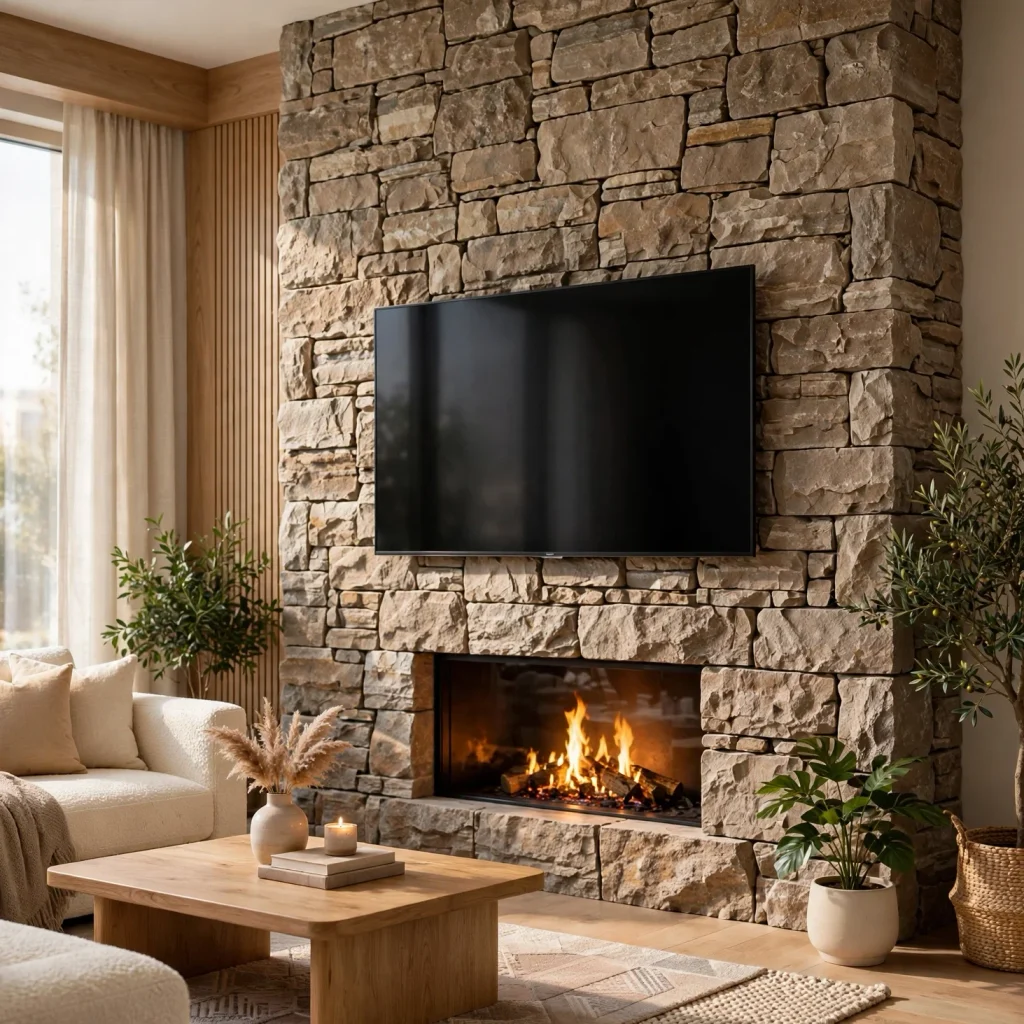
Combining a full-height natural stone or tile surround with a mounted television above the fireplace gives a living room TV wall a dramatic architectural anchor built around two functions in one feature. Limestone or a large-format porcelain tile in a honed finish suits most contemporary palettes better than a glossy, reflective surface, which can create glare on the screen. Mounting height above a fireplace should account for typical seating distance, since a television placed too high can strain the neck during extended viewing.
| Ceiling Height | Recommended TV Center Height Above Fireplace |
| 8 ft | 54–58 in from floor |
| 9 ft | 58–62 in from floor |
| 10 ft+ | 62–66 in from floor |
3. Built-In Media Cabinetry
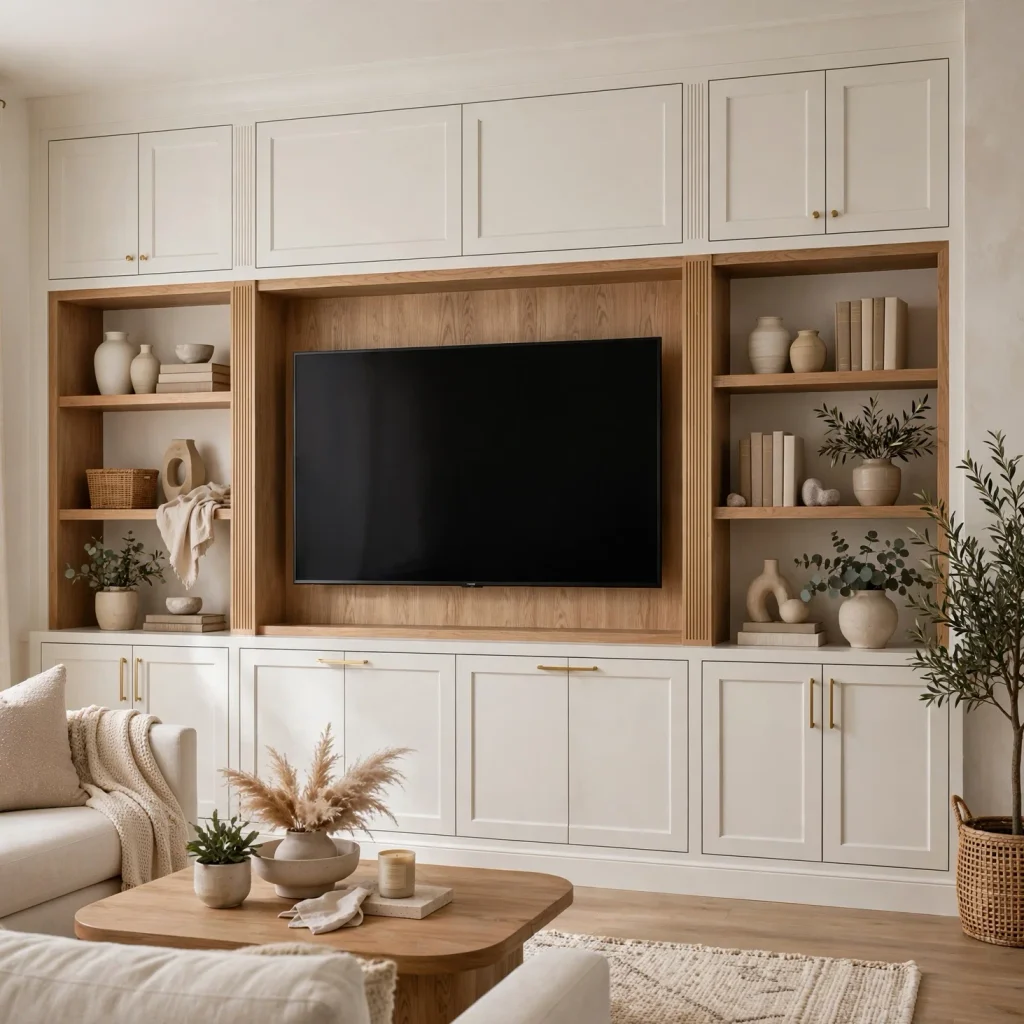
Built-in media cabinetry, running the full width of a living room wall with the television centered within an open niche, hides equipment and clutter behind closed doors while keeping the screen as the wall’s clear focal point. Shaker-style lower cabinets paired with open upper shelving for books or objects balance storage with display space. Running electrical and cable lines through the cabinetry during construction, rather than relying on visible power strips, is what makes this option feel genuinely finished.
4. Sliding Panel Concealment
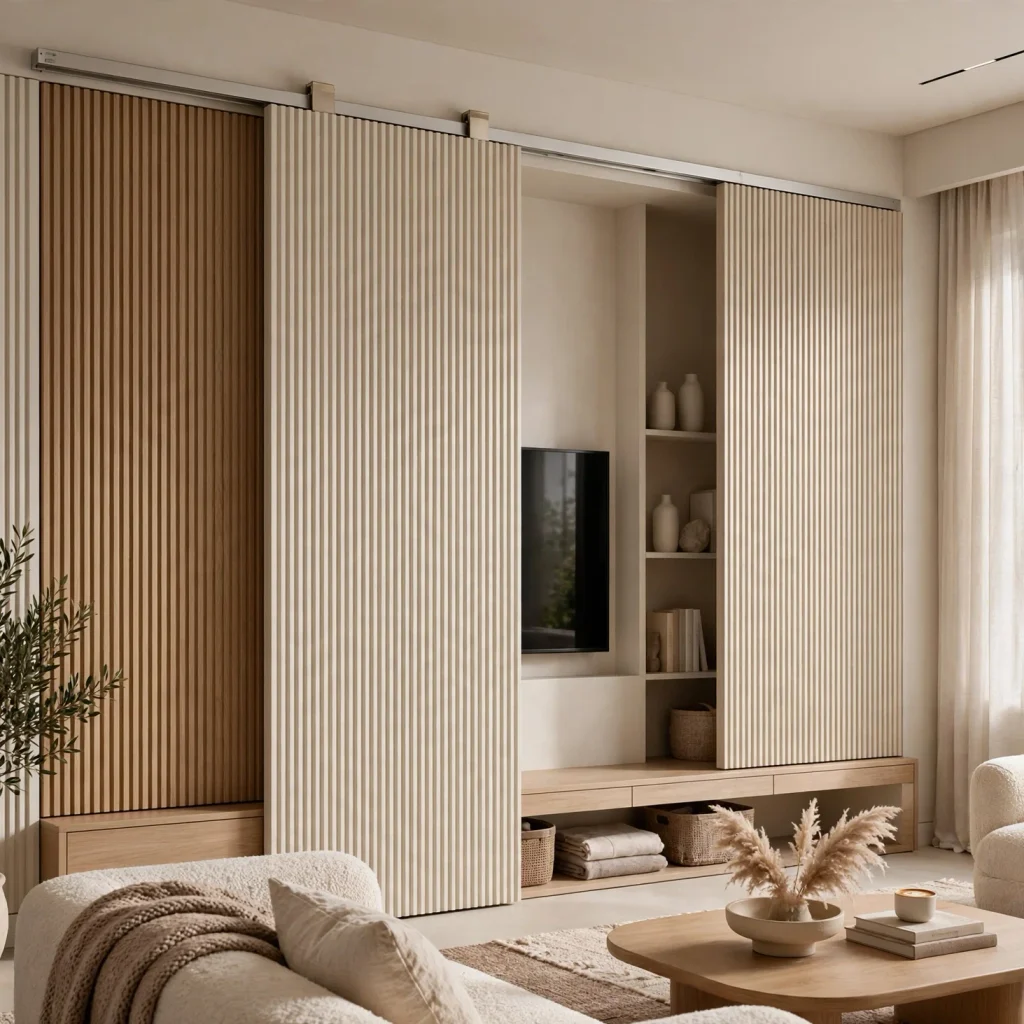
A sliding panel, mounted on a track in front of the television, allows a living room TV wall to fully conceal the screen when it’s not in use, turning the wall into an uninterrupted design feature. A fabric-wrapped panel, a slatted wood panel, or even a piece of art on a track are all common approaches, each sliding open along a rail mounted above and below the television’s recess. This idea works particularly well in more formal living rooms where the television’s presence feels at odds with the rest of the room’s design when not actively being watched.
5. Floating Shelf Flanking
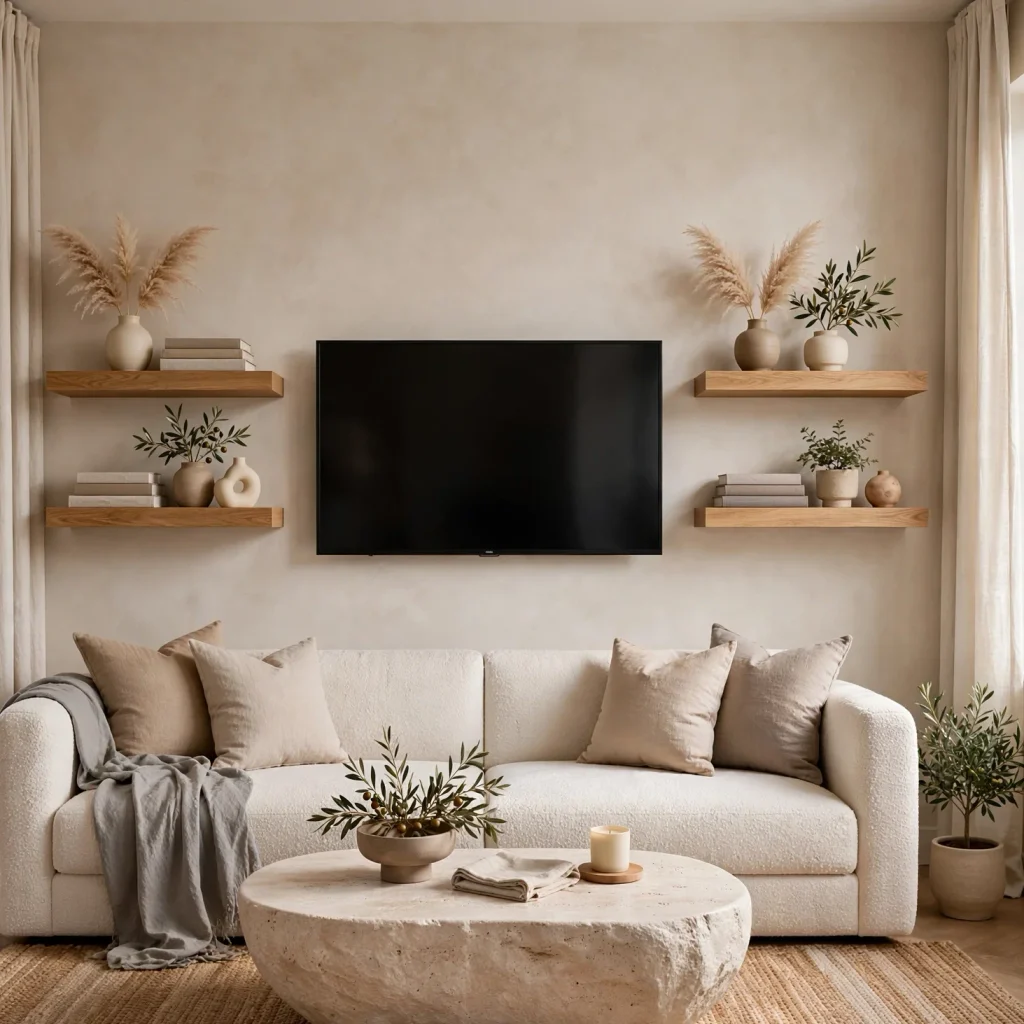
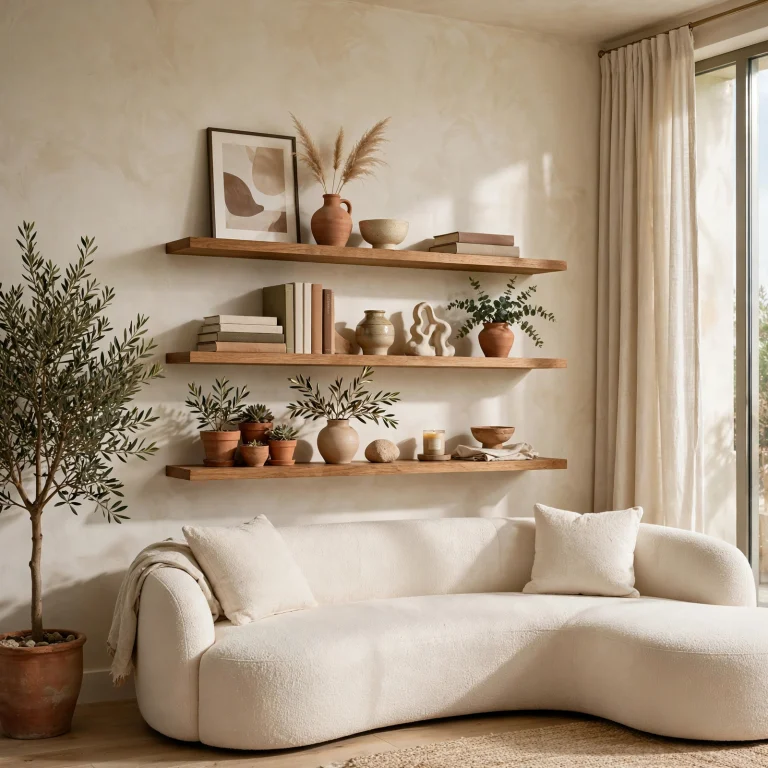
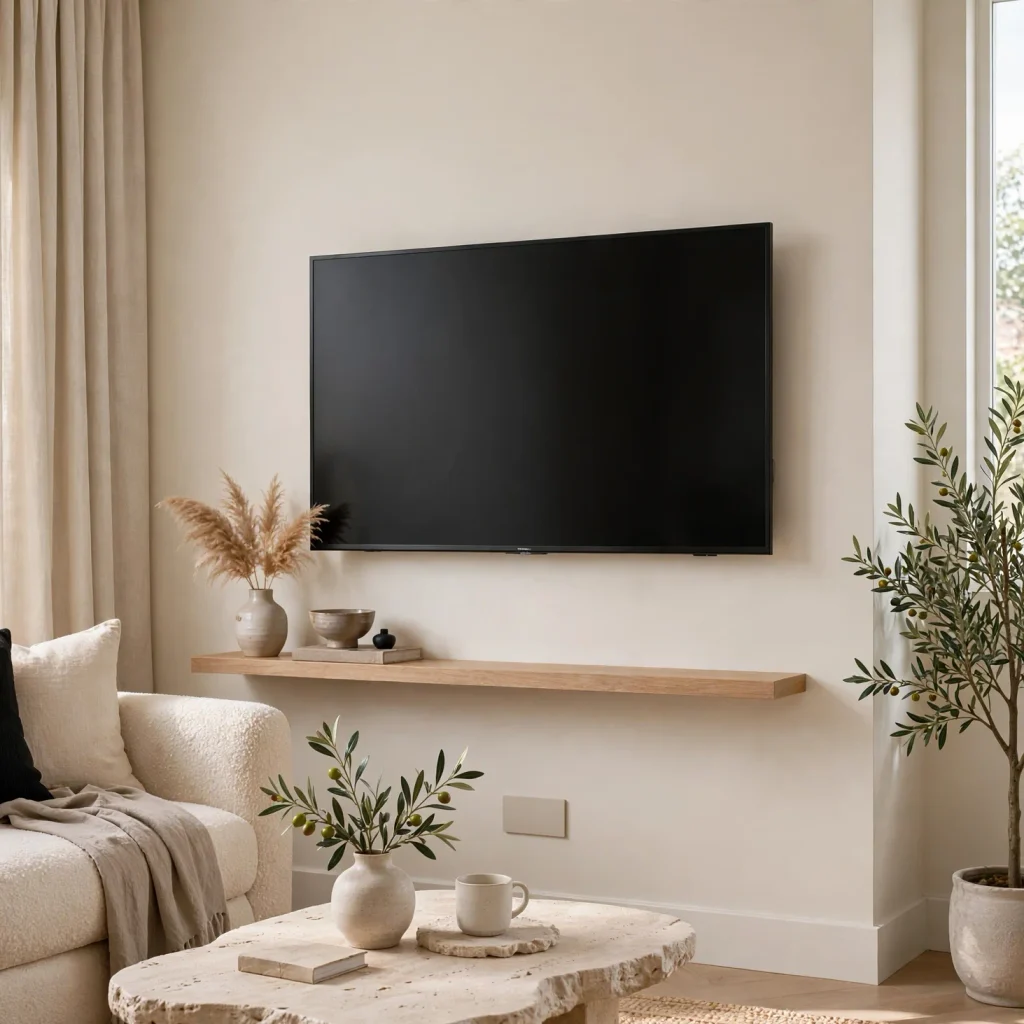
Floating shelves installed on either side of a mounted television break up the wall’s negative space and give a living room TV wall a place to display books, plants, or objects without adding a full media console below. Staggering the shelf heights slightly on each side, rather than mirroring them exactly, creates a more relaxed, collected look. This approach also works well in rooms where a full built-in isn’t in the budget, since floating shelves require far less installation than custom cabinetry.
Add personality and warmth with these living room decor ideas that bring natural elements indoors.
6. Picture Frame Molding Backdrop
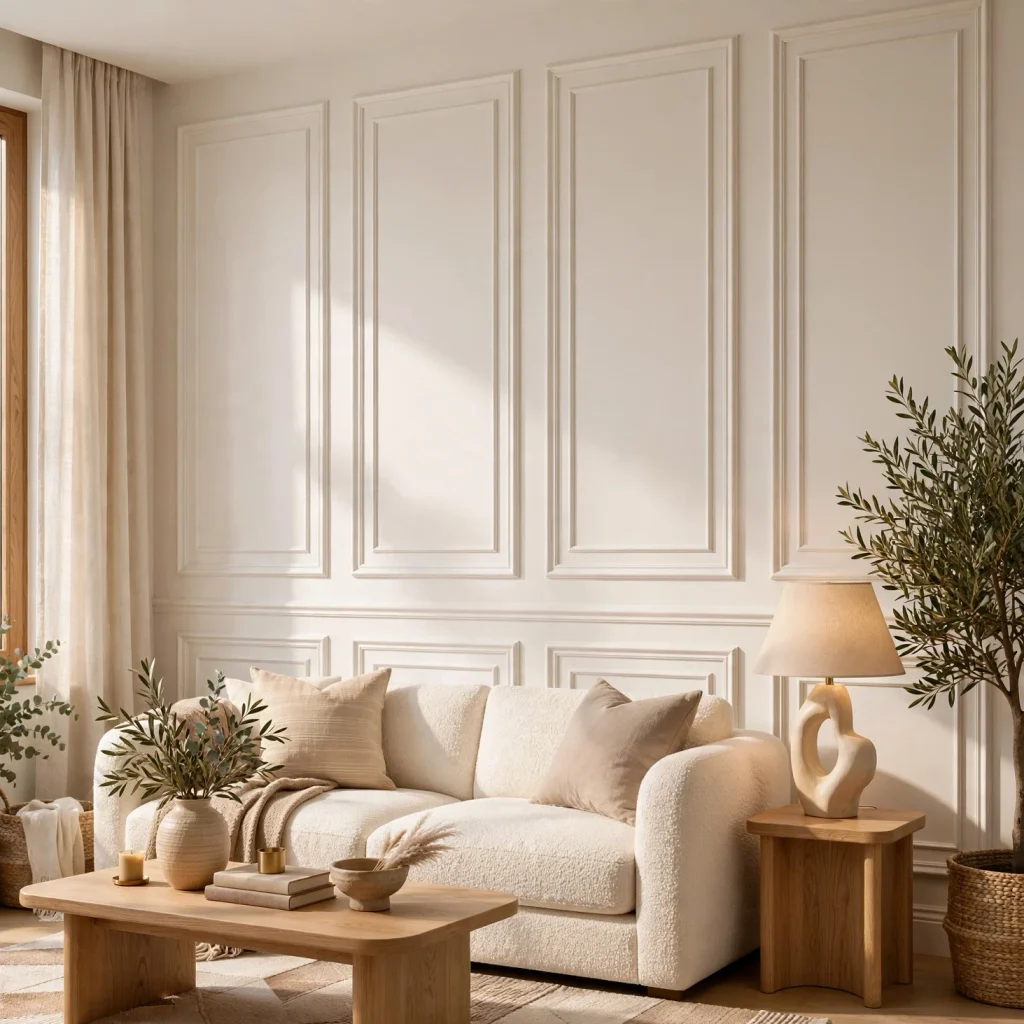
Picture frame molding, applied in a grid pattern behind and around a mounted television, adds architectural detail to a living room TV wall using a relatively affordable trim carpentry technique. Painting the molding and the wall the same color, rather than using contrast, keeps the detail subtle and lets the television remain the wall’s practical focus while still adding depth and texture. This treatment suits both traditional and transitional living rooms better than a stone or slat wall, which lean more toward a contemporary aesthetic.
7. Low-Profile Floating Console
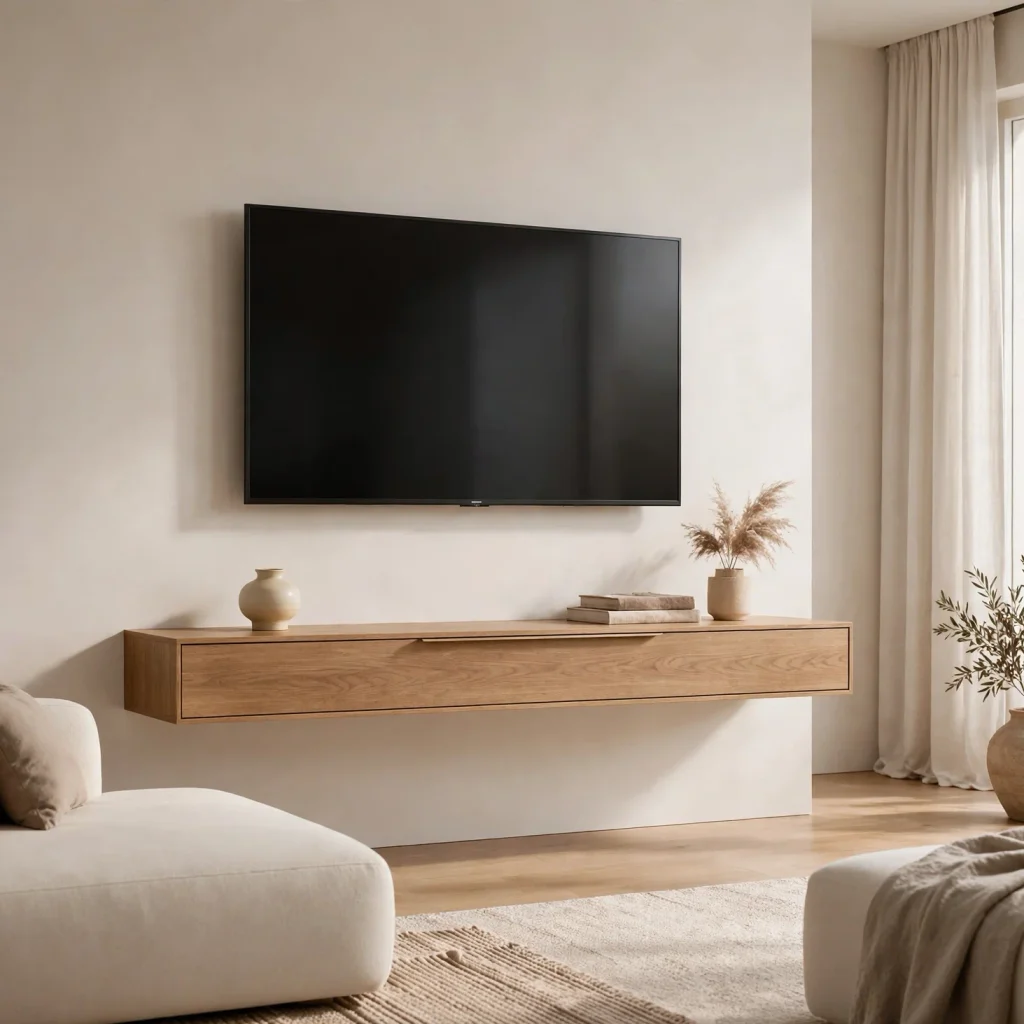
A low-profile floating console, mounted directly to the wall beneath a television with no visible legs, keeps a living room TV wall feeling light and keeps the floor space beneath it open. A walnut or white oak console with a cutout or routed channel for cable management on the back keeps cords from hanging visibly beneath the unit. Mounting the console 18 to 20 inches above the floor also makes vacuuming or cleaning underneath significantly easier than a traditional floor-standing unit.
8. In-Wall Cable Concealment Kit
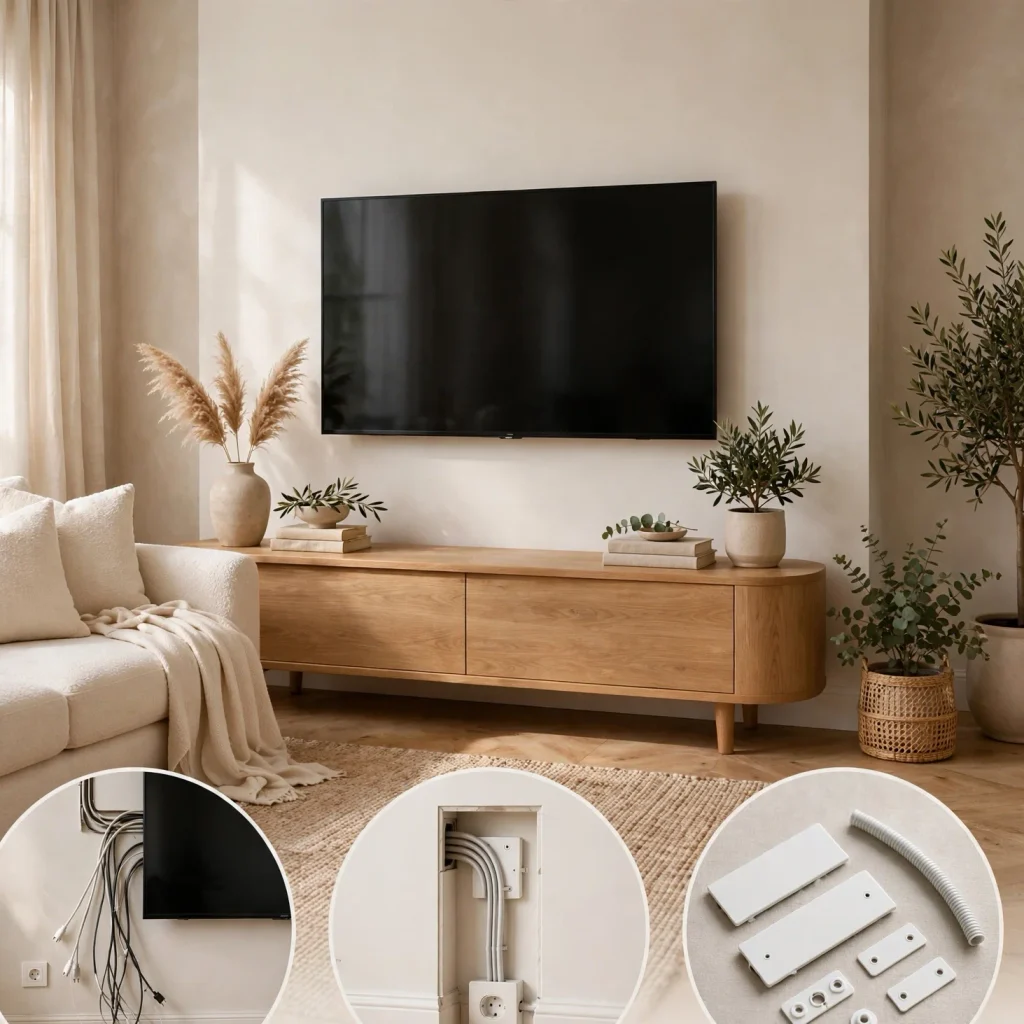
An in-wall cable concealment kit routes power and HDMI cables through the wall itself, from the television mount down to an outlet near the media console, eliminating visible cords entirely from a living room TV wall. This requires cutting two small access points in the drywall, one behind the television and one near the outlet, and is best done before any wall treatment like paint or paneling is applied. For older homes or rentals where wall modification isn’t possible, a slim adhesive cord raceway painted to match the wall offers a similar visual result without construction.
9. Gallery Wall Around the Television
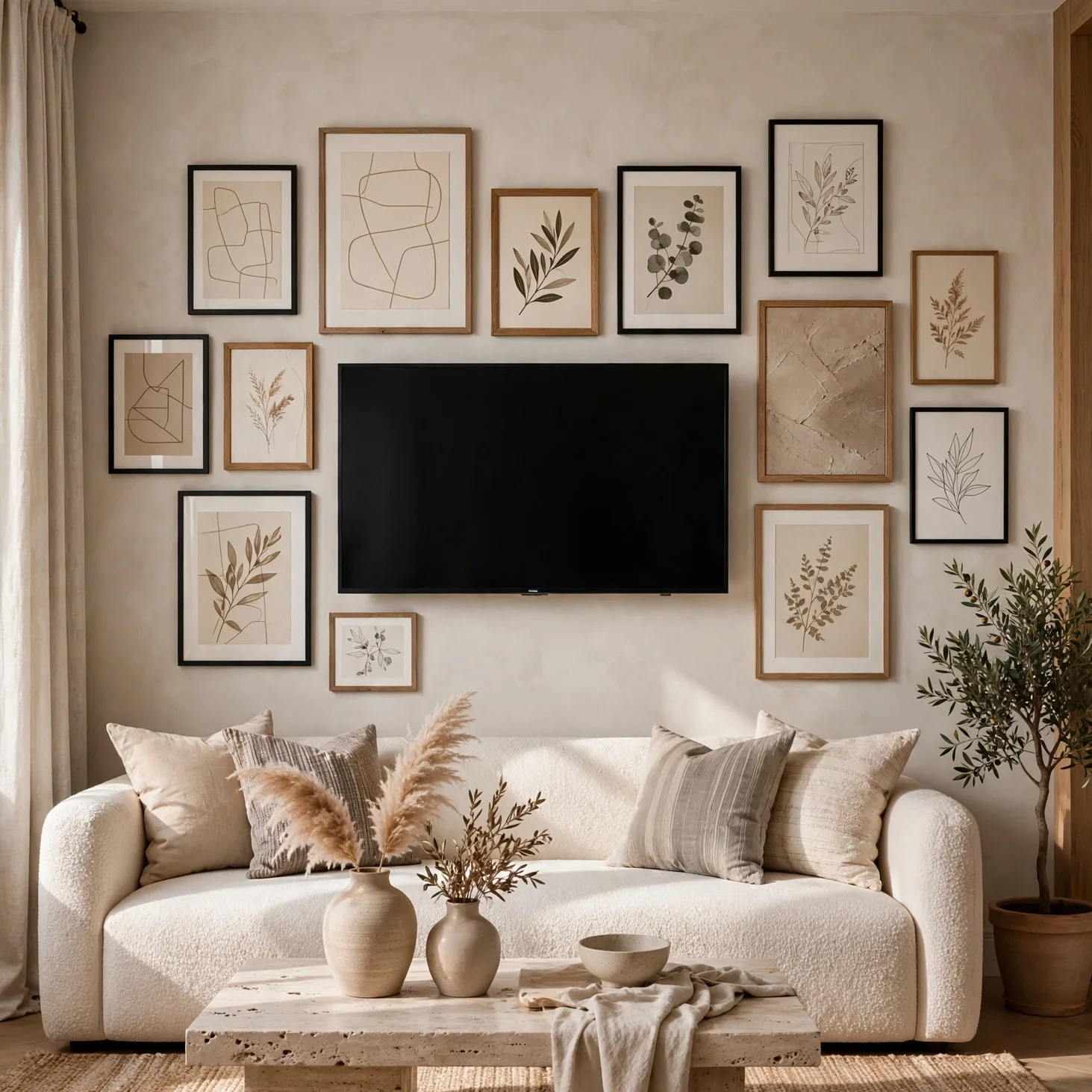
Incorporating a mounted television into a gallery wall, surrounded by framed art and photography at a similar scale, treats the screen as one more rectangle within a larger curated arrangement rather than a standalone object. Choosing frame sizes similar to the television’s proportions helps it blend into the grid rather than standing out as an obvious break in the pattern. This idea works best with a slim, low-profile mount that keeps the television close to the wall, matching the flat profile of the surrounding frames.
10. Fluted Panel TV Backdrop
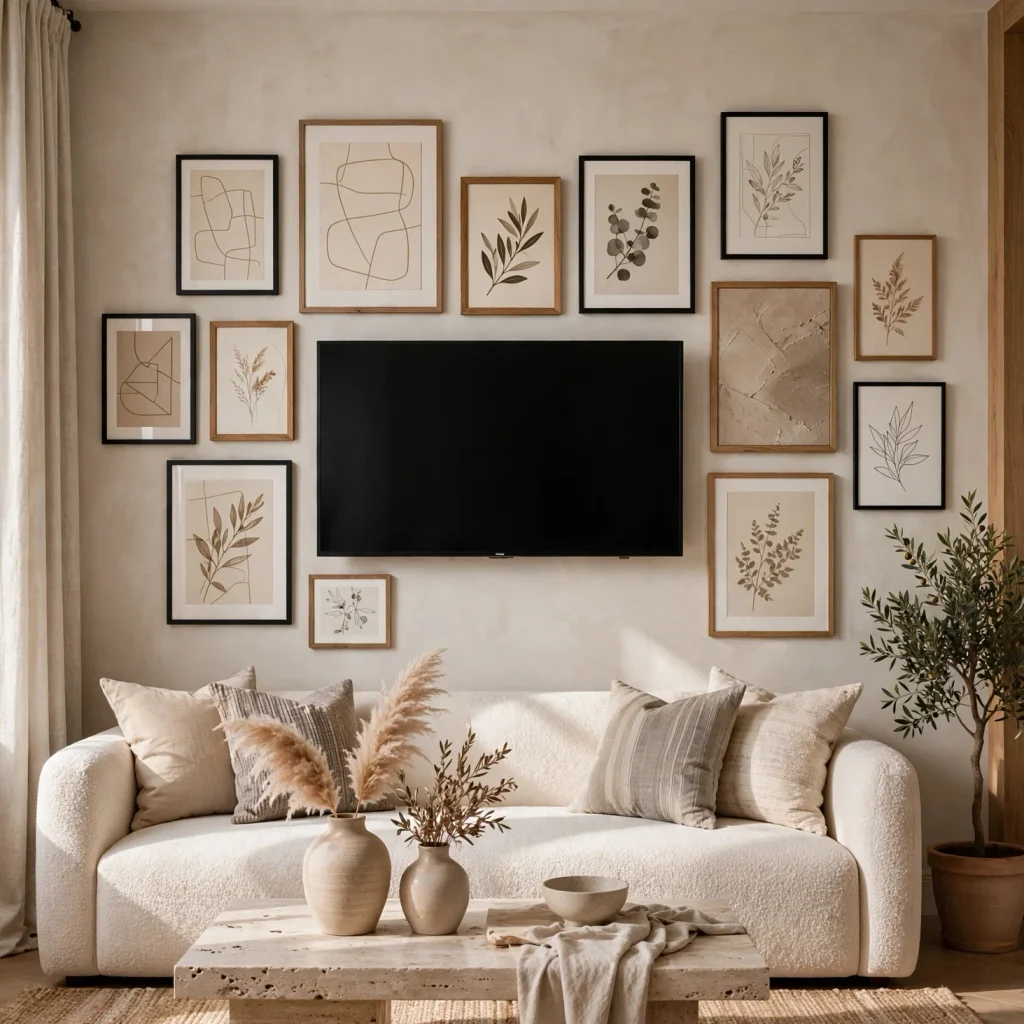
Fluted wood panels, installed in a grid or single continuous run behind a mounted television, add a subtle vertical texture to a living room TV wall without the higher cost of full slat paneling. This detail typically covers just the section directly behind the screen, extending a foot or two beyond each edge of the television, rather than the full wall. A natural or lightly stained oak finish keeps the panel from reading as overly ornate, suiting both modern and transitional living room styles.
11. Bookshelf-Framed TV Niche
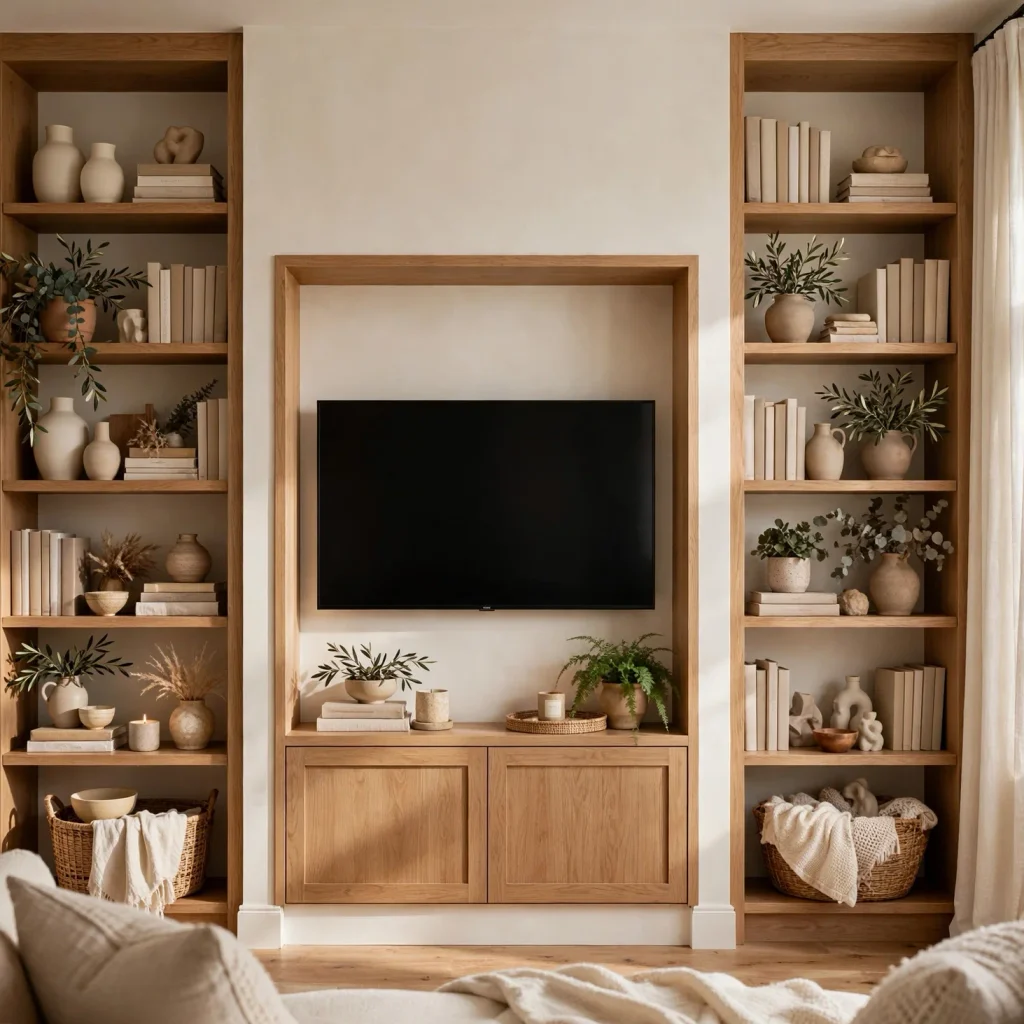
Flanking a mounted television with tall, full-height bookshelves on either side creates a living room TV wall that balances the screen with a substantial amount of storage and display space. This layout works particularly well in rooms with at least 10 to 12 feet of wall length, since narrower walls can make the flanking shelves feel cramped relative to the television. Styling the shelves with a mix of books, objects, and negative space, rather than filling every inch, keeps the overall wall from feeling overcrowded.
12. Ambient Backlighting Behind the TV
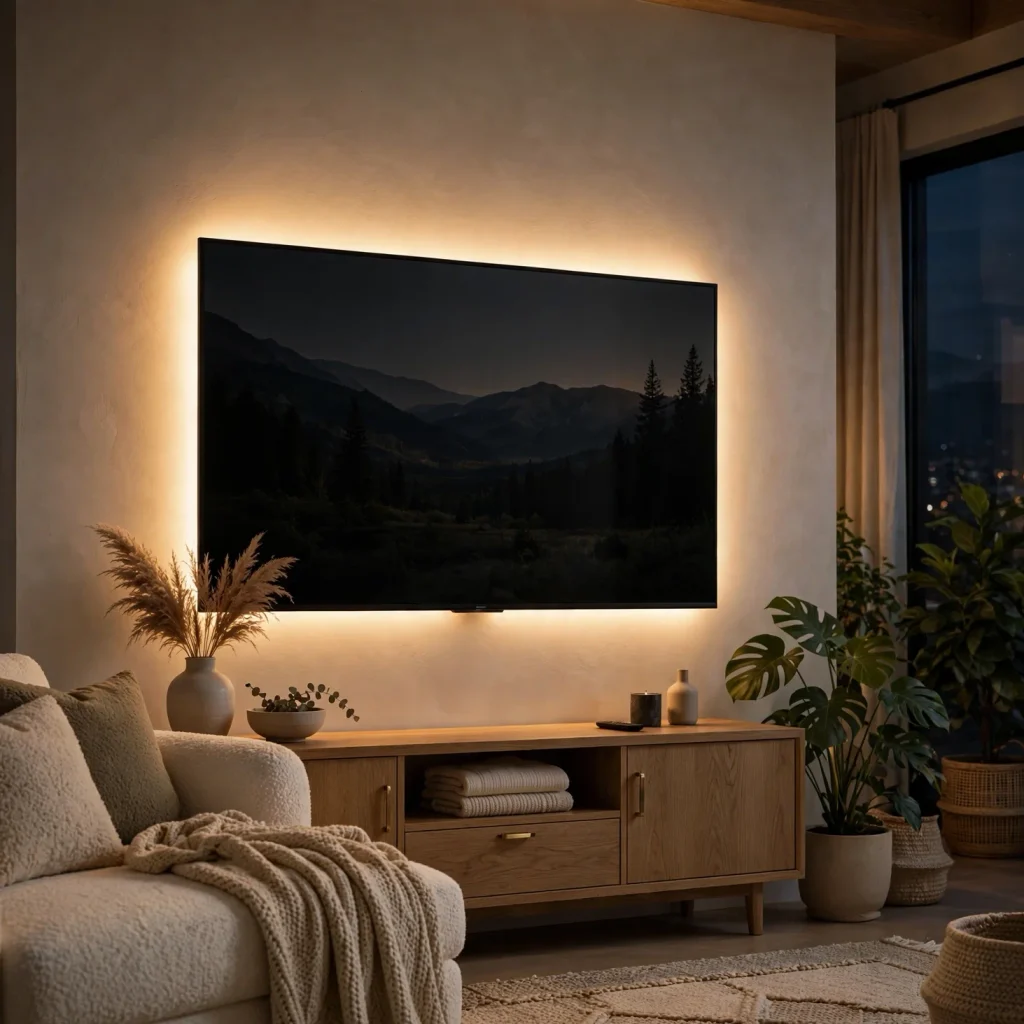
A strip of LED backlighting installed behind a mounted television, either built into the wall or mounted along the television’s rear edge, softens the screen’s contrast against the wall and reduces eye strain during evening viewing. Many smart lighting systems can sync this backlight to the on-screen content, shifting color and brightness to match what’s playing. This detail also gives a living room TV wall a subtle glow when the television is off, keeping the wall from going completely dark in a room otherwise lit with warm ambient lighting.
13. Corner TV Wall Layout
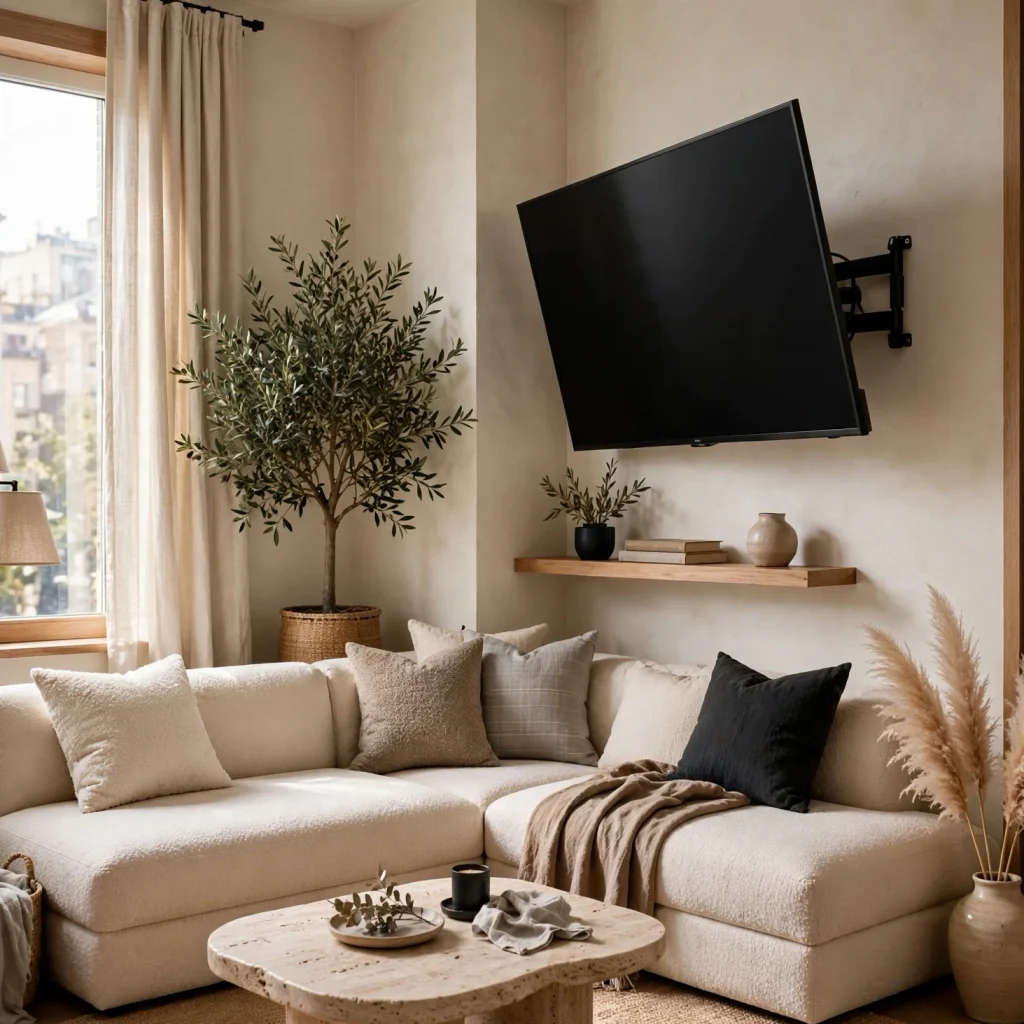
A corner TV wall layout, with the television and any surrounding built-in or paneling angled into a room’s corner rather than centered on a flat wall, makes use of a space that’s often awkward to furnish otherwise. This layout works particularly well in smaller living rooms where a full flat wall isn’t available for a media setup without blocking a window or doorway. Angling seating slightly toward the corner, rather than directly across the room, keeps sightlines comfortable despite the non-standard television placement.
14. Minimalist Frame TV Integration
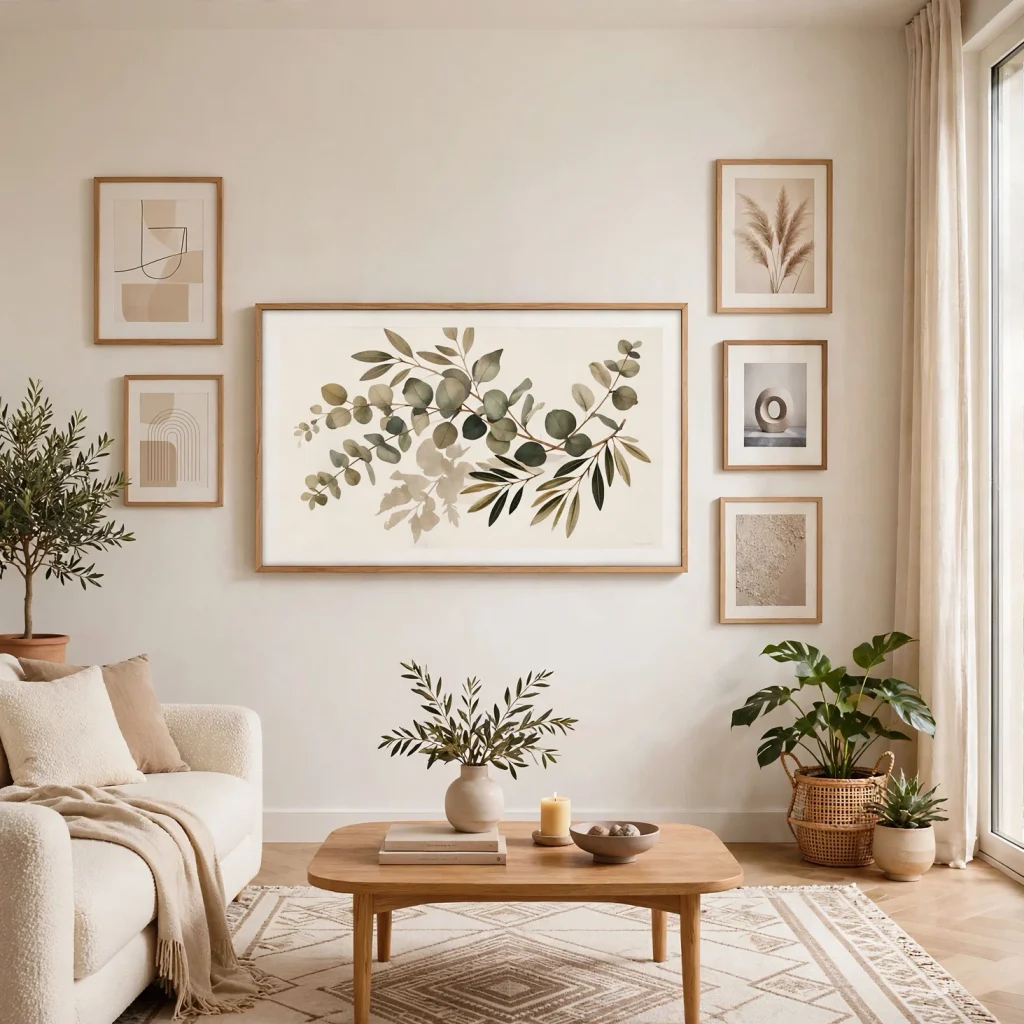
A frame-style television, designed to display artwork when not actively in use, allows a living room TV wall to function as a rotating art display rather than a dark screen for most of the day. A simple wood or matte metal frame that matches the television’s bezel helps it blend more convincingly into a gallery wall or single art placement. This option suits living rooms where the television’s presence when off is a bigger design concern than when it’s actively being watched.
15. Two-Tone Wall Treatment Behind the TV
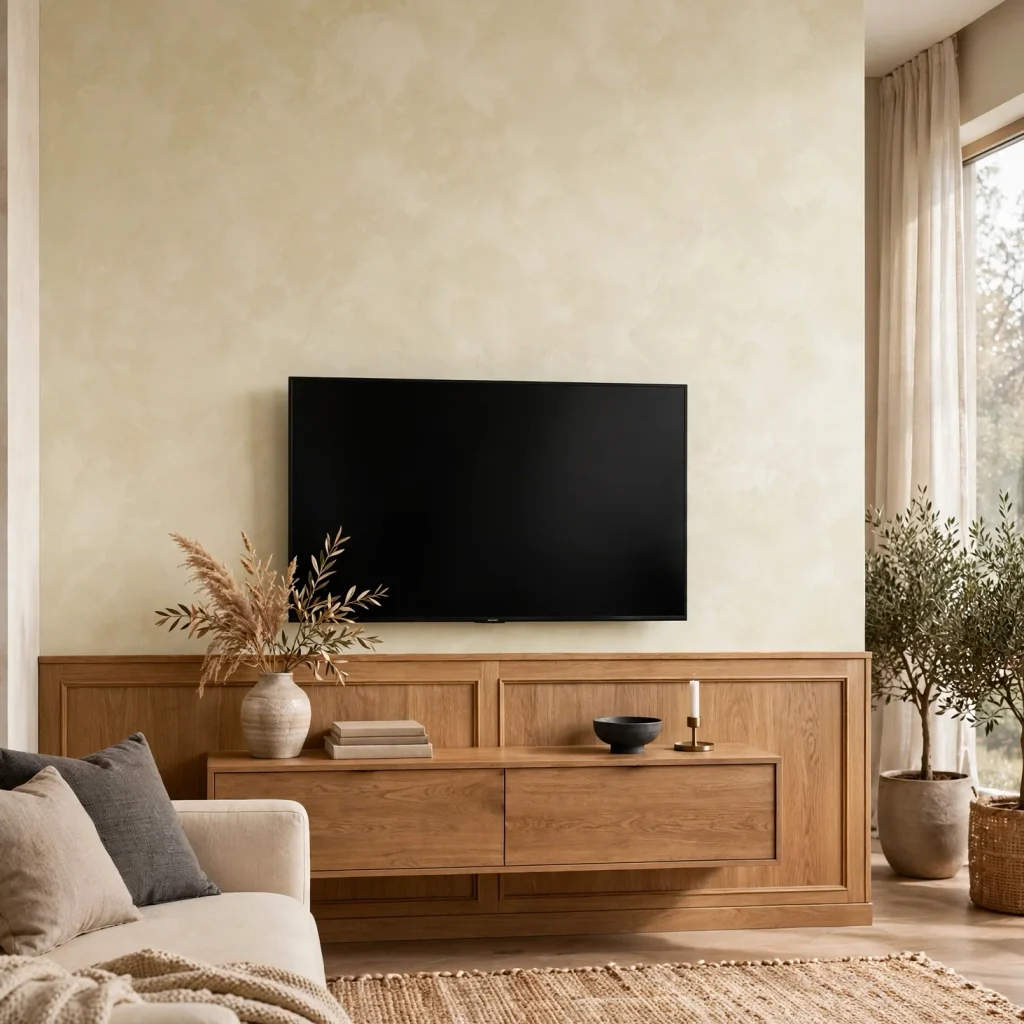
A two-tone wall treatment, with a deeper accent color applied specifically behind and around the television’s mounting area while the rest of the wall stays lighter, creates a defined zone for the screen without requiring a full accent wall. Charcoal, deep forest green, or navy against a warm white surrounding wall all work well, since darker tones behind a screen reduce contrast and make the television blend in more when off. This approach is one of the lowest-cost ways to give a living room TV wall a designed feel without added materials or millwork.
Shop the Look
Start with a low-profile floating walnut console, an in-wall cable concealment kit, and a set of white oak floating shelves flanking the television. Add a strip of smart LED backlighting behind the screen, a matte black slim-profile TV mount, and picture frame molding painted to match the wall if a more traditional look is preferred. Finish with a mix of books and ceramic objects on the flanking shelves to balance the screen visually.
Common Mistake to Avoid
A common mistake with a living room TV wall is mounting the television too high in an effort to make it feel less prominent, which often results in an uncomfortable viewing angle during actual use. The center of the screen should generally align close to seated eye level, typically 42 to 48 inches from the floor for most seating heights, regardless of how the surrounding wall is styled. Prioritizing comfortable viewing height first, then designing the wall treatment around that fixed point, produces a better result than adjusting height to suit the design alone.
FAQs
How high should a TV be mounted on a living room wall?
The center of the television should generally sit close to seated eye level, which for most standard sofa heights works out to roughly 42 to 48 inches from the floor. This can shift slightly higher in rooms with taller seating or when the television sits above a fireplace, since sightlines from a farther viewing distance tolerate a bit more height. Mounting height should always be prioritized over purely aesthetic wall design, since a poorly placed screen affects daily use far more than the surrounding decor.
How do I hide TV cables on a living room wall?
An in-wall cable concealment kit, which routes cables through the wall cavity from the television to a nearby outlet, offers the cleanest result but requires cutting small access points in the drywall. For rentals or situations where wall modification isn’t possible, an adhesive cord raceway painted to match the wall color provides a similar visual result without construction. Both methods are significantly more effective than simply bundling cables with zip ties, which remains visible even when tidied.
What’s the best material for a TV wall backdrop?
Wood slats, natural stone, and fluted panel treatments are among the most popular current choices for a living room TV wall backdrop, each adding texture that helps the television’s dark rectangular shape blend into the wall rather than stand apart from it. The right choice generally depends on the room’s existing material palette, with wood suiting warmer, more contemporary spaces and stone suiting rooms built around a fireplace feature. Budget and installation complexity also play a significant role, since stone and full millwork cost considerably more than paint-based treatments.
Should a TV always be the center of a living room wall?
A television doesn’t need to be the exact visual center of a living room wall, and many current layouts position it slightly off-center within a larger gallery wall, bookshelf arrangement, or fireplace feature. Balancing the screen with surrounding elements like art, shelving, or plants generally creates a more considered design than a television mounted in isolation on an otherwise bare wall. The key is ensuring the overall arrangement still supports a comfortable viewing angle from the primary seating area.
Can a fireplace and TV share the same wall?
A fireplace and television can share the same wall successfully, most commonly with the television mounted directly above the fireplace within a shared stone or tile surround. This layout does require attention to mounting height and heat exposure, since some fireplace types generate enough heat to affect a television mounted too closely above them. Checking the fireplace manufacturer’s clearance recommendations before finalizing the television’s placement helps avoid heat-related damage over time.
Conclusion
A living room TV wall works best when the television is planned as one element of a larger designed feature rather than a standalone mount on an empty wall. Save this guide to Pinterest for reference while planning your next media wall update, and check out our related post on modern living room ideas for more ways to build out the rest of the room around this focal point.