15 Trendy Fairy Garden Ideas for a Miniature World Worth Exploring
A fairy garden Ideas creates a genuinely convincing miniature world through careful scale consistency and a sense of implied story, rather than simply scattering small decorative accessories among regular garden plants. This guide covers fifteen fairy garden ideas, from miniature plant selection to implied narrative elements, addressing both the practical horticultural choices and the storytelling techniques that make these small-scale gardens genuinely enchanting rather than merely decorated. Every idea works for either an outdoor in-ground fairy garden or a container-based indoor version.
Trend & Background
Fairy garden design has grown into a genuinely sophisticated miniature gardening category, moving well beyond simply placing a small figurine among regular-sized plants toward deliberate scale consistency between structures, accessories, and genuinely miniature or dwarf plant varieties selected specifically for their small-scale appropriateness. This attention to scale and cohesion reflects the same design principles that distinguish a convincing dollhouse or model railroad layout from a randomly assembled collection of small objects, applied specifically to a living, growing garden context. Both children and adult hobbyists have embraced this more deliberate approach, recognizing that genuine attention to scale and implied narrative produces a considerably more magical, engaging result than accessories alone.
Key Takeaways
- A convincing fairy garden relies on genuine scale consistency between plants, accessories, and structures more than any single decorative piece.
- Miniature plant selection matters as much as accessories, since oversized plants immediately break a fairy garden’s illusion.
- Both indoor container and outdoor in-ground fairy gardens work well, each suited to different space and maintenance situations.
- A fairy garden benefits from an implied story or scene, a path leading somewhere, a door suggesting an interior, rather than randomly placed miniatures.
Fairy Garden Ideas
From charming planting ideas to stylish landscaping touches, find creative ways to make your garden more inviting and enjoyable.
1. Genuinely Miniature and Dwarf Plant Varieties
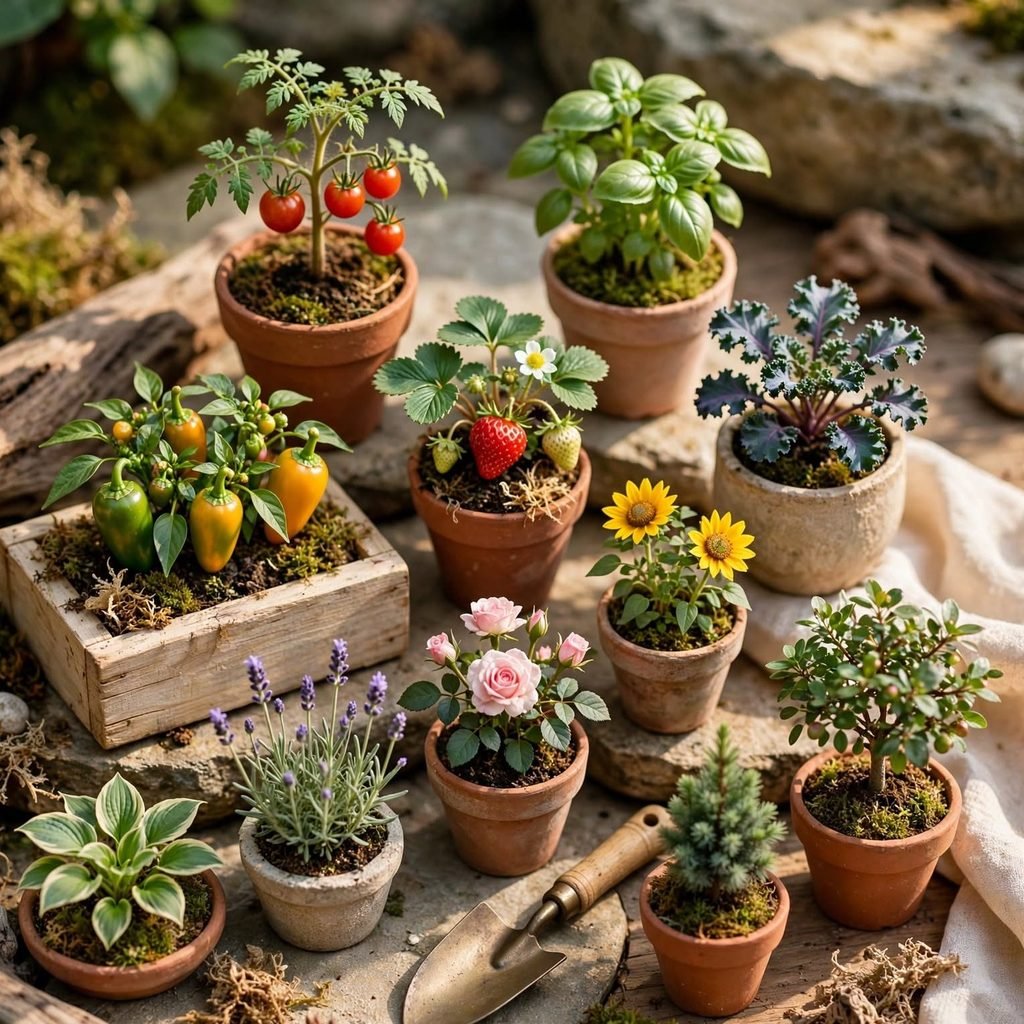
Choosing plants specifically selected for their naturally small scale, miniature hostas, dwarf mondo grass, creeping thyme, and other genuinely petite varieties, rather than simply young specimens of standard-sized plants that will eventually grow too large, maintains a fairy garden’s scale illusion considerably longer and more convincingly than plants that will quickly outgrow their intended miniature role. Researching a plant’s genuine mature size before selection, rather than judging purely by its appearance at initial purchase, prevents the common disappointment of a fairy garden that looks appropriately scaled initially but becomes overwhelmed by oversized growth within a single season. Consulting with a nursery specifically about miniature or dwarf plant varieties suited to fairy gardening helps identify genuinely appropriate options beyond generic small plant assumptions.
2. Consistent Scale Across All Accessories
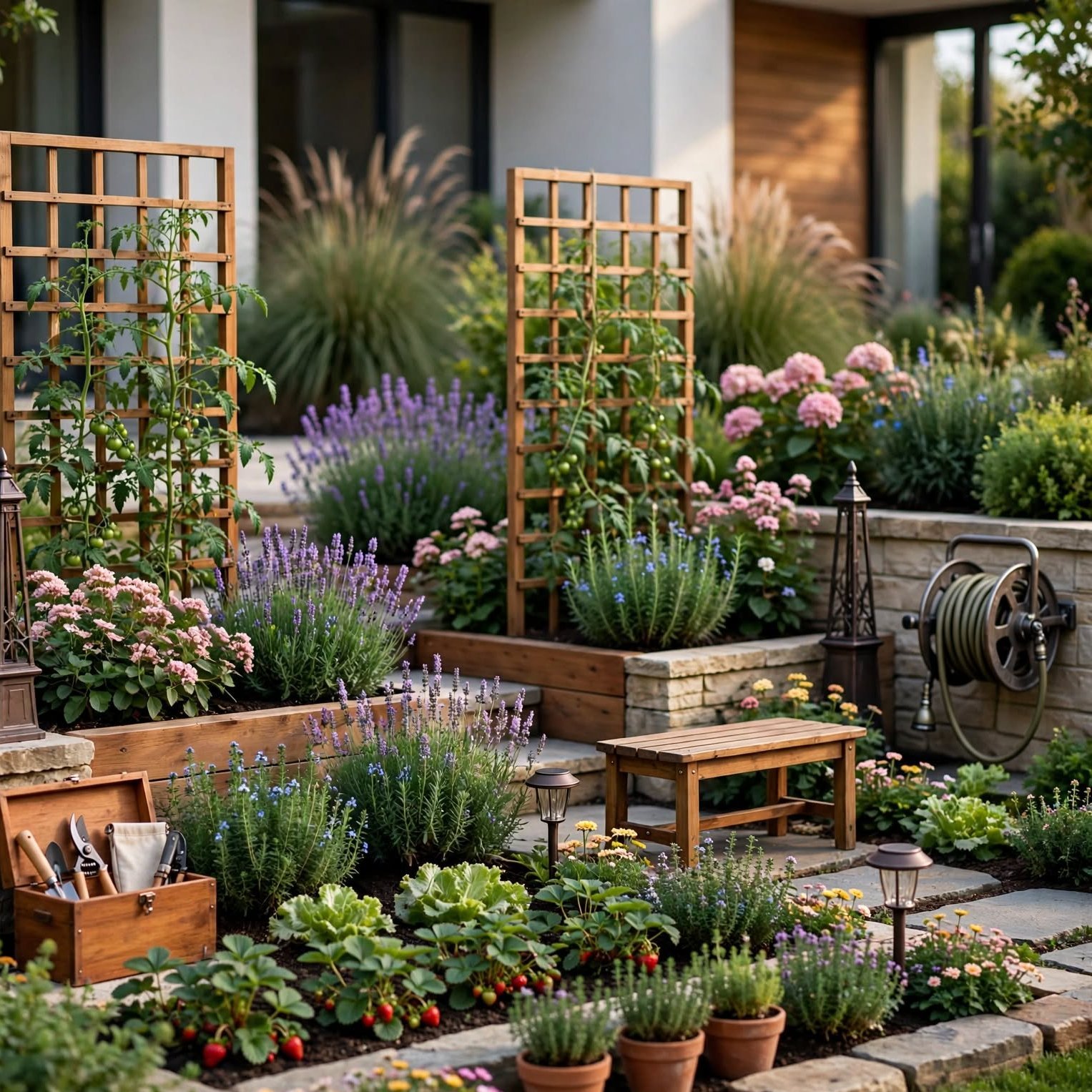
Maintaining genuine scale consistency across every accessory within a fairy garden, ensuring a miniature door, furniture pieces, and figurines all relate proportionally to each other rather than mixing wildly different scales, matters more to the garden’s overall convincing quality than any single accessory’s individual charm or detail. This consistency requires actual measurement and comparison when selecting new pieces, rather than assuming items marketed generically as “fairy garden accessories” automatically share a consistent scale with each other. Establishing a specific scale reference early, perhaps based on a favorite key structural piece like a miniature house, and measuring subsequent additions against that established scale prevents this common consistency problem as a collection grows over time.
3. A Miniature Pathway Suggesting Movement and Story
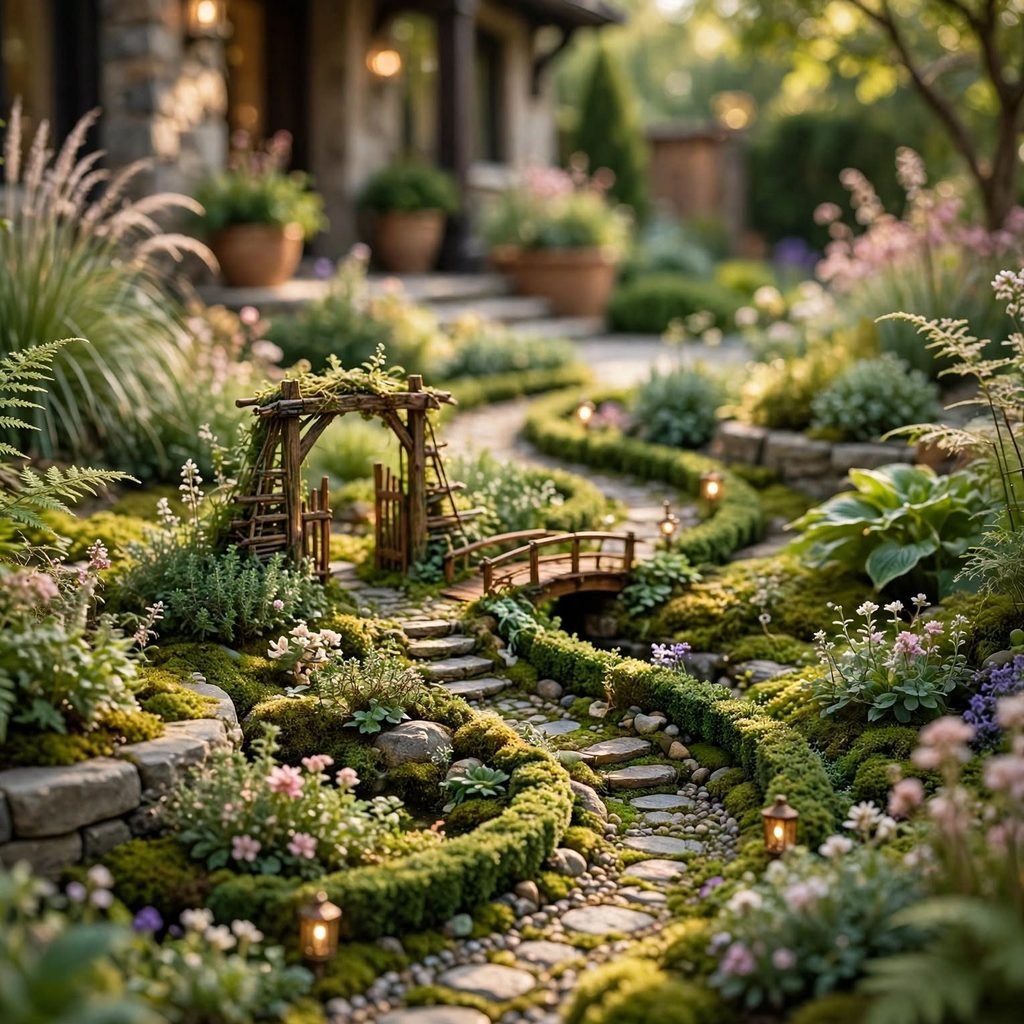
Incorporating a small pathway, using tiny pebbles, sand, or miniature paving stones, that appears to lead somewhere specific, toward a miniature door, a small structure, or simply curving mysteriously out of sight behind a plant, creates a genuine sense of implied story and movement that scattered, randomly placed accessories without any suggested narrative don’t achieve. This pathway technique borrows directly from genuine landscape design principles, where a path draws the eye and imagination toward an implied destination rather than existing as a purely static decorative element. Curving this pathway rather than running it in a stark straight line generally creates a more magical, exploratory quality appropriate to a fairy garden’s whimsical character.
4. A Miniature Door Suggesting an Interior World
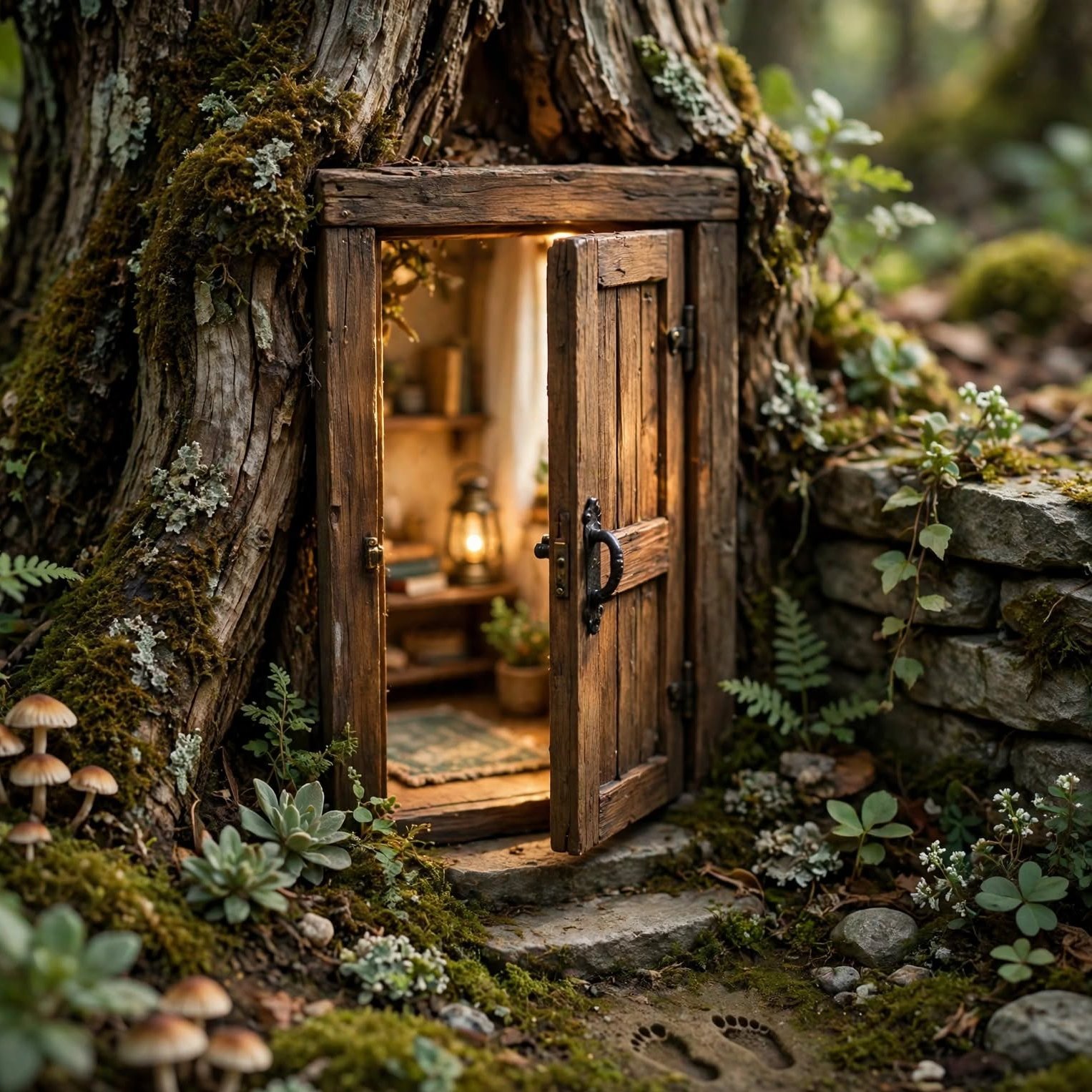
A small fairy door, mounted at the base of a tree trunk, tucked into a garden wall, or positioned among rock formations, suggests an entire implied interior world beyond what’s actually visible, engaging imagination more powerfully than any single visible accessory alone could achieve. Choosing a door with genuine believable detail, a tiny doorknob, hinges, perhaps a small welcome mat, reinforces this sense that something genuine exists just beyond the visible scene. Positioning this door at a scale-appropriate height relative to surrounding miniature accessories and plants maintains the overall garden’s consistent scale illusion.
| Element | Purpose | Key Consideration |
| Miniature plants | Living scale foundation | Genuine dwarf varieties, not just young standard plants |
| Consistent accessory scale | Believable proportions | Measure against an established reference |
| Pathway | Implies movement, story | Curves toward an implied destination |
| Miniature door | Suggests hidden interior world | Genuine detail, appropriate height |
5. A Small Water Feature for Genuine Magic
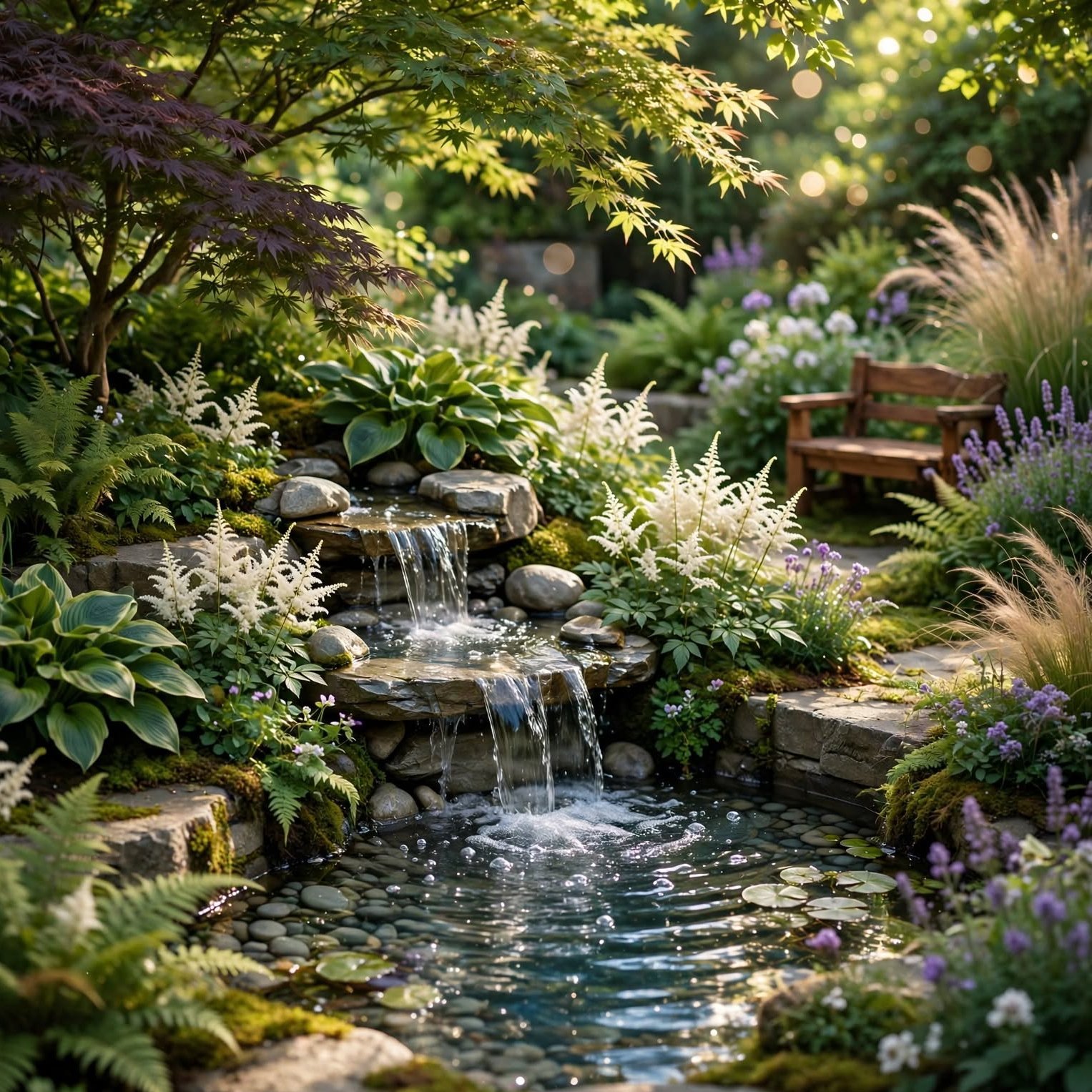
Incorporating a small water feature, a tiny pond made from a shallow dish or a bowl lid, or even a small mirror positioned to suggest still water, adds genuine visual magic and a sense of a complete miniature ecosystem that a purely dry landscape doesn’t achieve on its own. Choosing a genuinely small-scale water feature, proportioned appropriately to the surrounding miniature garden rather than an oversized bowl that breaks scale consistency, maintains the overall design’s cohesion. For an outdoor fairy garden, ensuring this water feature doesn’t become a mosquito breeding concern, through regular water changes or a small recirculating pump, addresses a genuine practical consideration alongside the purely decorative goal.
Discover creative garden design ideas to transform your backyard into a beautiful retreat.
6. Natural Materials for Structures and Accents
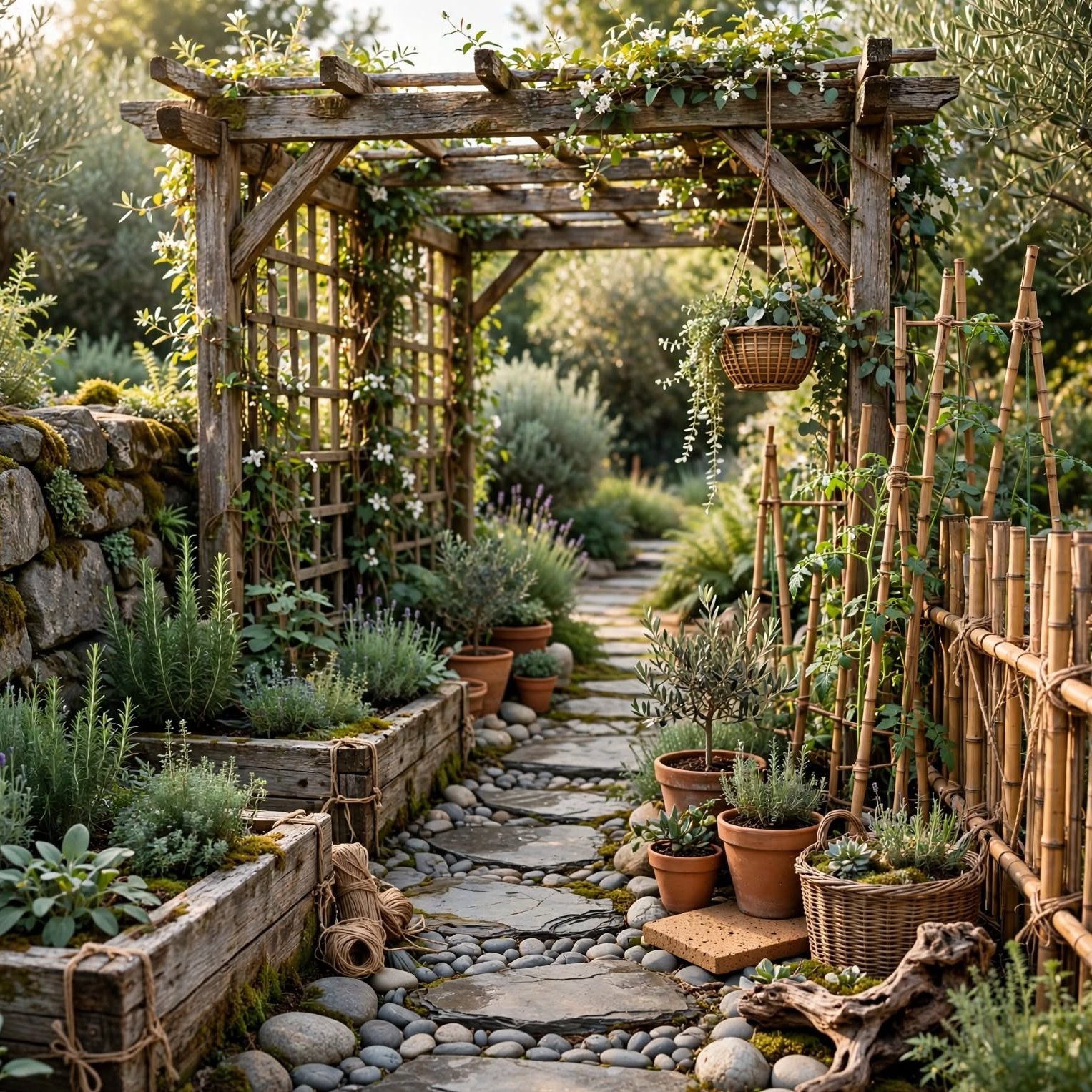
Building fairy garden structures, tiny fences, small bridges, miniature furniture, from natural materials, twigs, bark, small stones, and moss, rather than exclusively purchased plastic accessories, produces a more organic, genuinely magical quality that blends more convincingly with the garden’s living plant material. This natural material approach also often costs considerably less than purchasing every element from specialty fairy garden retailers, since many suitable materials can be gathered directly from a yard or nearby natural area. Combining these natural, often handmade elements with a few carefully chosen purchased accessories, rather than relying entirely on either approach alone, typically produces the richest, most varied final result.
7. Moss as a Living Ground Cover Foundation
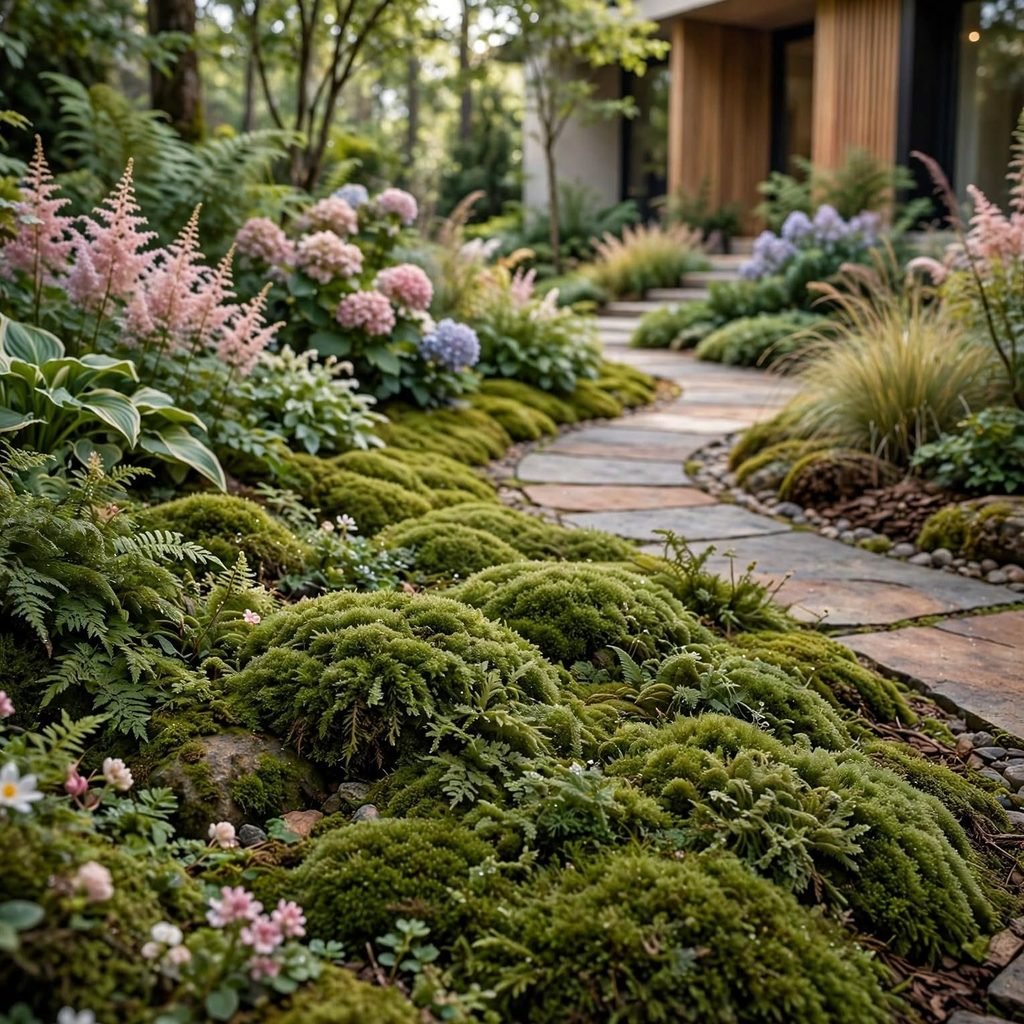
Using moss as a fairy garden’s primary ground cover, whether genuine living moss cultivated in appropriately moist, shaded conditions or a well-made artificial version for drier or indoor settings, provides a lush, appropriately scaled green foundation that regular grass or mulch doesn’t replicate at this miniature scale. Genuine living moss requires consistent moisture and generally shaded conditions to thrive, making it best suited to a fairy garden positioned in appropriate growing conditions rather than a sunny, dry location where it will struggle. This ground cover choice also provides a soft, cushioned surface texture that enhances the miniature landscape’s overall tactile and visual appeal.
8. Seasonal Rotation to Keep the Scene Fresh
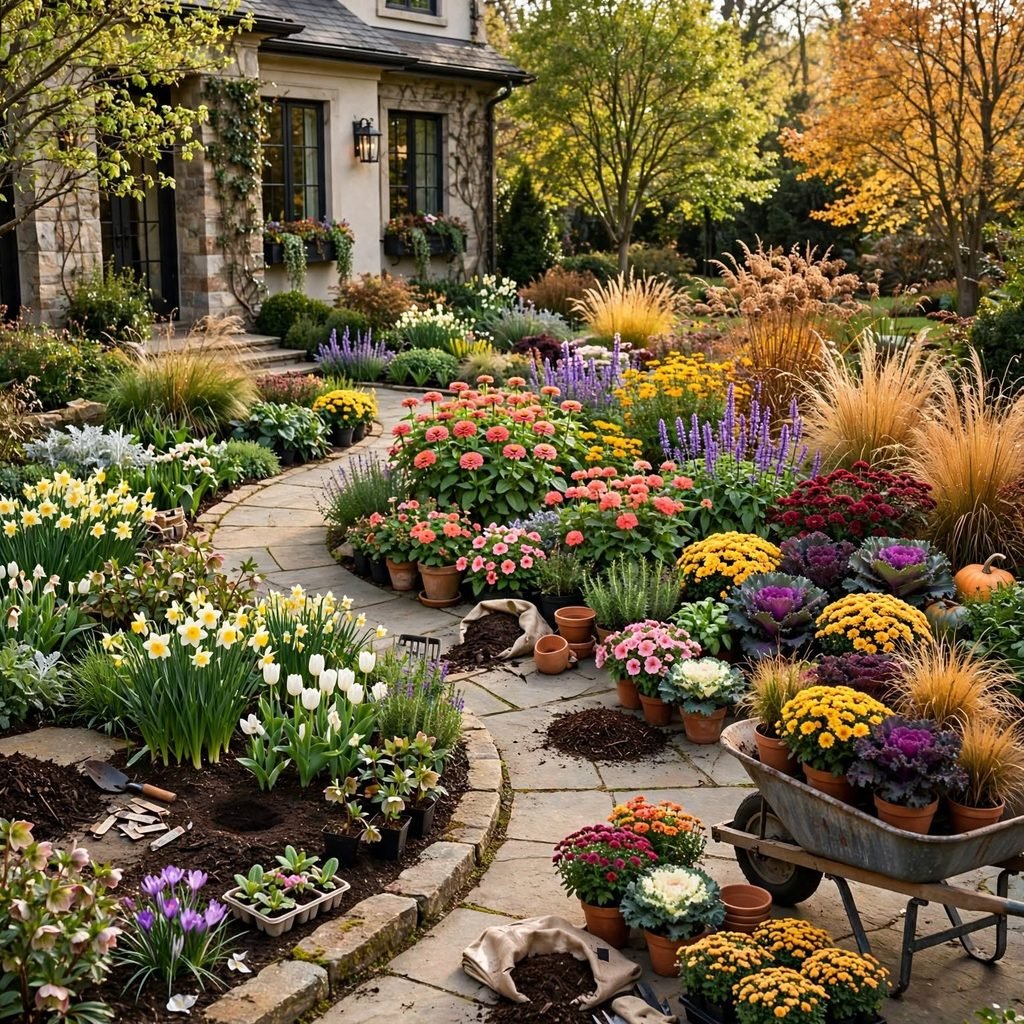
Planning for seasonal changes within a fairy garden, swapping small decorative accents, tiny pumpkins in fall, small string lights for winter, miniature flowers for spring, keeps the scene feeling fresh and engaging throughout the year rather than remaining static regardless of season. This rotation works particularly well for engaging children’s ongoing interest in an outdoor fairy garden, since the seasonal refresh provides a recurring reason to revisit and interact with the space. Storing these seasonal accessories in a small, organized container between uses simplifies this rotation, making the seasonal refresh quick and manageable rather than requiring extensive searching each time.
9. Container-Based Fairy Gardens for Portability and Indoor Use
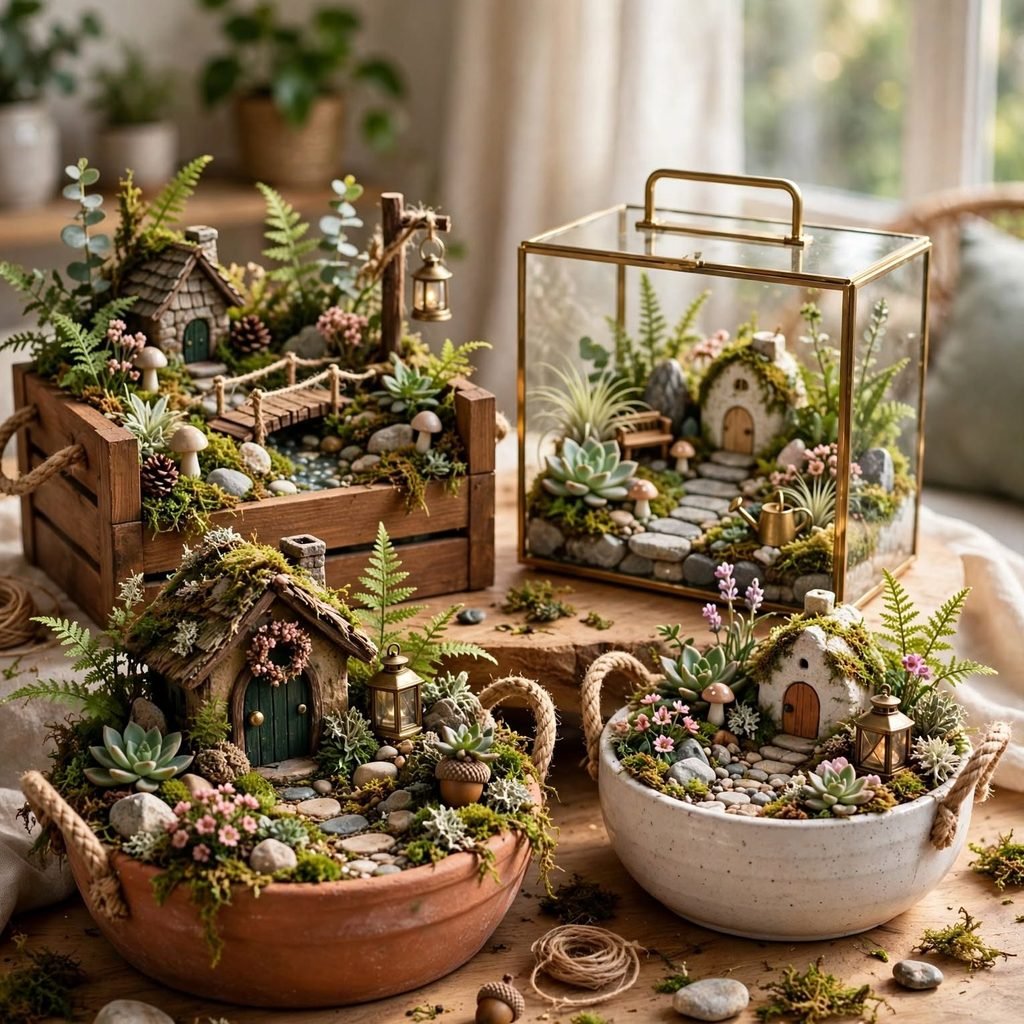
Building a fairy garden within a container, a large shallow pot, a wooden crate, or even a broken pot repurposed decoratively, rather than directly in the ground, offers genuine portability and makes fairy gardening accessible for an indoor setting, apartment living, or anyone wanting to move the display seasonally between indoor and outdoor locations. Choosing a container with adequate depth for the specific miniature plants’ root systems, and ensuring proper drainage, prevents the common container gardening problem of waterlogged, unhealthy plants despite an otherwise well-designed miniature scene. This container approach also simplifies protecting the fairy garden during harsh winter weather in colder climates, since the entire display can be moved to a protected location as needed.
10. An Implied Story Rather Than Random Accessory Placement
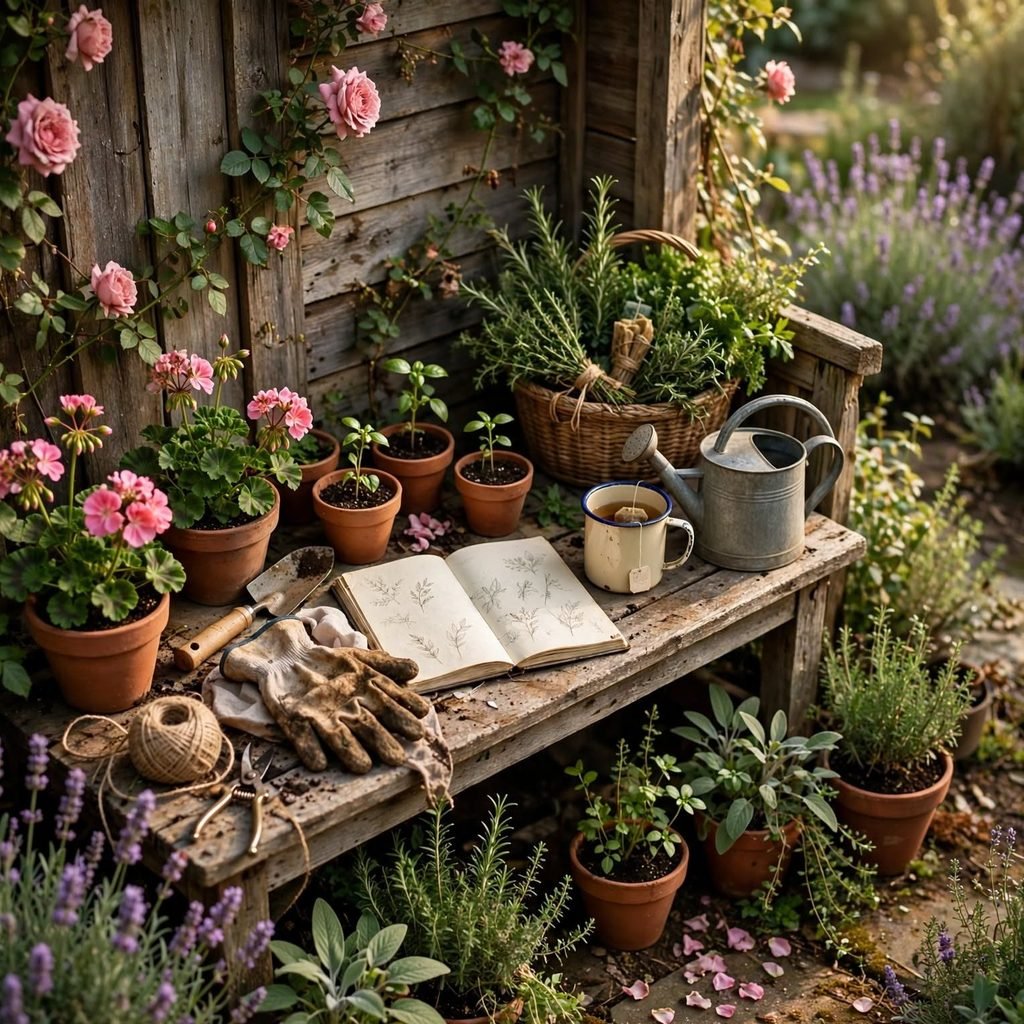
Designing a fairy garden around a genuine implied narrative, a tiny table set for tea suggesting recent activity, a small ladder leaning against a tree suggesting ongoing work, or a miniature swing suggesting play, engages imagination far more effectively than accessories placed without any suggested story connecting them. This storytelling approach requires thinking through a specific scene or moment before placing accessories, rather than simply adding appealing individual pieces without considering how they relate to each other narratively. Involving children directly in developing this implied story, if the fairy garden is created with or for them, often produces particularly engaging, personally meaningful scenes reflecting their own imaginative interests.
11. Vertical Elements for Genuine Dimensional Interest
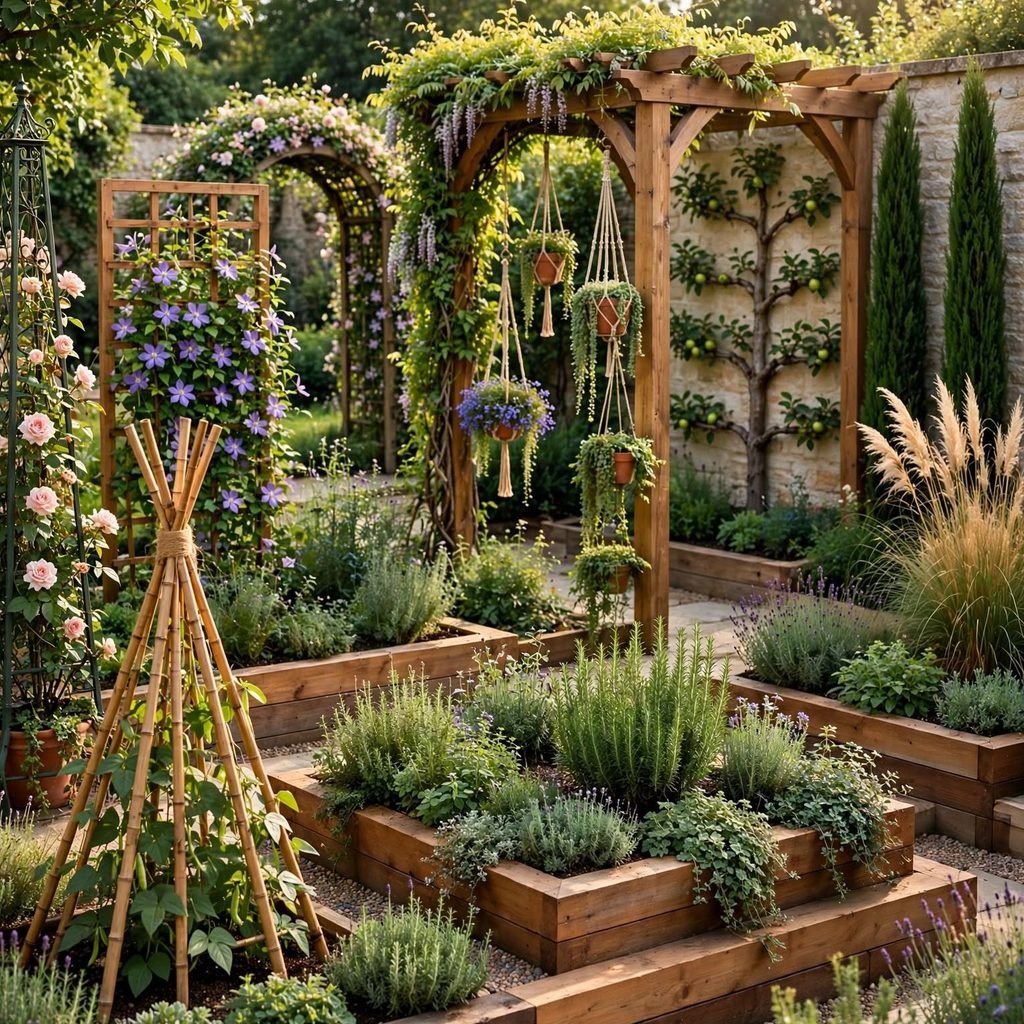
Incorporating vertical elements, a small tree or tall plant, a miniature ladder or tower structure, or simply varying the height of rocks and structural pieces, adds genuine dimensional interest to a fairy garden that a purely flat, ground-level arrangement doesn’t achieve. This vertical variation mirrors the height-layering principles used throughout larger garden design, applied specifically at fairy garden scale. Positioning a genuinely tall element, even something as simple as a small tree stump or an upright piece of driftwood, as the scene’s focal point gives the overall composition a clear point of visual emphasis around which other elements can be arranged.
12. Lighting for Evening Magic
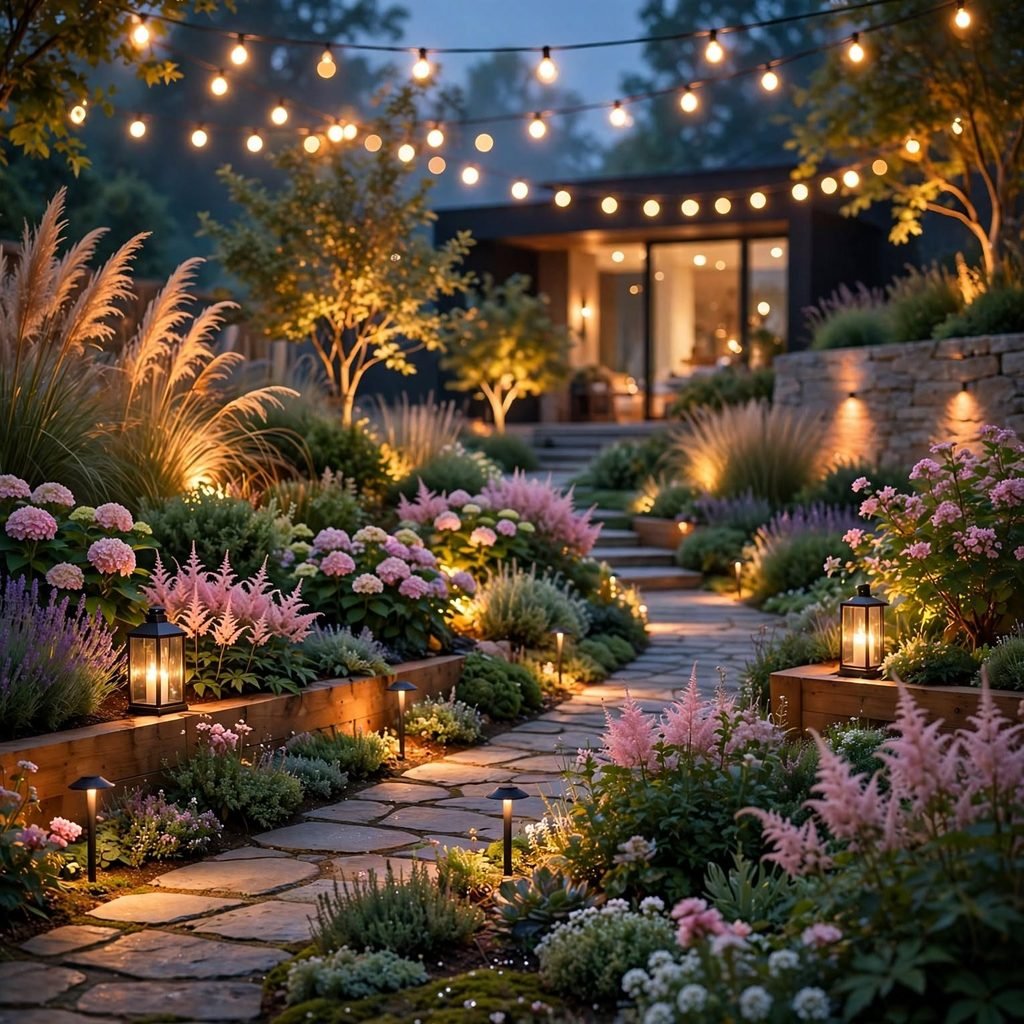
Incorporating small solar-powered lights, tiny LED string lights, or even small battery-operated lanterns designed at an appropriate miniature scale extends a fairy garden’s magic into evening hours, when the small lights create a genuinely enchanting glow particularly appealing after dark. Choosing warm-toned lighting, rather than a stark white or overly bright option, maintains the whimsical, magical atmosphere appropriate to the fairy garden concept. This lighting addition works particularly well for an outdoor fairy garden positioned somewhere visible from an indoor window or patio, extending its enjoyment beyond only daytime viewing.
13. Weather-Appropriate Material Choices for Outdoor Gardens
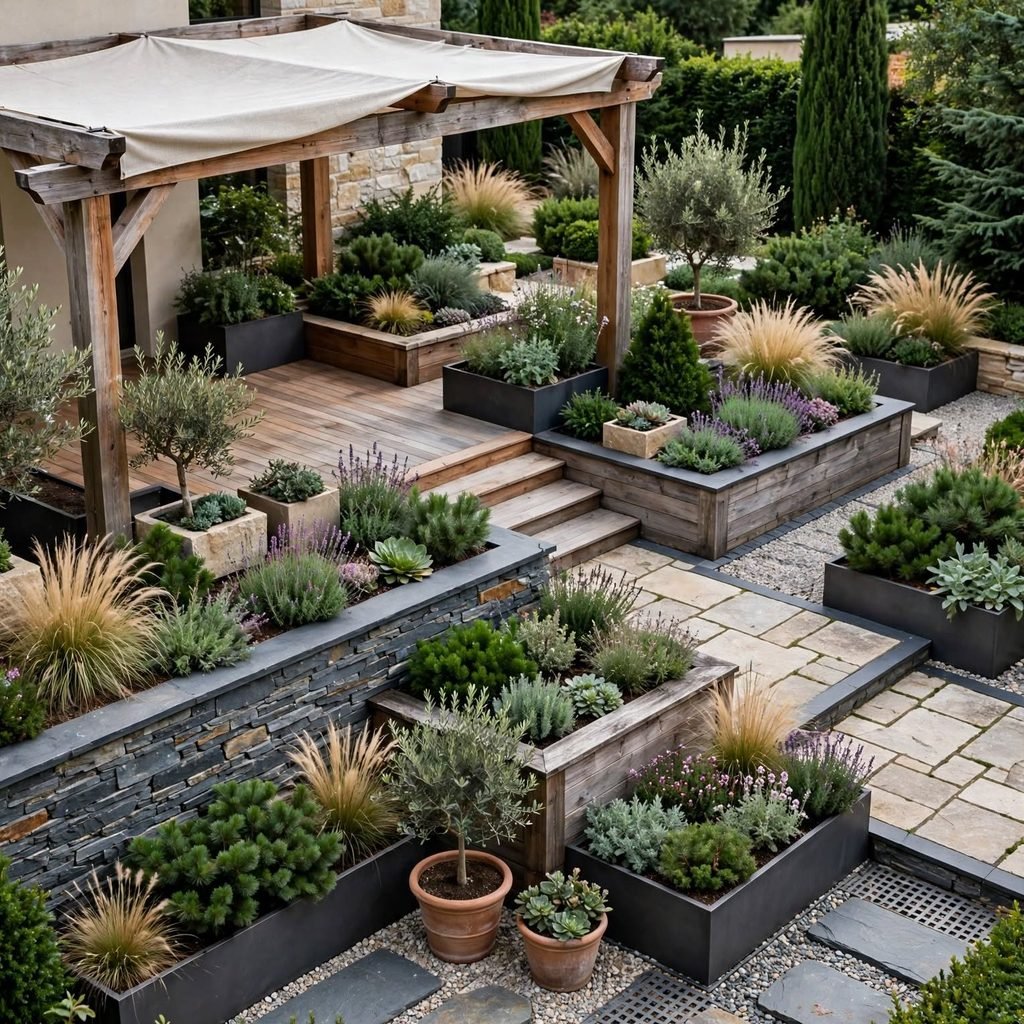
For an outdoor fairy garden exposed to genuine weather conditions, choosing materials and accessories specifically rated for outdoor use, weather-resistant resin or treated wood rather than materials that will quickly deteriorate, warp, or fade under sun and rain exposure, protects the investment and prevents the disappointment of accessories degrading rapidly after installation. This consideration matters particularly for any painted or finished wood elements, where an appropriate outdoor sealant significantly extends the material’s usable lifespan compared to leaving it unprotected. Bringing genuinely delicate or non-weather-appropriate accessories indoors during harsh weather, rather than assuming everything can remain outdoors year-round regardless of material, protects pieces not specifically designed for constant outdoor exposure.
14. Involving Children in the Design and Ongoing Care

For a fairy garden created with or for children, involving them genuinely in both the initial design process and ongoing care and seasonal updates fosters real engagement and a sense of ownership that a purely adult-designed and maintained display doesn’t provide as effectively. This involvement might mean letting a child choose specific accessories, contribute their own natural material finds like interesting stones or sticks, or help with basic maintenance like watering and occasional accessory rearranging. Balancing genuine child input against some adult guidance on scale consistency and basic plant care needs produces a fairy garden that’s both genuinely engaging for the child and reasonably successful as an actual living garden.
15. Regular Maintenance to Preserve the Illusion
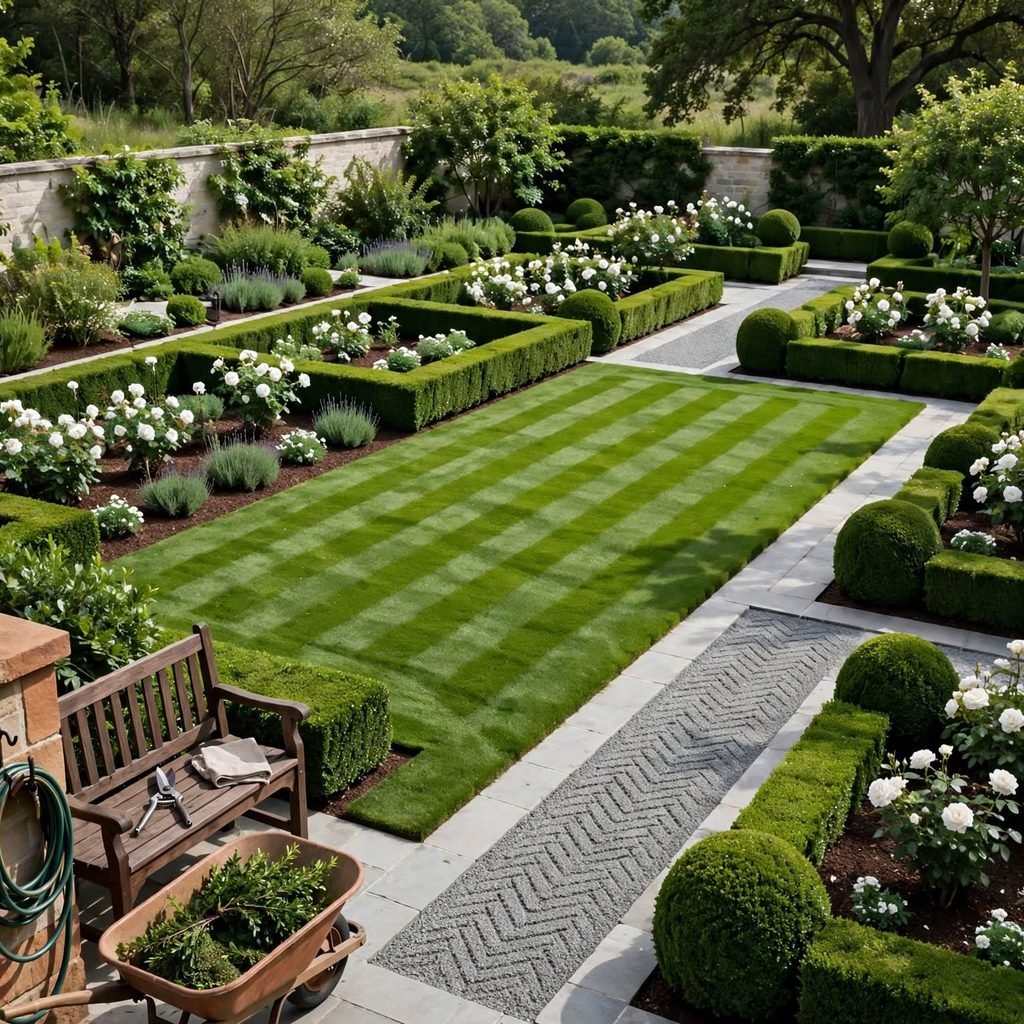
Committing to regular basic maintenance, trimming plants that begin outgrowing their appropriate scale, removing weeds that could overwhelm the miniature scene, and periodically cleaning or repositioning accessories that have shifted or become weathered, preserves a fairy garden’s convincing illusion over time rather than allowing gradual neglect to undermine the careful scale and story work initially invested in the design. This maintenance matters more for a fairy garden than many other garden types specifically because scale consistency, the design’s core magic, degrades quickly once plants are allowed to grow beyond their appropriate miniature proportions. Building this maintenance into a regular routine, rather than only addressing it once the garden has already become notably overgrown or disheveled, keeps the display consistently magical rather than requiring periodic major restoration efforts.
Shop the Look
Start with genuinely dwarf or miniature plant varieties, moss ground cover suited to your specific light conditions, and a small pathway leading toward a focal miniature door or structure. Add natural material accents, gathered twigs, small stones, alongside a few carefully scaled purchased accessories, ensuring everything relates proportionally to an established scale reference. Finish with a small water feature, warm-toned miniature lighting for evening magic, and a plan for seasonal accessory rotation to keep the scene feeling fresh throughout the year.
Common Mistake to Avoid
A common mistake in fairy garden design is mixing accessories and plants at genuinely inconsistent scales, a large decorative mushroom beside a tiny fence, or a standard-sized plant that will quickly overwhelm carefully scaled miniature structures, which breaks the illusion that makes a fairy garden genuinely convincing regardless of how charming any individual piece might be on its own. Measuring new additions against an established scale reference before incorporating them, and choosing genuinely dwarf plant varieties rather than assuming any small plant will remain appropriately scaled, prevents this common consistency problem. This attention to scale matters more to a fairy garden’s overall magic than the individual quality or charm of any single accessory piece.
FAQs
What size should a fairy garden actually be?
A fairy garden can genuinely work at nearly any scale, from a small tabletop container arrangement just a foot or two across to a more substantial in-ground garden bed spanning several feet, with the right size depending on available space and how elaborate a scene you want to create. Starting with a more modest scale, particularly for a first fairy garden project, allows genuine attention to scale consistency and story development without becoming overwhelming, with expansion into a larger scene remaining an option once the initial smaller version proves successful. The specific dimensions matter less than maintaining consistent proportional relationships between whatever plants and accessories are actually included within the chosen space.
Can I create a fairy garden indoors, or does it need to be outside?
A fairy garden works well either indoors in a container suited to indoor light conditions or outdoors in the ground or a larger container, with the choice depending on available space, climate, and personal preference rather than one location being inherently superior. Indoor fairy gardens require plant selection genuinely suited to typical indoor light levels, often shade-tolerant miniature plants rather than sun-loving varieties, while outdoor gardens need weather-appropriate materials and plants suited to your specific climate zone. Both approaches can achieve the same genuine scale consistency and storytelling magic central to successful fairy garden design, making the location choice primarily about practical fit for your specific space and climate rather than a design limitation.
How do I keep the plants in my fairy garden from outgrowing the scale?
Choosing genuinely dwarf or miniature plant varieties from the outset, rather than young specimens of standard-sized plants that will eventually grow too large, provides the most reliable long-term solution to this common fairy garden challenge. Regular trimming and pruning, even for genuinely miniature varieties, helps maintain appropriate proportions as plants continue their natural growth cycle throughout each season. Researching a specific plant’s genuine mature size before including it in your fairy garden design, rather than judging suitability purely from its appearance at initial nursery purchase, prevents this scale problem from developing in the first place.
What materials work best for a fairy garden exposed to real outdoor weather?
Weather-resistant resin accessories, treated or naturally rot-resistant wood, natural stone, and genuinely outdoor-rated materials generally hold up considerably better to sun, rain, and temperature fluctuation than materials designed primarily for indoor decorative use. Applying an appropriate outdoor sealant to any painted or finished wood elements significantly extends their usable lifespan in genuine outdoor exposure compared to leaving these materials unprotected. Bringing particularly delicate or non-weather-rated pieces indoors during harsh weather, rather than assuming all fairy garden accessories can remain outdoors year-round regardless of material, protects investments not specifically designed for constant outdoor exposure.
How do I make my fairy garden feel more magical and less like a random collection of small objects?
Developing a genuine implied story or scene, a suggested recent activity, an implied destination the pathway leads toward, or a sense that something exists just beyond a small door, engages imagination far more powerfully than accessories placed without any narrative connection between them. Maintaining strict scale consistency across every element, and incorporating natural materials alongside purchased accessories for a more organic, less obviously store-bought quality, both contribute significantly to this more convincing, magical result. Taking time to actually plan the scene’s story and composition before purchasing or placing accessories, rather than accumulating pieces individually without an overarching vision, produces a considerably more successful and genuinely enchanting final fairy garden.
Conclusion
A genuinely magical fairy garden comes down to careful scale consistency between plants and accessories, combined with a real implied story that engages imagination, rather than simply the individual charm of any single decorative piece. Save this guide to Pinterest for reference while planning your next miniature garden project, and check out our related post on garden ideas for the broader landscape design principles a fairy garden’s scale-appropriate techniques draw from.