15 Farmhouse Bathroom Ideas With Rustic, Practical Charm
A farmhouse bathroom brings the same practical, rustic warmth found throughout farmhouse living spaces into one of a home’s most utilitarian rooms, balancing genuine durability with the material character central to the style. This guide covers fifteen ideas for building that look authentically, from shiplap walls to a vintage clawfoot tub, with guidance for keeping the room functional despite its more textured, characterful material choices. Every idea addresses both the room’s rustic aesthetic and its genuine daily-use requirements.
Trend & Background
Farmhouse bathroom design has followed the same evolution seen throughout farmhouse style generally, moving from a heavily decorated, sign-and-accessory-driven aesthetic toward a more refined modern farmhouse interpretation that favors cleaner architectural lines alongside the style’s core rustic materials. This shift has meant shiplap and black metal fixtures remain central to the look, but current applications tend to use them more selectively, a single accent wall rather than full-room coverage, than the fuller treatment common several years ago. The style’s practical, durable material choices, subway tile, black fixtures, wood accents, have also proven well-suited to a bathroom’s genuine daily wear, contributing to the aesthetic’s sustained popularity in this specific room.
Key Takeaways
- A farmhouse bathroom pairs practical, durable materials with warm, slightly rustic character rather than purely decorative styling.
- Shiplap and black metal fixtures form the style’s core material identity, applied with more restraint in current interpretations.
- Vintage and antique-inspired fixtures bring genuine character that new, uniformly manufactured pieces can’t replicate.
- Modern farmhouse’s cleaner lines have largely replaced the heavily distressed, sign-and-accessory-driven farmhouse bathroom of recent years past.
1. Shiplap Accent Wall
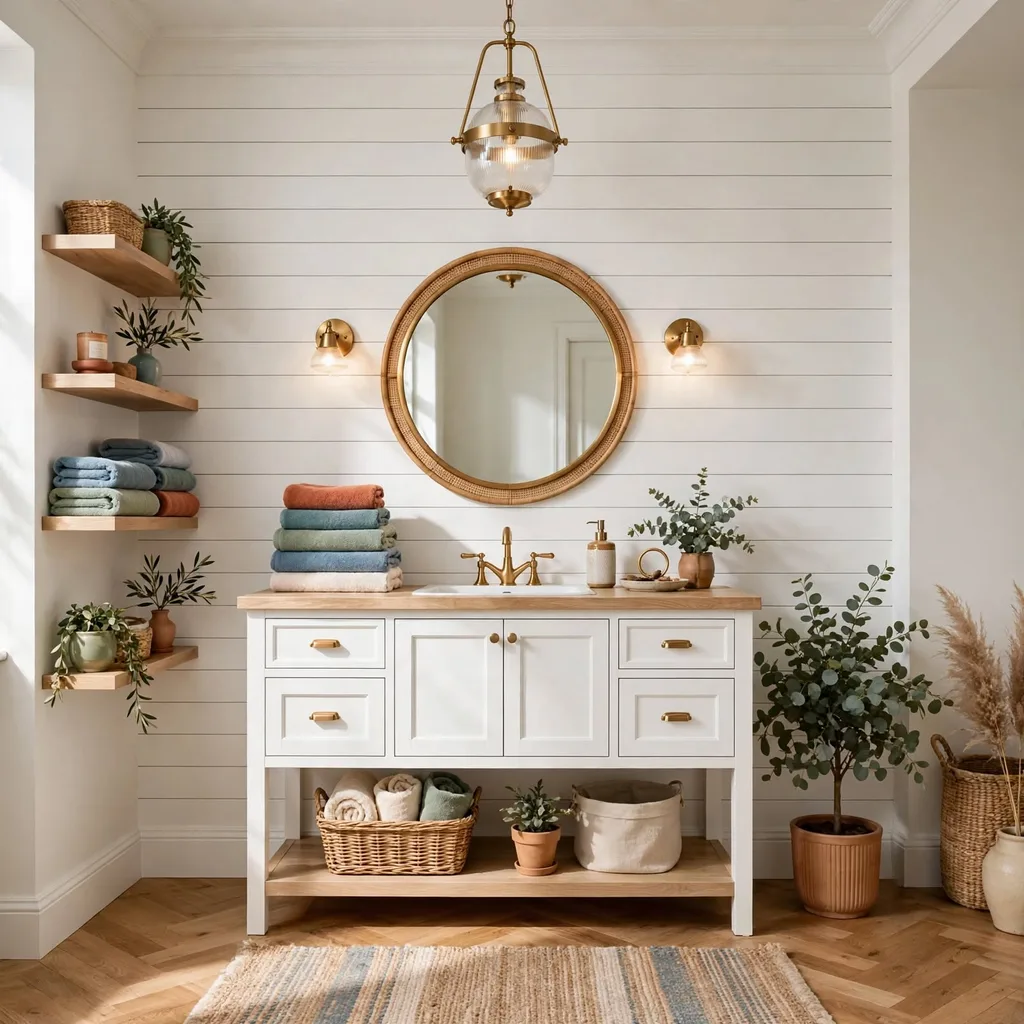
A shiplap accent wall, using horizontal wood planks with a small visible gap between each board, remains one of the clearest signature elements of farmhouse bathroom design when applied to a single wall rather than the entire room. Painting the shiplap in a warm white keeps the look soft and inviting rather than stark, and sealing the wood appropriately protects it from the room’s moisture exposure. This treatment works particularly well behind a vanity or as a backdrop for a freestanding tub, where its horizontal lines add texture without overwhelming the room’s fixtures.
2. Black Matte Fixture Finish
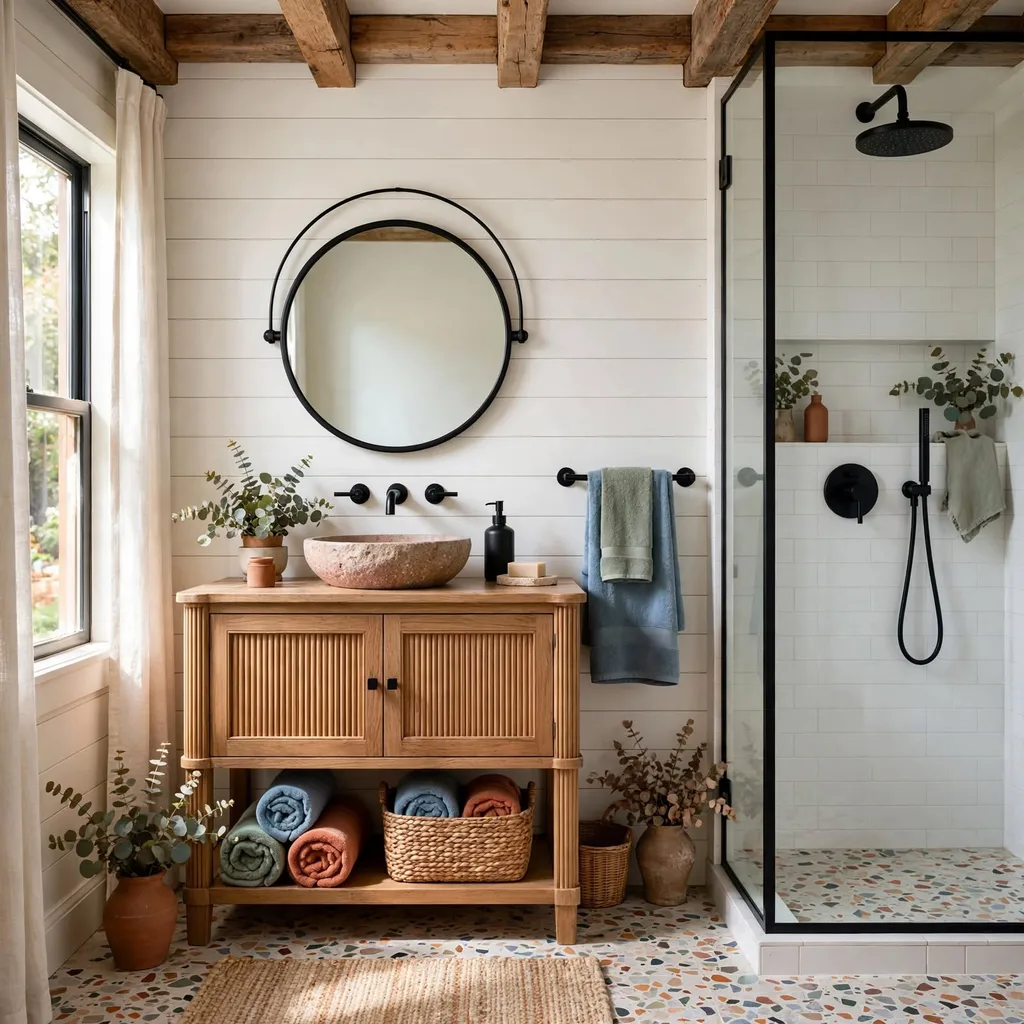
Black matte fixtures, faucets, showerheads, and cabinet hardware, provide farmhouse bathroom design’s defining contrast against typically lighter walls and tile, echoing the same black-and-white material pairing found throughout farmhouse living spaces. Choosing this finish consistently across every fixture in the room produces a more cohesive result than mixing several different metal tones. This detail is one of the more affordable ways to introduce farmhouse character into an existing bathroom without a full renovation, since fixtures can often be swapped without moving plumbing.
3. Vintage-Style Clawfoot Tub
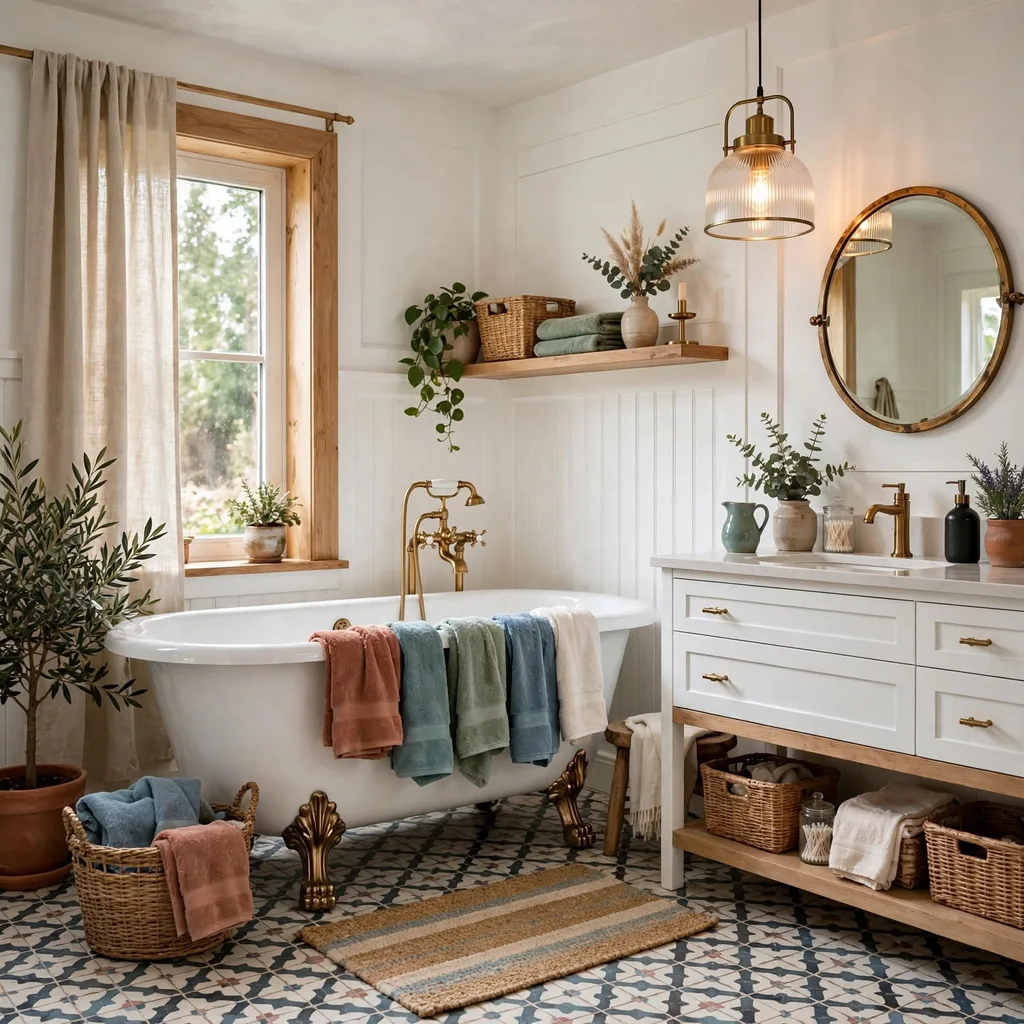
A vintage-style clawfoot tub, whether a genuine antique or a new reproduction, brings the farmhouse style’s most recognizable bathroom fixture into the room, referencing the freestanding, furniture-like tubs common in older farmhouse homes. Choosing a tub with a painted exterior, often in black or a deep neutral, and a classic white interior reflects the traditional two-tone finish most associated with this fixture. This piece works particularly well as the room’s central focal point, positioned to allow full visual appreciation of its distinctive silhouette from the doorway.
| Element | Farmhouse Choice | Modern Farmhouse Refinement |
| Wall treatment | Full shiplap coverage | Single accent wall |
| Fixture finish | Black, often distressed | Clean matte black |
| Vanity style | Heavily distressed wood | Simple wood, cleaner lines |
| Accessories | Abundant, decorative signage | Minimal, functional |
4. Farmhouse Sink Style Vanity Basin
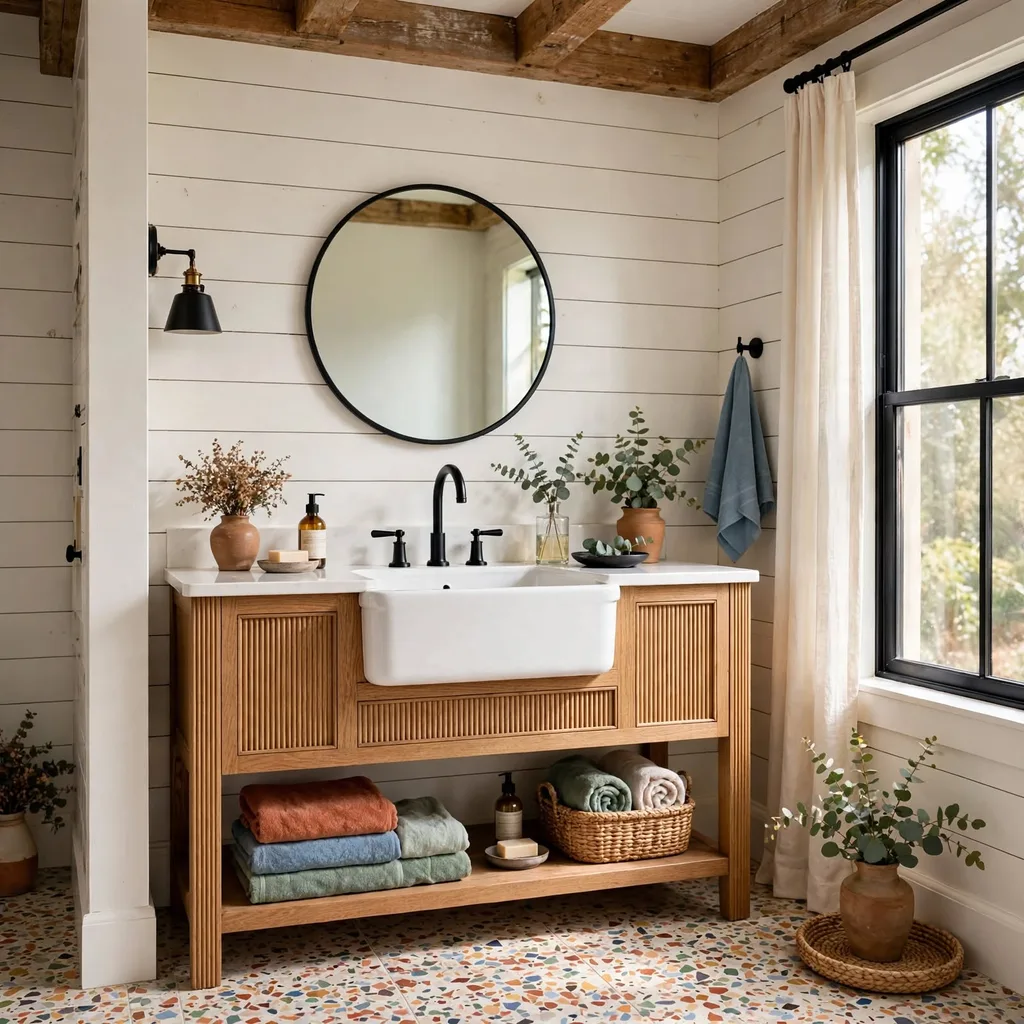
A farmhouse-style vanity basin, referencing the deep, apron-front sink style traditionally associated with farmhouse kitchens, brings that same recognizable silhouette into a bathroom vanity application. This fixture style typically requires a specific vanity cabinet designed to accommodate its distinctive front profile, making it a consideration worth planning early in a renovation. Choosing this sink style in a simple white or off-white ceramic keeps the detail consistent with the broader farmhouse material palette found throughout the rest of the room.
Transform your space with these bathroom mirror ideas featuring beautiful colors, accessories, lighting, and elegant finishes.
5. Subway Tile Shower Surround
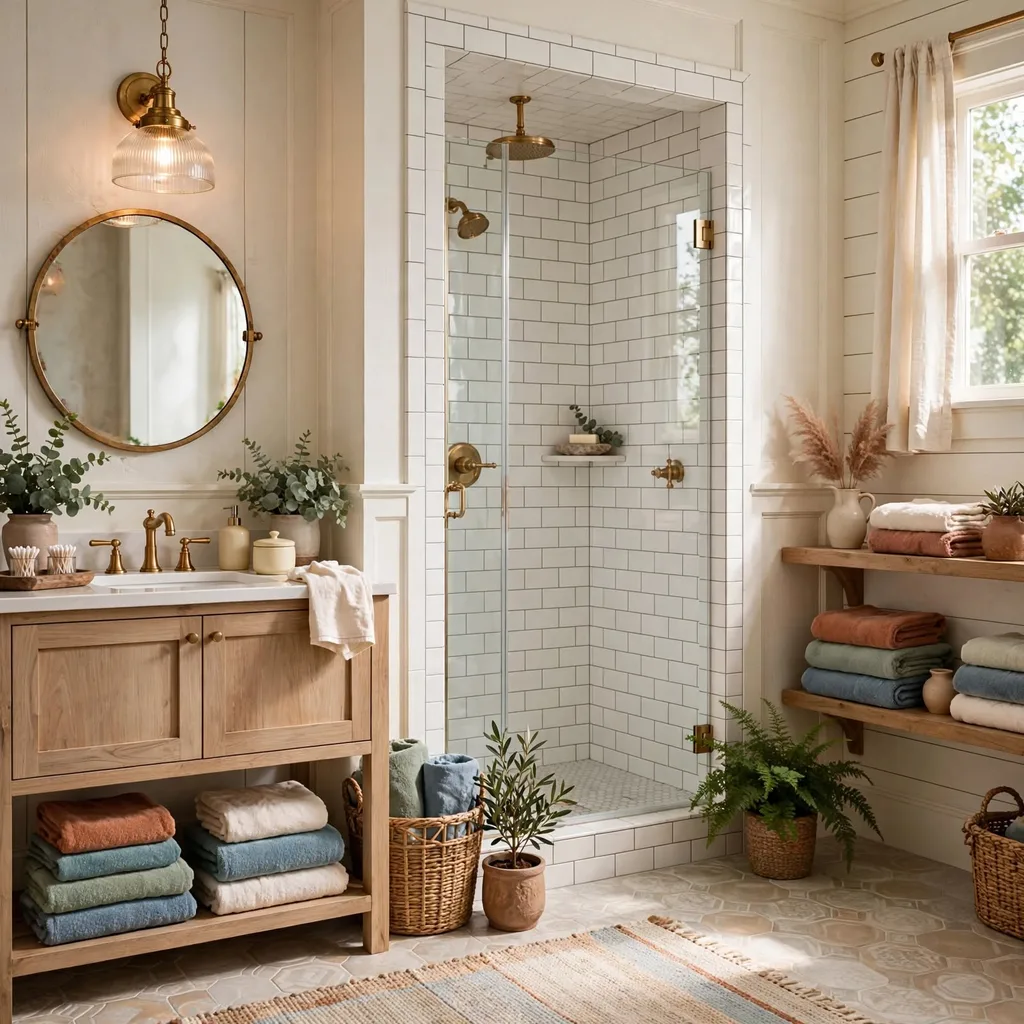
White subway tile, in the classic 3-by-6-inch format, forms one of farmhouse bathroom design’s most practical and enduringly popular material choices for a shower surround, offering genuine durability alongside the style’s overall aesthetic. A running bond or offset brick layout produces the most traditional result, consistent with the style’s practical, unfussy character. Pairing this white tile with black grout adds a subtle graphic definition that echoes the room’s broader black-and-white material contrast.
6. Reclaimed Wood Vanity
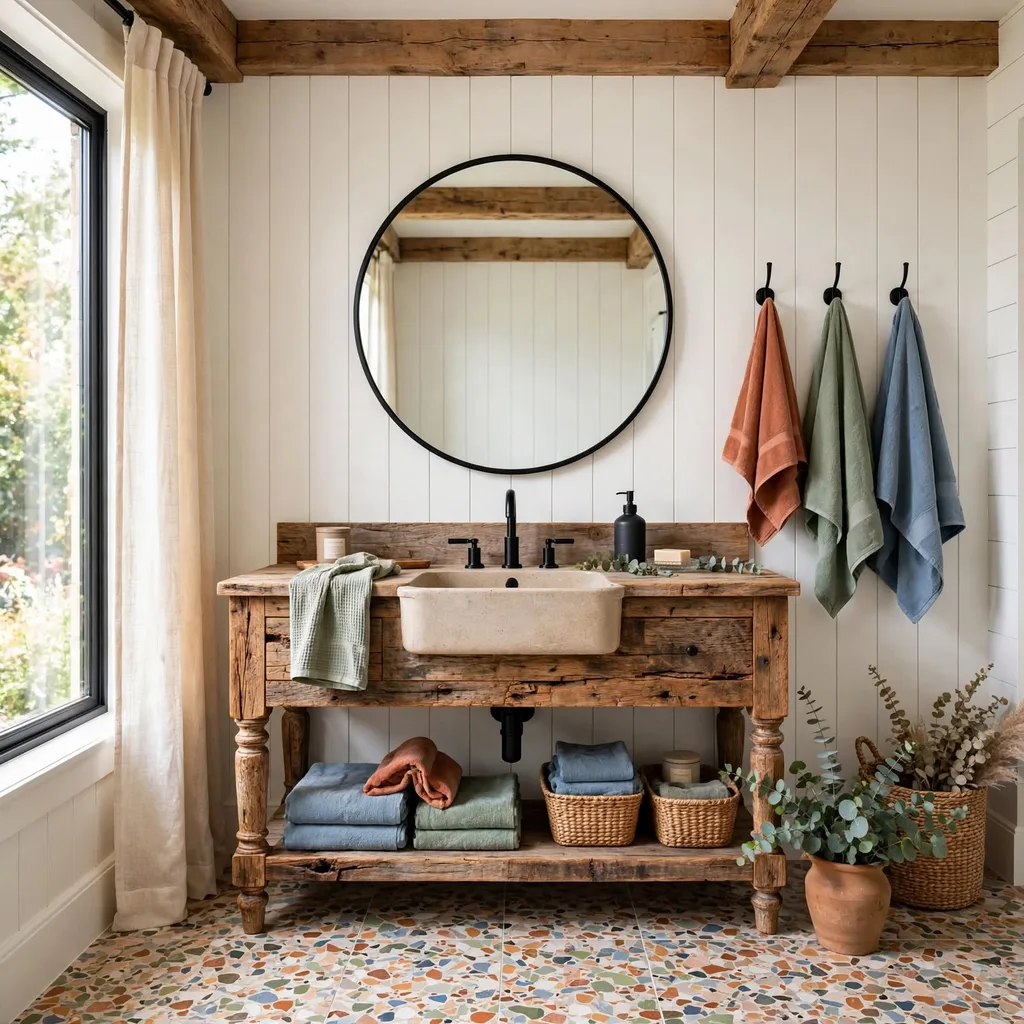
A vanity built from reclaimed or salvaged wood, showing visible grain, knots, and natural imperfection, brings genuine material history to a farmhouse bathroom that new, uniformly manufactured cabinetry can’t replicate. Choosing a piece with simple, practical hardware in black metal keeps the vanity consistent with the style’s overall material language. This piece requires proper sealing to protect the reclaimed wood from the bathroom’s moisture exposure, an important practical step given the material’s often already-aged condition.
7. Vintage-Inspired Pendant Lighting
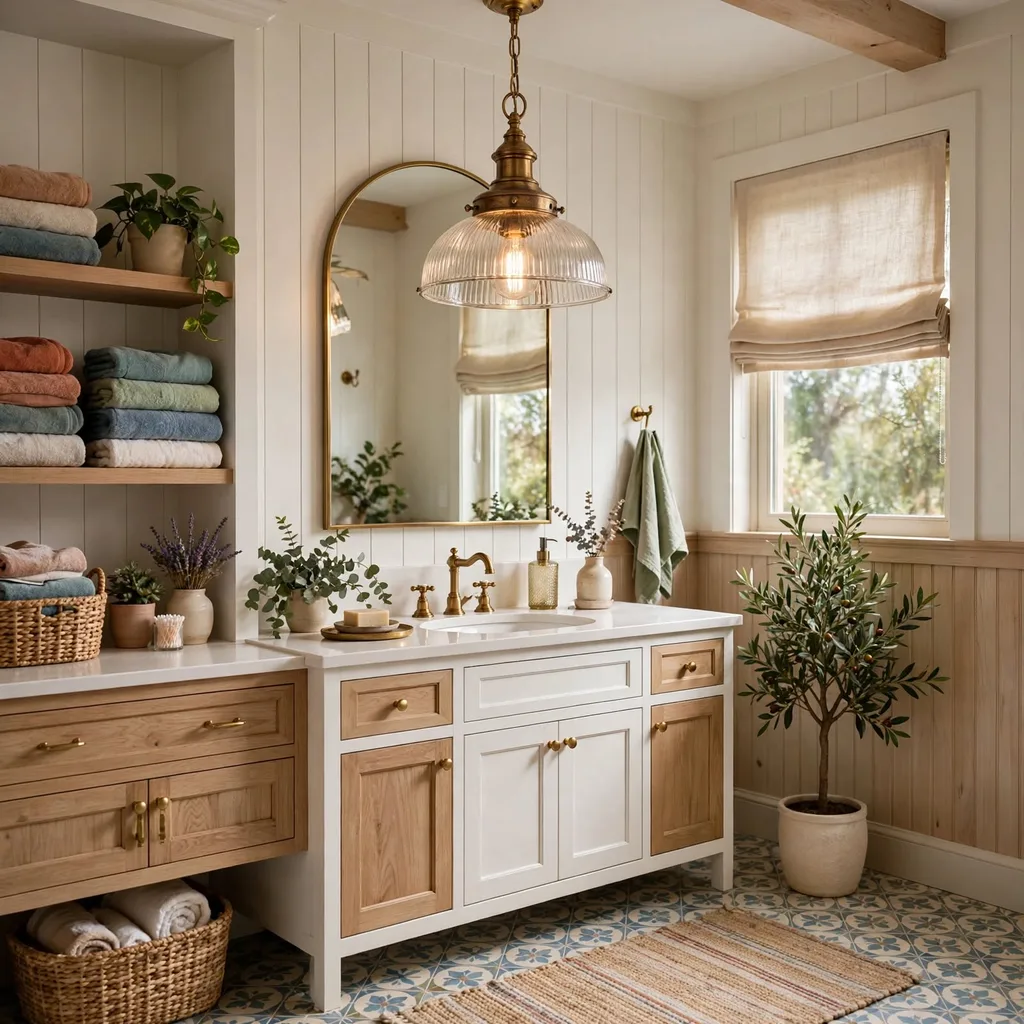
Vintage-inspired pendant lighting, using a simple dome or barn-style shade in black metal, gives a farmhouse bathroom a lighting fixture that references agricultural and early industrial history without looking overtly costume-like. This fixture style works particularly well positioned above a vanity or flanking a mirror, provided it carries an appropriate moisture rating for bathroom installation. Choosing a fixture with a slightly imperfect, hand-finished quality over a perfectly uniform modern reproduction keeps this detail feeling authentic to the style’s origins.
8. Woven Basket Storage
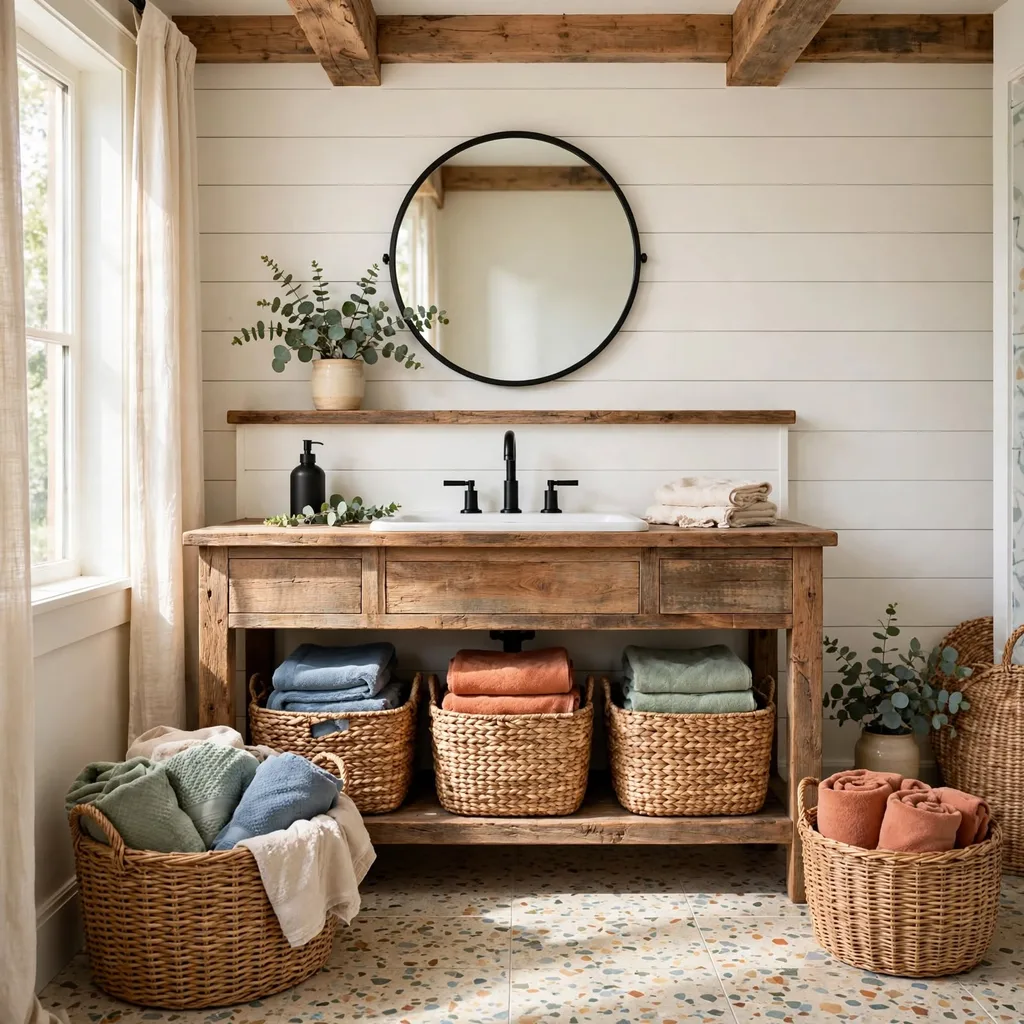
Woven baskets, in seagrass or a similar natural fiber, provide a farmhouse bathroom’s storage needs, towels, extra toiletries, and cleaning supplies, with genuine natural texture that a plastic or metal bin doesn’t offer. This detail reflects the style’s practical, working-household roots, where functional storage carried genuine material character rather than purely utilitarian plastic. Grouping two or three baskets of varying sizes near the vanity or beneath open shelving keeps this storage both accessible and visually consistent with the room’s broader material palette.
9. Board and Batten Wainscoting
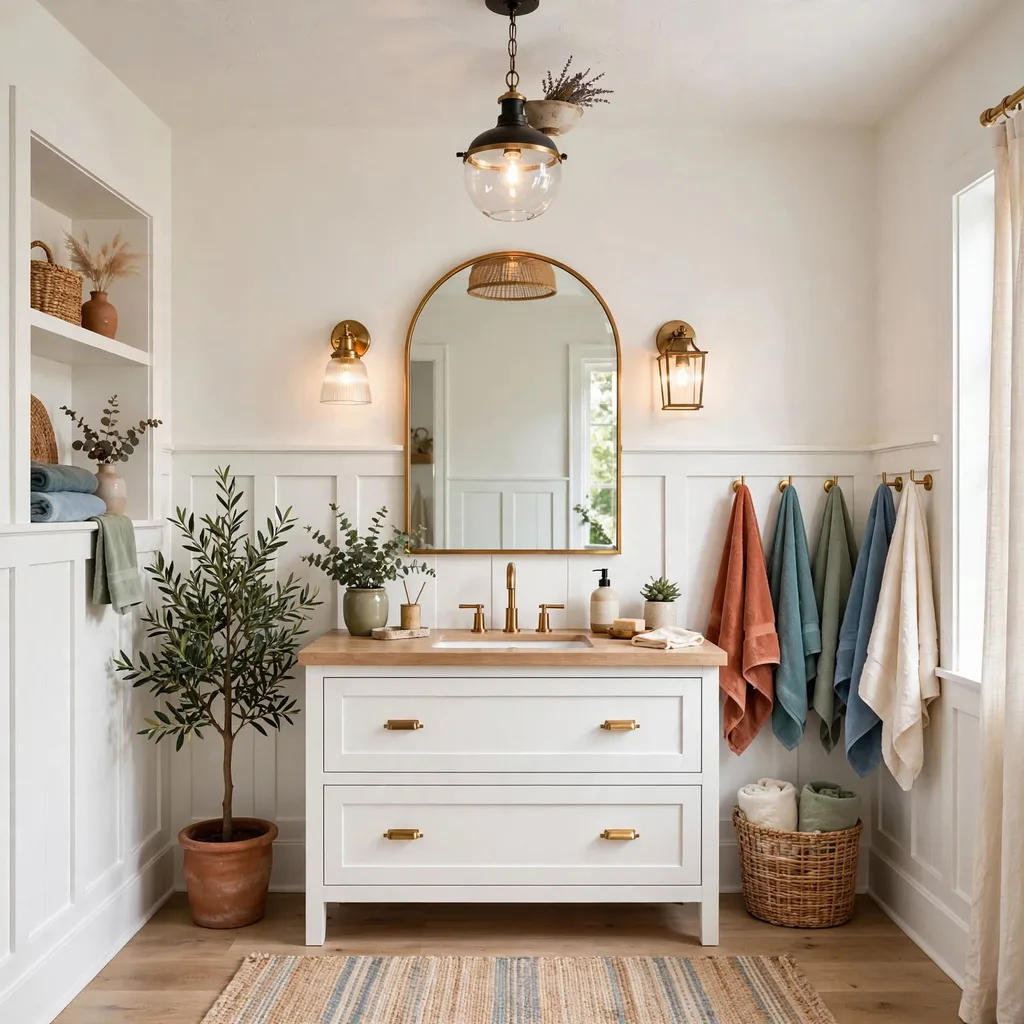
Board and batten wainscoting, using vertical wood strips applied to the lower half of a farmhouse bathroom’s walls, adds dimensional texture in a treatment that pairs naturally with the room’s overall material story while also providing genuine moisture protection to the wall’s lower, more splash-prone section. Painting the wainscoting the same warm white as the walls above keeps the look cohesive, letting the shadow lines created by the raised battens provide the visual interest. This treatment works particularly well as a lower-cost, more moisture-tolerant alternative to full shiplap coverage.
10. Black-Framed Mirror or Window
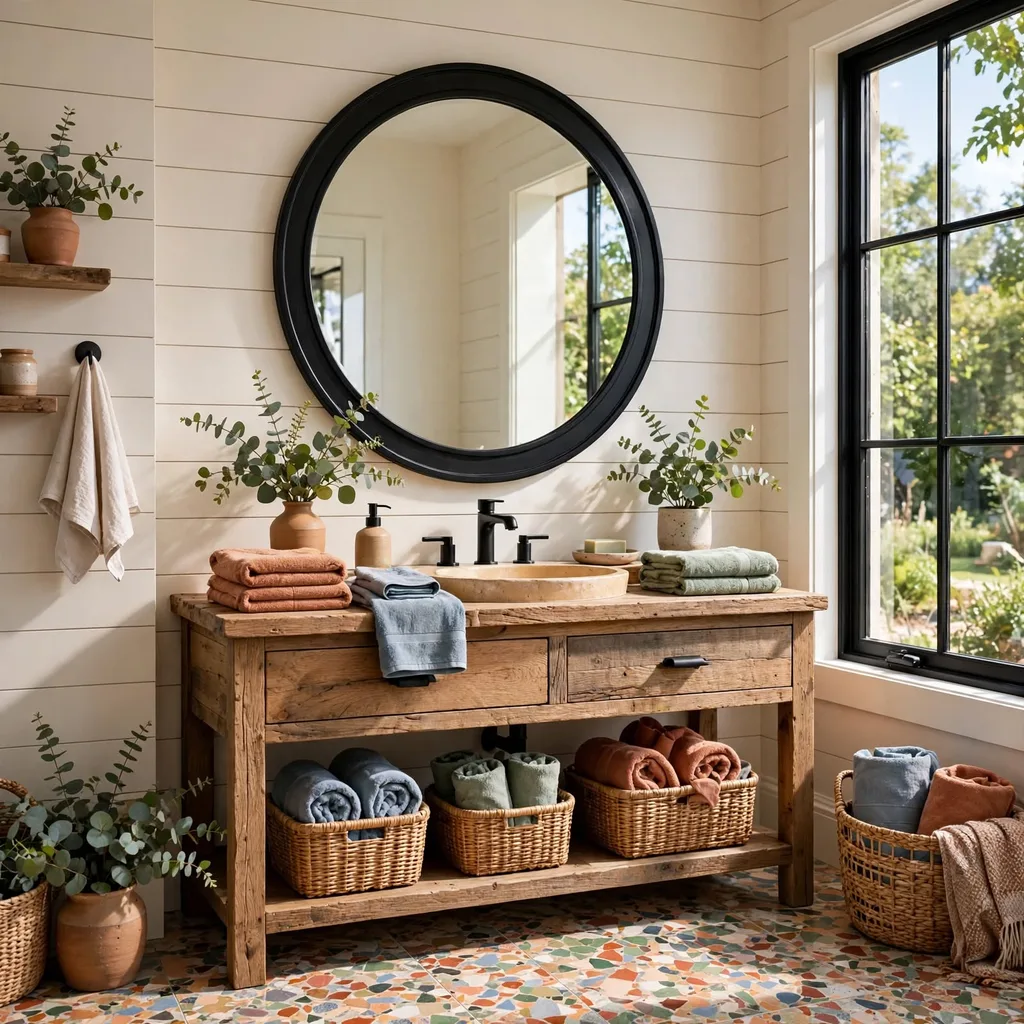
A black-framed mirror, or an actual black-framed window if the bathroom includes one, reinforces farmhouse bathroom design’s signature black accent detail on one of the room’s most visible fixtures. This detail pairs particularly well with black matte plumbing fixtures elsewhere in the room, creating a cohesive material thread throughout the space. Choosing a simple, unornamented frame keeps this detail consistent with the style’s overall practical, unfussy character rather than tipping into more ornate traditional detailing.
11. Exposed Wood Beam Ceiling Accent
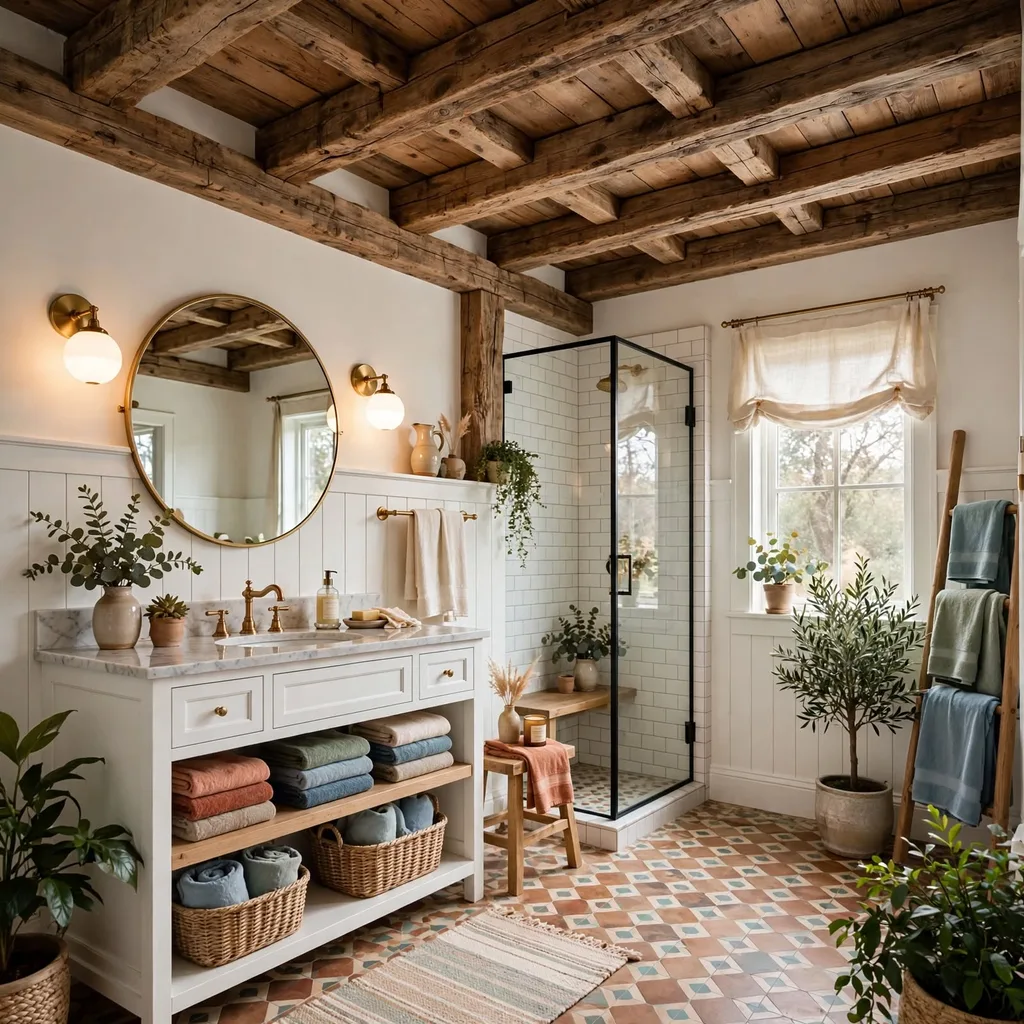
An exposed or applied wood beam ceiling detail, in a natural or lightly whitewashed finish, extends farmhouse bathroom design’s material warmth upward into the room’s ceiling surface, particularly effective in a bathroom with adequate ceiling height. This detail works well in a primary bathroom with a genuine architectural connection to farmhouse-style construction, though a lighter, applied beam treatment can approximate the look in a more standard home as well. Ensuring any wood used here is appropriately sealed for the room’s humidity protects the material’s longevity in this specific application.
12. Antique Ladder for Towel Display
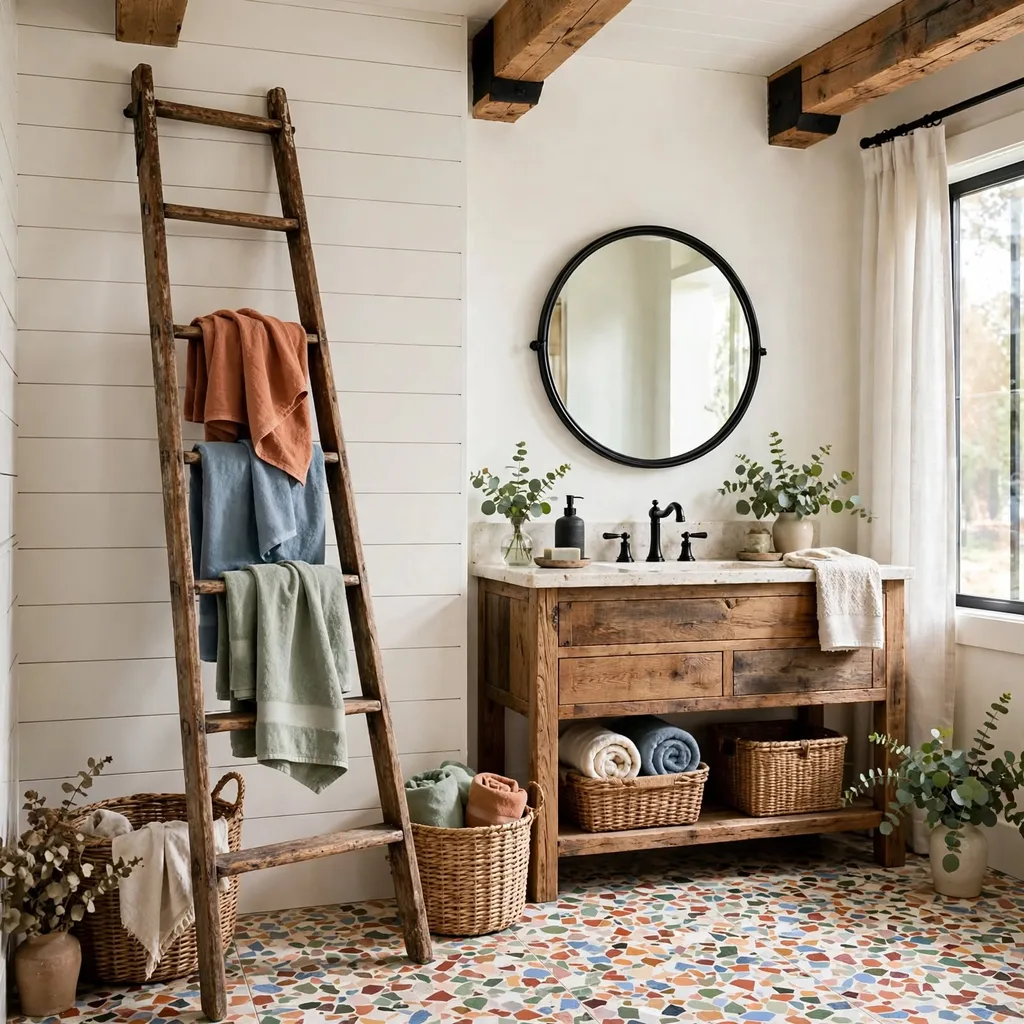
An antique wooden ladder, leaned against a wall and used to display folded towels, brings a distinctly farmhouse decorative touch that doubles as functional storage within the bathroom. Sourcing a genuinely aged ladder from an antique shop or estate sale, rather than a new reproduction, generally produces a more convincing result given the natural wear such pieces develop over decades of use. This detail works particularly well in a corner or beside a freestanding tub, where a purely decorative object would otherwise occupy the space.
13. Wood-Look Tile Flooring
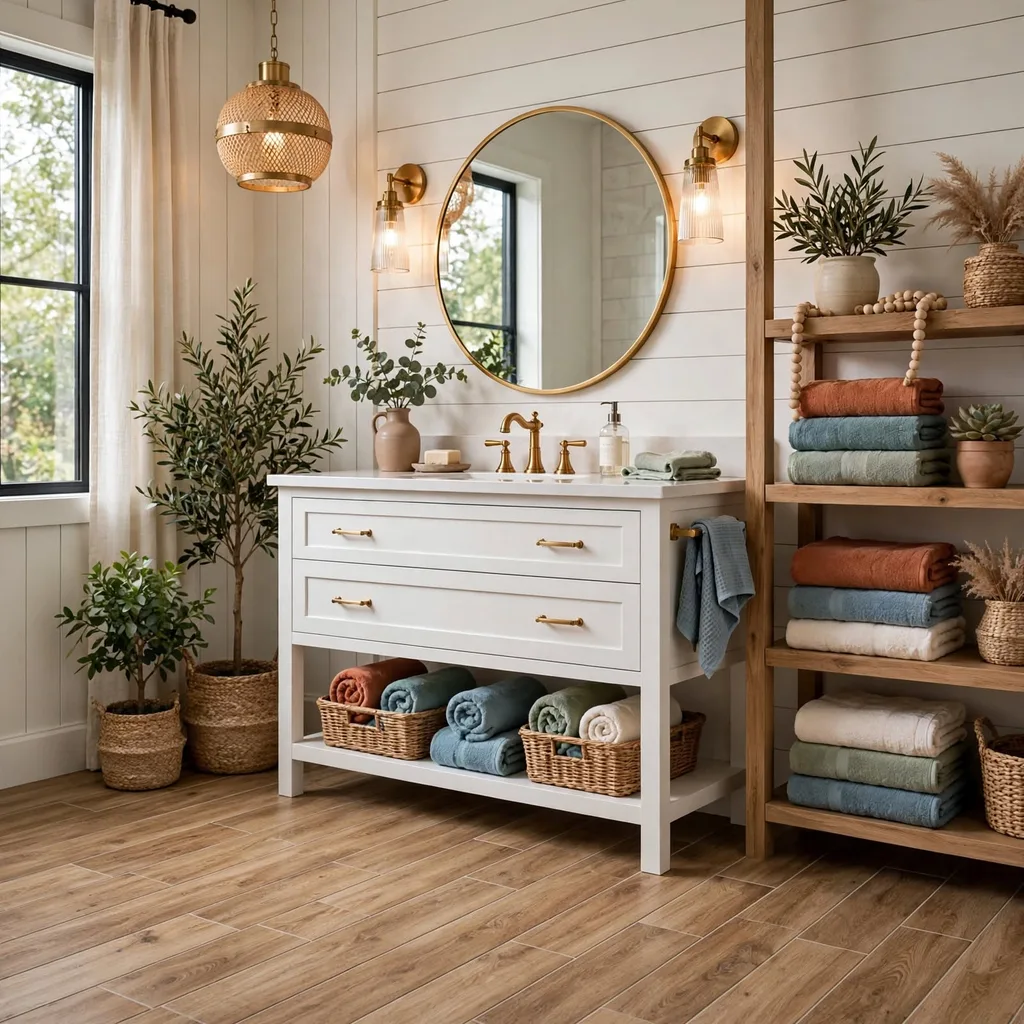
Wood-look porcelain tile flooring brings farmhouse style’s characteristic warmth into a bathroom without the moisture damage risk genuine hardwood flooring would face in this specific room. This material has improved considerably in realism over recent years, offering convincing grain pattern and texture consistent with the style’s overall material honesty. Choosing a slip-resistant finish, particularly important near a shower or tub, balances this material’s rustic aesthetic appeal with genuine safety considerations.
14. Galvanized Metal Accents
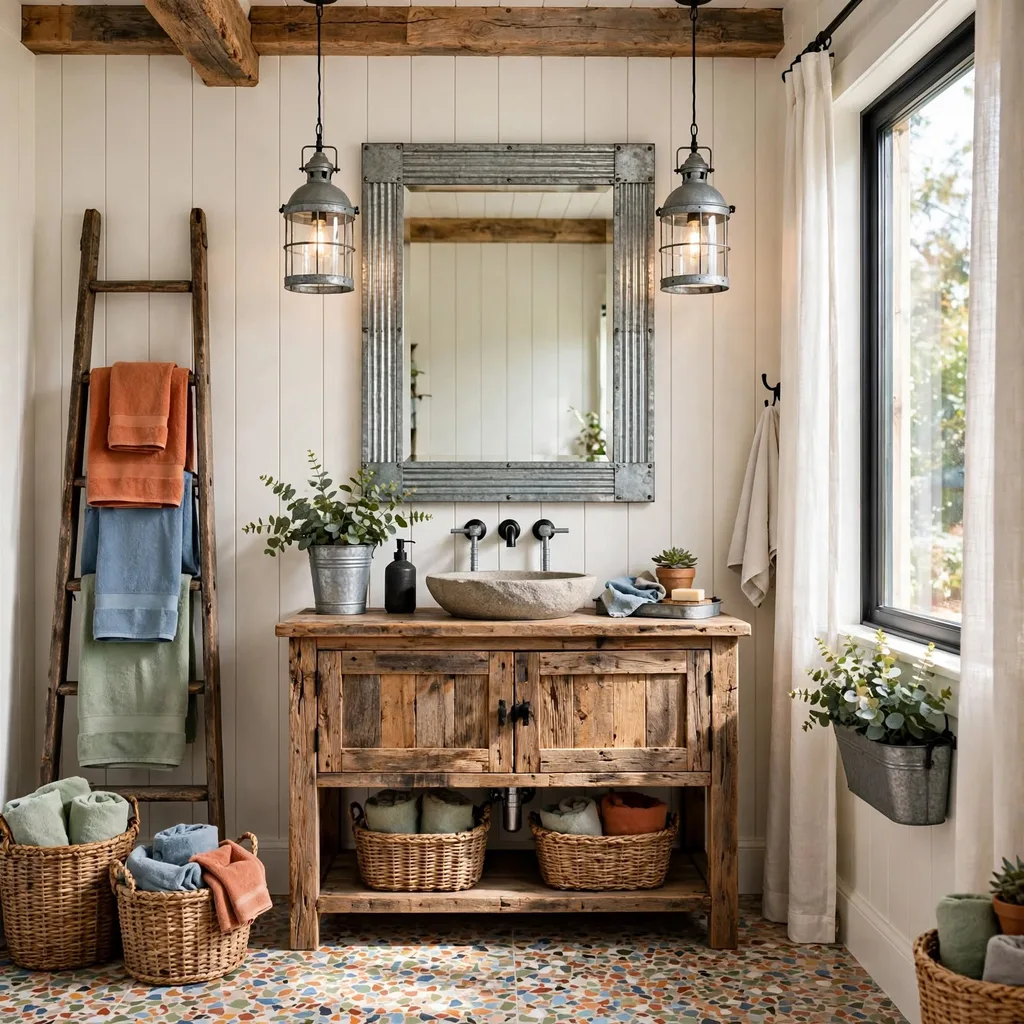
Galvanized metal accents, through a decorative bucket used for towel or plant storage, a lantern-style light fixture, or small hardware details, add an agricultural, working-farm texture distinctly associated with farmhouse bathroom styling. This material’s matte, slightly mottled silver finish provides visual contrast against the room’s warmer wood tones without introducing additional color. Limiting galvanized metal to one or two accent pieces prevents the material from overwhelming the room’s more prominent wood and black metal elements.
15. Neutral Base Palette With Black and Wood Accents
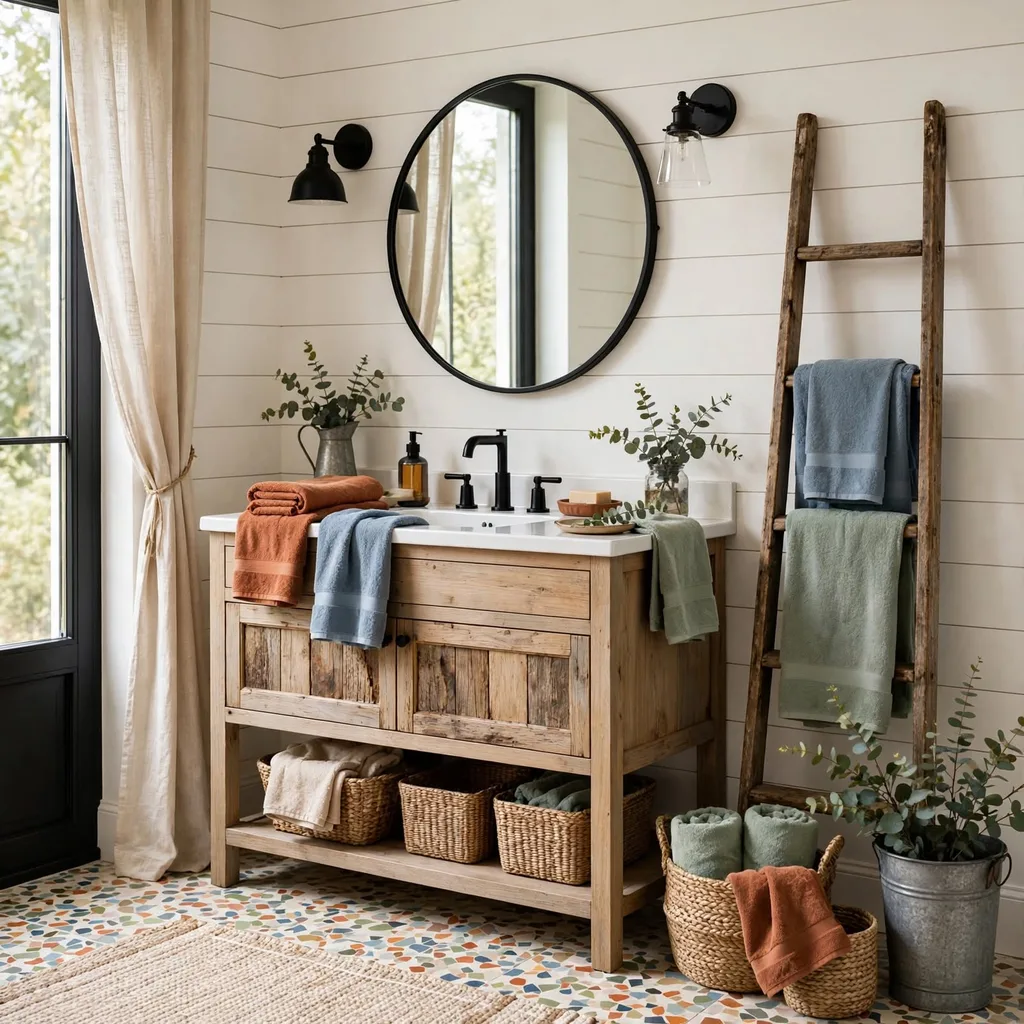
A neutral base palette, built around warm white, cream, and soft gray, punctuated by black fixture accents and warm wood tones through the vanity and any decorative pieces, forms the visual foundation of most current farmhouse bathrooms. This combination provides enough contrast to keep the room from feeling flat while staying true to the style’s practical, unfussy character. Introducing any additional color sparingly, often through a single element like a vintage-style rug or a piece of art, keeps the palette from becoming either too stark or too busy.
Shop the Look
Start with a shiplap accent wall behind a vintage-style clawfoot tub, white subway tile with black grout for the shower surround, and a reclaimed wood vanity with black matte hardware. Add a black-framed mirror, a vintage-inspired barn-style pendant light, and woven baskets for towel storage. Finish with wood-look tile flooring and an antique ladder for additional towel display.
Common Mistake to Avoid
A common mistake in farmhouse bathroom design is overcommitting to the style’s most literal decorative signifiers, decorative signage, an abundance of mason-jar-style accessories, and heavily distressed finishes throughout, which can tip the room from lived-in charm into a themed, costume-like space. Focusing instead on genuine material choices, real wood, durable tile, authentic black fixtures, produces a more convincing and longer-lasting result than leaning on decorative shortcuts. A restrained, well-edited farmhouse bathroom reads as more authentic than one filled with every recognizable style marker at once.
FAQs
What’s the difference between farmhouse and modern farmhouse bathroom design?
Traditional farmhouse bathroom design leans more heavily into fully distressed materials and abundant decorative accessories, while modern farmhouse incorporates cleaner architectural lines and a more restrained material palette alongside the same core black-and-wood elements. Modern farmhouse also tends to favor a single accent wall or feature rather than full-room shiplap coverage, keeping the overall look feeling more current and less decoratively heavy. Most current farmhouse bathroom designs lean toward this more refined, modern interpretation rather than the fuller traditional style.
Is shiplap safe to use in a bathroom given the moisture?
Shiplap can be used safely in a bathroom provided it’s properly sealed with a moisture-resistant paint or finish and kept away from direct, constant water exposure like inside a shower stall itself. Using shiplap on a wall near, but not directly within, a wet area, such as behind a vanity or as a backdrop for a freestanding tub, minimizes moisture risk while still achieving the material’s signature look. Ensuring the bathroom has adequate ventilation also protects any wood wall treatment, shiplap included, from moisture damage over time.
What fixtures are essential to achieving a farmhouse bathroom look?
Black matte fixtures, faucets, showerheads, and cabinet hardware, along with a farmhouse-style vanity basin or a vintage-inspired clawfoot tub, form the core fixture choices most associated with farmhouse bathroom design. White subway tile and a wood or wood-look vanity further reinforce this material identity. A bathroom doesn’t need every one of these elements simultaneously to read as farmhouse-styled, but incorporating at least the black fixture finish alongside one or two other signature materials generally produces a recognizable result.
Can a small bathroom still achieve a farmhouse look?
A small bathroom can successfully incorporate farmhouse design elements, though choosing one or two signature details, black fixtures and subway tile, for instance, rather than attempting every element simultaneously, generally produces a better-proportioned result in a compact space. A full-scale clawfoot tub or extensive shiplap coverage might overwhelm a genuinely small room, making a simpler application of the style’s core materials more appropriate. Prioritizing the black-and-white material contrast and a few well-chosen wood accents captures much of the farmhouse character without requiring the room’s full square footage to support every possible element.
How do I keep a farmhouse bathroom from feeling dated?
Favoring the more restrained modern farmhouse approach, limiting decorative accessories and applying shiplap or wainscoting to a single feature rather than the full room, helps a farmhouse bathroom avoid feeling overly trend-specific as the style continues to evolve. Choosing genuine, quality materials over trend-driven decorative shortcuts also supports the room’s longevity beyond any single farmhouse decorating moment. Periodically reassessing which decorative elements still feel authentic versus purely trend-driven helps the room age well over time, consistent with how the broader farmhouse style has evolved in recent years.
Conclusion
A farmhouse bathroom works best when it balances genuine rustic materials and practical fixture choices with enough restraint to avoid feeling like a themed space rather than a real, functional room. Save this guide to Pinterest for reference while planning your next update, and check out our related post on bathroom tile ideas for more material guidance suited to this style’s practical, durable character.