15 Cleverly Designed Luxury Living Room Ideas for a High-End Look
A luxury living room isn’t defined by how much was spent, but by how deliberately every material, proportion, and finish was chosen. This guide breaks down fifteen ideas that build a genuinely high-end feel, from stone coffee tables to tailored drapery, without relying on obvious logos or trend-driven decor that dates quickly. Each idea includes the specific materials and sizing details that separate a considered luxury space from one that simply looks expensive in photos.
Trend & Background
Luxury living room design has moved away from ornate, heavily gilded interiors toward a quieter, material-driven approach often described as understated or “quiet luxury.” Natural stone, hand-finished wood, and tailored upholstery now carry more weight than obvious branding or maximalist decoration. This shift reflects a broader interest in longevity over trend cycles, with homeowners investing in fewer, higher-quality pieces rather than frequently replacing lower-cost furniture, a pattern reinforced by rising interest in vintage and antique sourcing at the high end of the market.
Key Takeaways
- A luxury living room relies on material quality, tailored proportions, and restraint more than on visible cost or brand names.
- Investment pieces like a stone coffee table or a custom sofa do more for a high-end feel than a room full of smaller decorative purchases.
- Layered lighting, drapery, and rug quality are among the most overlooked details that separate a luxury room from a standard one.
- Metallic finishes, natural stone, and rich wood tones remain the core material palette across current luxury living room design.
1. Marble Coffee Table
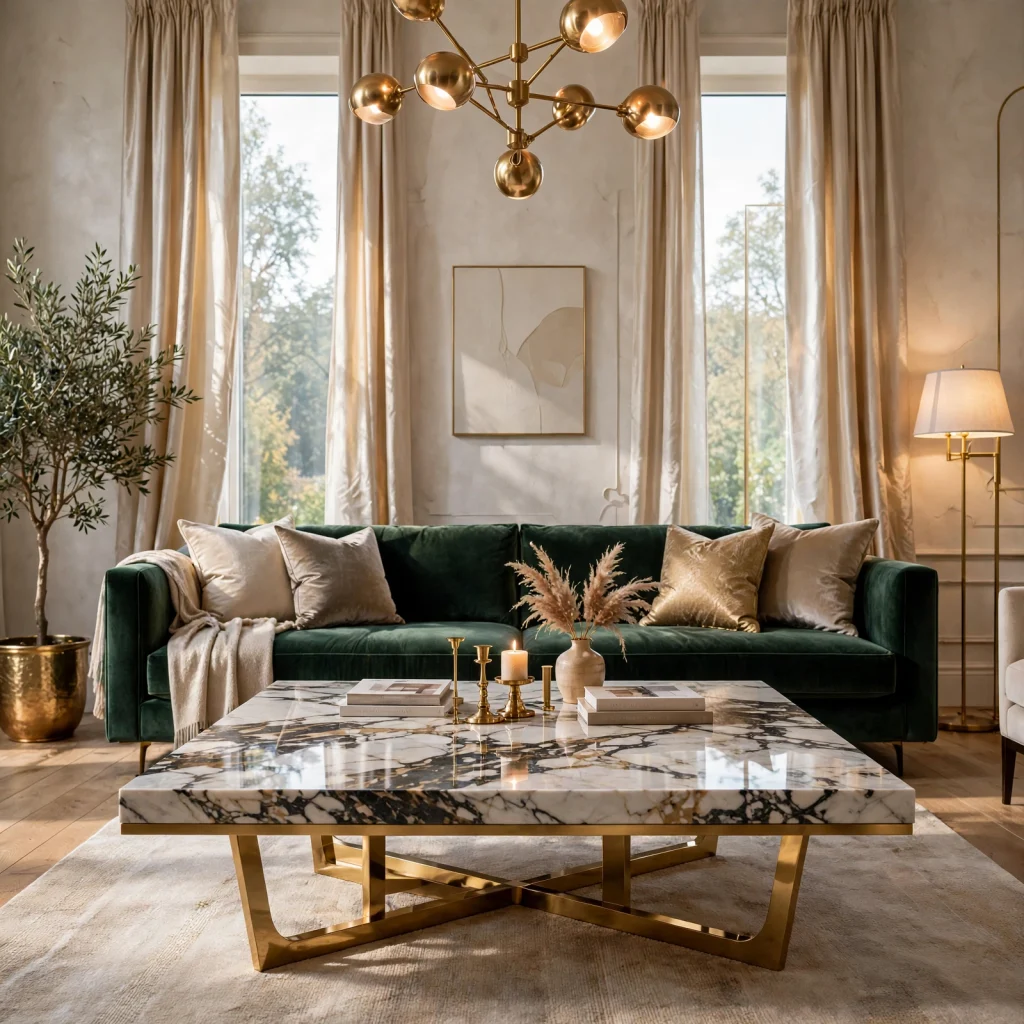
A marble coffee table brings a natural veining pattern that no two slabs repeat exactly, giving a luxury living room a focal point that reads as one-of-a-kind. Calacatta or Carrara marble in a honed rather than polished finish tends to photograph more sophisticated and shows fewer fingerprints or watermarks over daily use. Pair it with a brass or blackened steel base for contrast, and choose a shape, oval or freeform, that softens the room’s harder architectural lines.
2. Custom Upholstered Sofa
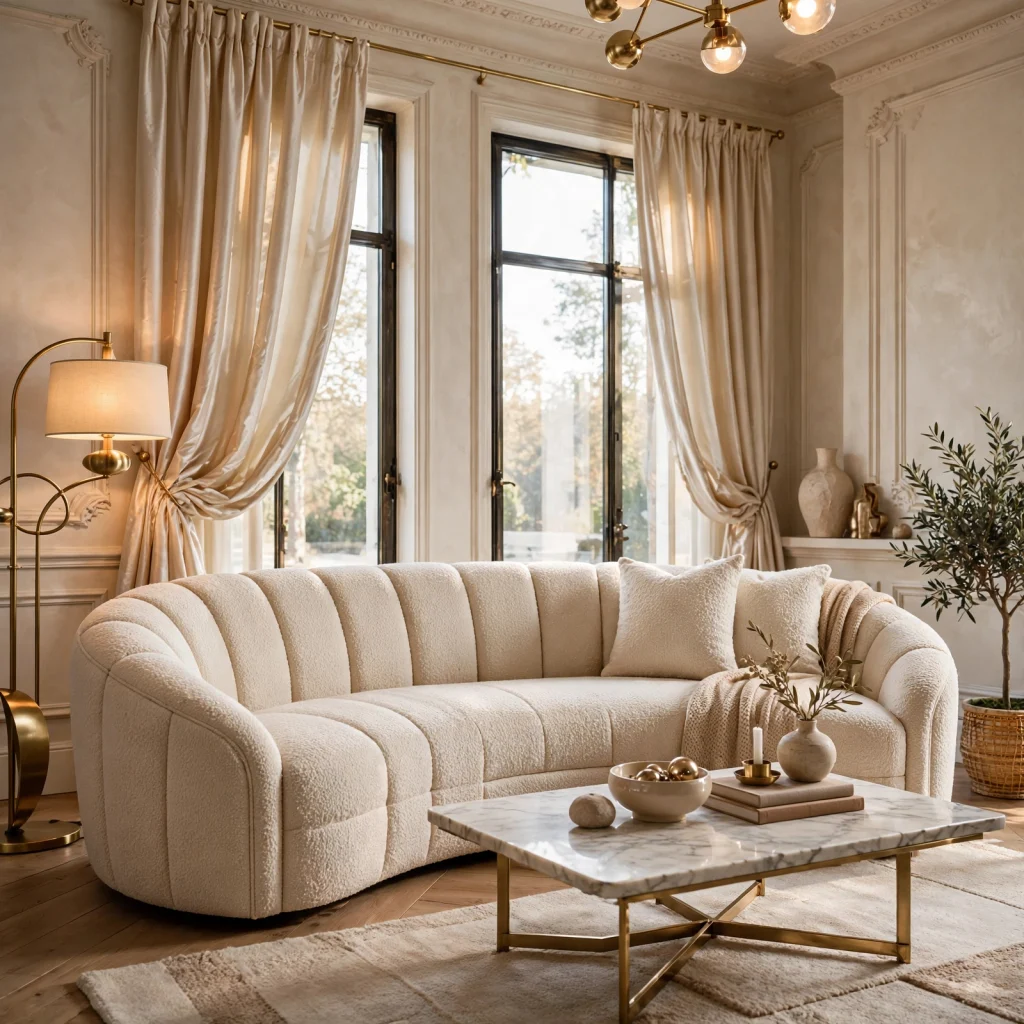
A custom or made-to-order sofa allows precise control over proportions, arm height, and fabric that off-the-shelf furniture rarely offers, which is often the single largest differentiator in a luxury living room. Mohair, boucle, or a high-thread-count linen blend in a tailored, tight-back silhouette reads more considered than an overstuffed, casual style. Commissioning a sofa also allows the depth to be adjusted for the room’s actual proportions rather than settling for a standard 36- or 38-inch depth.
| Fabric | Feel | Best For |
| Mohair | Structured, plush | Formal luxury rooms |
| Boucle | Soft, textured | Warm, relaxed luxury |
| Linen blend | Crisp, tailored | Coastal or minimal luxury |
3. Silk Drapery Panels
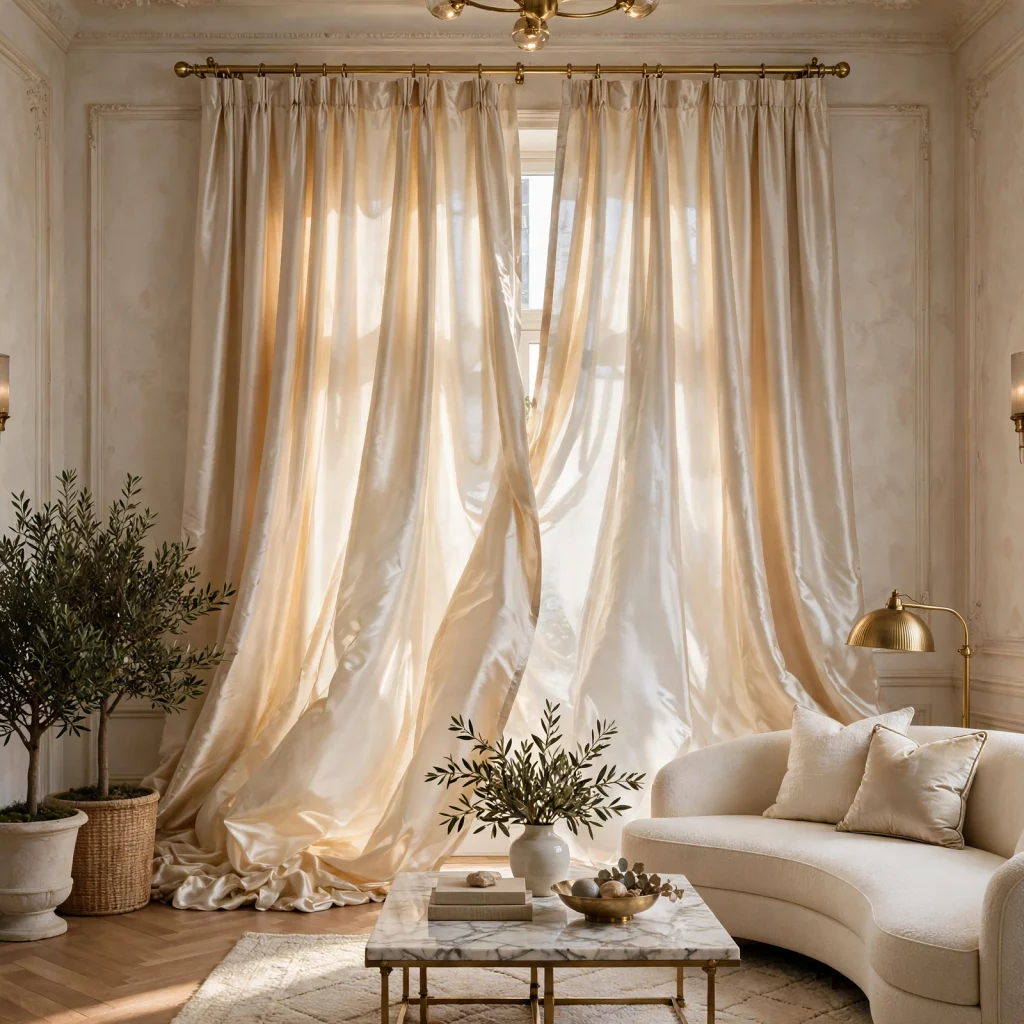
Floor-length silk drapery panels add a soft, light-catching quality that cotton or polyester blends can’t replicate, making them one of the more subtle markers of a luxury living room. Hung from ceiling height rather than just above the window frame, and puddling slightly on the floor by an inch or two, silk panels visually extend the room’s height. A silk-linen blend offers similar drape with more durability for rooms with heavy sun exposure or foot traffic.
4. Hand-Knotted Persian Rug
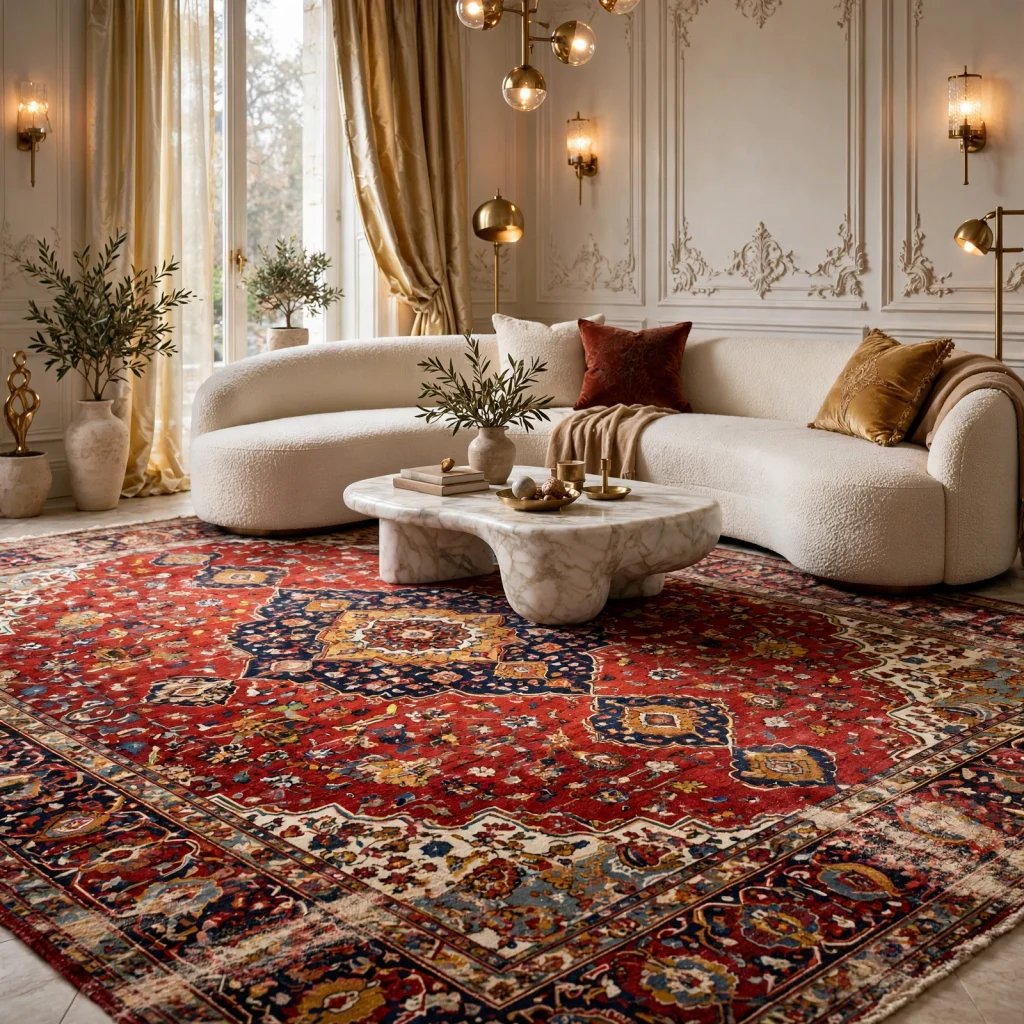
A hand-knotted Persian or Oushak rug remains one of the clearest signals of a luxury living room, both for its craftsmanship and its tendency to appreciate rather than depreciate over time. Wool or silk-wool blend rugs in muted, antique colorways generally suit a considered luxury palette better than bold, high-contrast new rugs. Sizing the rug so the full seating group sits within its borders, rather than just the front legs, gives the room a more finished, formal anchor.
5. Backlit Onyx Feature Wall
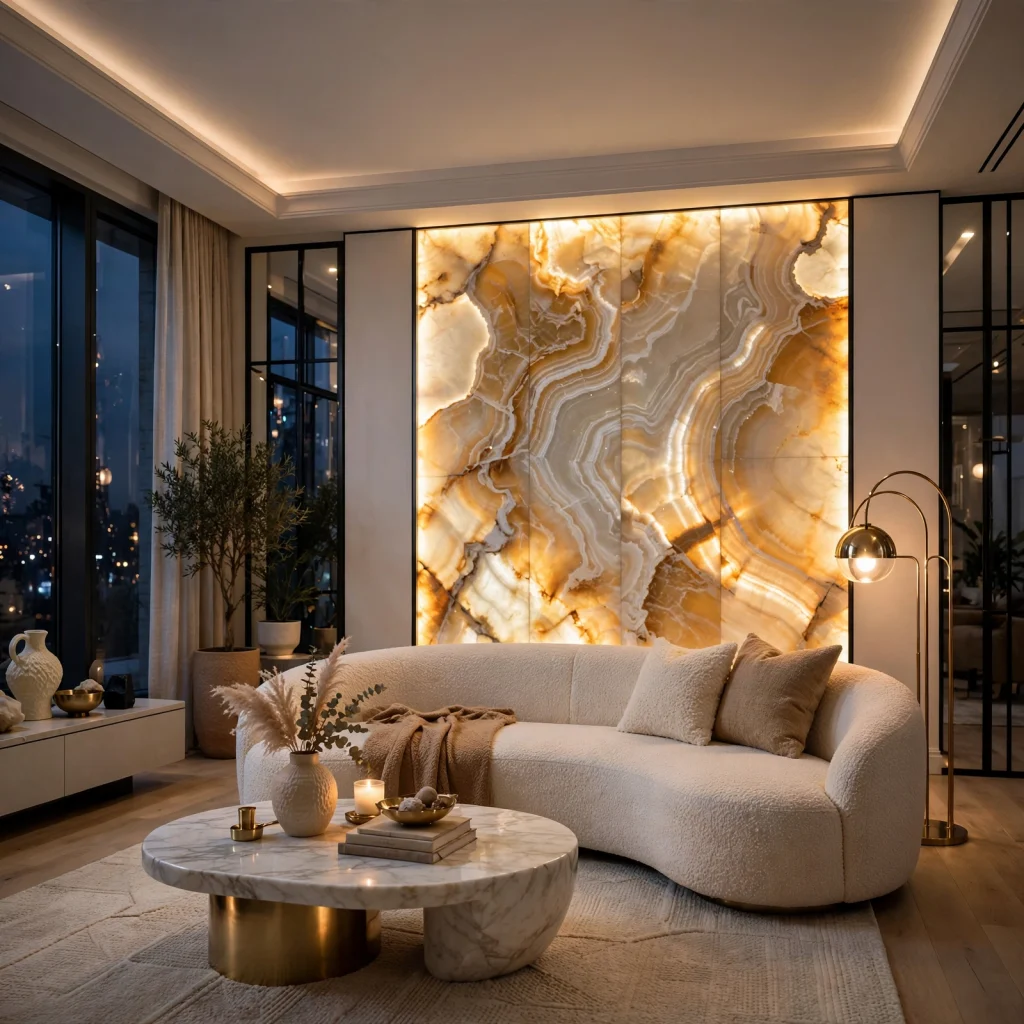
A backlit onyx feature wall uses the stone’s natural translucency to create a soft glow when lit from behind, turning a single wall into the room’s dramatic centerpiece. This treatment is typically reserved for a fireplace surround or a media wall, since covering an entire room in onyx would overwhelm the space and the budget. Pairing the feature wall with simpler, unadorned surrounding walls keeps the stone as the clear focal point rather than competing with other decorative elements.
6. Brass and Bronze Hardware
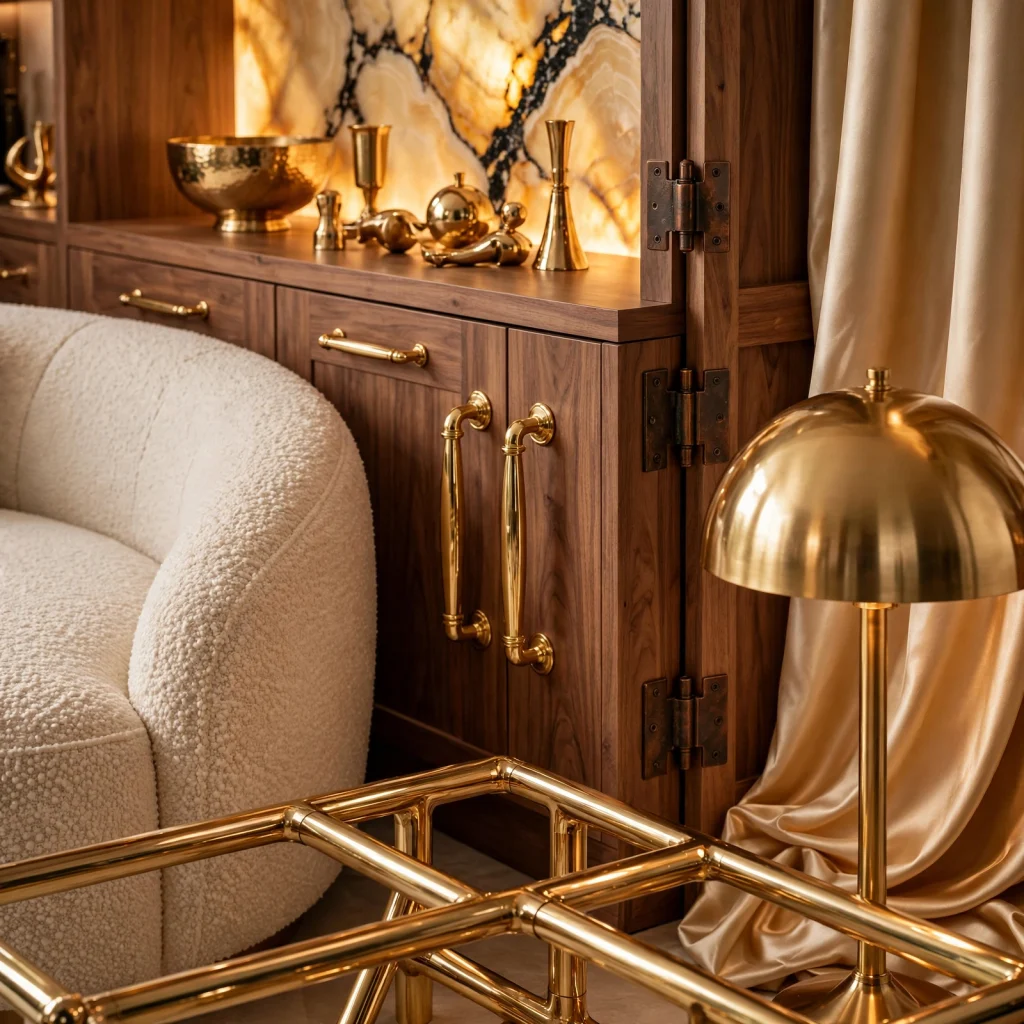
Consistent brass or bronze hardware across door handles, lamp bases, and furniture legs ties a luxury living room together in a way that mismatched finishes undermine immediately. Antique or unlacquered brass develops a natural patina over time, which many high-end designers prefer over the uniform shine of polished chrome. Choosing one metal family and applying it consistently throughout the room, rather than mixing brass, nickel, and black finishes, is one of the simplest ways to elevate a space without a large budget shift.
7. Coffered Ceiling Detail
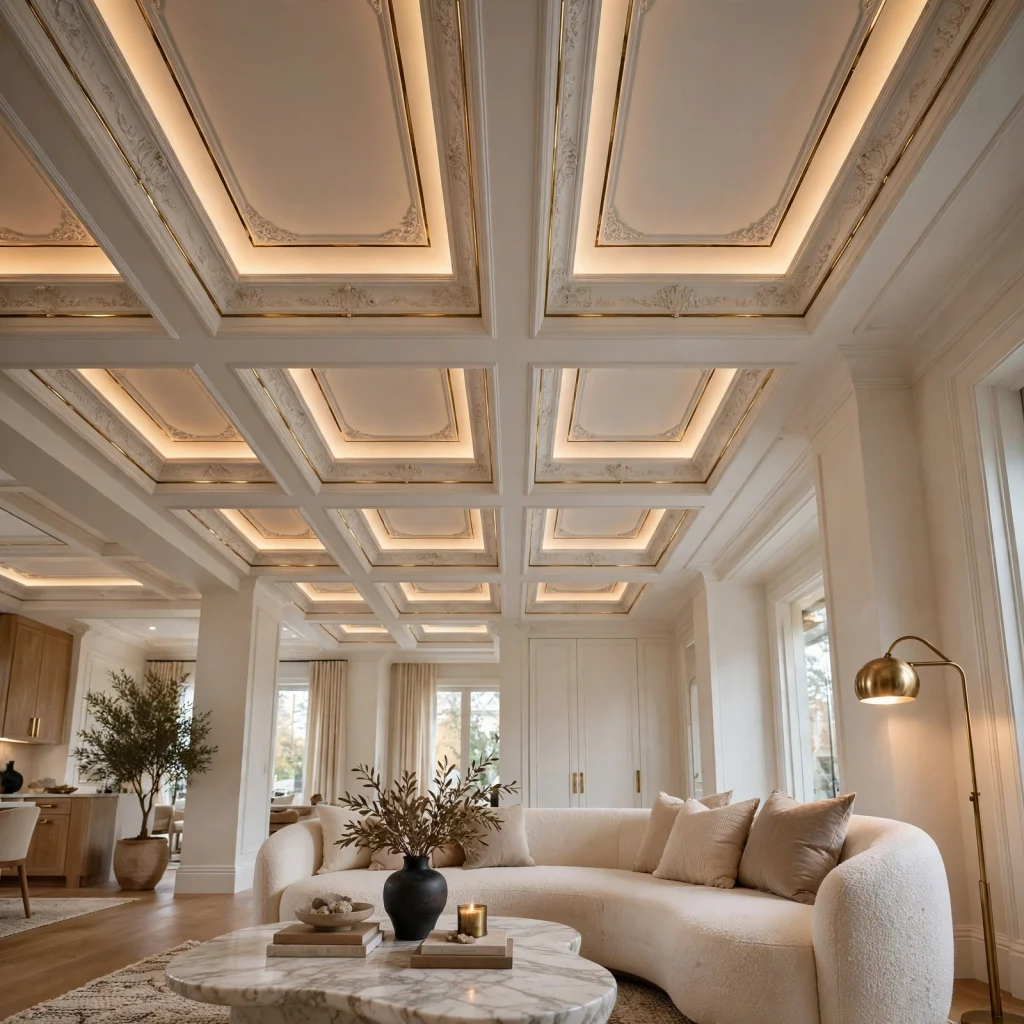
A coffered ceiling, using a grid of recessed panels framed by molding, adds architectural depth to a luxury living room that a flat ceiling can’t provide. Painting the recessed panels a shade or two darker than the surrounding trim adds subtle dimension without requiring elaborate millwork. This detail works best in rooms with at least 9-foot ceilings, since lower ceiling heights can make the grid feel heavy rather than elegant.
8. Statement Chandelier
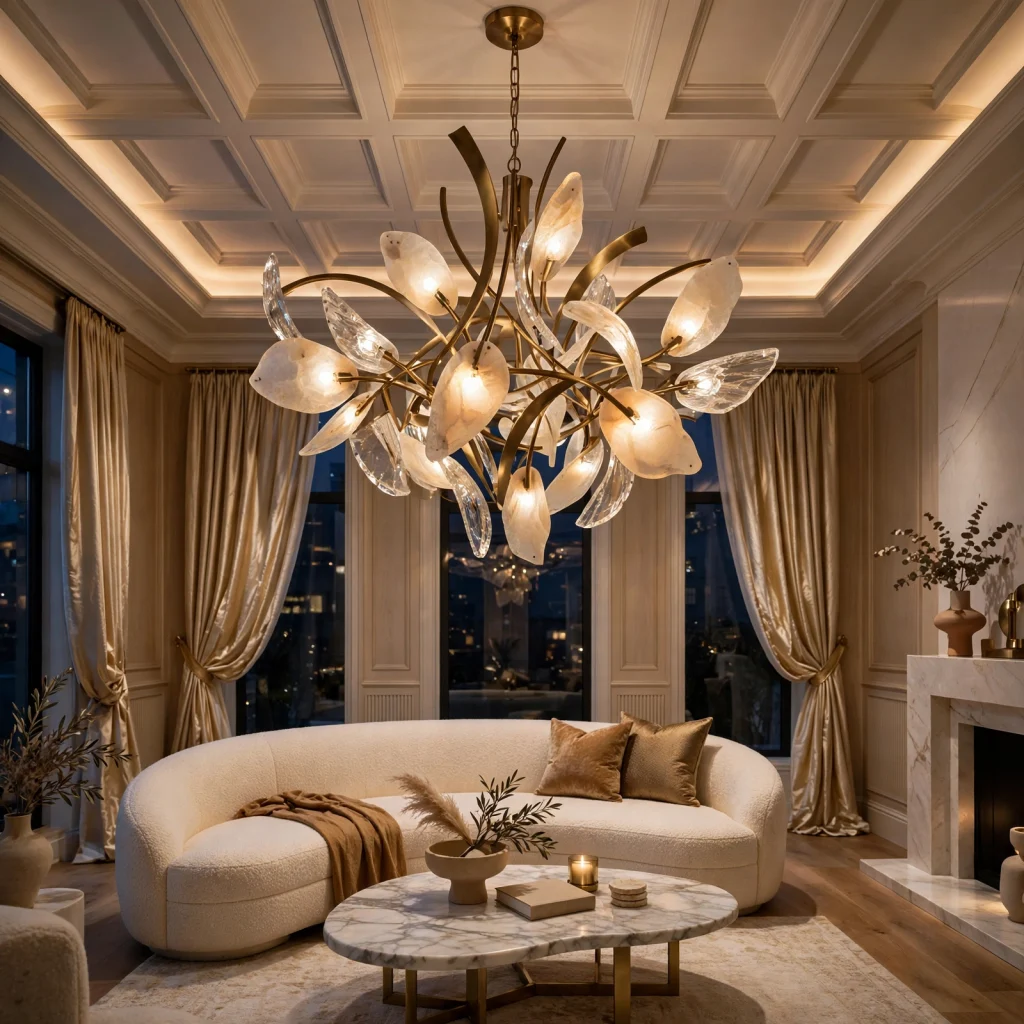
A statement chandelier, whether crystal, hand-blown glass, or sculptural metal, anchors a luxury living room’s lighting scheme and often becomes the room’s primary visual signature. Scale matters more than material here, since an undersized fixture in an otherwise grand room reads as an afterthought rather than a centerpiece. Pairing the chandelier with a dimmer switch allows the same fixture to serve both a bright, formal setting and a softer evening mood.
9. Bouclé Swivel Chairs
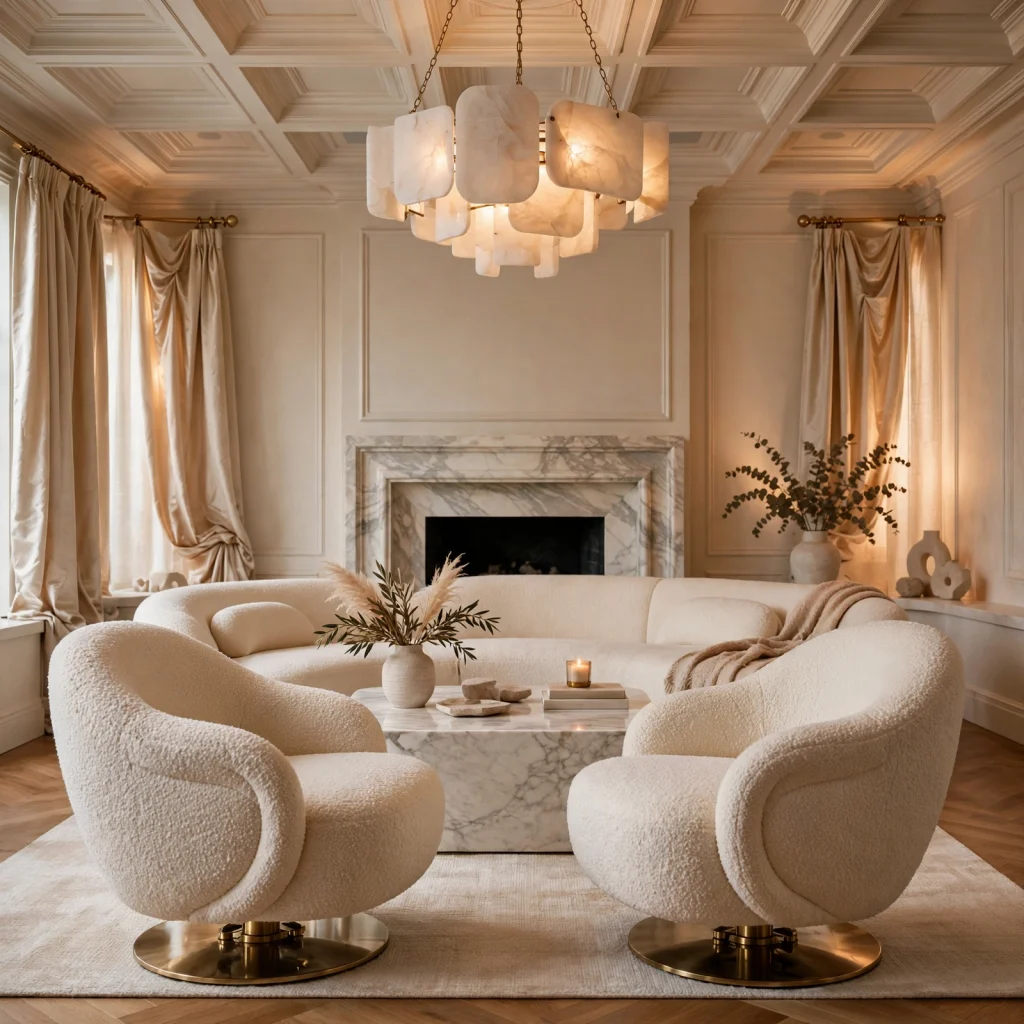
A pair of bouclé swivel chairs adds both comfort and a sculptural silhouette to a luxury living room’s seating arrangement, offering flexibility that a fixed accent chair doesn’t. Cream, camel, or dove gray tones tend to read more elevated than bold colors in a formal seating group. The swivel base also allows the chairs to pivot toward a fireplace, a window view, or the rest of the seating group depending on how the room is being used at the time.
10. Fluted Wood Paneling
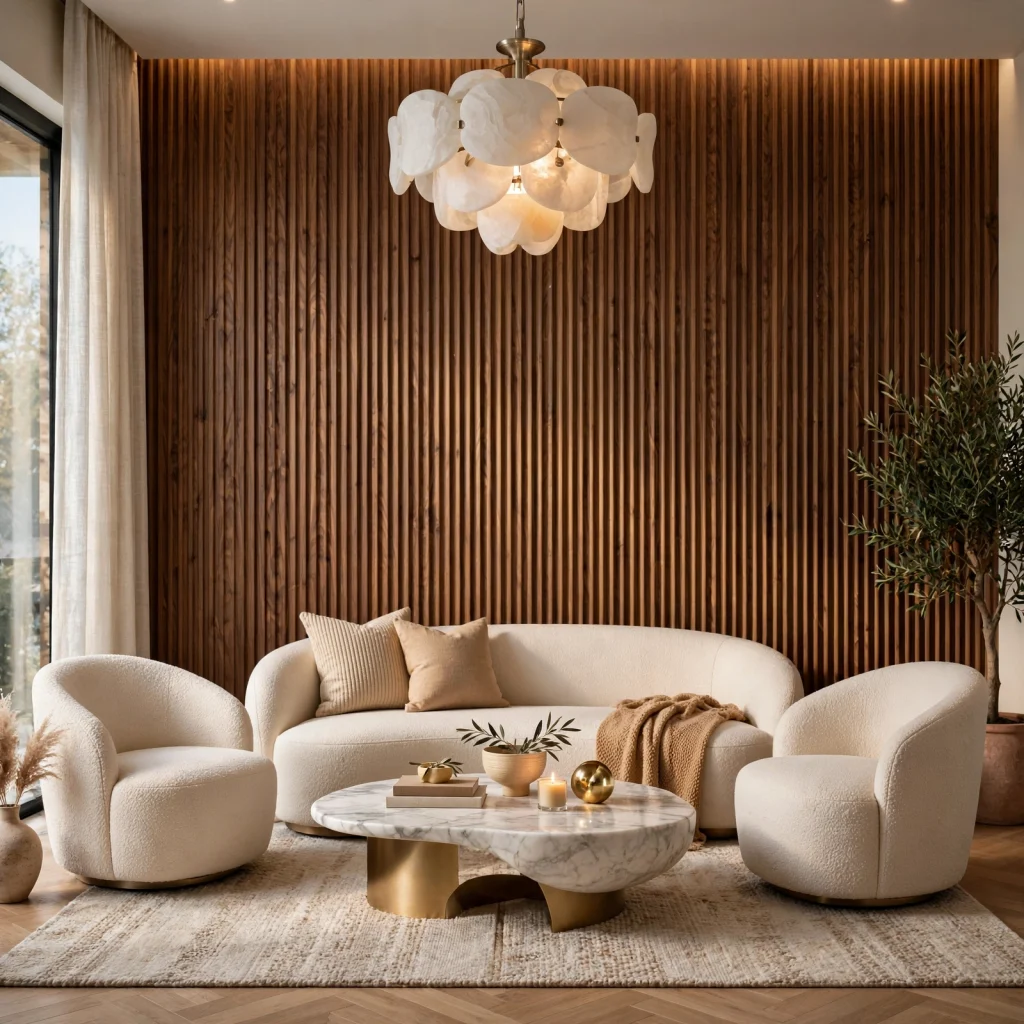
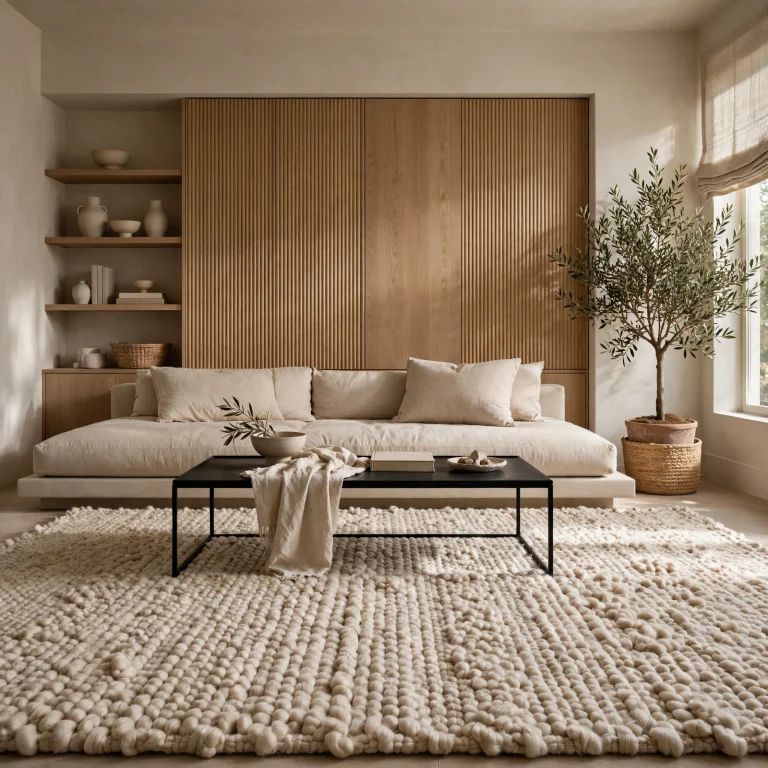
Fluted wood paneling, applied in vertical grooved panels across a wall or as a wrap around a media console, adds texture and craftsmanship without relying on pattern or color. Walnut or white oak in a natural or lightly stained finish keeps the detail from reading as overly ornate. This treatment works especially well behind a sofa or as a backdrop for a fireplace, giving the room’s architecture as much presence as its furniture.
Looking for inspiration? Explore our collection of living room inspiration to create a stylish and comfortable space
11. Curated Art Collection
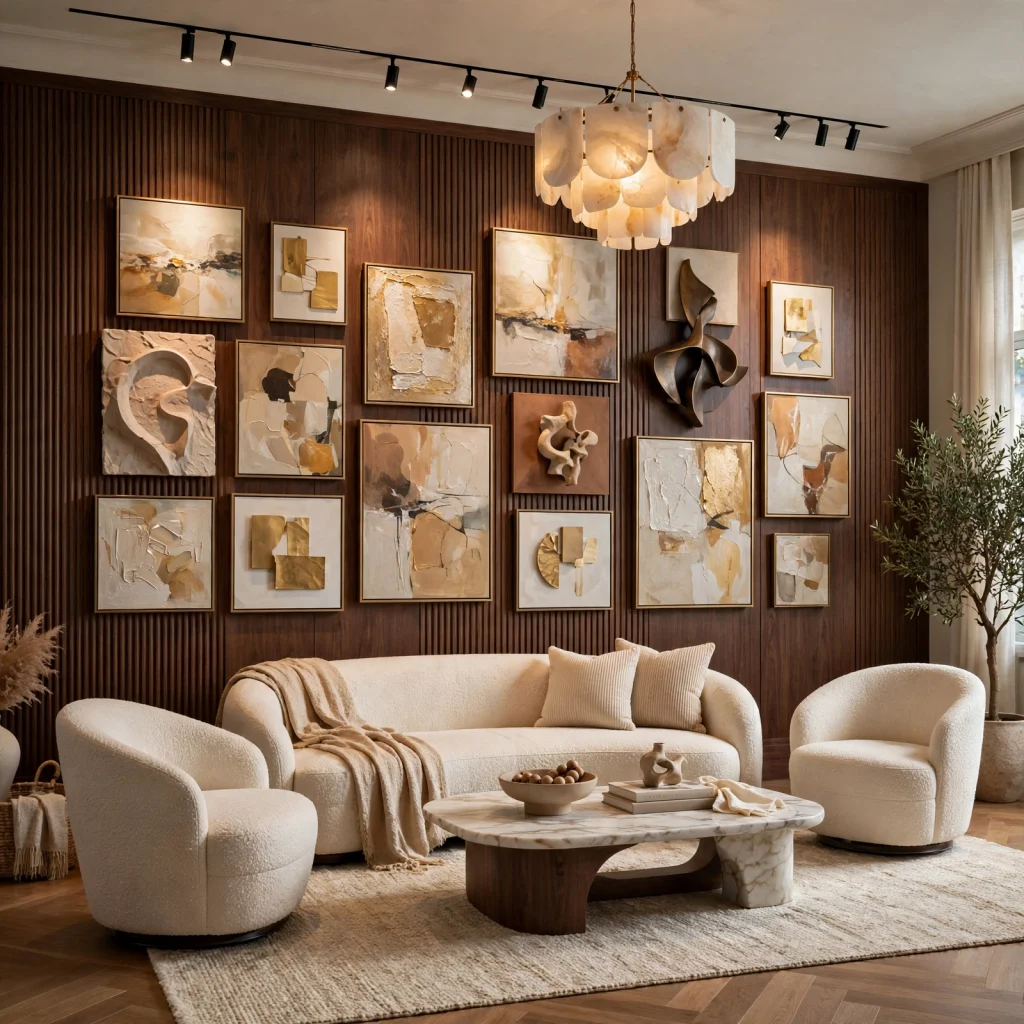
A small, curated collection of original or limited-edition art, rather than mass-produced prints, gives a luxury living room a sense of permanence and personal taste that decor alone can’t achieve. One or two larger statement pieces generally read more sophisticated than a cluster of smaller prints, particularly when hung at a gallery-standard 57 inches to the center of the piece. Working with a local gallery or art advisor can help source pieces that fit both the room’s scale and its material palette.
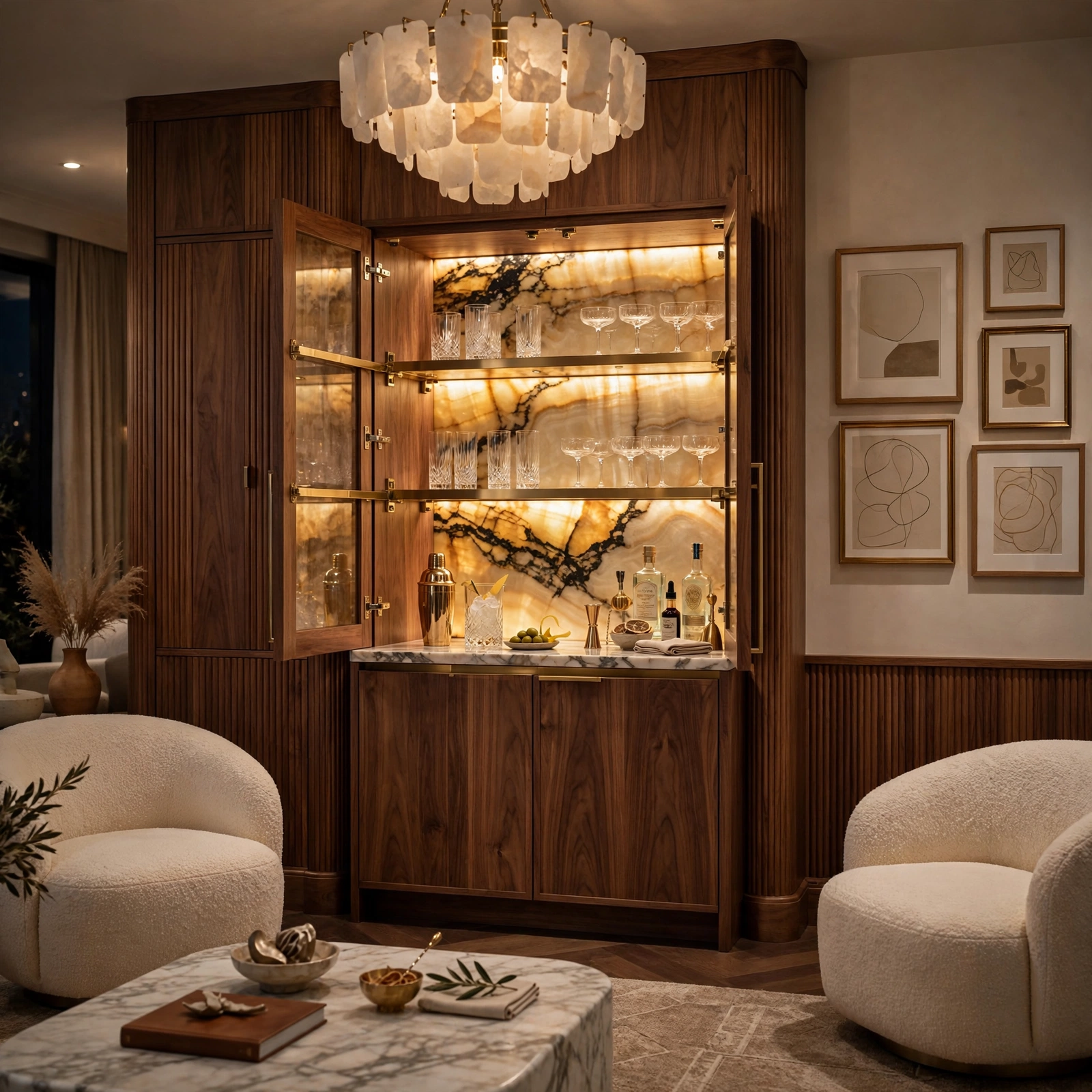
12. Integrated Bar Cabinet
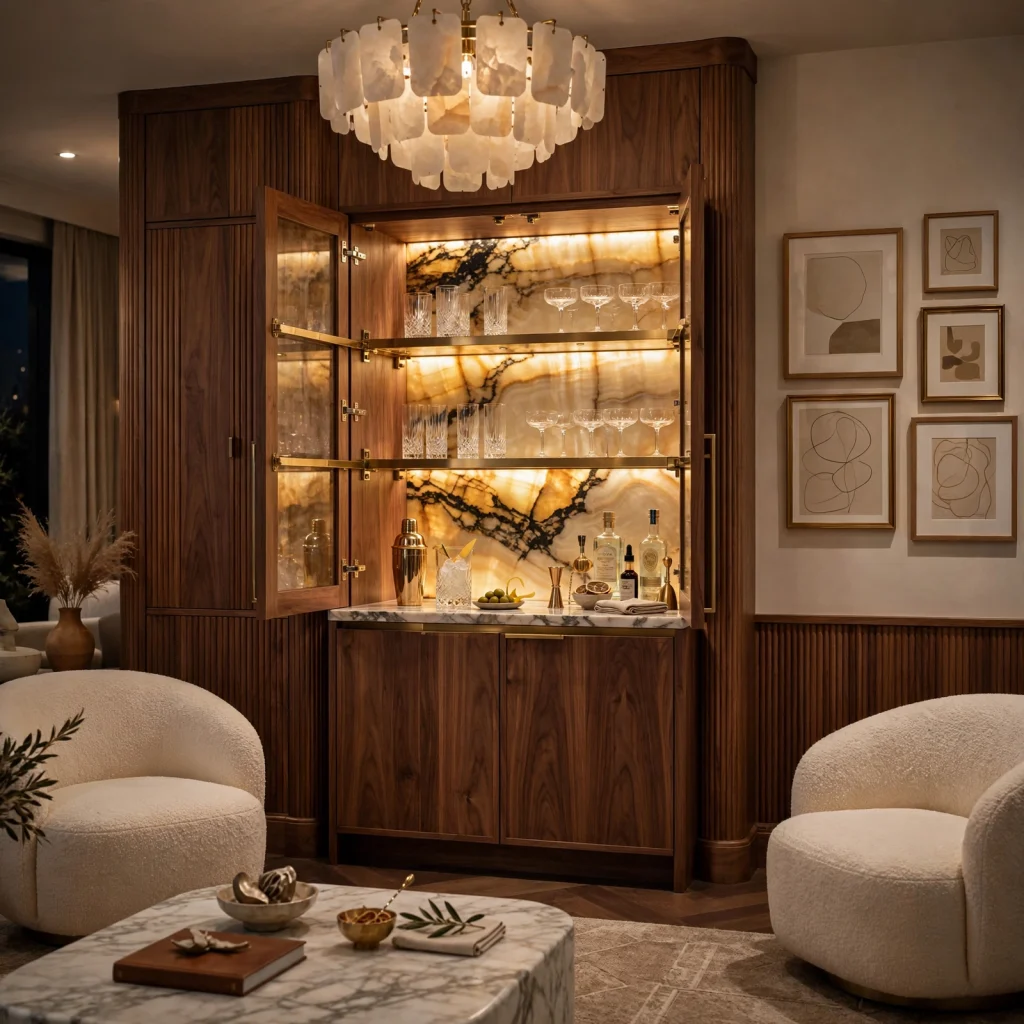
An integrated bar cabinet, built into existing millwork or a freestanding credenza, adds both function and a sense of occasion to a luxury living room used for entertaining. Brass shelving, mirrored or fluted glass backing, and a stone or leather-wrapped top elevate the cabinet beyond a simple storage piece. Positioning it near the main seating area, but not directly in the primary sightline from the entrance, keeps it functional without becoming the room’s first visual impression.
13. Cashmere and Wool Throws
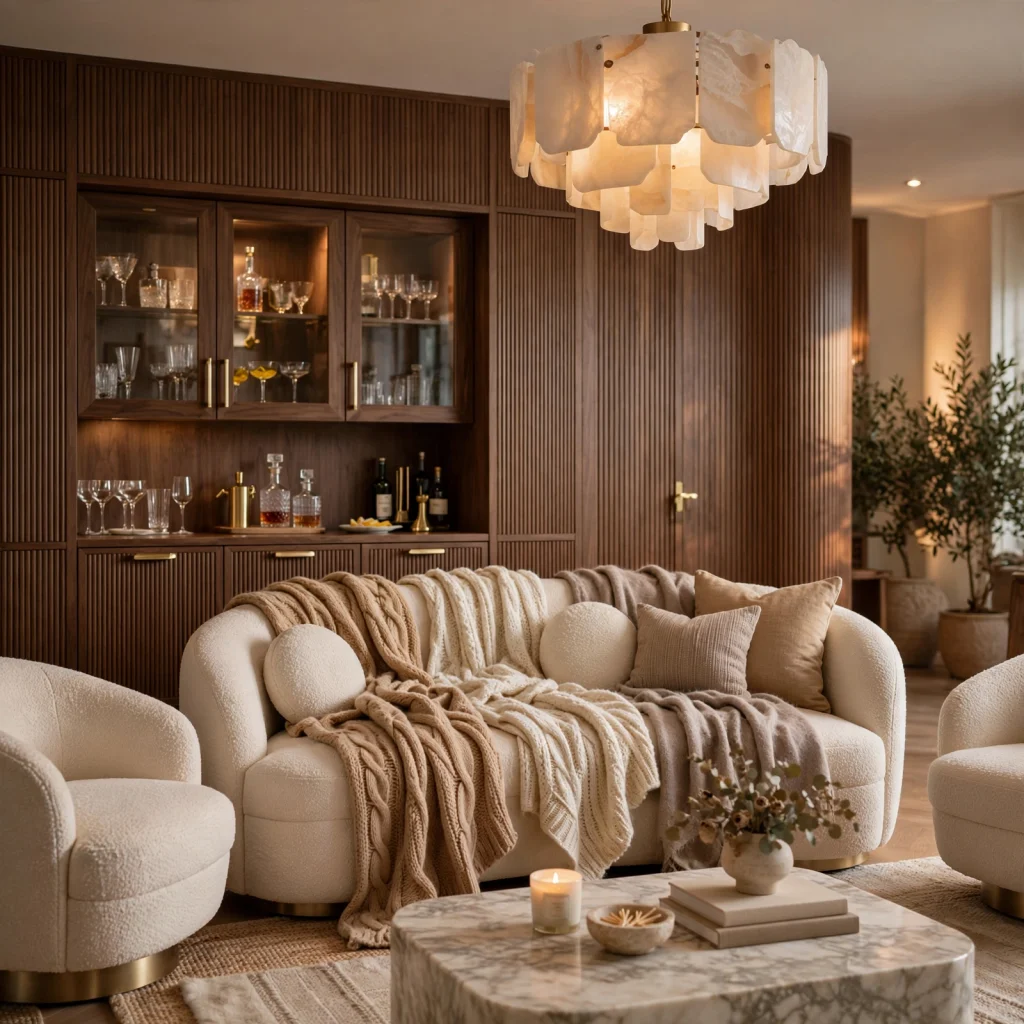
Cashmere and heavyweight wool throws, layered in muted neutral tones across a sofa or chaise, add a tactile sense of luxury that synthetic blends can’t replicate. Folding one throw in thirds along the sofa’s arm and draping a second more loosely elsewhere avoids a flat, overly styled look. These textiles also serve a practical purpose in rooms with large windows or stone flooring, where natural material choices can make a space feel cooler than expected.
14. Recessed Fireplace with Stone Surround
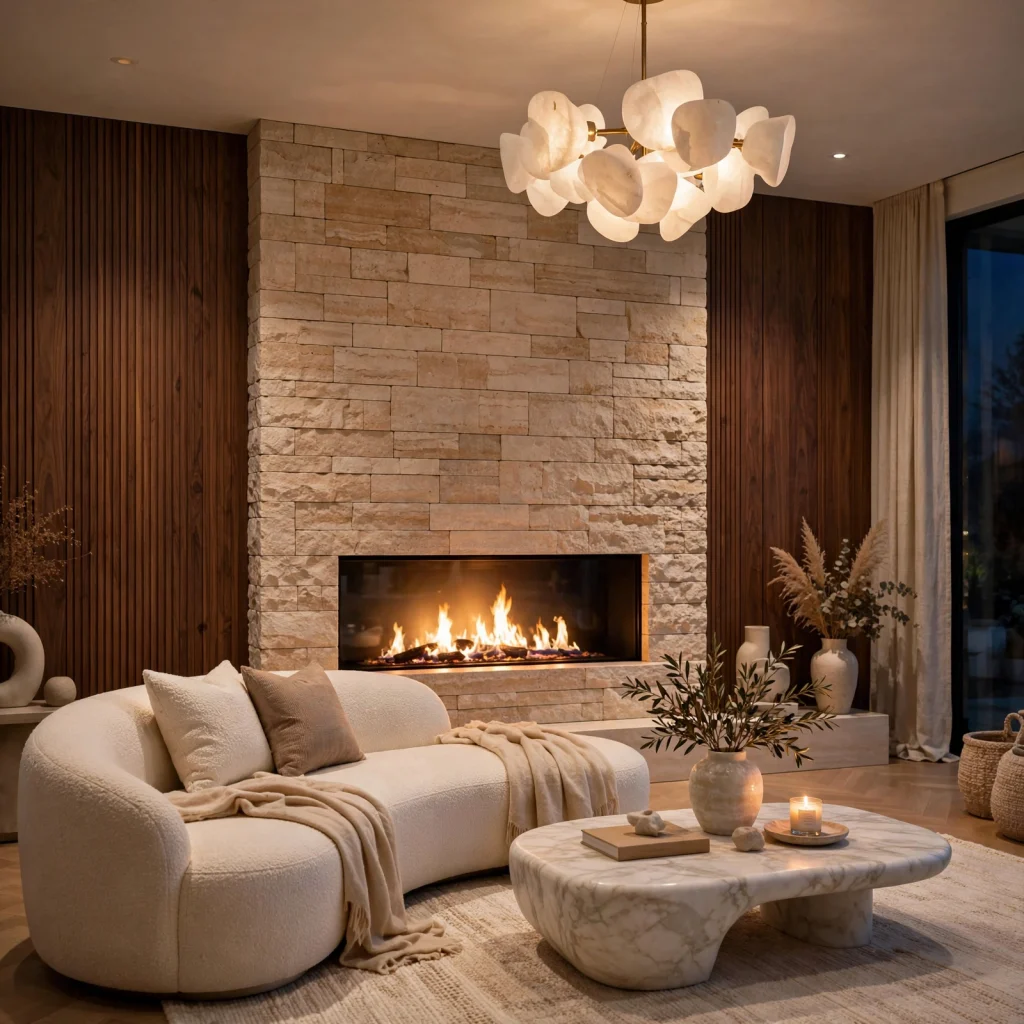
A recessed fireplace with a full-height natural stone surround, extending from floor to ceiling rather than stopping at a mantel, gives a luxury living room a dramatic architectural anchor. Limestone, marble, or travertine in a honed finish suits most high-end palettes better than a glossy, polished surface. Flanking the fireplace with symmetrical built-in shelving or cabinetry on either side reinforces the formality and balance that define this style of room.
15. Layered Ambient and Accent Lighting
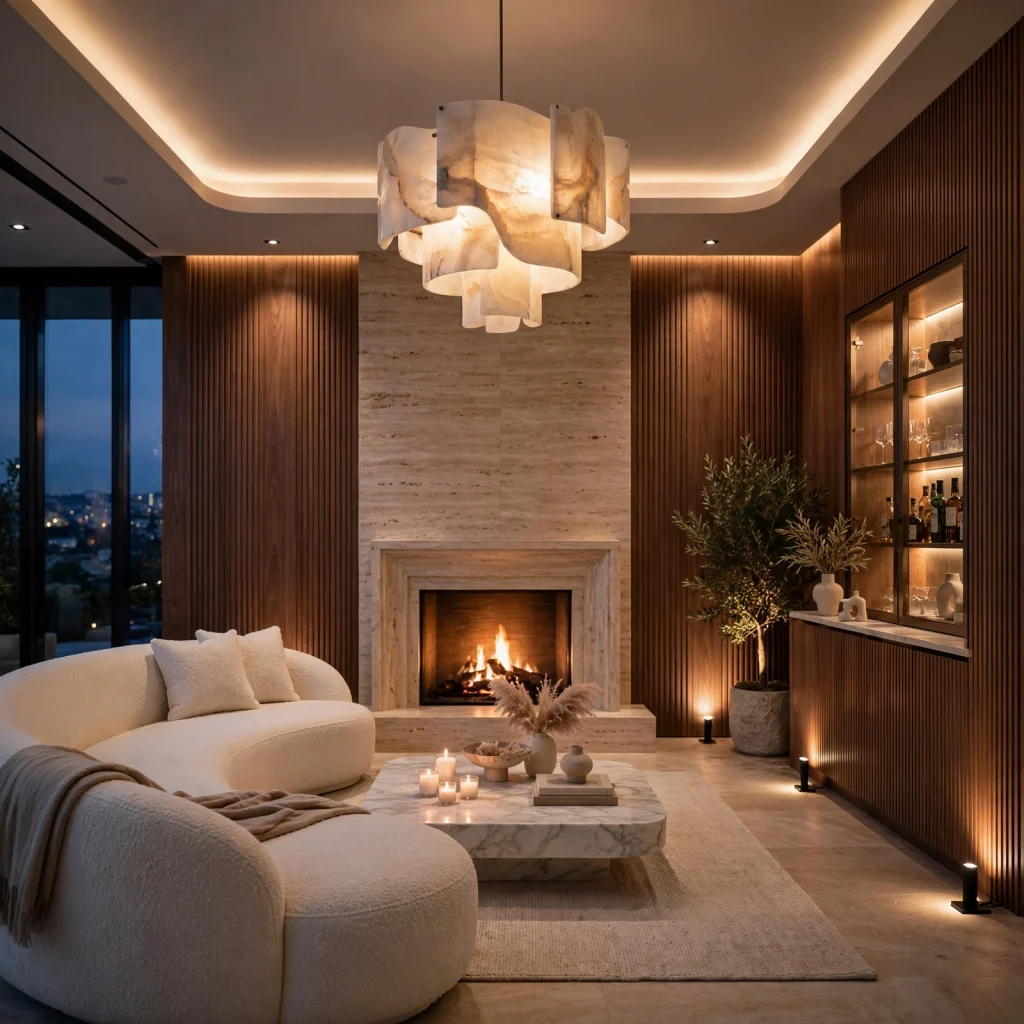
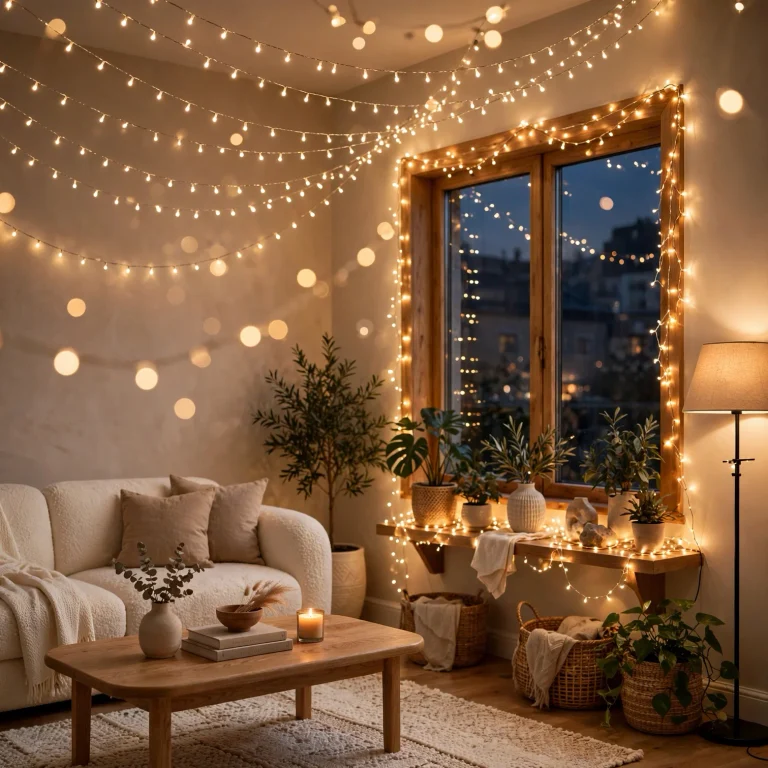
A layered lighting plan that combines a statement overhead fixture, wall sconces, and low table or floor lamps allows a luxury living room to shift from bright and formal to warm and intimate without changing a single piece of furniture. Wall sconces flanking a fireplace or art piece add symmetry and depth that overhead lighting alone can’t provide. Dimmers on every layer, set independently, give the most control over the room’s mood throughout the day and into the evening.
Shop the Look
Start with a made-to-order mohair sofa, a honed Calacatta marble coffee table, and a hand-knotted wool Oushak rug in a muted antique colorway. Add a pair of bouclé swivel chairs in dove gray, a sculptural hand-blown glass chandelier, and floor-length silk-linen drapery panels. Finish with unlacquered brass sconces flanking the fireplace and a cashmere throw layered across the sofa’s arm.
Common Mistake to Avoid
A common mistake when designing a luxury living room is filling the space with too many decorative objects at once, which reads as cluttered rather than curated regardless of how expensive each individual piece is. Restraint is one of the defining qualities of high-end design, and leaving visible negative space around furniture and on shelving actually reinforces the sense of quality rather than undermining it. Editing down to fewer, better pieces almost always produces a more convincing luxury result than adding more.
FAQs
What makes a living room look luxurious without being expensive?
Careful furniture proportions, a limited and cohesive color palette, and attention to details like consistent metal finishes and properly sized rugs can create a luxurious feel even on a moderate budget. Investing in one or two higher-quality anchor pieces, such as a well-made sofa or a stone-topped table, tends to elevate a room more than spreading a budget thinly across many smaller items. Good lighting and uncluttered styling also do more visual work than most people expect.
What colors are best for a luxury living room?
Muted, warm neutrals like camel, ivory, and taupe generally read as more luxurious than bright or highly saturated colors, since they photograph as timeless rather than trend-driven. Deeper accent tones such as forest green, chocolate brown, or charcoal work well in smaller doses, often through upholstery or drapery, without overwhelming the room. Metallic accents in brass or bronze tend to complement this palette better than cooler-toned silver or chrome finishes.
Is marble or quartz better for a luxury coffee table?
Natural marble is generally considered more luxurious due to its unique veining and the fact that no two slabs are identical, though it requires more maintenance and is more prone to etching from acidic spills. Quartz offers a similar high-end look with significantly more durability and stain resistance, making it a practical alternative for households with children or frequent entertaining. The choice largely comes down to whether authenticity or low maintenance matters more for the specific household.
How do I light a luxury living room properly?
A luxury living room typically uses at least three layers of lighting, ambient light from a statement fixture, task lighting from lamps near seating, and accent lighting from sconces or picture lights, all controlled independently with dimmers. Relying on a single overhead source tends to flatten the room and make even expensive furniture look less considered. Warm color temperature bulbs, generally between 2700K and 3000K, also contribute significantly to a high-end, inviting atmosphere.
Do luxury living rooms need matching furniture?
Matching furniture sets are generally avoided in current luxury design, which favors a more collected look built around a consistent material or color story rather than an identical furniture suite. Mixing a vintage or antique piece with new custom upholstery, while repeating a wood tone or metal finish throughout, tends to read as more considered and expensive than a fully matched set. This approach also allows a room to evolve over time without needing a full furniture replacement.
Conclusion
A luxury living room comes down to material quality, careful proportion, and restraint far more than visible price tags or brand names. Save this guide to Pinterest for reference while planning a high-end update, and check out our related post on quiet luxury interior design for more ways to bring this material-driven approach into other rooms of the home.