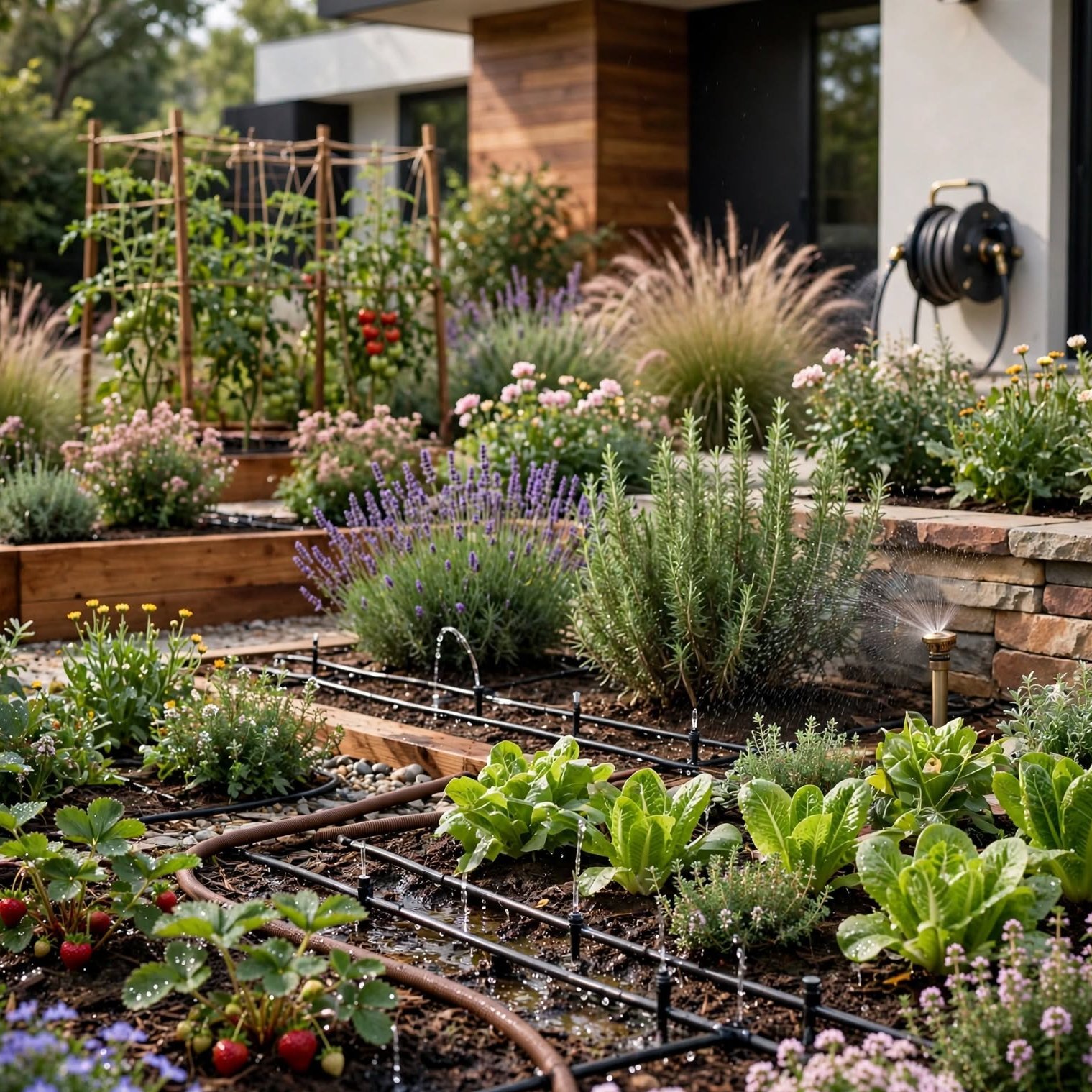
15 Brilliant Home Garden Ideas for Growing Your Own Food
A home garden Ideas focused on growing actual food, vegetables, herbs, and fruit, involves different planning priorities than an ornamental garden, with genuine yield, harvest timing, and soil health mattering more than purely visual composition. This guide covers fifteen home garden ideas specifically for food production, from raised bed construction to season extension techniques, addressing the practical decisions that determine whether a home garden actually produces meaningful, usable food. Every idea reflects lessons learned from genuine home food production rather than purely ornamental garden planning.
Trend & Background
Home food gardening has grown steadily as more households seek greater connection to their food sources, genuine cost savings on grocery bills, and the satisfaction of growing at least some of their own vegetables, herbs, and fruit regardless of available space. This growth has been accompanied by more sophisticated, accessible techniques originally developed by market gardeners and homesteaders now adapted for smaller home-scale production, raised bed intensive planting, companion planting strategies, and season extension methods that meaningfully increase a modest home garden’s actual productive output. Container and small-space food gardening has also received considerable attention as more gardeners work with limited yards, patios, or balconies rather than the larger traditional garden plots food gardening historically assumed.
Key Takeaways
- A productive home food garden starts smaller and more manageable than most beginners initially plan, expanding gradually as skill and confidence grow.
- Raised beds solve many common home gardening problems at once, poor native soil, drainage, and physical accessibility.
- Companion planting and crop rotation genuinely improve yields and reduce pest pressure without requiring chemical intervention.
- Extending the growing season through simple techniques meaningfully increases a home garden’s productive output relative to its footprint.
Home Garden Ideas
Discover 15 inspiring Home Garden Ideas to transform your outdoor space into a beautiful, cozy, and relaxing retreat.
1. Starting Smaller Than Feels Necessary
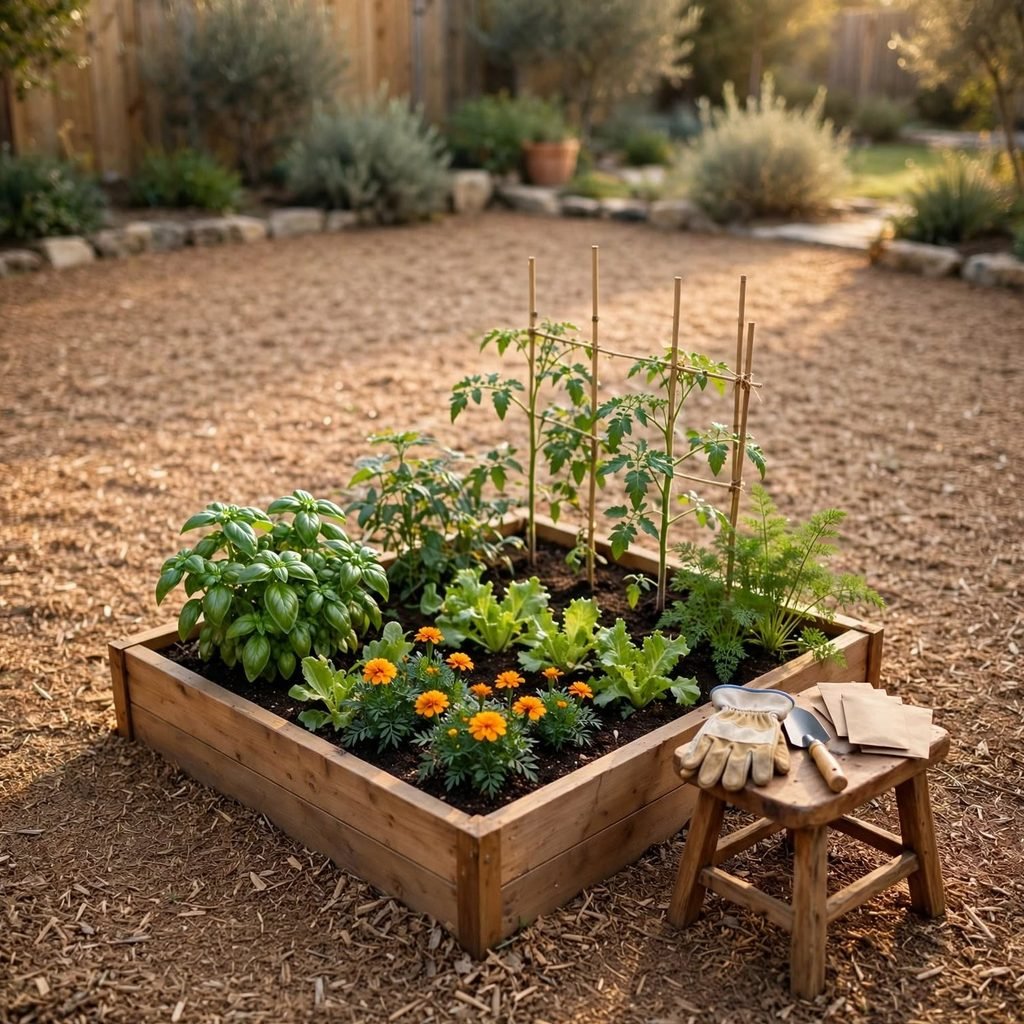
Beginning a home food garden with a genuinely modest scope, a few raised beds or a small dedicated plot rather than an ambitious full garden immediately, allows a new gardener to develop real skill and understanding of their specific site’s conditions before committing to a larger scale that might quickly become overwhelming to properly maintain. This restraint matters considerably more for food gardening than ornamental gardening, since vegetables require more consistent, timely attention, watering, weeding, pest monitoring, harvesting, than many ornamental plantings demand. Expanding the garden’s scope gradually in subsequent seasons, informed by genuine experience with what worked and what proved too demanding in the first year, produces better long-term success than an overly ambitious initial planting that becomes neglected partway through the season.
2. Raised Beds for Soil Control and Accessibility
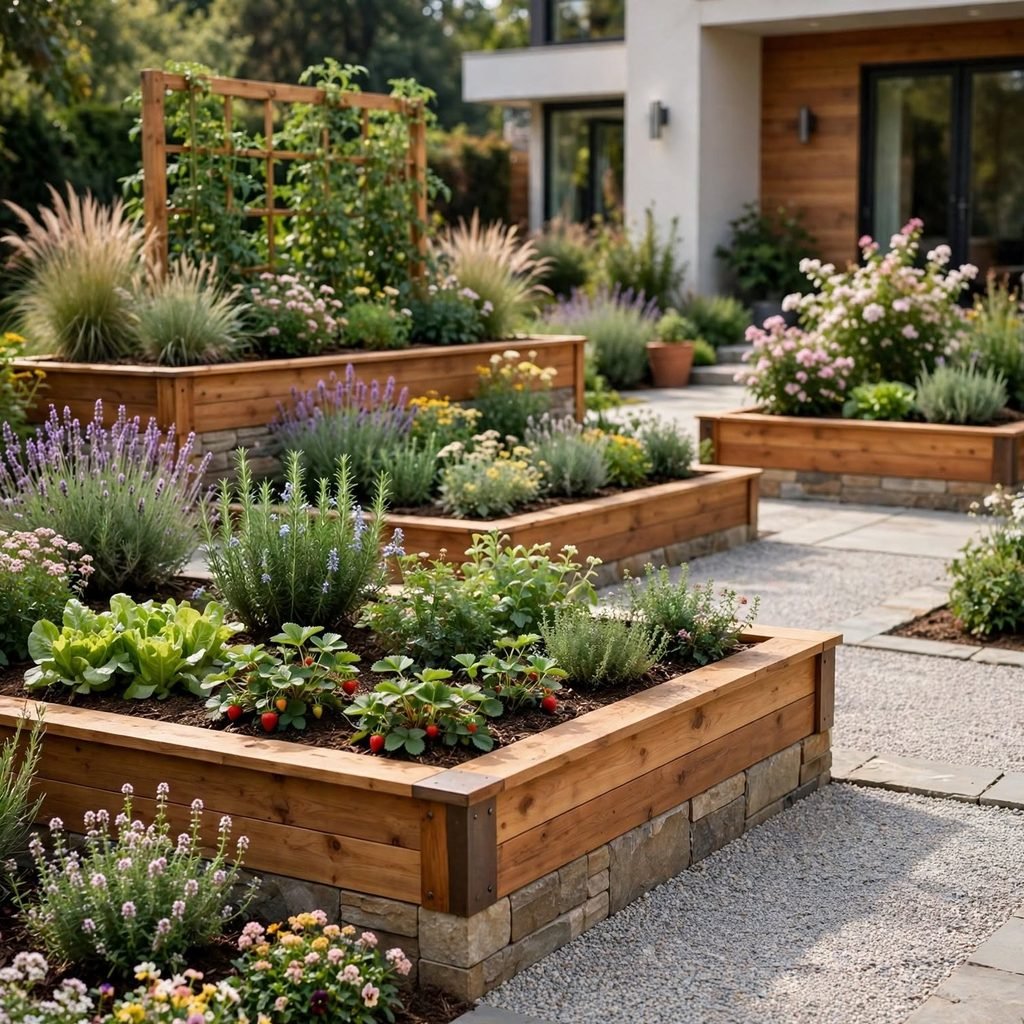
Raised garden beds, built from wood, metal, or another durable material and filled with quality soil rather than relying on native ground soil, solve several common home gardening challenges simultaneously, poor or compacted native soil, inadequate drainage, and physical accessibility for gardeners who find ground-level bending and kneeling difficult. This approach requires more upfront cost and effort than simply planting directly in native ground soil, but often produces meaningfully better results, particularly in a location with genuinely poor or contaminated native soil. Choosing a raised bed height, typically 12 to 24 inches, appropriate to the specific plants being grown and the gardener’s own physical comfort and accessibility needs optimizes this investment for its intended daily use.
3. Companion Planting for Natural Pest Management
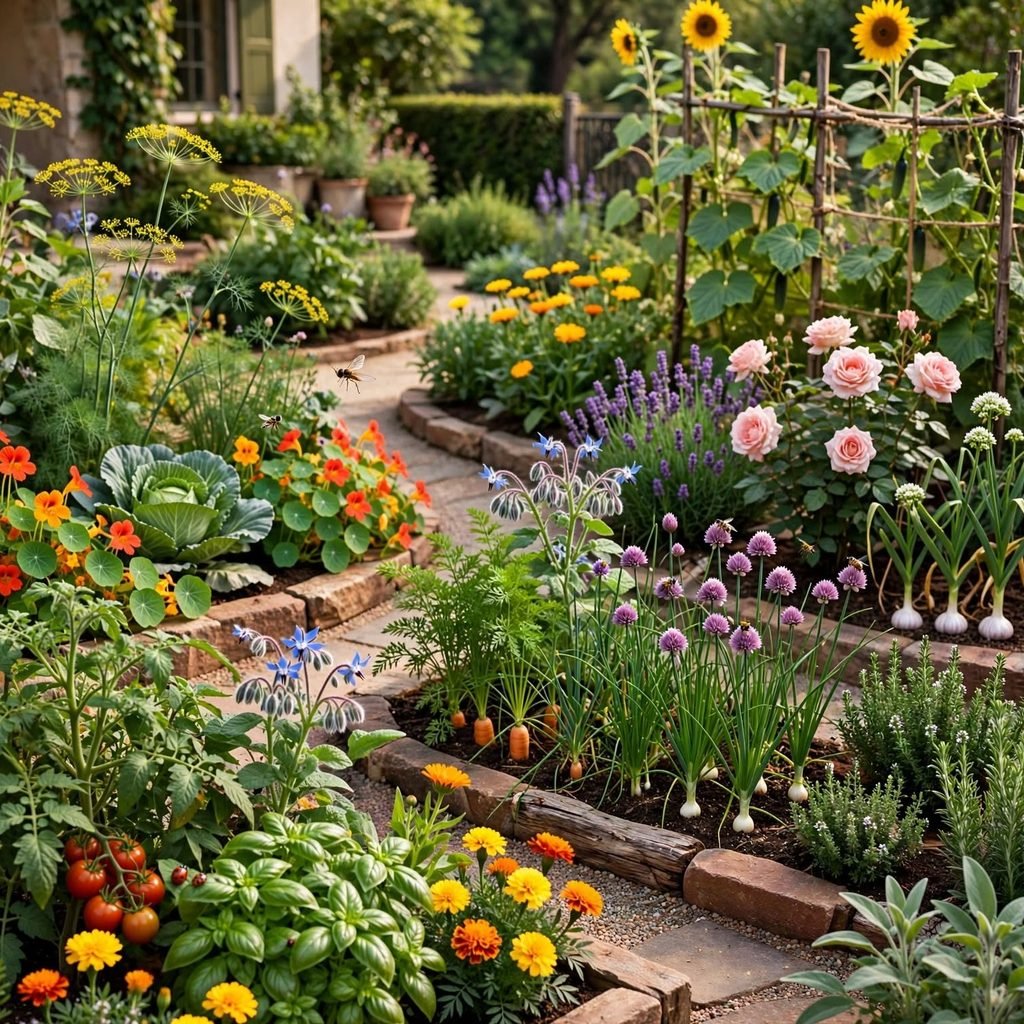
Companion planting, positioning specific plant combinations known to benefit each other, marigolds deterring certain pests near vegetable plantings, or beans fixing nitrogen that benefits neighboring heavy-feeding crops, provides a genuine, chemical-free strategy for improving plant health and yield within a home garden. This approach requires some research into which specific companion combinations genuinely work, since not every commonly cited pairing has strong evidence behind its effectiveness, making it worth consulting reliable horticultural sources rather than relying purely on garden folklore. Incorporating a few well-researched companion planting strategies, rather than attempting to apply every possible pairing simultaneously, provides genuine benefit without overcomplicating garden planning.
Explore these beautiful garden ideas to create a relaxing and inviting outdoor space.
4. Succession Planting for Continuous Harvests
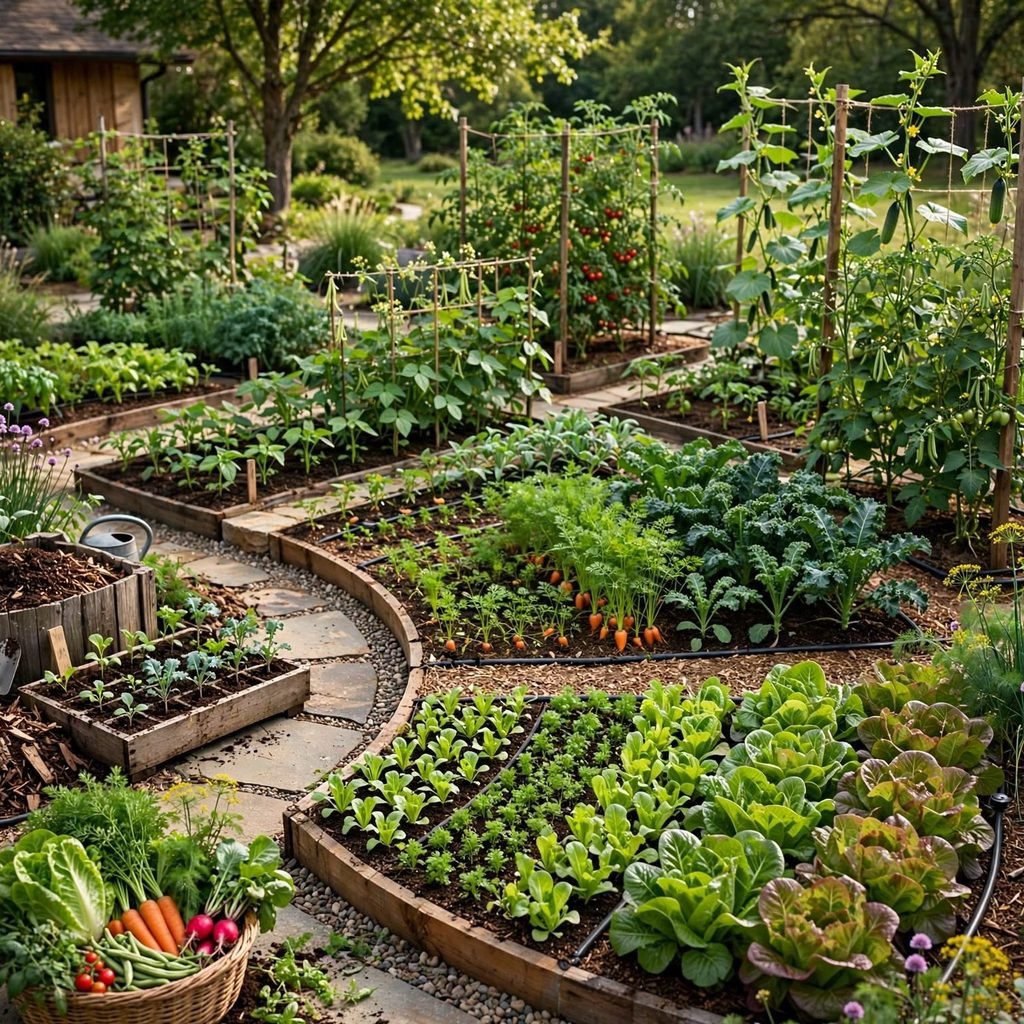
Succession planting, sowing a portion of a crop’s seeds every few weeks rather than planting an entire season’s worth of a single vegetable all at once, spreads the harvest out over a longer period rather than producing an overwhelming glut all at the same time followed by nothing for the remainder of the season. This technique works particularly well for fast-maturing crops like lettuce, radishes, and bush beans, which can be resown multiple times throughout a single growing season. Keeping a simple planting log noting sowing dates and expected harvest windows helps manage this succession planting schedule without losing track of which planting is due for its next sowing.
| Technique | Benefit | Best Crops |
| Raised beds | Soil control, accessibility | Most vegetables |
| Companion planting | Natural pest management | Tomatoes, beans, herbs |
| Succession planting | Continuous harvest, no glut | Lettuce, radishes, beans |
| Season extension | Longer growing window | Cold-hardy greens |
5. Season Extension Through Simple Cold Protection
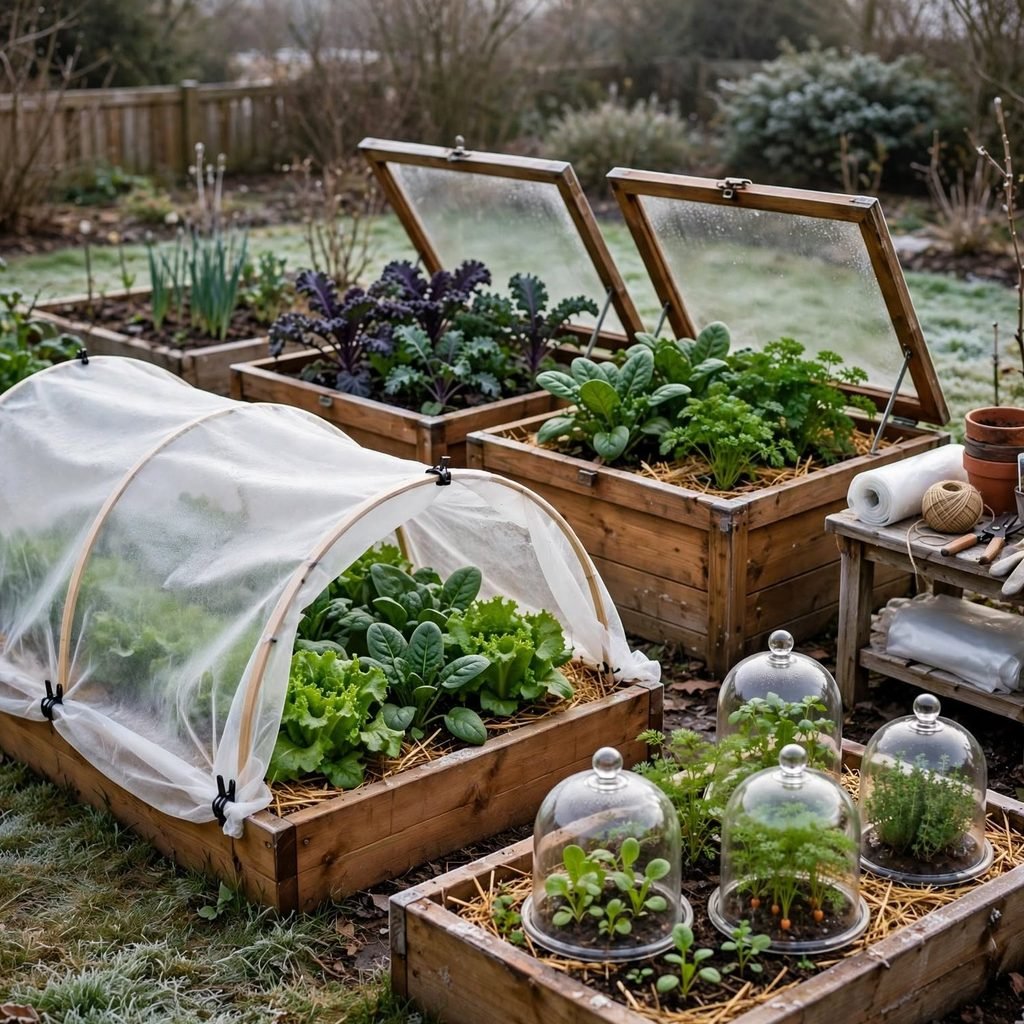
Incorporating simple season extension techniques, a cold frame, a low tunnel covered with row cover fabric, or even a simple cloche over individual plants, extends a home garden’s productive growing season on both ends, allowing earlier spring planting and later fall harvesting than the local frost dates alone would otherwise permit. These techniques require relatively modest material investment compared to a full greenhouse while still providing meaningful protection from light frost and cold temperatures for cold-tolerant crops. Choosing crops genuinely suited to season extension, cold-hardy greens, root vegetables, and certain herbs, rather than attempting to extend the season for genuinely warm-season crops like tomatoes or peppers, produces the most successful results from this technique.
6. A Dedicated Herb Garden Near the Kitchen
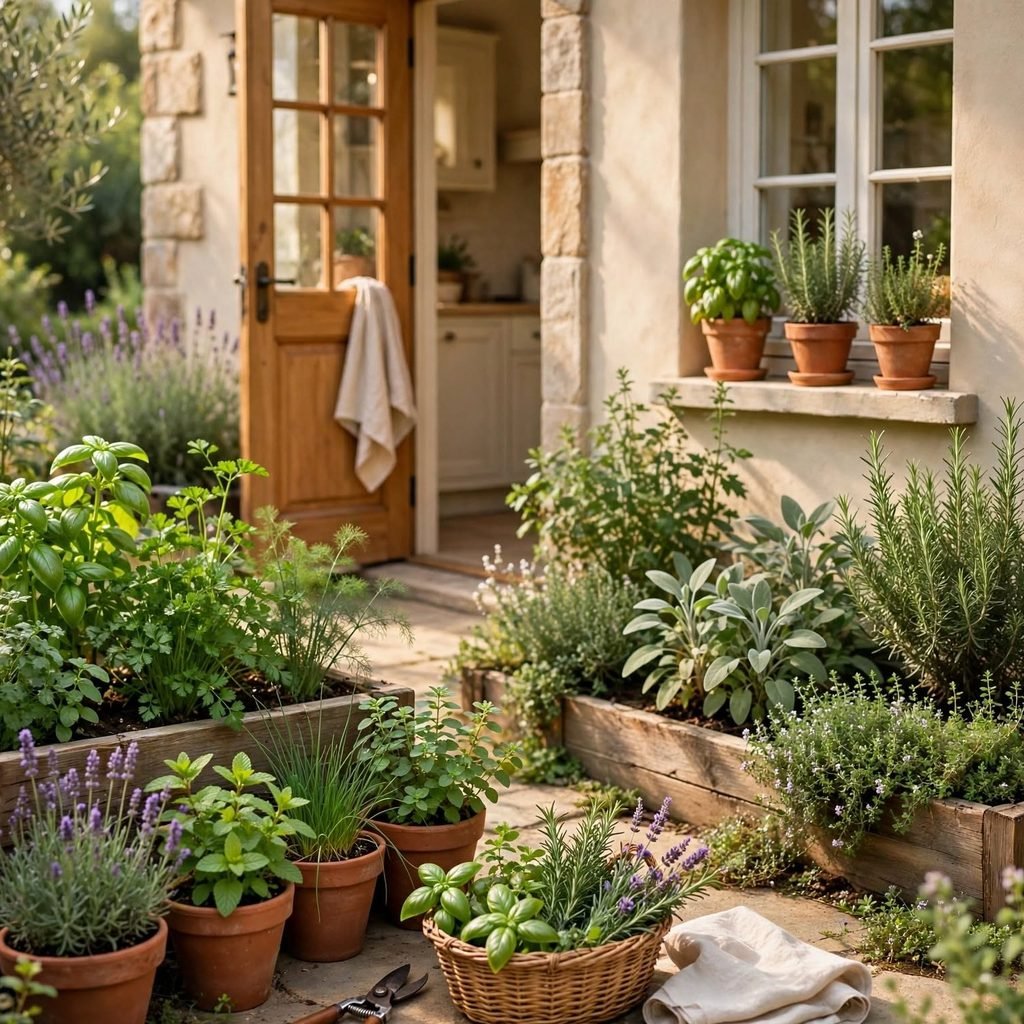
A dedicated herb garden, whether a few containers or a small bed positioned immediately convenient to the kitchen door, sees considerably more regular actual use in daily cooking than herbs planted in a more distant vegetable garden requiring a longer walk to harvest. This proximity consideration matters as much as the herbs’ actual growing conditions, since even well-grown herbs provide little genuine culinary value if their inconvenient location discourages regular harvesting. Choosing a mix of perennial herbs, rosemary, thyme, oregano, that return reliably each year alongside annual herbs, basil, cilantro, that need replanting seasonally, provides year-over-year structure alongside seasonal variety within this convenient kitchen-adjacent space.
7. Vertical Growing for Space-Constrained Gardens
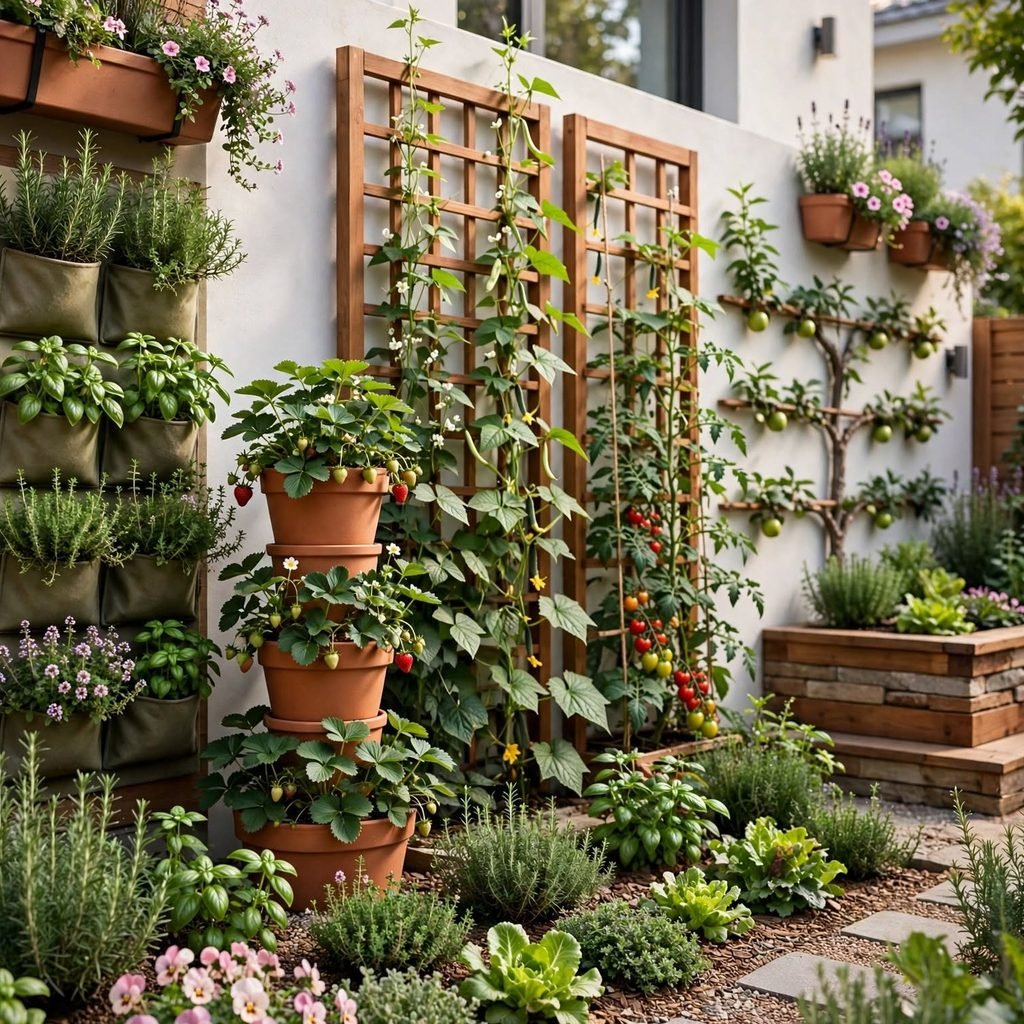
Growing vining crops, cucumbers, pole beans, certain squash varieties, and even some tomato types, vertically on trellises, cages, or fence-mounted supports rather than allowing them to sprawl across the ground significantly increases a home garden’s productive yield per square foot of actual ground footprint. This approach also generally improves air circulation around the plants, reducing certain fungal disease pressure compared to ground-sprawling growth, while making harvesting considerably easier since fruit hangs at a more accessible height rather than hidden within ground-level foliage. Choosing sturdy, appropriately sized support structures for the specific crop’s mature weight and growth habit prevents structural failure partway through the growing season once plants reach their full size and fruit load.
8. Container Gardening for Patios and Small Spaces
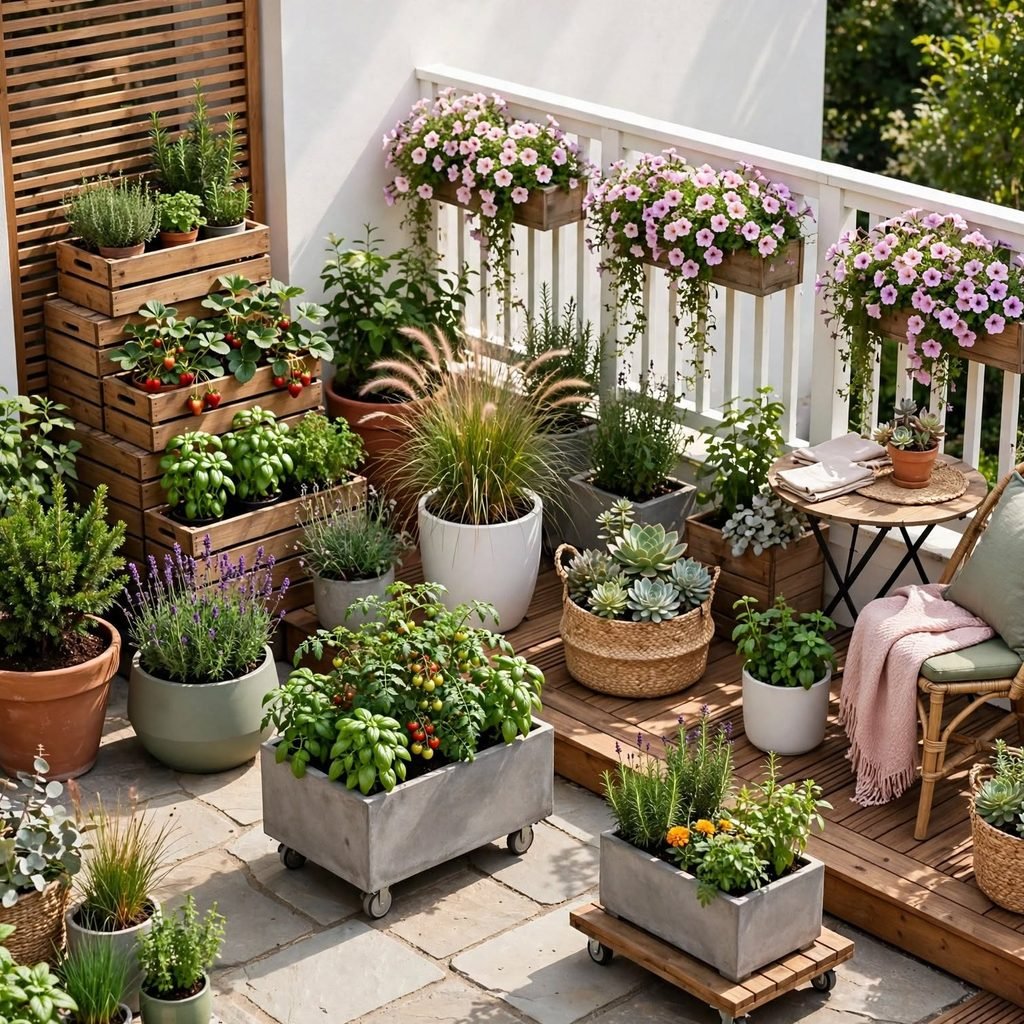
Growing vegetables and herbs in containers, whether on a patio, balcony, or simply supplementing in-ground beds, makes home food gardening genuinely accessible even without traditional yard space, provided containers are sized appropriately for the specific plants’ root systems and receive adequate sun exposure and consistent watering. Choosing compact or container-specific plant varieties, bred specifically for smaller container growing rather than standard varieties expecting more expansive root room, generally produces better container gardening results. This approach requires more frequent watering than in-ground planting, since containers dry out considerably faster, making a consistent watering routine or a simple drip irrigation system particularly valuable for container-based home food gardens.
9. Building and Maintaining Genuinely Healthy Soil
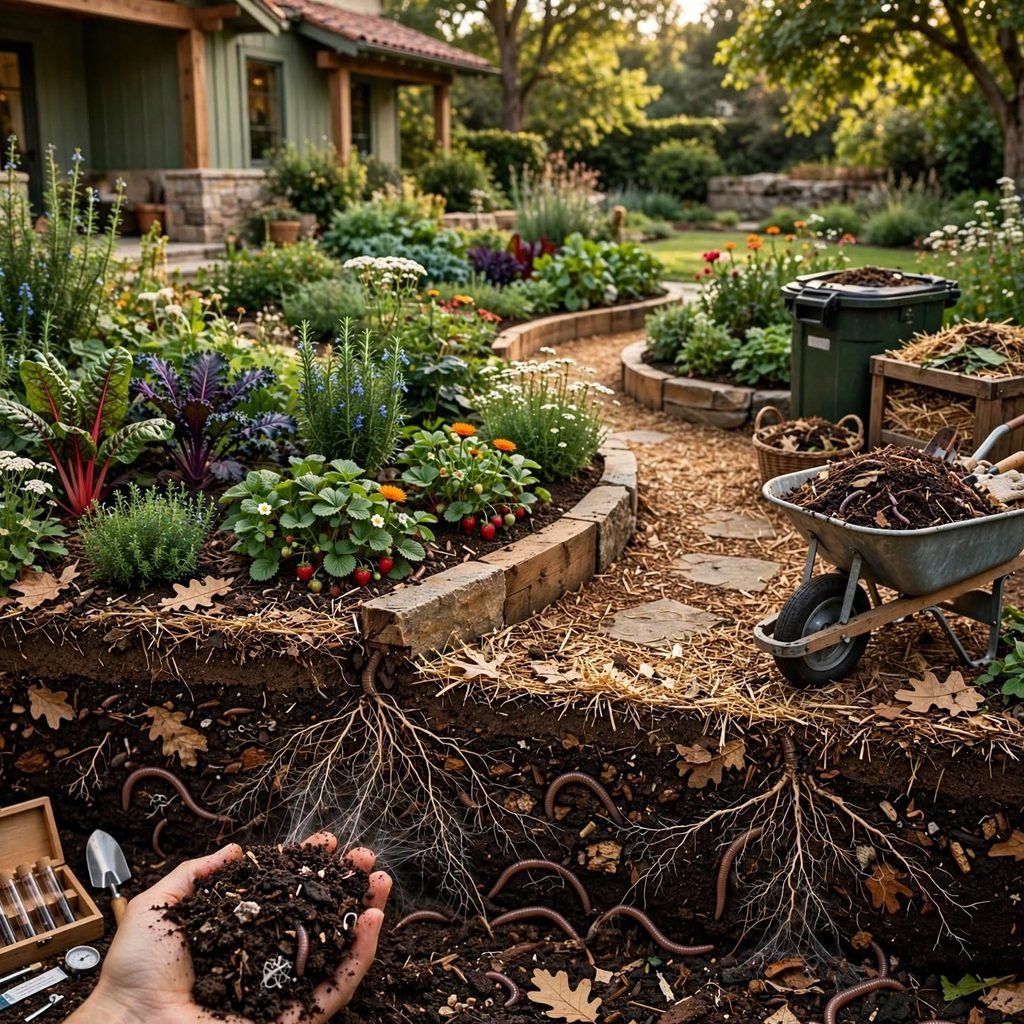
Investing ongoing attention in building and maintaining genuinely healthy garden soil, through regular compost addition, appropriate organic matter incorporation, and avoiding excessive tilling that disrupts beneficial soil structure and organisms, provides the foundation that ultimately determines a home garden’s actual productivity more than almost any other single factor. This soil health investment pays dividends over multiple growing seasons, as improved soil structure and fertility compound over time rather than requiring the same intensive amendment every single year once genuine health is established. Starting a simple home composting system, even a modest bin for kitchen scraps and yard waste, provides an ongoing, cost-free source of quality organic matter to support this soil-building effort.
10. Crop Rotation to Manage Pests and Soil Fertility
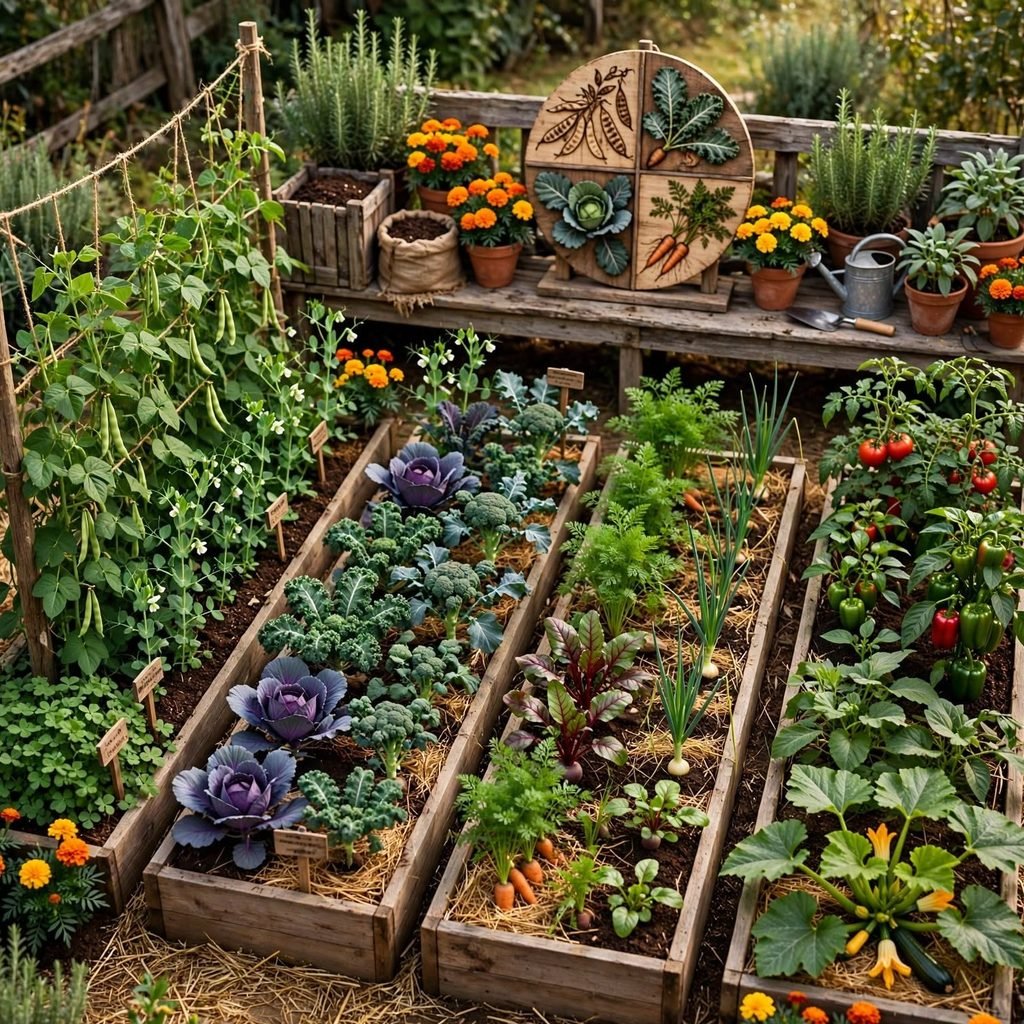
Rotating which specific plant families grow in each garden bed or section from year to year, rather than planting the same crop family in the identical location every single season, helps break pest and disease cycles that can build up in soil where the same susceptible crops grow repeatedly, while also helping manage soil fertility since different plant families draw on and contribute different nutrients. This technique requires keeping basic records of what grew where in previous seasons, since remembering multi-year rotation patterns purely from memory becomes unreliable over time. Even a relatively simple rotation scheme, moving major crop families through a few different garden sections on a multi-year cycle, provides meaningful benefit compared to no rotation planning at all.
11. Pollinator-Attracting Plants Interspersed Among Food Crops
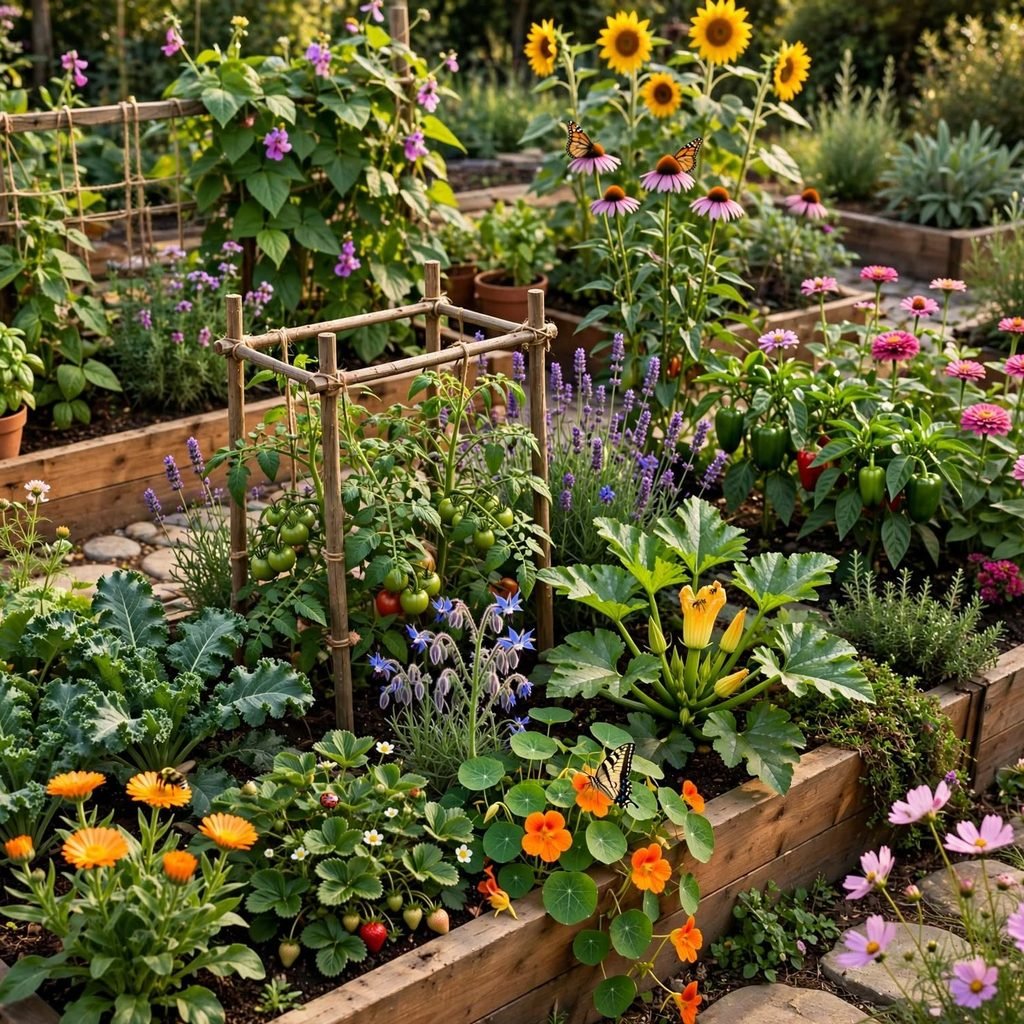
Interspersing flowering plants specifically known to attract pollinators, certain herbs allowed to flower, native flowering perennials, or simple annual flowers, throughout or adjacent to a home food garden improves pollination rates for crops that depend on insect pollination, potentially increasing yield for vegetables like squash, cucumbers, and many fruiting plants. This integration works well both as dedicated flower plantings within the vegetable garden and as a border or adjacent bed specifically positioned to draw pollinators into the broader growing area. Choosing plants with staggered bloom times ensures pollinator support continues throughout the growing season rather than only during one concentrated flowering period.
12. Realistic Watering Systems Matched to Garden Scale
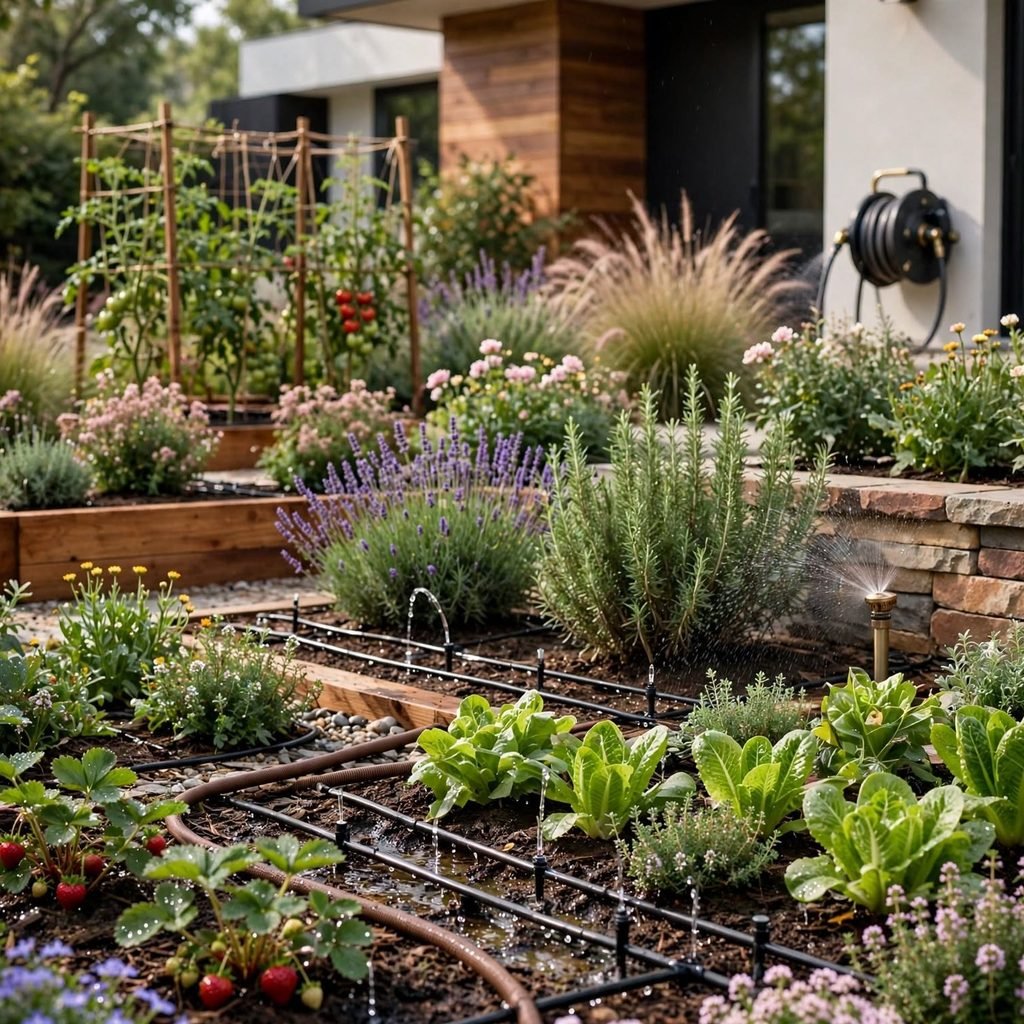
Installing a watering system appropriate to the garden’s actual scale, a simple soaker hose or drip irrigation for a modest raised bed setup, or a more elaborate zoned irrigation system for a larger garden, ensures consistent, adequate watering without requiring constant manual attention that becomes difficult to sustain reliably over a full growing season. Drip irrigation specifically delivers water directly to the root zone with minimal waste through evaporation or runoff, generally producing better results than overhead watering for most vegetable garden applications. Adding a simple timer to whatever watering system is installed removes the daily manual watering task while ensuring plants receive consistent moisture even during busy periods when manual watering might otherwise be forgotten.
13. Fruit Trees or Bushes as a Long-Term Investment
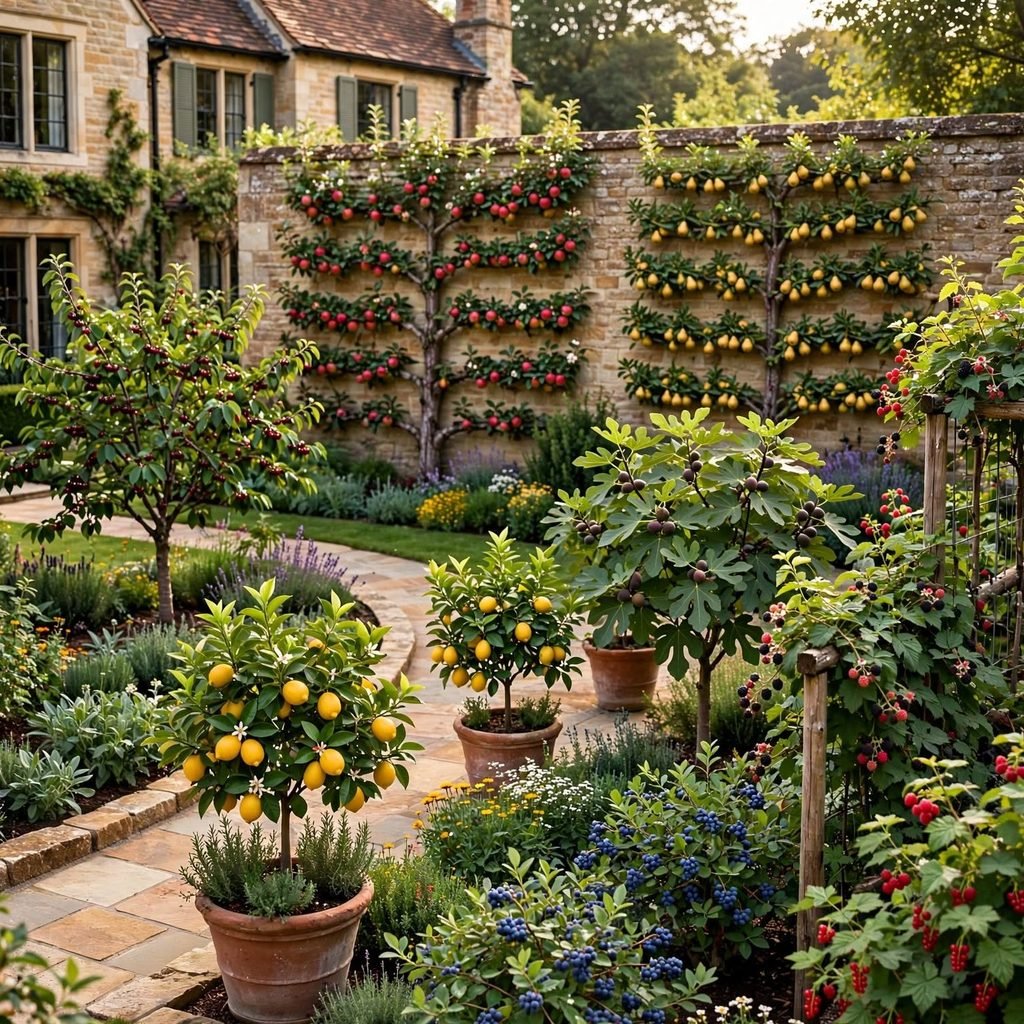
Incorporating at least a few fruit trees or berry bushes into a home garden represents a genuine long-term investment, since these plants typically take a few years to reach full productive maturity, but ultimately provide years of harvest with considerably less annual replanting effort than annual vegetable crops require. Choosing varieties genuinely suited to the local climate zone and confirming any necessary pollination requirements, some fruit trees need a second compatible variety nearby for proper pollination, before purchasing prevents the disappointment of trees that fail to produce fruit despite years of growth. Positioning these longer-term plantings thoughtfully within the overall garden plan from the outset, since they’ll occupy their chosen location for many years, matters more than with annual crops that can be repositioned each season.
14. A Simple Garden Journal for Tracking What Actually Works
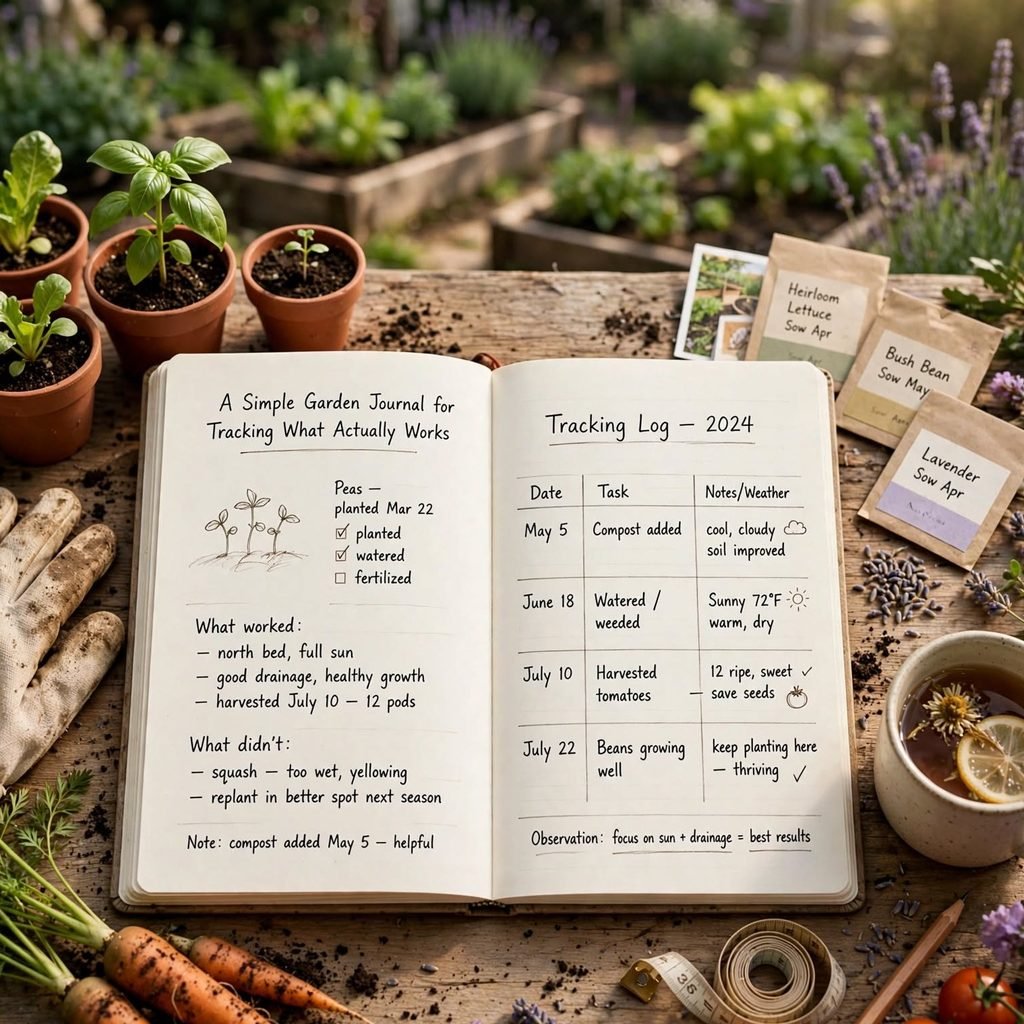
Keeping a simple garden journal, recording what was planted where, planting and harvest dates, and honest notes on what performed well versus what struggled, provides genuinely valuable information for improving each subsequent season’s planning rather than relying purely on memory, which becomes unreliable across multiple growing seasons. This record helps identify genuine patterns specific to your actual garden’s conditions, which varieties performed best, which planting timing worked well, rather than relying entirely on generic gardening advice that may not perfectly match your specific microclimate and soil conditions. Reviewing this journal at the start of each new season, before finalizing that year’s planting plan, helps incorporate genuine accumulated experience into ongoing garden improvement.
15. Realistic Harvest and Preservation Planning
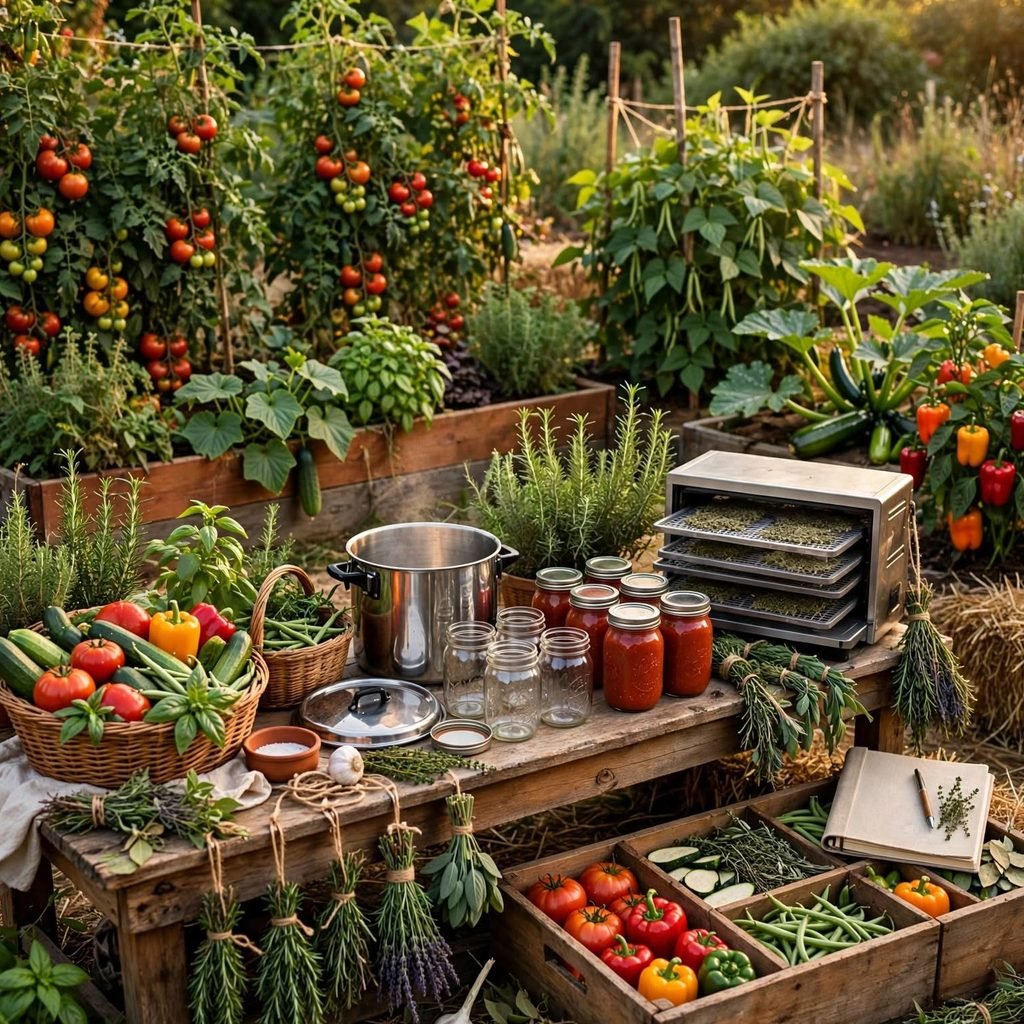
Planning realistically for how much of any given crop your household will genuinely use fresh, and considering basic preservation methods, freezing, canning, or simple drying, for any anticipated surplus, prevents the common disappointment of a productive harvest going to waste because it exceeded what could reasonably be consumed fresh before spoiling. This planning should factor into initial planting quantity decisions as well, since planting fewer of a highly prolific crop like zucchini often serves a household better than an overwhelming surplus from too many plants. Researching basic preservation techniques for your specific anticipated crops before the harvest actually arrives, rather than scrambling to learn these skills during an active harvest glut, ensures you’re genuinely prepared to make full use of your garden’s productive output.
Shop the Look
Start with a few raised beds filled with quality soil, positioned in your garden’s best-documented sun exposure, and a dedicated herb container or small bed immediately convenient to the kitchen. Add simple drip irrigation on a timer, vertical trellising for space-efficient vining crops, and a basic composting system to build long-term soil health. Keep a simple garden journal from the first season onward, and plan realistic harvest quantities alongside basic preservation methods for any anticipated surplus.
Common Mistake to Avoid
A common mistake in home food gardening is planting a garden far larger and more ambitious than a beginner can realistically maintain through a full growing season, resulting in a productive early spring effort that gradually becomes overwhelmed by weeds, inconsistent watering, and missed harvest windows once the initial enthusiasm meets the genuine ongoing time commitment food gardening requires. Starting smaller, with just a few well-maintained raised beds or containers, and genuinely mastering that manageable scope before expanding in subsequent seasons produces far better results and sustained satisfaction than an ambitious first-year garden that becomes neglected by midsummer. This restraint matters more for food gardening specifically than ornamental gardening, since vegetables require more consistent, timely attention to actually produce a meaningful, usable harvest.
FAQs
How much space do I actually need to grow meaningful amounts of food at home?
A surprising amount of food can be grown in a relatively modest space, with a few well-planned raised beds, roughly 4 by 8 feet each, or even a collection of containers on a patio capable of producing meaningful quantities of vegetables and herbs for regular household use, particularly when techniques like vertical growing and succession planting are applied to maximize productivity per square foot. The actual space needed depends considerably on which specific crops you prioritize, since space-efficient crops like leafy greens and herbs produce meaningful yield in less space than sprawling crops like winter squash or corn. Starting with a modest space and specific, realistic goals, rather than assuming food gardening requires a large traditional garden plot, makes this approach accessible even for households with limited available yard space.
What are the easiest vegetables for a beginner home gardener to start with?
Leafy greens like lettuce and spinach, along with radishes, bush beans, and herbs like basil and mint, generally rank among the easiest and most forgiving crops for a beginning home gardener, offering relatively quick maturity, tolerance of minor care inconsistencies, and genuine culinary usefulness once harvested. More challenging crops, certain heirloom tomato varieties, or vegetables with more specific pest and disease management needs, are often better attempted after gaining some foundational experience with these easier starting crops. Choosing a modest initial selection of these beginner-friendly options, rather than attempting a wide, ambitious variety in a first season, builds genuine confidence and skill before expanding into more demanding crops.
Do I need to test my soil before starting a home food garden?
Testing your soil, either through a simple home test kit or a more thorough analysis through a local extension office, provides valuable information about your soil’s pH and nutrient levels, helping identify whether amendments are genuinely needed before planting rather than guessing or applying generic fertilizer without knowing your actual soil’s specific condition. This step matters particularly for in-ground gardening in native soil, while raised beds filled with purchased, quality garden soil generally start from a more reliably good baseline, though even raised bed soil benefits from periodic testing and amendment over multiple growing seasons. Local extension office soil testing services often provide more detailed, regionally calibrated results than a basic home test kit, generally worth the modest cost for a new garden’s initial baseline assessment.
How do I manage pests in a home food garden without using harsh chemicals?
Companion planting with pest-deterring plants, encouraging beneficial insects through pollinator-friendly flowering plants that also support predatory insects feeding on garden pests, regular monitoring to catch pest problems early before they become severe, and physical barriers like row cover fabric all provide genuine pest management without relying on harsh chemical pesticides. Maintaining genuinely healthy soil and appropriately watered, non-stressed plants also naturally improves plant resilience against pest and disease pressure, since stressed plants typically prove more vulnerable to pest damage than healthy, well-maintained ones. Accepting some minor pest damage as a normal part of organic gardening, rather than expecting completely pest-free perfection, also helps maintain realistic expectations for a chemical-free approach.
How long does it take to see meaningful results from a new home food garden?
Fast-maturing crops like radishes and lettuce can be harvested within just a few weeks of planting, providing relatively quick initial results and genuine encouragement for new gardeners, while other crops, tomatoes, peppers, many fruiting vegetables, typically require a full growing season to reach productive harvest. Longer-term plantings like fruit trees or berry bushes often take several years to reach full productive maturity, representing a genuine long-term investment rather than an immediate-return crop. Planning a first garden with a mix of these quick-result and longer-term crops provides both the encouraging early feedback of fast harvests and the foundation for a garden’s continued development and productivity across subsequent seasons.
Conclusion
A genuinely productive home food garden comes from starting at a manageable scale, building real soil health, and applying practical techniques like succession planting and season extension, rather than an overly ambitious first attempt that exceeds realistic maintenance capacity. Save this guide to Pinterest for reference while planning your next growing season, and check out our related post on garden ideas for the broader ornamental and landscape design principles that can complement a productive food-growing space.