12 Inspiring Patio Garden Ideas for Small Outdoor Spaces
Patio garden ideas work under different rules than a ground-level bed — there’s no native soil to amend, drainage runs off hard surfaces instead of soaking in, and every plant lives in a container or a built structure rather than the ground. This post walks through twelve specific patio garden ideas, from a simple container herb corner to a full pergola with climbing vines, each with real materials, spacing, and what it actually takes to build.
Trend & Background
Patio gardening has grown quickly alongside smaller lot sizes and rental housing, where a paved patio is often the only outdoor space available at all. Self-watering containers, modular vertical planting systems, and lightweight raised planters built specifically for weight-restricted balconies and rooftops have moved from niche products into standard patio-garden equipment. At the same time, more renters and homeowners are treating patios as fully furnished outdoor rooms rather than a place to store a grill, with permanent-feeling plantings built entirely in movable containers.
Key Takeaways
- These 12 patio garden ideas cover container gardening, vertical growing, shade solutions, and privacy screening for paved outdoor spaces
- Four ideas container groupings, raised planters, pergolas, and privacy screens — include sizing, material, or spacing comparison tables
- Drainage planning matters as much on a patio as in a full garden bed, since hardscape concentrates runoff instead of letting it soak in
- Most of these ideas work in containers or built-in planters, making them adaptable to rented spaces and small footprints alike
1. Container Herb Corner
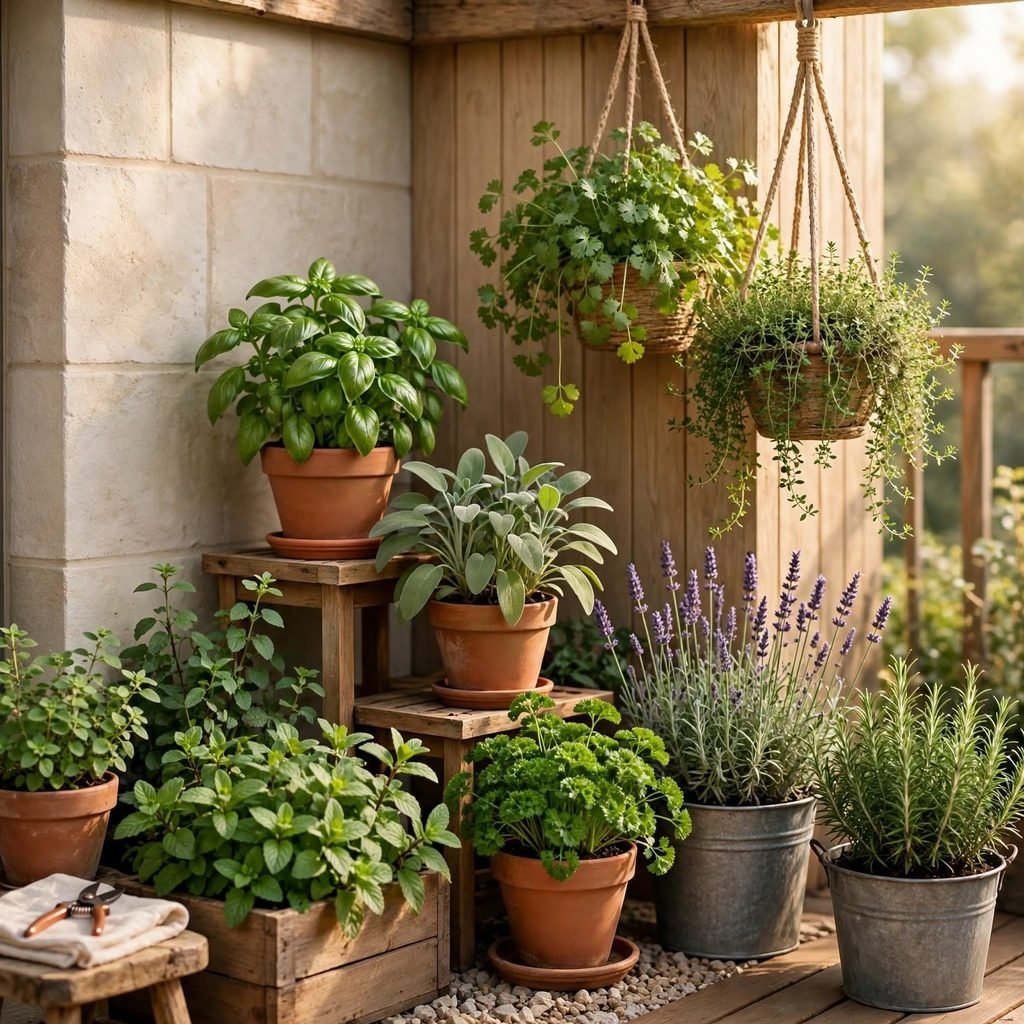
A container herb corner groups pots of culinary herbs near the kitchen door, which matters more than most people expect since herbs actually get used when they’re a few steps from the stove rather than across the yard. Terracotta pots suit Mediterranean herbs like rosemary and thyme that want sharp drainage and don’t mind drying out between waterings, while glazed ceramic holds moisture longer for basil and parsley. Grouping five or six pots of varying heights on a small rolling cart also makes it easy to shift the whole setup to chase sun through the season.
2. Vertical Pallet Planter
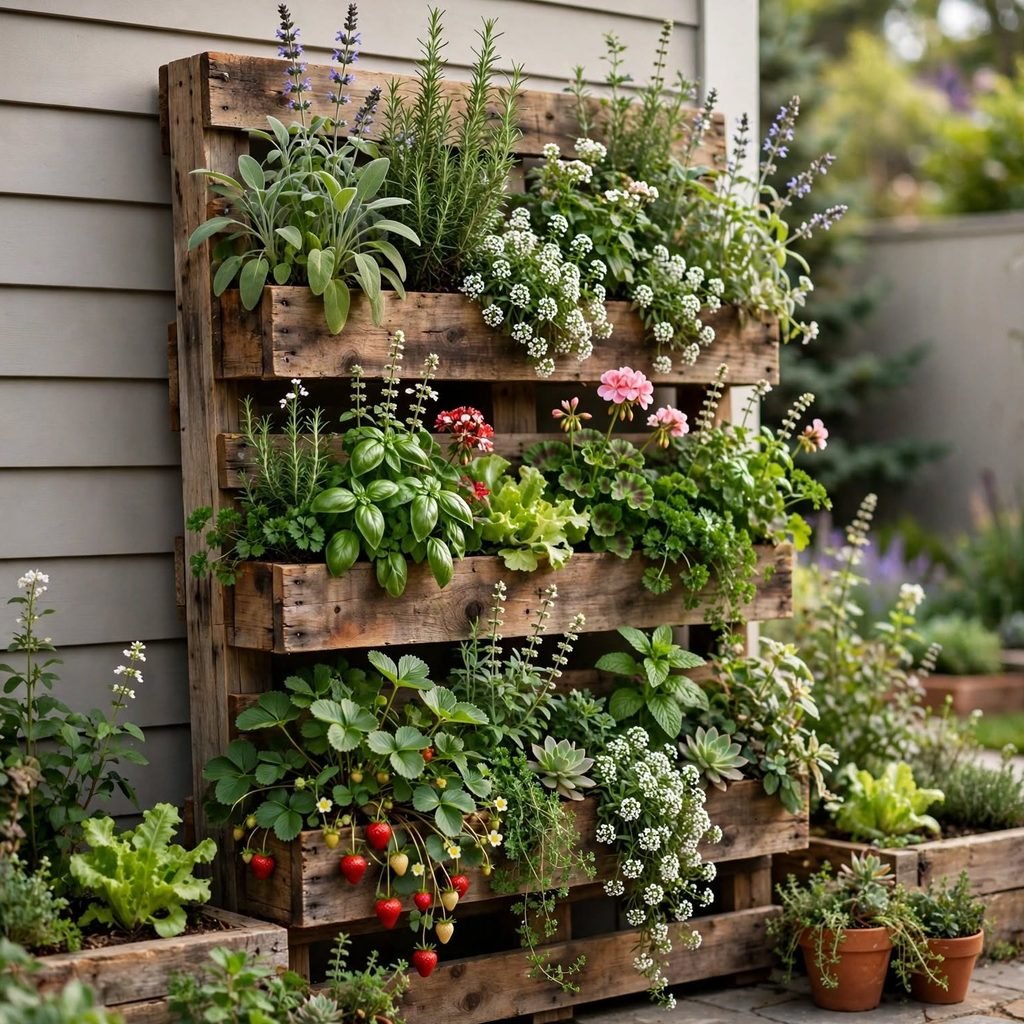
A vertical pallet planter turns a reclaimed wood pallet into tiered growing space, leaned against a wall or fence where a patio has no ground bed to work with. Lining the back and base with landscape fabric before adding soil keeps the mix from spilling out through the slats, and strawberries, succulents, and shallow-rooted herbs all do well in the narrow horizontal pockets this creates. Standing the pallet upright for a week before planting lets you confirm it holds its angle and doesn’t need extra bracing against the wall.
3. Raised Planter Boxes
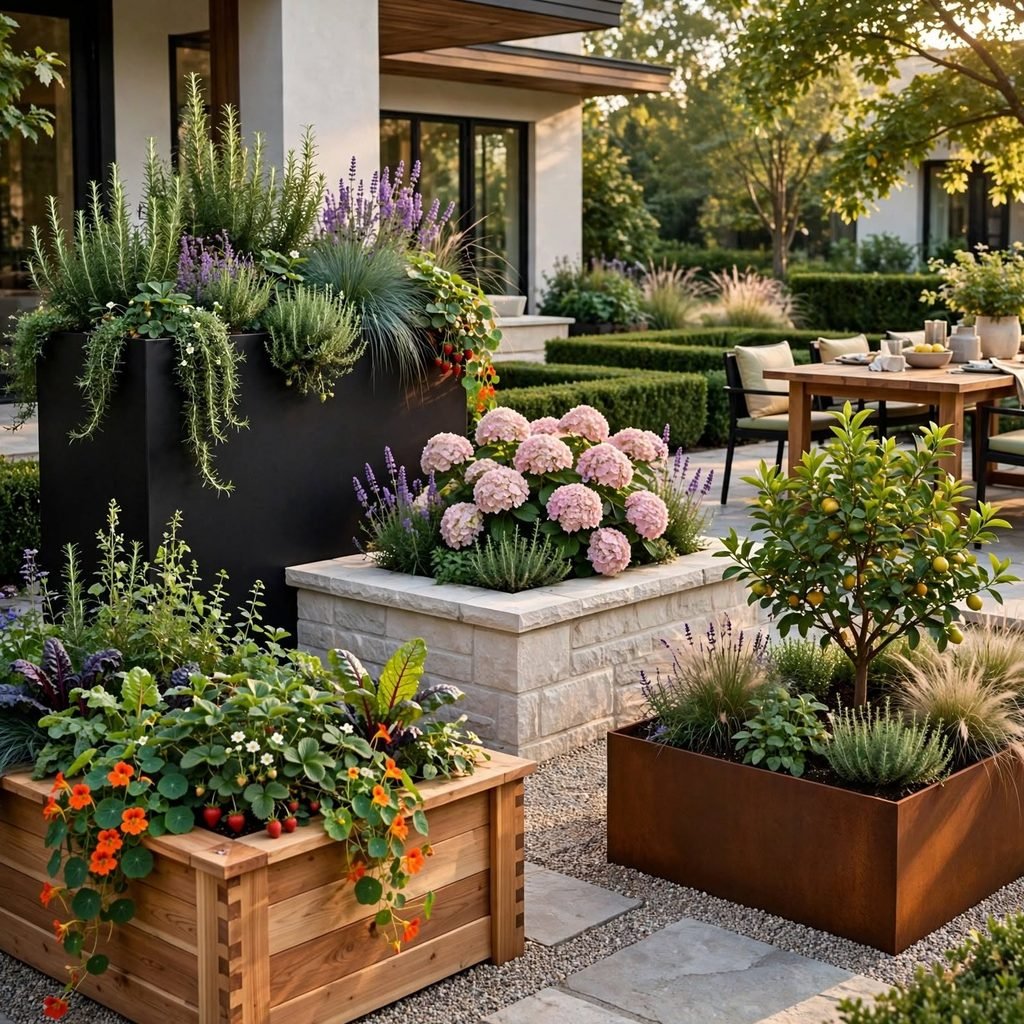
Raised planter boxes bring the same soil-control benefits of a ground-level raised bed to a hard patio surface, sitting directly on the pavers rather than requiring excavation. Cedar and redwood resist rot and stay lightweight enough for most patios, powder-coated galvanized steel lasts decades but heats up in full sun, and fiberglass composite is the lightest option for rooftop or balcony patios with weight restrictions. A depth of 12 to 15 inches suits most vegetables and flowering annuals without adding unnecessary weight.
Explore flower garden ideas that make even compact outdoor spaces feel stylish and welcoming.
| Material | Weight (per 4 ft box) | Heat Retention | Cost Range |
| Cedar | 40–60 lbs | Low | $120–200 |
| Galvanized steel | 60–80 lbs | High | $180–280 |
| Fiberglass composite | 20–30 lbs | Low | $200–350 |
4. Pergola With Climbing Vines
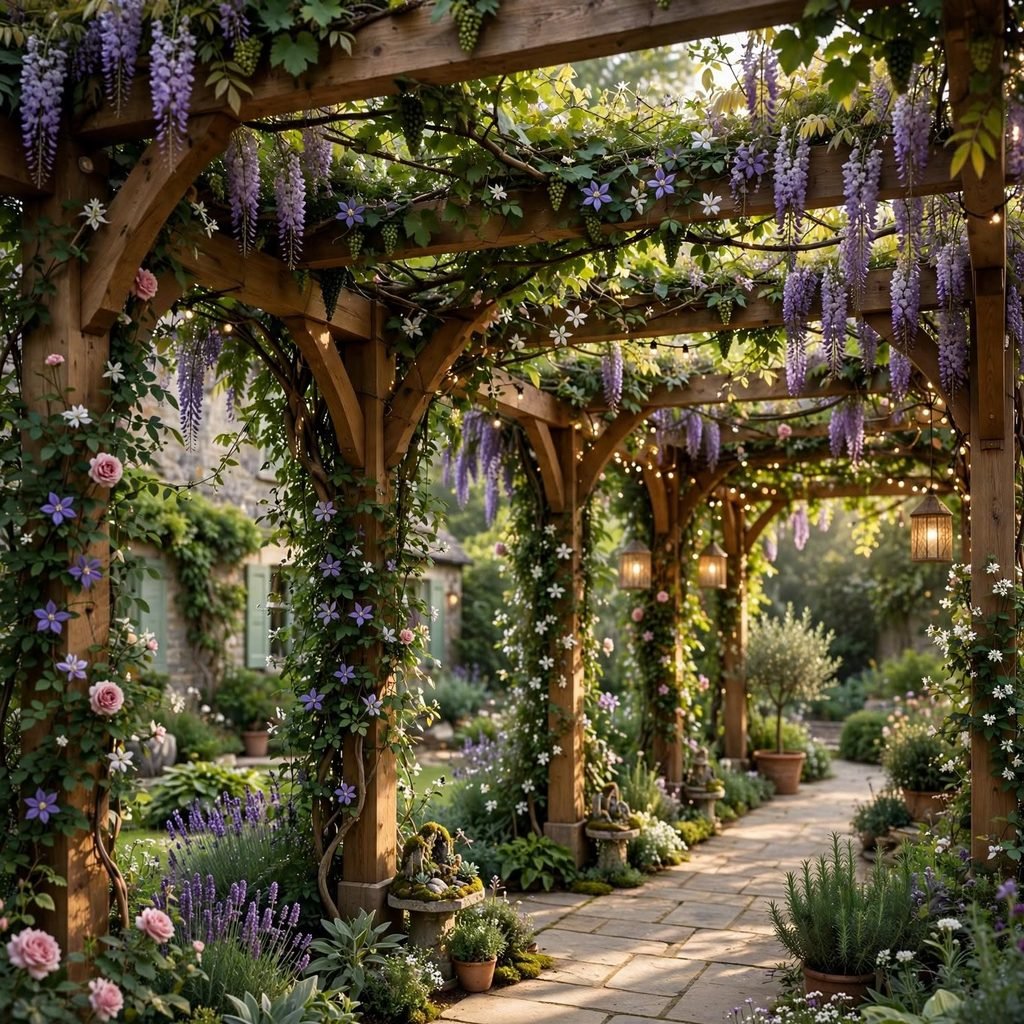
A pergola gives a patio partial overhead shade and a defined sense of enclosure without the cost or permitting a solid roof requires, which matters most on patios that sit in full sun most of the day. Cedar weathers to a soft gray and needs little upkeep, while powder-coated aluminum costs more but never warps or rots. Wisteria and climbing hydrangea both train well onto the crossbeams, though wisteria needs hard pruning twice a year or it overtakes the entire structure within a couple of seasons.
| Material | Typical Footprint | Lifespan | Cost Range |
| Cedar | 10×10 ft | 15–20 yrs | $1,400–2,800 |
| Redwood | 10×10 ft | 20–25 yrs | $1,800–3,200 |
| Powder-coated aluminum | 10×10 ft | 30+ yrs | $2,800–5,000 |
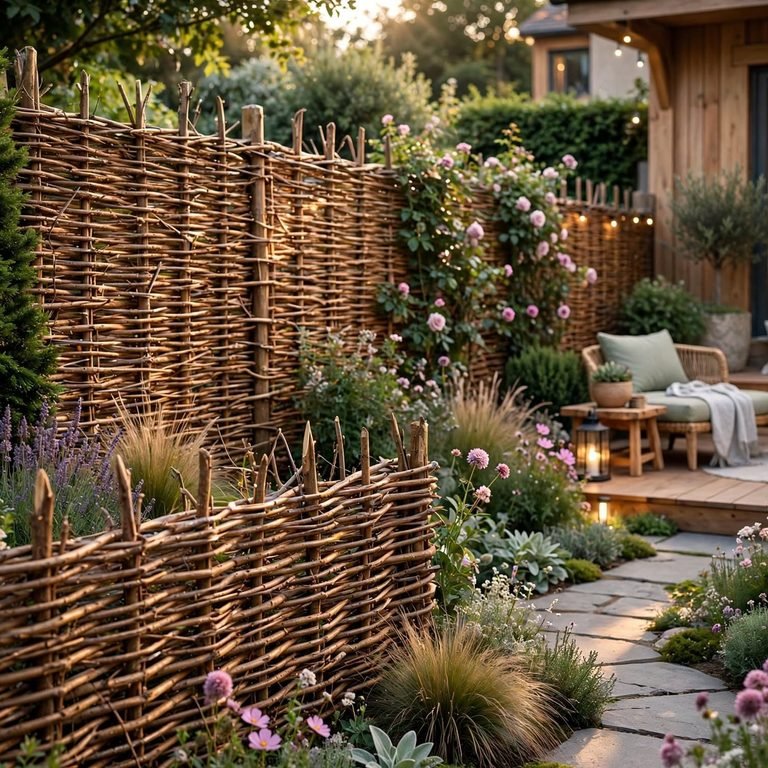
5. Privacy Screen Planting
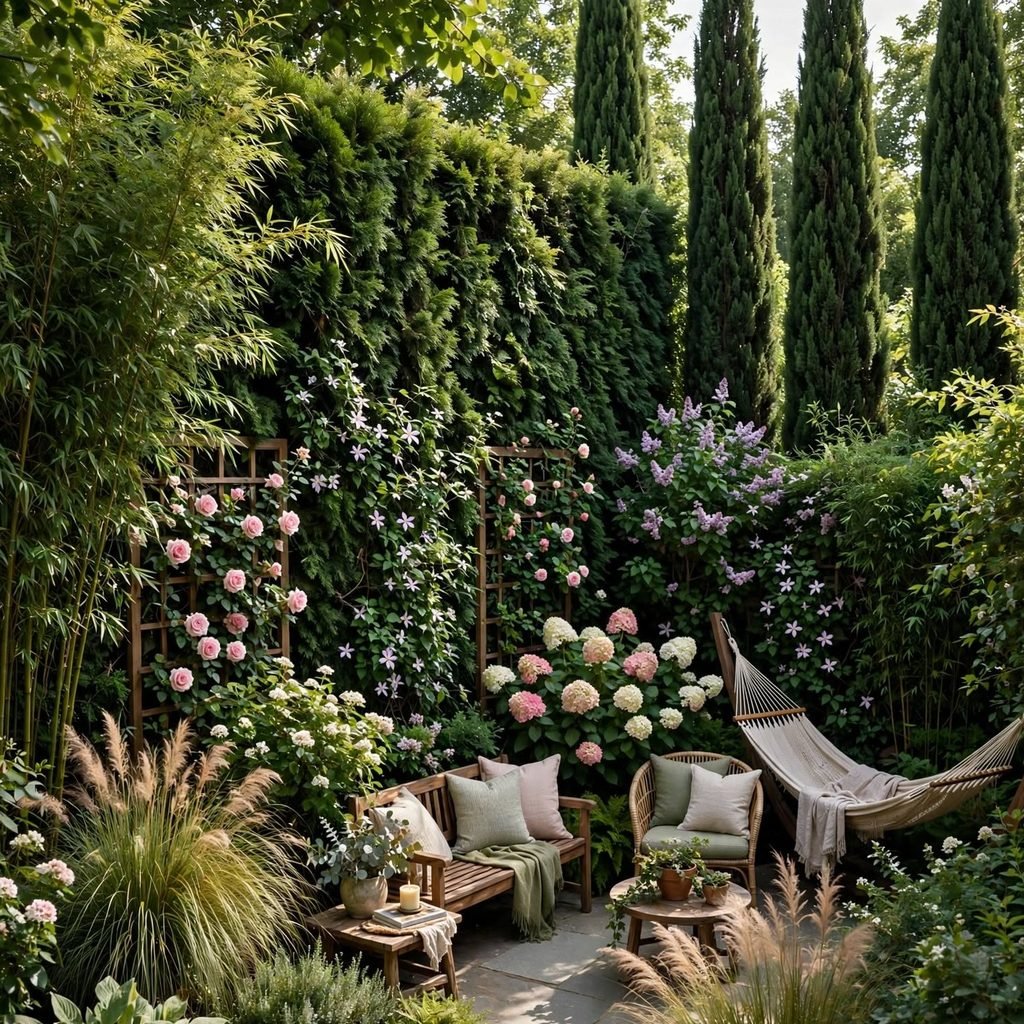
A privacy screen planting blocks sightlines from neighboring units or a street-facing patio using tall, densely growing plants in large containers rather than a fence, which usually works better on rented properties where permanent structures aren’t allowed. Bamboo in contained pots, clumping ornamental grasses, and columnar evergreens like Italian cypress all reach useful screening height without the spread that would make them unmanageable in a container. Running bamboo specifically needs a sealed container, since even potted rhizomes can escape through drainage holes into the ground below.
| Plant Type | Mature Height | Container Size Needed |
| Clumping bamboo | 8–12 ft | 20–24 in |
| Ornamental grass | 4–6 ft | 16–18 in |
| Italian cypress | 15–20 ft (contained) | 24–30 in |
6. Shade-Tolerant Container Bed
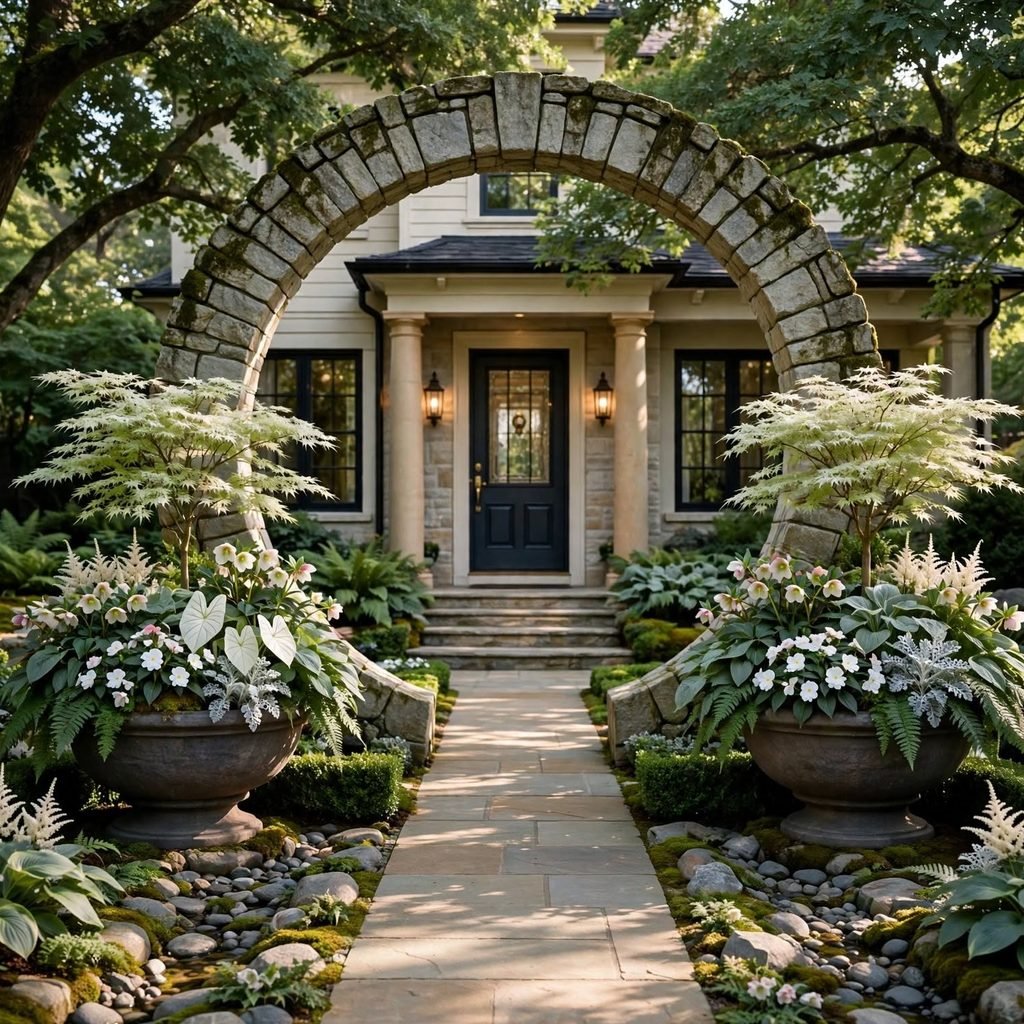
A shade-tolerant container bed works on patios under a covered roofline or shaded by a taller building, where most flowering annuals struggle without direct sun. Hosta, fern, and coleus all perform well in filtered or indirect light and hold their color without the bleaching some shade plants show in stronger light. Grouping containers of varying heights against the shaded wall, rather than spacing them evenly across the patio, reads as a more finished planting than scattered single pots.
7. Patio Garden Ideas With Raised Water Feature
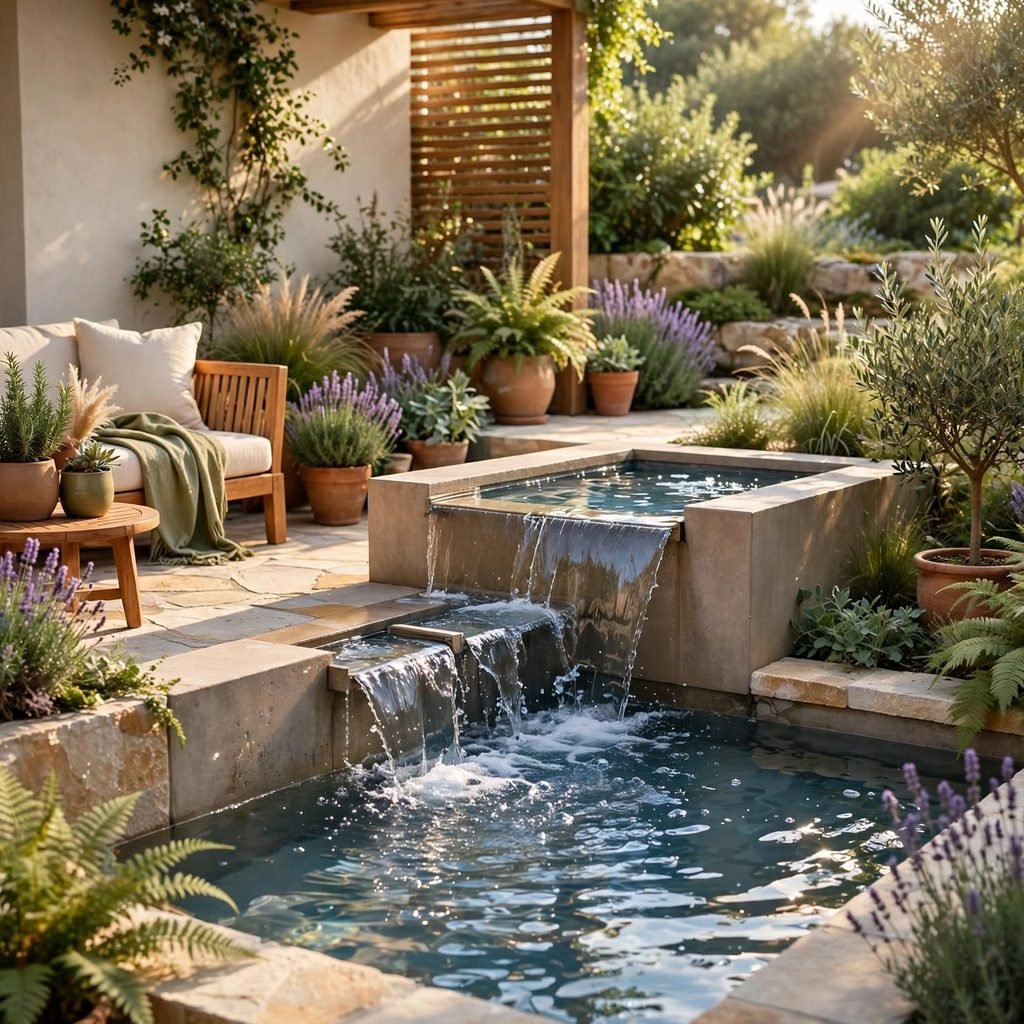
Patio garden ideas built around a raised water feature add movement and sound to a space that would otherwise be static, using a self-contained recirculating basin rather than a plumbed-in pond that most patios can’t accommodate. Pre-cast concrete basins are the most affordable option, glazed ceramic urns with a submersible pump give a more decorative look, and stacked stone bubblers integrate directly into a planted container grouping. Positioning the feature near seating matters more than size, since the sound carries only a short distance on an open patio.
8. Hanging Basket Border
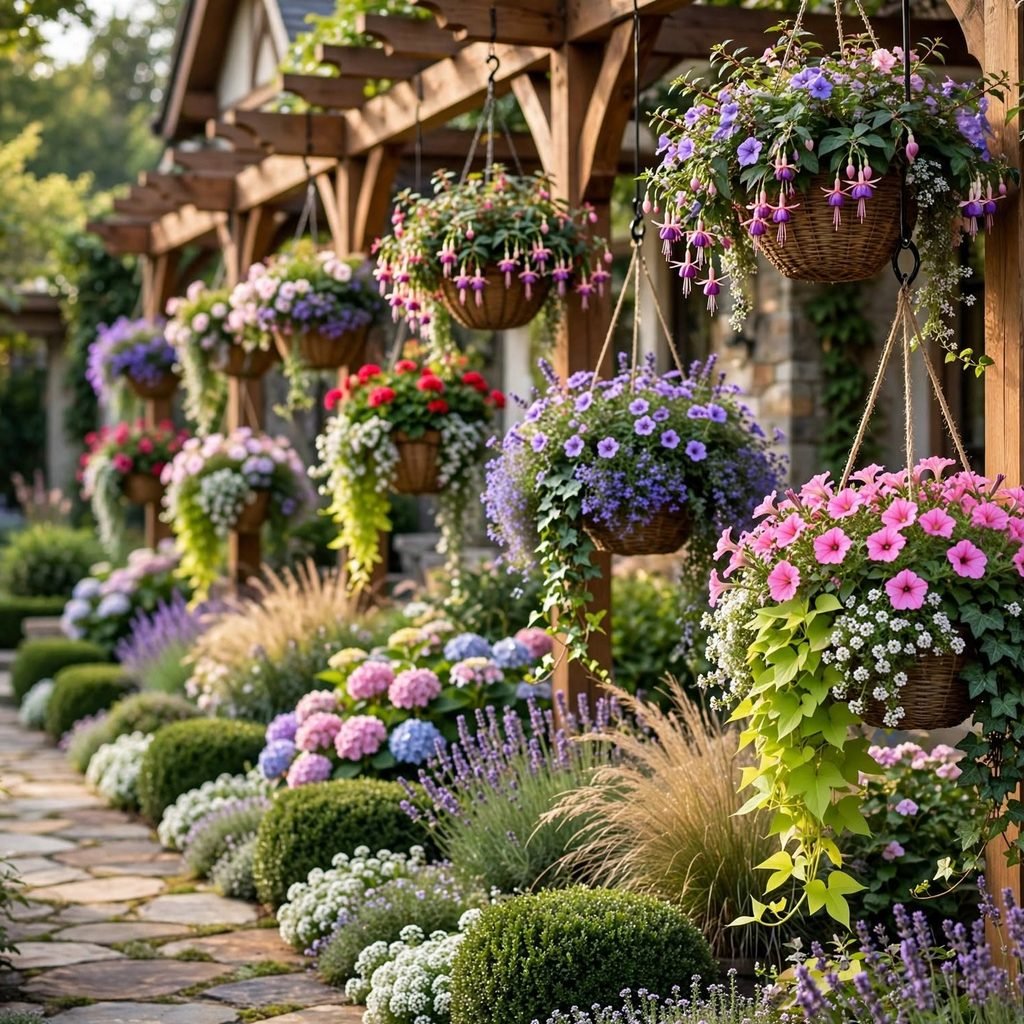
A hanging basket border adds color at eye level and above without using any patio floor space, hung from a pergola crossbeam, wall bracket, or freestanding shepherd’s hook. Petunia, fuchsia, and trailing lobelia all perform well in baskets since their natural trailing habit fills out the sides rather than growing purely upright. Baskets dry out faster than ground-level containers because of increased air exposure, so a self-watering basket insert cuts down significantly on how often they need attention.
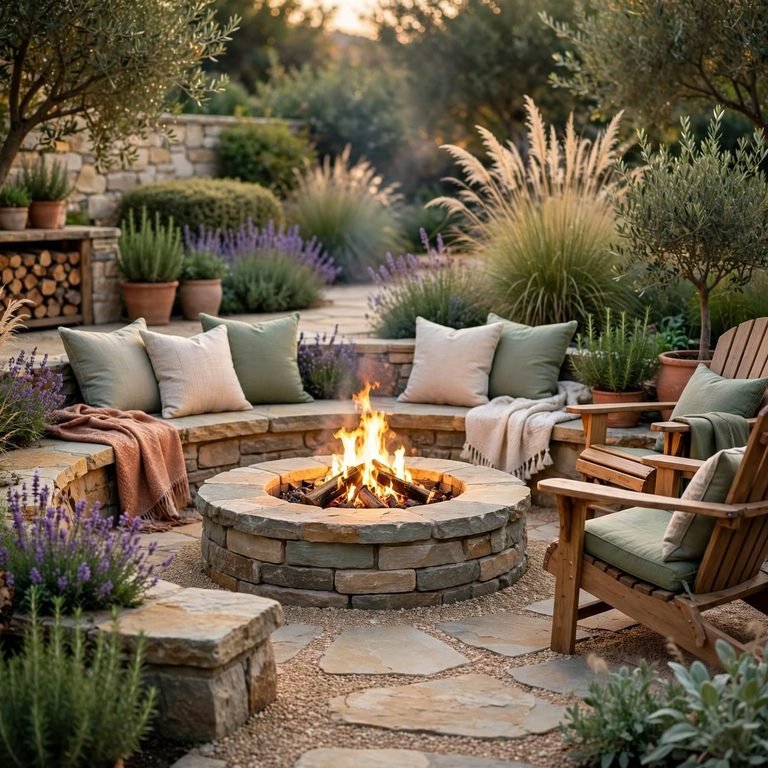
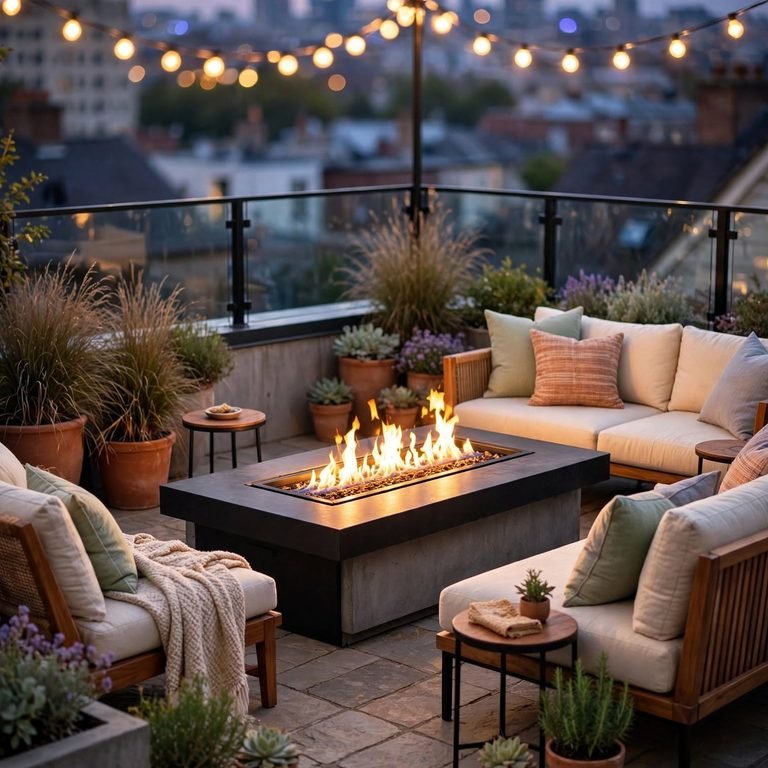
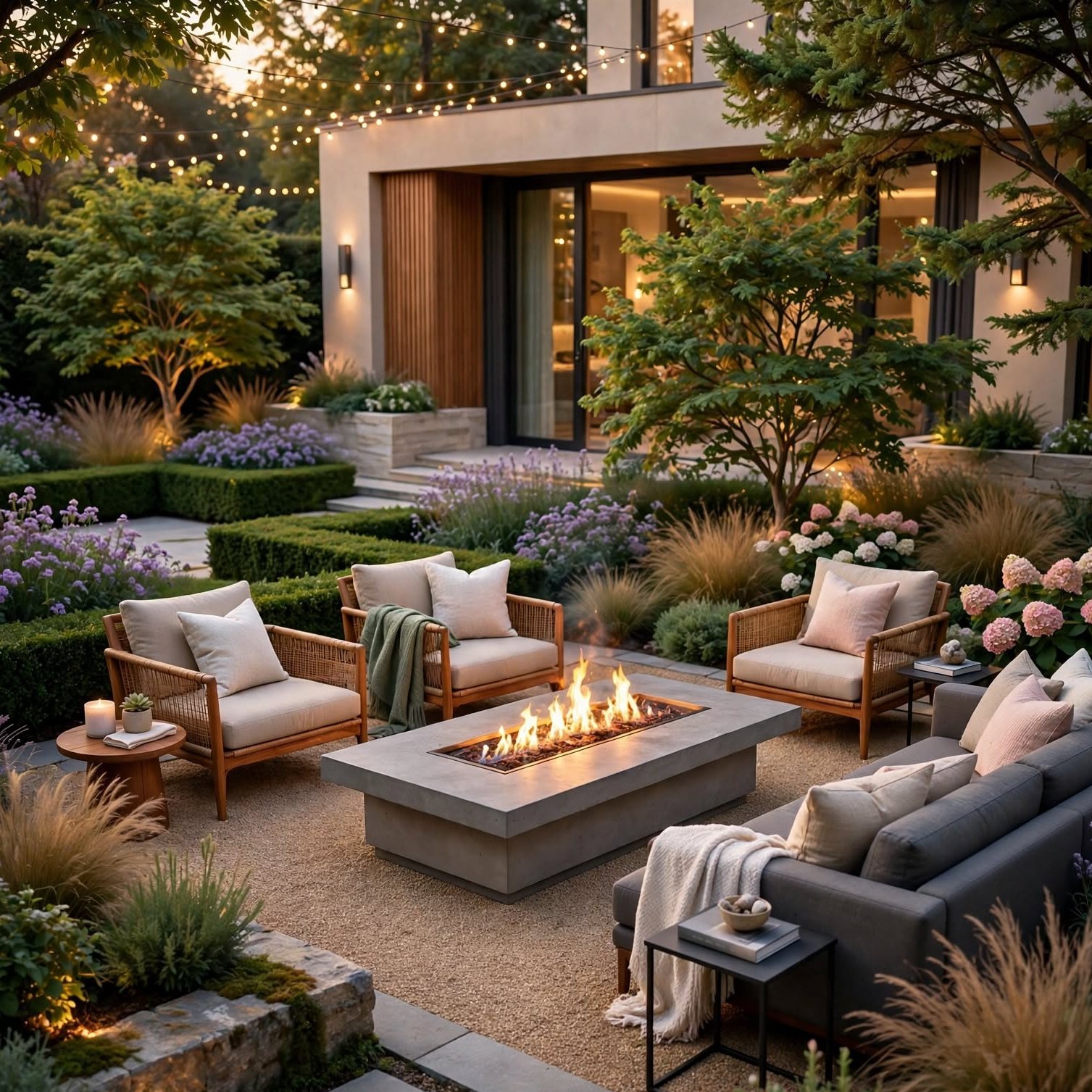
9. Fire Table Seating Corner
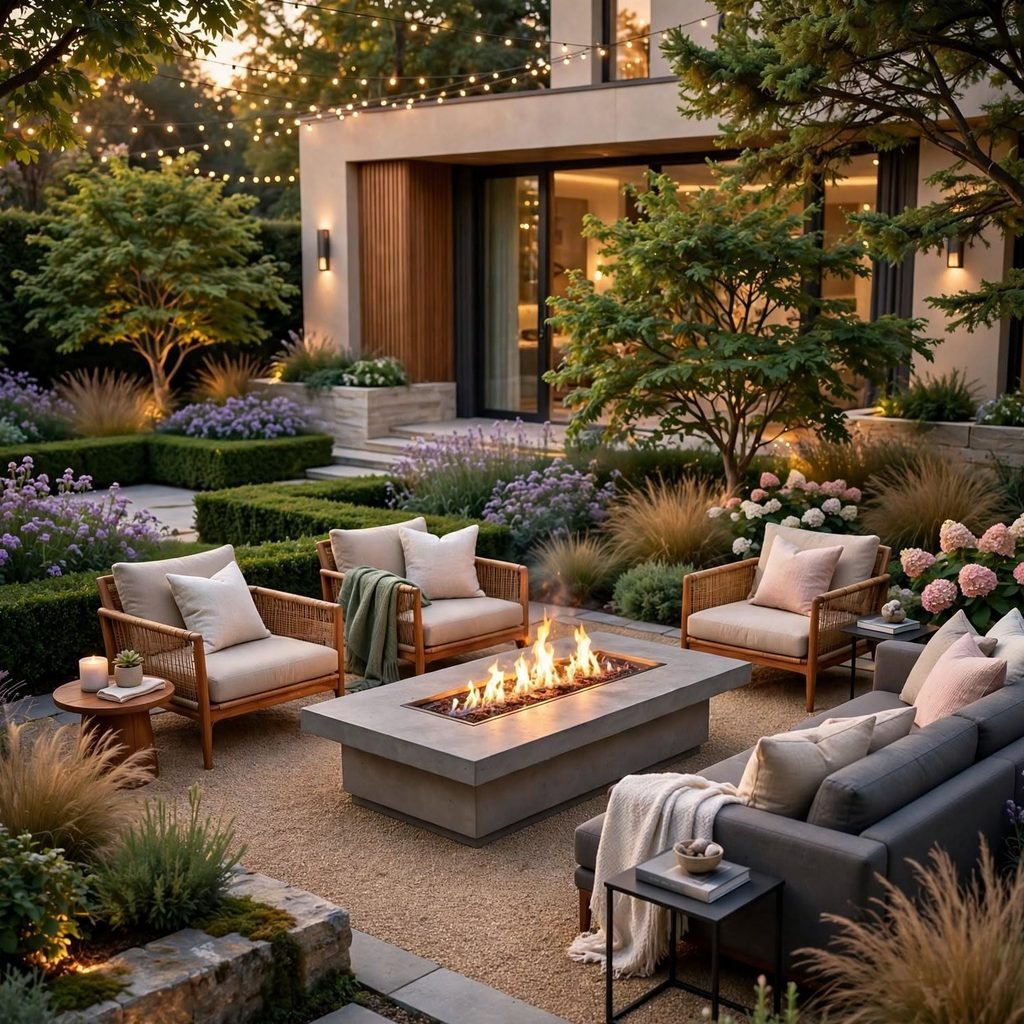
A fire table seating corner turns an unused patio corner into a gathering spot, built around a gas-fed fire table rather than a wood-burning pit since most patios and multi-unit properties restrict open flame from wood. Concrete and steel fire tables both integrate well with surrounding container plantings, and clearance from combustible furniture and structures still applies even with a gas unit. Positioning the table so smoke or heat doesn’t blow directly toward the house entrance keeps the space usable on breezier evenings.
| Fire Table Size | Seating Capacity | Min. Clearance to Structures |
| 24×24 in | 2–3 people | 8 ft |
| 30×30 in | 4–5 people | 10 ft |
| 36×36 in | 6+ people | 12 ft |
Check your local fire code and patio setback rules before installing any fire feature, especially on shared or multi-unit patios.
10. Espaliered Dwarf Fruit Tree
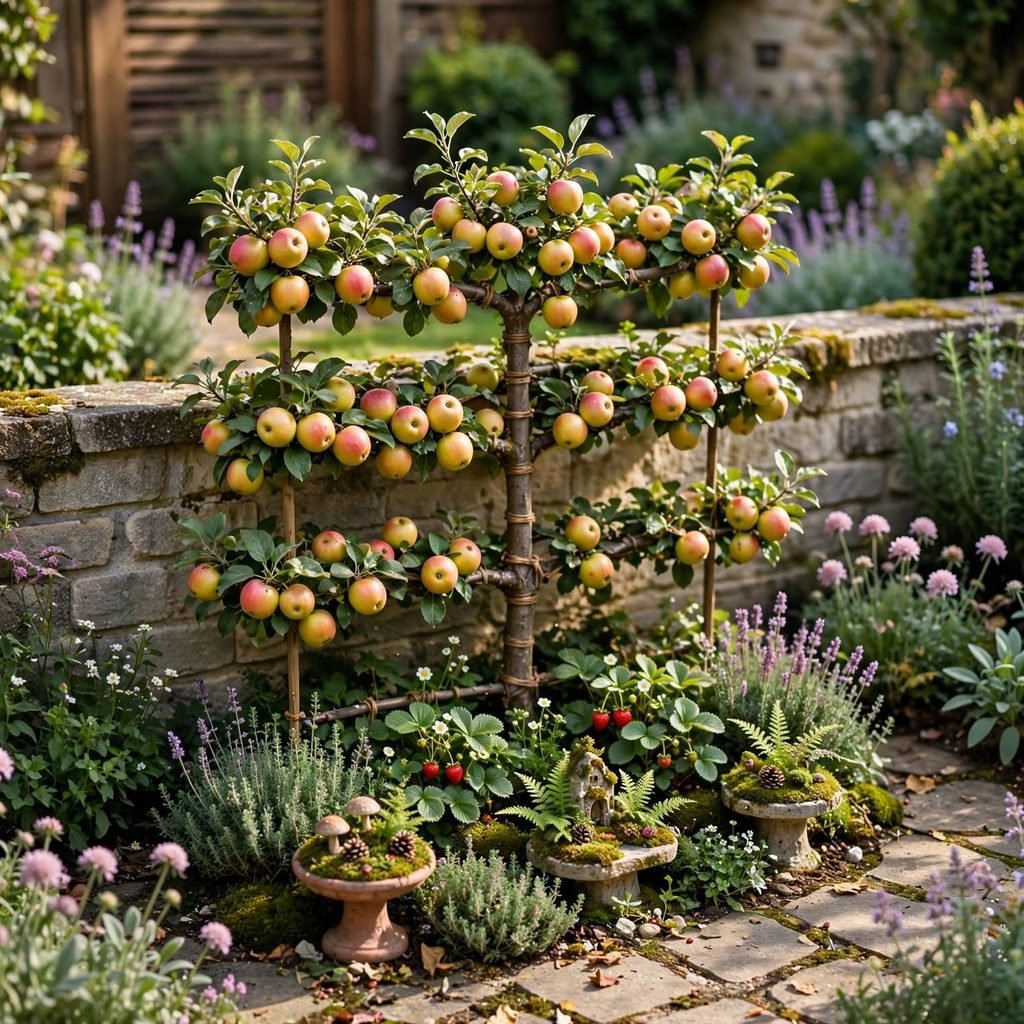
An espaliered dwarf fruit tree trains a compact variety flat against a patio wall or trellis, giving a patio garden a productive element without the footprint a full-canopy tree would need. Dwarf apple and dwarf pear varieties tolerate the flat training method best, since their fruiting spurs form readily along horizontal branches trained onto wire supports spaced roughly 12 to 15 inches apart. Growing the tree in a large container rather than in-ground also makes it possible on a fully paved patio with no planting bed.
11. Modular Vertical Planting Wall
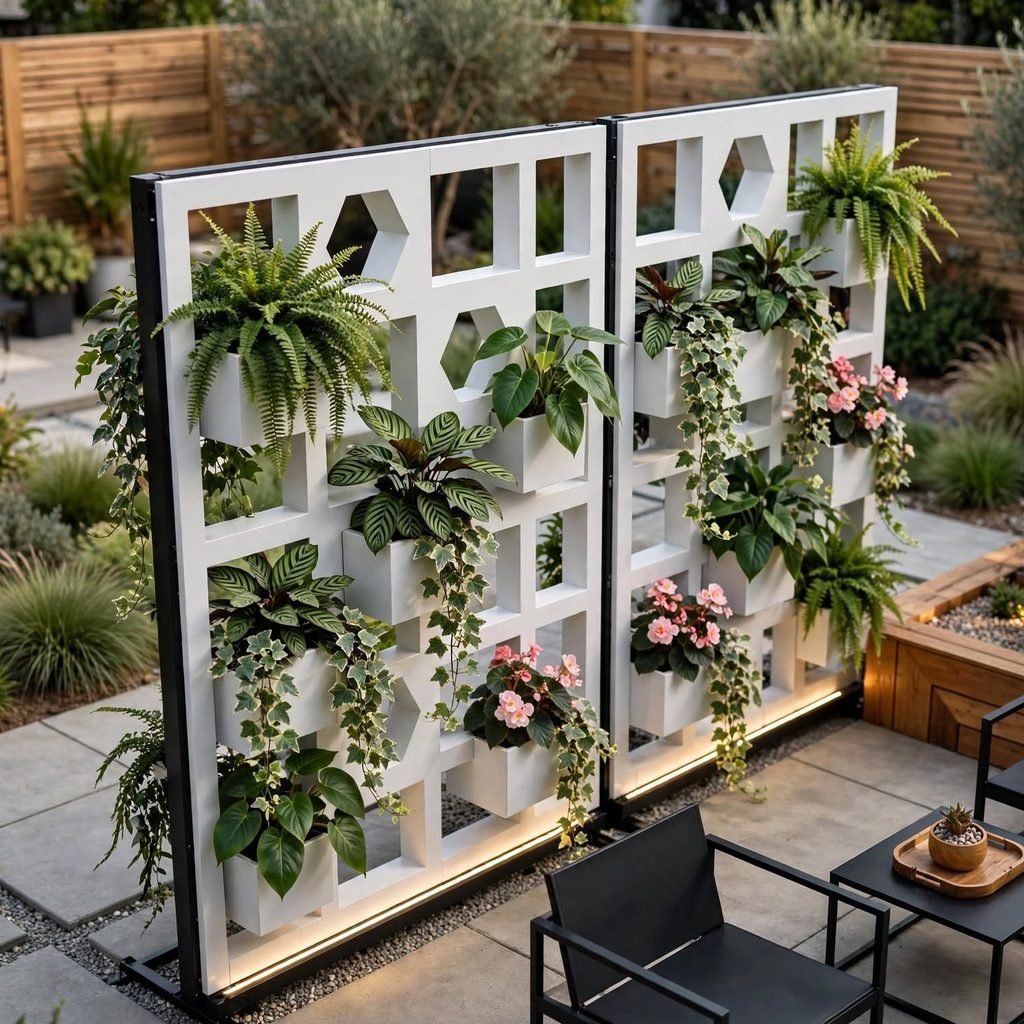
A modular vertical planting wall uses stackable or clip-together planting panels mounted to a fence or wall, giving a patio significantly more growing area than the floor space alone would allow. Felt pocket systems are the lightest and cheapest option, rigid plastic modular panels hold water more consistently, and cedar-framed vertical boxes give the most finished, built-in look. Running a simple drip line along the top row keeps water distribution even across all the tiers instead of relying on hand-watering each pocket.
| System Type | Weight When Wet | Water Retention | Cost per Sq Ft |
| Felt pocket panel | Light | Low | $8–15 |
| Rigid plastic module | Moderate | High | $15–25 |
| Cedar-framed box | Heavy | Moderate | $20–35 |
12. Bistro Dining Nook
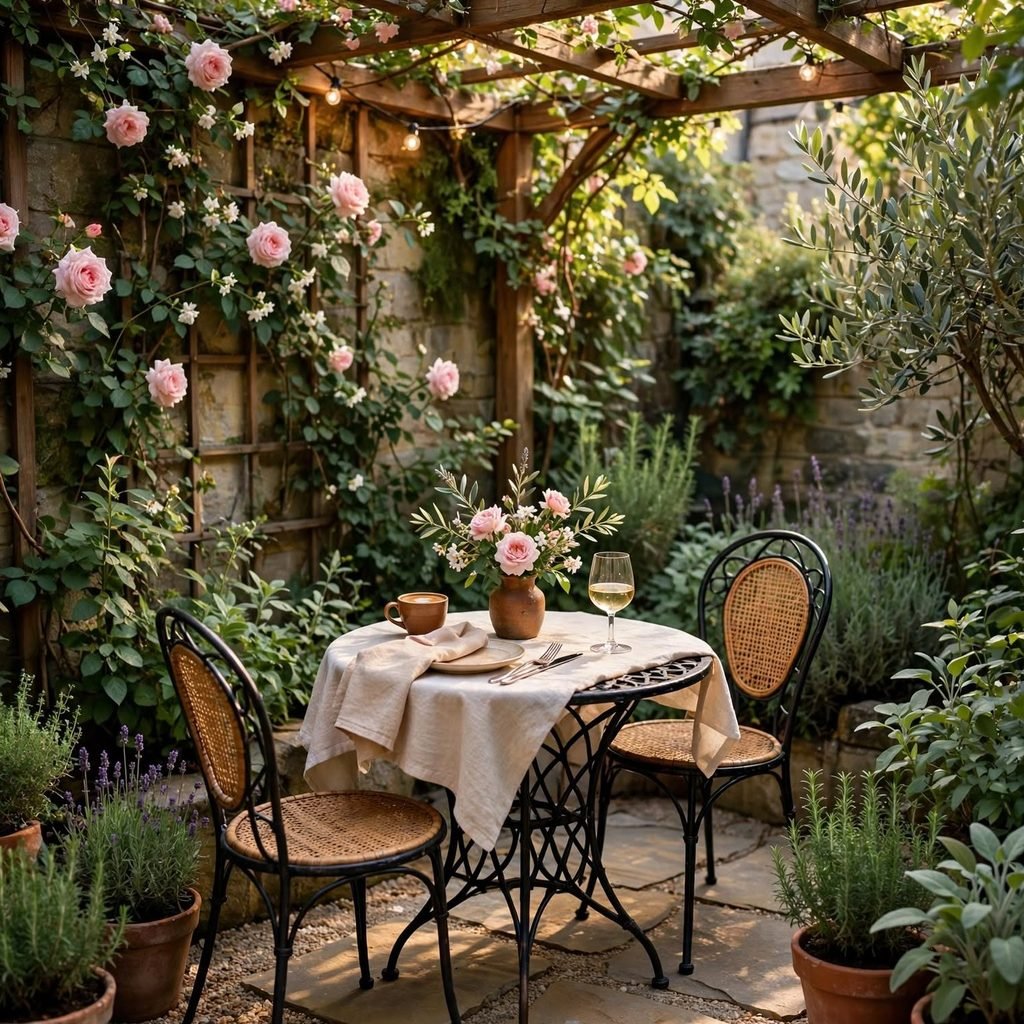
A bistro dining nook fits a small two- or four-person table and chairs into a corner of the patio surrounded by container plantings, working as a defined dining space even on patios too small for a full outdoor dining set. Wrought iron bistro sets hold up well to weather with minimal upkeep, while teak folding sets can be stored away when the space needs to serve another purpose. Surrounding the nook with taller potted plants on two sides gives it a sense of enclosure without needing a permanent structure.
Shop the Look
A handful of pieces do most of the visual work on a patio garden. A set of self-watering resin planters in graduated sizes cuts down on watering frequency while giving the container groupings a matched, intentional look. A cedar or teak plant stand raises a cluster of pots to varying heights without needing individual risers under each one. A retractable drip irrigation kit with a timer keeps hanging baskets and vertical planters watered evenly without daily hand-watering, and a set of outdoor string lights strung along the pergola or privacy screen extends the space into evening use.
Common Mistake to Avoid
The most common mistake on a patio garden is choosing containers without drainage holes or setting pots directly on pavers without any gap underneath, which traps water against both the roots and the patio surface. Standing water rots roots quickly in a container, since there’s no surrounding soil to wick moisture away the way there would be in a ground bed. Pot feet or simple risers under each container solve this in minutes and also prevent the staining and moss growth that develops on pavers left wet under a pot for months at a time.
Frequently Asked Questions
What are the best low-maintenance patio garden ideas?
Container herb corners and raised planter boxes filled with drought-tolerant perennials are the lowest-maintenance patio garden ideas available, since neither requires daily attention once established. Self-watering containers cut watering frequency down to once or twice a week even in hot weather, and drought-tolerant plants like sedum, lavender, and ornamental grasses tolerate missed waterings without visible stress. Both options also avoid the pruning and training upkeep that vertical systems and espaliered trees require.
How much sun does a patio garden need?
Sun requirements depend entirely on the plants chosen rather than the patio itself, but most vegetables and flowering annuals need a minimum of six hours of direct sun to perform well in containers. Patios shaded by a covered roofline or a taller building should lean into shade-tolerant options like hosta, fern, and coleus rather than fighting the available light. Tracking sun patterns across a full day before choosing plant placement prevents the disappointment of leggy, non-flowering plants installed in a spot that gets less light than it appeared to at planting time.
What plants grow well in containers on a patio?
Herbs, dwarf fruit trees, compact vegetables like patio tomatoes and peppers, and most flowering annuals all perform well in containers as long as pot size matches the plant’s mature root system. Deeper-rooted plants like tomatoes need at least a 15 to 18 inch pot, while shallow-rooted herbs and lettuce do fine in 8 to 10 inch containers. Perennials intended to overwinter in containers also need a pot rated for the local climate zone, since roots in above-ground containers are more exposed to freezing than roots in the ground.
How do you add privacy to a patio garden without a fence?
Tall container plantings like clumping bamboo, columnar evergreens, or dense ornamental grasses block sightlines effectively without requiring the permanent structure a fence involves, which matters especially for rented patios. Positioning two or three large containers strategically along the sightline that needs blocking, rather than lining the entire patio edge, usually solves the privacy issue with fewer plants than expected. A pergola with climbing vines trained across the top also adds overhead privacy from upper-floor neighbors that ground-level screening alone doesn’t address.
How do you keep container plants from drying out too fast on a hot patio?
Self-watering containers with a built-in water reservoir are the most reliable fix, since they supply water to the roots gradually instead of drying out within hours of a single watering. Grouping containers together rather than spacing them apart also raises humidity slightly around the group and reduces evaporation compared to isolated pots. Mulching the soil surface in each container with a thin layer of bark or gravel further slows moisture loss, particularly on south- or west-facing patios that hold heat into the evening.
Conclusion
The strongest patio garden ideas on this list work because they account for the specific limits of a hardscaped space no native soil, no in-ground drainage, and often a weight or size restriction that a full yard doesn’t have. Whether you start with a single container herb corner or build up to a pergola and privacy screen combination, matching the plant choice to the container and light conditions is what makes a patio garden last past one season. Save this post to Pinterest for reference as you plan your own space, or read our related guide to self-watering container systems before your first planting.