12 Fresh Garden Fence Ideas for Every Yard Style
Garden fence ideas do more work than most people give them credit for a fence sets the boundary, blocks wind, screens a neighbor’s view, and often becomes the backdrop every other plant in the yard gets photographed against. This post walks through twelve specific approaches, from horizontal cedar slats to a living privet hedge, each with real materials, spacing, and what it actually takes to build or grow one.
Trend & Background
Fencing has shifted toward horizontal-slat modern styles, mixed-material builds that pair wood with metal or stone, and living boundaries like hedges and woven willow that soften a hard property line without sacrificing privacy. Corten steel panels in particular have moved from commercial landscaping into residential yards over the past few seasons, prized for developing a rust patina that needs zero maintenance once it forms. At the same time, more homeowners are choosing partially open designs split rail, lattice, wide-gapped slats specifically to keep airflow moving through garden beds rather than trapping humidity against a solid barrier.
Key Takeaways
- These 12 garden fence ideas range from budget-friendly split rail to structural gabion walls and living hedge boundaries
- Six ideas horizontal slat, picket, corten steel, bamboo screen, split rail, and gabion — include height, spacing, or cost comparison tables
- Height and spacing rules change significantly by material, and getting them wrong is the fastest way to a fence that looks unfinished
- Several of these ideas can be mixed along one property line rather than committing to a single fence style for the entire yard
1. Horizontal Slat Fence
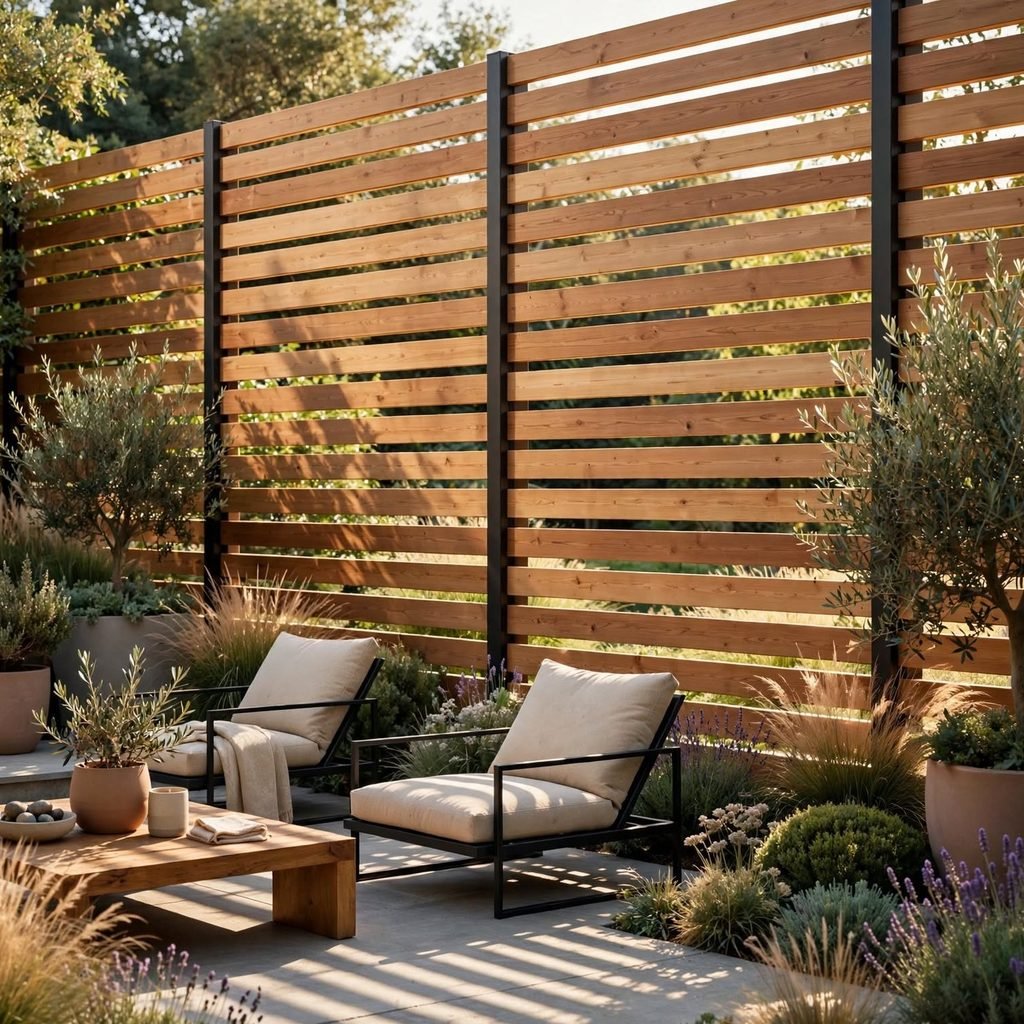
A horizontal slat fence reads as more contemporary than traditional vertical pickets, built from evenly spaced cedar or thermally modified wood boards running side to side across the posts. Gaps between slats typically run half an inch to an inch and a half, wide enough to let some airflow and light through without sacrificing privacy from a normal viewing angle. Thermally modified wood costs more upfront than standard cedar but resists warping and rot significantly longer, which matters most in a fence style where uneven boards are highly visible.
| Material | Gap Spacing | Lifespan | Cost per Linear Ft |
| Standard cedar | 1–1.5 in | 12–15 yrs | $25–40 |
| Thermally modified wood | 0.5–1 in | 20–25 yrs | $45–65 |
| Composite board | 0.5–1 in | 25+ yrs | $50–75 |
2. Classic Picket Fence
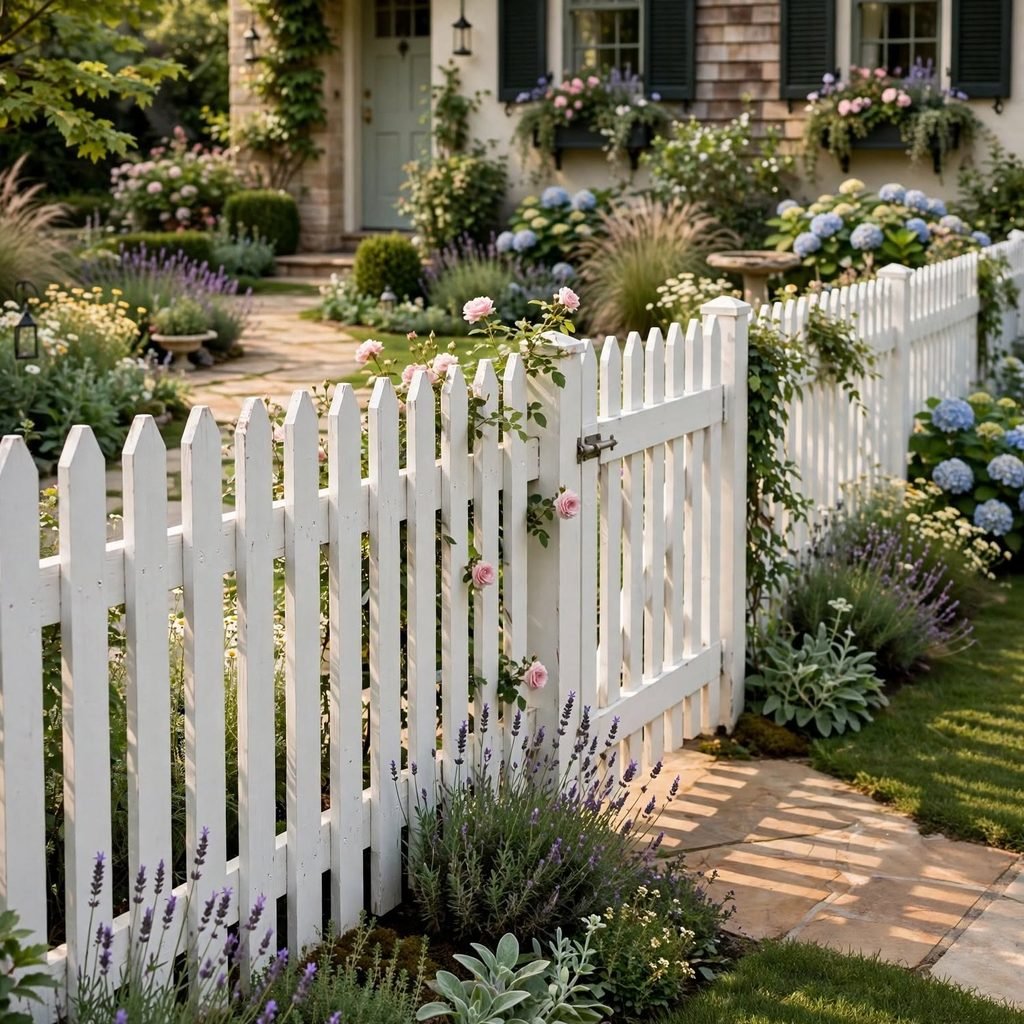
A classic picket fence marks a boundary without blocking the view into the garden behind it, which is why it’s the standard choice for front-yard beds meant to be seen from the street. Standard picket height runs 36 to 48 inches, tall enough to define the edge without reading as a barrier, and pickets are typically spaced with gaps equal to or slightly narrower than the picket width itself. Painted white is the traditional finish, though a dark charcoal or muted green picket fence has become a common alternative for a more contemporary cottage look.
| Picket Height | Best Use | Typical Gap Spacing |
| 24–30 in | Low garden border | 2–3 in |
| 36–42 in | Standard front yard | 2–4 in |
| 48 in | Semi-privacy, pet containment | 1–2 in |
3. Woven Willow Fence
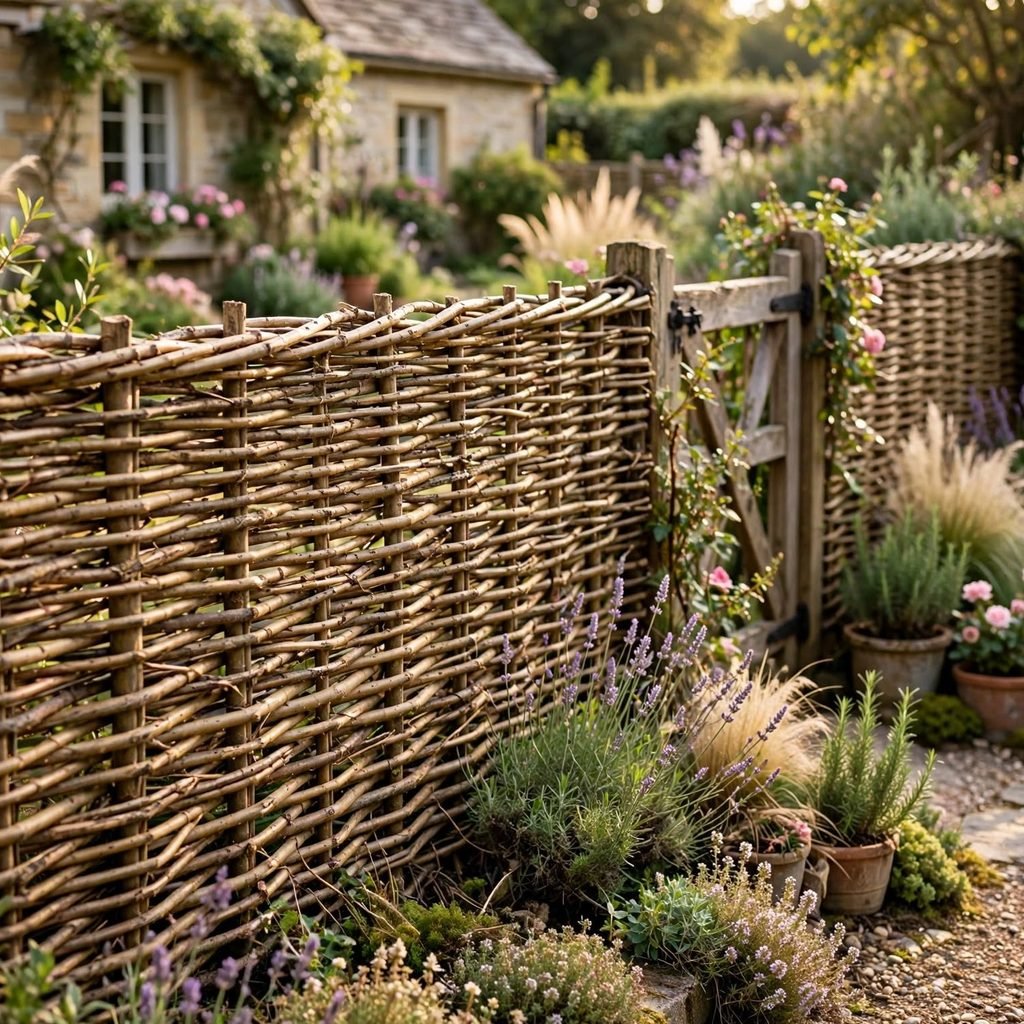
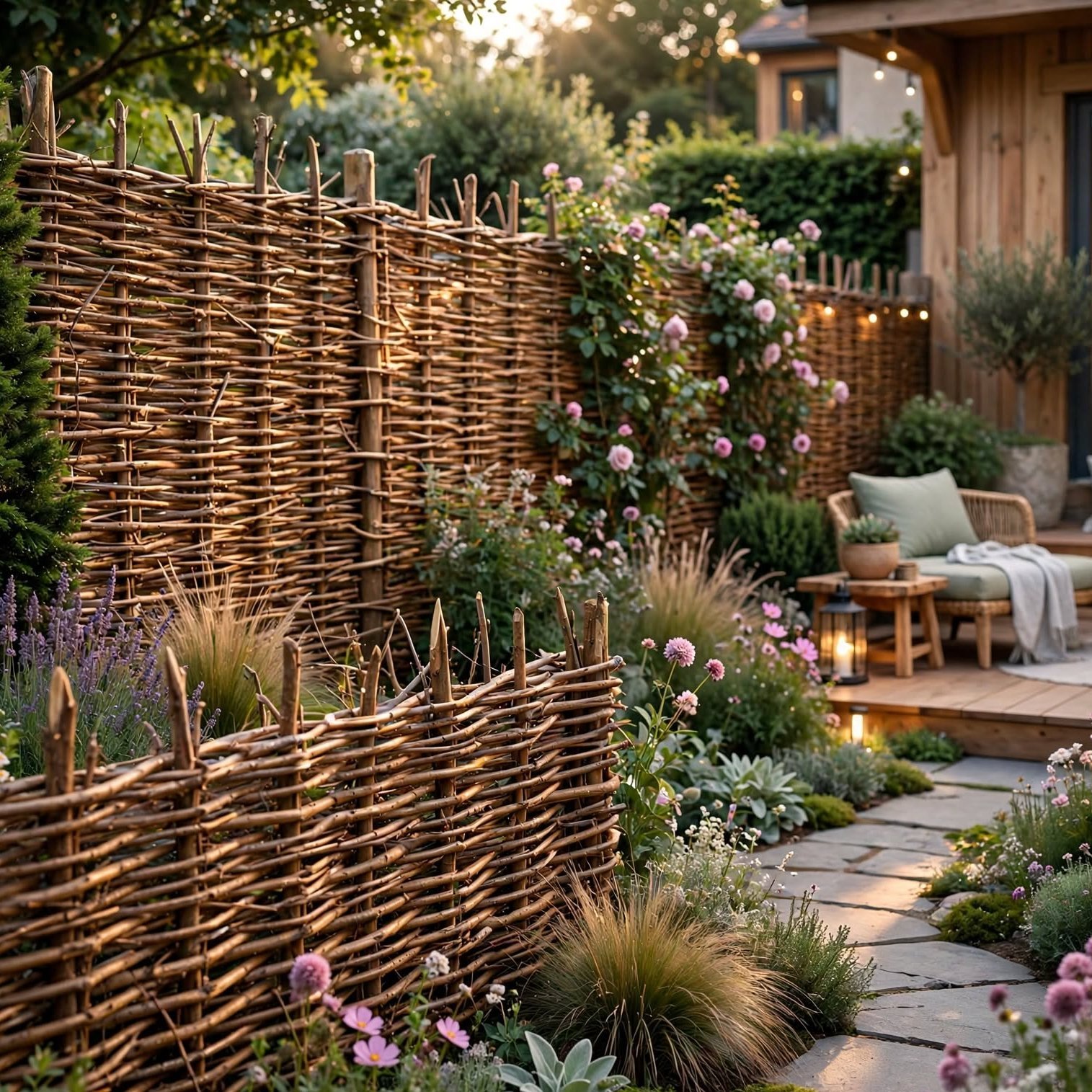
A woven willow fence weaves flexible willow whips horizontally between vertical stakes, producing a rustic, basket-like texture that suits a cottage or naturalistic garden better than any milled lumber fence could. Fresh-cut willow whips are woven while still pliable and dry into a rigid structure over a few weeks, though the natural material has a shorter lifespan than wood lumber and typically needs partial rebuilding every five to eight years. This works best as a low border fence rather than a full-height privacy screen, since taller willow weaves lose structural rigidity.
4. Living Garden Fence Ideas
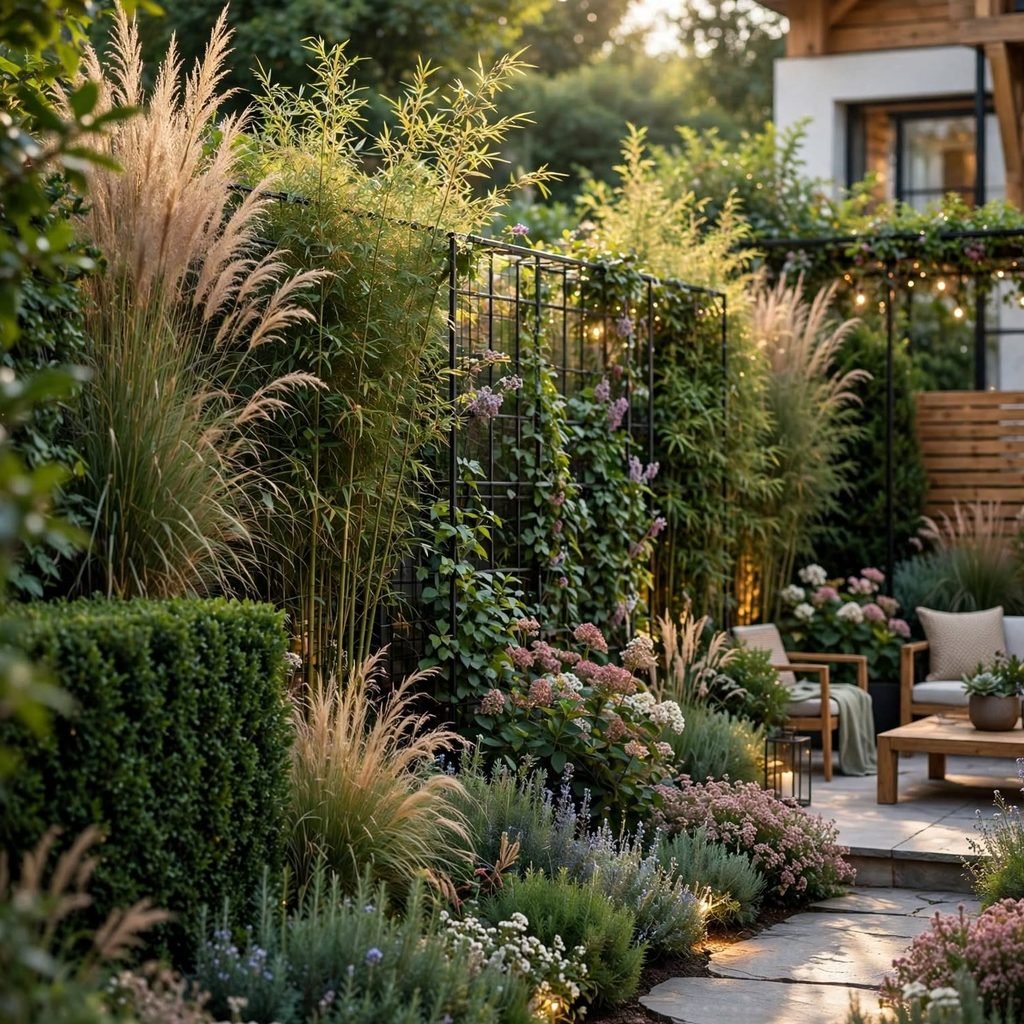
Living garden fence ideas replace milled lumber or metal entirely with a densely planted hedge line, using species selected specifically for how they respond to shearing and how quickly they fill in as a solid screen. Privet, boxwood, and arborvitae are the most common choices, with privet filling in fastest and arborvitae holding the most consistent year-round color. A living fence takes two to four years to reach full screening height depending on the species, which is the main tradeoff against a built fence that provides privacy immediately.
Discover patio garden ideas that combine clean design, greenery, and functional outdoor living.
5. Corten Steel Panel Fence
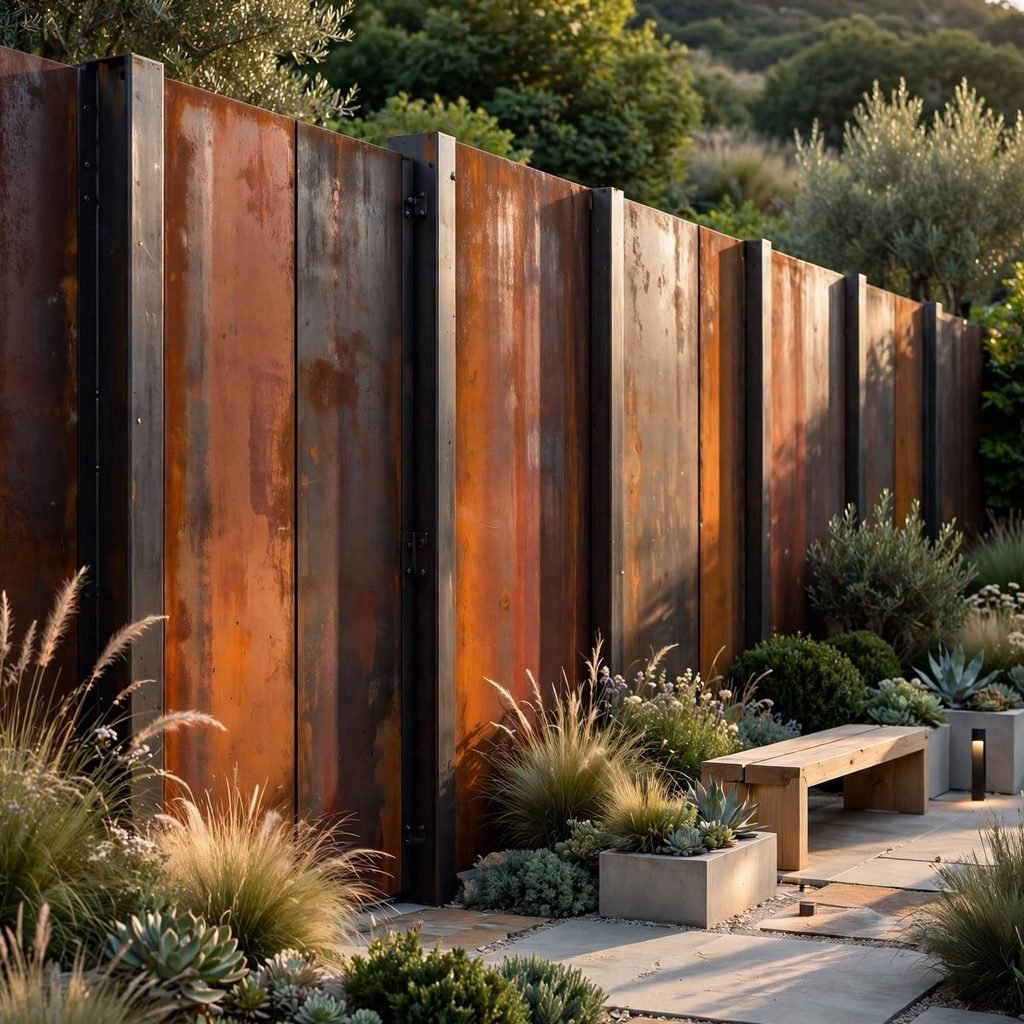
A corten steel panel fence develops a deep orange-brown rust patina within the first year of exposure to weather, after which the surface stabilizes and stops corroding further, requiring no paint, stain, or sealant for the rest of its life. Solid panels block wind and sightlines completely, while perforated corten panels with a cut pattern let dappled light and some airflow through while still reading as a strong architectural statement. The material costs considerably more than wood per linear foot but needs essentially no maintenance once the initial patina sets.
| Panel Type | Privacy Level | Maintenance | Cost per Linear Ft |
| Solid corten | Full | None after patina forms | $80–120 |
| Perforated corten | Partial | None after patina forms | $90–140 |
| Painted steel (comparison) | Full | Repaint every 5–8 yrs | $50–75 |
6. Bamboo Screen Fence
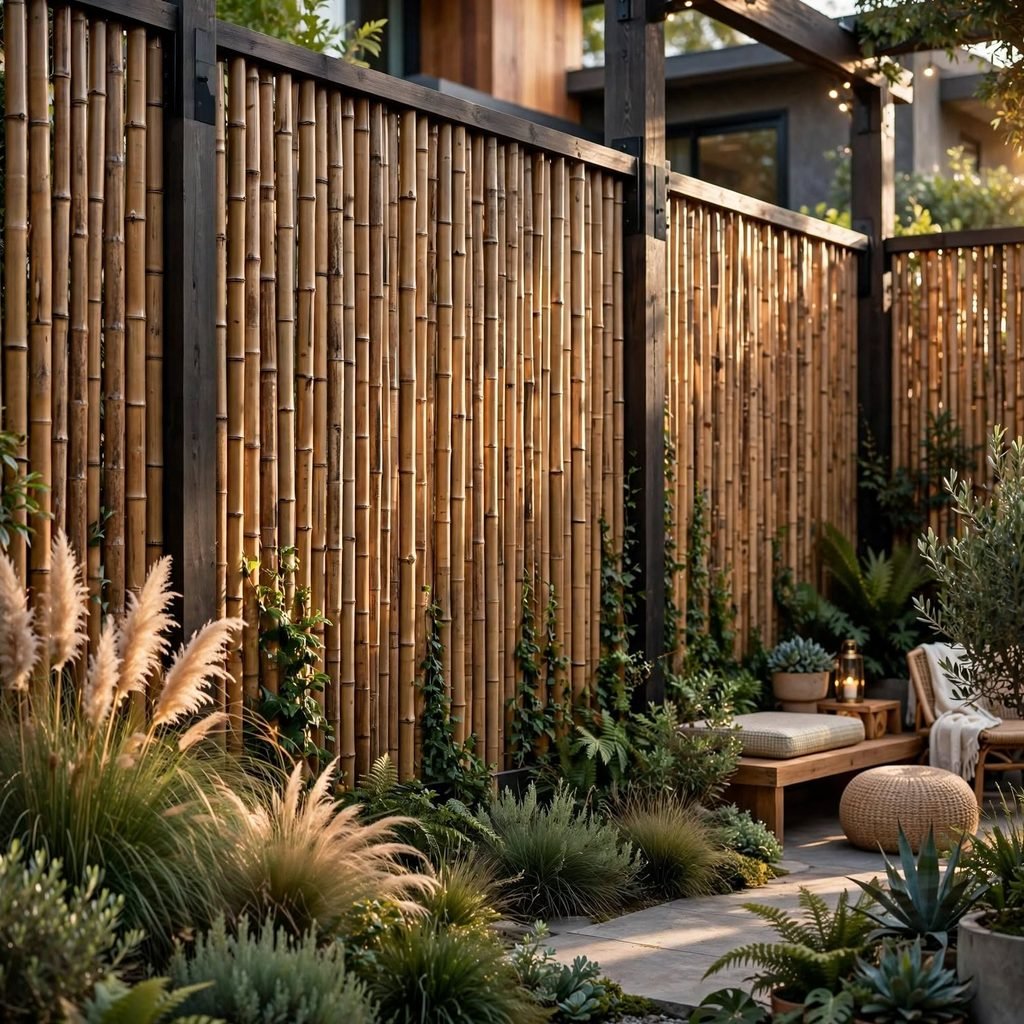
A bamboo screen fence attaches split or whole bamboo poles to an existing chain-link or wood frame, giving an instant tropical or Japanese-garden feel at a lower cost than a full timber privacy fence. Rolled bamboo screening is the fastest and cheapest option to install but has the shortest lifespan, while individually mounted whole bamboo poles cost more and take longer to install but hold up significantly better against weather and wind. Sealing the cut ends of any bamboo section before installation slows the cracking that otherwise develops within the first year or two.
| Bamboo Type | Install Method | Lifespan | Cost per Linear Ft |
| Rolled screening | Attach to existing fence | 3–5 yrs | $8–15 |
| Individual poles | Mounted to frame | 8–12 yrs | $20–35 |
7. Split Rail Fence
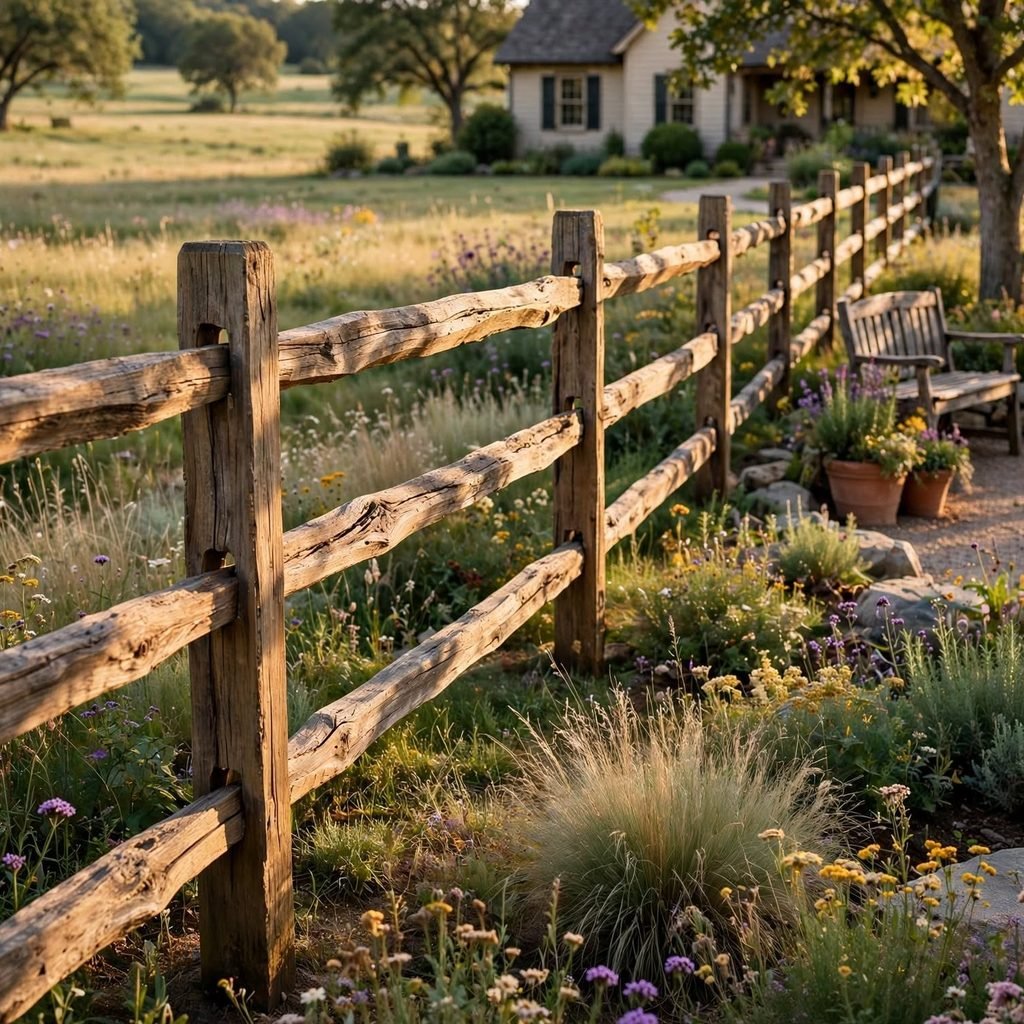
A split rail fence marks a boundary without blocking the view at all, built from rough-hewn wood rails slotted horizontally through posts with no pickets or panels filling the gaps between them. Cedar and locust both resist rot in ground contact without chemical treatment, making them the two most common choices for the posts specifically. This style works best for defining a large property edge or separating a garden from an open lawn area, rather than for anywhere privacy or wind-blocking actually matters.
| Rail Count | Fence Height | Best Use |
| 2-rail | 24–30 in | Decorative boundary marking |
| 3-rail | 36–42 in | Standard property line |
| 4-rail | 48 in | Livestock or pet containment |
8. Lattice Panel Fence
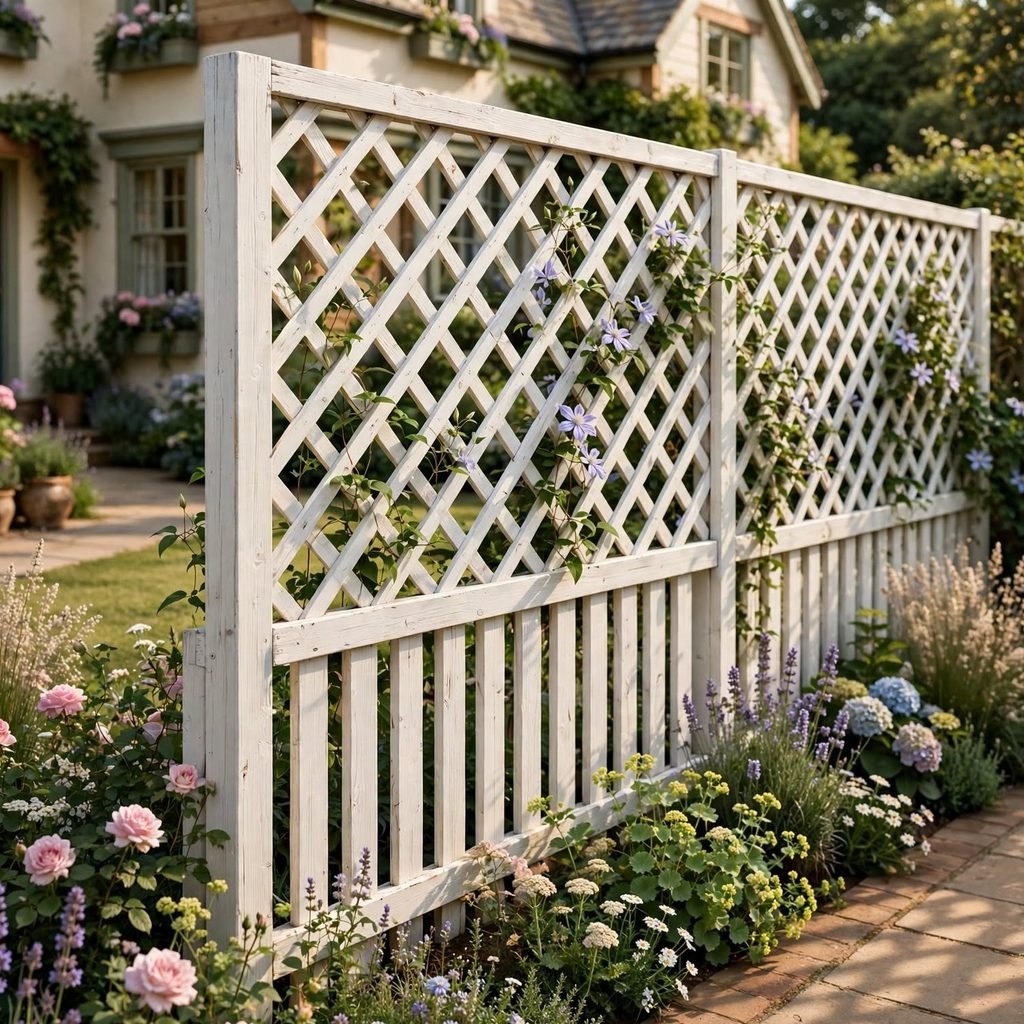
A lattice panel fence uses a crisscross wood or vinyl grid, commonly installed as a full fence or as a topper added above a solid privacy fence to add height without blocking light entirely. Wood lattice panels are the more traditional and affordable option but need periodic repainting or staining, while vinyl lattice costs more upfront and never needs refinishing. Climbing plants like clematis and morning glory train directly onto the grid, which is the main reason lattice gets chosen over a solid panel in garden settings specifically.
| Panel Size | Grid Spacing | Best Use |
| 4×8 ft | 1.5–2 in | Full fence panel |
| 2×8 ft | 1.5–2 in | Privacy fence topper |
9. Board-on-Board Fence
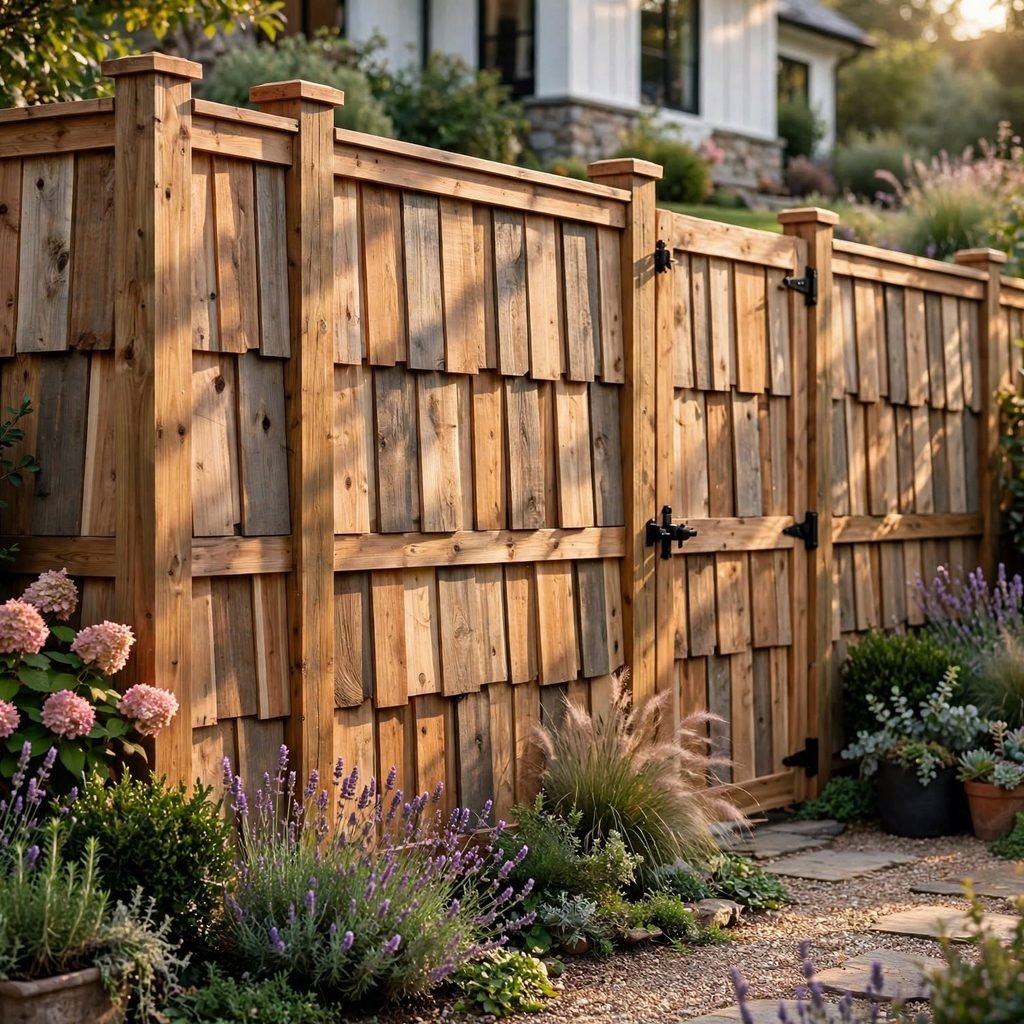
A board-on-board fence overlaps vertical boards on alternating sides of the horizontal rails, closing every gap that a standard vertical picket fence would leave without needing a single continuous panel. This gives full privacy from both sides while still allowing some airflow through the slight overlap seam, which matters in humid climates where a completely sealed panel fence traps moisture against garden beds planted close to it. Cedar and pressure-treated pine are the two most common board materials, with cedar holding up longer without warping.
10. Wattle Fence
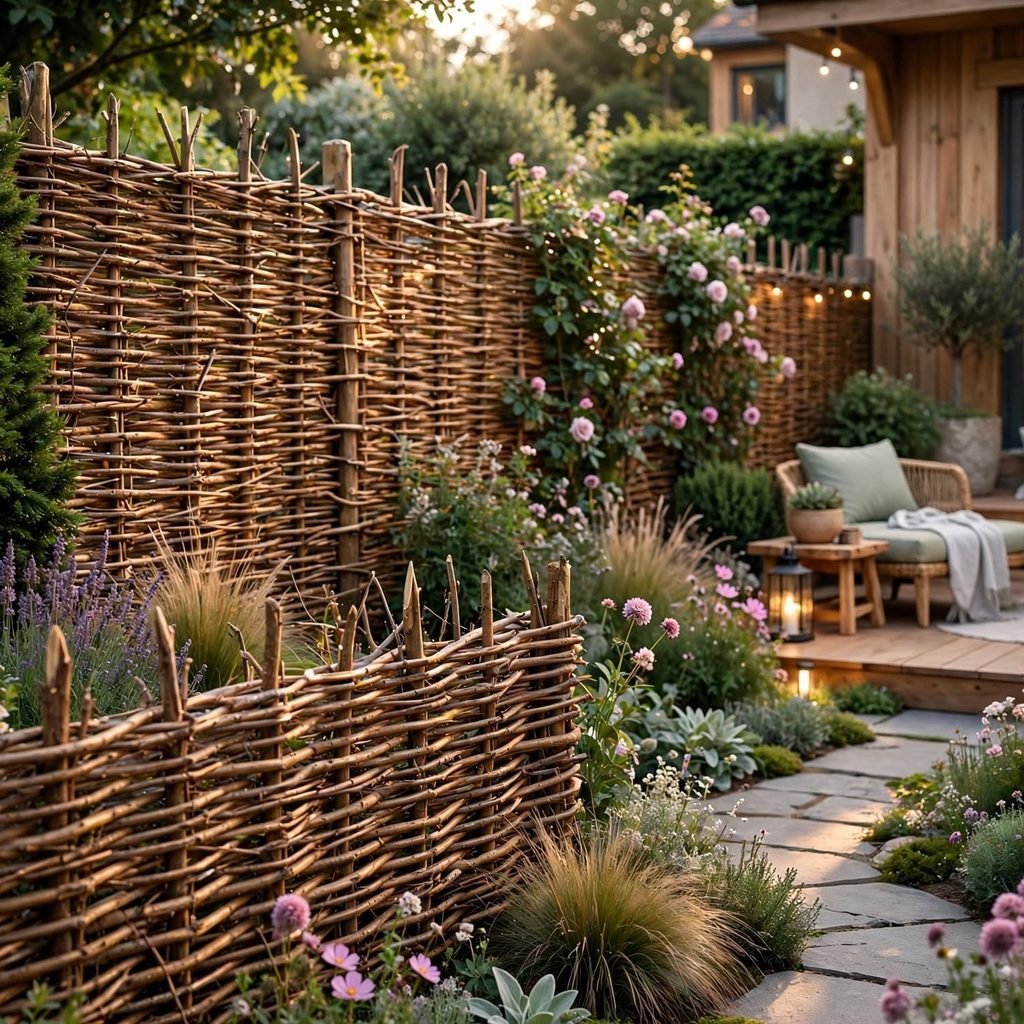
A wattle fence weaves thin, flexible branches, typically hazel, willow, or dogwood, horizontally between upright stakes, producing a dense, textured surface closer to basket-weaving than conventional fence building. This is one of the oldest fencing methods still used in garden design, favored today mostly for low borders around raised beds or as a decorative accent section rather than a full property boundary. Because the material is unmilled and untreated, a wattle fence typically needs rebuilding within four to six years depending on climate and ground contact.
11. Chain-Link With Climbing Vines
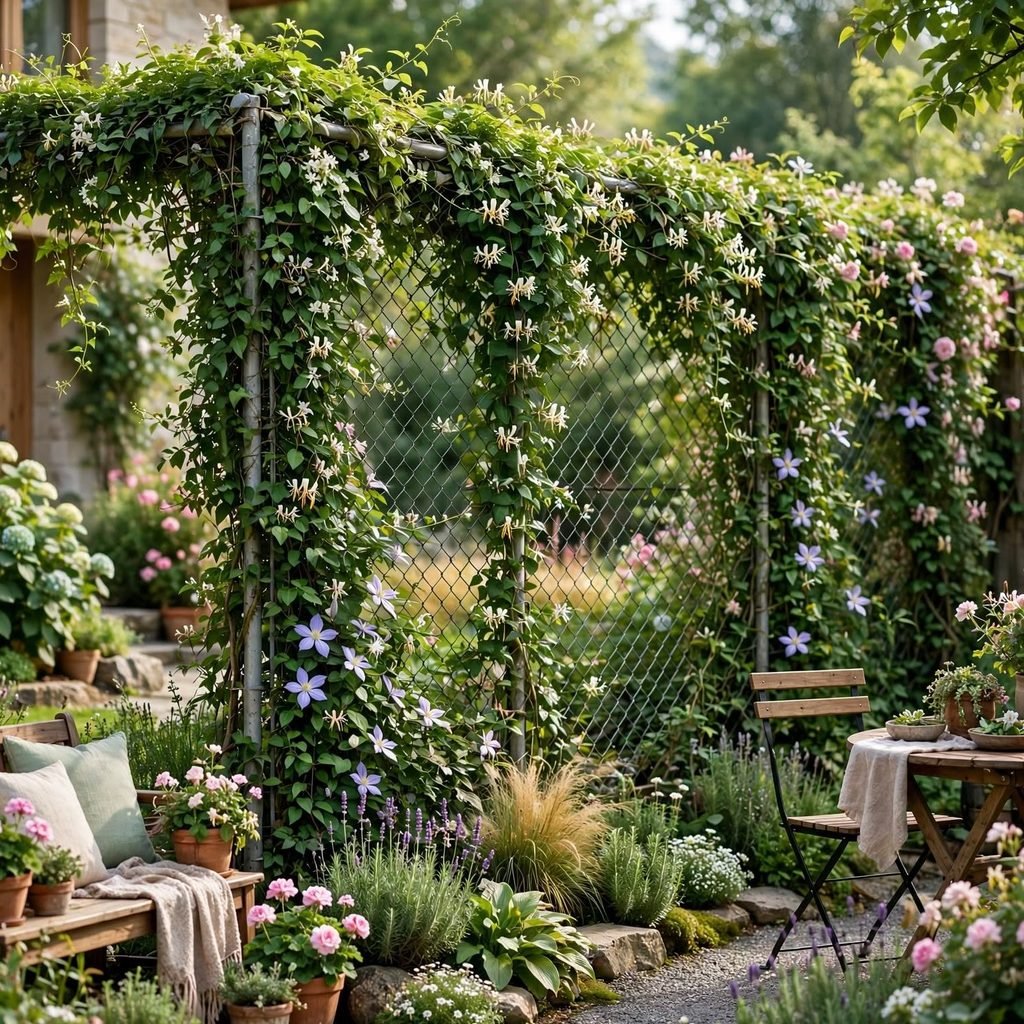
Chain-link with climbing vines takes the least expensive fencing material available and transforms it into a green privacy screen by training fast-growing vines directly onto the wire mesh. Clematis, climbing hydrangea, and Virginia creeper all grip chain-link readily without additional support wires, though Virginia creeper spreads aggressively and needs yearly cutback to stay contained to the fence line itself. This approach works especially well for renters or anyone inheriting an existing chain-link fence who wants a garden-appropriate look without the cost of replacing it.
12. Gabion Wall Fence
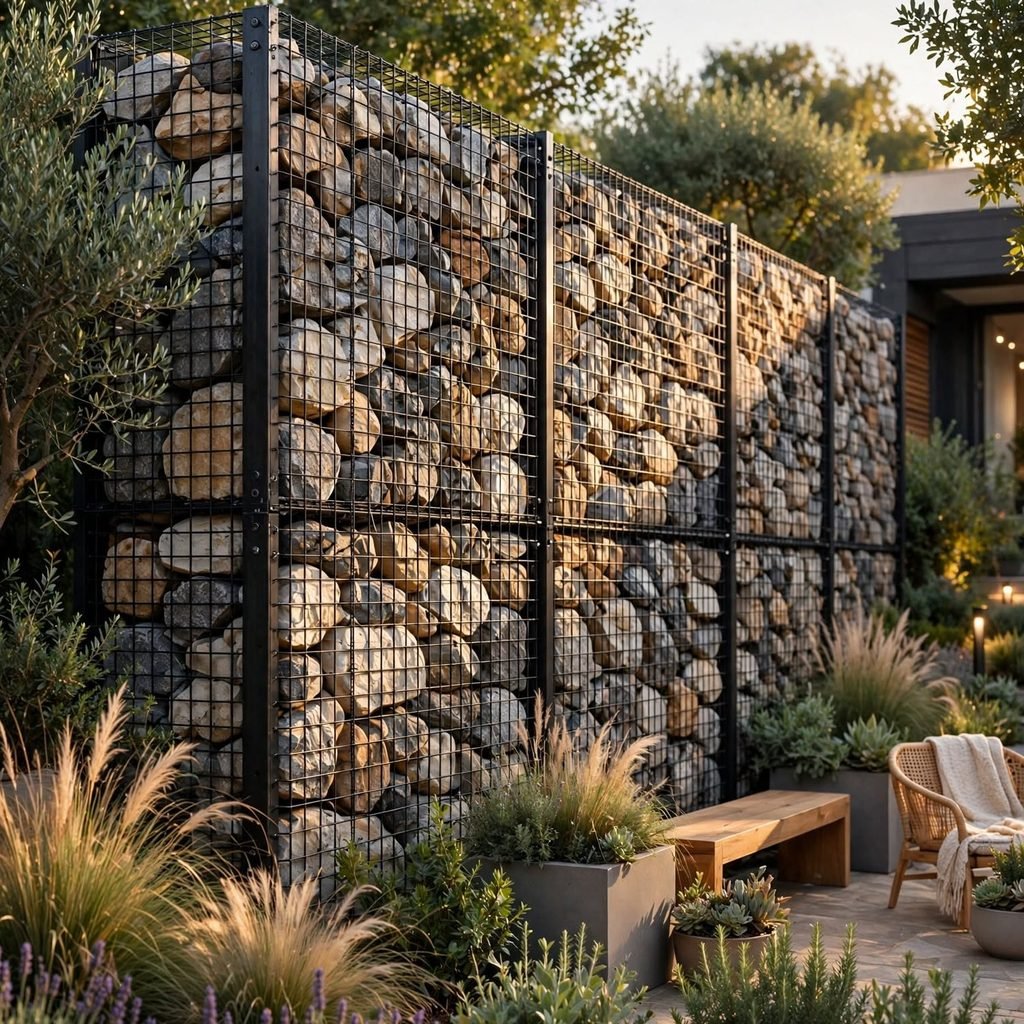
A gabion wall fence stacks wire cages filled with stone into a freestanding boundary wall, giving a garden a solid, architectural edge with essentially no maintenance and no risk of rot, rust, or warping over time. Locally sourced stone keeps material costs down significantly compared to shipped decorative rock, and the wire cages themselves come in modular sizes that stack to whatever final height the design calls for. This works particularly well on sloped property lines, since gabion sections can step down a grade in a way that a rigid panel fence can’t accommodate cleanly.
| Cage Size | Wall Height | Cost per Linear Ft (incl. stone) |
| 3x1x1 ft | 12 in | $30–50 |
| 3x3x1 ft | 36 in | $70–110 |
| 6x3x1 ft | 36 in, extended run | $60–95 |
Shop the Look
A few pieces finish off a garden fence once it’s built. Black powder-coated post caps give a wood or corten fence a cleaner, more finished top edge than a bare cut post. A set of galvanized fence-mounted planter brackets lets a picket or board-on-board fence hold trailing flowers without any additional bed space. Solar-powered post cap lights along a split rail or lattice fence extend visibility and usability into the evening, and a roll of coated garden wire makes training climbing vines onto chain-link or lattice considerably easier than relying on the material’s texture alone.
Common Mistake to Avoid
The most common mistake with garden fence ideas is choosing a fence height and privacy level before checking local zoning and HOA setback rules, which often cap front-yard fence height well below what’s allowed in a backyard. Discovering this after a fence is built usually means a costly teardown and rebuild at the correct height, rather than a simple adjustment. Checking the local code and any HOA architectural review requirements before ordering materials takes a single phone call or online search and avoids the single most expensive mistake on this list.
Frequently Asked Questions
What is the cheapest garden fence idea?
Chain-link with climbing vines and split rail fencing are the two least expensive garden fence ideas, both running well under half the cost per linear foot of a solid privacy fence. Chain-link in particular is often already installed on a property, so the only added cost is the climbing vines themselves and occasional pruning to keep them contained. Split rail costs more than reusing existing chain-link but still comes in below any solid-panel wood or metal fence option.
How tall should a garden fence be for privacy?
Six feet is the standard height for full visual privacy from a standing adult’s eye level on either side of the fence, though many residential zoning codes cap backyard fence height at six feet and front-yard fences considerably lower. Adding a lattice topper above a five- or six-foot solid fence can gain additional height for climbing plants without exceeding a strict zoning limit on the solid portion. Checking local code before finalizing height avoids having to modify a completed fence later.
Do living hedge fences work as well as built fences for privacy?
A mature, densely planted hedge like privet or arborvitae provides privacy comparable to a solid built fence, but it takes two to four years to reach full screening height, unlike a built fence that provides privacy immediately upon installation. Hedges also require ongoing shearing to maintain a clean line and don’t offer the same rigid, structural boundary a built fence provides for pet containment or property marking. Many gardens use a shorter built fence initially and let a hedge grow up alongside it for a layered look.
What fence style works best for a small garden?
Horizontal slat and lattice panel fences both suit small gardens well because their visual lines make a compact space feel less boxed in than a solid, unbroken panel fence would. A lower picket fence around 36 inches also keeps a small front garden feeling open rather than enclosed, since it defines the boundary without fully blocking the view into the bed. Avoiding a full-height solid fence on all sides of a small garden generally keeps the space from feeling smaller than it actually is.
How do you attach climbing plants to a garden fence?
Coated garden wire, plastic plant clips, or simple garden twine all work to guide young climbing stems onto a fence until the plant develops its own grip, whether that’s the twining habit of morning glory or the adhesive tendrils of climbing hydrangea. Chain-link and lattice fences give plants something to grip directly, while a solid board fence needs added wire or a trellis panel mounted to the surface first. Checking and loosening ties periodically prevents the wire or twine from cutting into the stem as the plant thickens over a growing season.
Conclusion
The strongest garden fence ideas on this list balance the practical job a fence has to do — privacy, boundary marking, wind blocking with a material and style that actually fits the garden it’s surrounding. Whether you start with a straightforward split rail boundary or build up to a corten steel panel fence with perforated sections, checking local height and setback rules before ordering materials saves the most common and costly mistake. Save this post to Pinterest for reference as you plan your own fence line, or read our related guide to climbing vine training methods before you start building.