12 Trending Garden Edging Ideas for Clean, Defined Beds
Garden edging ideas do a quieter job than most landscaping features, but skipping edging entirely is one of the fastest ways for a clean bed to look overgrown and undefined within a single season. This post walks through twelve specific approaches, from steel strip edging to a woven willow border, each with real materials, installation depths, and what it takes to keep grass and mulch from migrating across the line.
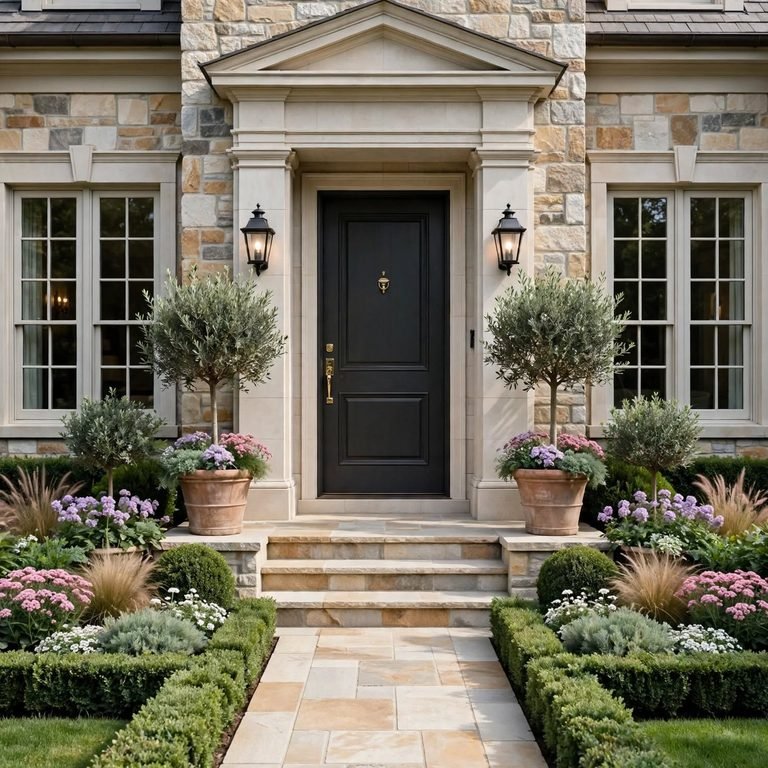
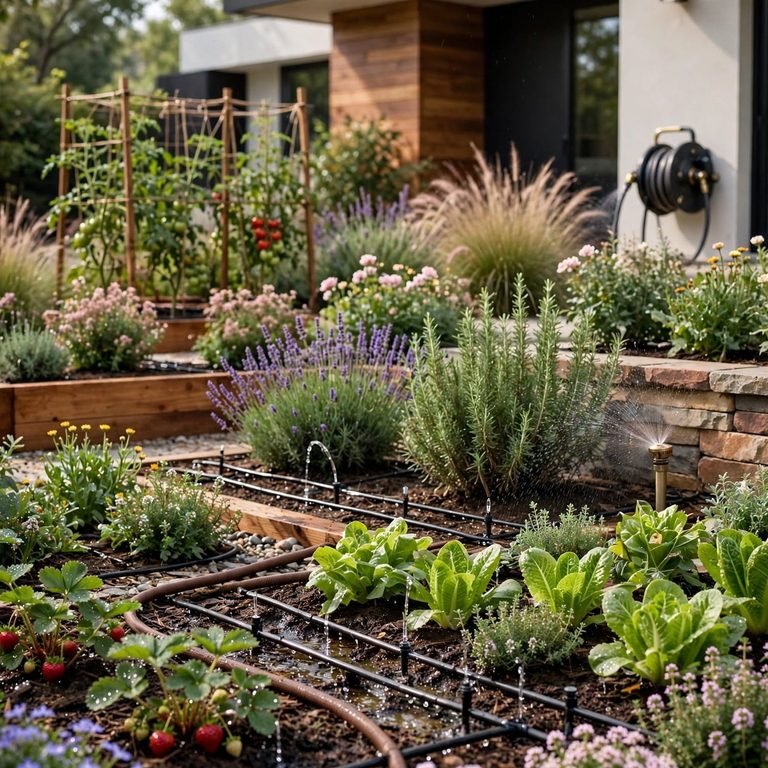
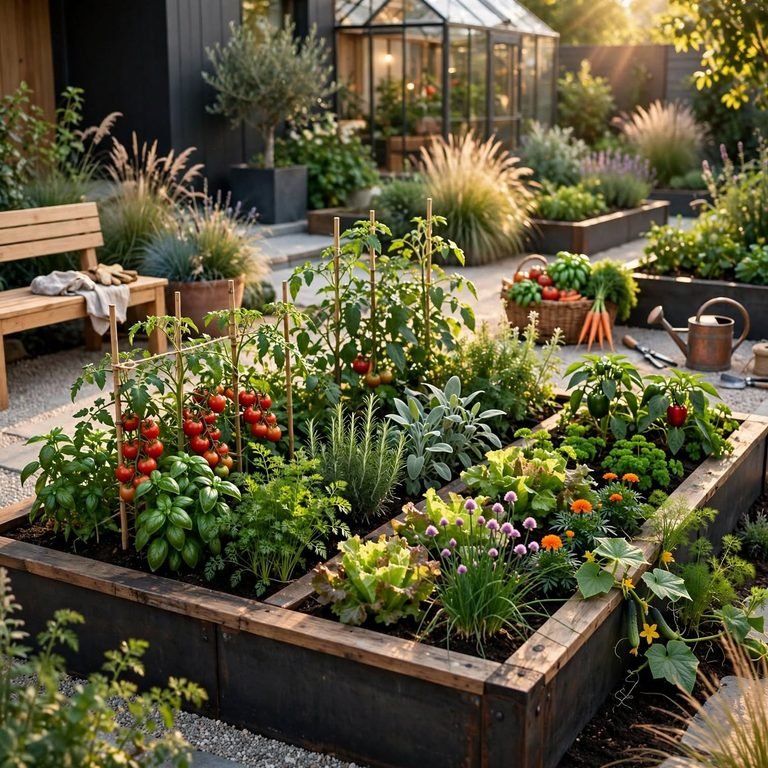
Trend & Background
Edging has moved toward slimmer, nearly invisible steel and aluminum strips that hold a crisp line without the bulky visual footprint older concrete or plastic edging left behind. Corten steel edging in particular has gained ground for its rust patina finish that needs no paint or sealant, while reclaimed brick and natural stone edging continue to hold steady in cottage and traditional garden styles. At the same time, more homeowners are choosing a shallow gravel trench or mowing strip specifically to eliminate string-trimming along a bed’s edge entirely, treating edging as a maintenance-reduction tool rather than a purely decorative line.
Key Takeaways
- These 12 garden edging ideas range from budget-friendly steel strips to permanent brick and natural log borders
- Six ideas steel edging, brick, natural stone, concrete curbing, log border, and gravel trench include depth, material, or cost comparison tables
- Edging depth matters more than material choice for actually stopping grass and weeds from creeping into a bed
- Several of these ideas mix well along one property, using a permanent material for the front yard and a cheaper option for less visible back beds
1. Steel Strip Edging
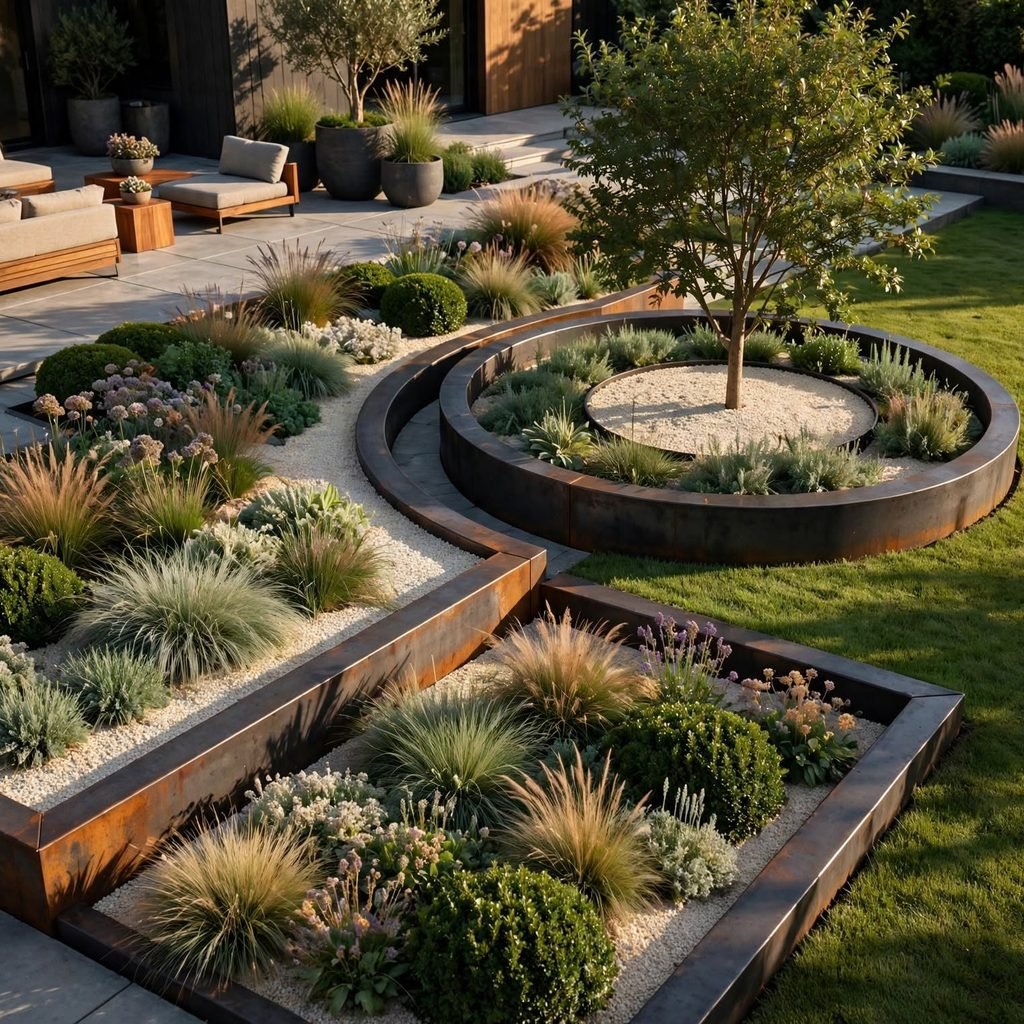
Steel strip edging holds an almost invisible, crisp line between bed and lawn, sitting nearly flush with the ground so it disappears visually while still stopping grass rhizomes from creeping into planted soil. Standard galvanized steel resists rust for decades once installed, while Corten steel develops a rust patina within the first year that then stabilizes and requires no further maintenance. Both types need to be set at least 4 inches deep to actually block grass roots, since anything shallower gets undermined within a season or two.
| Edging Depth | Effectiveness | Best Use |
| 2–3 in | Poor, grass creeps under | Not recommended |
| 4–5 in | Good | Standard bed border |
| 6+ in | Excellent | Aggressive spreading grass |
2. Brick Border
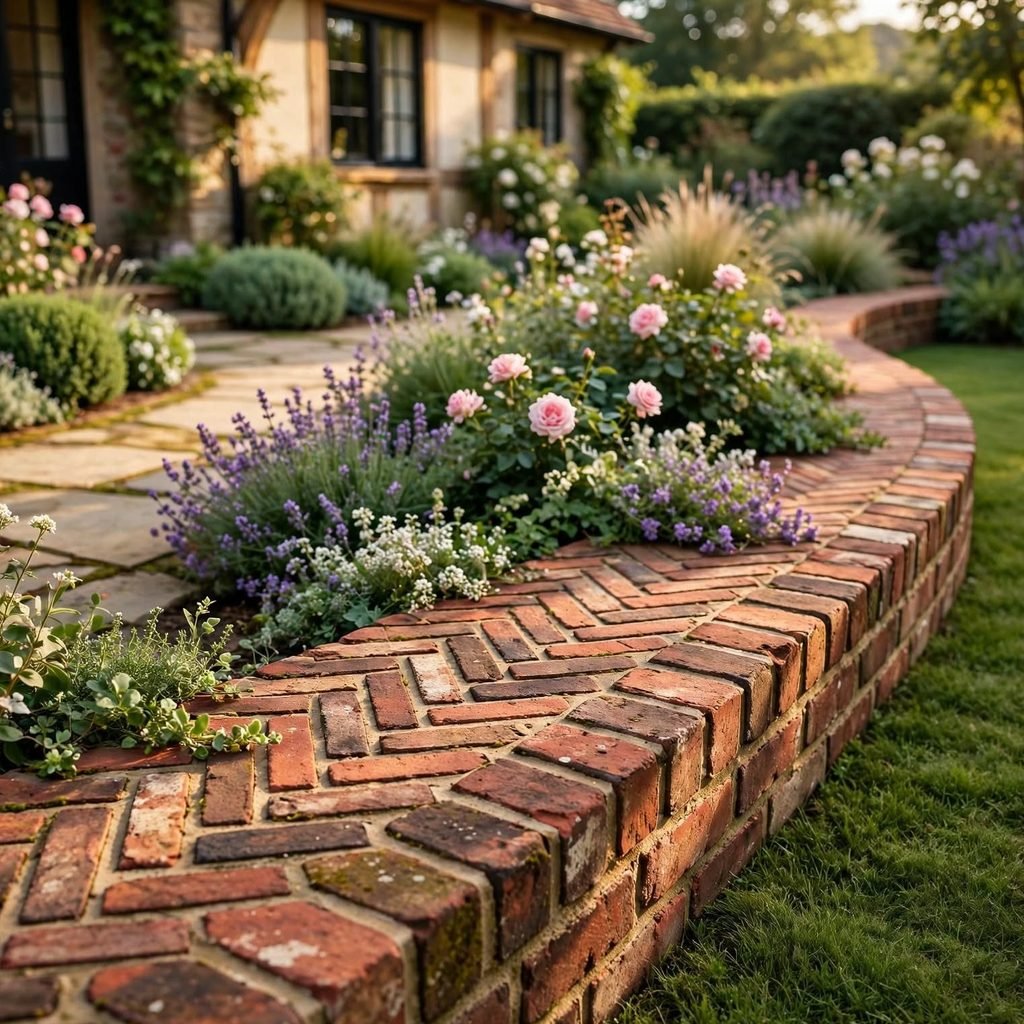
A brick border sets reclaimed or new brick either flush with the ground or angled on a diagonal in a classic sawtooth pattern, giving a bed a traditional, cottage-style edge that holds up for decades with essentially no maintenance. Setting bricks into a sand or gravel bed rather than mortaring them allows for easy adjustment if the line shifts or a brick cracks, while mortared brick gives the most permanent, rigid edge for a formal garden. Reclaimed brick costs more per unit than new but brings a weathered, established look that new brick takes years to develop on its own.
| Brick Pattern | Installation | Best Style |
| Flush/flat-laid | Sand base, no mortar | Modern, low-profile |
| Sawtooth/diagonal | Sand base, no mortar | Cottage, traditional |
| Mortared soldier course | Concrete footing | Formal, permanent |
3. Natural Stone Edging
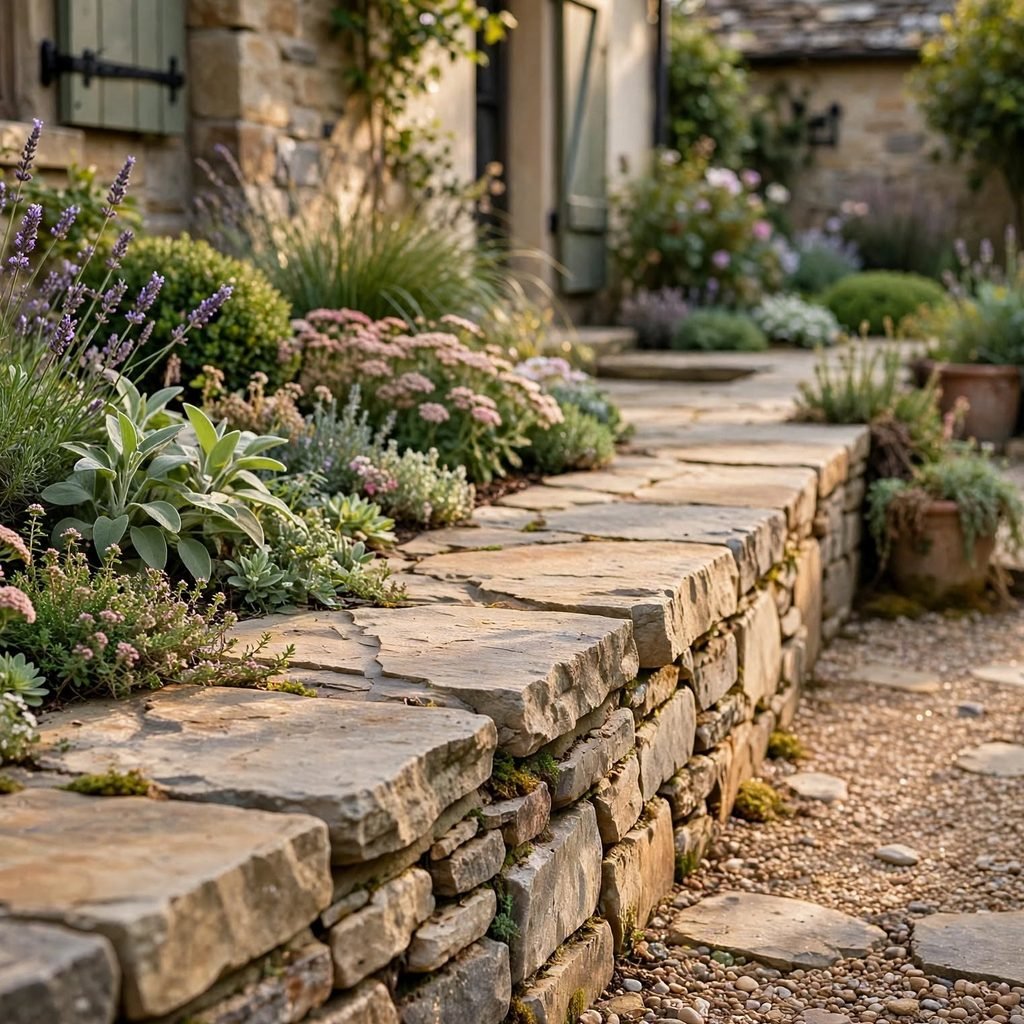
Natural stone edging uses irregular fieldstone or flat stone pieces set partially into the ground along a bed line, reading as more organic and less rigid than a manufactured edging product. Fieldstone sourced locally blends into the surrounding landscape better than imported decorative stone and typically costs less once delivery distance is factored in. Larger stones spaced with smaller gap-filling pieces between them hold a line more effectively than uniform, evenly sized stone, since the varied sizes interlock and resist shifting from foot traffic or mower contact.
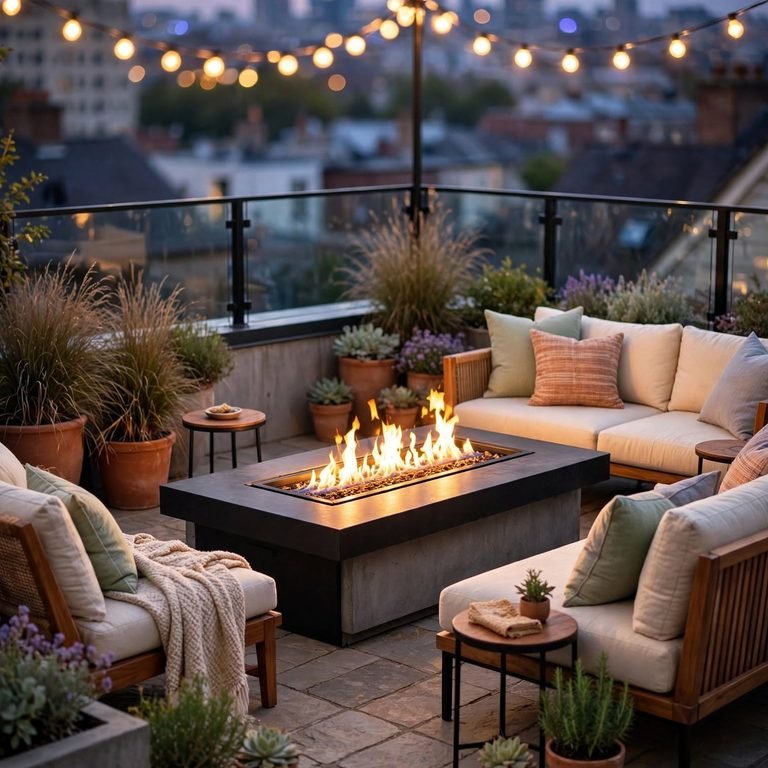
Explore charming terrace garden ideas for a natural, romantic, and welcoming outdoor look.
4. Concrete Curbing
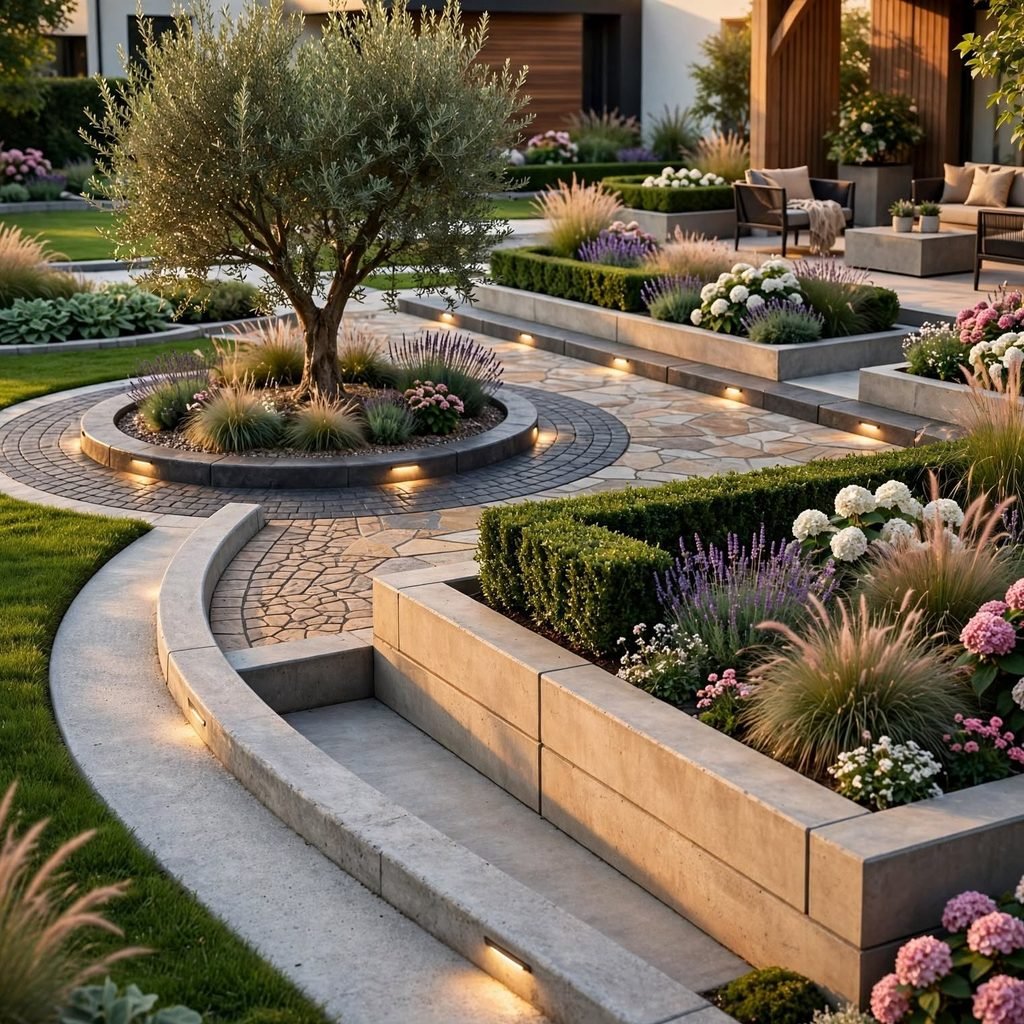
Concrete curbing pours a continuous, seamless border directly along a bed edge using a specialized curbing machine, producing a permanent line without the individual joints or gaps that brick or block edging leaves. This is typically installed by a professional curbing contractor rather than as a DIY project, since the equipment and mix consistency needed for a clean pour aren’t accessible to most homeowners. Curbing can be tinted or stamped with a decorative pattern during the pour, giving it a more finished look than plain gray concrete without adding a separate material.
| Curb Profile | Height | Best Use |
| Low profile | 2–3 in | Mowing strip, subtle line |
| Standard | 4–5 in | Bed border, driveway edge |
| Raised | 6+ in | Slope retention, raised bed edge |
5. Log Border
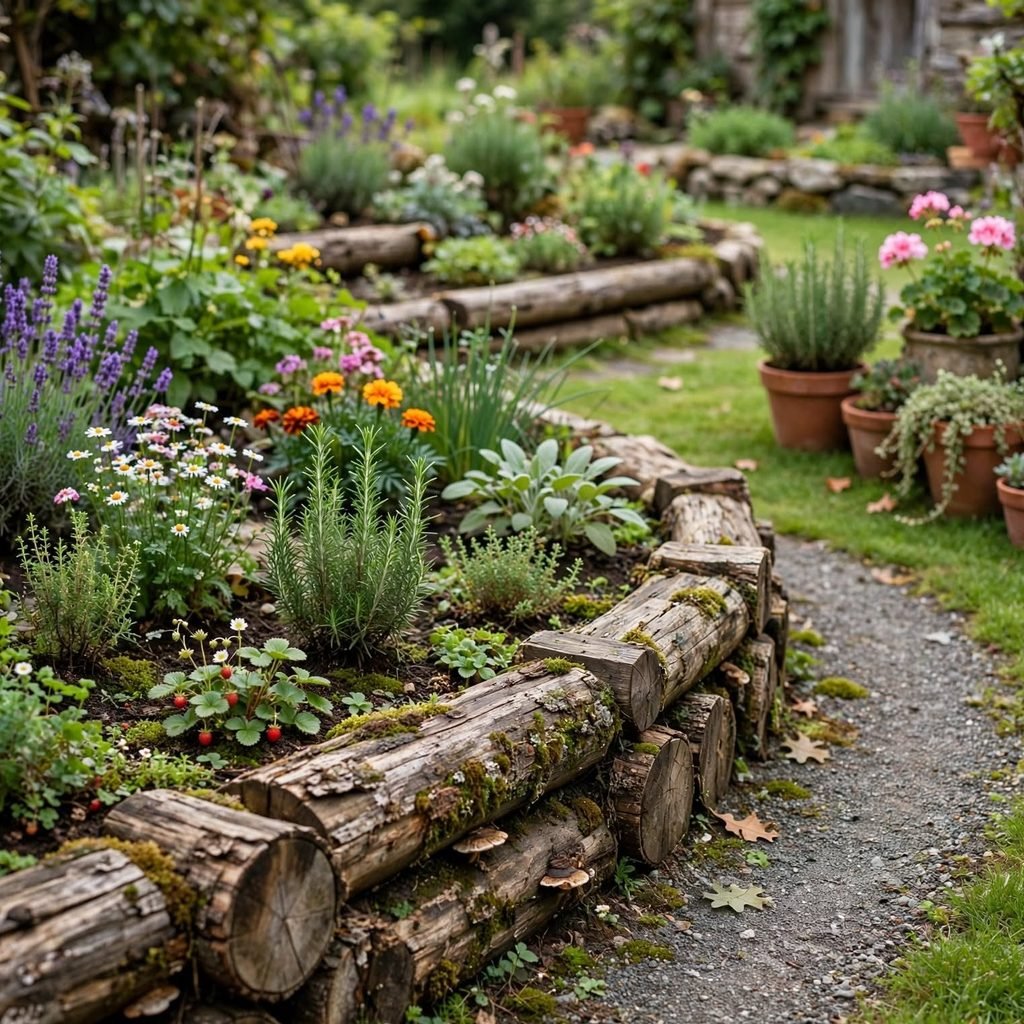
A log border lines a bed edge with sections of untreated log or split rail set horizontally or staked vertically into the ground, giving a rustic, woodland look that suits a naturalistic or cottage garden better than a manufactured material would. Cedar and locust resist rot in ground contact longer than most other woods, though any untreated log border will eventually need replacement, typically within 8 to 12 years depending on climate and soil moisture. This works particularly well bordering a woodland shade bed or a bed transitioning into a wooded property line, where a harder material would look visually out of place.
6. Gravel Trench Edge
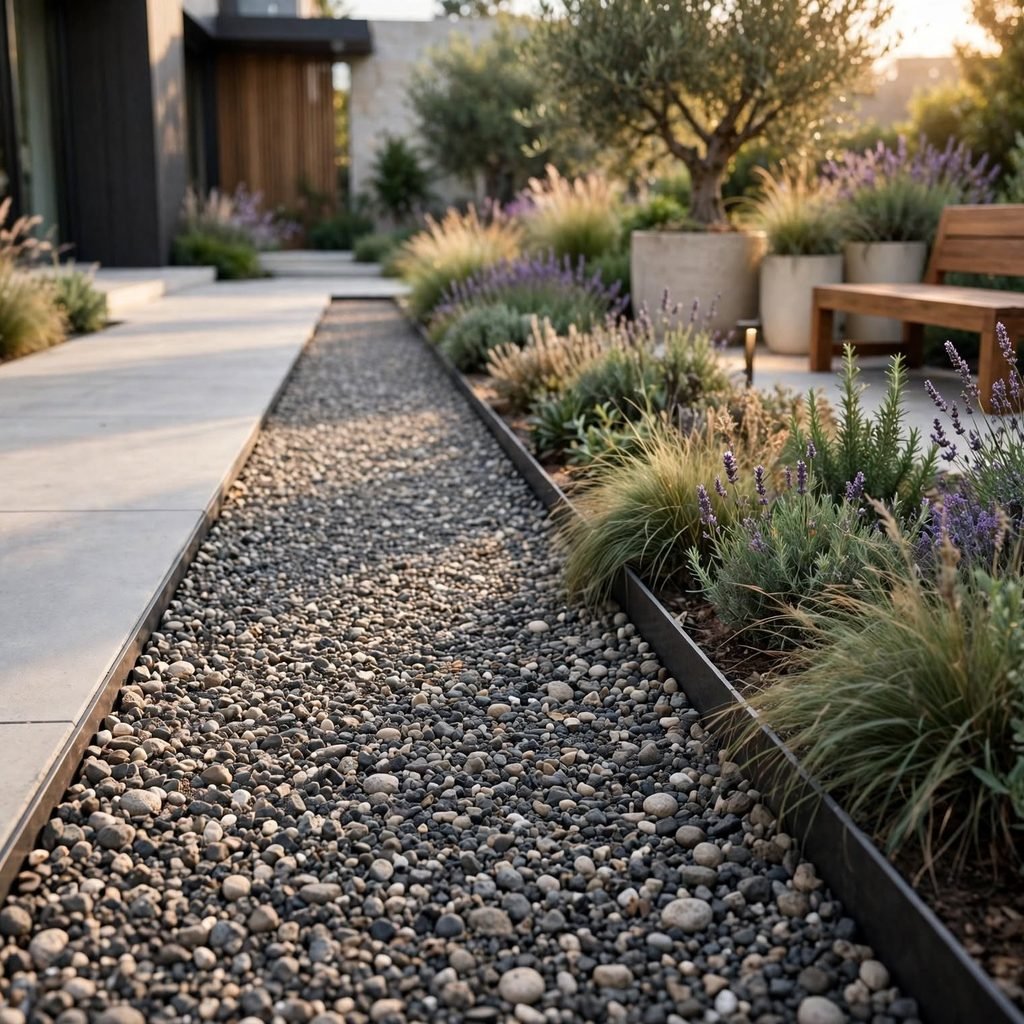
A gravel trench edge digs a narrow trench between bed and lawn, filled with crushed stone rather than a solid physical barrier, creating a visual and functional break that also doubles as a mowing strip so a mower wheel can run along the trench without needing to string-trim the bed edge separately. A depth of 4 to 6 inches with a plastic or metal edging strip along the bed side keeps the gravel contained and prevents it from scattering into the lawn during mowing. This is one of the lower-cost edging options that also meaningfully reduces edge maintenance time compared to a bare soil-to-lawn transition.
| Trench Depth | Width | Best For |
| 4 in | 6 in | Light foot traffic areas |
| 5–6 in | 8–10 in | Mower-wheel mowing strip |
7. Corten Steel Border
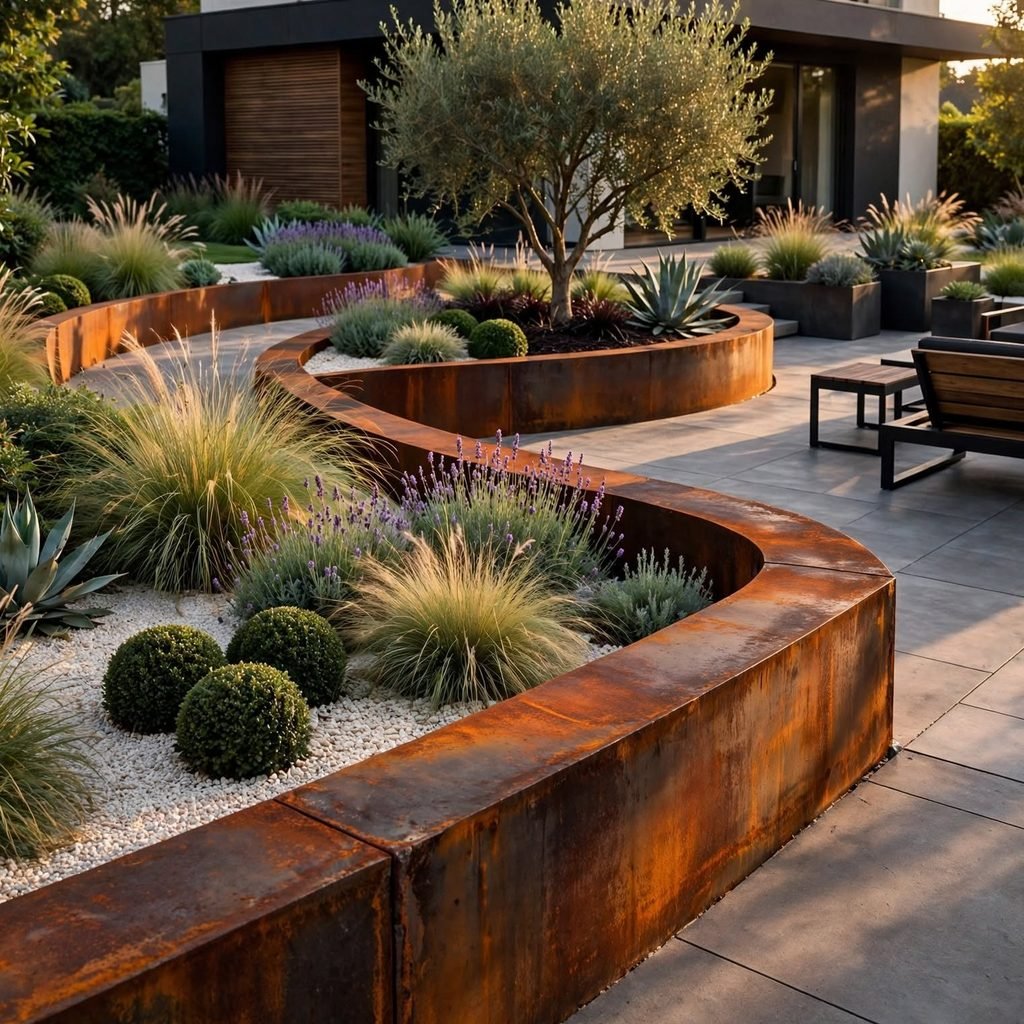
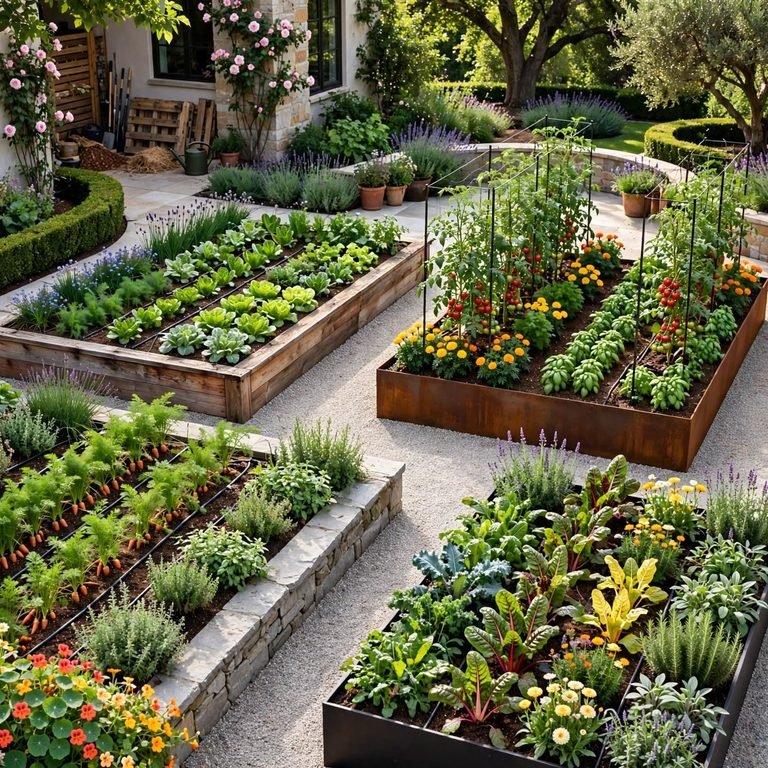
A Corten steel border uses the same weathering steel found in architectural fencing and planters, bent into low strips or wider capped edging that develops a deep rust-orange patina within the first year and then stops corroding further. This edging style suits modern and minimalist garden designs particularly well, since the thin profile and warm rust tone read as an intentional design choice rather than a purely functional bed border. Unlike galvanized steel, Corten needs no coating or paint at any point in its life, and the patina actually improves its long-term durability by forming a stable protective layer.
8. Woven Willow Edge
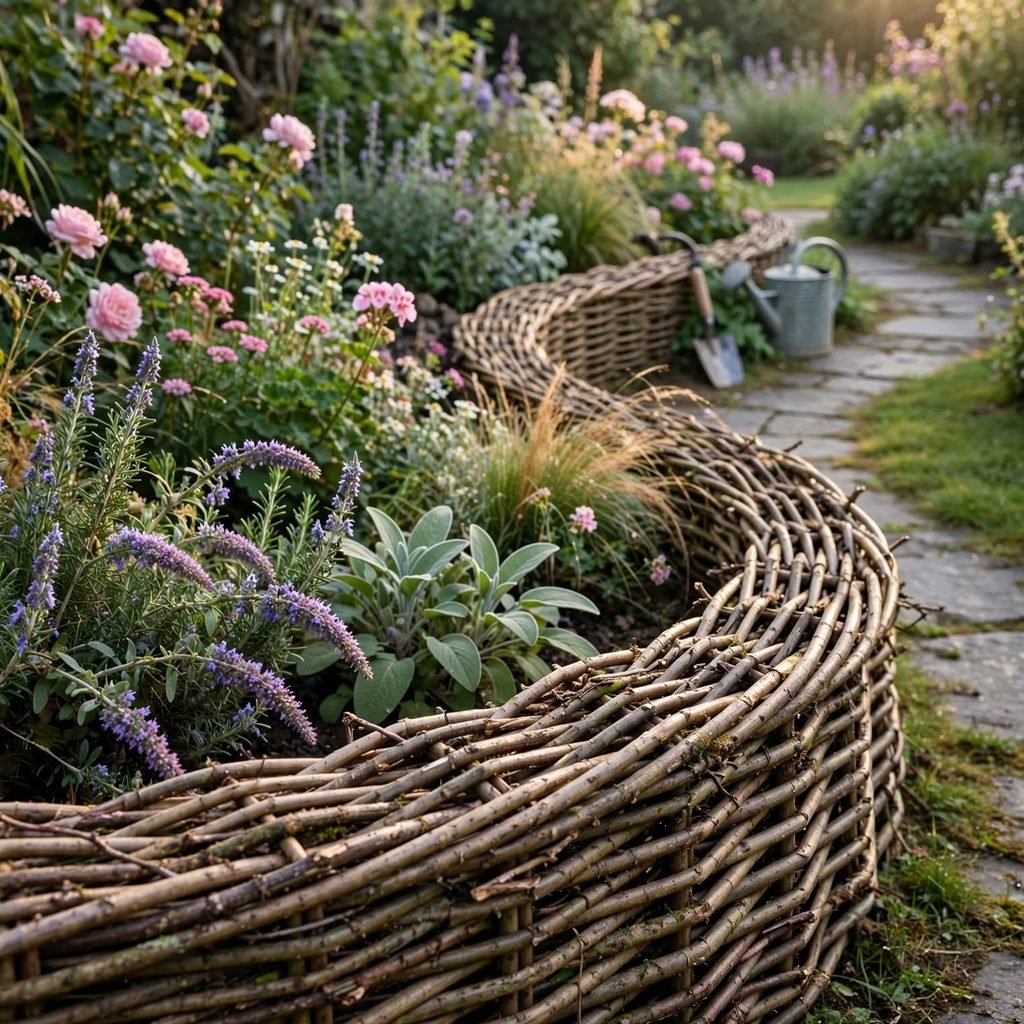
A woven willow edge weaves flexible willow whips between short stakes driven along a bed line, producing a low, basket-textured border suited to cottage and naturalistic gardens rather than a straight architectural line. Fresh willow is woven while still pliable and dries into a semi-rigid form over several weeks, though the natural material has a shorter service life than manufactured edging and typically needs partial rebuilding within four to six years. This works best as a low accent border around a specific bed rather than a full-property edging solution, given both its rustic look and shorter lifespan.
9. Rubber Edging Strip
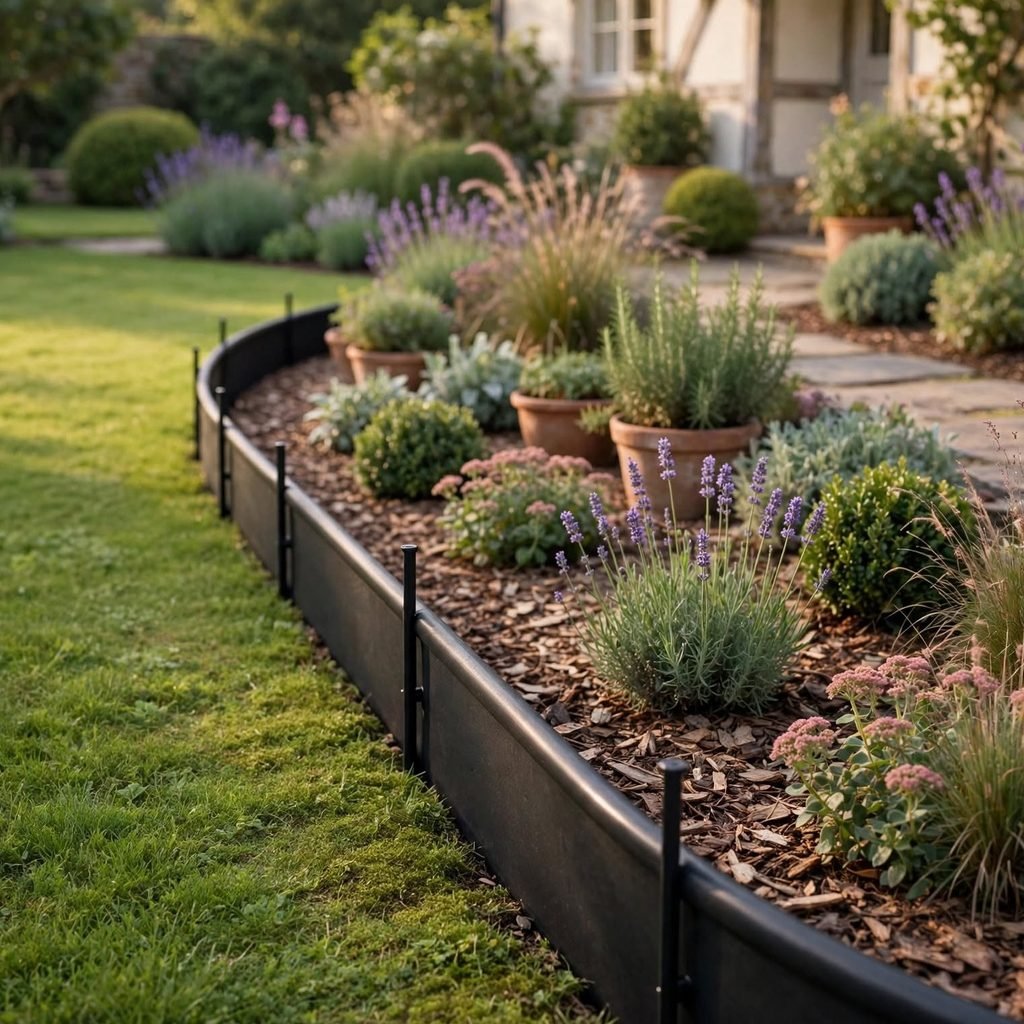
A rubber edging strip flexes easily around curves that rigid materials like brick or stone struggle to follow cleanly, making it a practical choice for beds with tight or irregular curves rather than straight architectural lines. Made from recycled rubber, this edging resists cracking in freeze-thaw climates that damage rigid plastic edging over time, and it stays flexible enough to reshape if a bed’s outline changes later. It reads as more utilitarian than decorative, so it suits backyard or less visible beds better than a front-facing garden meant to make a design statement.
10. Terra Cotta Rope Edging
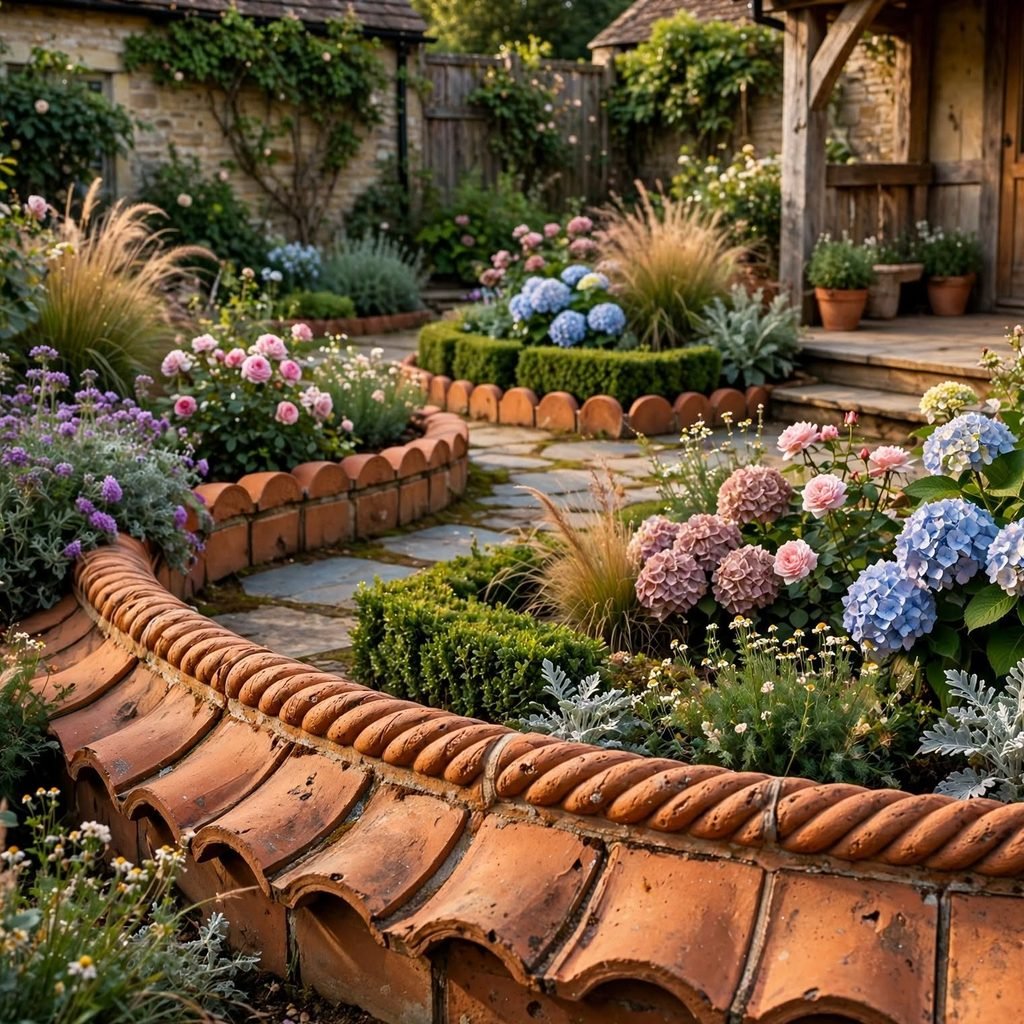
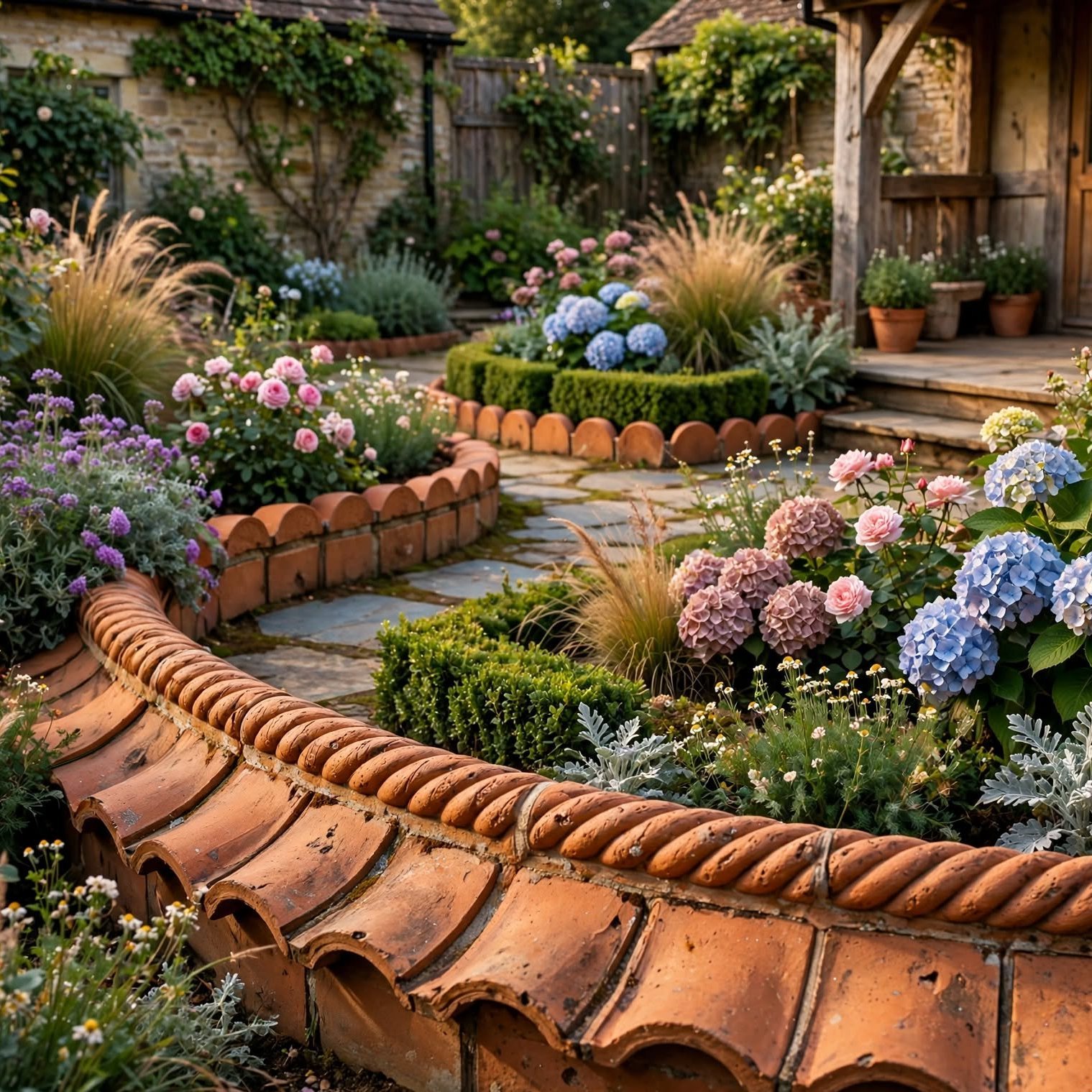
Terra cotta rope edging uses molded clay border tiles shaped to resemble a twisted rope, a Victorian-era edging style that’s seen a resurgence in traditional and cottage garden design. Individual tiles interlock end to end and are partially buried so roughly half the rope pattern shows above the soil line, and the material’s rigid, brittle nature means it holds a straight or gently curved line better than a tightly winding one. Terra cotta will crack under hard impact or heavy freeze-thaw cycling in some climates, so it suits milder regions or beds away from foot traffic better than high-wear areas.
11. Paver Stone Border
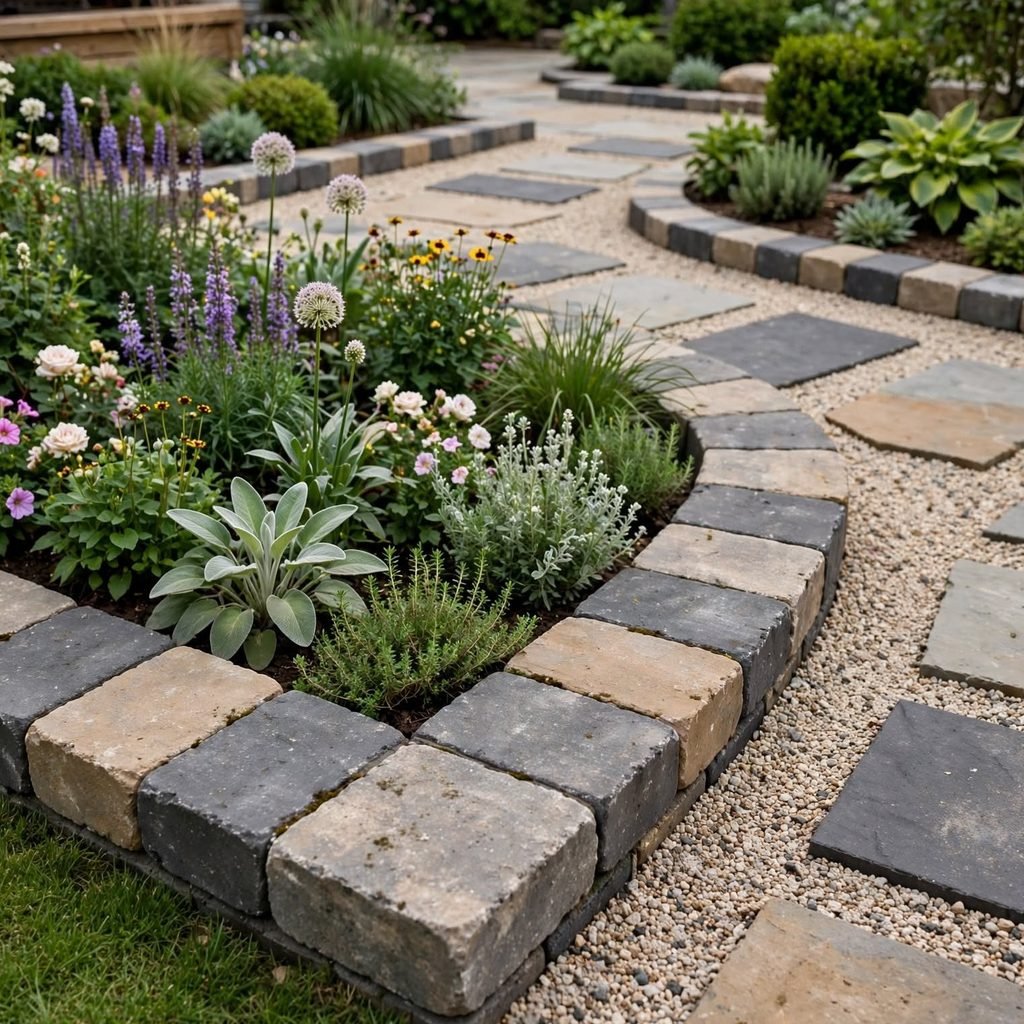
A paver stone border sets uniform concrete or natural stone pavers end to end along a bed edge, giving a clean, geometric line that suits modern and formal garden layouts better than the more organic look natural fieldstone edging provides. Pavers can be laid flush with the surrounding grade for a mower-friendly surface or slightly raised for a more defined visual break between bed and lawn. Matching the paver material to an existing patio or walkway elsewhere in the yard ties the edging into the broader hardscape rather than reading as a separate, disconnected element.
| Paver Type | Installation | Best Style |
| Concrete paver | Sand base | Modern, geometric |
| Natural stone paver | Sand or mortar base | Formal, traditional |
12. Recycled Composite Edging
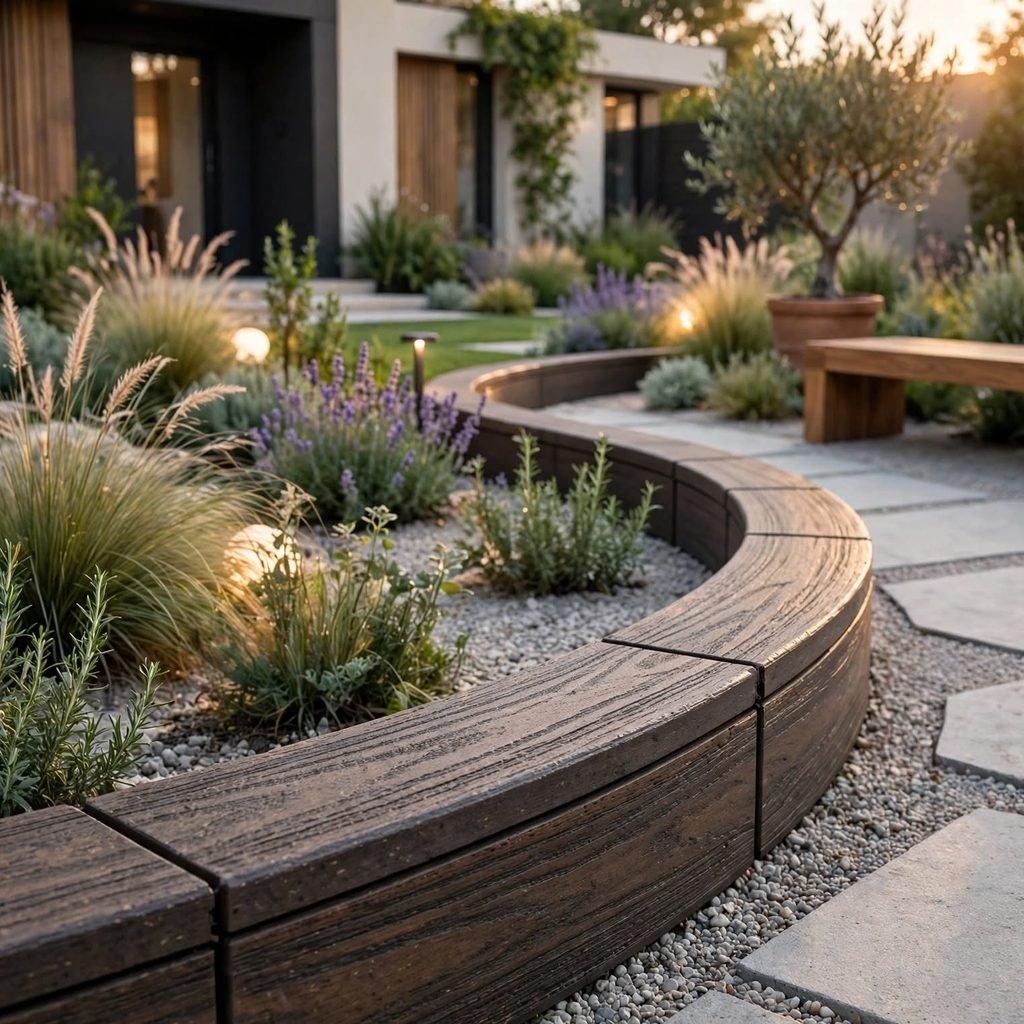
Recycled composite edging molds recycled plastic and wood fiber into rigid border strips that mimic the look of wood or stone without the rot risk untreated wood carries or the cracking risk terra cotta faces in freeze-thaw climates. It installs similarly to plastic lawn edging, with stakes driven through pre-formed holes along the strip, but holds its shape and color considerably longer than standard plastic edging exposed to UV light. This option suits budget-conscious projects that still want a more finished look than bare plastic edging typically provides.
| Material | UV Resistance | Lifespan |
| Standard plastic edging | Poor, fades and cracks | 3–5 yrs |
| Recycled composite | Good | 10–15 yrs |
Shop the Look
A handful of tools and pieces make most of these edging projects easier to execute cleanly. A half-moon edging spade cuts a crisp, straight trench line faster and more accurately than a standard shovel when installing steel, gravel trench, or paver edging. A rubber mallet seats brick, paver, and terra cotta rope edging firmly into a sand base without chipping the material the way a metal hammer would. Landscape fabric staples hold fabric in place under gravel trench or mulch beds bordered by any edging style, and a length of flexible garden hose laid out beforehand helps map curved edging lines before any digging starts.
Common Mistake to Avoid
The most common mistake in garden edging ideas is installing edging too shallow to actually stop grass rhizomes and weed roots from creeping underneath it, which defeats the entire purpose of the border within a single growing season. Many manufactured edging products sold at general hardware stores are only 2 to 3 inches deep once installed, well short of the 4 to 6 inches most aggressive lawn grasses need to be reliably blocked. Buying edging rated for the full recommended depth, even at a higher cost, prevents the frustrating cycle of pulling grass runners out of a bed every few weeks that shallow edging otherwise creates.
Frequently Asked Questions
What is the cheapest garden edging idea?
A gravel trench edge and recycled composite edging are among the least expensive garden edging ideas, both costing considerably less per linear foot than brick, natural stone, or Corten steel options. A gravel trench in particular can be built with materials from most hardware stores without specialized tools, while recycled composite edging installs with simple stakes and requires no cutting or mortar work. Reclaimed brick sourced secondhand can also come in below new manufactured edging if a local source is available.
How deep should garden edging be installed?
Most edging needs to sit at least 4 to 6 inches deep in the ground to effectively block grass rhizomes and aggressive weed roots from creeping into a bed, though the exact depth depends on the specific grass or weed pressure in the area. Shallow edging under 3 inches deep, common in inexpensive plastic products, gets undermined by grass runners within a season or two in most climates. Checking the manufacturer’s rated installed depth, not just the total product height, avoids buying edging that looks adequate in the package but performs poorly once installed.
What edging works best for curved garden beds?
Rubber edging strips and steel strip edging both flex easily around tight or irregular curves without the visible joints or gaps that rigid materials like brick or paver stone create along a curved line. Natural stone also handles curves reasonably well since irregular stone shapes can follow a bend without needing to be cut, unlike uniform brick or paver units. Rigid materials like concrete curbing and terra cotta rope edging work best reserved for straight runs or gentle curves rather than a tightly winding bed outline.
Does garden edging help with weed control?
Edging installed to the correct depth significantly reduces weeds and grass that spread by underground rhizomes or runners, since the physical barrier blocks that specific spread pathway even though it doesn’t stop windblown weed seed from landing directly in a bed. Pairing edging with landscape fabric under mulch or gravel addresses the seed-based weed pressure that edging alone can’t solve. Edging without a proper below-ground barrier, like a purely decorative stone border sitting on the surface, provides little actual weed control despite defining a visual line.
Can you install garden edging yourself, or does it need a professional?
Steel strip, gravel trench, brick, natural stone, rubber, and composite edging are all reasonably approachable DIY projects for a homeowner with basic tools and a weekend. Concrete curbing is the main exception on this list, since it requires a specialized curbing machine and mix expertise that most homeowners don’t have access to, making it typically a professionally installed option. Terra cotta rope edging and mortared brick both benefit from some prior experience working with masonry materials, though neither strictly requires a professional for a smaller residential project.
Conclusion
The strongest garden edging ideas on this list hold their line because they’re installed to the correct depth for the specific grass and weed pressure in the yard, not chosen purely on appearance. Whether you start with a simple gravel trench or invest in a permanent Corten steel or brick border, getting the installed depth right the first time is what keeps a bed edge looking defined years later instead of needing constant re-trenching. Save this post to Pinterest for reference as you plan your own bed borders, or read our related guide to landscape fabric and mulch installation before you start digging.